



Abstract
The diversity in a board may impact monitoring and decision-making in a company and thus, may have a bearing on firm value. In view of the importance of the ongoing debate that board gender diversity has generated, our study examines the link between gender diversity on a board and firm value in an emerging economy where women directors have become a mandatory part of the board. We investigate the issue using a panel data framework and a three-stage least squares method while addressing the endogeneity issues. Our data set consists of the top 500 listed companies for five years, that is, from 2015 to 2019. The data analysis shows that Indian boards had 5% female members’ participation in the boardroom in the year 2013, which has increased to 14% in 2019. The empirical analysis shows that the presence and fraction of female directors positively impact performance measures. The study suggests that compliance with regulatory authorities for the inclusion of woman directors has led to greater gender diversity to improve the company’s performance and generate economic gains. When diversity is embraced in its true sense in the corporate boardroom, decision-making by such a diverse team becomes unbeatable. The study advocates that companies need to appoint women on board not only to meet regulatory requirements but also to reap the benefits of gender diversity.
Keywords
Introduction
Women constitute about half of the population in India; it is vital to consider their strategic viewpoints at the time of corporate decision-making. Despite the reservations for corporate board seats for women in many countries, climbing the corporate ladder remains deeply inequitable. While the representation of women has increased for board positions in listed companies, they still constitute a minority. Many countries, including the US, Norway, Spain, France, Iceland and India, have mandated the presence of women on corporate boards. To encourage board diversity, Securities and Exchange Board of India (SEBI) made it a statutory requirement to appoint a minimum of one female director from April 2015 onwards and not less than one female independent director from 1 April 2019 onwards. There is empirical evidence that companies with female directors deal more efficiently with risk; they effectively address different stakeholders’ interests such as customers, employees, shareholders and the public and focus on long-term priorities. There is also ample literature to prove that the presence of women directors leads to the better operating performance of the companies. At the same time, literature provides evidence that women have been poorly represented at board levels across the globe. The challenges for women in corporate leadership are the same worldwide, which are being fixed by introducing board quotas in many countries.
Despite the reservations for women on Indian boards, our data statistics are worrisome, showing the women participation increasing to just 14% in 2019 from 5% in 2013 (see Table 1). However, this surge has not abetted the growth of female leadership pragmatically, and their presence is rarely significant on corporate boards. According to the World Economic Forum’s insight report on Global Gender Gap 2020, India ranks 112 out of 153 countries, and the participation level of women as directors or top business leaders is one of the lowest in the world (
Against this background, our article aims to examine the impact of the presence of women directorships on firm value. We adopted two measures for female representation; one is a dummy variable capturing the presence of one or more female directors, and the second is the percentage of female directors. Our dependent variable, firm value, is measured employing an approximation of Tobin’s Q. This relationship has been examined by considering a data set for listed companies from the top 500 companies. The most significant contribution of the study lies in the analysis of the causal relationship between women directors and firm performance. Our study contributes to the limited existing Indian literature on this issue by (a) explicitly using both accounting and market-based performance measures; (b) addressing the issue of endogeneity by constructing simultaneous equation models; and (c) providing empirical evidence and discussion from a policy viewpoint on whether the regulatory measures such as mandating female participation on boards affect firm value. The study adopts a panel data framework for empirical specification and addresses endogeneity issues for panel data taking cues from Hamilton and Nickerson (2003).
Most of the board diversity studies have not adequately dealt with the issue of endogeneity, claiming that correlation may not necessarily mean a causal relationship. It could be a serious concern as the studies may give biased results if they ignore one or several endogeneity issues and could not assess route or source of causality (Antonakis, 2017; Brinkhuis & Scholtens, 2018). It is essential to address this issue in the wake of the popularity of female quotas in boardrooms. Policy recommendations are to be crafted based on the causal empirical findings from research.
The remainder of the article follows this sequence: the next part offers a literature review on gender diversity and its association with firm value. Further, we discuss research methodology, the choice of companies and extraction of data, development of hypotheses and simultaneous sets of equations and last but not least, the endogeneity issues. Thereafter, the empirical investigation is conducted to estimate the relationship between female board members and financial performance. It also includes results for multicollinearity and panel-granger causality tests. Finally, the last section concludes the study and offers a discussion on the findings thereof, followed by limitations and scope for future research.
Female Directorships on Corporate Boards in Indian Listed Companies from the Year 2013 to 2019

Review of Literature
The literature has presented arguments in favour of board diversity and highlighted the costs associated with diversity. Diversity can be in the form of age groups, race, gender, nationality, or experience. It had been pointed out by Cox (1991) that interpersonal conflicts may also arise because of diversity at top levels. These differences arise because of communication gaps between the diverse team, which sometimes may delay decision-making. Concurrently, board diversity also brings its potential advantages to the table for the benefit of the corporate. It has been argued by the same author, Cox (1991), that diversity may provide broader perspectives and viewpoints, and an increased pool of ideas that may help in strategy-making. Even diversity has been associated with creativity, innovation, and more ideas for marketing strategies as well. The issue has been explored not only in India but across many countries and different industries by Zhang (2020) examining the relationship between gender diversity and firm performance. He had used a sample of 1,069 firms across the world to predict that the diversity–performance relationship depends on its normative and regulatory acceptance in the institutional environment.
If we look at the theories of corporate governance–stakeholder theory, resource dependency theory or agency theory, all of them support diversity in the board group. There have always been conflicts regarding the interests of principles and agents, which give rise to agency problems. The literature (Fama & Jensen 1983; Jensen & Meckling 1976) stresses that if there is high diversity in the board, it enhances the independence of board members for decision-making and encourages monitoring by the board. Mallette and Fowler (1992) pointed out that it may consequently lead to the alignment of interests of management and shareholders.
The connection between board diversity and the company’s performance can also be understood through the stakeholders’ theory perspective. The board is accountable to all its stakeholders (Rose, 2004), and the corporate board must be expanded to include representatives from diverse credentials for a balanced group. It becomes crucial to broaden management’s vision regarding their roles and responsibilities to meet stakeholders’ expectations. Thus, a company needs to involve with its stakeholders for its survival (Laan et al., 2005). On the contrary, the resource dependence theory views the board as a connection between the company and outside resources required for better firm performance (Pfeffer, 1972; Pfeffer & Salancik, 1978). The board establishes a strong association with its external environment through networking and connections (Hillman et al., 2000; Palmer & Barber, 2001). Boards can link the company with significant resources (Korac-Kakabadse et al., 2001; Zahra & Pearce, 1989;), and the diversity of the board gives it a boost. All corporate governance theories support the argument that diversity improves decision-making by considering the perspectives and viewpoints of diverse board members.
From the above discussion, we can observe that diversity in the boardroom has potential advantages for a company. In the academic world and research domains, gender diversity has received more consideration than other attributes of board diversity. For example, it has been pointed out by Stephenson (2004) that women are better decision-makers when it comes to the consumers’ market, and they boost creativity and innovation in the business as well (Carter et al., 2003). After the introduction of reserved seats for women, many companies voluntarily or mandatorily hired women directors, and since then, it has become a hot topic for research and discussion. First, the findings of previous studies have provided empirical evidence that female directors concentrate more on auditing compliances, risk-taking and oversight (Adler, 2001). Second, the presence of female directors has an impact on financial performance (Appiadjei et al., 2017; Arora, 2021; Carter et al., 2003; Chen et al., 2017; Dezsö & Ross, 2012; Erhardt et al., 2003; Gul et al., 2011; Kılıç & Kuzey, 2016) and at the same time, focuses on innovation and social responsibilities of the firm (Campbell & Minguez-Vera, 2008; Carter et al., 2003). It is further argued that their interpersonal skills are more process-oriented and streamlined (Daily & Dalton, 2003).
The majority of our sample firms have only one woman director on their boards. Thus, the women in leadership positions face challenges in the male-dominated boardrooms which help them for thoughtful interactions with colleagues in the business environment (Krishnan & Park, 2005; Tharenou, 2001). In addition, they reflect the cognitive style, which focuses on coherence and harmony in the organization; Hurst et al. (1989) facilitate information-sharing and healthy workplace culture (Earley & Mosakowski, 2000). The literature also supports that women leaders are conflict solvers and adopts a democratic leadership style (Eagly & Johnson, 1990).
Despite the advantages of gender diversity for a company highlighted above, there are studies (e.g., Adams & Ferreira, 2009; Jhunjhunwala & Mishra, 2012; Matsa & Miller, 2013; Rose, 2007; Ujunwa et al., 2012; Yang et al., 2019) which concluded negative association or inconclusive relationship between gender diversity and performance (Carter et al., 2010). The differences in the findings could be due to different environmental surroundings and legislations in different countries.
Research Methodology
This section discusses research methodology, the choice of companies and extraction of data, development of hypotheses and simultaneous set of equations. First, it provides arguments on multicollinearity and endogeneity issues, then a simultaneous set of equations is formed.
Data
The primary data source for our analysis is the ProwessIQ 1 database and corporate governance reports for the companies. Our sample consists of 442 listed companies after removing companies with missing figures. The panel data framework has been employed to estimate statistical parameters of interest to assess the impact of female directors on firm value for five years; 2015–2019. The selected time phase integrates the impact of legislative requirements for a minimum of one female director on board from 2015 onwards.
Endogeneity Issues in Corporate Governance Literature
An issue that curses many empirical studies in the area of finance and economies is endogeneity. It arises because of omitted variable bias, reverse causality, simultaneity or measurement error. The omitted variable bias has been explicated using a prominent illustration of company size and proportion of women directors by Adams (2016). When the firms bigger in size perform differently than smaller firms, the correlations between firm performance and gender diversity may also reflect correlations with firm size, thus biased estimates. The second common source of endogeneity is the reverse causality (Leszczensky & Wolbring, 2019) or simultaneity bias (Roberts & Whited, 2013). Reverse causation implies that rather than women directors influencing firm performance, it may be the other way round, that is, women directors may like to join a firm with superior performance, or such firms choose to have more women on board. Our analysis attempts to examine the changes in firm value caused by the proportion of female directorships. However, it is likely that firm value also has a stimulating impact on female directorships, which implies simultaneity bias that means causal arrow runs in both directions. The third source of endogeneity arises when measurement error becomes part of the regression (Roberts & Whited, 2013). Most of the empirical work in finance and economics use proxies to quantify variables that are difficult to measure. These discrepancies arise because of the conceptual differences between proxies and their unobservable counterparts. For instance, we use a proxy for our dependent variable, Tobin’s Q and discrepancies between the actual definition of Tobin’s Q and the used proxy may lead to measurement error resulting in inconsistent regression outcomes. This discussion on how endogeneity may produce unreliable coefficients illustrates how significant it is to address the concerns to avoid misleading results in the estimation.
The well-cited literature on corporate governance like Arora and Sharma (2016), Bhagat and Bolton (2002), and Hermalin and Weisbach (2003) have recognized the challenges of simultaneity biases while estimating the impact of board variables on performance. Moreover, the relationship between firm performance and gender diversity may suffer from endogeneity problems (Adams, 2016); therefore, it is indispensable to control the same before regressing the effects of women directors on firm value. A recent study by Brahma et al. (2021) also accounted for endogeneity concerns while testing the relationship between gender diversity, female attributes and financial performance for selected UK firms.
In the case of endogeneity, Maddala and Lahiri (2009) opine that the ordinary least squares (OLS) method may give spurious coefficients. In the case of a two-way causal relationship between female directorship and firm value, independent variables in a single equation might have two-way effects on dependent variables (Yang et al., 2019). We extend our causal analysis by empirically identifying the causality between female directors and firm value by using panel Granger tests that support heterogeneity across the cross-sections (Dumitrescu & Hurlin, 2012; Lopez & Weber, 2017; Soni & Singh, 2020). The results indicate the presence of two-way causality between the proportion of female board members and firm value (Table 5). Thus, the single equation estimation might cause deviations because of the presence of endogeneity problems. Therefore, we construct a simultaneous equation model to deal with the endogenous issues in our explanatory variables and examine the causality between female directorships and firm value. The past studies have indicated the endogenous relationship between board independence and firm performance; we have tried to test it also in our analysis (see Table 5).
The simultaneity bias poses challenges in the analysis as the assumption of exogeneity of regressors of the Gauss–Markov theorem is violated. In the simultaneous equation model, a dependent variable is a function of other independent variables jointly determined with dependent variables. Therefore, two estimation methods of the simultaneous equation system enter the choice, that, two- and three-stage least squares. The three-stage least squares (3SLS) estimators given by Zellner and Theil (1962), where the set of instrumental variables is common to all equations of the model, are considered more efficient because of the advantage that increases with the strength of the interrelations among the error terms (Belsley, 1988). On the other hand, if all regressors are predetermined, 3SLS reduces to seemingly unrelated regressions. Thus, 3SLS is a combined regression of two-stage least squares with seemingly unrelated regression, estimating each equation in the model seriatim. Thus, we use the three-stage least squares method to estimate the impact of female representation on firm value.
Empirical Model
We formulate the following set of equations for DFemale and ration of female directors (ROFD) to be regressed against firm performance measures, Return on Assets and Tobin’s Q:
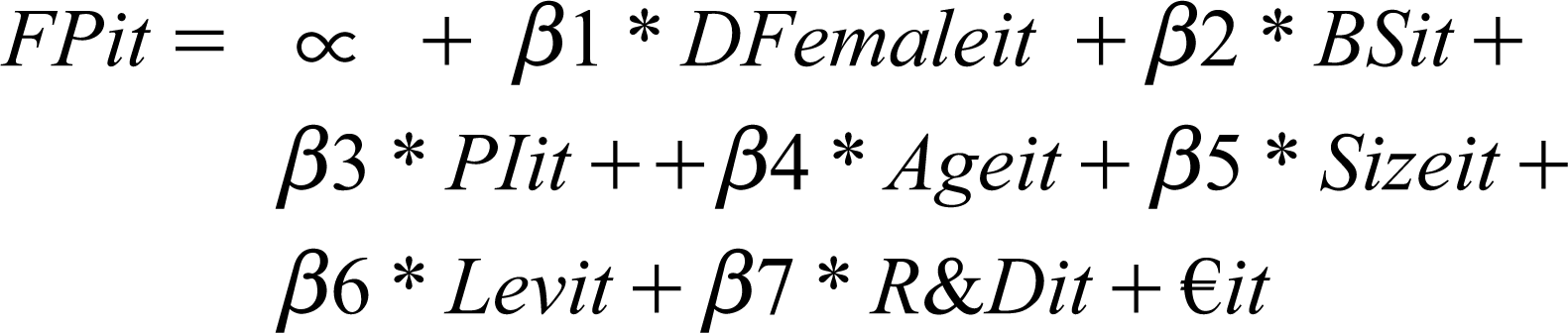

We have taken widely accepted firm value measures as our dependent variables: Return on Assets and Tobin’s q. Equation 1 presents the model where a dummy variable (DFemale) has been taken as the independent variable as the measure of female directorship. The Equation 2 model depicts the impact of ROFD on firm value measures. The control variables include board size, the proportion of independent directors, company age, company size, research and development intensity, and leverage. € - is the error term, i and t represent firm and period respectively.
Dependent Variables
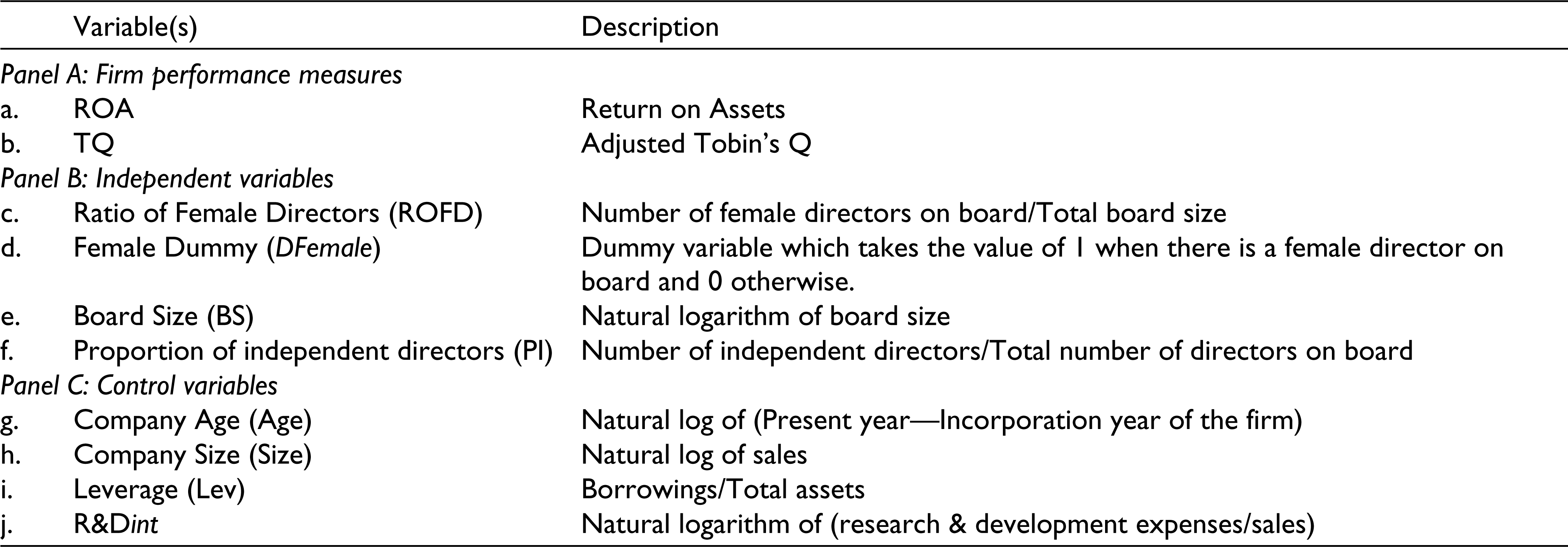
We employ two dependent variables: ROA (an accounting-based measure) and Tobin’s q (a market-based measure), as mentioned in Panel A of Table 2. The data for ROA has been collected from the ProwessIQ, calculated by dividing net income by total assets. Tobin’s q is a widely used performance measure in empirical research in corporate governance, measured as the proportion of market value to the replacement value of a company’s assets. In our calculations, the replacement value of assets has been substituted with the book value of total assets, and the measure has been termed as, Adjusted Tobin’s q. The calculations are similar to Tobin’s q in the study of Bhagat and Bolton (2008), Gompers et al. (2003) and Yang et al. (2019).
Independent Variables
We have taken two measures for gender diversity; one is a dichotomous variable indicating the presence of female directors on board (DFemale). It equals 1 when the company has at least one female director and 0 otherwise. The inclusion of this dichotomous variable in the empirical model allows us to find out if female members on board impact financial performance. The second variable of interest is ROFD, measuring the proportion of women directors on the management board. These variables have been frequently used for female board representation in the previous literature (e.g., see Adams & Ferreira, 2009; Carter et al., 2003; Chen et al., 2017; Erhardt et al., 2003).
Control Variables
The control variables include board size, the proportion of independent directors, firm age, firm size, research and development intensity, and leverage. Table 2 provides the entire list of variables used in the analysis.
Hypotheses Development
Based on our discussion in the introduction and review of literature, we form the following hypotheses to be examined in the next section of the study:
H1: The variable DFemale has a positive relationship with firm value. H2: The variable ROFD has a positive impact on firm value.
Multicollinearity Issues
We have checked for the possibility of multicollinearity issues amongst our independent variables data set. We have tried to diagnose this problem (Table 4) with the help of a standard approach called variance inflation factor. It approximates how much variance of a coefficient is inflated because of linear dependence with other variables. The following section reports result for multicollinearity, causality test and 3SLS method, followed by the discussion of results.
Description of Variables Used in the Estimation Analysis
Empirical Results
This section presents descriptive statistics and the empirical results for multicollinearity, causality tests and 3SLS results for examining the association between the presence and proportion of female directors and corporate performance. A preliminary analysis of the explanatory variables has been done using descriptive statistics in Table 3. It shows that the minimum number of female directors or independent directors is still 0 in some years of the sample period. It might be due to the resignation of a director or completion of the tenure during the year. Further, it seems a progressive approach to have five female directors on the management board, the maximum number of female directors. The maximum board size in the selected sample is 24 directors, and 80% is the maximum proportion of independent directors.
When the concept of independent directors was introduced in India in 2001 through legislation, there had been opposition in non-compliance or unsolicited behaviour for independent directors in the board meetings. The firms were even intimidated that they may get delisted for not hiring independent directors on board. It is noteworthy that when we look at the recent data, that is, 2015 onwards, we can observe a positive change in the proportion of independent directors (see Table 3). On average, there are nearly 49% independent directors on the corporate board. With the passage of time and clarity on their roles and responsibilities, their acceptability and accountability have increased. A vast literature has tested whether independent directors lead to better financial performance. We may presume similar prospects for women directors in the future. Although many women directors have expressed in their interviews that they feel uninvited in the board meetings, the fact cannot be denied that the board requires diverse viewpoints or perspectives that may come from different genders.
Descriptive Statistics

Further, we have checked the variance inflation factor (VIF) for possible multicollinearity amongst the predictors, and the results are stated in Table 4. The VIF coefficients reveal that there are no multicollinearity issues and give a green signal to go ahead with the analysis.
Table Reporting VIF Coefficients for Each Predictor in the Model
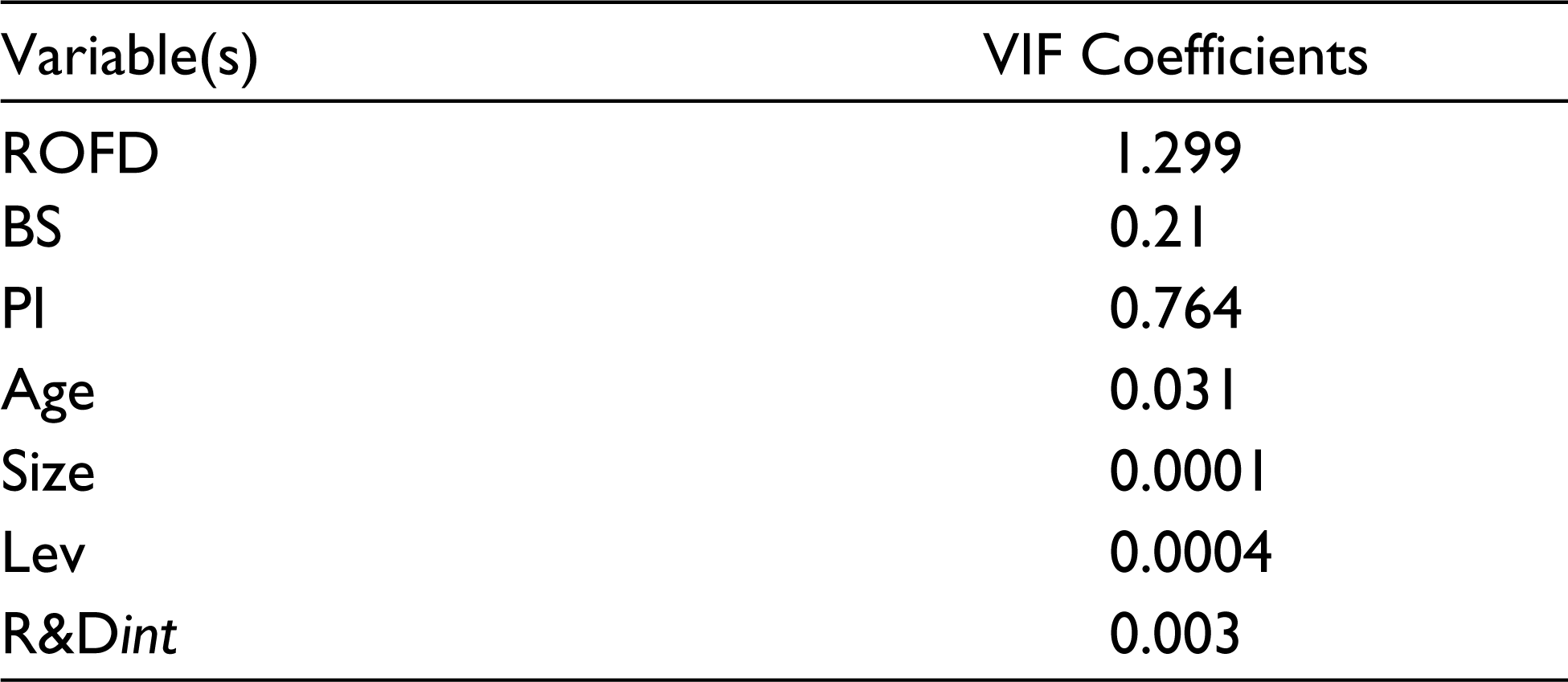
Table 5 (Panel A) demonstrates the panel Granger causality results for the proportion of female directors (ROFD) and firm value (TQ and ROA). The results show unidirectional causation between TA and female directors. The bidirectional causation effect amongst female directors and ROA can be seen in Table 5, confirming the presence of simultaneity bias in the data. The results are consistent with the findings of Yang et al. (2019). It calls for the need to address the reverse causation bias and limit the possibilities of the interrelationship between female directorships and firm value.
Results for Panel Granger Causality to Check for Causation
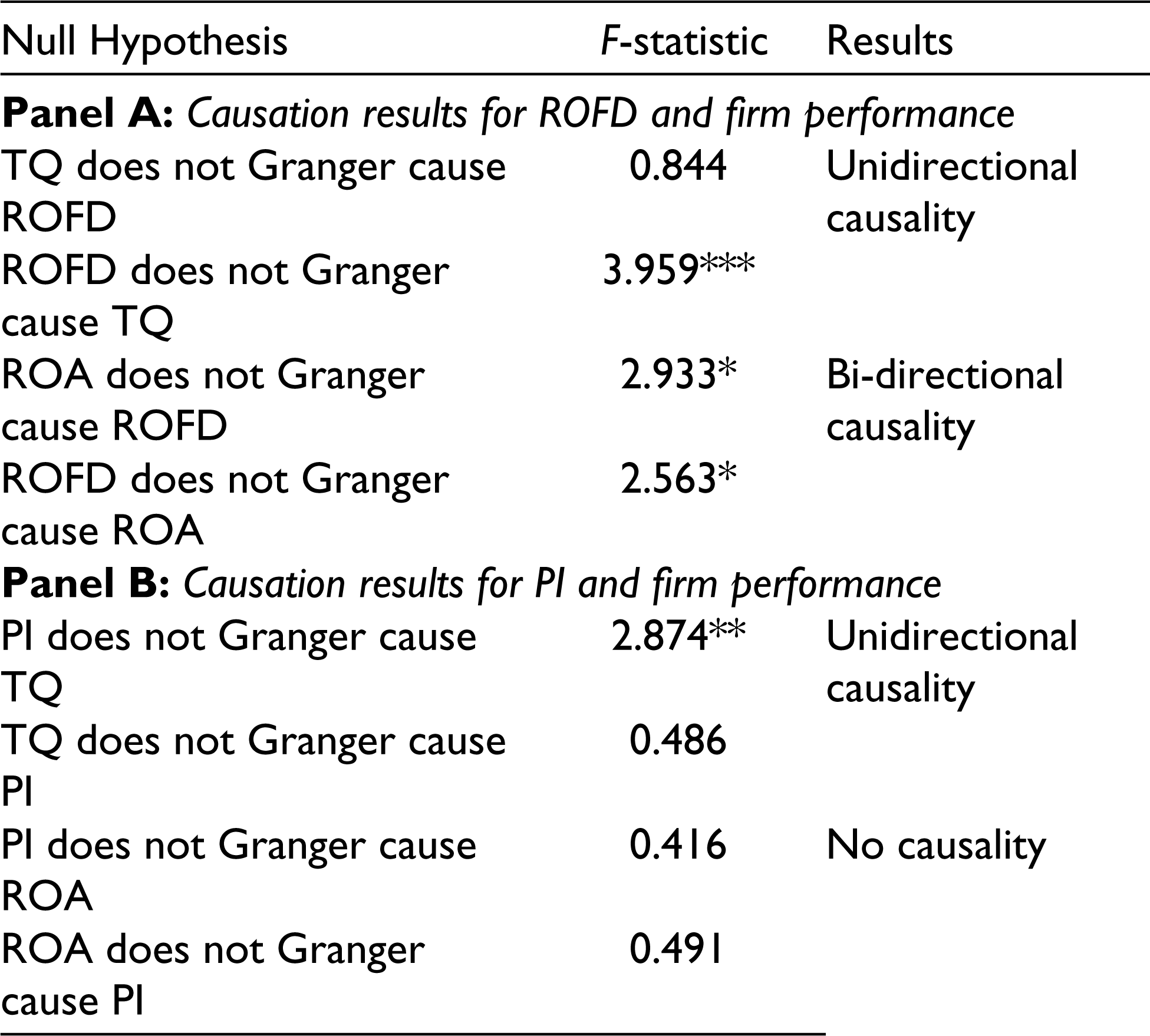
***, ** and * denote rejection of the null hypothesis at 1%, 5%, and 10% respectively.
Further, arguments have been provided in past studies that board independence affects the firm’s performance and vice-versa, indicating causality between board independence and firm performance. For example, Hermalin and Weisbach (1998) discovered that poor-performing firms attempt to improve their performance by replacing executive directors with independent directors through better monitoring of management and, thus, better firm performance. Supporting this argument, companies may enlarge the number of independent directors in case of unfavourable circumstances believing that this addition would bring novelty and improvement in decision-making (Arora & Sharma, 2015). On the other hand, there might be a risk of churning out independent directors because of their hefty fees (Yermack, 1996). Likewise, the independent directors may be weeded out by better performing firms to cut down on cost or control its increasing board size. According to D’Aveni (1990), even the distinguished leaders quit companies before it turns insolvent to avoid harming their reputations.
Similarly, independent directors may strive for a shield for protecting their reputations (Fama & Jensen, 1983); by getting associated with successful and rewarding companies rather than low performing firms. Accordingly, we have also tested for two-way causality between the proportion of independent directors and firm performance, and the results appear in Panel B of Table 4. The F-statistics depict unidirectional causality between PI and TQ but could not establish causation results between PI and ROA. Therefore, the statistical technique has been chosen after controlling for endogeneity issues.
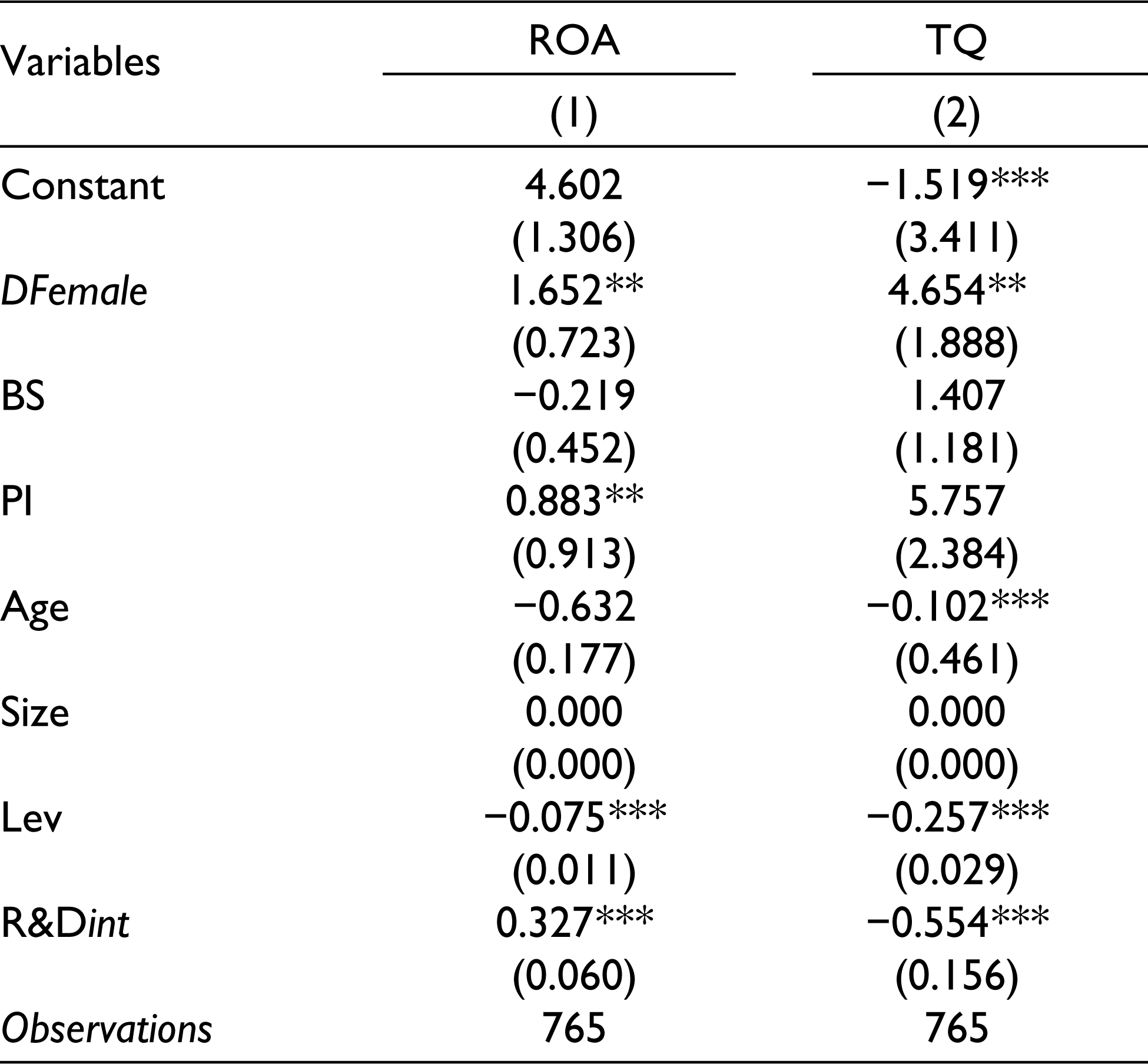
Table 6 presents the empirical results for our estimation model given in Equation 1 using the three-stage least square model. Columns 1 and 2 of Table 6 present the results for the impact of Dfemale on ROA and TQ, respectively. The results indicate a positive and significant relationship between Dfemale and both the firm value measures. Thus, the coefficients support the presence of women directors on corporate boards as it leads to improved performance, thereby supporting H1. This outcome is consistent with past studies such as Dezsö and Ross (2012) and Kılıç and Kuzey (2016). Furthermore, the Dfemale coefficients of 1.652 and 4.654 have been found when regressed against ROA and TQ, respectively, indicating strong bearing for the mere existence of female directors on firm value.
Results for the Impact of DFemale on ROA and TQ using Three-stage Least Squares Method
The figures in parentheses indicate standard error.
Further, it can be noted that the ratio of independent directors has a positive impact on ROA, which is in uniformity with the findings of Brickley et al. (1994) and Cotter et al. (1997). It implies that compliance with regulatory authorities for the norms of independent and women directors has improved its performance. The control variables such as leverage and research and development intensity negatively correlate with firm performance, implying that increased leverage or growing research and development expenses may negatively impact accounting and market corporate performance. The firm age has a negative impact on TQ, indicating that younger firms are performing better in our sample. We could not find significant board size and firm size results while estimating their impact on firm performance.
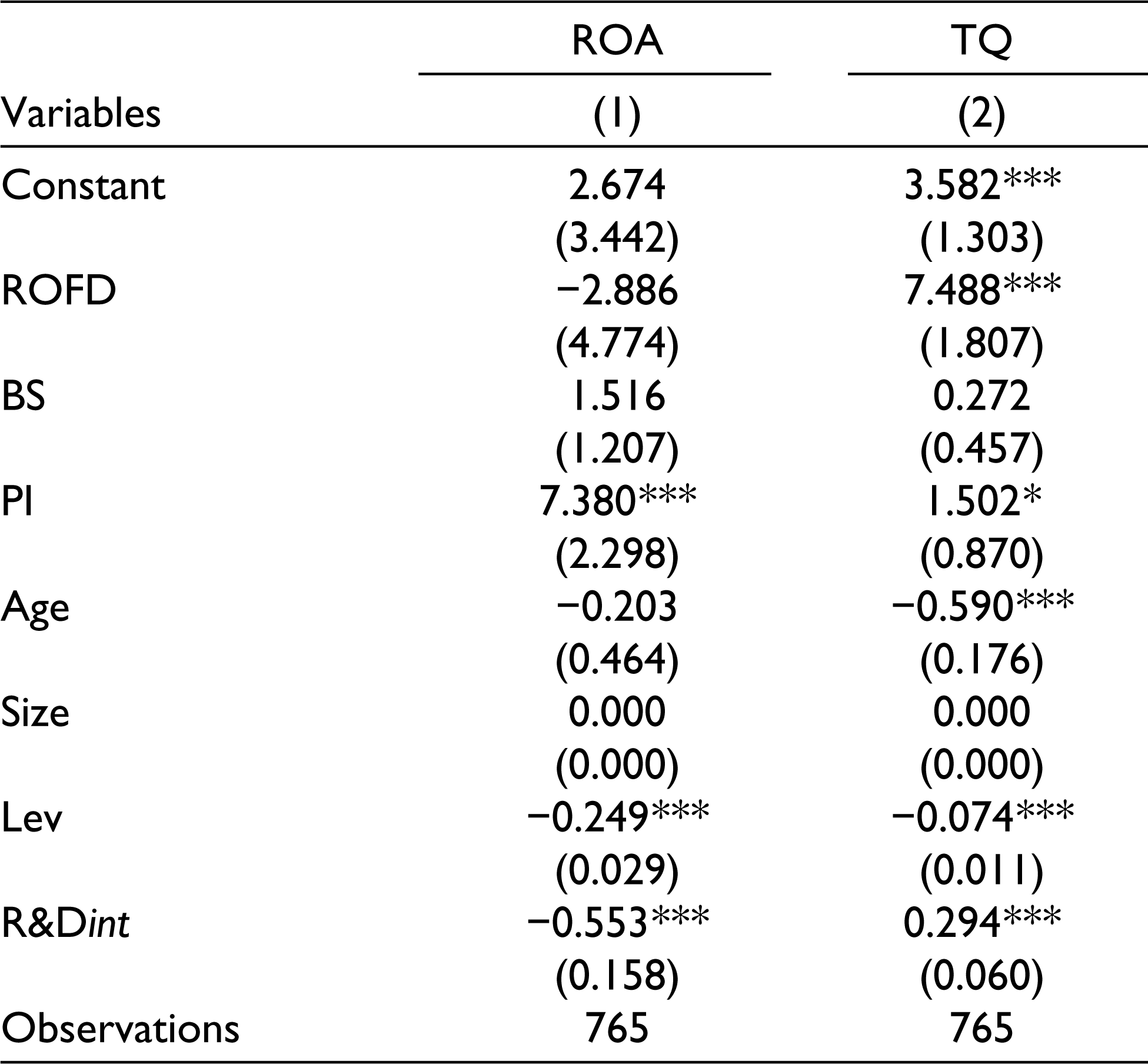
Table 7 depicts results for the empirical model presented in Equation 2, investigating the effects of the ratio of female directors on ROA and TQ using the three-stage least square model. Columns 1 and 2 of Table 7 investigate the impact of the proportion of female directors on ROA and TQ, respectively. The results show a strong, positive and significant coefficient of ROFD when regressed against TQ. It implies that if women hold leadership positions, it is a positive indicator for its market performance. We have found a coefficient of 7.488 for ROFD, significant at the 1% level, inferring that a higher ratio of female board members may drastically improve the company’s market performance. The findings are also in support of H2. We have found a positive association between the ratio of independent directors and both the performance measures. Leverage and research and development intensity have a negative impact on performance when a company has more female directors. The results are parallel with the previous findings such as Chen et al. (2018) and consistent with the results in Table 6 when Dfemale has been used to measure female representation on board.
Results for the Impact of ROFD on ROA and TQ using Three-Stage Least Squares Method
The figures in parentheses indicate standard error.
Conclusion
The board gender diversity has been the topic of public debates and academic research for more than a decade. It has been contended that female leaders are risk-takers and influential decision-makers because of the different perspectives they bring to the table. We have chosen gender as the attribute of board diversity because of its statutory requirement in the boardroom. In many countries, reservations have been made for women in the boardroom, for instance, in India, companies require at least one woman director on their board. This regulatory push has improved the ratio of women directors from 5% to 14% from 2013 to 2019 in Indian corporate boards. However, it clearly indicates gender discrimination at higher positions in companies which needs to be addressed.
Our study tries to examine the monitoring role played by women directors and its impact on firm performance. The results contribute to the regulatory debate by providing a shred of empirical evidence that compliance with the regulatory authorities for the norms of women directors has improved the firm value. Furthermore, the women’s representation on board has a progressive and robust impact on firm value. Our results advocate that when women directors are holding leadership positions, the governance and monitoring mechanism in the company has a positive influence on performance. The core contribution of the study is the employment of the three-stage least squares method for estimation purposes while addressing endogeneity concerns, which adds to the scarce literature in an emerging economy like India.
The results of the study offer interesting outcomes such as the positive impact of the presence of women directors on firm value. However, it has been observed that most of the Indian companies have one woman director, indicating it as mere compliance with regulatory requirements. An empirical study for UK firms by Brahma et al. (2021) has proven that the diversity–performance relationship is explicit when three or more females are working on the board compared to two or fewer female directors. Taking cues from international studies where more female participation has led to better performance and diligence for the companies, the companies may attempt to bring in diversity in its true sense where women take or participate in hard-core decisions of the company. It is pertinent to note that the legislative requirement to have at least one woman on board has made a considerable change in board gender composition, still we have a long way to go. Corporate gender diversity brings in a greater variety of skills, experiences, thought processes, perspectives, and strategies. It implies that the positive relationship between the proportion of female directors and firm value indicates better monitoring and diligence which inevitably results in better corporate governance.
The study indicates important policy implications; the companies may appoint more women on board to reap the benefits of gender diversity. The Indian government has introduced a legislative policy on women’s appointments on corporate boards and now, it needs to be ensured that women have equal representation at every decision-making spectrum extended beyond legal compliances. When diversity will be embraced in its true sense in the boardroom, decision-making by such a diverse team will become unbeatable. Other countries which have introduced women quota may conduct similar studies using three-stage least squares methodology to assess the impact of the presence of women on boards.
Limitations and Scope for Future Research
The study has some limitations such as our sample includes the top listed companies from India. The generalization of the findings requires caution as cultural differences between different countries might play a role. Also, we have not included other attributes of women directors such as age, qualifications, background, past experience, etc., which may be analysed in future work to assess the definite impact of women directors on firm value. The concept of women directors has been introduced lately in Indian boardrooms through The Companies Act, 2013. To fulfil the regulatory requirements, companies hired their own family members at the outset or just complied with the requisite number. Gradually, the number is increasing and in the future, other gender diversity parameters can be taken into consideration for research and analysis purposes. The future scholars may also include additional factors of board diversity also such as diversity in age group, educational qualifications, background, skill-set and experience.
Footnotes
Declaration of Conflicting Interests
The author declared no potential conflicts of interest with respect to the research, authorship and/or publication of this article.
Funding
The author received no financial support for the research, authorship and/or publication of this article.