



Abstract
This review investigates the connections between chosen supply chain risks (SCR), utilization of services redesign strategies (SRS) and the effect on company execution. An empirical framework is proposed where the presence of SCRs influences the use of SRS to handle peak and lean demand has been explored. The design is to observationally analyse the connections among SCR, including request inconstancy, compelled limit, nature of conveyance, utilization of different SRS and effect of something similar on organization execution. This review depends on an overview of 439 organizations in India addressing 10 gatherings of administration businesses utilizing organized condition demonstrating (structural equation modelling (SEM)) techniques. The initial survey construct was piloted with 20 expert respondents by personal interviews, based on the inputs the final questionnaire was developed and launched to 2000 services organizations of large, medium, and small sizes in respective service industry groups in India. The outcomes show that the presence of demand variability SCR impacts utilization of SRS. The presence of the hazard of capacity constrained and nature of conveyance do not impact the utilization of SRS. There is an unexpected connection between SCR and company execution which is interceded utilizing SRS. SRS assume fluctuated part in improving various sorts of execution (SC competition, customer satisfaction and financial performance).
Keywords
Introduction
In spite of the huge interest in service supply chains (SSCs), minimal calculated turn of events or exact exploration have tended to impact the utilization of services redesign strategies (SRS) which brings about progress of organization execution. Additional consideration is required in the advancement of a ‘frameworks view’ of how utilization of SRS—including process simplification, automation, modularization, segmentation, off-site access, packaging, clustering, re-organizing front and back end, and matching SC to demand—can deliver better performance to business (Vanany et al., 2009). Organizations in service industry, operating in an exceedingly dynamic and competitive scenario, are experiencing challenges related to their performance along with the need to offer higher service levels (Boon-itt & Pongpanarat, 2011).
Field et al. (2018) distinguished overseeing administration supply organizations and assessing and estimating administration activities execution as the two top-most among eight administration tasks research subjects. Further, Dobrzykowsky et al. (2014) supported the finding of Auramo and Ala-risku (2005) and reveal that demand management (DM) is a key research theme in services.
Deleris and Erhun (2007) recorded interest, supply, control and interaction as key dangers affecting SC activities and execution. Resilient SC addresses SCRs through re-engineering, collaboration, and establishing risk management culture (Christopher & Peck, 2004; Kumar, 2017). Moderation of interest hazard further develops SC execution (Chen et al., 2013; Kumar, 2020). Klassen and Rohleder (2010) recommended use of demand management options (DMOs) and suggested long-term and/or short-term must-do and may-do to deliver with demand variability.
Research identifying SRS proposes the need for adaptable ways to deal with request inconstancy with restricted limit. Nonetheless, there is absence of observational examination, and there are very few conceptual development or empirical research addressing upon the presence of SCR affecting the utilization of SRS and picturing the effect of organization execution—SC execution, consumer loyalty and monetary execution. Hence, despite the prominent dominance of the service industry in the present economy and challenges related to its performance, there is still dearth of research and publications dealing with SRS, risks and performance in a related manner. Therefore, this study aims to present the findings of the influence of SRS on company performance and the moderating influence that SCR has upon the SRS.
Based on the above research gap identified, this review presents the following objectives: (a) explores the connections between selected SCR—demand variability, constrained capacity and quality of service delivery; (b) use of SRS—robotization, customization, modularization, division, off-site access, re-coordinating front and back end, and coordinating with SC to request; and (c) impact of utilizing SRS on organization execution—SC competitive performance, customer satisfaction and financial performance. Although there have been studies on SCR and SC competitive performance, this study helps to discover how the presence of SCR impact the utilization of SRS and further develop organization execution. As a first of the sort, this study gives a decent beginning stage for utilizing SRS to further develop organization execution. Thus, the aim of the current research is to develop a comprehensive framework of firms in the service sector by highlighting the influence of the SCR on the SRS, which is finally influencing the company performance. Based on the knowledge built on the previous studies and the theoretical premise, the researchers are content that the constructs selected for the study are profoundly required for the service industry literature.
Background Study and Theory Building
Contingency Theory and Structure–Conduct–Performance Paradigm
With the dynamism in market forces, the economies are increasingly exposed to these forces, and so it increases the relevance of the contingency theory (Lee & Miller, 1996). In a study by Ruekert et al. (1985) on contingency theory, relative significance held by different dimensions of performance and the environmental nature will contribute to the characterization of different activities. The performance of a firm is influenced by its strategy selection choices (Taylor & Taylor, 2014). With the aim of proposing a conceptual framework, Wadongo and Abdel-Kader (2014) have used the theory of contingency to clarify the impact of contingency variables on the measurement of performance. The theory has been applied to emphasize the range of related performance metrics by Gacenga (2011).
The structure–conduct–performance (SCP) model has been considered in the study to hypothesize and investigate how the use of SRS can influence firm’s performance in spite of the presence of SCR. Though the model was initially applied for the industrial sector (Ferguson & Ferguson, 1994), it is of good significance for the service sector too. Thus, research related to SRS suggests use of applying lean, agile principles, automation, process simplification, mass customization, postponement, modularization, and reorganizing front and back end. However, there is lack of empirical research on the relationship between SCR, use of SRS and the influence on company performance.
Hence, there is an urgent call to comprehend the firm’s performance not just with reference to the formulated and executed SRS but also to understand the impact of the presence of the SCR on the SRS. With such an understanding, the organizations will be able to focus on improvising the SRS while also exerting efforts in reducing the incidence of SCR.
Supply Chain Risks (SCR) and Company Performance
Expansion in recurrence and results of SC interruptions have expanded the interest with respect to SCR and in ways of tending to it (Heckmann et al., 2015). Powerful control of SC adaptability can work on hierarchical execution (Sahu et al., 2015). Key practices to upgrade SC strength further develop SC execution (Pettit et al., 2013). A study carried out by Qazi et al. (2018) explained how SCR are directly associated with performance of corporations. Chu et al. (2020) and Truong Quang and Hara (2018) talked about how risks can influence the performance of SCs. Further, Shang et al. (2018) did touch upon how uncertainty and risks hamper SC performance negatively. In recent studies, Munir et al. (2020), Jajja et al. (2018) and Liu et al. (2021) mentioned how SCR negatively affects the SC performance. Cerabona et al. (2020) talked about better management of SC keeping performance under consideration. In order to make SCs sustainable, Hossan Chowdhury and Quaddus (2021) mentioned about alleviating manageability hazard and further developing business sector execution with dynamic ability view. According to Bag et al. (2020), Big Data analytics is yet another tool for mitigating risks and to enhance SC performance. In addition, Singh (2020) discussed about the managing risks and the uncertainty of better decision support systems. Considering the ongoing COVID-19 outbreak, Sharma et al. (2020) argued on farming inventory network dangers and COVID-19: moderation techniques and suggestions for the experts. Further, Nandi et al. (2020) mentioned about how SCs enabled with blockchain technology are able to increase their performance. Xu et al. (2020) carried out a bibliometric analysis to exhibit how disruption risks mitigate to active performance.
Erratic interest in limit-compelled circumstances could prompt decreased help quality and longer holding up periods (Shugan, 2002). Provider limit imperatives prevent item conveyance to client and impact volume and blend adaptabilities. Motivating force to put resources into limit before request acknowledgement turns out to be more articulated when limit speculations can build the general interest as well as ensure piece of the pie (Perdikaki et al., 2016). Shukla and Naim (2017) exhibited the plausibility of naturally and rapidly identifying aggravations in SC which compel the limit at an SC echelon. Irregularity of produce along with longer development of activities is a critical test in various levelled SCs.
Upgrading competitive performance, expanding consumer loyalty and diminishing expenses are the key objectives of supply chain management (SCM) (Mentzer et al., 2001; Yerpude et al., 2019). The key components of cut-throat needs incorporate expense, quality, conveyance execution, adaptability and ingenuity (Kumar & Kansara, 2018; Ward et al., 1998). The relationship among cost, adaptability, quality, administration level and lead time focuses on SC coordination system (Shukla et al., 2018). A brief help, opportune satisfaction, accessibility of merchandize and timing of administration are the key determinants of value in administrations (Bandyopadhyay, 2018). Administration quality is dictated by the nature of client care, consumer loyalty and handiness of data and prompts authoritative execution (Yaghoubi & Rigi, 2017).
Alhawari et al. (2021) highlighted that demand variability influences business performance negatively. It may be an arduous task for businesses to accurately conduct a prediction of demand. The risk of demand variability is marked with variation in demand as compared to the planned levels. As per a study by Chen et al. (2017), unpredictability in demand could lead to reduced order quantity, increased prices and lower profits for the SC as well as the firm. Even Anning-Dorson (2017) recognized that high levels of variation in demand can dampen or reduce the positive impact of product innovation on the performance of a firm (adapted from Tseng, 2019). Imprecision in sales forecast can be used as proxy for uncertainty in demand; it negatively impacts the performance of the firm (Hançerlioğulları et al., 2016).
One of the key SCR to a firm is the mismatch of capacity against the demand. While capacity that is not adequate could lead to unmet demand, especially during periods of surge in demand influencing performance in a negative manner, capacity that is in excess could lead to its improper utilization resulting in cost of idle capacity during periods of lean demand. As per studies done by Park et al. (2021), in situations experiencing constraints in capacity augmented with unpredictability in demand, there could be increased waiting periods and reduced quality of service. The viability of automatic and fast detection of SC disturbances were demonstrated in a study by Shukla and Naim (2017).
Not being able to meet the quality levels as expected and demanded by the customers relates to the risk of service delivery quality. Certain customers have lowered their levels of tolerance and higher standards for service acceptance (Park et al., 2021).
In the situations involving service partners, when the standards of quality of service partners are not properly monitored, there could be risk of service delivery quality. According to Bandyopadhyay (2018), availability of merchandize, timely fulfilment, timing of service and prompt service determine service quality. In studies done by Asian et al. (2019) and Yaghoubi and Rigi (2017), customer service quality, usefulness of information and customer satisfaction not only determines service quality but also the results in organizational performance. Therefore, there is a negative influence on the performance of the company if the required service delivery quality is not met.
Based on the literature review, the key risks include demand variability, mismatch of capacity and demand, and quality of service delivery. Presence of these risks leads to companies finding opportunities in service redesign to address the risks and keep up the performance levels. The presence of existing literature on company performance, there is lack of holistic view with the dimensions of SC competitiveness, financial performance and customer satisfaction for the service industry. Thus, for leading this review, a stable approach has been taken by including customer satisfaction, financial performance and SC competitive performance.
Supply Chain Risks (SCR) and Services Redesign Strategies (SRS)
Kim and Pomirleanu (2021) worked on actual redesign strategies but for the tourism sector in a disaster situation. Likewise, Hasani and Mokhtari (2018), through redesigning strategies, contributed towards disaster management, whereas Farmanova et al. (2019) carried out similar kind of research in regard to population health. Chari et al. (2020) considered humanitarian operations domain and assessed SCR impacting the overall performance. Likewise, Birkel and Hartmann (2020) concluded that Internet of Things (IoT) will be a very helpful and easy-to-operate tool to manage SCR. Ivanov and Dolgui (2021) and Brink et al. (2020) focused on identifying SCR and managing disruptions caused due to these risks (Wang et al., 2020). In their study, Kim and Pomirleanu (2021) highlighted that redesign strategies have influence on customer perceptions and on image of the firm. Redesign interventions include innovative and creative ways of addressing issues and risks (adapted from Farmanova et al., 2019). The use of ‘agile’ was explored to optimize delivery in unpredictable demand environments, and this redesign strategy can help reduce service-related risks and increase responsiveness and performance (Rust et al., 2013). Aronsson et al. (2011) also focused on the significance of focusing on leanness and agility combined. Mass customization, as an effective redesign strategy, was defined by Hart in 1995 as ‘the use flexible processes and organization structures to produce varied and often individually customized products and services at the low cost of a standardized, mass-production system’ (adapted from Feitzinger & Lee, 1997), and postponement is a practical way of doing mass customization (Shao, 2008). As per a study by Davila and Wouters (2007), a powerful strategy to enhance SC is the postponement of the point of differentiation of a product.
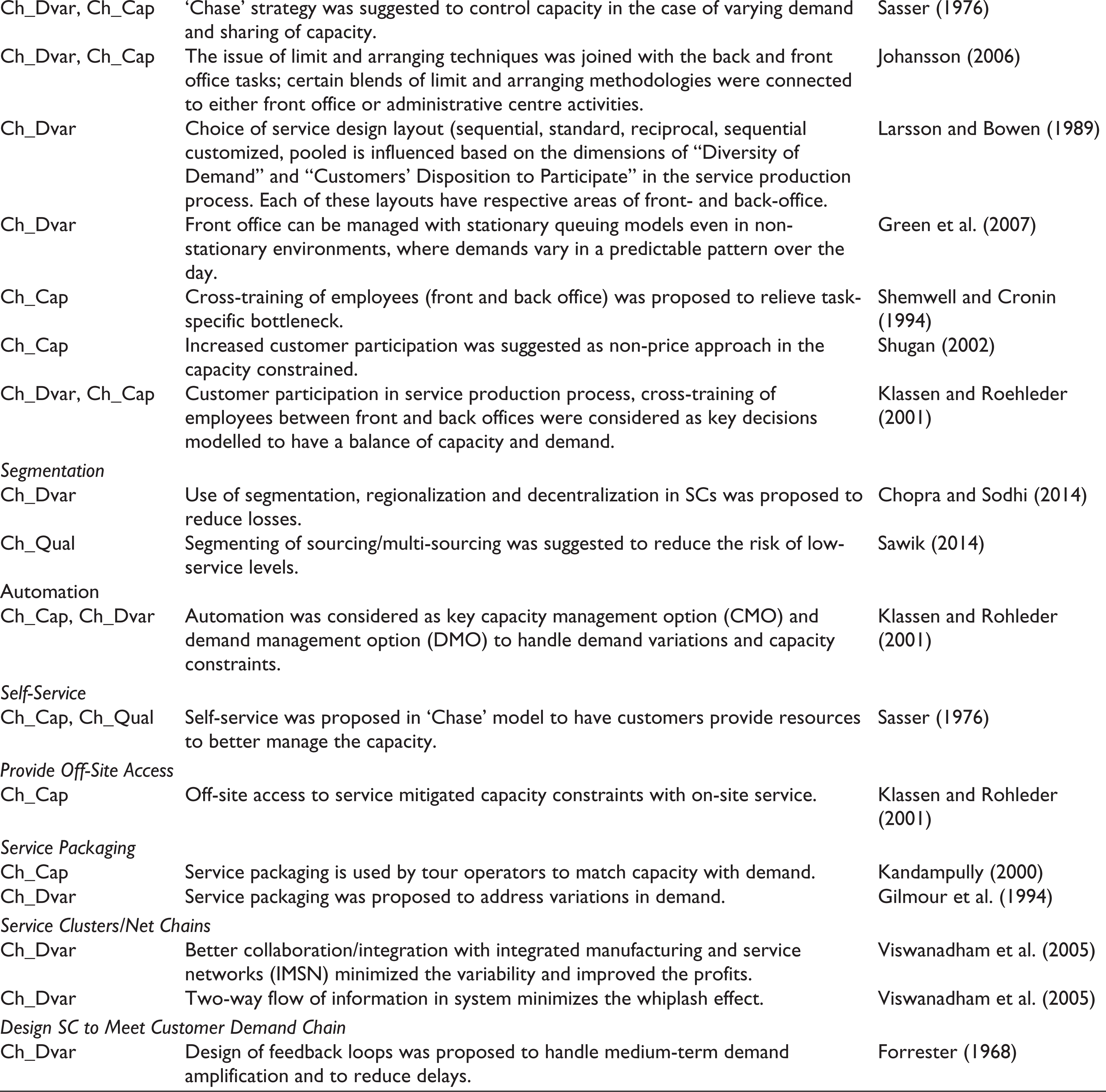
In Table 1, we examine the presence of various SCR and whether the use of specific SRS—process simplification, applying factory principles, applying lean, agile principles, automation, mass customization, postponement, modularization, re-organizing front and back end, and matching SC to demand—is influenced by the presence of specific risks. A more thorough literature review of last 30 years and beyond on use of service redesign as a strategy influenced by the presence of SCR to address SC performance impact was carried out and has been presented in Table 1.
Presence of SCR and Use of SRS

Use of Services Redesign Strategies (SRS) and Impact on Company Performance
The rearrangement, reconstitution or substitution of processes that constitute a service is referred to as service redesign. Bose et al. (2018) found the process flexible and plant profitable compared to the dedicated plant, specifically with high-capacity investment and constrained margins. Andreasson examined that administration configuration research that offered double worth further developed client experience and authoritative execution. Brozovic et al. (2016) conceptualized the linkages between supplier adaptability and client esteem creation. Advantages of information technology (IT) in SCM (Ohmori et al., 2021) along with process update incorporate further developed client support, effectiveness, data quality and nimbleness of the stock organization (Auramo & Ala-risku, 2005). Yap and Tan (2012) demonstrated that service SCM practices (demand management, customer relationship management (CRM), supplier relationship, capacity and resource management) had significant positive direct relationship with organizational performance (Silva et al., 2020). Berry and Naim (1996) had emphasized that redesign strategy could result in dynamic improvement in performance. The SC partners need to simplify their products and processes and reduce costs (Davila & Wouters, 2007). The studies presented in previous sections also highlight the significance of SCR and SRS with respect to company performance.
Company performance variables have been grouped as follows: (a) services supply chain competitive performance (R_SC); (b) customer satisfaction (R_CS); and (c) financial performance (R_FP). We consider the use of SRS and whether the use of these strategies mediates company performance (refer Table A.1).
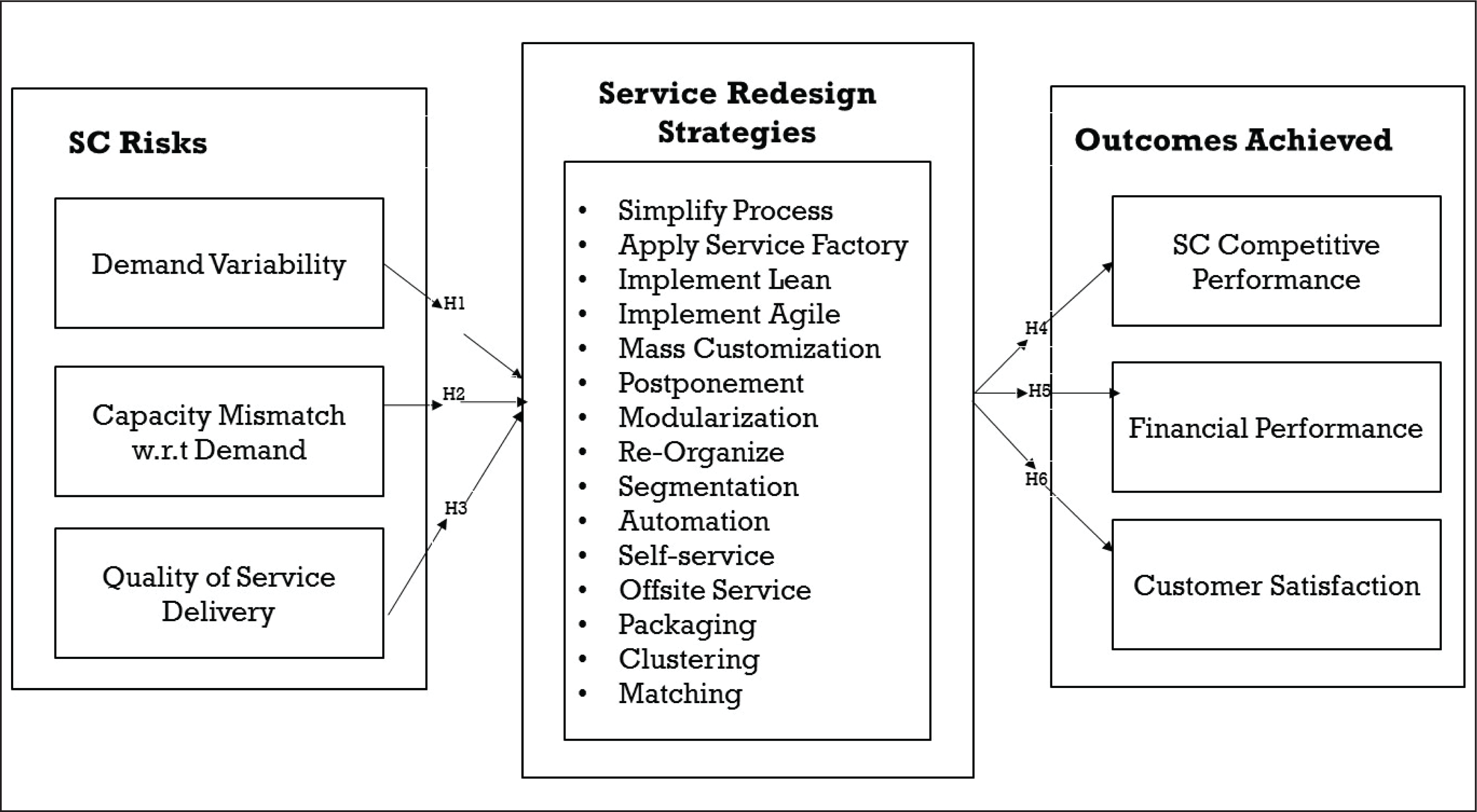
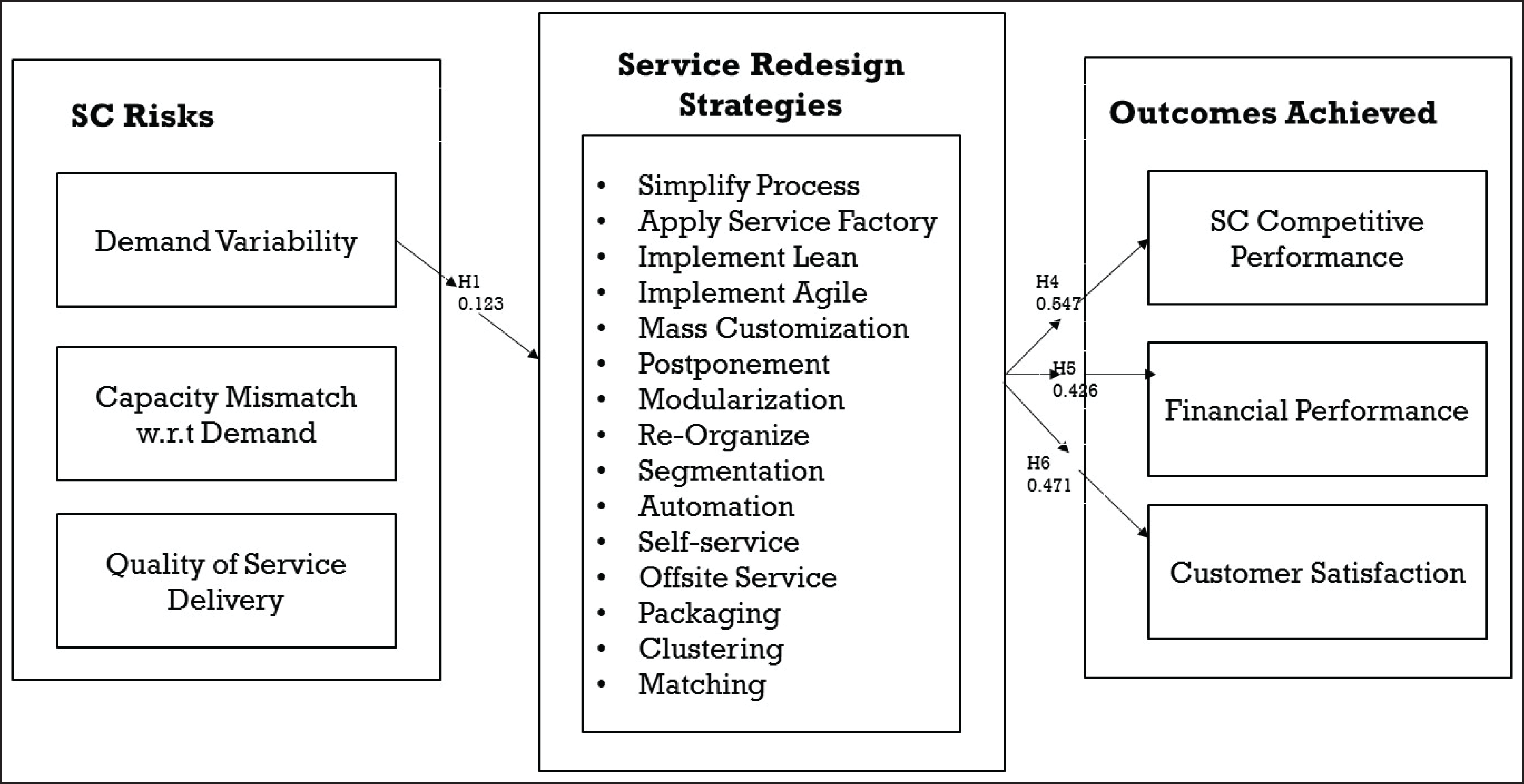
The researchers have assessed the performance of a firm in response to the application of SRS in the presence of SCR by applying the contingency theory and the SCP paradigm as the theoretical premise. The implementation of proper service redesign strategy will result in improved performance. But the influence of SRS does not exist as stand-alone; so the presence of SCR can be a deterrent to the positive influence on performance, and the extent of influence depends upon various factors that have been discussed in the study. Therefore, this research has focused not just upon proper selection but proper implementation too of the SRS even in the presence of SCR and their impact on the firm performance. On the basis of the above discussion, Figure 1 presents the conceptual framework along with the hypothesized relationships.
Hypothesis Building: Link of SCR, Use of SRS and Company Performance
Relationships Between Presence of SCR and Use of SRS
As discussed in the previous section, the SCR are demand variability risk, capacity mismatch with respect to demand and quality of service delivery. The SRS constitute simplification process; application of service; implementation of lean; implementation of agile; mass customization; postponement; modularization; re-organization; segmentation; automation; self-service; off-site service; packaging; clustering; and matching. There is an increase in the number and frequency of the SCR, which have a significant effect on the SCs operations and stability; hence, it is important that the SC becomes more robust to handle or tackle these risks and so requiring adequate redesign strategies (Carvalho et al., 2012). The following three hypotheses have been developed which shows the relationship of presence of SCR and SRS.
H1: Demand variability risk influences the use of SRS.
The first hypothesis has been proposed to explain the risk of demand variability (Ch_Dvar) influencing the use of SRS.
H2: Risk of capacity mismatch against demand influences the use of SRS.
The second hypothesis has been proposed to explain the risk of mismatch capacity (Ch_Cap) against demand influencing the use of SRS.
H3: Delivery quality risk influences use of SRS.
The third hypothesis has been proposed in explaining the delivery quality risk (Ch_Qual) influencing the use of SRS.
Relationships Between Use of SRS and Company Performance
Firms need to examine their present service designs, that is, the way they are delivered and received, and also create innovative ways to serve clients. Therefore, it becomes imperative that the services are redesigned for improved customer service and firm performance. Based on the discussion presented in the previous section, the constituents of company performance are SC competitive performance, customer satisfaction and financial performance. The three hypotheses developed to show the use of SRS and its impact on company performance are as follows:
H4: Use of SRS enhances SC competitive performance.
The use of SRS enhances the SC competitive performance, that is, (R_SC).
H5: Use of SRS enhances customer satisfaction.
The use of SRS enhances the customer satisfaction, that is, (R_CS). There is hypothetical proof of further developed consumer loyalty using various SRS (except postponement, integration of back and front office, and provide off-site access to service) as shown in Table A.1.
H6: Use of SRS enhances financial performance.
The use of SRS enhances the financial performance, that is, (R_FP). There is proof of progress in monetary execution with utilization of SRS (except with use of factory principles, postponement, modularization, integration of back and front office, self-service and providing off-site access to service) (refer Table A.1).
Thus, the above hypotheses proved the influence of SCR and SRS on company performance and established the basis of the findings discussed above. Based on all the six hypotheses developed, Figure 1 indicates the conceptual model for conducting the empirical learning.
Research Methodology
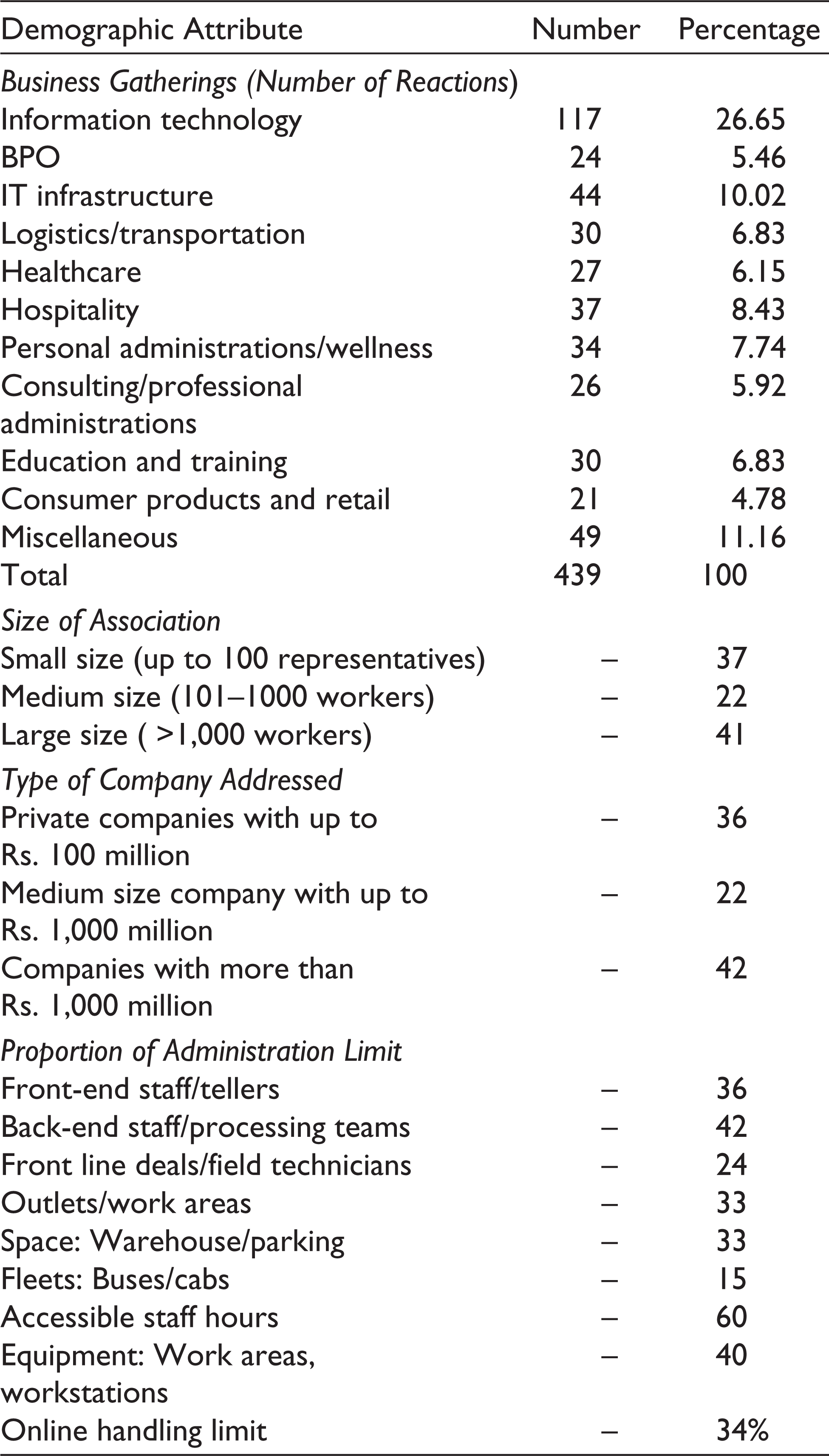
The underlying review build was guided with 20 expert respondents by close-to-home meetings, in light of the data sources which the last survey created (Table A.1), and dispatched to 2,000 administration associations of large, medium and small sizes in individual service industry sectors in India. The last reaction was gathered through a review connect supported with individual gatherings with 439 members who reacted. The business gatherings (number of reactions) were IT (117), BPO (24), IT infrastructure (44), logistics/transportation (30), healthcare (27), hospitality (37), personal administrations/wellness (34), consulting/professional administrations (26), education and training (30), and consumer products and retail (21). The business bunches with under 20 respondents were named miscellaneous (49 respondents) (refer to Table 2).
About 37% respondents addressed small size associations (up to 100 representatives), 22% addressed medium size (101–1,000 workers) associations and 41% addressed large size (>1,000 workers) associations.
As far as income is concerned, 36% respondents addressed private companies with up to Rs 100 million, 22% addressed medium size organizations with up to Rs 1,000 million and 42% addressed organizations with more than Rs 1,000 million income.
Proportions of administration limit showed by members (various limit units permitted) included front-end staff/tellers (36%), back-end staff/processing teams (42%), front-line deals/field technicians (24%), outlets/work areas (33%), space—warehouse/parking (33%), fleets—buses/cabs (15%), accessible staff hours (60%), equipment—work areas, workstations (40%) and online handling limit (34%) (refer to Table 2).
Demographic Profile of Respondents
Measurement
In this study, a 5-point Likert scale (where 1 indicates strongly disagree and 5 indicates strongly agree) was adopted. The framework included the following
3 broad SCR covering demand variability (Ch_DVar), constrained capacity (Ch_Cap), and service quality (Ch_Qual) covering 10 items. 15 categories of service redesign (ST_SD) include simplification of process, service factory, lean, agile, mass customization, postponement, modularization, re-organize, segmentation, automation, self-service, off-site service, packaging, clustering, matching, comprising one item each, total 15 items. 3 classifications of execution results—SC serious (R_SC), consumer loyalty (R_CS) and monetary execution (R_FP)—covering 20 things.
The construct has been introduced in Table A.1. All the things are estimated in 5-point Likert scale where 1 alludes to strongly disagree and 5 alludes unequivocally concur concerning the different aspects. Few reactions with missing qualities inquiries were supplanted with normal worth of the reactions for the separate inquiry.
Thinking about utilization of developmental estimations, a composite-based incomplete least square strategy is utilized to do dependability and legitimacy, factor examination, organize condition model, intervention investigation with circuitous and absolute impacts, and utilize Smart partial least squares (PLS). The utilization of PLS strategy is suggested explicitly when it is obscure that whether the idea of information is normal element or composite based (Hair et al., 2017; Rigdon et al., 2017).
Reliability and Validity of the Instrument
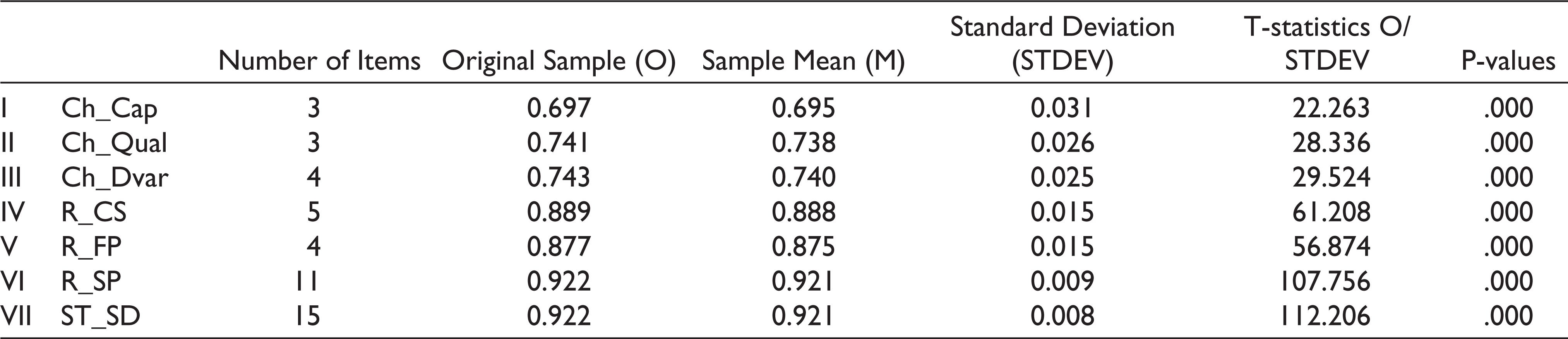
To guarantee non-attendance of legitimacy and dependability concerns, a progression of tests was led to kill any methodical mistakes. The factor examination test showed the dependability of the things in poll with stacking for the things was wilt >0.60 or the p-values was <0.1. Irrelevant stacking of things 2, 5, 9 has been eliminated from the intervention investigation. Table 3 displays corresponding values of the main factors, while the aftereffects of the component stacking are portrayed in Table 4.
SCR, SRS Used and Outcomes Achieved
Factor Analysis of Items (SCR, SRS Used, Outcomes Achieved)
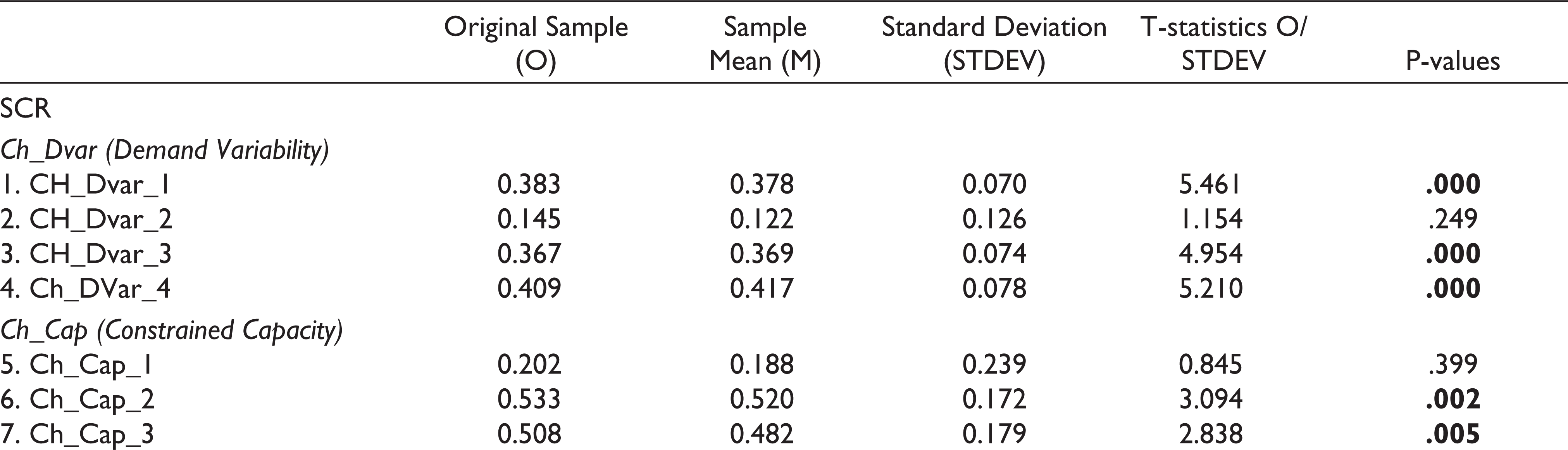

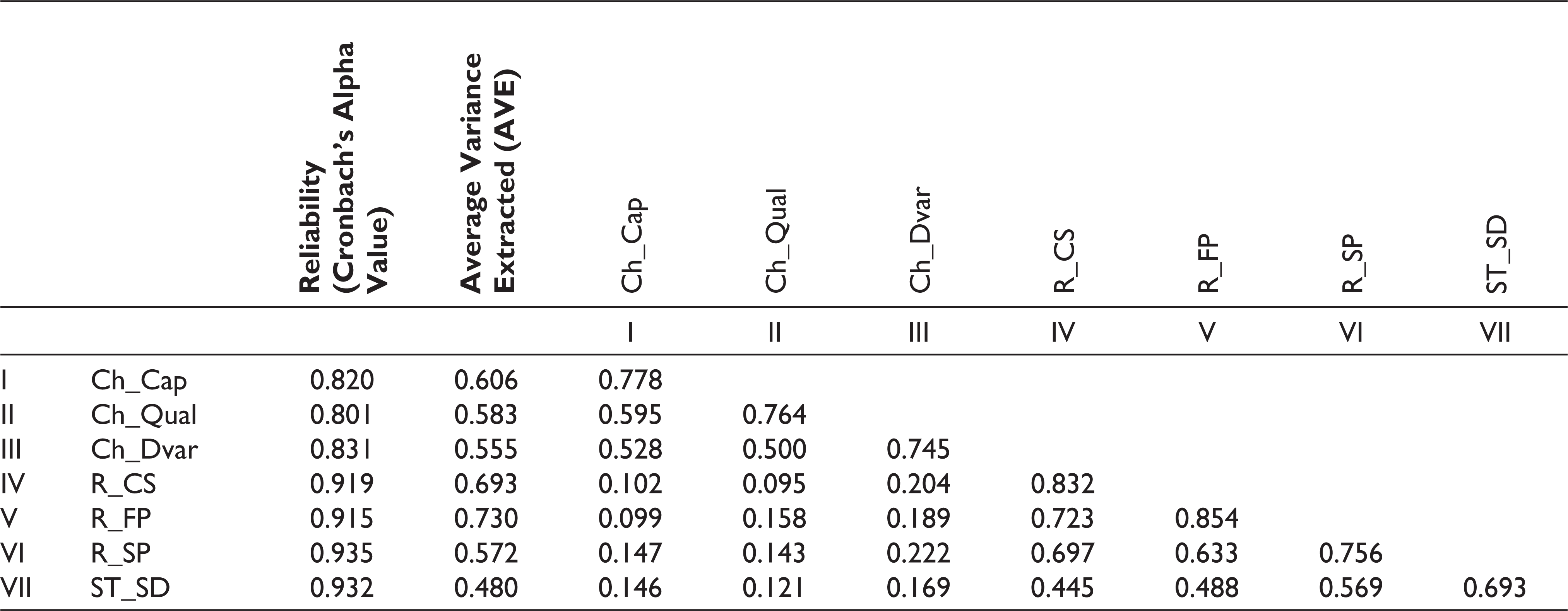
To build up the dependability, the reliability was tried according to the determination by (Kumar et al., 2015; Nunnally & Bernstein, 1994; Raykov, 1997). The outcome demonstrates that all the factors were surpassing the cut-forbidden >0.70 (refer to Table 5). To set up any issue of focalized legitimacy, the average variance extracted (AVE) test was led for all the deliberate factors. The AVE for all the factors was over the trimmed off worth of 0.50 with the exception of ST_SD, at 0.480, which was close to the trim off (Bagozzi & Yi, 1988; Hair et al., 2014; Kumar et al., 2013, 2014) (refer to Table 5). The discriminant legitimacy test was controlled to guarantee that the develops were liberated from any multicollinearity issue. The square root of the AVE at the diagonals of the matrix for all the construct was higher than inter construct correlation confirms the discriminant validity test (Fornell & Larcker, 1981). The build dependability was likewise settled through Cronbach’s alpha. The aftereffects of the legitimacy and dependability are exhibited in Table 4; Cronbach’s alpha value and AVE are shown in Table 5 individually.
Construct Reliability and Validity
Result Analysis
Structured Equation Modelling and Path Analysis
Normal PLS to appraise the way coefficients were utilized and the bootstrap methodology were directed to acquire t-statistics by structural equation modelling (SEM) (Sharma et al., 2017; Singh et al., 2013) utilizing Smart PLS.
Speculations, aftereffects of way model and bootstrap importance in relation to t-statistics are portrayed in Table 6. The model with upheld hypotheses and critical ways is introduced in Figure 2.
Path Analysis: Structural Model Estimates

Hypotheses Supported
The results of the path analysis and bootstrap procedure demonstrate that
Presence of Risk → Use of SRS
H1: Presence of demand variability risk influences the use of SRS.
Use of SRS → Outcomes achieved
H4: Use of SRS enhances the SC competitive performance. H5: Use of SRS enhances the customer satisfaction. H6: Use of SRS enhances the financial performance.
The direct effect suggests that the presence of constrained capacity risk and service delivery quality risk do not influence the use of SRS. This deviates from the theoretical background. We would investigate the indirect and total effect to analyse this further.
Analysis of Mediation: Indirect and Total Effects
The researchers examined the indirect effect (presence of SCR and company performance). At p-value < .05, the results of indirect effect indicate that the presence of risks in items I and II (constrained capacity and quality of delivery) impact the company performance, in items IV, V and VI (customer satisfaction, financial performance and SC competitive performance) and the use of SRS mediate the performance. Table 7 presents an analysis of mediation (indirect effects and total effects). These effects are witnessed only through the analysis of mediation.
Analysis of Mediation: Indirect and Total Effects

The total effects are significant (at p ≤ .05) for the following paths:
Presence of constrained capacity risk (Ch_Cap) has positive mediating effect on SC competitive performance (R_SP). Use of SRS (ST_SD) mediates the relationship. Presence of delivery quality risk (Ch_Qual) has a positive mediating effect on SC competitive performance (R_SP). Use of SRS mediates the relationship (Ch_Qual→ ST_SD is significant, p-value = .018).
Interpretation and Discussions
Hypothesis Supported Versus Hypothesis Rejected
The result of hypotheses testing indicates that the presence of interest fluctuation hazard impacts utilization of SRS. The utilization of SRS improves organization execution on all fronts—SC cutthroat execution, consumer loyalty and monetary results.
Mediation Analysis
The total effects are significant for few paths (Ch_Cap→R_SP, Ch_Qual→R_SP, Ch_Qual→ST_SD). These paths were otherwise not found significant in the hypotheses testing.
With the considered indirect and total effects, we find that H2 and H3 are now supported with Ch_Cap→ST_SD (significant at p-value = .07) and Ch_Qual→ST_SD (appearing as significant at p-value = 0.018).
As a contingent relationship is a relation between two variables where one is a consequence or contingent of the other, we conclude that there is a contingent relationship between Ch_Cap→R_SP (risk of constrained capacity and SC Competitive performance) and Ch_Qual→R_SP (risk of delivery quality and SC competitive performance) and that the use of SRS mediates the relationship.
Conclusion
The presence of interest changeability hazard impacts utilization of SRS. The utilization of different SRS is an effective methodology to further develop organization execution on all fronts—SC serious execution, consumer loyalty and monetary execution. There is unexpected connection among SCR and company execution, and utilization of SRS goes about as arbiter.
This study examines various SCR such as demand variability risk, capacity mismatch risk and deliver quality service risk. Use of SRS, namely process simplification, service factory principles, lean, agile, mass customization, postponement, modularization, re-organization, segmenta-tion, automation, service clustering or net chains, and design SC to meet customer demand chain are influenced in the presence of SCR.
The initial path analysis suggested only occurrence of demand erraticism influencing the use of SRS. An analysis of indirect effects suggested additional paths—risk of constrained capacity and delivery service quality no longer have adverse influence on performance. The presence of SRS acts as a mediator.
Examining the total effect, we found that delivery service quality influences the use of SRS (p-value = .018). Risk of constrained capacity also influences the use of SRS (with p-value = 0.07) now. These relationships were not visible in the initial path analysis pointing to the fact that the use of SRS has acted as an arbitrator in the association of SCR and company performance.
After examining the relationship, all hypotheses (H4, H5, H6) are supported indicating the use of SRS resulting in favourable SC cut-throat execution, consumer loyalty and monetary results.
Implications of the Study
The views introduced here reflect the presence of SCR and utilization of SRS to further develop organization execution. The powerful execution of SRS grants synchronous accomplishment of SC serious execution, consumer loyalty and monetary goals. The options such as simplification, service factory, lean, agile, mass customization, postpone-ment, modularization, re-organization, segmentation, auto-mation, provisioning self-service, off-site access, packaging, clustering and matching can improve performance in spite of the SCR presence.
Companies and SC managers need to be creative in design of service using SRS discussed to provide required touchpoints with the customer, to improve demand predictability, and adjust capacity to deliver improved company performance.
The examination discoveries revealed in this review empower SC chiefs confronting request changeability, compelled limit and conveyance quality dangers to carry out pertinent SRS and picture the effect of their choices of executing SRS on the organization execution. This supports taking a reasonable perspective on the SCR present, executing explicit SRS and advancing organization execution.
A nearby working relationship should be set up between the presence of SCR and utilization of SRS to convey improved outcomes. The results also suggest that SRS should not be limited within the boundaries of the organization, the capacities from SC partners, customer involvement can be leveraged to apply techniques such as modularization, postponement, to balance capacity and demand. The viable utilization of this proposal lines up with a change in associations’ methodology to exhibit an expanded spotlight on shared stock chains.
Limitations and Further study
This study is the first to concentrate on the utilization of SRS within the sight of SCR and investigate the effect on organization execution. The two vital impediments of this review incorporate the following: (a) the respondents addressing associations of shifted size, kind of administration industry and geographical beginnings are basically from India; (b) service redesign is considered as part of options in capacity management options (CMOs) and DMOs, whereas the authors have separated the treatment of SRS here. The examination could be stretched out to different geologies, and a cross-geology multi-bunch investigation can be completed.
In this study, all the SRS are combined in one construct. A study could analyse specific impact of items such as simplification, automation, off-site access, postponement, etc., individually.
The exploration could be stretched out to utilization of SRS about SC organizations and groups with different members in a solitary organization or bunch.
Footnotes
Declaration of Conflicting Interests
The authors declared no potential conflicts of interest with respect to the research, authorship and/or publication of this article.
Funding
The authors received no financial support for the research, authorship and/or publication of this article.