



Abstract
Small and marginal farmers (SMFs) in developing countries, perennially struggle with low marketable surplus, inadequate storage facilities, poor market access and logistical constraints that in turn leave them with distressed sales of their produce to exploitative middlemen in the agricultural supply chain. Addressing such pressing concerns, the present study aims at proposing a market-facilitating demand-centric agricultural supply chain model where the income of the farmers is directly linked with risk-adjusted actual market movement. The price-sensitive model, being a facilitator for direct marketing, makes farm produce marketable by designing a cost-effective and scientifically managed shared warehouse, and minimizing market volatility risk through diversification among a group of contributing farmers. Empirical validation of this simulation-based modelling was tested on three essential year-round food staples – Tomato, Onion and Potato (TOP) – against the prevailing market settings. Interestingly, instead of immediately selling agricultural produce to market intermediaries due to a lack of storage options, if farmers shared the associated storage cost among themselves and distributed the market returns by proportionate crop sales to fulfil the demand, they could not only realize better returns during the season but also could turn off-season market unpredictability into their favour. The model is focused on enhancing SMFs’ income in the emerging economy context, and its empirical approach for risk minimization strategy is indeed proposed for the first time in the available literature. The finding, demonstrably, substantiates that the policy implication of the proposed model for SMFs in the fruits and vegetables (F&V) segment could improve market access and derive fair returns.
Keywords
Executive Summary
In developing countries, small and marginal farmers (SMFs) by far grapple with inefficient marketing owing to multiple marketing bills, inadequate post-harvest storage support and a lack of fair marketing intervention opportunities. As a consequence, these producers are many a time left with distressed sales of their produce facilitated by exploitative and speculative market intermediaries who procure agricultural stocks from them at an unreasonably low price and artificially control market supply for their undue advantage, leaving the most important but least benefitted stakeholders in the agriculture supply chain ‘farmers and consumers’ aloof from the market benefits. Not only for the social-economic welfare of disproportionate risk-affected farmers but also from the SDG or sustainable development goals (No poverty and zero hunger) perspective, addressing this perennial issue needs deliberate thinking over income enhancement and risk management strategies.
In order to mitigate the prevailing predicaments, a demand-centric market facilitating model was formulated that would safeguard the farmers against volatile agricultural market behaviour and offer cost-effective and well-managed storage options. In the model, stocks from different farmers in the surrounding regions of the consuming market would be procured and then stored in a scientifically managed warehouse whose operational cost would be shared by all the contributing farmers proportionately, and the returns, by serving consumers, would also be shared proportionately through a designed computational algorithm that keeps a track of the time of contributing supply of a farmer to the time when it exhausts. In this way, the storage cost per head and risk against fluctuating market would be minimal. The proposed model was simulated on three essential food vegetables in the Indian consumer basket, namely ‘Tomato, Onion and Potato (TOP)’ in nine different regions across India considering the local production and price behaviour of these crops in 2019. India, being the second-largest producer in the fruits and vegetable segment and having most of its farmers in the small and marginal category was the perfect area for research study among other emerging economies, grappling with similar agricultural inefficiency issues.
The simulation results demonstrably explain the significance of shared storage facility and income distribution through proportionate release against speculative and rapacious middlemen and market volatility. It was found that if farmers held their harvest to serve both seasonal and off-seasonal markets, they would certainly leverage potential market benefits that tend to upsurge dramatically during the off-season. Interestingly, the policy implication of this study provides a robust avenue to address the perennial issues of high post-harvest losses, low realizable income and unreasonable price inflation in the F&V segment.
Introduction
Smallholder farmers, providing 80% of agricultural farm production in Asia and sub-Saharan Africa (Lowder et al., 2014) and the essential stakeholder in the global food value chain, experience a multitude of issues like disproportionate risks (price volatility, climate anomalies) and inequitable market access (Reardon et al., 2009) that results in the low remunerative prices of their marketable surplus. Their perennial dilemma of what to sell and/or what to hold in a volatile postharvest market due to no fair marketing intelligence and inappropriate storage facility leads to ineffective and unprofitable sales planning of their crop production. This disappointingly causes a significant case of distressed sales and brings low remunerative returns to them (Tripathi et al., 2022). The inadequate returns could not be sustained by many of them, and it essentially accounts for the rise of poverty cases and the shift from farm to non-farm activities (Dicecca et al., 2016; Tey et al., 2020). This requires deliberate strategic planning for their socioeconomic welfare; otherwise, it would be an irreversible blow to the progress towards the sustainable development goals in relation to farming communities: No poverty and Zero hunger (Gneiting & Sonenshine, 2018).
India, the second-largest producer of fruits and vegetables (F&V) (Horticultural Statistics at a Glance, 2018) has 83% of its farmers in the small & marginal class band (landholding 0.00−2.00 ha.) (Agriculture Census, 2015−16). The F&V chain in most of its region passes through multiple transactional windows (marketing bills). As a consequence, farmers cannot avail the realizable benefits of agricultural marketing which brings down their farm share in consumer price to as low as 32%−68% (GOI, 2013; Kumarathunga, 2020). This agricultural marketing inefficiency is a serious contemporary predicament in Indian horticulture development (Agriculture Census, 2015−16; Negi & Anand, 2014).
Besides, in the prevailing agribusiness supply chain process, especially in the case of seasonal vegetables, many Indian small & marginal farmers (SMFs) are not cognizant of true real-time market information owing to low visibility on the official market information portal. They lack a strong union against the dominance of trader cartels. This creates opportunities for speculative intermediaries to fetch higher returns at low procurement costs from these farmers, rendering them the least benefitted stakeholder in the Farm-to-Fork value chain. The situation becomes distressing when farm producers are made to pay the brokerage as well. Also, sometimes consumers have to pay an unreasonably high price for even seasonal vegetables because of trade malpractices across the value chain. Empirically, Agra (2007) studied the gap between the farmgate price and the retail price paid by the consumer in the EU between 2003 and 2005. It was noted that the low countervailing power of farm producers within the value chain resulted in financial hardships for them. Moreover, processing and marketing services between both producer-wholesaler and wholesaler-retailer generated a high marketing margin, and significant price gap depending upon the type of vegetables and member state.
The unavailability of proper storage infrastructure support after harvesting is another nightmare for Indian SMFs that in some regions leaves them with the only choice of selling their majority of harvested agricultural stocks immediately to stockists for a fraction of the price spread―a difference between farm gate price and retail price. Therefore, they also forgo all the foreseeable chance of leveraging the high agricultural market outlook during the off-season (Kumar et al., 2020b; Raut et al., 2018). Highlighting more adversities, on account of the glut of vegetable production in any region, farmers have to sell to the intermediary for a pittance to preclude postharvest losses (PHL). These exploitative middlemen in turn hoard to artificially reduce market supply in those regions for increasing sales in supply deficit regions.
Conclusively, apart from the dominance of middlemen in the F&V supply chain, lack of infrastructure for grading and storage, fewer and expensive cold-chain vehicles (for highly perishable crops) and asymmetry in information flow aggravate postharvest predicaments such as no direct and fair market accessibility and perishability due to inadequate storage infrastructure. Agriculture marketing efficiency can be strengthened through tapering intermediaries between the farm gate and the retail market to eliminate unfair marketing bills from the supply chain. (Dastagiri et al., 2013).
In the study of innovation intermediaries as market facilitators to mitigate constraints in demand and supply match (Klerkx & Leeuwis, 2008), it was conclusively found that demand articulation, network brokerage, and innovation process management could obliterate factors responsible for a demand-supply mismatch to a greater extent. This means that the prospect of efficient agriculture marketing has the scope of opportunities such as time-based demand information flow, improved market access and lesser PHL in a noticeably big way (Chaudhary & Suri, 2022; Haidery et al., 2021; Heikkilä, 2002). Integrating small-scale farm producers into improved and inclusive market access enables them to sell confidently at better prices (Ume, 2023). Consumer demand theory, demonstrating the role of behavioural patterns and economics in demand sensing, enables the effective implementation of demand chain management. For example, real-time demand estimation assists in effective production and inventory planning (Bateman, 1976).
In an exploratory study, Taylor (2006) studied the scope of Demand Chain Management (DCM) for the Beef industry in the Rio Grande do Sul, where demand sensing of consumers was given the origin of the process. The purpose of the integration of consumers and retailers or distributors should be fulfilling needs instead of merely selling products in the agro-food industry for high sales and growth numbers. Though DCM is still an incipient concept in the agro-supply chain domain (Deshmukh & Mohan, 2016; Mohan & Deshmukh, 2013), its application in the identification of heterogeneous customer segments and building high responsiveness capability to meet demand expectations accordingly through technology-enabled demand sensing would bring positive transformational changes in traditional agriculture supply chain management. With demand-centric supply distribution, the postharvest predicaments for farmers such as unfair returns due to glut supply in the same market and unorganized sales and storage process will be strategically addressed keeping farmers’ and consumers’ interests protected (Dastagiri et al., 2013). Pingali et al. (2019) classified Indian states based on GDP per capita, agricultural share in GDP and urbanization rate into agricultural-led growth states, urbanizing states and lagging states. It concluded that except for four states―Punjab, Haryana, Andhra Pradesh and Himachal Pradesh―others fall in the second and third categories.
Although many models such as Ninja Cart and ITC’s E-Chaupal (presented in the literature section) procure directly from food producers and benefit them with low marketing fees and high returns (spot or future), there is no demand-driven market facilitating system that provides risk-adjusted direct market access to their marketable surplus with shared and cost-effective warehouse facility, diversifies volatility risk through proportionate stock distribution and enables these distressed farmers to leverage off-season high prices with high transparency. The review of the present situation, as well as the literature, helped researchers funnel down the following two research questions to be addressed through the present study:
The literature on the future of farming in these second and third-category states is vulnerable to low farm share owing to the lack of efficient agro-market settings (Dastagiri et al., 2013). Markedly, this makes the study on Indian SMFs a suitable research setting for addressing similar issues prevailing in many other developing nations. This is largely due to several issues of immediate concern especially pertaining to high transaction costs at different nodes in the agricultural demand/supply chain (Tripathi et al., 2022), which if reduced can bring much more efficiency, reduce information asymmetry, enhances farmers’ risk appetite and thereby offers greater chances of better price discovery. The above arguments drawn from existing literature and real-life instances of the farmers led to the development of the following two research objectives (ROs);
The remainder of the article is organized majorly in four sections comprising literature review, methodology, results and discussion, and conclusion. The methodology section is further divided into four sub-sections such as study area and data input, model presentation, computational mathematical modelling, and data analysis and software. The next section on results and discussion covers two sub-sections vis., inventory and model functioning for the Tomato, Onion and Potato (TOP) supply chain, and detailed economics of the model. The paper finally concludes with interesting conclusion and policy implications that can have far-reaching impacts on farmers’ life if implemented well.
Literature Review
Punctuality of farmers even amidst the COVID-19 pandemic with all protective measures precluded the situation of unavailability of essential agri-food in the market. Nonetheless, the literature reports that farmers, the most essential element of the F&V chain, are considered least during price transmission, and the journey of farming is most of the time paved with adversities of changing anomalies, glut production, PHL and low remunerative returns and farm share (Mila et al., 2022). The hoarding behaviour of the traders in this chain becomes a major issue during such catastrophic unprecedented events causing distress both to the producers and consumers (Song et al., 2021).
The extant body of literature on marketing channels shares several commonalities with supply chain theories which lead to the application of a blended theoretical foundation in the domain (Arinloye et al., 2015; Gong et al., 2007; Gundlach et al., 2006). Both the marketing channels and supply chain focus on efforts to reach the customers efficiently either through an intermediation or disintermediation approach. The sustainable collaboration between supplier and buyer rests on trust, and the risk for this relationship is ‘opportunism’. This deceitful and rapacious act profanes the serenity of relationship ‘trust’ leading to either unproductive consequences or the termination of the contract per se which calls for disintermediation in the supply chain. Measuring the farmers’ participation in direct marketing channels, Donkor et al. (2018) asserted that factors such as human, physical and social capital coupled with market conditions affect the farmer’s decision related to marketing channel intermediation and confirmed that disintermediation or reaching the markets directly offers more benefits to the farmers. In another study, Mills & Camek (2004) also observed a competing interest among the channel partners that highlight the need for channel disintermediation which offers a host of opportunities to the farmers (Arnould et al., 2007).
In the agro-food marketing chain, the farmers-traders relationship is based upon the quality of food provided by farmers and returns by traders after inspecting food quality which is largely dependent on their purchase input quality (Haidery et al., 2021). Unfortunately, in an inefficient chain, these traders make unfair valuations of farm produce and release these stocks at unreasonably high rates to consumers. Thus, agricultural traders transfer any supply chain-associated risks to small-scale farmers against the backdrop of opportunism. This act of opportunism leads to a breach of trust for farmers and customers. Interestingly, transaction cost economics (TCE) popularized by Williamson (2008) emphasizes for minimization approach at each transactional point (Ketokivi & Mahoney, 2020) in the value chain under the threat of opportunism to safeguard principal (farmers and consumers) against unreasonable and inefficient marketing channels (Agafonow, 2020; Kanwal & Rajput, 2016; Kumarathunga, 2020, April). Also, the health of the farmer-buyer relationship is measured by relational constructs such as satisfaction, trust, and commitment and high values of these antecedents reduce transaction costs at supply chain nodes, and as a result improves overall efficiency (Paluri & Mishal, 2020). Information sharing and reasonable crop evaluation by buyers impart a sense of satisfaction to farmers which reflects upon their commitment to quality produce (Watabaji et al., 2016). The reciprocation of these values to the buyer creates a stable and sustainable network of trust (Dlamini-Mazibuko et al., 2019, Tripathi et al., 2022).
The literature posits DCM as a consistent and coordinated approach (Deshmukh & Mohan, 2016, 2017; Jüttner et al., 2007) to make a tradeoff between demand and supply through efficient delivery, demand integration, mutual relationships, efficient supply, lean inventory management, and optimal lead-time. Conclusively, its objective for the agro-value chain would be to keep all its stakeholders of the value chain satisfied. Thus, supply chain management and marketing are complementary efforts for perpetual value creation (Kozlenkova et al., 2015). Based on a study by Lin et al. (2020), the expansion of the agro-marketing value chain model through e-channels and ICT would strengthen its capability to sense the market under dynamic environmental behaviour more efficiently (Dubé et al., 2020). However, unfortunately, the channel selection dilemma for farmers gets aggravated due to associated concerns with perishability risk (Deshmukh & Khatri, 2012), storage infrastructure, logistics support, market volatility and low sales volume (LeRoux et al., 2010). Thus, there should be shared values among small farmers to strengthen their stand against aforementioned inefficiencies to achieve economies of scale and equip them with high bargaining power to fetch reasonable returns. However, some different contexts indicated surge pricing (Anirvinna & Deshmukh, 2020) in the absence of bargaining power. This practice will alleviate the perennial self-exploitation of farmers in the volatile and uncertain agriculture market (Altman, 2015).
In the study of potato growers in Andean regions by Devaux et al. (2009) for the prospect of a participatory market chain approach (PMCA) and stakeholder approach, it was found that social learning, the involvement of social capital, and collaborative joint actions led to increased farmers’ income and social status. This calls for research highlighting the avenues where the farmers become the real beneficiary and eventually more empowered in the value chain ecosystem. A similar approach and best practices have been studied in the flagship scheme of ITC Ltd. ‘E-Choupal’, which was a structural framework to eliminate multiple intermediaries in the agri-food value chain by directly procuring from farmers through its IT-enabled collection points for its agri-processing units (Bhatnagar et al., 2003). Another case is Ninja Cart (an agro-tech start-up), which procures from farmers at fair market price and delivers to customers through a complex algorithm-enabled production supply chain (Your story, 2019). Fulfilling the need for a reliable market intelligence system for the agricultural market dynamics, a structured iterative algorithmic approach for market price anticipatory behaviour, leveraging the strengths of advanced predictive models, was rigorously studied by Tripathi et al. (2022) to facilitate strategic crop sales for farmers.
The present research is a humble attempt to fill this gap in agribusiness marketing literature vis-à-vis practice in the emerging agribusiness Indian Market. The study was carried out to propose an efficient demand-driven and income-maximizing agribusiness model for farm growers as a market facilitator for direct marketing and was tested for three essential seasonal vegetables that is, TOP which are usually consumed as the basic ingredient around the year. Globally also, potato (368168914 MT), tomato (182256458 MT), and onion (96773819 MT) (FAOSTAT Database, 2020) have high demand primarily due to two reasons. First, these are considered the most essential vegetables in the consumer basket, and second, for their nutritional value as potato, a major nutrient, contains carbohydrate 20.13 g, protein 1.87 g, fibre 1.8 g (FAO, 2008), onion: fibre (22.4%), crude protein (24.8%) (Dini et al., 2008), and tomato: mostly protein (176.2 g/kg), crude fibre (524.4 g/kg) (Violeta et al., 2018).
The primary contribution of the article is to design a market volatility risk management framework to improve market access and minimize PHL prevailing in the current agricultural supply chain landscape rather than simply focusing on agricultural marketing (Chaudhary & Suri, 2022). To minimize volatility market risk, an algorithmic computational model is proposed that diversifies the market risk by proportionately spreading it among a group of contributing farmers, who are sharing common values and interests. The secondary contribution is to discuss the policy implication of this demand-driven price-sensitive model on the socio-economic welfare of SMFs. Also, the novelty of the study lies in the fact that no literature has been reported for a comprehensive price-sensitive agribusiness model for the most basic vegetables that is, TOP. Interestingly, our proposed research work is in line with operation greens which was announced for the TOP value chain in the Union Budget 2018−2019 of India to enhance the value for TOP growers through market integration, market intelligence network, and price stabilization measures (Ministry of Food Processing and Industries, 2018).
Methodology
Study Area and Data Input
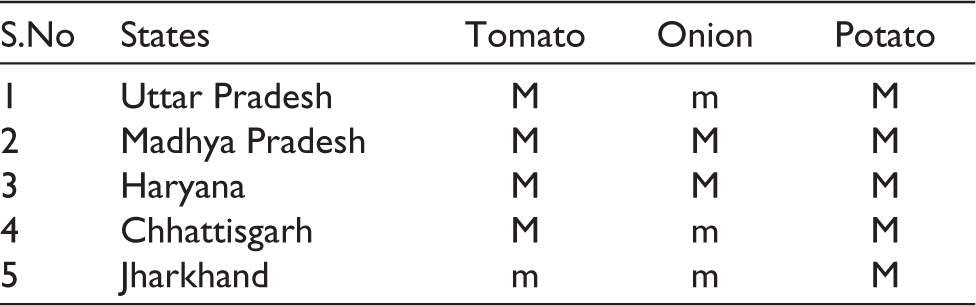
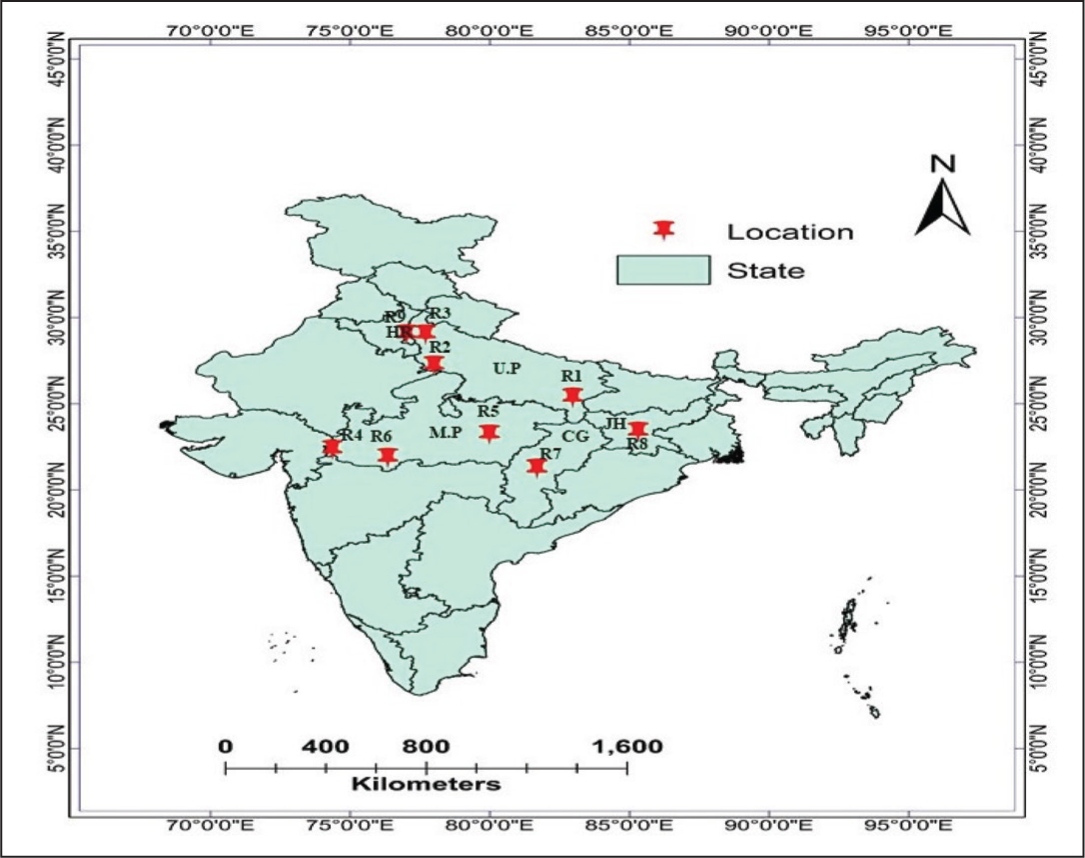
Sensitizing to various elements of the agro-supply chain and grounds for low farmers’ share in consumer price, Uttar Pradesh (U.P), Madhya Pradesh (M.P), Haryana (HR), Chhattisgarh (CG) and Jharkhand (JH) (consolidated population around 30% of total population India; Census of India, 2011) were identified as the study areas because of having a regular demand for TOP and similar cropping pattern. Thus, different market regions inside these states could be selected for the simulation of the demand-driven income-maximizing agribusiness model. Post harvesting, most of the markets within these states either depict volatile behaviour with increasing trends or no trend. Considering this behaviour, 205 farmers across different market regions (R1, R2, R3 from U.P; R4, R5, R6 from M.P; R7 from CG; R8 from JH and R9 from HR) were contacted for the detailed survey of parameters of interest such as crop variety, crop cycle, area of cultivation, yield, raw material cost, pesticides used, harvesting period and practices, marketing channels followed last year returns and time of stock sales. These farmers reveal that seasonal arrival in the markets arrives from local farmers and traders while off-seasonal demand is fulfilled by storage (cold for potato and dry for onion) and central wholesale market (CWM), which has a constant influx of supply from other regions by traders. And, traders in the major crop-producing states distribute farm-produce to minor states for high returns while procuring at quite a low cost (Table 1, Figure 1).
Major TOP Producers in the Surveyed States.
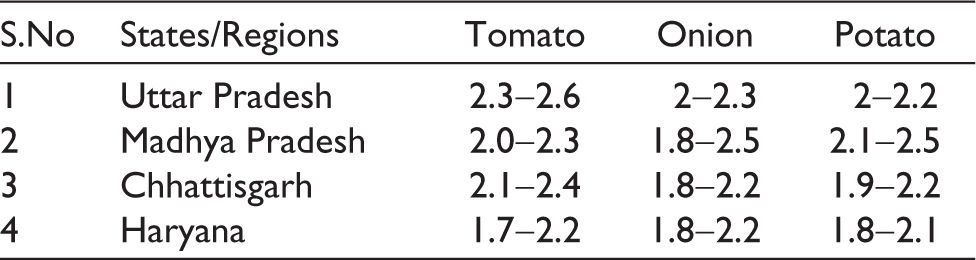
These procurement costs range from 6% to 15% less than the wholesale market in the case of Tomato and 6% to 25% in the case of Onion and Potato. As far as unfair marketing bills are concerned, realized returns to the cost of cultivation for the farmers of these states during 2019 were calculated and tabulated in Table 2. Note that the actual realization of returns is lesser because most of the farmers use their own small and marginal landholdings and work on themselves without hiring any external labourers for the farm activities.
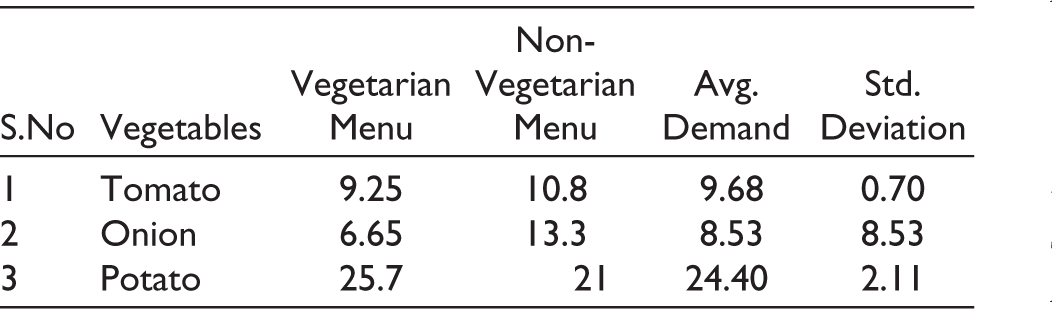
For the estimation of the consumption pattern of TOPs, a large market region (R1) comprising nearly 150 societies (approx.19,000 residents) was surveyed for the variety of food served, the daily requirement of TOP, frequency of purchase, the monthly price paid during the season and off-season in 2019 and the quality (grade) of vegetable purchased (Table 3). The daily requirement of vegetables in the region is fulfilled by the local wholesale market (LWM) which is either supplied by local farmers or by the supply from the CWM (12 km from the local market).
Return to Cost of Cultivation Ratio for Farmers in Season 2018-2019.
Daily Diet Requirement of the Society as per the Menu.
All figures in quintals.
As other surveyed regions exhibit a similar kind of demand pattern as in the case of R1 so there would be the same operational parameters for the comparison model performance under different market conditions.
To understand TOP’s behaviour in the retail market, the Agriculture Produce Market Committee (APMC) of these markets was approached. APMC is an official wholesale price monitoring body that maintains daily wholesale price data of agriculture commodities on a public Agmarknet portal (Agmarknet Database, 2020) and monitors retail market prices. It is informed that retail price margins are at least 40% in the case of Tomato, 35% in Onion and 20% in Potato. Thus, the value chain between the wholesale and retail market itself contributes significantly to the price gap between farm-to-fork due to agricultural marketing inefficiencies.
Model Presentation
In the existing scenario, often cash crops like onion and potato are procured by exploitative and speculative intermediaries during the season at the farm gate and further hoarded to restrict market equilibrium for higher returns, not only during the season but off-season too. These inequitable practices overshadow fair price transmission and wipe off a handsome amount as a marketing margin in the value chain by returning ill fate to farmers and overpriced sales to customers. This makes the whole agro-marketing value chain inefficient.
Intending to break this unfair margin appropriation in the agriculture supply chain, the proposed model is an efficient demand chain model focused on Procurement, Inventory Management and Distribution of farm produce. And, for enhancing income and hedging market volatility, a computational algorithmic approach is formulated that keeps harmony among contributing farmers by deriving revenue from the market through the proportionate distribution of their stocks, according to their time of arrival in the model.
This approach would revert fair returns to farmers and exhibit opportunities for controlling unreasonable price inflation. Moreover, a leagile supply chain was implemented for efficiency enhancement. According to Mason-Jones et al. (2000), in the leagile model, the upstream relationship with the supplier follows a lean approach whereas the downstream relationship with customers maintains agile demand sensing and the positioning of the decoupling point caters to customer requirements. Importantly, as farmers’ procured stocks during harvesting were released in the consumer market for the entire year so, their respective stocks exhaust proportionately that is, daily sales of stocks get proportionally reduced from the stocks of all the farmers in the warehouse. This proportional approach enables to minimize the market volatility risk by releasing the stock in the market proportionately which will safeguard individual farmers against the negative repercussions of the low market due to volatility solely. In this fashion, the model is market facilitation for direct marketing, especially for those SMFs who cannot bear the cost of active participation in the chain. The general layout of model functioning is explained in Figure 2, and subsequently mathematical modelling and computational algorithm for income distribution.
Proposed Model Functioning.
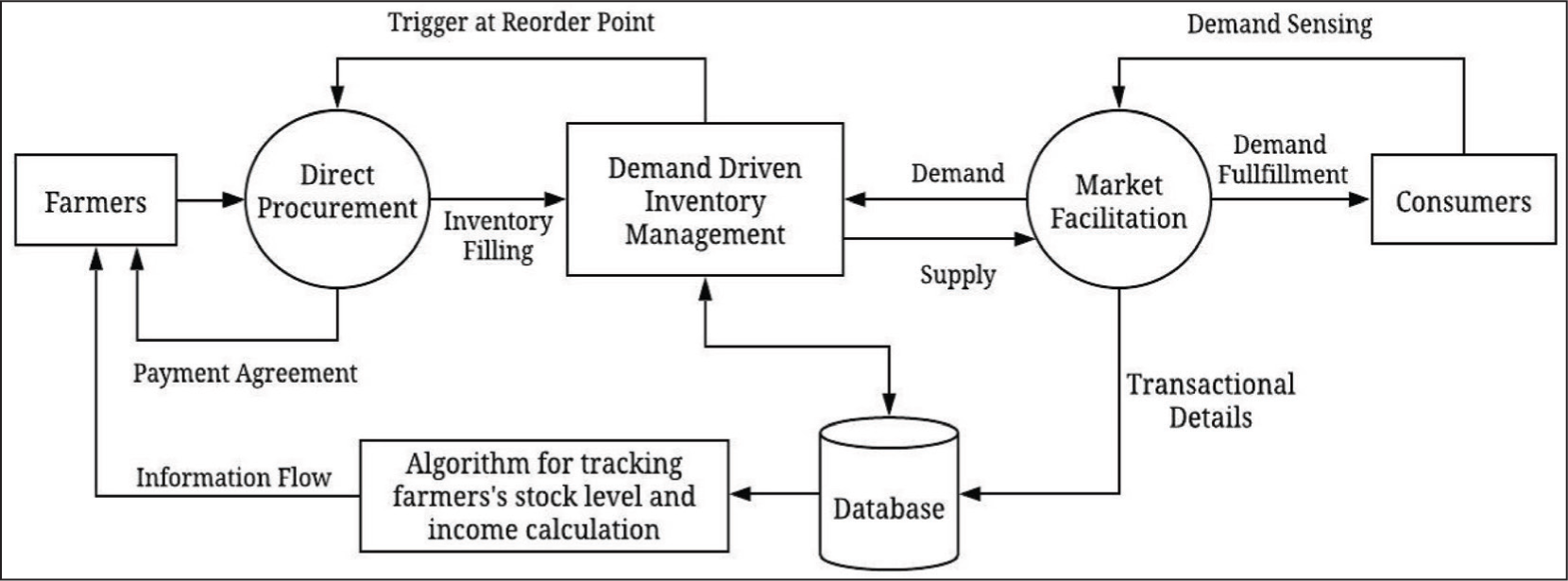
Database of the model stores all daily transactional details such as opening stock (os), closing stock (cs), demand, sales revenue and supply details of farmers, procurement cost, and so on. Furthermore, demand-driven inventory management interacts with the database in real-time to track ROP for inventory replenishment.
Computational Mathematical Modelling
We assume there is always a growing market, post-harvesting. Thus, if P0 is an average monthly price during harvesting then Pt > P0; t subscript is a post-harvest market.
Let’s say, Ri, revenue generated; Ai, quantity sold; Pi, market price; pi, procurement cost and ‘os’ and ‘cs’ are opening and closing stocks respectively, then total revenue generated by the model for the run time n:
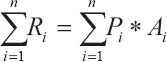
and, the daily transactions of stock inventory would be updated as follows which will allow us to proactively plan inventory replenishment.

Suppose, there are N contributing farmers in the model, and jth is the day of entrance of a particular farmer, contributing for the time duration ‘T’ in the system then,

where QJ is the quantity supplied by the farmer on the jth day, and qj is the quantity at the start of the day. Then the revenue generated for that farmer through the model would be 

Continue the process for T, where qj approaches to inconsiderable quantity for loop termination, and if the associated incurred spoilage during this is x%, then

Note: Procurement cost is the cost paid to a particular farmer for procuring his stock, and in a similar fashion profit for other farmers would be calculated.
Operational Cost (OS) for the model will have two components: one for temporary warehouse (TWHS) (OST) and another for permanent warehouse (PWHS) (OSP) which will have constant per quintal cost. So, farmers will be charged additional costs if their stock goes into permanent storage along with a logistic cost for the transportation of stock from the permanent to the TWHS. As OST is the total cost for run time ‘n’ so per day cost would be OST/n (say, X).
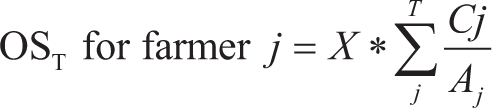
This mathematical modelling would enable tracking the inventory level (reorder time and remaining stock) andcalculate of the daily revenue of respective contributing farmers.
Strategies to reduce associated operational costs for each farmer would be to procure more stock from different farmers to share per day rental, optimize utilization of floor space of the TWHS, and regular consumer demand satisfaction.
Data Analysis and Software
The algorithm for both recording daily transactional details and computing the profit of contributing farmers was coded in Java and executed in open-source Eclipse 2020-09 (version 4.17) for run time (n): Tomato (n: 365 days), Onion (n: 305 days), Potato (n: 365 days). As off-seasonal demand was satisfied by only seasonal procurement in the case of potato and onion so, the run time for onion starts from March due to the start of its harvesting from March itself and for both Potato and Tomato from January to December.
Results and Discussion
Inventory and Model Functioning for TOP Supply Chain
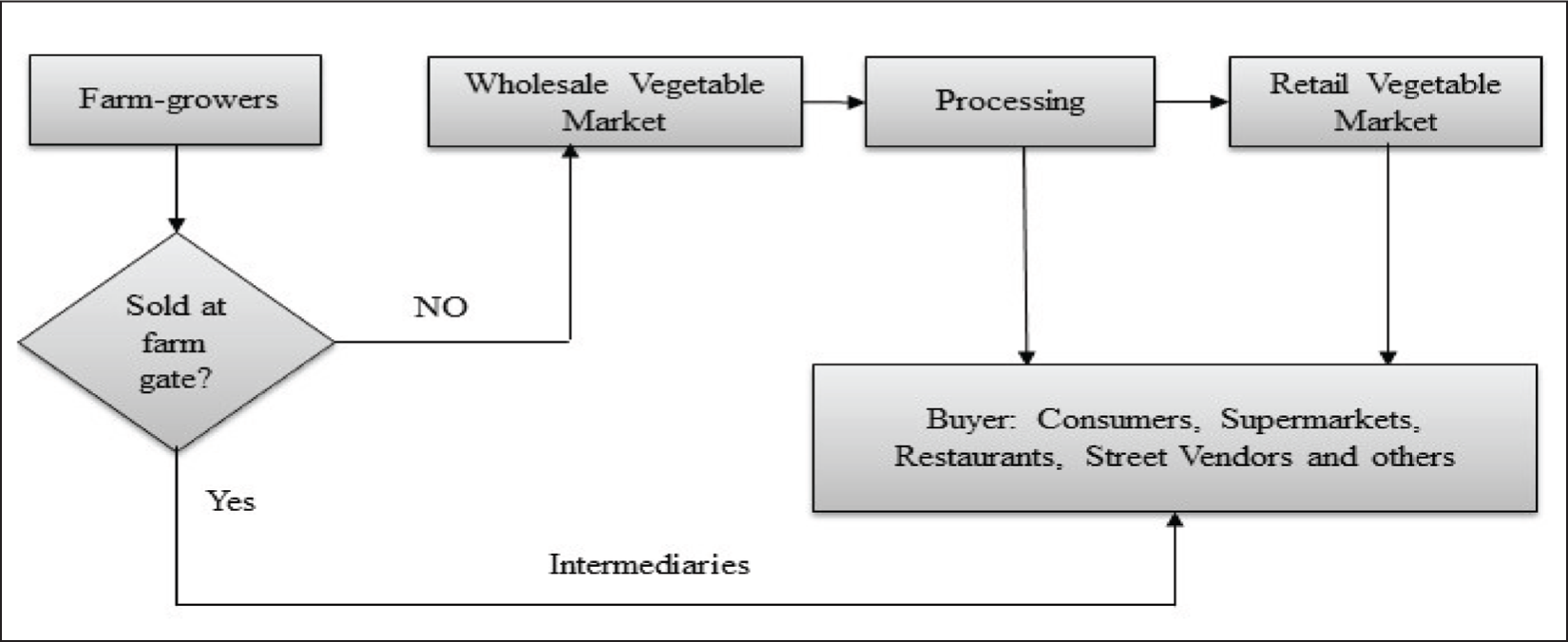
During the analysis of the prevailing agri-marketing chain, farmers revealed that some of them sell their produce at the farm gate itself to traders who charge commission while others prefer to sell in the wholesale markets where they are compelled to pay brokerage to Adhatiya (intermediary) for market access (Figure 3). These rapacious intermediaries usually prefer bulk stock purchases but release them gradually in the marketing channels to maintain market favourable for them. The supply from these commission agents and intermediaries travels to different buyer segments like customers, processor supermarkets, restaurants, street vendors and others at a high value and over time.
Prevailing Agri-business Marketing Value Chain in India.
Procurement of TOPs from farmers was considered as 15%, 25% and 25% less than the wholesale market price respectively for model simulation to estimate the benefits for farmers if they stay in the agro-value chain from season to off-season through market facilitation.
Notably, Potatoes and Onions require procurement in their respective seasons (winter or Rabi, i.e., November to February) as most of the farmers cannot bear storage and handling facilities. Whereas, tomato plucking at the farm is done weekly during Rabi and Kharif, making it regularly available daily from farmers during the season while storage is needed during the off-season as supply comes from other regions. Considering post-harvest management of TOP for maximum possible extra return to farmers, in our model, there are two inventory warehouses, namely: TWHS and PWHS. TWHS has a storage capacity of 310 quintals for potato, 110 quintals for onion and 75 quintals for tomato (assumed rental cost ₹60000/month for the three labour), whereas PWHS has cold storage (assumed rental cost ₹240/quintal/season) for potato and dry storage of capacity 2100 quintals for onion. These storage capacities are demand-driven and inventory replenishment for different crops is based on their source of procurement and lead time (days), Reorder point (ROP) and time of their physiological maturity (Figure 4). During the crop season, procurement was done directly from farmers so there was an assumed fixed ROP in a cycle of 10 days on every 5th day for potato and 6th day for onion, and in the case of tomato there was no ROP considered because of daily stock availability from farmers. Whereas during the off-season, stocks in TWHS were replenished from PWHS. Hence ROP was quantity driven.
Demand Driven Inventory Replenishment Model.
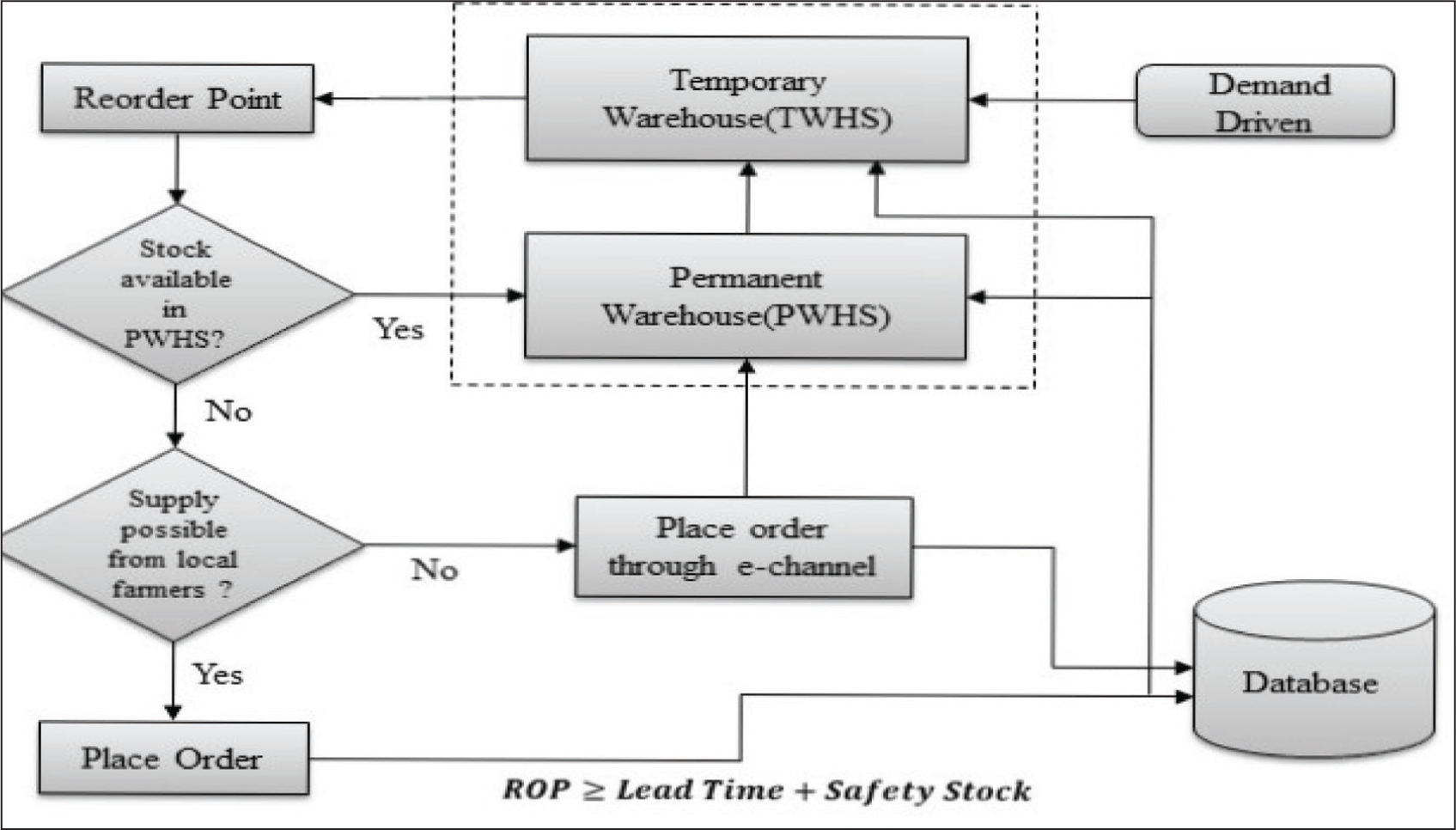
Demand-driven inventory management enables the implementation of a lean strategy where the procurement of TOP during harvesting season was governed by off-season expected demand patterns of the region. This sort of post-harvest strategy precludes avoidable wastage of commodities which is a major hurdle to overcome for Indian horticulture. Accordingly, Ganesh et al. (2018), post-harvest losses were obtained at 5.8%−18.1% in fruits, and 6.9%−13.0% in vegetable crops. Keeping the perishability factor into consideration, spoilage cost in terms of procurement was calculated as 5% for tomato, 15% onion and 10% for potato during the off-season while it was only 5% for TOPs during the season due to low retention period.
The inclusion of an e-channel (eNAM in India) for online marketing of agricultural produce in India, which is still not being incorporated by a major portion of farmers in the country was not considered during the simulation because yesteryear (Year 2019) there was no major arrival through this online channel in the society according to APMC. However, when the model will be fully operational for a particular society then procurement should be preferred through e-channel for equitable price discovery for farmers, and database management.
Tomato
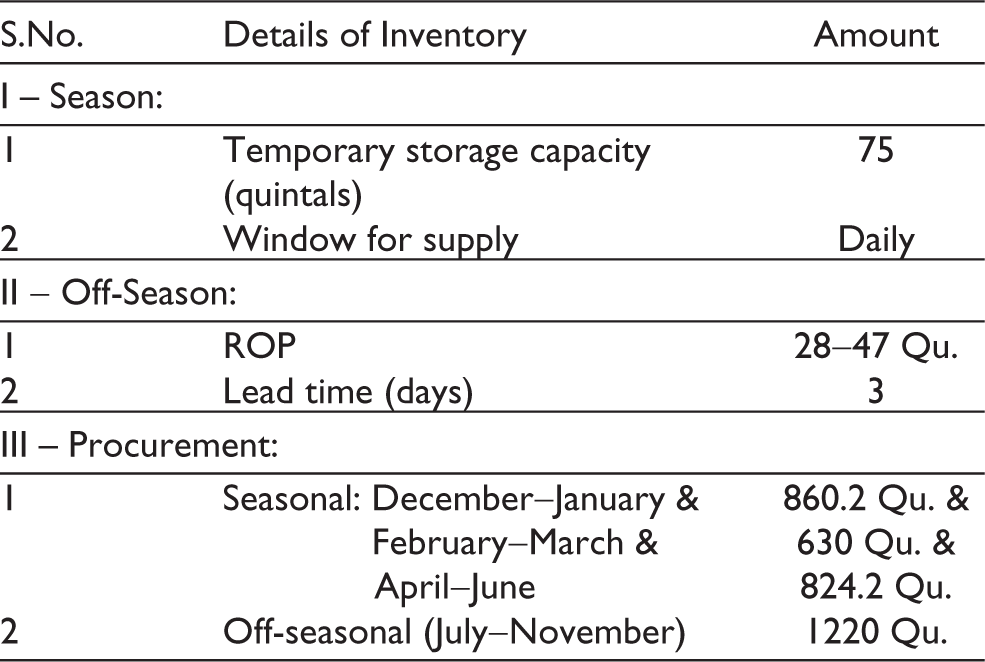
In our model, during the season, the daily procurement for daily demand satisfaction was considered as farmers use to supply daily in LWM but during the off-season, procurement of 70 quintals (considering perishability-into account) was preferred from other major tomato-producing regions (Table 1) within max. lead-time of 3 days after ROP(Table 4). Moreover, due to the unavailability of data for marketing margins (traders’ commission, transportation cost) between supply points of other regions and CWM, tomato prices at CWM were used as a proxy for the procurement cost of supply from these regions.
Inventory Management of Tomato.
Onion
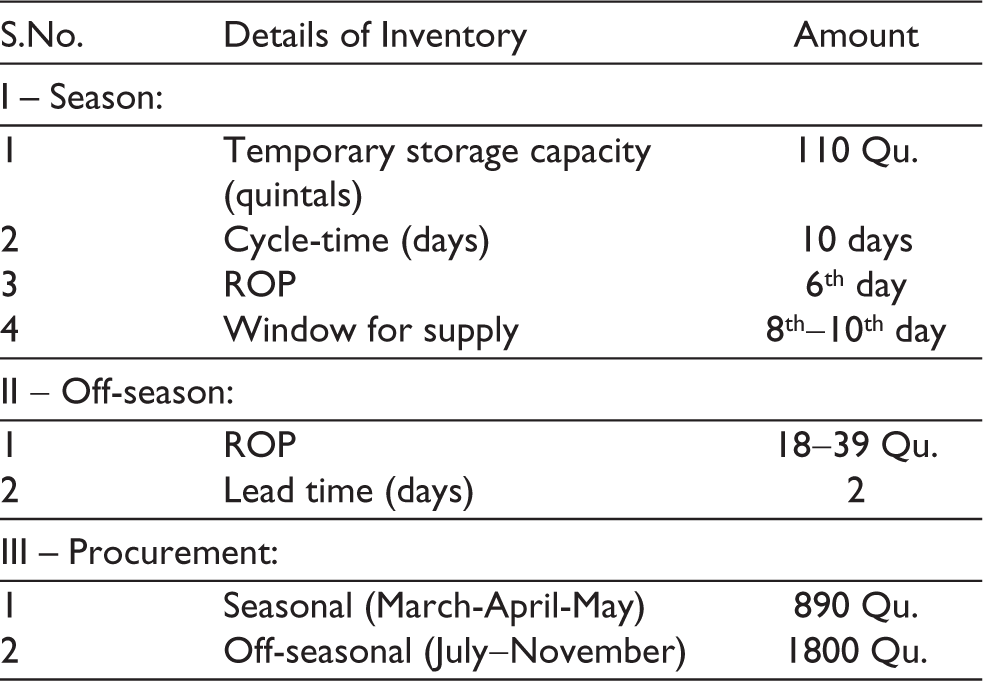
Seasonal demand was satisfied by procurement of 100 quintals subjected to ROP and lead time (Table 5) while off-seasonal demand (estimated by customer survey) was assumed to be fulfilled from a permanent dry storage structure (PWHS), where quantity would be stored during the season from farmers proposed by (GOI, Model Scheme on Onion Storage Structures 2013−2014) that the onion storage structure with a raised platform and suitable ventilation that could avoid the formation of moisture pockets, increasing the shelf life of onion in dry storage under proper supervision.
Inventory Management of Onion.
Potato
The seasonal demand was satisfied by procurement of 300 quintals under ROP, lead-time (Table 6), and off-seasonal demand (estimated by customer survey) was fulfilled from the stock stored in PWHS (cold storage)
Inventory Management of Potato.

Economics of the Model
The operational cost of TWHS, OST included rental, labour charges, spoilage and other miscellaneous whereas OSp cold/dry storage rental, spoilage and logistical movement of stocks from PWHS to TWHS. As the model was a facilitator for channel coordination for farmers so the gross revenue generated by it would be the revenue for them and the associated cost would be its operational cost (OST + OSp) to run.
For the empirical validation of the mathematical model, the contribution of farmers in season and off-season is kept distinctively separated to compute profit in respective periods. The profit generated over the cost of procurement (Table 7) is depicted separately for different market regions. Note that the remaining closing stock after year-end is considered to be sold on the last day itself to accommodate its unaccounted value in revenue which in case of real-world implementation would be certainly carried forward to the next year.
Ratio of Profit Over Cost of Procurement.
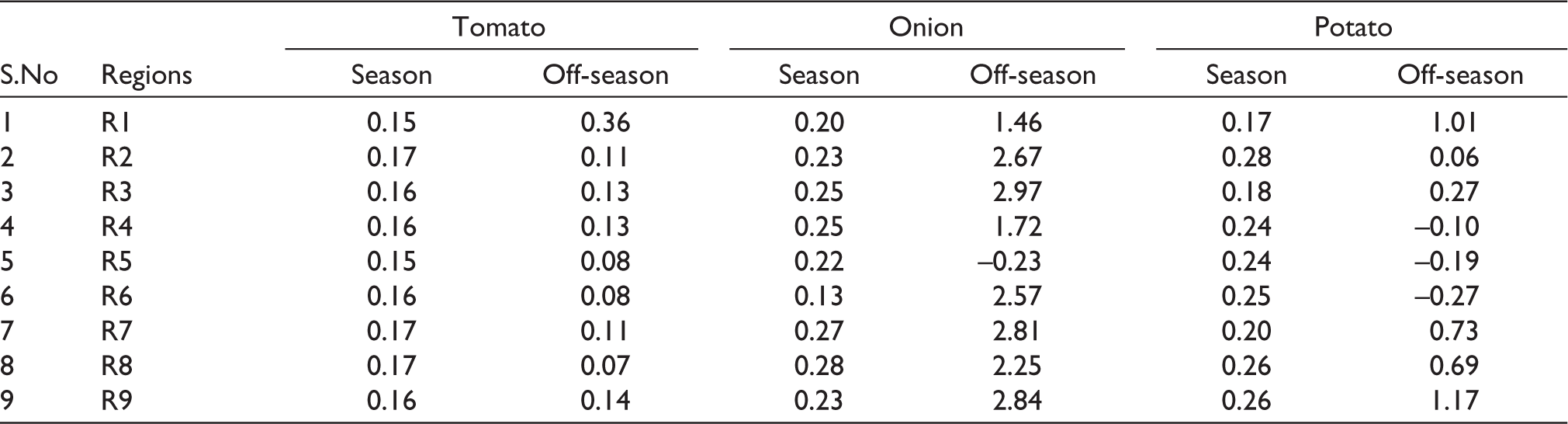
In the case of Tomato, off-season figures are relatively lower, because its off-seasonal demand cannot be fulfilled by seasonal stock procurement due to its low shelf life. Nevertheless, the leagile supply chain approach minimized the associated spoilage of off-season procurement and thus, generated the maximum possible returns.
However, in the case of onion and potato, the off-seasonal market being served with seasonal procurement opened the opportunity for income maximization and risk management in a growing volatile market. The volatile market with a high degree of trend yields windfall profits for farmers whereas volatility with no significant trend provides no growth even over the associated operational costs (R5 in the case of onion and R4, R5, R6 in the case of potato). This could also be validated through the standard deviation value of the season to offseason market behaviours-low value means a flat market and a high value indicates high volatility (Table 8).
Standard Deviation of Season to Offseason Market behaviour.

20% trimmed std. deviation.
Conclusion and Policy Implications
Remarkably, it is found that the proposed demand-driven income maximizing model has increased farmers’ share in the price spread during the season, for the model facilitated direct marketing by minimizing unnecessary multiple marketing transactions. However, off-season figures draw attention to post-harvest market dynamics where some are generating extraordinary profits while others experiencing unprofitable outcomes, based upon off-season market dynamics. This vividly indicates that in case of flat off-season market-market with unsatisfactory growth trend-farm producers should also seek other high markets across the country to reap the potential market benefits instead of selling their produce to stokists, who in turn also trade the stocks to various high returns markets and generates high marginal profits.
SMFs dominating Indian agriculture ordinarily cite storage infrastructures and poor market access as the sole reason for their low share in consumer price and post-harvest losses (Agriculture Census, 2015-16; Ganesh et al., 2018; Gneiting & Sonenshine, 2018; GOI, 2013). Addressing and resolving these concerns are also hot topics around the globe, especially in developing countries (Regmi & Weber, 2000). Interestingly, our proposed model for TOPs ameliorated the issues of price spread by consolidating multiple intermediaries into a single market facilitator (Arnould et al., 2007; Donkor et al., 2018; Klerkx & Leeuwis, 2008; Mills & Camek, 2004) for disintermediation that minimizes transactional cost in the value chain (Agafonow, 2020; Bazzani & Canavari, 2013; Kanwal & Rajput, 2016; Ketokivi & Mahoney, 2020; Kumarathunga, 2020; Williamson, 2008).
Furthermore, as the stock was procured during the season so the proposed model also opens the sphere of market price ceiling for customers during price shoots in off-seasons so that they do not have to compromise with their food requirements (Meerman & Aphane, 2012). Thus, through the proposed model, during the off-season, price control measures like discount offerings should be practised without compromising the equitable benefits of farmers.
Income generated by the model would be disbursed as per the payment agreement between contributing farmers and the market facilitator, which should be financially capable to pay needy farmers on the day of their entrance itself as they plan their next crop cultivation wholly based upon fetched returns. However, on the governance front, the efficient and sustainable execution of this model needs a not-for-profit organization at the helm otherwise the model will cease to be a traditional model of exploitative intermediaries and stockists between farm-gate and end customers.
Schipmann and Qaim (2011) explored factors affecting farmers’ motivation to get into a contractual relationship with buyers. After analyzing the behavioural pattern of farmers in the sweet pepper chain of Thailand, they concluded that the price availed and the nature of the relationship with farmers shaped the scope of a contractual agreement. So, the demonstration of the model’s potential to maximize farmers’ income could be convincingly conveyed to them for the formation of a payment agreement.
The lynchpin of efficient model performance is real-time market demand sensing. Demand information consists of both volume and variety but strikingly in the case of the F&V chain, only the accuracy of volume sensing eliminates the disruption caused due to market uncertainty. Variety is brand dependent, which especially in the case of Indian agriculture still doesn’t have a serious market discussion as consumer buying decision doesn’t get affected unless and until two varieties of the same F&V commodity are placed on the same shelf. Moreover, the generic choices about price and quality differ across segments in such a way that the quality-conscious segment exhibits inelastic demand behaviour with respect to price whereas the price-sensitive segment depicts otherwise. However, it does not reinforce that price-sensitive customers shall be provided with unacceptable quality.
The present model (TOPs model) incorporated known behaviour of demand pattern, but F&V market behaviour is highly sensitive to prices at the individual customer level. It is to be noted that there is uniform customer demand in our case so the inventory management is ‘lean’ in nature but in the case of stochastic customer demand, there would be a huge scope of the agile supply chain model proposed by Christopher (2000). This demand chain model is a network-based collaborative approach where demand sensing is prioritized through constant information flow as deliberated in the works of Deshmukh and Mohan (2017) and Mohan and Deshmukh (2013) from both suppliers and buyers. There is known lead time in our inventory replenishment model due to collaboration with farmers so its integration in the model, supplying information for demand in real-time would ameliorate market uncertainties. So, in the generalization of the proposed model, the Information and communication technology-enabled network of key stakeholders of this model ‘farmers, consumers and logistic partners’ would make the process efficient in market sensing.
The outcome of the proposed model is coincidently in line with the objectives of two agricultural bills promulgated by the Parliament of India: The Farmers’ Produce Trade and Commerce (Promotion and Facilitation) Bill, 2020; The Farmers (Empowerment and Protection) Agreement of Price Assurance and Farm Services Bill, 2020. The first allows choice of arbitrary market selection for stock sales, the second is for an assured remunerative price framework. Further, the third bill―The Essential Commodities (Amendment) Bill, 2020―supports the smooth operation of the model while dealing with essential commodities such as onions and potatoes in terms of regulatory policies for holding, moving and distributing these commodities (PIB, 2020). Although these bills were officially passed in the interest of the agricultural farming community, especially smallholder producers grappling with inefficient supply chains, it was witnessed that they were not communicated cogently to the community and eventually the government had to revoke them (PIB, 2021).
The outcome of the study demonstrates that the proposed model has the potential to address contemporary issues such as low farmers’ income, unreasonable price spread, post-harvest losses that could be the basis for policy formulation in the sphere of Farmer’s self-esteem, Food standard, post-harvest management and traceability in the value chain. Conclusively, demand centric agile approach with lean application in inventory replenishment solves the pressing issue of post-harvest management in the agri-supply chain provided crops are scientifically stored.
Logistical disruptions and the ramifications experienced during the unprecedented COVID-19 pandemic such as the suspension of transportation of farm produce from one region to another, and health issues due to inadequate nutritional fulfilment (FAO, 2020) underline the need for demand centric approach (Kumar, 2020a) for a resilient system from farm to consumers in the prevailing agri-supply chain. Followed by the introduction of the three farm bills majorly focused on increasing price discovery, more competition, liberty to the farmers, market linkage and provision of stock limits and causing channel conflict for big-ticket farmers with the planned replacement of APMC by the government (Das, 2022). With a blended perspective, the repealed farm laws could have disrupted the price discovery mechanism propelled by intensified competition among the buyers of farmers’ produce. This would possibly place the farmers in a stronger position over the bargaining table and eventually be profitable. The phenomenon indicates an explicit case of agency problem (Halldorsson et al., 2015; Tripathi et al., 2022) where contracting parties are having conflicting interests and desire the maximize their individual payoff rather than ensuring the overall supply chain surplus.
Although the farms’ bills were revoked consequent upon the agitations of farmers and fear of inability to fetch minimum support price, verbal contracts issues, and price rise of commodities, they have paved the way for encouraging the need for direct selling, efficient supply chains, least information asymmetry, market linkages and better price discovery. The findings of the present study will serve as a solution to propose efficient demand and supply chain management in the agriculture sector. It can be introduced as a pilot project that can be replicated after the successful demonstration. Thus, the simulation-based study also furthers the scope of procurement at the right source (direct procurement from farmers), at the right time (physiological maturity), and fair market accessibility for farmers in real-world with the help of state-of-the-art technologies such as artificial intelligence, internet of things and blockchain.
Notably, the proposed model is simulated only for regions with a uniform changing pattern of demand so the research limitation merits, from a feasibility perspective, a real-world study for a society having stochastic demand that would need agile market sensing for demand, and inventory replenishment would be subjected to dynamic replenishment cycles. With an implicit assumption that model performance could be a subject of global interest striving in the field of food policy innovation, the present research was a humble attempt to help the policymakers in the socio-economic empowerment of farmers in developing countries.
Footnotes
Acknowledgements
The authors thankfully acknowledge the encouragement and support received for the present research and further the pursuit of quality research from the Institution of Eminence (IoE), Banaras Hindu University (BHU) supported by the Ministry of Education, GoI.
Declaration of Conflicting Interests
The authors declared no potential conflicts of interest with respect to the research, authorship, and/or publication of this article.
Funding
The authors received no financial support for the research, authorship and/or publication of this article.