



Abstract
Environmental concerns are growing worldwide, especially in the business context, where employee green engagement plays a crucial role in enhancing organizational environmental performance. The purpose of this research is to explore the conceptual link between a manager’s age, employee environmental passion and employee green engagement. The research adopts a systematic literature review methodology. Using the Scopus database, articles were selected for analysis related to employee green engagement published between 2002 and 2023. The study’s findings provide evidence in support of the proposition that a manager’s age has a significant impact on employee green engagement, with younger managers fostering environmental passion and encouraging eco-friendly activities. Employee environmental passion plays a significant role in this relationship. This research contributes to the conceptualization of employee green engagement and highlights the importance of organizational factors, such as a manager’s age and employee environmental passion, in shaping sustainable practices. Organizations can enhance environmental sustainability by engaging employees in sustainability initiatives. This study contributes novelty by shedding light on the motivational drivers that encourage employees to actively engage in green initiatives. The research provides valuable insights for organizations to create sustainable work environments and address critical environmental concerns, making it a valuable addition to the field of sustainability research.
Keywords
Introduction
With each passing day, environmental issues are becoming even more intense, which is also leading to great environmental and social problems. Organizations need to take serious remedial actions by developing concrete strategies and investments in their processes and practices (Dzeraviaha, 2023). Therefore, it is the responsibility of the business decision-makers to ensure the alignment of environmental strategy and employee engagement in green management policies to contribute to the mission of the organization that governs how personnel activities are developed and implemented in mutually enforcing ways (Beer et al., 1984; Hambrick & Mason, 1984). Since the integration of the ‘Green’ concept into the business strategy, green employee engagement has become a top concern among business executives (Albrecht et al., 2023). Employee green engagement may refer to the contribution of employees to environmentally sustainable practices in their job roles within the organization (Renwick, et al., 2013). It entails their commitment, participation, and proactivity in initiating, promoting and supporting activities aimed at reducing environmental impact and fostering sustainability (Denton, 1999). Thus, employee green engagement may be considered one of the solutions for organizations to fulfil the pressing environmental needs of the current time (Renwick et al., 2013).
Literature shows that the significance of employee green engagement in enhancing a firm’s sustainability has gained substantial research attention in recent years (Albrecht et al., 2021; 2023). With mounting concern for the environmental impact of business operations (D’Angelo et al., 2023), organizations are increasingly focusing on engaging employees in sustainability initiatives. This surge in research reflects the growing recognition of employees’ pivotal role in driving sustainable practices within organizations and the notion that employees are the activators of all resources and initiatives. Thus, by engaging employees in green initiatives, organizations can tap into their knowledge, creativity and commitment to foster innovative solutions while reducing environmental risks, enhancing resource efficiency, and improving the firm’s environmental performance (Singh et al., 2020). Engaged employees are more likely to adopt environmentally responsible behaviours such as energy conservation and waste reduction (Shahzad et al., 2023). Moreover, at the individual level, environmentally engaged employees foster a sense of purpose and fulfilment and are thus more engaged and motivated.
Research shows the age of managers and employees as a significant factor in adopting green practices; therefore, considering the age characteristics of a manager, it may affect employee green engagement. Previous research grounded in Upper Echelons Theory (UET) suggested that a manager’s age can have a significant impact on employee engagement in an organization (Hambrick & Mason, 1984). Keeping this in mind, different scholars have worked on different dynamics of the link between the age of a manager and the green engagement of their employees. Some researchers believe that the younger a manager, the more his employees will be involved in green practices because s/he will be conscious of environmental issues (Dumont et al., 2017).
Despite the disagreement and difference of opinion in the findings, the current and existing studies are staying quiet regarding how a manager’s preferences and practices can result in increasing the environmental passion in employees, which ultimately gives birth to increased engagement in green activities among employees. This is why the studies that support the positive impact of a manager’s age on employee environmental passion and employee green engagement are very limited. Thus, there is a lack of understanding, which needs further discussion and proves to be an opportunity to study. Therefore, this article aims to conceptualize the relationship among a manager’s age, employee environmental passion, and employee green engagement.
Despite the growing recognition of the importance of employee green engagement in driving green initiatives within organizations, there is still a dearth of literature on this emerging topic. While some studies have explored aspects of employee engagement and environmental sustainability (Huang et al., 2021), few have focused on the pro-environmental behaviour of employees in fostering sustainability within the organization (Albrecht et al., 2023; Potoski & Callery, 2018; Srivastava & Dhiman, 2022). Additionally, existing literature often lacks a specific examination of the factors that influence employee green engagement, which is identified and conceptualized in this study. Addressing this research gap is essential to gaining a deeper understanding of how organizations can effectively increase the green engagement of employees, considering the environmental passion and age of the manager, and thus achieve environmental targets.
This research contributes novelty in the following key aspects: This study aims to contribute to the explanations as well as add rational facts regarding employee green engagement. Second, this study conceptualized the relationship between a manager’s age, employee environmental passion and employee green engagement. More specifically, we pointed out that the ability to identify the passion for the environment that employees possess is linked with how juvenile a manager is, which in turn shows a positive impact on green engagement. Third, we contribute to the literature by incorporating the UET and the theory of behavioural choices to explain the relationship between the manager’s age and employee green engagement through employee environmental passion. Thus, based on the behavioural choice theory, we present the theoretical proposition of employee environmental passion as a behavioural choice and a factor that explains the relationship between a manager’s age and employee green engagement. Finally, this study is one of the earliest ones to consider the role of employee environmental passion for the manager’s age and the employee green engagement relationship. Additionally, it has been argued that there is an absence of conceptual models and empirical findings regarding the linkage between employee environmental passion and employee green engagement globally. Therefore, we expand the existing literature by linking employee environmental passion with environmental and societal green engagement. Therefore, this study is very significant as it presents the idea that the manager’s young age can make a significant difference in the environmental engagement of employees. In simple terms, this means that the greater the number of youthful managers in an organization, the more subordinates will be involved in green practices at the workplace. This provides us with a reasonable frame of reference to better understand the dynamics of employee environmental passion and green engagement.
Literature Review
Theoretical Background
Prior research has extensively investigated the various factors that contribute to employees’ lack of engagement in green activities. These studies have predominantly focused on exploring the role of employees’ knowledge and resources in influencing their level of engagement. However, it is worth noting that existing research frequently overlooks the significance of employees’ attitudes towards green initiatives. The theory of behavioural choices has been widely studied in the field of organizational behaviour as it offers a comprehensive framework for individuals’ decision-making processes within their work settings (Richard et al., 1996). According to Waygood et al. (2022), employees’ behavioural choices are subject to influence by multiple factors, such as their perceptions of the organizational environment and the potential environmental consequences associated with their choices. This study provides an understanding of behavioural choices related to climate concerns and assists in identifying the factors that influence employees’ green engagement within the workplace. The theory of behavioural choices has been extensively studied as a model specifically designed to understand individual climate actions (Gifford et al., 2018). It identifies three drivers of behavioural intention: the attitude towards the activity, including sentiment, belief, and knowledge; perceived control, societal norms; and the desire for the actions (Afsar et al., 2016). As a result, our study approach investigates the influence of managers’ age and employee environmental passion on employee green engagement. This approach is based on behavioural choice theory, and it enables us to explore if employees are willing to implement green initiatives in reaction to rapid climate change and being aware of the potential threat to all living things.
This study also incorporates the UET, which was originally proposed by Hambrick and Mason (1984). This theoretical framework focuses on the pivotal role played by managers and their various attributes, encompassing gender, background, education, experiences and age, in shaping strategic decision-making processes that have a direct impact on organizational outcomes. Prior scholarly investigations have consistently emphasized the notable impact of individual and collective cognitive processes, emotional states, and psychological factors based on the UET (Cristofaro et al., 2023). The influence of cognitive and psychological models on individuals’ perception, processing, and response to information in particular contexts is widely recognized. Executives’ actions in relation to their followers and strategic decision-making are believed to be influenced by cognitive and psychological processes within the framework of UET (Popli et al., 2022). It places significant emphasis on the crucial role that managers, including both entrepreneurs and members of top management teams, play in influencing the growth and results of organizations. The managers’ characteristics and strategic choices possess the capacity to impact multiple facets of organizational functioning, encompassing operational activities, employee conduct and overall performance (Cristofaro et al., 2023; Hambrick & Mason, 1984).
Within the scope of this research, our primary emphasis is directed towards a pivotal attribute of managers, namely their age. The variable of age, when considered within the context of higher levels of an organization, possesses the significant potential to influence the behaviours of managers and the overall outcomes of the organization. According to a study conducted by Hambrick and Mason (1984), it has been found that younger managers demonstrate a greater degree of enthusiasm for innovation. This enthusiasm can potentially exert a direct impact on employees’ level of involvement in environmentally friendly initiatives within the organizational setting. Our study aims to investigate the correlation between managerial age, employee passion, and engagement in green initiatives by integrating the age dimension into the UET framework. Understanding the underlying mechanisms through which managerial characteristics shape organizational outcomes necessitates a critical examination of the connection between managerial age and employee engagement in sustainability practices. Hence, through an analysis of the impact of managerial age in the broader framework of UET, our research seeks to make a theoretical contribution by elucidating the significant role that age plays in fostering employees’ engagement in environmentally friendly initiatives and ultimately bolstering the sustainability of organizations. Based on UET, Ameer and Khan (2020) revealed that manager age significantly influences the environmental performance of organizations. Hence, the background characteristics of managers exert a substantial influence on the overall performance of the organization. Given that the effectiveness of an organization is reliant on its workforce, it can be deduced that the age of a manager also impacts the level of enthusiasm and commitment exhibited by their subordinates.
Our research seeks to offer a comprehensive understanding of the factors that influence employees’ engagement in green activities by integrating the Theory of Behavioural Choices and the UET. The Theory of Behavioural Choices facilitates the examination of the intricate nature of individual choices pertaining to the working environment, whereas the UET enables the exploration of the impact of managerial characteristics on employee engagement. The utilization of this comprehensive framework will facilitate the exploration of the fundamental mechanisms that influence employees’ commitment to environmentally friendly practices while also providing insight into the significance of both individual decision-making and managerial elements in cultivating a sustainable workplace.
Manager’s Age
According to Boumans et al. (2011), the age of employees plays a crucial role in influencing workplace motivation and responses to different work-related factors. Consequently, the age of a manager carries significant implications for their behaviours and the overall outcomes within the organization. The concept of age is a complex construct that encompasses the temporal dimension or duration of an individual’s existence, particularly in relation to their position of authority or leadership within an organizational context. Numerous studies have discussed the multifaceted impacts of age on cognitive processes, decision-making styles and belief systems, all of which exert influence on managerial behaviours (Ameer & Khan, 2020).
Studies show that various age groups behave differently in comparable settings (Oshagbemi, 2004). Hence, the tendency of managers to accept new ideas and implement creative techniques tends to decrease as they get older (Ameer & Khan, 2020). Furthermore, it has been observed that senior managers may exhibit a diminished capacity to adapt to change and exhibit resilience, which could potentially undermine the organization’s capacity to navigate dynamic environments (Ameer & Khan, 2020). On the other hand, there exists a notable disparity between young managers and their older counterparts in terms of their propensity to embrace and execute new ideas. This discrepancy can be attributed to the inherent proclivity of younger managers towards innovation (Ameer & Khan, 2020). The vigour, zeal and new perspectives of young individuals empower them to investigate new prospects and make valuable contributions to the advancement and execution of eco-friendly initiatives in the professional setting. Thus, the dynamic approach of young managers supports organizations’ transformation and sustainability goals.
By considering the age of managers within the upper echelons theory framework, we aim to examine how age influences managerial behaviours and, consequently, employee engagement in green activities. This exploration offers valuable insights into the interplay between individual characteristics, organizational dynamics and green practices. It allows us to uncover the underlying mechanisms through which age impacts managerial decision-making and ultimately shapes employees’ involvement in green initiatives.
Employee Environmental Passion
Passion is a strong tendency for an activity or an object that is perceived to be important and meaningful and worthy of investing time and energy in (Liao et al., 2022). Passion makes an individual choose a likeable activity freely and willingly (without any internal or external pressure of a controlling nature). This state of mind results in positive experiences when the individual performs their passionate activity (Liao et al., 2022). Employee environmental passion refers to an individual’s deep interest, motivation and commitment to actively contribute to the betterment of the environment (Afsar et al., 2016). Employees who possess environmental passion experience a range of positive emotions and feelings associated with their environmental engagement. They derive a sense of pride and fulfilment from their actions, knowing that they are making a meaningful difference in preserving and enhancing the environment (Yin et al., 2021). Their passion drives them to proactively seek opportunities to contribute to the well-being of the environment and to actively advocate for green initiatives.
A broader understanding of societal responsibility also contributes to this sense of environmental passion. Employees with environmental passion perceive their actions as a means of helping the community and ensuring a sustainable future for upcoming generations (Yin et al., 2021). Their commitment to environmental stewardship goes beyond the immediate benefits and aligns with a long-term vision of environmental preservation and protection. Researchers also highlighted that employee environmental passion plays a significant role in fostering green initiatives (Priyadarshini et al., 2023).
Employee Green Engagement
The concept of employee engagement emerged in early 2000. Several authors defined this concept differently, like Schaufeli et al. (2002), who defined it as a positive, fulfilling, work-related state of mind that is characterized by vigour, dedication and absorption. Saks (2006) identifies it as a distinct and unique construct that consists of cognitive, emotional and behavioural components that are associated with individual role performance. Other authors like Frank et al. (2004), Baumruk (2004), and Richman (2006) refer to it as an emotional and intellectual commitment employees have towards their organization while demonstrating discretionary efforts in their job role. The availability of many definitions of this construct shows that researchers do not agree on one definition. However, we found that the definition of Schaufeli et al. (2002) is close enough since it describes a positive work-related state of mind characterized by vigour, dedication and absorption and thus reflects high energy, commitment and deep engagement in tasks, resulting in a fulfilling and enjoyable work experience. Therefore, employee green engagement refers to the active participation of employees in environmentally sustainable practices within an organization (Albrecht et al., 2021). It entails their commitment, participation and proactivity in promoting and supporting initiatives aimed at reducing environmental impact and fostering sustainability. For example, employees who implement paperless practices, initiate recycling programmes, develop strategies to minimize packaging waste, optimize equipment to conserve resources and develop eco-friendly products show individual efforts to achieve the goal of sustainability in the organization.
Manager’s Age and Employee Environmental Passion
It has been found that the more young the managers are, the greater the chances of them being concerned about societal and environmental issues like work-life balance and work environment (Larsson & Björklund, 2021). With this statement, we can also assume that when managers’ ageing directly affects their environmental choices, this will also affect their subordinates’ passion for the environment. Studies prove that young managers possess the latest knowledge and have dissimilar experiences in comparison to the older ones; hence, these experiences encourage them to encourage employees to demonstrate enthusiasm for the greening of the environment (Barnes & Collier, 2013).
Previous studies suggested that young managers often have to deal with challenges related to their age (Larsson & Björklund, 2021), as they have more interest in balancing everything and promoting a green environment than their older counterparts; hence, generating desire and passion for the environment within the employees is also one of those challenges. This eagerness to develop passion in the employees comes with the youthfulness of the leader. Hence, the age of the manager is found to be associated with the employee’s environmental passion. Thus, based on these justifications, we propose that:
Manager’s Age and Employee Green Engagement
It has been found in prior research studies that managers at the time of ageing bear losses along with some gains, and when they face any loss, they try to compensate for it by adjusting their behaviours and using abundant resources (Kim & Kang, 2017). Therefore, with this statement, we can assume that managers who are older become stagnant at some point in life and lack an understanding of the importance of sustainability and green practices, which can reduce the wastage of important resources. On the other hand, we have observed that juvenile managers are more energetic, very passionate and inclined towards optimizing resources and promoting sustainability, which is why they engage more in green responsibilities.
Studies show that it is a very popular opinion that older managers are less concerned about the environment and the issues related to it as compared to younger ones. The reason behind this statement is that they may become inflexible, less motivated to learn new things and less likely to adopt the latest methods with time. It is also found that older workers are resistant to change and thus may not care about sustainable or green practices. These concerns about having a workforce that is less caring about sustainability have pushed organizations to consist of younger employees who display more green engagement at the workplace, which also increases firm’s performance by attracting stakeholders to it (Potosk & Callery, 2018; Wiernik et al., 2016).
Managerial commitment strongly affects the workplace environment and has a significant impact on employee engagement in green initiatives (Potosk & Callery, 2018). Green commitments serve not only ecological purposes but also improve the outcomes of employees’ involvement in green practices (López-Rodríguez, 2009). Likewise, young managers establish a culture and norms within the workplace that encourage subordinates to openly engage in and display green activities (Dumont et al., 2017). Therefore, leaders must understand their responsibilities in promoting a culture in order to encourage their employees to be more engaged in green jobs (Lasrado & Arora, 2018). Hence, the age of the manager is found to be linked with employee green engagement. Thus, based on these justifications, we propose that:
Employee Environmental Passion and Employee Green Engagement
Several researchers have proposed that there are numerous reasons to believe that the passion that employees have for the environment will lead to increased pro-environmental behaviour (Afsar et al., 2016), which we assume also increases employee green engagement as employees who are interested in pro-environmental behaviours will also engage in green activities. Since passion comes from within, it is concerned with our morals and how much we are concerned and sensitive about our surroundings. When employees are engaged in environmental-related activities, they feel more energized from within. Hence, having environmental passion will induce employees to be more engaged in green tasks (Ali et al., 2021).
Being close to the environment is an important element in influencing the environmental behaviours of employees (Saleh & Al-Swidi, 2019), which leads to active employee engagement in organizational environmental initiatives (Albrecht et al., 2021). Cultivating a sense of affiliation with the environment enables employees to form a deeper connection with their surroundings, thereby encouraging greater participation in green responsibilities and making meaningful contributions to environmental sustainability (Albrecht et al., 2023).
An employee’s intrinsic green motivation refers to his interest in green initiatives from within (Li et al., 2020). Since it encourages employees to work with passion and love, we can assume that passion is the same feeling as motivation, and therefore, employees who have environmental passion tend to engage more in green activities. Employees who are self-motivated towards environmental tasks are likely to be more inclined towards eco-friendly behaviours since they are satisfied and have joyful minds (Ahmed et al., 2021).
Eco-spirituality works as those beliefs of employees concerning the environment; thus, we can consider it a green passion of employees, as it is a positive feeling, and feelings are associated with the beliefs (Cramer & Fong, 1991). Keeping in mind that when eco-spirituality has an important influence on other green aspects like pro-environmental behaviour and employee’s green intrinsic motivation, it will potentially affect employee green engagement too, channelling as employee environmental passion (Ciocirlan, 2017). It has been suggested that eco-spirituality in employees gives birth to their environmental passion, which further positively increases environmental behaviours, boosting green engagement in employees (Suganthi, 2020).
Earlier studies have related personally reported environmentally conscious behaviour and engagement (Kerret et al., 2016). Hence, individuals who possess harmonious passion maintain a direct and robust connection with various favourable outcomes pertaining to the environment. Such employees are more likely to experience a sense of well-being and prosperity (Iyortsuun et al., 2020). The research findings underscore the strong and positive links between harmonious passion and work intentions, as outlined in the article. However, the strength of these impacts diminishes in certain circumstances and with the involvement of specific mediators (Peyton & Zigarmi, 2021).
Finally, the higher passion demonstrated at the workplace induces more closeness with the environment with the help of green opportunities provided to the employees at their organization, which further leads to employees becoming more educated about their environmental responsibilities and providing eco-friendly solutions for them (Ababneh, 2021). This will result in better employee engagement. Based on this justification, we propose that:
Employee Environmental Passion as a Mediator between Manager’s Age and Employee Green Engagement
The responsibility for behaving in a socially and environmentally conscious manner ultimately lies with the manager. Nevertheless, these choices are frequently subject to significant influence from various demographic factors, such as age (Walker et al., 2011). These choices of managers affect the total performance of an organization and its employees’ behaviours as well. This relationship between manager’s traits or strategic choices and an employee’s engagement is impacted by the environment they both work in (Anitha, 2014). When employees show environmental passion at the workplace, it will positively strengthen the linkage between the two other constructs, namely the manager’s age and employee green engagement (Goll & Rasheed, 2005). It has been observed in various research studies that if a manager of a firm is young, there are more chances that the firm and its employees will engage in better and more sustainable practices. A manager’s age has a positive effect on the performance of an organization (Ameer & Khan, 2020). With this statement, we can also assume that when a firm’s performance can be positively affected by the manager’s age, it can also affect the passion in employees, which in turn strengthens the relationship between the age of the manager and the passion and love within the employees for the environment. Based on the justifications provided above, it can be proposed that the manager’s age can impact employee green engagement through environmental passion (Walker et al., 2011). Nisar et al. (2021) observation regarding manager’s age, employee environmental passion, and employee green engagement can also be supported by their statement that when leaders are transformational, it boosts the passion within employees for the environment and simultaneously enhances their pro-environmental behaviours, which is quite similar to our argument. Hence, we posit that:
Conceptual Framework
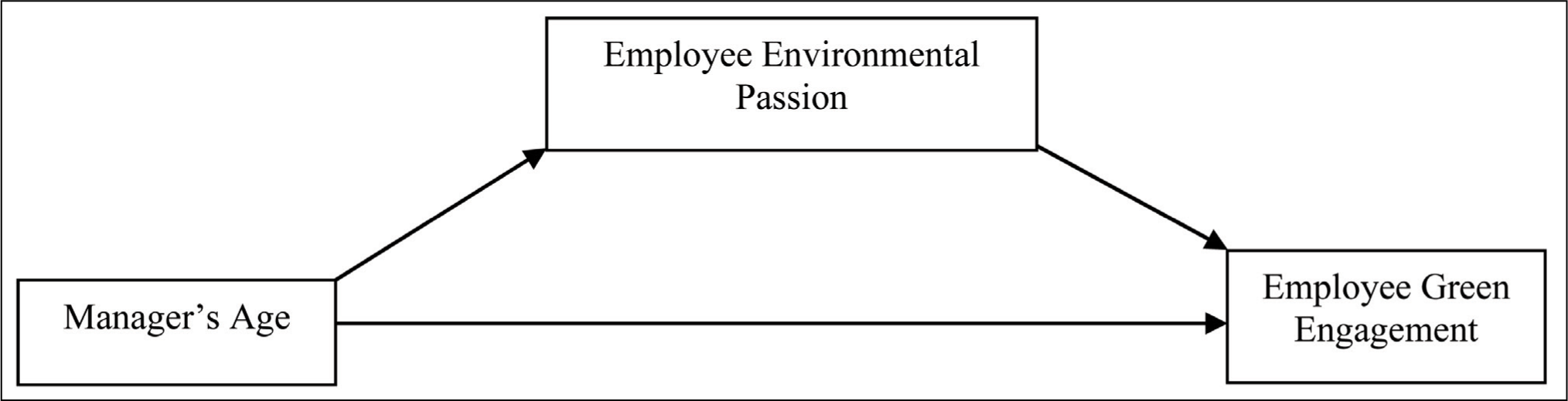
The conceptual framework proposes that employees’ engagement in green activities is influenced by the interplay of managerial age, employee environmental passion and employee green engagement. Drawing upon the Theory of Behavioural Choices and the UET, the framework aims to provide a comprehensive understanding of the factors influencing employees’ engagement in green activities. It suggests that the age of a manager directly impacts employee green engagement and employee environmental passion. Further employee environmental passion mediates the relationship between the manager’s age and employee green engagement. By examining these relationships, the framework offers valuable insights for organizations to promote environmental sustainability and enhance employee engagement in green initiatives.
Method
The significance of the identified factors for employee green engagement and the objective of the study, to figure out the missing linkage, put forward how a manager’s age can affect employee green engagement at the workplace. While determining the role of employee environmental passion in the relationship between a manager’s age and employee green engagement, the research was operationalized through a literature review grounded in Torraco’s (2005) guidelines. These guidelines are designed to be implemented systematically, aiming to generate new, advanced and improved ideas or knowledge regarding a specific topic. Moreover, it was also supported by Seuring and Gold (2012), who stress that inconsistent outcomes in research make it a requirement to review literature for an effective evaluation and the creation of a knowledge base within a research field. Researchers also emphasize the importance of methodological rigor in a literature review to justify existing analytical standards and ensure replicability, reliability and validity. Hence, this research carried out a content analysis technique to scrutinize the data (Duriau et al., 2007; Khan et al., 2022; Mayring, 2015) by generating main theme coding, the development of subcategories and consequence categories.
This study adheres to the procedural guidelines outlined by Tranfield et al. (2003) in order to conduct comprehensive research on employee green engagement. A query search was initiated on the Scopus database, focusing on articles published from 2002 onward to capture the relevant literature on this emerging topic. Initially, the search utilized keywords such as ‘employee engagement’ to identify a broad range of articles. The Boolean operator ‘OR’ was employed to combine related keywords, resulting in a total of 3,848 articles. After refining the search to include only journal articles and English-language publications, 2,793 articles were retained. Subsequently, the focus shifted towards specifically exploring the concept of green engagement among employees. Keywords such as ‘employee green engagement’ OR ‘green employee engagement’ OR ‘green engagement’ OR ‘employee environmental engagement’ OR ‘environmental employee engagement’ were employed, leading to the identification of 22 relevant documents within the Scopus database. To ensure a comprehensive approach, both human resources-focused and non-human resources-focused journals were included in the search, as green engagement encompasses various contexts. One conference paper and one review paper were excluded from the analysis. The remaining 20 journal articles underwent a detailed examination of their research objectives, findings and suggestions. This rigorous assessment enabled their inclusion in this study. The flowchart in Figure 2 illustrates the selection process, providing a visual representation of the search query and inclusion criteria.

The criteria for article selection in this study encompassed research papers on employee green engagement published between 2002 and 2023. Articles that explored employee engagement specifically within an environmental context were included. Additionally, studies investigating employee environmental passion and manager characteristics were also considered. A total of 14 papers were identified as being relevant to the study of employee green engagement. Furthermore, additional articles were utilized to contribute to the formulation of the conceptual framework.
Findings
The results of this study provide evidence in support of Proposition 1 that the manager’s age has a significant impact on the level of employee green engagement, as indicated by previous studies conducted by Ameer and Khan (2020) and Holtbrügge and Oberhauser (2019). The tendency of individuals towards innovation, social responsibility and environmental considerations plays a pivotal role in fostering the adoption of sustainable practices within the workplace (Singh et al., 2020). This, in turn, serves as a catalyst for motivating employees to actively engage in environmentally friendly activities (Shahzad et al., 2023).
The study’s results demonstrate a relationship between the age of managers and the extent of environmental passion displayed by employees, thereby providing support for Proposition 2. Recent research suggests that younger managers exhibit distinct characteristics such as new perspectives and receptive attitudes, which lead to increased environmental passion among their subordinates (Ameer & Khan, 2020; Holtbrügge & Oberhauser, 2019). The employees’ motivation to actively engage in environmentally friendly practices is driven by their environmental passion, resulting in a reduction of resource waste and promotion of environmental responsibility principles (Liao et al., 2022; Shahzad et al., 2023).
Furthermore, the research indicates a significant relationship between environmental passion and employee green engagement, which lends support to Proposition 3. Specifically, when managers demonstrate a strong passion for the environment, it positively influences the pro-environmental behaviour of their employees. According to Afsar et al. (2016), managers with a higher level of environmental passion are more likely to engage their employees in green initiatives. Ahmed et al. (2021) highlight the significance of employee environmental passion as a catalyst for encouraging employee green engagement. Employees who demonstrate a passion for environmental issues are more likely to participate in green initiatives.
Additionally, the findings of the study demonstrate that environmental passion plays a significant role in mediating the relationship between managers’ age and employee green engagement, thus providing support for Proposition 4. The age of the manager has a direct effect on the environmental passion of employees, which influences employee green engagement. The manager is ultimately responsible for exhibiting socially and environmentally responsible behaviour. It is essential to note, however, that these decisions are frequently susceptible to substantial influence from demographic variables such as age (Walker et al., 2011). Consequently, environmental passion in the workplace strengthens the relationship between the age of the manager and employee green engagement (Goll & Rasheed, 2005). Therefore, the finding highlights the significance of environmental passion in mediating the relationship between manager age and employee green engagement.
Discussion
This study investigates the relationship among the manager’s age, employee environmental passion and employee green engagement. Previous research has produced contradictory results regarding the effect of manager age on employee green engagement (Wiernik et al., 2016). Therefore, it is essential to examine the influence of a manager’s age on employee engagement in environmentally friendly practices. In addition, the literature emphasizes the need for a more in-depth understanding of how a manager’s environmental orientation affects employee green engagement (Goll & Rasheed, 2005). Thus, our study findings differ from other research by emphasizing the impact of the manager’s age on employee green engagement, particularly regarding the positive influence of younger managers. It highlighted generational differences. The study also introduces the concept of environmental passion as a key motivator. Younger managers’ passion for the environment fosters an organizational culture that prioritizes green initiatives, influencing employees’ ecological behaviour positively.
Generational differences are the foundation for the claim that younger managers positively impact employee green engagement. Younger generations, such as Millennials and Gen Z, are frequently distinguished by their enhanced environmental awareness and commitment to sustainable practices (Barnes & Collier, 2013). As members of these generational cohorts, younger managers are more likely to demonstrate behaviours and values consistent with environmental sustainability. As a result, their leadership style may inspire and encourage employees to engage in environmentally friendly activities (Larsson & Björklund, 2021).
In addition, research indicates that younger managers are more open to innovation, initiative, and risk-taking (Hambrick & Mason, 1984; Singh et al., 2020). These characteristics are linked to a greater emphasis on environmental issues and a propensity to implement green initiatives within an organization. Younger managers may introduce innovative environmental sustainability strategies, technologies and policies (Dumont et al., 2017; Singh et al., 2020). Their environmental passion and proactive attitude can cultivate a culture that encourages employee engagement in eco-friendly practices.
The theory of behavioural choices suggests that individual attitudes and beliefs have a substantial impact on behavioural intentions and actions (Richard et al., 1996). Younger managers, who are more likely to demonstrate a positive attitude towards the environment, can motivate employees to adopt similar attitudes and engage in environmentally responsible behaviours. Their passion and dedication to sustainability can influence the culture of the organization and inspire employee engagement in green initiatives (Potosk & Callery, 2018; Yin et al., 2021).
The UET, which emphasizes the influential role of managers in influencing organizational outcomes (Hambrick & Mason, 1984), suggests that decision-makers and managers set the tone for environmental engagement and establish workplace norms. With their amplified environmental awareness and passion, younger managers can establish an organizational culture that values and prioritizes green practices. In turn, this culture influences employee conduct and encourages higher levels of ecological engagement (Ameer & Khan, 2020).
In addition, the research highlights the significance of employee environmental passion as a mediator between the manager’s age and employee green engagement. Employee environmental passion acts as a motivator, influencing employees’ propensity to actively engage in green initiatives (Ahmed et al., 2021; Ross, 2022). When employees are passionate about environmental issues, they are more likely to seek out opportunities to contribute to green initiatives and assume environmental ownership (Priyadarshini et al., 2023). Consequently, the presence of a youthful manager who fosters and cultivates employee environmental passion can have a positive effect on employee green engagement (Albrecht et al., 2023; Ameer & Khan, 2020). Hence, this study emphasizes the significance of contemplating managerial characteristics and cultivating employee environmental passion as strategies to increase employee green engagement and promote organizational sustainability.
Theoretical Implications
This research holds significant theoretical implications in the realm of sustainability and green engagement. First, it contributes to the conceptualization of employee green engagement, providing a deeper understanding of its nature and underscoring its significance for future research endeavours. Second, by establishing a link between a manager’s age and employee environmental passion, this study suggests that the presence of young managers in the workplace can cultivate heightened environmental passion among employees. Younger managers are often more inclined to advocate for resource reduction, reuse, recycling and remanufacturing practices, thereby fostering a culture of sustainability. Third, by exploring the mediating role of employee environmental passion between a manager’s age and employee green engagement, this research sheds light on the motivational drivers that propel employees to actively participate in green initiatives. Collectively, these theoretical implications advance our understanding of how organizational factors, such as the age of managers and the passion of employees, can shape employees’ engagement in environmentally friendly activities.
Practical and Social Implications
The practical implications derived from this study hold significant value in advancing environmental sustainability and addressing critical environmental concerns. By fostering employee environmental passion, organizations can actively contribute to the reduction of harmful waste emissions and energy consumption and the effective management of hazardous materials. This collective effort enhances not only overall environmental quality but also cultivates a heightened sense of awareness and responsibility towards environmental issues among both current and future generations.
To effectively promote employee engagement, organizations should strive to create a culture of empowerment where employees are actively involved in sustainability initiatives and decision-making processes. This can be achieved by providing platforms for employee input, acknowledging and rewarding green behaviours and offering opportunities for skill development and career growth in the realm of sustainability. Engaged and empowered employees are more likely to take ownership of environmental initiatives, contributing their ideas and efforts towards the attainment of sustainability goals.
Additionally, it is important to acknowledge that young managers have the potential to significantly contribute to the advancement of innovation and the cultivation of employee environmental passion and commitment to sustainability within the organization. Young managers’ innovative perspectives and proactive approach to environmental concerns render them essential in influencing sustainable practices and motivating their subordinates to adopt eco-friendly initiatives. Organizations can enhance their sustainability endeavours by leveraging the distinctive attributes and capabilities of young managers, thereby fostering an environmentally friendly work environment.
Limitations and Suggestions for Future Research
Although this research provides valuable insights, it is not free from limitations. First, this study proposed a conceptual framework by including manager age, environmental passion and employee green engagement; however, it lacks empirical evidence. Hence, future researchers are suggested to empirically investigate the framework to gain a comprehensive understanding. Second, since this study focuses on the impact of a manager’s age on employee environmental passion, it is suggested to include other managerial characteristics such as leadership style, experience and environmental values in future research studies to gain a better understanding of the antecedents for employee green engagement. Third, environmental passion is conceptualized as playing a mediating role between a manager’s age and employee green engagement. Future research studies are suggested to include other mediating variables such as organizational culture, organizational support and employee motivation to better understand the mechanism. Moreover, this study focuses mainly on managerial characteristics such as employee green engagement, environmental passion and manager age. Future studies should include organizational factors such as green initiatives, policies and environmental performance. The interaction of both managerial and organizational factors could provide new insight and understanding to enhance employee green engagement. Having a better understanding of the antecedents and consequences of employee green engagement may help organizations become more inspired while concentrating on fostering green initiatives.
Footnotes
Declaration of Conflicting Interests
The authors declared no potential conflicts of interest with respect to the research, authorship and/or publication of this article.
Funding
The authors received no financial support for the research, authorship and/or publication of this article.