



Abstract
Organizations are now more skill-driven due to global competition and environmental volatility. As a result, finding the right talent for the needed position has been less important than in recent times. Traditional recruiting methods must meet the changing demands of recruiting the best-matched candidates. Therefore, incorporating digital solutions in recruitment and selection is an urgent necessity to thrive in the market. Digital recruitment tools, such as psychometric testing, gamification, video interviewing and applicant tracking systems can improve the function of recruitment and selection. However, a synopsis of this is still undermined. Considering the availability of the research gap, a systematic review, using an advanced convergent qualitative meta-integration method, is conducted to map the digital recruitment tools. A significant 23 research studies published in different reputable journals published from 2006 to 2022 were selected. The meta-integration review enlightened future directions that may help the beneficiaries to analyse and improvize the recruitment process.
Keywords
Introduction
The business world is undergoing tremendous transformation, and as a result, human resources departments are now confronted with a new reality, which is the use of the Internet in HR functions (Strohmeier, 2020b). The speedy advancements and usage of the internet during the last few decades have created many changes in the job markets (Baykal, 2020). With this development, advanced technological tools have also tremendously increased. Technological advancements have reshaped organizations in many ways, and many factors have played a crucial part in transforming traditional organizations into digitalized ones (Nikolaou, 2021). When almost every part of society was influenced by technology, HR departments were no exception and have been considerably influenced by this digitalization. The usage of digital applications extensively increased in almost all functions of human resource management (Vahdat, 2021).
According to a recent poll by the manpower group, 69% of large organizations globally are having trouble filling vacant positions (Pujol-Jover et al., 2023). Existent literature also illustrates that the demands of performing recruitment functions and choosing the best candidates at the right time have changed (Al-Zagheer & Barakat, 2021). Prior studies investigated that from the time a job advertisement is posted until a candidate is hired, traditional recruitment methods demand a lot of work and time from the HR team. Because of this, organizations cannot find the right talent at the appropriate time for the appropriate position (El Idrissi et al., 2021).
A review of the literature provided two different perspectives from organizations’ practical experience and academic research. From the organization’s perspective, attracting candidates to the recruitment process can increase their intention to apply for the job (Amirreza & Svetlana, 2021). However, it is perceptual to a threat to the availability of skilled talent in the job market (Chen, 2023). Contrary to the organization’s perspective, the academic research studies provided a difference of opinion. Numerous research studies advocated that skilled talent is available in the business market (Bhatia & Satija, 2022; Dhiman & Arora, 2018). However, organizations lack an effective and efficient way of recruitment that has the potential to attract and persuade candidates’ intention to apply for their open positions (Mishra & Kumar, 2019).
Based on the available gaps, the current meta-integration review seeks a theoretical understanding of the existing literature on the use of digital recruitment tools at each step of the recruitment process to provide a road map for future researchers and organizations to execute the digital recruitment process efficiently. As the concept of using digital recruitment tools in the recruitment process is still in the initial stages of academic research and requires thorough understanding, therefore reviewing only single-method research papers could not sufficiently illustrate a complete picture of a multiplex intervention (Chapano et al., 2023). Hence, the current study will provide an advanced convergent qualitative meta-integration on the use of digital recruitment tools in the recruitment process by incorporating and analysing research studies to contribute to the current literature.
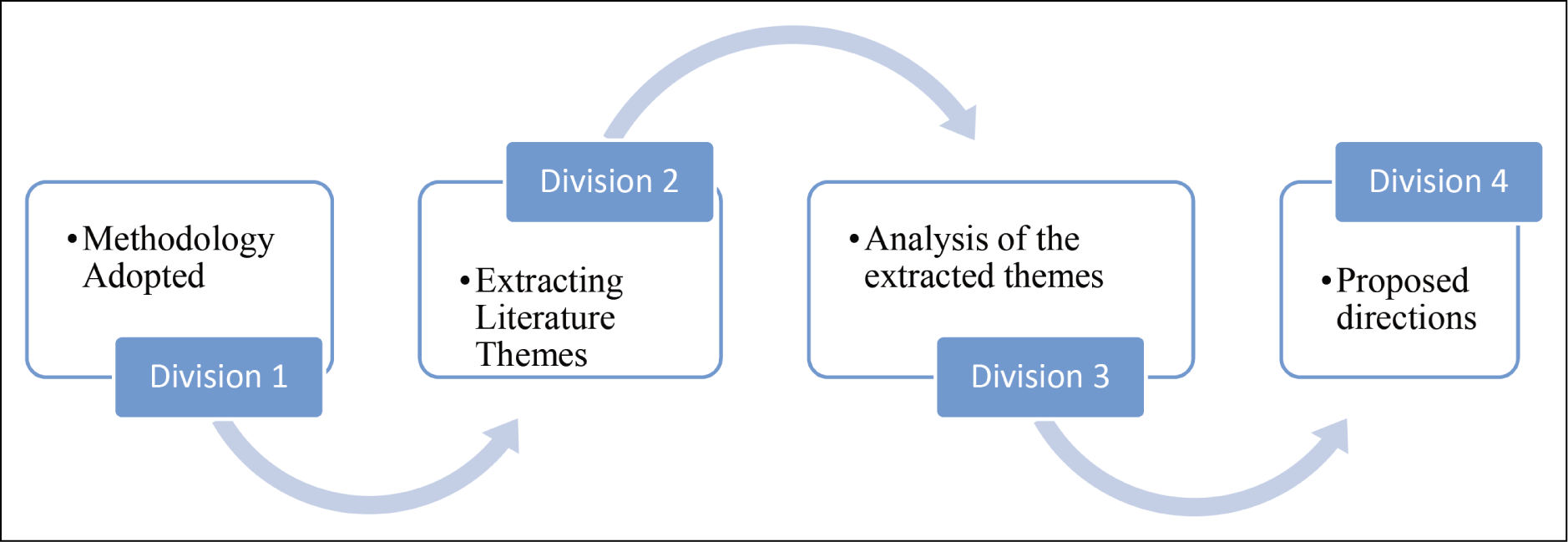
The study is organized into four divisions. The first division provides methodology adoption in assessing and analysing existent literature. The second division provides a systematic review by applying advanced convergent qualitative meta-integration on existing literature to extract available themes on digitalization in the recruitment process. The third division provides, an analysis of past studies on digital recruitment tools usage in the recruitment process. The final fourth division, provides a mapping direction for digital recruitment tools in each step of the recruitment process, along with proposed future directions. Figure 1 depicts complete categorization of the divisions discussed in the text above.
Literature Divisions of the Study.
Division 1: Methodology Adopted
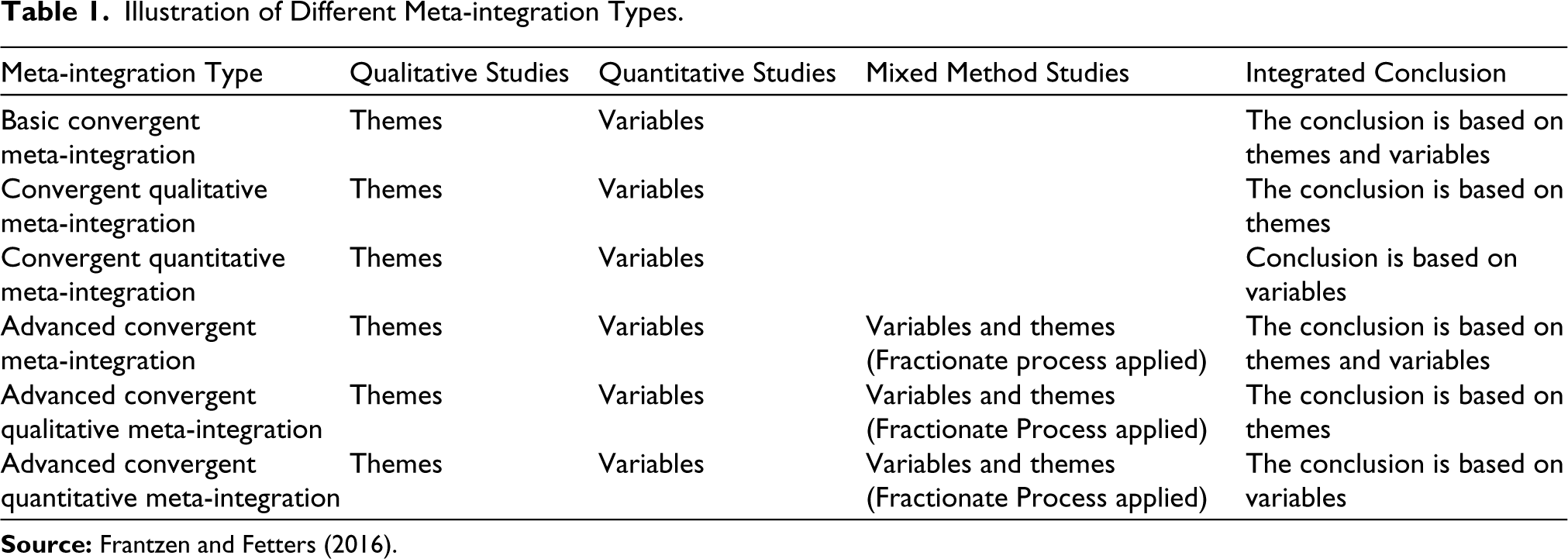
According to Frantzen and Fetters (2016), meta-integration is an emerging systematic review method apart from meta-analysis and meta-synthesis. The meta-integration method analyses and synthesizes the quantitative and qualitative research studies (Frantzen & Fetters, 2016). Another study by Khan et al. (2021) advises to use simple convergent meta-integration if the goal is to combine the findings of both quantitative and qualitative investigations and there is no need for data transformation from qualitative to quantitative or quantitative to qualitative (Khan et al., 2021). In the case of data transformation, either basic convergent qualitative meta-integration or basic convergent quantitative meta-integration should be adopted based on the data transformation’s state of conclusion (Gueguen et al., 2021). When qualitative and quantitative research studies are converted into qualitative findings, this data transformation is convergent qualitative meta-integration (Booth et al., 2021; Pluye & Hong, 2014). Shim et al. (2021) illustrated additional typologies of meta-integration: advanced convergent meta-integration, advanced convergent quantitative meta-integration and advanced convergent qualitative meta-integration. The study highlights the use of these advanced meta-integration types when mixed method studies are also analysed and synthesized, along with quantitative and qualitative research studies (Shim et al., 2021). However, a fractionating process of separating the findings of mixed method studies and integrating them into their distinct components of quantitative and qualitative studies is undertaken in advanced convergent meta-integration methods (Frantzen & Fetters, 2016). Table 1 illustrates meta-integration methods along with the outcome achieved with each type.
Illustration of Different Meta-integration Types.
Consequently, the current study attempts a systematic literature review based on the convergent meta-integration method. The analysis and synthesis of the study are based on data transformation, where quantitative studies’ findings have been transformed into qualitative studies by generating themes. Second, mixed method studies are also added to the analysis process; therefore, an advanced convergent qualitative meta-integration method has been adopted. The advanced convergent qualitative meta-integration method involves six steps before concluding, that is, identification of the previous literature, categorization of the data, transformation of the data using thematic analysis, intra-method analysis with mindful comparison, inter-method integration, organization of results and conclusion. These steps are supported by the model suggested by (Frantzen & Fetters, 2016) research study. Figure 2 depicts a complete process of the method applied.

Advanced Convergent Qualitative Meta-integration on Digital Recruitment Studies
Identification of Literature
The literature searches and methodological analysis were based on qualitative, quantitative and mixed method studies on digital recruitment and selection tools. Different research databases were used to extract past papers on the phenomena of interest. The databases included Sage, Elsevier, Emerald Insight, Taylor & Francis, Springer and Google Scholar. Respective key terms were used, such as ‘e-recruitment, online recruitment, digital recruitment, digital recruitment tools and technology-based recruitment’ to search previous papers. The systematic review includes quantitative, qualitative and mixed method studies published in the English language from 2006 to 2022.
Categorization of the Data and Fractionate Process—Inclusion and Exclusion Criteria
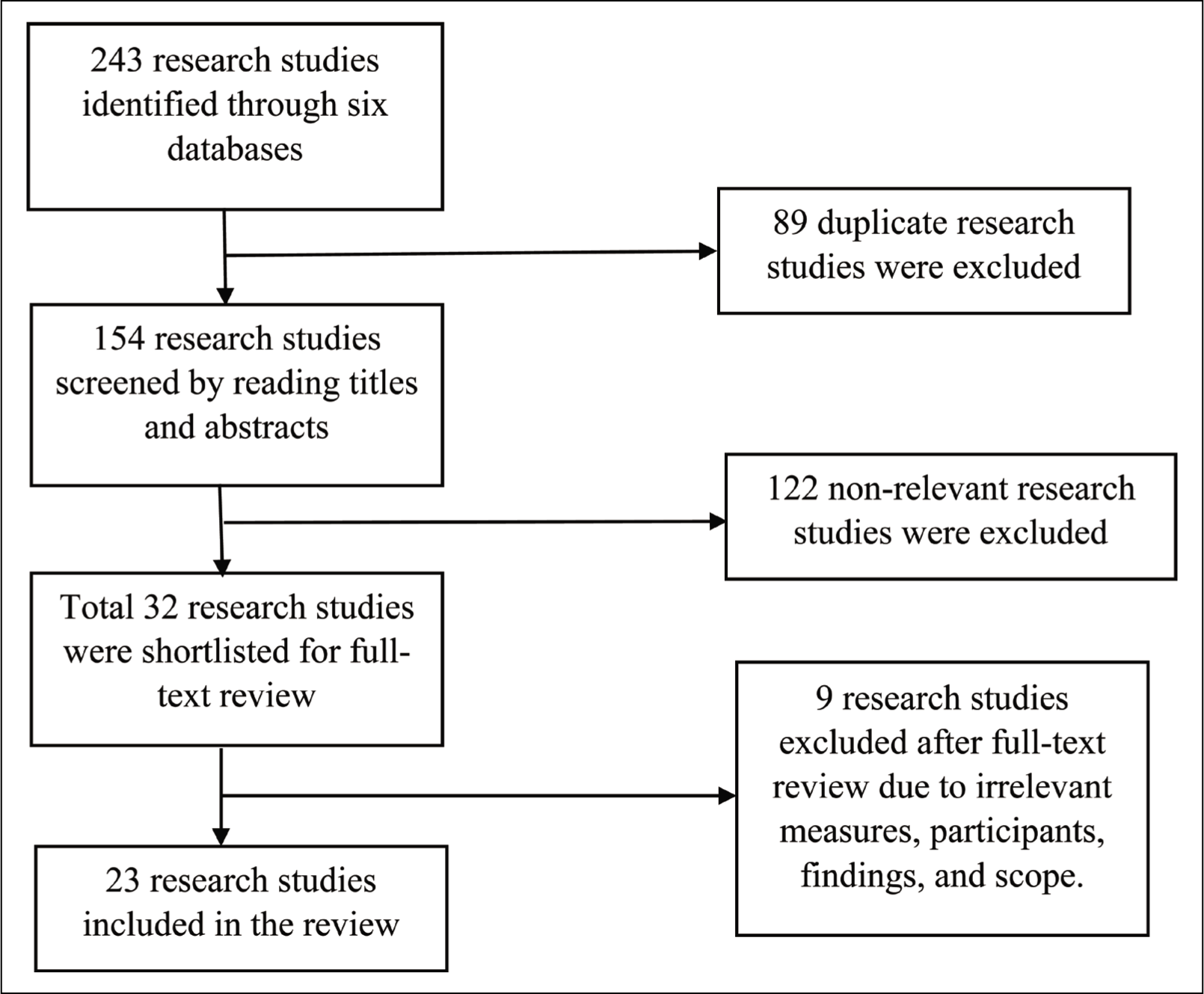
The systematic literature review comprises research studies with qualitative, quantitative and mixed method research designs. Initially, 243 research studies were identified from six databases using pre-established keywords. In the next phase, all duplicate research studies were eliminated. Among 243 research studies, almost 89 duplicate research studies were found and excluded, and then the remaining 154 were screened by reading their titles and abstracts. After this stage, 32 research studies were shortlisted for full-text review. All those research studies that did not meet the inclusion criteria of addressing the use of digital recruitment tools in the recruitment process were excluded. Consequently, 23 research studies were included in the systematic review.
Figure 3 shows this process through a flow chart.
Inclusion and Exclusion Criteria.
Description of the Selected Studies
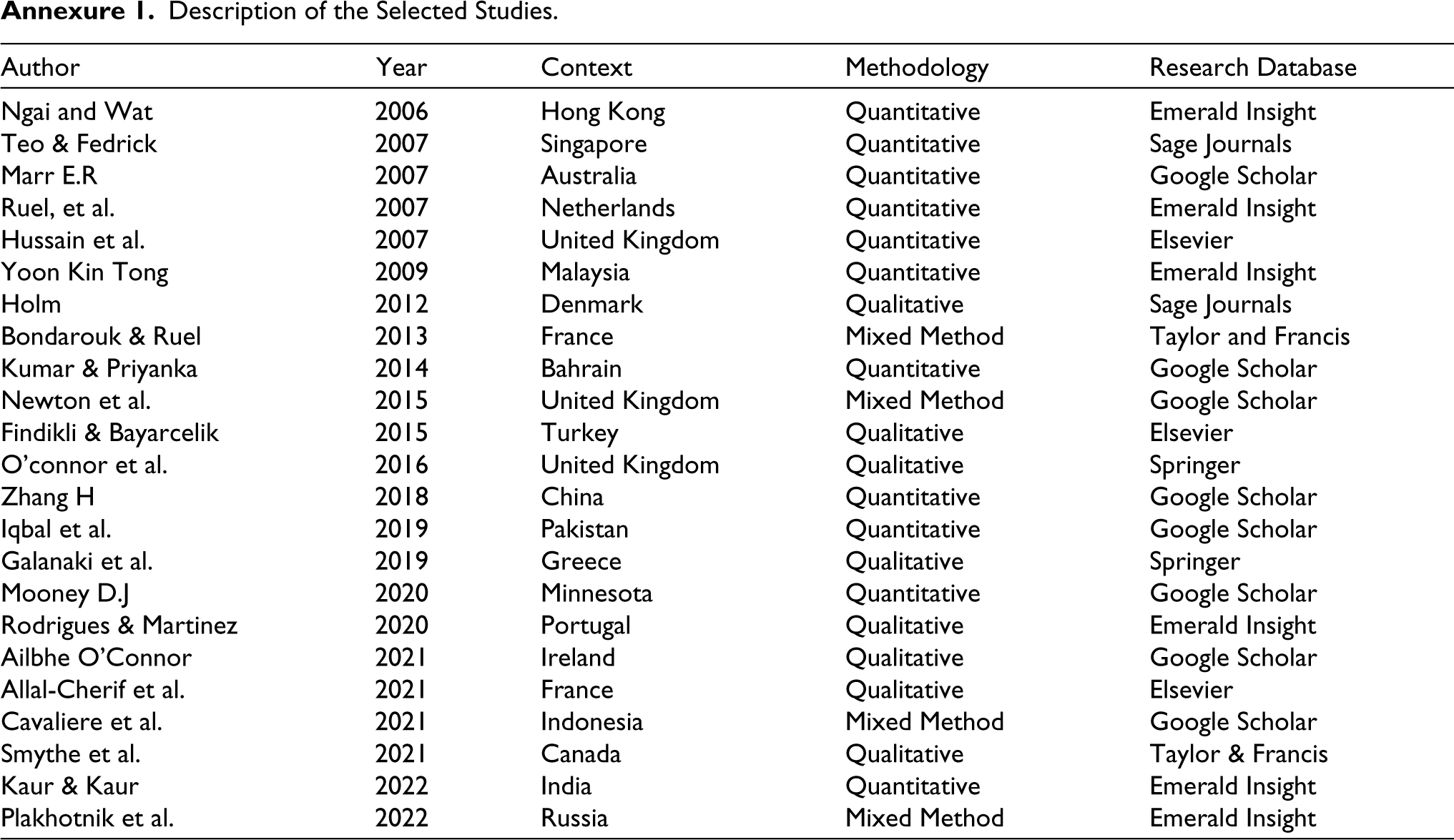
Final analyses of 23 research studies include 11 quantitative, eight qualitative, and four mixed method studies. The selected research studies were published in between the years of 2006 and 2022, the majority of which were published during the last 10 years. The selected studies were published in distinctive countries with the majority focusing on digital recruitment in developed countries such as the United Kingdom, France, Australia, China, etc. A detailed description of the selected studies is given in Annexure 1.
Fractionating Process
Once the selected research studies were included for final review, the fractionating process was undertaken. The fractionating process of four mixed method studies led to the inclusion of qualitative findings of mixed method studies into a qualitative dataset and quantitative findings into a quantitative dataset.
Transformation of the Data
To perform step 3 and to create similar datasets, a data transformation process was applied. For mixed method studies, the fractionated process was accomplished in such a way that findings of mixed method studies were separated and synthesized based on their quantitative or qualitative form. Once all findings are integrated into their distinct datasets, all quantitative studies’ findings related to the digital recruitment process and its tools were transformed into qualitative datasets by applying a thematic coding process.
Intra-method Analysis with Mindful Comparison
Intra-method analysis and integration are achieved using a thematic analysis process of the two coinciding datasets using a qualitative format. The step is applied by analysing the selected research studies to create qualitative themes from quantitative and qualitative datasets. The process requires mindful comparison using conscious and intentional consideration to analyse findings, similarities and differences between the two constructed qualitative and quantitative datasets. The mindful comparison finally led to analysing how the findings obtained from the two datasets relate. During this step, selected research papers were analysed, and themes were created from the two datasets for further steps. Conscious consideration was also applied during the analysis of the findings.
Inter-method Integration
Inter-method integration explained heterogeneity in the themes obtained from the two corresponding datasets. It also helps and guides the review by creating a collective display of the qualitative themes from the quantitative and qualitative datasets. Inter-method integration, as illustrated in the current review, qualitative research studies provide subjective themes achieved through the respondents’ experience related to digital recruitment. In contrast, quantitative research studies display objective themes related to the presence and absence of the digital recruitment process and its underlying digital tools. A thorough understanding of each distinctive theme set was crucial before integrating the findings from the qualitative and quantitative datasets. The step is critical because a rigorous understanding of the justification behind each finding is essential before the inter-method integration can be executed. The inter-method integration of the findings was done after proper comprehension of the themes from the two datasets.
Organization of the Themes
During this step, the organization of themes illustrates the final comprehensive categorization of the themes for the end product presentation. Organization and analysis of the final themes enhanced knowledge as the quantitative and qualitative datasets highlighted different perspectives about the scope, constructs, context and coherence of the research studies related to digital recruitment and selection and the use of digital tools. Based on these final themes, a conclusion has been derived from the analysis and integration of the previous studies.
Division 2: Existent Literature Themes on Digital Recruitment
Reviewing and analysing existing literature on the digitalization of recruitment and selection has categorized the literature into four themes. A detailed description of each theme is given below.
Theme 1: Benefits and Challenges
The first theme advocates the challenges and benefits of transforming from a traditional to a digital recruitment process. Few researchers have highlighted the advantages of executing the digital recruitment and selection process as it saves the effort and time the recruiter needs to put in during the traditional recruitment process. Also, cost-effectiveness and a streamlined recruitment process seem to be the significant benefits of implementing a digital recruitment process (Mishra & Kumar, 2019; Mlekus et al., 2020; Nikolaou, 2021). Contrarily, few researchers believed it to be an ineffective method since most organizations, particularly those in developing countries, are not prepared to implement it because of contextual and compatibility issues (Shabbir & Yaqoob, 2019; Shah & Soomro, 2021; Shapovalova & Pavlov, 2021; Smythe et al., 2021).
Theme 2: Digital Recruitment and Organizational Performance
The second theme advocates the impact of digitalization of recruitment on organizational effectiveness. As per prior research studies, the theme also highlights the benefits the digital recruitment process can provide organizations. The studies emphasized access to a broader pool of candidates, improved employee retention, automotive recruitment tasks and efficient metrics to evaluate the candidates as the significant advantages of digital recruitment execution (Howard, 2020). However, few qualitative research studies argue that organizations still need to be ready to embrace such multiplex transformations, as much awareness is still required to execute this process. These researchers also emphasized candidates’ side challenges while engaging and completing the digital recruitment process, even technically savvy (Al-Zagheer & Barakat, 2021; Mlekus et al., 2020).
Theme 3: Related Factors to Execute Digital Recruitment
The third theme provides a perspective on associated factors to execute digital recruitment. Some empirical pieces of evidence also advocated to explore the factors that compel organizations to execute digital recruitment instead of focusing on how the organizations are performing after they have implemented the digital recruitment process (Al-Zagheer & Barakat, 2021). Research studies highlighting the contribution of digital recruitment tools and its categories used at each step of the recruitment process seem to be limited (Frampton et al., 2020).
Theme 4: Incorporating Digital Recruitment Tools
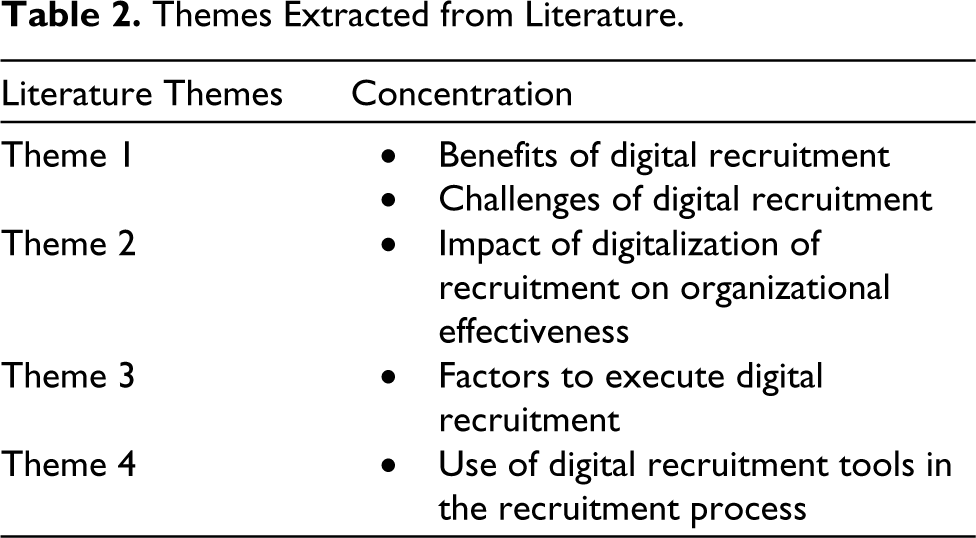
Finally, the last theme is related to the use of digital recruitment tools in the recruitment process. A review of the literature suggests the most frequently used and effective digital recruitment tool at each step of the recruitment process. Researchers illustrated various benefits along with improved organizational performance after incorporating digital recruitment tools like psychometric testing, gamification, applicant tracking systems and artificial intelligence-based selection software (Frampton et al., 2020). Few research studies also highlighted the need to contribute more research studies in this area (Gupta & Gupta, 2022). Table 2 provides a description of the themes extracted from the prior literature.
Themes Extracted from Literature.
Considering all the above literature themes, a significant contribution needs to be made to investigate the use of digital recruitment tools in the recruitment process. The transformation of traditional recruitment to digital recruitment is majorly dependent on using digital recruitment tools, which is the missing piece of the literature puzzle so far.
Division 3: Analysis of the Reviewed Studies—Mapping Digital Recruitment Tools with Recruitment Process
Technology has significantly impacted recent recruitment and selection processes at all stages of the recruitment cycle (Mishra & Kumar, 2019). Using applicant tracking systems (ATS), career websites, recruitment tools using artificial intelligence and psychometric and game-based assessments have reshaped recruiters’ jobs searching for job applicants (Strohmeier, 2020a). This changing facet of the recruitment and selection process has increased researchers’ interest in exploring the digitalized recruitment mechanism by further exploring the use of digitally equipped recruitment and selection tools (D’Silva, 2020). The limited existing literature on using digital recruitment tools in the recruitment process illustrates that using relevant digital recruitment tools increases the efficiency and effectiveness of the recruitment process (Black & van Esch, 2020). Therefore, the information on digital recruitment tools used at each step of the recruitment process is significantly required to increase the current literature thread (Frampton et al., 2020). The literature highlights four stages of the recruitment process, that is, sourcing, attracting, assessing and selecting (Janakiraman et al., 2021). At each step of the recruitment process, relevant digital tools should be incorporated to improvize the recruitment process and take advantage of such multiplex intervention. Figure 4 highlights the four stages of the recruitment process.

Mapping Digital Sourcing Tools in the Recruitment Process
Sourcing is the initial stage of the recruitment process, but it has significant importance compared to other stages. Sourcing is searching for potential candidates who best match the vacant position (Vardarlier & Zafer, 2020). Literature suggests that if an organization fails to source potential candidates, other stages become useless (Hamza et al., 2021). One of the major goals of the recruiter during this stage is to source a maximum number of candidates for better resume pool generation (Abbas et al., 2021). Therefore, choosing the right digital recruitment tool at this stage is crucial to accomplishing this stage’s main motive. Prior literature suggests that selecting a platform for advertising the vacant position is crucial as it can help reach a maximum number of candidates (Minhas et al., 2022). A few examples of such digital platforms suggested by different scholars are Facebook, LinkedIn, company career portals, career links in organizations’ websites, and career pages like Indeed.com (Nimbekar et al., 2019; Sajid et al., 2022). The review also presented and mapped these stages of frequently used digital sourcing tools.
Mapping Digital Attracting Tools in the Recruitment Process
Like the sourcing stage, the attracting stage also plays an essential role in recruitment. The attraction stage in recruitment represents creating a desire in potential job applicants to engage and participate in the recruitment process. Prior literature emphasized the importance of the attraction stage and considered attracting and sourcing to be interrelated. Lawong et al. (2019) highlighted in their study and quoted ‘better attraction, better sourcing and vice versa’. Another study conducted by Weske et al. (2020) illustrates that organizations could source candidates efficiently if the job position could attract and arouse candidates’ interest in the recruitment process (Weske et al., 2020). Considering these facets, it highlights the need to use efficient digital tools to attract many candidates to receive a maximum number of resumes in the recruitment process.
Different scholars suggested that the digital recruitment tool used for attraction can increase the reach of the job advertisement and highlight the organization’s innovative image in front of the candidates (Gilch & Sieweke, 2021). Few scholars also shed light on the importance of candidates’ positive experience leading to attracting a maximum number of candidates (Girisha & Nagendrababu, 2020; Hamza et al., 2021). With this view, a very important aspect emerged through the literature review about candidate experience through digital recruitment tools. Gupta and Gupta (2022) highlight in the study that if the candidate faces positive exposure, then it will increase the candidate’s attraction towards the organization, and thus, will be anticipating positive expectations for the organization as a future employer; however, the case may be vice versa in case of negative experience.
Analysis of the selected studies reveals and maps the frequently used digital recruitment tools to attract candidates. Research studies suggest the use of applicant tracking systems (ATS), functional company career pages or portals, use of social media to promote job advertisements and the option of a chatbot (AI built-in human-like conversation software) increases candidate attraction to engage and apply for the position (Janakiraman et al., 2021).
Mapping Digital Assessing Tools in the Recruitment Process
During this stage of recruitment, an assessment of potential candidates who are available after the sourcing and attracting stage is undertaken. Assessment of the candidate is a step in which the candidate’s skills, abilities and other required characteristics are evaluated using digital assessing tools (Ilek et al., 2022). Among the most highlighted assessment digital tools, the most frequently used and successful digital assessment tools are psychometric testing, gamification-based assessments, work simulation and real-time artificial intelligence chatbots for engaging applicants (Hosain et al., 2020).
A thorough literature analysis recommends that selecting digital assessment tools is critical as every digital assessment tool serves a different purpose for candidate evaluation (Darko et al., 2022). In addition, a critical examination of the job requirement and the organization’s technology competence should also be done before finalizing the digital assessment tool (Saxena & Khandelwal, 2022). Hence, after proper scrutiny of job requirements and potential candidates’ required characteristics digital assessment tool should be selected (Gilch & Sieweke, 2021; Girisha & Nagendrababu, 2020; Gupta & Gupta, 2022).
Mapping Digital Selection Tools in the Recruitment Process
Integration of the literature review suggests online interviewing is the most frequently used digital selection tool (Patiar & Wang, 2020; Peters et al., 2021; Pujol-Jover et al., 2023). For conducting an online interview, purchased versions of video conferencing tools are recommended by a few researchers (Fernandes & Machado, 2022; Ford et al., 2019; Frampton et al., 2020). Many studies also highlight using artificial intelligence video chatbots for interviewing in which no human intervention is required. According to prior research studies, organizations must input information about the position, required experience and skill set in the chatbot algorithms before initiating the interview process (Samrose & Hoque, 2022). The chatbot assesses the candidates by comparing their skill set against the programmed skill set of the job position and shortlisting the candidate (Silva et al., 2022).
Proposed Digital Recruitment Tools at Each Stage of the Recruitment Process
Table 3 indicates different digital recruitment tools used at each stage of the recruitment process based on a literature review. In addition to this, research studies also highlight the importance of selecting relevant and suitable digital recruitment tools at each step of the recruitment process (Samrose & Hoque, 2022; Sasirekha, 2021; Saxena & Khandelwal, 2022). Digital recruitment tools should be selected based on the position’s requirement to serve the process’s basic motive and enhance the efficiency of the recruitment process. Qayum (2022) suggested using psychometric testing and gamification while recruiting multiple candidates for a position. The study further suggested that both these methods will save the time and effort of the recruitment team and are more effective in bulk hiring (Qayum, 2022).
Mapping Digital Recruitment Tools.
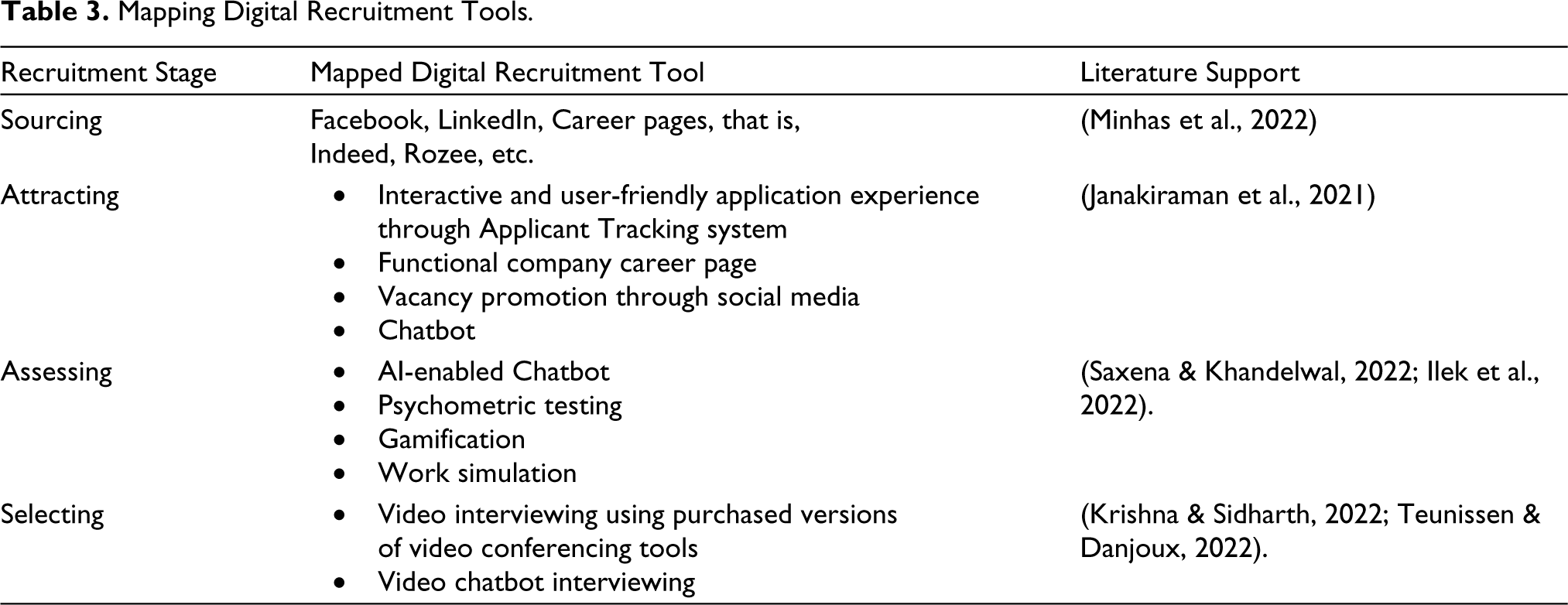
Similarly, LinkedIn as a sourcing tool is more suitable for sourcing experienced candidates than fresh or less experienced candidates as they are less active on LinkedIn (Kucherov & Tsybova, 2022). A career portal namely Indeed.com is considered more plausible for sourcing fresh or less experienced individuals (Verma et al., 2022). Hence, every digital tool serves a different purpose and suits distinctive recruitment needs.
Division 4: Proposed Future Directions
Contextual Directions
The previous literature threads show how developed countries benefit from using different digital recruitment tools in their recruitment process. Digital recruitment tools have provided them with more benefits and improved their organizational performance and employer branding. According to the literature, developed countries have evolved their recruitment processes and are not only relying on but also successfully using artificial intelligence-based recruitment tools in their recruitment processes (van Esch et al., 2021). Contrarily, using the internet, company website or advertising job posts on social media platforms is the major transformation of recruitment processes in developing countries (Kucherov & Tsybova, 2021). Nevertheless, little research has been found in this context; therefore, more research needs to be done on transforming the recruitment process using digitalized recruitment tools in developing countries’ organizations (Hamza et al., 2021). Previous researchers majorly highlighted that besides having a worldwide paradigm shift from conventional HRM to digital HRM, the literature review explains that the execution rate of digitalized HR systems is limited in developing countries as compared to other countries worldwide (Nooruddin, 2018; Waheed et al., 2020). These literature review findings indicate room for research in this area (Mooney, 2020; Sasirekha, 2021; Saxena & Khandelwal, 2022). Therefore, future researchers should explore how developing countries transform their recruitment process and which digital recruitment tools are suitable for their organizations considering contextual and compatibility factors (Maqbool et al., 2020).
Methodological Directions
After scrutinizing and analysing previous research studies, it is observed that different scholars mostly adopted quantitative or qualitative research methods on similar topics. The ratio of mixed method studies seems less, whereas most scholars also highlight that digitalization in recruitment is a complex intervention requiring extensive understanding (Singh, 2022; Skiba, 2020; Strohmeier, 2020b). As each research design has different features, the research design selection should be based on the objective and motive of the research type. Quantitative research studies are more plausible to explore and understand the meaning an individual or group of individuals attributed to a phenomenon or problem. In contrast, quantitative research studies are a way to test theories by investigating the relationship among variables. The mixed method approach combines qualitative and quantitative research designs and is more suitable when quantitative and qualitative data alone will not adequately answer the research questions (Ortiz & Greene, 2007). In light of the reviewed studies, a mixed method approach is very useful in understanding a complex phenomenon of the social world through multidimensional lenses that progressively acknowledge multiple stakeholders (Kinser et al., 2013). Prior literature comprehends that mixed method design is a way of collecting different but complementary information on the same phenomena, which helps to provide in-depth analysis. Therefore, using mixed method designs can provide rigorous insights to future researchers.
Tashakkori (2003) and Creswell (2003) have explained three approaches to mixed methods studies, which are sequential exploratory (Qual-Quan), sequential explanatory (Quan-Qual) and concurrent (Qual+Quan), which are further subdivided into transformative, triangulation and embedded or nested (Creswell et al., 2003; Tashakkori & Teddlie, 2003). Literature also suggests that mixed method designs are based on three indicators of timing, weighting and integrating (Ahmadov & van der Borg, 2019; Creswell et al., 2003). The researcher should clearly understand the imputation of the research design and the premise of guidance before embracing it in the research (Chopdar et al., 2022). Table 4 provides a synthesis of when and how these mixed method research designs are used with literature support.
Different Types of Mixed Method Research Designs.
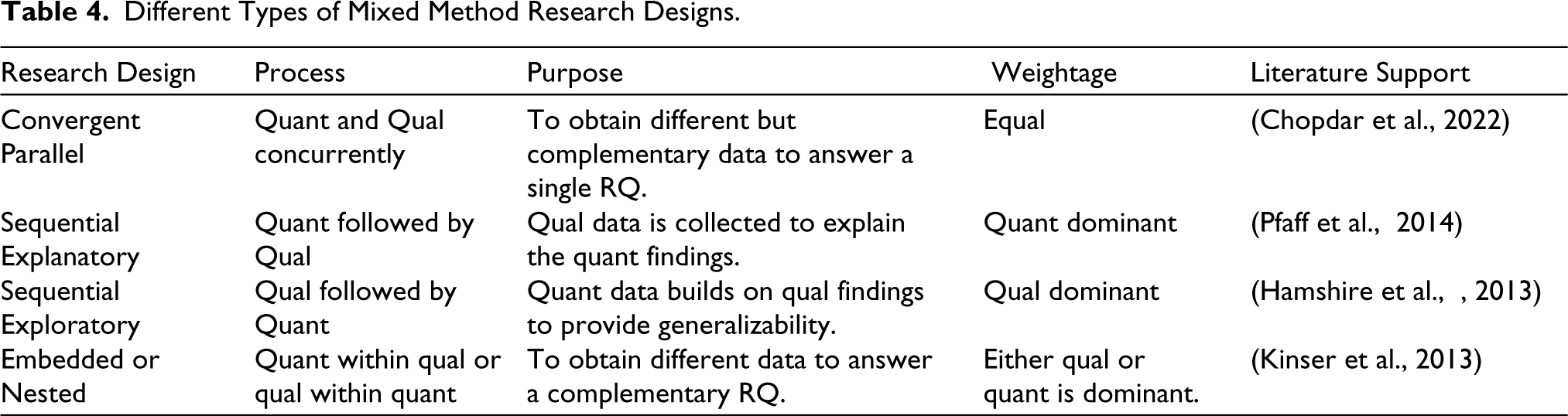
In a nutshell, the review’s findings suggested that future researchers adopt a mixed method research design on a similar topic. However, Harrison et al. (2020) recommended that before applying a mixed method research study, the researcher should focus on the type of research questions to be addressed and the criterion based on which a research type should be selected (Harrison et al., 2020). Therefore, careful consideration would be required by the researcher while selecting the category of mixed method research design.
Conclusion
This systematic review sought a theoretical understanding of the existing literature on the use of digital recruitment by using digital recruitment tools at each step of the recruitment process. The literature review was based on an advanced convergent qualitative meta-integration method. Each step of advanced convergent qualitative meta-integration was carefully accomplished during the study. The major motive of this review was to provide a direction for future researchers and organizations to incorporate digital recruitment tools in their recruitment process effectively and efficiently. To accomplish the literature review’s motive, 23 research studies were selected and analysed in the final phase. The literature review highlighted and mapped successful and frequently used digital recruitment tools at each stage of the recruitment process. The proposed directions, provided in the study, will help the practitioners of the recruitment department to execute digitalization in their recruitment process and will also underpin the future researchers in enhancing the existent literature.
Future Research Directions
One of the major aims of the study was to provide future directions on context and methodology for future researchers. The literature review highlighted that more research needs to be added on digital recruitment in the context of developing countries, as little research is done in this area. Methodologically, future researchers should adopt a mixed method research design after clearly understanding the imputation of the mixed method research design to strengthen the existing literature on digital recruitment further. The current study already included renowned journals for an extensive review, yet adding PhD dissertations and articles from other sources like Wiley would further strengthen the study. Additionally, scale development based on the findings and results of the review would be amenable to future empirical investigations. The review would provide a theoretical foundation for future researchers in identifying and examining various aspects of digital recruitment, such as the impact of culture, type of organization, private or public, number of employees and differentiation between small and large organizations on digital recruitment and selection.
Footnotes
Declaration of Conflicting Interests
The authors declared no potential conflicts of interest with respect to the research, authorship and/or publication of this article.
Funding
The authors received no financial support for the research, authorship and/or publication of this article.
Appendix
Description of the Selected Studies.
| Author | Year | Context | Methodology | Research Database |
| Ngai and Wat | 2006 | Hong Kong | Quantitative | Emerald Insight |
| Teo & Fedrick | 2007 | Singapore | Quantitative | Sage Journals |
| Marr E.R | 2007 | Australia | Quantitative | Google Scholar |
| Ruel, et al. | 2007 | Netherlands | Quantitative | Emerald Insight |
| Hussain et al. | 2007 | United Kingdom | Quantitative | Elsevier |
| Yoon Kin Tong | 2009 | Malaysia | Quantitative | Emerald Insight |
| Holm | 2012 | Denmark | Qualitative | Sage Journals |
| Bondarouk & Ruel | 2013 | France | Mixed Method | Taylor and Francis |
| Kumar & Priyanka | 2014 | Bahrain | Quantitative | Google Scholar |
| Newton et al. | 2015 | United Kingdom | Mixed Method | Google Scholar |
| Findikli & Bayarcelik | 2015 | Turkey | Qualitative | Elsevier |
| O’connor et al. | 2016 | United Kingdom | Qualitative | Springer |
| Zhang H | 2018 | China | Quantitative | Google Scholar |
| Iqbal et al. | 2019 | Pakistan | Quantitative | Google Scholar |
| Galanaki et al. | 2019 | Greece | Qualitative | Springer |
| Mooney D.J | 2020 | Minnesota | Quantitative | Google Scholar |
| Rodrigues & Martinez | 2020 | Portugal | Qualitative | Emerald Insight |
| Ailbhe O’Connor | 2021 | Ireland | Qualitative | Google Scholar |
| Allal-Cherif et al. | 2021 | France | Qualitative | Elsevier |
| Cavaliere et al. | 2021 | Indonesia | Mixed Method | Google Scholar |
| Smythe et al. | 2021 | Canada | Qualitative | Taylor & Francis |
| Kaur & Kaur | 2022 | India | Quantitative | Emerald Insight |
| Plakhotnik et al. | 2022 | Russia | Mixed Method | Emerald Insight |