



Abstract
This case is about a public limited company that transformed the lives of poor village artisans living in the remotest part of north-east India. While the public and private limited companies face constant criticism and increasing cynicism about their corporate social responsibility (CSR) and sustainable livelihood creation initiatives; NEDFi, a public limited company and an arm of the Ministry of Development of the north-eastern region of India undertook an initiative to transform the lives of many underprivileged rural artisans, especially women through its CSR and sustainability initiatives. NEDFi’s water hyacinth craft project, undertaken initially as a CSR initiative was able to meet both the economic and social values of the firm and community, respectively. Thus, the CSR/sustainability initiatives of the company were potentially transformed into creation of ‘shared value’ at the later stages of the programme that achieved roaring success by uplifting the rural poor through economic empowerment and unleashing the potential of women artisans.
Keywords
‘Pearl of water, transforming lives’ is a report by Talukdar (2013) published in India Together, narrating how Ajanta Chamua and other Assamese villagers found a new lease on life through handicrafts made from water hyacinths (a water weed widely available and easily accessible across various parts of the north-eastern region of India). Ajanta, like most other Assamese women, was a housewife and her husband, like most other Assamese men, earned for the family by working in the fields. They subsisted on a meagre amount. Assam is a state in the north-eastern part of India, known for its natural beauty and untapped natural resources. In this region, agriculture is the primary occupation of the villagers. However, the crops are largely at the mercy of the erratic monsoons with heavy rains frequently causing floods that destroy crops and houses.
Ajanta and her husband led a difficult life because the nature of their work was irregular and seasonal. The family had to survive on the paltry amount the husband earned by working in the fields. The situation worsened when Ajanta’s husband had to undergo an eye operation. At that time, Ajanta was forced to acquire a loan of ₹7,00 from a private lender at the rate of 5 per cent per month. The rate of interest was very high but the family had no choice. They began paying the interest but it seemed that more trouble was waiting for them. In 2012, high floods inundated all the agricultural lands in the area, and Ajanta’s husband lost his employment. At that time, Ajanta learned about North Eastern Development Finance Corporation Ltd’s (NEDFi) water hyacinth craft project and began making handicrafts in her free time after completing her household chores. She eventually started working under the supervision of a mentor. Her mentor, an expert nominated by NEDFi, trained her to prepare and send the final products to the nearest NEDFi collecting centre. She earned a modest amount commensurate with her skill and was able to repay the entire loan soon after receiving her first payment for items made from water hyacinths (Talukdar, 2013).
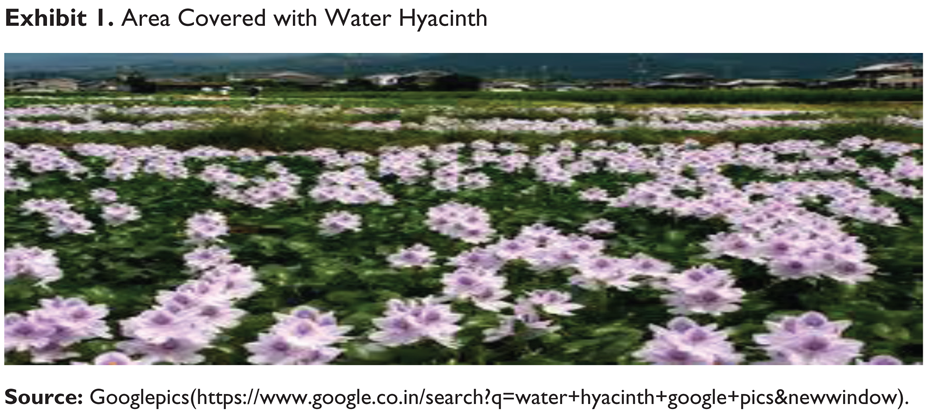
Ajanta’s case is one of the many cases in which rural women started earning by working as artisans for NEDFi. This initiative was launched by Mr Ashim Kr Das, Deputy General Manager of NEDFi. During his visit to Thailand’s Bang Sai Arts and Crafts Center in Phra Nakhon Si Ayutthaya in October 2007, he became fascinated by the beauty of the handicrafts created from the water hyacinth plant. He immediately thought of his native region, Assam, where an abundance of this plant was causing problems to the farmers. He thought that creating products from the water hyacinth plant would be an innovative solution to one of the many problems plaguing that region. Reaching Assam, he, along with his team members of NEDFi, decided to introduce this skill to the artisans of Assam and other north-eastern states of India. After assessing the potential of the water hyacinth as a raw material for handicraft items, NEDFi engaged experts from Industry Crafts Pvt Ltd, Bangalore, to train twenty-one artisans. The idea was that the first batch of trained artisans would initially serve as trainers to other craftsmen back in Assam. Thus, Das played the pioneering role in the water hyacinth craft revolution of India.
In the article ‘Hyacinth Turns Productive in North-East’, the Deccan Herald reported that the north-eastern artisans, with their water hyacinth handicrafts, stole the limelight at the 28th Indian Handicrafts and Gifts Fair in New Delhi. The importers of Indian handicrafts were charmed by the beautiful products made from the dried stems of the water hyacinth plant (Borpujari, 2009). The water hyacinth successfully emerged as an alternative source of handicraft material, and the products made out of this material affirmed the expertise of the craftsmen. However, neighbouring countries such as Myanmar and Malaysia had already tapped this resource before India and were, as a result, able to capture a large share of the global handicraft market.
Success in any social organization is defined by attaining both social and financial objectives with a framework that takes opportunity, people and finance into consideration through creating a shared value proposition. Das and his team members of NEDFi had the challenge of attaining these dual objectives while simultaneously giving thousands of people the means to live with dignity.
North-Eastern Development Finance Corporation Ltd: Company Background
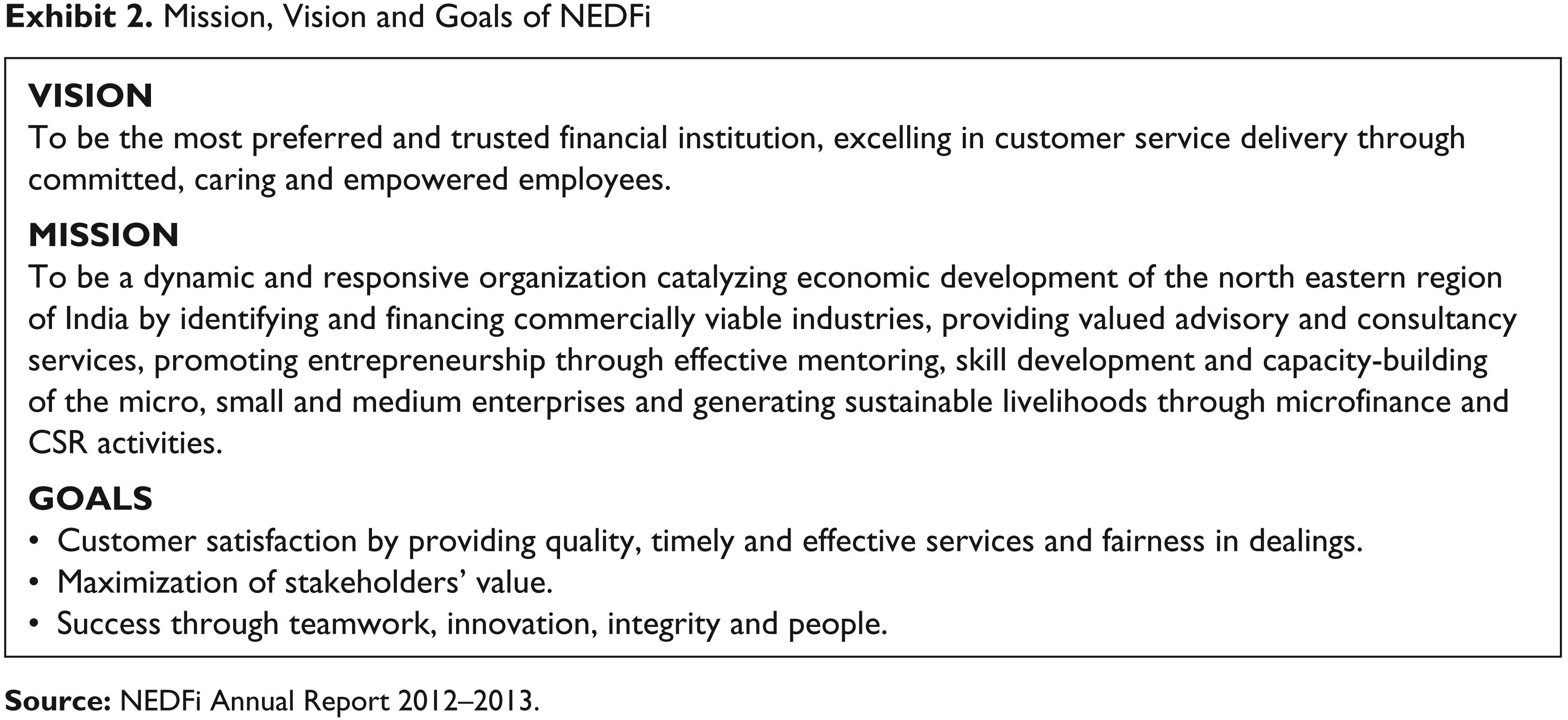
The NEDFi is a public limited company registered under the Companies Act 1956 on 9 August 1995. It is notified as a public financial institution under Section 4A of the Act and was registered as a non-banking financial company (NBFC) in 2002 with the Reserve Bank of India. The shareholders of the corporation are IDBI, SBI, LICI, SIDBI, ICICI, IFCI, SUUTI, GIC and their subsidiaries. The management of NEDFi comprises the board of directors including representatives from shareholder institutions, Ministry of DoNER (Development of North-Eastern Region), state governments and eminent persons from the north-eastern region and outside having wide experience in industry, economics, finance and management. NEDFi provides financial assistance, training and promotional activities and offers consultancy and advisory services. Financial assistance is provided to micro, small, medium and large enterprises for setting up industrial, infrastructure and agri-allied projects. Microfinance is also provided through microfinance unit/non-governmental organization (MFI/NGO) or through the self-help group (SHG). NEDFi, an ISO 9001:2008 certified company since 2001, is an organization with a mission of economic development for the north-eastern region of India through identifying, financing and nurturing commercially and financially viable projects in the region (NEDFi website). However, operating in a competitive environment, NEDFi managed to record a moderate growth of 10 per cent in 2014 in its loan portfolio. The sanctions and disbursement for the year were ₹4.5751 billion and ₹3.6469 billion, respectively, which signified a growth of 1 per cent and 4.6 per cent, respectively, in comparison to the previous year (2013). Thus, NEDFi’s gross income increased by 12.96 per cent from ₹1.2325 billion to ₹1.3923 billion in 2014. The profit before tax and the net profit were 9.62 per cent and 1 per cent, respectively, and registered ₹1.0013 billion and ₹0.6387 billion, respectively. This was better than the corresponding figures of the previous year. The data signified that the company was enjoying good profit (NEDFi Annual Report, 2013–2014).
SWOT Analysis
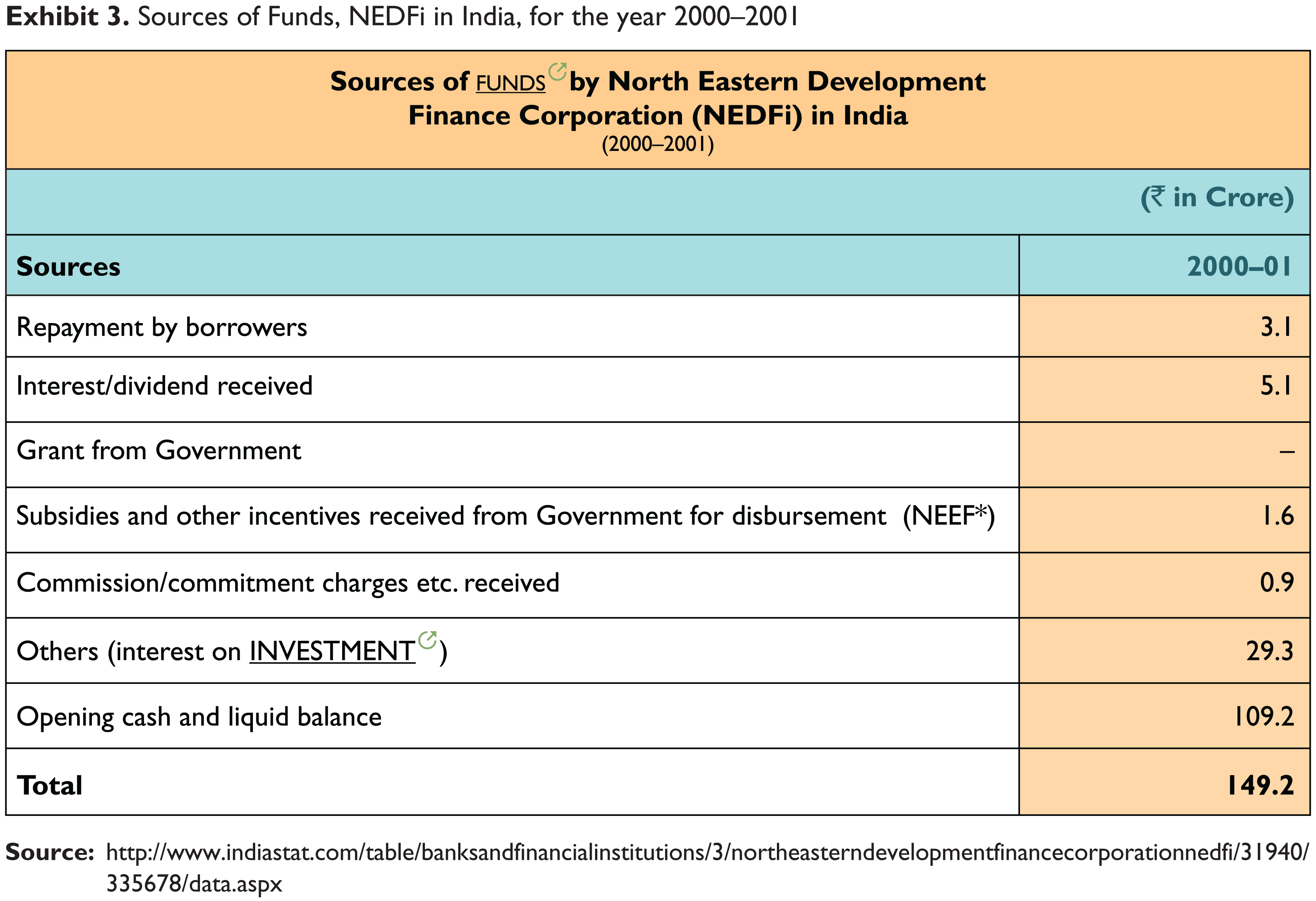
Similar to many other businesses, public limited companies also have their strengths, weaknesses, opportunities and threats (SWOT). In India, public limited companies such as Steel Authority of India Limited (SAIL), Gas Authority of India Limited (GAIL), Coal India Limited and the like are enjoying leading market positions in their own sectors but are still not without weaknesses and threats from extraneous factors. The SWOT analysis of public sector organizations of India is given in Figure 1.
Although the public limited companies of India enjoy a prestigious position in Indian business scenario, yet they continue to face both internal and external challenges. Internal challenges include frequent political interventions and red tape which create difficulty in making prompt and effective decisions, whereas the external challenges include intense competition from private sector companies and rising inflation that requires efficient managerial skill and action.
As a public limited company, NEDFi had its strengths and weaknesses. Similar to other public sector organizations, NEDFi enjoyed a strong market for financial disbursement and revenue, and was strongly supported by its artisans. Its impressive financial performance was a result of the diversified categories of products and services to different customer segments. However, few of the weaknesses that could be noticed were slow decision-making due to government interventions, inadequacy in government laws and lack of modern technology, which were also creating problems for the organization. NEDFi could also avail opportunities such as growing demand of sustainable products, a large number of customers willing to take up entrepreneurship under NEDFi’s guidance and more financing possibilities thereof. Threats to NEDFi were increased competition and rising inflation.
Microfinance: A Concept and Understanding in Indian Context
Microfinance is about banking with the poor with a provision of loan at a low cost and increased frequency of repayment. Under the initiative of the microfinance units, the deserving applicants are organized into small and cohesive SHGs (Government of India, 2003). Microfinance units help in channelizing the production and consumption of credit to the group members. Thus, it also inculcates a habit of small savings that provides economic independence to the underprivileged section of the society. Most of the developing and underdeveloped countries have gradually embraced the concept of microfinance that ensures self-employment and opportunities of enterprise development (McKee, 1989), increased level of income and resources (Hossain, 1988) and fulfils the need of the borrowers (Yunus, 2004). It also influences rural marketing processes and systems (Saptharishi, 2007).
An SHG can be termed as a small group consisting of five to twenty people who join voluntarily through microfinance and come from similar socio-economic backgrounds. The idea of microfinance is of flowing capital through economic activities of microfinance groups in rural areas that further the cause of credit outreach in the villages through micro-enterprise ventures. SHG acts as the mechanism and ensures adequate and speedy service to the poor living in the rural areas. With the provision of receiving equitable gains from the operations, microfinance units play an important role in combating socio-economic problems in developing nations (Mahjabeen, 2008).
A few microfinance models that are prevalent in India are:
Model 1: SHGs are financed directly without the intervention facilitation of any NGO. Model 2: SHGs are financed directly with the facilitation of formal or informal agencies such as the government, commercial banks and microfinance institutions (MFIs) like NGOs, non-banking financial intermediaries (NBFIs) and cooperative societies. Model 3: NGOs, MFIs and financing agencies act as direct facilitators. Model 4: This model is similar to the Grameen Bank Model followed in Bangladesh.
Model 2 is being commonly adopted in India in which facilitating agencies like the government and NGOs form and nourish SHGs and link them directly with banks to receive credit. Thus, it empowers the micro-entrepreneurs of rural and underdeveloped regions. NEDFi’s operating model was also based on Model 2 as is the case in the water hyacinth craft project. NEDFi was involved in financing the SHGs and NGOs. ‘SATRA’ is the NGO linked with NEDFi in the water hyacinth craft project (Tripathy & Jain, 2007).
SATRA was established in 2002 with a goal to serve Assam and the entire north-east India. Since its inception, it mainly served the underprivileged sections of society with the mission of providing social justice, socio-economic growth and self-reliance. In the year 2007, SATRA was awarded the Chief Minister’s Best Community Action Award for its achievements. Some of its activities such as awareness creation for socio-economic issues and livelihood generation were accomplished by motivating, guiding and helping the rural masses. Approximately, 4,000 individuals were supported and provided micro credit by SATRA (Tripathy & Jain, 2007).
About the New Opportunity
NEDFi and NEC (North Eastern Council), a wing of the Ministry of DoNER, initiated a three-year project (FY 2010–2011 to FY 2012–2013) called ‘Integrated Project for Development of Water Hyacinth Craft in NER’ and introduced the water hyacinth as a raw material to prepare handicrafts. This project was initiated with the dual mission of sustainable livelihood creation through the promotion of eco-friendly products and restoring the water bodies by removing the menace of this plant. Over a period of three years, 1,000 people were provided skill development training in this area. The idea of using water hyacinths as an alternative raw material to manufacture handicrafts marked the beginning of a new movement in north-east India. After successful completion of the NEDFi-NEC’s three-year joint project, NEDFi integrated this project with its own corporate social responsibility (CSR) programmes (NEDFi website).
The Launching of Water Hyacinth Craft Project
NEDFi launched the water hyacinth craft project with a mission of sustainable livelihood generation by unlocking the creativity and potential of the artisans. It also had two goals to achieve: to provide supportive market and easy credit facility to the artisans. In order to achieve these goals, NEDFi focused on two pillars of efficiency:
Transfer of latest technology Constant monitoring.
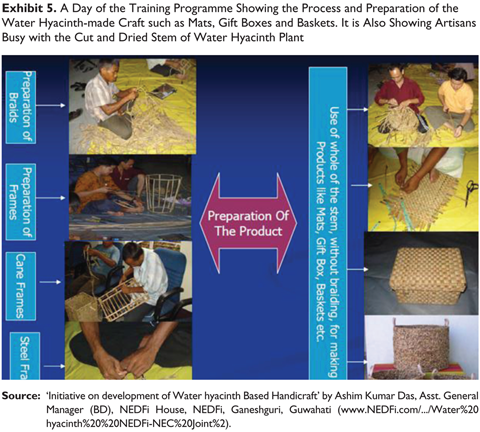
Water hyacinth-based handicrafts basically depended on the supply of raw material to the artisans and their knowledge and skill to prepare handicraft items from them. The process for preparing handicraft items was simple, convenient and easy to understand by the village artisans (NEDFi website).
During the launch of this project, NEDFi faced some critical issues such as how to create, manage and scale up the programme to support poor artisans at different stages of operation. Addressing these issues required NEDFi to integrate with NGOs and SHGs as partners in both social and business missions. This proved to be a strategic decision as opportunities were available in the society. Both customers and artisans had been looking for a new kind of eco-friendly product. Water hyacinth plant as a raw material also triggered curiosity among the artisans. However, collaboration with NGOs/SHGs conveyed the message of developing trust with the members of society/community while achieving the social mission of creating sustainable livelihood. All these factors triggered NEDFi to take advantage of the artisans’ talents and pursue innovations through the project.
Trust is an important condition for building any relationship. The collaboration with the local level bodies/institutions helped to clear any ambiguity and suspicion. This finally led to an acceptance of the idea and triggered willingness to participate among the participants of the community.
How the Journey Began
The journey began as a coincidence when Mr Ashim Kr Das, presently the Deputy General Manager of NEDFi, visited Bang Sai Arts and Crafts Centre in Phra Nakhon Si Ayutthaya in Thailand in October 2007. He was fascinated by the craft. He thought of introducing the craft in Assam and other north-eastern states. After assessing the potential of water hyacinths as a raw material for handicraft items, NEDFi engaged experts from Industry Crafts Pvt Ltd, Bangalore to train twenty-one artisans. As per the plan, the first batch of trained artisans would have to initially serve as trainers to other craftsmen back home.
During the journey ahead, NEDFi was assisted by the Technology Resource Center (TRC), a raw material bank located in Khetri, Kamrup district, Assam. TRC helped the artisans by storing and preserving the water hyacinth stems for the winter season, a time when the supply goes down. The water hyacinth project covered many artisans of Assam, Arunachal Pradesh, Meghalaya, Tripura and Manipur (NEDFi website).
The water hyacinth craft project gained popularity among the artisans. They found it convenient since no special skills were required to prepare the simple items, and any artisan who possessed basic handicraft making skills could get involved. Since handicraft items could be made at home, this activity became a popular means of recreation amongst the female members of the household after completion of their chores. Generally, rural women worked in groups, and group cohesiveness also led to increased production. Moreover, the raw material was also abundant during the monsoon and thereafter for at least eight months in ponds, wetlands and other water bodies. This added to their convenience.
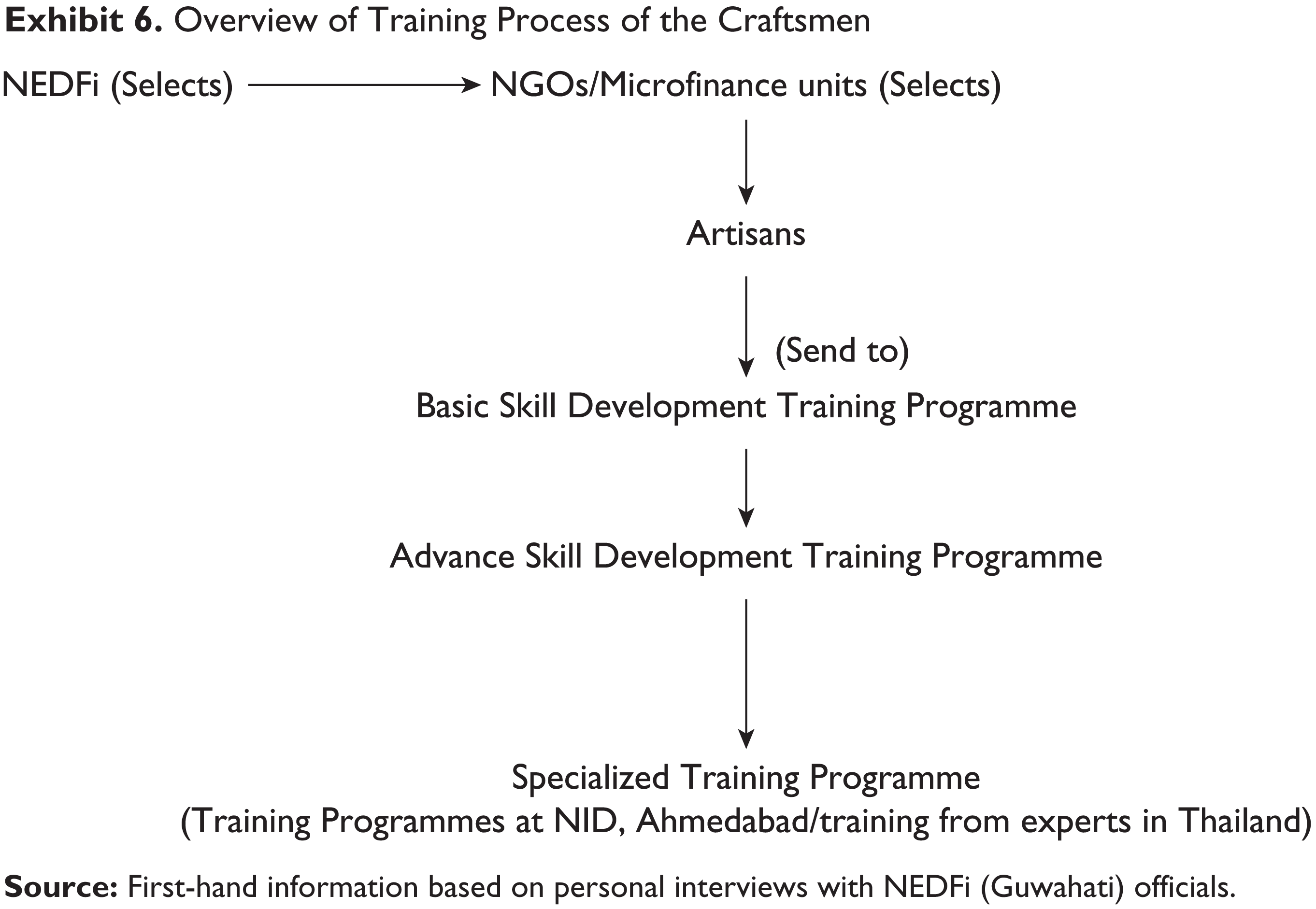
Creating awareness and disseminating knowledge was crucial towards bringing any social change. To achieve these objectives, NEDFi used its strong network of NGOs and SHGs. The NGOs/SHGs informed and educated artisans about the great potential of the water hyacinth craft and the training programmes being conducted by NEDFi. The interested artisans were given information about the steps that NEDFi was taking to educate the artisans. Master artisans from each group of NGOs were informed and invited to the training programmes. The objective was to train potential artisans in handicraft-making and to motivate and select some of them to receive specialized training at the National Institute of Design (NID), Ahmedabad. NEDFi also invited experts from Thailand to provide training on Thai technology. Meanwhile, the artisans were provided information about how to receive and utilize micro credit to meet their financial needs throughout the handicraft preparation process.
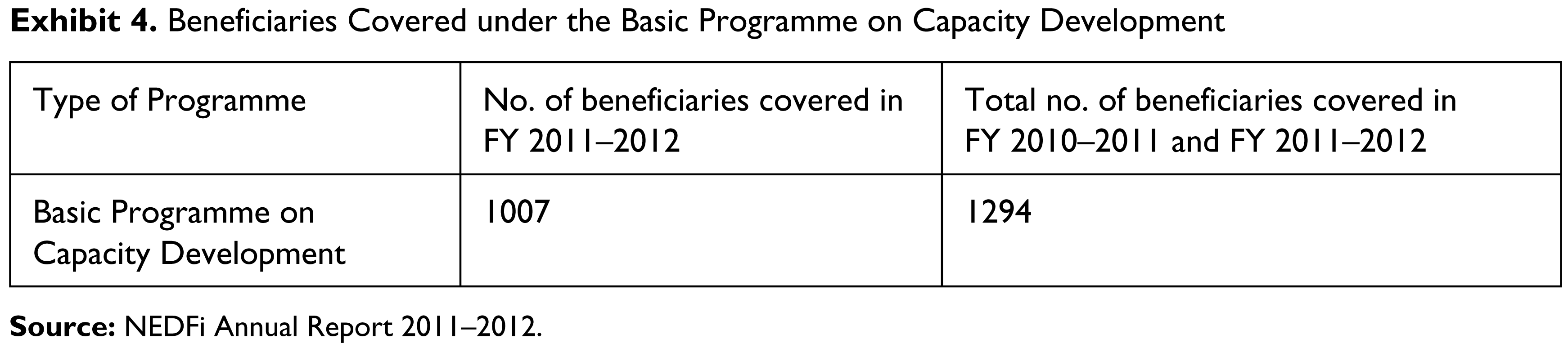
During the year 2011–2012, a total of 1,294 artisans from Assam, Manipur, Arunachal Pradesh, Nagaland, Tripura and Meghalaya received their capacity development training through NEDFi (NEDFi website).
Selection and Training of Artisans
Selecting and training selected artisans was always going to be an uphill task since access to remote villages was limited. To streamline the selection process, NEDFi officials used a criterion to select NGOs/microfinance units. The criteria included a minimum of two to three years of work experience, a good reputation among the artisans, expertise in a specific field, branch office recommendation and registration certificate verification. Based on this, NEDFi selected NGOs to work with them on the water hyacinth craft project. Thereafter, the NGOs were asked to select their member artisans who would undergo training under the basic skill development training programme.
Training Programme Phase I: Basic Skill Development Training Programme
The basic skill development training programme was run in phases. In the first phase, twenty-five artisans were selected to receive training. The duration of the training period was ten to twelve days. In this first phase of the training programme, the artisans were informed about the possibilities of preparing handicraft items out of the commonly found water hyacinth in their village surroundings and the business value of such items. The training programme started with the awareness generation session. In this session, both business opportunity and provision of micro credit facility for the trainee artisans were discussed in detail. The trainees were trained in making simple water hyacinth handicraft items that could be marketed, and were further imparted skills required to make any water hyacinth craft item. During the training programme, sincere artisans who displayed talent and mastery over the craft were selected for the next phase of the training programme.
During this phase, each artisan was provided with an identity and progress report card bearing his/her name and a unique code. Identity cards were issued keeping two purposes in mind: first, to keep a record of different training programmes conducted for the artisans and second, to keep a record of the items sold by the artisans at different selling stops of NEDFi.
Training Programme Phase II
During this phase of the training, artisan skills were honed further and specialized training was provided on water hyacinth-based handicraft-making.
Training Programme Phase III
In this phase, the artisans were selected to attend an advanced training programme at the NID, Ahmedabad. In this programme, skill-specific product training was provided. Those craftsmen who completed this training programme were recognized as ‘master artisan trainers’. This new set of expert trainers then started providing training to fresh/new artisans in their own villages. This ensured the continuity of the programme in the villages and also enabled the master trainers to earn extra income from providing training at the training programmes organized by NEDFi.
Role of Mentors
The term ‘mentor’ was used by NEDFi to identify a person who played the role of a facilitator. Under this project, NEDFi developed a number of mentors in different districts to help the artisans. Mentors had to supervise the newly trained artisans assigned to them. These mentors were responsible for relationship-building with artisans and keeping an eye over handicraft preparation. They were also required to visit artisans at different places to assist them in collecting raw material along with giving demonstrations, training the artisans and eventually transporting the produce to different selling points or directly sending it to NEDFi’s Water Hyacinth Craft Gallery.
The role of the mentor was crucial to the success of the team. Sincerity, responsibility, accountability and the ability to lead an entire group of crafters were the required qualities that a mentor must possess. One mentor headed a maximum team of 200–300 craftsmen. A mentor was paid ₹50 for each artisan that worked under him/her, in addition to the reimbursement of travelling expenses he incurred while performing his/her duties on the job.
Selection Process of the Mentor
The selection process of a mentor was very democratic in nature. The craftsmen who worked under the NGOs could select their own mentor. A mentor could also form his/her artisan group by including artisans of a particular village or district. The decision of recruiting a new mentor depended on the existing mentor and the craftsmen. If in a particular mentor’s group, the number of artisans increased, making it difficult for him to manage the group, the existing mentor himself/herself could suggest the name of a fellow expert artisan to act as a mentor for the additional number of craftsmen in that area.
NEDFi kept a close eye on the performance of the mentors and the artisans. To keep abreast on latest developments, regular meetings between mentors, master artisans and the marketing team were held and a broad range of issues including new technology dissemination and craft-related issues were discussed.
The artisans felt socially empowered when they selected their own mentor and/or the groups that they wanted to work in. This led to a feeling of cohesiveness among the artisans, resulting in improved productivity.
Milestones Reached by NEDFi
In August 2008, NEDFi started promoting handicraft products made from the water hyacinth plant. It experimented with different types of merchandise and production techniques to increase the skill-building capacity of their artisans. Various training programmes such as skill development programmes at ‘Tezu’ in Arunachal Pradesh, ‘Agia’, Goalpara district, ‘Hussain Chuburi’ and ‘Barpathar’ in Darrang district and Dhubri in Assam, ‘Dharmanagar’ in Tripura and ‘Tikrikilla’ in West Garo Hills, Meghalaya were conducted during April 2010 to March 2011. Initially, a group of twenty-five artisans participated in an advanced training programme in strategic design intervention at the NID, Ahmedabad, Gujarat in December 2010. The focus of the training programme was to introduce new, innovative and market-relevant designs for both mass usage and catering to the niche market. Additionally, interactive training programmes were also organized at NEDFi Haat, Ambari in 2011 as a follow up to the previous training programme held at NID, Ahmedabad (NEDFi website).
A water hyacinth craft gallery and demonstration unit was inaugurated on 7 March 2011 to promote both the artisans and their products. The gallery was a platform to showcase and sell the crafts. An e-commerce venture,
In 2012, NEDFi won the prestigious Rural Innovation Award from the National Bank for Agriculture and Rural Development (NABARD). The honour was an affirmation of the commendable work being done by the organization while serving the rural poor at the same time (NEDFi website).
Marketing Strategy of NEDFi
NEDFi was meeting its organizational goal through societal well-being by serving the underprivileged artisans and understanding their needs and expectations. The artisans were the customers of NEDFi as they created need for micro-finance in order to run their small scale operations by forming NGOs, SHGs and establishing entrepreneurship ventures. The goal of any successful marketing strategy is to deliver total customer value to the customers. Total customer value is a trade-off between total benefit and total cost. In the case of NEDFi, it is certain that the customers (artisans, SHGs, NGOs) are receiving value as their cost is less than the benefit received by them.
The marketing strategy of NEDFi entailed the application of marketing concepts for the benefit of the artisans and finance seekers. NEDFi segmented the large market into some sub-segments; two segments displayed similar wants, purchasing power, geographical location, buying attitudes or buying habits. In each segment, buyers were assumed to be quite similar in needs and wants, yet no two buyers were really alike (Kotler, 2001). In the case of NEDFi, it was addressing a more narrowly defined group, ‘the artisans’, who were looking for easy financing and more specific training to become future entrepreneurs.
In order to target that market, NEDFi followed both product specialization and market specialization method. In product specialization, the firm specialized in making eco-friendly products that could be sold to several segments and was able to build a strong reputation in the market. In the market specialization method, the firm concentrated on serving many needs of a particular customer group. NEDFi was creating an image by providing all types of assistances to the artisans from training to marketing their products. Thus, it created an image by serving this customer group and channelling the products and services that were usable and affordable to the target customers.
To position its market offering, generally, a company needs to bring differentiation by designing a set of meaningful differences to distinguish the company’s offering from the competitors’ offerings. NEDFi was able to create its identity as a nurturing hub for entrepreneurs with the tagline ‘championing the entrepreneurial spirit of north-east’. Its work towards the creation of sustainable livelihood created a good image that helped NEDFi to position itself not only as a financier, but also a nurturer of its customers’ talent and skills.
NEDFi was also able to build a strong customer base with its customer relationship programmes. A customer relationship hierarchy was followed to convert the customers into partners in the long run. An artisan could become an entrepreneurial partner of the company if he/she completed the stage-wise succession programmes. After receiving the training programmes, the artisan could become a member and a mentor at a later phase of his/her association with NEDFi. The experienced and interested mentor artisan would receive financial assistance to start his/her own entrepreneurship venture and could partner with NEDFi to expand its customer base.
NEDFi applied a unique marketing mix to market crafts made from water hyacinth. Its offerings included a range of product lines meant to deliver value to the customers. Product lines included attractive, cost-effective and eco-friendly natural products such as sandals, lampshades, bags, innovative pen stands and accessories. Given below are the highlights of NEDFi’s marketing strategy:
NEDFi emphasized on creating a brand. Products were sold in national and international markets under the brand name ‘Aqua Weaves’. As a gesture of special recognition to the artisans, NEDFi projected the artisans as their brand ambassadors during their promotional events. To make products affordable, prices were fixed and were lower than those of the competitors. Water hyacinth craft gallery at NEDFi Haat provided a major platform for craftsmen, although traditional distribution channels were also used to market the products. Producer artisans could send the items to water hyacinth craft gallery and demonstration centre through a mentor or directly sell them at fairs or local exhibitions. NEDFi promoted artisans at various local, regional and national events such as ‘Indian Handicraft and Gift Fair’, ‘India International Trade Fair’, ‘Hornbill Festival’ and different ‘Rash Mahotshavs’.
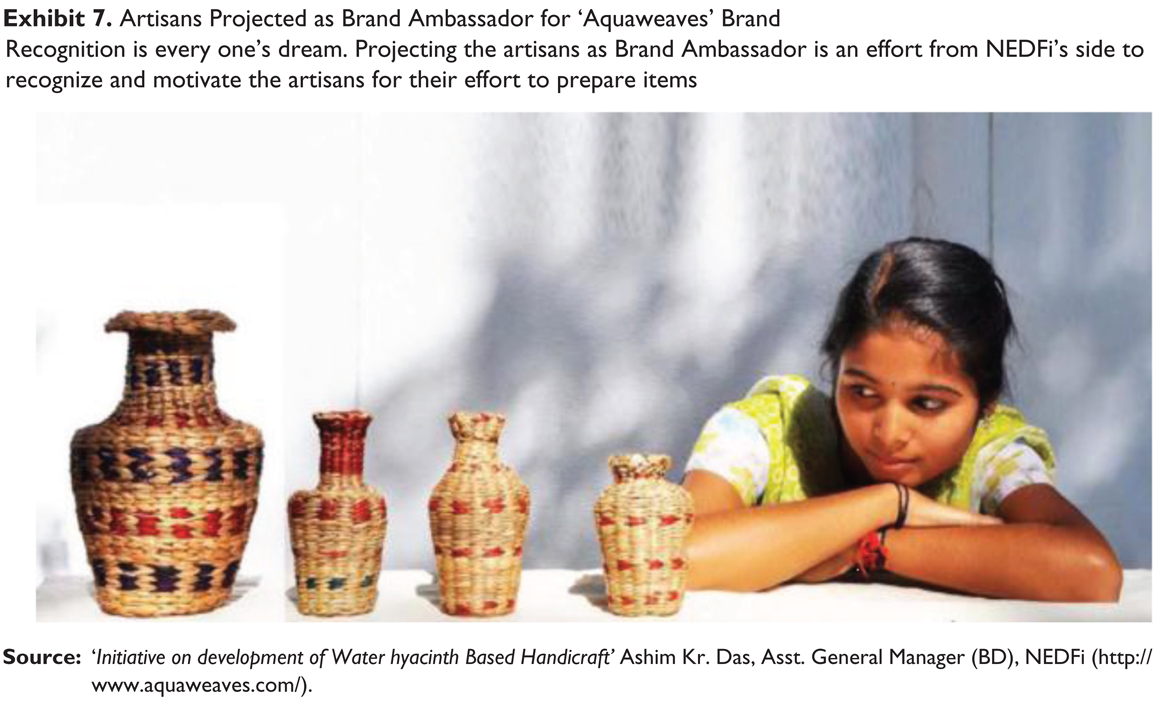
Recognition is every one’s dream. Projecting the artisans as Brand Ambassador is an effort from NEDFi’s side to recognize and motivate the artisans for their effort to prepare items
Ethical Practices Followed at NEDFi
Fair trade practices were followed by NEDFi when pricing the handicrafts. The mentors bought the products from the local artisans and sold them to NEDFi Haat at the same price as it was bought. Artisans were empowered to determine the prices of all the products. Therefore, profit earned on each item went only to the artisans.
Shared Value Creation through the Project
Porter and Kramer (2011) were the proponents of the idea of creating shared value by redefining strategies and policies that enhance the competitiveness of a company, while simultaneously advancing social and economic conditions of the neighbouring community. The authors mentioned three key ways that companies could generally create shared value opportunities: re-conceiving products and markets, redefining productivity in the value chain and enabling local cluster development. Following the shared value principle in its water hyacinth craft project, NEDFi also re-conceived its new product ideas by focusing on the target market. The entire value chain of water hyacinth craft production was redefined by engaging rural artisans and local villagers starting from the production to the marketing processes. Since its inception, NEDFi had focused on CSR activities to improve the lives of people belonging to the local communities, so that the benefits of an accessible source of microfinance reaches a large number of needy artisans and thereby create economic value for both, the artisans and NEDFi. Thus, this water hyacinth project met economic and social goals, leading to the creation of ‘shared value’.
Involvement of NEDFi and NGOs as a Catalyst of Shared Value
The involvement of NGOs and the local community acted as a catalyst for generating shared value for the artisans and NEDFi. NEDFi appropriately evaluated and responded to the need of the local community and worked in collaboration with state governments and NGOs and SHGs to deliver value. SATRA, one of the popular microfinance units of the region, partnered with NEDFi in mobilizing funds among the artisans in different parts of the state.
As it has been rightly mentioned by Pfitzer, Backstette and Stamp (2013) in the article ‘Innovating for Shared Value’, social problems are constraint to business operations and opportunities for growth. Embedding a social purpose can help in measuring the social and business value through creating the optimal innovation structure and co-creating with external partners. Moreover, collaboration with NGOs and local communities as external partners enable companies to complement their resources and capabilities with required legitimacy and credibility to spur market adoption.
Impact of the Intervention and Lives Transformed
The CSR initiatives of NEDFi were focused on women empowerment, livelihood enhancement projects, employment enhancing vocational skills and development of the craft sector and rural and backward areas through promotion of entrepreneurship. The three-year long water hyacinth project as a part of the CSR programme of NEDFi was popular among the artisans as well as the common public. The project brought significant developments during 2011 and 2012 that covered 1,294 beneficiaries till the financial year 2013 (Borah, 2014). A significant portion of the beneficiaries were underprivileged women from rural areas. The income that was earned through their engagement with NEDFi helped them to realize their needs and dreams by providing an opportunity of sustainable livelihood. The changes that were brought into the lives of rural women could be visualized from the experiences of Indira Roy Brahma and Rita Das, two women artisans of Assam. Indira and her husband ran a small electronic shop in Goalpara district of Assam with a petty income. She came to know about the water hyacinth craft training initiatives of NEDFi in 2009 and fortunately got a chance to be a participant in the training programme at NID, Ahmedabad. Creatively gifted, her natural skills were further polished by the training received. The training helped her to become a master trainer and she started training the local women to produce and market water hyacinth crafts. Indira’s association with NEDFi helped her to receive funds to open her first retail outlet of water hyacinth-based crafts, ‘Drishti Industry’. Moreover, she became a mentor later on and enjoyed a comfortable and respectful life as a successful woman.
The second example is of Rita Das Rita lost her parents at a very young age and being the eldest in her family, she had to earn money to manage the household. In order to do that, she engaged herself in jute craft-making business. It was during her participation in a trade fair in New Delhi that she learned about the water hyacinth craft initiatives of NEDFi. She was excited about this opportunity and immediately joined a training programme on water hyacinth craft preparation at NEDFi’s research development centre at Khetri in 2008. Gradually, with her creativity and skills, she became a master trainer, which helped her live a dignified life. She confidently spoke about the craft: ‘Our products are no less good looking and utility driven than those made in Thailand. The only things that our artisans are not endowed with are a lot of accessories to add value to the products.’ The proudest moment of her life was when she was financed by NEDFi to start her own water hyacinth craft retail outlet (Company report,
Thus, NEDFi received encouraging feedback from artisans, state governments and public with increasing avenues for sharing experience and participation in the workshops. The social impact of the water hyacinth project was evident at two levels. First, the employment of the village artisans was boosted with long-term career development. The dignity and confidence of the artisans was ensured, as their talent and ability were adequately utilized. Second, a change of perception towards the water menace was significant. Being a microfinance provider to different segments of society, NEDFi created a new market through the water hyacinth craft project. The project transformed the spirits of the rural poor and changed the perception about the water weed that was seen as a menace to biodiversity. The innovative water hyacinth craft earned popularity among artisans by creating scope for sustainable livelihood generation. Mr Neelim Kumar Bhuyan, a mentor from the Darrang district, spoke about artisans under him, revealing that 150 skilled artisans were working and engaged in producing goods worth ₹1,00,000 every month on average. He stated that each individual artisan earned over ₹6,500 per month, a modest income working at home. Two artisans, Jiya and Mallika, said:
We can now earn ₹ 200 to ₹ 250 if we work for eight hours a day. However, as we have to attend to all household chores too, we can work for only around 5–6 hours each day. The more we work, the more we earn. We usually make hats and fancy bags from water-hyacinth stems, which sell like hot cakes in the market. (Talukdar, 2013)
Their earning became crucial for their families, especially while availing soft loans for raising their tin-roof houses, getting LPG and electrical connections, financing studies of their children and gaining access to quality education. Ashim Kr Das said:
Making articles out of water-hyacinth was a whole new approach, as no one could imagine the great potential of this water-weed, easily available and the overgrowth of which often created a menace. Our initiative was to create wealth from this menace. But we were in a great dilemma and uncertain about the success and acceptability of such experiments. (Talukdar, 2013)
Ukil, another artisan from Manipur, also shared his experience with the water hyacinth craft at a national level fair in New Delhi: ‘I have just made one “Morha” (round traditional stool) from water hyacinth, and even though it costs Rs. 1,200 because of the intricate artwork involved, there have already been several inquiries about it at the fair’ (Borpujari, 2009). This shows the vast opportunity for the artisans, and the handicraft industry as well.
Challenges Ahead
In its initial years of launching the water hyacinth craft project, NEDFi’s innovation attracted many artisans and created jobs for poor village dwellers. Geared towards expanding to other parts of India, NEDFI’s water hyacinth craft project was not without its problems. Its product quality maintenance, legal clearance, technology dissemination, raw material preservation and standardization had room for improvement. There were deficiencies in the quality of the products produced by the artisans. NEDFi also faced challenges about maintenance of quality standards for export. Few of the challenges are discussed as follows:
Thus, it is imperative for the management to review its strategies and find ways to sustain its expansion and social financial performance.
NEDFi: Way Ahead
Although the NEDFi’s water hyacinth project received appreciation from both, the government and the society for its tremendous achievement in mobilizing rural artisans in the development ladder through sustainable livelihood creation, a few loopholes need to be plugged. Some of the challenges discussed earlier could be met by working in collaboration with the central and state governments, along with premier technical and rural development institutions to receive their expertise. By collaborating with Indian Institute of Technology and National Institute of Rural Development (Guwahati), Indian Institute of Management (Shillong), NEDFi would find out measures to address problems like quality maintenance, storage and preservation of raw material and networking along with capacity-building. Moreover, to get legal clearance in order to legalize the harvesting of water hyacinth, the Assam Accord Bill, 1926 needs modification by the state government. The problem of shortage of storage and preservation can be met through establishing more scientific storage and common facility centres. However, this project should not be restricted only as a CSR initiative, but should also be integrated into the operation of NEDFi as a permanent feature to work upon.
Das and his team members saw tremendous potential for water hyacinth craft in India, especially in the north-eastern regions from both cost and environmental perspective. Das believed that NEDFi’s low-cost model would provide a much needed service to the bottom-of-the-pyramid customers and could offer significant environmental benefits by removing the menace from the water bodies. Perhaps, he and his team members were pondering over few questions that needed to be answered in order to progress further: What capabilities would be needed to achieve the CSR goal of the organization? Whether the water hyacinth would be commercially viable in the national and international markets? If so, what strategies must be adopted by NEDFi to face major challenges, such as technology transfer, capacity-building and quality control, besides a few minor challenges in the days to come?