Abstract
Uber, one of the most valuable and talked about private start-ups of today’s time, took the transportation industry by storm through its technology enabled transportation solutions. This case study explores the journey of Uber from its inception to being one of the most valuable new organizations. It also tries to explore the various issues which the company countered in its journey of expansion and growth.
Keywords
Discussion Questions
After the completion of a hectic tour the previous week, I hired a taxi at the BART people transportation station in San Francisco, which was only a few miles away from my house. As specified by law, I picked the first cab available in the taxi queue. The taxi was filthy. The driver begrudgingly popped opened the trunk, which was filled with litter. Throughout the ride, the driver was busy talking on the headset linked with his mobile phone, and the radio blasted on full volume at the back seat; this was deliberately done so that I could not intercept and overhear his conversation. He missed every turn, repeatedly overlooked directions and had no clue where he was going. Confused, he enquired the directions. The greatest agony was perhaps that there was nothing new about this experience, and no point in arguing with either the cab company or the regulatory authority.
Enter Uber
Uber did what the best Internet organizations do; it disrupted a business technique which had thrived for a very long time. In the present case of Uber, the business in question was the transportation industry, especially the taxi services that had existed in the same monotonous fashion for a very long time and had been highly controlled. Taxi drivers hated Uber, and in the transportation industry, Uber was against the law.
Background History
There were very few companies in the world that made such an impact. Apple, Facebook, Tesla and the latest entrant Uber could well qualify for this list. The story of Uber could be traced back to 2008 when Travis Kalanick and Garrett Camp were still friends who were attending a web conference in Paris. They had little idea that this meeting would lay the foundation of one of the most successful start-ups in recent times. The two, after attending the conference, faced transportation woes and realized how difficult it was for commuters—loaded with luggage, encountering bad weather, and above all, being at the mercy of taxi owners. Even the beauty of the Eiffel Tower was not enough to distract them from an innovative idea which turned out to be the prime solution to global traffic issues. They were certain about two things, namely, the solution had to be mobile and fast. The idea included dividing the expenses of the driver, a Mercedes S Class, and a parking place in a garage between Camp and Kalanick, alongside an iPhone app. By January 2010, both of them were ready with the prototype, which could enter the roads of New York to gauge its service. On 5 July 2010, Uber went live in San Francisco. It was an application-based transportation network which worked on a very simple business model. It functioned on its smartphone-based application which connected to drivers and offered passengers the said ride. The system of payment was primarily mileage based through credit cards. A percentage of that fee was kept by Uber while the rest was given to the drivers.
Uber was acknowledged as the world’s highest augmenting private start-up. It turned out to be a game changer in terms of reducing transaction costs that had plagued the transportation sector for long. US cities had begun regulating cabs in 1920. This had become pervasive due to the market being flooded with taxis, dangerous cars, long hours for drivers, etc. Market entry was restricted and the price was nominal, which guaranteed that operators could make a decent living, but they had to comply with certain safety, insurance and service requirements.
The entry restrictions eventually led to monopoly rents for the incumbents and medallion owners. This was passed on to the drivers as well, as they struggled to make a decent living. Even the deregulation effort in the 1970s and 1980s failed due to supply-demand mismatch. Fares shot up, and services took a nosedive. This augmented the cost factor, as the riders faced issues in seeking empty cabs, particularly at times when they needed them the most. This got worse due to deregulation since the taxi owners started to flock in spaces of high demand (as they had high incentives to stay in high demand areas).
During these times, the Uber application came out as a saviour for taxi users. Uber eradicated their search costs. Instead of standing on the streets and looking for taxi drivers, consumers could hail a car indoors and even track its progress towards their location. Kalanick had once described Uber as disruptive. Before the launch of Uber, the old established set-up of the taxi industry had existed for decades without any key innovation and threats. Uber leveraged mobile technology to disrupt the well-entrenched model of the taxi industry. Call it the power of technology, but Uber was able to position itself in the minds of the consumers because of the distinct advantages of quick and reliable booking, transaction convenience and driver feedback-enabled improved experience. What made Uber the ultimate start-up was its culture of business, a culture that epitomized generation Y—cool, chic and innovative.
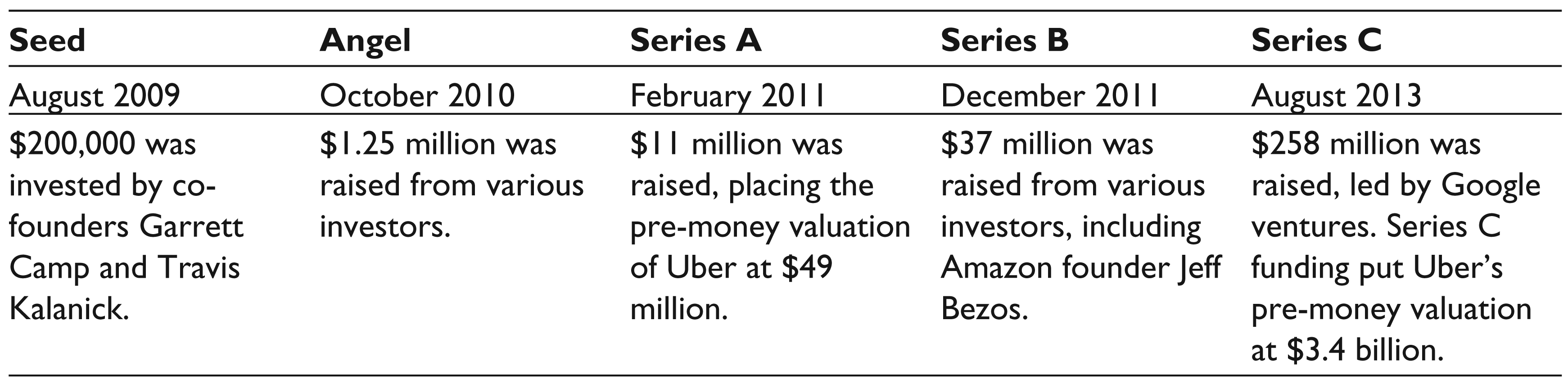
The company started with venture funding in late 2010, from First Round Capital and a group of super angel investors in Silicon Valley, with participation from Chris Sacca’s fund Lower Case Capital. By February 2011, Uber had closed the first round of funding of $11 million. The said round of funding was led by Benchmark Capital, and its partner Bill Gurley was inducted into Uber’s board of directors. By May 2011, Uber initiated its services in New York City, which turned out to be one of Uber’s biggest markets.
International Expansion
Hunger for growth and challenges posed by second movers in the market prompted Uber to expand aggressively, both nationally and globally. From the time of its inception in 2010, Uber extended its services to as many as 26 nations. The said expansion was received with mixed responses. It was met with a pinch of enthusiasm and successive hurdles in the form of blocks resulting from various lawsuits, hi-tech imitations and government regulations.
Paris was the first city outside the United States of America in which the company expanded its wings. The objective was to bring down the supremacy and domination of taxis. The company’s operations in Canada began in March 2012 by way of an official opening in Toronto. The opening was followed by a data presentation in which the company presented extensive data which highlighted the 1:9 ratios of taxis per 1,000 people, bringing home effectively the need for driving to get around the city. The Vancouver testing kick-started in May 2012. Hootsuite founder and CEO Ryan Holmes was the first one to be served by the company.
This was followed by a series of expansion forays in London, Australia and Singapore during July 2012, November 2012 and January 2013, respectively. Coupled with expansions was a chain of short-term promotion initiatives such as using ice cream trucks to distribute ice cream rides in the Delorean DMC or a countrywide cat day promotion, in which the drivers of the company delivered kittens, or the Christmas tree delivery initiative.
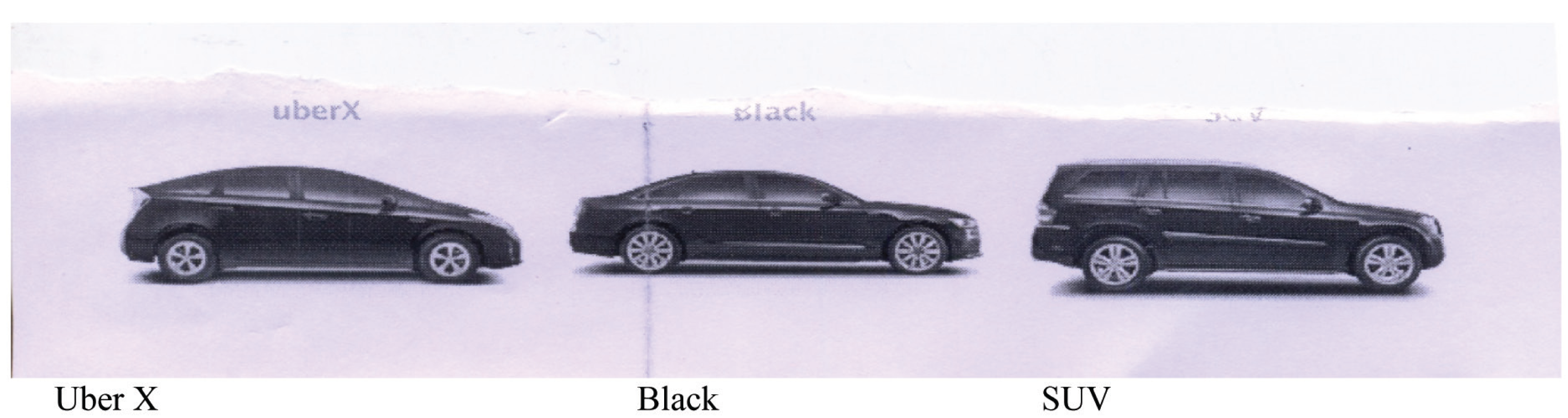
Uber went about expanding its footprints across Asian countries such as India and China as well. Bangalore was the first city in India to enjoy the services of Uber. In July 2014, Uber declared a countrywide rollout of Uber X, a low-cost hybrid car in India. This was in line with the need to provide users with access to low priced options of vehicles coupled with luxury; a strategy aimed at looking into the Indian conditions and environment. As Uber marched ahead on its road of growth, capital was infused at various stages. Series A venture funding went up to $11.5 million. They received $32 million in the second round and mega $12 million funding in the final round. The company was currently valued at $17 million and was considered a once in a lifetime success story that came around once every decade. On 12 December 2014, Tech Crunch announced that one of the known search engines from China, Baidu, was expected to make a significant investment in Uber. Uber also raised $1.6 billion in convertible debts from wealth management clients of Goldman Sachs.
Products and Service Changes
Global expansion mandated Uber to adapt to local conditions. It became pragmatic for the company to enhance its mobile applications and product offerings over time as a result of input from the customers and technological developments. When Uber first ventured into the market, it could be utilized exclusively on the iPhone. Subsequently within four months, Uber commenced an Android application and by September 2013, it was ready with is first native Blackberry application (Mina). Uber had adapted its business model in many ways to accommodate the local market and culture. As Kalanick mentioned in his speech and blog posting:
Individual cities were unique in its transportation pain points, its density, its transportation alternatives, regulation, and even its transportation culture.
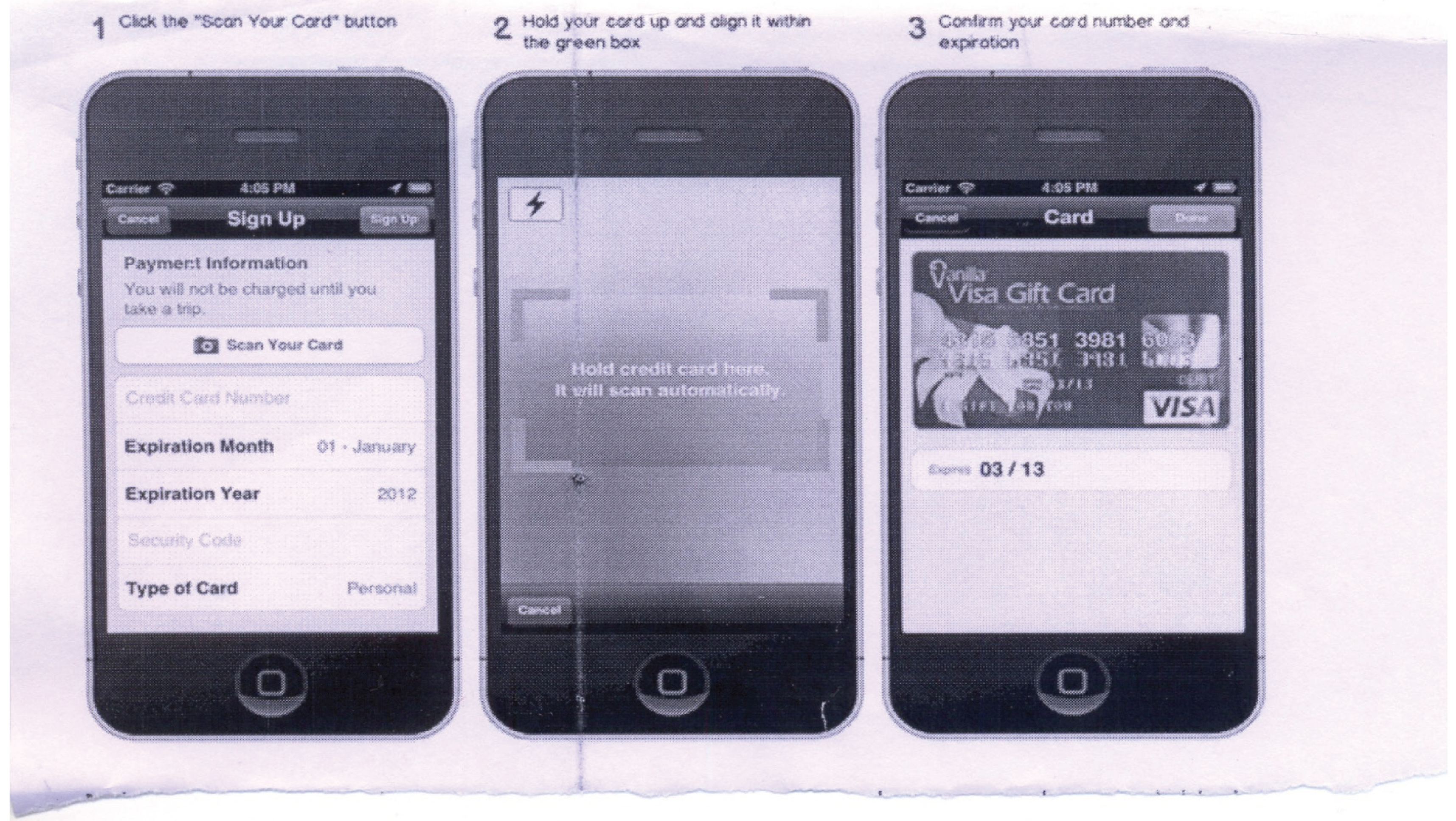
This could be seen in the array of changes in the services to suit the local conditions. One of Uber’s most attractive aspects right from the start was the cashless mechanism which just required the riders to own a credit card in their name. However, in some countries such as Germany, credit card acceptance was a lot lower than it was in the United States. To suit the local conditions, Uber declared a deal with an online payment company called PayPal. The deal was reportedly declared in November 2013. The arrangement turned to be advantageous, as it permitted the company to offer a substitute choice for payment to the riders. This went a long way in enhancing its pool of potential customers and charting its territory globally.
Uber continued to prove its commitment to a truly global orientation through Uber Rush (a package courier delivery service launched in April 2014), Uber Pool (a car pool service that grouped two users and enabled them to share a car), Uber Garage (a project that encouraged new ideas and their experimentation for urban transportation services), and flexibility in accepting payments in cash in countries such as India.
Although Uber always aspired to become a global brand and have a global vision, the company also needed to be glocalized to meet the unique needs of each market. The decision to hire Ed Baker in September 2013 was also in line with Uber’s universal vision. Baker was heading international growth at Facebook, and his hiring by Uber came as no surprise. Apart from hiring seasoned tech candidates, Uber also went about hiring locals in the respective markets with an understanding that these people were better versed with the nitty-gritty of local demands, and hence would be in a position to offer holistic and customized products.
Nobody could deny the fact that the personal transportation industry had undergone drastic changes with the advent of application based car services companies. Uber had brought about the much-needed formal changes to an archaic sector that had operated more or less in a monotonous fashion for years. It was a common scene for the taxi users to pass a signal when going towards the available taxis or make advanced bookings for a taxi or cab. Uber and other growing well-funded start-ups had made getting a taxi as easy as booking a reservation on OpenTable, or it could be best described as checking a price on Amazon. Uber’s e-hailing services simplified lives by the way of securing taxis or cars by just clicking an application available on smartphones, at any place and at any time.
Is Uber too Disruptive to Fall?
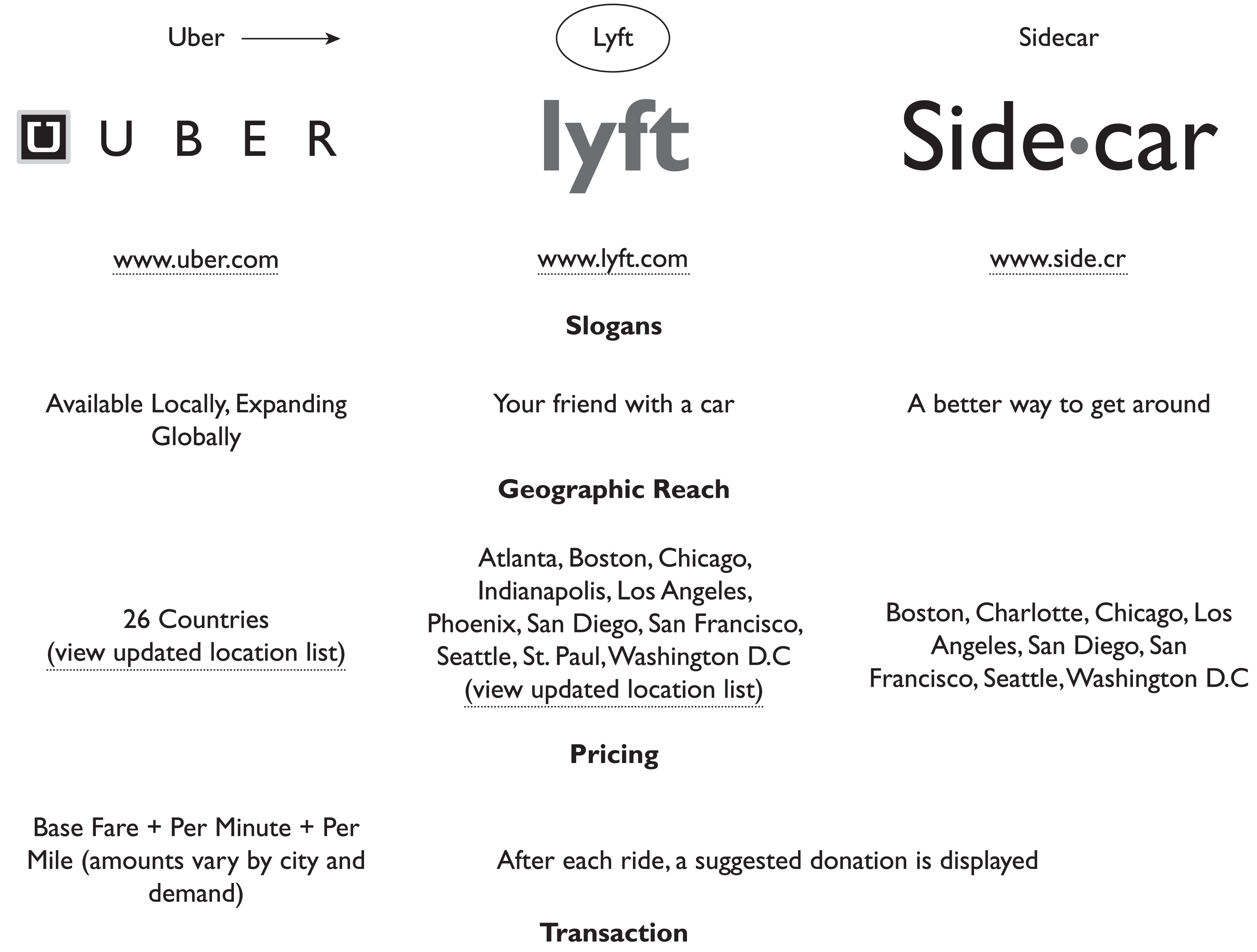
Uber seemed to have occupied a very significant place in the individual transportation segment, between the old yellow cab taxis and black limousine offerings. Armed with cash and a direct approach, the few young e-hailing ride company went from a promising start-up to one of the most discussed tech organizations of today’s times. One can rewind and think of very few companies which have propelled forward in terms of frenetic growth followed by augmented valuation better than Uber. Its marketing and leveraging of technology provided much-needed relief to the transportation woes of the common public. It provided a platform that created jealousy for competitors and worries for taxi companies. It would not be wrong to say that Uber was a pioneer in bringing about a simplified solution to real problems. Uber would top the charts for being the first player in an application-based or smartphone-based transportation service. As Uber moved ahead, competition caught up. New mobile players entered, often leading consumers to contemplate, ‘Who do I contact for the ride?’ Uber faced competition from Lyft, Sidecar and Flywheel. All these companies shared a common characteristic, that is, they all provided an alternative to the traditional taxicab industry.
As the saying goes, competing on price indices was critical for any sector, even for the ones that scored high on quality service and value-added benefits for customers. Uber and allied e-hailing services promoted their aspiring end users the advantages of availing an A Class limousine service with a price lower than taxis at the cost of drivers. They wanted to make owning a car simply unnecessary. In the process, they battled city regulators and entrenched taxi interests. Uber had to face flak from traditional taxi drivers who complained that they could no longer pick up riders. Over and above this, Uber crossed the line with the aim of defeating its competitor Lyft. Uber forcefully poached Lyft staff, harmed its fund acquiring initiative, requested and then disregarded greater than 5,000 rides to interrupt the services of Lyft.
In June 2014, dissent against Uber caused traffic jams as the public went on roads in prime cities across Europe; Grisworld (2014) wrote that there had ‘never been a better moment to describe Uber as disruptive’. In the following months, Uber repeatedly proved its disruptiveness on the grounds discussed in the following sections.
Price Surging
Uber was a platform that connected riders to independent drivers (driver partners). If a rider chose to ride, the application calculated the fare based on the time and distance travelled, and billed it to the rider automatically. There were situations where driver partners were few and riders were relatively higher. This, in turn, increased the ‘wait time’. Under these situations, Uber was found to deploy the ‘surge pricing’ algorithm to equalize that demand and supply. The algorithm assigned a simple multiplier to come out with a ‘surged’ price. The rider had to accept that higher price for that request. This had become controversial and a major source of annoyance for the customer.
Surge pricing or prime time pricing would be best described as the phenomenon of pricing in the open market, involving the augmentation or bringing down of prices depending upon the demand and supply of labour. This could be undertaken with an assumption that when the demand for the service rose, there would be a motivation for drivers to outstrip demand with supply. That would have been allowed if the price enhancements were nominal, but even during a snowstorm in New York, riders were annoyed and badly struck by sky-high fares. The worst took place when the Central Business District of Sydney was attacked by terrorists, with thousands of civilians waiting to be freed from the hostage crisis. In this scenario, Uber went ahead to quadruple its rates. Reports of such instances had been reported by users in other cities as well.
The company ventured into unchartered territories such as Dubai where they faced similar circumstances, for example, legal challenges from the Road and Transport Authorities (RTA). The legal notices from the RTA essentially mandated private hire cars operating under the Uber and Careem brands to comply with regulations that included keeping prices at a minimum of 30 per cent above taxi fares. In line with the same, Uber went about shaking things aggressively and giving people something to look forward to. Uber promoted itself heavily, giving away a week’s worth of free Uber rides—a promotion strategy aimed to capture the minds and hearts of the rich and old generation of Dubai and Abu Dhabi.
Over the Top Threats and Media Quandaries
Uber was no stranger to controversies and indulged itself in its share of media issues as well. Of all the Uber humiliation and missteps, the most shocking came from Emil Michael, a senior executive who suggested spending $1 million to employ opposition researchers who would gather dirt on important media persons. Along the same lines, Josh Mohren, the then general manager of Uber, New York, had on several instances sought the private ride information of a Buzzfeed reporter without seeking her consent. Consequently, public firestorms were immediate, and a 14-page tweet apology did little to quell it.
Uber had been accused of watching the travel rides of its customers, which was in breach of its own confidentiality policy rules. One of the Buzzfeed articles unleashed a fresh wave of criticism wherein the Uber chief executive was found reporting that the organization should have been called Boober since it made the job of securing women easier.
The organization was also engaged in filthy propaganda against its competitor Lyft. Peter Thiest, an acknowledged investor, had once called Uber the highest morally defying organization in Silicon Valley. Several noted people had cited that part of the problem in Uber was pertaining to the unusual degree of the ‘us-versus-them’ mentality. That approach manifested itself when the company was combating taxi regulators or several hurdles that the taxi establishment had placed in its way.
Regulatory Issues
Uber had followed a forceful growth approach both nationally and globally, but its success trajectory was accompanied by its own set of challenges and hurdles, for example, regulatory issues and controlling authorities in many cities.
In Washington DC, a suggested taxi bill placed ceilings on the company’s capacity to charge healthy rates from customers. This was the case in 2012. Instances of stop and desist notices were offered to the company in the same year in Boston. In April 2014, Belgium banned Uber’s peer-to-peer travel offering, UberPop. In July, Uber was declared illegal under the South Korean law in Seoul. A similar fate was experienced in Germany, San Francisco, Los Angeles and Spain, either through the implementation of nationwide bans or fresh lawsuits.
Not only did Uber face challenges from the regulatory bodies, but it also faced flak from within the taxi industry. Similarly, cab organizations that existed in cities did not want Uber to penetrate. Their counter argument was that Uber’s wages created an unjust advantage for them, thereby stealing away their existing workforce. Shortly after braving massive dissent in Europe, Uber secured the green light to start its operations in London, on the technical grounds that its smartphone application could not be equated with the taximeter within the scope of the legislation. Uber resolved the problem with the logic of being a technology platform which provided a marketing forum to freelancers for creating small businesses.
There was a simple rationale following Uber’s rash and hasty approach, that is, people needed to try Uber, and once they realized that they needed Uber, it became much simpler for the organization to propagate its services. Recently, the company had been in the news for the alleged assault of an MNC executive in New Delhi by one of its drivers, bringing forth to the centre the issues of background verification of its drivers. Following the allegations, Uber was barred from operating in New Delhi for not complying with the city’s mandatory police confirmation procedure. Barely two days after the sexual assault case, nearly 7,000 people signed a petition placing pressure on Uber to execute a compulsory seven-year reference check on drivers, which was in line with its US operations. The Delhi transport branch even went on to ban Uber from all activities linked to the provision of any transport services.
All said and done, Uber was too innovative to be defeated by those city regulations, as long as it ensured convenience and comfort for its customers. Above all, Uber CEO Travis Kalanick was driven by the vision that each sector was governed by a set of old rules and regulations, and they owned the privilege to become old. All the rules and regulations should collaborate growth and progress. The message passed on was loud and clear.
The Road Ahead
Uber had managed to become one of the most loved and hated start-ups of the smartphone age. It turned out to be like a star football player at state university, who could get away with anything because he scored touchdowns. The company’s bigger vision was to have reliable transport available everywhere. In a recent announcement, Uber would be investing $1 billion in India. Similar growth was seen in China, funded by joint venture partner Baidu. It would also be engaged in mentorship programmes for the start-ups. Do you think that this business model can survive for long in this hyper-competitive world?
Funding of the Expansion