



Abstract
The case is divided into two parts and an epilogue is provided to the students at the end of the discussion.
Case A discusses the protagonist Murtaza’s arrival in a hospital that is affected by a hidden power struggle between opposing parties. In an attempt to exercise his influence and improve the hospital’s operations, the protagonist introduces reforms and changes to the hospital’s processes. However, as a result of his increasing influence and knack for not respecting the status quo, he realizes that there are people in the management who feel threatened by his influence and plan to damage his status in the hospital. At the conclusion of Case A, he has been handed a letter that informs him of a disciplinary committee case against him on serious allegations of misuse of authority, torture and even sexual harassment. He is concerned that he has been set-up by his opponents, who have resources and credibility that might make it difficult for him to escape from this situation unscathed. Thus, in the given situation the protagonist weighs his possible options.
Case B concerns how the protagonist responds to his disciplinary committee case. Policy changes previously initiated by the protagonist and his alliance with the vice-president serve as important tools. They neutralize the resources that are used by the protagonist’s opponents in an investigation against him. In the end, the protagonist, therefore, successfully comes out of this situation unscathed.
The epilogue discusses how the protagonist’s initial alliance with the vice-president, in light of changing circumstances, begins to wither away, as a mutual opposition that they both once shared also begins to weaken.
Introduction
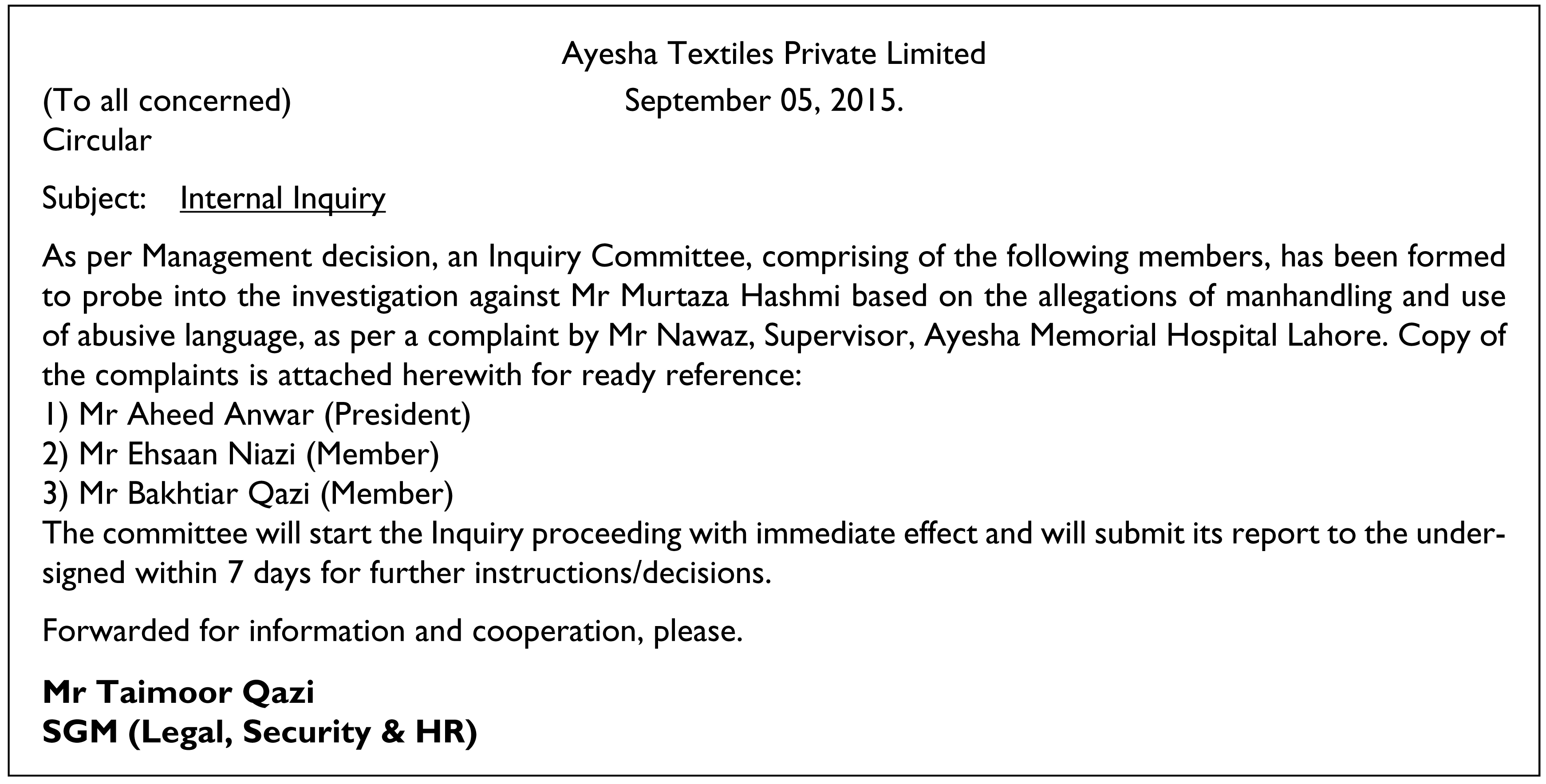
It was 5 September 2015, Murtaza Hashmi, administration manager of Ayesha Memorial Hospital Lahore, was pacing anxiously in his office. He had enjoyed several triumphs during his short stint with the hospital, but a letter he received earlier that morning had left him shocked and distressed. He was informed that a committee had been set-up to investigate a complaint filed against him by a former employee. The letter also contained a copy of the complaint which consisted of serious allegations including misuse of authority, torture and even sexual harassment. Ordinarily, Murtaza would not have given much thought to the allegations as they came from someone who was recently fired by him over charges of embezzlement. However, what made him particularly nervous was the fact that he was not on good terms with most of the people named as members of the disciplinary committee. He felt sure that he would not be given a fair hearing and that the committee proceedings would become an avenue for his opponents to publicly humiliate him. In fact, the nature of the allegations and the composition of the disciplinary committee made him wonder if it was all a set-up against him. With both his job and reputation at stake, Murtaza’s thoughts were racing as he tried to evaluate his options. Was there a way out of this unscathed?
Ayesha Memorial Hospital—An Overview
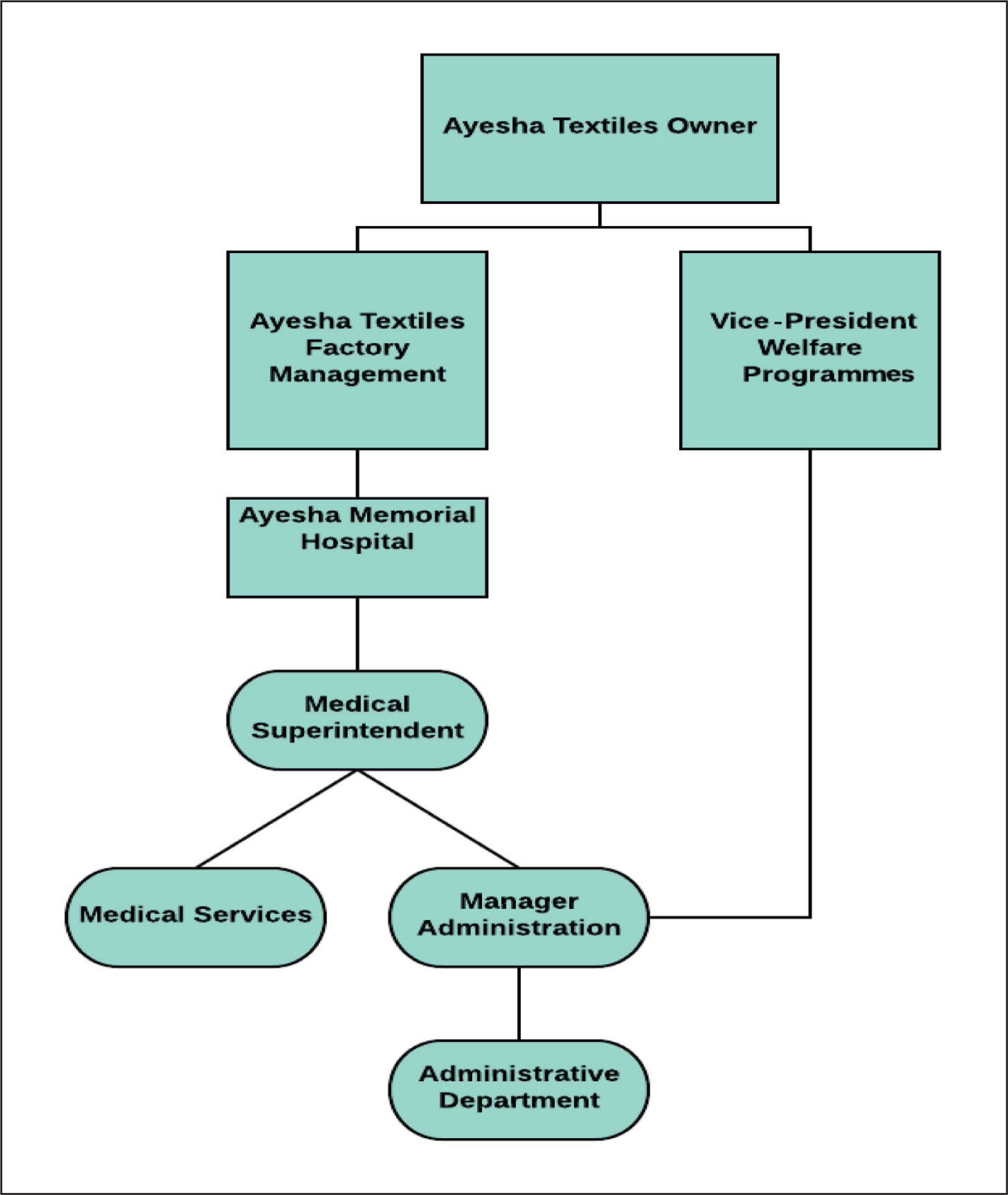
Ayesha Textiles was owned by a wealthy and influential businessman in Pakistan. As the business became increasingly profitable, the wealthy owner decided to expand the business and run welfare programmes to help the underprivileged in Pakistan. He, thus, set-up a corporate social responsibility arm of his business, Ayesha Memorial Hospital. With the establishment of Ayesha Memorial Hospital in Lahore, the owner felt that he needed a reliable individual to oversee the hospital’s growth which then employed over 500 people. He; thus, placed his niece, Dr Hadia, as the vice-president of welfare programmes.
The management of Ayesha Memorial Hospital was not entirely under the vice-president’s domain. The hospital was directly managed by the medical superintendent, an old trusted friend of the Ayesha Textile factory management. However, while the hospital was able to cover its own costs, it was also a large recipient of welfare funds for underprivileged patients who were either treated free of cost or provided financial aid for their treatment.
Situation Prior to Murtaza’s Arrival
When Dr Hadia started her tenure as the vice-president of welfare programmes, she was attracted towards Ayesha Memorial Hospital due to the large welfare funds it received. She realized that the hospital’s administration was inefficient and there were loopholes in the system that could be exploited for the misuse of funds. Dr Hadia, however, felt that she was not receiving enough cooperation or support from the hospital administration in reforming these inefficiencies in the system. Under these circumstances, Dr Hadia realized that she needed an outsider from the administration to work in the hospital. She needed someone she could rely on and someone who had the investigative skills for identifying the faults in the system. Murtaza Hashmi’s previous experience in law enforcement and his relationship with Dr Hadia’s family made him the perfect candidate in Dr Hadia’s eyes. Subsequently, Murtaza was hired as the administration manager, Ayesha Memorial Hospital. Figure 1 demonstrates the reporting lines of Ayesha Memorial Hospital, Ayesha Textiles and the office of welfare programs.
Murtaza Hashmi: A Brief Profile
Having years of experience of working in a law enforcement agency, Murtaza Hashmi’s work centred on effective investigation and involvement in the operations of the agency. Unfortunately, Mr Murtaza encountered health issues and was forced to opt for an early retirement. Following his retirement, Mr Murtaza decided to pursue a master’s degree in the field of Computer Science. Upon the completion of his master’s degree, Mr Murtaza opted for a job in the corporate world. However, sitting behind the office desk all day long was not really Mr Murtaza’s forte as he was accustomed to more mobile activities. He discussed this quandary with his family friend, Dr Hadia which paved the way for his job at Ayesha Memorial Hospital.
Murtaza’s Assessment of Ayesha Memorial Hospital
As Murtaza began working as the administration manager, he realized that the inefficiencies and mismanagement were not limited to the welfare funds that the hospital received but were widespread across the hospital’s operations. With the support of Dr Hadia, Murtaza attempted to reform the current set-up to add more transparency and accountability in the system. However, Murtaza felt that the established medical superintendent Dr Iqbal and his friends in the textile factory management were irked by Dr Hadia’s involvement in monitoring the hospital’s welfare fund and disapproved of his increasing influence. Murtaza expected some opposition from them.
Murtaza, however, continued to act on his agenda for reform. He was aware that Dr Hadia had connections with the owner of Ayesha Textiles and; therefore, her support could be utilized in times of any potential resistance.
According to Murtaza:
I made efforts to streamline the hospital’s administrative system by installing attendance machines and creating a new Information Systems department. However, Dr Iqbal’s supporters in the senior management interfered and the IT manager issued me a letter stating that my actions were a breach of authority and that I had to consult the central department before implementing further reforms.
Murtaza found the control from the centre suffocating. He realized that the implementation of his decisions could only be possible if the hospital administration was separated from the control of Ayesha Textiles’ management.
Hospital’s Independent Status—Murtaza’s Increasing Influence
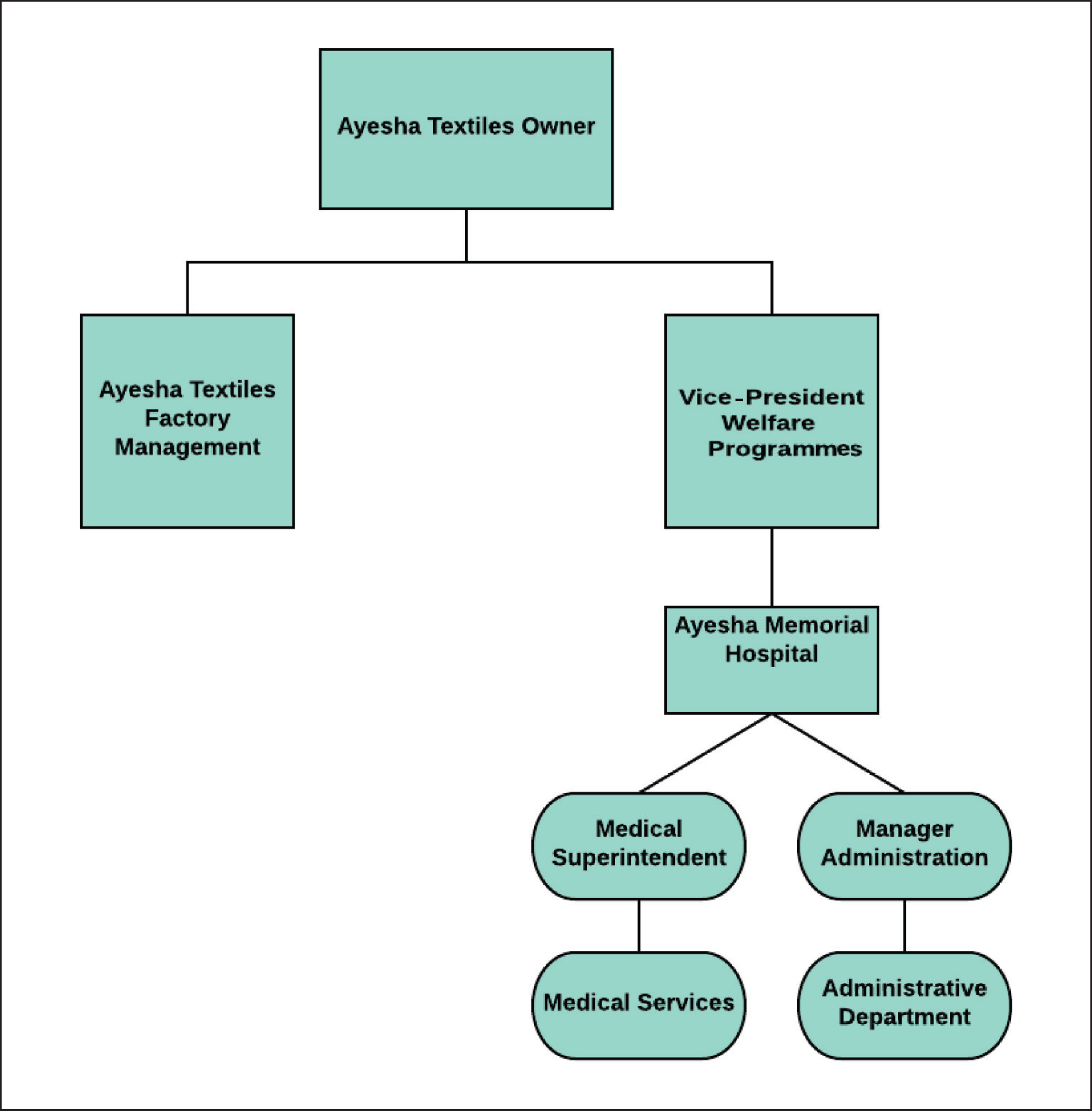
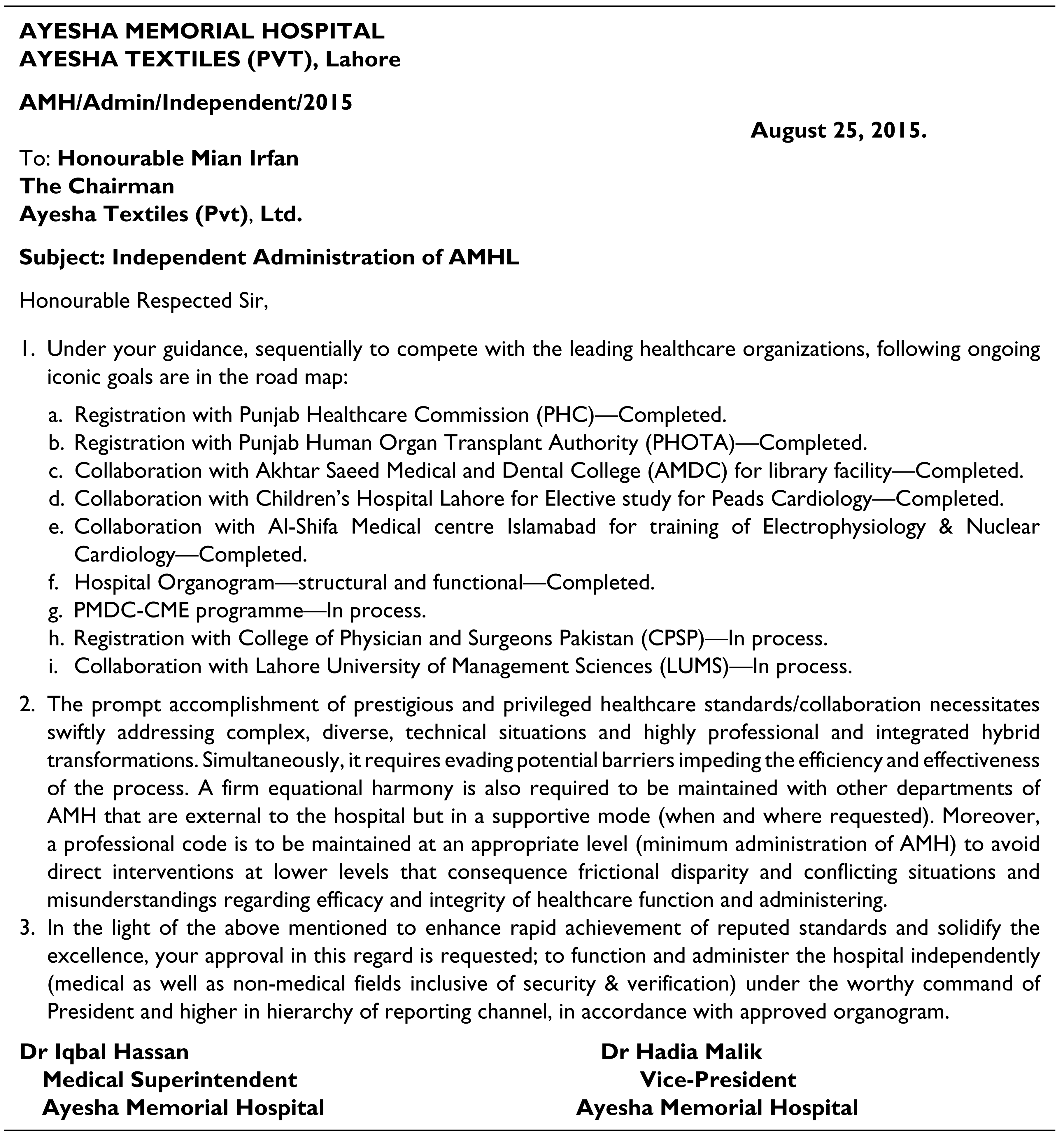
In order to achieve an independent status for the hospital, Murtaza decided to use Dr Hadia’s familial ties with the owner of Ayesha Textiles. Due to Dr Hadia and the owner’s relationship, a notice was sent on 5 September 2015, declaring the hospital as an autonomous body. This was one of Murtaza’s biggest successes yet, and he was thrilled at the opportunity to work independently; without any interference from the centre. Figure 2 provides an organizational chart depicting the new structure.
However, while the change had been made on paper, it had yet to be implemented on the ground. The hospital consisted of employees that had been hired by Dr Iqbal and those who remained loyal to him. The textile management also remained closely involved in the hospital’s operations through their relationship with Dr Iqbal.
Murtaza, then, decided that in order to make this power shift sustainable, he needed to establish a network of loyal actors around him. He called this his ‘system of intelligence’. Murtaza began categorizing all employees into two groups, those that were fit to stay and those that could be problematic and had to be replaced. He then proceeded to hire people he saw as competent and fired those who were proving to be problematic. Murtaza knew that this exercise was essential in ensuring that he had an incoming stream of information from around the organization at all times. Murtaza said that this was his way of ‘plugging in eyes and ears at all levels of the organization’s hierarchy’.
The employees in the organization clearly knew that Murtaza’s ability to bring in these changes was directly linked to his influence on Dr Hadia.
Ms Sarah, Director of Nursing said:
Unlike in most organizations, where the head always makes the final decisions, here it was common knowledge that behind the scenes, Mr Murtaza was the voice that was calling the shots. He was acting more like a legal advisor to her than a subordinate and she would do whatever he would recommend.
The Opposition’s Attacks Begin
The hospital’s staff went on strike several times and disrupted daily operations, this became a source of annoyance for Murtaza, who had to frequently resolve these issues. Murtaza, however, was suspicious of these strikes being orchestrated without an external source. Murtaza knew Dr Iqbal and his supporters’ played a role in these repeated occurrences.
The Opposition’s Biggest Attack—The Disciplinary Committee Case
As Murtaza began working on improving the hospital’s operations, he also decided to widen his scope to find any aspect of the organization that could be improved.
He recalled:
I began investigating the mess fund when I noticed some irregularities. I caught the man in charge, Nawaz, red-handed while trying to steal a large quantity of inventory from the kitchen. I was furious and fired Nawaz on the spot.
However, before the final notice could be issued, Nawaz decided to resign himself. Upon resignation, Nawaz decided to file a complaint alleging misuse of authority, torture and sexual harassment against Murtaza. As soon as Nawaz filed a complaint, Murtaza was issued the disciplinary committee letter (see Tables 1 and 2). Murtaza knew his opponents had probably bribed Nawaz by promising him his job and monetary compensation to file a report against him. The complaint filed by Nawaz was a Gordian’s knot for Murtaza, who now had a lot at stake.
Murtaza’s Dilemma
By the end of 2016, Murtaza was in a conundrum and was unsure about how to react to his situation. He knew Dr Iqbal and his friends, in the senior management, were involved.
Describing this dilemma, Murtaza stated:
I first thought about proving my innocence by appearing in front of the disciplinary committee, but I knew to go in front of a heavily biased committee, that was only formed to humiliate me, would be an unwise decision. My other option was resigning, but that would mean all of my work in the organization would go to waste. A third option I could think of was involving Dr Hadia and getting this matter resolved through her connection with the chairman.
However, Murtaza felt uncomfortable with the idea of asking for Dr Hadia’s help in this case, as he did not want her to think these allegations were true and he was trying to hide behind her support. Hiding behind Dr Hadia’s help might also cause him to look guilty in the eyes of people in the organization. The nature of these allegations was also extremely sensitive and he felt that going to the trial would be the only way to clear his name. But the current situation made it impossible to appear before the committee. Murtaza knew that he was short on time and had to make a decision quickly.
Ayesha Memorial Hospital—An Independent Body
Internal Inquiry by Headquarters
Declaration of Conflicting Interests
The author declared no potential conflicts of interest with respect to the research, authorship, and/or publication of this case.
Funding
The author received no financial support for the research, authorship, and/or publication of this case.
Application Submitted By Mr Nawaz against Mr Murtaza Hashmi
I respectfully state that I, Mr Nawaz, ID number 7751, had been working as mess supervisor in Ayesha Memorial Hospital since 8 August 2014. During this period, the Admin Director, Mr Murtaza, continuously pestered me. Once, he summoned me in House# 404 in Safari, around 4 pm, and physically assaulted me to the point that I became unconscious. At that time, he was intoxicated. Several people, including Dr Munir, Mr Farzand, Mr Azmat, Mr Hassan, were also present. Later, I was physically assaulted again on the Hospital road, in the presence of Mr Hassan from the Accounts Department. Furthermore, Mr Murtaza took me to the Room# 7 and attempted to sexually assault me. Upon my protest, he asked me to submit my resignation or else he would terminate me. I pleaded for mercy but to no vain. On 6th August I could not come to work due to an injury and on the same day he sent my letter of termination to the head office. My sick leave application until 31st August, duly recommended by Dr Usman, was rejected by Mr Murtaza. I request to be reinstated and my salary for this period should be given as well. I am a poor man who has to provide for his children and his family and your support in this regard will be appreciated.
Yours sincerely,
M. Nawaz
Mobile Number: 03xx-xxxxxxx