




Abstract
This case focuses on the positioning strategy development for a new regional television channel of Maledia Broadcasting Network (MBN), a venture of the Kerala-based media group from India, Model Publication Trust. It also introduces the concept of perceptual maps for brand positioning and addresses brand extension.
In 2011, MBN prepared to launch a Malayalam news channel. Samjad, Deputy CEO of the new company, faced the challenge of determining the channel’s positioning strategy. This task involved not only differentiation but also redefining competition in India’s dynamic and competitive broadcasting industry. The decision would impact marketing aspects such as the brand name and channel identity.
This case offers opportunities to explore qualitative aspects of audience behaviour beyond competitive data, helping marketing students gain insights and analyse the competitive landscape in the industry to make strategic marketing decisions.
Keywords
Discussion Questions
In 2011, what was Samjad’s decision-making challenge, and how significant was it? What were the positioning options available to Samjad, and do you agree with the choices he was considering?
Assess the alternatives by examining consumer (viewer) behaviour and the competitive landscape. How are perceptual maps constructed, and how can they aid in making decisions about brand positioning?
What course of action should Samjad take? How should this strategy be implemented for the new TV channel concerning content and programming?
Should the brand name Maledia be extended to the new TV channel, or should a fresh brand identity/name be chosen? What are the reasons behind your choice?
On a large TV screen of the conference room, the caption ‘Breaking News’ and Maledia Live logo morphed into a dynamic animation as a southern state of India was zoomed in on from the moving globe. Inside the room, the head of the production passionately elucidated the intricate details of colours, motion, sound and imagery in the various elements of the channel’s introduction, conclusion, news tickers and sponsor panels. Samjad, the CEO of Maledia Broadcasting Network (MBN), envisioned the forthcoming live broadcast of his new TV channel—a mere few months away from its launch—as sensational music complemented the proposed motion graphics.
After nearly two years of navigating the application process, Samjad secured the licence for a regional current affairs-focused television channel in the winter of 2011. As the channel’s launch loomed on the horizon, the next hurdle was to set it apart from existing players and determine the optimal positioning strategy in the fiercely competitive regional news channel market. Samjad, recognizing the challenges faced by many news channels, was even open to redefining the channel’s genre. At the outset, two broad options emerged: the ‘obvious’ path entailed positioning Maledia as a dedicated news channel, offering news and news-related content. Alternatively, the ‘courageous’ route involved launching it as an ‘infotainment’ channel—a fusion of informative and entertaining content.
While Samjad and MBN’s management team harboured great optimism for the channel’s future, they were acutely aware of the myriad challenges ahead. Some challenges were readily apparent: the proliferation of television channels, formidable competition from established regional players such as Manorama News and Asianet News, and a track record of limited success among existing news channels. Moreover, the founding group’s conservative advertising policy imposed constraints on revenue generation compared to other channels. Despite a significant appetite for news consumption in Kerala 1 , there was no strong allegiance to any particular channel. 2 When it came to watching news on TV, viewers were channel-agnostic, often switching between multiple channels to garner different perspectives and viewpoints. In 2011, there was a lack of distinct differentiation among Malayalam 3 news channels. Hence, the new channel had an opportunity to cultivate a devoted viewer base in the market by strategically establishing its unique position.
Maledia Broadcasting Network
MBN emerged in 2011 as a fresh initiative under the Model Publications Trust umbrella. This venture aimed to establish itself as a regional Malayalam-language television news channel.
During this period, MBN was actively formulating its business processes and organizational structure. Nevertheless, the foundation of MBN’s policies and business model rested on a distinctive set of values. The Model Publications Trust had a vision centred on sustainable values and inclusive policies. While it upheld impartial reporting for its readers, certain policies within the trust restricted the acceptance of advertisements from specific types of businesses. Within the organization, many felt that these policies were overly conservative and one-sided, especially in the context of a competitive business environment.
The trust’s existing publishing business, exemplified by the newspaper known as Maledia, echoed Model’s values in its approach to business. Maledia, a daily publication with roots dating back to 1985, positioned itself as a non-profit, non-partisan and value-driven journalistic service that operated independently of market pressures. Headquartered in Cochin, Maledia boasted nine editions across the state and achieved a circulation of 313,000 copies in India, primarily in Kerala and the southern states. Additionally, the trust’s Gulf Maledia, based in Dubai, published seven editions in the GCC region. It also circulated a substantial volume of copies, totalling 261,000, in the Gulf region, owing to the presence of a sizable Malayali (natives of Kerala) expatriate community in GCC countries.
Remarkably, Maledia recorded advertising revenue twice as high in the Gulf region, amounting to ₹1 billion, in contrast to ₹500 million in India. As per the Indian Readership Survey, it secured the fourth position among regional language newspapers in Kerala. Notably, more than 60% of its readers were aged 40 years and above.
Several distinctive values upheld by Maledia’s publishing business were poised to be applied to its broadcasting counterpart, MBN. These core values included a stance against capitalism and imperialism, a reflection of traditional culture and thought, and a dedication to addressing issues relevant to the middle class. While not explicitly stated, there was a perception that the trust and its media outlets were influenced by traditional Islamic values. Maledia Daily, primarily catering to Muslim Malayali audiences, was seen as a niche newspaper tailored to the Malayali Muslim middle class. Qualitative interviews with both Maledia readers and non-readers revealed a divided audience—some loyal followers and others who held reservations. Nevertheless, the newspaper enjoyed recognition and a distinct identity.
The educated Malayali Muslim audience, possessing strong opinions on social and ideological matters, both local and global, sought specialized content. Maledia Daily, with its rich history spanning over 25 years, had fostered a deep connection with this audience. Its loyalty stemmed from offering content that struck a balance between local and global perspectives, news and commentary, as well as mainstream and minority issues. MBN TV Channel aimed to harness these synergies.
The publishing business had recently introduced Maledia Online: an online edition catering to Malayalis residing in over 108 countries worldwide. However, by 2011, this online edition had not generated significant revenue. A notable aspect of the group’s business approach was its conservative and somewhat restrictive advertising policies. These policies occasionally clashed with the broader business objectives of achieving financial sustainability and growth, in line with the evolving opportunities in the market.
While the group’s values were universal, many executives within the organization believed that the policies, initially crafted over two decades ago during the newspaper’s launch, were outdated for the liberalized global business context. This context was marked by shifts in audience expectations and fierce competition within the media industry. Some members of the organization also pointed out that the advertising sales policy was perceived to be grounded in orthodox principles and did not align with market expectations. Notably, it restricted the placement of advertisements for products traditionally deemed as ‘sin’ products.
Given that Maledia Daily reached a very specific audience and adhered to somewhat orthodox policies, its potential advertiser base remained limited. MBN was anticipated to boost revenue by expanding its share of existing advertisers through the provision of broadcast media options. This approach, known as media bundling, aimed to enable the group to garner additional advertising revenue from its existing advertiser base without substantially increasing advertising sales overheads.
Television Broadcasting Industry
In 2011, India’s broadcasting and cable television industry encompassed all terrestrial, cable and satellite broadcasters of television content. The market’s value was determined by the revenue received by broadcasters through advertising, subscriptions or public funds. This revenue pool also included contributions from donations, TV licensing and general taxation.
Television broadcasting held the distinction of being the largest segment within India’s Media and Entertainment industry, estimated at ₹350 billion in 2011. In contrast to the Asia-Pacific region’s 4% compound annual growth rate (CAGR), the Indian broadcasting industry had exhibited remarkable growth with a 12% CAGR over the previous five years. According to industry reports, it was projected to sustain this rapid growth trajectory, with an anticipated 15.2% CAGR, and ₹521 billion reach by 2014. The trend in TV viewing was on the upswing, with the average Indian spending approximately 2.5 hours per day glued to their television screens, resulting in an estimated weekly total of around 18 hours. 4
According to TAM, 5 in 2003, India boasted around 120 TV channels, a number that had surged to 626 by March 2011. This growth marked the emergence of various genres catering to a diverse audience, spanning news, entertainment, kids’ programming, lifestyle, devotional content and infotainment. An intriguing trend was the proliferation of regional channels, signifying a vibrant regional broadcasting landscape.
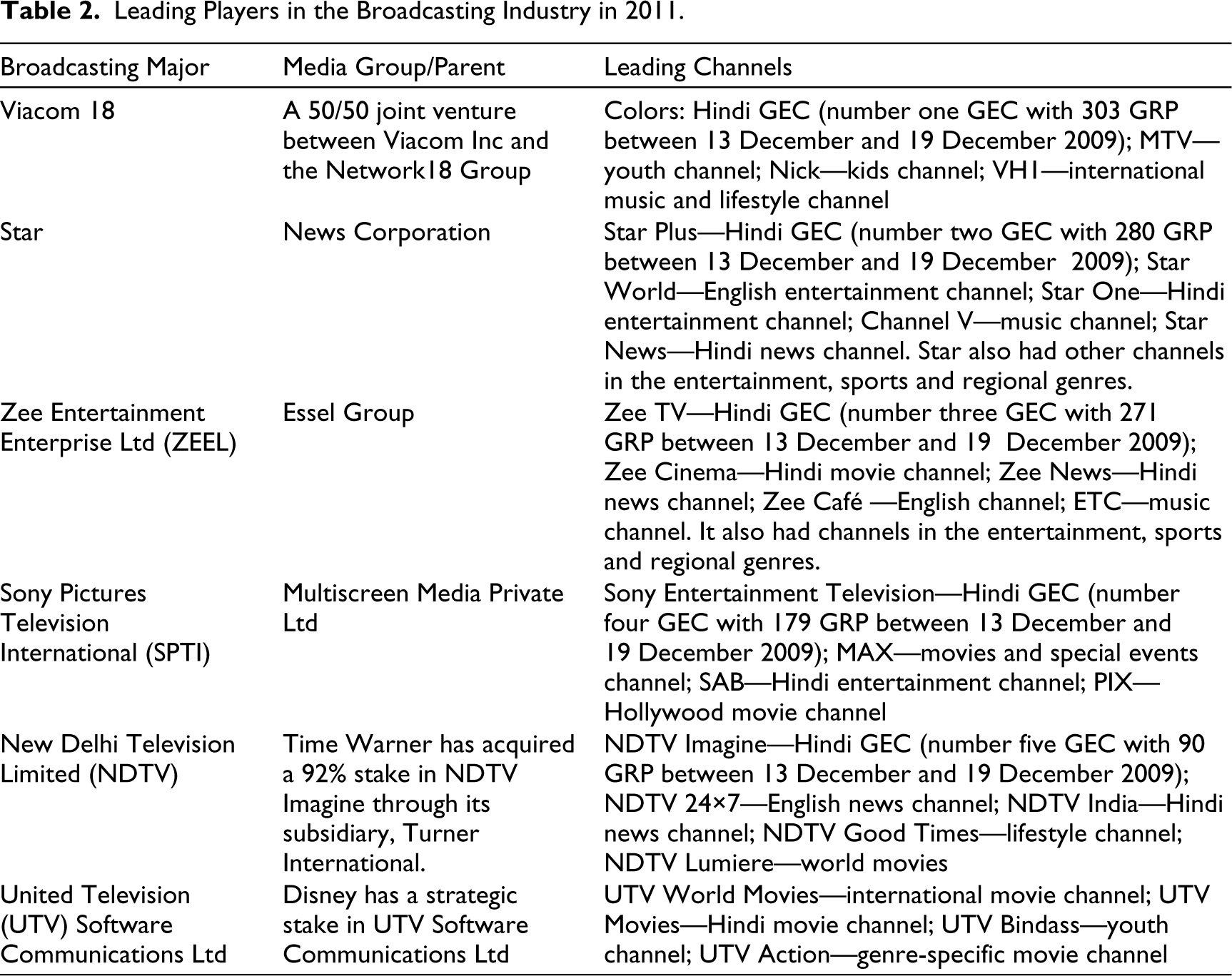
Notably, as per data from 2008, regional news and affairs genres in the southern market exhibited an increase in viewership share, unlike genres such as sports and regional General Entertainment Channels (GECs), which experienced negative growth (see Table 1). Nationally, English and business news genres each held a 0.4% share. In the Hindi Speaking Markets (HSM), Hindi GECs and movie channels collectively commanded over 50% of the viewership share. In contrast, in the Southern markets, Regional GECs alone captured approximately 50% of the channel share. For an overview of the major players in the industry by 2011, please refer to Table 2.
Viewership Shares by Genre: All India, HSM* and South Markets.

Leading Players in the Broadcasting Industry in 2011.
TV Broadcasting in Malayalam
The inhabitants of Kerala state predominantly spoke the Malayalam language, rendering them a highly significant audience for the media, especially when compared to other states in the country. Kerala proudly boasted a 100% literate population, characterized by social progressiveness and a keen interest in political affairs. This environment fostered the growth of various regional media outlets, particularly in the news and current affairs domain, each with distinct ideological positions. As of early 2011, nearly two dozen Malayalam broadcasters were actively engaged, catering to a highly sophisticated and dedicated viewer base. Among them, four channels were exclusively dedicated to current affairs. Additionally, several entertainment channels such as Surya, Kairali and Jeevan offered news bulletins during primetime slots. Some channels, such as Victers, positioned themselves as edutainment platforms. You can find detailed profiles of Malayalam TV broadcasters, including their reach, viewership and advertising revenues in Table 3.
Malayalam Broadcasters, TV Channels and Shares.

Asianet News, initially known as Asianet Global when it commenced operations in 2001, underwent a rebranding in 2003 to become Asianet News. It was owned by Jupiter Media’s Asianet News Network (ANN) and catered not only to viewers in Kerala but also to Malayali audiences in Middle-Eastern countries. Manorama News, launched in 2006, was part of one of the largest media conglomerates, the Malayala Manorama Company Limited. Amrita TV, supported by the spiritual organization Mata Amritanandamayi Math, began as a free-to-air channel offering a blend of entertainment and news in 2005. It found a dedicated following among devotees and believers in various global regions, including America, Australia, South Africa, Europe and the Middle East. Asianet Network led the Malayalam TV broadcasting scene with a comprehensive presence, boasting a leading entertainment channel, a news channel, a dedicated Middle East channel and a youth-oriented channel. By 2011, it reached up to 82% of cable and satellite homes. Surya (78%), Kairali (64%) and Amrita (55%) followed in terms of reach. Among the news channels, Manorama News had the largest reach, reaching 50% of households, followed by Indiavision (48%) and Asianet News (45%). 6
The Malayalam media landscape was on the brink of becoming even more crowded and competitive in the near future. There were rumors of over 10 channels preparing to commence broadcasting in Malayalam, with some, such as MBN, awaiting licence clearance. Notably, some of these upcoming channels were being launched by regional players who were venturing into new genres. Apart from Maledia, other established newspapers such as Mathrubhumi and Kaumudi were also considering a foray into the broadcast arena. Manorama, a leader in the news category, had plans to expand into the GEC space. Entertainment channels such as Surya, Amrita and Jeevan were also anticipated to enter the news genre. Sahyadri 24×7 and The Reporter were among the other expected news channels in the pipeline.
According to the research agency TAM, advertisers had invested ₹25 billion in major Malayalam channels in 2010. You can find detailed profiles of TV channels, their viewership shares and advertising expenditures in Kerala in Table 3.
MBN Viewers’ Survey
To gain a deeper insight into news consumption patterns within the state, Samjad initiated a viewer survey in collaboration with a Bangalore-based agency. This survey was conducted between November 2010 and February 2011 and involved collecting approximately 1,260 responses through structured questionnaires from TV viewers in the regions of Calicut, Cochin and Cannanore. The primary focus of the survey was to examine viewers’ attitudes and behaviours regarding news and infotainment consumption, with the aim of informing programming and content development decisions. Additionally, the survey aimed to uncover viewer perceptions and preferences related to different channel brands.
The survey results unveiled that the majority of viewers actively engaged in watching the news. However, there was no strong allegiance to any specific channel, as viewers were largely indifferent to the channel itself as long as it delivered news content. Viewers exhibited a tendency to switch between multiple channels to obtain diverse perspectives and viewpoints. Some degree of loyalty was observed towards news anchors and their identification by viewers.
Viewers primarily tuned in to news and current affairs programming in the morning and during the evening, with the peak viewing period occurring between 9 pm and 11 pm on both weekdays and weekends. On weekends, aside from the peak viewing and morning slots, viewers also engaged with news content during the afternoon. Notably, over half of the viewers spent more than 30 minutes during the peak viewing time, and a substantial 80% dedicated over 20 minutes to news and current affairs programming.
Interestingly, the survey found that viewers did not have specific time slot preferences for most types of news and current affairs shows, except for news bulletins, local news and crime news. The time band between 7:00 pm and 10:00 pm emerged as the preferred slot for most programmes across various channels.
Respondents were specifically queried regarding their ideal allocation of a 100% proportion for news and infotainment on a channel. The results unveiled a balanced preference of 50:50 for news and non-news programmes on a current affairs channel. This indicated that viewers anticipated a news or current affairs channel to feature not only news but also a substantial portion of non-news–based programming, either equal to or exceeding the news content.
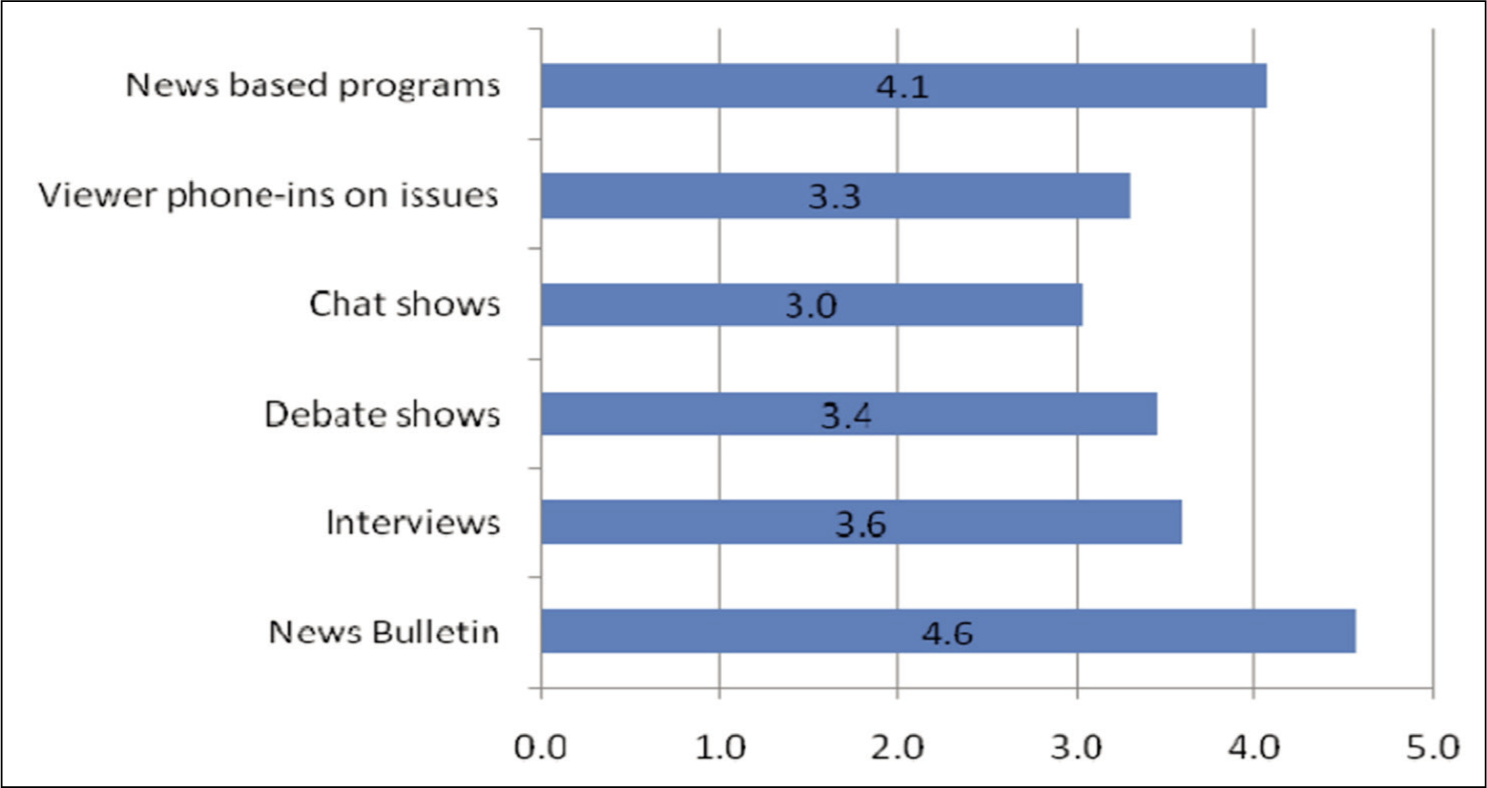
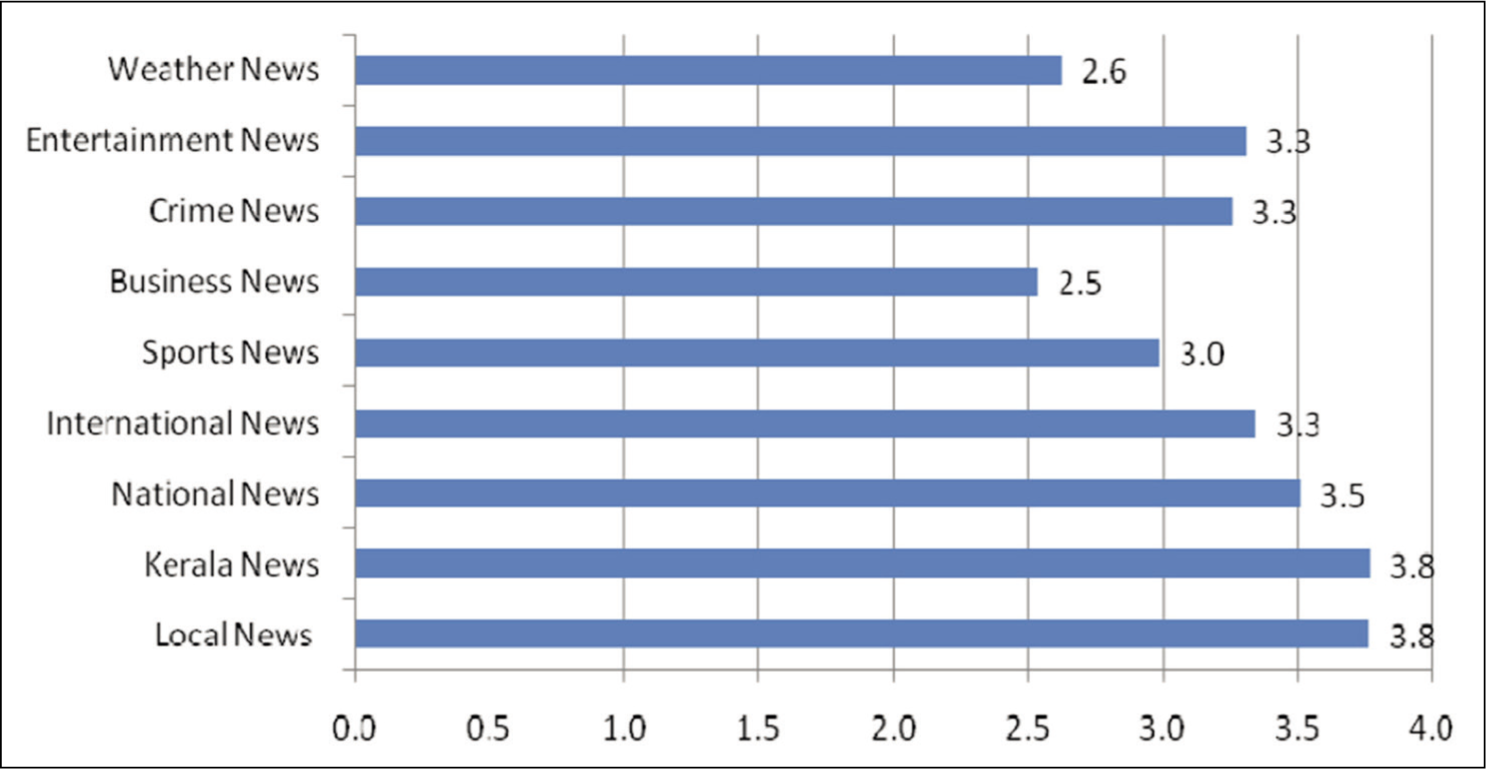
Further insights into viewers’ preferences regarding the format of news-based and non-news–based programmes revealed that viewers expected news bulletins to be the predominant feature on a current affairs channel. However, there was also a notable preference, to some extent, for other news-based programmes and interviews in addition to traditional news segments. When it came to Malayalam news/current affairs channels, viewers predominantly favoured local and Kerala news content, while business news and weather news were the least preferred types. Figures 1 and 2 present detailed programme preferences as reported by viewers.
In terms of non-news-based or entertainment programmes that viewers would prefer on an infotainment channel, the survey uncovered interesting trends. Over 30% of respondents ranked films and serials as their top choice for non-news entertainment content on an infotainment channel (as shown in Figure 3). About 19% ranked reality shows as their number 1 preference, and roughly 15% favoured songs and music. In contrast, travel, cookery and other lifestyle content received comparatively lower prominence. People leaned towards social and health-related news programmes over lifestyle content such as food, travel and cars.

To gain deeper insights into viewers’ preferences regarding non-news–based or entertainment programmes on a news/current affairs channel, structured questions with multiple choices, alongside an open-ended question, were employed to gauge preferences across various types of entertainment programme formats. The survey results highlighted the diverse and nuanced preferences of viewers, particularly concerning films.
It came as no surprise that viewers anticipated and favoured mainstream films on an infotainment channel, while there was comparatively less emphasis on art or realism-oriented films. Regarding serial storylines, there was a clear preference for daily soaps, especially those centred around family drama, followed closely by comedy and youth-oriented serials.
In the realm of reality shows, there was a strong inclination towards music, dance and comedy performance-based reality shows, indicating their popularity. Intellectual quiz shows also garnered a significant level of interest among viewers.
Concerning songs, film-based songs emerged as the most preferred category, followed by folk songs and devotional songs. While classical music was appreciated to some extent, its popularity did not match that of film and folk songs. These preferences provide valuable insights into the type of non-news programming that would resonate with viewers on a news/current affairs channel.
Viewer Perceptions of Existing Channels
To gain insight into the perceptual differences among TV channels, a market research agency collected data related to viewer perceptions of major Malayalam channels across various attributes that viewers consider when selecting a TV channel. A comprehensive set of relevant attributes for a Malayalam news channel/current affairs channel was generated through qualitative research, including focus group discussions with viewers. These attributes were carefully curated and incorporated as 24 associative statements in the structured questionnaires. Each respondent was presented with these items and a list of Malayalam channels, both news and GECs. They were then asked to identify the channel or channels (with multiple selections allowed) that best aligned with the attribute described in each item.
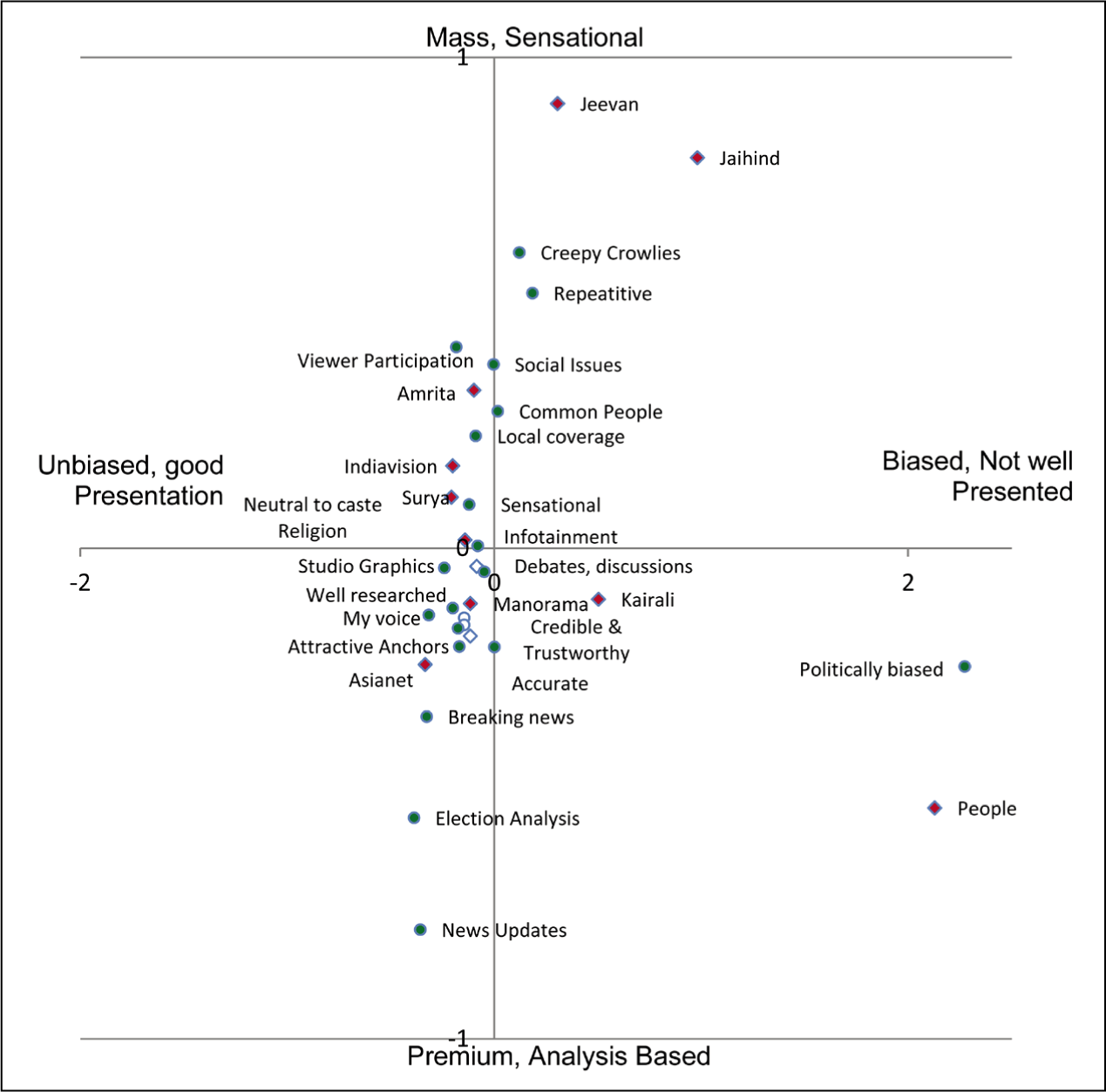
The perceptual data were subsequently mapped on a bi-plot using correspondence analysis. This perceptual map provided insights into how viewers perceived existing channels based on various attributes (refer to Figure 4, where green dots indicate the relevant attribute vectors for assessing a Malayalam current affairs channel, while red dots indicate the perceived positions of channel brands).
Analysts endeavoured to offer broad interpretations of the X and Y axes based on the strengths and proximity of attribute vectors to these axes. The X-axis was labelled as ‘Analytical’ (multi-perspective, appealing to a more elite, educated audience) versus ‘Sensational’ (dramatized and exaggerated, appealing to the masses). The Y-axis ranged from the presentation of facts as ‘unbiased’ and ‘well-presented’ to ‘biased’ and ‘poorly presented’.
In this context, Kairali and People were perceived as biased, with poor presentation, yet oriented towards analysis and appealing to intellectuals. Jaihind and Jeevan were considered biased, sensational, poorly presented and catered to mass audiences. Amrita, Surya and Indiavision were viewed as better presented but positioned as mass channels for larger communities, emphasizing viewer-oriented programming and formats over analysis-based presentations. On the other hand, Manorama News and Asianet News were perceived as high-class, elite, premium analysis-based channels characterized by good presentation and an unbiased approach to viewpoints and analysis.
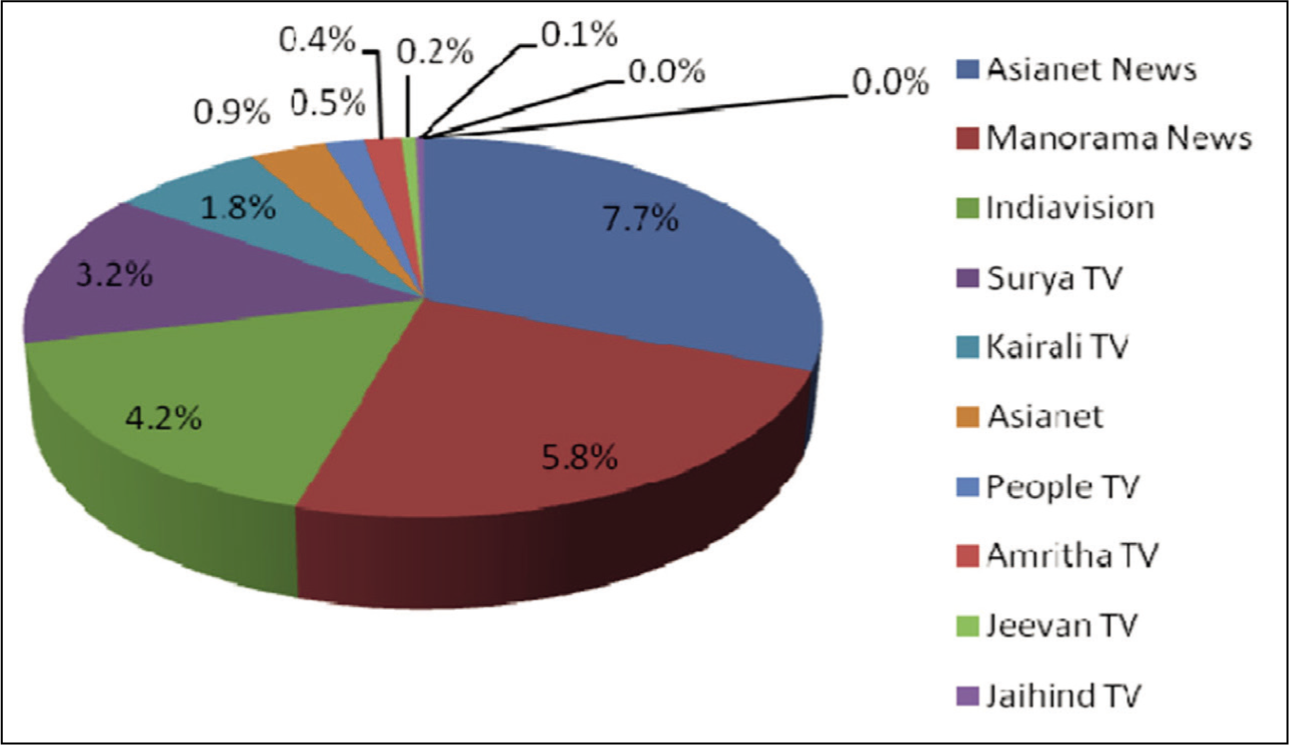
Among Malayalam news channels, Surya emerged as the most popular news channel, despite its primary focus on General Entertainment Content (GEC) with occasional news bulletins. Asianet News, Manorama News and Kairali followed as the second, third and fourth most preferred Malayalam news channels.
For primetime news programming, the preferences were as follows: Asianet News, Manorama News, Indiavision, Surya and Kairali were the top five choices, respectively (as depicted in Figure 5).
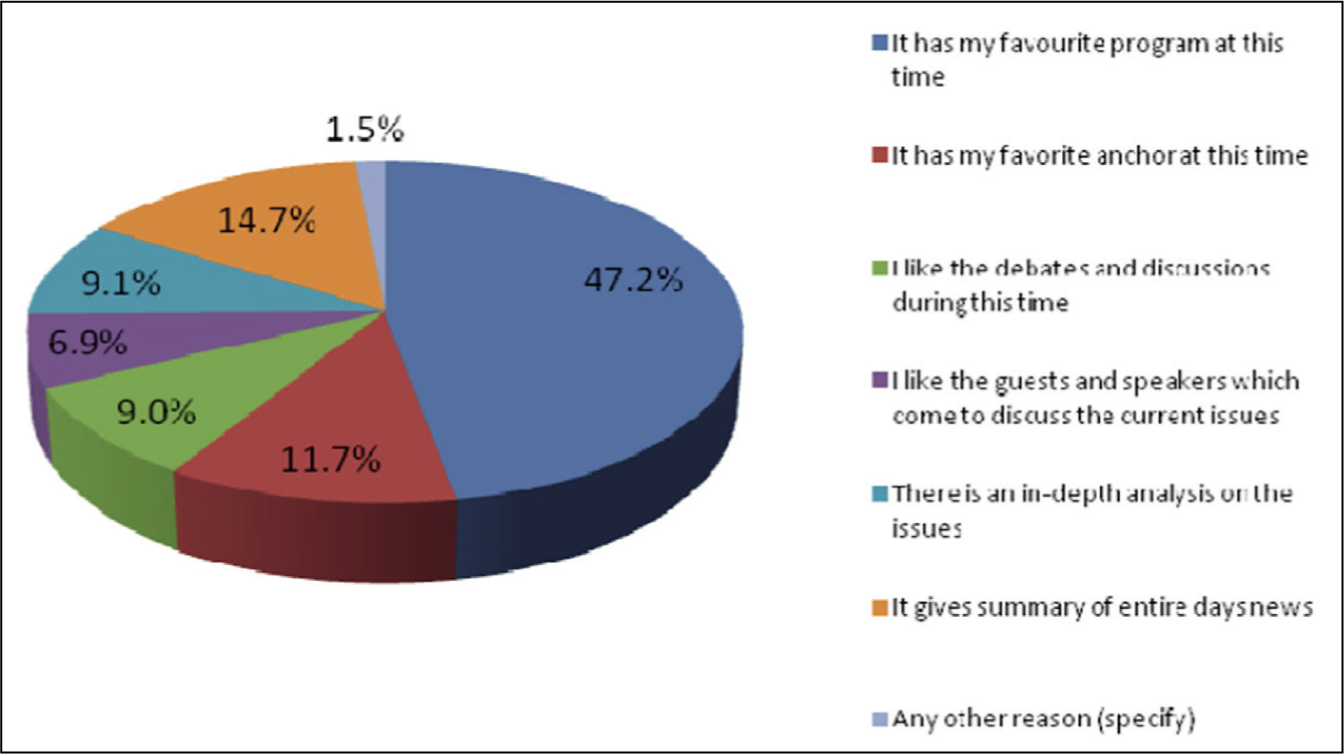
Viewers’ channel preferences during prime time were driven by factors such as their preferred programme, the day’s summary and their favourite news anchors (as illustrated in Figure 6). These elements played a pivotal role in determining which news channel viewers tuned into during this critical time slot.
Samjad’s Positioning Dilemma: Obvious vs Courageous
Samjad found himself facing a critical positioning dilemma as the launch date for the new channel in April 2011 approached. While he had addressed many operational aspects, the strategic positioning of the channel needed to be determined promptly in order to begin implementing various elements of the channel’s offerings. This decision would have far-reaching implications for every aspect of the channel, including programming, content, marketing and promotion. It would directly influence the size and demographics of the audience, subsequently impacting advertising policies and sales planning.
As he delved into the viewer survey data, examining viewer preferences and perceptions of competing channels, Samjad grappled with four fundamental questions of marketing strategy:
Who is this channel for? Who is this channel against? What could be the unique value proposition? What could support such a proposition?
However, before he could sharply differentiate his channel, he needed to adopt a broader approach that considered the financial feasibility and sustainability of the channel. Samjad was well aware that while Maledia newspaper could sustain itself with limited but loyal audiences, running a 24 × 7 news TV channel required a different economic model. Initial consultations with the Maledia newspaper distribution and advertising sales team suggested that it should be positioned as a mainstream channel. Samjad believed that there were more synergies across channels in multiple genres than across different media, particularly since brands targeting household and packaged consumer goods categories typically focused on women as their primary audience. In contrast, males held decision-making power in high-involvement categories such as real estate, appliances and financial services. While they consumed current affairs content, brands in these high-involvement categories considered high-involvement media like print to be more effective than 30-second television commercials. Model Trust’s restrictions on advertisements from certain categories, such as financial loans, added further revenue constraints. Furthermore, a careful examination of the survey results prompted him to weigh two broad alternatives. Samjad believed that both alternatives had their cost advantages and disadvantages, along with potential advertising revenue opportunities. In general, he considered news content and infotainment content to have similar economic considerations.
Option 1: News Channel: The ‘Obvious’ Choice
For a newspaper publications group like Model Trust, one apparent choice was to position the new current affairs channel as a news channel. Qualitative interviews revealed that Maledia readers displayed strong loyalty to the newspaper, but other readers perceived the group as being primarily focused on minority interests. Given this polarized audience legacy, opting for a news channel positioning would instantly set the new channel apart from other TV news channels.
The pre-existing loyal Maledia newspaper readership would readily embrace this choice, as it would offer them the option of their preferred content and style in a broadcasting medium. Importantly, this positioning aligned seamlessly with the group’s values and policies. Furthermore, it neatly fit within the popular genre classification of channels as a news channel, a genre that was experiencing growth.
Samjad believed that this approach could also attract audiences beyond the core readership of Maledia. To achieve this, he envisioned differentiating the news channel from others by focusing on minority issues, extending beyond religious minorities and providing a platform for presenting alternative perspectives while upholding core journalistic values.
However, Samjad was mindful of the impending competition, with at least 3–4 new news channels expected to enter the market soon. He recognized that this could exert competitive pressure on advertising revenues, which were the primary source of income for free-to-air channels in India.
Taking a closer look at the advertising landscape, Samjad noted that news channels held approximately 18% of the advertising share, while entertainment channels captured over 50% of the share. Given the existing challenges in generating advertising revenue for Maledia newspaper, he pondered whether positioning the new channel towards a specific niche audience could help it sustain its operational costs. The costs of running a news channel were significantly higher compared to print, where partial cost recovery occurred through subscription revenue (newspaper copies were purchased by readers, whereas news channels were free-to-air in the Indian broadcasting landscape in 2011).
One key factor that caught Samjad’s attention was Manorama News’ notable share of advertising spending and viewership. He questioned whether this was a result of Manorama’s strong presence in print media or the specific audience demographic it catered to. This raised important considerations for his own channel’s strategy and positioning.
Option 2: ‘Infotainment’ – News + Entertainment Channel: The ‘Courageous’ Choice
While positioning the new channel as a news channel was the obvious choice, a more daring alternative was to position it as a channel that offered a blend of news/information and entertainment, effectively an Infotainment Channel. Initially, this idea might have sounded unconventional, especially in a landscape where highly specialized genre channels were being launched. However, Samjad recognized the need to have a substantial audience for generating advertising revenue.
The concept was to straddle the line and create a new genre in the market. The channel could boldly challenge conventional genres and set itself apart as a General Entertainment News Channel. To achieve differentiation in line with Maledia’s values and vision, Samjad considered innovative approaches to content and formats. These could include ideas such as ‘serials with commentary’, akin to the knowledge-based reality quiz show Kaun Banega Crorepati on a Hindi GEC, where the film star anchor Amitabh Bachchan provided introductory commentary before each episode, relating it to the episode’s content and highlighting relevant philosophy, effectively blending entertainment and information.
Another possibility was to combine ‘music with an artist’, drawing inspiration from All India Radio and Vividh Bharti shows as a reference point for new TV formats. Samjad also contemplated merging ‘history with geography’ and vice versa, for instance, presenting a travel show with a famous cultural icon hailing from the region being covered. This approach could provide both geographical and cultural/historical insights. For example, while showcasing a place in Kashmir as geography, it could blend in cultural and historical elements with the participation of renowned Santoor artist Shivkumar Sharma or Baichung Bhutia, representing the northeast region.
Furthermore, there was an opportunity to produce docudramas and reality content centred around social issues. These ideas represented a courageous path that could potentially set the channel apart in a crowded market.
Samjad found himself increasingly drawn to the idea of positioning the channel as an Infotainment Channel, especially when considering the financial sustainability of a standalone news channel. The fact that Manorama News was planning to venture into the GEC genre highlighted the advantages of having a multi-channel portfolio in broadcasting.
Many television advertisers, particularly brands in packaged consumer goods, targeted GEC audiences, with a particular focus on middle-class housewives. This audience demographic was seen as a core market for such advertisers. However, Samjad was also aware that there were questions surrounding whether viewers would accept a 2-in-1 channel offering, and he sought further evidence in the viewer survey report.
Moreover, while the operating costs of running a TV channel were higher than those of a newspaper, running an entertainment-cum-news channel could potentially be even more expensive than a dedicated news channel. Samjad recognized that the success of this approach would depend on clever programming and the creation of content versus relying solely on licensed content.
Getting Ready to Go on Air
As Samjad carefully evaluated the positioning options, he was acutely aware that the chosen strategy should not only be different and relevant to the target market but also be realistically implementable. He understood that every decision he made in the lead-up to the channel’s launch, such as content selection, format, anchors and more, would be guided by the chosen positioning strategy.
The first critical decision was regarding the channel’s brand name. As he examined the motion graphics on the TV screen, which drew inspiration from Maledia newspaper’s identity and masthead, he realized that the choices made had to be part of an integrated approach. The channel’s audio-visual identity needed to align with the position the channel aimed to occupy in the minds of its viewers.
Samjad faced a pivotal question: Should he consider extending the Maledia newspaper brand, which had built a loyal following over 25 years, to the TV channel? Alternatively, should the Model Trust seize this opportunity to expand its target audience by launching an entirely new brand, free from the constraints of the past? The challenge was not only about the brand’s image but also about securing the board of trustees’ approval for the budget required for branding the new TV channel. Convincing the trustees about the new channel’s financial sustainability would also be a significant undertaking. Samjad knew that these decisions would shape the channel’s identity and trajectory in the highly competitive media landscape.
Footnotes
Declaration of Conflicting Interests
The authors declared no potential conflicts of interest with respect to the research, authorship and/or publication of this article.
Funding
The authors received no financial support for the research, authorship and/or publication of this article.