




Abstract
The founder of a charitable organization dedicated to small livestock management for livelihood generation now confronts the additional challenge of supporting returnee migrant workers who lost their jobs due to COVID-19. Simultaneously, addressing the need to navigate the economy during and after the COVID era became imperative. India’s diverse economic landscape, marked by substantial regional disparities, compels thousands of labourers to migrate annually for a better life.
The COVID-19 pandemic exacerbated the plight of these migrant labourers. Faced with joblessness and unable to sustain themselves in large cities, they began returning to their homes. The Goat Trust, actively promoting livelihood development in resource-deprived areas, is exploring avenues to reshape the value network of goat farming in India. The urgency of the situation demands immediate action.
This scenario underscores the potential for social enterprises to play a pivotal role in building the new post-pandemic economy. Organizations like the Goat Trust can seize opportunities presented by this social crisis by upgrading and digitising local economies. This approach is pertinent to India and relevant to the global economy. Focusing on local economic development emerges as a key strategy for alleviating the profound economic depression induced by the pandemic.
Discussion Questions
In the face of the pandemic challenges, should they embark on a new project or persist with their current activities? How can they effectively address this challenge within a resource-deprived economy?
What advantages and obstacles come with the implementation of a virtual, mobile-based e-commerce application for small livestock trading in India or other developing economies?
What significant challenges do social entrepreneurs encounter in their pursuits?
Confronted with the unprecedented challenges of the COVID-19 pandemic and the subsequent mass returnee migration, Sanjeev Kumar, the founder of ‘The Goat Trust’, found himself grappling with a pivotal decision. As his team witnessed the distressing scenes of workers forced to return home due to financial hardships, Sanjeev contemplated whether to embark on a new project or to persist with their ongoing initiatives. The heart-wrenching reality of migrants undertaking exhausting journeys to their homes underscored the urgency of the situation.
In this critical juncture, where every day brought new arrivals of distressed migrants, Sanjeev Kumar faced the pressing question of whether their organization could contribute to a lasting solution. While existing non-profit and government efforts provided immediate relief, the necessity for a comprehensive, long-term strategy loomed large. The prospect of integrating the local economy with small livestock and adapting to the challenges of operating during and after the pandemic led Sanjeev to consider the transformative step of taking the livestock trade online.
However, proposing this initiative to his team brought forth a cascade of uncertainties. Was it prudent to launch a new project amid the pandemic’s uncertainties? Did the organization possess the necessary infrastructure for such a shift? Would the proposed online platform find acceptance among their current and potential clients? Maintaining the established service and product quality standards in e-commerce posed additional concerns. These questions formed the crux of Sanjeev Kumar’s decision dilemma as he navigated the delicate balance between responding to the immediate crisis and shaping a sustainable future for ‘The Goat Trust’.
The Goat Trust
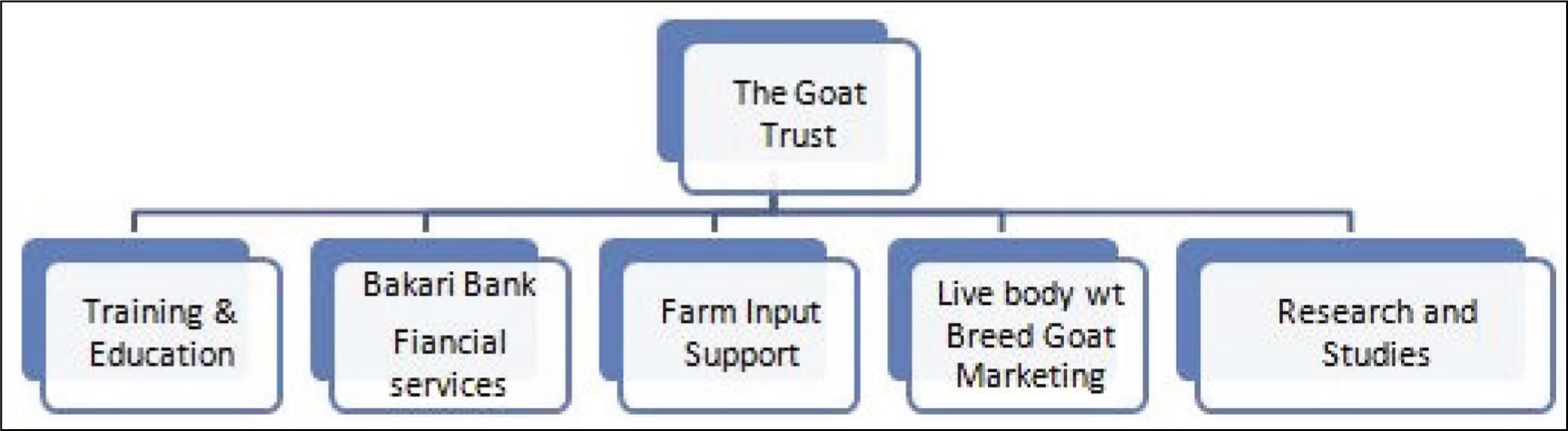
Established in 2008, The Goat Trust was a registered non-profit organization that was dedicated to fostering livelihood development for rural farmers, predominantly women, in goat rearing. The organization’s mission revolved around providing training and assistance to grassroots organizations and their staff. Their objective was to enhance technical, financial, and marketing services for goat farmers while promoting action-based research and disseminating results to national and international audiences and practitioners.
The idea to establish an institute focusing on small livestock management dates back to 1998 when Sanjeev Kumar conceived it during his work on a Professional Assistance for Development Action (PRADAN) project in Rajasthan. His realization that maintaining large dairy animals posed challenges for the rural poor in dryland and risk-prone areas led him to champion the cause of small livestock, particularly goats, which yielded better results with minimal input. The prevalent challenges faced by goat farmers, such as diseases and mortality, further fuelled the organization’s commitment.
The Goat Trust garnered numerous accolades for its innovative work. In 2014, it received a reward of USD 4,000 from the Bihar Innovation Forum. Sanjeev Kumar was also elected as an Ashoka Fellow, underscoring the organization’s impact. Strategically aligning with prominent organizations and CSR activists, The Goat Trust signed MOUs with entities like State Rural Livelihoods Missions (SRLM) in Jharkhand, Maharashtra, Uttarakhand, Tripura, Bihar, as well as major CSR players including Reliance Foundation, Dr Reddy’s Foundation, Bajaj Group, IFAD-supported projects, Godrej Agrovet, and the National Schedule Caste Finance Development Corporation (NSFDC).
The organization’s multifaceted approach included training certified livestock nurses, running field schools for comprehensive livestock education, and engaging in the financial domain through micro-leasing, livestock credit cards, and community insurance. Conservation of elite breeds was also a part of their mission. Operating across 16 states in India, The Goat Trust served 300,000 goat farmers.
Central to their operations was the concept of Pashu Sakhis—nurses trained in goat rearing—who provided vital support to grassroots farmers and communities. Beyond basic health checks on goats, Pashu Sakhis ran shops offering the right inputs for goat farming. Tackling the challenge of goat feed accessibility, The Goat Trust locally produced and distributed goat feed, ingeniously crafted from readily available materials like soil, lime, and jaggery. Pashu Sakhis, trained in this process, sold the prepared goat feed to farmers at a modest profit of USD 0.026 per kilogram. The organization’s holistic approach encompassed training, financial empowerment, and sustainable solutions to address the complex landscape of goat farming in India.
Sanjeev Kumar, Chairman of ‘The Goat Trust’, introduced the innovative concept of Bakri Bank (Goat Bank), allowing extremely impoverished farmers without goats or sheep to rent them from the Bakri Bank. These farmers could utilize the output for their livelihood and pay rent in the form of cash, kind, or a combination of both. Additionally, they could provide goat kids as part of the rent.
Reflecting on this initiative, Sanjeev Kumar highlighted the pragmatic approach when working with the Base of the Pyramid (BOP). Recognizing the impracticality of demanding fees upfront, the organization initially provided services free of charge. Through these efforts, the economic status of goat farmers improved, enabling them to eventually pay for services. Subsequently, the organization transitioned to implementing a for-profit business model.
The most critical resources for the operations were human capital and technological capital, both locally developed. The entire business’s success hinged on the strategic development and utilization of these resources. The research and development of technology played a crucial role in fulfilling the organization’s mission. The Goat Trust extensively collaborated with the government, non-governmental organizations, and corporate CSR activities to market its products and services, recognizing the impracticality of targeting the population individually. The primary source of revenue was the training fees paid by NGOs, CSR initiatives, and government funds, with occasional access by individuals managing large goat farms.
Sanjeev Kumar’s approach emphasized tactfully developing and utilizing local resources to sustain the organization’s mission and impact.
Financial Information for FY 2018–19.

The Goat Economics
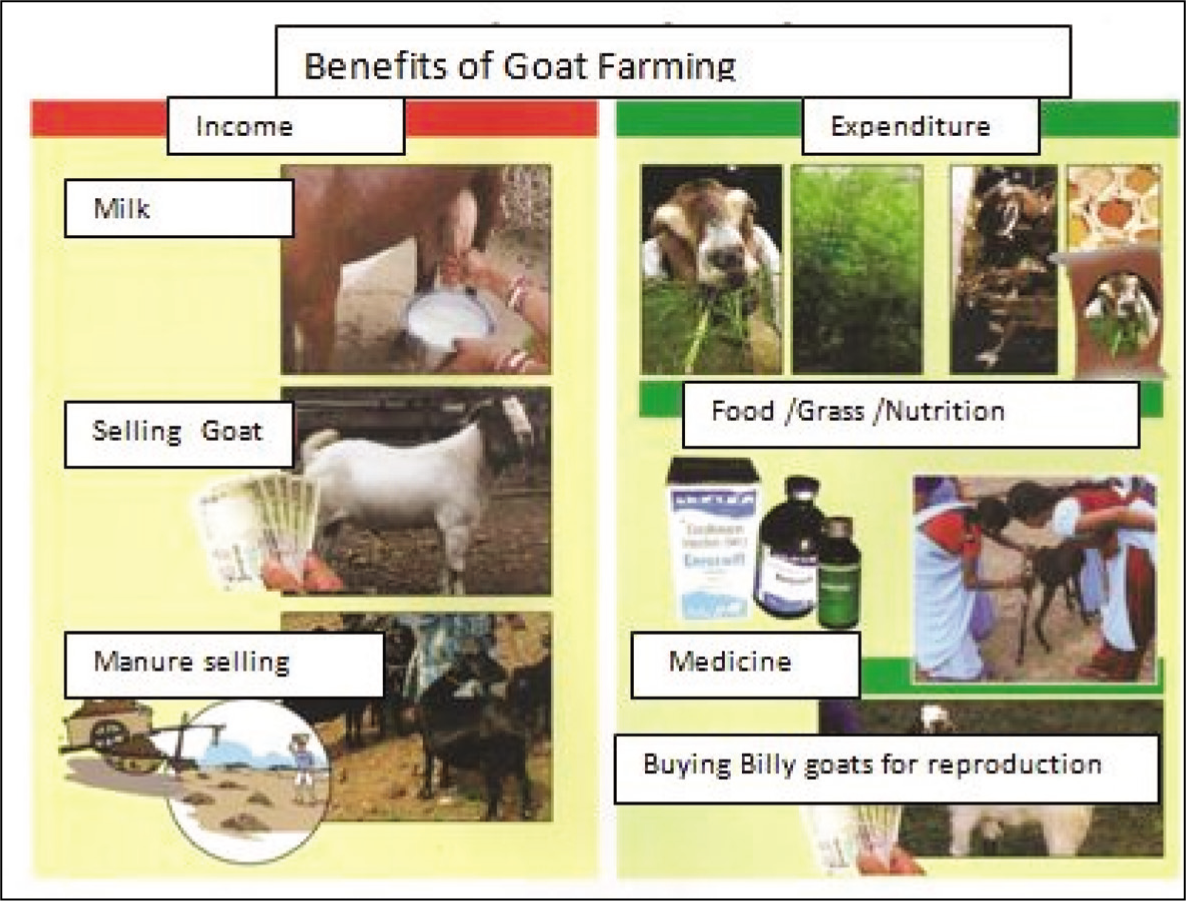
The goat held significant importance within rural communities of lower economic and social status in India. A single goat’s strategic raising and breeding could uplift an entire family’s life. Goat’s milk, recognized as a highly nutritious source and considered akin to medicine in Indian Ayurveda, could yield up to 5.5 litres per day from each goat.
In the absence of centralized assistance, villagers were compelled to consume goat’s milk within their households. However, with interventions from The Goat Trust, a transformative shift occurred. The organization collected milk from goat farmers, pasteurized it, and sold it in bottles for consumption in urban areas. Beyond direct consumption, the milk produced cottage cheese and dried milk powder, both marketed by ‘The Goat Trust’.
The economic impact extended further as male kid goats were sold for their meat, contributing to the family’s income. On the other hand, female kid goats served a dual purpose for milk and breeding. The interventions by The Goat Trust played a crucial role in developing superior goat breeds and fostering the growth of healthy goats, thereby commanding better prices in the market. This comprehensive approach not only elevated the economic status of the rural communities but also promoted sustainable and diversified uses of goat resources for the overall benefit of these communities.
How COVID-19 Was Killing the Non-infected
The toll of the COVID-19 pandemic extended beyond those directly infected; it also affected individuals facing severe financial repercussions. The aftermath of the last economic and financial crisis had already resulted in reduced economic growth and increased unemployment rates (Pilková et al., 2016). The closing months of 2019 and the entirety of 2020 witnessed one of the most severe global pandemics in recent history, posing significant challenges to the survival of businesses. The pandemic forced hundreds of countries to close their borders, disrupting global supply chains and international business. Millions of workers faced the grim prospect of job loss, prompting governments worldwide to consider large stimulus packages to prevent a sharp economic downturn that could potentially plunge the global economy into a deep recession. In the worst-case scenario, the world economy was projected to contract by 3% in 2020 (International Monetary Fund, 2020), surpassing the 1.7% contraction observed during the global financial crisis 2009 (PTI, 2020a).
India, not immune to these challenges, faced additional hurdles as it had already been grappling with a slowdown in its GDP growth rate. The fiscal year 2019 witnessed a sharp slowdown from 6.1% to 5%, and the pandemic was expected to further reduce the economic growth rate to a mere 4% (PTI, 2020b). The country also contended with vast economic and social disparities among states, resulting in mass migration. Bihar, in northern India, emerged as a major centre of emigration with a per capita income of around $520 and a birth rate of 3.4 children per female. In contrast, states like Kerala had a per capita income of $2350 and a lower birth rate of 1.6 children per female, exemplifying stark contrasts within the same country. This disparity underscored a fundamental paradox in India’s development, where population growth was highest in the north while wealth remained concentrated in the west and south. According to Ambit Capital, this combination of a youth bulge, a poor gender ratio, and weak economic prospects posed the risk of explosive challenges in the country’s north, as millions of barely literate men faced a lifetime without jobs and women (Kumar, 2017). Horizontal innovation in the Indian economy, blindly following Western trends, created power centres while neglecting the village economy. This neglect was evident in the annual migration of 5 to 6 million people from poor northern states to wealthier southern and western states (Kumar, 2017). The challenge lay in creating a self-sustainable local economy capable of providing for these poor families and fostering prosperity in their homeland.
Organizations like The Goat Trust (
The Cattle Trade in India
India boasted a substantial livestock population, exceeding 500 million, with approximately 220 million comprising sheep and goats (Livestock and Poultry in India: Overview). The sheep population in the country reached 74.26 million in 2019, reflecting a 14.1% increase from the previous census. Concurrently, the goat population 2019 reached 148.88 million, indicating a 10.1% rise.
Goat’s milk held immense significance for the rural Indian population, often serving as the sole source of nutrition for underprivileged rural communities. Goats were primarily reared by the socially and economically disadvantaged classes, distinguishing them from the cow-rearing practices favoured by the upper class. Often referred to as the ‘poor man’s cow’, goat farming incurred lower costs than cow rearing. However, despite its cost-effectiveness, many poor goat farmers faced significant financial losses due to unforeseen illnesses in their goat herds. Lack of training and limited access to veterinary hospitals hindered these farmers from achieving optimal results and outputs in goat farming.
Livestock trading in India was commonly perceived as a low-status profession, with individuals throughout the value chain often having limited education. The profession was associated with dirt and filth, rendering it unattractive to the younger generation. Moreover, there were high entry barriers, particularly at the small trader level, as the industry remained deeply rooted in tradition. In goat trading, men dominated the landscape, and women encountered significant gender bias, with only a mere 0.01% participating in trading through existing Mandis or cattle fairs. Despite the challenges, small livestock rearing played a substantial role in rural livelihood generation, underscoring its importance despite technical limitations, low efficiency, and limited scientific intervention.
Mobile Retail E-commerce in India
The mobile retail e-commerce sector was expected to reach a valuation of nearly 38 billion US dollars by 2020, driven by the rapid adoption of smartphones and mobile internet across India. The convenience offered by mobile wallets played a significant role in fuelling this growth, especially among the younger demographic (Jagmohan, 2020). Rural India demonstrated a noteworthy inclination toward mobile consumption, with individuals allocating up to 25% of their income to mobile-related expenses. The hinterland experienced a remarkable 45% growth in internet usage, with estimates indicating 264 million internet users in rural India, which was expected to increase to 304 million by 2020 (KANTAR, 2020).
In response to these trends, there was an urgent need for intervention and a realignment of the agricultural value chain, utilizing new technology to enhance transparency and create more lucrative farmer opportunities. Furthermore, these interventions had the potential to attract younger individuals to agriculture, thus generating livelihood opportunities for the unemployed. While sectors like dairy and layer poultry farming had experienced process innovation, goat and sheep farming had not witnessed comparable advancements in their production and marketing processes. Addressing this gap through the infusion of technology held the promise of revolutionizing the goat and sheep farming industry, ushering in positive changes in production, marketing, and the overall sustainability of the sector.
The Current Dilemma
Sanjeev found himself increasingly concerned as hundreds of villagers, once employed in metropolitan cities, were returning home daily. Their return, far from a joyous homecoming, plunged their already impoverished families into extreme poverty. While the government relieved these families, the future looked daunting and grim. The major employers of these labourers, the manufacturing sector and construction companies, could not provide adequate wages, forcing the workers to consider leaving their households again for factory employment. This urgent situation demanded intervention.
Simultaneously, The Goat Trust faced its challenges. Sanjeev foresaw a significant challenge in the inability of small livestock farmers to adapt to the changes in the new world. The traditional cattle trade in India, still conducted as it was 200 years ago, posed risks, especially with the rise of diseases like COVID-19. Trading conditions in cattle markets (mandis) were unsanitary, jeopardizing animals and humans. The absence of health check-ups and records made the situation even more dire, raising concerns about the potential spread of deadly viruses. Moreover, there was a substantial gender gap in women’s participation in the livestock trade, with only around 0.01% able to engage in mandis or haats.
Sanjeev grappled with continuing The Goat Trust’s activities without succumbing to the economic recession. Should they devise new strategies to address the challenges of the post-COVID economy? Additionally, he contemplated transforming the seemingly undesirable goat trade into a powerful tool for local economic development, integrating more returnee migrants into the value chain.
His plan involved taking the livestock trade online, but before proposing the idea to his team, several questions needed answers. Limited resources and the expected scarcity due to the pandemic heightened the need to assess the viability and acceptability of online trade within their existing infrastructure and among existing and prospective clients.
Implementing virtual markets in developing economies offered both challenges and benefits:
Benefits:
Prior health checkups reduced fraud, bringing transparency to the trade. Reasonable competition ensured fair prices. Greater women-friendliness reduced gender biases in livestock sales. High-quality livestock fetched better prices, benefiting poor goat farmers. Neutralized seasonal meat price fluctuations. Reduced risks of diseases associated with unsanitary livestock markets. Attracted youngsters to the profession, generating local livelihoods and reducing migration.
Challenges:
Ensuring network connectivity and mobile access for farmers. Encouraging maximum participation from goat farmers, overcoming resistance from traditional intermediaries.
Success in social enterprises was defined by the ability to create shared value, involving opportunities, people, and finance at its core (Sarmah & Rahman, 2016). However, launching and expanding during a pandemic presented significant risks. It raised valid questions about the feasibility of achieving social and economic impact by introducing digital platforms in these challenging times. Could it provide a scalable solution to uplift the local economy and absorb returning migrant workers?
Footnotes
Declaration of Conflicting Interests
The authors declared no potential conflicts of interest with respect to the research, authorship and/or publication of this article.
Funding
The authors received no financial support for the research, authorship and/or publication of this article.