



Abstract
The purpose of this article is to examine the multi-spatial and developmental dynamics of the cinnamon industry in Sri Lanka, the largest exporter in the world by value added. This contribution compares Karandeniya, a major traditional cultivating hub, and Matale, a region new to cinnamon cultivation, deploying a Global Production Network (GPN) framework inclusive of regional development considerations. Analyses, based on input from 23 semi-structured, in-depth interviews, examine the potential for all stakeholders to acquire equity or ‘how’ captured value influences the region ‘and’ individual actors over the course of development. Fieldwork reveals four upstream actors in the cinnamon industry, namely—farmers, peelers, collectors and exporting firms. Results indicate that the cinnamon boom led to strategic decoupling with the exporting firms in Colombo and subsequent strategic recoupling with other actors. The primary contribution of the research rests in the interpretation of resulting structural changes in each region from a bifurcated view of regional development. Based on regional economic growth, Karandeniya appears to be more successful. However, considering the extent of value distribution within the region, Matale is on a more inclusive trajectory vis-à-vis cinnamon exports. Based on these results, three implications for GPN theory and related development policy are suggested.
Introduction
Despite the ongoing structural transformation from agriculture and fisheries towards manufacturing and services, improving agribusiness remains a vital component of improving smallholders’ lives in middle-income countries (International Fund for Agricultural Development, 2016; Sarkar, 2014; Thompson et al., 2019). Sri Lanka is a middle-income country widely known for its exports of clothing, tea and rubber, as well as for its tourism industry, and remittances from migrants working in the Middle East. Less-well known is Sri Lanka’s competitive advantage in spices, most notably cinnamon, pepper and cardamom (Institute of Policy Studies of Sri Lanka [IPS], 2017).
The purpose of this article is to examine the multi-spatial and developmental dynamics of the cinnamon industry in Sri Lanka, the largest exporter of cinnamon in the world measured by export value (Food and Agriculture Organization [FAO] STAT, 2020). This contribution compares Karandeniya, a major traditional cultivating hub, and Matale, a region new to cinnamon cultivation, deploying a Global Production Network (GPN) framework inclusive of regional development considerations. 1 The GPN framework is commonly used in the field of economic geography. Here, it is argued that this framework also lends itself well to analyses focusing more on development-oriented topics.
In terms of motivations for the research, the GPN framework provides useful tools to systemically analyse multi-actor and multi-scalar processes and interactions in the dynamic global economy that are sensitive to time and space (Coe et al., 2008; Yeung, 2002). The vast majority of GPN studies to date, however, have focused on downstream activities connected to secondary manufacturing industries and, to a lesser extent, tertiary service industries (Breul & Diez, 2018; Coe et al., 2008; Gibson & Warren, 2016; Lee, 2016; McCarthy et al., 2012). The present research, in contrast, examines ‘upstream’ economic activity in the ‘primary’ sector, something scholars of Global Commodity Chains (GCCs) and Global Value Chains (GVCs) have done (Islam, 2008; Mitchell & Coles, 2011), but surprisingly not those working with the GPN framework. As shall be discussed, analysing upstream processes using the GPN framework has the potential to broaden the breadth and scope of both GPN and developmental studies. Second, and related to the previous point, this effort adds to a growing consensus in research on countries in the Global South that examinations of economic activity should not be approached a priori through the lens of poverty and passive dependence (Williams et al., 2014; Zoellick, 2010). Indeed, there are multiple actors: individual, firm and extra-firm, active in and across multiple scales and places, with divergent motivations and opportunities exercising autonomy and agency in complex agricultural systems (Mitchell & Coles, 2011). Finally, regional development in the GPN literature has tended to focus predominantly on economic growth. As such, there is a danger that gross regional ‘growth’ and actual impacts on the well-being of constituent actors are conflated.
In the present research, therefore, the distributional view of regional development is introduced. This view expands the scope of regional development to include an examination of the equity potential for all stakeholders or ‘how’ captured value influences the region ‘and’ individual actors over the course of development (Choi, 2015; Coe & Hess, 2011). This attention to inclusion is certainly relevant for the Sri Lanka case as well, since the country has done well in terms of providing quality education and affordable health care. Nevertheless, economic growth has insufficiently translated into raising living standards, particularly as the country has transitioned from near poverty to stability and placed increased emphasis on balanced regional development (Athukorala, 2016; Newhouse et al., 2016).
There is also ample motivation for studying Sri Lanka’s cinnamon industry in particular. While some agricultural production networks such as bananas, sugar cane and coffee have attracted attention from various scholars (Brown, 2013; Lee et al., 2016; McGrath, 2013; Wilson, 2013), there is a dearth of research on the cinnamon industry. With respect to this industry and Sri Lankan policy studies, only a few studies have been conducted, for example the report published by the Standards and Trade Development Facility and United Nations Industrial Development Organization (Standards and Trade Development Facility [STDF], 2016) and one by the IPS (2017). However, no research about the Sri Lankan cinnamon industry can be found in the social sciences literature, which is surprising since the country is the world’s leading exporter by market value (for an exception in the business literature, see Jayathilaka & Dasanayaka, 2019). Also, considering that more than 80 per cent of cinnamon produced in Sri Lanka is exported to other countries, most of the stakeholders participating in the industry are influenced by global markets. Many stakeholders are engaged in international cinnamon networks making this an area ripe for GPN-based analyses.
The local environment, multi-scalar actor interactions and the resulting structural outcomes are unpacked via the deployment of concepts core to GPN theorization such as strategic coupling, decoupling, and recoupling; value creation, value enhancement and value capture; and embeddedness. Further, the research considers spatial switching, defined as ‘… the substitutability of processes within the same geographical scales’ (Yeung, 2015, p. 291), in the cinnamon industry and how it influences regional development in the case study regions. Three research questions (RQs) are deployed to build up an understanding of Sri Lanka’s cinnamon industry, its key actors, its connections to GPNs and its influence on regional development in the target regions:
Who are the main actors participating in processes of production and distribution in the cinnamon industry in Sri Lanka and how (and where) do they interact with other actors? In terms of strategic coupling, decoupling and recoupling, how do changes in the cinnamon industry influence actor behaviour and embedded relationships? What factors have influenced regional development trajectories (e.g., structural changes to GPNs) and how have they impacted development in each region from both a traditional and a distributional view?
The cumulative objective of this research is to scrutinize Sri Lankan cinnamon production networks not only from the perspective of growth and value capture but also vis-à-vis the impacts of strategic de/re-coupling on value distribution. This research thus seeks a better understanding of how agribusiness production networks interact with embeddedness formation and regional development. In the next section, the GPN framework, important concepts and their limitations are discussed. This is followed by a description of the multi-spatial background of the cinnamon industry and an introduction of the regions targeted for analysis, Karandeniya and Matale. Analyses and discussion are then presented prior to the closing comments.
Global Production Networks and the Inclusive, Distributional View of Development
GPNs are defined as ‘…the globally organized nexus of interconnected functions and operations by firms and non-firm institutions through which goods and services are produced and distributed’ (Coe et al., 2004, p. 471). This framework tries to capture not only the dynamics of the global economy, but also regional development considerations inclusive of place-specific actor considerations, compared to other frameworks which place emphasis on transnational production and distribution processes at the national level (Challies, 2008; Coe & Hess, 2011; Coe et al., 2004, 2008; Yeung, 2015). GCCs and GVCs, both deploying the ‘chain’ metaphor, for example, lead to a focus on the structure of economic interconnections, therefore causing an overemphasis on the study of chain actors, while paying insufficient attention to territorial development outcomes. Given this pitfall, in addition to a prioritization of the national level of analysis, interactions between individuals, firms and regions or ‘where’ economic activity takes place, are sometimes overlooked, as are the interactions at smaller scales (Hess, 2009; Parrilli et al., 2013). 2 Therefore, GPNs integrate the term ‘Network’, which originated in the Actor Network Theory (ANT) literature. Drawing on the ‘Network’ concept, GPNs capture the dynamics and complexity that characterize knowledge and power flows in multiple ways, rather than a one-way flow from the producer, through intermediates, to the final consumer (Henderson et al., 2002). Furthermore, the GPN framework is sensitive to time and space, which is helpful when attempting to systemically analyse localized economic activity in the global space economy and associated impacts on regional development inclusive of complex (relational) interactions and power relationships at multiple spatial scales (Coe et al., 2008).
However, existing GPN debates have disproportionately concentrated on downstream processes by which products or services are produced and distributed, and have also tended to focus on connections with lead firms, particularly TNCs; thus, upstream processes integral to agricultural activity or the extractive industries have been largely overlooked (Breul & Diez, 2018; Gibson & Warren, 2016; Lee, 2016; McCarthy et al., 2012). Having said this, a few exceptions in the contemporary literature have shown the potential efficacy of using the GPN framework to analyse the regional-level dynamics associated with upstream processes (Baglioni, 2017; Barrientos, 2014; Bridge, 2008; McGrath, 2013; Pye, 2017). By shifting the approach to focus on small, regional-level actors and their connections to the dynamic global economy, regional development associated with upstream activities can be assessed (Andriesse, 2018; Hauge, 2016). For example, Murphy and Schindler (2009), in their study of the wood products industry in Bolivia, highlight regional development achieved by ‘regional’ firms ‘acting globally’ using different types of networks.
In the GPN purview, regional development is defined as, ‘…dynamic outcomes of the complex interaction between territorialized relational networks and global production networks within the context of changing regional governance structures’ (Coe et al., 2004, p. 469). Regional development here is determined through contextual and interdependent exchange processes between internal, regional specific factors and external flows. For a regional economy to realize growth via GPN dynamics, ‘strategic coupling’ 3 between endogenous regional actors and the strategic needs of exogenous, trans-local actors, or an external flow, is necessary (Yeung, 2015). Strategic coupling occurs when the capabilities of regional assets coincide with the strategic needs of GPNs and take different forms depending on the geographical context. Furthermore, while the strategic needs of GPNs may transform quickly, regional assets tend to transform relatively slowly, thus generating a potential gap between them. Therefore, over time, strategic coupling may be decoupled and recoupled, thus affecting regional development in different ways (Coe & Yeung, 2015; Yeung, 2015).
The mainstream GPN discussions argue that for successful regional development to become actualized after strategic coupling, value creation, enhancement and, most importantly, capture within the region must be maximized (Henderson et al., 2002; Lee, 2006). Various actors in and across space compete with each other with regard to these activities. Over the course of this process, the value created in a given region can leak over into another region, in which case it may no longer be beneficial for regional development in the former (Coe et al., 2004). For this reason, Henderson et al. (2002) insist that value ‘capture’ is the paramount factor that directly affects regional development.
There are several factors which affect overall GPN processes, foremost among which are institutions, power and embeddedness. Bathelt and Glückler (2014, pp. 346–347) define institutions as ‘…forms of ongoing and relatively stable patterns of social practise based on mutual expectations that owe their existence to either purposeful constitution or unintentional emergence’. In a more formal sense, institutions include rules governing relationships and processes. In the present research, institutions appear both as embedded rules governing relationships and as standard setting processes. In turn, institutions can influence power relationships. Yeung (2005, p. 45) defines power as ‘…the emergent effects of social practise among actors who have the capacity and resources to influence’. Power, as shall be discussed, is largely a function of price setting and knowledge of standards in the Sri Lankan cinnamon industry context. Embeddedness in the GPN framework stems from the concept that all actor behaviour is seeded in place-specific, contextual milieus and that actors interact within the social, cultural and political environment of the region (Henderson et al., 2002).
There are three types of embeddedness—societal embeddedness, network embeddedness and territorial embeddedness—that inform the present research. Societal embeddedness considers economic actors’ path dependency vis-à-vis their societal background, including their cultural, political or historical context, which in turn affects their decision-making. Network embeddedness focuses on the durability and stability of the relationships among actors and any change in relationships over time (Henderson et al., 2002; Hess, 2004). Territorial embeddedness considers the extent to which all economic actors and activities are anchored in a specific territory. All types of embeddedness are interconnected. They are ‘… closely knitted to one each other and, in combination, form the space-time context of socio-economic activity’ (Hess, 2004, p. 178). Thus, embeddedness is similar to the concepts of social capital and horizontal coordination as deployed in the sustainable livelihoods approach and GVC literature respectively. The major advantage is its territorial dimension which makes it the most suitable for regional development inquiries.
Although the GPN framework provides useful tools for understanding regional development, some limitations have been pointed out. As mentioned previously, existing GPN discussions have tended towards a focus on ‘growth’ in terms of economic development at the regional scale. There is therefore a danger that ‘growth’ and individual constituent actor equity are not disaggregated (Choi, 2015). Also, actors may have different interests, motivations and capabilities even though they are located in one region. As such, over the course of the regional development process, while some actors may indeed make a profit or capture value, there are others who may not; in a worst-case scenario, some actors may even experience loss (Coe & Hess, 2011). Thompson et al. (2019), Vicol et al. (2018) and Islam (2008) showed that value capture alone is insufficient when studying the relationships between globalization and poverty reduction in rural settings. A major reason is that rural households do not tend to maximize profits from only one cash crop, but constantly balance, ‘the different competing needs of the household’ (Vicol et al., 2018, p. 34). Development interventions have thus increasingly focused not only on income generation, but also on other components such as providing an enabling producer environment, innovation in agribusiness, and improving relationships between stakeholders in production networks (Stamm et al., 2006).
Taken together, the necessity for broadening the scope of regional development considerations has been suggested by these scholars of development as well as by those deploying GPNs in economic geography such as Choi (2015) and Kelly (2013). In GPN 2.0, Coe and Yeung (2015, p. 193) suggest, for example, the need to ‘… look at the wider distributional impacts of strategic coupling on individual and household livelihoods.’ Indeed, with respect to agriculture, it is important to keep in mind that much of the labour involved is household-based and low-skilled (see Barrientos et al., 2011, p. 471). This could have major limitations for the inclusiveness of strategic coupling opportunities. In the worst case, commodification could even lead to a loss of knowledge and expertise (Flachs & Stone, 2019)
In the present research, a more inclusive distributional view is deployed, one that considers how the captured value influences the region and individual actors over the course of development; also, one that investigates the relationships between strategic coupling, territorial embeddedness and developmental outcomes.
The Global Cinnamon Market and the Cinnamon Industry in Sri Lanka
The Global Cinnamon Market
According to FAO STAT (2020), in 2017, globally 224,144 tonnes of cinnamon were produced and 160,271 tonnes were exported to other countries at a cost of $656,302,000. 4 Globally, the primary cinnamon producers by gross amount are China, Indonesia, Sri Lanka, and Viet Nam. In terms of export quantity, China exported 57,184 tonnes of cinnamon, which accounted for 35.8 per cent of all the transacted cinnamon globally, followed by Indonesia, Sri Lanka and Viet Nam. However, as introduced previously, in terms of export value, Sri Lanka ranked first. Even though Sri Lanka’s export quantity amounted to only 10.4 per cent of all exports, its proportion of export value was 30.9 per cent. A difference in unit costs explains this mismatch between the export quantity and value. While China and Indonesia’ cinnamon price per tonne was $1,919 and $3,045 each, Sri Lanka’s price per tonne was $12,187 per tonne or roughly four to five times greater.
The difference in the species of cinnamon results in the difference in unit costs. There are two main types of cinnamon. One is Sri Lankan cinnamon (Cinnamomum zeylanicum Blume), also called Ceylon cinnamon or true cinnamon, and the other is Cassia (Cinnamomum cassia, Cinnamomum burmannii & Cinnamomum loureirii), sometimes called Chinese cinnamon. While Sri Lankan cinnamon is derived from the cinnamomum verum tree, Cassia is derived from the cinnamomum aromaticum tree. True cinnamon is mainly grown in Sri Lanka, Madagascar and Seychelles. The Cassia version is grown in China, Indonesia and Viet Nam. They differ in flavour, aroma and appearance, and are processed differently. In the production process, true cinnamon takes more time and is more labour intensive compared to the processing of Cassia (see Etherington, 2011; Piyarsiri & Wijeratne, 2016; Samarawickrema, 2015; Webber & Labaste, 2009). From here on, ‘cinnamon’ will refer to the Sri Lankan variety.
The Cinnamon Industry in Sri Lanka
According to the 2017 annual report published by the Central Bank of Sri Lanka, Sri Lanka cultivates rice, tea, rubber, coconut and other export crops such as cinnamon, pepper and ginger. Tea, rubber and coconut have traditionally been regarded as the country’s main export crops. Recently, however, cinnamon has grown into a major export crop as well (Etherington, 2011). In 2017, the export quantity of cinnamon was 16,617 tonnes, corresponding to a value of $202,515,000. This made cinnamon the second ranked agricultural export after tea. The unit price of cinnamon is very high. The price per one tonne of coconut is $3,018.6, tea $5,275.0, rubber $2,371.9 and cinnamon is $12,187.2.
According to data provided by the Sri Lankan Export Development Board (EDB) 5 , both the export quantity and the value of cinnamon have increased since 2001 (Figure 1). The rise in export value has been remarkable. Despite some stagnation in the rise of the export quantity in the wake of the 2008–2009 global financial crisis, which shrunk global imports especially from Europe and America (Etherington, 2011), the export value increased over the longer term. As discussed previously, this is derived from the higher unit price.
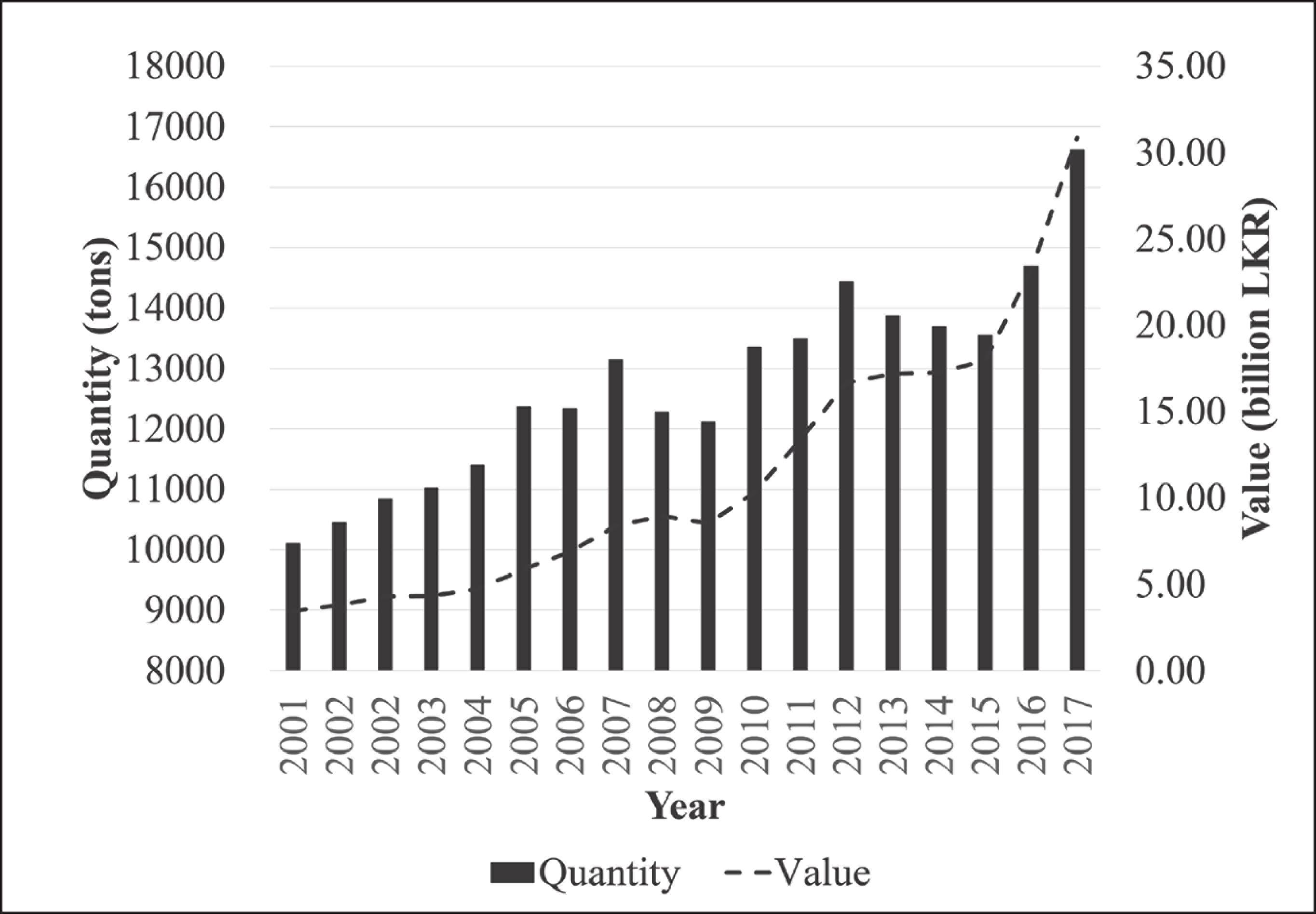
The unit price of cinnamon has also increased remarkably. One kilogram of cinnamon was 340.70 Sri Lankan Rupees (LKR) in 2001. However, it increased to LKR 1857.89 by 2017. The IPS (2017) suggests the appearance of new markets as the main cause for the price rise. In 2007, 75 countries imported cinnamon from Sri Lanka, compared to 2001, when 51 countries imported cinnamon. Until 2010, the number of importing countries remained under 60. However, from 2011, the number exceeded 60 and in 2016, it exceeded 70. In 2017, Mexico, Peru and the USA were the main buyers of Sri Lankan cinnamon. Among them, Mexico imported the most cinnamon. Mexico has imported 40 to 50 per cent of exported cinnamon from Sri Lanka since 2001.
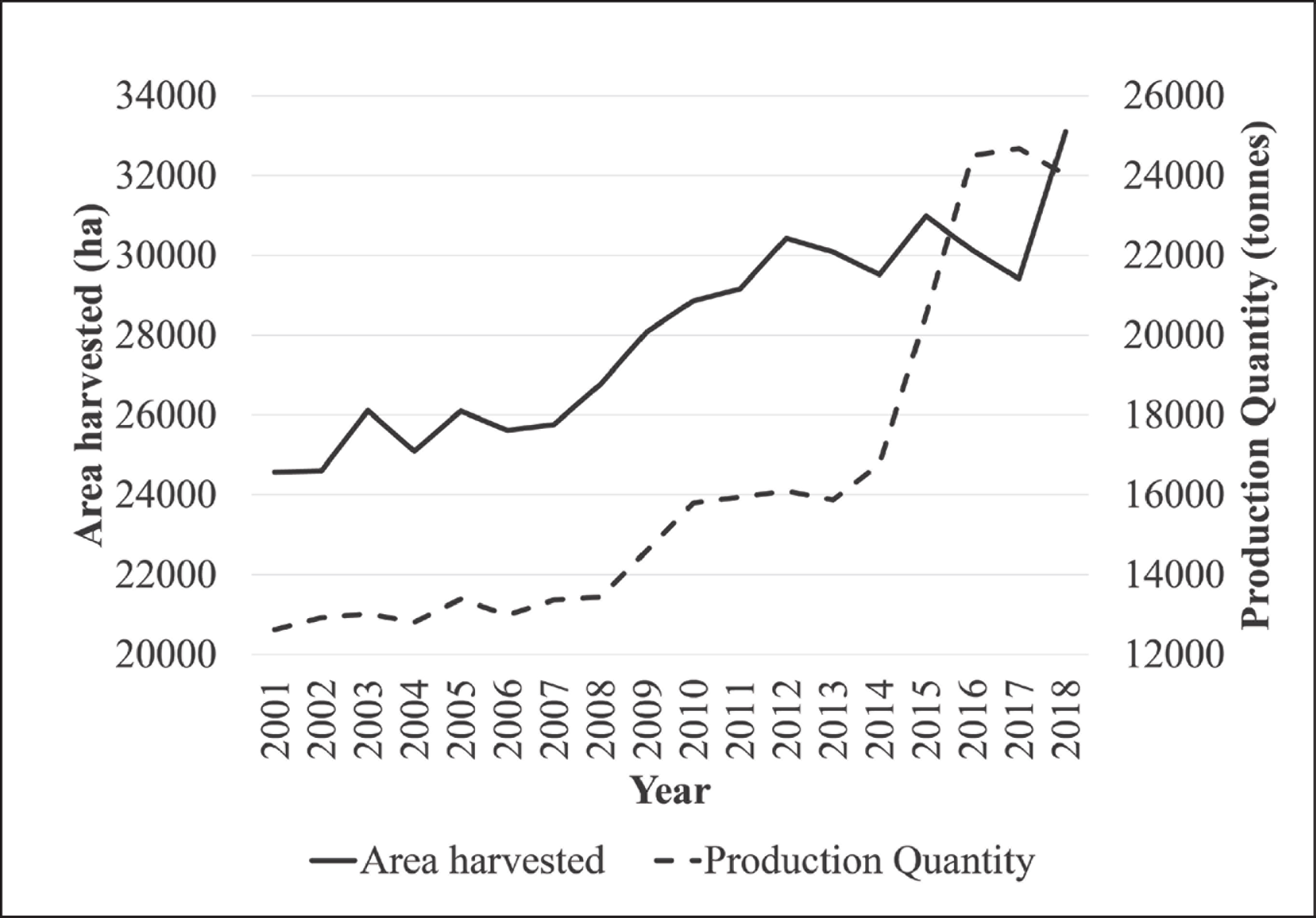
Encouraged by the increase in cinnamon exports and price, cinnamon cultivation has increased steadily since 2001 (Figure 2). The extent of cinnamon cultivation in Sri Lanka covered 31,598 ha in 2017 (FAO STAT, 2020). Most of the county’s cinnamon is cultivated in the southern coastal area in places such as Galle (the location of Karandeniya) and the Matara district. According to the District Statistical Hand Book provided by the Department of Census and Statistics (DCS) (2019), the Galle district accounts for about 40 per cent of the cultivated area (corresponding to 11,284 ha) and the Matara district for approximately 33 per cent (9,241 ha).
Smallholders cultivate most of the cinnamon, about 80 per cent (Etherington, 2011). Most of the farmers who cultivate cinnamon own 0.5 to 1.5 acres of land. Approximately 350,000 households in the Galle, Matara, Hambantota and Ratnapura regions earn their living through the cinnamon industry, including workers employed in factories (Samarawickrema, 2015).
Introduction of the Regions Targeted for Analysis
Karandeniya
Karandeniya is located in the South-Western part of Sri Lanka, in the Galle district (Figure 3). In the Galle district, 26.1 per cent of the people work in the agricultural, forestry and fishing industries. The population of Karandeniya was 66,028 in 2018 and there were 17,321 households in 2012 (DSC, 2019).
Karandeniya is the most representative cinnamon cultivating region in Sri Lanka. According to the District Statistical Hand Book, Galle, provided by DSC, the extent of land in Karandeniya is 8,800 ha. The land dedicated to cinnamon cultivation was 4,035 ha in 2018, which amounts to almost half of the land in the Karandeniya region. This accounts for 14 per cent of all the cinnamon cultivating land in Sri Lanka and represents the largest extent of cinnamon cultivating land in the country by percentage. The extent of cinnamon cultivation in Karandeniya increased from 3,857.3 ha in 2009 to 4,035 ha in 2018. Even though other crops such as rice, tea, coconut and rubber are cultivated in Karandeniya, the extent of land dedicated to other crop production is smaller than that to cinnamon cultivation.
Matale
Matale is located in the central part of Sri Lanka, in the Matale district (Figure 3). The population of Matale was 80,252 in 2018. Also, there were 18,731 households as of 2012. In the Matale district, 37.0 per cent of the people work in the agricultural, forestry and fishing industries (DSC, 2019).

Matale is not as popular for cinnamon cultivation. According to the District Statistical Hand Book, Matale, provided by DSC, Matale has 7,000 ha of land, but only 56.9 ha was used for cinnamon cultivation in 2018 (up from 21 ha in 2009) or only 0.2 per cent of all the cinnamon cultivating land in Sri Lanka. The extent of cinnamon cultivation increased to 55.2 ha in 2013, decreased to 36.7 ha in 2015 and increased again to 56.9 ha in 2018. However, the extent of cinnamon cultivation was dwarfed by that of pepper (1,669.0 ha), rice (447.1 ha) and jack fruit (329.6 ha) cultivations.
Methodology
As a research approach, qualitative methods, more specifically interviewing and participant observation (see Dunn, 2010), were employed to collect data (more on this shortly) and a general inductive approach was pursued during data analysis. As synthesized by Thomas (2006, p. 238), the purposes of deploying an inductive approach are threefold:
To condense extensive and varied raw text data into a brief, summary format. 2. To establish clear links between the research objectives and the summary findings derived from the raw data and to ensure these links are both transparent (able to be demonstrated to others) and defensible (justifiable given the objectives of the research). 3. To develop a model or theory about the underlying structure of experiences or processes that are evident in the text data.
Fieldwork was conducted from 15 July to 10 August 2018 in the Karandeniya and Matale regions. Before undertaking the fieldwork, the lead researcher visited Sri Lanka twice since 2016, established some minimum networks related to cinnamon production and gathered necessary background information on the industry there.
Interviews were the main technique for data collection and participant observation served as a complementary method. Participant observation helped in particular to grasp the power relationships characterizing network actor interactions. Following a standard interview method in qualitative research (see Dunn, 2010), semi-structured and in-depth interviews with 23 informants were conducted in order to obtain comparative insights and to acquire as much knowledge as possible on the research topics (Bradshaw & Stratford, 2010). There were time and budget restrictions that limited the overall data acquisition effort. To supplement any gap in information gathered via informant interviews and participant observation, interview content and observation were augmented with secondary data such as statistics, government reports and non-government reports published by the IPS and the UNIDO.
The main informants were actors who participate in the cinnamon industry in the Karandeniya and Matale regions in Sri Lanka. These included not only the actors who participate in the production and distribution processes, but also non-firm actors who participate in the process indirectly such as government officers in the Department of Export Agriculture and Sri Lanka’s Cinnamon Research Institute. A synopsis of informants by role, age and gender is provided in the appendix. The language used for interviews differed depending on the actor interviewed. English was used when interviewing exporting firms, government officials and some actors with English proficiency and these interviews were conducted by the author doing the field work. However, for other interviews, the Sinhala language, one of Sri Lanka’s official languages, was used. When conducting interviews in the Sinhala language, aid from local research assistants was integral and immensely appreciated. Most of the interviews were done at the workplace or home (where some work may be done) in order to better observe behaviour in an everyday life setting, or what is more commonly known as ‘strategically placing oneself’ for interviews (see Kearns, 2010, p. 318).
In order to observe research ethnics, interview questions were verified with a coordinating Sri Lankan scholar, research assistants in Sri Lanka and a local person with community rapport before the field work was conducted. As Thomas (2006, p. 240) noted with reference to data acquisition and inductive analysis, ‘The primary mode of analysis is the development of categories from the raw data into a model or framework. This model contains key themes and processes identified and constructed by the evaluator during the coding process.’ Accordingly, all interviews were recorded with informant consent and transcribed. Answers to individual questions from each informant were loaded into a spreadsheet matrix, thus forming the basis for initial codes. This allowed for content to be organized and for key themes to be extracted, a process that facilitated the development of additional ‘descriptive codes’ or ‘… patterns that are obvious on the surface or are stated directly by research subjects; descriptive codes often answer “who, what, where, when, and how” types of question’ (see Cope, 2005, p. 224). Additionally, this expedited the process of excerpting appropriate supporting quotations based on the narrative themes that emerged.
Results and Discussion
Descriptive coding revealed that there are four main actors directly participating in the cinnamon industry—farmers, peelers, collectors and exporting firms. The main task of farmers and peelers is producing and processing cinnamon, both of which are very hands-on processes. The farmer’s main role is cultivating cinnamon. Before cultivating cinnamon, farmers need to weed, clean and fertilize the land. After planting the cinnamon seedlings, it takes two to three years for the first harvest. The tree itself has bunches of several stems that grow from a single root.
In the case of the Karandeniya area, the harvest season is about six months, running from May to December. During the harvest season, farmers usually hire peelers for processing and sometimes participate in processing themselves. During processing, peelers go to the cultivated field early in the morning and harvest cinnamon in the form of stems. Usually, one tree can be harvested once or twice a year. The harvested stems are brought to a farmer’s house or an open space near the field and processed. The harvested stems must be processed the same day because the moisture in the stem that facilitates the peeling dissipates over time. The overall processing procedure is depicted in Figure 4.
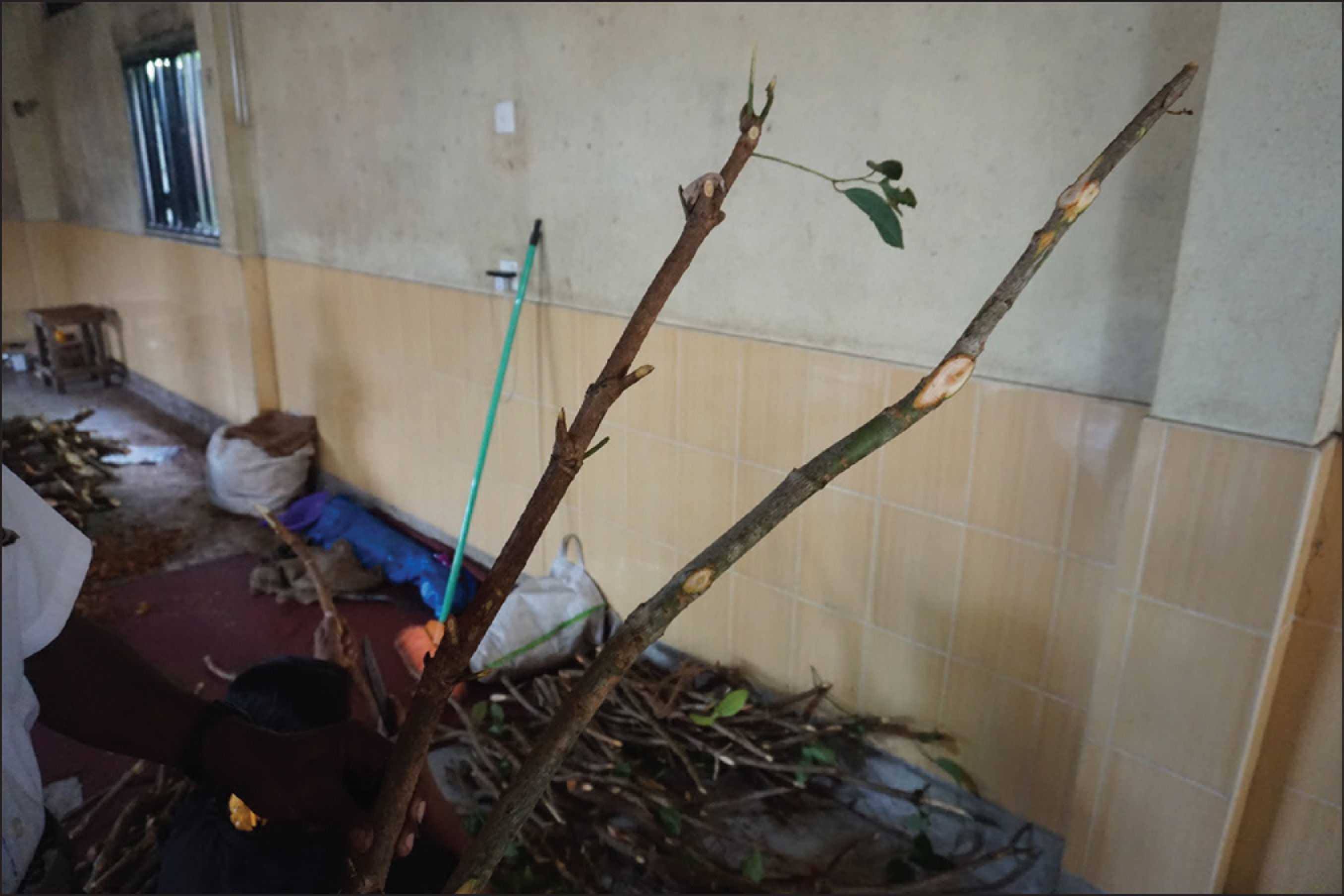
(b) Scrapping the Outer Skin
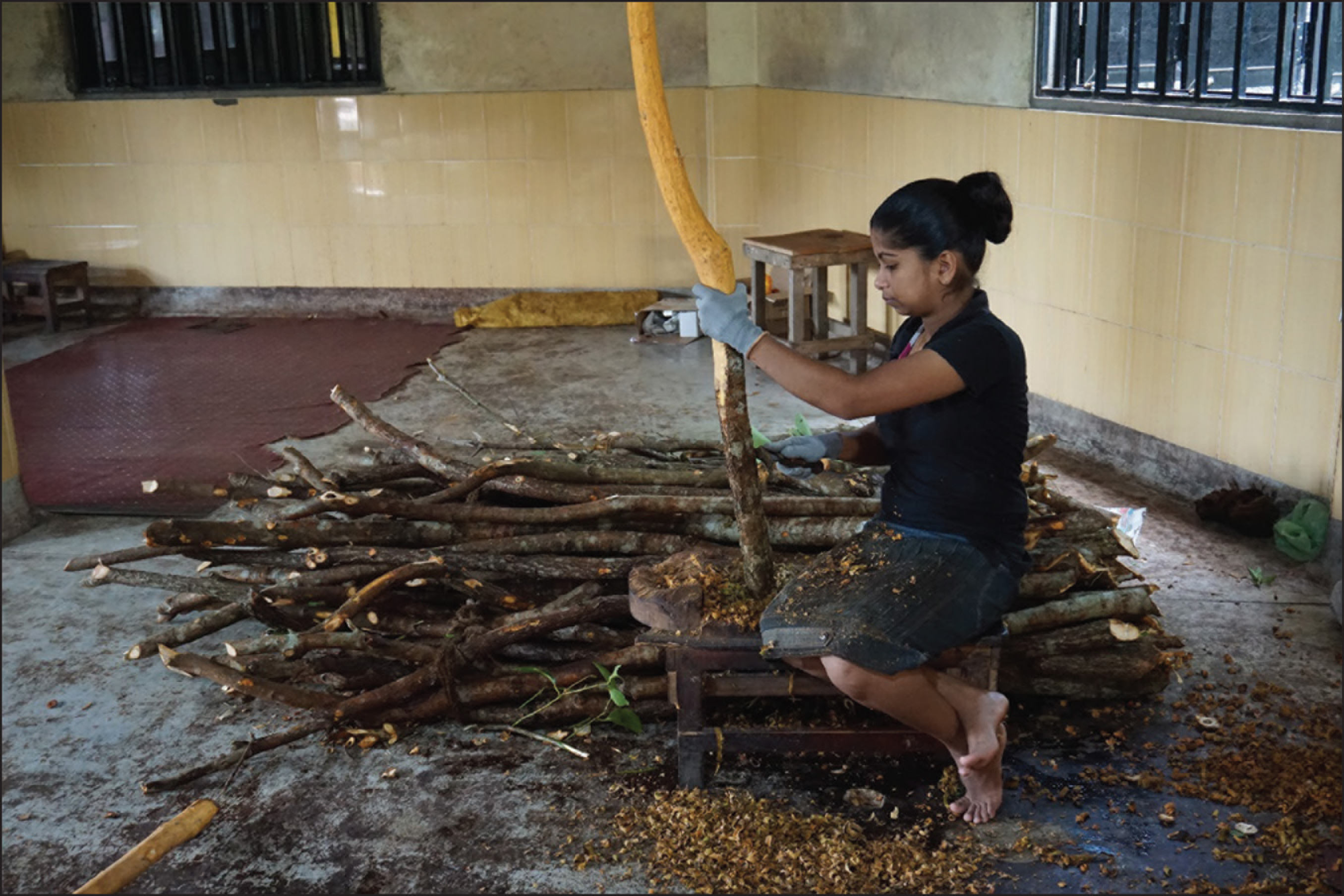
(c) Rubbing the Bark with a Brass Rod to Loosen Bark from the Hard Wood
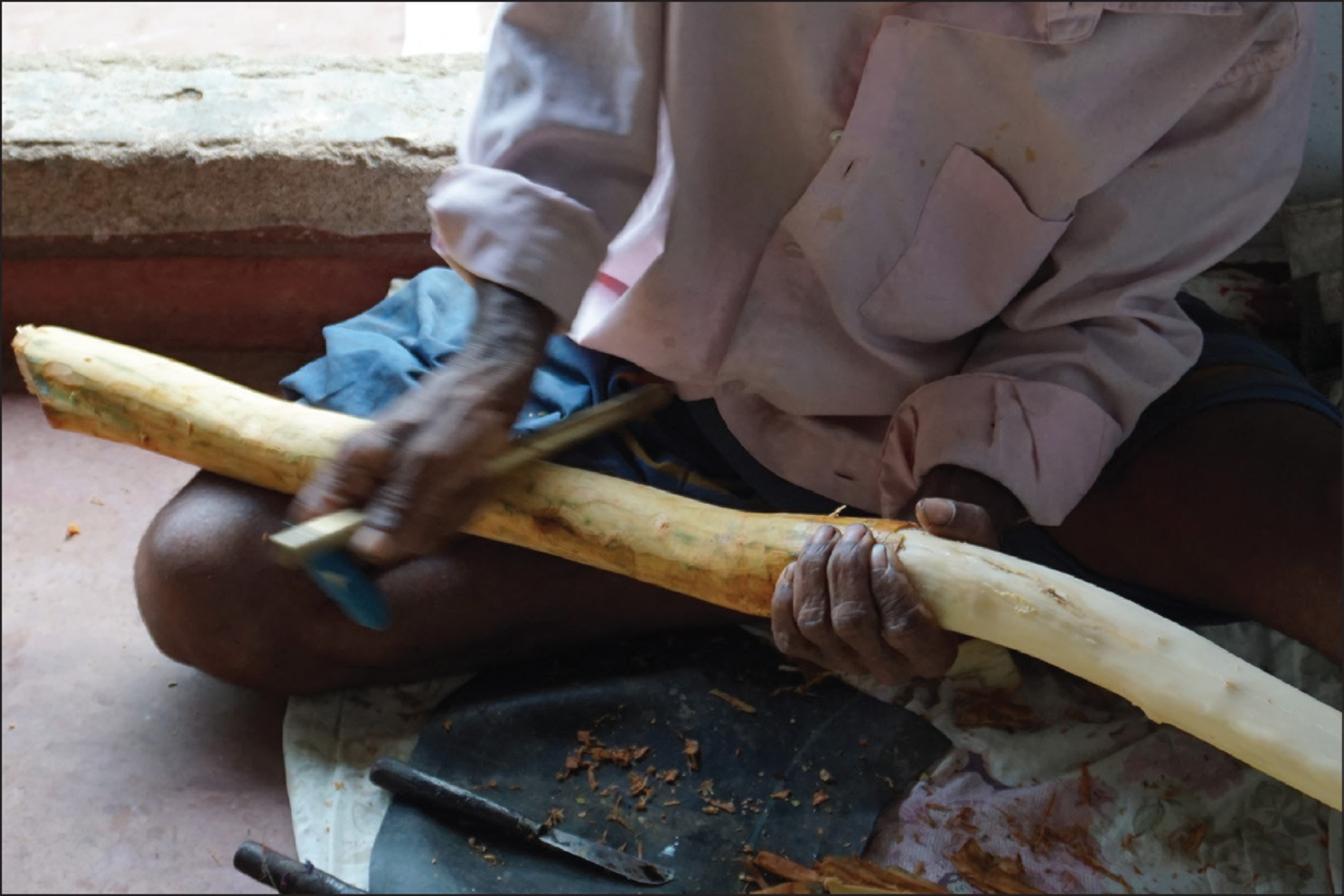
(d) Peeling the Bark, Part by Part, with a Special Knife

(e) Drying Peeled Bark Under the Sun for a Few Hours Until It Starts Rolling
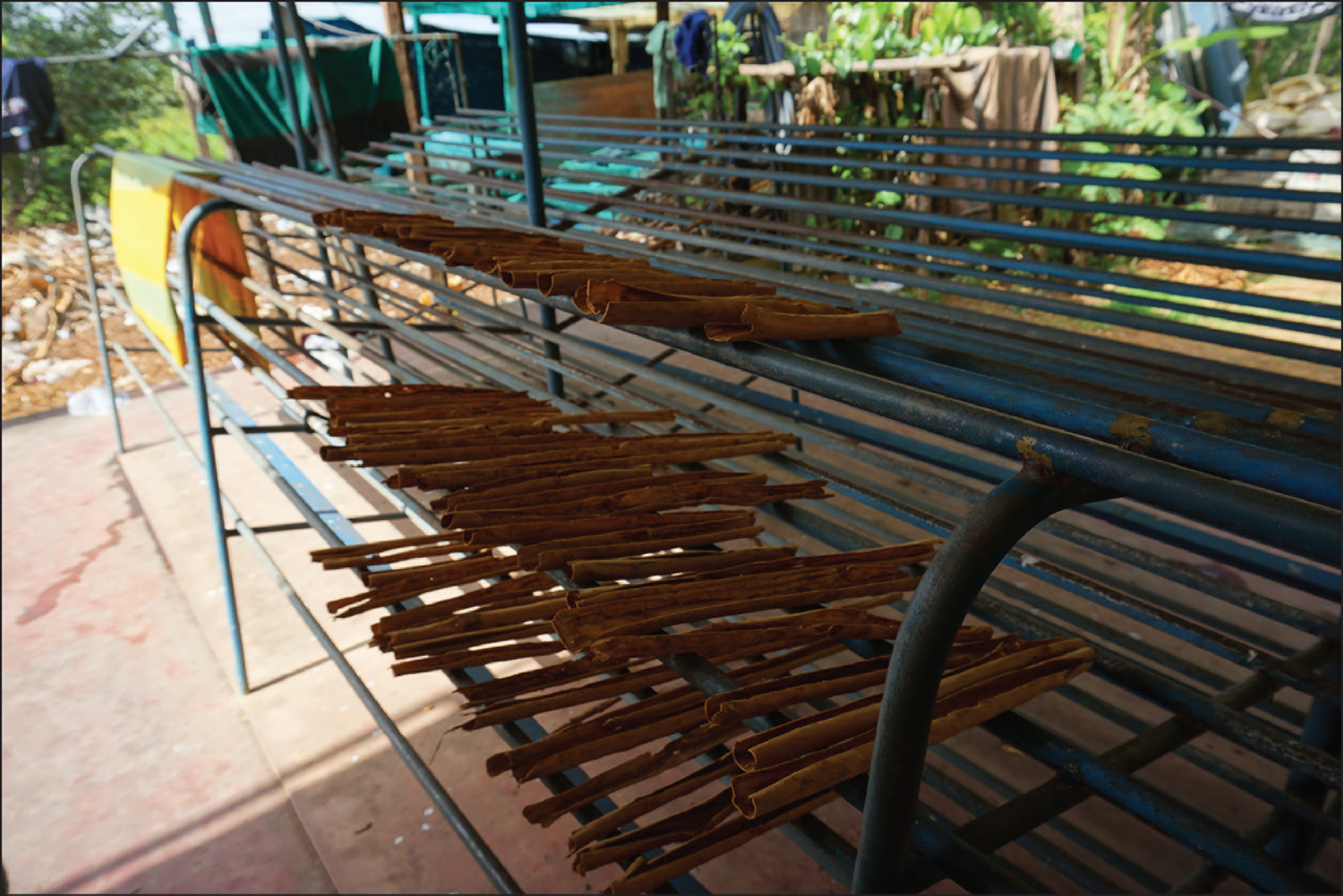
(f) Connecting Pieces of Bark Together and Making a Pipe-like Structure (Called a Quill). The Standard Length of the Tube Is 42 Inches
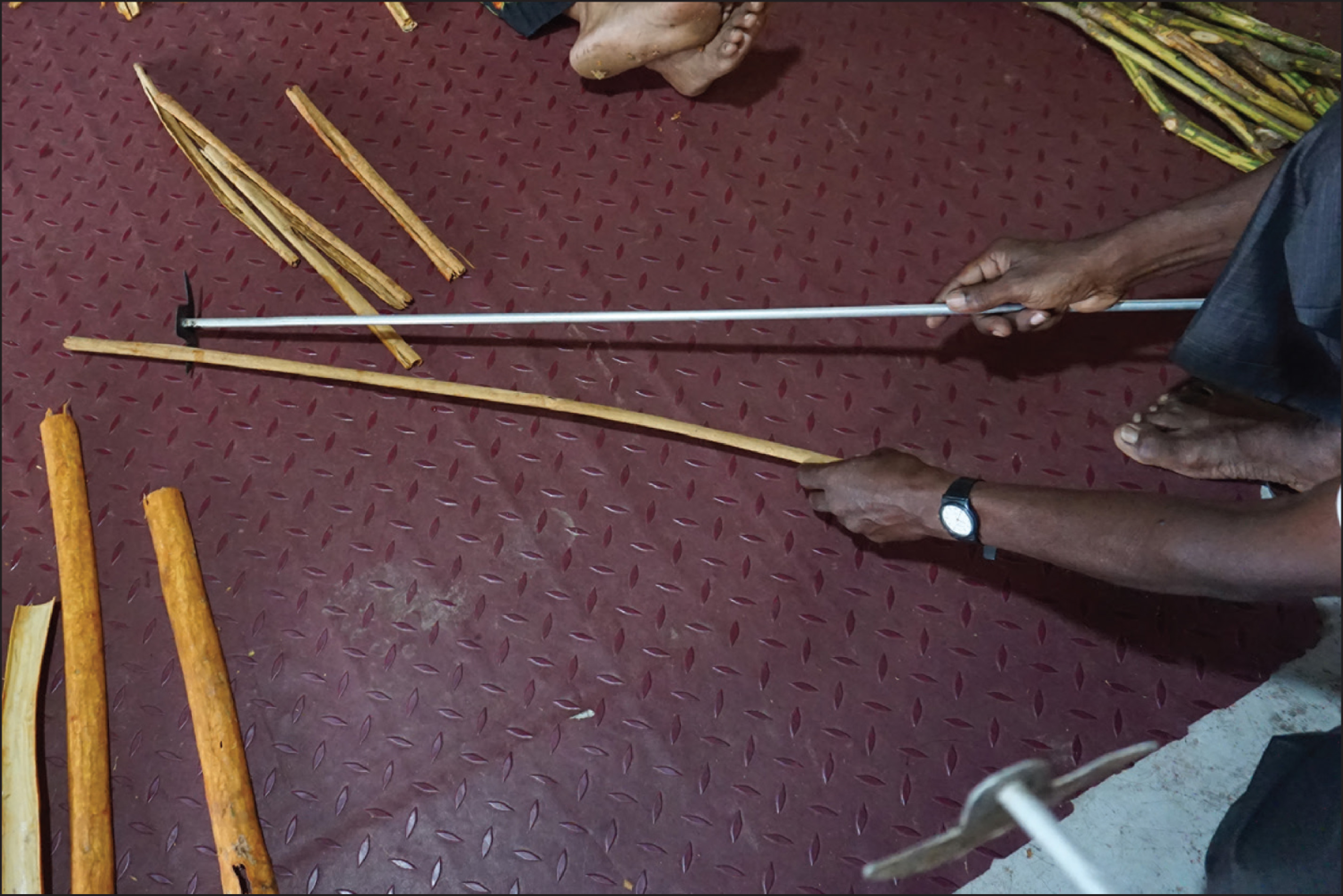
(g) Filling the Hollow of the Tube with Small Pieces of Stem
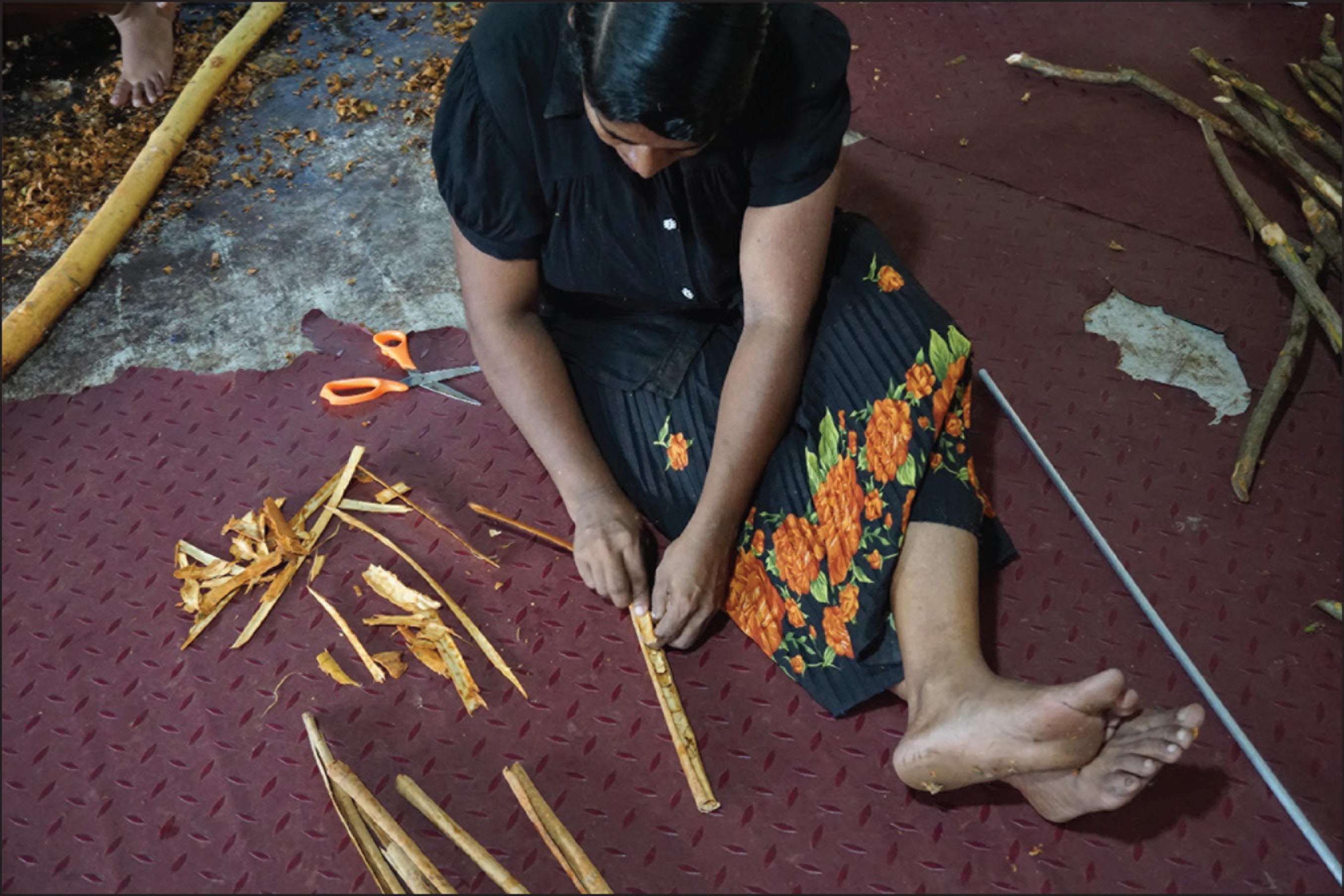
(h) Indoor Drying for About 4–7 Days
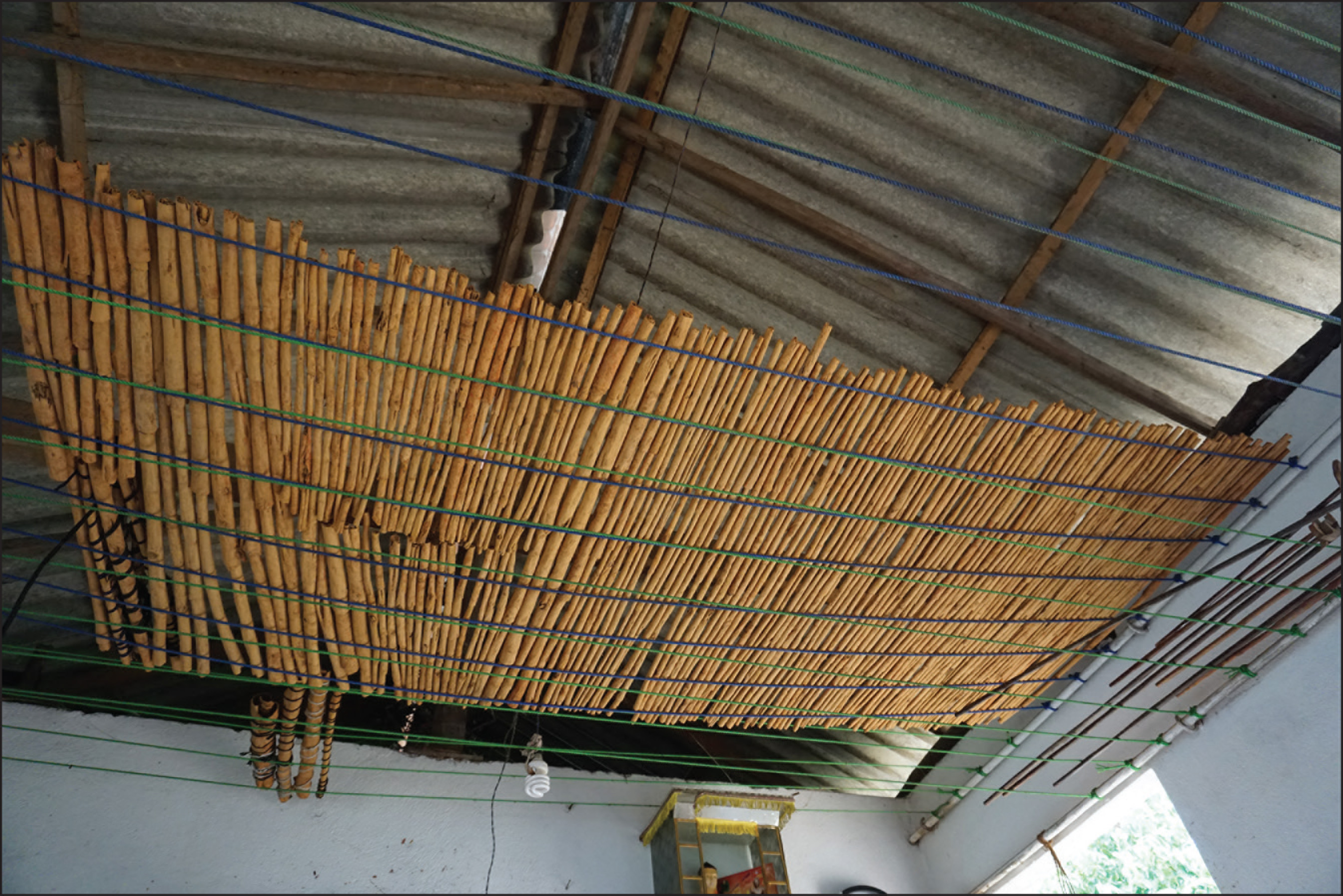
During cinnamon processing, most of the peelers work in a group consisting of family members or others from the neighbourhood, indicating a high degree of both societal and territorial embeddedness. The most common group or team observed during the field work period consisted of three members, and both women and men worked on the team. In addition, there is a division of labour and tasks are divided between each member. Peeling the bark requires skill, so this is done by the group member with the requisite skill and experience. Usually there is one such skilled person per group. During processing, group members usually work for about 14 to 15 hours (from 6–7 am to 9–10 pm) a day. If they cannot finish processing all of the harvested crops, they may work for more than 15 hours to finish. There is a symbiotic relationship between the farmers and peelers developed over time; cooperation is considered important and both recognize that only by working together in teams can the cinnamon get processed. One of the peelers, for example, responded that ‘humanity’ and ‘closeness’ with farmers are important considerations when they choose a workplace. Here, then, we see evidence of societal embeddedness influencing the durability of members’ network embeddedness.
After processing the cinnamon, farmers sell their cinnamon to a local collector. Some farmers go to a collector personally and sell their cinnamon directly. In some cases, the reverse is true and a collector will come to the farmer and take the cinnamon. During farmer interviews, 60 per cent of informants said that they sell their cinnamon to the collector who offers the highest price. However, in some cases, the farmers sell their cinnamon to the collector from whom they can get a loan. In characterizing the relationship between farmers and collectors, to borrow a phrase from the IPS (2017, p. 24), farmers are ‘price takers’ and collectors are ‘price makers’. This is indicative of a one-way exercise of power among actors at this stage of the cinnamon production and distribution process.
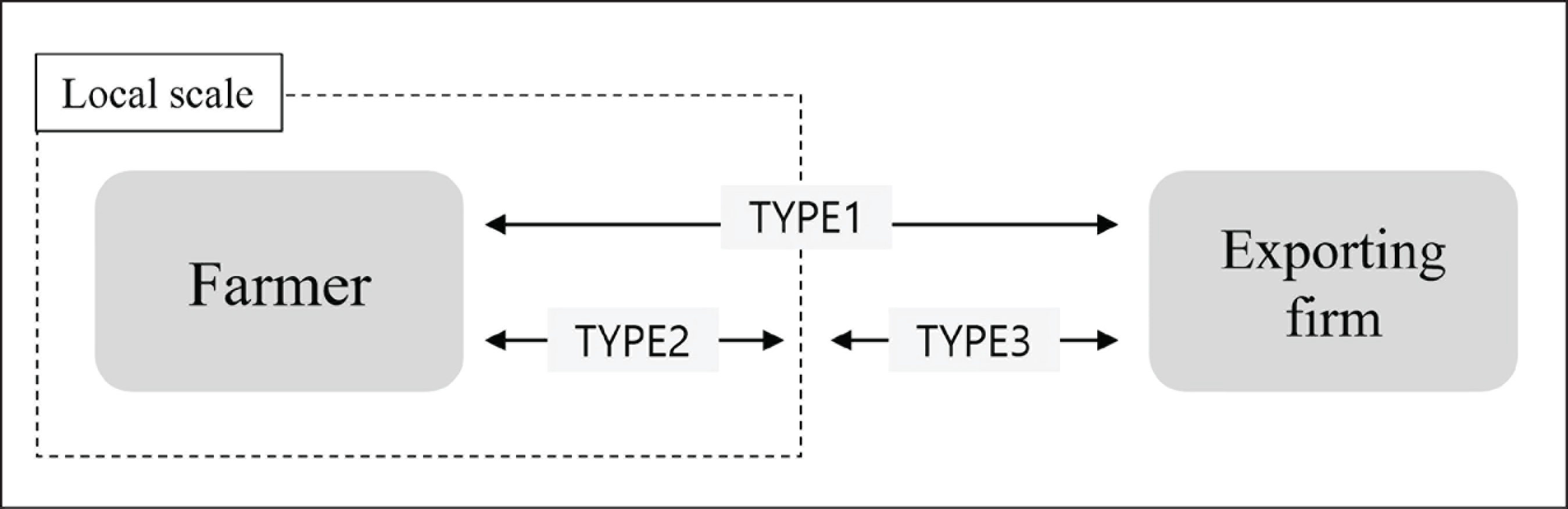
A collector’s main role is buying cinnamon from farmers and reselling it to exporting firms. If farmers bring their processed cinnamon in bales, collectors check the weight by scale, the humidity by a machine and the grade by eye, and set a price for the cinnamon. At this time, they deduct money for the weight of threads and fragments. Depending on the relationships between actors and their roles, collectors can be classified into three types (Figure 5). Type 1 is a ‘classic collector’ who buys cinnamon from farmers, classifies it and sells it to the exporting firm located in other regions. Type 2, ‘farmer-collector intermediaries’, do not trade directly with an exporting firm. Rather, they buy cinnamon from farmers and sell it to other collectors. They usually act at the local scale. The role of Type 3, ‘subcontracted collector’, is similar to that of a subcontractor for exporting firms. If a given exporting firm requests a specific amount of cinnamon, Type 3 collectors buy this amount from a local collector, process it and sell it to the exporting firm. Also, if they cannot obtain the amount the exporting firm requests, the exporting firm may send them some cinnamon and ask them to process it. They do not transact with farmers and only buy cinnamon from other collectors. This type of collector was originally a Type 1 collector, but by contracting with specific exporting firms, they extended their business.
Exporting firms export cinnamon through their connections with buyers in other countries. To obtain cinnamon for export, they usually buy cinnamon from collectors and farmers and reprocess it. Some exporting firms engage in sulphur fumigation and reprocessing depending on buyer demand. The sulphur fumigation process improves the colour of cinnamon sticks and eliminates insects and fungus inside the sticks. During reprocessing they cut the cinnamon into specific lengths at the request of buyers. These processes are undertaken at the factory level. Exporters, therefore, usually employ workers, though mostly on a temporary basis because cinnamon is a seasonal crop. Another key function undertaken by exporting firms is satisfying the demand for certification and quality control, both of which are institutional considerations. Most of the producers have no knowledge about the certification system, thus power in these relationships is a function of knowledge of applicable rules. However, for exporting firms, quality control and certification are crucial to establishing and maintaining transactional relationships with buyers. In other words, formal institutional considerations become more important the further upstream processes progress. Some of the exporting firms also try to develop value-added products (value enhancement). For example, during interviews, they ventured that a lot of broken pieces of cinnamon are generated during the reprocessing procedure. These pieces only bring a very low price at market. However, by making value-added products using those pieces, they can earn more profit.
RQ2 examines changes in actor behaviour (e.g., agency) and structural changes in GPNs inclusive of spatial switching considerations. With the increased demand for Sri Lankan cinnamon in both regions ‘spatial switching’, which refers to ‘…the substitutability of processes within the same geographical scales,’ (Yeung, 2015, p. 291) has taken place over the past 20 years. However, the two regions have experienced different trajectories over that span of time.
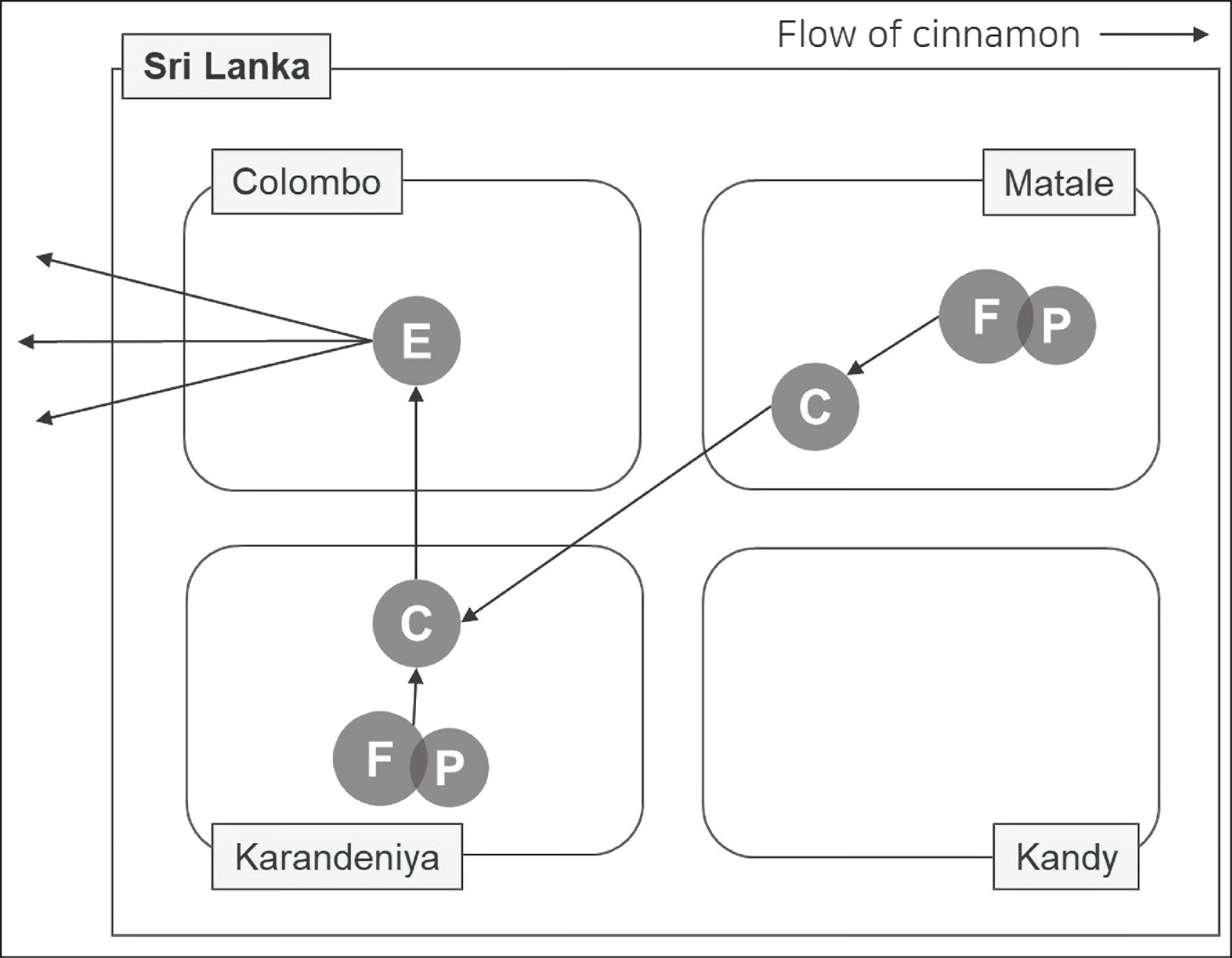
In the past, most of the exporting firms were located in the vicinity of Colombo, the largest city in Sri Lanka. In the Karandeniya region, cinnamon was collected from farmers in Karandeniya by collectors and then sent to Colombo from where it was exported to other countries (Figure 6). The cinnamon cultivated in Matale, however, was brought to the Ambalangoda region, more specifically to a city located near Karandeniya, and sold to the ‘collectors’ there (not exporters).
The biggest change in Karandeniya is connected to the local collectors’ strategic coupling with buyers in other countries. Two collectors in the Karandeniya region started exporting on their own in 2002 and 2011 respectively, thereby circumventing the traditional export base and exporters in Colombo (Figure 7). In 2017, they exported 1,430,026 kg and 1,011,177 kg respectively, which ranked them fourth and seventh among cinnamon exporting companies. One of them, an individual who had sold cinnamon to the exporting firms in Colombo since 1983, started exporting in 2011 because of perceived problems with the profit margin. One informant, a person who led the export movement, answered that they made a connection with a Mexican firm using the network established when they worked in the apparel industry. After starting exports to Mexico, they expanded their business to include Guatemala, India and Spain. Another exporter, in this case a former local collector, started exporting in 2002 because of a request from an acquaintance in the USA. In GPN parlance, these cases are indicative of decoupling with the exporter in Colombo and strategically coupling with buyers in other countries. As a result, the region became directly coupled with a GPN. Also, by transforming from collector to exporter, these informants effectively became GPN actors as they engage with a GPN through international trade (Yeung, 2015).
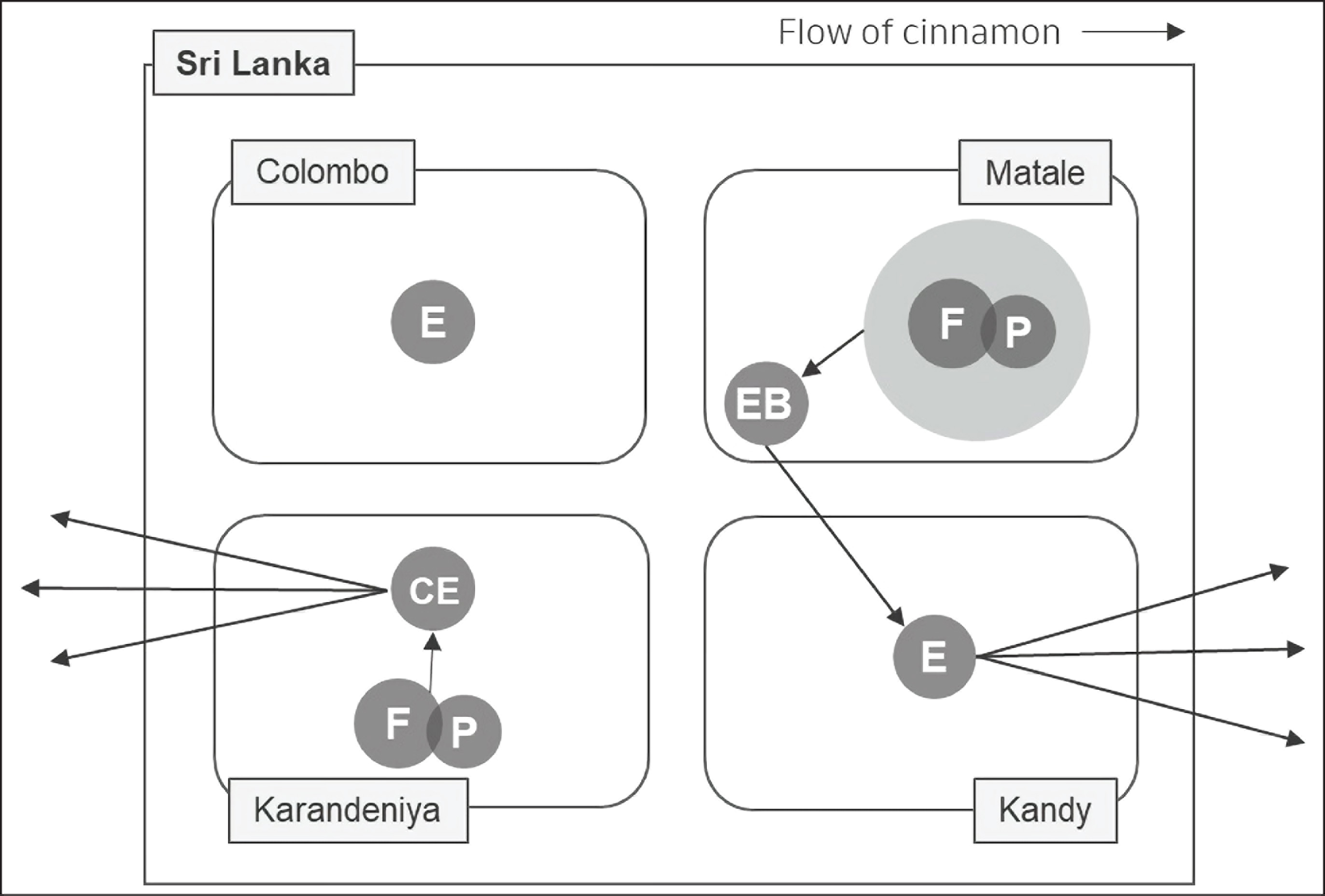
The case in Matale is different. In Matale, an exporting firm that was not a local actor came into the region (Figure 7). In 2017, this company exported 211,314 kg of cinnamon, ranking 18th among cinnamon exporting companies. The exporting firm, which had their roots in the Kandy region near Matale, established a branch in the Matale region in 2002. At that time, the firm suggested that farmers form a cooperative and sell their cinnamon through the cooperative. Exercising agency, the local farmers did indeed start to join the cooperative. In this system, one president is selected from among the farmers every year and they perform the role traditionally undertaken by a collector. If farmers cultivate specific amounts of cinnamon, they bring it to the president’s house, after which the president notifies the exporting firm and the exporting firm comes to the president’s house to buy the cinnamon. The role of collector has disappeared in the Matale region.
Observed through a GPN lens, by making these connections with the newly established branch of the exporting firm, the region decoupled with the collectors and exporting firms in Colombo and the Ambalangoda regions, and then strategically coupled with the GPN via the firm with roots in Kandy. The factors contributing to these different trajectory possibilities will be discussed shortly.
How can the changes that occurred in Karandeniya and Matale be understood in terms of (distributional) regional development and inclusivity? From the view of mainstream GPN theory, one that emphasizes value capture, the case of Karandeniya can be regarded as successful as the region strategically coupled with GPNs and most of the value created by the cinnamon came to be captured in the region. In the case of Matale, as there is now no collector operating between the farmers and the exporting firm, the region captures more value. However, because the exporting firm is based in another region, some of the value created in Matale still leaks to another region.
Interestingly, when the farmers in each region were asked if they would recommend their job to their children, most of the farmers in Karandeniya answered in the negative, while the majority of the farmers in Matale answered in the affirmative. This stands in contrast to the ‘economic growth’ interpretation of regional development that emphasizes value capture. From this perspective, Karandeniya was found to be a more successful case than Matale.
So why, then, still cinnamon? And why recommend this work to future generations? To begin with, according to the government officer informant, farmers in the Matale region have more economic opportunities than those in the Karandeniya region given the superior soil quality there; the soil is only suitable for cinnamon or tea cultivation in Karandeniya, while Matale has high quality soil where farmers can grow any number of crops. 6 Thus respondents in Malate perceived cinnamon to be a suitable product as part of their diversified livelihood strategies.
Let us now consider a distributional view of development. As discussed previously, this view distinguishes between mere gross economic growth measured at the regional scale and equity for all constituent actors. It therefore necessarily considers circumstances arising after value capture to be critical to an on-the-ground, holistic understanding of regional growth trajectories (Choi, 2015; Coe & Hess, 2011). Further, this view puts a premium on impacts derived from strategic decoupling and recoupling.
In Karandeniya, while much of the value that had previously been leaked to other regions had been captured, there had nonetheless been no positive changes to the situation of some actors, particularly those further upstream on the value chain. By starting the exporting businesses in the region, they succeeded in employing more workers and the region’s gross income increased. However, captured value was not distributed proportionately to the farmers and peelers as a result.
In Matale, despite some value leakage, the farmers were satisfied with their jobs and they perceived themselves to be capturing enough value. This difference with Karandeniya stems from the relationship between the farmers and the exporting firm. The exporting firm, which has a branch in this region, pursues organic farming and fair-trade markets. When they came into the region, the firm suggested that farmers grow their cinnamon without the use of chemical fertilizers. The exporting firm promised to give famers a comparatively higher price plus extra support and cooperation. Farmers were aware of this differentiation; one ventured:
The collectors in the southern region exclude some amount of price because they assume there will be broken pieces and low-quality cinnamon. However, the exporting firm (here) doesn’t do that.…They just check the humidity. If the humidity is lower than 20, they give us the full amount. And they pay money on the spot. Even though the humidity is higher than 20, they ask us to dry cinnamon one more day. Then, they come to buy the cinnamon and pay the full amount. The price they give us is based on the price of Ambalangoda. If the price is 2,400 there, they give us 2,600. (Farmer, Code Number 12)
While another offered:
… that firm pursues the organic food industry. Therefore, they come to the region every two to three months. They explain to landowners how to cultivate cinnamon and the profit the people can get through cinnamon cultivating this way. They are provide a training programme and a support fund, seeding and farming tools. Therefore, a lot of people in this region started to cultivate cinnamon. If they cultivate cinnamon (organically) and sell it to the firm, they don’t have to fertilize and there are a lot of advantages. (Farmer, Code Number 13)
The increase in cinnamon farming activity was also connected to an inflow of peelers. In the Matale region, there are no skilled peelers because Matale, compared to Karandeniya, is a relative newcomer to the industry. Therefore, farmers have to hire peelers from other regions. The farmer informants responded that they preferred peelers from areas near Karandeniya because of their working efficiency and skill. This benefits peelers in two ways. First, Matale has a different growing season than the Karandeniya region and there are no specific harvest seasons. Therefore, during the off-season, Karandeniyan peelers could come to the Matale region and earn more money. Second, the value is distributed more evenly to peelers. One informant succinctly stated,
The shortage of peelers is the biggest problem here. In this region, farmers give a third of their income to the peeler. However, I heard that if peelers go to other regions such as Latnapura, they can earn one half. Therefore, the peelers form this region prefer to go to the other region. (Farmer, Code Number 8)
While there was a virtuous cycle in the Matale region, the constriction of value in Karandeniya caused a shortage of peelers, indicating more of a vicious circle.
The different trajectories of these regions can also be explained by comparing the degree of embeddedness. Karandeniya is where cinnamon has long been traditionally cultivated in Sri Lanka. Therefore, tacit rules exist and the relationship between the local actors are established by precedent. One exporter informant provided an example, stating:
If the farmer comes to us to sell cinnamon, we can buy cinnamon from them. However, we cannot go to farmers ourselves and ask them to sell their cinnamon. It is a business rule. We have to follow that rule. In this chain, the exporter is a sort of ‘big man, king’. If we go to the farmer, collectors will be angry. This is business and all the people want to earn money. Therefore, we cannot go to the farmers. (Exporter, Code Number 2)
Even though there were cases where individuals transformed their role from that of collector to that of an exporter, they were originally collectors. As a result, they had societal and network embeddedness associated with the collector role. Also, the profit system has been formulated over a long period, which makes it difficult to change. This high level of embeddedness in Karandeniya affects the situation even now.
However, in the Matale region, the history of cultivating cinnamon is comparatively short (less than one generation). Therefore, the extent of embeddedness associated with cinnamon production and processing, whether societal, territorial or network, was low, and the rules (e.g., institutions) were less formally established. In this regard, the exporting firm that anchored a branch there most probably had fewer impediments than had they tried to establish a branch in another region with a longer history in the industry. After having established their branch, each actor could also easily change their role to accommodate the exporting firm, a process exemplified by the cooperative supplanting the traditional role of collectors. One farmer, an individual who had been a collector, put it this way:
By the exporting firm coming into the region, they gave a higher price than selling in another region. Therefore, there is no need to bring (the cinnamon) to other regions. So, I quit collecting and concentrate on cultivating cinnamon. (Farmer, Code Number 12)
In short, had the exporting firm newly anchored in the Matale region tried to tap into the Karandeniya region, there would have been no guarantee that the firm would have succeeded.
Conclusion: Towards a More Inclusive Global Cinnamon Network?
The purpose of this research was to capture and compare the dynamics of the Sri Lankan cinnamon industry in the Karandeniya and Matale regions of Sri Lanka by deploying a GPN framework inclusive of embeddedness and regional development considerations. This framework proved to be effective in broadening the scope and breadth of economic geographical and development-oriented inquiry into regional development. Analyses unearthed four actors in the cinnamon industry, namely farmers, peelers, collectors and exporting firms. Collectors were further disaggregated in three distinct types. The boom in the Sri Lankan cinnamon industry ushered in a series of cases of strategic decoupling with the exporting firms in Colombo and subsequent strategic recoupling with other actors. In Karandeniya, the local collectors strategically formed networks with buyers abroad and started to export. There was also an evidence of some value enhancement on the part of the exporting firms. In Matale, on the other hand, an exporter from a nearby region anchored a branch and strategically coupled with farmers. Actors within the region engaged in spatial switching to maximize value creation and capture.
The primary contribution of the research rests in the interpretation of resulting structural changes in each region from a bifurcated view of regional development. According to the predominant view of regional development in the GPN literature, one based on economic growth measured at the regional scale, Karandeniya appeared to be more successful. However, the extent of value distribution within the region was different compared to the experience of Matale. There was less value distribution in Karandeniya given the embeddedness considerations there, while there was comparatively more value distribution among actors in Matale derived from exporter support and increased prices from organic cultivation.
In line with the distributional view, this research demonstrated the efficacy of considering post-value capture distribution and equitable inclusion for all actors within a given region. This raised a pertinent question about regional development merely as a function of gross economic growth. Therefore, development-oriented GPN analyses should work with two dependent variables: regional value capture and the inclusiveness of value capture (as measured by the extent to which upstream actors are benefiting from strategic coupling and recoupling). In fact, the GPN framework, with its existing focus on embeddedness and institutional considerations, is well suited for such investigations.
The dimension of power admittedly requires some theoretical refinement. Future research could more precisely scrutinize issues related to actors’ power over other actors and upstream actors’ lack of power vis-à-vis the ability to better benefit from location-specific value capture and spatial switching. This would align GPN analyses better with other research on rural development and rural policies. Second, and somewhat related to the previous point, one of the major strengths of the GPN framework is its ability to capture how territorial embeddedness could be leveraged for both distributive outcomes and enhanced value capture. How, for example, can cooperatives such as those found in Matale, be transformed into organizations that can promote higher revenues and simultaneously fairer shares for all actors? At times, cooperatives, whether knowingly or unknowingly, neglect global economic realities with the danger of hindering future revenue generation. Some recent work on the Sri Lankan cinnamon industry found, for example, that a detriment to the country’s competitive position globally comes from local inability to enhance value prior to exports, whether via policy or innovation (Jayathilaka & Dasanayaka, 2019). Third, as this research was conducted during a boom time, there is no guarantee that this prosperity will continue. There could very well be a bust, if only cyclical. Therefore, future GPN cinnamon research can be enriched by including diversification options (Andriesse & Tanwattana, 2018; Burchfield & de la Poterie, 2018; Lindberg, 2012; Thompson et al., 2019) and any structural transformation of Sri-Lanka’s economy. While Newhouse et al. (2016, p. 43) concluded that ‘…the disproportional concentration of low-income Sri Lankans in farm works, which typically have lower value added and wages than the other sectors, reinforces the case to accelerate the structural transformation and shift workers into more productive sectors,’ a strong case could be made to contend that high-value spices could remain an important part of Sri-Lanka’s agribusiness provided that participating households are supported to be more resilient. Some corroborating examples include Cinnamomum burmannii based agroforestry initiatives in Indonesia (Hariyadi & Ticktin, 2012), collaboration between Sri Lanka’s government and UNIDO (STDF, 2016) with respect to a new cinnamon processing system and the drive towards a sustainable Sri Lankan tea industry (see Jayaratne et al., 2011).
These three lines of further inquiry would offset the limitations to this research. First, budget and time consideration resulted in only about four weeks of field work. A longer period would have helped to unearth more detailed aspects of the cinnamon industry in the regions under study. Second, and partially related to the first limitation, this research only examined the main actors in the industry. There are a lot of other actors who participate in the cinnamon industry, such as diverse communities of farm labourers (see Ramasamy, 2018, for a discussion of plantation communities), exporting firm employees, government employees, banks and related associations. However, they were not included in this research. In the end, there is substantial impetus for additional inquiry into this and related agro-industries in Sri Lanka and elsewhere.
Footnotes
Acknowledgements
The authors would like to express their thanks to Ms. Sajani Kanishka Jayasinghe, Mr W. D. Weerasinghe, Mr Mahesh Wickranarachchi and their families for their assistance in coordinating field trips and translating interviews, and express appreciation to Professor Yasendra Jayanath, University of Peradeniya and Mr S. P. Ariyarathne, Karandeniya Central College, for their assistance and comments on this research.
Declaration of Conflicting Interests
The authors declared no potential conflicts of interest with respect to the research, authorship and/or publication of this article.
Funding
The authors received no financial support for the research, authorship and/or publication of this article.
List of Informant Participants (Gender,Age)
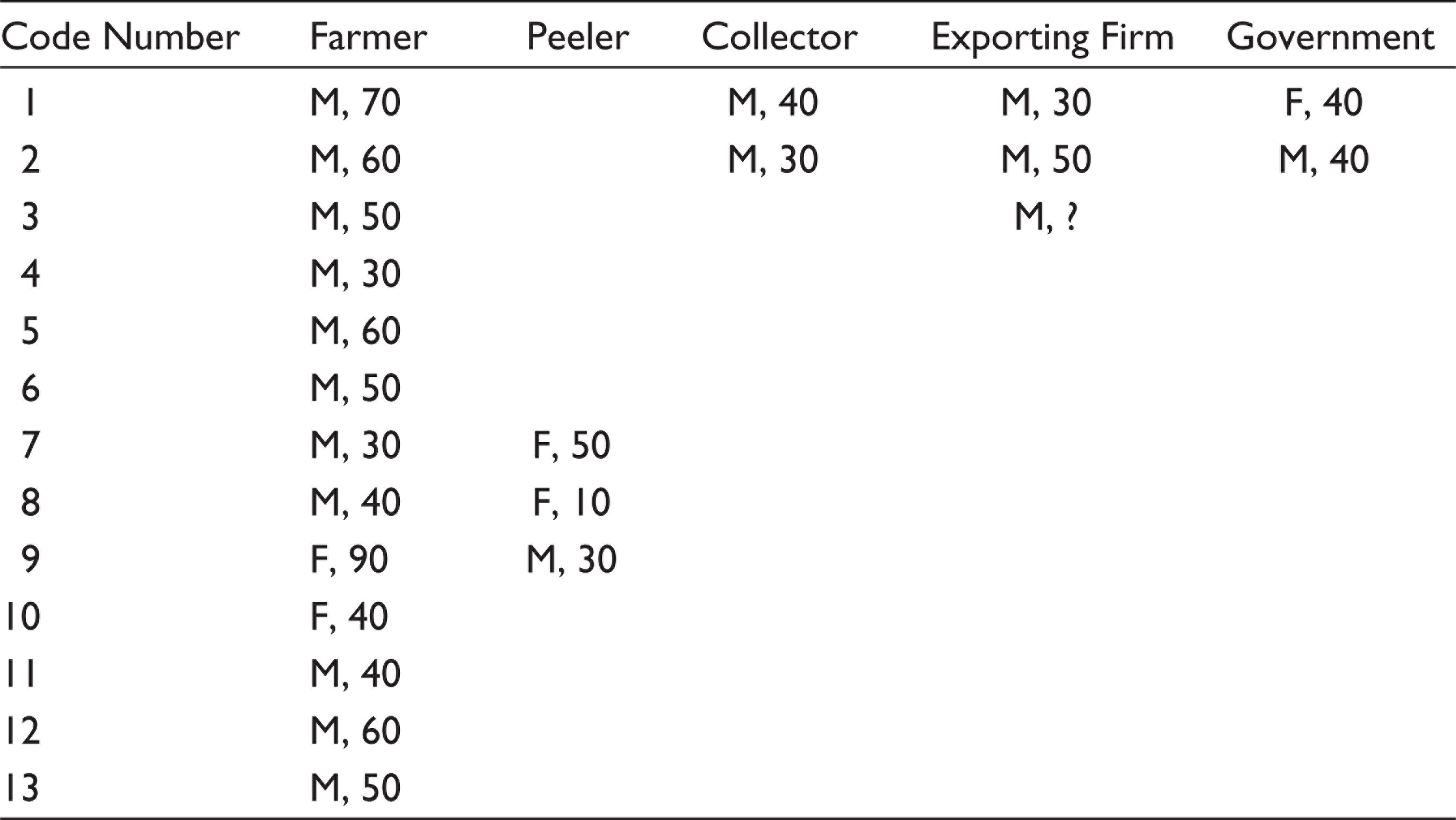
| Code Number | Farmer | Peeler | Collector | Exporting Firm | Government |
| 1 | M, 70 | M, 40 | M, 30 | F, 40 | |
| 2 | M, 60 | M, 30 | M, 50 | M, 40 | |
| 3 | M, 50 | M, ? | |||
| 4 | M, 30 | ||||
| 5 | M, 60 | ||||
| 6 | M, 50 | ||||
| 7 | M, 30 | F, 50 | |||
| 8 | M, 40 | F, 10 | |||
| 9 | F, 90 | M, 30 | |||
| 10 | F, 40 | ||||
| 11 | M, 40 | ||||
| 12 | M, 60 | ||||
| 13 | M, 50 |