



Abstract
In literature, the implications of resource constraints for innovation outcomes are conflicting. A broad body of empirical research focuses on the negative impacts of such constraints, most of which use data from advanced economies. However, recently some scholars argue that in emerging economies, innovation occurs in spite of and even because of the poor investment environment. Using firm-level data from South Asia, which provides a good natural example for such poor investment environment, and where innovation tigers like India continue to thrive, we investigate whether internal barriers such as lack of human capital and financial capital are indeed barriers for firms in the region. Our findings for India provide empirical support for the literature on resource-constrained innovation, while results for Pakistan support earlier contributions within the conventional innovation literature. For Bangladesh, however, neither human nor financial resources but firm-characteristics such as size and foreign ownership promote innovation more. Findings are validated across sub-samples of small and medium-sized enterprises and non-exporters, which are more likely to face such constraints.
Introduction
Economic theory has established that innovation is essential in promoting economic growth and development. However, there is a technological divide between the developed and developing world, and the latter faces many challenges including lack of resources, inadequate infrastructure, inequality and poor quality of institutions.
Many researchers have argued that innovation can occur in emerging markets in spite of these challenges (Agarwal et al., 2018, Dey et al., 2018; Khan, 2016; Radjou et al., 2012) and there exists an extant body of research on resource-constrained innovation (RCI), which focuses on how innovation emerges and diffuses in resource-constrained environments (for a detailed literature review see Winterhalter, 2015, or Agarwal et al., 2017). However, most of the work so far is either exploratory or based on case studies, and studies providing empirical antecedents are limited (Pansera & Owen, 2015; Winterhalter et al., 2015). Thus, this study aims to contribute to the empirical literature by using data from the World Bank’s 2013–2015 Enterprise Surveys for South Asian firms. Specifically, this paper considers the following questions. What firm-level innovation challenges do South Asian firms face? How do conventional barriers like human capital and financing scarcities affect firms in the region?
To measure resource-constrained innovation, we use both process and product innovations. Together, they capture the three groups of characteristics of RCI that are cost-effectiveness (perceived usefulness, e.g., affordable, cheap, practical), perceived ease-of-use (features related to the scale of production, design or innovativeness, e.g., adaptable, agile, user-friendly) and prescriptive variables (basic, better, diverse, economic, ecological, new, radical, technological, etc.) (Agarwal et al., 2017).
Our focus is on the South Asian countries as research on innovation and policy is very limited for these economies and the region provides a good natural experiment to study innovation practices under resource constraints (Khilji & Matthews, 2012; Krohn & Herstatt, 2018). Our findings support the role of conventional drivers of innovation such as R&D expenditures, firm age and size in Pakistan and Bangladesh. However, our results also suggest that in India resource availability does not necessarily promote innovation, and firms are possibly engaged in resource-constrained innovation. Our explanation is that firms make do with what is at hand and managers create an efficient work environment where novel ideas are stimulated to find solutions for resource problems.
The remainder of this article is organized as follows: In the second section Literature Review, we review the relevant economic literature and develop our hypotheses. In the third section 3, we describe the dataset and then illustrate the econometric methods used in this study. In the section Data and Empirical Methodology, we present our main findings. Finally, we conclude the discussion in the fifth section Discussion by highlighting some important policy implications.
Literature Review
Resource-constrained Innovation (RCI)
There is now a consensus that innovation is the engine of economic growth and development (Grossman & Helpman, 1991). Then, how can innovation be promoted in and for resource-constrained environments?
As researchers have tried to address this question, scholars have tried to comprehend the relevance of the phenomenon to create a definitional framework so far, and various terms have emerged in the literature, including ‘frugal innovation’ (Bhatti et al., 2013; Zeschky et al., 2011), ‘low-cost innovation’ (Agnihotri, 2015; Williamson, 2010), ‘good-enough innovation’ (Chen et al., 2013), ‘Jugaad innovation’ (Bhatti, 2013; Kumar & Bhaduri, 2014; Radjou et al., 2012), ‘Gandhian innovation’ (Prahalad & Mashelkar, 2010), ‘reverse innovation’ (Govindarajan & Ramamurti, 2011; Govindarajan & Euchner, 2012), ‘grassroots innovation’ (Gupta, 2016; Gupta et al., 2003; Seyfang & Longhurst, 2016; Seyfang & Smith, 2007), ‘BoP innovation’ (Prahalad, 2012; Ramani et al., 2012) and ‘inclusive innovation’ (George et al., 2012).
As all these terms involve resource scarcity, they can be consolidated under the term ‘resource-constrained innovation (RCI)’ (Pansera & Owen, 2015), though the outcomes of these innovations are different with respect to market novelty and their disruptiveness potential (Zeschky et al., 2014).
For example, cost innovations have the lowest technical and market novelty, and their aim is to offer the same products and services at a lower cost through process innovations. An example is the low-end smartphones designed by the Chinese company Huawei (Li Sun, 2009). Another type of RCI is good-enough innovations, which involve adding new functionalities to existing products for price-sensitive consumers. For example, Logitech developed a low-cost wireless computer mouse by keeping the core functions and also by adding new features that enable the product to be used as remote control (Zeschky et al., 2011).
On the other hand, frugal innovation (Gandhian or Jugaad in India) refers to products and services that enable very specific applications at a lower cost and that can lead to disruptive innovations (Wooldridge, 2010). Recent studies argue that this type of RCI has the highest potential to aid the sustainable development process of countries (Albert, 2019). Important characteristics of frugal innovations are substantial cost reduction, optimized performance and concentration on core functions (Weyrauch & Herstatt, 2017). An example is General Electric’s Logiq Book, a portable diagnostic ultrasound machine that can be used in rural, low-income communities (Zeschky et al., 2014). All RCI types target consumers in emerging markets. If these innovations are also adopted in developed countries after emerging in developing countries, then they are called reverse innovations (Winterhalter, 2015). Moreover, for RCI to be inclusive, the development process should involve the poor, marginalized people who are the target consumers and who are the most likely group to benefit from such innovations (Foster & Heeks, 2013). An example is the M-Pesa mobile money service, which enables BoP consumers in Kenya to do financial transactions locally and, thus, avoid costly and risky trips to banks (Foster & Heeks, 2013).
A recent systematic literature review by Agarwal et al. (2017) show that the geographic focus of RCI-related studies is on India and China and the sector-based focus is on the manufacturing sector (particularly automotive, followed by industrial manufacturing and telecom).
Antecedents to RCI in South Asia
South Asia contains some of the World’s most populous and vibrant economies. Composed of eight countries (Afghanistan, Bangladesh, Bhutan, India, Maldives, Nepal, Pakistan and Sri Lanka), the region captures the attention of both business professionals and academics. The regional growth rate of 3.6% is well above the World average of 1.4%, while other regional growth rates vary from −0.4% for Sub-Saharan Africa to 3.4% for Central Europe and Baltics (World Development Indicators, 2020). 1 Yet, many people in the region live at the bottom (or base) of the economic pyramid (BoP)—a term that refers to extreme poverty (Prahalad & Hart, 2002; Hart & Christensen, 2002). 2
In addition, there are many challenges that South Asian countries face, including lack of human capital (Khilji, 2012) and financial capital (Global Financial Development Report 2017-18; Renjith & Shanmugam, 2019), stringent labour regulations (Acharya et al., 2013), political instability (Tushnet & Khosla, 2015), inadequate infrastructure (Andrés et al., 2014; Jha & Arao, 2018; Rasul, 2016), corruption (Borooah, 2016; Daoud, 2015), inequality (Huynh & Nguyen, 2019; Kumar Mishra et al., 2019) and conflicts within and between some countries (Akhmat et al., 2014; Goldstone, 2018; Khan, 2019).
To study the antecedents of RCI in South Asia, we use data from three neighbour countries: India, Bangladesh and Pakistan. Among the three, India is recognized as an overachiever in terms of innovation efficiency (how much innovation output a given country is getting for its inputs) compared to its level of development (Dutta et al., Global Innovation Index, 2019) and is one of the most competitive economies in the world (Schwab, The Global Competitiveness Report, 2019). The Global Innovation Index (GII) 2019 ranks the country at 52, Pakistan at 105 and Bangladesh at 116. Being a leading global economy, India has a critical impact on the region’s performance as it accounts for 80% of the South Asian GDP. Therefore, it is important to understand the dynamics of innovation in India, which has a clear role in technology appropriation and thus a reduction in poverty in the region (Agnihotri, 2015; Bhattacharya & Das, 2014; Das, 2012; Fu et al., 2011; Khanna & Palepu, 2006; Pradeep et al., 2017; Sampath et al., 2012; Surie, 2013). In addition, there is also an urgent need to explore innovations in other regions like Bangladesh and Pakistan, which could help to identify whether the existing definitions and characteristics of resource-constrained innovations in the literature are region-specific or can be generalized to other emerging markets (Agarwal, 2017).
Khilji and Rowley (2013) argue that challenges to engage in RCI practices in South Asia consist of both external (political, institutional and economic) and internal (firm-specific capabilities and resource constraints) innovation barriers. In this paper, our focus is on internal barriers, which consist of resource constraints such as the availability of human capital and financial capital.
Human capital refers to the abilities, intelligence and skills of workers acquired from education and experience (Becker, 1964). It is a well-established fact that human capital stock affects both the rate of innovation within a country (Romer, 1990) and the speed of foreign technology adoption (Nelson & Phelps, 1966). Studies also show that skilled workforce is a key factor in the adoption and implementation of technologies in the face of the fourth Industrial Revolution (Agostini & Filippini, 2019). Furthermore, human and financial resources enhance national innovation capacities (Furman et al., 2002; Hu & Matthews, 2005, 2008).
Given its importance, researchers have examined which human capital variables contribute to innovation. For example, Smith et al. (2005) discuss that more experienced managers will have greater expertise and a larger knowledge base and thus they increase a firm’s knowledge creation capabilities. In addition, experience increases cognitive abilities, helps managers generate novel ideas and stimulates creativity (Tien et al., 2019). Thus, experience of employees positively influences innovative output (De Winne & Sels, 2010). It is also necessary to point out that men and women have a distinct human capital background and, thus, bring different skills to firms’ knowledge base. Hence, gender diversity increases firms’ innovation levels (Quintana-García & Benavides-Velasco, 2008). Some studies also show that having a top female manager has a positive effect on firms’ likelihood to innovate, as their leadership style is more transformational (Eagly & Carli, 2003), an important factor for a supportive innovation climate (Zuraik & Kelly, 2019).
The preceding discussion on the impacts of human capital on innovation leads to the following three hypotheses:
H1a: Availability of skilled labour is positively related to innovative output. H1b: Managerial experience is positively related to innovative output. H1c: Gender diversity is positively related to innovative output.
There also exists a large literature that relates financial development and economic growth (see Levine, 2005, for a survey) and a body of scholars treat innovation as an important channel through which financial development affects growth (Ayyagari et al., 2008; Hall & Lerner, 2010). Therefore, a great deal of work has focused on the negative effects of financial constraints on innovation. In emerging economies, capital markets are not as mature as those in developed countries, which makes firms’ innovation investments more severely affected by credit constraints (Brown et al., 2011; Erol, 2005; Mateut, 2018). For example, using a large sample of Indian manufacturing firms, Vishwasrao and Bosshardt (2001) show that credit-constrained domestic firms are less likely to adopt new technology when faced with an adverse shock. Furthermore, these economies are dominated by small- and medium-sized enterprises (SMEs) that rely more on internal capital and do not have much access to external finance, which negatively affects their productivity (Motta, 2020). Access to long-term external finance compared to internal resources also contributes more to the innovation performance of SMEs (Ayalew et al., 2019; Sur et al., 2014). Therefore, we hypothesize that:
H2: Availability of financial capital is positively related to innovative output.
To summarize, conventional innovation literature agrees that both human and financial factors contribute to innovation outcomes and lack of these resources would have an adverse impact on innovation performance of emerging economies. However, the literature on RCI presents several innovation types that can be developed in constrained environments. Moreover, a recent systematic literature review on the subject by Pisoni et al. (2018) find that most of the empirical work uses data from case studies and only a few involve surveys. The authors strongly recommend focusing on firm-level innovators in emerging markets for future studies.
Thus, in the next section, we focus upon exploring our research question: how much of an obstacle do traditional barriers to innovation create for firms in South Asia?
Data and Empirical Methodology
Data
To answer our research question, we use the World Bank Enterprise Surveys for South Asia for 2013. We choose three neighbouring countries: India, Pakistan and Bangladesh. These countries together with Sri-Lanka and Bhutan are classified as lower-middle income countries by the World Bank (World Bank, 2017) 3 and have relatively high growth rates. They are also the most populous countries in the region and are expected to contribute to the world population significantly in the next two decades (Population Reference Bureau, 2017). Besides, these countries have several successful RCI examples.
Enterprise Surveys database for India, Pakistan and Bangladesh consists of firm-survey responses of over 11,000 firms. The surveys follow stratified random sampling methodology, to obtain unbiased estimates for the whole population and to ensure that the final total sample includes establishments from all different sectors/regions/industries/sizes. 4
An important advantage of these surveys is their broad coverage of the extent of innovation that the firms undertake. This is of particular importance for developing countries where innovation is usually done by imitation and adaptation of existing innovations. Moreover, the data is consistent across countries, which helps to make country comparisons.
Table 1 presents the proportion of firms undertaking different types of innovations across countries and different types of firms. 5 Small and medium domestic firms dominate the markets, of which many operate in only the domestic market. As expected, Indian firms report the highest rates of innovation activities. More than 40% of firms in India report to have done at least one type of innovation, 35% of them report having spent on R&D.
Innovation Indicators Across Countries and Firms
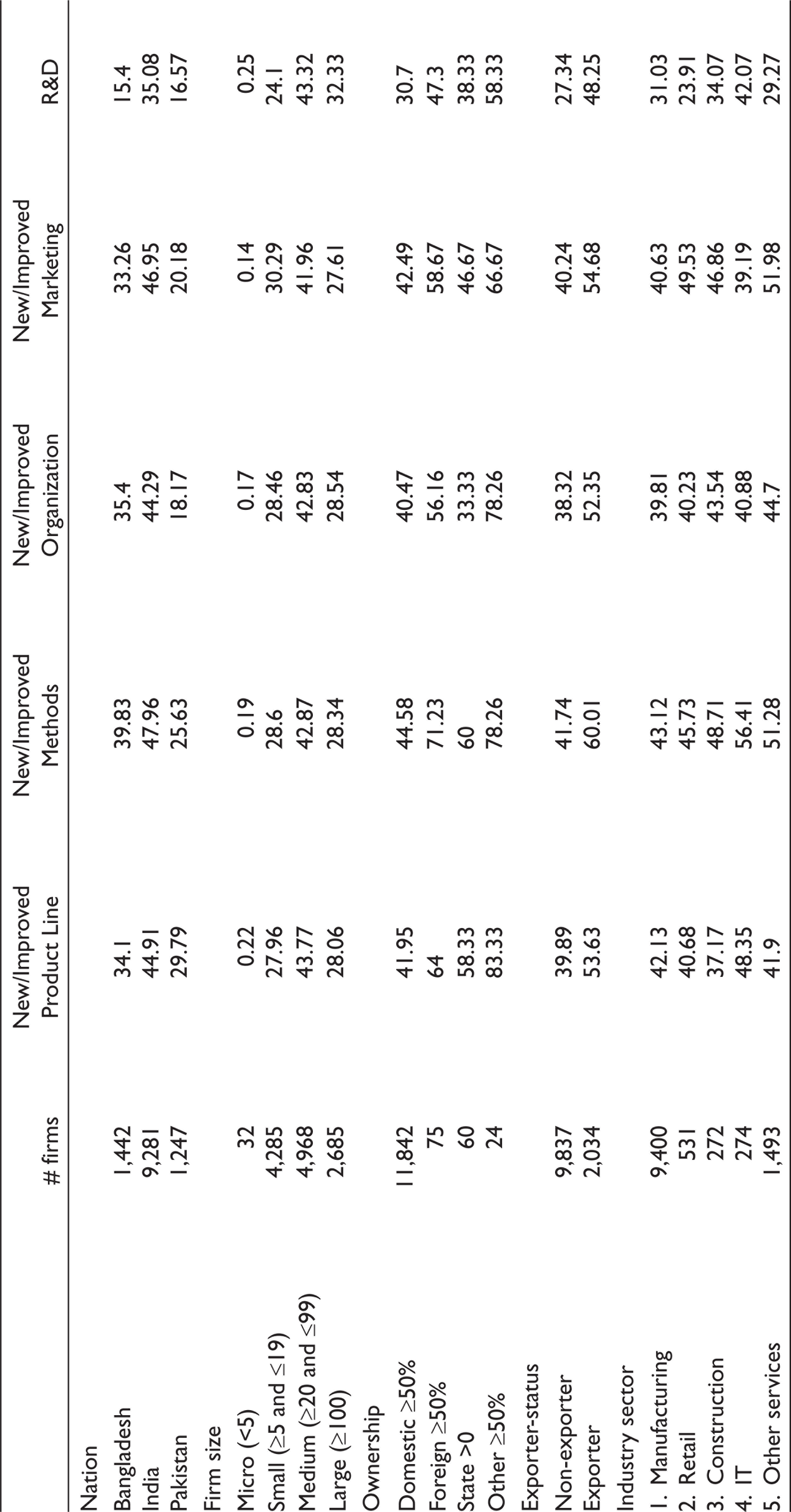
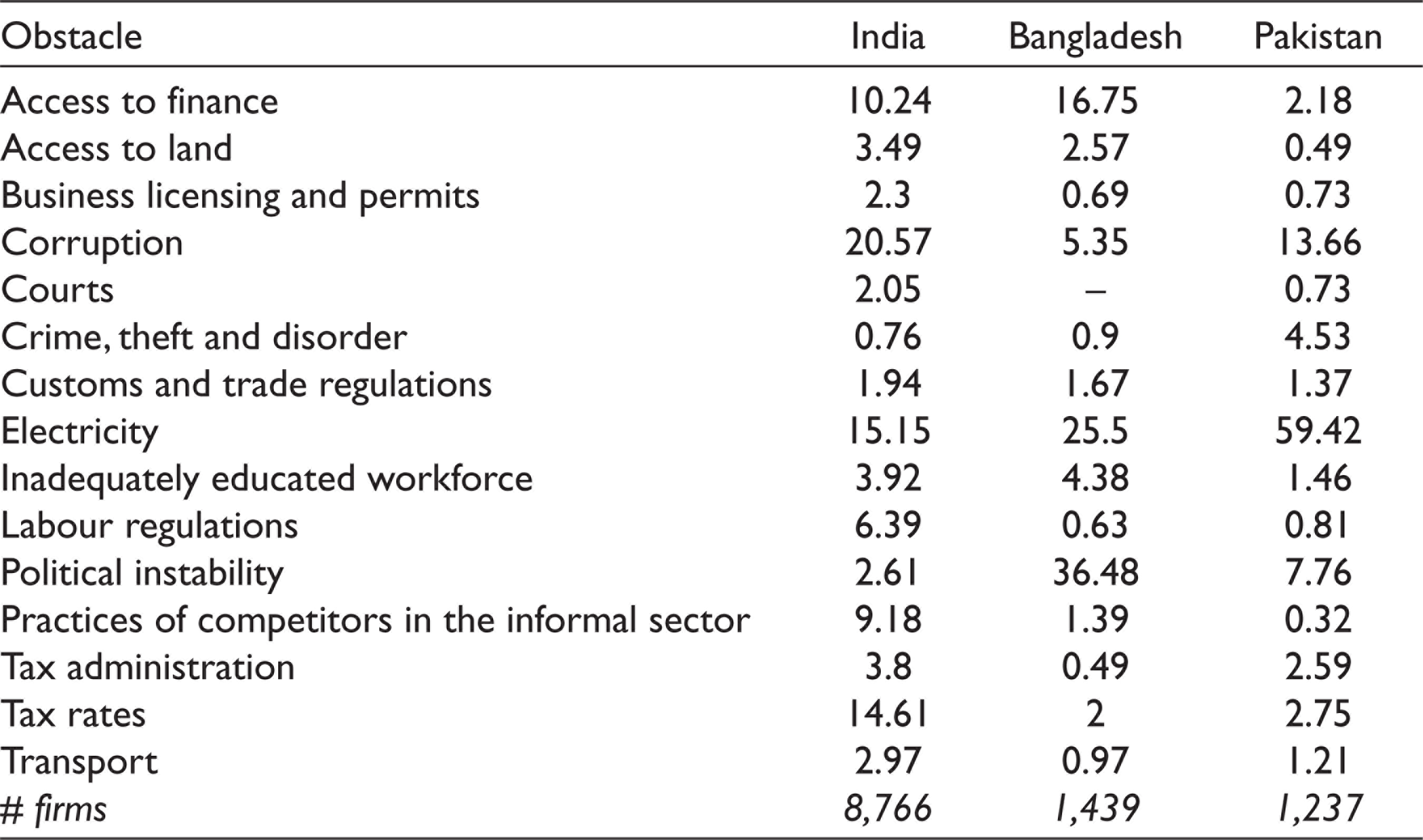
Table 2 shows the biggest obstacle firms face for their operations. In all three countries, access to electricity, which could indicate poor infrastructure is among the top three concerns for firms. Other important barriers are corruption, political instability and access to finance. Lack of human capital, in the sense of formal education, does not appear to be a very problematic factor for these firms.
Biggest Obstacle Faced by Firms
Empirical Methodology
Our baseline model is of the following form:

where i denotes firm, j denotes industry and k denotes country.
Innovation ijk is a dummy variable which takes the value 1 if the firm reports introducing a process innovation during the last 3 years and equals zero otherwise. It is defined analogously when examining product innovations (we present some examples of these innovations in Table A2). As our innovation indicator is a binary variable, we use a probit probability model.
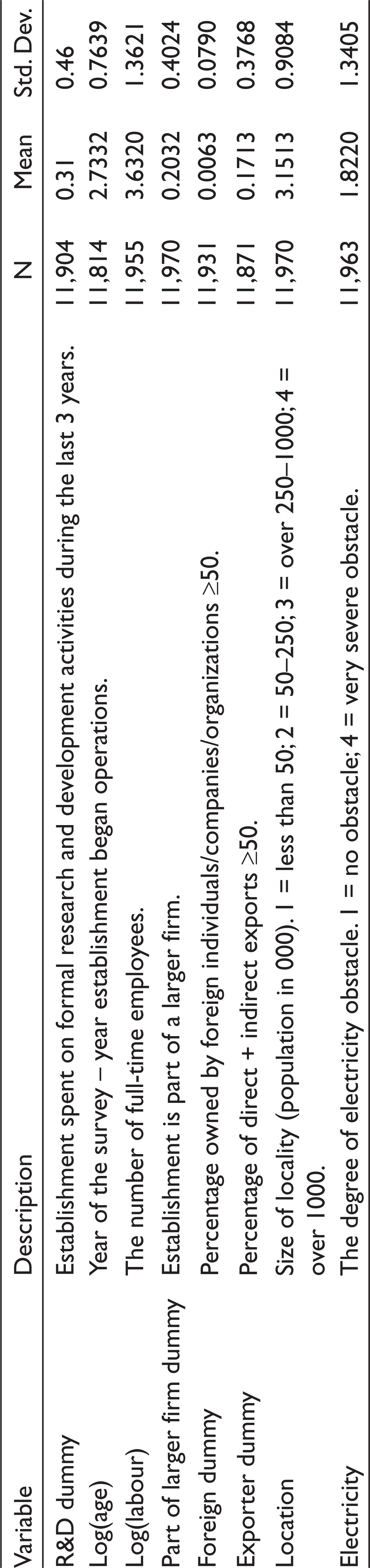
We also control for broad firm characteristics (a dummy indicating whether the firm has spent on R&D expenditures, size, age, legal status, exporter status, location and industry) that are widely used in the innovation literature. In addition, we include a variable to measure challenges in infrastructure (electricity as an obstacle). Definitions of our control variables are given in Table 3.
Definitions and Descriptive Statistics of Control Variables
We use Eq. (1) as the baseline and build on it to examine the relationship between innovation and internal drivers of innovation (human capital and financing) following Ayyagari et al. (2011). In the second step, the regression equations we estimate are of the form:

where Xijk is a vector of variables characterizing different features of the firm’s human capital and financial resources and measure different aspects of human capital and financing. Some of these variables are not available for the whole sample of firms, so we do not include all variables at once but introduce once at a time. Doing so, we avoid overloading the specification and reducing the sample size significantly. We also include country fixed effects in the full model regressions.
Results
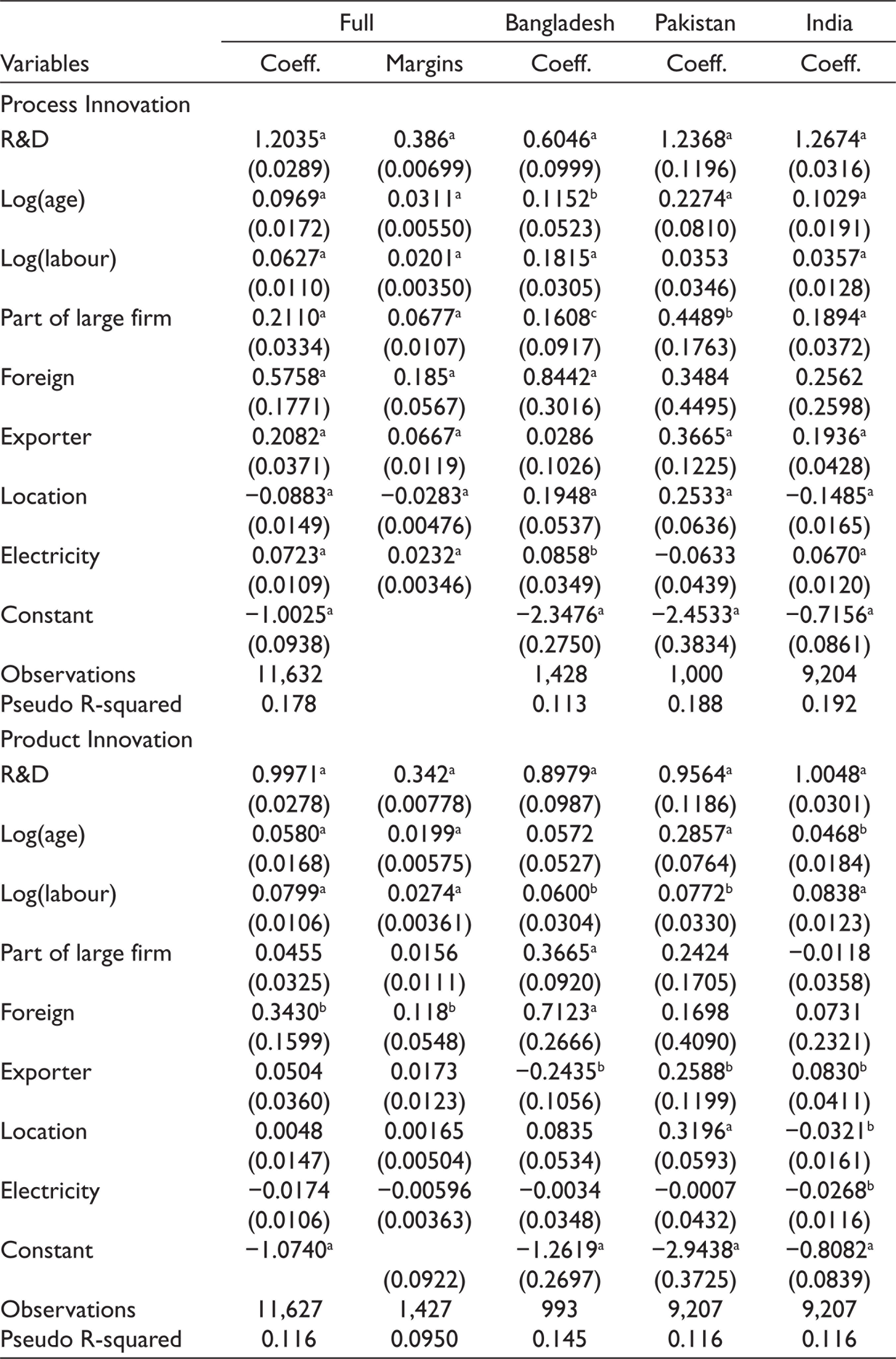
Table 4 reports the estimated coefficients of our baseline regression (1). The table shows that firm-specific variables are strongly associated with both product and process innovation. Firms who spend on R&D expenditures are more likely to introduce new or significantly improved methods of production, as expected by endogenous-growth theories. Older firms are more innovative in all three countries, suggesting that incumbents who have survived and adapted well to the uncertainties in their environment are more likely to succeed. Firm size, proxied by the number of personnel, also increases the probability of innovation. Larger firms can take advantage of economies of scale and, thus, lower their production costs, which is vital for low-cost innovation. We also find evidence that firms that are part of a larger firm report more process innovative activity than other firms do in Pakistan and India and more product innovative activity in Bangladesh. Foreign ownership is expected to improve innovation performance by knowledge transfers and through overcoming barriers such as financing and networking, but we only find a significant impact for firms in Bangladesh where only 2% of the firms are foreign-owned (In India and Pakistan 0.37% and 1.08% of all firms are foreign-owned, respectively). Exporters face more international competition but can also take advantage of technology transfers. We find that exporters are more innovative in Pakistan where exports are dominated by textiles and in India where exporters mainly operate in textiles and machinery and equipment sectors (according to our sample). The location of the establishment also plays an important role in innovation. Firms can benefit from the positive effects of spatial agglomeration and, thus, knowledge spillovers. Another reason could be that the density of creative workers will be higher in more populated cities. We find that for Bangladesh and Pakistan, firms in more populated cities are more innovative. Conversely, in India, firms in less crowded cities are more innovative. The reason may be that these firms avoid cities where production costs including labour and real estate are expected to be greater. 6 Except for the electricity coefficient for Pakistan, the effect of poor infrastructure is positive for Bangladesh and India. This suggests that scarcity conditions at the level of infrastructure could induce innovation or it may be that firms that are more involved in innovative activities attach greater importance to such obstacles. 7
Determinants of Innovation: Baseline Model
Effect of Human Capital on Innovation
Based on our literature review, we consider several definitions to capture different aspects of human capital’s impact on firms’ innovative activities, including skills, experience and gender diversity.
The variables are defined as follows: Percentage of skilled workers is the percentage of skilled personnel (managers, administration, sales) in total labour force; top manager’s years of experience is the total number of years the top manager has had in the establishment’s sector; mid-level experience is a dummy variable that takes the value 1 if the top manager has had 5–10 years of experience; high-level experience is a dummy variable that takes the value 1 if the top manager has had more than 10 years of experience; female top manager is a dummy variable that takes the value 1 if the top manager is a female. Table 5 reports our estimates for the impact of human capital on firm innovation. We do not report the coefficients for the control variables to save space. More importantly, signs and significance of the independent variables remain largely the same and the interpretations do not change.
Effect of Human Capital on Innovation, Probit Model
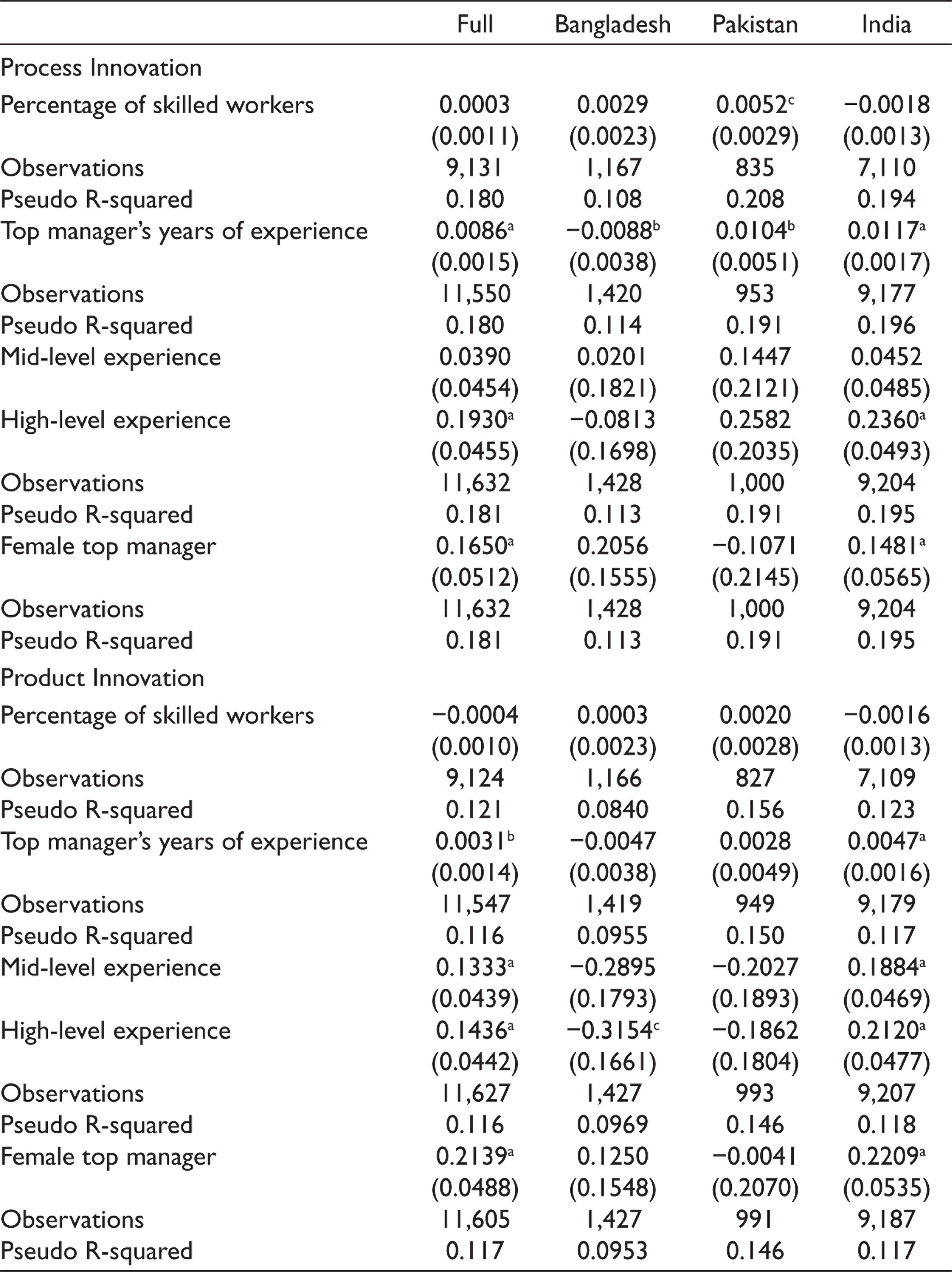
Testing for hypothesis H1a, skilled labour force, measured by the percentage of non-production workers, we do not find evidence of a positive effect of this variable on innovation (except for process innovation in Pakistan where the impact is weak). One explanation is that innovation may not require skilled personnel as our sample is dominated by SMEs, who are more likely to imitate ‘new process’ or ‘new product’ (new to firm but not necessarily new to the market) rather than develop a totally new production method or product. If this is the case, firms will not want to hire high-cost skilled personnel.
Testing for hypothesis H1b, the more the top manager is experienced in the sector, the higher the probability of innovation in India (and Pakistan for process innovations). When we investigate more, we find that firms run by managers with more than 10 years of experience in the same industry are more innovative than firms run by inexperienced managers in India. 8
Testing for hypothesis H1c, we find that firms with female managers are more innovative in India compared to firms with male managers. 9 Female managers are believed to be more risk-averse, but they can also offer more adaptive solutions compared to male managers. However, gender diversity has no significant impact on innovation in Bangladesh and Pakistan. Earlier studies have shown that the positive effect vanishes in countries where women have a lower degree of economic opportunity (Ritter-Hayashi et al., 2016).
To summarize, we find that In India, experience and gender diversity contribute to the innovation process, as expected by conventional innovation literature. However, our measure of skilled labour does not have statistical significance. In Pakistan, experience of managers, followed by a higher share of skilled personnel, contributes to innovation generation. We do not find support for the positive impact of human capital variables on innovation in Bangladesh.
Effect of Financing on Innovation
In this section, we examine the role of the availability of external financing on firm innovation and test for hypothesis H2. In underdeveloped financial markets, access to finance is a problem for all firms so the availability of finance may also capture the degree of financial development (Gorodnichenko & Schnitzer, 2013). Sixty-two per cent of firms in Bangladesh report that access to finance is a pressing obstacle (firms report it is a moderate/major/severe obstacle). Forty-two per cent of firms in Pakistan and 34% of firms in India cite access to finance as an important obstacle.
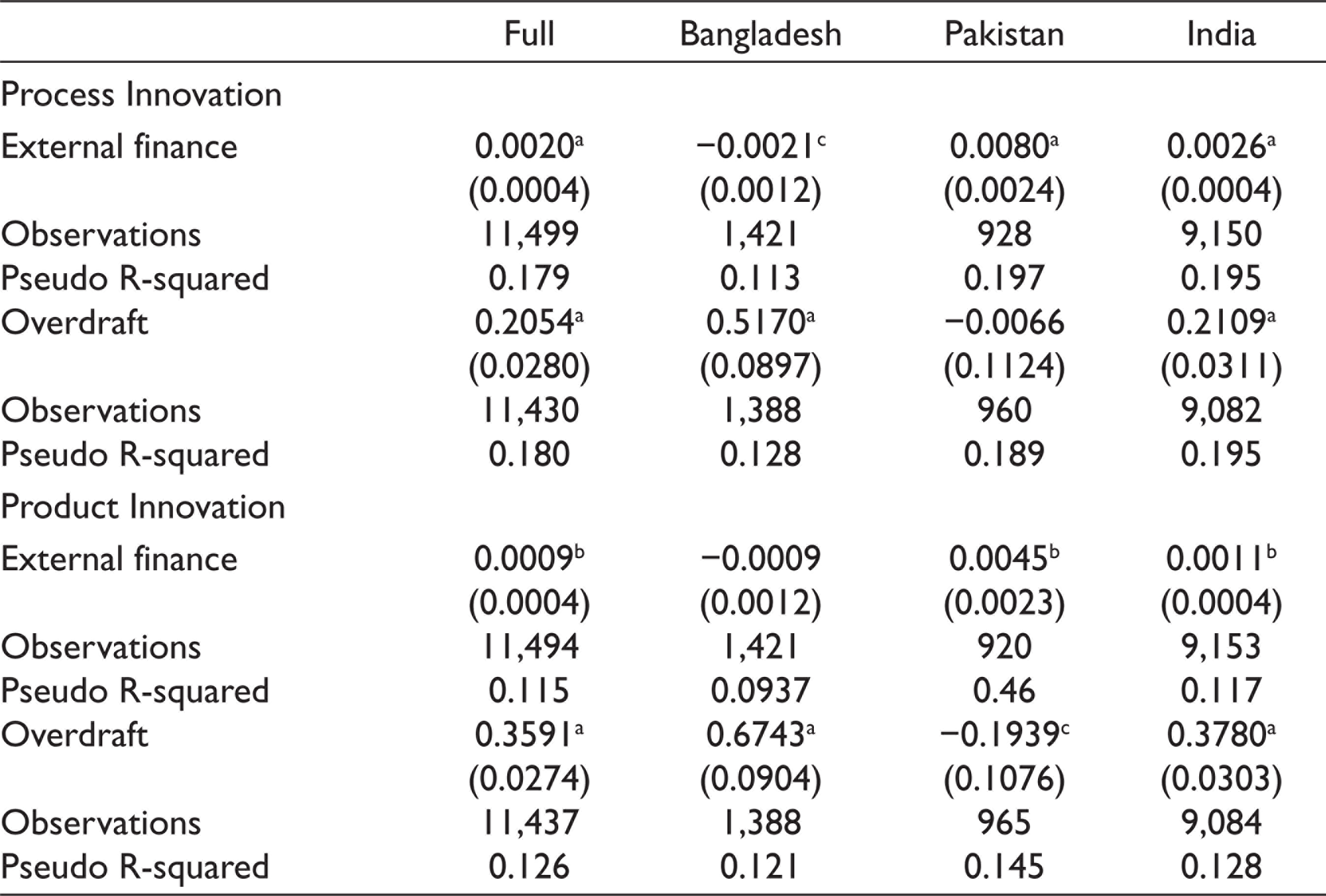
We use two measures of financial constraints. Our first measure external finance is the percentage of working capital financed by external sources (private or state-owned banks; non-bank financial institutions, which include microfinance institutions, credit cooperatives, credit unions or finance companies; on credit from suppliers and advances from customers; moneylenders, friends, relatives, etc.). In emerging economies, access to external finance increases the rate of innovation undertaken by firms (Ayyagari et al., 2011). Forty per cent of Indian firms report that their working capital is mostly financed by external sources. Firms in the other two countries do not have much access to external funding. Twenty-nine per cent of Bangladeshi firms and only 11% of Pakistani firms use external financing heavily.
Our second measure overdraft is a dummy variable that takes the value 1 if the firm has an overdraft facility. This variable also captures the firms’ access to external finance and is an indicator of financial strength (Mateut, 2018). Fifty-nine per cent of firms in India have an overdraft facility. This percentage is 24% and 31% for Bangladesh and Pakistan, respectively.
Table 6 reports our estimates for the impact of financial capital on firm innovation. We find that firms with greater access to external finance are more innovative in Pakistan and India. We also find evidence that access to external funding measured by the availability of an overdraft facility is positively related to innovation for India and Bangladesh.
Effect of Financing on Innovation, Probit Model
Robustness Checks for Financing
It is important to note that due to reverse causality between access to finance and firm’s innovative activities, a possible endogeneity issue might emerge. First, our country-by-country estimates of financing on innovation are based on very small samples for Pakistan and Bangladesh. Furthermore, our estimates may be biased as innovating firms are likely to face more credit constraints (Gorodnichenko & Schnitzer, 2013; Iammarino et al., 2009), 10 firms that innovate may be the ones that are able to raise external finance (Ayyagari et al., 2011), and not all firms that raise external finance are equally innovative (Ayyagari et al., 2008).
To address these issues, we first use an alternative proxy, finance_country_sector_size, which is the mean (external finance use) of firms in the same country, industry and size class—a measure that is not polluted by firms’ idiosyncratic characteristics (Escribano & Guasch, 2005; Freund et al., 2016). Thus, we believe this proxy gets rid of the omitted variable bias resulting from unobservables that are correlated with a firm’s access to external finance. Using this proxy, we find that access to external finance is positively associated with the likelihood of introducing new methods of production in Pakistan and India. 11
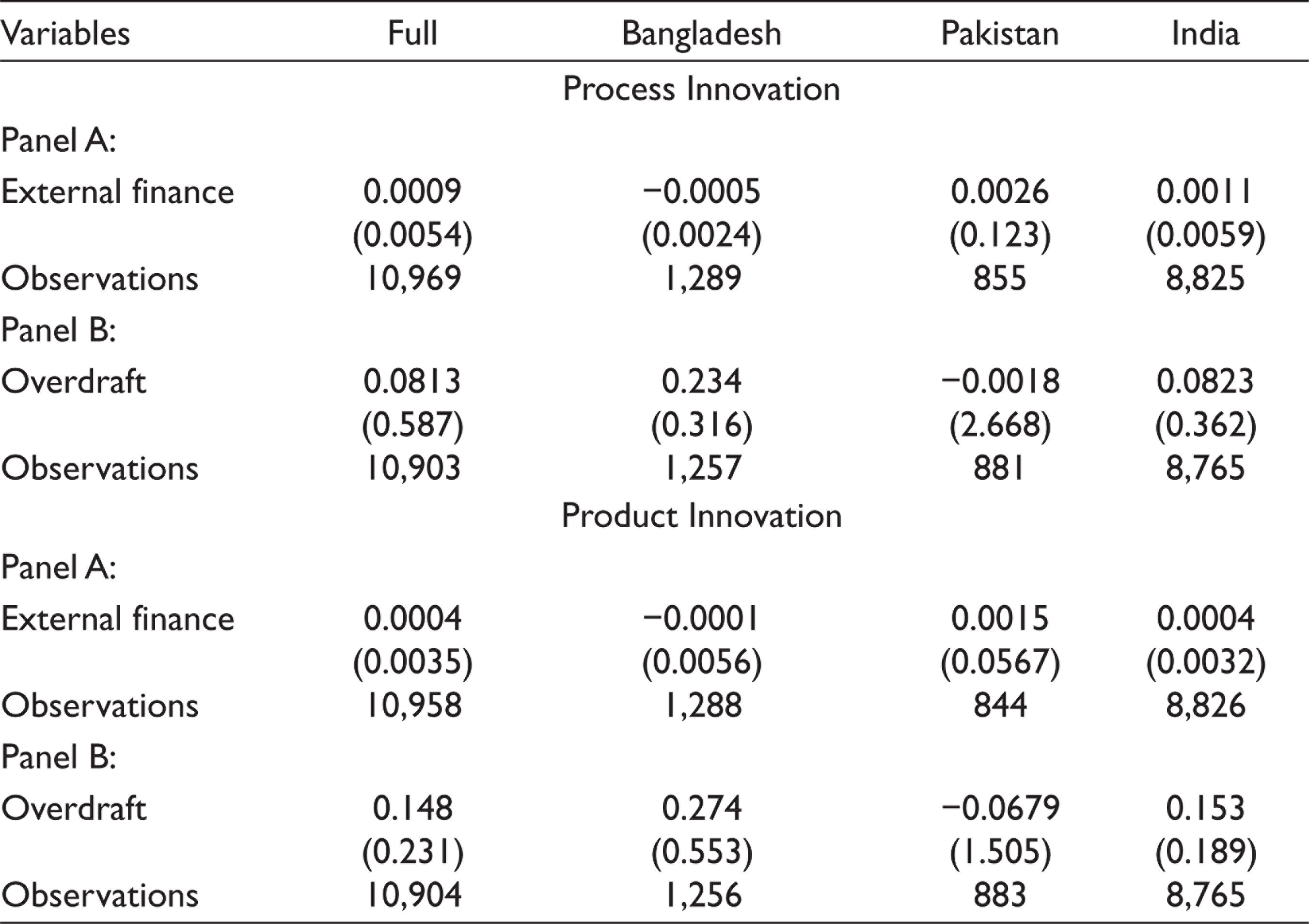
As a second robustness check, we use the IV Probit estimation. The instrumental variables chosen must be good predictors of financial constraints but must not have a direct effect on innovation. We use lost sales: the share of lost sales due to theft, breakage or spoilage during delivery. Since neither of these incidents can be controlled by the firm, they can act like exogenous shocks which will increase the firm’s financial constraints through decreasing the available liquidity (Gorodnichenko & Schnitzer, 2013; Karaman & Lahiri, 2014). We report the marginal effects in Table 7, where Panel A shows results for External Finance, and Panel B shows results for Overdraft. When endogeneity is addressed, we no longer find evidence of a significant positive effect of the availability of external finance on firm innovation.
Effect of Financing on Innovation, Instrumental Variable Estimation
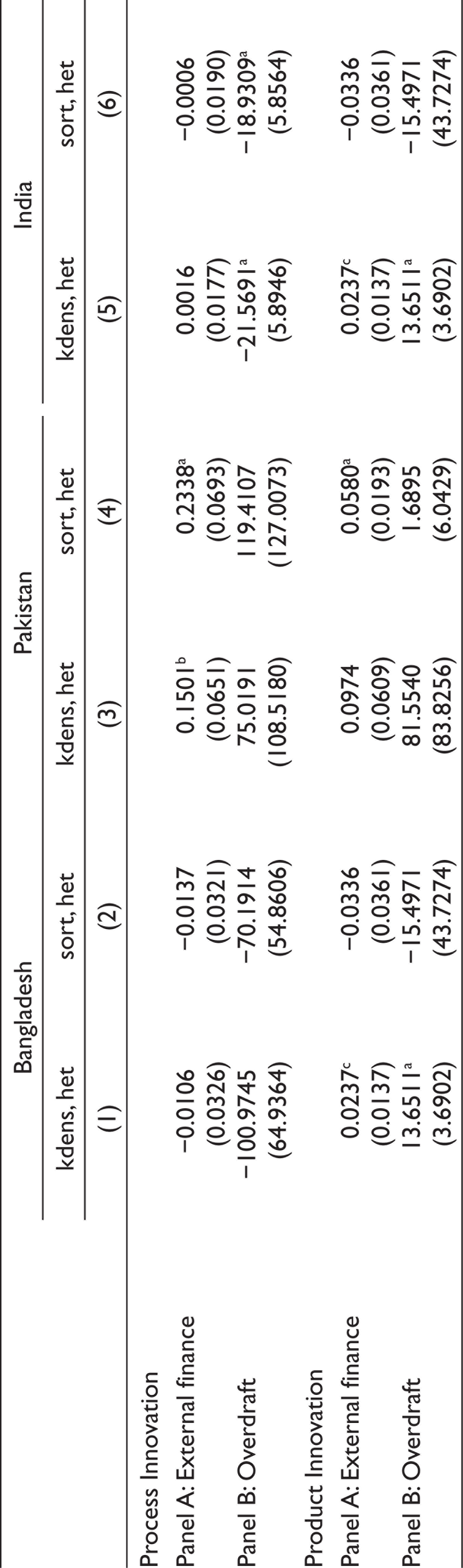
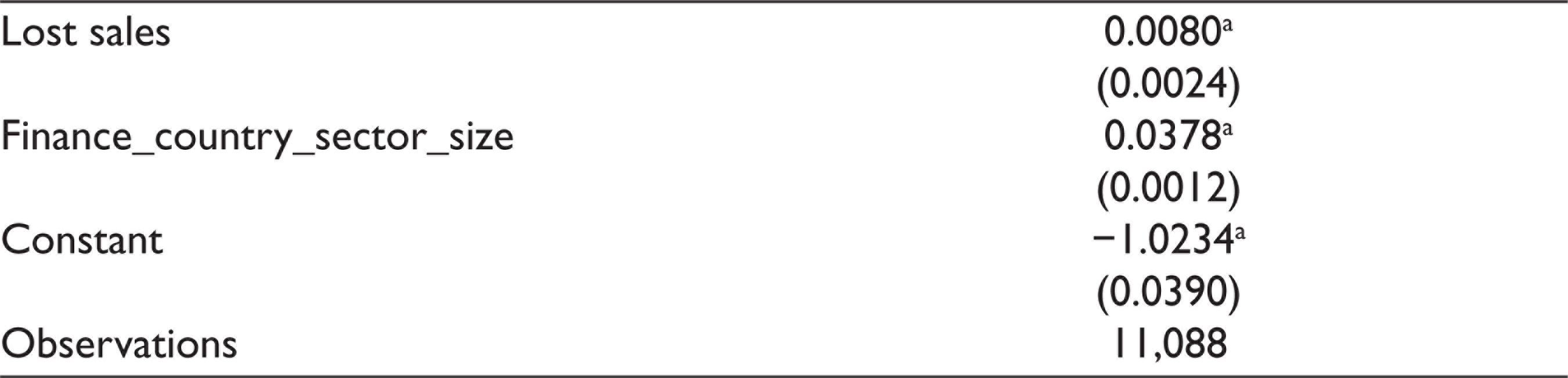
As a final test, we use the special regressor estimator proposed by Lewbel et al. (2012) and Dong and Lewbel (2015). Unlike control function methods, which are only valid for continuous endogenous regressors, the special regressor estimator can be used with discrete endogenous regressors. They also allow for latent errors having heteroskedasticity of unknown form, including random coefficients. The chosen special regressor must be exogenous and appear additively in the model. It must be continuously distributed with large support and, ideally, it should have thick tails. Following Mateut (2018) who investigates the relationship between financial constraints and firm innovation, we choose firm age (demeaned) as our special regressor. Figure A.2 reveals the linear relationship between our special regressor and the probability of innovation. We have also tested the significance of our special regressor in a reduced-form equation featuring the endogenous variable (external finance) on the left-hand side and instruments on the right-hand side. We have found that our special regressor is valid; its coefficient in this auxiliary regression is not statistically different from zero (Table A3).
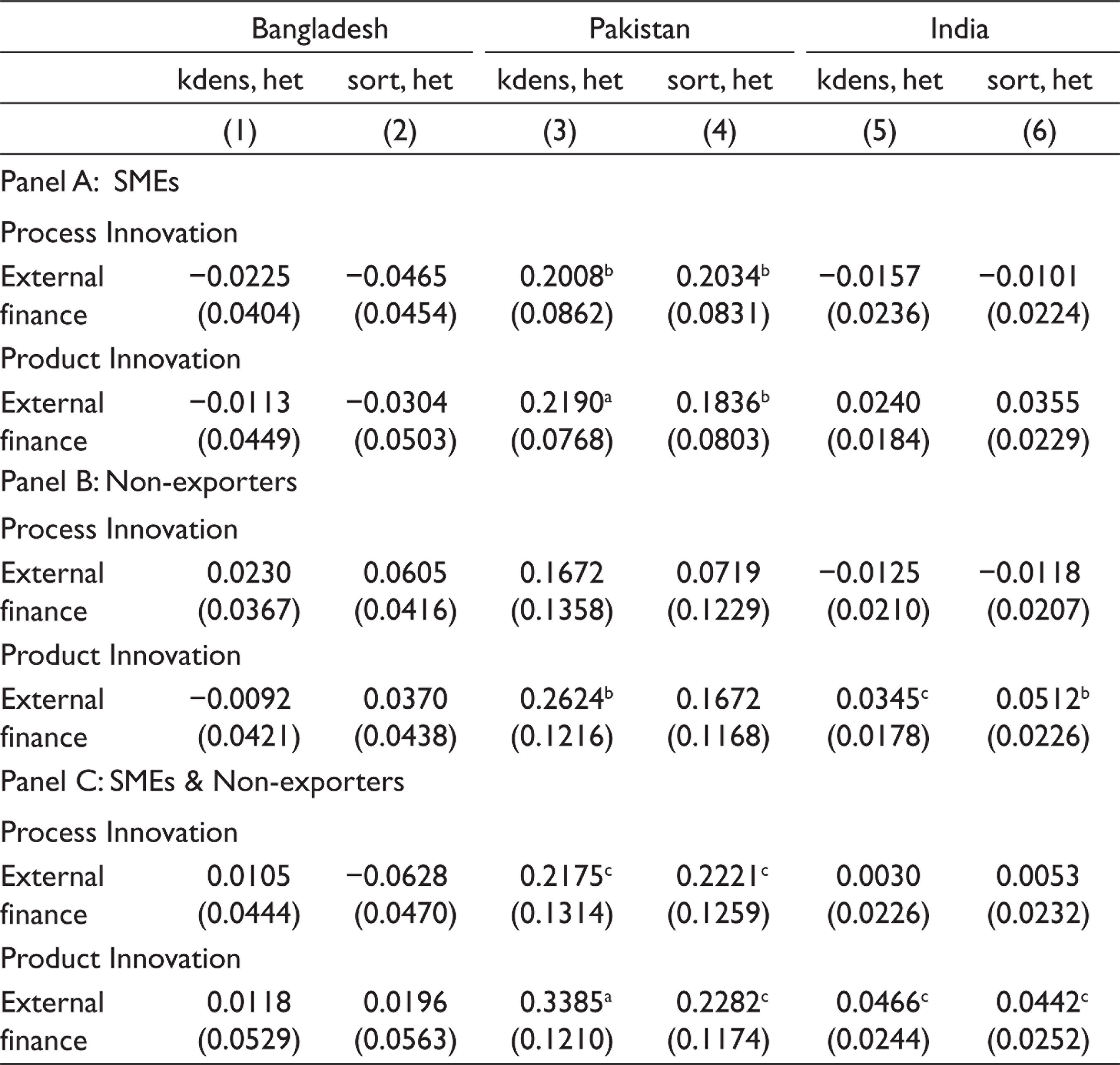
In Table 8, we present two sets of estimates, utilizing an ordinary Kernel density estimator in columns 1, 3 and 5 and the sorted data density estimator in columns 2, 4 and 6. In each estimation, we allow for heteroskedastic errors. Looking across columns of Panel A for process innovation, in Table 8, irrespective of the method of estimation of the density, the estimated effect of external finance is positive and statistically significant for Pakistan, but not for Bangladesh and India. Regarding product innovation, we find that firms that have overdraft facilities are more likely to engage in innovative activities in India and Bangladesh.
Special Regressor Estimations
Overall, robustness checks indicate a positive association between access to finance and innovation, and thus provide support for hypothesis H2.
Analysis of Sub-samples
SMEs and non-exporters are more likely to face resource constraints. In addition, their innovations are more likely to target the needs of the local/domestic market where consumers are also resource constrained (Soni & Krishnan, 2014). Therefore, we check the validity of our results considering the heterogeneity of causal effects of resource constraints on innovation across these sub-samples.
Table 9 shows that for SMEs we now find a stronger positive impact of the availability of skilled labour on process innovation in Pakistan (a significance level of 5% compared to 10% in Table 5) and a strong negative impact for the Indian sample (1% significance). This could indicate that innovator SMEs compared to large firms in India are more sensitive to constraints associated with the cost of skilled labour. Results using other measures are mostly similar to the ones reported in Table 5. Experience (over 10 years) and gender diversity are drivers of process innovations for Indian firms but are not that important for firms in Pakistan and Bangladesh. An interesting finding regarding Bangladesh is that firms with more experienced managers seem to have a lower probability of process innovation (we also find a negative but insignificant impact on the probability of product innovation). The managers of SMEs may be investing the firm’s already constrained financial resources in less risky investments. However, the lack of data as to the attitudes towards risk prohibits further examination of this possibility.
Effect of Human Capital on Innovation for Sub-samples
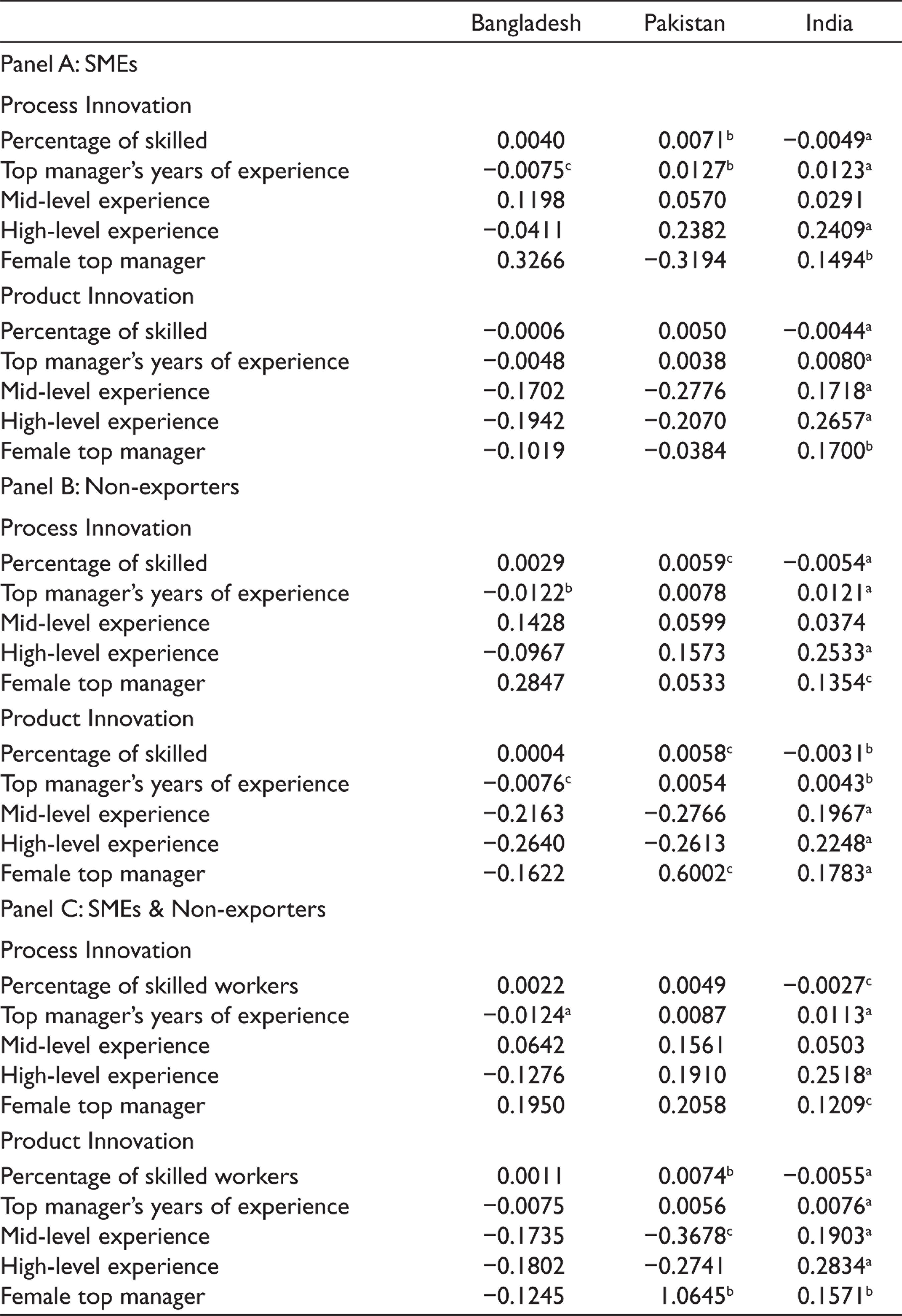
We have also repeated our analysis using the special regressor estimator to check whether our results concerning the availability of external finance hold for SMEs, non-exporters and non-exporter SMEs. Our findings are similar to the ones reported in Table 8. Again, hypothesis H2 is supported by the Pakistan sample and now for product innovation as well as process innovation, but not by other samples (Table 10).
Special Regressor Estimations for Sub-samples
Discussion
Theoretical and Practical Contributions
What firm-level innovation challenges do South Asian firms face? Since the region provides a good natural experiment to study innovation practices under resource constraints, how do conventional barriers like human capital and financing scarcities affect firms in the region? Most of the empirical work on innovation in resource-constrained environments uses data from India. Can we generalize these findings to other countries? Answers to these questions have important implications for emerging innovation policy.
Using a unique dataset for India, Pakistan and Bangladesh from Enterprise Surveys, we find that R&D expenditures, firm age and size are the main drivers of innovation in South Asia, as in many other developing economies. However, we have also found that countries differ on the degree that they are affected by resource constraints. Our results are robust to the choice of the estimator as shown by the estimates of a range of econometric models used in this study (standard probit, instrumental variables: ivprobit and special regressor). As for innovation policies, our results indicate that one size does not fit all.
India, the innovation leader in the region, is widely used as an example in resource-constrained innovation literature. Our findings for India also support these earlier studies and suggest that firms in the country are possibly engaged in resource-constrained innovation, as we have shown that resource availability does not necessarily promote innovation (recall that almost half of the Indian sample report innovation activities). Results are further validated in sub-samples of SMEs and non-exporters (domestic firms), which are more likely to face such constraints. Our results complement earlier studies by discussing whether and to what degree internal resources are drivers of innovation in the country. We find that human capital measures of experience and gender diversity spur innovations, but not the percentage of skilled labour. One explanation is that firms avoid this high-cost labour force. Although the Indian government has been following a skill policy since 2009 with the aim of meeting the demand for human resources of the industry, the outcomes are not found to be satisfactory by employers who report that skilled people they hire do not meet their expectations (Gooptu, 2018). Our results also support this claim and suggest that the current skill development program still has drawbacks and has not yet achieved its primary goal.
Moreover, we find that access to external finance does not have a strong impact on the probability of both process and product innovations of Indian firms. It is possible that firms make do with what is at hand, supporting the literature on RCI. Empirical studies on RCI mostly use product innovations as their dependent variable, providing more support for our claim (see, e.g., Bicen & Johnson, 2015; Keupp & Grossman, 2013). Although it is not possible to check the characteristics of firms’ innovations using Enterprise Surveys, a wide body of research has documented how firms innovate with minimum financial resources. Another body of research argues that necessity is the mother of invention and resource constraints can even trigger innovation. These streams of research does not suggest that firms would be more innovative if they had fewer resources but rather stresses the role of managers who create an efficient work environment where novel ideas are stimulated to find solutions for resource problems (Gemünden, 2015). Therefore, our finding also signifies the role of managers in innovation process in emerging markets and has an important policy implication. Since managers have a central role in fostering innovations, public policy should aim to identify the support needs of these managers and design the support instruments accordingly.
On the other hand, Pakistani firms still depend on traditional resources in their innovation activities. They are more likely to engage in process innovation if they have financial and human resources, and the findings are stronger for SMEs and non-exporters. Since it is hard to accumulate such resources in a short period, and since currently, the country has financial problems (Hina & Qayyum, 2019), for the time being, a government-assisted training program for entrepreneurs may be helpful for the firms to cope with scarcities. The government has implemented impressive education reforms that have helped to build national R&D infrastructure, and our findings emphasize the need for continuous reforms towards knowledge creation to encourage competitiveness.
For Bangladesh, we do not find any significant impact of human and financial resources on innovation. The most important factors that promote innovation are the size of the firm and R&D investments. We also find a positive effect of foreign ownership on innovation in Bangladesh, which can be interpreted as an opportunity for multinational companies who want to enter this market. For example, textiles and labour-intensive garments, which depend heavily on imported intermediate inputs (Goedhuys et al., 2014), can benefit from market diversification (Alam et al., 2017), and the pharmaceutical sector, which also has many potentials to transition into a competitive sector, can benefit from foreign technology transfers (Sampath, 2007). However, the firm responses show that political instability highly affects the business environment. Therefore, the government needs to address this problem first and create an enabling environment for innovation. The country has still much room for development, and has a very close GDP per capita to Pakistan and catching up India faster than other countries in the region (World Development Indicators, 2018). Therefore, we believe that the government can accomplish much if they continue their current reform strategies in education and in building a strong telecommunication infrastructure to boost innovation investments.
Limitations and Future Research
As we glimpse into the impacts of resource constraints on innovative activities, we understand that there is still much room for future work. A more systematic data collection with a focus on the various types of scarcities including institutional voids and complexities in emerging countries could give us insight on what type of constraints truly hinder and what type encourages innovative activities in these economies. Such data can show us what kind of endogenous problem-solving capacities firms need to develop to innovate in scarcity conditions. The policymakers can then develop strategic policies that address the needs of such firms. In addition, although Enterprise Surveys Innovation Module provides some description of innovations that firms undertake, it is not possible to draw inferences on different types of resource-constraint innovation, since the descriptions do not provide all the characteristics of these innovations. Therefore, we recommend that firms should be requested to give more details of their innovations in the Enterprise Surveys questionnaire and report the degree of technical and market novelty of their innovations, as well as their innovations’ potential impacts on consumers.
Footnotes
Declaration of Conflicting Interests
The author declared no potential conflicts of interest with respect to the research, authorship and/or publication of this article.
Funding
The author received no financial support for the research, authorship and/or publication of this article.
Appendix
Results for Reduced-form Equation

| External Finance | |
| Age special | −0.0001 |
| (0.0009) | |
| Lost sales | 0.0080a |
| (0.0024) | |
| Finance_country_sector_size | 0.0378a |
| (0.0012) | |
| Constant | −1.0234a |
| (0.0390) | |
| Observations | 11,088 |