




Abstract
This meta-analysis addressed the effects of mediated violence on the enjoyment audiences experienced after exposure to a diverse array of entertainment programmes. Published journal articles were collected and effect sizes were analyzed to examine if there were differences in the enjoyment of violent content. Through the lens of a fixed effects model, the results indicated that the morality of audiences and nature of visual media did not impact enjoyment of violence and the selected studies shared a statistically significant common effect size (d = 0.33). Although synthesized data signified a fairly homogenous effect of mediated violence on enjoyment, the studies employing morality and video games as moderators were heterogeneous. The current study offered guidelines for further inquiry to explicate the nature of heterogeneity and generalizability of the study results.
Violently Entertained: A Meta-analysis of the Effects of Mediated Violence on Enjoyment
Prevalence of mediated violence and its impact on viewers, especially children and youth, has been a significant concern for policymakers, civil society and academics. Violence of assorted types has constituted a substantial portion of the televisual content, such as, film, television and video games, for the past few decades. The effects of such content have largely been considered negative and numerous studies have explored why audiences enjoy violent victimization of fictional characters in assorted media (Hoffner & Levine 2005). A significant body of literature suggests that there is a causal relationship between prolonged exposures to violent television programmes and increased levels of aggression among audiences who report enjoying mediated violence (Gerbner et al. 2002). Roskos-Ewoldsen et al. (2009), for example, argue that exposure to verbal or physical threats of violence on media primes aggression-related concepts among viewers, but the effects of violence on enjoyment are short-lived and dissipate over time. Extant research has focused on the effects of fictional violence and its enjoyment, but the processes underlying enjoyment of mediated violent behaviour or threat of violence have remained obscure and under-researched. In this meta-analysis, I address issues surrounding morality and the attitude towards perpetrators of violent behaviour as plausible explanations for the enjoyment of mediated violence. I also focus on the type of media (e.g., TV, film, video games, video clips and cartoons) to examine if the effects of mediated violence vary across diverse entertainment genres.
A small body of extant literature has surveyed the enjoyment of mediated violence through meta-analysis (Christensen & Wendy 2010; Hoffner & Levine 2005; Sherry 2001; Weaver 2011). Weaver (2011), for example, advanced the notion that audiences selectively exposed themselves to the media of their choice, which significantly impacted their enjoyment of the mediated violence. Other researchers have investigated numerous moderators, such as, gender, personality traits, emotional responses to violence and a multitude of demographic characteristics, to explain increasing or decreasing levels of enjoyment during exposure to violent media content. Mainstream research agrees that increased exposure to mediated violence results in aggressive behaviour (Christensen & Wendy 2010); however, the reasons behind audiences’ enjoyment of such content remain a murky and complex question. For example, Bushman and Anderson (2001) argued that exposure to violent televised content produced violent behaviour among viewers while Josephson (1987) also found that exposure to violent content on television primed boys to act more aggressively and this ‘effect was heightened both when violent programming was coupled with the violence-related cues and when violent programming was followed by frustration’ (as cited in Roskos-Ewoldsen et al. 2009, p. 98). But the question remains whether priming aggression could result in enjoyment and to what extent audiences could enjoy morally questionable behaviour of the fictional media characters.
Besides explanations outlined in previous meta-analyses (Hoffner & Levine 2005; Weaver 2011), there could be two plausible expositions of enjoyment associated with media violence: audiences’ attitude or disposition towards characters (Raney 2011; Shafer & Raney 2012); and moral disengagement of audiences from the morally questionable behaviour of their favourite characters (Bandura 1999, 2009; Raney 2005). Enjoyment of the fictional characters involved in violent actions is driven through multifarious processes, such as transportation, identification with the characters, moral disengagement, affective disposition and empathy (Krakowiak & Oliver 2012). Explicating the enjoyment of media narratives, the affective disposition theory focused on the attitude of the audience towards characters in the entertainment media. According to the theory, the viewers established associations with the fictional characters in media narratives (Krakowiak & Oliver 2012; Raney 2004) and if the liked characters were successful and rewarded, the audience tended to enjoy the media narrative. Conversely, if the disliked characters emerged victorious by victimizing or inflicting pain on favourite characters, the degree of enjoyment decreased (Eden et al. 2011; Shafer & Raney 2012).
The audience also judged violent media characters in the light of their own moral values and Bandura (2009) elucidated that these moral standards were lowered in favour of beloved characters and groups. Raney and Bryant (2002) argued that enjoyment of media depended on the fortunes reaped by liked and disliked characters. Raney (2004) argued that ‘the relationship between affect, moral evaluations, schemas, attitude maintenance strategies and moral judgments—in particular as those relationships help produce the enjoyment of drama—are certainly complex’ (p. 365). Similarly, Zillmann, Taylor and Lewis (1998) noted that audiences enjoyed news stories highlighting good fortunes for the favourite characters, while level of enjoyment decreased if the news reports carried bad news related to the people or groups they liked. Thus, enjoyment could be reckoned as a function of disposition of the audience towards content and characters. Raney (2002) also suggested that audience liked characters whose actions were in accordance with their moral values and they developed negative attitudes towards characters who violated moral boundaries drawn by the consumers of entertainment media content. Raney (2005) contended that ‘fictional characters through their actions and intentions give viewers moral amnesty to like and hate, cheer for or against, wish for the success, and hope for the destruction of said characters’ (p. 147). Enjoyment of the media content; therefore, depended upon disposition of the audiences towards characters and was directly linked to their moral evaluation of actions of the fictional and real characters. In his meta-analysis, Weaver (2011) discussed the significance of disposition theory in predicting enjoyment of media violence and argued that the theory helped elucidate reasons behind increase and decrease in the levels of enjoyment as enjoyment would decrease if the ‘disliked characters perpetrate violence against attractive characters’ (p. 234). Since dispositions are based on moral judgements of the audiences, this meta-analysis examined two types of studies: studies focusing on enjoyment of mediated violence with moral disengagement as a moderator; and studies establishing a linkage between enjoyment and media violence either directly or using other moderators such as demographic and personality characteristics (e.g., Hoffner & Levine 2005).
Morality and Enjoyment
Violence and morality were conventionally considered oxymorons. Although violence was morally justified when the perpetrators were liked characters and engaged in violent behaviour for justifiable reasons, academics raised questions why audiences enjoyed justified violence (Shafer & Raney 2012). Moral disengagement was an explanation that justified violence if the perpetrators were liked characters and involved in violent actions to protect socially-sanctioned values (Bandura 2002). Audiences morally excluded their disliked characters as situated outside their moral boundaries and morally excluded individuals or groups were considered inhuman who could be punished and harmed. This might have negative effects on the enjoyment as moral disengagement towards violent fictional characters might lead to oppression, violation of human rights, religious intolerance, slavery, massacre or fundamentalism/terrorism in a society (Opotow 1990). Especially in times of conflict, moral exclusions reinvigorated widespread brutalities, as principles guiding social justice were totally changed (Eisenberg 1990; Opotow 1990). The logical outcome of moral exclusion was psychological distancing, displacement of responsibility, ethnocentrism and glorification of violence in the society that could culminate in pervasive unrest and tension among individuals and groups (Bandura 1999). Academic literature contains ample evidence suggesting that dehumanization of the disliked characters leads to unrestrained violence and hideous crimes and Bandura (1999) argued that portrayal of violence and oppression in fictional and news media by using sanitizing language should be seriously checked as it engendered division and chaos in human societies. Raney (2004) also clarified that use of moral justification, sanitizing language, displacement of responsibility and minimizing harm could result in oppressive acts in the name of social justice. Contrary to the news media, fictional entertainment media possessed the potential to cultivate a worldview in the direction of the fictional media content due to its widespread appeal as a major source of entertainment (Gerbner et al. 2002; Potter 1993). Extant research suggested that audiences exposed to violent programmes on media tended to cultivate aggressive behaviour and the recent surge of violent acts across the globe could be considered an outcome of unrestrained exposure to violence in various types of media (Bandura 2009; Grossman & DeGaetano 2009).
Especially, the language and visuals used in the entertainment media might justify immoral violent behaviour of the fictional characters and morally disengage audiences by using euphemistic language that made these constructs chronically accessible (Bandura 1999, 2002). At the same time, violent entertainment narratives might desensitize audiences towards unethical practices, especially deceitful actions that would subsequently affect stability and peace in a society. Viewers of entertainment media might start enjoying violence by considering it as justified violence necessary to eliminate the evil (Zillmann 2006). Extant literature examined how entertainment media narratives developed certain constructs in the minds of the audiences, which resulted in moral exclusion of the out-groups and helped readers/audience morally disengage in different intricate situations (Bandura 1999, 2009; Hoffman 1991; Lachlan & Tamborini 2008; Moghaddam & Marsella 2004; Opotow 1990; Raney 2002, 2004, 2005; Zillmann 2000). Expressly, lowering of the moral standards helped audiences enjoy fictional media narratives by building associations with the characters (Raney 2006; Zillmann 1994). Raney (2004, p. 360) argued, ‘We extend the boundaries of what is morally allowable or tolerable because we like them so much, and we want to continue liking them.’ Similarly, Tamborini et al. (2010) found viewers morally disengaging and developing polarized dispositions towards characters after prolonged exposure to soap opera. Thus, enjoyment of mediated violence largely depended on moral flexibility of the audiences, and media narratives used different strategies to morally disengage viewers by making the violence appear justifiable and necessary in certain circumstances. To explore the differences between studies applying morality as a moderator of enjoyment and studies using other (gender, sensation-seeking etc.) explanations for the enjoyment of mediated violence, I proposed the following research question and hypotheses:
Research Question 1: Do effects of exposure to mediated violence on enjoyment differ between studies using morality as a moderator and studies employing other explanations such as demographic and personal characteristics? Hypothesis 1: Studies using morality as a moderator will have greater effect on the enjoyment of mediated violence than the studies using demographic and personality characteristics as moderators. Hypothesis 2: Studies in the morality group will have homogenous effects on the enjoyment of mediated violence.
Which Medium is the Most Effective?
Extant literature applying meta-analysis to examine media effects suggested that effects of various media were moderate (Perse 2010). At the same time, measuring significant variables to explore effects of media was extremely difficult due to the private nature of exposure to assorted media. For example, audiences’ in-house media use widely differed as inattentive viewers found it hard to exactly remember the programmes they routinely watched (Ferguson 1994). Measuring effects of exposure to violence was even more difficult due to the pervasiveness of violent incidents in news and entertainment programmes. Perse (2010) argued that effects of various media programmes were significant and majority of researchers paid attention to the prolonged exposure to televisual programmes that cultivated a worldview for the audiences in which violence was inescapable and defined as verbal and physical aggression. Sparks, Sparks and Sparks (2009) claimed that effects of exposure to mediated violence were an attractive area for researchers using meta-analysis, as effect sizes could be calculated for a large number of studies using different populations and independent and dependent variables to examine the causal association between violence on media and its multifarious effects. Most of the published meta-analyses concurred that exposure to violence and a subsequent aggressive behaviour were related psychological constructs (Sparks et al. 2009); however, no meta-analysis addressed the relationship among mediated violence, moral judgements of the audiences and enjoyment. Hoffner and Levine (2005) and Weaver (2011) paid attention to the enjoyment of violent media narratives using demographic and personal characteristics, emotional responses and selective exposure as moderator variables, but did not address issues of morality surrounding violent actions of media characters and the influence of different media used as interventions. Since media effects were significant across studies employing different media as interventions, it was imperative to investigate if effect sizes varied due to the relative appeal of different visual media, such as film, television, video games, video clips and cartoons.
Anderson et al. (2003) argued that passive visual media, such as, television, movies, television news, music videos and cartoons, was extensively used in extant literature to examine the effects of mediated violence on audiences. As many as three meta-analyses examined the effects of television and movies by analyzing effect sizes for randomized experiments (Anderson et al. 2003). Paik and Comstock (1994) investigated effect sizes from 217 randomized studies and found a small to moderate average effect size (r = 0.38). Anderson et al. (2003) argued that exposure to violent programmes on television and film produced moderate effect sizes and primed a short-lived aggressive behaviour among viewers. After examining 42 independent tests used in surveys focusing on the effects of televisual violence, Anderson and Bushman (2002) established an average effect size of .17, which was statistically significant. Similar results were found when violent music videos were examined, and Barongan and Hall (1995) found significant effects of antisocial lyrics on the behaviour of audiences. Anderson and Bushman (2002) analyzed the effects of different media on audiences by defining violence as a ‘behavior intended to harm another person’ and found homogenous effect sizes across various studies and methodological approaches applied by the researchers (Anderson et al. 2003, p. 93). Besides passive televisual media experience in which audiences were inactive observers, I also focused on the effects of interactive media such as video games in this meta-analysis. The extant literature applying meta-analysis to explore effects of violent video games reported homogenous effect sizes for various outcome variables. Sherry (2010) found a small effect size (d = 0.30) while investigating the effects of violent video games and claimed that the average effect size was smaller than average effect size of the violent television programmes. Since the effect sizes across studies dealing with the effects of violent media on audiences were considered fairly similar (Anderson et al. 2003) and the fixed effects model (estimates a common effect size) was one of the most popular meta-analysis models in communication research (Anker, Reinhart & Feeley 2010), the current study challenged this perspective and explored the following research question:
Research Question 2: Do effects of mediated violence on enjoyment differ across studies employing film, television drama, video games, video clips and cartoons as interventions? To retrace Sherry’s (2010) claim that televised violence produced greater effect sizes compared to video games and to examine effects of violent video games on enjoyment, I postulated the following research hypotheses: Hypothesis 3: The effects of mediated violence on enjoyment will be greater for video games compared to violent television drama narratives. Hypothesis 4: The effects of mediated violence on enjoyment will be homogenous across studies using video games as an intervention.
Method
The principal objective of this meta-analysis was to develop a precise estimate of population effect size and if this effect varied across selected studies. As rightly pointed out by Richardson and Rothstein (2008), meta-analysis emerged as a popular technique to examine efficacy of various interventions in different academic areas. Conventional narrative reviews were supplanted by meta-analysis due to its superior technique to synthesize literature and analyze data that could produce generalizable results. Extant literature applied various meta-analysis models, and according to Anker et al. (2010), fixed effect, random effect and Hunter and Schmidt models were widely used models in communication research. After a careful survey of meta-analyses investigating effects of mediated violence, this study employed fixed effects model as an appropriate model to examine effects of violent media narratives on enjoyment of the audience. Anker et al. (2010) argued that fixed effect model ‘assumes there is one true effect shared across studies in a given area and that each study included in the meta-analysis is an estimate of this true effect’ (p. 259). Fixed effects model was appropriate when the number of studies included in the meta-analysis was small, and the researchers were not interested in generalizing the results beyond that population.
Literature Search
Different databases were searched to select studies addressing questions related to violence on media and its enjoyment by the audiences. Primarily, an electronic search of four databases including Academic Search Complete, PsycINFO, JSTORE and Google Scholar was carried out to explore studies from a broad range of research in social sciences. These databases were searched using three search terms: ‘enjoyment of media violence’; ‘moral disengagement and enjoyment of media violence’; and ‘enjoyment of violence on media AND affective disposition towards characters’. I also performed a network search and contacted colleagues who were familiar with research in media effects and media psychology traditions. By using snowball search technique, reference lists of the articles were carefully reviewed to select appropriate studies. I focused on Journal of Communication, Media Psychology, Mass Communication and Society and Journal of Broadcasting & Electronic Media besides other journals published by major communication associations. These journals were the centre of attention for being the most popular and prestigious outlets on media effects research. Additional studies were identified by reviewing conference proceedings of International Communication Association, Association for Education in Journalism and Mass Communication, Broadcast Education Association and National Communication Association.
Selecting Studies: Inclusion Criterion
The central objective of this study was to investigate the causal relationship between mediated violence and its enjoyment by the audiences, and significant factors such as morality and type of the medium that subsequently influenced levels of enjoyment. A strict inclusion criterion was adopted for the studies to be included in this meta-analysis. The following criterion determined the inclusion of a study for further analysis:
The study applied an experimental design with randomly assigned experimental and control groups and provided sufficient statistics for calculating effect sizes. The study examined effects of mediated violence (film, TV, video clip, video games and cartoons) on enjoyment. News, documentaries, music videos and written narratives were excluded. The study should report sample sizes, means and standard deviations or necessary statistics to calculate d type effect sizes. Language of the study should be English. Articles in other languages were excluded. Only published research in various journals was selected. Dissertations, unpublished articles and conference papers were excluded. Articles must have used a self-report measure of enjoyment (preferably a 7-point Likert-type scale). Enjoyment was usually measured as a psychological construct with Likert-type scales using items such as ‘the movie was enjoyable’ and ‘watching the drama entertained me’ etc.
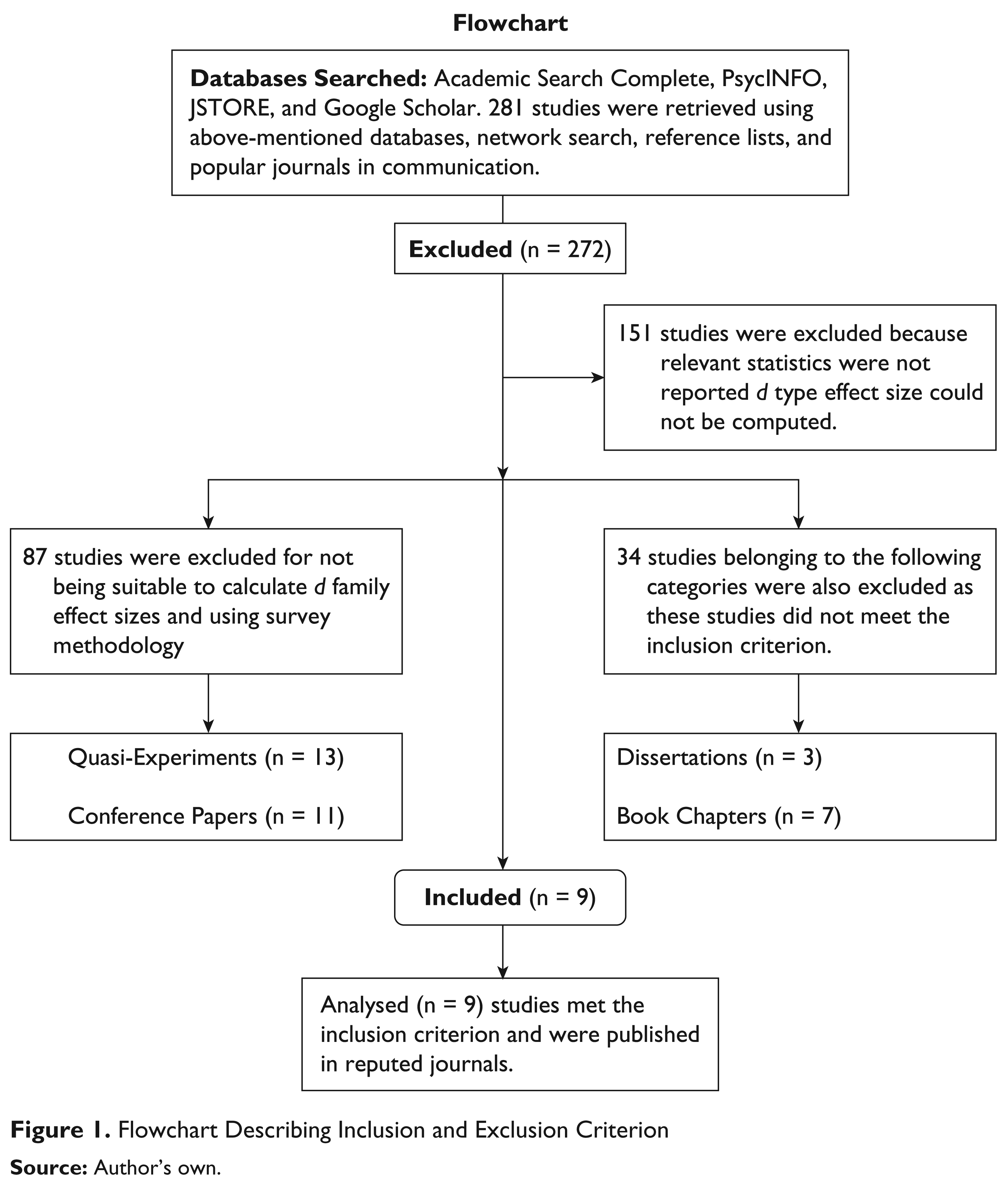
The initial search for literature yielded 281 articles (Figure 1). As many as 151 articles were excluded for applying statistical procedures not suitable for calculating d-family effect sizes. The number of articles employing survey as a methodology was 87 and r (effect size in surveys) could be converted into d, but these studies were excluded, as surveys traditionally examined relationships and did not focus on establishing causality. I also excluded 3 dissertations, 7 book chapters, 13 articles using quasi-experimental methodology and 11 conference papers. Thus, nine studies met the inclusion criterion. These studies were published in various journals and were included in this meta-analysis.
Statistical Procedure and Variables
The selected studies were coded with the help of two coders and intercoder reliability was assessed. The intercoder reliability reflected 99 per cent agreement among coders on the levels of coding. Studies were coded keeping in view publication year, number of treatment and control groups, type of intervention and use of morality as a moderator of enjoyment. Although the sample size for this meta-analysis was relatively small, coding morality helped define two clusters of studies; one with morality as moderator of enjoyment and the other with demographic and personal characteristics as moderators of enjoyment. Comprehensive Meta-analysis Trial Version (Borenstein, Hedges, Higgins & Rothstein 2005) was used in this meta-analysis to conduct the analysis. To apply meta-analysis as a research procedure, a common effect size metric was essential. This meta-analysis employed standardized mean difference as an effect size, which was defined as ‘the difference between the treatment and control group means on an outcome variable divided by their pooled standard deviation’ (Richardson & Rothstein 2008). Effect sizes were an important ingredient of meta-analysis and calculating effect sizes accurately and carefully was extremely important for the reliability of a meta-analysis. As many as 10 effect sizes were computed using the following formula:

While pooled standard deviation was calculated by using the following formula:

The corrections were applied to get unbiased effect sizes. In this analysis, the unit of analysis was individual effect size that was weighted by the inverse of its variance to calculate the mean effect size and 95 per cent confidence interval around that mean (Lipsey & Wilson 2001; Weaver 2011). Following Richardson and Rothstein (2008), I did not make corrections for statistical artefacts and followed procedures in consonance with Hunter and Schmidt (1990) bare-bones meta-analysis. As discussed erstwhile, I was not expecting much heterogeneity among effect sizes under the light of previous meta-analyses, and fixed effects model was deemed appropriate for this study.
Enjoyment of the mediated violence was a dependent variable of interest, which was conventionally measured using various 7-point self-report Likert-type scales with items such as ‘the movie was enjoyable’ and ‘playing the game was fun’ etc. Effect sizes associated with the enjoyment of violence were carefully calculated and comparisons between studies using morality and other moderator variables were made. Meta-analysis was considered an effective technique as it could efficiently relate study characteristics with the study findings (Lipsey & Wilson 2001). Therefore, use of different media as interventions was a study characteristic that was used as an independent variable in this meta-analysis. Although other study characteristics, such as, gender, age of participants, method of study and year of publication, could be used as independent variables, I was only interested in finding the effects of different interventions on enjoyment (Table 1).
Studies Included in the Meta-Analysis

Results
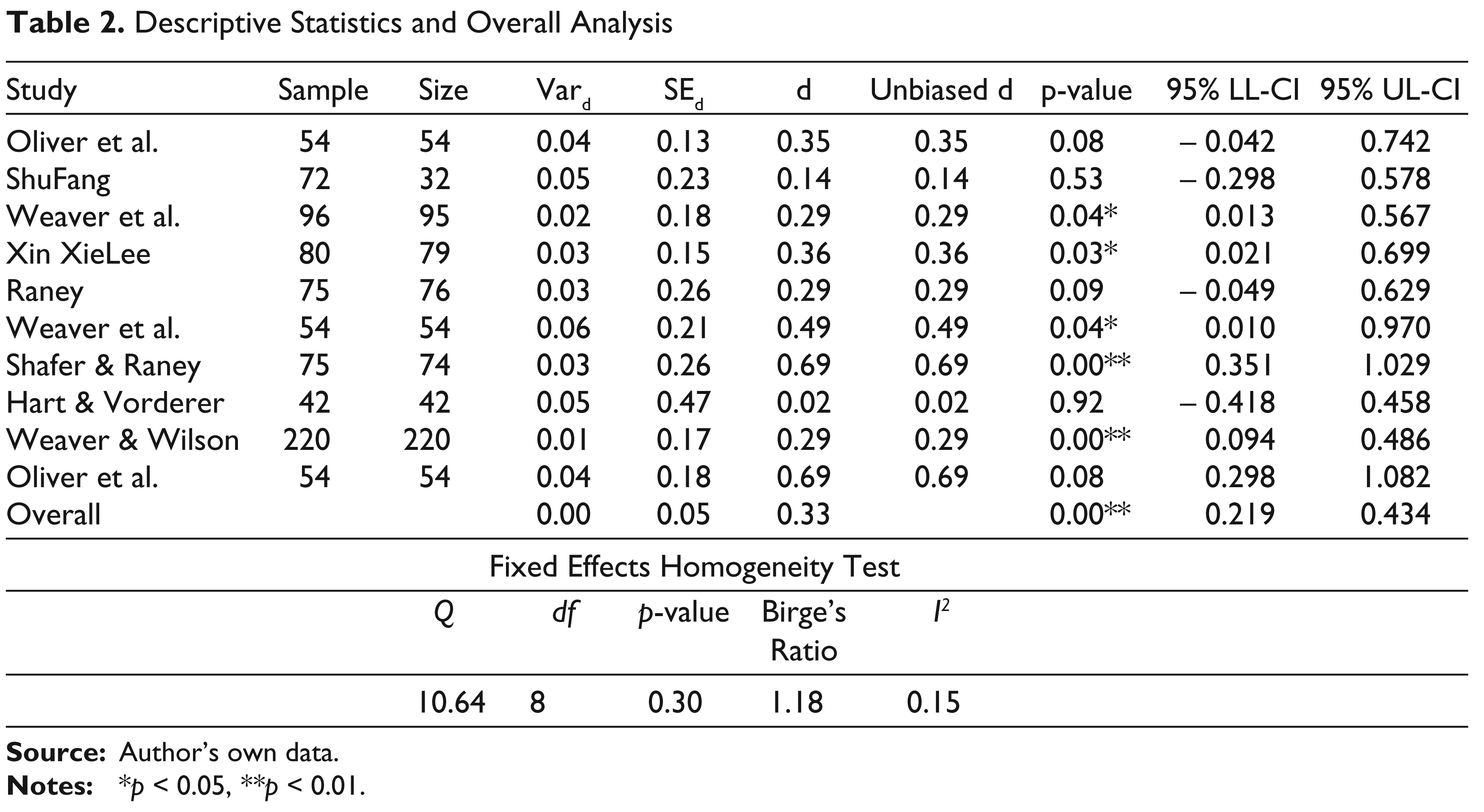
As many as nine articles were selected for this meta-analysis and Table 2 provides descriptive information and effect sizes for the selected studies. The selected articles met the inclusion criterion and produced ten d-family effect sizes associated with five interventions. Total sample size used in the selected studies comprised of 1622 participants with a mean of 324 per intervention, and the selected studies were published between 2005 and 2012. In all selected studies, the participants were selected from a pool of students at different educational institutions in the United States. The unbiased computed effect sizes were positive and ranged from 0.02 to 0.69. Three studies had used morality as a moderator of enjoyment while other six articles used various demographic and personality characteristics as moderators of enjoyment. The interventions included film (two articles), TV drama (two articles), video games (three articles), video clips (one article) and cartoons (one article).
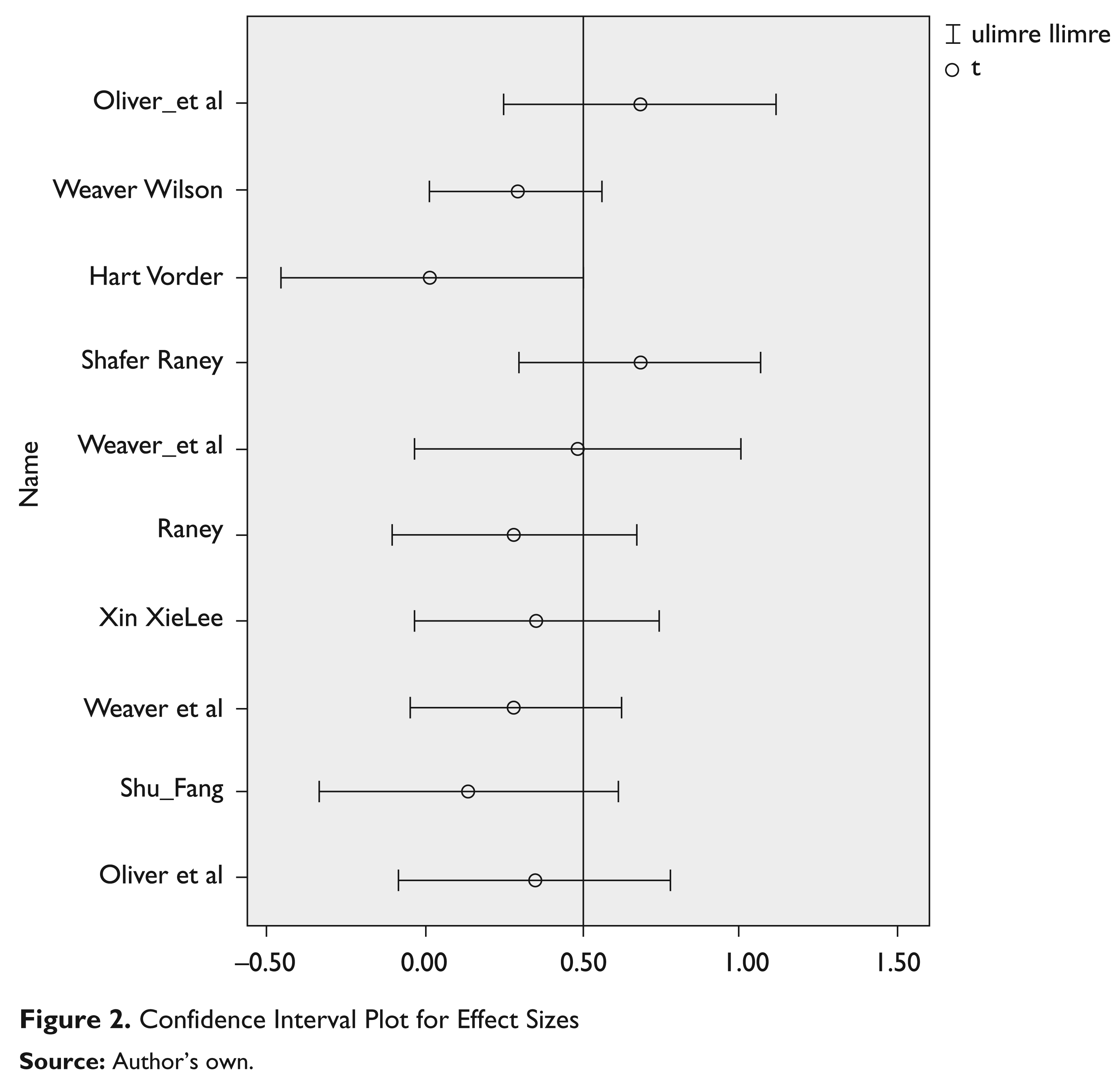
Effect sizes were weighted using inverse of the variances, and an overall analysis indicated a significant overall effect size (d = 0.33, 95 per cent CI = 0.22, 0.43), which, according to Cohen (1988), could be described as a small to medium effect size. The magnitude of the overall effect size was in accordance with the effect sizes reported by meta-analyses discussed in the preceding paragraphs. To justify the selection of fixed effects model and examine the heterogeneity of effects across studies, I checked chi-square statistics to find if the effect sizes were heterogeneous or there was a common effect size shared across selected studies. The Q value was not statistically significant (Q = 10.64, df = 9, p > 0.05), while the Birge’s ratio value (1.18) informed that the studies in this meta-analysis were homogeneous. The I2 value also indicated that the studies were selected from the same population as the I2 suggested that only 15 per cent of the total variance could be contributed by the between-study variance. These statistics justified the adequacy of the fixed effects model for this study. A confidence interval plot (Figure 2) also indicated that the effect sizes seemed to be coming from a homogenous population, and Table 2 provides necessary statistical and test values answering questions raised in this study.
Descriptive Statistics and Overall Analysis
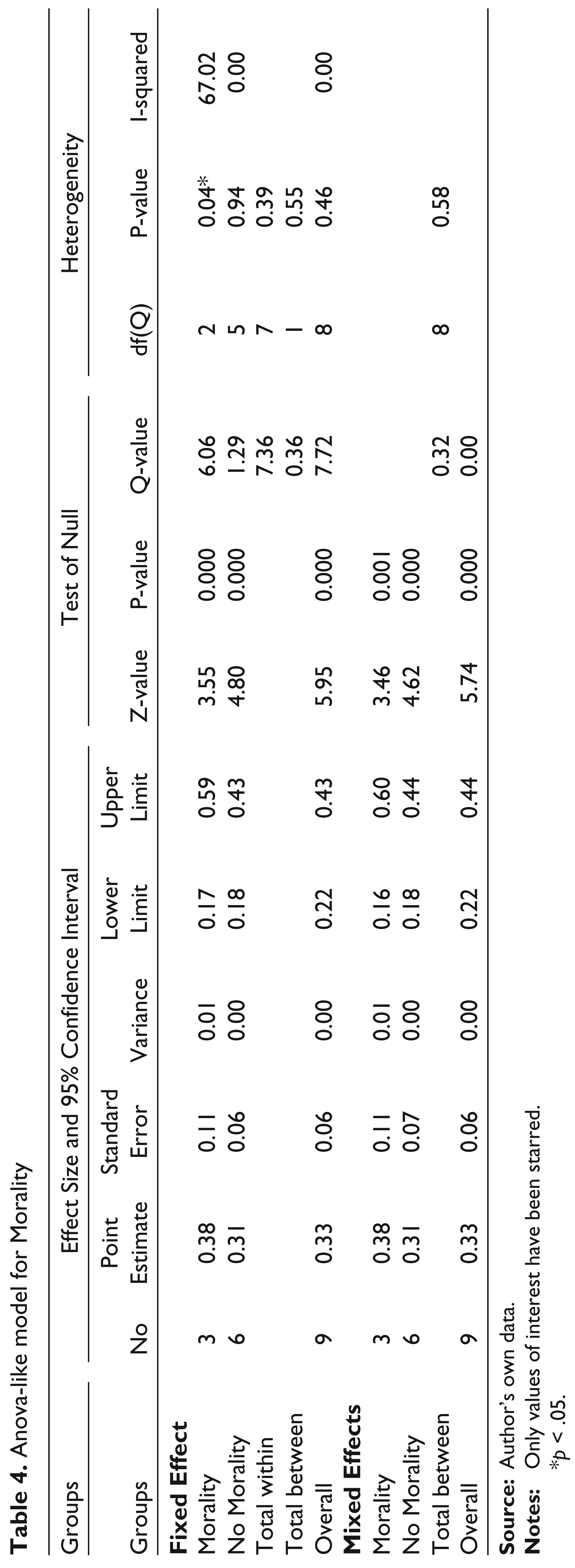
As discussed in the preceding lines, the interventions were classified into five groups, and an Anova-like categorical model was employed to examine the intervention-level moderating effects of various interventions on enjoyment. The selected articles were also divided into two subgroups using morality and other moderating and mediating variables to explore the relationship between violent media interventions and enjoyment. An analogous Anova-like categorical model was applied to investigate differences in effect sizes between two groups of studies. Tables 3 and 4 represent fixed and mixed effects analyses, which reflect that the overall effect size remained unchanged (d = 0.33). Hypothesis 1 was supported as the studies in the morality group had a higher effect size (d = 0.38, p < 0.05) compared to the studies with other moderators (d = 0.31, p < 0.05). Answering question one, the overall analysis showed that there was no difference (Q = 7.72, df = 8, p > 0.05) in studies using morality as a moderator and other group of studies with different moderating variables such as age, gender, sensation-seeking etc. The I2 (0.00) value also indicated that there was no between-study variance, and the application of fixed effects model was appropriate in this meta-analysis. However, there was a significant within-study variation present in articles using morality as a moderator of enjoyment (Q = 6.07, df = 2, p < 0.05, I2 = 67.03), and these findings offered no support to hypothesis 2, which indicated that studies in the morality group were heterogeneous in terms of effect size and a random effects model with a bigger sample of studies could be used to explain the within-study variation. The sample was small in this meta-analysis, and it was beyond the scope of this study to continue further analysis.
Anova-like Model for Medium

*p < .05.
Anova-like model for Morality
*p < .05.
In response to question two, the overall analysis showed similar trends and indicated that there was no overall difference among studies using different interventions to explore effects of violent media on enjoyment (Q = 7.72, df = 8, p > 0.05, I2 = 0.00). This study was unsuccessful in finding a between-study variance among selected articles using five different interventions, and the fixed effects model was an ample choice. Nonetheless, hypothesis 3 was supported as video games produced greater effect size (d = 0.36, p < 0.05) compared to the studies evaluating effects of violent television drama on enjoyment (d = 0.29, p < 0.05). Surprisingly, there was significant within-study variation among articles using video games as an intervention (Q = 6.90, df = 2, p < 0.05, I2 = 71.05), which reflected that hypothesis 4 was not supported. It meant that video games did not uniformly effect enjoyment as an intervention. As explained earlier, a larger sample of studies could be reviewed to examine why studies employing violent video games to explore enjoyment of the audience were heterogeneous. Accordingly, it could be concluded that intervention-level moderators (film, TV, video games, video clip and cartoons) and study-level moderators (morality, no morality) were not affecting the level of enjoyment experienced by the viewers when exposed to different types entertainment-oriented violent media.
Publication Bias
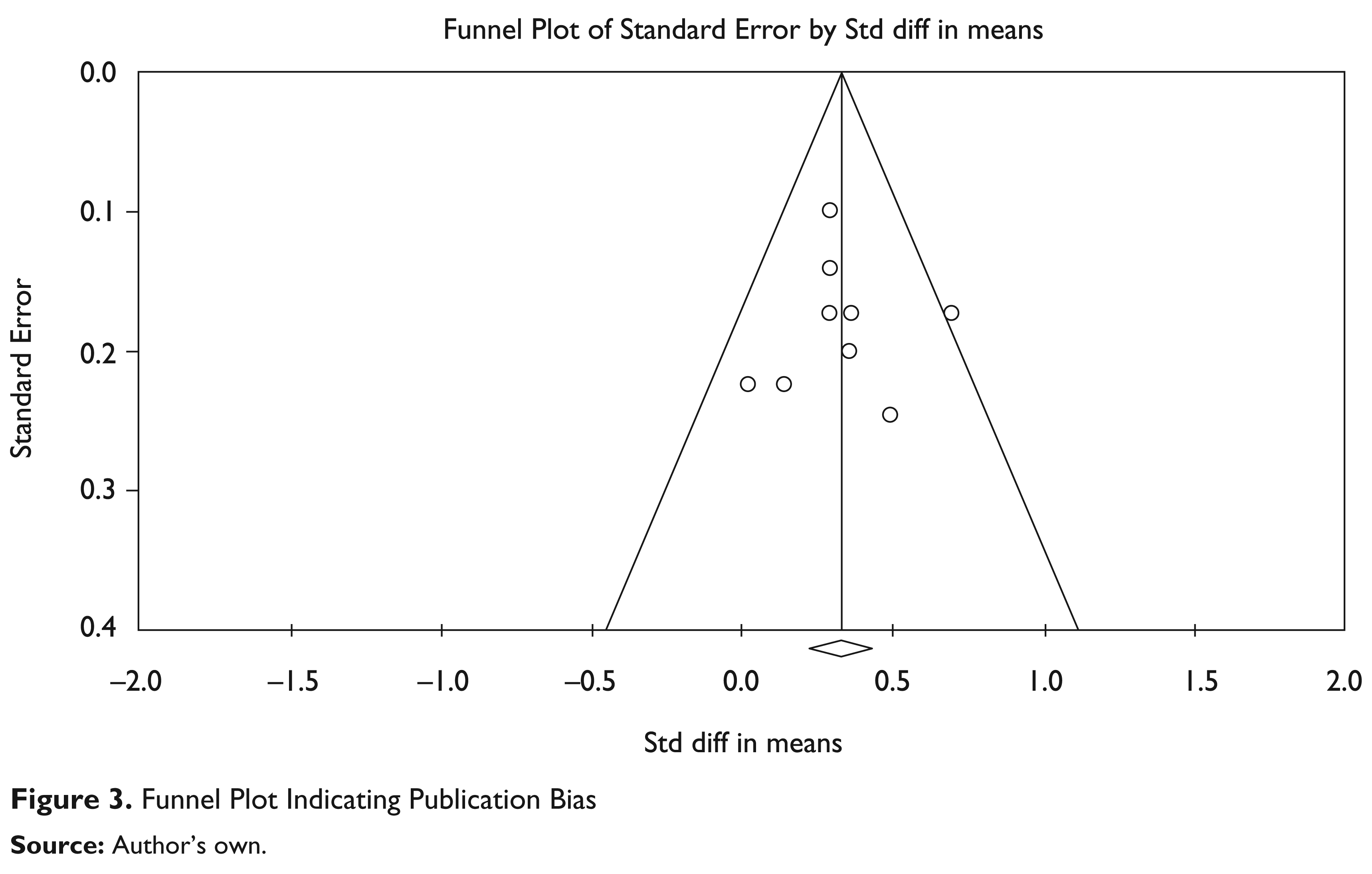
Publication bias could help determine if the published studies were different from the unpublished studies. Including unpublished studies in the meta-analysis would invariably improve the quality of results and facilitate an understanding of the nature and size of effects in an appropriate fashion. Since journal articles were selected for this meta-analysis and the sample size was small, publication bias was a likely threat producing bias in the results. A funnel plot (Figure 3) using standard error and effect sizes was constructed, which diagnosed that there was a significant publication bias in this meta-analysis. The funnel plot was a good exploratory tool to identify publication bias (Sterne, Becker & Egger 2005), and it did not show a symmetrical distribution of effect sizes in this meta-analysis. The gaps in the funnel plot indicated that certain studies were missing that could have affected the results. As effect sizes did not appear to be evenly distributed around the common effect size, the selected articles could not be considered a representative of the entire population of studies dealing with the question of enjoyment of mediated violence. I also conducted Egger’s test and the results confirmed (t = 0.04, df = 8, p > 0.05) that publication bias was present in this meta-analysis. Thus, inclusion of more studies is imperative to overcome publication bias and improve quality of the results obtained from this meta-analysis.
Discussion
The primary objective of this research was to apply meta-analysis procedure to investigate the effects of mediated violence on enjoyment experienced by the audiences across studies using various violent media interventions such as film, TV drama, video games, video clips and cartoons. Nine published journal articles were synthesized to explore if effects of the medium and use of morality as a moderator influenced the level of enjoyment audiences sought while exposing themselves to different entertainment media. Given the limited number of articles used in this meta-analysis, the overall analysis should be carefully interpreted as the selected articles appeared to be homogenous with a common effect size. Although the overall analysis that was conducted with unbiased weighted effect sizes, produced a significant effect size (d = 0.33, 95 per cent CI = 0.22, 0.43), the results indicated that there was little unexplained between-study variance and further analysis with random effects model could not be carried out.
As expected, the application of the fixed effects model was the most appropriate procedure in this meta-analysis because it was plausible to use this model if the selected studies were identical and the objective was to calculate a common effect size that ‘would not be generalized beyond the (narrowly defined) population included in the analysis’ (Borenstein et al. 2010, p. 105). As the sample size was limited and identical in this study, and I had not intended to generalize the results beyond the selected group of studies, it was reasonable to assume that the true effect size was identical and the only source of variation was within-study estimation error. However, one of the limitations of the fixed effects model, despite being a popular model in communication research, is that it might lead to type-1 error and miscalculate precision of the effect sizes (Anker et al. 2010). Despite these shortcomings, the results of this meta-analysis explained that audiences enjoyed violent content in entertainment programmes, but the effect of exposure to violent media on enjoyment did not significantly vary across selected studies.
In spite of the fact that overall analysis (Q = 7.72, df = 8, p > 0.05) indicated that analyzing various moderators to examine the relationship between mediated violence and enjoyment was not plausible, I was interested in investigating the impact of moral judgements of the audiences on enjoyment of various violent entertainment narratives. Audiences tended to lower their moral standards in favour of their favourite characters or groups and developed affective dispositions towards heroes/heroines (Raney 2002, 2006; Shafer & Raney 2012). Recent meta-analyses (Hoffner & Levine 2005; Weaver 2011) also emphasized that morality of the audiences and affective disposition towards media characters should be examined, as these moderators played a significant role in increasing or decreasing the level of enjoyment in extant literature. The selected studies were divided into two groups with three studies categorized as morality group and the results indicated that there was no difference in studies using morality as a moderator of enjoyment and other moderator variables such as demographic and personal characteristic. Although the morality group had a higher effect size (d = 0.38) compared to the no morality group (d = 0.31), the overall effect size remained unchanged (d = 0.33), and the heterogeneity analysis indicated that both groups were homogenous and the level of enjoyment was the same for the groups. Unexpectedly, the morality group signposted a significant within-study variation (Q = 6.07, df = 2, p < 0.05, I2 = 67.02), which meant that further analysis is required to explain 67 per cent within-study variance. However, it was beyond the scope of this meta-analysis as more studies were required to constitute a representative sample that could examine the effects of morality on the enjoyment of mediated violence. Despite the overall result producing no significant results for the selected studies, the 3-study morality group indicated that morality of the viewers influenced enjoyment of the violent actions of media characters. This is in accordance with the results found by extant research in enjoyment literature.
The second important moderator operated at intervention-level and I classified interventions into five groups (film, TV, videogames, video clip and cartoons). In another meta-analysis, Sherry (2010) discussed that the effects of violent video games on the behaviour of the audiences were smaller than effects of television (Paik and Comstock 1994); however, studies using video games to explore effects of violence on enjoyment wielded greater effects on enjoyment than television drama in this study. Although the overall analysis for this meta-analysis attested the adequacy of the fixed effects model and running additional analysis to examine effects of moderators was redundant, I analyzed the data further and the results indicated that the studies shared a common effect size (d = 0.33), and different types of interventions (entertainment media) did not moderate the relationship between mediated violence and enjoyment. Contrary to the results reported by Paik and Comstock (1994), the effect size for video games (d = 0.36) was greater than effect size for TV (d = 0.29). Nonetheless, these results could be disingenuous due to the extremely small number of studies in various groups. The video game articles also reflected a significant within-study variance (Q = 6.91, df = 2, p < 0.05, I2 = 71.05), but this heterogeneity should be explained by including more studies in the meta-analysis. The larger effect and significant heterogeneity might be due to the interactive nature of video games as a medium, while other media (film, TV, video clip, cartoons) attracted passive audiences who merely observed media narratives, but could not actively become a participant in the narrative. The meta-analyses conducted in the previous couple of decades also found that violent content in film, TV drama, cartoons and video games had a significant influence on the behaviour of the audiences (Anderson et al. 2003). The reported effect sizes were also consistent across various studies using different media as interventions (Perse 2010). Lastly, the results of this meta-analysis confirmed that audiences enjoyed mediated violence irrespective of the nature and type of medium.
To summarize, the results of this meta-analysis confirmed that audiences experienced amplified levels of enjoyment when exposed to mediated violence, and both study-level and intervention-level moderators did not affect enjoyment of violent entertainment narratives. The effects were smaller, but consistent and in consonance with the results of extant research published in the previous couple of decades. The plausible explanation might be the sensation-seeking behaviour of audiences that was pursuant to the assertions of Aluja-Fabregat and Torrubia-Beltri (1998) who found that both boys and girls perceived violent entertainment media such as cartoons as funny and thrilling. Affective dispositions of the audiences towards media characters might also affect enjoyment of the mediated violence as liked characters invariably emerged triumphant in entertainment narratives (Raney 2002). Audiences tended to enjoy when disliked characters were punished, and mostly the punishments involved lower or higher degrees of violence. The results of the current study could be interpreted within parameters set by the fixed effects model that was customarily applied when the number of studies was smaller and the results were not generalizable beyond the selected studies. The results also indicated that studies in the morality group were heterogeneous and difference in effect sizes might be due to individual level difference in granting moral amnesty to media characters. Likewise, studies examining the impact of violent video games on enjoyment had heterogeneous effect sizes. Due to the interactive nature of video games, users might identify with game characters differently and the levels of immersion into the game might also be dissimilar. Accordingly, a larger sample was recommended for future research in this area to engender generalizable results that would facilitate a plausible comprehension of the processes underlying enjoyment of mediated violence.
Suggestions for Future Research and Conclusion
On the basis of this meta-analysis of published journal articles, a few suggestions could be advanced for future researchers investigating effects of mediated violence on enjoyment. Since this research was limited in its mandate, future research should include both published and unpublished research to get a representative sample for synthesis and analysis. A limitation of the current study dealt with the inclusion criterion, as only published studies in communication journals were selected. As suggested in the preceding lines, future studies should include dissertations, conference papers, published articles and other ‘fail-safe’ materials to improve generalizability of the results (Rosenberg 2005). Other methodological procedures, such as surveys should also be considered, as effect sizes could easily be converted into common metric employing formulae frequently used in meta-analysis research. Future researchers should also focus on affective disposition towards media characters as a moderator of enjoyment and the within-study variance found in the morality group should also be accounted for in future research with a sizeable number of studies. Similarly, effects of video games offered interesting explanation and given the increasing popularity of interactive video games, further research is required to identify the impact of different kinds of games on the users. Finally, future researchers should consider using random effects model or Hunter and Schmidt model to examine how enjoyment is influenced by other variables.
The present study confirmed findings of the previous meta-analyses (Hoffner & Levine 2005; Weaver 2011) that the mediated violence significantly affected the level of enjoyment. As mentioned in the preceding paragraphs, these results should be cautiously interpreted as I used the fixed effects model, and the results could not be generalized beyond articles included in this meta-analysis. Similarly, a representative sample of studies is required to avoid publication bias and a sensitivity analysis could be conducted to discover how many studies would be sufficient to conduct a generalizable meta-analysis. This study focused on published journal articles only and excluded dissertations, unpublished papers, conference proceedings, and papers using other methodological approaches for reasons outlined in the preceding paragraphs, and the future researchers should carefully determine an inclusion criterion keeping in view limitations of this study. I did not correct for the artefacts influencing results of meta-analysis, and the artificiality of precision in fixed effects models was a routine problem that might have affected the results (Borenstein et al. 2010).
To conclude, a strict inclusion criterion was applied to determine causal association between mediated violence and enjoyment. A small to moderate effect size (d = 0.33) was found in tandem with extant research. Previous studies found violent television drama more effective in impacting the enjoyment of the audiences (Sherry 2010), and the results of this study deviated from past tradition by concluding that video games were a powerful intervention affecting enjoyment of violent entertainment narratives. The overall effect of interventions did not yield different results, which signified that audiences enjoyed violent media regardless of type of entertainment programmes. Likewise, morality of the audiences did not influence enjoyment of the mediated violence. Accordingly, further inquiry was needed to explore the causal connections between complex psychological constructs such as enjoyment and violence in entertainment media content. Research in this area was academically and civically significant, and possessed the potential to influence policy decisions related to the regulation of electronic media content. Besides, social significance of studying the effects of mediated violence on the enjoyment of audiences offered a valuable opportunity to scholars to explore this area. It was hoped that with the increasing number of primary studies in this area, the researchers would be updating systematic reviews of this research by synthesizing the results using meta-analysis.