



Abstract
Until now, no study has proposed strategies for social media advertising, scrutinizing the differential interaction of user involvement, different kinds of user involvement, product category involvement, and advertising appeals considering the unique characteristics of social media users in the Middle East. The present study addresses this issue by introducing two detailed advertising effectiveness grids in 20 situations for social media advertising in the Middle East context (Iran) and revised the previous grids and findings proposed for Western and Eastern countries in the area of traditional media advertising effectiveness. In all, 552 students of the University of Tehran, who are social media users were randomly selected, and questionnaires were distributed via an online platform. In order to explore the hypotheses, a mixed 2 × 2 × 2 factorial design was employed, followed by assessment of the validity and reliability of the measures. Surprisingly, some findings were contrary to traditional findings and grids both in the West and in the East and suggest different and new strategies; however, some were in line with traditional studies.
Keywords
Introduction
There are considerable number of studies available on the differential interaction between advertising strategies (informational and transformational advertisings) and the level of product category involvement (high/low) to formulate advertising strategies for traditional media. Although substantial progress has been made, several issues remain unresolved since they did not account for the role of user involvement and its most important subsets, social media and culture in users’ purchase decision-making process in a single study to develop more accurate and comprehensive advertising strategies. In order to address these research gaps, our main objective is to investigate the differential interaction of social media users’ involvement, social media users’ involvement types (advertising involvement, product involvement, consumption involvement, and purchase decision involvement), product category involvement and advertising appeals (informational and transformational advertisings) to introduce social media advertising strategies for 20 situations in the Middle Eastern cultural context.
As predicted, digital advertising expenditure surpassed TV for the first time in 2016, and the gap between advertising expenditure in digital and traditional media will be widened year after year, and this phenomenon will gradually spread through all countries (Bennett, 2017; eMarketer, 2017b; The New York Times, 2015). Due to the rapid growth of social media marketing, it has become a powerful tool for marketing objectives ranging from advertising in social media network site (SNS) (Voorveld & van Noort, 2014), taking advantage of Word of Mouth on social media (Sharma & Srivastava, 2017) and building a corporate image (Amegbe, Owino & Kerubo, 2017) to even obtaining publicity and funding for non-profits (Amtzis, 2014). Furthermore, these figures indicate that social media is a considerable potential business tool in the Middle East, as well as other parts of the globe.
In 2017, the population of the Middle East was estimated at roughly 246 million. This region has 147 million Internet users, which is equal to 3 per cent of the world population, and 64 per cent Internet user penetration rate. This region has 93 million active social media users, which are equivalent to 4 per cent of the active social media users of the world, and 38 per cent active social media user penetration rate (HootSuite, 2017). In 2012, it was found that 3 per cent of the global social network advertising expenditure was for the Middle East and Africa, and this number increased to 4 and 6 per cent in 2013 and 2014, respectively (Go-Golf, 2013a). It has been reported that 88 per cent of the Middle East’s online population use social networking sites on a daily basis (Go-Golf, 2013b). Besides, Internet users in the Middle East increased by over 15 per cent in 2016 which amounted to over 19 million users and also, active social media users increased by over 47 per cent which amounted to over 30 million users (HootSuite, 2017).
This phenomenal growth of the social media is accompanied by different characteristics of digital media as compared to traditional media (Bruhn, Schoenmueller & Schäfer, 2012; Truong, McColl & Kitchen, 2010) and also different characteristics of digital media users as compared to traditional viewers (Heinonen, 2011; Smith & Chaffey, 2002). These fundamental differences can be traced to different theories and phenomena. The Banner blindness theory states that social media users show more reluctance to advertisements compared to traditional media audiences (Benway, 1998). Similarly, the Limited Capacity Theory (Hsieh & Chen, 2011) states that social media users allocate lower cognitive capacity to social media advertisements than traditional media. In addition, according to the interface theory (Griffith, Krampf & Palmer, 2001; Hoque & Lohse, 1999), social media advertising influences users’ involvement in terms of both physical medium and content presentation. Besides, the involvement theory (Zaichkowsky, 1986) emphasizes the impact of social media as an object or a stimulus factor on users’ involvement. Therefore, with regard to the growing expansion and business applications of social media and the differences between traditional media, social media, and their viewers, revising the principles and strategies of traditional media advertising based on social media requirements and settings is necessary.
In this regard, a portion of the studies on traditional media advertising effectiveness has devoted a considerable effort to investigate the differential interaction between advertising appeals (transformational advertising versus informational advertising) and the level of product category involvement (high versus low), in order to introduce traditional media advertising strategies (e.g., Cui, Liu, Yang & Wang, 2013; Dens & De Pelsmacker, 2010; J. Lee, 2013; Puto & Wells, 1984; Rossiter & Percy, 1985; Um, 2008; Vaughn, 1980). According to the differences between traditional media, social media, and their audiences, these differences were ascribed to consumer behaviour-related theories, including the banner blindness phenomenon, limited capacity, interface, and involvement theories, so it is necessary to revise traditional media advertising strategies.
Furthermore, this study boasts a cultural point of view to the subject because as Winsted (1997) pointed out, consumers from different cultures have different expectations; therefore, one framework developed within a culture should not be automatically broadened to another culture without testing for transferability and equivalency. In this regard, one of the important factors in the field of advertising effectiveness is cultural issues. Accordingly, a set of previous articles in the field of advertising effectiveness have concentrated on the impact of countries and their cultural differences in advertising effectiveness, for instance, studies on Nigeria (Alozie, 2010), China, the United States versus Japan (Okazaki, Mueller & Taylor, 2010), the United States versus Korea (Taylor, Miracle & Wilson, 1997), Hong Kong versus the United States (De Mooij, 2013), the United States versus Hong Kong (Susan, 2004), and the United States versus Korea (Ford, Bang, Anne Raymond, Taylor & Sook Moon, 2005). On the other hand, another set of cultural studies have made much effort to group the cultural attributes of different countries and regions of the world into two contradictory well-known general types, namely, low-context versus high-context (Hall, 1976) and individualism versus collectivism (Hofstede, 1980). Accordingly, generally speaking, Western countries possess the cultural attributes of low-context and individualism. On the contrary, Eastern countries possess the cultural attributes of high-context and collectivism. Similar to the Eastern countries, Middle East countries also possess cultural attributes of high-context and collectivism (Hofstede, 2011; Kittler, Rygl & Mackinnon, 2011; Korac-Kakabadse, Kouzmin, Korac-Kakabadse & Savery, 2001; Yeganeh & Su, 2007). By and large, this group of studies concluded that in collectivistic, holistic and high-contextual cultures (the East), emotional, hedonic and image-based appeals (transformational advertising) are more persuasive. On the contrary, in individualistic, analytical and low contextual cultures (the West), logical and information-based appeals (informational advertising) are more convincing.
The point that many studies have concluded that in order to reach more effective advertisements in the Middle East, the cultural attributes of the target market should be taken into account in creating advertisements and more attention should be focussed on regionalization than standardization should be stressed (Kalliny & Gentry, 2007; Kalliny & Ghanem, 2009). For instance, Rice and Al-Mossawi (2002) investigated the impact of Islam on advertisements in the Middle East countries. Therefore, another contribution of the study is the cultural interpretation of the 20 social media advertising strategies introduced based on the cultural researches and theories conducted in the West and the East. There has been an increase in studies on the role of advertising as it relates to culture, particularly in the West and the Far East. Despite the increased interest in the subject, few, if any studies, have dealt with the Middle Eastern countries. This article serves as an attempt to explore the subject in the Middle East.
Besides, the aforementioned traditional media studies that investigated the interaction between advertising appeals and product category involvement suggested very general and simple advertising strategies. This is because they only considered the product category involvement variable and did not take into account the impact of user involvement variable and its types on developing accurate strategies, whereas Quester and Lin Lim (2003) and Traylor and Joseph (1984) mentioned that the involvement construct is intrinsically a consumer-based concept rather than a product-based concept and only consumers can be involved intrinsically, not the product category. In this case, the effect of different stimuli on advertisement viewers can be taken into consideration by adding user involvement and its four types to the model, to develop more accurate advertising strategies. In the current study, the effects of user involvement and user involvement types (advertising involvement, product involvement, consumption involvement, and purchase decision involvement) on persuasion are scrutinized in addition to product category involvement variable as a contribution.
To the best of the authors’ knowledge, this is the first article that includes all these characteristics in a single study. Therefore, this article addresses the following main questions:
Which of the appeal types (informational/transformational) improve social media advertising effectiveness with regard to the simultaneous interaction of user involvement and product category involvement, especially in a Middle Eastern culture? (including four social media strategies) Which of the appeal types (informational/transformational) improve social media advertising effectiveness with regard to the simultaneous interaction of the four types of user involvement (advertising involvement, product involvement, consumption involvement, and purchase decision involvement) and product category involvement, especially in a Middle Eastern culture? (including 16 social media strategies). What are the differences between the advertising strategies proposed in traditional media studies for Western and Eastern countries and the advertising strategies proposed for social media in the current study for the Middle East?
Literature Review
Informational and Transformational Appeals (Advertisements)
Based on their basic definitions, advertising appeals are generally categorized as informational and transformational (Um, 2008). Puto and Wells (1984) explained that an advertisement which is neither informational nor transformational cannot lead to an improvement of consumers’ brand perception as well as play an effective role in advertising effectiveness. Informational advertising helps consumers to assess the brand and product merits as well as consumers’ basic informational needs (Dens & De Pelsmacker, 2010). Moreover, this type of appeal should present the essence of the brand, emphasize its uniqueness, and demonstrate competing brands (Lee, Chung & Taylor, 2011). Therefore, informational advertising strives to persuade consumers by emphasizing on the features of the product. Hence, it is useful in fulfilling buyers’ utilitarian, practical and functional needs (Belch & Belch, 2004). On the other hand, transformational advertising employs additional attributes such as music, pictorial factors as well as symbolic or emotional attractions to create a product experience (Cui et al., 2013). Furthermore, it portrays a complete spectrum of emotional responses from disgust to happiness (Solomon, 2014).
The necessity of investigating informational and transformational advertisings and the prominent role of these two appeals can be proved through studies done by Moriarty (1987) and Cutler, Thomas and Rao (2000). According to their studies, the majority of advertisements can be categorized as one of the two general appeals, informational and transformational. Cutler et al. (2000) categorized advertising topology introduced by Moriarty (1987) into informational and transformational advertisings. They categorized identification, description, comparison, before/after, and demonstration advertisings as informational advertising and association, metaphor, storytelling, aesthetic advertisings were categorized as transformational advertising. Therefore, the results of the studies in this field can be practical and generalized to the majority of advertising styles in social media.
Involvement and Its Mediating Role
Petty, Cacioppo and Schumann (1983) reported that neither the central route (informational advertising) nor the peripheral route (transformational advertising) alone could shed light on the various results of attitude change. Thus, the question is why are people information seekers in some circumstances and cognitive misers who avoid mental effort in other circumstances? The answer to this question lies in the mediating role of the involvement construct (See O’Cass, 2000; Petty et al., 1983; Puto & Wells, 1984). Engel, Blackwell and Miniard (1995) defined involvement as a construct which measures the influence of personal attributes such as self-concept, goals, and basic values on individual decision-making. Highly involved consumers display specific behaviours such as active searching, active information processing, and an extensive decision-making process (Laurent & Kapferer, 1985). Moreover, they evaluate and are convinced before making any purchase (Rossiter & Percy, 1985). On the contrary, low-involved consumers do not have enough motivation or ability to analyze complicated information (Hansen, 2005) and are convinced after purchase (Rossiter & Percy, 1985).
Pavlou and Stewart (2000) defined user involvement as a subjective psychological state of the consumer which is the determinant of the importance and personal relevance of an advertisement or a product for consumers. Also, it can be referred to as the degree of perceived personal importance, relevance, or interest evoked by a stimulus or stimuli (such as advertisements, brands, product categories, purchase decisions, products, or services) which are attached to enduring or situation-specific objectives by consumers (Verbeke & Vackier, 2004).
Product category involvement explains the perceived relevance of the product class to the individual on a continuous basis. The more a product category is of considerable importance to a person’s ego and sense of identity, the more psychological attachment is displayed to a certain brand inside that product category (Quester & Lin Lim, 2003).
The Relationship Between the Involvement Theory, Interface Theory, Banner Blindness Phenomenon, the Limited Capacity Theory and Social Media Advertising
In the current research, the basic reason for investigating the role of user involvement, user involvement types, and advertising appeals in the field of social media advertising effectiveness is derived from the involvement theory (Zaichkowsky, 1986), the interface theory (Griffith et al., 2001; Hoque & Lohse, 1999), the banner blindness phenomenon, and the limited capacity theory. First, Zaichkowsky (1986) proposed three factors that affect customers’ involvement. The personal factors such as individual values, interests, and needs; an object or stimulus factors such as content of communication, source of communication, and differentiation of alternatives, which are associated with the physical characteristic of communication media (e.g. TV, radio, print, and online media); and third, situational factors that are related to specific occasions and purchases. Social media platforms as the physical characteristic of communication media and online searchable documents as the content of the communication affect users’ involvement when they watch advertisements in social media.
Second, the theory of interface involvement is used to assess the effect of the consumer involvement generated by the physical medium and content presentation of interfaces on consumer response. This theory states that different interfaces influence the level of consumer involvement and subsequently affect consumer response variables (Griffith et al., 2001).
Third, another theory which is in relation to social media advertising and should be mentioned is the term ‘Banner blindness phenomenon’ which refers to social media users’ reluctance towards any item that does not look like a part of their main viewing content and reduce the effectiveness of online advertising. This reluctance in online media is more than that of traditional media (Benway, 1998).
Fourth, with regard to the relationship between the limited capacity theory and social media, it should be noted that when an individual’s cognitive capacity is not enough for the cognitive task, the individual becomes a ‘cognitive miser’ who allocates limited cognitive capacity to analyze the task. As it was explained about banner blindness, social media users’ reluctance towards social media advertisement is more than traditional media advertisement, and they have a short attention span; hence, they allocate limited cognitive capacity than traditional media users. In this situation, transformational advertisements have more probability to be viewed because it is easier to understand and requires lower cognitive capacity than informational advertising (Hsieh & Chen, 2011). Hence, these four theories highlight the differences between traditional media and online media in the field of marketing and advertising. Therefore, not all the principles and strategies of traditional media advertising are completely applicable to the online world; hence, it is necessary to revise it.
The Middle East, Culture, Social Media, Advertising Appeal, and Advertising Effectiveness
The first reason for choosing the Middle East as the cultural region of the research is the special and effective role of social media in the Middle East that should be further investigated. In this regard, Goodrich and De Mooij (2014) conducted extensive research in 55 countries around the world, including approximately 30,000 people and found interesting results regarding the relationship between social media and other forms of online platforms and Hofstede model’s cultural dimensions (Hofstede, 2001, 2005). In brief, collectivistic cultures (the Middle East and the East) utilize social media more than individualistic cultures (the West). They concluded that in collectivistic cultures, social media plays a more important role in the purchase process compared to individualistic cultures. Besides, they suggested that marketers should utilize social media more in short-term collectivistic cultures (the Middle East and the East) because social media is more practical and effective in these regions unlike long-term individualistic cultures (the West) that utilize search engines which are more applicable and effective in this region.
The second reason for choosing the Middle East as the cultural region of the research is the function of the social media in the consumer decision-making process in the Middle East. An important difference between cultures might also be the function of social media in the consumer decision-making process (Goodrich & De Mooij, 2014). Short-term-oriented collectivistic cultures (the Middle East and the East) make decisions about the purchase with the help of trust and feeling towards companies via social media using the social trait of social media. Whereas long-term-oriented individualistic cultures (the West) make decisions about the purchase with the help of information about companies via social media; however, search engines are more important information sources as a result of their individual-oriented trait (Goodrich & De Mooij, 2014). Moreover, in collectivistic cultures, the task of social media is to arouse trust and feeling as well as to establish a relationship between consumers and company—trust dominates decision-making and social media plays an important role in opinion formation rather than decision-making (Goodrich & De Mooij, 2014). Whereas in individualistic cultures, communication more or less is synonymous with information (Singelis & Brown 1995; Miyahara, 2004), advertising plays the role of persuasion,(Miracle, 1987) social media are considered a definitive source for purchase decision-making, and social media plays an important role in purchase decision-making rather than opinion formation (Goodrich & De Mooij, 2014).
The third reason for choosing the Middle East as the cultural region of the research is the relationship between culture and advertising appeals. The survey of Khanh and Hau (2007) concluded that cultural dimensions are mirrored in the consumers’ preference for advertising appeals. Besides, Taylor, Miracle and Wilson (1997) reported that individualistic cultural attributes positively affect the preference of informative content (informational advertising) in advertisements in a study that compared Korean and US television commercials. Also, Mortimer and Grierson (2010) pointed out the fact that the culture of a country plays a key role in determining which of the informational and transformational advertisings are utilized more in each country.
Hypothesis Development
In order to clarify the hypothesis, it is necessary to mention the following three matters. First, one of the most important parts of all the hypotheses of this study is the relationship between advertising appeals (informational/transformational) and involvement variables (product category involvement and user involvement). Regarding the relationship between the level of product category involvement (high/low) and advertising appeals (transformational/transformational), some studies on traditional media have investigated this relationship; for example, ELM (Elaboration likelihood model) (Petty & Cacioppo, 1986), FCB grid (Vaughn, 1980, 1986), the cognitive resource matching framework (CRM) (Keller & Block, 1997), self-congruity and functional congruity (Johar & Sirgy, 1991), functional, hedonic and symbolic needs (Naylor, Kleiser, Baker & Yorkston, 2008), as well as functional and expressive products (Mittal, 1989), and the heuristic model of persuasion (Chaiken, 1987). In summary, based on the aforementioned studies, it can be concluded that in the condition of high product category involvement, informational advertising is more effective. On the contrary, in the condition of low product category involvement, transformational advertising is more effective.
Second, since no study has explored the relationship between the level of user involvement (high/low) and advertising appeals (transformational/transformational), this study is the first to explore this relationship. Hence, we generalized the previously mentioned rule about the relationship between the level of product category involvement and advertising appeals to the relationship between the level of user involvement (high/low) and advertising appeals (transformational/transformational). Also, checking the accuracy of this generalization is among the main objectives of the study.
Third, in this study, in order to develop the hypotheses, user involvement and its types (advertising involvement, product involvement, consumption involvement, and purchase decision involvement) are regarded as determinant factors in choosing a more effective advertising strategy for each situation rather than product category involvement. For instance, in a situation with low product category involvement and high user involvement, user involvement is regarded as a determining factor, and according to the preceding paragraph regarding determining a more effective advertising strategy (informational or transformational advertising), informational advertising would be a more effective advertising strategy for this situation. The reason is that involvement is intrinsically a consumer-based concept rather than a product-based concept, and only consumers can be involved intrinsically, not product category. The reason is well-described in the studies by Quester and Lin Lim (2003) and Traylor and Joseph (1984). The logic behind adding user involvement and its types to the study is the fact that the characteristics of communication channels and interfaces, culture, advertising appeals, product category involvement, and personal characteristics which are the main factors of the study (and every factor which affects individuals’ decision-making process) affect involvement. However, this impact is on user involvement and user involvement types, and not product category involvement because user involvement and its types have a changeable nature for each user and are affected by external stimuli, whereas product category involvement is not affected by external factors and have an unchangeable and fixed nature. For example, there is a consensus that mobile and computer are in the category of high product category involvement. In contrast, shampoo and toothbrush are in the category of low product category involvement (Choi, Yoon, Paek & Reid, 2012; Ratchford, 1987; Vaughn, 1980; Vaughn, 1986). However, it is possible that fashion models have high user involvement with shampoo and toothbrush and some of the elderly who are not interested in technology have low user involvement with mobile and computer.
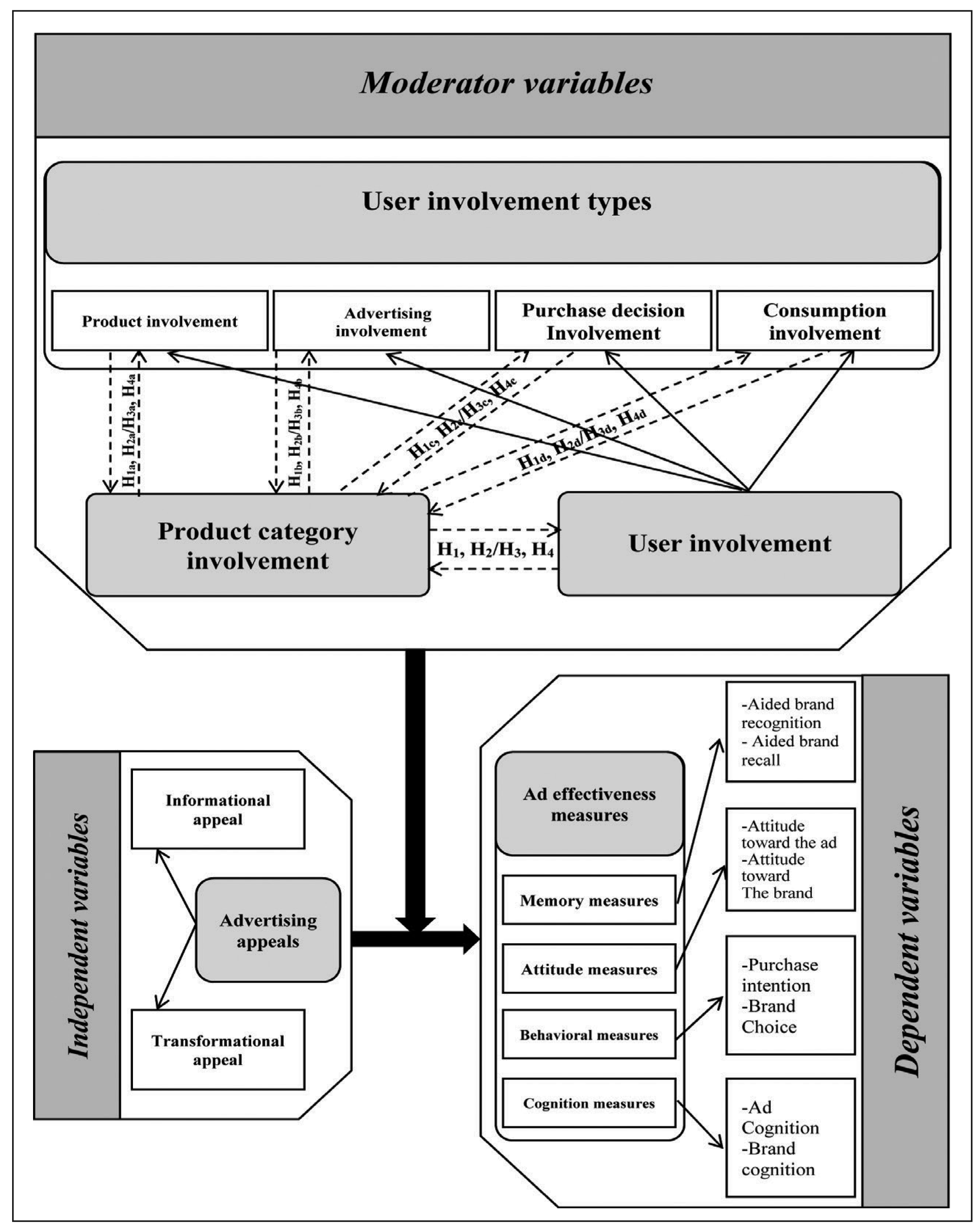
The research framework in Figure 1 illustrates the general relationships between the variables and their related hypotheses.
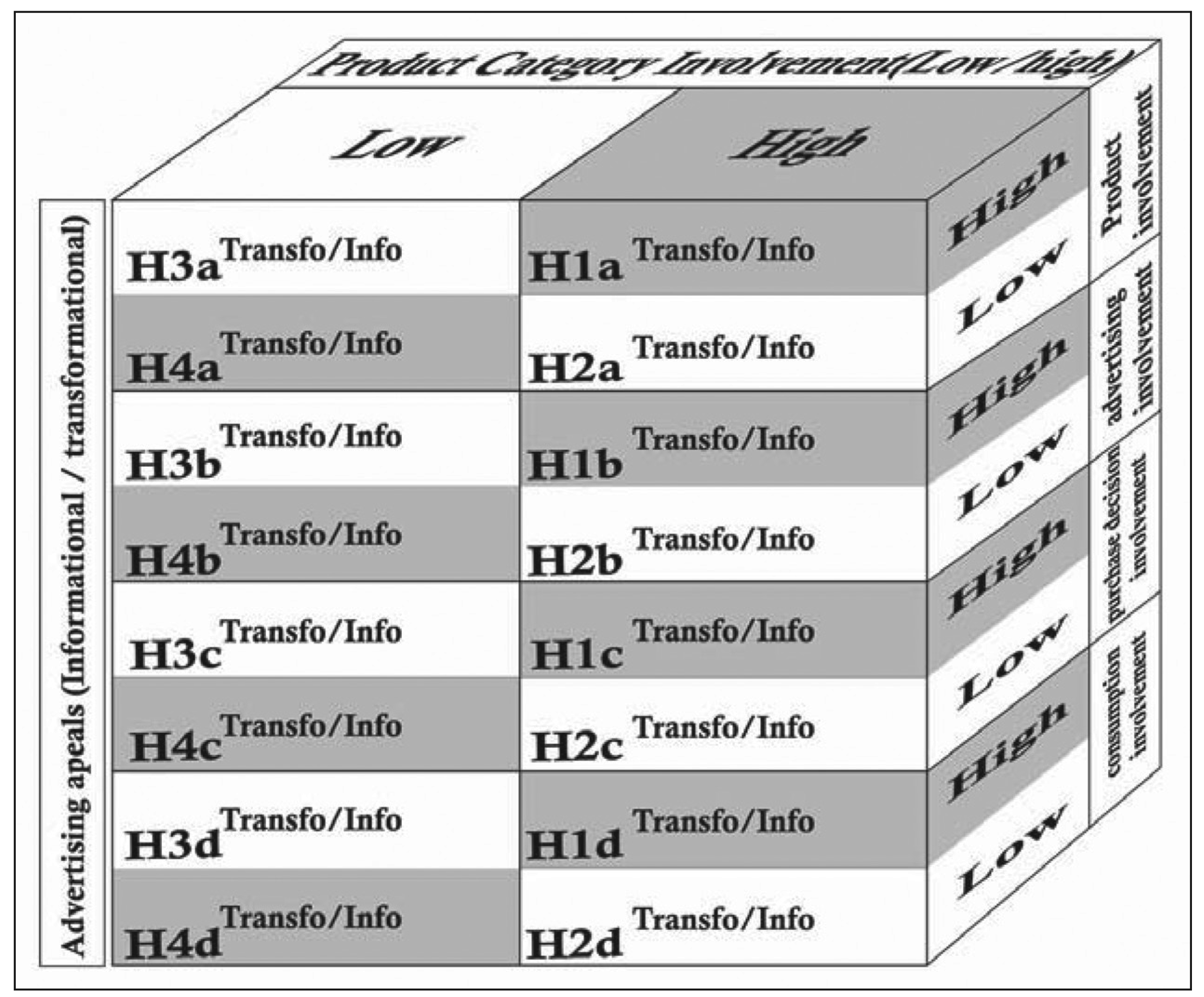
As explained in the preceding paragraph and as shown in Table 1, it is logical to expect that these relationships exist among the types of appeals (informational versus transformational), the level of product category involvement (high versus low), the level of user involvement (high versus low), and the level of four dimensions of user involvement (product involvement, advertisement involvement, purchase decision involvement, and consumption involvement) in the field of social media (see Figures 1, 2 and 3 for more clarification).

Because of the considerable number of hypotheses, the complete sentence of hypothesis H1 is provided in the following paragraph as a template and the remaining hypotheses are summarized in Table 1.
The Structured List of Hypotheses
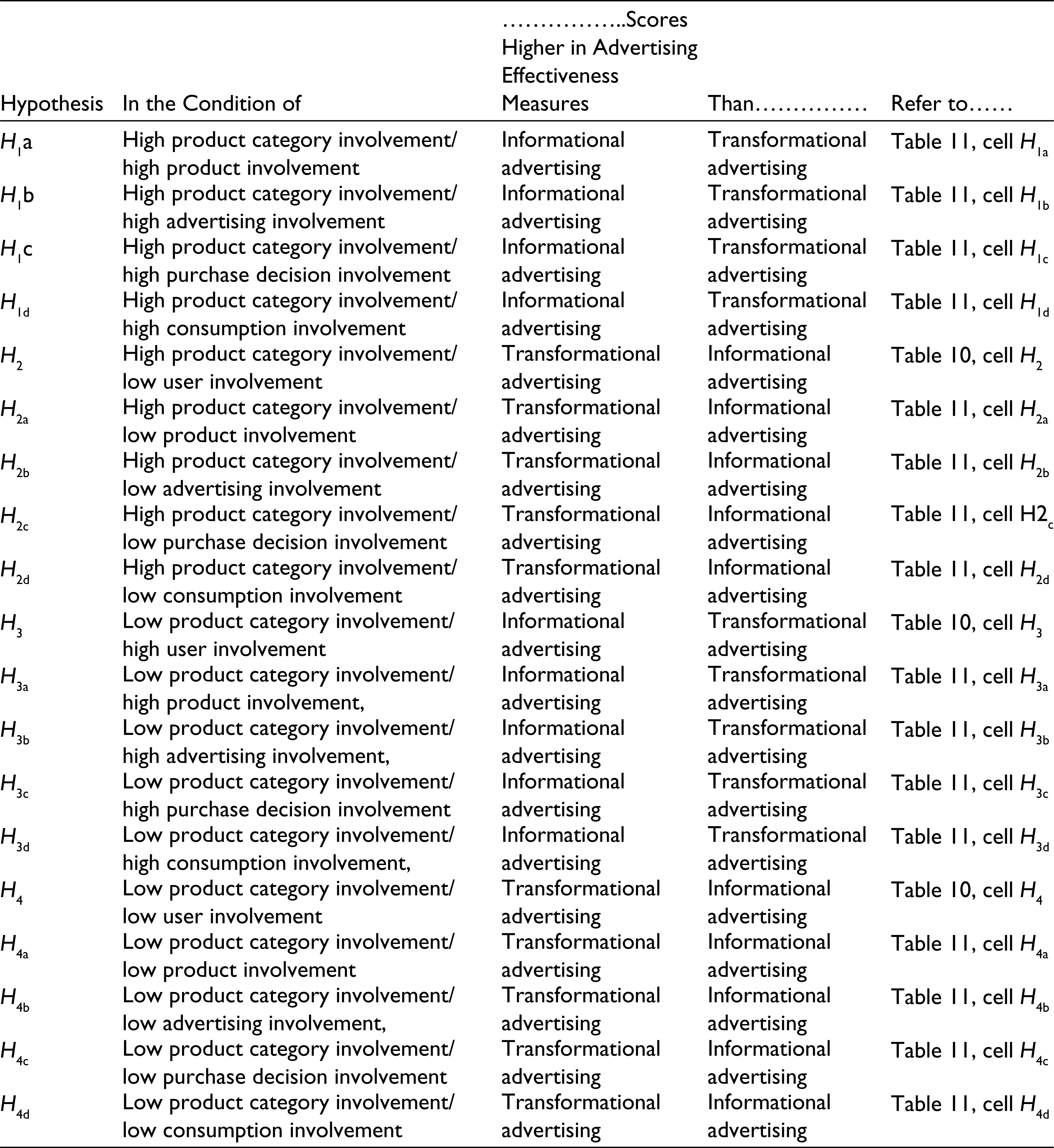
H1: In the interaction of high product category involvement and high user involvement, it is expected that informational advertising scores will be higher in advertising effectiveness measures (recall, recognition, attitude towards ad, attitude towards brand, brand choice [BC], and purchase intention [PI]) than transformational advertising scores (Table 10, cell H1).
Method
Experimental Design
In order to explore the hypotheses, a mixed 2 (between subjects: high/low product category involvement) × 2 (within subjects: informational/transformational advertising) × 2 (within subjects: high/low user involvement) × 2 (within subjects: high/low user involvement types) factorial design was employed. In the current study, for experimental-control groups comparison, between-group comparison method which has been used in similar studies was utilized which uses subjects as their own control (Cui et al., 2013; Dens & De Pelsmacker, 2010; J. Lee, 2013; Puto & Wells, 1984). For instance, for informational/transformational advertising factor, subjects who watched informational advertising (and didn’t watch transformational advertising) played the role of control group for the opposite group (subjects who watched transformational advertising) because they were not imposed to stimulus/transformational advertising and subjects who watch transformational advertising (and didn’t watch informational advertising) played the role of control group for the opposite group (subjects who watch informational advertising). In order to assign subjects to groups and control nuisance variable, the randomization method was utilized.
In Figure 2, the relationship between the conduct of the experiment and the hypotheses related to user involvement (H1, H2, H3 and H4) are clarified. For instance, in H1, first, some subjects were randomly allocated to the high product category involvement situation (car) (H1 group). Second, the allocated subjects watched both informational and transformational car advertisings. Third, the subjects’ user involvement towards car were measured and those whose user involvement was high (above 2.5) were separated for this situation (H1) and the others were allocated to H2 (low user involvement) and finally, advertising effectiveness was measured by dependent variables. Low product category involvement groups in Figure 2 are related to shampoo (H3 and H4 groups).
In Figure 3, the relationship between the conduct of the experiment and the hypotheses related to user involvement types (from H1a to H4d) are clarified. For instance, in H1a, first, some subjects were randomly allocated to the high product category involvement situation (car) (H1a group). Second, the allocated subjects watched both informational and transformational car advertisings. Third, the subjects’ user involvement towards car were measured and those with a high product involvement (above 2.5) were separated for this situation (H1a), while others were allocated to H1b (low product involvement), and finally, advertising effectiveness was measured using dependent variables. The low product category involvement groups in the figure are related to the shampoo (H3a to H4d groups).
Sample
The participants were students of the University of Tehran, Iran. Facebook was chosen as the social media platform for the study as a result of its high popularity, high rate of acceptance among users, and production of the best ROI (Return On Investment) both in the Middle East (eMarketer, 2016) and in other parts of the world (eMarketer, 2017a; Stelzner, 2016). The questionnaire was distributed via an online platform. In the first stage, 600 students were randomly selected. The participants of this study were social media users, and they all had a Facebook account. In all, 552 participants satisfied these conditions and participated in the study. Thereafter, 40 participants were randomly selected for pre-test from the 552 participants. After the pre-test, questionnaires were distributed among the remaining 512 participants from April to June 2017. Half of the participants were randomly allocated to the high product category involvement experiment (cars), while those remaining were randomly allocated to the low product category involvement experiment (shampoos). Table 2 presents the details of their demographic information.
Socio-demographic Characteristics of the Respondent

Experimental Stimuli
Four separate experimental Facebook pages were generated for four independent brands like the real ones, advertisements were placed on them, and a pilot test was conducted on 10 participants. Thereafter, suggestions and feedbacks were sought to adjust the design of the experimental pages and questionnaire. Prior studies showed that the differential effects of new brands versus established brands have an impact on involvement, advertising effectiveness, and the interaction effect of advertising appeal (Kim, Haley & Koo, 2009; Ruiz & Sicilia, 2004; Um, 2008). Furthermore, brands familiarity results in ‘the habituation phenomenon’ (Cacioppo, Tassinary & Berntson, 2007). Therefore, the negative effect of pre-existing attitudes and brand familiarity or brand bias is controlled by the use of fictitious brands. However, in order to prevent subjects from perceiving brands as fake, they were informed that they are new brands that will soon be launched. Furthermore, in order to control the disruptive influence of advertisement components other than informational and transformational appeals, the design, colour, size, and logos of the main objects (cars and shampoos) were designed as is in fashion for both competing brands. The full-length images of four advertisements are presented in Appendices 1, 2, 3, and 4. According to Choi et al. (2012), Ratchford (1987), Vaughn (1980) and Vaughn (1986), cars represent products which belong to the high product category involvement. On the contrary, shampoos are representatives of products that belong to the low product category involvement.
Procedures
In the first stage of the experiment, participants were asked to spend one minute observing the informational advertising for car brand 1(RICH) in the Facebook page dedicated to brand 1. After the allotted one minute, cognition (Cad) and brand cognition (Cb) were measured using open-ended cognitive response questionnaires. Subsequently, attitude towards advertising (Aad) and attitude towards brand (Ab) were assessed and the procedure continued with the administration of the PI scale. In the second stage, the subjects were asked to spend one minute observing the transformational advertising for car brand 2 (ROYAL) on the Facebook page dedicated to brand 2. Again, advertising cognition (Cad), brand cognition (Cb), attitude towards advertising (Aad), attitude towards brand (Ab), and PI were measured. In the third stage, users rated their user involvement types for car (advertising involvement, product involvement, consumption involvement, and purchase decision involvement). In the fourth stage, a BC test was conducted between both brands. Finally, in the fifth stage, recall and recognition for both brands were assessed. The same procedure was used for the administration of both brands of shampoo (SHINE and SHOW).
Measures
Memory Measures
In order to measure aided brand recognition, the subjects were asked to distinguish and select the name of the advertised brand among other unobserved and distractor brands. For the measurement of aided brand recall, subjects were asked to distinguish and select from the attributes mentioned in the advertising shown from a composite list of observed and distracting attributes. For analysis of memory measures, the McNemar test was used.
Attitude Measures
The attitude towards advertising (Aad) was measured on a 5-point bipolar adjective multidimensional scale with 11 items (Burton & Lichtenstein, 1988). Batra and Ahtola (1991) 8-item 5-point bipolar multidimensional adjective scale was used for the measurement of attitude towards brand (Ab). Both attitude measures were evaluated by analysis of variance (ANOVA).
Behavioural Measures
PI was measured on a 5-point bipolar adjective scale with 5 items since it has been improved and refined by Spears and Singh (2004) and is more powerful than other PI scales. Furthermore, for BC, the subjects were asked to select the brand they would prefer to buy between both competing brands (Ruiz & Sicilia, 2004). ANOVA was used to analyze PI, and binomial test was conducted for the analysis of BC.
Cognition Measures
In order to measure advertising cognition and brand cognition, the qualitative procedure introduced by MacKenzie, Lutz and Belch (1986) was utilized and for their analysis, the Wilcoxon signed ranks test was applied.
Involvement Measures (Moderating Variables)
In order to manipulate the population based on product category involvement, half of the participants were allocated to the low product category involvement experiment (shampoos) while the other half were allocated to the high product category involvement experiment (cars). Furthermore, user involvement and its four types were adopted from O’Cass (2000) and measured with a 5-point Likert scale ranging from strongly disagree to strongly agree. In the 5-point Likert scale, 2.5 was considered a midpoint; subjects who scored below 2.5 were categorized as having low user involvement types while those who scored above 2.5 were categorized as having high user involvement types. This procedure was also utilized for user involvement types.
Regarding the calculation of user involvement, it should be noted that it is calculated by summing four user involvement types (advertising involvement, product involvement, consumption involvement, and purchase decision involvement) and dividing the result into four, since user involvement types are subsets of user involvement.
Reliability and Validity Tests
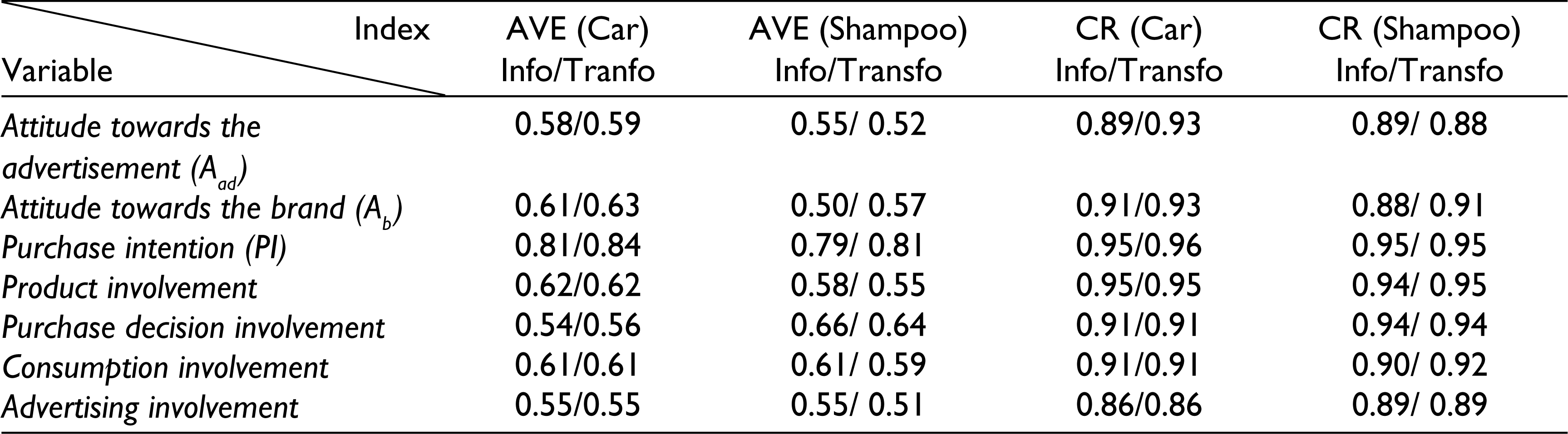
In order to test convergent validity, the average variance extracted (AVE) index was utilized and discriminant validity was validated by cross loadings index. In addition, to test reliability, composite reliability (CR) index was applied. All the calculations were conducted using the Smart PLS software. As suggested by Fornell and Larcker (1981), an acceptable amount of AVE index is 0.5 and higher. Regarding the cross loadings index, ‘an indicator’s loading with its associated latent construct should be higher than its loadings with all the remaining constructs’ (Hair, Ringle & Sarstedt, 2011, p. 146). A sufficient amount of CR index is 0.7 and higher (Hair et al., 2011). Questions that could not obtain acceptable thresholds of the indexes were removed from the questionnaires. Table 3 presents the results of testing AVE and CR indexes after purification.
The Results of AVE and CR Indexes
Results
Manipulation Checks
Prior to the experiment, the effectiveness of the manipulations of the advertising appeals and product category involvement were tested in a pilot study with 40 participants. Based on Liu and Stout (1987) emotional and rational appeal scale, a paired-sample t-test was employed in order to evaluate participants’ perception of informational and transformational appeals. Tables 4 and 5 show that the advertising appeals for both car and shampoo were perceived by subjects as intended. A manipulation check for product category involvement was performed by adopting Mittal (1995) measure. Pairwise comparisons based on independent t-tests revealed that scores of car (M = 4.06) were significantly higher than those of shampoo (M = 2.21) (t = 8.367, p < 0.01). Therefore, the manipulation of product category involvement was effective.
Manipulation Check for Car Advertisements

Manipulation Check for Shampoo Advertisements

Hypothesis Tests and Results
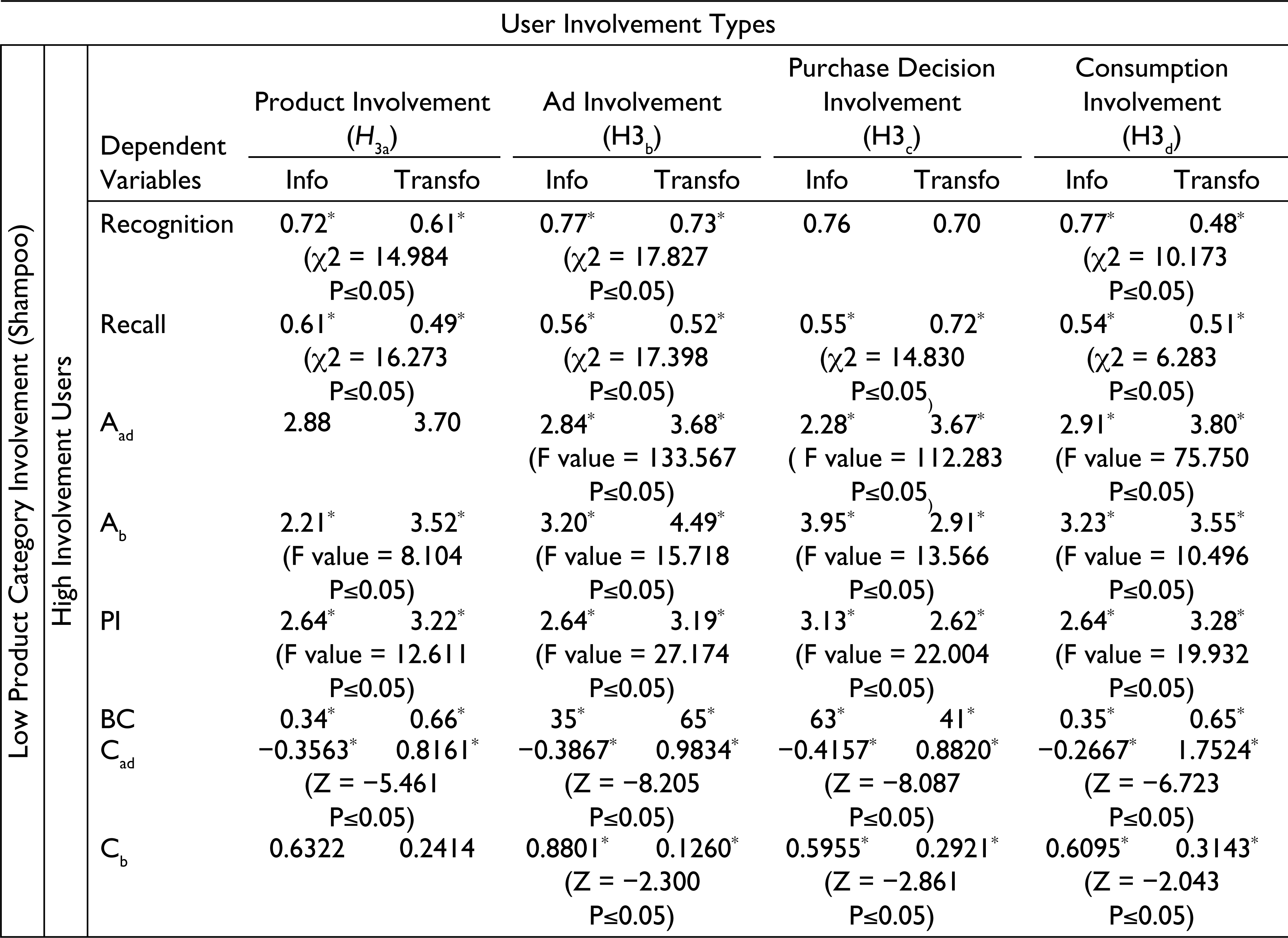
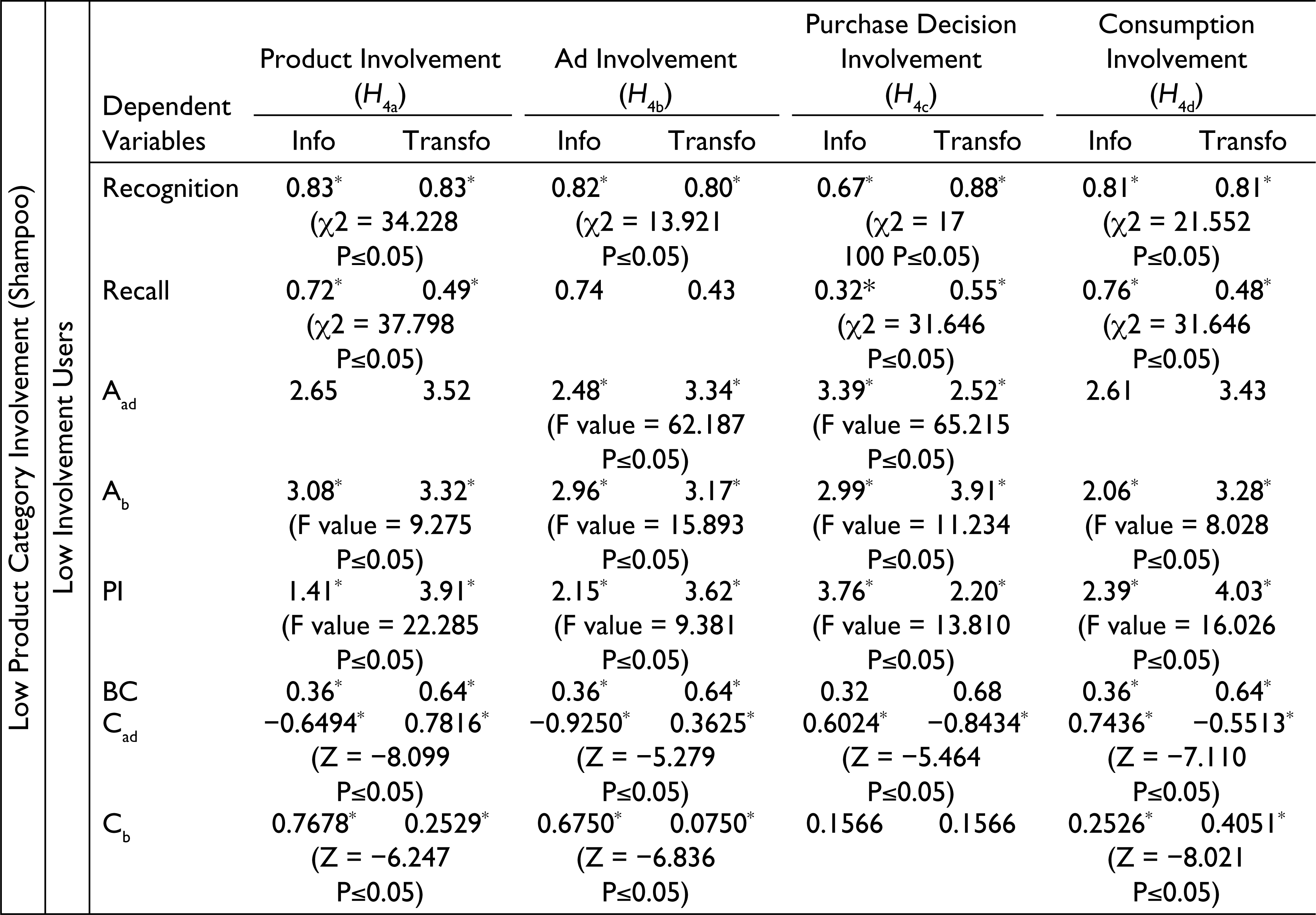
The statistical calculations of the hypotheses H1, H2, H3, H4, and H1a to H2d and H3a to H4d are summarized in Tables 6, 7 and 8, respectively. Consequent upon the large volume of statistical calculations and word limit, only the analyses of hypotheses H1, H1a, H1b, H1c, and H1d are presented below as templates and the others can be understood using the templates and tables. The two grids which resulted from the hypotheses tests are shown in Tables 10 (grid 1) and 11 (grid 2). All statistical tests were performed with = 0.05.
The Statistical Calculations of Grid 1(H1 to H4)
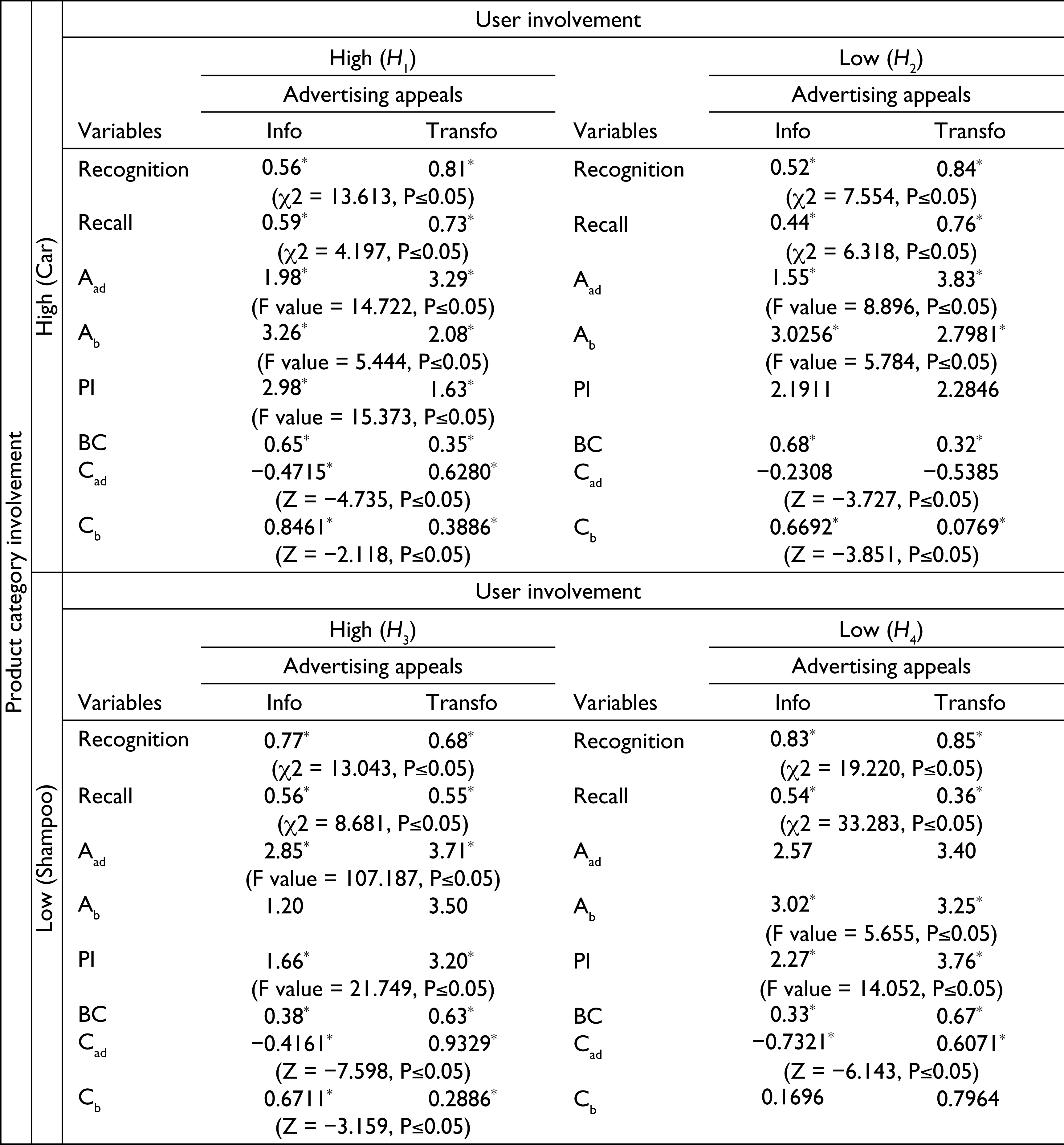
Hypothesis H1: As shown in Tables 6 (H1) and 9 (H1), some variables (Ab, PI, BC, and Cb) assert superiority of informational advertising (F-value Ab = 5.444, P ≤ 0.05, MAb-Informationa l= 3.26, MAb-Transformational = 2.08; F value PI = 15.373, P ≤ 0.05, MPI-Informational = 2.98, MPI-Transformational = 1.63; MBC-Informational = 0.65, MBC-Transformational = 0.35; ZCb = −2.118, P ≤ 0.05, MCb-Informational = 0.8461, MCb-Transformational = 0.3886), whereas the others (Recognition, Recall, Aad and Cad) prove the superiority of transformational advertising (χ2Recognition = 13.613, P ≤ 0.05, MRecognition-Informational = 0.56, MRecognition-Transformational = 0.81; χ2Recall = 4.197, P≤0.05, MRecall-Informational = 0.59, MRecall-Transformational = 0.73; F value Aad = 14.722, P ≤ 0.05, MAad-Informational = 1.98, MAad-Transformational=3.29; ZCad = −4.735, P ≤ 0.05, MCad-Informational = −0.4715, MCad-Transformational = 0.6280). Since the number of measures that show the superiority of informational advertising is equal to those showing the superiority of transformational advertising, it can be inferred that there is no absolute superiority between the two types of appeals. Consequently, hypothesis H1 is partially rejected. Since both appeals are equally effective, integrated advertising that is formed from both informational and transformational advertisings is a more appropriate solution (Table 10, cell H1).
Hypothesis H1a: as shown in Tables 7 (H1a) and 9 (H1a), some variables (recognition, BC, and Cb) represent the excellence of informational advertising (χ2Recognition = 11.842, P≤0.05, MRecognition-Informational = 0.79; MRecognition-Transformational = 0.49; MBC-Informational = 0.61, MBC-Transformational = 0.39; ZCb = −2.245, P≤0.05, MCb-Informational = 0.9724, MCb-Transformational = 0.4690), whereas the others (Recall, Aad, Ab, and PI) represent the excellence of transformational advertising (χ2Recall = 5.891, P ≤ 0.05, MRecall-Informational = 0.44, MRecall-Transformational = 0.70; F value Aad = 51.749, P ≤ 0.05, MAad-Informational = 1.70, MAad-Transformational = 4.88; F value Ab = 8.104, P ≤ 0.05, MAb-Informational = 2.21, MAb-Transformational = 4.52; F value PI = 12.611, P ≤ 0.05, MPI-Informational = 2.64, MPI-Transformational = 4.22; ZCad = −3.958, P ≤ 0.05, MCad-Informational = −0.4690, MCad-Transformational = 0.5138). Since the number of measures that show the effectiveness of transformational advertising is more than those showing the effectiveness of informational advertising, it can be concluded that transformational advertising is relatively more effective than informational advertising. Consequently, hypothesis H1a is partially rejected (Table 11, cell H1a).
The Statistical Calculations of Grid 2 (H1a to H1d and H2a to H2d)

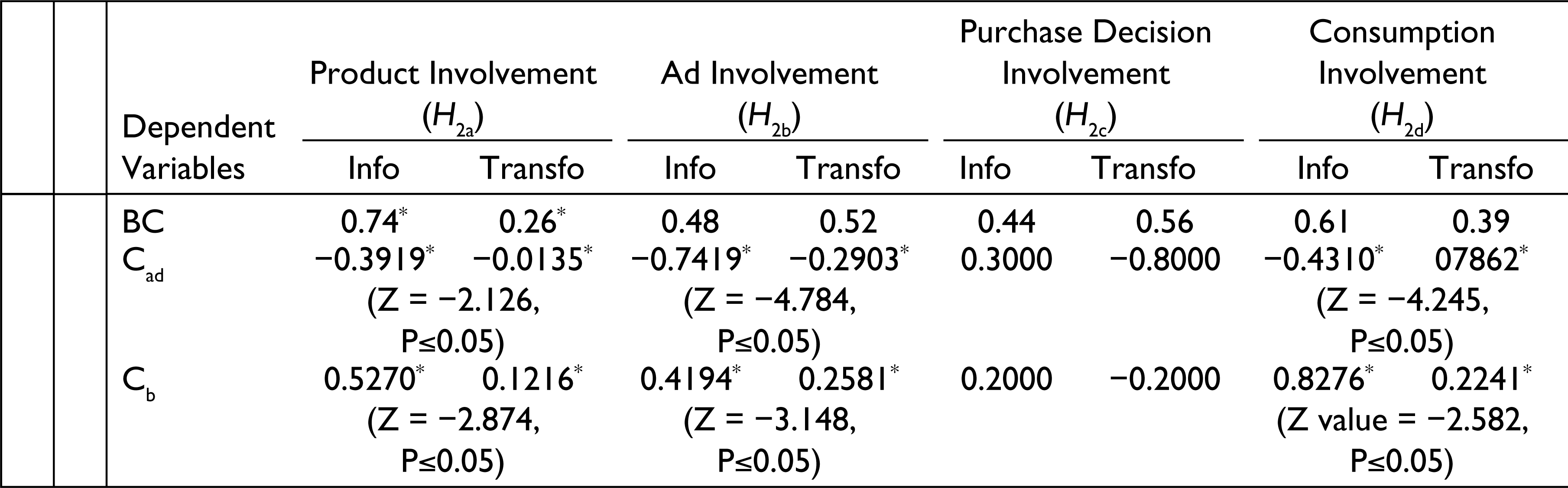
Hypothesis H1b: As shown in Tables 7 (H1b) and 9 (H1b), some variables (Ab, BC, and Cb) show the superiority of informational advertising (F value Ab = 5.871, P ≤ 0.05, MAb-Informational = 4.24, MAb-Transformational = 3.04; MBC-Informational = 0.79, MBC-Transformational = 0.31; ZCb = −2.884, P ≤ 0.05, MCb-Informational = 0.7340, MCb-Transformational = 0.3670), whereas the others (Recall, Aad, and Cad) demonstrate the supremacy of transformational advertising (χ2Recall = 9.797, P ≤ 0.05, MRecall-Informational = 0.49, MRecall-Transformational = 0.74; F value Aad = 8.797, P≤0.05, MAad-Informational = 2.00, MAad-Transformational = 3.25; ZCad = −3.728,P≤0.05, MCad-Informational = −0.3936, MCad-Transformational = 0.7074). Since the number of measures which show the superiority of informational advertising is equal to those showing the superiority of transformational ad, it can be inferred that there is no absolute superiority between both types of appeals. Consequently, hypothesis H1b is partially rejected, and as mentioned earlier, integrated advertising is considered a more appropriate solution (Table 11, cell H1b).
Hypothesis H1c: As shown in Tables 7 (H1c) and 9 (H1c), some variables (Ab, PI, BC, and Cb) prove the advantage of informational advertising (F value Ab = 7.170, P ≤ 0.05, MInformational = 3.25, MTransformational = 1.05; F valuePI = 9.012, P≤0.05, MPI-Informational = 4.08, MPI-Transformational = 2.41; MBC-Informational = 0.67, MBC-Transformational = 0.33; ZCb = −2.822, P ≤ 0.05, MCb-Informational = 0.7129, MCb-Transformational = 0.3780), whereas the others (Recall and Cad) indicate the advantage of transformational advertising (χ2Recall = 10.513, P ≤ 0.05, MRecall-Informational = 0.30, MRecall-Transformational = 0.74; ZCad = −4.428,P ≤ 0.05, MCad-Informational = −0.4785, MCad-Transformational = 0.1818). Since the number of measures showing the effectiveness of informational advertising is more than those showing the effectiveness of transformational advertising, it can be concluded that informational advertising is relatively more effective than transformational advertising. Consequently, hypothesis H1c is partially supported (Table 11, cellH1c).
The Statistical Calculations of Grid 2(H3a to H3d and H4a to H4d)
The Structured List of the Results of Hypotheses
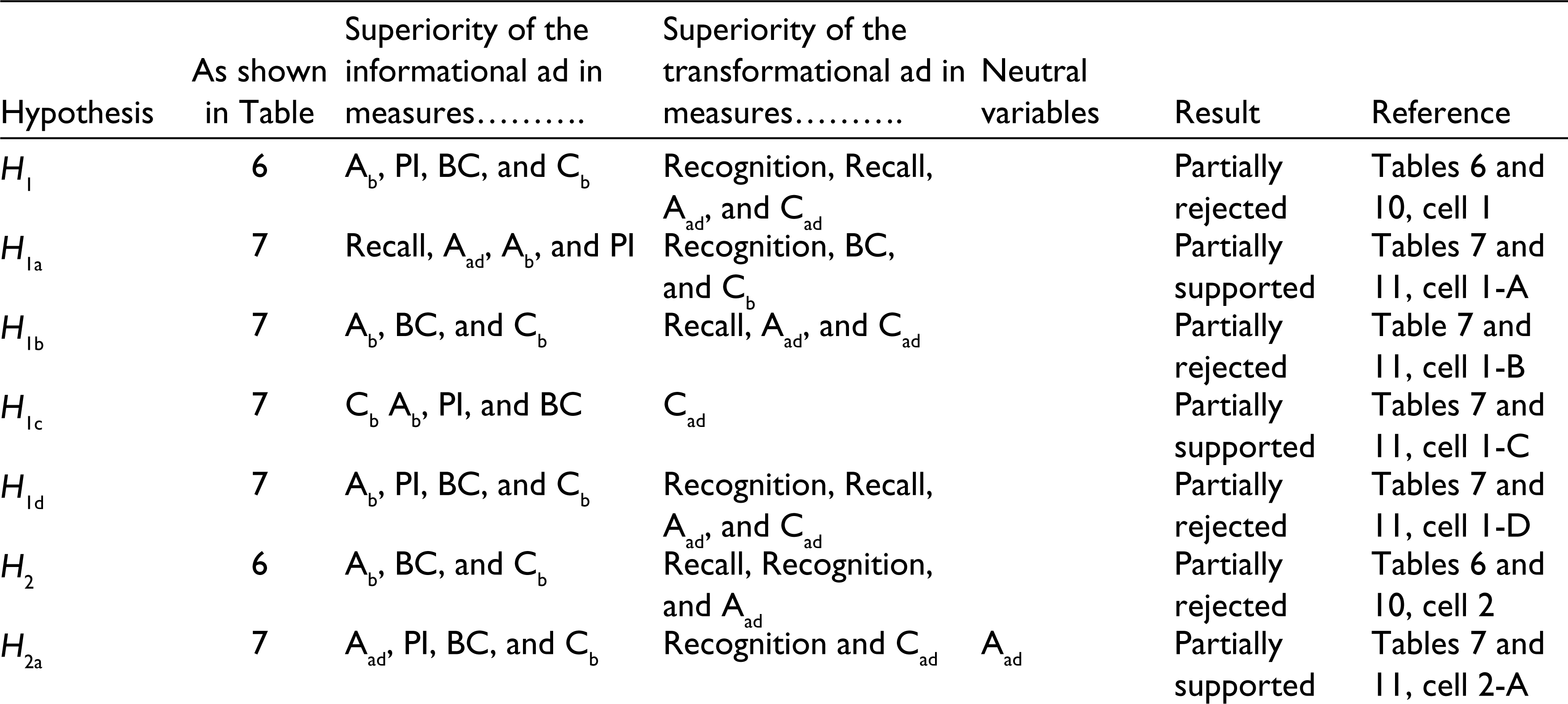
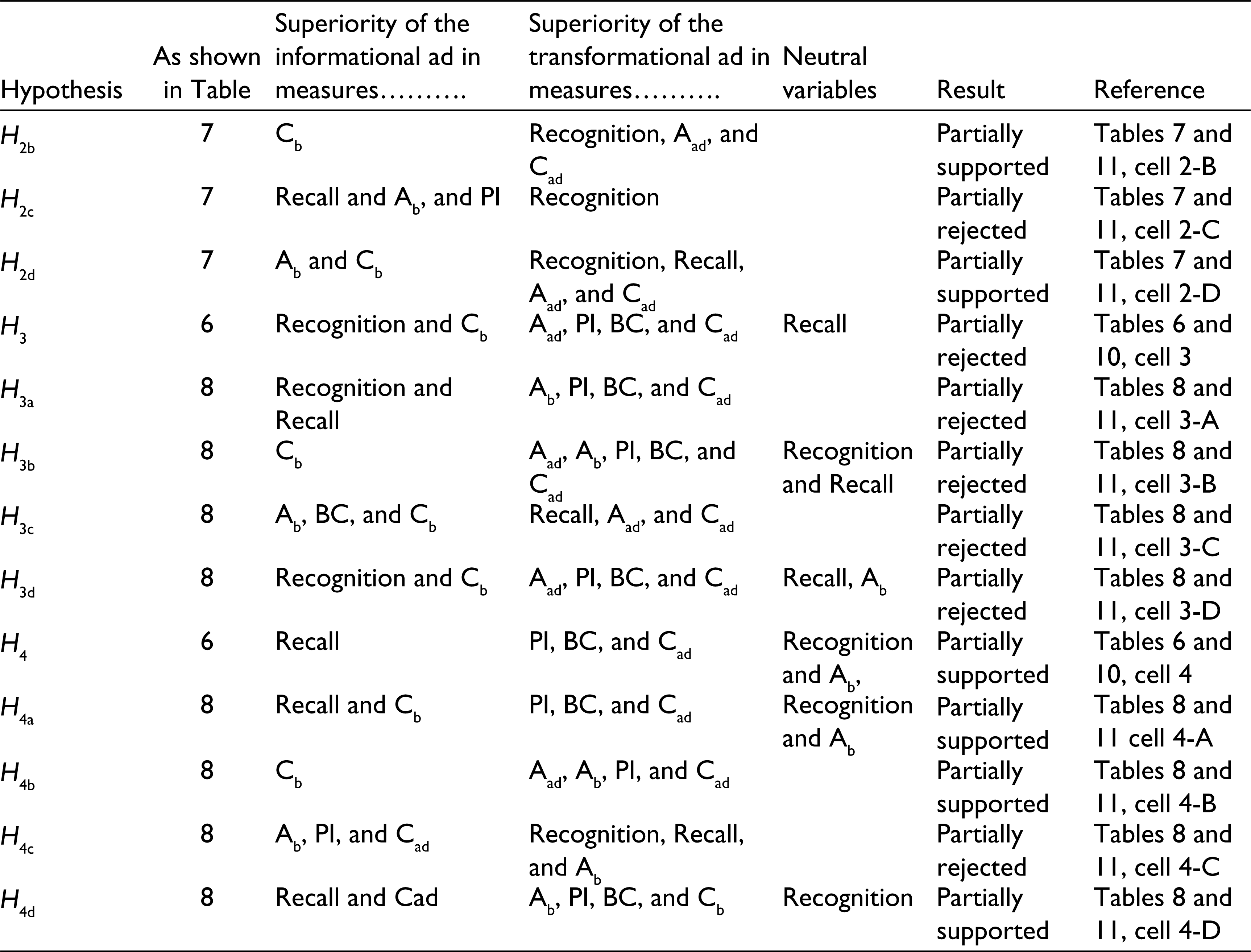
Hypothesis H1d: As shown in Tables 7 (H1d) and 9 (H1d), some variables (Ab, PI, BC, and Cb) indicate the superiority of informational advertising (F value Ab = 5.833, P ≤ 0.05, MInformational = 4.33, MTransformational = 3.13; F value PI = 13.956, P ≤ 0.05, MInformational = 3.69, MTransformational = 2.66; MBC-Informational = 0.67, MBC-Transformational = 0.33; ZCb = −2.658, P ≤ 0.05, MInformational = 0.8199, MTransformational = 0.3975), whereas the others (Recognition, Recall, Aad, and Cad) show the superiority of transformational advertising (χ2Recognition = 9.521, P≤0.05, MInformational = 0.57, MTransformational = 0.80; F value Aad = 9.428, P ≤ 0.05, MInformational = 3.04, MTransformational = 4.31; ZCad = −3.727,P ≤ 0.05, MInformational = −0.4427, MTransformational = 0.7553). Since the number of measures which show the superiority of informational advertising is equal to those that show the superiority of transformational advertising, it can be inferred that there is no absolute superiority between both types of appeals. Consequently, hypothesis H1d is partially rejected, and as stated earlier, integrated advertising is considered a more suitable solution (Table 11, cell H1d).
Discussion
To present the organized results of the study, the results of all the hypotheses and the more effective advertising strategy selected for each of the 20 situations was summarized in Tables 10 and 11 in the form of a grid to best illustrate the differential interaction of the user involvement, user involvement types, product category involvement, and advertising appeals. Table 10 shows grid 1 that resulted from the results of hypotheses tests H1, H2, H3, and H4. As shown in Table 10 and inconsistent with traditional findings which suggested that informational advertising is more effective in the case of high product category involvement, in the conditions of high product category involvement and high/low user involvement (cells H1 and H2), there is no preference between informational and transformational advertising, and both of them are equally effective. In both situations, integrative advertising that is formed from both informational and transformational advertisings is the best strategy. Moreover, consistent with traditional findings which proved that transformational advertising is more effective in the case of low product category involvement, in the conditions of low product category involvement and high/low user involvement (cells H3 and H4), transformational advertising is more effective even when user involvement is high (cell H4).
Resulted Advertising Strategies at the Level of ‘user involvement’ for Social Media Advertising
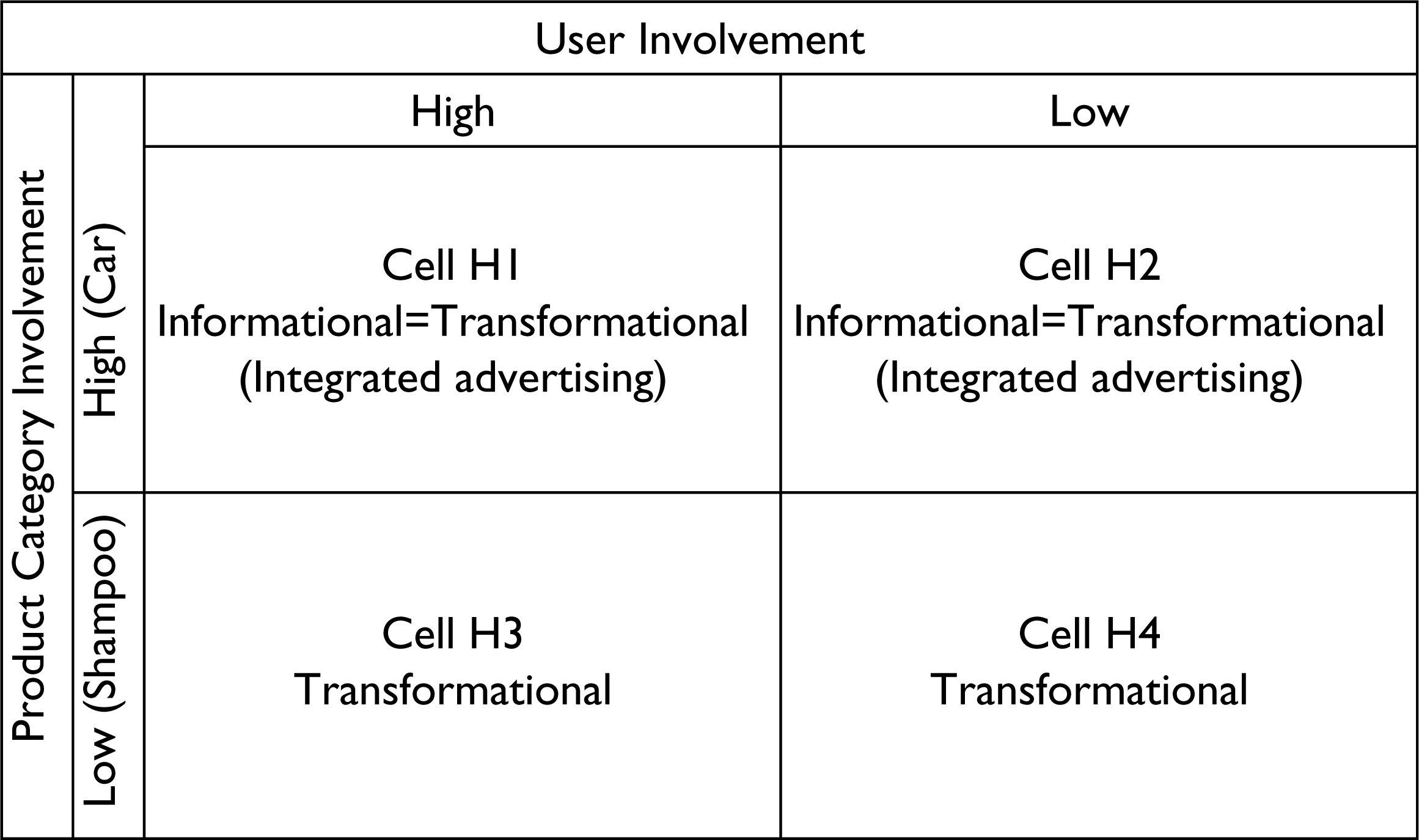
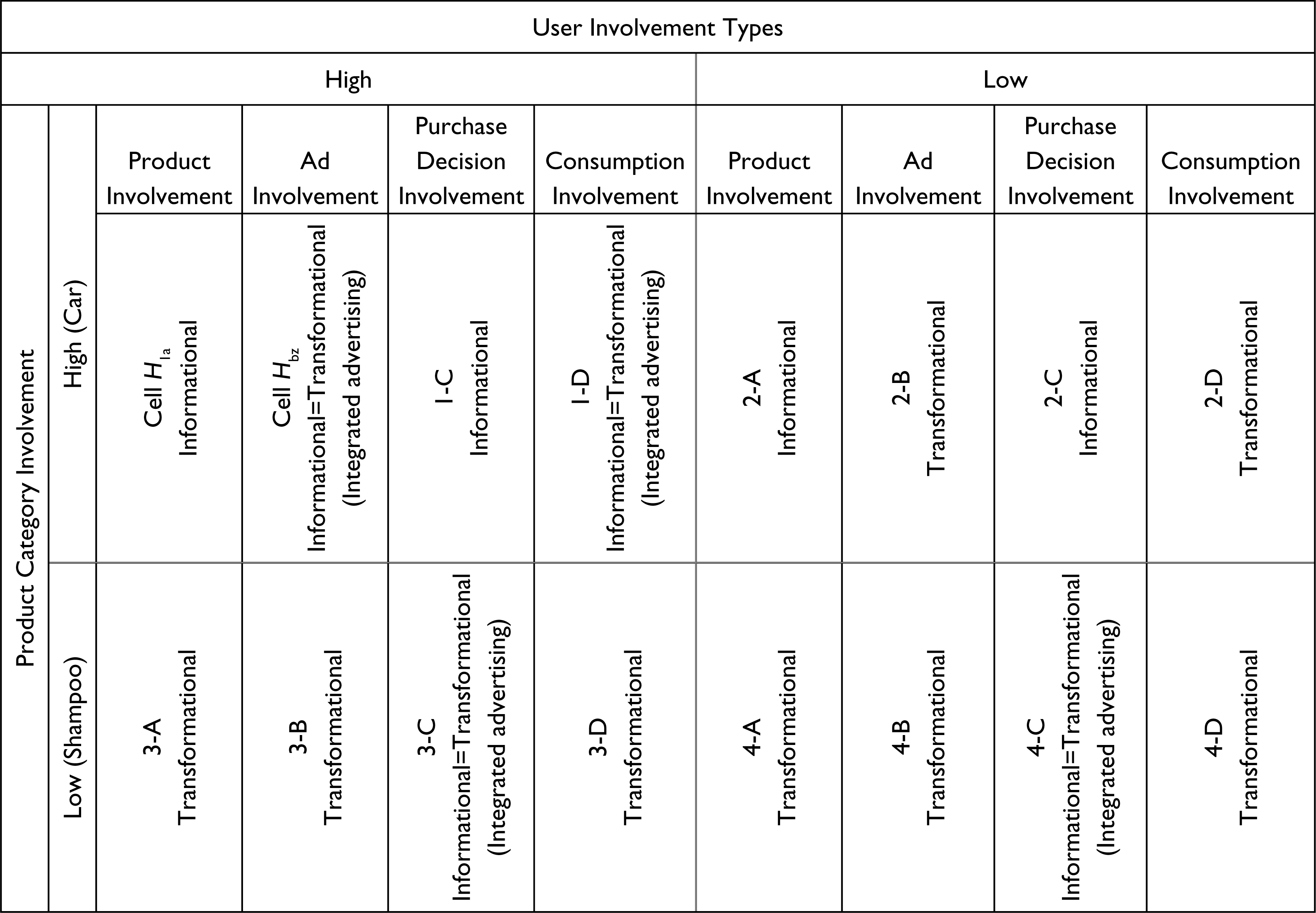
Table 11 presents advertising strategies in the level of user involvement types (grid 2). According to grid 2, some findings are contrary to expectations, and traditional findings include H1b, H1d, H2b, H2d, H3d, and H4d. For instance, integrated advertising results in more advertising effectiveness for products belonging to high product category involvement when users have a high level of advertising involvement (H1b) and consumption involvement (H1d). However, previous findings have advised informational advertising for the situation of high category involvement. Furthermore, in another case, transformational advertising leads to more advertising effectiveness for products belonging to high product category involvement when users have a high level of advertising involvement (H2b) and consumption involvement (H2d). Moreover, integrative advertising results in more advertising effectiveness for products belonging to low product category involvement, whether users have a high or low purchase decision involvement (H3d and H4d). However, traditional findings have pointed out the superiority of transformational advertising for the case of low category involvement.
In cells H1 and H4, both product category involvement and user involvement are at the same level (high and low, respectively). In cell H4, both product category involvement and user involvement are at the same level (low) and are consistent with traditional findings. Transformational advertising is more effective for this type of situation, whereas cell H1 is contrary to traditional findings. On the one hand, cell H1 bears similarity with traditional findings since informational advertising is chosen as a more effective strategy due to the high level of both product category involvement and user involvement. On the other hand, cell H1 differs from traditional findings since it simultaneously suggests transformational advertising. The reason can be traced to social media-related theories. According to the banner blindness phenomenon (Benway, 1998) and limited capacity theory (Hsieh & Chen, 2011), online users feel more disinclined to online advertisements than traditional viewers and, consequently, assign lower cognitive capacity to judge advertisements. In this situation, transformational advertising is utilized more, has more probability to be viewed because it is easier to understand, and requires lower cognitive capacity than informational advertising. Besides, according to Griffith et al’s. (2001) interface theory, consumers who view material through a Web-based physical-medium interface would be less involved compared to consumers viewing material through the print physical-medium interface. In addition, they indicated that consumers would be more involved with the media-vivid content-presentation interface (which is a dominant aspect of transformational advertising) than the direct online replication of the content-presentation interface. Similarly, Hsieh and Chen (2011), who investigated the effectiveness of four types of online advertisements, arrived at the conclusion that picture-based advertisements (which are similar to transformational advertisements) are more effective than text-based advertisements (which are similar to informational advertisements). Overall, integrative advertisement that utilizes a combination of informational and transformational appeals can be a better strategy in this situation. Similar situations to cell H1 in Table 11 (H1b and H1d) are justified by the previously mentioned justifications.
In cells H2 and H3, product category involvement and user involvement are not at the same level. In cell H2, both informational and transformational appeals are equally effective, and there is no superiority among them. Therefore, integrative advertising can be a more effective strategy. In this situation, high product category involvement necessitates informational advertising, low user involvement necessitates transformational advertising simultaneously, and none of them has more effect than the other. According to Quester and Lin Lim (2003) and Traylor and Joseph (1984), this situation emphasizes the necessity of taking into account user involvement construct in the development of advertising strategy in addition to product category involvement and proves that the addition of user involvement construct to the model is effective. H3c and H4c in the Table related to user involvement types (Table 11) are justified by the same justifications and highlight the need for different types of user involvement construct in formulating accurate advertising strategies.
In cell 3, low product category involvement necessitates transformational advertising, while high user involvement necessitates informational advertising; however, transformational appeal has been selected as a more effective advertising strategy. As it was explained earlier about cell H1, the effects of the banner blindness phenomenon, limited capacity theory, and interface theory neutralized the influence of high user involvement and have intensified the impact of transformational advertising. Similar situations to H3 in Table 11 (H3a and H3b, and H3d) are justified by the previously mentioned justifications.
Resulted Advertising Strategies at the Level of ‘User Involvement Types’ for Social Media Advertising
Some of the findings in grid 1 (cells H1 and H2) and grid 2 (H1b, H1d, H2b, H3c, and H4c) are contrary to studies related to traditional media which do not take into account user involvement and user involvement types and simply believe that informational appeal is suitable for high product category involvement situations; on the contrary, transformational appeal is suitable for high product category involvement situations. These studies consist of ELM (Elaboration likelihood model) (Petty & Cacioppo, 1986); FCB grid (Vaughn, 1980, 1986); the CRM (Keller & Block, 1997); self-congruity and functional congruity (Johar & Sirgy, 1991); functional, hedonic, and symbolic needs (Naylor et al., 2008); functional and expressive products (Mittal, 1989); the heuristic model of persuasion (Chaiken, 1987), and other studies, including Cui et al. (2013), Dens and De Pelsmacker (2010), J. Lee (2013), Puto and Wells (1984), and Rossiter and Percy (1985). These differences can be ascribed to three factors that constitute three main contributions of the current research. First, contrary to traditional media studies which only utilized product category involvement, in this study, user involvement and user involvement types were added to the model as moderator variables since as Traylor and Joseph (1984) and Quester and Lin Lim (2003) mentioned involvement construct is intrinsically a consumer-based concept rather than a product-based concept and only consumers can be involved intrinsically, not product category. The second reason is to investigate advertising strategies in the field of social media compared to traditional media in this study. This difference was described earlier through four theories, including the banner blindness phenomenon (Benway, 1998), limited capacity theory (Hsieh & Chen, 2011), interface theory (Griffith et al., 2001; Hoque & Lohse, 1999), and involvement theory (Zaichkowsky, 1986) which discuss the influence of social media on consumer behaviour and user involvement. Third, to determine social media advertising strategies in the cultural context of a Middle Eastern country in this research. Accordingly, different studies clustered different regions of the world to different cultural groups based on two famous indexes, including low-context or high-context (Hall, 1976; Hall & Hall, 1989) and individualistic or collectivistic (Hofstede, 1980). In this regard, Khanh and Hau (2007), Mortimer and Grierson (2010), and Taylor et al. (1997) proved that consumers’ preferences for advertising appeals depend on the culture of the society. Therefore, parts of the differences between the current results and the results of traditional media studies fall under the influence of Iran’s low contextual and collectivistic cultural attributes as a Middle Eastern country. Regarding the similarities and differences of the findings of the current study with previous similar cultural studies, on the basis of the popular bipolar cultural dimensions, including individualism versus collectivism (Hofstede, 1980) and low-context versus high-context, some studies conducted by researchers such as De Mooij (2013), Ford et al. (2005), Okazaki et al. (2010), Taylor et al. (1997), and Susan (2004) proved that in the Western cultures, informational advertising outperforms transformational advertising. Conversely, transformational advertising excels at the far Eastern cultures than informational advertising. Moreover, in individualistic cultures (the West), communication and information are more or less equal (Miyahara, 2004; Singelis & Brown, 1995)and people decide about purchasing with the help of the information about companies via social media (Goodrich & De Mooij, 2014). According to these studies, it is expected that informational advertising is more convincing in individualistic cultures, whereas transformational advertising is more persuasive in collectivistic cultures.
Based on the result of the current study (Tables 10 and 11), the number of cells that show transformational advertising is more effective exceeds the number of cells that show informational advertising is more effective. Therefore, consistent with the aforementioned cultural studies and analogous to high-contextual and collectivistic Eastern cultures, in the high-contextual and collectivistic Middle Eastern culture (Iran), transformational advertising is more effective. Although this point is noteworthy, it should not be ignored that it is just a very general result of the current study and should not be considered as a main principle or formula for developing accurate social media advertising strategies. The detailed findings proposed for 20 situations in grids 1 and 2 (Tables 10 and 11) must also be taken into consideration to develop comprehensive and accurate social media advertising strategies.
Conclusion
In conclusion, 20 social media advertising strategies for 20 different situations were introduced in grid 1 (Table 10) and grid 2 (Table 11). Overall, some findings supported traditional media results; by contrast, a considerable number of results are new and inconsistent with previous results that were scrutinized in the discussion section in detail. Generally speaking, the differences can be categorized into two general kinds. First, contrary to the traditional media researches which concluded that one of the informational advertising or transformational advertising is definitely suitable for each situation, in the current study, there is no superiority and preference between informational and transformational advertisings in some situations. Second, surprisingly, some proposed strategies in the current research are opposite to the strategies suggested in the traditional media studies.
The amount and importance of the difference between the findings of the current study and previous studies acknowledge the importance of the main contribution of this study to revise the strategies proposed in the traditional media advertising researches and propose more comprehensive framework formulating 20 social media advertising strategies for 20 situations in the Middle East cultural context on the basis of exploring the differential interaction of user involvement, user involvement types, product category involvement, and advertising appeals.
There are three possible explanations for the differences between the findings of the traditional media studies and the findings of the current study. First, this research was conducted in the realm of social media advertising. Social media as a new interface differs from traditional media in terms of two main factors, namely, the manner of information presentation and the physical medium through which information is transmitted. These two different characteristics make a different impact on users’ involvement and attention compared to the traditional media. These differences lead to a situation in which online users pay less attention to social media advertisements and, consequently, devote lower cognitive capacity to process them than traditional media advertisements. In this situation, transformational advertising that requires less cognitive capacity outperforms informational advertising. Consistent with these findings and as explained in the discussion section, transformational advertising has more impact upon discerning more effective strategies in some situations than informational advertising (for instance, in cells H1, H3, H3a, H3b, and H3d in Tables 10 and 11). In addition, it is obvious in Tables 10 and 11 that the number of transformational advertisings that were chosen as more effective strategies for different situations exceeds the number of informational advertising (10 and 4, respectively).
Second, researchers adding user involvement construct and its subsets to the model unlike in traditional media research only took into account product category involvement construct. The effectiveness of the appeals is a function of the interaction of both product-related and consumer-related factors. Product-related factor only mentions the inherited unchangeable nature of the products in terms of involvement, regardless of customers’ point of view that refers to product category involvement that no factors can affect it. On the contrary, consumer-related factor boasts customer-friendly approach and mentions the flexible and changeable nature of the products, as well as the level of involvement of each product in each customer’s point of view called user involvement. Different stimuli can change the level of user involvement for each user. Indeed, including user involvement construct and its types in the model increases the accuracy of the suggested strategies by taking into account the impact of different factors upon users’ involvement and their purchase decision-making process. For instance, in cells H2, H3c, and H4c in Tables 10 and 11, user involvement and its types were the decisive factors for choosing more effective strategies. Third, the subject was investigated in the cultural context of the Middle East. One of the decisive factors in customers’ preference for advertising appeals is cultural issues. The findings of this study that was undertaken for the first time in the Middle East proved to be analogous to the studies conducted in the East that generally concluded that in the collectivistic, holistic, and high-contextual cultures of the East, transformational advertising is more persuasive, in the Middle East that similarly has the same culture as the East. Transformational advertising is more convincing too, since as described above, transformational advertising dominates informational advertising in terms of both its role in determining more effective strategies in some situations and its relative number compared to transformational advertising.
Managerial Implications
The results of this study have interesting implications for companies and advertisers who intend to improve their social media advertising effectiveness, especially in the Middle East and other collectivistic and high-contextual countries. Moreover, this study can be customized for different regions of the world as a guideline and template. Besides, the findings can be applied to some non-Arab neighbouring countries of Iran, since they have striking cultural and linguistic similarities with Iran. These countries include Uzbekistan, Azerbaijan, Tajikistan, Turkmenistan, and Afghanistan.
Based on the findings of this research, it is strongly recommended that social media marketers should measure user involvement and user involvement types, in addition to product category involvement in the targeted market segments for their products and utilize the suggested strategies in grids 1 and 2, particularly in the Middle East because as mentioned earlier, marketers should utilize social media more in short-term collectivistic cultures (including the Middle East)
According to grid 1, unlike traditional findings, integrative advertising can increase persuasion for products that belong to the high product category involvement, whether users rank high or low on user involvement. Furthermore, in the level of low product category involvement, transformational advertising strategy is a more effective solution whether users rank low or high on user involvement. As explained earlier, in some situations, the strategies in grid 2 are different or even opposite to those in grid 1 because grid 2 was developed in more detail.
To develop social media advertising strategies, generally, grid1 should be utilized. By contrast, to formulate more accurate social media advertising strategies, grid 2 is more effective. For instance, if a company operates in a mobile industry (high product category involvement) and intends to develop just a general social media marketing plan and if after a market research it becomes apparent that the average level of the target market’s user involvement towards mobile is low, based on cell H2 in Table 10, integrative advertising is the best choice. In the case that this company aims at developing a more accurate social media advertising strategy and if after market research it becomes clear that the most important user involvement type based on users’ point of view is consumption involvement, based on cell H2d in Table 11, transformational advertising should be used. It is understood from the examples that the use of these two grids is simple and straightforward. Also, in the same situation, each grid suggests different strategies, because of the higher accuracy of grid 2 relative to grid 1. In fact, the budget and other organizational resources allocated to this field determine which of the grids satisfy the needs of the company.
Limitations and Future Studies
Although this article presents new insights, it is not without limitations. The main limitation was the barriers in accessing the sample. Furthermore, the use of student subjects limits the external validity of the results. This is because, on average, students tend to be more urban and educated than the public; therefore, their cultural norms and personal characteristics may be reflected in their advertising preferences (Taylor et al., 1997).Moreover, this study utilized experimental design, and in this kind of design, internal validity and the amount of trust to the result is high. Conversely, external validity and generalizability are low.
Future research should continue this trend by conducting similar studies in the individualistic and low-contextual cultures in the West, collectivistic and high-contextual cultures in either the East, the Arab countries of the Middle East, or the aforementioned neighbouring countries of Iran. Furthermore, investigating the other related moderating constructs affecting social media advertising can improve the suggested grids. Moreover, investigating the effects of informational and transformational strategies in other forms of content presentation such as animation and video will provide new insights. In addition, it is strongly recommended to compare the results of similar studies in the field of other SNSs and apps such as Instagram, Twitter, Telegram, and WhatsApp with the findings of this research.
Footnotes
Declaration of Conflicting Interests
The authors declared no potential conflicts of interest with respect to the research, authorship and/or publication of this article.
Funding
The authors received no financial support for the research, authorship and/or publication of this article.