




Abstract
Due to the rich visual ambience, Instagram has become a hub of fashion and beauty brands. Specifically, the fashion industry promotes their fashion brands through social media fashion Influencers on Instagram. Grounded on S-O-R, perception-behaviour (P-B) and the snowball effect as the theoretical bases, the present research analyses the conscious (via attitudinal mediation) and preconscious (direct) effects of fashion Influencers’ physical attractiveness and fashion-brand content aesthetics on followers’ fashion-branded content (photos and reels) engagement behaviour on Instagram. The data were gathered from a purposive sample of 300 followers of Instagram fashion Influencers in Pakistan. Construct measures, a proposed model and hypotheses were assessed using structural equation modelling. The results indicate that a fashion Influencer’s physical attractiveness and fashion-branded content aesthetics consciously (via attitude) and pre-consciously (directly) trigger fashion-branded content engagement on social media. The results show that the underlying dimensions of fashion-branded content engagement affect each other in a hierarchical order from consumption to contribution. These findings imply that fashion firms should hire physically attractive Influencers to endorse their fashion brands. Furthermore, Influencers should produce aesthetically pleasing fashion-branded content on Instagram to engage followers.
Introduction
Social media has become profoundly integrated into peoples’ lives because of their growing reliance on it. Today, people are more influenced by what they see on social media than ever before, particularly regarding fashion (Wilberg, 2018). Fashionistas no longer rely on the latest issues of fashion magazines to know about hot fashion trends. Instead, they follow their favourite fashion Influencers on Instagram to learn about the latest hot fashion trends (Childs, 2022; Wilberg, 2018; Yoo, 2023). Instagram is a visual content (primarily photos) sharing social media platform. However, it also supports short video sharing, known as reels (Haenlein et al., 2020). Instagram is a renowned social media platform for fashion brands. Due to the growing reliance of fashionistas on fashion Influencers, the fashion industry is using these Instafamous users to endorse fashion brands (Bharti, 2021; Childs, 2022). Fashion Influencers are typical Instagram users who have become famous among fashionistas by creating the refined and latest fashion content (photos and reels) on Instagram and have accumulated an ample followership of fashionistas (Erz & Christensen, 2018). Copious research (e.g., Jegham & Bouzaabia, 2022; Wiedmann & von Mettenheim, 2021) has analysed the effects of the traits of fashion Influencers (e.g., trustworthiness, expertise and similarity) and their fashion-branded content (e.g., informativeness) (Gross & von Wangenheim, 2022) on fashion brand endorsement effectiveness on Instagram. However, sparse research has focused on the physical attractiveness of fashion Influencers and their fashion-branded content aesthetics, which are critical factors for successful fashion brand communication (Kusumasondjaja, 2020; Till & Busler, 2000).
The physical attractiveness of an Influencer and content aesthetics revolve around beauty and attraction and appeal to users by providing them with sensory stimulation (Zhang et al., 2021) and pleasure (Goldman, 2001). Physically attractive endorsers are more effective for fashion brands, which users believe can boost their attractiveness and positively shape their brand attitude (Till & Busler, 2000). The aesthetic aspect of Influencer-created fashion-branded content leads to more online brand engagement (e.g., likes and comments) (Kusumasondjaja, 2020). Rare studies have analysed the influence of fashion Influencers’ physical attractiveness and fashion-branded content aesthetics on their followers’ attitudes toward fashion-branded content engagement on Instagram. Furthermore, previous studies did indicate whether the physical attractiveness of an Influencer and content aesthetics stimulate followers’ engagement with fashion-branded content (e.g., brand-related photos and reels) on Instagram via attitudinal mediation or directly. User engagement (i.e., like, share and comment) is a crucial metric used to measure the success of a brand on social media (Bazi et al., 2023). Literature indicates that perceptions and behaviour are interrelated, yet there is no clear consensus on whether perceptions trigger user behaviour consciously (via psychological mediation) or pre-consciously (directly) (Chong & Proctor, 2020). In this regard, two theoretical perspectives exist. One theoretical perspective, such as the S-O-R 1 by Mehrabian and Rusell (1974), asserts that psychological processes (e.g., attitude) mediate between perceptions and behaviour. Another theoretical perspective, such as P-B 2 link literature (e.g., Bargh et al., 1996; Chartrand et al., 2005), claims that perceptions pre-consciously trigger behaviour. These divergent assertions about the P-B relationship imply that researchers should analyse both conscious and preconscious impacts of Influencers’ physical attractiveness and content aesthetics on followers’ fashion-branded content engagement on Instagram. In addition, prior research has not examined how underlying dimensions of fashion-branded content engagement influence each other. The literature (e.g., Schivinski et al., 2016) indicates that just like a snowball effect (See Krackhardt & Porter, 1986), the dimensions of social media brand engagement affect each other in a hierarchical order.
Thus, the present research analyses the conscious (via attitudinal mediation) and preconscious (direct) effects of fashion Influencers’ physical attractiveness and fashion-branded content aesthetics on their followers’ fashion-branded content engagement behaviour on Instagram. The current study applies the S-O-R model (Mehrabian & Rusell, 1974), P-B link literature (Bargh et al., 1996; Chartrand et al., 2005; Dijksterhuis et al., 2005) and snowball effect concept (Krackhardt & Porter, 1986) to elucidate how Influencers’ physical attractiveness and fashion-branded content aesthetics via attitude and directly stimulate followers to engage with fashion-branded content on Instagram. Rooted in the S-O-R, P-B link and snowball effect theoretical perspectives, the current research adds to the existing literature on fashion Influencer marketing by assessing the conscious and preconscious mechanisms through which physical attractiveness and content aesthetics influence followers’ fashion-branded content engagement on Instagram. The current study’s findings will help the fashion industry to choose the right Influencers for fashion brand endorsement. These findings will enable Influencers to make their fashion-branded content appealing. Ultimately, it will boost fashionistas’ engagement with Influencer-created fashion-branded content on Instagram.
Literature Review
Fashion Influencer Physical Attractiveness
Instagram is a well-known social media platform that fashion marketers use to promote their fashion brands online (Casaló et al., 2021). Fashion marketers practice divergent brand promotion strategies on Instagram. A prominent fashion-brand promotion strategy used on Instagram is the application of Influencer marketing (Delbaere et al., 2021). Fashion brands revolve around beauty and attractiveness (Kim & Sullivan, 2019). Thus, physical attractiveness is a crucial trait of Influencers that enhances the effectiveness of fashion brand endorsement on Instagram. Martensen et al. (2018) found physical attractiveness to be a vital cue in followers’ initial judgement of which Influencer to follow. Physical attractiveness is the chief observable and accessible attribute of an individual (Patzer, 1985). People use physical attractiveness as a cue to make inferences about the personality of others (Baker & Churchill, 1977). According to Dion et al. (1972) and Liu (2020), physical attractiveness refers to the degree to which people perceive an individual’s physical characteristics as aesthetically appealing or beautiful. Ohanian (1990) summarised beauty, sexiness and elegance as elements of physical attractiveness. In Influencer marketing, physical attractiveness describes the followers’ perception of Influencers as beautiful, good-looking, sexy and elegant (Kim & Kim, 2021; Munnukka et al., 2016). Marketers use physically attractive brand endorsers because they have a positive influence on the audience’s perceptions (Lorenzo et al., 2010), evaluations (Joseph, 1982) and behaviours (Kamins, 1989). Several traditional media studies (e.g., Brown & Stayman, 1992; Chaiken, 1979; DeBono & Telesca, 1990; Liu et al., 2010) indicate the physical attractiveness of an endorser as a crucial determinant of effective marketing communication. Similarly, the physical attractiveness of influencers enhances the effectiveness of brand communication on social media (Morton, 2020).
Fashion-Branded Content Aesthetics
Instagram is a visual content-sharing social media platform (Haenlein et al., 2020), and aesthetics is the main attribute of this content (Masdari & Sarvari, 2021). Specifically, Instagram is a preferred social media platform for fashion brands (Bharti, 2021). Fashion brand Influencers on Instagram have gained enormous success and followership partly because of using aesthetic appeal in their fashion-branded posts (Jin et al., 2019). Differing definitions of aesthetics exist in the literature, such as perceived beauty (Lies, 2021), an appeal based on object design elements (e.g., line, shape, colour, light and focus) (Hauser et al., 2022) and principles (e.g., balance, proportion smoothness, unity and contrast) (Hagtvedt, 2022). These design fundamentals are applied to objects (e.g., photos) to create a pleasurable experience or pleasant sensations (Khaslavsky & Shedroff, 1999; van der Heijden, 2004). Similarly, Instagram provides filters to its content creators to make content aesthetically pleasing (Jin et al., 2019). Thus, aesthetics can be concluded as sensory pleasure (Goldman, 2001) activated through sensory receptors (e.g., eyes and ears) (Fiore et al., 2000), revolving around beauty as a central element (Hagtvedt, 2022). In the current research context, aesthetics is defined as the sensory pleasure that followers experience while looking at the Influencer-created fashion-branded visual content (i.e., photos and reels) on Instagram. Sensory pleasure refers to a pleasant sensation (Heathwood, 2007) that people experience when coming in contact with an object (e.g., smelling a bouquet) (Lin, 2020). Sensory pleasure involves the positively evaluated activation of sensory receptors by the object qualities (e.g., intensity of sound and colour) (Fiore et al., 2000).
Attitude Towards Fashion-Branded Content
The present study adopts Spears and Singh’s (2004) and Fazio’s (2007) definition of brand attitude. These contemporary theorists define brand attitude as an overall evaluative summary of brand information based on brand-related beliefs, emotions and behaviours manifested positively or negatively (Eagly & Chaiken, 1993). Examining followers’ attitude in the fashion Influencer marketing context is necessary because positive brand attitude (Colliander & Dahlen, 2011) drives users to interact with the brand on social media (Labrecque, 2014) and mediates between various factors and endorsed brand-related behaviours on social media (Torres et al., 2019).
Fashion-Branded Content Engagement
The key constituents of brand content engagement on social media platforms (e.g., Instagram) include viewing, liking, commenting and sharing behaviours (Obilo et al., 2021). These engagement behaviours show followers’ responses to the content and are used to assess the effectiveness of Influencer marketing campaigns (Li & Xie, 2020). Researchers (e.g., Muntinga et al., 2011; Schivinski et al., 2016) have offered consumption, contribution and creation as underlying dimensions of users’ social media brand content engagement. However, not every user creates brand content on social media platforms. Most users view, like, comment and share the branded content on social media (Triantafillidou & Siomkos, 2018). These are elements of users’ consumption and contribution behaviours on social media. Tsai and Men (2013) theorised that engagement with branded content on social media contains two dimensions (i.e., consumption and contribution). Thus, the present research adopts Tsai and Men’s two-dimensional model of social media branded content engagement. Viewing and liking social media fashion-branded content are elements of consumption behaviour, as they need the least user effort. Commenting and sharing fashion-branded content are elements of contribution, as they demand more user effort (Triantafillidou & Siomkos, 2018). Schivinski et al. (2016) proposed that the underlying dimensions of users’ social media brand content engagement affect each other in a hierarchical order from consumption to contribution.
Model and Hypotheses Development
Underlying Theoretical Pinning
Perception and behaviour are interrelated. However, there is no consensus on whether the perception of an object triggers that object-related behaviour pre-consciously (directly) or consciously (via psychological mediation) (Chong & Proctor, 2020). Therefore, the current study applies the S-O-R (Mehrabian & Rusell, 1974) and P-B link (Bargh et al., 1996) theoretical bases to explain the mediated and direct effects of Influencer’s physical attractiveness and fashion-branded content aesthetics on followers’ fashion-branded content engagement behaviour on Instagram. Furthermore, the current study employs the snowball effect (Krackhardt & Porter, 1986) to explicate the hierarchical relationship between dimensions of fashion-branded content engagement.
Mediated Effect
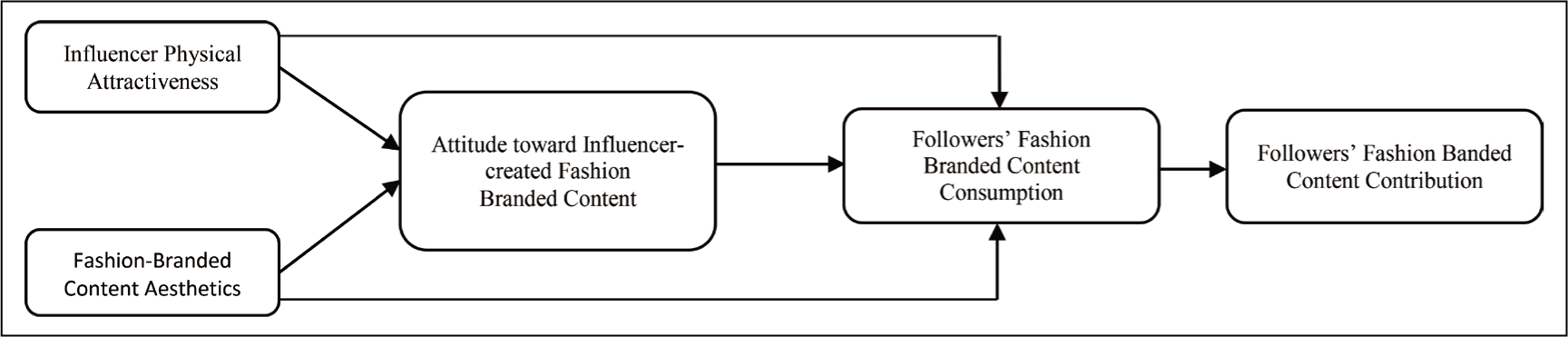
The S-O-R model by Mehrabian and Rusell (1974) offers that stimuli influence organisms, which activate response. Stimuli are external factors (environment attributes) that affect the internal state or psychological processes (Fiore & Kim, 2007). These psychological processes are called organisms. They mediate between stimuli and behavioural responses (Fu et al., 2021). In other words, the organism acts as a bridge between stimulus and behaviour (Fiore & Kim, 2007). In line with the S-O-R model, the current study offers that the physical attractiveness of a fashion Influencer and fashion-branded content aesthetics influence followers’ attitudes toward Influencer-created fashion-branded content, which activates their engagement with fashion-branded content on Instagram (Figure 1). Physical attractiveness is a most observable attribute (Patzer, 1985) and a vital cue in followers’ initial judgement of which influencer to follow (Martensen et al., 2018), and it positively affects their attitude toward the influencer and Influencer-created branded content (Chetioui et al., 2023). Similarly, Influencer-created fashion-branded content aesthetics influence followers’ brand attitude (Aljukhadar et al., 2020) by providing them with sensory pleasure (Lin, 2020). Brand attitude consequently stimulates followers’ brand-related behaviours on social media platforms (VanMeter et al., 2018). While assessing dimensions of brand engagement on social media, Schivinski et al. (2016) found that they affect each other in a hierarchical order from consumption to contribution. Therefore, the present research proposes that followers’ attitude toward Influencer-created fashion-branded content influences their fashion-branded content consumption behaviour (e.g., viewing and liking Influencer-created fashion branded photos and reels). Specifically, the following hypotheses are offered:
Proposed Model.
Perception-behaviour Link
The P-B link refers to non-conscious and unintentional effects of perception on behaviour (Chartrand et al., 2005). Perceptions can directly trigger behaviour without being mediated by judgements about an individual or object with whom one interacts (Bargh et al., 1996). Grounded on P-B link literature (Bargh et al., 1996; Dijksterhuis & Bargh, 2001; Dijksterhuis et al., 2005; Ferguson & Bargh, 2004), the current study offers that fashion Influencer’s physical attractiveness and fashion-branded content aesthetics directly activate followers’ behaviour to consume (i.e., view and like) Influencer-created fashion-branded content on Instagram (Figure 1). Physical attractiveness is the main observable and accessible attribute (Patzer, 1985), which people use to make inferences about the personality of others (Baker & Churchill, 1977). Specifically, physical attractiveness works as a vital cue in followers’ initial judgement of which Influencer to follow (Martensen et al., 2018). Similarly, branded content aesthetics is a crucial attribute of Influencer-created fashion-branded content, which appeals to followers on Instagram (Jin et al., 2019). In communication research, endorser and content attributes are assessed in terms of the audience’s perceptions (Mulilis, 1998; Petty & Wegener, 1998). Perception refers to the ‘representation of how things are in the environment’ based on the sensory input, or it is the ‘interpretation of the sensory input’ (Grush, 2004, p. 390). Prior studies such as Jin et al. (2019) and Kim and Kim (2021) indicate that followers perceive Instagram fashion Influencers as physically attractive. Similarly, followers perceive Influencer-created fashion-branded content as aesthetically pleasing (Jin et al., 2019). The perceived physical attractiveness of an Influencer and their shared fashion-branded content aesthetics is supposed to influence followers’ fashion-branded content consumption directly on Instagram, as suggested by P-B link literature. Perception and behaviour are inextricably associated such that people automatically behave as they perceive (Chartrand et al., 2005). According to Bargh et al. (1996) and Dijksterhuis et al. (2005), people often react pre-consciously to perceived stimuli that activate specific automated responses. It indicates that when people perceive their environment, the perceived stimuli instantly activate in the memory without the awareness and intention to trigger a behaviour (Ferguson & Bargh, 2004). Preconscious reaction to perceived stimuli may be due to the frequent and consistent exposure to the stimulus event in the environment (Bargh, 1989). As followers frequently interact with the Influencers and their fashion-branded content on Instagram, this interaction may be a triggering factor of the direct effect of fashion Influencers’ physical attractiveness and fashion-branded content aesthetics on followers’ fashion-branded content consumption. Specifically, the following hypotheses are offered:
Consumption-Contribution (C-C) Link
While assessing the underlying dimensions of online brand engagement, Schivinski et al. (2016) found that these dimensions affect each other in a hierarchical order from consumption to creation and they indicate a snowball effect (Blandford et al., 2015). The snowball effect is a psychological concept that expounds on how small actions at the outset of an event can trigger significant actions and eventually lead to an immense change (Bukowski et al., 2010). Krackhardt and Porter (1986) explained that a snowball does not arbitrarily stockpile snowflakes in the area. Snow follows the snowball in a distinct trail. It implies that the snowball effect does not occur randomly. Instead, it follows a visible path. Likewise, social media passive and active brand engagement behaviours do not occur randomly but rather happen in a particular manner. For instance, users initially use the media (e.g., the Internet) to gather information about an issue to fulfil personal needs. With time, their interest in that issue increases. As a result, they actively participate in issue-related activities, such as discussing that issue with others (Blandford et al., 2015). It suggests that passive engagement causes active engagement. Consumption (e.g., mere reading and watching content) reflects passive engagement behaviour. Contribution indicates a conscious decision to comment and share the content and is called active engagement (Gainous et al., 2021). In agreement with the snowball effect, the current study offers that followers’ consumption (i.e., watching and liking) of Influencer-created fashion-branded content triggered by the physical attractiveness of Influencer and fashion-branded content aesthetics (via attitudinal route or directly) activate their fashion-branded content contribution behaviour (i.e., commenting and sharing) (Figure 1). Specifically, the following hypothesis is offered:
Methodology
Data Collection and Sample
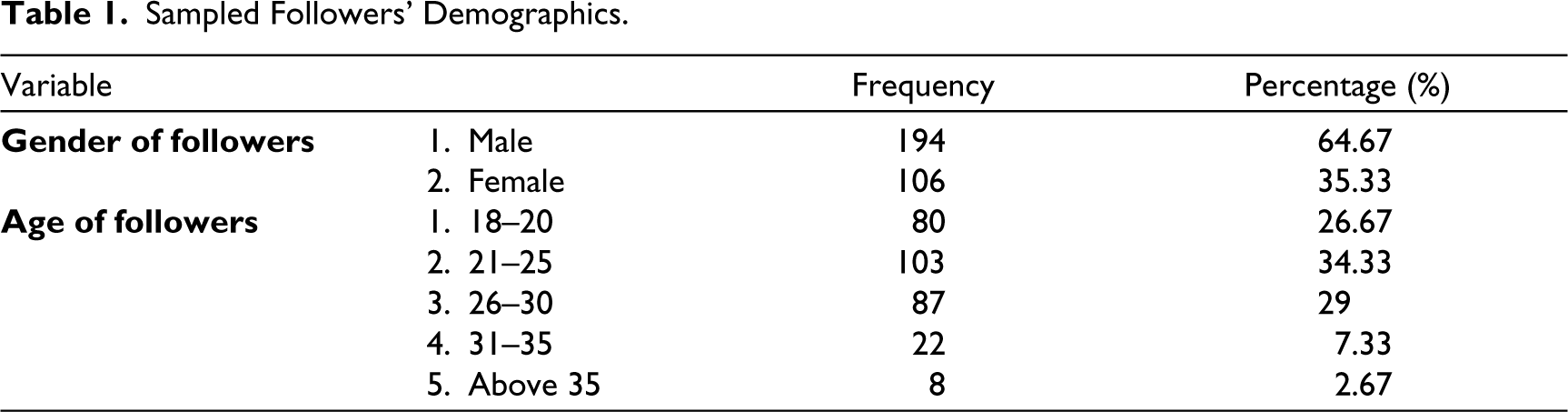
Data were gathered from 300 followers of fashion Influencers who endorsed fashion brands such as apparel, handbags, footwear and jewellery on Instagram in Pakistan by posting fashion-branded photos and reels (a 90-second video). Apparel, handbags, footwear and jewellery are some of the most common products endorsed and sold on Instagram (Business Ideas, 2023). The study focused on the followers of the top 15 macro fashion Influencers whose followers were more than 100K. Followers of Instagram fashion Influencers were sampled by applying the purposive sampling technique. A purposive sampling technique helps to choose those individuals from the targeted population who have ample experience and knowledge of the phenomenon and can share valuable phenomenon-related information (Cresswell & Plano Clark, 2011). The followers who have been following the targeted fashion Influencers for more than six months were included in the sample. The temporal baseline of more than six months was used to ensure that chosen followers have sufficient experience and interaction with the fashion Influencers and their content to provide valid information. The sample size of 300 was finalised for analysis because it is sufficient in the case of purposive sampling and adequate for structural equation modelling (Comrey & Lee, 1992). The followers who consented to fill out the questionnaire were shared with an online questionnaire link. The data collection phase stopped after receiving 300 responses. Table 1 shows the basic demographic information of the sampled followers.
Sampled Followers’ Demographics.
Construct Measures, Source and Assessment
Four items from Munnukka et al. (2016) were adapted to measure the physical attractiveness of the fashion Influencer. Four items from Lavie and Tractinsky (2004) were adapted to assess fashion-branded content aesthetics. Attitude toward Influencer-created fashion-branded content was measured using four items from Kim and Kim (2021). Fashion-branded content engagement was measured using six items from Tsai and Men (2013). Responses of the surveyed followers of fashion Influencers related to physical attractiveness, fashion brand content aesthetics and attitude toward Influencer-created fashion-branded content were measured on a 5-point Likert scale ranging from 1 to 5, where (1) represented strongly disagree and (5) strongly agree. Followers’ responses related to fashion brand content engagement were measured on a scale containing options (1) very often, (2) often, (3) sometimes and (4) never.
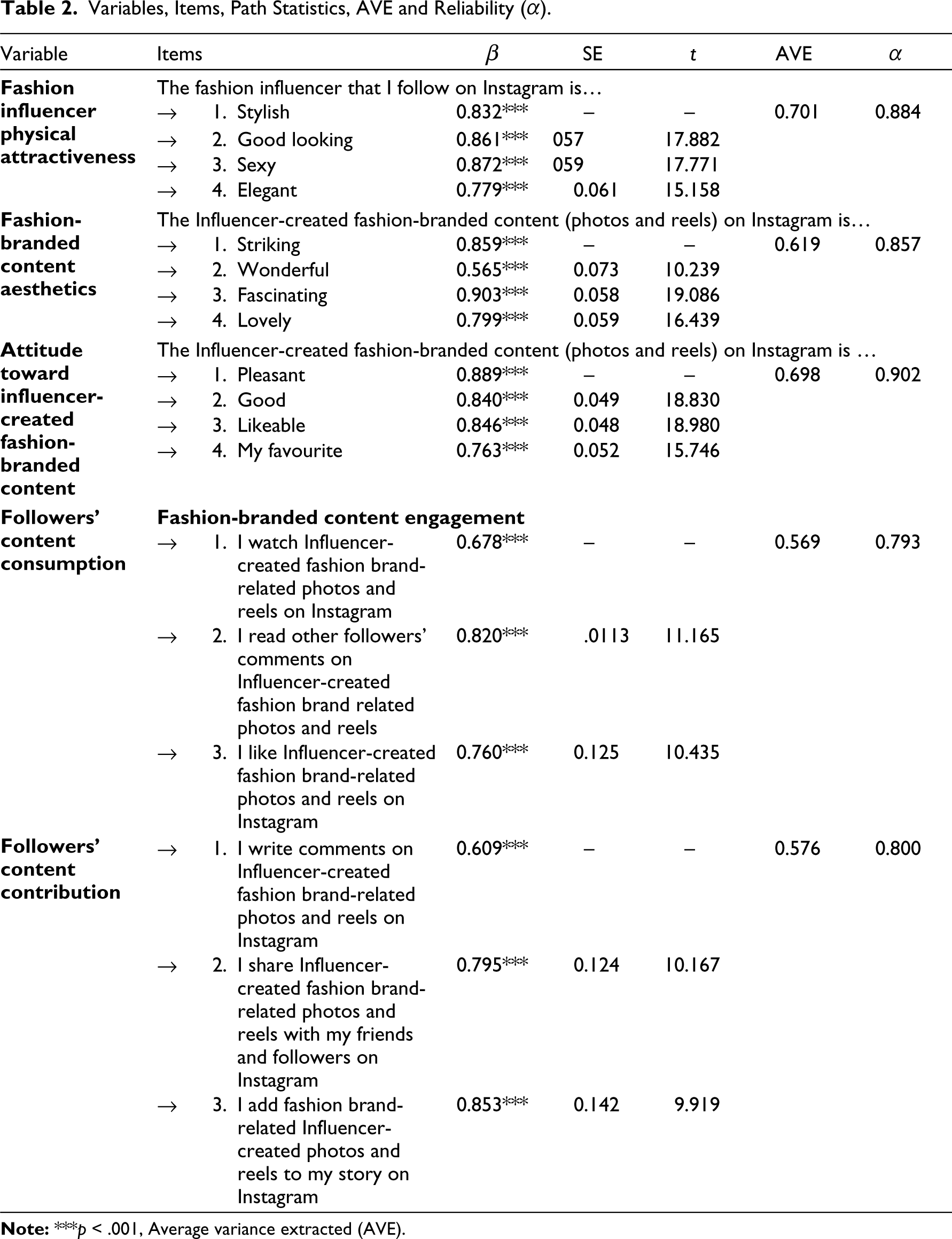
Using the confirmatory factor analysis (CFA), the good fit of construct measurement models was examined. The physical attractiveness of the fashion Influencer measurement model with a χ2 = 5.382, df = 2, p = .068 > .05, χ2/df = 2.691< 3, TLI = 0.986 > 0.90, CFI = 0.995 > 0.90 and RMSEA = 0.075 < 0.08 showed a good fit to the data and validated four items. The fashion-branded content aesthetics measurement model with a χ2 = 2.281, df = 2, p = .320 > .05, χ2/df = 1.140 < 3, TLI = 0.999 > 0.90, CFI = 0.999 > 0.90 and RMSEA = 0.022 < 0.08 indicated a good fit to the data and validated four items. Attitude toward Influencer-created fashion-branded content measurement model with a χ2 = 5.376, df = 2, p = .070 > .05, χ2/df = 2.688 <3, TLI = 0.986 > 0.90, CFI = 0.996 > 0.90 and RMSEA = 0.076 < 0.08 yielded a good fit to the data and validated four items. The fashion-branded content engagement measurement model with a χ2 = 13.547, df = 8, p = .094 > .05, χ2/df = 1.693 < 3, TLI = 984 > 0.90, CFI = 0.992 > 0.90 and RMSEA = 0.048 < 0.08 produced a good fit to the data and extracted two factors (i.e., consumption and contribution) with six valid items. Table 2 shows variables, items, path statistics, average variance extracted (AVE) and reliability (α).
Variables, Items, Path Statistics, AVE and Reliability (α).
Construct Validity
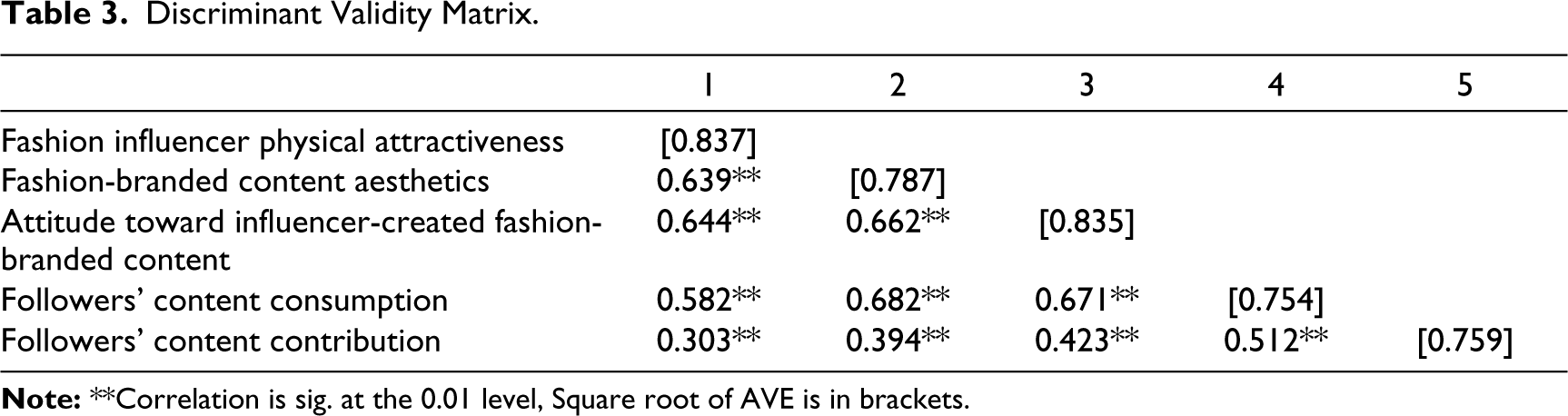
Construct validity indicates that items truly represent the constructs they are supposed to measure (Peter, 1981). It is established through the assessment of convergent and discriminant validity (Voorhees et al., 2016). Convergent validity indicates how closely the measures of a construct are correlated (Churchill, 1979). It was assessed by evaluating the average variance extracted (AVE). An AVE > 0.50 indicates convergent validity (Fornell & Larcker, 1981). The AVEs of the study constructs varied from 0.576 to 0.701 (Table 2), thus confirming the convergent validity. Besides, β, SE, p and t values of construct measures were assessed to examine the convergent validity. β > SE, t > 1.96 indicate the convergent validity (Anderson & Gerbing, 1988). All construct measures with significant β > SE, t > 1.96 (Table 2) indicated convergent validity. Discriminant validity reflects that a construct measurement scale is novel from the measurement scales of other constructs (Churchill, 1979). The square roots of AVEs were compared with construct correlations to examine discriminant validity. They transcended the construct correlations (See Fornell & Larcker, 1981), thus establishing the discriminant validity. Table 3 shows the discriminant validity matrix.
Discriminant Validity Matrix.
Common Method Bias
As the current study uses online self-reported survey data, it may have caused spurious variance in the responses of the sampled followers, known as the ‘common method bias’ (CMB) (Podsakoff et al., 2003). CMB can occur due to multiple factors, such as data collected on independent and dependent variables from a single source (Garger et al., 2019), using uniform response rating scales, and similar survey item wording (Jordan & Troth, 2020). Assessing the CMB is necessary because it can contaminate the validity of study findings (Spector et al., 2019). Ascertaining that CMB was not a critical issue, independent variables (i.e., physical attractiveness of fashion Influencers and content aesthetics) were measured with a single model. With a χ2 = 266.829, df = 20, p = .000, χ2/df = 13.341, TLI = 0.777, CFI = 0.840 and RMSEA = 0.203, the single measurement model of independent variables badly fitted the data, thus confirming that CMB was not the crucial issue. Similarly, independent and mediating variables were measured with a single model. With an χ2 = 564.823, df = 54, p = .000, χ2/df = 10.460, TLI = 0.754, CFI = 0.799 and RMSEA = 0.178, the single model of these three variables badly fitted the date, thus confirming CMB was not the main issue. A single-dimensional measurement model of fashion-branded content engagement with a bad fit (i.e., χ2 = 136.469, df = 9, p = .000, χ2/df = 15.163, TLI = 0.680, CFI = 0.808 and RMSEA = 0.218) confirmed that CMB was not a critical problem.
Model and Hypotheses Testing
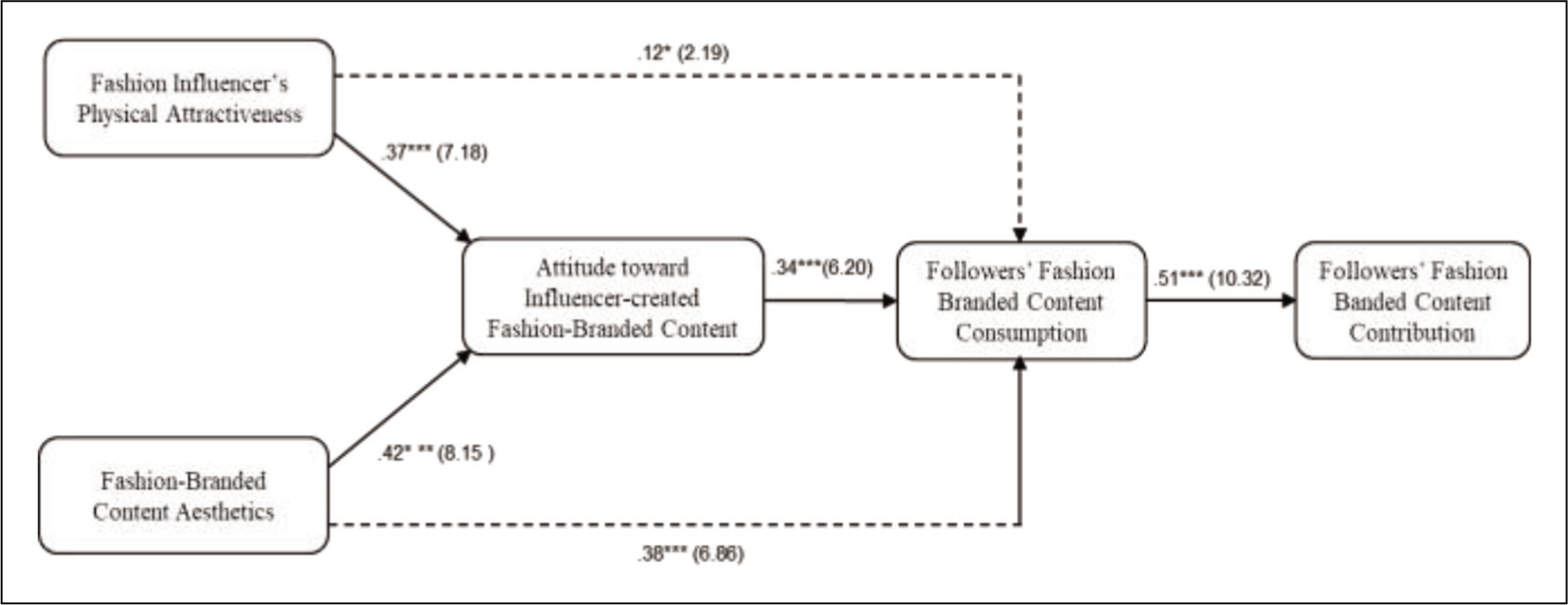
Using AMOS 23, the structural model produced a good fit to the data on both traditional chi-square (χ2) and alternate (i.e., χ2/df < 3 and TLI > 0.90, CFI > 0.90 and RMSEA < 0.08) tests. The values of traditional χ2 model test were χ2 = 5.900, df = 3 and p = 117 > .05. The value of χ2/df was 1.967. The values of model goodness fit indices were TLI = 0.986, CFI = 0.996 and RMSEA = 0.057. Figure 2 shows the structural model.
Mediated Effect
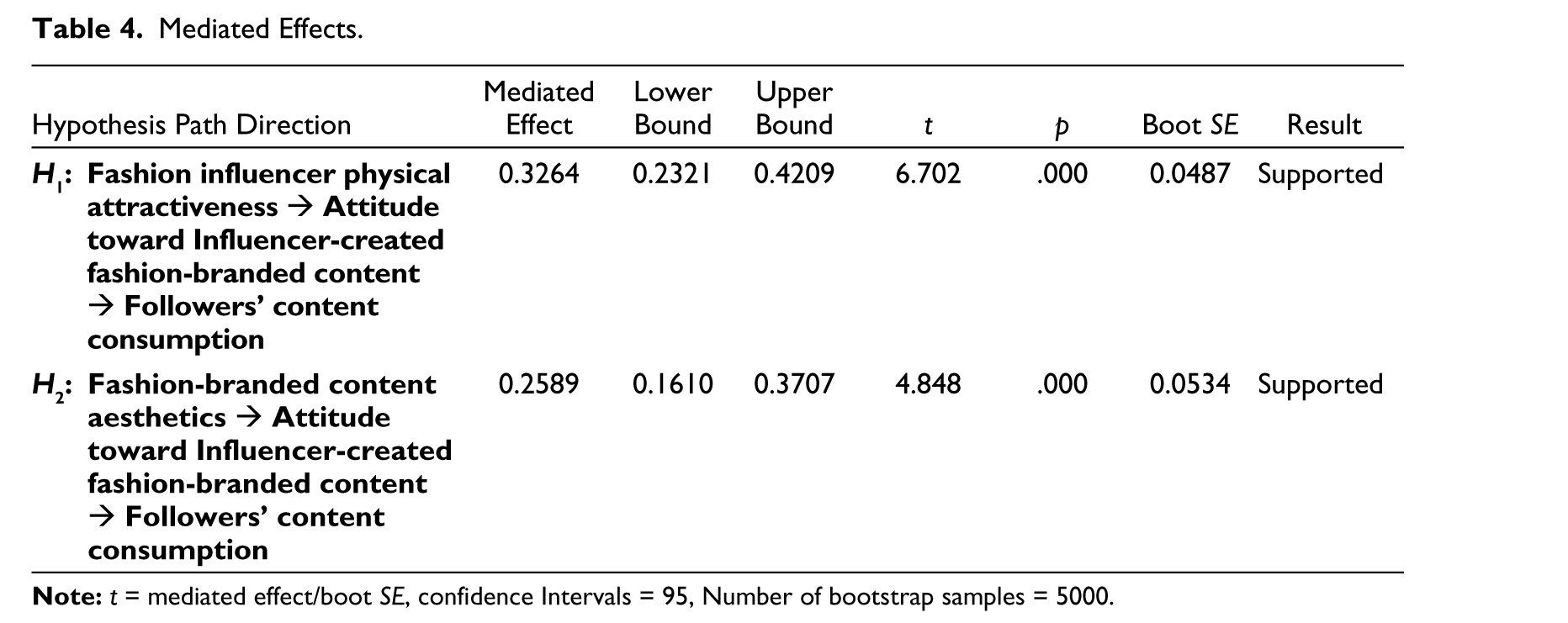
To evaluate the mediated effects (through attitude toward Influencer-created fashion-branded content) of fashion Influencers’ physical attractiveness and fashion-branded content aesthetics on followers’ fashion-branded content consumption, the H1 and H2 were assessed using the Hayes’ Process Macro in SPSS. The analysis indicated that fashion Influencers’ physical attractiveness (β = 0.3264, t = 6.702) and fashion-branded content aesthetics (β = 0.2589, t = 4.848) have significant mediated effects on followers’ fashion-branded content consumption, thus supporting H1 and H2. Table 4 presents the summary of mediated effects.
Mediated Effects.
P-B Link Effect
To evaluate the direct (P-B link) effects of fashion Influencers’ physical attractiveness and fashion-branded content aesthetics on followers’ fashion-branded content consumption, the H3 and H4 were examined with path values (β, t and p) of the structural equation model (Figure 2). The path values between fashion Influencers’ physical attractiveness and fashion-branded content aesthetics and followers’ content consumption indicated a significant relationship, thus supporting H3 and H4. Table 5 presents the summary of P-B link effects.
P-B Link and C-C Link Effects.

C-C Link Effect
To determine the effect of followers’ fashion-branded content consumption on their fashion-branded content contribution (C-C link effect) with path values (β, t and P) of the structural equation model, the H5 was evaluated (Figure 2). The path values between followers’ fashion-branded content consumption and contribution indicated a significant relationship, thus supporting H5. Table 5 presents the summary of the C-C link effect.
Discussion
Instagram has established itself as a central social media platform for the communication of fashion brands (Bharti, 2021; Childs, 2022; Yoo, 2023) because of its focus on visual content (Haenlein et al., 2020). Rooted in S-O-R (Mehrabian & Rusell, 1974), P-B link (Bargh et al., 1996; Chartrand et al., 2005; Dijksterhuis et al., 2005) and snowball effect (Krackhardt & Porter, 1986) theoretical bases, the current study analysed the mediated and direct influences of physical attractiveness of fashion Influencer and content aesthetics on followers’ fashion-branded content engagement on Instagram. Unlike earlier research, the current study theorised dimensions of fashion-branded content engagement (Tsai & Men, 2013) as affecting each other in a hierarchical order from consumption to contribution.
Consistent with the S-O-R model, the current study found that the physical attractiveness of an Influencer and content aesthetics influence followers’ attitude toward Influencer-created fashion-branded content, which triggers their fashion-branded content engagement on social media. According to the S-O-R model (Mehrabian & Rusell, 1974), an organism (attitude) works as a bridge between stimuli (perceived attributes) and behavioural responses (Fiore & Kim, 2007). As a most observable trait of individuals (Patzer, 1985), physical attractiveness works as a pivotal cue for followers to decide which Influencer to follow (Martensen et al., 2018), and it positively affects their attitude toward the Influencer-created branded content (Chetioui et al., 2023). Specifically, physically attractive endorsers are more effective for those products (e.g., fashion brands) that users believe can boost their attractiveness (Till & Busler, 2000). Similarly, Influencer-created fashion-branded content aesthetics influences followers’ brand attitude (Aljukhadar et al., 2020) by providing them with sensory pleasure (Lin, 2020). Attitude toward brands shaped by Influencer traits and Influencer-created content traits consequently affect their endorsed brand-related behaviour on social media (VanMeter et al., 2018).
Besides mediated effects, the physical attractiveness of a fashion Influencer and content aesthetics directly stimulate followers’ fashion-branded content consumption behaviour on Instagram. This finding corresponds to the P-B link literature (e.g., Bargh et al., 1996; Chartrand et al., 2005; Dijksterhuis et al., 2005), which indicates that perceptions can directly affect behaviour without being mediated by internal state (e.g., attitude). The direct impact of the perceived attractiveness of Influencers and content aesthetics on followers’ consumption of fashion-branded content (e.g., viewing and liking) indicates preconscious and unintentional effects of perceived traits of the Influencer and content on followers’ engagement behaviour (Chartrand et al., 2005). People’s preconscious reactions to perceived stimuli may be due to frequent and consistent exposure to them in the environment (Bargh, 1989). Mediated and direct effects imply the physical attractiveness of the Influencer and content aesthetics as crucial determinants of followers’ fashion-branded content engagement on Instagram. It also suggests that the physical attractiveness of the Influencer and content aesthetics are vital factors that trigger followers’ engagement behaviour consciously and pre-consciously.
Furthermore, consistent with the snowball effect, the current study found that followers’ fashion-branded content consumption positively influences their fashion-branded content contribution. Just like a small snowball grows by adding more snow as it rolls on the snow-covered surface and results in a massive snowball (Krackhardt & Porter, 1986), consumption (i.e., viewing and liking) of Influencer-produced fashion-branded content gradually increases followers’ interest in that content, which stimulate them to comment and share it (i.e., contribution) (Blandford et al., 2015). This finding is also supported by Schivinski et al. (2016), who found that dimensions of users’ social media brand engagement affect each other in a hierarchical order from consumption to creation. This finding implies that users’ passive social media brand engagement is crucial because it causes active engagement, which enhances brand loyalty (Aljuhmani et al., 2023) and increases sales of endorsed brands (Yost et al., 2021).
Conclusion
As the physical attractiveness of a fashion Influencer and content aesthetics revolve around beauty and attraction, they influence followers by providing them with sensory pleasure. The physical attractiveness of an Influencer and their content aesthetics are crucial factors that attitudinally and directly stimulate followers to consume (view and like) the Influencer-produced fashion-branded content (photos and reels) on Instagram. In other words, they trigger followers’ fashion-branded content consumption behaviour via conscious and preconscious routes. Furthermore, followers’ consumption of fashion-branded content stimulates their contribution behaviour (commenting and sharing) on Instagram.
Contribution and Implications
The present study contributes to the existing research on fashion Influencer marketing by addressing some crucial gaps. Past studies rarely analysed the impact of an Influencer’s physical attractiveness and content aesthetics on followers’ attitudes toward Influencer-created fashion-branded content and engagement. An Influencer’s physical attractiveness and content aesthetics are the driving forces behind the successful communication of fashion brands (Kusumasondjaja, 2020; Till & Busler, 2000). Specifically, prior research had not analysed whether the physical attractiveness of an Influencer and content aesthetics consciously (via attitude) or pre-consciously (directly) cause followers’ fashion-branded content engagement on Instagram. Rooted in S-O-R (Mehrabian & Rusell, 1974), P-B link (Bargh et al., 1996; Chartrand et al., 2005; Dijksterhuis et al., 2005) and snowball effect (Krackhardt & Porter, 1986) theoretical foundations, the current study elucidated that how consciously (via attitude toward fashion-branded content) and pre-consciously (directly), the physical attractiveness of Influencer and content aesthetics cause followers’ fashion-branded content engagement on Instagram. User engagement is a crucial metric for measuring a brand’s social media success (Bazi et al., 2023). Unlike earlier fashion Influencer marketing research, using the snowball concept (Krackhardt & Porter, 1986), the current study explained that dimensions of followers’ fashion-branded content engagement influence each other in a hierarchical order from consumption to contribution. The physical attractiveness of an Influencer and content aesthetics consciously and pre-consciously affect followers’ fashion-branded consumption behaviour (viewing and liking), which in turn stimulates their contribution behaviour (commenting and sharing) on Instagram.
The findings of the present research show that the physical attractiveness of a fashion Influencer and fashion-branded content aesthetics are vital factors that consciously (via attitude) and pre-consciously (directly) cause followers fashion-branded content engagement on Instagram. These findings imply that fashion businesses should hire physically attractive Influencers to endorse their brands on social media platforms like Instagram. Users believe that fashion products promoted by physically attractive endorsers can boost their attractiveness. This belief positively affects their brand attitude and behaviour (Till & Busler, 2000). Furthermore, the present research findings imply that fashion Influencers should pay more attention to aesthetic aspects of the fashion-branded content on Instagram. Content aesthetics pleases the followers’ senses. This sensory pleasure positively affects their attitude and behaviour (Aljukhadar et al., 2020; Lin, 2020). In addition, the findings of the current study imply that fashion influencers should repeatedly motivate and remind their followers to consume (view and like) fashion-branded content. Just like a small snowball grows by adding more snow as it rolls on the snow-covered surface and results in a massive snowball (Krackhardt & Porter, 1986), consumption (i.e., viewing and liking) of Influencer-produced fashion-branded content will gradually increase followers’ interest in that content, and they will ultimately start commenting and sharing it (i.e., contribution) (Blandford et al., 2015). Attractiveness and aesthetics-driven fashion-branded content engagement on Instagram will eventually enhance endorsed brand loyalty (Aljuhmani et al., 2023) and sales (Yost et al., 2021).
Limitations and Future Research Agenda
Even though the present research addressed certain crucial issues, some other key issues need to be addressed. The present study analysed the conscious (mediated) and preconscious (direct) effects of fashion Influencers’ physical attractiveness and fashion-branded content aesthetics on followers’ fashion-branded content engagement on Instagram. Instagram provides filters to its content creators to make content aesthetically pleasing (Jin et al., 2019). Researchers should analyse the moderating influence of Instagram filters on the association between the physical attractiveness of an Influencer, content aesthetics and followers’ fashion-branded content engagement. In addition, researchers should analyse the impact of fashion Influencers’ physical attractiveness and fashion-branded content aesthetics on followers to share the fashion-branded content Instagram links across multiple social media platforms. Sharing fashion-branded content across different social media platforms spontaneously helps to create brand awareness, improve brand image and lower brand promotion costs (Xue et al., 2023).
Footnotes
Declaration of Conflicting Interests
The author declared no potential conflicts of interest with respect to the research, authorship and/or publication of this article.
Funding
The author received no financial support for the research, authorship and/or publication of this article.