




Abstract
This study examines the impact of self-concept, brand personality and media on using fashion as a vehicle for self-expression, while considering the mediating role of different forms of civic engagement (political, social and environmental). To address our research questions, we conducted a qualitative study to explore how fashion serves as a means of self-expression. A research model informed by both the literature review and the findings from this study was subsequently tested with a survey. The findings indicate that self-concept and media influence all forms of civic engagement, which, in turn, shape the use of fashion as a medium for self-expression. While consumer research often examines civic engagement in isolation, this study integrates the concept within the fashion industry, offering insights into how self-concept and media influence individuals’ expression of political, social and environmental issues through fashion.
Introduction
The phenomenon of fashion not only reflects consumers’ social status, image and prestige (Cavusoglu et al., 2019; Miller, 2005) but also serves as a powerful tool to express their self-concept, viewpoints, personalities and societal roles (Jeong & Ko, 2021). The use of fashion as a form of self-expression is a burgeoning trend, underscoring the growing significance of fashion as an informal yet influential medium for expressing individual perspectives (Miller, 2005). As such, fashion is often employed to promote democracy as well as different causes (Henninger et al., 2016). A remarkable example of this phenomenon is the Black Panther Party Suit, a ‘soldier jumpsuit’ worn by political activists in the 1970s (Taylor, 2022). During the 2016 Super Bowl game, celebrity icon Beyoncé wore this attire to underscore the enduring reality of racism. Following her impactful performance, people adopted this fashion statement to protest against instances of racial discrimination (Garcia & Mirra, 2021).
The literature has extensively addressed the inclination of consumers to manifest their identity as engaged democratic citizens who actively participate in civic affairs and connect with their communities (Molyneux, 2017). Despite the widespread recognition of fashion as a prominent platform for conveying societal concerns (Maftei & Holman, 2021), there is a notable scarcity of research on the fundamental factors driving the use of fashion as a medium for expressing and communicating with others’ civic engagement and advocating for causes. At present, consumers are increasingly aware of certain issues in society, as many young adults are becoming civically engaged. Being an active citizen is described as participating in helping others in society, engaging in pro-environmental behaviour and contributing to charitable giving processes (Abdou & Skalli, 2018). Thus, civic engagement refers to individual and collective actions in society that aim to promote the community’s common good (Fernandes et al., 2021). According to Ahmad et al. (2015) and Garcia and Mirra (2021), citizens can engage in public life through various means, including voting, boycotts and online expressions. Hence, civic engagement enables members of society to bring attention to important matters.
Consumer studies suggest that self-concept, brand personality and media are underlying factors that motivate brand–customer engagement (e.g., Lee et al., 2020); however, the influence of these factors on civic engagement has been less addressed (e.g., Molyneux, 2017). Moreover, there is a dearth of literature addressing the connection between civic engagement and fashion (Genova, 2020). Previous studies have shed light on civic engagement and its various forms (Abdou & Skalli, 2018; Molyneux, 2017). Yet, the role of civic engagement in using fashion as a medium to advocate for causes has been largely overlooked. Moreover, there are multiple calls for academics to critically examine the role of fashion in civic engagement (Helmy, 2023). Consequently, there is an urgent need to study the role of fashion as a tool for civic engagement and self-expression (Mazzarella et al., 2019). Our research addresses these gaps by investigating the effect of self-concept, brand personality and media on political, social and environmental civic engagement and how the latter influences the use of fashion as a medium to express one’s views.
Moreover, the current study focuses on the Egyptian context. The underlying reason for choosing this context is based on the relevance of the topic, given Egypt’s recent history, the Arab Spring of 2011. The authoritarian regime encouraged citizens to participate in social movements, as evidenced by young Egyptian college students wearing humorous glasses and scarves to make a statement (Khamis & Vaughn, 2011). Since then, Egyptians have been seeking new ways to express their views and communicate their concerns on various governmental, administrative and legal issues (Abdou & Skalli, 2018). In addition, Egyptians are highly participative in social and community causes; for example, in non-political civil society, there are prominent organisations such as Resala and the Youth Association for Population and Development (Abdou & Skalli, 2018). Nevertheless, few studies have focused on the ways that Egyptians seek civic engagement (Molyneux, 2017; Negm et al., 2012). This study can contribute to how consumers in emerging countries express their views through fashion choices.
To achieve our research objectives, we followed a mixed-methods approach by incorporating both a qualitative and a quantitative methodology for collecting, analysing and integrating data (Creswell, 1999). This approach enabled us to explore the topic in depth before conducting a more generalisable study. Study 1 was exploratory, focusing on the factors that drive consumers to use fashion as a means of self-expression and communication, its underlying meanings thus providing a solid understanding of participants’ perspectives. Together with the literature review, results from this study contributed to generating hypotheses and developing our research model (Bryman, 2006). Study 2 was survey-based and tested the model that entailed the impact of brand personality, self-concept and media on civic engagement, as well as how these factors influence the use of fashion as a vehicle for self-expression. This combination of methods enriched the study by ensuring a more robust and integrated approach to the topic under research. This research contributes to the literature by shedding light on the determinants of consumer engagement with fashion. At the managerial level, understanding the effects of these variables on fashion through civic engagement enables retailers to better cater to their customers and engage more individuals in socially conscious shopping, depending on the prevailing societal context and their messaging strategies via fashion as a medium for self-expression.
Literature Review
Fashion as a Self-expression Medium
Fashion is an intertextual language, a code that unfolds into different meanings (Faschan et al., 2020; Kjeldgaard, 2009). Hence, consumers use fashion and clothing to present themselves to the world (Chavan, 2018; Faschan et al., 2020). Research shows that consumers purchase fashion items that convey their personal goals, life history and interests (Zanette & Brito, 2020). According to Gaugele and Titton (2019), fashion, feminism and radical activism have always been interlinked with political and civic motives. Hence, fashion, dressing and garments have had the power to express female fashion consumers since the 2000s. According to Lynch and Medvedev (2018), fashion is an essential tool to communicate ideas that are relevant to our society and everyday practices. Therefore, incorporating cultural relevance in educating others about personal fashion choices has been a key goal in the fashion industry.
Recently, the role of fashion has helped promote the idea of being conscious and communicating political issues. In line with this use of fashion and brands to decode personal and commercial meaning (Cham et al., 2018; Rahman et al., 2014), consumers are increasingly using fashion items to express and communicate their civic behaviour and support relevant causes happening in our societies (Allen et al., 2018; Gam, 2011).
In recent years, consumers have increasingly incorporated political messages into fashion staples. A recent and notable example linking fashion with politics is the case of civically engaged protesters wearing pink hats to visually convey their anger against President Donald Trump and the treatment of refugees and migrants (Gaugele & Titton, 2019). In parallel, marketers and designers develop brand personalities that align with consumers’ views and identities (Aaker, 1997; Fouad et al., 2020). Many designers create garments inspired by environmental concerns and other relevant societal issues to encourage consumers to manifest their beliefs and values (Joung & Park‐Poaps, 2013). The fashion industry adapts to political, social and ecological factors while selling desirable images, contributing to civic engagement beyond the traditional means, allowing fashion to become a vehicle for civic communication and challenging social norms in society (Fouad et al., 2020; Gaugele & Titton, 2019).
Theoretical Framework
This study draws upon two key theories: the self-concept theory and the social learning theory (SLT). SCT posits that consumers seek out products that align with their beliefs and identities (McNeill, 2018). Moreover, individuals acquire and assimilate knowledge from various media. Thus, consumers’ fashion behaviour is heavily influenced by their direct exposure to these sources (Cavusoglu et al., 2019; McNeill, 2018). Consumers’ self-concept affects their behaviour in relation to fashion consumption. Fashion styles create an identity and allow consumers to convey their standpoints (Joung & Park‐Poaps, 2013; McNeill, 2018).
SLT, on the other hand, explains how consumers acquire and mimic behaviour through observation (Bandura, 2001). Hence, media and reference groups influence people’s tastes and behaviours, impacting consumers’ fashion choices.
Based on these theories, we examine self-concept and media as antecedents of using fashion as a medium for self-expression. Additionally, we consider brand personality as another characteristic that enables fashion brands to establish a distinct identity. This identity helps attract consumers to choose fashion items that resonate with their own sense of self. Thus, brand personality serves as a competitive advantage tool that encourages consumers to choose a particular brand over others in the market (Ananda et al., 2019).
Brand Personality
Brand personality encompasses the distinctive human characteristics of a company that mirrors consumers’ personalities over time (Johar et al., 2005; Venable et al., 2005) and plays a pivotal role in engaging with brands (Geissinger & Laurell, 2016; Hollebeek, 2011). Brand personality serves as a competitive advantage, motivating consumers to choose a particular brand over others in the market (Ananda et al., 2019). Fashion consumers are more likely to connect with and purchase fashionable items from brands that they perceive as aligned with their personalities. They perceive these brands as integral to their identity, believing that by consuming products from these brands, they can effectively convey their personality (Salem & Alanadoly, 2021). A brand connecting with its audiences in the twenty-first century is MAC Cosmetics. MAC is a fashion brand that incorporates a strong signal, linking empowerment with the black African community in highlighting the status of women in society. The idea behind the campaign was to intensify a certain essence in a huge blockbuster movie, James Bond, creating an essential shift from a male James Bond’s dominance to a feminist character wearing a certified fashionable make-up brand that can help her achieve the impossible (Gaugele & Titton, 2019). This international make-up brand signifies an extensive hidden message for the twenty-first century female fashion consumers that ‘nothing is impossible’, targeting minority groups to be able to align the brand’s persona to a much more feminist dominance. These examples illustrate the civic significance for some consumers to use fashionable brands, such as garments like the pink hat or make-up, to express and communicate their messages to others. Civic engagement is considered a reflection of an individual’s personality (Pruysers et al., 2019), and given that brands can serve as a tool to express this engagement at different levels—political (De Zúñiga et al., 2014), social (Laroche et al., 2012) and environmental—this study hypothesises the following:
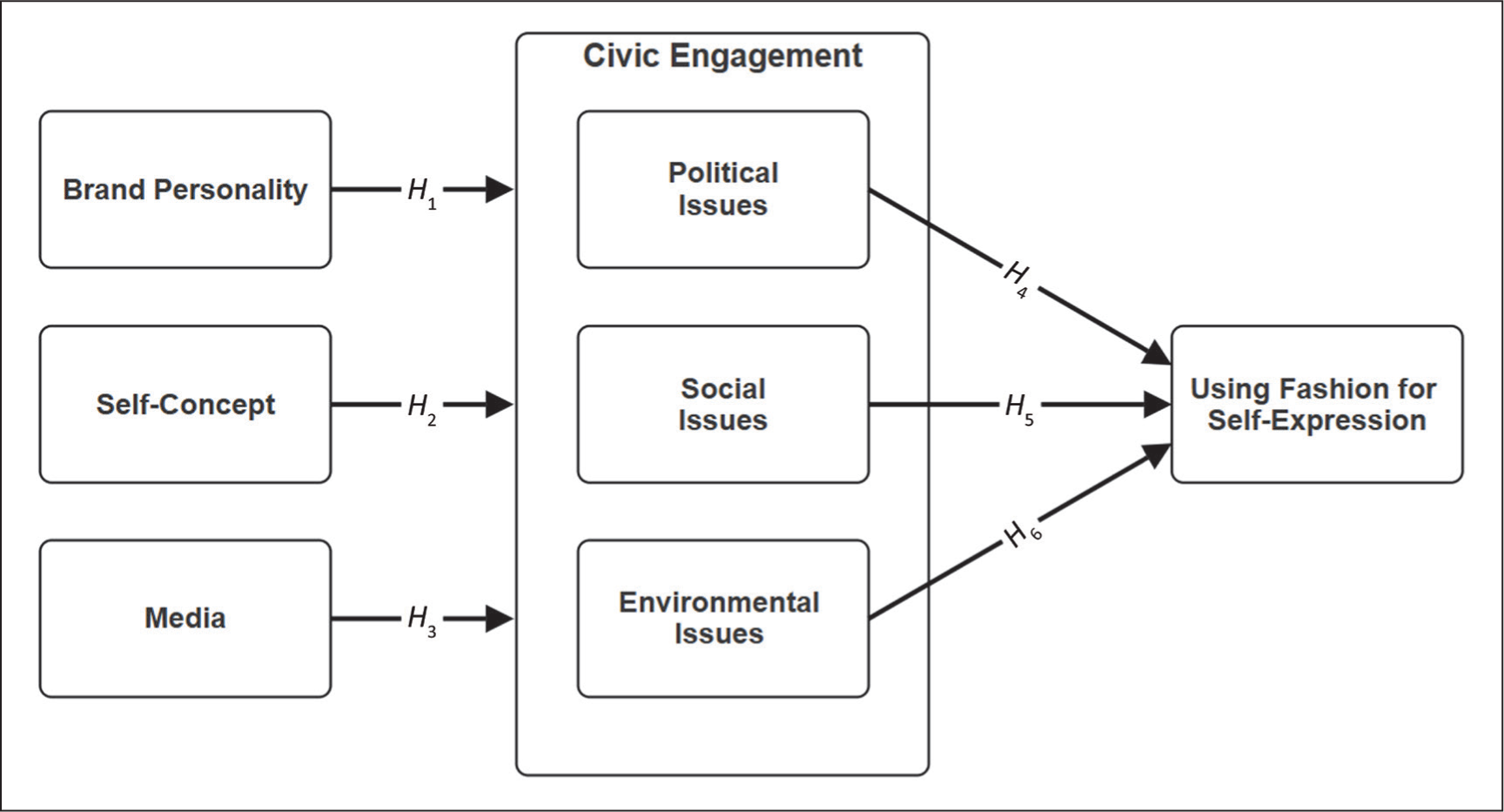
H1: Brand personality has a positive impact on civic engagement regarding (a) political, (b) social and (c) environmental issues.
Self-concept
According to McNeill (2018), SCT identifies how individuals perceive and experience their sense of being in their environment. Hence, one’s self-concept is expressed through fashion consumption (McNeill & Venter, 2019). Individuals seek to highlight their identity through their choices of fashion styles and products. Today, fashion garments are intentionally used as a means of self-expression. The relationship between fashion styles and consumers has grown closer to a dominant power (Gaugele & Titton, 2019). This consumer behaviour exemplifies the theory of self-concept, as contemporary consumers express potential leadership roles by ‘fitting the suit’. This expression is often recognised as both women and men wearing powerful, expressive and modern looks that are admired, as they fit the status of a leader in a workforce hierarchy (Cham et al., 2018; Gaugele & Titton, 2019). The former example illustrates how consumers must align their true identity with how they want to be perceived externally by others, especially within a workforce organisation. These studies conclude that self-concept significantly influences consumer behaviour decisions and is particularly integral when individuals engage in political, social or environmental issues (Ferrucci et al., 2020; Skarmeas et al., 2020). Thus:
H2: Self-concept has a positive impact on civic engagement regarding (a) political, (b) social and (c) environmental issues.
Media
Consumers are exposed to various brands, trends, products and services through multiple media channels. Hence, the media exerts social influence, meaning that consumers are generally affected by the social environment they live in by observing either textual or visual cues (Bandura, 2001). Media channels are divided into two forms, traditional and non-traditional, which affect the purchasing behaviour of consumers. Traditional media is often reflected in the various media forms that consumers use daily, such as television, newspapers, radio and magazines, which shape and direct opinions among consumers about topics deemed popular in society. Therefore, it is significant to study mass media’s impact on consumer shopping behaviour (Ananda et al., 2019; Lim & Kim, 2017; Naik & Raman, 2003). In line with SLT, different media forms are key for consuming fashion (Shephard et al., 2016).
On the other hand, non-traditional media is a recent approach to media communication. Non-traditional communication forms are widely based on digital technology and the internet. According to Yu and Code (2009) and Nash (2019), non-traditional media channels are regarded as personal media that can be accessed 24/7 through various technological gadgets, including smartphones, iPads and personal laptops. Thus, social media is a powerful communication tool that is greatly interlinked with accessing non-traditional media channels. Non-traditional media serves as an information source for consumers on various topics—fashion styles and technological gadgets, among others (Mohr, 2013). Today, social media, including Facebook, Twitter, YouTube, Instagram and Pinterest, is used by fashion brands and businesses to reach consumers who seek and purchase fashion items (Ahmad et al., 2015).
The distinction between traditional and non-traditional media has long been used in the literature (e.g., Dahlén et al., 2009). This classification captures the difference between mass media channels targeting large audiences in communicative messaging and alternative media, including social media, which shares a great deal of the power of influencers, ‘celebrities, or normal citizens’ marketing products and services (Schivinski & Dabrowski, 2016). Therefore, non-traditional social media channels have a vital role in disseminating fashion styles, in addition to motivating consumers to adopt new trends (Shephard et al., 2016).
Today, media has evolved from one-way communication into multidimensional tools (Schivinski & Dabrowski, 2016). The new interface of media platforms prompted brands to accept the two-way communication facet. New trends begin by being adopted by individual consumers and are subsequently leveraged by media platforms. Fashion brands understand the dynamics of media channels and the increasing relevance of civic issues. Brands must clearly and conspicuously position themselves by aligning their values with consumers’ concerns. Hence, certain brands use specific media forms from both traditional and non-traditional channels to inspire customers. This enables the fostering of closer relationships and shaping of the purchase intentions of their target consumers (Schivinski & Dabrowski, 2016). As previously mentioned above, Bond Girl was a game-changer for making the audience ‘fashion consumers’ adopt MAC products. In addition, the emergence of a female lead signifies the leading role and empowerment of women in today’s modern societies (Gaugele & Titton, 2019). Hence, the following hypotheses are proposed:
H3a: Traditional media has a positive impact on civic engagement regarding (a) political, (b) social and (c) environmental issues. H3b: Non-traditional media has a positive impact on civic engagement regarding (a) political, (b) social and (c) environmental issues.
The Effect of Civic Engagement on Using Fashion as a Medium
Historically, fashion has been closely tied to political and cultural aspects in shaping a nation’s identity, stressing the importance of nation, nationality and nationalism in reshaping the political community (Parkins, 2002). This dates back to historical revolutions, such as the French Revolution, where the royal family’s public dress codes conveyed political affiliation messages (Hunt, 1984, pp. 78–80). Later, citizens adopted the idea of engaging in civic activities by participating in voting and boycotts and expressing their views on civic issues and how social membership will be valued and measured (Garcia & Mirra, 2021; Parkins, 2002). Engaging in civic activities can benefit communities by involving individuals in both personal and collective actions within society (Abdou & Skalli, 2018; Molyneux, 2017).
Some studies suggest that fashion has long served as a platform for civic engagement, allowing individuals to express stances on issues such as anti-racism and feminism (Hirscher, 2013). According to Parkins (2002), fashion garments have the power to convey a relationship between a citizen’s body and its political significance. As a result, a body politic statement can be seen as a form of subliminal communication, where what a citizen wears reflects their beliefs on specific societal issues. This act of wearing expressive, fashionable styles endorses the idea of publicly sharing positions on political, environmental and social matters. Additionally, civic engagement acts as a symbolic catalyst, enabling citizens to creatively communicate the messages they wish to express (Hunt, 1984, p. 53). Hence, the following hypothesis is proposed:
H4: Fashion civic engagement regarding political issues has a positive impact on utilising fashion as a medium for self-expression. H5: Fashion civic engagement regarding social issues has a positive impact on using fashion as a medium of self-expression. H6: Fashion civic engagement regarding environmental issues has a positive impact on using fashion as a medium of self-expression.
Figure 1 summarises our hypotheses and research framework. This research began with an exploratory phase (Study 1), followed by a main quantitative phase (Study 2). Study 1 was exploratory, delving into factors identified in the literature review, while informing the development of our research model and hypotheses (Bryman, 2006). Study 2 was survey-based and tested the proposed model.
Research Framework.
Study 1
To gain insights into the primary factors affecting civic engagement and their potential influence on utilising fashion as a means of self-expression, we conducted semi-structured interviews with 16 college students (age range: 19–23 years old, 73.4% females). We employed purposive sampling to target participants interested in fashion as a tool for civic engagement. The duration of the interviews ranged from 19 to 45 minutes.
The interview guide encompassed questions about the motivating factors for participants’ civic engagement, active participation in these activities and the prevalent mechanisms for conveying their civic engagement efforts. Moreover, participants were asked to share their opinions about using fashion as a tool for civic engagement communication.
The interviews were transcribed, and we conducted a thematic analysis with a specific emphasis on examining the motivations that underlie civic engagement and the use of fashion to convey one’s views on relevant concerns. According to Braun and Clarke (2006), thematic analysis is a foundational, qualitative analysis method with some flexible features. It is a widely used method that helps researchers identify, analyse and report patterns of data shared by interviewees. Hence, Study 1 aimed to explore the connections among previous concepts that could be applied in the subsequent study (Corley & Gioia, 2011).
Findings and Discussion
Results show that civic engagement is mainly driven by self-concept, traditional and non-traditional media channels, and brand personality. Moreover, participants revealed that they liked to see fashion brands support and communicate several civic issues. This encourages the participants not only to purchase and support the causes they are most interested in but also to feel more strongly engaged with the brands.
On the one hand, the interviewees agree that fashion has the power to communicate personal information about an individual. The interviewees believe fashion reveals a large part of their personalities: ‘Before we even greet someone, they can already develop a certain perception about us’ (Interviewee B).
The interviewees agree that fashion is a symbol of their identity, and when their identity changes, their fashion tastes also change: ‘As we grow up and our personality changes, so do our tastes in style’ (Interviewee D); ‘our clothing pieces express who we are and who we wish to be’ (Interviewee H). On the other hand, the interviewees confirm that fashion is influenced by popular figures from the media and popular culture, such as artists, supermodels and other high-profile individuals. People look up to these individuals as fashion symbols, taking cues and reworking them to fit with their role in society—‘like wearing hot red lipstick because Beyoncé wore it at a certain event’ (Interviewee A); ‘like wearing high waist skirts and trousers because that’s what fabulous models wore on the runway’ (Interviewee C). The interviewees’ discussions confirm that fashion icons/celebrities benefit from high public exposure due to the media. The media can lead consumers to move from one fad to another.
Moreover, brand personality in fashion encourages the use of fashion as a means of self-expression. For example, Interviewee J states: ‘The excitement of seeing our own personalities mirrored in a given dress or specific citrusy hue’. The interviewees agree that brands should design items that revolve around the expression of beauty and meaningfulness, creating lively, spirited and good-natured new trends that encourage consumers to experiment with every season’s items. The interviewees believe that fashion is a form of art and that this art is as wearable as it is, as they go about their lives in society. Many interviewees do not perceive frequent fashion consumption as being materialistic and vapid, as illustrated by Interviewee A: ‘I have created an intense, emotional bond with fashion. It has become a part of me’.
The interviewees consider fashion to be a tool for moving communities towards democracies. Current public protests and social movements utilise fashion items, such as clothing, in unique ways to manifest and communicate specific issues, often referencing them globally. For example, ‘Black armbands for the anti-Vietnam War movement, miniskirts for the women’s liberation movement, and the army uniform print for the Black Panthers movement’ (Interviewee M). The interviewees claim they would purchase fashion items to raise awareness of public causes.
Study 2
Study 2 was a survey designed to test the hypothesised relationships. The study investigates the effect of brand personality, self-concept and media influence on consumers’ attitudes towards adopting civic intentions in fashion buying choices. The population for this study consisted of youth and young adults residing in Cairo and Alexandra, specifically private university students with a high average personal income (Abdou & Skalli, 2018). Private university students are representatives of individuals who engage in civic activities in non-traditional ways to express their opinions and actively participate as democratic citizens (Dorio et al., 2017). The sample selection was convenience sampling. This sampling choice requires the researcher to approach individuals who fit the studied population (Taherdoost, 2016) and are accessible and approachable. An initial sample of 506 respondents was obtained. However, 50 questionnaires were excluded due to missing information, resulting in a final sample size of 456 respondents.
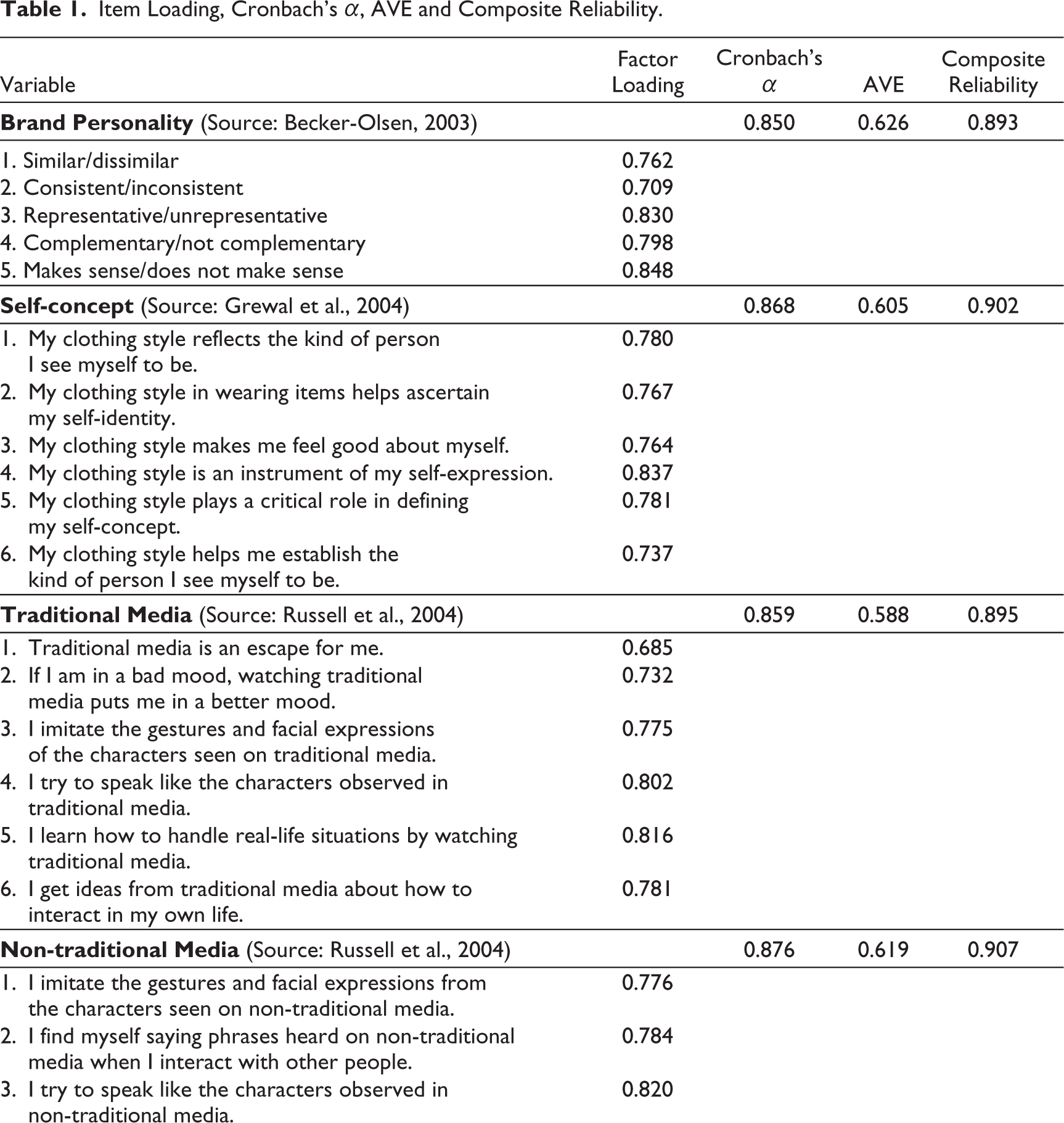
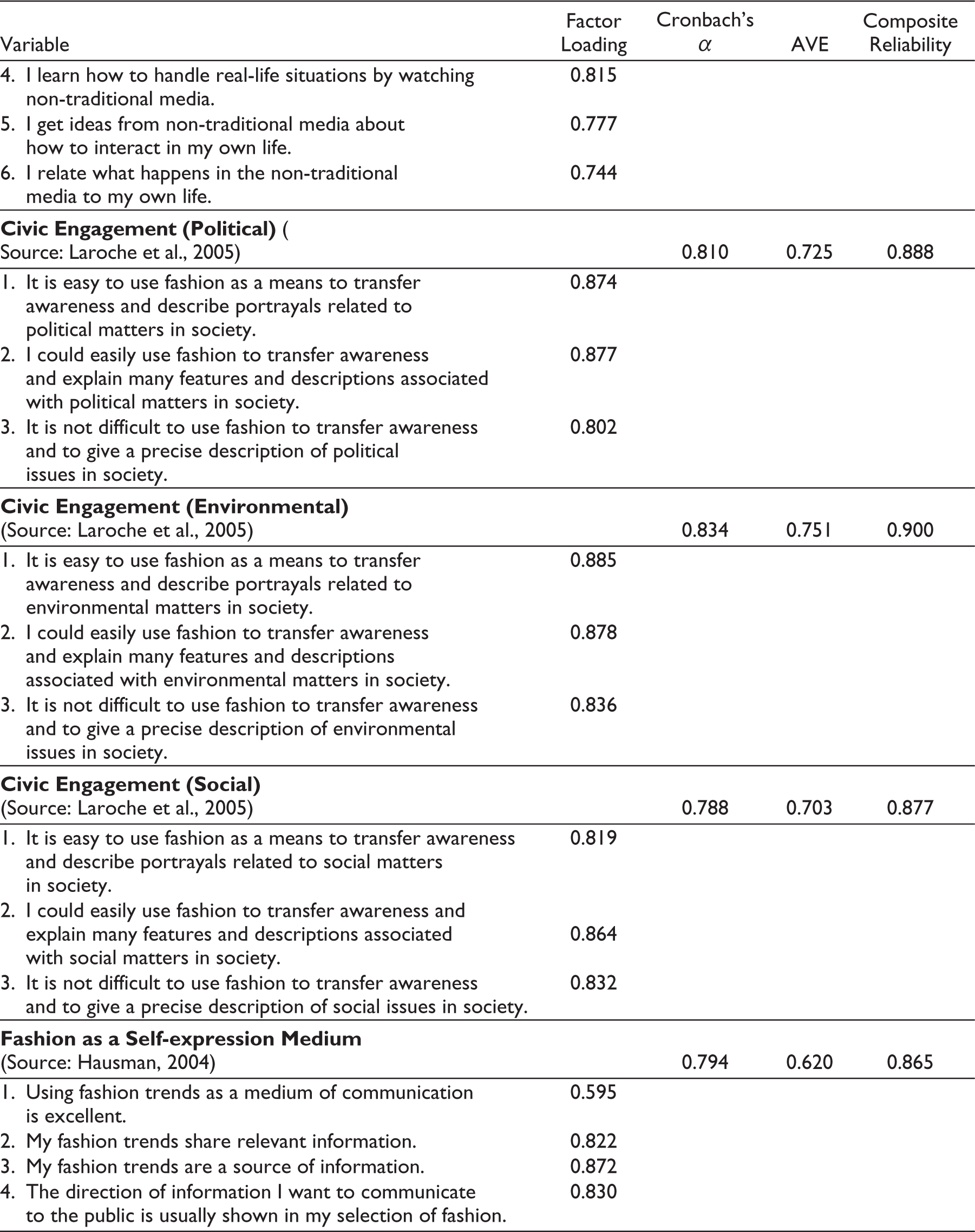
The constructs in our research framework were measured using adapted scales from established studies. Specifically, we adapted 6 items from Becker-Olsen (2003) to measure brand personality, 5 items from Grewal et al. (2004) for self-concept and 12 items from Russell et al. (2004) to assess traditional media (6 items) and non-traditional media (6 items). Civic engagement, comprising political, environmental and social dimensions, was measured using nine items (three per dimension) from Laroche et al. (2005). Finally, fashion communication was measured using four items from Hausman (2004). All constructs were assessed using a 5-point Likert scale (1 = ‘strongly disagree’; 5 = ‘strongly agree’), except for brand personality, which was measured using a 5-point semantic differential scale (e.g., ‘makes sense’; ‘does not make sense’). Table 1 provides the adapted items and scale sources.
Item Loading, Cronbach’s α, AVE and Composite Reliability.
Similar to Elmashhara and Soares (2024) and Elmashhara et al. (2024), we undertook several steps to validate the survey instrument. First, the questionnaire was reviewed by two researchers with expertise in fashion and consumer behaviour to ensure content validity and alignment with the study’s objectives. Second, a pre-test was conducted with 20 volunteers who demonstrated a strong interest in fashion, aimed at evaluating the clarity, comprehension and sensitivity of the survey items. Based on their feedback, minor revisions were made to improve item phrasing.
The data were analysed using AMOS 28. The model fit was checked by applying confirmatory factor analysis (CFA). Then, we tested the proposed hypotheses using structural equation modelling (SEM).
Sample Characteristics
Most respondents are female (73.4%), and 26.6% are male; most of them reside in Alexandria (70.3%) or Cairo (25.5%). Most respondents are between the ages of 20 and 35 years (65%). The subsequent age group comprises participants under 20 years of age (29.5%) and, finally, participants between the ages of 35 and 50 years (4.6%). Regarding employment, most of the participants in this study are students who do not work (70.3%). The respondents’ household income is above 10,000 Egyptian pounds (LE) per month. Regarding marital status, most participants are single (87.2%). Also, most do not have children (93.2%).
Assessment of the Measurement Model
CFA of the original items indicated an acceptable model fit that corresponded to the threshold cut-off values suggested by Hu and Bentler (1999): χ2 = 1,272.957, df = 541, χ2/df = 2.353, CFI = 0.915, TLI = 0.901, IFI = 0.915, RMR = 0.026, SRMR = 0.0542, RMSEA = 0.055 (CI = 0.051; 0.058). Furthermore, a reliability analysis was conducted on the indicators. Cronbach’s α values ranged from 0.788 to 0.876, exceeding the recommended threshold of 0.70 for each construct (Netemeyer et al., 2003). Composite reliability values ranged from 0.865 to 0.907, also surpassing the 0.70 cut-off point, thereby providing additional evidence of internal consistency. To confirm convergent validity, the average variance extracted (AVE) was calculated, with values ranging from 0.588 to 0.751, well above the recommended threshold of 0.50 (Fornell & Larcker, 1981) (Table 1).
Assessment of the Structural Model
SEM was used to test H1–H6. First, an accepted model fit was presented, according to Hu and Bentler’s (1999) thresholds, yielding the following: χ2 = 1,390.433, df = 548, χ2/df = 2.537, CFI = 0.902, TLI = 0.887, IFI = 0.903, RMR = 0.029, SRMR = 0.0565, RMSEA = 0.058 (CI = 0.054; 0.062).
Regarding the hypothesis test, Table 2 presents the path coefficient weights. The results indicate that both self-concept and traditional and media significantly affect fashion civic engagement, thus supporting H2 and H3. Regarding H3, however, we see differing results for traditional and non-traditional media. While for traditional media, the results are in the expected direction, for non-traditional media, the impact is negative. Regarding brand personality, it does not have an impact on fashion civic engagement, and H1 is not supported. Finally, all dimensions of fashion civic engagement significantly influence the use of fashion as a medium for self-expression medium. Therefore, H4, H5 and H6 are supported.
Hypothesis Testing.
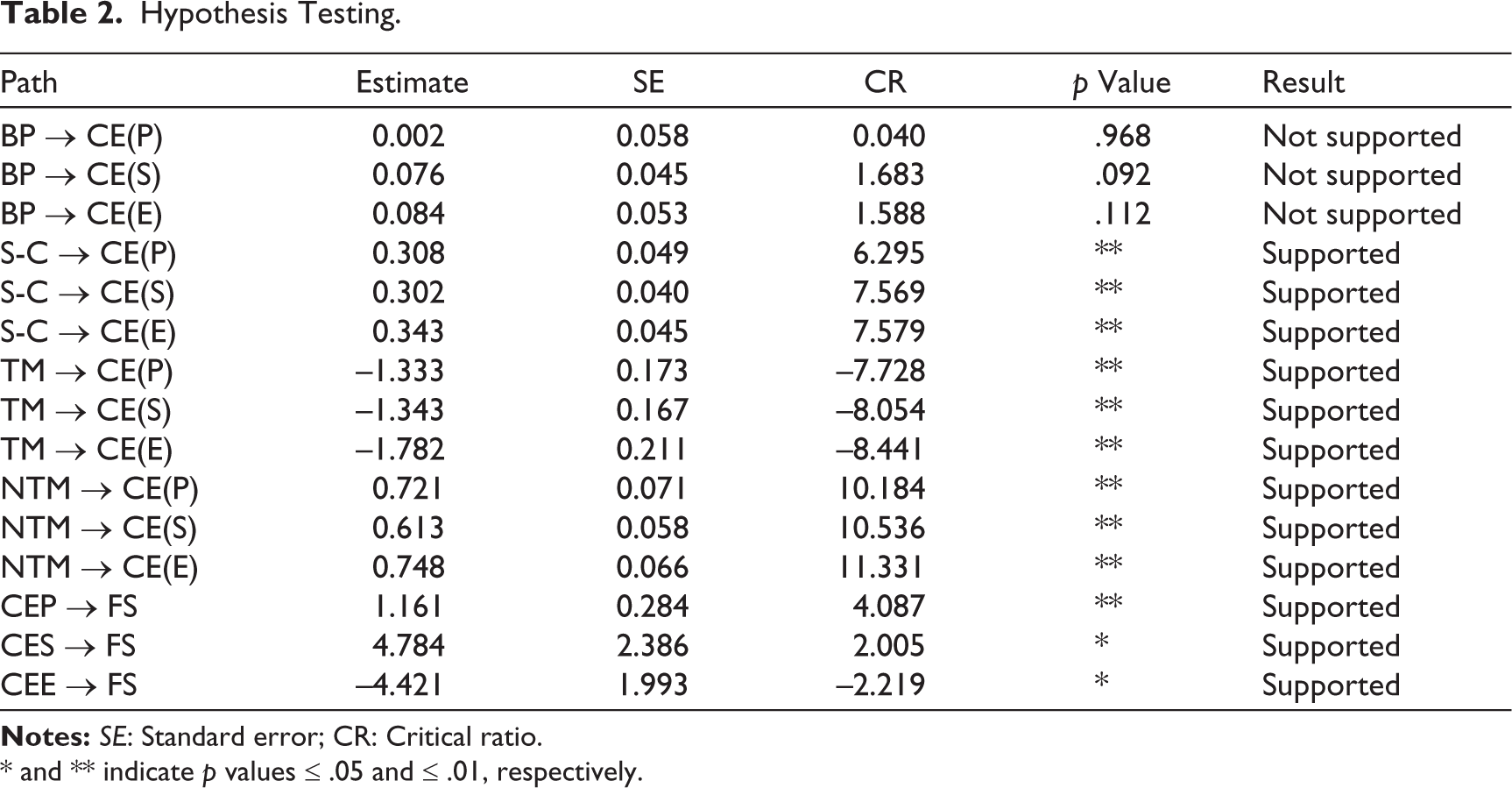
* and ** indicate p values ≤ .05 and ≤ .01, respectively.
Discussion and Conclusion
Understanding the use of fashion as a medium for self-expression requires insights into what motivates such behaviour. Our exploratory study revealed that fashion communicates one’s personality and/or values visually, as well as one’s stance regarding societal issues. Fashion civic engagement helps raise awareness and contributes to civic mobilisation and behaviour change to achieve a systematic impact on governments and better serve communities. Our findings support past studies and theories that explain consumers’ fashion civic engagement (e.g., McNeill & Venter, 2019; Omoto et al., 2010), namely the social cognitive theory (SCT) and the social learning theory (SLT).
The findings of our second study indicate that self-concept has a positive effect on civic engagement. These results are consistent with those of Talaat (2022) and McNeill and Venter (2019), who indicate that self-concept has a positive impact on fashion civic engagement. Furthermore, our findings align with Badaoui et al. (2016), who argue that fashion items serve as a means of expressing identity, allowing consumers to publicly communicate a multitude of ideas/issues, such as their social status, power and personal views on several issues. Additionally, our findings align with SCT, which posits that consumers are drawn to products that resonate with their personal beliefs and identities (McNeill, 2018).
Regarding the impact of media, results show non-traditional media influence has a positive effect on civic engagement, while traditional media has a negative effect. While our findings align with Rathnayaka (2018), who clarified that non-traditional media is a common resource for information and a self-expression method among youth, the intriguing reverse effect for non-traditional media may be due to the nature and function of traditional media in emerging countries. While non-traditional media provides spaces that empower individuals to engage with critical thinking and activism, and increasing political, environmental and social awareness that can be communicated through fashion, traditional media may typically emphasise entertainment and escapism rather than social or political awareness. As a result, consumers exposed to such media may show more risk-averse attitudes, reducing their likelihood of using fashion as a tool for civic engagement. Overall, our results support SLT by evidencing that media serves as a key channel through which individuals gather and internalise information and values, leading to civic participation. This expands the scope of SLT by linking it to the domain of civic engagement, emphasising the role of media, namely non-traditional media, as a key agent in shaping socially engaged behaviour.
Regarding brand personality, despite the emphasis placed by our respondents on the importance of brand personality in the qualitative study, it does not positively impact civic engagement. This result may be because this relationship is mediated or moderated by other variables not included in our model. In particular, the perception of brand authenticity may play a crucial role and is worthy of study (Morhart et al, 2015). Furthermore, these differing results highlight the need to further explore the construct and operationalisation of brand personality and related constructs such as consumer self-brand connections and reference groups (Escalas & Bettman, 2003). Malär et al. (2011) explained that a brand’s personality facilitates relationships with consumers. Fashion choices can signal support for a cause, influencing others. Similarly, Semaan et al. (2019) concluded that consumers interlink their persona with a brand’s social construction. Ananda et al. (2019) concluded that consumers seek specific brands that suit their personality, goals and ambitions.
Moreover, Study 2 revealed that fashion civic engagement significantly influences the use of fashion as a medium for self-expression, indicating that civic engagement issues can be manifested through fashion items. Consumers use fashion to express their views on various political, social and environmental issues.
These findings are consistent with previous studies that highlight the importance of fashion in communicating relevant issues to society (e.g., Hirscher, 2013; Mazzarella et al., 2019; Miller, 2005). Following this trend, fashion companies have begun incorporating social and political activism into their collections, encouraging customers to support and align themselves with these fashion brands by purchasing their products (Roncha & Radclyffe, 2015).
The study encompasses certain limitations, focusing mainly on two theories (SCT and SLT) to understand citizens’ motives for civic engagement through fashion. While these theories offer valuable insights into how individuals learn from their social environments and model behaviours, they do not capture the full spectrum of factors influencing how civic engagement is manifested through fashion. Therefore, the research may not account for the full complexity of fashion choices or how messages are conveyed through fashion to communicate political, social or environmental messages. This limitation restricts the broader applicability of the findings and calls for further research that incorporates additional theoretical perspectives.
Moreover, the current study is specific to the study context, so its findings cannot be generalised to other countries or even to the entire country of Egypt, given the significant variability in contexts across the country. The focus on youth and young adults also means the results cannot be generalised to different age groups. The study also focuses on university students, excluding individuals from diverse low- to high-income backgrounds who are not university students. As a result, the findings may not fully reflect motives for civic engagement and fashion activism among illiterate populations and other socio-economic groups. Finally, by concentrating on private universities in Cairo and Alexandria, the study overlooks the public university sector and other cities in Egypt, which may limit the generalisability of the findings to all higher education institutions and regions across the country.
Future studies could explore the implications of using fashion as a form of cause-related self-expression, examining its role in shaping collective identities, catalysing positive socio-economic changes, mobilising communities towards progress and driving social-innovative changes. In addition, exploring potential mediators or moderators of brand personality–civic engagement may contribute to a deeper understanding of the phenomenon, which our results suggest not to be direct as theoretically proposed. Furthermore, further research could explore how fashion brands can support minority groups living in emerging countries and how being fashionably supportive with their garments can voice their opinions, values and concerns. Finally, future studies should also focus on realigning brand values with the new consumer values. Emerging ideas include empowering women, advocating self-confidence and building communities where customers feel a sense of belonging.
Theoretical and Practical Implications
This study offers valuable contributions to fashion marketing and consumer research. First, the qualitative study results elucidate the primary drivers of civic engagement among adults, specifically identifying self-concept, brand personality and media as pivotal factors. Second, our quantitative study emphasises the causal relationships between self-concept and both conventional and non-conventional media on civic engagement in emerging countries, like Egypt. Lastly, this research extends existing theoretical frameworks by demonstrating that the dimensions of civic engagement influence the utilisation of fashion as a means of self-expression. From a managerial perspective, this study highlights the notion that fashion consumers tend to prefer trendy fashion styles that allow them to express their involvement in various civic causes. Fashion brands can benefit greatly by understanding young consumers’ values and recognising the power of brand voices. This empowers consumers to make purchases that align with their values. Yet, brands must be mindful of inclusivity, ensuring others also feel invited to express their values through fashion, thus supporting their inner self-concept within the real community they are living in. Today, the idea that fashion consumers can use garments to make statements on issues such as minority rights, sustainability and political issues is a call to express their evolving identities and values. These forms of engagement serve as vehicles for self-expression and foster alignment with the themes prevalent in both traditional and non-traditional media. Thus, fashion brands must align their strategies accordingly.
Fashion brands can strategise their production themes to be more self-expressive, incorporating statements about everyday practices, political actions or social issues, and incorporating cultural relevance into their styles is a must. This entails monitoring traditional and non-traditional media and staying attuned to relevant causes that resonate with individuals. Moreover, fashion retailers can highlight political, social and environmental issues occurring inside communities to support community engagement actively. After all, consumers want to feel a sense of belonging in a community that serves a purpose. On the other hand, fashion brands and companies rely on customer loyalty and repeated purchases. Consequently, fashion enterprises should consider driving changes in the local fashion industry by incorporating fashion styles that address civic issues of significance and value to socially conscious shoppers. The reason for this active fashion change at the heart of the fashion industry is that consumers no longer care about the designers’ co-creation in garments; they are looking for meaningful fashion that supports confidence, purpose and connection and helps shape their identities.
Furthermore, our research carries significant implications for politicians and public administrators. It sheds light on the contemporary trends rising in emerging countries where consumers are actively engaging and expressing their views in civic acts, albeit through the medium of a fashion persona rather than solely via traditional forms of public protest or activism. Hence, our study highlights the potential for the fashion domain to infuse vitality and distinctiveness and align values that support political candidate campaigns. This engagement can bring politicians closer to citizens by blurring the lines between political, social and environmental policies and supporting brands that advocate for real fashion statements.
In addition, public administrators can help blend policies that need public support with garments like hats, scarves, t-shirts, skirts, etc., thus supporting emerging communities and stabilising the idea that fashion garments can authentically express civic participation. This contribution can be leveraged to advance policy initiatives, catalyse changes and bridge the market gaps by understanding the importance of aligning self-concept, brand personality and media with civic engagement topics and empowering consumers to become fashionably active citizens and voice out their concerns.
Footnotes
Declaration of Conflicting Interests
The authors declared no potential conflicts of interest with respect to the research, authorship and/or publication of this article.
Funding
The authors disclosed receipt of the following financial support for the research, authorship and/or publication of this article: This work is financed by national funds through FCT-Foundation for Science and Technology, IP, within the scope of the project UIDB/04647/2020 of CICS.NOVA–Interdisciplinary Centre of Social Sciences of Universidade Nova de Lisboa.