




Abstract
Background:
There are only single-centre small studies on the prevalence of uveitis in Indian patients with spondyloarthritis (SpA). Thus, we planned this study, which utilised a large multicentric database of SpA to determine the prevalence and associations of uveitis.
Methods:
This study utilises data from a database that enrolled patients with SpA across six different Indian hospitals between October 2021 and 2024. Data was collected by face-to-face interviews and subsequently entered into an online database. Details collected included age, gender, disease duration, type of SpA, HLA-B27 status, BASDAI, occurrence of uveitis, including type and number of episodes. The primary objective was to determine the prevalence of uveitis and the secondary objective was to assess its associations with demographic and clinical variables.
Results:
A total of 1,756 patients with SpA were enrolled in this study. Their age (mean ± SD) was 40 ± 12.8 years and the median (IQR) disease duration was 5 (2–10) years. HLA-B27 was positive in 78%. Uveitis occurred in 271 of 1,756 patients, giving a prevalence of 15.4%. A majority of these patients reported multiple episodes of uveitis. On multivariable logistic regression, uveitis was positively associated with positive HLA-B27 (odds ratio 1.866, P = .004), disease duration (odds ratio 1.045, P < .001) and age (1.014, P = .049).
Conclusions:
Uveitis occurred in 271 (15.4%) of 1,756 patients with SpA and was positively associated with age, duration of disease and HLAB27.
Introduction
Spondyloarthritis (SpA) comprises a group of diseases involving the axial skeleton and peripheral joints and has a strong association with HLA-B27. 1 Apart from musculoskeletal involvement, patients of SpA have extra-articular complications as well, the most common being uveitis (inflammation of the eye). Uveitis in SpA carries importance for both ophthalmologists as well as rheumatologists. It is primarily treated by ophthalmologists and has been reported to be the most common cause of non-infectious uveitis in all series. 2 At the same time, it remains an important concern for rheumatologists who are the primary physicians treating patients with SpA. Recurrent or severe uveitis may necessitate the addition or modification of systemic therapy by the treating rheumatologist. 3
Although excellent studies are available from across the world, data from India are mainly from single centres comprising a small number of patients.4–6 There is a need for larger multicentre studies from India to get more robust data on the occurrence and associations of uveitis. The primary objective of this study was to determine the prevalence of uveitis and the secondary objective was to define its associations with other clinical and demographic variables.
Methods
This research was part of a multicentre study to create a large database of patients with rheumatological diseases by creating a clinical trial network involving six tertiary care rheumatology centres across India, funded by the Biotechnology Industry Research Assistance Council (BIRAC). All participating centres took ethical approval from the institutional ethics boards or committees and patients were enrolled after written consent (PGI/EC/2020/000692). This particular study was from the database of patients with SpA. The primary objective of this study was to determine the prevalence of uveitis and the secondary objective was to define its associations with other clinical and demographic variables.
Patients with SpA, who fulfilled the ASAS criteria for either axial or peripheral SpA and gave consent, were enrolled between October 2021 and 2024 in this database. 7 General demographic and disease data collected included age, gender, current age, age at onset, disease duration, HLA-B27 positivity, BASDAI score, occurrence of uveitis, its type (anterior, posterior, both, pan uveitis) and number of episodes. Data was collected through a face-to-face interview and review of the records of patients (including ophthalmology records). The participating physicians entered data either through a printed form, which was later transferred to the online database.
Data was entered in Excel and transferred to the SPSS statistical programme version 27 for analysis. Statistical analysis was descriptive for the occurrence of uveitis, its types and frequencies. The association of uveitis with clinical and laboratory variables was tested by logistic regression, first univariable and then multivariable (all variables with P < .15 in univariable entered). A P value of less than .05 was considered significant. Graphs were created using GraphPad Prism (version 10).
Results
Baseline Data
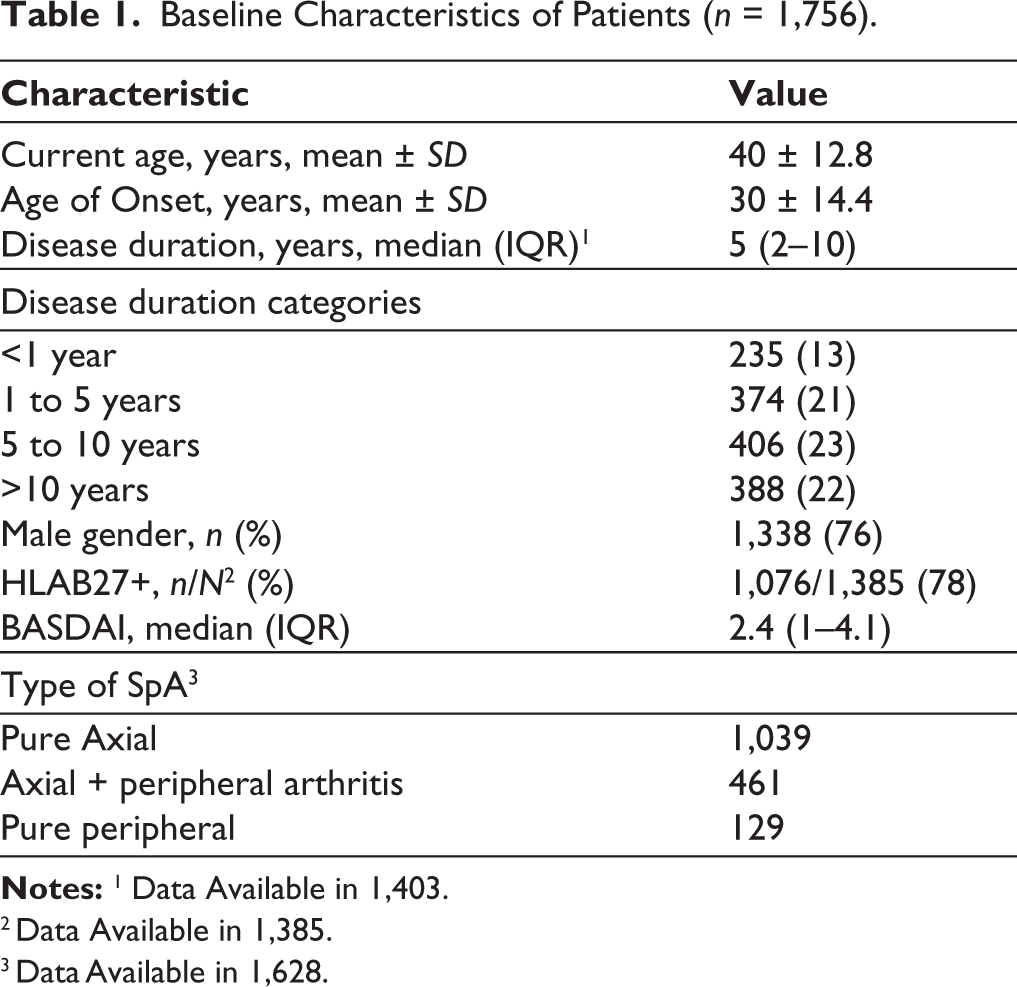
A total of 1,756 patients were enrolled in this study from six tertiary care rheumatology clinics. Their mean age was 40 years and the median disease duration was 5 (2–10) years. Disease duration of less than 1 year was present in 13%, between 1 and 5 years in 21%, between 5 and 10 years in 23% and more than 10 years in 22%. Among the included patients, 76% were male, 78% were HLA-B27 positive. Pure axial SpA was present in 63.8%, axial SpA with peripheral arthritis in 28.3% and peripheral SpA in 7.9% (Table 1).
Baseline Characteristics of Patients (n = 1,756).
2 Data Available in 1,385.
3 Data Available in 1,628.
Occurrence of Uveitis
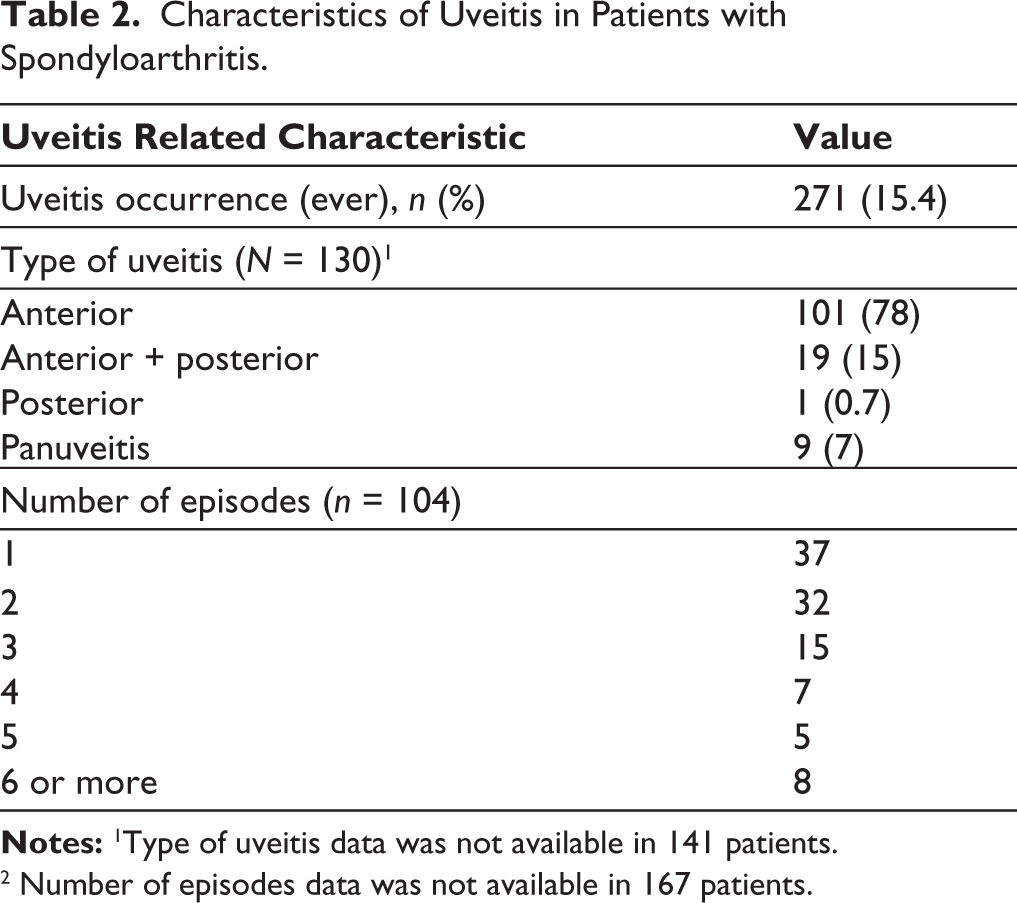
Uveitis was reported in 271 of the 1,756 patients, giving a prevalence of 15.4%. The predominant type was anterior uveitis (78%), followed by anterior and posterior uveitis together (15%). A single episode was reported in 35.6% patients, two episodes in 30.8%, three episodes in 14.4% and more than three episodes in 9.6% (Table 2)
Characteristics of Uveitis in Patients with Spondyloarthritis.
2 Number of episodes data was not available in 167 patients.
Clinical and Laboratory Features Associated with Uveitis
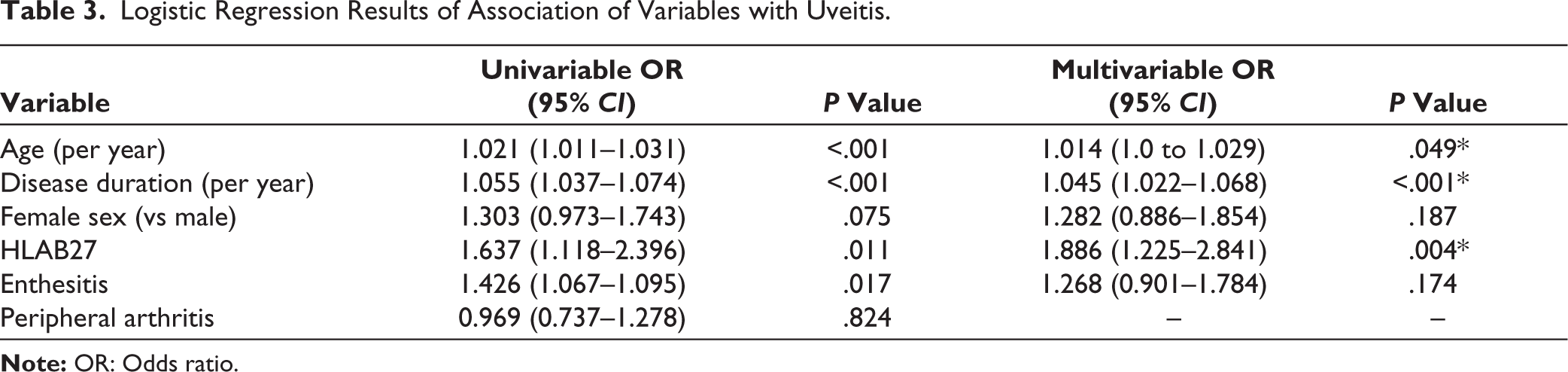
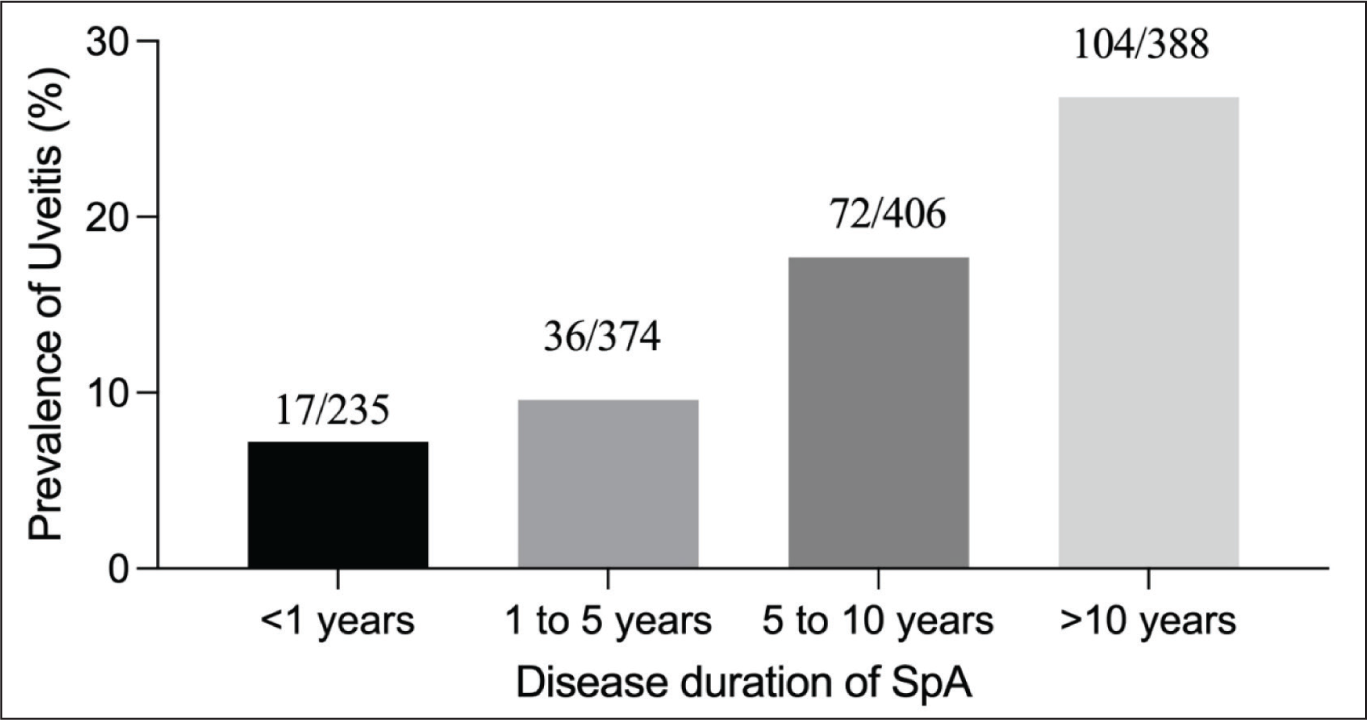
On univariable analysis, there was an association with age, disease duration, HLA-B27 and enthesitis, whereas on multivariable analysis the association was significant only for age (OR, 1.014; 95% CI, 1.0–1.029), disease duration (OR, 1.045; 95% CI, 1.022–1.068) and HLA-B27 (OR, 1.886; 95% CI, 1.225–2.841) (Table 3). On dividing disease duration into categories, there was a stepwise increase in the prevalence of uveitis with increasing categories of disease duration. The prevalence of uveitis was 7.2% in patients with disease duration less than 1 year, 9.6% with disease duration between 1 and 5 years, 17.7% with disease duration between 5 and 10 years and 26.8% with duration more than 10 years (P < .001) (Figure 1).
Logistic Regression Results of Association of Variables with Uveitis.
The Prevalence of Uveitis as per the Disease Duration Categories of Patients.
Discussion
The prevalence of uveitis in our multicentric study was in 1,756 patients with SpA was 15.4%. Previous single-centre studies with a smaller number of patients from India found a prevalence of 25% (North India), 16.7% (South India) and 19% (Central India).4–6 Those studies had a smaller number of patients, varying from 100 to 271 patients. The largest study of 217 patients was a retrospective study of SpA from a rheumatology unit in North India, with disease duration (mean 8.6 years) similar to our study (mean 7.4 years), but higher male predominance (9:1) compared to this study (3:1). 4 The other two studies were from ophthalmology units and prospectively recruited patients.5,6
Studies from Asia have found a prevalence of uveitis in patients of SpA to vary across different countries from 10.3% to 30%. Studies have reported the prevalence to be 10.3%–16.7% from Mainland China,8–10 26.6% from Hong Kong, China, 11 18.7% from Bangladesh, 12 27.3% from Japan and 21.1% from a multinational Asian study (included Taiwan, South Korea, China and Singapore). 13 Two previous systematic reviews and meta-analyses have reported on the worldwide prevalence of uveitis in SpA patients. One included 26,168 patients and estimated the prevalence of uveitis to be 32.7%, whereas the other one included 44,372 patients and estimated the prevalence of uveitis to be 25.8%.14,15
Does this suggest a geographic (or ethnic) difference in the occurrence of uveitis (being lower) in India (and Asia) than the rest of the world? This is possible, as one systematic review did find some difference across geographic regions, with the highest in North America (35%), to Asia being much lower (21%). 15 However, there is a major problem of heterogeneity in different studies about the disease duration, which has a strong positive association with uveitis. Thus, it is difficult to actually estimate the effect of ethnicity with such variation in disease duration.
This study also found a strong association of disease duration with the prevalence of uveitis. The prevalence of uveitis with a disease duration of less than 1 year was 7.6%, whereas in those with a disease duration of more than 10 years it was 26.8%, almost four times higher. This is well established by previous studies and systematic reviews. In a systematic review, it was found that the prevalence of uveitis was 12.3% for patients disease duration of less than 5 years, whereas in those with a disease duration >30 years it was 43%. 14 Another association found in this study was with HLA-B27 (odds ratio 1.9), which was similar (but lower) to that found in the systematic review (odds ratio 4). 14
This study found a trend-to-association of uveitis with female gender. One systematic review reported an odds ratio of 1.3 for females for the occurrence of uveitis 14 however, most studies have not found this association and thus gender is currently not thought to influence the occurrence of uveitis.
Anterior uveitis was the most common type of uveitis reported in our study, in around 78%. This is lower than that reported previously (around 90%) by systematic reviews, 14 as well as previous Indian single-centre studies.5,6 Studies on patients with anterior uveitis have also found the most common underlying disease to be SpA or HLA-B27+. The lower frequency of anterior uveitis in our study could be explained by the diagnosis in our patients of type of uveitis being based on medical records. The expertise of ophthalmologists in classifying uveitis may not be uniform and it is possible that some uveitis was misclassified. An important aspect brought out by this study was that a majority of patients who had uveitis often experienced recurrent attacks (62%). The large systematic review had found recurrent uveitis attacks in 50%. 14
This study has the obvious limitations of a database-based cross-sectional study, with missing data on some variables. We do not have data on parameters such as unilateral versus bilateral affliction, time-to-resolution, confirmation of the type of uveitis, any complication (synechiae, reduction in visual acuity, cystoid macular oedema) or treatment taken. This study also does not give any information about the outcomes or treatments received by these patients. However, its strength is the large number of patients from across six different rheumatology centres in India and the documentation of important characteristics and the association of uveitis in these patients.
To conclude, this study found the prevalence of uveitis to be 15.4% in 1,756 patients with SpA, with most patients having recurrent attacks. This study found a positive association of uveitis with duration of disease, age and HLA-B27.
Footnotes
Acknowledgements
The following members of the BIRAC staff are acknowledged who participated in collecting data: Sandeep Jalwal, Anam Sheikh, Dr Ruchika Gill, Dr Shung Ming Chiu, Dr Jaswinder Kaur Chillana, Dr Ann Mary Rufus.
Authors’ Contribution
Data collection (all authors), analysis of data (VD, RG), manuscript draft (VD), approval of draft (all authors).
Data Access
The database can be shared on a reasonable request with a clear plan of research.
Declaration of Conflicting Interests
“Padmanabha Shenoy is an Associate Editor with the journal. Vineeta Shobha is a member of the Editorial Board of the journal. They were not involved in the decision making process related to the manuscript. The authors declared no other potential conflicts of interest with respect tothe research, authorship and/or publication of this article.”
Ethical Approval and Informed Consent Statements
Ethical approval was obtained for all sites participating in this study and data were collected after informed consent.
Funding
The authors disclosed receipt of the following financial support for the research, authorship and/or publication of this article: This study was funded by the BIRAC Reference# BIRAC/BT/NBM0257/05/19 BCXIXD.