



Abstract
There are a growing number of university sustainability efforts, but the literature provides limited information to help universities decide if they are focused on sustainability aspects important to their stakeholders. To address this gap, Canadian student leaders’ conceptualizations of sustainable development (SD) and sustainable universities were investigated using a mixed methods approach with qualitative interviews and nested quantitative concept checklists. Themes were developed through thematic analysis and compared with support for checklist concepts to explore similarities and differences between the datasets. Conceptual variance existed between student leaders concerning sustainability; there was greater agreement between participants regarding conceptualizations of sustainable universities. Participants also believed that universities have a responsibility to lead by example and to educate both students and the greater community about sustainability. This research provides insight into the conceptualizations of a key university stakeholder, the importance of localized discussions of sustainability and encouragement for universities to engage in sustainability.
Introduction
While the world is always in a state of flux, the current impacts of climate change, poverty, civil unrest and financial recessions point to the need for greater balance. Climate change has been linked with increasing extreme weather events (Intergovernmental Panel on Climate Change [IPCC], 2012) and is caused in part by human activities, such as fossil fuel usage (IPCC, 2007; Wuebbles & Jain, 2001). The major financial crises around the world have negatively impacted the progress of some of the United Nations Millennium Development Goals including that of halving the number of the hungry and poor, while high consumption rates have hurt world biodiversity (The World Bank Group, 2012). All of these issues demonstrate the interconnectedness on Earth and the need to better integrate competing priorities and use a holistic lens when addressing concerns.
One way to examine and respond to current problems is through the lens of sustainability. 1 The role of education cannot be understated in the implementation of sustainability and universities have a special role in preparing students and society to engage with this concept. Like all higher education institutions (HEIs), they have been recognized as having a special responsibility to contribute to a sustainable future (Bachiorri & Puglisi, 2007; Cortese, 2003; Orr, 1992; United Nations Educational, Scientific and Cultural Organization [UNESCO], 2005). Their teaching and research roles, as well as their campus environment, are all ways that sustainability can be introduced to the ‘leaders of tomorrow’. Universities are also well placed to act as role models for organizations and communities, as their size can be comparable to small cities. There are a wide variety of Education for Sustainability initiatives through which universities in Canada and around the world are currently engaging in sustainability.
While various sustainability efforts are ongoing at universities across Canada, there is little knowledge about how university stakeholders conceptualize sustainability and its place in HEIs. McMillin and Dyball (2009) determined that all university stakeholders must be engaged in sustainability for it to be realized at an institution, which is more difficult if a shared understanding of the term is lacking (Wals & Jickling, 2002). This is a serious problem as universities are expending resources on a number of programmes without knowing if they are moving closer to their goal. While recent research has studied the conceptualizations of university presidents’ (McNeil, 2013; Wright, 2010), facilities management directors’ (Wright & Wilton, 2012), faculty leaders’ (Wright & Horst, 2013), and faculty (Sylvestre, Wright, & Sherren, 2013) of sustainability and the role the university can play in achieving a sustainable future, students’ thoughts are still under-researched (Kagawa, 2007). What little has been completed points to a variety of conceptualizations from simplistic to complex with the greatest emphasis on environmental aspects (Bezbatchenko, 2011; Kagawa, 2007; Summers, Corney, & Childs, 2004; Zeegers & Clark, 2014). In order to address this knowledge gap, this article presents the results of an investigation into Canadian student union (SU) presidents’ conceptualizations of sustainability and sustainable universities, as students represent the largest and one of the most influential university campus stakeholder groups.
Methods
The population for this study was presidents of SUs representing undergraduate students on the main campuses of public Canadian universities belonging to the Association of Universities and Colleges of Canada (AUCC) (N = 65). Participants were recruited via email and telephone.
Using a concurrent, nested mixed method design based upon Wright’s (2010) investigation into Canadian universities’ presidents’ conceptualizations of sustainability, participants in this study took part in semi-structured interviews about sustainability, sustainable development (SD) and sustainable universities and were asked to complete two checklists. In this article, the results of the second, third and fourth questions will be discussed together as this article specifically addresses the knowledge gap regarding Canadian university student leaders’ conceptualizations of these terms. Each checklist included discrete concepts related to SD and sustainable universities and the participants were asked to check those that they felt were essential to the definition of the term. In addition, participants were also given the opportunity to add their own items to the list. The concept checklists were unaltered from Wright (2010) and one question was added to her original set of interview questions (but is not pertinent to this article). Interviews took place in person or via video-conferencing in the language (English or French) that the participant preferred. Additionally, demographic data were collected about the participants (age, self-identified gender and programme of study) during the interviews and about their institutions (geographic location, size and type) according to the Globe and Mail’s globe campus online NAVIGATOR and institutional websites.
This mixed method design was selected for triangulation, enhancement, completeness and offset (Bryman, 2007). The two types of data sources enabled triangulation by comparing results to determine similarities and differences and allowed enhancement and completeness of results through an increased range and depth of data captured. The use of two methods provided the ability to offset limitations associated with using only interviews or concept checklists. As an exploratory study, greater emphasis was given to the qualitative results.
Interviews were transcribed verbatim from audio recordings and member-checked. Qualitative data coding and analysis of the interviews was completed using N’VIVO 9 (QSR International). The language of the English respondents was used to generate codes and categories for all interviews that were then combined in major and minor themes (McCracken, 1998) and analysed by question using thematic analysis. Major themes were operationally defined as those that were heavily emphasized in individual interviews and repeated by multiple participants. Themes that were mentioned less strongly in multiple interviews or were strongly emphasized by a single participant were considered minor themes, although occasionally such a theme could be important enough to be considered a major code due to its perceived importance to addressing the question and the amount of emphasis it received.
Quantitative analyses were completed on demographic and checklist data. Basic descriptive statistics were used on participant data, including institution type and size using categories based primarily on the Globe and Mail’s globe campus NAVIGATOR categories. A spreadsheet tracked aggregate and individual checklist data. Concept responses were registered as yes/no and then ranked by the number of yes votes. Each participant-added topic was handled qualitatively with similarly themed items grouped and key themes noted.
Each method (quantitative and qualitative) was dealt with separately and then integrated in the final stages of analysis. The general checklist results were compared and contrasted with the thematic analysis of the interview transcripts to determine similarities and differences, particularly for the second and third questions. The words ‘strong’, ‘weak’ and ‘none’ were used to classify the amount of support for checklist concepts found in the interviews. The amount was determined by the number of participants and the amount of emphasis placed upon a concept. ‘None’ demonstrates that the checklist concept was not discussed by any participants during the interviews. ‘Weak’ signifies that only one or two participants mentioned the concept during their interviews and without significant emphasis. ‘Strong’ indicates that more than two participants mentioned the concept during their interviews; it may also indicate cases in which only a couple of participants mentioned the concept in interviews, but with very strong emphasis on the concept.
Results And Discussion
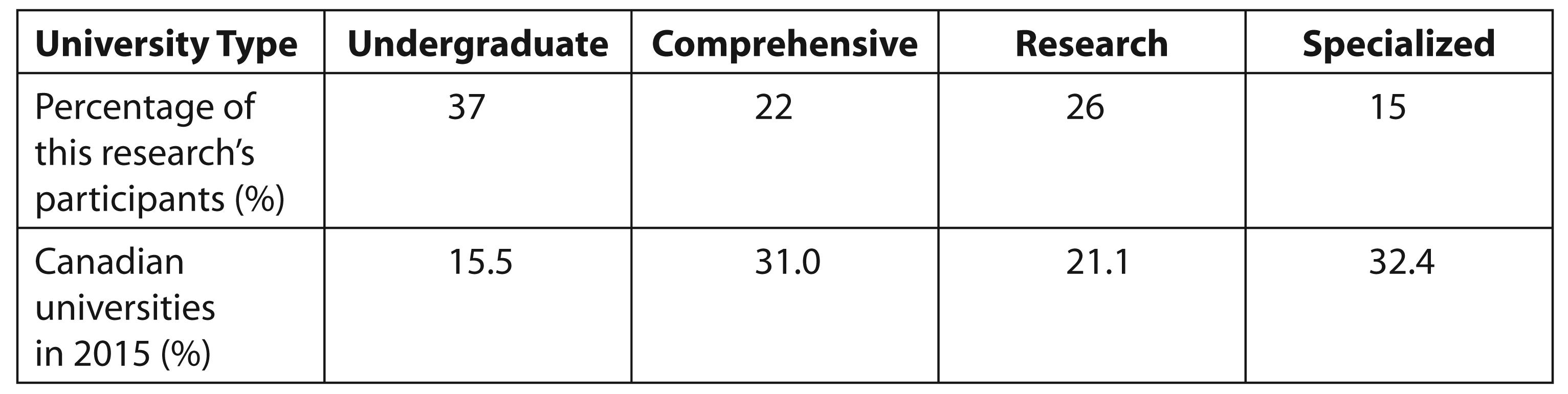
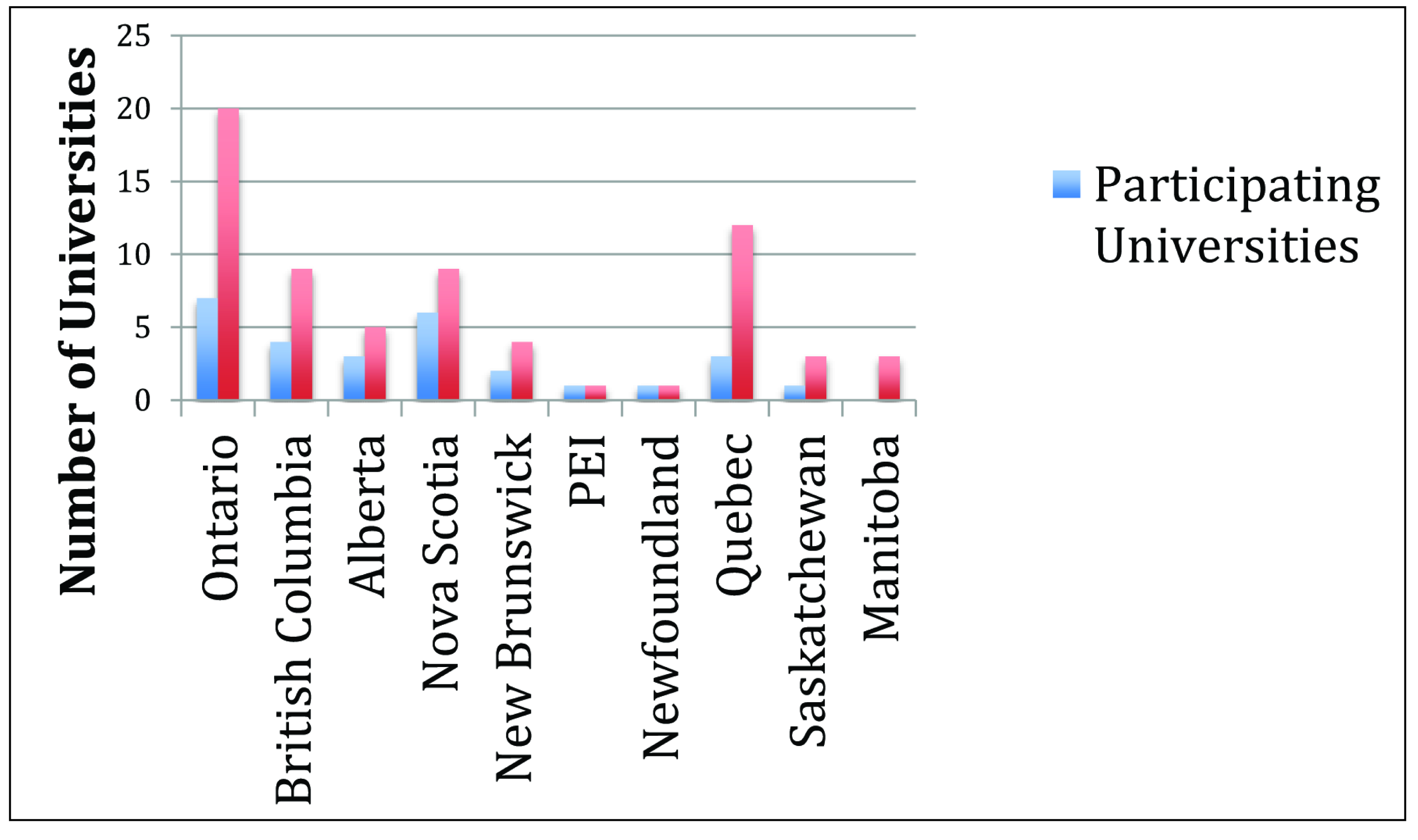
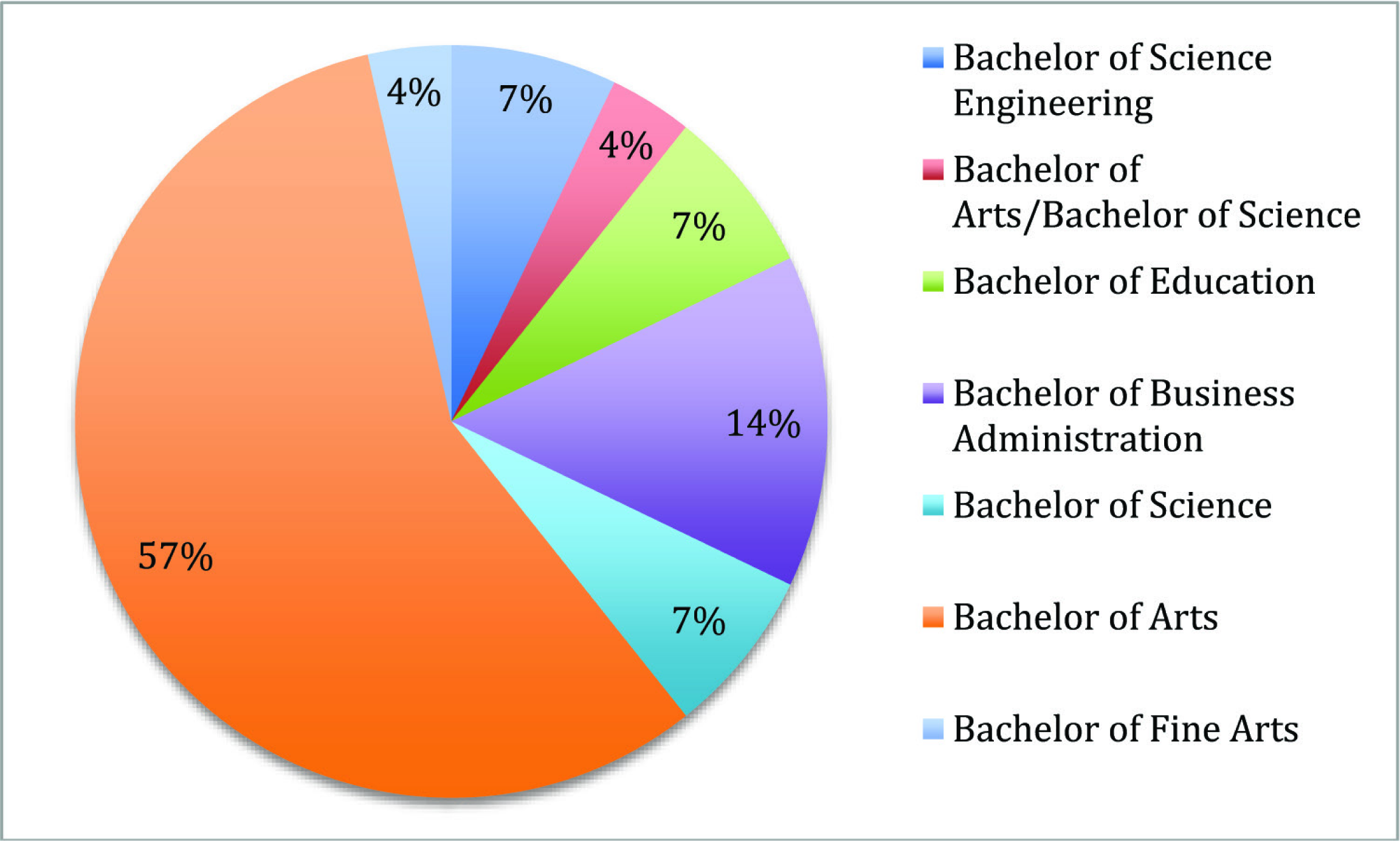
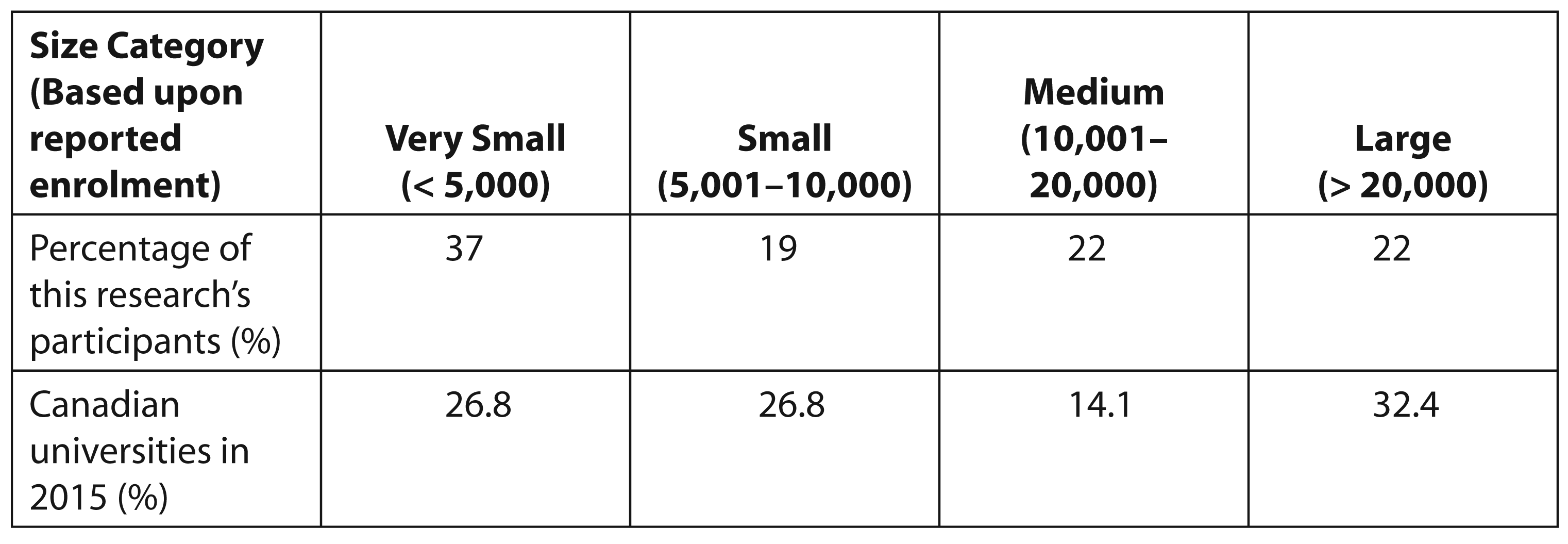
A total of 27 of the 65 potential participants were interviewed (45.7% participation rate) with representatives from 9/10 Canadian provinces (Figure 1). Institutional characteristics are offered in Tables 1 and 2. Compared to Canadian universities in 2015, participants from universities focused on undergraduate education were over-represented in this study, while those from comprehensive or specialized universities were somewhat under-represented. Perspectives of SU presidents from medium-sized universities were also over-represented compared to 2015, although some difference may be due to enrolment increases at some universities since the time of the research. Of these interviews, only 2 were held in French and 25 were held in English. This meant that the French sample was not large enough to determine whether there was any difference between English and French SU presidents’ responses. The participants’ ages were between 19 and 26 with a median age of 21. Out of all, 15 participants self-identified as male and 12 as female. The majority of SU presidents were studying in a Bachelor of Arts programme, though eight different disciplines were represented in total (Figure 2).
Study’s University Type for Participating Canadian SU Presidents’ Universities and Approximate Makeup of Canadian Universities in 2015
When you hear the term SD, what does this mean to you?
Continuity, the environment and holism were the most supported concepts when participants discussed SD. In this context, continuity referred to lasting over time or being able to continue a practice into the future.
So I think that
In addition, major themes that emerged included references to existing definitions of SD (i.e., Brundtland; WCED, 1987), criticisms of the term, as well as concepts related to growth, physical operations, finances, decision-making and the commodification of the term. Themes of uncertainty and embarrassment were also noted due to some participants being embarrassed when demonstrating hesitation and uncertainty while trying to define SD because they felt they did not know it as well as they thought they should.
Participants offered a number of criticisms when discussing SD. The most cited were that it was too abstract or theoretical, a lack of agreement about or multiple definitions of the term, that it was too vague or that it was an oxymoron. One participant even stated that he believed research was required to determine ‘where is the largest degree of consensus of what sustainability is’ (Participant 10). While these criticisms were offered, only a few participants expressed that the term was no longer useful. Similar criticisms of SD were also found by Wright (2010), Wright and Wilton (2012) and Wright and Horst (2013), although they appeared to be more varied and numerous within this sample of the student leader population.
Study’s University Size Categories for Participating Canadian SU Presidents’ Universities
The responses to the SD Concept Checklist demonstrated a lot of variance in participants’ conceptualizations and levels of support for the term as discussed in interviews (Table 3). While no concept received support from all participants, six received support from more than 75 per cent of participants. These focused on environmental, decision-making and social aspects of sustainability. The concept most supported by participants, ‘integration of environment, social concerns, and economics into decision-making,’ was also the top choice of university administrators (Wright, 2010) and second choice for faculty leaders (Wright & Horst, 2013). SU presidents held more similar conceptualizations of SD to facilities management directors (Wright & Wilton, 2012) and faculty leaders (Wright & Horst, 2013) than university presidents (Wright, 2010). None of the solely economic concepts received support from more than 75 per cent of participants. More concepts (N = 14) were in the 50 per cent–74.9 per cent support range than any other. While one economic idea was included in this group, concepts tended to again focus on environmental and social aspects of sustainability. Multiple participants chose to add ideas to the concept checklist, many of which appeared to have more practical or applied approach. Of the 13 additional ideas, three were similar, focusing on aspects of food systems, another topic discussed during interviews.
Sustainable Development Concept Checklist Results
Key concepts referred to in the discussion are ranked by checklist support with an indication of the amount of support given to each concept during the interview.
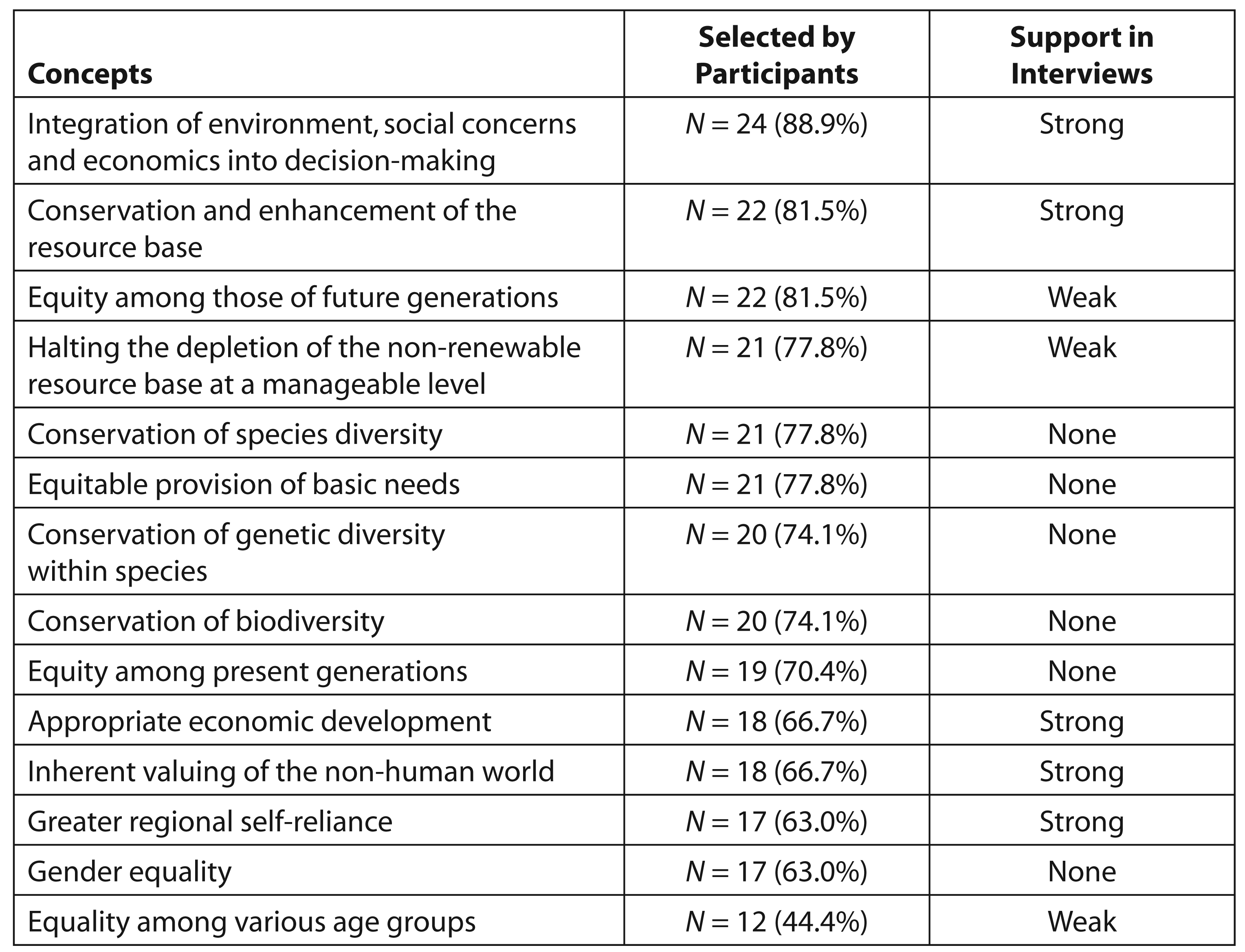
The resultant themes from the qualitative interviews and the quantitative results of the checklist were compared and contrasted to explore the data further. The vast majority of the checklist concepts were not mentioned during the interviews. For example, participants strongly supported equity and species diversity in the checklist, but failed to mention such ideas during the interviews. Of the 34 original checklist concepts, only eight were mentioned during participants’ interviews, with five receiving strong support and three receiving weak support. The concepts with the most support across both methods included integrating holistic sustainability into decision-making, conserving and enhancing resources, the inherent valuing of the non-human world, greater regional self-reliance and ensuring appropriate economic growth. Three themes of the ideas added to the SD checklist also received support in the interview responses; these dealt with human impact reduction, food sustainability and keeping economic growth from trumping the environment. While participants did not mention the importance of ‘investigating new forms of renewable energy’ in the checklist, a number of them expressed their support for or the inclusion of renewable energy use in their interview conceptualizations of sustainable universities.
While prompting (through the completion of the SD concept checklist) was required before participants included certain concepts as essential parts of sustainability, this does not necessarily mean that such checklist concepts were not as important as the interview results. It may mean that participants were thinking more in terms of broad conceptualizations (like ‘environmentally friendly’) instead of specific concepts. It may also mean that participants were more familiar with the concept themes discussed in the interviews. In an overall comparison of this checklist’s and the interview’s results, it was noted that interviews had a much greater emphasis on continuity and holism, although both methods resulted in a major emphasis on environmental issues compared to economic or social ones.
Of note, it was interesting how participants described the form of their conceptualizations of SD or sustainability or chose to differentiate between the terms. One participant viewed it as a process through which things move from unsustainable to more sustainable, while another viewed it as a strategy. Additionally, some participants viewed it as a mindset. The latter refers to how SD can be viewed at an individual level, like the lens through which one examines problems or the world; the former refers to how SD can be applied to a greater system. Three participants also differentiated slightly between sustainability and SD, but they did not provide details. One Francophone participant mentioned that he considered sustainability (la durabilité) as just long lasting while he considered SD (le développement durable) as multi-faceted.
While the majority of participants were familiar with the terms, conceptual variation remained and continues to make a single definition of sustainability difficult. Some students expressed hesitation, uncertainty and a lack of knowledge when asked to define the terms. As with previous research (Azapagic, Perdan, & Shallcross, 2005; Kagawa, 2007; Summers et al., 2004), participants most often described environmental aspects of sustainability. This focus on the environment mirrors the results of university presidents (Wright, 2010), faculty leaders (Wright & Horst, 2013) and facilities management directors (Wright & Wilton, 2012) although in this study there was a much broader emphasis on continuity in terms of processes or actions being able to continue indefinitely into the future, with some participants feeling that it was the only essential component of sustainability. This environmental focus was also found in other research on student conceptualizations of sustainability (Bezbatchenko, 2011; Kagawa, 2007; Zeeger & Clark, 2014). A disparity existed between the checklist and interview results with social aspects selected more often in the former and greater emphasis given to financial concerns in the latter. This illustrates that participants may not strongly consider the social aspects of sustainability without prompting. While they do think social sustainability is important (according to the checklists), the results showed that participants think first of the environmental and financial aspects. Finances were often mentioned in interviews as part of the major continuity theme (e.g., needing to ensure adequate funds to continue a practice); perhaps there is a stronger association between finances and continuity than between social sustainability and continuity. While a number of participants still appeared to lack a deep understanding of sustainability (they did not recognize the complexity and interconnectedness of the three pillars), similar to the findings of Carew and Mitchell (2002), Azapagic et al. (2005) and Earl, Lawrence, Harris, and Stiller (2003), most participants’ appeared to hold a more holistic conceptualization of sustainability. While a number of criticisms were offered, participants still felt overall that sustainability was a positive goal.
What role, if any, do you feel universities in general should play in achieving sustainability?
Universities were seen to have a number of roles to play in achieving a sustainable future. Participants thought universities should be leaders and educators. The majority of themes that emerged from the analyses—culture, research, operations, governance—could be related to leadership by using university culture to empower and educate others about sustainability, to provide useful research on related subjects and to implement sustainable physical and administrative operations, including university governance policies. Participants felt universities had a responsibility to society to be leaders in sustainability and work towards a sustainable future. They believed universities were well placed in society to influence conversations and actions for a sustainable future and mentioned the sector’s history as a thought incubator and leader of progressive social movements.
I think they can be … leaders in the community, I guess. Universities [are] traditionally thought of as ground-breaking, thought-provoking institutions or areas. So, places where things tend to happen … ahead of the curve. So if universities adopt a sustainable, living kind of mandate or, sense of being or whatever, then they can lead by example, I guess, for the rest of the community. (Participant 16)
Participants thought the roles that universities should play in striving for a sustainable future included many of those previously discussed in SHE research and declarations. The idea of universities having a responsibility to be leaders in sustainability (Bachiorri & Puglisi, 2007; Cortese, 2003; Orr, 1992) is one that these student leaders overwhelmingly endorsed. These results echoed the thoughts of faculty leaders (Wright & Horst, 2013), facilities management directors (Wright & Wilton, 2012) and university presidents (Wright, 2010), although the latter did not strongly identify research as a part of the university’s role for a sustainable future.
When you hear the term ‘sustainable university’, what does this mean to you?
The respondent themes that arose from this question exhibited some similarities to those from conceptualizing SD. Again, a few participants expressed uncertainty regarding what the concept might mean. Other themes similar to the SD conceptualization results were continuity, environmental sustainability, holism and finances. In this case though, continuity and finances were often related to institutional sustainability, the idea of the university being able to continue to function in the long term.
A sustainable university … that’s an interesting concept. Umm, I mean, on one hand I think [a] sustainable university, we think about, like, just being able to sustain, I think, possibly has either financial practices or, or visioning such that they will be able to, like, last a long time, and weather through, um, you know, any sort of political … recession or, um, you know, adapt and evolve to face the demands of society. (Participant 2)
In addition, physical operations, administrative operations, academics and education, partnerships and campus culture were major themes in the responses. These additional major themes were often associated with ways of implementing environmental or holistic sustainability.
I think … a sustainable university would be … a university that is committed to those priorities in their operations, and endowment investments. Um, practicing those policies on good, sustainable administration projects; climate change energy; again, the food, waste and recycling; building green buildings; and being a
Partnerships between universities and outside organizations or stakeholders were also considered key for sustainable universities. Minor themes included discussions of research, sustainability standards, importance of the individuals on campus and the commodification of the concept of a sustainable university. The discussion regarding the commodification of ‘sustainable university’ included concerns about universities using the term as a marketing ploy without ensuring that sustainability was truly embedded within the institution.
Participants’ responses to the Sustainable Universities Concept Checklist demonstrated consensus on a number of topics (Table 4). There was a greater consensus among participants regarding sustainable universities than SD, with 12 (42.9%) of these 28 concepts selected by more than 75 per cent of participants and 17 (61%) of concepts selected by more than half of participants. Of these selected concepts, the majority are related to aspects of campus operations and environmental issues, although the concept with the most support was academic—it related to sustainability-related curriculum opportunities. While other university stakeholders also believe sustainability-related curriculum opportunities are important (Wright, 2010; Wright & Horst, 2013; Wright & Wilton, 2012), only student leaders selected it as the most important concept. As with the SD Concept Checklist, no concept received unanimous support. Participants truly wanted to see sustainability considered a priority in terms of campus planning and purchasing policies. These concepts were also very highly supported by faculty members, university presidents and facilities management directors (Wright, 2010; Wright & Horst, 2013; Wright & Wilton, 2012). Partnerships with outside organizations and local impacts were also considered important by all stakeholders. While there was a lot of support for the use of renewable energy (85%) by sustainable universities, SU presidents did not choose to support specific renewable energy concepts as strongly (37%). This could be due to a number of reasons including that participants wanted universities to be able to utilize whatever renewable energies best addressed their situation. Concepts directly affecting university human resources (contracts, employment) or departments received little to no support (0%–14.8%). Participants added six distinct ideas to the checklist; the emphasis on food systems and regional development also echoed the responses on the SD checklist.
Canadian SU Presidents’ Sustainable University Concept Checklist Results
Key concepts referred to in the discussion are ranked by checklist support with an indication of the amount of support given to each concept during the interview.
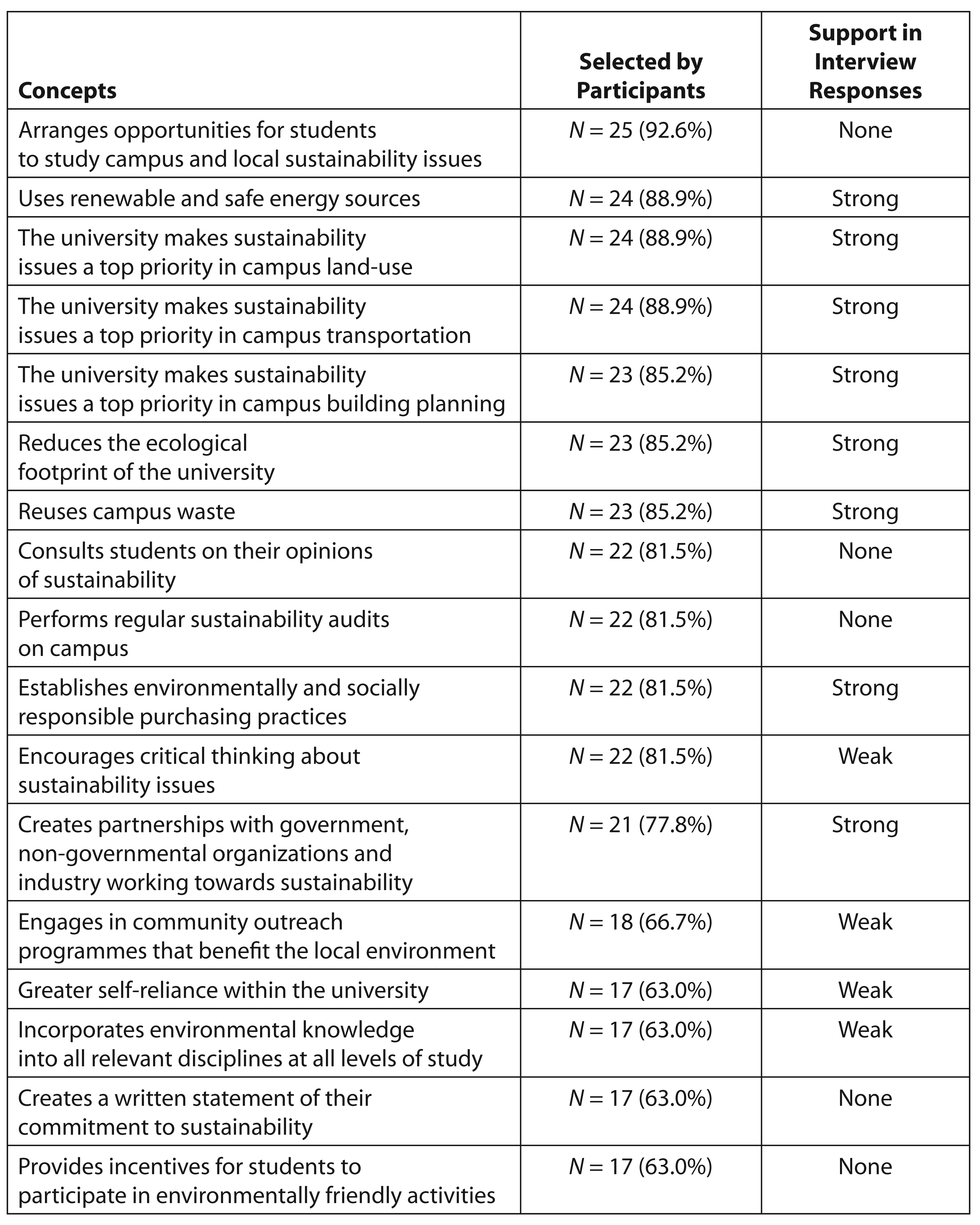
The results of the interviews were compared and contrasted with the results of the Sustainable Universities Concept Checklist to further examine this dataset (Table 4). Unlike with the conceptualizations of SD, there was a greater conceptual agreement within and between interview and checklist responses regarding sustainable universities. Participants believed that in order to be a sustainable university, an institution must prioritize sustainability in operations and administrative decision-making, work to decrease their environmental impact, arrange opportunities for students to study campus and local sustainability issues and to work towards sustainability with other stakeholders. Other university stakeholders, presidents, faculty leaders and directors of facilities management (Wright, 2010; Wright & Horst, 2013; Wright & Wilton, 2012), also strongly supported these concepts, particularly decreasing environmental impact and prioritizing sustainability within university operations and administration. As with the conceptualizations of SD, student leaders used sustainable food sourcing as a positive example of sustainable university operations in both the interviews and by adding it to the checklist. Two ideas that were added by participants to the checklist were strongly supported in the interviews: sustainable campus food and incorporating environmental knowledge into academics and administration when effective; a third, university involvement in its region’s socio-economic development, received weak support. Like a number of university stakeholders (Sylvestre et al., 2013; Wright, 2010; Wright & Horst, 2013; Wright & Wilton, 2012), SU presidents believed that the continuity of the university (institutional sustainability) was a key aspect of this conceptualization and that finances play a key role in its achievement.
That three concepts with greater than 75 per cent support were not mentioned in the interview results was surprising for a number of reasons, not the least of which was that almost 93 per cent of participants believed that sustainability-related curriculum opportunities were essential to a sustainable university. Perhaps this concept was not included because of how specific it was as student leaders did mention the importance of academic programming and sustainability in general. It was also surprising that student leaders, those responsible for ensuring that students’ needs and concerns were heard, did not discuss the importance of students’ voices being heard as part of a sustainable university. While they mentioned the importance of the student voice in other interview questions, it was missing during this interview question. Finally, one might also have expected SU presidents to mention sustainability audits or commitments given their prominence in SHE (Bekessy, Samson, & Clarkson, 2007; Beringer, 2005; Fonseca, Macdonald, Dandy, & Valenti, 2011; Mitchell, 2011; Velazquez, Munguia, Platt, & Taddei, 2004; Wright, 2003) and voiced concerns about greenwashing. It must be noted though that signing a sustainability declaration does not ensure that universities follow through on that commitment given Wright’s (2010) findings.
Overarching Themes
While the results were analysed on a question-by-question basis, some overall themes emerged in the analyses. Participants discussed the environmental aspects of sustainability more than the social or economic, although finances were also a major theme. Finances were discussed in terms of being a barrier, a motivator, a key issue, an institutional concern and specifically in terms of sustainability. For example:
What prevents my university from engaging in initiatives? Funding. (Participant 19) I think if the economy continues to kind of have this downward spiral it’s going in, it’ll make it more and more difficult to make the environment a priority or sustainability. I personally believe/think there’s an inverse relationship between the health of the economy and the political will to achieve sustainability. You know, just look at public opinion polls every time the economy tanks, ah, sustainability drops down to almost the last thing. When the economy’s doing good, sustainability and the environment tends to come up as a top issue. (Participant 10)
Another major theme was that of the commodification of sustainability. A number of these SU presidents seemed quite concerned with the commodification of sustainability and corporatization of universities, even before the question designed to target this possible issue was asked. Participants were concerned that sustainability or the idea of SHE was becoming more of a buzzword and marketing tool instead of being applied in an in-depth and effective fashion. The concerns actually related to a fear of universities addressing sustainability in a superficial manner and focusing on finances above all else. Concerns of corporatization have been broached elsewhere in more depth (Bok, 2003; Côté & Allahar, 2011; Naidoo & Jamieson, 2005). Corporatization of universities was also a key issue and a barrier to sustainability according to Canadian faculty leaders (Wright & Horst, 2013).
Finally, participants often used practical examples to illustrate their conceptualizations of both sustainability and sustainable universities during interviews and the checklists. Specific examples of this emphasis on the concrete over the more abstract could be seen in the types of items added to the SD checklist. Perhaps students are better able to understand or are more familiar with the application of sustainability than with its theoretical underpinnings. This might also explain why there was greater consensus regarding conceptualizations of sustainable universities as many Canadian campuses have begun to engage in SHE and specific types of campaigns are relatively well known (e.g., bottle water-free campuses). This practical focus appears similar to Carew and Mitchell’s (2002) finding that students’ conceptualizations of sustainability contained a heavy emphasis on the immediate and applied. This emphasis has not appeared in other studies, but the lack of open questions about students’ conceptualizations on the subject may be part of the reason.
Conclusion
This study provided student leaders with the opportunity to share their perspectives regarding a known barrier to sustainability, its contested definition. While students have a lot of influence due to their numbers and financial contributions, thus far there have been few attempts to understand their thoughts on sustainability and sustainable universities. One of the goals of this research was to engage SU presidents in more dialogue about these topics; a number of participants mentioned that they appreciated the opportunity to reflect and believed this research needed to be done.
The creation of a baseline of Canadian university SU presidents’ conceptualizations of sustainable universities and sustainability is important in helping advocates and researchers determine their current and future progress. It is useful to learn that while greater consensus exists between Canadian student leaders regarding the conceptualization of a sustainable university, there remains quite a bit of conceptual variance regarding sustainability. This agrees with previous research by Bezbatchenko (2011), Carew and Mitchell (2002) and Summers et al. (2004) that reported students’ conceptual variance regarding sustainability. When engaging with students, it might be helpful to begin with the aspect of sustainability that is most commonly recognized (the environment) and to pair it with a specific focus that is generating a lot of interest, such as food. It is also important to recognize the scepticism students may have regarding the university’s engagement with sustainability and to work to ensure that a genuine commitment is made to avoid greenwashing. Campus advocates will be able to use this research and that of McNeil (2013), Sylvestre et al., (2013), Wright (2010), Wright and Wilton (2012) and Wright and Horst (2013) to stimulate discussion on campus as to what principles the local definition of sustainability should include to stimulate a larger national dialogue.
This study opens up a variety of possibilities for future research. To begin with, this study could be repeated every five to ten years to determine if conceptualizations change over time. Another study could investigate how the SU presidents’ conceptualizations from this study compare to those of students heavily involved in campus sustainability efforts, such as active members of the Sierra Youth Coalition. In addition, comparison research could be performed in other countries to determine which sustainability ideas are shared among student leaders globally. This could be useful both for global discussions of SHE and for universities involved in international recruitment. Finally, a study could be completed to determine if there is an appetite from SU executives to learn more about university sustainability initiatives, how to act as change agents and what formats would be most accessible.
While the information from this research demonstrates that there is no single understanding of SD between Canadian universities’ SU presidents, it does support linking a number of topics with it. Many of these topics also overlapped with what participants considered a sustainable university and pointed to a growing holistic view of sustainability. Moving forward, universities and sustainability advocates should look at engaging with their students about these results, educating about the importance of holistic and social sustainability, and creating a dialogue about local definitions.
Declaration of Conflicting Interests
The authors declared no potential conflicts of interest with respect to the research, authorship and/or publication of this article.
Funding
The author(s) disclosed receipt of the following financial support for the research, authorship, and/or publication of this article: This thesis was supported by a Standard Research Grant from the Social Sciences and Humanities Research Council of Canada (SSHRC). The Principal Investigator for the Research Grant is Dr Tarah Wright. Further, Heather Elliott was supported by a SSHRC Graduate Scholarship that made this research possible.
Footnotes
Acknowledgements
Many thanks to Dr Heather Castleden, Rochelle Owen and Dr Allan Warner for their helpful feedback.