



Abstract
Anthropogenic activities cause environmental degradation-related problems. However, people fail to perform pro-environmental behaviours because they believe that they cannot make a difference or they focus on short-term benefits. Interventions that address specific target groups aimed at breaking barriers and changing behaviours are required. To teach young learners, environmental education using digital games can be a more effective instructional method. This mixed-methods study, conducted among high school students in India, examined differences in pro-environmental attitudes and behaviours between students who played a game called EnerCities and those students who did not play that game. Significant differences existed between the two groups considering the unidimensional and multi-dimensional properties of the New Ecological Paradigm (NEP) scale. Thematic analysis with an inductive approach identified from the interview data: How EnerCities changed participants’ environmental attitudes? This study finds implications for implementing games and using the NEP to examine environmental attitudes of high school students in India.
Keywords
Introduction
Climate change has caused discernible impacts on animals, plants and their ecosystems that may lead to species extinctions (Root et al., 2005). It is manifested in extreme temperatures and rainfall, decrease in ice and snow, and rising sea levels (Karl & Trenberth, 2003), affecting human life and the ecosystem. Despite uncertainties in understanding the complexity of the earth’s systems, several research studies point fingers at human-induced changes or activities (anthropogenic) as an important reason (Cordano et al., 2003; Karl & Trenberth, 2003; National Research Council, 2011; Page & Page, 2014; Rooney et al., 2006; Williamson et al., 2018).
People believe that they cannot make a big difference with this massive global problem (Fielding et al., 2008; Swim et al., 2009), and they tend to focus more on short-term benefits than considering long-term problems (Weber, 2006). Psychologists are looking for innovative ways to increase public engagement by making the issue locally relevant rather than relying on facts and statistics in order to increase the emotional appeal (Van der Linden et al., 2015; Williamson et al., 2018). For interventions to be effective, they must be tailored to the target individual or group and address the various barriers that prevent appropriate behaviours (Gardner & Stern, 2002).
Environmental sustainability education is one form of intervention (Stevenson, 2007; UNESCO, n.d.-b), and several university degrees are offered on this topic (Carew & Mitchell, 2008; Guerra, 2017; Janakiraman et al., 2021a; Segalàs et al., 2009). At the same time, instilling pro-environmental attitudes and behaviours to the ‘youngest citizens by activating formative and didactic actions’ (Cuccurullo et al., 2013, p. 113) is very important to prevent future environmental degradation and related catastrophes. Pro-environmental behaviour is behaviour ‘that consciously seeks to minimize the negative impact of one’s actions on the natural and built world’ (Kollmuss & Agyeman, 2002, p. 240).
In K-12 education, digital game-based learning (DGBL) can serve as a pedagogical tool in environmental sustainability education because it is attractive to young learners and can address barriers to pro-environmental behaviours (Gardner & Stern, 2002). Games provide the opportunity to try and test behaviours within safe zones and perceive the consequences of behaviours immediately (Janakiraman et al., 2018; Ouariachi et al., 2019).
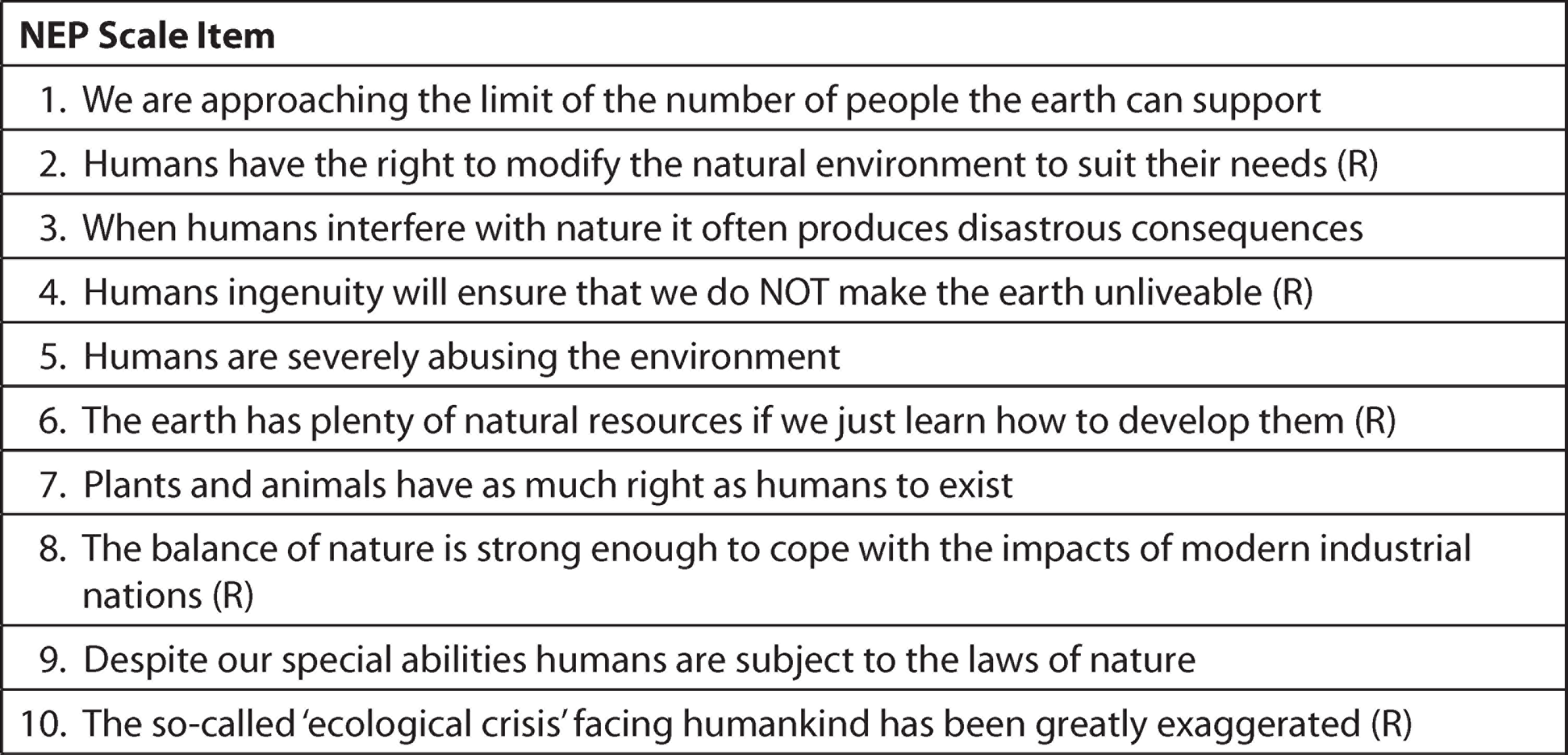
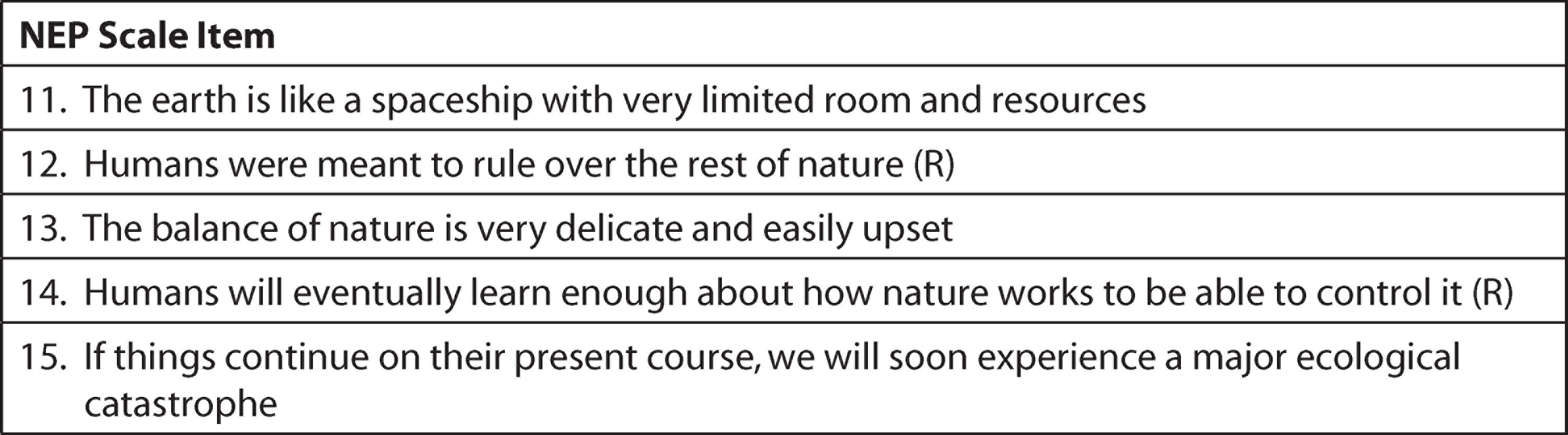
In this mixed-methods study, the influence of digital games on producing pro-environmental attitudes was examined in a high school in India using the New Ecological Paradigm scale (NEP; Dunlap et al., 2000). The NEP scale is comprised of 15 statements to measure environmental attitudes and beliefs towards specific environmental issues. Environmental sustainability education is taught as Environmental Studies (EVS) and is a major component in the Indian education system, owing to the need to address the deleterious effects of rapid urbanization, growing industrial activity and climate change. EVS has been taught using traditional methods such as lectures, tests and projects. EnerCities, a game designed for EVS, was introduced as an instructional activity that helped players visualize how pollution from burning fossil fuels, urban construction and alterations to land use are some of the human behaviours that upset environmental balance. By allowing players to test behaviours and examine the consequences immediately, EnerCities indicates the availability of alternate pro-environmental behaviours.
The study sought to identify the differences between the environmental attitudes of two groups of students who played EnerCities and students who did not play EnerCities based on the NEP. Interviews with students who played the game revealed perceptions about their prior environmental attitudes and behaviours, and how EnerCities influenced them. This study holds implications for using digital games intentionally designed for EVS to influence pro-environmental attitudes and behaviours among K-12 students and also the implementation of NEP among K-12 students in India.
Literature Review
Environmental Attitudes
Environmental degradation may be a slow process, but it is as destructive as the violent 2019 Amazonian rainforest fires (Borunda, 2019) and the Australian bush fires (Daly, 2019). Despite progress in scientific research on environmental degradation’s current and future impact on humanity and increased awareness about anthropogenic causes (Bralower et al., 2008; Dunlap et al., 1993), pro-environmental behaviours are not adopted by everyone owing to structural and psychological barriers (Arbuthnott, 2009; Stern, 2011; Swim et al., 2009; Tucker, 1999). People are in denial or disengaged and unaware that their unsustainable actions are causing environmental degradation and that alternate behavioural options are available (Page & Page, 2014).
To overcome psychological barriers to action such as ignorance, uncertainty, mistrust, denial, habit, and conflicting goals (Swim et al., 2009), several efforts have been implemented at a large scale by central agencies (Climate-ADAPT, 2020; Davis, 2019; USAID, n.d.). For example, when research showed the harm caused to the surface temperatures by anthropogenic emissions of ozone-depleting gases like carbon dioxide and other greenhouse gases like chlorofluorocarbons (CFCs), the Montreal Protocol was implemented to control the use of CFCs (Levy, 1997; Montzka et al., 1999; Velders et al., 2007; Williamson et al., 2018). This mitigated the consequences to a large extent and protected the climate (Newman et al., 2009). Similar international agendas are The Paris Agreement (2015), United Nations Climate Summit (2019) and Education 2030 (UNESCO, n.d.-a), which are striving to bring about such environmental controls.
Is it always necessary for the government and central agencies to act? At the micro level, what can we as citizens of this earth do? Studies show that simple daily eco-friendly behaviours such as energy conservation can have a huge impact on the environment and climate, when enough people adhere to recommended practices (Swim et al., 2009; Williamson et al., 2018).
Although there is a great push for cleaner energy, protection of water bodies, reduction of carbon emissions and carbon footprint, and movement towards renewable energy sources, more intense efforts are required to increase the environmental concern of young learners to make a lasting impact. Young learners have to realize that as future habitants of this earth (Fielding & Head, 2012), they have to be ready to curtail some of their current wants and desires (Nickerson, 2003). They should understand that climate change will affect life today and even more tomorrow, and that there are affordable, scalable solutions that can ensure cleaner and more resilient economies (United Nations Climate Summit, 2019).
Environmental Behaviours
According to the theory of planned behaviour (TPB; Ajzen, 2019) when a person has some control over a behaviour, then it is likely that their intentions can get translated into actual behaviours, provided they get an opportunity, and that intention can be considered as the immediate antecedent to the behaviour. However, measuring pro-environmental behaviours is not easy because behavioural intentions are not visible, and actual behaviours may not occur immediately after an intervention. Hence, sustained observations and measurements of daily behaviours over a longer time period are required. Prior studies have pointed to the differences that exist between attitudes, self-reported behaviours and actual behaviours (Webb & Sheeran, 2006). Furthermore, structural, and psychological barriers inhibit pro-environmental behaviours (Arbuthnott, 2009; Stern, 2011; Swim et al., 2009; Tucker, 1999). Given these impediments, this exploratory study looked at differences in environmental attitudes and behavioural intentions after one week of game play between participants who played the game and participants who learned EVS only through traditional methods.
Since individual attitudes and beliefs are connected to decisions and actions that directly affect the environment, understanding environmental attitudes and behaviours is important (Amburgey & Thoman, 2012). This understanding will help design educational interventions said Pauw and Van Petegem (2012) who emphasize the need for exploring environmental conceptions of children with respect to different cultures and educational activities.
Digital Games and EVS
Helping young people to learn correct attitudes and behaviours gains importance because studies have shown that age influences pro-environmental attitudes and behaviours (Kafková, 2019; Wiernik et al., 2013). Digital games are enjoyable and engaging for young learners (Cuccurullo et al., 2013; Gee, 2008; Prensky, 2003) and can be used as pedagogical tools in EVS. Going beyond providing cognitive knowledge (Bell, 2016; Hungerford & Volk, 1990; Katsaliaki & Mustafee, 2015; Zumbach et al., 2020), games are affective and can influence behaviours (Cuccurullo et al., 2013; Ouariachi et al., 2019; Yang et al., 2017). The real-world scenarios in games show the negative impacts of wrong decisions and harmful environment-related behaviours immediately, which is not possible in real life (Arbuthnott, 2009; Janakiraman et al., 2021b; Knol & de Vries, 2011). Digital games provide safe zones to test behaviours, increase awareness of balanced ecosystems, change behaviours regarding environmental protection and recycling and create self-awareness of energy conservation practices through visualizations (Harker-Schuch et al., 2020; Wu & Huang, 2015; Yang, et al., 2012). The situated meaningful contexts in purposefully designed EVS games can ensure systems thinking (Fabricatore & López, 2012; Liarakou et al., 2012; Nordby et al., 2016).
According to Ouellette and Wood (1998) well-practised behaviours tend to become habitual, and the processing that initiates and controls their performance becomes automatic, contributing to intentions that guide behaviours in the future. When such behaviours become habitual, behavioural responses get activated automatically because habits are mentally represented as goalaction links, and intentions may simulate goal-directed automaticity in forming habits (Aarts & Dijksterhuis, 2000). Pro-environmental behaviours in games can get transferred to real life and be retained because games are designed to be goal directed and repetitive and provide meaningful practice before facing such real-life situations (Butler, 1988).
New Ecological Paradigm Scale
Being a complex issue, measuring environmental concern is not simple (Jowett et al., 2014), especially when considering K-12 students. The NEP scale (see Appendix A) was designed by Dunlap et al. (2000) to measure the environmental attitudes of people. The NEP scale has been designed to contradict the Dominant Social Paradigm that emphasizes abundant resources and progress that may lead to beliefs and attitudes that cause environmental degradation, while the new view emphasizes limited natural resources and that humans are altering ecosystems and affecting biodiversity (Pauw & Van Petegem, 2012). The NEP scale used in this study (Dunlap et al., 2000) is the revised version of the New Environmental Paradigm (Dunlap & Van Liere, 1978). The NEP survey instrument considers environmental attitudes and beliefs towards specific environmental issues and human-induced changes and is comprised of items that measure responders’ beliefs about the nature of the earth and humanity’s relationship with it (Dunlap et al., 2000). Items are related to an understanding of the (a) reality of limits to growth, (b) anti-anthropocentrism, (c) the fragility of nature’s balance, (d) rejection of exceptionalism or the ‘idea that humans are exempt from processes that affect the rest of the natural world (Packer, 2009), and (e) the possibility of an ecocrisis. ‘From this perspective, people who have pro-NEP attitudes perceive nature as intrinsically valuable and humans as an integral part of the human-nature networks’ (Wu, 2012, p. 109).
Several studies using the NEP have explored environmental attitudes among adults and in higher education institutions while trying to increase the understanding of what can be measured concerning this complex topic (Dunlap, 2008; Hawcroft & Milfont, 2010; Harraway et al., 2012; Jowett et al., 2014). Studies have confirmed the validity of the NEP scale (AlMenhali et al., 2018; Cordano et al., 2003 Khan et al., 2012), used the NEP in different contexts (Packer, 2009) and explored the cultural differences in environmental worldviews (Fleury-Bahi et al., 2015; Khan et al., 2012; Wells & Petherick, 2016; Wu, 2012).
A modified NEP scale for children was introduced by Manoli et al. (2007). This scale was used by Pauw and Van Petegem (2012) to investigate the worldview of Belgian, Vietnamese, and Zimbabwean children and found that cultural differences existed with respect to environmental attitudes. Evans et al. (2007) designed board games based on the modified NEP scale dimensions in a study involving first- and second-grade children. A Dutch version was tested by Van Petegem and Blieck (2006) on children aged 1315 years and on children aged 1416 years by Pauw et al. (2011). Wu (2012) tested the scale among Chinese children. The modified NEP for children aged up to 12 years (Manoli et al., 2007) was not used in this study as the participants were 16 years and above.
Although the NEP was tested for applicability in the Indian context among adults in two major cities (Khan et al., 2012), studies using NEP on K-12 students in India in the context of DGBL in EVS have not been conducted before. Considering the popularity of the NEP and endorsements from many researchers, the NEP scale was chosen as a reliable and valid instrument to measure environmental attitudes of high school students aged 1618 in India, following an educational intervention using a digital game. See Appendix A for the 15-item revised NEP scale. ‘Agreement with the eight odd-numbered items and disagreement with the seven even-numbered items indicate pro-NEP responses’ (Dunlap et al., 2000, p. 433).
Methods
Research Design
This study uses a convergent mixed-methods approach where quantitative and qualitative data were collected on the same day (Creswell & Clark, 2018). One week after one group of students (game group) played the game, quantitative data was collected through a survey from the game group and a control group of students. Qualitative data were collected through interviews from the game group after the surveys were administered (see Figure 1).
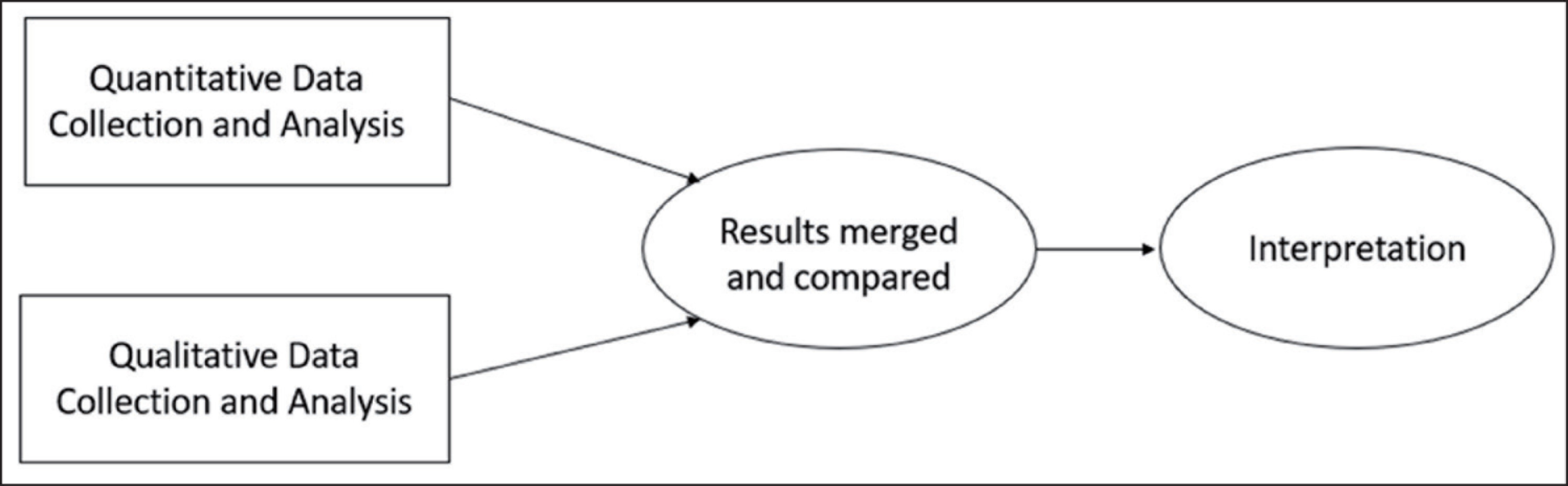
The following were the research questions:
Were there any differences in the environmental attitudes between students who played the EVS game and those who did not play the game based on the New Ecological Paradigm scale? What were the perceptions of participants who played the game regarding their environmental attitudes and behaviours?
Data Collection
Participants
The data were collected from two groups of grade 11 students in a higher secondary school in Kozhikode, an urban city in South India. English is the language of instruction, and the school is affiliated with the Central Board of Secondary Education. There are 65 teachers and approximately 1,500 students belonging to middle- and higher income families.
For this experimental study, participants included: one group of students (n = 64) who played the EnerCities game either individually or in teams of two and a control group (n = 36) that did not play the game. Prior to the study, both groups were taught EVS as a separate subject from grades 3 to 5, and then EVS was incorporated with other subjects in higher grades. Hence, the control group was exposed to traditional methods of teaching EVS in prior grades but did not receive the game experience or any additional EVS instruction during this time. EVS encompassed: identification of environmental problems and the interactive processes of nature, care for the environment, prevention of pollution, conservation of energy and preservation of the environment. IRB permission was obtained before conducting this study.
Context
The game used in this study, EnerCities, is a 3D game created by Qeam with support from University of Twente in the Netherlands to teach about environmental sustainability in the European Union (Knol & de Vries, 2010, 2011). Within the game, players performed activities leading to building a sustainable city with buildings, parks, stadiums and implementing renewable and non-renewable sources of energy such as solar, windmill and hydroelectric power plants. Players were required to work within fixed resources to maintain green cover and also maintain the happiness of the citizens in the sustainable city they built.
Data Collection
Quantitative data were collected using the NEP scale and qualitative data through semi-structured interviews. One member of the research team pre-loaded EnerCities on the computers and provided basic instructions. Game group participants were instructed to read the instructions on how to play the game and comprehend the goals. They were given time to get acclimatized with the game mechanics, virtual monitors, scoring system and support features. All participants played the game at least two times. Since there were only 40 computers in the computer lab at the school, students played the game in two groups. After a week, paper-based surveys with statements from the NEP scale were administered to participants from the game group as well as the control group at the same time. The NEP includes 15 statements, and respondents are required to report their agreement with these items on a 7-point Likert scale.
For the qualitative phase of the study, eight participants who played the game were interviewed by the researcher to determine what influenced their attitudes before and after the game intervention (Kopnina, 2011) and to understand their learning experiences from the EnerCities game. During the interview, questions related to NEP were not asked directly. Only the experiment group (game group) participants were picked for the interview sample because only participants’ perceptions based on the game/intervention was required (Plano Clark et al., 2013). All interviews were audio recorded, transcribed verbatim and stored on password protected computers.
Data Analysis
Quantitative Data Analysis
Dunlap et al. (2000) suggest that it is better to decide the dimensionality of the NEP scale based on the results of individual studies. In this study, the unidimensional and multi-dimensional properties of the NEP scale were considered. When the unidimensional properties were considered, Cronbach’s alpha coefficient was .81, indicating sufficient scale reliability. The multi-dimensional structure of the NEP entails that the 15-item scale is grouped into five inter-related facets: balance of nature, ecocrisis, anti-exemptionalism, limits of growth and anti-anthropocentrism. See Table B1 for definitions and reliability values for the five facets based on the study data (Amburgey & Thoman, 2012).
Similarly, prior studies conducted both exploratory and confirmatory factor analyses and arrived at four tendencies (Harraway et al., 2012; Jowett et al., 2014; Shephard et al., 2009) to describe the environmental concerns of participants, namely to conserve, to recycle, to respect animals and plants rights and to be cautious about the future. See Table B2 for definitions and reliability values for the four tendencies based on the study data (Shephard et al., 2009).
Qualitative Data Analysis
The interview data were analysed by thematic analysis using an inductive approach to interpret patterns of meaning (Braun & Clarke, 2006) and enabled the research team to approach the data with an open mind. The interview data were read and reviewed to become familiar with them before generating the initial codes. After establishing agreement on the codes among the researchers, categories were defined based on participants’ perceptions from the game and the game features related to them. For example, four codes were identified and grouped under the category ‘Environmental degradation’ and two codes under the category ‘Game mechanics’ that enabled participants to learn about environmental degradation. These two categories were combined under the ‘Human activities’ theme. See Table B3 for the coding scheme, code frequencies, categories, themes and the number of participants who discussed the code attribute. This inductive approach was again followed by combing the data for identifying quotes that aligned with the NEP items. This helped understand participants’ environmental concerns according to the NEP scale.
Research Validity
The in-person semi-structured interviews (Merriam & Tisdell, 2016) enhanced and clarified the responses to the NEP survey, ensuring method triangulation in this mixed-methods study (Denzin, 1970). Data triangulation was established by using multiple sources of data (Denzin, 2012; Lincoln & Guba, 1985; Miles & Huberman, 1994), and inter-rater reliability was ensured by multiple rounds of discussion and feedback among research team members that also established investigator triangulation (Denzin, 1978). By presenting participant quotes without paraphrasing them, clear and persuasive descriptions have been provided (Erickson, 2012).
Results
Quantitative Findings
Responses to the NEP scale items by the game (n = 64) and control groups (n = 36) were evaluated to answer RQ1: Were there any differences in the environmental attitudes between students who played the EVS game and those who did not play the game based on the NEP scale? It should be noted that whenever participants responded to a statement on the NEP scale, they ‘would likely draw on their cognitive and affective understanding about the statement to anticipate the possible consequences of their relevant behaviours’, and hence their attitudes as detected by the NEP are linked to behavioural intentions (Harraway et al., 2012).
A one-way analysis of variance (ANOVA) was performed using SPSS 26 to investigate if any differences existed between the game and control groups in environmental attitudes, considering the unidimensional properties of the NEP scale. Table B4 provides the mean and standard deviation for the two groups.
Result: The EnerCities game produced a statistically significant difference in environmental attitudes of game players, F(1, 98) = 475.05, p < .0005, η2 = .83.
The result shows that the game impacted the environmental attitudes of game players compared to the control group, considering the unidimensional property of the NEP scale. It should be noted that all participants in the game and control groups had studied EVS since grade 3 through traditional methods such as direct instruction, projects and exams. However, playing the game 23 times impacted the game group participants’ environmental attitudes significantly.
Next, the multi-dimensional properties of the NEP were considered. Multivariate analysis of variance (MANOVA) was performed to investigate the differences between the game (n = 64) and control groups (n = 36), considering the five facets of the NEP scale. Table B5 provides the mean and standard deviation for the two groups.
Results: The EnerCities game produced a statistically significant difference in environmental attitudes of game players when the five facets model of the NEP scale was considered, F(5, 94) = 106, p < .0005, Wilk’s lambda = .151, partial eta squared = .65.
Univariate ANOVAs were conducted for the five facets individually, and significant differences were found between the two groups:
The EnerCities game produced a statistically significant difference in environmental attitudes of game players with respect to the Balance of Nature facet of the NEP scale, F(1, 98) = 63.6, p < .0005, partial eta squared = .40. The EnerCities game produced a statistically significant difference in environmental attitudes of game players with respect to the Ecocrisis facet of the NEP scale, F(1, 98) = 109.85, p < .0005, partial eta squared = .53. The EnerCities game produced a statistically significant difference in environmental attitudes of game players with respect to the Antiexemptionalism facet of the NEP scale, F(1, 98) = 142, p < .0005, partial eta squared = .60. The EnerCities game produced a statistically significant difference in environmental attitudes of game players with respect to the Limits to Growth facet of the NEP scale, F(1, 98) = 193.5, p < .0005, partial eta squared = .66. The EnerCities game produced a statistically significant difference in environmental attitudes of game players with respect to the Antianthropocentrism facet of the NEP scale, F(1, 98) = 259.3, p < .0005, partial eta squared = .73.
Next the differences based on the four tendencies were considered. Table B6 provides the mean and standard deviation for the two groups. MANOVA was performed to investigate the differences between the game (n = 64) and control groups (n = 36), considering the four tendencies of the NEP scale.
Results: The EnerCities game produced a statistically significant difference in environmental attitudes of game players when the four-tendency model of the NEP scale was considered, F(4, 95) = 123.73, p < .0005, Wilk’s lambda = .161, partial eta squared = .84.
Univariate ANOVAs were conducted for the four tendencies individually, and significant differences were found between the two groups.
The EnerCities game produced a statistically significant difference in environmental attitudes of game players with respect to the Recycle tendency of the NEP scale, F(1, 98) = 193.5, p < .0005, partial eta squared = .66.
The EnerCities game had a significant impact on the environmental attitudes of participants with respect to the Conserve tendency of the NEP scale, F(1, 98) = 269, p < .0005, partial eta squared = .73.
The EnerCities game produced a statistically significant difference in environmental attitudes of game players considering the Respect Animal and Plant Rights tendency of the NEP scale, F(1, 98) = 259.3, p < .0005, partial eta squared = .73.
The EnerCities game produced a statistically significant difference in environmental attitudes of game players with respect to the Cautious About the Future tendency of the NEP scale, F(1, 98) = 76.1, p < .0005, partial eta squared = .44.
The quantitative results from this study found that EnerCities had significantly impacted the environmental attitudes of the game group compared to the control group that did not play EnerCities.
Qualitative Findings
Thematic analysis of the interview data provided insights into game group participants’ perceptions about their environmental attitudes and behaviours before and after playing the game to answer RQ2: What were the perceptions of participants who played the game regarding their environmental attitudes and behaviours?
Prior Beliefs and New Learning
Participants mentioned how their prior beliefs were altered as a result of playing the game. Although conserving energy and water and recycling habits were encouraged by adults in their families and school, participants were not inclined to performing those behaviours before playing the game. Also, they thought that nature was indestructible. However, the game showed them that this was not the case by lowering their scores as the levels of resources, green cover and people’s happiness diminished. By instantly notifying players of wrong decisions and actions through scores and monitors that tracked the game-play efficiency, players became aware of the consequences of their actions. ‘Yes, it was a risky game like it challenged us and it wanted to know what strategies we had to take to win the game,’ said a participant. This proved very useful in learning new behaviours in the game. The game tested human ingenuity in winning the game that is equivalent to knowing to keep the earth liveable. Participants mentioned how they appreciated rapid growth, industrialization and construction of many tall buildings in their city and thought that they were making immense progress. However, after playing the game, they realized that the outcome was not beneficial. ‘I felt sad about the people who are living between many factories in this [game],’ said a participant. They were also disturbed by the loss of green cover each time a construction started in the game.
Human Activities
It was evident from the interviews that all participants were now more aware of the major role played by humans in causing irrevocable damage to the environment. They realized that if the present pace of activities continued, then the future prospects will be disastrous. They attributed this new learning to the game because it showed the effects of game-play decisions and actions immediately. A participant mentioned how she and her partner changed their course of action during the game. When they built a coal plant in a residential area and saw the consequences, such as people’s happiness reducing and their score dropping, they immediately removed the plant and shifted it to a different area in the game. EnerCities allowed players to change their course of action and learn in the process.
Resource Depletion and New Behaviours
The game taught players that the energy needs of humans was only going to increase, and about the importance of conserving energy now because resources are ‘not going to last forever’. Participants were worried about the decrease in fossil fuels and the loss of green cover in the game. They mentioned ‘forest management’, ‘managing power consumption’, ‘reducing construction of buildings’ and ‘installing more solar and wind farms’ as ways to reduce the impact of human activities on environmental degradation. All participants discussed how after playing the game they either developed new habits related to recycling and conservation of energy or increased practices such as saving water, switching off lights and fans, recycling waste and segregating waste at the source.
Connection to Real Life
All participants were keen on gaining high scores, similar to student behaviours in tests and exams in traditional forms of instruction. However, strategizing their actions in the game resulted in learning that was transferred to real life. Players were disturbed by the thought of factories emitting dust and smoke that can make life unbearable to people. They noticed water bodies being polluted by waste deposits and felt the urgent need to change. They understood that humans were not meant to rule over the rest of nature and that they will not be able to learn to control nature. One participant said, ‘…we should make sure that we build things in a balanced way, make sure that we should not dominate nature and we have to balance with nature’.
Overall, it was clear that the environmental attitudes and behaviours of game players were significantly changed after playing the game. They gained new knowledge and were connected emotionally with environmental issues pertaining to nature and human beings. They also understood how their actions would impact the environment by connecting consequences within the game to the real world. They understood that the earth’s resources were limited, and humans were constrained in their ability to control nature. Although participants mentioned ‘nature’ multiple times and discussed the effects of human activities on forests and water bodies, they did not specifically mention animals. All participants believed that humans should not dominate over nature and that nature is not robust enough to bear the impacts of rapid industrialization. To connect participants’ environmental concerns to the NEP items, specific quotes that addressed the 15 NEP items were identified and tabulated in Table B7. The (R) after some of the NEP items denote that their reversed meaning needs to be considered.
Discussion
Wu (2012) stated that interviews about participants’ understanding and interpretation of the NEP scale items will provide points of triangulation to identify pro-ecological beliefs more precisely. In this mixed-methods experimental study, the quantitative and qualitative data were integrated to understand how the game encouraged pro-environmental attitudes and behavioural intentions.
Although participants from both groups studied EVS as a subject from grades 3 to 5 and as part of other subjects after that, the game enabled players to realize the harm caused by anthropocentric activities, the limits to nature in sustaining life, abilities of humans in finding solutions to environmental issues and the importance of balance in nature (Dunlap et al., 2000). The game significantly impacted game players’ environmental attitudes and behaviours as shown when the unidimensional property of the NEP items was considered. Likewise, quantitative findings based on each of the five facets (Amburgey & Thoman, 2012) showed that EnerCities helped players realize that the earth has limited resources, human activities were causing detrimental harm and humans cannot modify or control nature. This was substantiated by the findings using each of the four tendencies as NEP dimensions (Harraway et al., 2012; Jowett et al., 2014). Players showed higher tendencies towards conservation, recycling, respect towards nature and taking a cautious approach for the future. Game players did not believe that the balance of nature can be easily restored and also realized that humans were responsible and not exempted from what affects nature (Dunlap et al., 2000; Packer, 2009). The findings indicate that similar results are obtained when the NEP is used as a unidimensional scale or as a multi-dimensional scale with respect to the impact produced by games as educational interventions.
Participants from both groups did not pick extreme options of strongly agree and strongly disagree for any of the NEP items in the survey, a phenomenon reported by Wu (2012) in a study with Chinese children. This could relate to a cultural characteristic of Indian school students who are stepping into adulthood soon and who are in the process of forming concrete environmental attitudes, indicating that it is the right time to influence their attitudes (Kafková, 2019; Wiernik et al., 2013).
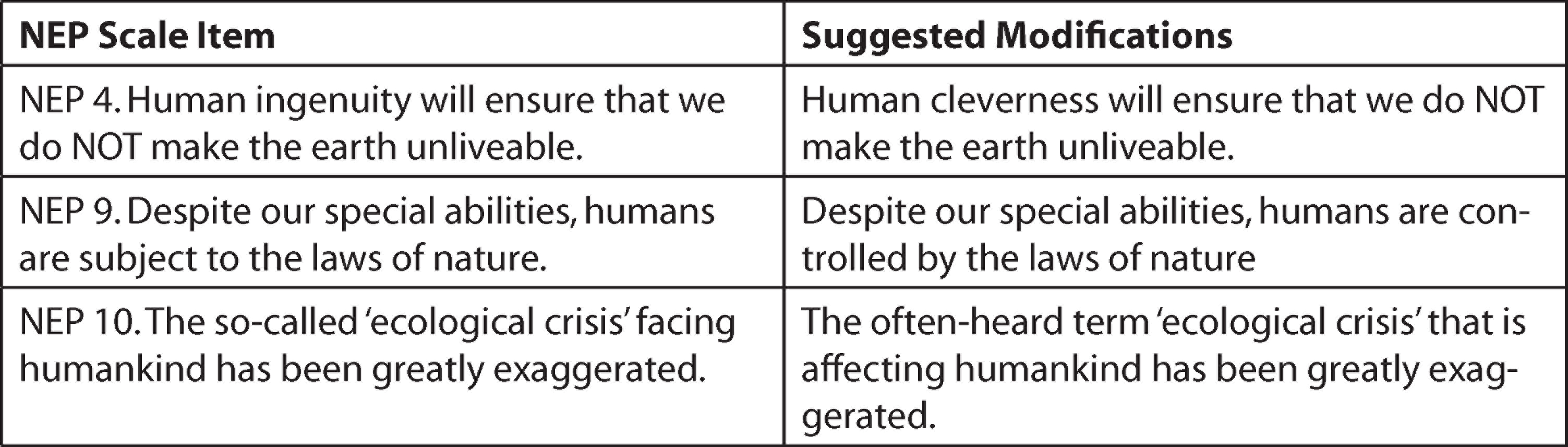
During data collection, participants asked for clarifications about some NEP items, specifically items under the anthropocentric facet. Some participants interpreted items as pro-ecological worldviews. If possible, conducting a focus group or conducting a pilot study with a smaller sample at the same research site will help test the comprehensibility of the NEP items with that particular population, as suggested by Kopnina (2011). Based on notes taken by one researcher who was present when participants answered the NEP survey, suggestions for modifying few NEP items are provided below.
The qualitative data supported the quantitative findings and provided deeper insights into game-play experience, an advantage of mixed-methods studies. Although participants were aware and were expected by their parents and teachers to switch off lights and turn off the water, they were pushed to perform such actions only after playing the game. Even changes in behavioural intentions and talking to others about environmental issues denotes behavioural change (Ballantyne & Packer, 2005). One participant even developed new habits like segregating waste at the source into biowaste and recyclable as was shown in other studies (Cuccurullo et al., 2013; Wu & Huang, 2015). Participants’ learning from the game can be summarized as follows: those who loved seeing tall buildings now preferred more greenery because from the game they learned that buildings eliminated large areas of green cover; those who connected economic growth and development to rapid construction activities changed their minds about what constituted true development; they understood that the earth had limited resources and felt empathy towards ecosystems and people living in other parts of the world, and finally they realized that they could contribute to the environment, and that even small actions could go a long way in helping the environment. The visualization of consequences immediately following actions within the game enhanced their learning and indicated whether their decisions were incorrect or correct. These learning outcomes indicate the achievement of the objectives of EVS and are similar to the findings in prior studies using various games (Harker-Schuch et al., 2020; Janakiraman et al., 2021b; Tan & Biswas, 2007; Yang et al., 2012).
Using the NEP survey items to examine the interview data provided additional details about game players’ perceptions and how EnerCities impacted their environmental attitudes and behaviours (see Table B7). Instant feedback about wrong decisions and actions through scores and monitors helped players track game-play efficiency and learn about wrong actions. This proved very useful in learning new behaviours in the game and is connected to NEP4 that tests what humans think about their ingenuity. Players were also disturbed by the loss of green cover each time a construction started in the game connecting to NEP5 and NEP15. The game made players realize that if the present pace of activities continued, then the future prospects will be disastrous, relating to NEP1 and NEP3. Altering actions within the game to protect the environment is related to NEP2 that is linked to the realization that humans do not have the right to modify the natural environment to suit their needs. The game taught that resources need to be conserved (NEP6) and that they will not last forever (NEP10) and showed several ways to reduce human impact on the environment (NEP7 and NEP11).
The existence of both an ecological and utilitarian environmental worldview was reported by Pauw and Van Petegem (2012) and Wu (2012) with respect to the NEP. That did not happen in this study with all participants believing that humans should not dominate over nature, and they took measures to avoid harmful behaviours within the game. This learning could transfer to real-life behaviours and could become habitual (Aarts & Dijksterhuis, 2000; Ouellette & Wood, 1998).
Implications
Understanding how children develop their environmental attitudes and converted these beliefs to actions is worth researching (Evans et al., 2007). Pauw and Van Petegem, (2012) recommend that children’s worldviews and pro-environmental beliefs need to be understood first for developing environmental learning programmes to improve their environmental attitudes. In this study, all participants had studied EVS from grade 3 and were influenced by adults. Media exposure ensured that they read a lot about it in newspapers and watched dedicated programmes on television. Most local communities also enforced strict regulations about garbage disposal, recycling, rainwater harvesting and so on. Furthermore, the Indian government’s awareness campaigns about single-use plastics had gained momentum, and at the time of this study, plastic bags were hard to find in the market. Hence, cognitive awareness of all participants was similar before this study was conducted. Although prior attitudes were not measured before the digital game intervention was introduced, this mixed-methods study found that EnerCities impacted the environmental attitudes of game players, by comparing them with a control group.
Does this mean that cognitive awareness did not help them realize that human activities were harmful to the environment and that it is difficult to restore nature’s balance, before playing the game? Analysing the qualitative data provided some insights. Immersion in a near-authentic environment in the game that displayed the consequences of actions immediately proved to be more effective than what happens in real life. This is because results in the form of environmental disasters occur after a long time, and children may not be able to connect the cause and the result (Arbuthnott, 2009; Tucker, 1999). Hence, EVS should focus on affective and behavioural learning instead of providing facts and figures alone. This can be made possible through digital games.
Games can also serve as support tools to traditional methods of instruction because they make learning fun, engaging and motivating (Gee, 2008) and at the same time help achieve the objectives of EVS. Harraway et al. (2012) point out that it is easy for students to demonstrate knowledge about ecological issues, but they could be insensitive to the issue. ‘Knowledge about the environment and sustainability may be relatively straightforward to assess by conventional examinations and assignments but values, attitudes, and behaviours are not’ (Harraway et al., 2012, p. 190). They suggest the use of instruments like the NEP to assess environmental attitudes, as was done in this mixed-methods study.
Actual learning with respect to topics such as EVS, racism, behaviours during pandemics, drug abuse and smoking is not the accumulation of cognitive knowledge but affective learning and behavioural learning, and digital games can serve as pedagogical tools to achieve holistic learning.
Conclusions and Limitations
The goals of EVS are to make learners realize that ‘Many of today’s environmental problems such as global warming, species collapse, and ozone depletion can be attributed to human activity’ (Cordano et al., 2003). This can be achieved using games along with minimal instructional support. Despite having studied EVS since elementary school, participants were not aware that human behaviours were causing environmental degradation leading to climate change and related catastrophes. Game players indicated helplessness in dealing with environmental degradation, although they tried their best within the game. Their emotional involvement helped them realize the urgent need to address this problem. The survey results also clearly indicated that EnerCities influenced environmental attitudes more significantly than traditional educational methods, thereby producing pro-environmental behavioural intentions. This exploratory study showed that games can be effective pedagogical tools in EVS in producing behavioural intentions and this intention can be considered as the immediate antecedent to pro-environmental behaviour, according to the TPB (Ajzen, 2019).
Measuring pro-environmental behaviours requires sustained observations and measurements of daily habits for longer time durations. A longitudinal study would provide insights into long-term retention of environmental attitudes gained from a game; that was a limitation in this exploratory study. However, other influences and circumstances may encourage or inhibit such behaviours when conducting a longitudinal study and researchers need to control for them.
A pre/post-experimental research design was not used here that would have allowed the research team to examine the differences produced by EnerCities. However, the presence of a control group offsets this limitation. Future studies can implement a pre/post-experimental design to compare prior attitudes with post-game attitudes to study the influence of different games.
A unique contribution of this study is the use of NEP as a unidimensional scale and as a multi-dimensional scale to compare environmental attitudes when a game was used as an educational intervention. This study showed the suitability of using the NEP scale (Dunlap et al., 2000) with young learners in the age group of 1617 years without the need for major modifications as was done for children (Manoli et al., 2007). It can also be concluded that the NEP is a suitable scale for use with high school students in India. More studies can be conducted in different regions to cover the large and diverse population in India. It is recommended that future researchers conduct a focus group interview before embarking on a larger study to ensure that participants’ understanding of the items matched the intention of the item. This study showed that participants’ environmental attitudes improved based on the NEP; however, more evidence is needed to tell with certainty whether this resulted in pro-environmental behaviours.
Amburgey and Thoman (2012) suggest that the NEP items lack specificity with respect to attitudes and beliefs concerning environmental problems like climate change. EnerCities also did not explicitly demonstrate the connections between human activities and climate change directly, although it showed the detrimental effects of wrong behaviours on environmental health. Similar studies using other games and surveys addressing current environmental problems are required.
One interview participant said,
…there are many disasters happening…. I thought that I couldn’t do anything but after playing [the game] I took a decision…. I could do something good to the Earth. Even if a single small contribution … it is a big thing to the Earth, to save the Earth.
This is the kind of realization that needs to be instilled in young learners. Although this sentiment was expressed by a single student, it is very likely that he was not the only one to realize it after playing the game.
Footnotes
Declaration of Conflicting Interests
The authors declared no potential conflicts of interest with respect to the research, authorship and/or publication of this article.
Funding
The authors received no financial support for the research, authorship and/or publication of this article.
New Ecological Paradigm Scale
| NEP Scale Item |
| 1. We are approaching the limit of the number of people the earth can support |
| 2. Humans have the right to modify the natural environment to suit their needs (R) |
| 3. When humans interfere with nature it often produces disastrous consequences |
| 4. Humans ingenuity will ensure that we do NOT make the earth unliveable (R) |
| 5. Humans are severely abusing the environment |
| 6. The earth has plenty of natural resources if we just learn how to develop them (R) |
| 7. Plants and animals have as much right as humans to exist |
| 8. The balance of nature is strong enough to cope with the impacts of modern industrial nations (R) |
| 9. Despite our special abilities humans are subject to the laws of nature |
| 10. The so-called ‘ecological crisis’ facing humankind has been greatly exaggerated (R) |
| 11. The earth is like a spaceship with very limited room and resources |
| 12. Humans were meant to rule over the rest of nature (R) |
| 13. The balance of nature is very delicate and easily upset |
| 14. Humans will eventually learn enough about how nature works to be able to control it (R) |
| 15. If things continue on their present course, we will soon experience a major ecological catastrophe |
Appendix B.
NEP Scale Items and Participant Quotes

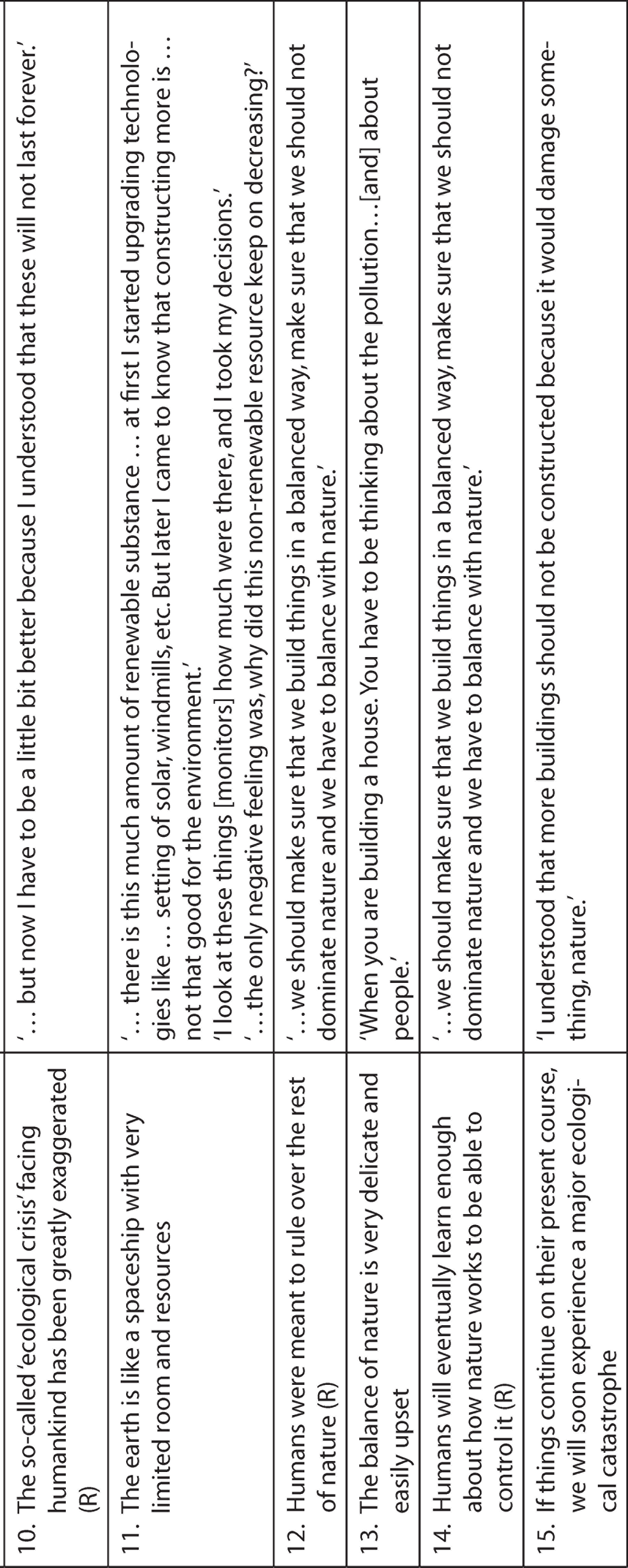
| NEP Scale Item | Participant Quotes |
| 1. We are approaching the limit of the number of people the earth can support | ‘… I also understood that in future… if this situation happens… how will the citizens face it.’ ‘… if this situation is going worse…how people will live? So … after the game I started to think about this.’ |
| 2. Humans have the right to modify the natural environment to suit their needs (R) | ‘First, we made a mistake… we put the coal plant in the residential area …then we understood that it will be a problem, so we demolished the thing and we shifted to another area.’ |
| 3. When humans interfere with nature it often produces disastrous consequences | ‘Before playing the game, I was like this nature will be there for more time and they can’t be destroyed easily, but then after playing the game I thought like these non-renewable resources get extinct very fast. And yeah like after non-renewable resource becomes zero … our scores went down.’ |
| 4. Humans ingenuity will insure that we do NOT make the earth unliveable (R) | ‘Yes, because it was a risky game like it challenged us and it wanted to know what strategies we had to take to win the game.’ |
| 5. Humans are severely abusing the environment | ‘I liked to see many buildings but after playing the game I understand it is not good.’ ‘I felt sad about the people who are living between many factories in this [game].’ |
| 6. The earth has plenty of natural resources if we just learn how to develop them (R) | ‘… since population increases their non-renewable resources kept on decreasing … we have to have more energy …’ |
| 7. Plants and animals have as much right as humans to exist | ‘We first played, and we found that resources are going down rapidly, so we understood how to play the game, discussed and managed power consumption and forest management.’ Before playing the game, I thought buildings are very nice to see but when I play the game, full of buildings and fewer grasslands… I understand it is not good.’ |
| 8. The balance of nature is strong enough to cope with the impacts of modern industrial nations (R) | ‘I think after playing the game I started thinking about the environment even when I pass a particular place where there is a factory set up. I feel, oh the smoke … pollution … they are putting all the plastics and waste in water and some river nearby … so I feel like that is bad. It should be changed.’ |
| 9. Despite our special abilities humans are subject to the laws of nature | ‘We first played, and we found that resources are going down rapidly, so we understood how to play the game, discussed and managed power consumption and forest management.’ |
| 10. The so-called ‘ecological crisis’ facing humankind has been greatly exaggerated (R) | ‘… but now I have to be a little bit better because I understood that these will not last forever.’ |
| 11. The earth is like a spaceship with very limited room and resources | ‘… there is this much amount of renewable substance … at first I started upgrading technologies like … setting of solar, windmills, etc. But later I came to know that constructing more is … not that good for the environment.’ ‘I look at these things [monitors] how much were there, and I took my decisions.’ ‘…the only negative feeling was, why did this non-renewable resource keep on decreasing?’ |
| 12. Humans were meant to rule over the rest of nature (R) | ‘…we should make sure that we build things in a balanced way, make sure that we should not dominate nature and we have to balance with nature.’ |
| 13. The balance of nature is very delicate and easily upset | ‘When you are building a house. You have to be thinking about the pollution…[and] about people.’ |
| 14. Humans will eventually learn enough about how nature works to be able to control it (R) | ‘…we should make sure that we build things in a balanced way, make sure that we should not dominate nature and we have to balance with nature.’ |
| 15. If things continue on their present course, we will soon experience a major ecological catastrophe | ‘I understood that more buildings should not be constructed because it would damage something, nature.’ |