



Abstract
The extent of participation in skill development training and its impact on employment are examined, based on primary data collected from 200 households in Dibang Valley, Arunachal Pradesh. It is found that participation in skill development training helps with employment in the non-farm sector. However, in terms of employment and income generation, one-year-long skill development training was found to be more effective than less-than-a-year-long training.
Introduction
It is widely accepted that skill development training helps to transform an economy into a more developed one by raising income, investment, saving, productivity (Rodrick, Grossman, & Norman, 1995) and trade (Epifani & Gancia, 2008). Improvements in human capital by investing in training transform the economy from one that is labour intensive to one that is more capital intensive (Saner & Yiu, 2014). In fact, with increasing populations and heavy competition for employment, skill training is even more important in today’s labour market. Skill development is also identified as a potential way to enhance women empowerment (Riaz et al., 2014). Accordingly, countries are increasingly adopting it as a strategic developmental policy (Fernandez & Choi, 2012). China, Japan, Thailand, South Korea and the Philippines, for instance, have already taken initiatives of this kind. In densely populated countries such as India, where a substantial proportion of the population is outside mainstream education, skill development training has great potential to bring about dynamic change in the economy.
While there is supposed to be a shortage of 56 million young people globally, India is today the youngest country of the world (FICCI, 2015). Thus, by skilling its population India could have an advantage and achieve high economic growth. The National Skill Policy was formulated in 2009 by the Government of India (GOI) with an aim to impart skill training to 500 million people by 2022 (National Skill Policy, 2009). In 2014, the Ministry of Skill Development and Entrepreneurship, a separate ministry, was created to work in a unified way.
In Arunachal Pradesh, a border state in North-East India, different skill development programmes have been initiated. Skill development training is provided through various polytechnics, industrial training institutes and government schools of the state under the Directorate of Higher and Technical Education, Department of Skill Development and Entrepreneurship and the Department of Elementary Education, respectively. In addition to these, other schemes were also initiated by the government, such as skill development initiative scheme and capacity building under Border Area Development Programme, to encourage young people to take up employment-oriented skill training, especially for school dropouts and unemployed youth (Government of Arunachal Pradesh, 2015). The Department of Rural Development, Department of Textile, Industry, Agriculture, Horticulture, Tourism, and Women and Child Development are some other departments of government of Arunachal Pradesh that have engaged in skill training. Apart from government departments, non-governmental organisations (NGOs) are also involved in skill development initiatives (Government of India, 2017), North Eastern Development Finance Corporation Limited (Nedfi).
The paper aims to assess the extent of participation in skill development training and its impact on employment in the Dibang Valley of Arunachal Pradesh.
Methods and Materials
In carrying out the study, both primary and secondary data were used. The secondary data were collected from An overview of skill development and entrepreneurship in Arunachal Pradesh (Government of Arunachal Pradesh, 2015), Skill development in Arunachal Pradesh: A comprehensive study (Government of India, 2017), North-Eastern Development Finance Corporation Limited (Nedfi), Skill development in India 2017, Federation of Indian Chamber of Commerce and Industries (FICCI, 2015), Skill development pathways in Asia (Fernandez & Choi, 2012), Organisation of Economic Co-operation and Development (OECD) and other relevant sources.
The core of the study is based on field survey data collected from seven locations of Dibang Valley district of Arunachal Pradesh. To make the sample representative, six villages from different parts of the district and the lone urban area were selected. As the study also intended to see whether the extent of participation in skill development training differs between rural and urban areas, half of the sample households were taken from Anini. 1 A total of 200 sample households (around 23 per cent of the total households) were selected at random as the final sampling unit from the selected locations to collect the required information. The distribution of sample households is presented in Table 1.
Distribution of Sample Households

Analytical Framework
The extent of participation in skill development training has been examined in terms of both sample population 2 and household basis. Further, in terms of area, sex, course duration, training providers and subjects, the extent of participation in skill development training is examined.
To assess the impact of skill development training on employment, the extent of employment has been compared between participants and non-participants. Subsequently, suitable econometric models have been used to ascertain the impact of skill development training on employment.
Using regression analysis to examine the impact of skill development training on the employment status of people, the impact of other potential determinants of employment need to be controlled for. For instance, the chance of getting employment increases with age (Tripathi, 2016). Sex may be another factor affecting employment status of an individual. We can expect more numerous employment opportunities for male members as normally they bear the responsibilities of meeting household expenses. The level of education has a positive impact on employment (Gray & Hunter, 1986). The marital status of a person is another factor which influences his/her employment status (Comola & Mello, 2009). Further, Assad et al. (2000) found that headship status of participants has an influence on their employment status. Size of the family could be another factor determining employment status of an individual because the higher household expenditure of bigger family may compel more members to engage in earning activities. However, for members of larger families, the scope of employment-related training may be less due to higher financial burden with many more members which can affect the probability of employment adversely. The details of the explanatory variables used in regression analysis are presented in Table 2.
We have formulated three regressions to examine the impact of skill development training on employment. The impact of skill development training on overall employment, farm employment and non-farm employment has been examined separately by changing the definition of the dependent variable (ES).
Thus, the variable ES has been defined as:
Formulation 1: ES = 1 if employed either in the farm sector or in the non-farm sector, 0 for unemployed. Formulation 2: ES = 1 if employed in the farm sector, 0 for unemployed. Here employed in the non-farm sector was excluded from the regression analysis. Formulation 3: ES = 1 if employed in the non-farm sector, 0 for unemployed. Here employed in the farm sector was excluded from the regression analysis.
Formulations 1 to 3 were used to examine the impact of skill development training on overall employment, employment in the farm sector and employment in the non-farm sector, respectively.
Taking employment status (ES) as the dependent variable, the baseline regression model is formulated as follows:

Explanatory Variables Included in Regressions
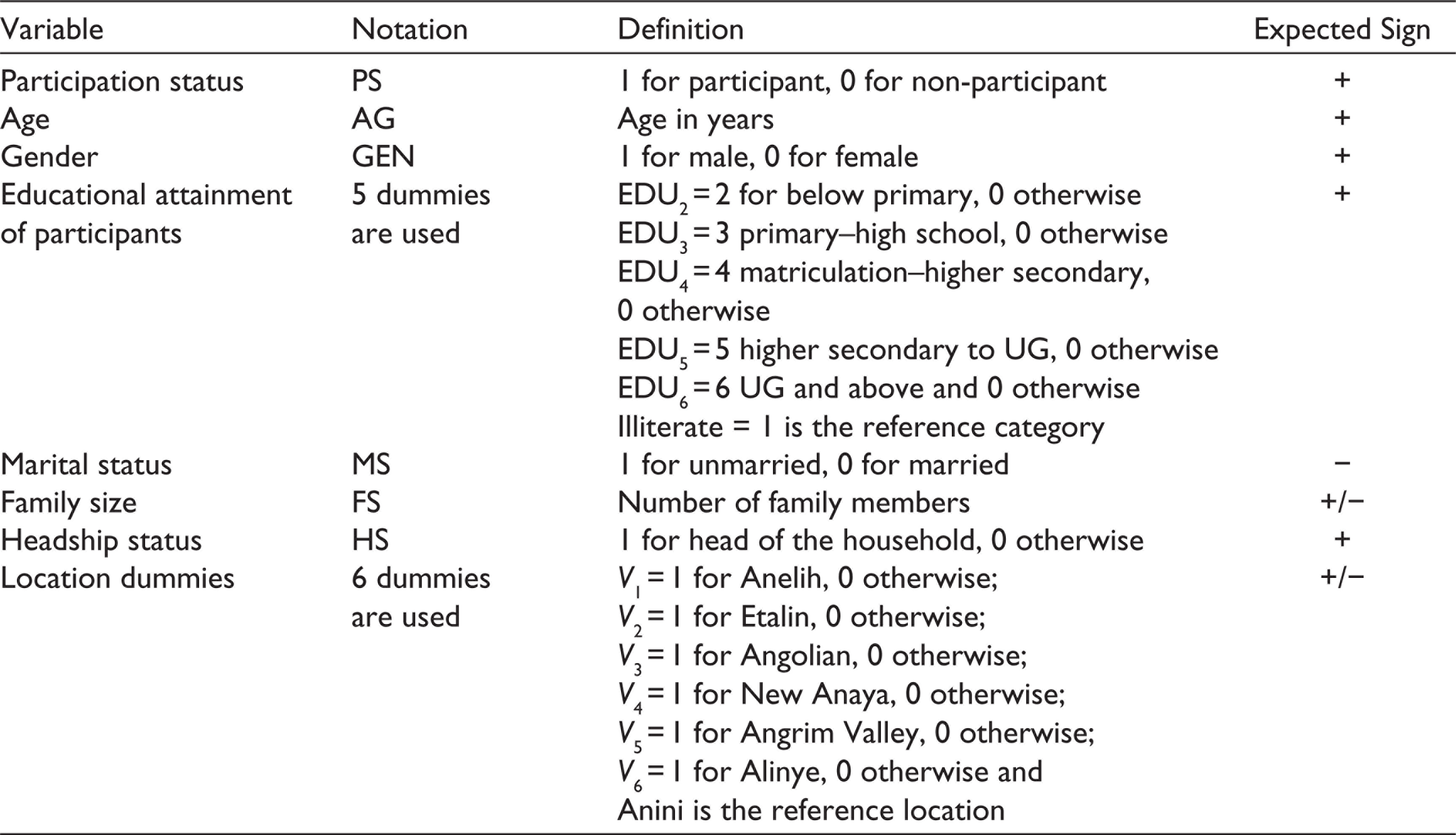
Since the dependent variable ES is binary in nature, LOGIT regression is formulated as follows:

where
Z = b0 + b1PS i + b2AG i + b3GEN i + b4EDU2i + b5EDU3i + b6EDU4i + b7EDU5i + b8EDU6i + b9MS i + b10HS i + b11FS i + b12V1i + b13V2i + b14V3i + b15V4i + b16V5i + b17V6i
After examining whether skill development training has any significant impact on finding employment among the sample individuals, we have also examined the level of income of the employed individuals by their participation status in such training.
Results and Discussions
Extent of Participation
Our field study data depict that around 24 per cent of the sample individuals have participated in different skill development training programmes (Table 3). In terms of households, it is found that 55 per cent of sample households have participated in skill development training. Across sample locations, the extent of participation of sample individuals in skill development training ranges from 11 to 32 per cent. The extent of participation is the highest in Anini, in terms of both individuals and households. The higher extent of participation in Anini thus reveals that the participation in skill development training is more extensive in urban areas than in rural areas. The extent of participation in skill development training is found to be the lowest in Etalin in terms of individual and in New Anaya in terms of households.
Extent of Participation

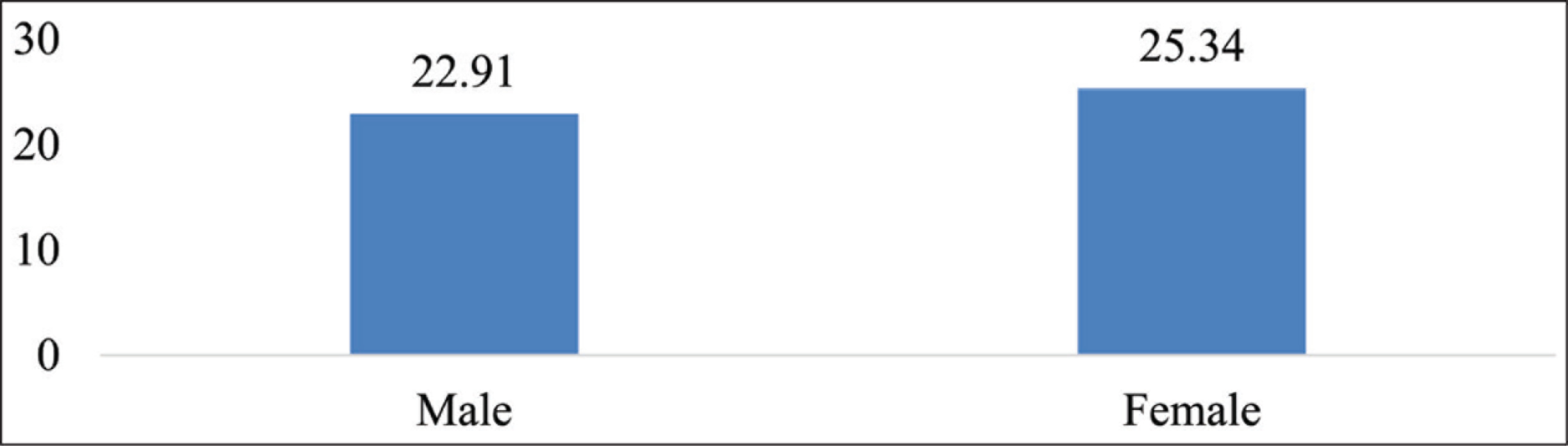
The extent of participation in skill development training is more by female than the male. As depicted by Figure 1, 25 per cent of females and 23 per cent of males participated in skill development training. Thus, it is found that people in Dibang Valley have participated in various skill development training and it is more extensive in urban areas and marginally more among females.
The duration of skill development training taken by sample participants ranged from one week to above one year. However, a large majority of sample participants participated in skill development training that was at least one-year long. Among the total sample participants, 42 per cent participated in the skill development training that was longer than one year and 39 per cent participated in the training of one-year duration (Figure 2). The percentage of participants who have participated in the four other categories of training by duration was less than 10 per cent for each category.

In terms of training providers, participation is more in the skill development training provided by private institutes than in government institutes. Table 4 depicts that 61 per cent of sample participants have taken training provided by private institutes and the rest (39 per cent) attended from government institutes. It is found that more than half of the sample participants participated in training provided by private institutes (56 per cent) followed by government-sponsored schemes (21 per cent).
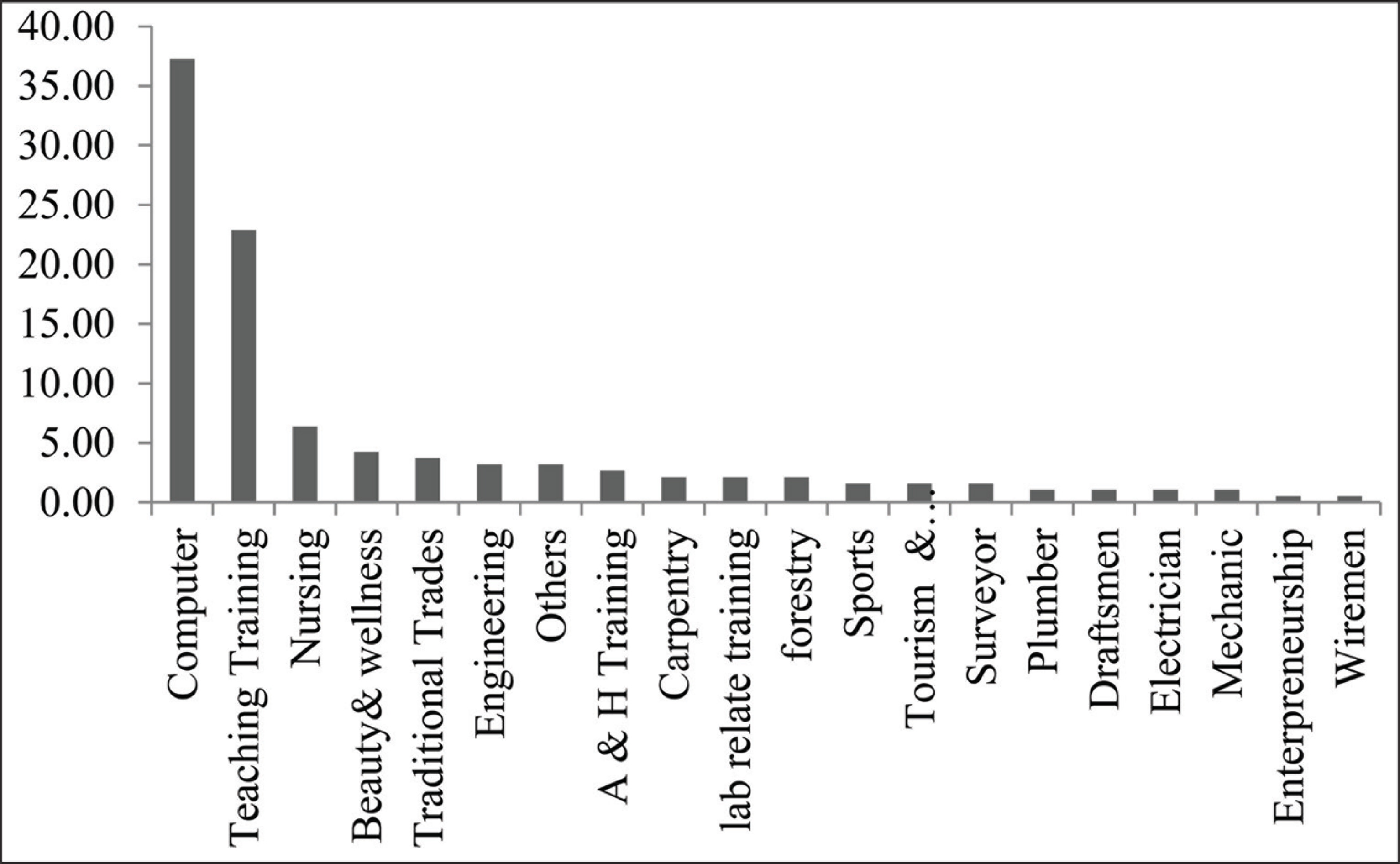
The sample participants were found to have participated in various types of skill development training. However, most of them participated in computer courses and teacher’s training. The percentages of participants those who opted for computer courses and teaching training to the total sample participants were 37 and 23 per cent, respectively (Figure 3). The percentages of participants in other subjects were below 7 per cent for each type. The higher extent of participation in computer courses and teacher’s training is due to the availability of employment in such activities in the study region. Of course, the higher extent of participation in teacher training is, to some extent, due to the importance of such training for in-service teachers.
Training Providers of the Programme

Abbreviations: GSP, government-sponsored schemes; DT, departmental training; GI, government institution; PI, private institution; PSP, private-sponsored programme.
Skill Development and Employment
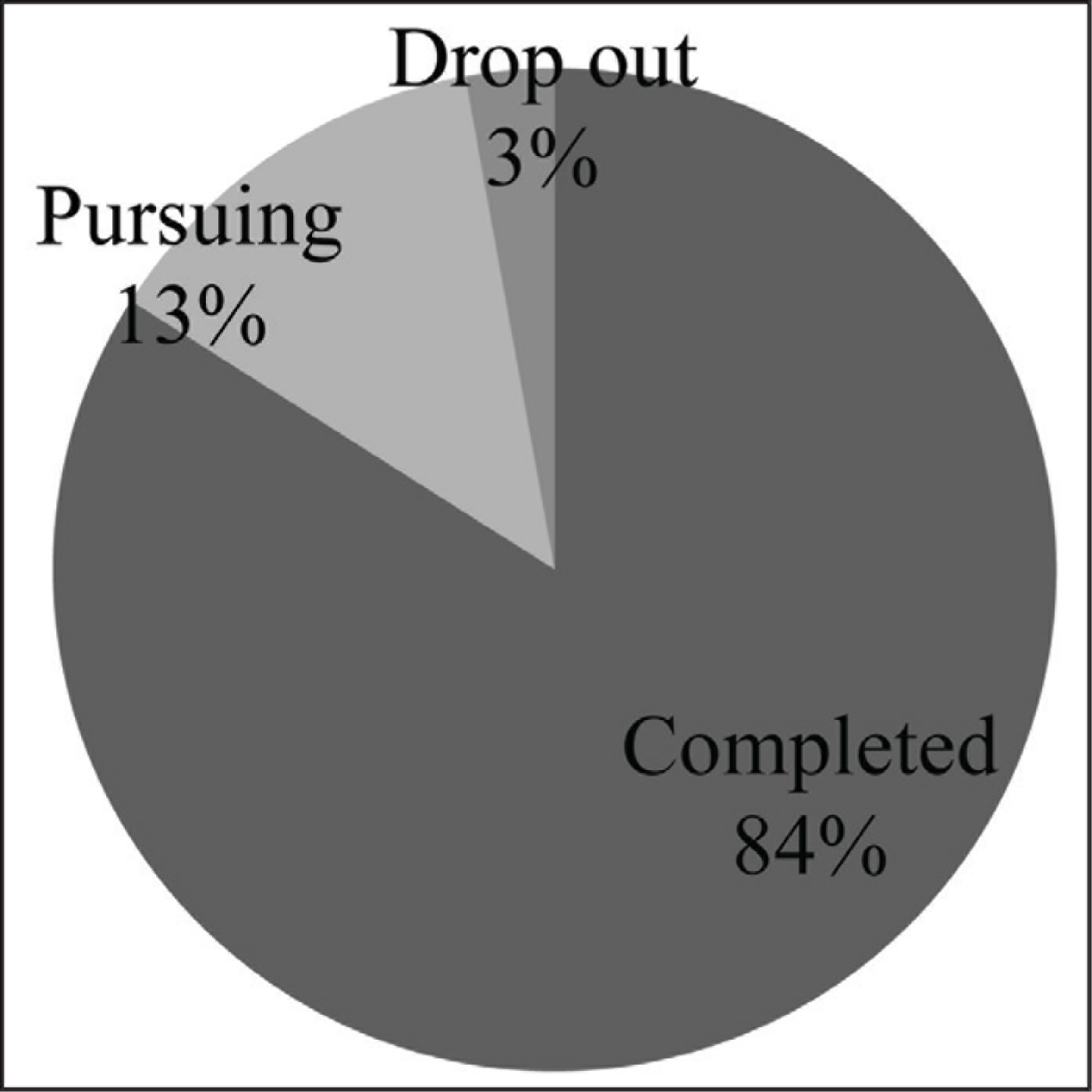
Before discussing the impact of skill development training on employment, it is important to understand whether participants complete their training, and what proportion were unable to complete their training. It was found that 84 per cent of participants completed their training, 13 per cent were still enrolled, and the remaining 3 per cent dropped out (Figure 4).
In terms of overall ES, 3 it is found that the extent of employment is more or less same for both participants and non-participants. However, the extent of employment is more among the participants who have completed their training compared to non-participants and dropout participants (Table 5).
The impact of skill development training on employment will be reflected better if we examine the ES of those participants who have completed training and were engaged in an activity for which they took training for. Accordingly, we have checked the ES of participants who have completed their training. Around 58 per cent of such persons were employed in an activity for which the training was taken (Table 6). More males were found to be employed in an activity in which they trained, compared to females.
Overall Employment Status

Employment Status of Completed Participants

By the duration of course, the ES in an activity for which training is taken is highest for participants who have completed a training course of more than one year, followed by participants in the course duration of one year (Table 7). In case of categories of participants those who completed training course of less than one year, the extent of employment is not more than 40 per cent. Thus, the participants those who completed training of one year and above were more likely to be employed than those who have completed training of less than one year.
Looking into the employment in an activity for which training is taken by training providers, the extent of employment is found to be more for participants who have attended training courses provided by the government. As per Table 8, around 73 per cent of participants who have completed training provided by the government were employed. On the other hand, 50 per cent of participants who have completed training from private institutes were employed.
Employment Status by Duration of Trainings

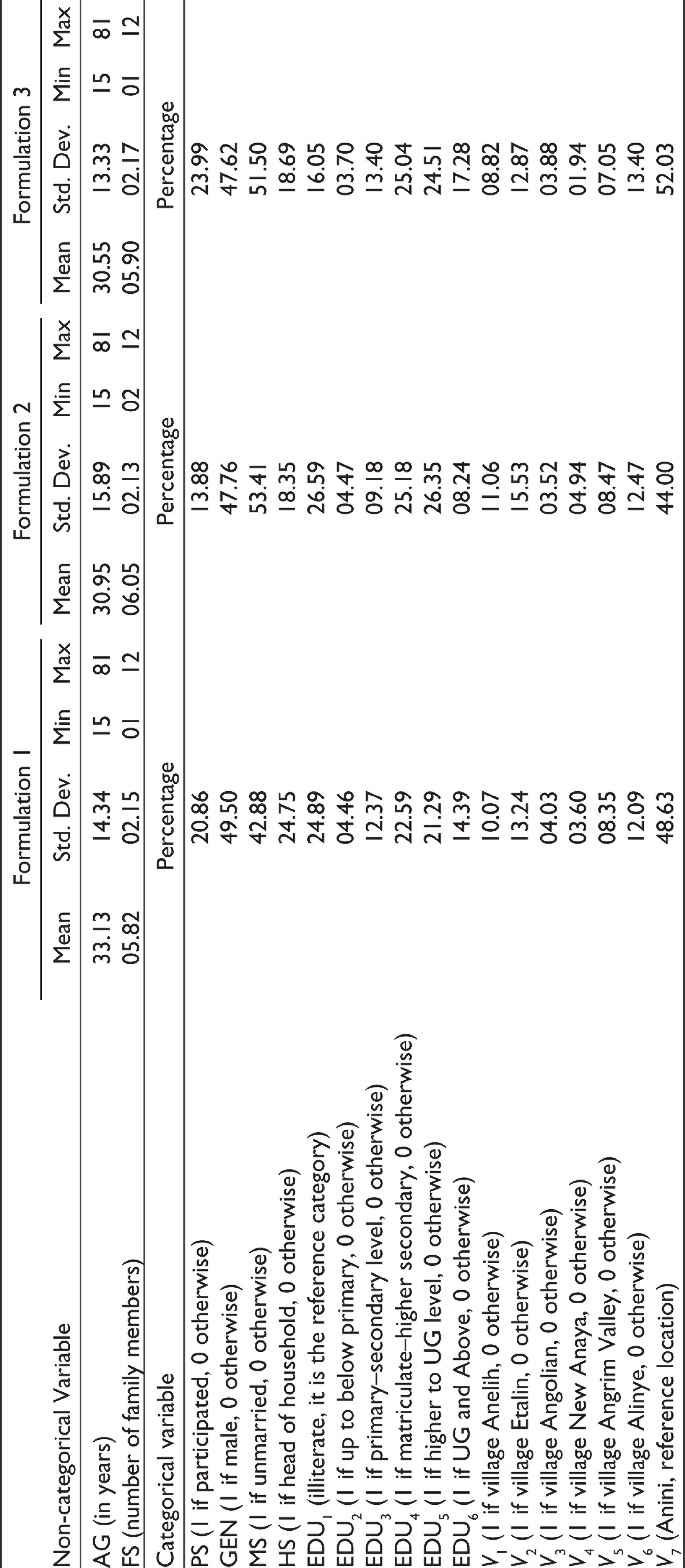
The above discussion gives an impression that skill development training has some impact on employment. To verify whether the observed impact of skill development training on employment is statistically true, let us proceed to the regression results presented in Table 9. The descriptive statistics of explanatory variables used in regression analyses are presented in Table 10.
The results of regression depict that the coefficient of variable PS is significant at 1 per cent in case of formulations 1 and 3 with positive signs, but is not significant in the case of formulation 2. It implies that participation in skill development training significantly raises the chances of getting employment in general and in the non-farm sector in particular.
Among the control variables, the coefficient of variable MS is found to be significant with a negative sign with respect to all the three sets of regressions. It means that the probability of getting employed is higher for those who were married. The age of the individual is found to be significant with a positive coefficient in case of overall and non-farm employment. This shows that employment in the non-farm sector increases with age. The variable HS is also found to be significant with a positive coefficient with respect to formulations 1 and 3, which indicates a higher probability of employment in the non-farm sector for the head of households than for the other members of the family. The gender of individual is found to be significant in case of farm sector employment, and its coefficient is positive. This indicates that the probability of employment in the farm sector is significantly more for males than for females. In the case of overall employment, family size is found to be significant with a negative coefficient depicting lower employment of members belonging to larger families. The variables EDU4 and EDU5 are significant with a negative coefficient with respect to farm and overall employment. It implies that illiterate persons find more employment than individual having education of matriculation to undergraduate in the farm sector. The coefficient of dummy EDU3 is significant in farm sector employment with a negative sign but with a positive sign in non-farm employment. It means employment in the non-farm sector is significantly higher for individuals with primary to high school level education than the illiterate individual, and it is just the opposite for farm employment. The significant location dummies depict the presence of locational variation in employment, especially in the farm sector.
Employment Status by Training Providers

Results of LOGIT Regression for Impact of Skill Development Training on Employment

Descriptive Statistics
Thus, it is clear that skill development training helps participants in getting employed in the non-farm sector. However, along with employment, the level of income earning from the activity is also important. Hence, an attempt has been made here to give an overview of the level of income of participants who have completed their training and were employed in the same activity for which they were trained.
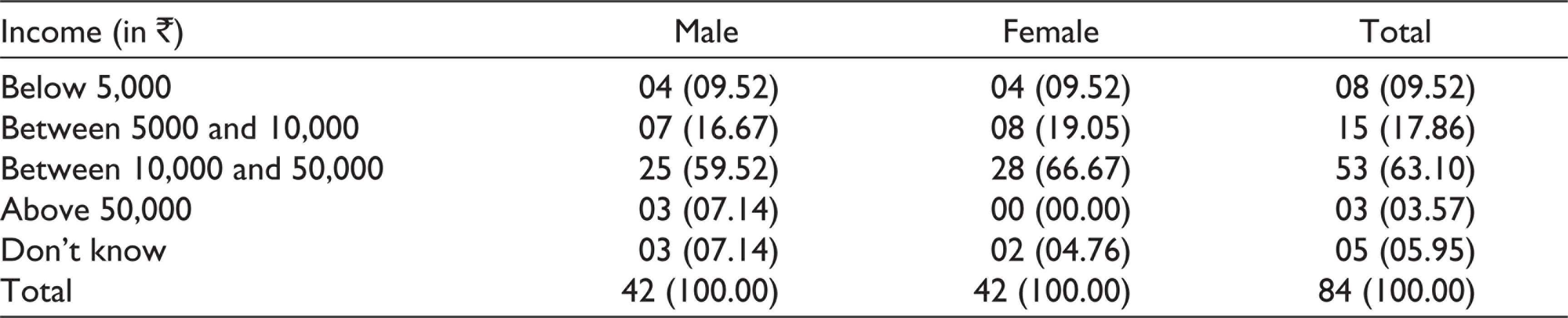
It is found that more than half of the participants, irrespective of gender, were earning at least ₹10,000 per month. However, about 6 per cent were reluctant to disclose their income (Table 11).
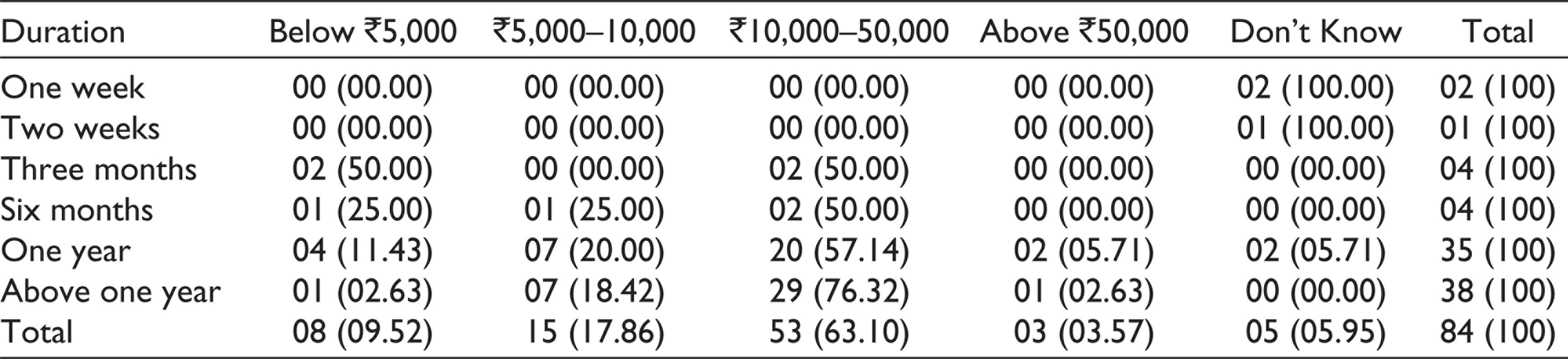
As per income data revealed by employed participants, at least 67 per cent of participants in different skill development training programmes by duration were earning ₹10,000 or more per month. It is notable that the longer is the duration of course, the greater is the proportion of participants earning ₹10,000 or more per month. For instance, around 63 per cent of participants who completed skill development training of one year were earning monthly ₹10,000 or more, and this is 79 per cent for the participants who completed training of more than one year (Table 12).
Monthly Earning of Employed Participants
Monthly Earning of Employed Participants by Course Duration
Monthly Earning of Participants by Training Provider

GSP, government-sponsored schemes; DT, departmental training; GI, government institution; PI, private institution; PSP, private-sponsored programme.
Table 13 depicts that 69 per cent of participants those who completed training provided by government training institutes were earning ₹10,000 or more per month, and it is 65 per cent in the case of participants who completed training from private institutes. Thus, in terms of the income, participants completed skill development training provided by the government sector were somewhat better off compared to those who took such training in private institutes.
Conclusion and Policy Implication
The people of Dibang Valley are participating in various skill development training. The extent of participation in skill development training is more in urban area as well as among female. Further, it is found that the extent of participation is more in training of one year or longer. Most of the participants took training from private institutes. Skill development training plays a significant role in getting employed in non-farm activities. It is found that the extent of employment is more among the participants in skill development training provided by the government sector than by the private sector, and, on an average, the former group is earning more than the latter group. Similarly, the extent of employment and the average earnings were more for the participants in skill development training of one year or longer than the participants in training of less than one year.
Given the fact that the extent of participation is more in skill development training provided by private institutes than by the government, whereas the employment and earnings were more for the participants taking training from latter type than former type, it can be suggested to make arrangement to provide government-supported skill training to more and more people. Further, it is found that the extent of participation, employment and earnings was more for training of one year and longer. Hence, the government may focus on skill development training of at least one-year duration to make such training more useful.
Footnotes
Declaration of Conflicting Interests
The authors declared no potential conflicts of interest with respect to the research, authorship and/or publication of this article.
Funding
The authors received no financial support for the research, authorship and/or publication of this article.