




Abstract
The linkage between local perceptions of municipal services and the level of trust in the local government is an under-researched and yet relevant aspect for a small multi-ethnic island like Mauritius. This research draws from the opinions of some 400 Mauritian inhabitants gathered through a Citizens’ Satisfaction Survey carried out in 2018 to evaluate the attitudes of citizens towards local government services and trigger further research on future options for improving the local government sector. The results from a structural equation modelling (SEM) indicate that satisfaction with local outputs is a significant predictor of trust in local authorities. Trust in public institutions is also found to be a possible mediator in this nexus. Further probing into citizens’ responses reveals that their preferences for local public goods differ across jurisdictions and vary with level of education. Findings also point to a tendency for citizen mobility which can have important implications for improving local services through fiscal decentralisation.
Keywords
Introduction
Political trust or citizens’ confidence in public authorities and institutions influences voting behaviour and is primordial for fostering social cohesion, good governance and compliance (Fjeldstad, 2004). Distrust can sometimes be greater at the national level than at the local level (Levi & Stoker, 2000; Pharr, 1997). Their proximity and responsiveness to the populace make local governments key actors for upholding trust in the national government and in public institutions in general. For a small island developing state like Mauritius, already hampered by capacity constraints and an ageing population, the role of the local government is crucial for sustaining the quality of the public sector. An assessment of trust levels in the local government is a crucial step for prompting future discussions on the empowerment of local authorities with a focus on democratic governance (Nayak & Samanta, 2014; World Bank, 2003). As it is, the latter have a limited amount of autonomy for decision-making and are heavily reliant on the central government for financing. This hampers the quality of local outputs and constitutes a threat for public confidence in municipalities and district councils. In many countries, the local government sector has been re-shaped through fiscal decentralisation to improve the socio-economic well-being of citizens. It entails the splitting of public expenditure and revenue amongst different levels of government with sufficient discretion to local bodies to decide on their budgets. However, to what extent such re-shaping has achieved its aims or has compromised political accountability remains an empirical issue that warrants investigating (Bardhan & Mookherjee, 2000, 2012; Reinikka & Svensson, 2002). It is, in fact, in this context that this article sets out to evaluate perceptions of trust in local authorities and elicit further research on the possible sources of welfare benefits from the fiscal decentralisation of the local government services.
As examined by many researchers, the roots and evaluation of trust in local government is far from conclusive (Fitzgerald & Wolak, 2016). Trust in local government is influenced by a host of factors including cultural differences (Baldassare, 1984), community life and its implications on the social capital of societies (Myeong & Seo, 2016) and perceptions of corruption (Chang & Chu, 2006). More recently, the emergence of critical citizens with stronger needs for self-expression (Kim & Lee, 2012) and the role of social media altogether have promoted transparency and people participation (Evans et al., 2018), thereby reinforcing this relationship. So far, there have been quite a few theoretical and empirical studies on the relationship between public service performance and trust (Badri et al., 2015; Christensen & Laegreid, 2005; Salim et al., 2017; Van de Walle & Bouckaert, 2003; Van Ryzin, 2008). In some research, service quality is seen to affect trust and other behaviour through its influence on citizen satisfaction (Van Ryzin, 2007). Besides the notion of performance-based trust (Van de Walle & Bouckaert, 2003), another important dimension of the trust-public performance linkage often highlighted in the literature is its bi-causality (Gustavsen et al., 2017), which makes this relationship even more intricate. As highlighted by Van de Walle and Bouckaert (2003), while well-functioning public services create trust in government, the latter in turn influences the perception of public services.
The complexity of the trust-public performance linkage is further exacerbated by the lack of objective performance measures in the public sector (Van Ryzin, 2007), as well as the variability of public opinions based on socio-demographic factors, survey characteristics, social contexts and social media amongst others (Bouckaert & Van de Walle, 2003; Miller & Miller, 1991; Van de Walle & Bouckaert, 2003). Many studies indicate that trust in government is affected by a set of demographic factors and structural characteristics (Baldassare, 1984). Other researchers believe that identity variables such as political affiliations or demographic profiles do not have strong influence on trust in institutions (Askvik et al., 2011).
The primary purpose of this article is to highlight the influence of Local Service Performance on Trust in Local Authorities in Mauritius. The study also investigates whether Trust in Public Institutions mediates the effect of Local Service Performance on Trust in Local Authorities. The aim of assessing levels of trust in local authorities is a first step towards further research for restructuring the local government sector in Mauritius. The article is organised as follows: Section 2 explains the research model and objectives. Section 3 sets out the methodological approach including the data analysis procedure. Sections 4 and 5 present a summary of the empirical findings, which are split into two parts. The first part relates to the results of the Structural Equation Modelling (SEM) which examines the Local Service Performance – Citizens’ Trust nexus, and the second part gives the findings of the logistic regressions which investigate possible sources of welfare benefits from the fiscal decentralisation of local government services in line with the Oates Decentralisation Theorem (Oates, 1972) and Tiebout’s Citizen Mobility (Tiebout, 1956, 1961). Section 6 concludes by highlighting some of the practical contributions of the research and implications for policymaking.
Research Model and Hypotheses
The responses of the Citizens Satisfaction Survey have been examined using two different models as follows:
A SEM of Local Service Performance – Citizens’ Trust. A logistic regression model to investigate the presence of Local Demand Differences and Citizen Mobility.
Whilst the first model enables an evaluation of trust levels in the local government, the second one is a preliminary investigation for inducing further research on a suitable model of local government financing for Mauritius. According to Oates (1972, 2005, 2006, 2008), when inhabitants’ preferences for local goods and services differ across jurisdictions, there are welfare gains from decentralised provision as opposed to a uniform allocation of these outputs. The conventional theory is strengthened by the Tiebout’s tenet (Tiebout, 1956) which stipulates that citizens tend to move between jurisdictions in search of the best tax and local output combination which triggers a mechanism ensuring grouping based on fiscal preferences.
The Structural Equation Model
The proposed Local Service Performance – Citizens’ Trust model is shown in Figure 1. It theorises that Local Service Performance as defined by Local Area Maintenance and Local Welfare leads to higher Trust in Local Authorities. Moreover, it is also hypothesised that if citizens trust the national governments, that is, if Trust in Public Institutions (TIN) is high, Trust in Local Authorities will also increase irrespective of Local Service Performance. In other words, Trust in Public Institutions mediates the effect of Local Service Performance on Trust in Local Authorities.

Thus, in our research model, we propose the following five hypotheses:
Table 1 defines the different constructs used in the model.
Definition of Constructs Used in the Structural Equation Model and Regression Analyses


Local Service Performance is defined by two separate latent constructs, namely Local Area Maintenance and Local Welfare which embody a set of measurement scales, inspired by the SERVQUAL (Parasuraman et al., 1985) and SERVPERF (Cronin, 2015) models, and based on the functions of local authorities as defined in the Local Government Act of 2011. It is true that only two constructs covering the maintenance and welfare aspects of local outputs can be limited in defining the role of the local government sector in Mauritius. However, the main functions of the local authorities are quite restricted and involve mainly the collection and conveyance of waste to appropriate disposal sites and the construction and maintenance of a range of public buildings including cleaning, maintenance and lighting of roads amongst others. Other relevant aspects of service quality which create a sense of participation in citizens are captured by the construct Trust in Local Authorities as defined in Table 1.
The role of Trust in Public Institutions in Trust in Local Authorities has also been examined to provide additional insights into the citizen trust-local performance linkage in line with Easton’s distinction between diffused and specific support (Easton, 1974; Teixeira et al., 2014). From this perspective, Easton (1974) believes that governments will gain the highest level of trust from citizens, when people’s satisfaction with specific public services, as well as support for the general political-administrative system, are high. Christensen and Laegreid (2005) believe that trust in institutions can be of a general and cumulative nature in the sense that if citizens trust one institution, they are likely to trust other institutions. According to them, people’s satisfaction with specific services along with political, cultural and demographic factors contribute to trust in institutions. To align with this philosophy, therefore, the present research introduces Trust in Public Institutions as a possible mediator in the relationship between the Local Service Performance and Trust in Local Authorities to investigate whether trust in public institutions plays a determining role in influencing citizens’ trust for local authorities.
The SEM can unveil some important insights into the nature of linkages between Local Service Performance and Trust in Local Authorities and possibly suggests evidence of performance-based trust in the context of Mauritius. However, to be useful, assessment of trust levels should serve to induce courses of action for improving local outputs and trust levels based on government performance. Since many countries have adopted a paradigm shift from state-centred control to fiscally decentralised local governments, it might be useful to investigate its relevance for Mauritius. In this context, citizens’ responses have been beneficial in providing insights on the following three questions:
Are there divergences in preferences for local public outputs among Mauritian citizens? Are citizens mobile, that is, ready to move from one jurisdiction in Mauritius to another in search of a better mix of local goods and services? Are citizens willing to pay more for an enhanced level of local outputs?
Based on the doctrines of the Oates Decentralisation Theorem (Oates, 1972) and the Tiebout’s Citizen Mobility (Tiebout, 1961), there are a few necessary conditions for drawing welfare benefits from local government fiscal decentralisation. They are local demand differences, that is, divergences in people’s tastes and preferences for local outputs across local jurisdictions in line with the Oates Decentralisation Theorem (Oates, 1972), and Citizen Mobility from one local jurisdiction to another in search of the best bundle of local goods and services in line with the Tiebout sorting (Tiebout, 1961). The attitude of locals towards paying higher taxes in return for a higher level of local goods and services (Glaser & Hildreth, 1999) is also relevant when considering the sources of gains from fiscal decentralisation. This is because willingness to pay can mitigate the risks of possible vertical and horizontal imbalances that have constrained the welfare-enhancing potential of decentralisation in many Sub-Saharan countries.
The same data set collected from the citizens satisfaction survey has been used for examining local demand differences, citizen mobility and willingness to pay in this study. A total of 403 respondents participated in this survey, but 7 respondents did not reveal their Average Monthly Household Income, 4 did not mention their Religion and 1 participant did not mention his or her Age, hence the different number of observations in the data set employed. All the variables used in the logistic regressions are also defined in Table 2.
Definition of Variables Used in the Logistic Regression Models

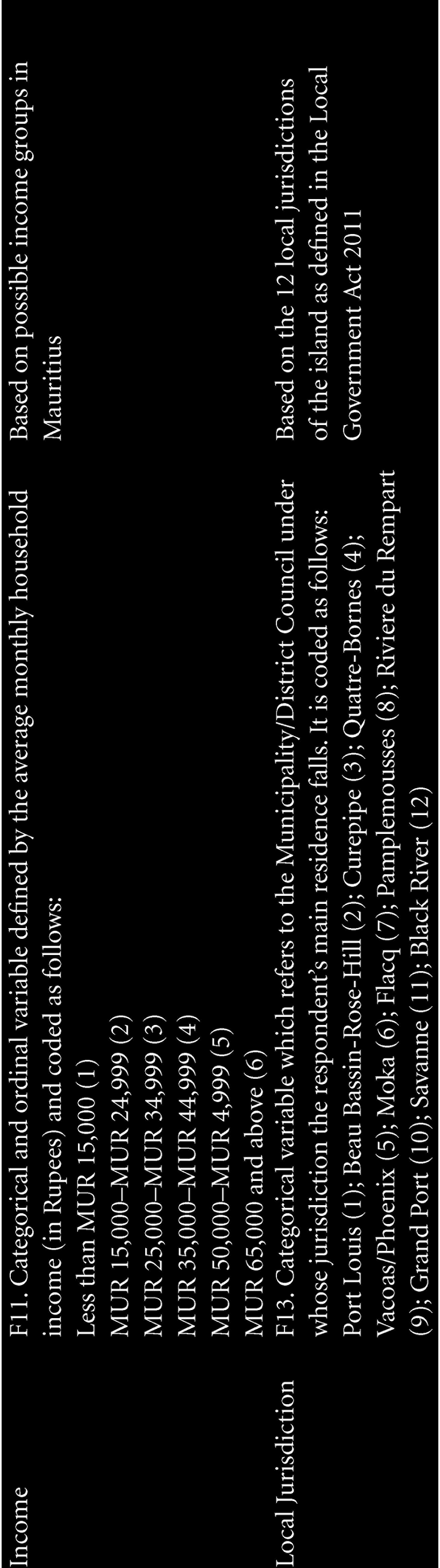
Definition of Variables Used in the Logistic Regression Models
Two regression models (Equations 1 and 2) have been analysed using the proportional odds (PO) model (Agresti, 1996; O’Connell, 2000, 2006), which is convenient for the analysis of ordinal categorical data. The dependent variables in the models are measured at the ordinal level and in each of these models, one or more explanatory variables are continuous (Age), ordinal (Level of Education) or categorical (Religion, Local Jurisdiction and Gender). Although several different statistical software can be used for the analysis and interpretation of ordinal logistic data, STATA has been chosen. The ordinal regression analysis conducted in this article is limited to a few objectives only, namely finding out how well each of the ordinal regression models predicts the dependent variable and determining which of the independent variables have a statistically significant effect on the outcome variables.
The existence of Local Demand Differences has been examined by specifying the function below and testing it using logistic regression analysis in STATA.

Where, Uc is the utility or satisfaction of citizens from local projects as measured by citizens’ perceptions on how far local projects in their jurisdictions meet their demands or preferences. One survey response from the citizens’ satisfaction survey, ‘The projects implemented by your Municipality/District Council reflect your tastes and preferences’, has been regressed against some demographic factors to examine the presence of potential local demand differences.
As far as citizen mobility is concerned, the function in Equation 2 has been specified and tested using logistic regression analysis in STATA.

Where, Cc is measured by the following statement from the citizens’ satisfaction survey to gauge the inclination of inhabitants to move from one local jurisdiction to another in search of better local outputs:
It is easy to relocate from the area of your main residence to another area in Mauritius that is serviced by another Municipality or District Council.
The Study Context
The study is carried out in Mauritius where the local government has two tiers with four municipalities and one city council, which are authorities for the urban area, and seven district councils being rural authorities. The second tier of the local government comprises the district councils that oversee some 124 village councils. The election of councillors to a municipal city or town or district council is done every six years. The local government, which itself falls under the responsibility of a separate ministry, is governed by the Local Government Act 2011, which spells out the functions and responsibilities of municipalities and district councils including regulations pertaining to their financing activities.
Sampling Technique
The target population for the citizen survey is the population of residents in Mauritius amounting to some 1.24 million inhabitants. An uncontrolled quota sampling that also resembles a convenience quota sampling method has been preferred over the simple random sampling for practical and time considerations (De Vaus, 2014), and the local population has been divided into 12 exclusive subgroups based on the different local jurisdictions. This method restrains the research and causes bias in the choice of cases. Nevertheless, caution has been ensured in the selection of respondents to ensure that the sample is quite representative of the population characteristics, insofar as age, gender, ethnicity and socio-economic background are concerned, although these subgroups have not been represented in the same proportions as in the population. The determination of the sample size has relied on the outcome of the sample calculator which, taking into consideration an acceptable margin of error of 5 per cent and a confidence level of 95 per cent, recommends a sample size of 385. Therefore, a total number of 403 local citizens have been surveyed including some 100 online respondents. Table 3 summarises the sample size achieved per local jurisdiction and Table 4 shows the profile of the respondents, respectively.
Estimated Resident Population of Mauritius by Local Authority and Gender as of 31 December 2017
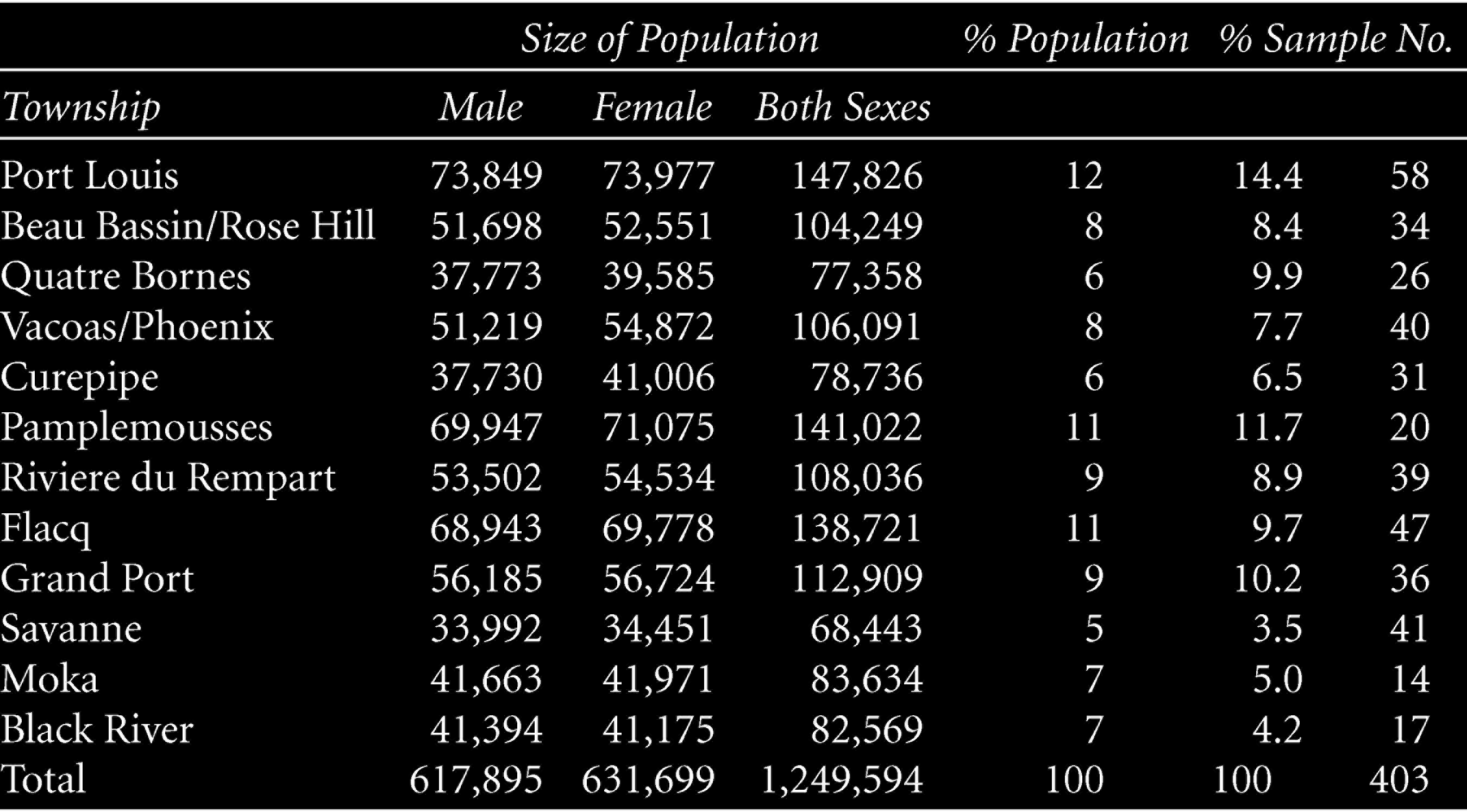
Estimated Resident Population of Mauritius by Local Authority and Gender as of 31 December 2017
Profile of Respondents
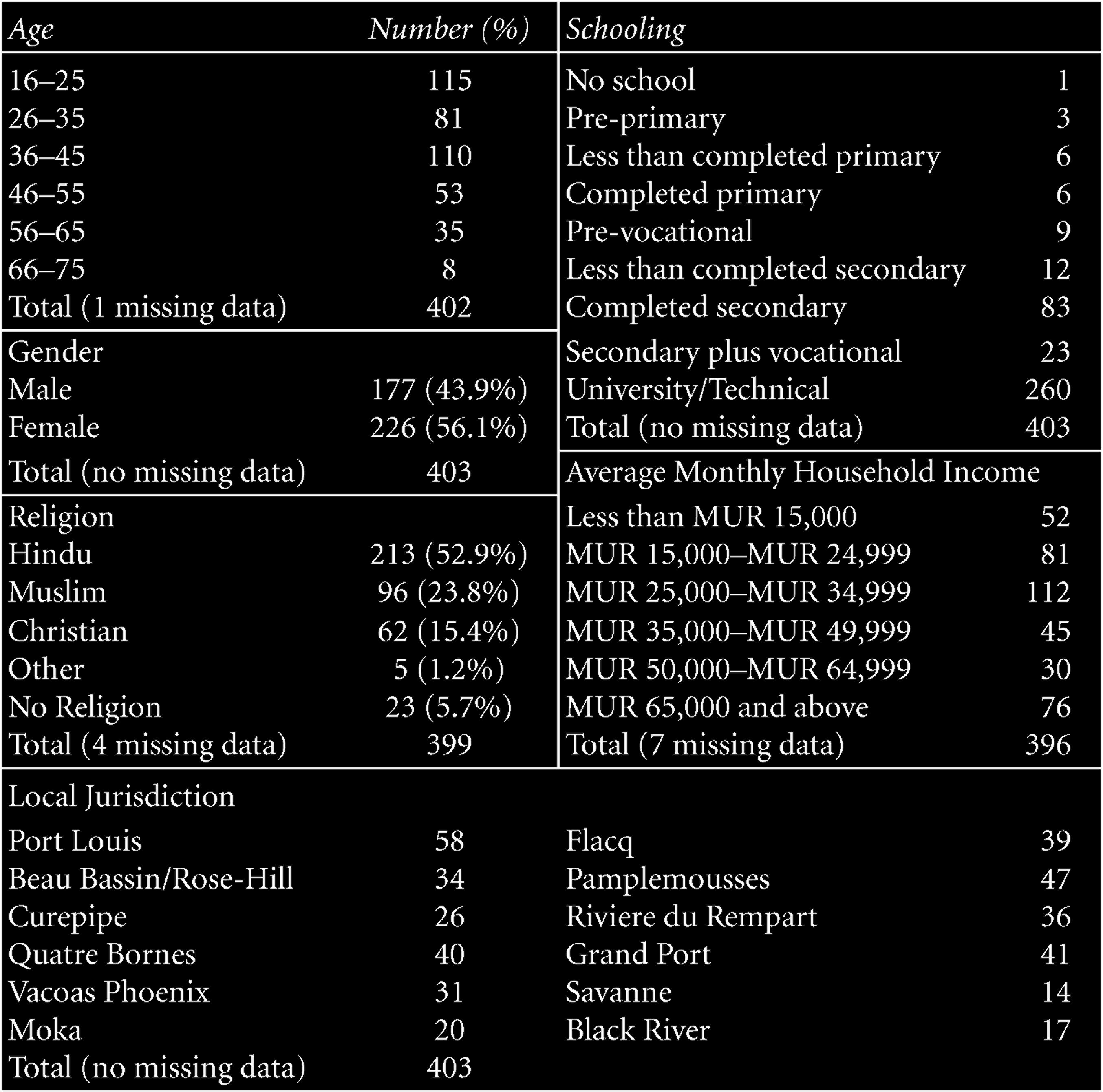
The Likert-type scales (Bartikowski et al., 2010; Likert, 1932), as commonly employed in studies where feedback, measurement of attitudes and evaluation of performances are concerned (Carifio & Perla, 2007; Sullivan & Artino, 2013), have been used for gauging citizens’ perceptions of local services and for assessing their levels of trust and confidence in the government. Prior to designing the final questionnaire, two successive pilot surveys were conducted for an overall improvement of the survey questionnaire. The data have been subject to normality tests, although their relevance for parametric tests has been quite debated by scholars (Norman, 2010). Several Likert-type items have been grouped together into a ‘survey scale’ which is a recommended practice where less concrete concepts such as satisfaction and confidence are involved, and where a single survey item cannot necessarily fully capture the concept being examined (Hair, 2010). The Cronbach alpha test and factor analysis techniques have been used to provide evidence that the components of the scale are sufficiently inter-correlated and that the grouped items measure the underlying variable (Sullivan & Artino, 2013). Sound guidelines for the selection of variables have not been overlooked and as pointed by some researchers, three to five measured variables are required for accurate results (Fabrigar et al., 1999). Most of the statements contained in the citizens’ survey are accompanied by a 5-point scale anchored at the ends by ‘Strongly Disagree’ (=1) and ‘Strongly Agree’ (=5). The Likert scale items are listed in Table 1 for the four constructs used in the model. As highlighted earlier in Section 2, they have been accommodated from the literature and adapted to the specific functions of the local authorities in Mauritius, as set out in the Local Government Act 2011.
Data Analysis Procedure for the SEM
The data analysis procedures included data screening and tests for normality and multicollinearity (Hair, 2010). Exploratory factor analysis (EFA) has been used to reduce the number of variables and define them around specific factors. The EFA, conducted with a sample of 200 cases (pooled from the data set of 403 responses), allowed for a meaningful amount of data reduction for a more in-depth examination of the relationships in the regression, while also satisfying the general rule of having at least five times as many observations as the number of variables to be analysed (Hair, 2010). The three-stage EFA process as suggested by Ferguson and Cox (1993), namely the pre-analysis checks, extraction and rotation, have been taken into consideration for conducting the research. The Kaiser–Meyer–Olkin (KMO), with a minimum acceptable value of 0.5, a test of sampling adequacy to indicate if the relationships between the variables can be explained by a smaller set of factors, and the Bartlett test of sphericity, which tests the null hypothesis that no relationship exists among any of the items (Ferguson & Cox, 1993) have also been included. The Kaiser 1 (K1) rule for factor extraction has been retained as it is most widely employed (Ferguson & Cox, 1993). The principal component analysis extraction method has been chosen based on the recommendations of Ferguson and Cox (1993) and a varimax rotation has been used since it maximises variance across all factors in the matrix. The EFA led to the retention of key items for the next step of the analysis, which is the confirmatory factor analysis (CFA).
The CFA has been conducted on a different set of 200 cases from the sample of 403, that is, not with the same data used for the EFA. The study used AMOS version 22 software and carried out a two-step approach for the examination of the SEM, namely a measurement model and a structural model (Iacobucci, 2010). A few guidelines have been followed to conduct the CFA (Ferguson & Cox, 1993; Hair, 2010; Schreiber et al., 2006). The measurement prototype, which is also the confirmatory factor model, used the maximum likelihood method of estimation for estimating the parameters in the structural model (Doargajudhur & Dell, 2018; Hair, 2010) as many researchers have supported the fact that it can still perform with small sample size (Hoyle & Panter, 1995).
The structural model proposes relationships among observed variables relating to the items in the citizens’ satisfaction survey and the unobserved variables which are the latent constructs—Local Area Maintenance, Local Welfare, Trust in Local Authorities and Trust in Public Institutions. Given the sensitivity of the chi-square test of absolute model fit to sample size and non-normality in the distribution of variables, researchers use different descriptive fit statistics to evaluate the overall fit of a model to the data (Hoyle & Panter, 1995; Iacobucci, 2010). In this framework, the argument made is that a chosen model is substantially less false than a baseline model, typically the independence model. In this context, the Tucker–Lewis Index (TLI) and the Comparative Fit Index (CFI) compare the absolute fit of the specified model to the absolute fit of the independence model; the greater the difference between the overall fit of the two models, the higher the values of these descriptive statistics (Brown, 2015). Commonly reported fit statistics (see Table 8) are the chi-square, its degrees of freedom (DF), its probability value (P), the TLI, and the Root Mean Square Error of Approximation (RMSEA) and its lower and upper confidence interval boundaries. There is also a Standardised Root Mean Residual (Standardised RMR) (Ferguson & Cox, 1993). Various rules of thumb for each of these fit statistics exist (Schreiber et al., 2006). Common recommendations have been used in the presentation and evaluation of SEM results as well as the disclosure of fit statistics (Hoyle & Panter, 1995; Schreiber et al., 2006). Since there is little consensus on the best index of overall fit for assessing SEM, various indexes of overall fit have been reported (Iacobucci, 2010). Hu and Bentler (1999) recommend RMSEA values below 0.06 and TLI values of 0.95 or higher. In addition, to obtain a good model fit, the literature suggests the following values should be obtained: χ2 less than 3.0; Adjusted Goodness-of-fit index (AGFI) greater than 0.80; and CFI, Normed Fit Index (NFI), Goodness-of-fit index (GFI) and Incremental Fit Index (IFI) higher than 0.90, RMSEA less than 0.06, SRMR less than 0.09 and PCLOSE above 0.05 (Hair, 2010). A priori, the validity and reliability of the latent constructs have been ascertained using the methods of convergent and discriminant validity where convergent validity examines the average variance extracted (AVE) and should be above 0.50, and discriminant validity is satisfied when the AVE exceeds the maximum shared variance (MSV). Although there are a lot of debates regarding the validity concerns of statistical models (Henseler et al., 2014), all the steps for ascertaining convergent and discriminant validity have been ensured using traditional validity assessment methods for the purpose of this study. Model modification based on the modification indices in AMOS was carried out to obtain a better fitting model.
Results
Structural Model Results
Tables 5 to 8 summarise the results of the EFA and the CFA and include the outcomes of the bootstrapping method for confirming the type of mediation that exists between the constructs. Table 5 indicates that the factor loadings for all items were above 0.4 and the Cronbach’s alpha were either above or very close to 0.7. The items explained meaningful variations in the respective factors as follows—Local Area Maintenance (52%); Local Welfare (56%); Trust in Local Authorities (58%); Trust in Public Institutions (nearly 90%). All the Bartlett’s tests (Chi-square) were significant indicating that the factors were interpretable. Table 6 shows the measurement model properties with the standardised loadings for each item and the composite reliability and AVE for the four constructs used in the model. The results of the CFA indicate that the measurement model is reliable, with AVE being higher than the MSV for all constructs. Overall, for all the three constructs, the variables have demonstrated discriminant validity as they relate more strongly to their own factor than to other factors, and there were no cross-loadings, meaning that no variable loaded on multiple factors.
Results of the Factor Analysis, N = 200
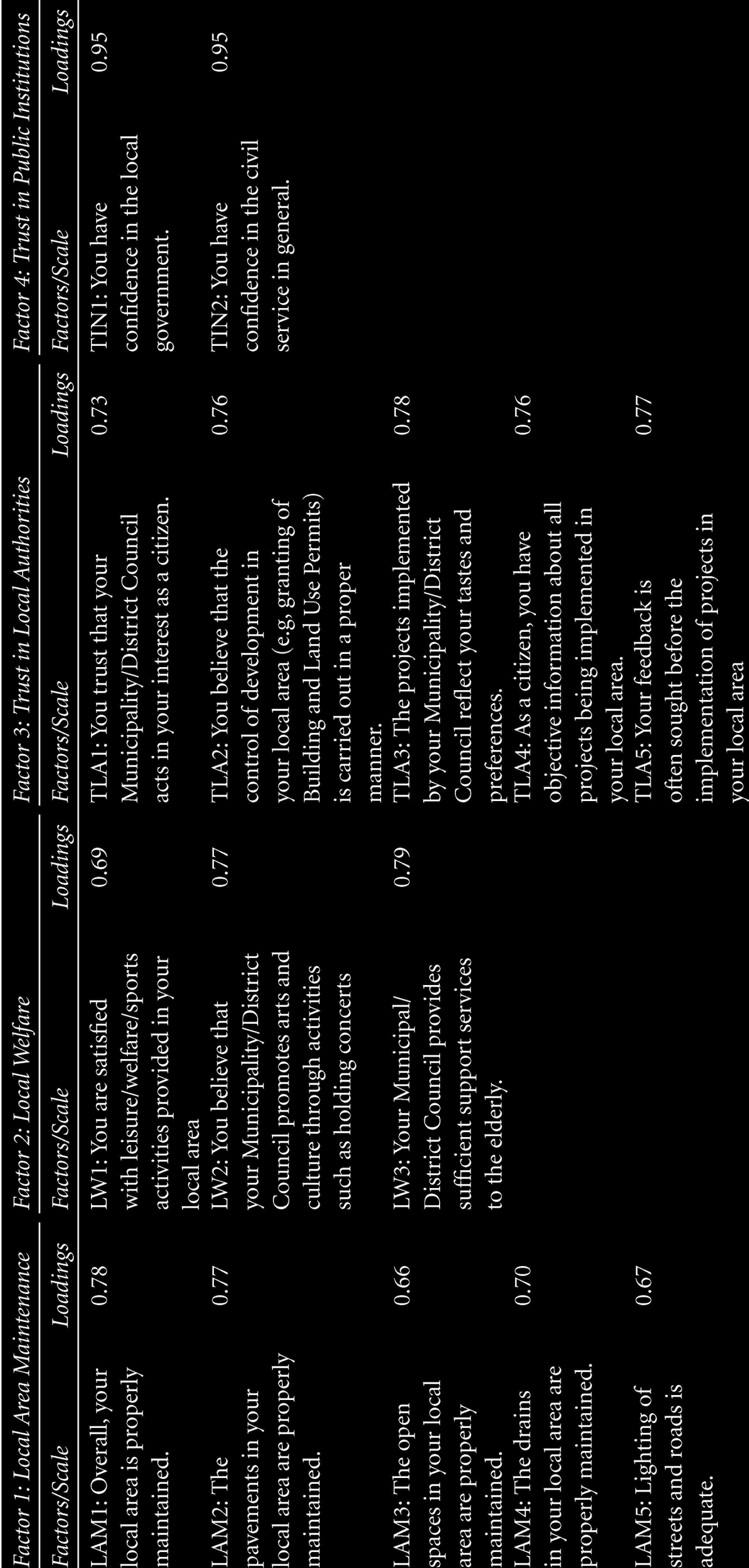
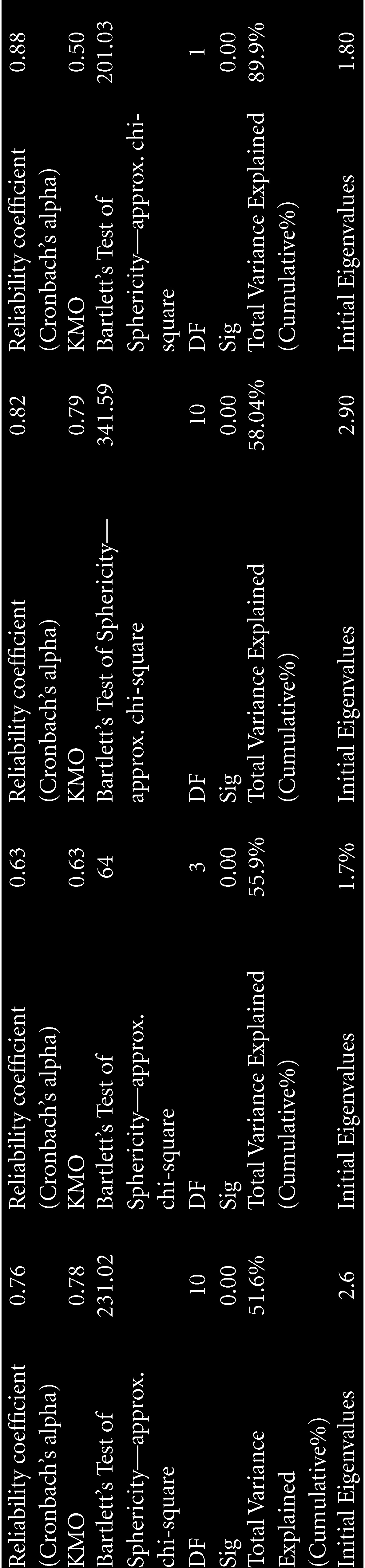
Results of the Factor Analysis, N = 200
Measurement Model Properties, N = 200

Discriminant Validity Analysis

Fit Indices for the Measurement and Structural Model

As shown in Figure 2, Local Area Maintenance is seen to produce a positive and significant impact on Trust in Local Authorities (p < 0.001), and the estimated coefficient is 0.32. Similarly, Local Welfare has a positive and significant effect on Trust in Local Authorities (p < 0.01). These findings are quite consistent with prior studies on public service performance and trust linkages (Badri et al., 2015; Bouckaert & Van de Walle, 2003; Christensen & Laegreid, 2005; Herian, 2014; Salim et al., 2017; Van de Walle & Bouckaert, 2003; Van Ryzin, 2008). Local Welfare, however, seems to exert a less significant influence on Trust in Local Authorities as compared to Local Area Maintenance. Citizens might be more accepting of lower amounts of leisure/sports amenities and cultural activities than of lower levels of local area maintenance. Local Area Maintenance has a more significant impact on their overall trust in the local authorities as they are perceived as a core responsibility of local councils, and there is no substitute for clean local areas with well-maintained roads and drains. On the other hand, citizens commonly have recourse to private memberships with gyms or clubs for sports and leisure activities, as these have been mushrooming over the island over the past 10 years, providing wellness facilities for all income groups, which explain why they probably have fewer expectations from their local authorities for welfare outlets. Also, people have recourse to jogging tracks, trekking and hiking destinations and public beaches for their overall level of well-being. Similarly, more and more citizens have access to private concerts and social functions for cultural experience.

Local Area Maintenance also exerts a stronger positive and significant influence on Trust in Public Institutions as compared to Trust in Local Authorities implying that people attribute responsibility for the cleanliness and proper maintenance of roads and drains, and lighting of their streets more to the government and public institutions in general rather than to their respective local councils. If their local area is not properly maintained, their trust in the central government is affected more than their trust in their local authority. Citizens seem to understand that local authorities need to be empowered through adequate budgetary allocations from the central government for undertaking their local maintenance functions, and that they cannot be totally blamed for not doing so properly.
While Local Area Maintenance has a positive and significant influence on Trust in Public Institutions, the same cannot be said about Local Welfare which does not seem to produce any significant effect on Trust in Public Institutions although it has a positive and significant effect on Trust in Local Authorities. Trust in Public Institutions has a positive and significant impact on Trust in Local Authorities, quite in line with the literature which describes public trust in institutions to be of a cumulative nature, where if citizens trust one institution, they are likely to trust other institutions (Christensen & Laegreid, 2005). This is also congruent with Easton’s philosophy of diffuse and specific support explained earlier (Easton, 1974).
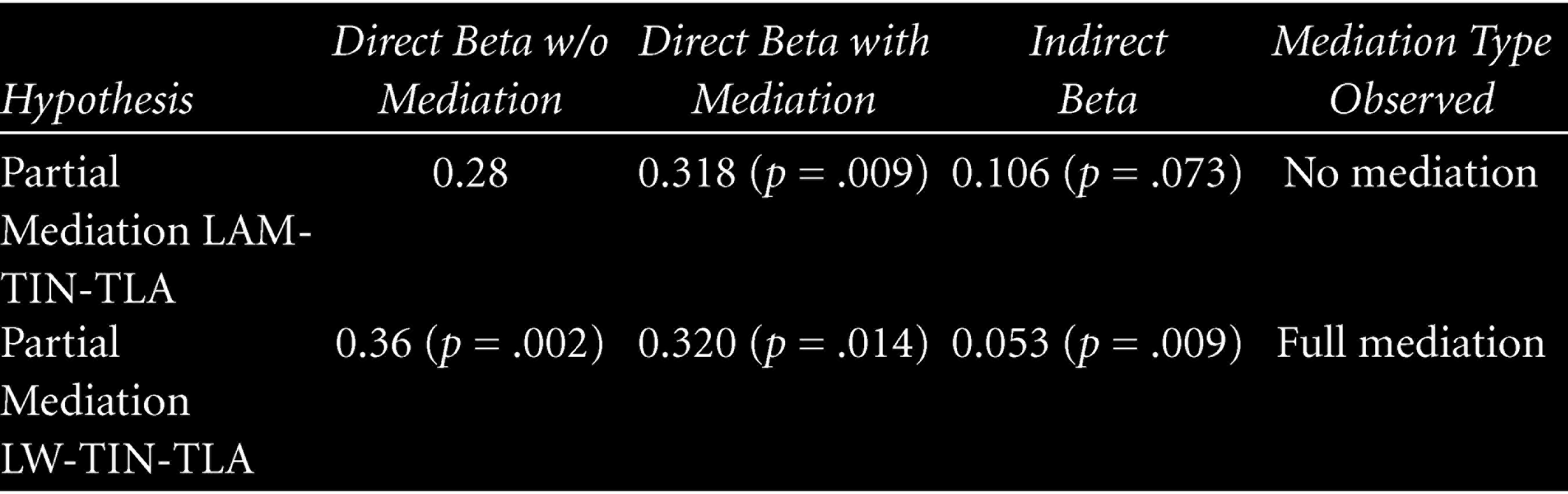
In line with this argument, the presence of mediation has been tested to find out whether Local Area Maintenance and Local Welfare have an impact on Trust in Local Authorities via an intermediary variable namely Trust in Public Institutions. The bootstrapping method (Leth-Steensen & Gallitto, 2016) has been employed to confirm the type of mediation, although more reasonable results can be obtained by other methods (Leth-Steensen & Gallitto, 2016). The significance of the direct effects of Local Area Maintenance on Trust in Local Authorities and Local Welfare on Trust in Local Authorities, respectively, are reported in Table 9. The results indicate that the direct effect of Local Area Maintenance on Trust in Local Authorities in the presence of the mediator Trust in Public Institutions is significant, while the indirect effect is not significant showing that Trust in Institutions does not necessarily mediate the impact of Local Area Maintenance on Trust in Local Authorities. However, looking at the indirect effect of Local Welfare on Trust in Local Authorities, it is seen that the indirect effect is significant as opposed to the direct effect revealing the presence of full mediation. That is, the entire amount of variance that Local Welfare explains in Trust in Local Authorities is explained through Trust in Institutions. This bears strong relevance with the work of Fitzgerald and Wolak (2016) who claim that despite the significance of local governments, reactions towards the local government is more often a reflection of people’s attitudes towards the national government.
Test for Mediation: Direct and Indirect Effects
Are There Local Demand Differences in Mauritius?
The output of the logistic regression analysis from STATA for the above model is summarised in Table 10. The results convey that only Level of Education and Local Jurisdiction have significant impacts on the satisfaction of citizens with local projects at the 5 per cent level, while all other demographic factors such as age, gender, religion and income do not produce any significant influence on preferences for local outputs. The likelihood ratio chi-square of 26.15 with a p-value of .0002 indicates that the model is statistically significant as compared to the model with no predictors. It is noted though that the likelihood ratio test, where the null hypothesis is that there is no difference in the coefficients between models, indicates that the test statistic is significant (p = .000), and thus there is evidence that the parallel regression assumption has been violated. According to O’Connell (2006), this test nearly always results in the rejection of the PO assumption particularly when there are many variables (Brant, 1990) or when the sample size is quite large (Agresti et al., 1995; Allison, 1999) or when there is a continuous explanatory variable in the model (Allison, 1999).
Ordinal Logistic Regression Results for the Presence of Local Demand Differences in Mauritius
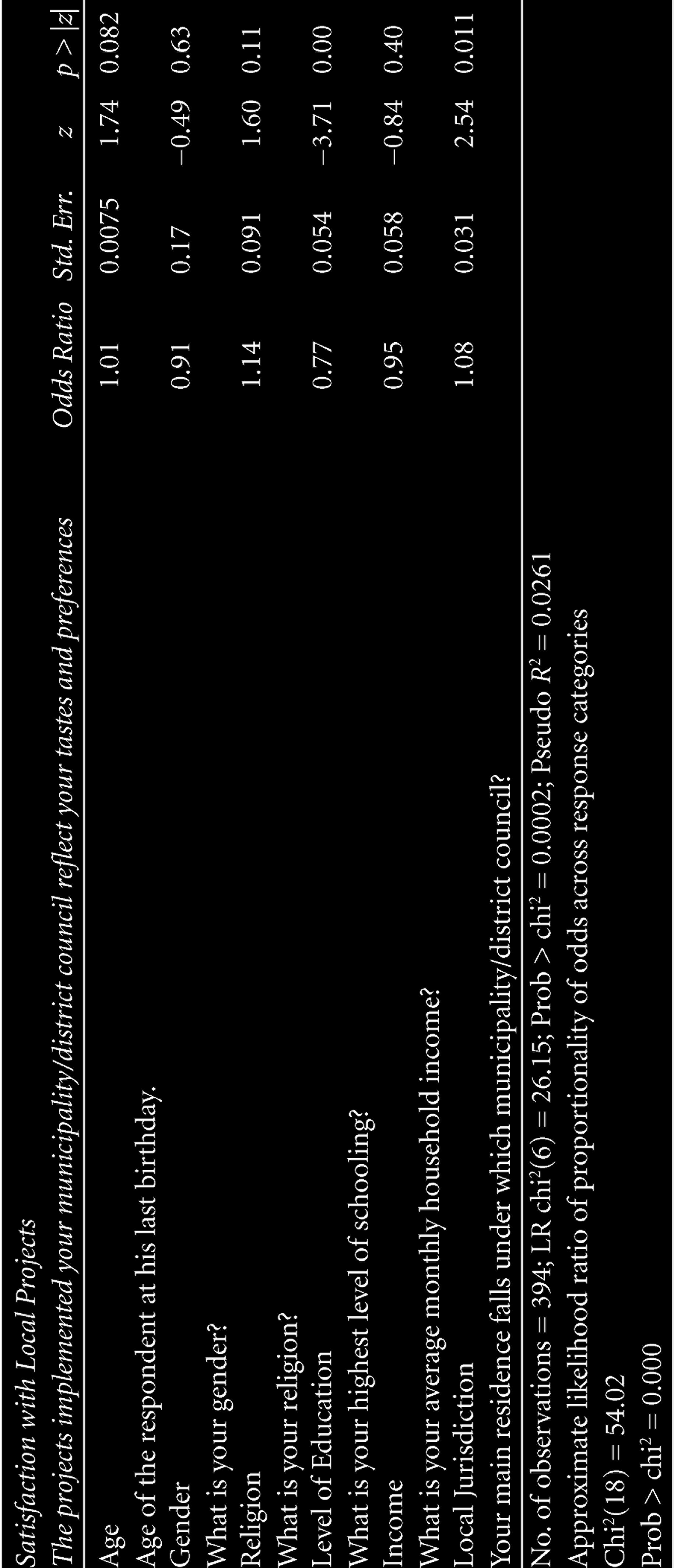
Ordinal Logistic Regression Results for the Presence of Local Demand Differences in Mauritius
Given that only Level of Education and Local Jurisdiction seem to have a significant effect on the satisfaction of citizens with local projects, and since the above model violates the assumption of PO, the regression analysis has been conducted with the following two explanatory variables only. It can be seen from Table 11 that both predictors are significant at the 5 per cent level and there is no evidence of violation of the PO model as indicated by the non-significant chi-square test for the likelihood ratio of proportionality of odds across response categories. The Level of Education seems to produce an adverse and significant effect on the satisfaction of citizens with local projects. This result converges with the researcher and information user relationship put forward by Schmidt and Hunter (1998) and referred to earlier in the article, where higher levels of experience and knowledge, which usually accompany a higher level of schooling, make users less naïve and thus more critical of local services. This explains why respondents are less likely to agree or strongly agree that local projects meet their preferences. This can also have strong implications for public trust in the government, where more educated citizens could be less likely to trust the government.
Ordinal Logistic Regression Analysis with Only Two Predictors

Local Jurisdiction also affects Satisfaction with Local Projects at the 1 per cent level of significance, indicating that the local jurisdiction in which citizens live has an influence on their satisfaction with projects in their local area. If we believe that regions offer an almost standardised level of local output, variability in the responses of citizens in this regard could indicate that people living in different localities have different tastes and expectations concerning local projects. However, taking into consideration the fact that local services are not always uniform across jurisdictions, these differences could as well indicate disparities in service levels across regions. The centralised provision of local goods and services in Mauritius, coupled with political constraints to ensure a fair allocation of resources across constituencies, tend to suggest a rather uniform distribution of local outputs across jurisdictions. Nevertheless, whilst it can be argued that district councils and municipalities in Mauritius provide a more or less comparable number of market fairs, sports complexes, bus stops and street lighting along with almost equivalent levels of refuse collection and other local services across jurisdictions, some citizens might still have the perception that discrepancies exist in the allocation of goods and services across regions as well as in the fiscal obligations of citizens, especially between rural and urban jurisdictions.
In light of the above discussion, the results of the regression analysis should be taken with caution so that responses are not uniquely attributed to local taste divergences but to possible levels of disparity in service allocation across regions. For instance, residents of villages might be less critical of local projects given that they are exempt from paying local rates as opposed to inhabitants of towns who have higher expectations from their local councils since they are charged local rates.
The following statement was included in the citizens’ satisfaction survey to gauge the inclination of inhabitants to move from one local jurisdiction to another in search of better local outputs:
It is easy to relocate from the area of your main residence to another area in Mauritius that is serviced by another Municipality or District Council.
Of citizens who responded to this question, 46 strongly disagreed, 88 disagreed, 164 neither agreed nor disagreed, 89 agreed and 16 strongly agreed that it is easy to relocate from one local jurisdiction to another. Therefore, it can be seen from the responses that only around 25 per cent of respondents are inclined towards moving while 75 per cent either disagree or are uncertain about it. In Mauritius, moving decisions might be impacted by several factors ranging from social reasons such as family ties and property inheritances, and economic considerations such as job commitments, children’s schooling and residential costs including the costs of moving. For higher income groups, other aspects may come into force such as security issues, quality of life linked to natural environment, absence of congestion, space and other positive externalities including physical amenities for their families.
The second item in the questionnaire—‘You would relocate to another area in Mauritius, which is serviced by another Municipality or District Council, just because it offers better facilities and services to its inhabitants’—also produced comparable responses as follows:
A total of 39 respondents strongly disagreed with the statement while 100 simply disagreed, 130 neither agreed nor disagreed, 89 agreed and only 39 strongly agreed. More than 25 per cent of the respondents indicated that they would be ready to move from one jurisdiction to another just because it offered better facilities and services. However, again it is indicated that there are many factors besides local facilities that influence moving choices and that though local fiscal packages might play a role, they are not in themselves a determining element in this decision.
A logistic regression analysis as shown in Table 12 was conducted to find out whether factors such as age, gender, religion, occupation, income, local jurisdiction and level of schooling affect the propensity of inhabitants to move from one region to another in search of better local services. The statistical results are significant only for occupation (significant at the 5% level), religion (significant at the 5% level) and income (significant at the 1% level), while other factors such as age, gender, level of schooling and location have no significant effect on the propensity to move from one living place to another.
Ordinal Logistic Regression Analysis: Citizen Mobility in Mauritius
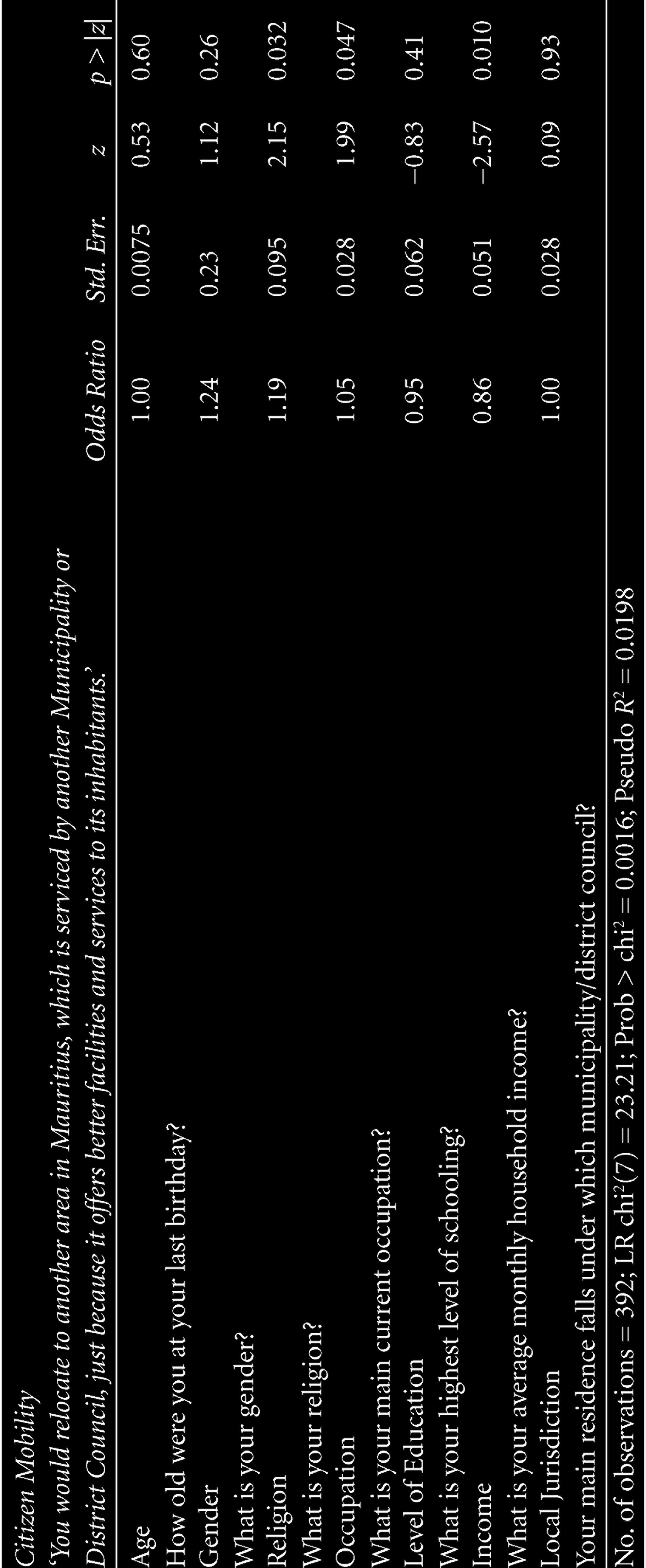
Ordinal Logistic Regression Analysis: Citizen Mobility in Mauritius
This can be explained by the fact that in most cases, the decision of moving residence applies to a whole family which is quite heterogeneous in terms of varying age groups, gender and level of schooling within itself, so that such demographic features do not really impact on moving decisions when a whole family shifts residence for a specific common motive. Higher levels of occupation may explain higher incomes with wider possibilities of meeting moving costs and exploring better residential opportunities, or higher level of occupations may simply be compatible with higher occupational mobility and better career prospects in different regions with the financial means to relocate closer to the workplace. Besides, religion can be a strong motive for moving, which supports some presence of ethnic clustering in particular parts of the island.
Higher income levels may provide people with better options to move to their region of preference. However, when income levels influence ownership of residential dwellings, it is seen that owners are less likely to move places as compared to non-owners who move from one rented residence to another more often. It can also be argued that people earning high income are less dependent on facilities and services offered by local authorities since they can avail themselves of paid alternatives in terms of sports, leisure, welfare and cultural activities altogether. As such, they might not necessarily move from one region to another just because the jurisdiction offers a higher level of local service. To date, fiscal packages do not seem to influence the mobility of citizens, as motives such as urbanisation or improvements in living standards, resulting in a search for better living conditions. Considering the evolution of property prices and property demand, it seems more appropriate to attribute citizen mobility to private development including infrastructure in Mauritius. Some degree of clustering based on social class and racial considerations are also emerging.
One possible impediment to local government fiscal decentralisation in Mauritius is the lack of revenue sources, including property taxes and user fees. The generation of more ‘own revenues’ by local councils would enhance the provision of quality services. As it stands, the survey responses do not indicate a strong willingness of citizens to pay more for an improved level of local services.
From responses received on the two following statements in the survey questionnaire namely ‘You agree to pay a higher local rate (municipality tax) for better/expanded facilities and services in your urban area’ and ‘You agree to a district council tax being imposed for better/expanded facilities and services in your rural area’, it seems that respondents overlooked the instructions, which was to choose the question based on whether they are from an urban or rural area. Some citizens addressed both questions while many of them omitted the questions altogether, which reduced the reliability of responses received. Nevertheless, of the 153 valid responses relating to the first statement, 29 strongly disagreed, 30 disagreed, 41 neither agreed nor disagreed, 42 agreed and 11 strongly agreed to pay higher local rates (municipal taxes) for a better level of local services. As far as urban residents are concerned, of the 189 valid responses received, 33 strongly disagreed, 31 disagreed, 64 neither agreed nor disagreed, 48 agreed and 13 strongly agreed to the introduction of urban taxes for an expanded local service. A larger proportion of respondents are uncertain as they neither agreed nor disagreed with the statements, indicating that they are quite unsure about the level of improvement that an increase in tax commitments on their side would bring to local services.
Conclusions and Research Limitations
This study makes some important contribution to the literature. It aligns with prior findings on performance-based trust and confirms that local service performance is a strong predictor of public trust in the local authorities in Mauritius. Citizens’ trust for their municipality or district council also depends on their trust for public institutions in general. Further probing into the responses of residents point to the existence of local demand differences, that is, inhabitants of different local areas might have different preferences for local outputs. While this presents additional insights on the role of demographic factors in influencing public trust, it also conveys wide opportunities for exploring decentralised local service delivery options. Mauritian residents might also be inclined to move from one local jurisdiction to another in search of a more favourable bundle of local outputs that meet their preferences. These findings pave the way for future discussions on the possible limitations that a uniform provision of local government services across jurisdictions constitutes for efficiency gains and thus political trust.
Despite its practical significance, the study comprises some constraints and its findings should be interpreted with caution. Some elements of bias are inevitable in a small convenience sample of 403 residents out of a population of some 1.24 million inhabitants, with some under-representation of some demographic characteristics. The role of political affiliation no doubt has an important influence on trust in local authorities and public institutions in a multi-party context, but this aspect has been overlooked. Factors such as gender and religion are also ubiquitous in studies on trust and yet their usefulness in explaining trust in the local government or public institutions have not been modelled in the SEM analysis but used in separate logistic regression models.
Having confirmed the significance of local service performance for trust in local authorities, the challenge is to know where to go from here. Future research should now explore a broader structural model of performance-based trust, local demand differences and citizen mobility to probe into possible sources of welfare gains from the fiscal decentralisation of our local government sector with a view to improving local services and trust in the local authorities. Future works should intensify discussions on potential reforms of the local government sector in Mauritius with a particular focus on such issues as institutional capacity and interactions, tax design and administration, citizens and businesses’ willingness to pay for local outputs and a cohesive grant system for local authorities.
Footnotes
Declaration of Conflicting Interests
The authors declared no potential conflicts of interest with respect to the research, authorship and/or publication of this article.
Funding
The authors received no financial support for the research, authorship and/or publication of this article.
Acknowledgements
We would like to thank Dr Melina Seedoyal Doorgujadhur, Senior Lecturer, Department of IT, Design and Communication, Curtin Mauritius for her valuable comments in the drafting of this article.