




Abstract
The twenty-first century saw the emerging market countries rise as a cluster, becoming a major force driving the global economic growth and playing an increasingly important role in global governance. The existing definition of emerging market countries is vague and quite one-sided, far from capturing the reality. Based on historical experiences and actual circumstances of developing countries and the basic theories of development economics, this article builds a comprehensive index system comprising the five dimensions of nation-state size, institutional environment, economic growth, socio-economic structure, and development impetus to study 30 countries selected from among the 183 countries (regions) around the world. This provides a new analysis framework and theoretical support for in-depth study of the emerging markets.
Keywords
Introduction
The concept of emerging markets and the rapid development of emerging market countries are not entirely new topics, but the rise of a group of emerging market countries after the 2008 global financial crisis has indeed aroused widespread interest in the world. As COVID-19 is raging around the world, having dealt a heavy blow to emerging market countries, what future lies ahead for these countries has drawn global attention. This article gives a new definition of emerging markets from a developmental perspective rather than just an investment one. Following the basic logic of development economics, we have selected 30 emerging market countries from among the 183 countries of the world with the relevant available data. The article presents the major characteristics of these countries’ economic development based on systematic data and foresees the prospects for the economic development of these emerging market countries.
The Existing Definitions and Classification of Emerging Markets
While working with the International Finance Corporation (IFC), Anoine Van Agtmael was the first to come up with the concept of “emerging markets” in 1981, which refers to the words such as progress, development, and vitality to encapsulate the defining characteristics of the relatively competitive developing countries, with a view to guide the international capital market to invest in promising developing countries. These countries enjoy rapid economic growth and have great long-term development potential, with the markets being outward-looking, as are the stock markets (Fang, 2012). Subsequently, many economists defined the basic characteristics of emerging market countries from different angles. For example, Vladimir Kvint defines the emerging market country as the economy in transition from being government-dominated to being market-oriented (Kvint, 2009). The Global Financial Stability Report of the International Monetary Fund (IMF), from the perspective of financial market development and openness, defines emerging market countries as developing countries that have less developed financial markets than developed countries but are open to foreign investment (IMF, 2004). Zhang Yuyan and Tian Feng put forward the “E11 Emerging Economies” concept at the 2010 Boao Forum for Asia. They selected 11 countries 1 from among the G20 to illustrate the emerging markets’ impact upon the world economic landscape from the dimensions of economic size, international trade, international capital flow, and key production outputs (Zhang & Tian, 2010). However, these studies have various issues that need to be resolved.
First, there was a lack of comprehensive measurement in using some indicators in the description of the defining characteristics of the emerging market countries (economies). For example, the IMF’s report on World Economic Outlook takes emerging market countries and other developing countries as a whole to be compared with the developed countries.
Second, they generally tend to define emerging markets with a view of guiding investment. The typical examples are the MSCI, S&P Dow Jones Indices, and Russell Indices. 2 Such indices focus on short-term investment return but make light of identifying the long-term stable development characteristics of emerging market countries.
Third, they simply adopt the economic growth expectation index, showing inadequate attention to the economic structural changes in the process of economic transformation. Such problems were observed in the practice of Goldman Sachs in defining BRICS (Brazil, Russia, India, China, and South Africa) and the Next-11 (N-11), of Banco Bilbao Vizcaya Argentaria (BBVA) in defining emerging economies, and of Citigroup in classifying emerging market countries according to the “Global Growth Generators.”
Classification of the Existing Emerging Market Countries.
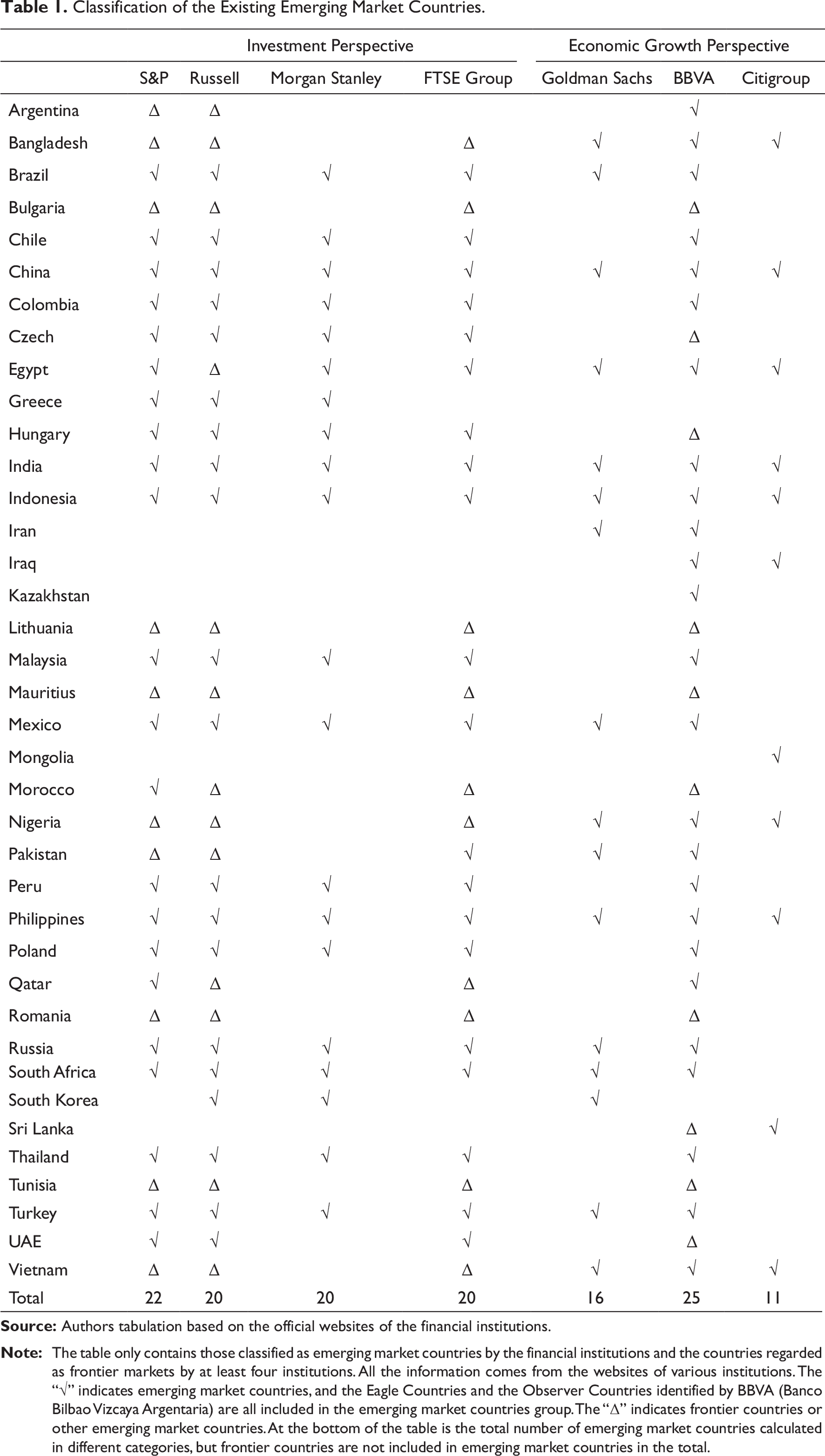
With such classifications, the Financial Times pessimistically noted that the definition of emerging markets varies among research institutions and the differences among the selected countries are gradually expanding, with their differences far outweighing their commonalities, and it questioned whether it is justifiable to continue to use the existing concept of emerging markets (Financial Times, 2015). In short, the existing definitions of the emerging markets mostly pay attention to a single factor (variable) or few factors (variables), while ignoring that the system encompasses multiple factors and has long-term impact. This article tries to build up a comprehensive index that consists of multiple factors to measure emerging markets systematically, and then identify and select emerging market countries from a new perspective.
Emerging Markets Redefined and the 30 Emerging Countries Concept Proposed
This article attempts to put forward a new concept on emerging markets from a novel perspective based on development theories and multiple factor analysis. In light of this new definition, a list of emerging market countries has been drawn up, with a view to facilitate a series of more in-depth theoretical and empirical studies on emerging markets.
Development Economics Underpinning the Redefinition of Emerging Markets
Regarding the emergence and rise of emerging markets, historians, sociologists, political scientists, and demographers have attained fruitful results in their respective research fields, of which the core and defining characteristic of emerging markets is economic development. It reflects the process a country goes through in continuously enhancing its economic strength, and improving people’s livelihood, infrastructure, institutional environment, trade composition, and industrial structure. In this special phase, a country progresses to transform from a developing country into a developed country. From the perspective of development economics, as leaders of developing countries in economic development and new engines driving global economic growth, emerging market countries should have the following basic characteristics.
Bigger Size of Economy
The mainstream view of development economics holds that the size of an economy and its population constitute the fundamental conditions for its economic development. This fundamentally affects the country’s economic development and international influence.
First, a large economy has the advantage of pursuing development at a certain scale with a specialized division of labor. The Nobel Prize Winner in Economics S. Kuznets holds that big economies enjoy more advantages for specialization, since a large domestic market allows for the development of a specialized economy (Kuznets, 1965). Agglomeration of elements on a scale and growth in market demand result in refined division of labor, increased productivity, lowered production cost, and gradual division of industrial labor by specialty. The relatively developed division of labor in the region and in the country enables development on a large scale and labor division unique to the large economy.
Second, a large economy is conducive to promoting economic growth. A big population determines that the country in question has a large market capacity and a high demand. A high demand of the domestic market is not only a driving force for economic development at the country scale but also provides a direct thrust for the country’s rapid economic growth. Paul Rosenstein-Rodan (1943), a pioneer of development economics, explicitly pointed out that a big market demand is crucial for the less developed countries to jump out of the “Poverty trap.” Romer (1986), one of the founders of the new growth theory, and Grossman and Helpman (1994), important economists on the new trade theory and the new growth theory, analyzed the economic growth benefits brought by the economy of scale from such perspectives as positive externalities in accumulation of human capital and knowledge, as well as the incremental returns in the process of technological innovation.
Third, a large economy is conducive to the economic stability of a country. Large economies are often accompanied by domestic market demand of a certain scale, which gives intrinsic stability to the national economy. During the 2008 international financial crisis, many small and medium economies suffered heavily, while the Chinese economy, which had a huge domestic market, remained relatively stable. A large economy has a considerable output of commodities and a high demand for capital, without undue reliance on foreign trade to overcome issues related to product sale and capital accumulation. Both Kuznets (1941) and Chenery et al. (1986) have verified the inverse relationship between the size of an economy and its dependence upon foreign trade. With the development and reinforcement of economic independence, the big economy can establish an internal cycle capable of self-regulation, thus ensuring the stability of the economic system.
Better Institutional Environment
As revealed by the economic development of many countries, institution is an important intangible economic endowment. The adjustment and changes of the institutions determine the long-term trend of economic structure and economic development (Lin, 2011). Pei-Kang Chang, one of the important contributors to development economics at an earlier age, believes that a country’s industrialization depends on various institutional factors that either directly or indirectly affect economic development. In a certain institutional environment, the formation of the entrepreneurial class is conducive to further promoting institutional innovation. The practices followed by developing countries in postwar rebuilding further indicate that institutional changes and institutional innovation advance industrialization under certain conditions (Chang, 1949). Over recent years, contemporary development economists, such as Daron Acemoglu, have confirmed the hypothesis that “Institutions Matter” based on extensive research on the development experiences of different countries (Acemoglu et al., 2001; Easterly & Levine, 2003; Fabro & Aixala, 2009; Fielding & Torres, 2008; Knack & Keefer, 1995; Rigobon & Roderik, 2004; Stroup, 2007). In other words, the countries with better institutions, better property rights protection, fewer policy distortions, and more outward-looking trade regimes are more affluent than other countries.
Higher Economic Growth
Economic growth usually refers to the increase in material products and services produced in a country. It means wealth growth is usually measured by Gross Domestic Product (GDP) or Gross National Product (GNP). Economic growth is the most direct manifestation of a country’s overall economic development level. To grow into an emerging market country, a developing country must maintain an economic growth rate higher than that of most of the developed countries over a sustained period of time, demonstrating a catch-up effect.
Fast Economic Structural Change
Economic structural change normally refers to the changes of industrial structure, rural–urban structure, and income distribution structure. The evolution of industrial structure as a result of industrialization is the core of economic development and an important step for developing countries to shake off poverty and underdevelopment. Chenery et al. (1986) believes that the degree of industrialization can be measured by the increase in the share of manufacturing in the GDP. Industrialization not only addresses unemployment and underemployment in developing countries but also represents an effective way to improve the trade conditions of developing countries. The industrialization of developing countries is a process in which the rural surplus labor keeps moving into cities. Therefore, urbanization is also an important indicator for economic structural change, linking with industrialization. The development economist Myrdal put forward the theory of circular cumulative causation. This theory regards the growth of industries as a process related to the expansion of cities and holds that urbanization and industrialization promote each other. Since high salaries and jobs offered in cities promote the expansion of cities and increase in urban population, industrialization directly promotes urbanization (Myrdal, 1957). Another important structure, the relatively fair income distribution structure, is also very important. It is the cornerstone of social stability and an essential condition for the stable development of a country; therefore, it should also be included in the economic structure of emerging market countries.
Sufficient Impetus for Development
A comprehensive comparison reveals that the economic development process of any country relates to at least three important elements: initial conditions, impetus, and results. Among the basic characteristics mentioned above, a large economy and a sound institutional environment are the initial conditions for development; rapid economic growth is the result of development, and the ever-improving social and economic structure encompasses both the process and the result of development. Human capital provides sufficient impetus for a country’s economic growth and rapid development; it is the sum of such factors as the knowledge, skills, and physical strength (health) possessed by the producer. In order to improve human capital, it is important to provide good education and training, good healthcare, and opportunities for free migration. Education is imperative in this process. For the vast number of developing countries, increasing the accumulation of human capital and improving the quality of human resources are important preconditions for promoting fast economic and social development and rapidly catching up with developed countries. The three Nobel Prize winners in economics Theodore Schultz (1971), Robert Lucas (1988), and Paul Romer (1986), through their research, all agree on the essential point that human capital plays a decisive role in economic growth, holding that physical capital is just the initial condition for development and human capital actually is the core element and engine that drives economic growth. They also proved that education is an important driving force for cultivating human capital to promote output growth. Furthermore, Philip Aghion and Peter Huwitt (1998) find that human capital accumulation and stock both affect the speed of economic growth.
Basic Requirements to Redefining Emerging Markets
Based on the above theoretical foundations, some basic requirements need to be clarified prior to measuring and redefining emerging markets.
Representative and Progressive
First of all, the emerging market countries measured and selected should be appropriately representative. This means that these countries represent the vast number of developing countries that are widely distributed geographically across all continents of the world. They include different types of developing countries, such as typical market economies, transitional economies, and so on. Those regarded as emerging market countries should be comparatively advanced and comparatively developed; they must be leaders of developing countries which enjoy relatively rapid economic development, improved structures, and well-developed laws and regulations, so that they can be showcased to other developing countries.
Feasible and Comparable
Emerging market countries are moving from underdevelopment to a state of being developed. It is inadvisable to apply the standards for developed countries to these countries. We should choose some appropriate variables and practical method while taking into full account the comparability between relevant factors. The variables adopted should be combined with the corresponding available data. The standard for measuring development indicators of the emerging market countries should not be too high but meet the actual reality of developing countries, so as to avoid aiming for too ambitious standards that might drop some widely recognized developing countries with promising development potentials.
Comprehensive and Quantitative
The existing definitions of emerging market countries tend to overemphasize the single factor of investment return. Some scholars adopting different criteria of definition may tilt towards qualitative discretion. This article tries to adopt a multi-factor analysis method to quantitatively calculate and evaluate all the countries (regions) of the world in terms of nation-state size, growth rate, institutional environment, and economic structural changes to identify the emerging market countries.
Dynamic and Continuous
Emerging markets are in dynamic and continuous development, though a single economy shows change or uncertainty in going up or down in the medium and long term. This study’s selection of emerging market countries by the timeline follows the dynamic principle and takes the average of the data for a duration of 3–10 years, so that they show relatively good stability, without major changes in the short term.
Selecting Appropriate Variables to Redefine Emerging Market Countries
Variables Selected for Redefining Emerging Market Countries.
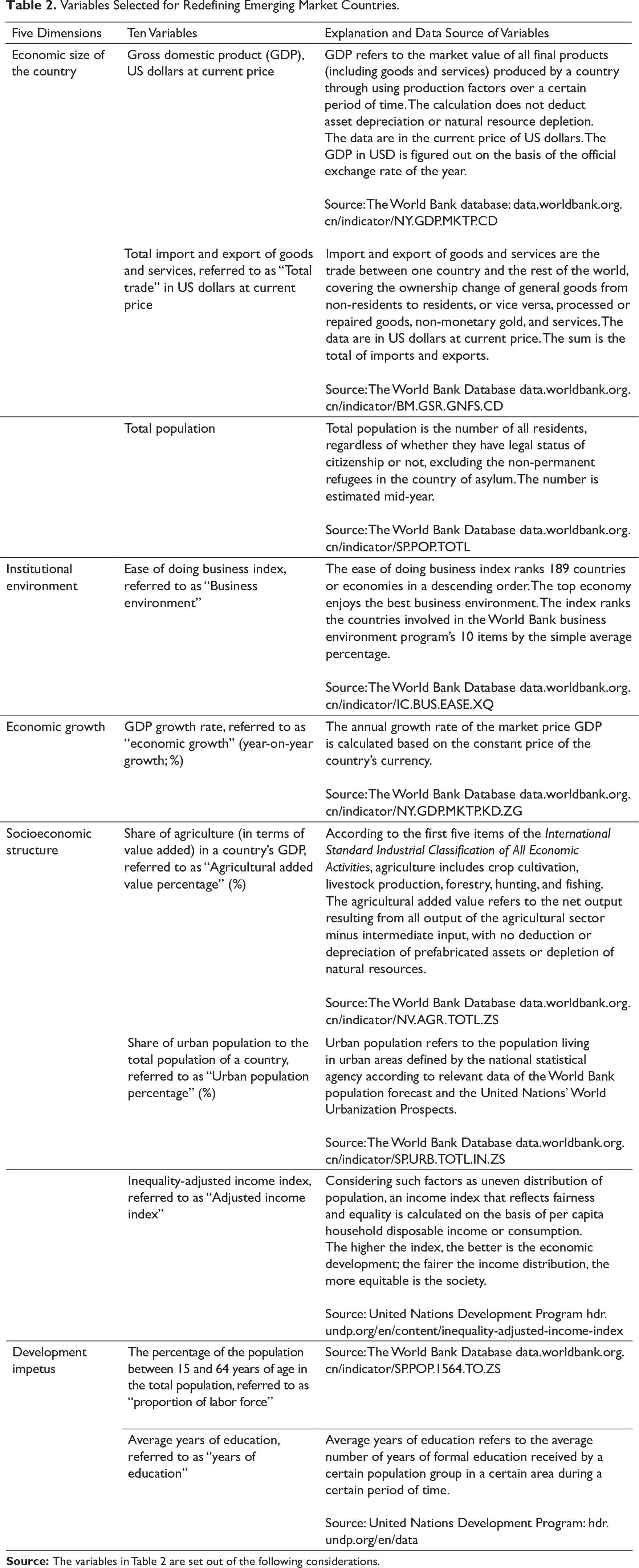
From the nation-state-size dimension’s point of view, GDP and total trade are the two most common variables to measure the size of an economy and trade with various countries. The total population is another direct indicator of the size of a country, not only affecting the first two scale variables but also reflecting a country’s market demand and market capacity. This indicates the country’s market potential and directly determines the size of the labor force, which is the most essential factor of production. The combination of these three variables then measures well the aggregate strength of a country in terms of economic size, which is helpful to make judgments on the national strength and future development trends of the country.
For the institutional-environment dimension, the World Bank’s ease of doing business index is taken as a representative indicator for the institutional environment. This index has been used by many countries and international organizations to measure the pros and cons of the institutional environment.
From the perspective of economic growth, we make a point of choosing an indicator to reflect the overall economic development and comprehensive influence of a country rather than the per capita living standard, taking into account the data availability as well. Therefore, the GDP annual growth rate in the constant price of USD in 2010 has been taken to represent the economic growth indicator.
For the dimension of socioeconomic structure change, the two indicators of “agricultural added value’s share in GDP” and “the urban population’s proportion to the total population” are first selected to examine the industrial structure and rural–urban structure of various countries to measure a country’s level of industrialization and urbanization. In order to comprehensively examine the fairness of the income distribution structure, a relatively new indicator (inequality-adjusted income index) is incorporated. This index has evolved from the income indicator of the Human Development Index (HDI) (Appendix 1).
Drawing on British economist Anthony Barnes Atkinson’s methods of measuring inequality (Appendix 2) (Atkinson, 2015), this article subtracts the coefficient of income inequality from 1 and multiplies the result and the original income index to get the adjusted income index (Appendix 3). A high adjusted income index not only shows that the country’s per capita national income level is high but also indicates that the income distribution structure is equitable.
From the perspective of development impetus, the human capital status of various countries is the focus of this dimension, mainly seen from the two aspects of quantity and quality. The percentage of the population aged between 15 and 64 years in the total population is set as the variable of quantity, while the “average years of education” of the United Nations Development Programme is the variable of quality.
Correlation Coefficients Between Various Variables.
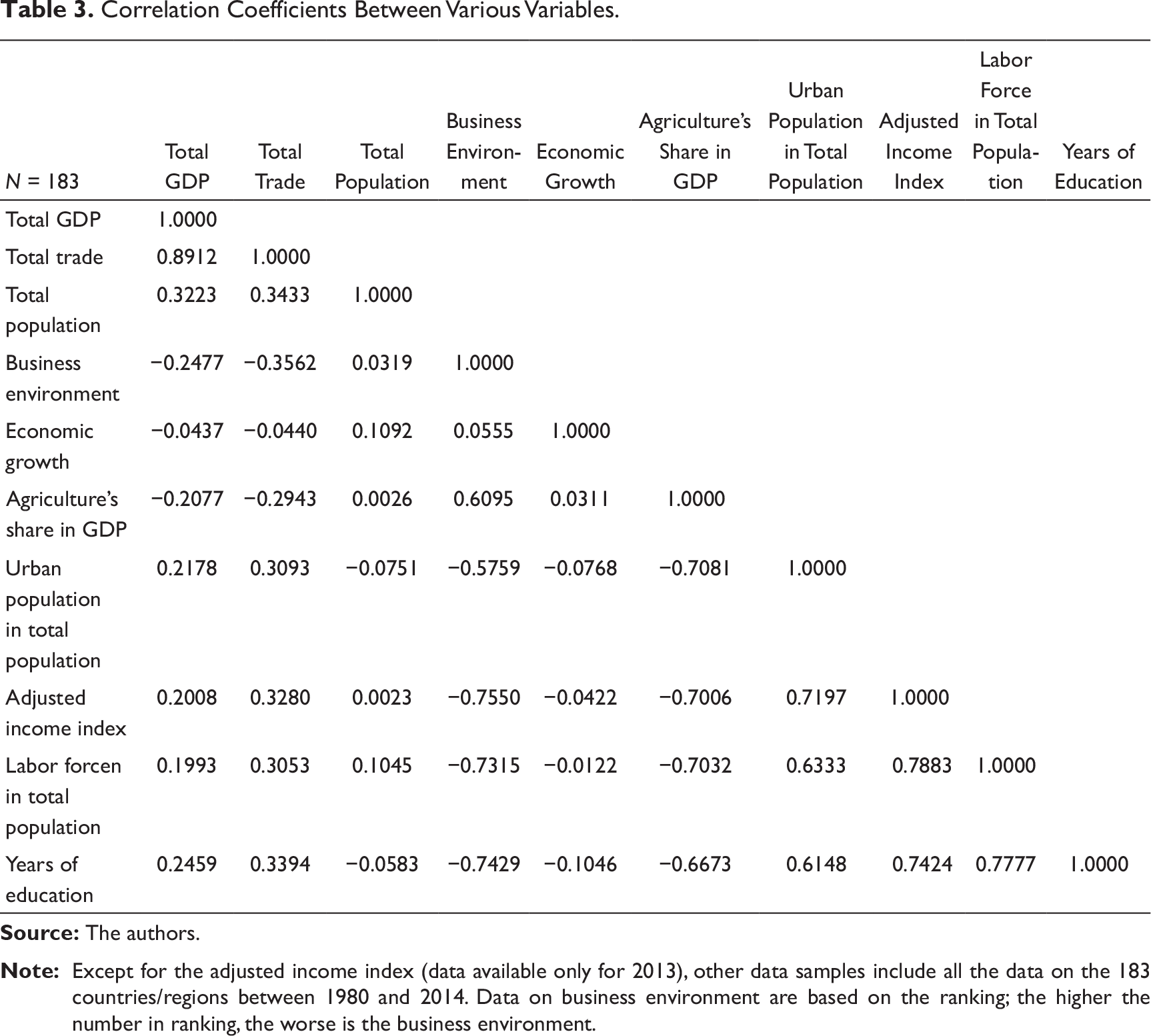
Table 3 shows that the mean value of the correlation coefficient between all variables is 0.3572. The correlation coefficients among the variables in different dimensions stay at a low level, mostly below 0.6. This means that the independent-variable selection is conducted for each dimension, with no repeated calculation. The correlation coefficients between variables within certain dimensions are relatively high, which is normal since the variables of different fields in the same dimension are involved in the screening. The screening criteria differ from variable to variable, and no dimension sees repetition of any variable function. It needs to be made clear that the main purpose of this variable at the current stage is to select the countries with right qualifications rather than compound all variables into one index. Individual high correlation coefficients between variables have little influence upon the effectiveness of selection of the countries as the emerging market countries based on these variables.
The Method and Process of Redefining and Measuring Emerging Market Countries
First of all, in the process of collecting all countries’ data, including the 10 variables of the five dimensions since 1980, we found that a small number of countries or economies lacking data for related variables were mostly microstates, island countries, and countries/regions that had drifted away from the global economic system, suffered long-term conflict/war, and were extremely closed economies. Therefore, these 34 countries and regions 4 were excluded from the research. The 183 countries or regions with complete data in the World Bank database were included. The year 2014 was the most recent year when the accessible data were relatively complete when we launched the research, and so the variables involved were updated to 2014 (the “Adjusted income level” uses the data for 2013 5 only).
Second, the missing data on the 183 countries/regions were replaced with the data of the adjacent years. If data about the preceding and succeeding years were available, then the average value was taken. The missing long-term data were complemented with the appropriately adjusted data on the closely related aspects of the year. If the data on trade were missing, relevant data obtained through a statistical caliber other than the balance of payments (BOP) were used. 6
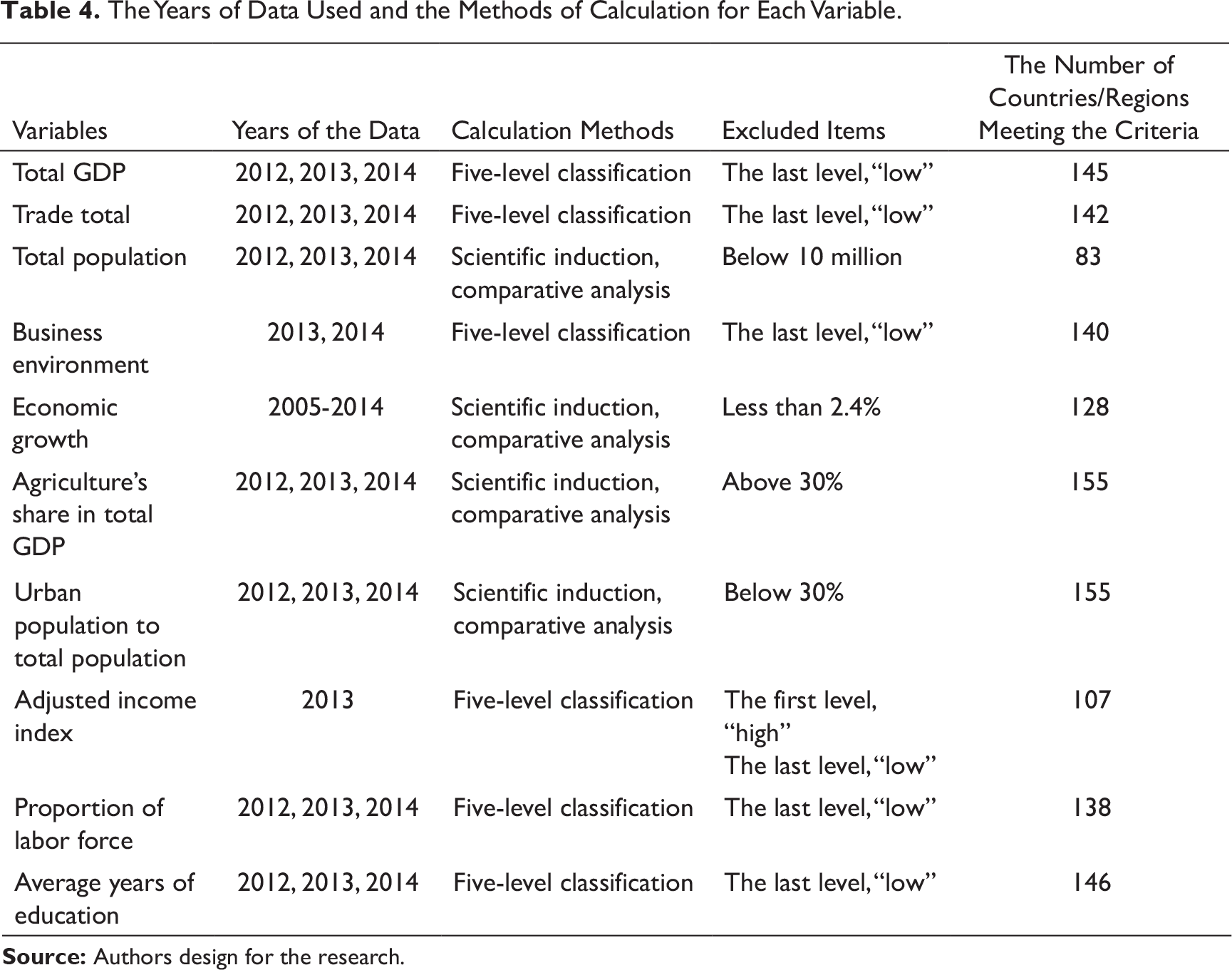
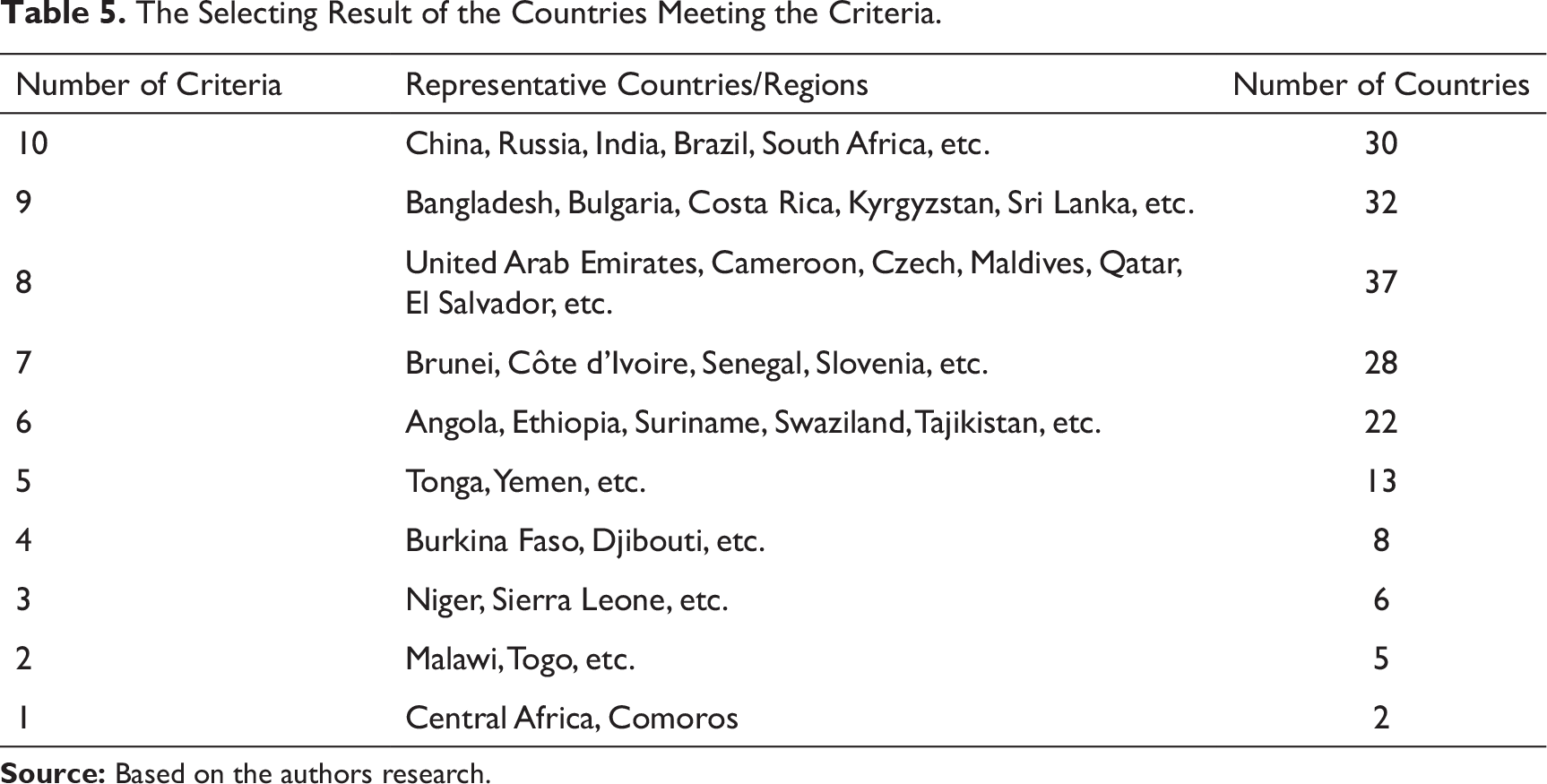
The specific calculation has two steps. The first step is to use a five-level classification or comparative analysis and scientific induction to determine those up to the standard by individual variables (noninferior set). The 183 countries (regions) are ranked by a certain variable into five levels—high, relatively high, normal, relatively low, and low—with each level comprising 20% of the countries (regions) under study. According to the actual situations, the countries (regions) ranked high or low are excluded, and the rest all meet the conditions of the variables, and the latter are the noninferior set for the said variable. This method is adopted for the measurement of six following variables: the total GDP, total trade, business environment, 7 adjusted income index, labor force proportion, and years of education. Comparative analysis and scientific induction are used to analyze the data characteristics of different types of countries, draw on relevant economic and sociological theories to work out the threshold for each variable, and compare the values of all the countries (regions). Those failing to reach the threshold are excluded. This method is adopted for the measurement of four following variables: the total population, 8 GDP growth, 9 agriculture’s share in total GDP, 10 and the share of the urban population in the total population. 11
In the second step, the noninferior set intersection method is used to take the intersection of the countries meeting the criteria (for the noninferior set) in each variable to get the final list of emerging market countries that must meet all criteria in the 10 variables. See Table 4 for the year of the data and the calculation method used for each variable.
The Years of Data Used and the Methods of Calculation for Each Variable.
The Selecting Result of the Countries Meeting the Criteria.
The 30 Emerging Market Countries
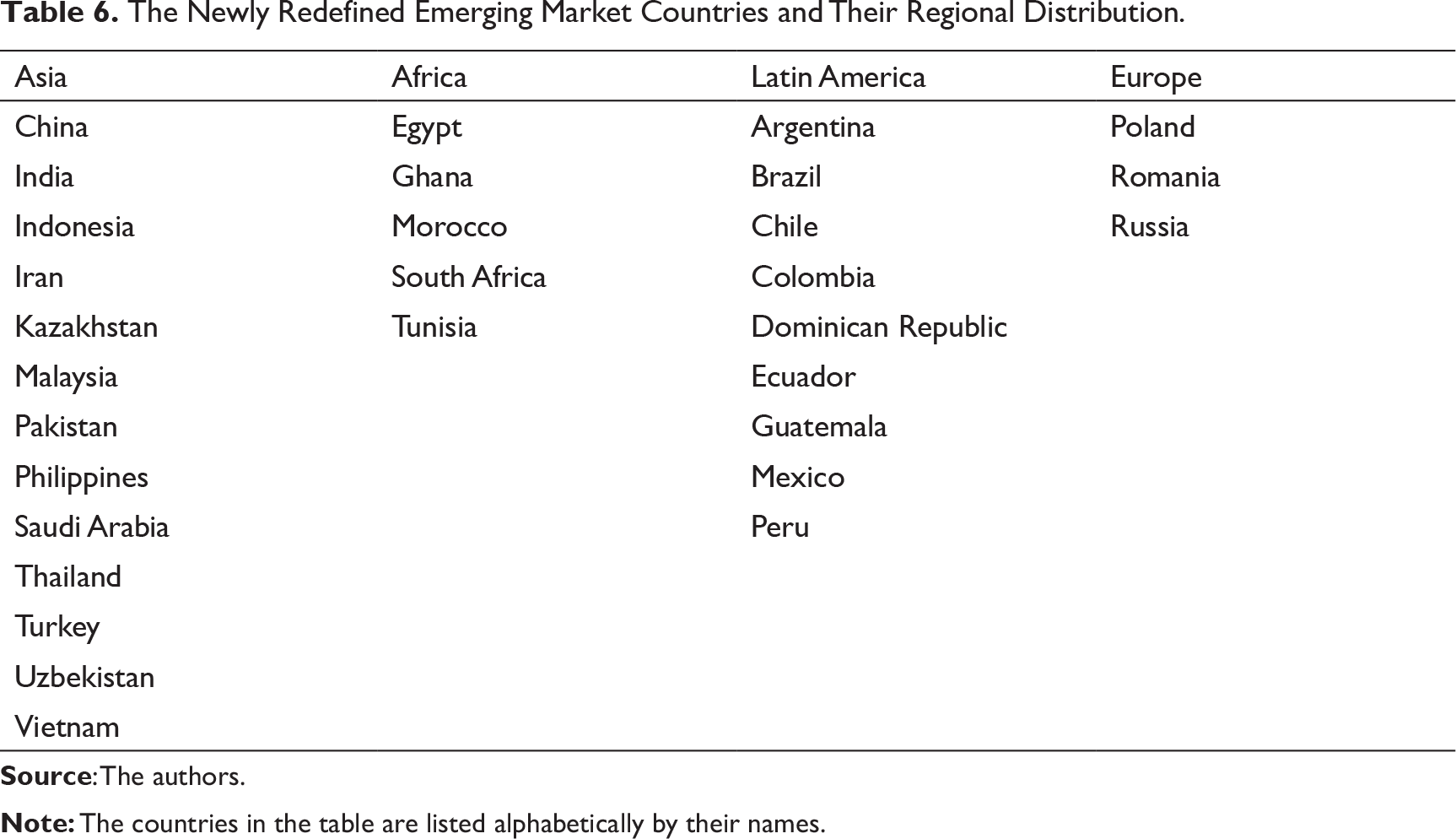
Through the above-discussed selection process, we get 30 countries out of the 183 countries which meet all the 10 criteria, now redefined as the 30 emerging market countries; hereafter “E30” will be used to refer to the 30 emerging market countries or emerging countries, or emerging economies. See Table 6 for the list of the countries and regional distribution in the world.
The Newly Redefined Emerging Market Countries and Their Regional Distribution.
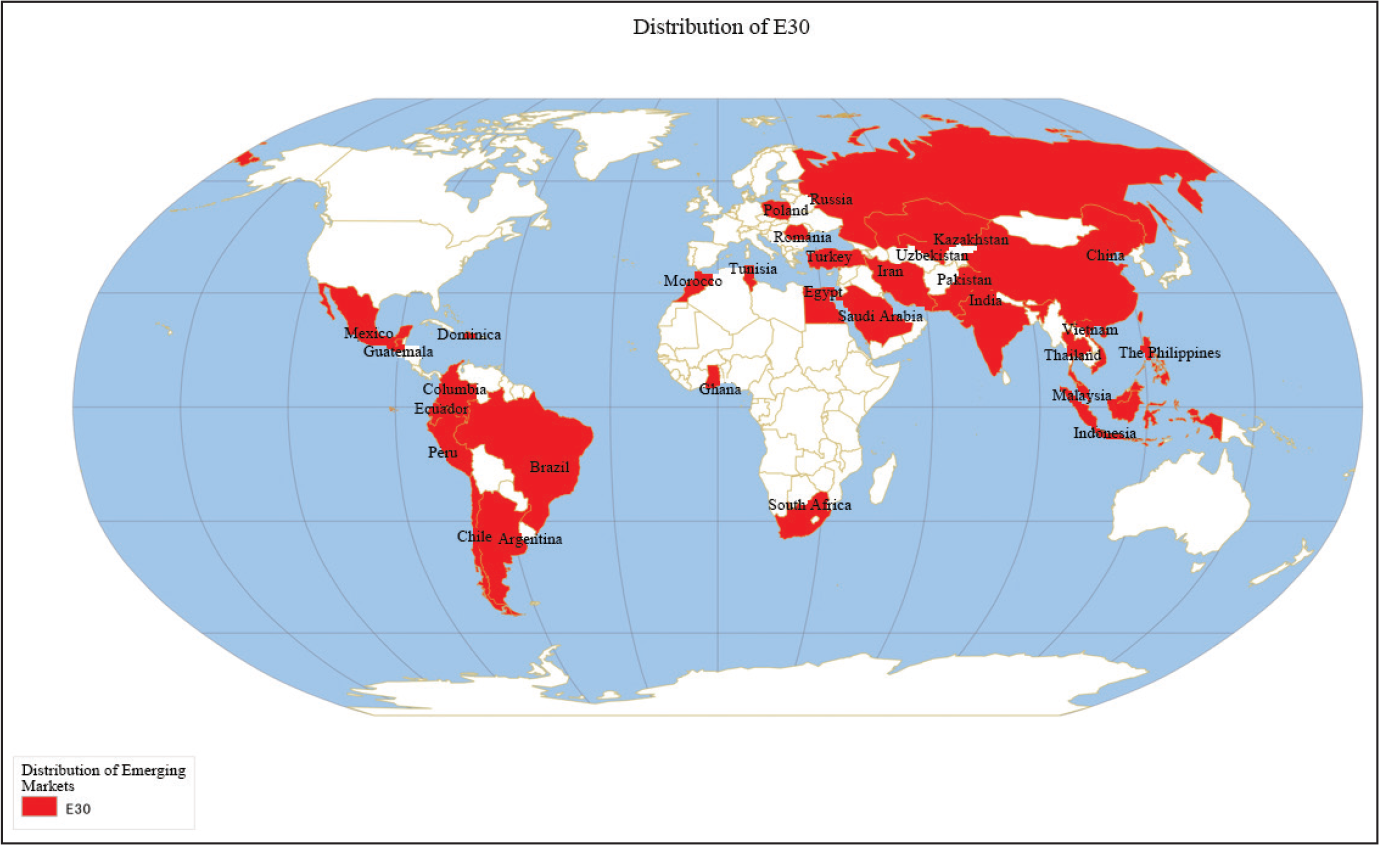
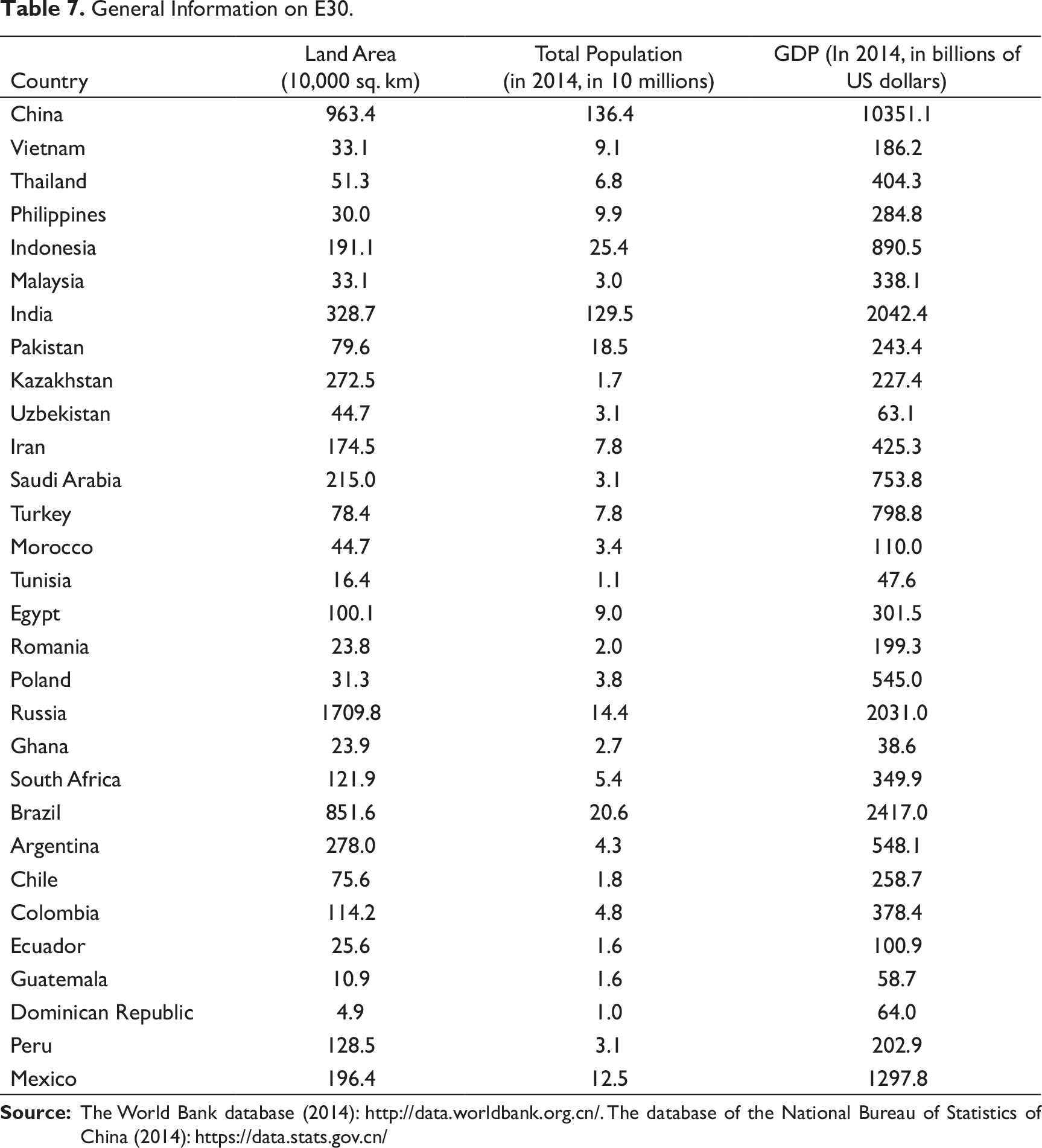
General Information on E30.
The Economic Development of 30 Emerging Countries in the Global Economy
Comparative studies show that economic development underpins the rise of E30.
The ever-growing economic strength of E30 has become the main driving force for the global economy
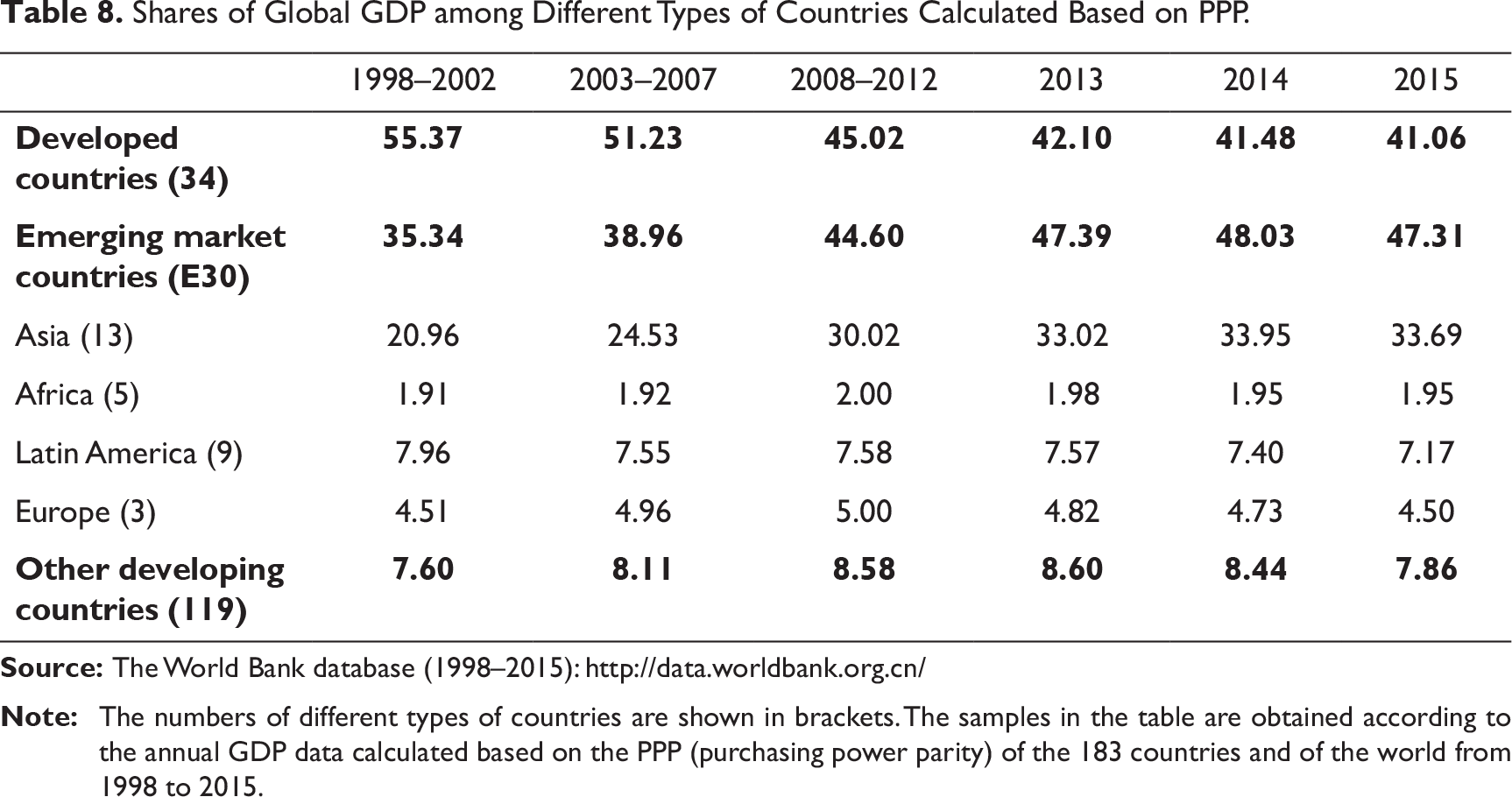
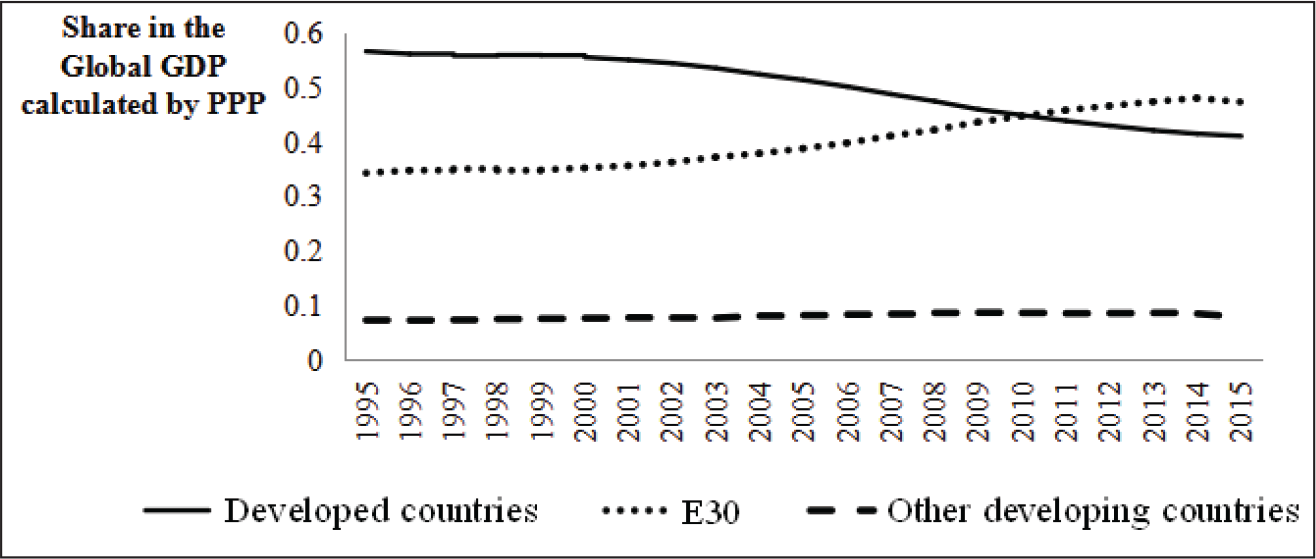
E30 play an increasingly important role in international politics, economy, finance, and other fields. The important reason is that they boast considerable economic strength and influence, and their GDP is the most direct manifestation of this trend. Table 8 makes a horizontal comparison among the developed countries, 12 E30, and other developing countries in terms of their share in the global economy as calculated by GDP (based on Purchasing Power Parity [PPP]), and divides E30 by regional distribution. On the timeline, the 2008 financial crisis that marked the start of the decline of Western powers is taken as an important dividing line. The average levels in the 10 years before and in the 5 years after the crisis are presented to show the change in the global GDP share of the countries at different development levels at various periods of time.
Shares of Global GDP among Different Types of Countries Calculated Based on PPP.
Contribution of Different Types of Countries’ GDP Increments to Global GDP Increment (%) (based on PPP).
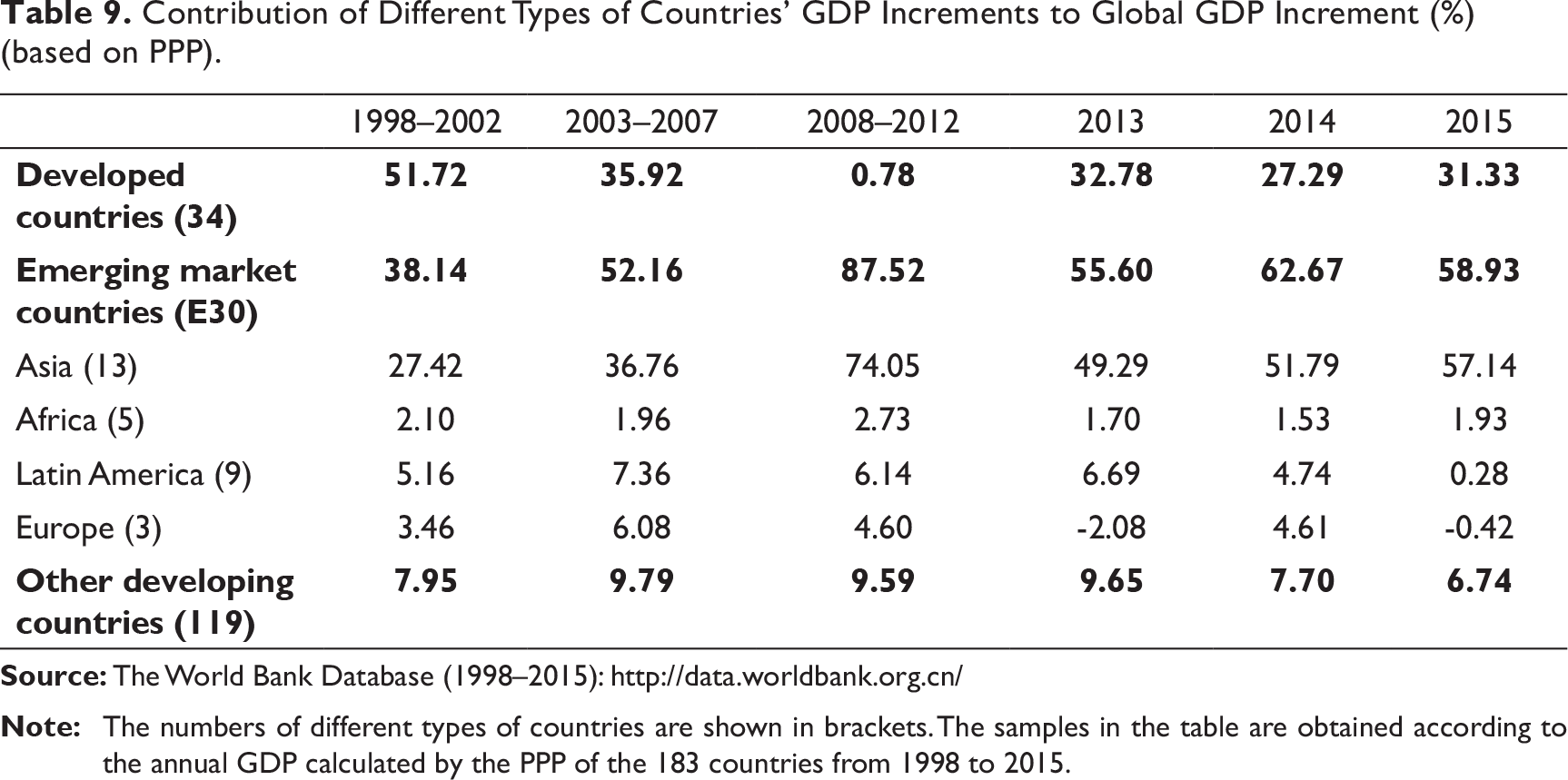
Figure 2 graphically shows the change in the GDP share of the three types of countries in the global total over the past 20 years, as calculated based on the PPP method. E30 have gradually become the driving force of the global economy. The annual GDP increment and the shares of various countries’ economic increments in the global economic increment clearly reveal the contribution rate of different countries to the world economic growth (Table 9).
Table 9 clearly shows that big changes happened following the international financial crisis in 2008; before the crisis, the 34 developed countries recorded quite high contribution rates to the world economy, but after the crisis, the contribution dropped sharply. For three consecutive years from 2013 to 2015, the contribution of developed countries dropped to the level of less than one-third of the global total. However, E30 showed the opposite trend, making ever-growing contributions to the global economy and reaching as high as 87.52% in terms of the contribution rate to the world economic growth during the five years from 2008 to 2012. In particular, the 13 Asian emerging countries gradually evolved into major driving forces of global economic growth, recording an average contribution rate as high as 74% in those 5 years. It evidently shows that E30, especially the 13 Asian emerging countries, have become major drivers of global economic growth.
Maintaining High Economic Growth Rates
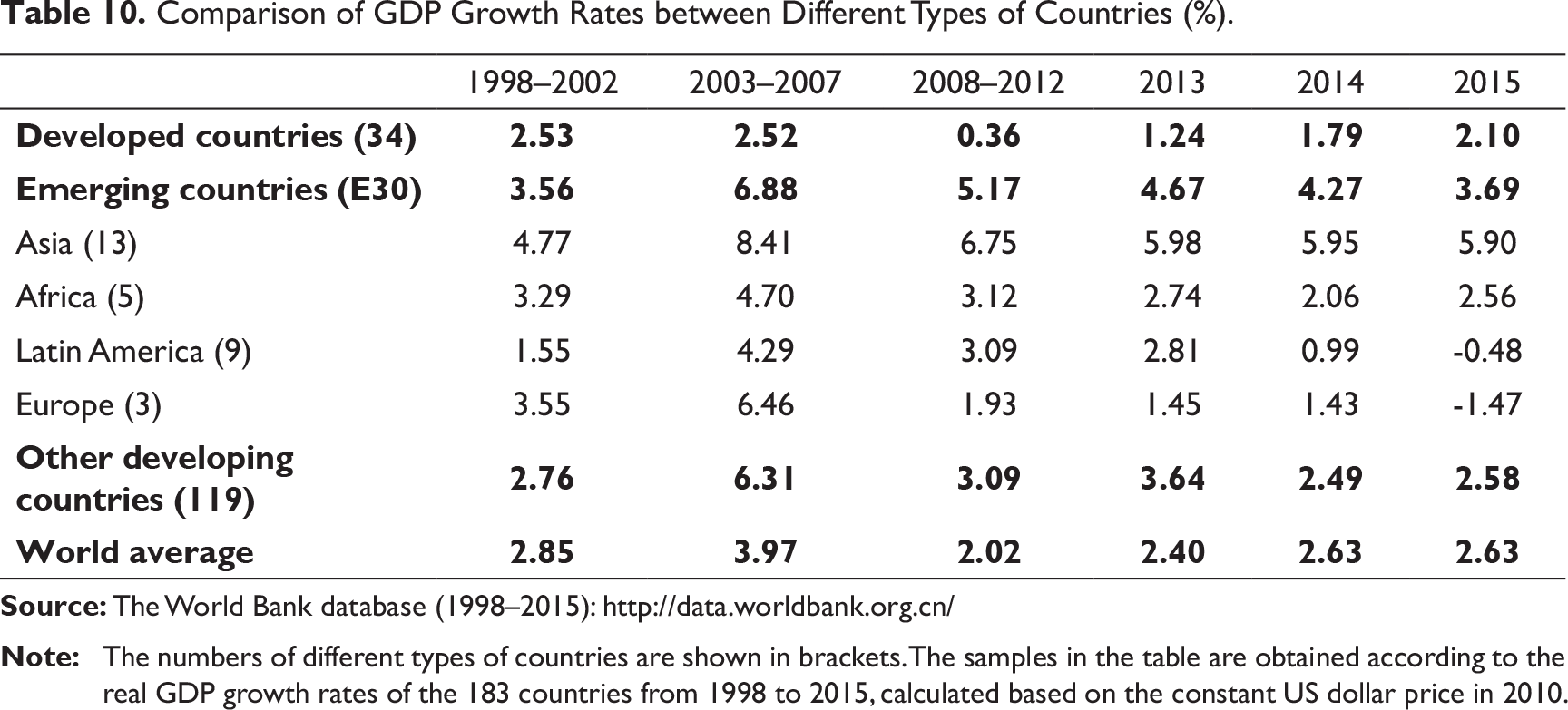
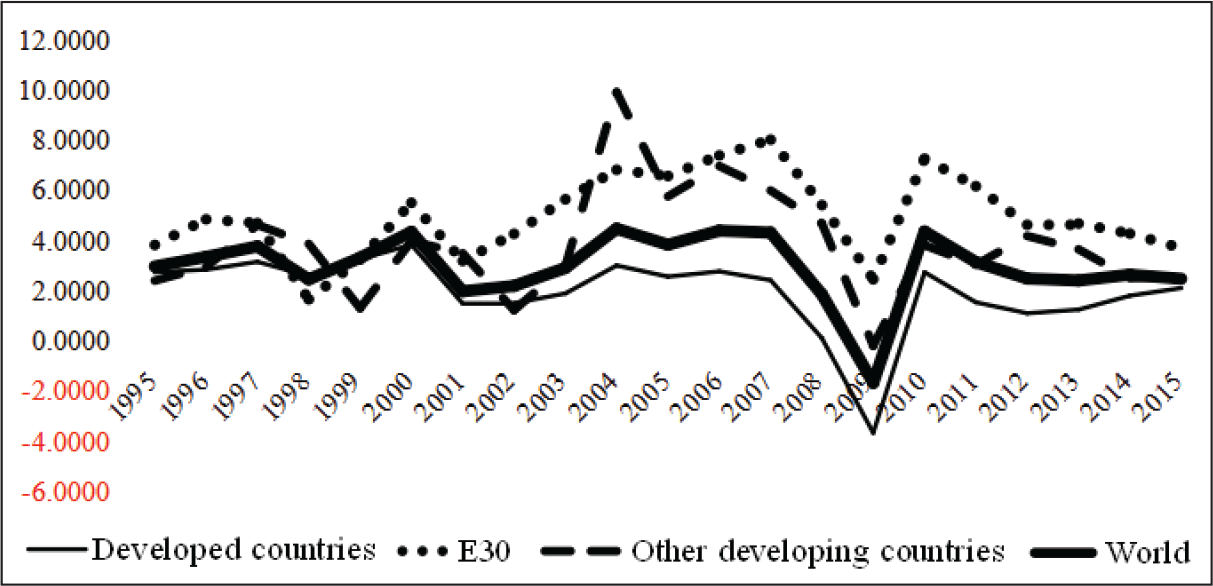
Table 10 shows that, on the one hand, even before the international financial crisis, the economic growth rates of E30 were notably higher than those of the developed countries; on the other hand, during and after the international financial crisis, E30’s economic growth slowed down but at a rate far lower than that of the developed countries. Therefore, a relatively high and steady economic growth rate can be regarded as another important economic characteristic of E30. Among E30, the rapid economic growth of the emerging market countries in Asia has driven up the overall growth rate, while the emerging countries in Africa, Latin America, and Europe, among other regions, were heavily affected by the crisis, as reflected in their lowered growth rates and even negative growth for some of the countries.
Comparison of GDP Growth Rates between Different Types of Countries (%).
Industrialization reaches a reasonably high level and the economic structure is improved
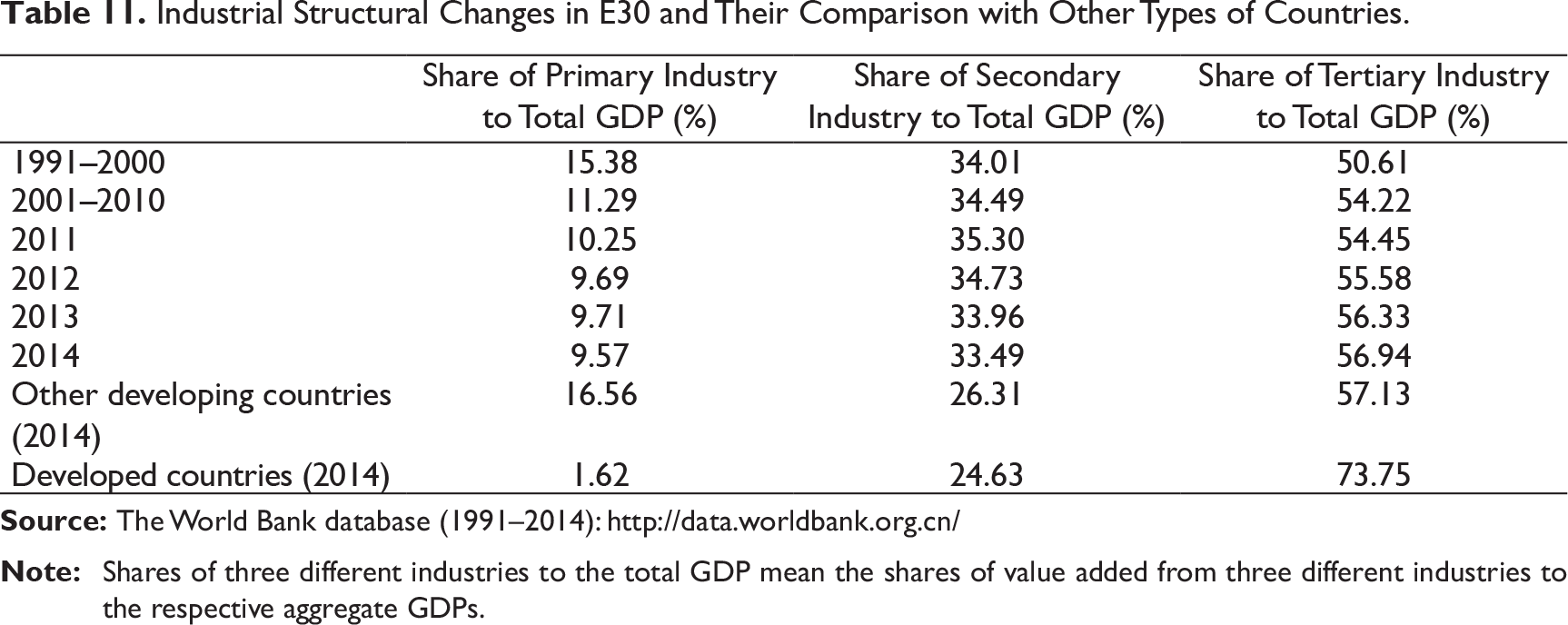
For economic development, economic growth is important, of course; however, the improvement of economic structure is even more meaningful, particularly for developing countries. Table 11 shows E30’s economic structures and the changes during different periods of time.
Table 11 shows that among E30, the share of value added from the primary industry to the countries’ total GDP as average keeps going down, falling below 10%, while the share of the secondary industry exceeds 30% as the average of E30, and the share of the tertiary industry steadily goes up, reaching close to 60%.
Good macroeconomic performance improves economic development
Industrial Structural Changes in E30 and Their Comparison with Other Types of Countries.
Macroeconomic Performance of E30 and Their Comparison with Other Types of Countries.
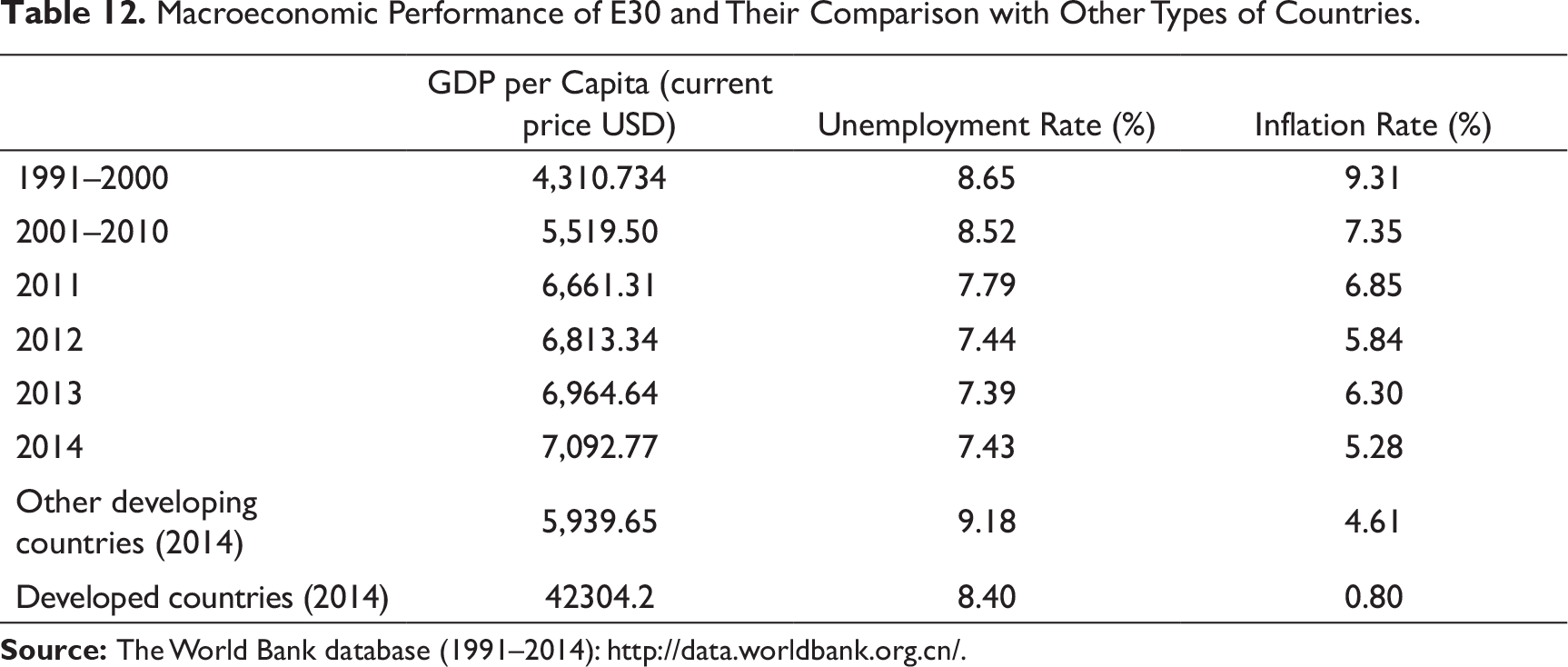
Normally, GDP per capita is the most important indicator to measure a country’s economic development. Between 1990 and 2014, the per capita GDPs of E30 were far below those of the developed countries, but E30 realized a total growth of 75.63%, with an annual average growth of 3.15%, which was far higher than that of the developed countries (respectively, 36.41% and 1.52%) and other developing countries (41.56% and 1.73%, respectively). Table 12 shows that E30 maintained sound economic growth over the past 20 years or more, with the overall unemployment rate and inflation rate held in quite a stable state.
Innovation for development needs to be further improved
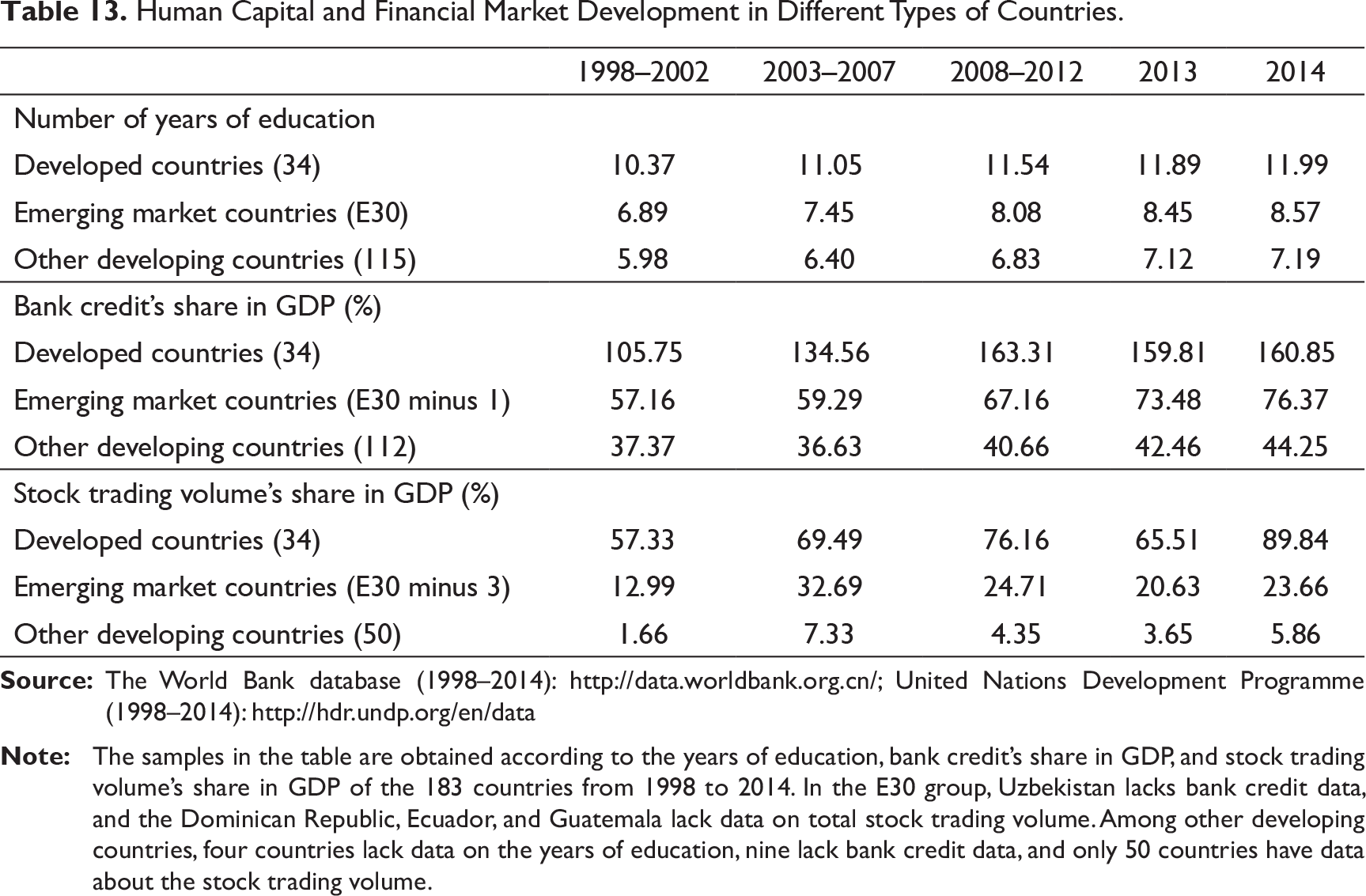
It can be seen from the above data that although E30 have maintained rapid economic growth, there is still a big gap between E30 and the developed countries in terms of overall economic development, which is mainly attributable to the inadequate new impetus for development in these countries. One of the important reasons is that the average number of years of education of the E30 is much less than that of the developed countries. The number of years of education reflects a country’s transition from pure labor input to human capital input, representing one of the important driving forces of national innovation and development.
Human Capital and Financial Market Development in Different Types of Countries.
The Prospects of 30 Emerging Countries
As discussed earlier, some of the factors that directly support the sound economic development of E30 are a reasonably large scale, stable economic growth, continuous improvements in economic structure, and favorable macroeconomic fundamentals. Here we use a fixed effects regression model to see whether these economic indicators exert a notable impact and foresee the prospects of E30. In the regression model, economic development level is taken as the explained variable, and the basic economic variables and other control variables are taken as the explanatory variables. In the equation
In order to avoid the endogenous problem between economic variables, the lag of the explanatory variable is used for regression. Given the data availability, the regression uses the data from 1980 to 2014—altogether 1,505 samples from 101 countries. 13 Table14 lists the test results of the fixed effects regression equation. Columns I and II show the regression of all the country samples, the regression of columns III and IV excludes the samples from developed countries, and columns V and VI include the regression sample of E30 only. In the test, the regression of the explanatory variables that just include basic economic variables is first performed, and then control variables are added to get more verifiable results.
The following conclusions can be drawn from Table 14.
First, the impact of basic economic variables on economic development meets our expectation for the redefined emerging markets and the depiction of the emerging markets’ characteristics. Specifically, large economies with a rapid economic growth and sound structural improvements enjoy good economic development. However, in the regression analysis of E30, the economic growth rate no longer shows a significant positive impact, which is attributable to the fact that the economic growth rate of these countries is at a relatively high level, and the impact of growth rate on economic development has a certain threshold effect. 14 Therefore, E30 need to improve other economic indicators to further promote economic development.
Second, as the level of economic development significantly goes up with the decline in the unemployment rate, it shows no significant impact upon the regression coefficient of inflation. The regression results hold that the inflation will not cause a substantial negative impact on E30’s economic development. 15
Finally, the improvement of impetus factors can further promote economic development. In particular, the variable of the years of education is significantly positive in the E30 sample regression results, with the coefficient greater than the overall regression coefficient of the samples. However, the financial variables, probably due to missing relevant data, go against the expectation and fail to show significantly positive correlation in all cases.
The Regression Results.
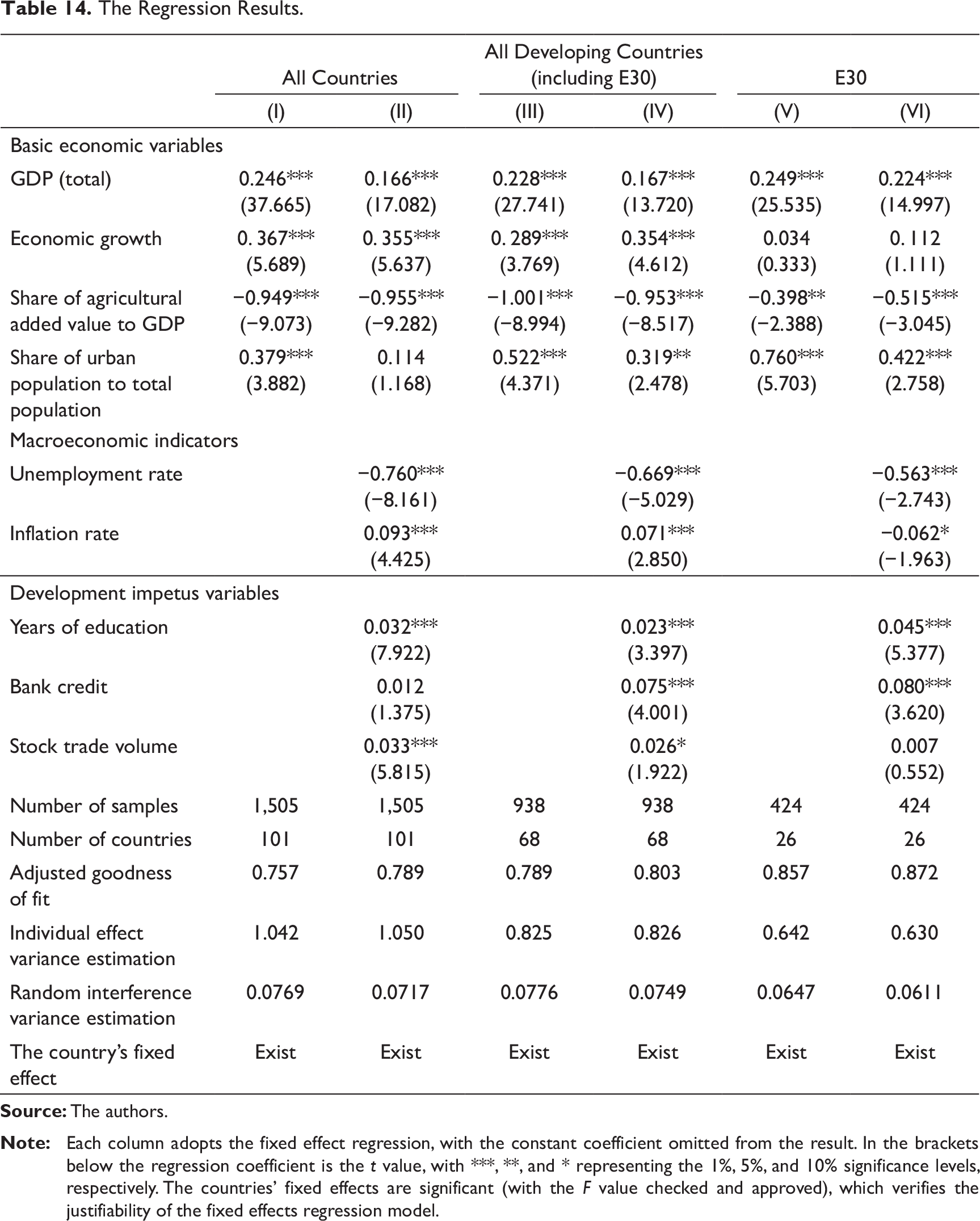
In short, all samples and E30 regression test results are basically in line with the expectations, and E30’s meeting the requirements of all the variables in itself represents certain economic development potential.
Conclusions
In accordance with the basic theories and methods of development economics, this article constructs a comprehensive measurement system from five dimensions—size of nation-state, institutional environment, economic growth, socio-economic structural changes, and development impetus—to study emerging market countries. Based on this measurement system, 30 emerging market countries are selected which have a population accounting for two-thirds of the world’s total, a land area of nearly one-half of the world’s total, and the GDP aggregate, one-third of the world’s total. Exerting an increasingly important impact on globalization, they constitute the most competitive group of countries that are highly significant for global economic growth. These countries will continue to provide the impetus for rapid economic development and exert a growing influence upon the economic and social development of their respective regions.
Appendix 1
In the formula
Appendix 2
Atkinson (2015) roughly calculates the inequality coefficient U through the formula
Appendix 3
In association with Atkinson’s idea of inequality measurement, in the equation
Footnotes
Acknowledgments
We are grateful to Shuyu Wu, Kausar Iqbal, Yan Wu, Bochuan Duan, Sha Fan, Song Zhang, Kaisi Sun, Mengyu Zhang, and Qingjie Liu for their valuable comments and discussion.
Declaration of Conflicting Interests
Funding
The authors disclosed receipt of the following financial support for the research, authorship, and/or publication of this article: This work was supported by the Interdisciplinary Research Project of Beijing Normal University (No. B10.1).