



Abstract
Existing accounts of Myanmar’s film industry available to English speakers are more than twenty years out of date. Opening with a brief overview of cinema in Myanmar since 2000, this article is based on a recent visit to the Myanmar Motion Picture Development Department and the Yangon Film School, on conversations with staff, students and alumnae of these institutions and of the National University of Arts and Culture, and with local independent filmmakers. The purpose of my visit was to begin the groundwork needed to answer basic questions: Who are the women making films in Myanmar today? Where are they trained? What are the conditions in which they work? What kind of films they make? How do they fund production? How do their films circulate? And finally: Is there a women’s cinema in Myanmar? What follows thus outlines the context in which women in Myanmar make films today and introduces the work of a small number of them. I conclude with reflections on three short films: A Million Threads (2006, by Thu Thu Shein), Now I am 13 (2013, by Shin Daewe), and Seeds of Sadness (2018, by Thae Zar Chi Khaing), two of which can be found online (at
Keywords
One of the difficulties of situating women’s cinema in Myanmar 1 today is that, if we exclude an extremely small number of recent essays on specific Burmese films, the only accounts of the state of the country’s film industry date back to the mid–1990s. 2 Much has changed since. Following the 8888 Uprisings, which saw the emergence of Aung San Suu Kyi as the figure-head of the pro-democracy movement and her arrest in July 1989, in the mid–1990s Myanmar entered a renewed period of political repression, 3 cultural and economic isolation. Films became too expensive to make (EMReF, 2018, p. 25). These years coincided with the growing availability of VCRs. Yearly film production dropped drastically, from an average of 70 films in the late 1980s (Lent, 1990, p. 222) to about a dozen in 2010, while video production peaked. It is estimated that until 2012 some 800 videos were made yearly (EMReF, 2018, p. 25). The dominance of video production in the 1990s and 2000s exacerbated one of the industry’s biggest problem, namely the dominance of the star-oriented system, whereby producers pre-sell the video to distributors before going into production on the basis of popular actors. 4 Within three decades and, combined with harsher economic and political conditions, these factors also led to a drastic drop in the number of cinemas, from 244 in the mid-1990s to 71 in the early 2000s (EMReF, 2018, p. 27). 5
The period that interests me here was inaugurated by the mass protests of September 2007. Mary Callahan illustrated the state of affairs two years after the events:
In September 2007 the exhilaration of the ‘march of the monks’ and the mass protests once again seemed to herald the beginning of the end. Now it was the power of the new media that was hailed, as bloggers, students and relatives of the Burmese diaspora flooded the internet with cellphone images and optimistic predictions, amplified by the foreign press corps. Within a week, however, the government crackdown had dispersed the protests, while cellphone democracy fell prey to network jamming. Eight months later, on 2 May 2008, Cyclone Nargis swept through the Irrawaddy Delta killing as many as 200,000 people, most of whom were very poor farmers, fishermen and labourers living in thatch or bamboo huts that provided no protection. Once again there were activist and media pronouncements that the junta would never survive the blow. With two supply-laden US warships patrolling its coast and 24/7 international media coverage of the desperate plight of the cyclone victims, there were high hopes that Myanmar’s military could no longer refuse entry to Western relief workers, whose presence was now judged essential if the regime were ever to change.… The catastrophe did permit some of the international NGOs to scale up their operations, although government checkpoints continued to act as chokepoints for aid, and the junta continued undaunted. (Callahan, 2009, p. 28).
In 2010 a measure of ‘political liberation was initiated’ (EMReF, 2018, p. 1), but the military abuses committed in Kachin and Shan States since 2011 and, more recently, the sectarian violence between the Rohingya Muslim and Buddhist communities in Rakhine State, the atrocities carried out against Rohingya civilians, and the brutal military crackdown by Myanmar’s security forces in this area are stark and troubling indications that Myanmar’s record on human rights remains one of the worst in the world. ‘Political liberation’ a hope rather than an impending horizon. I do not comment on these events here, even if some of the filmmakers I discuss below are either from or have made films in Rakhine state. As I hope it transpires from my discussion of their films, however, these and less publicised episodes of political oppression do mark the work of women filmmakers in Myanmar, often in admirably subtle ways.
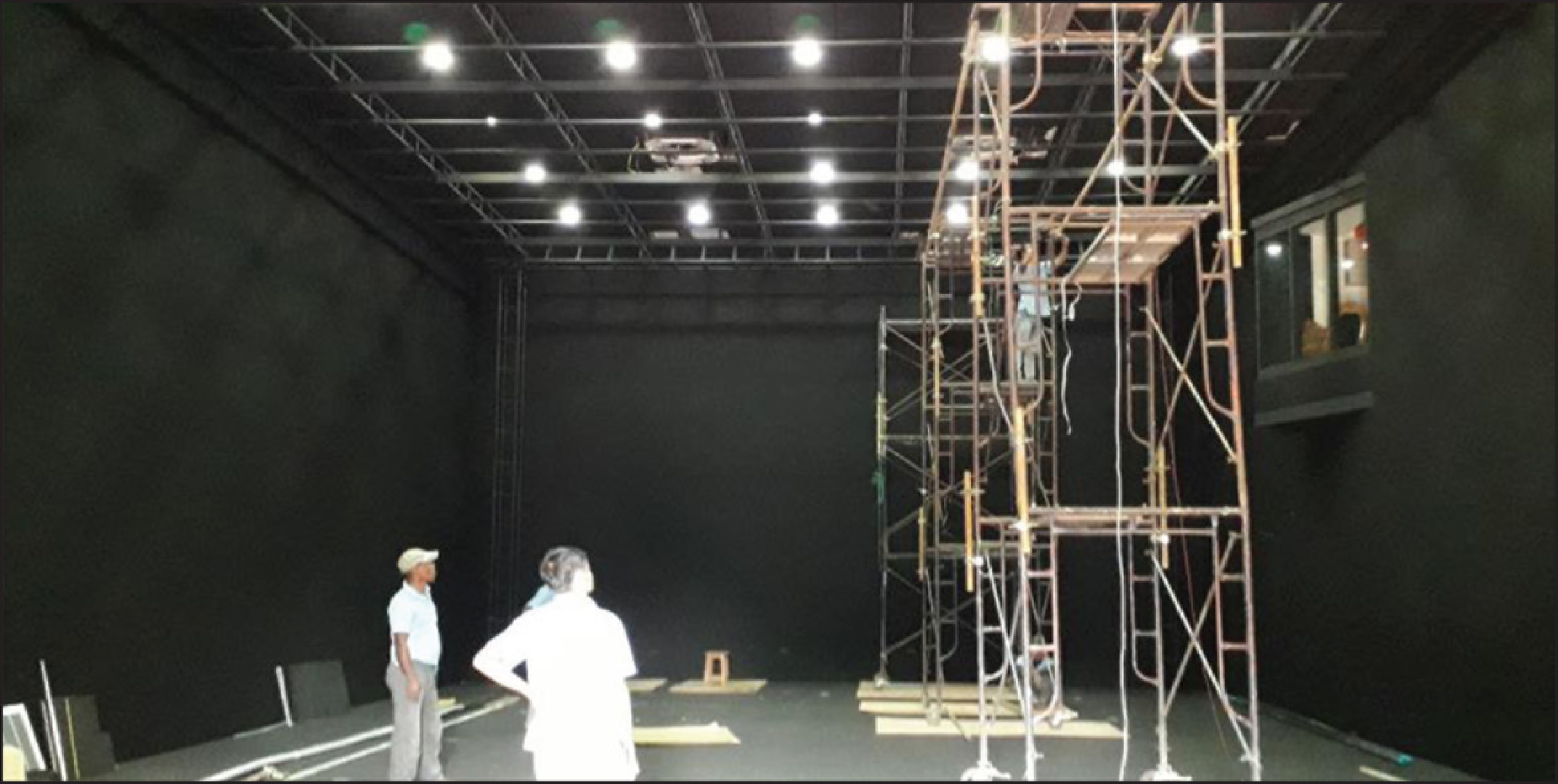
Today the film industry still bears the scars left both by years of political repression and the video-based, actor-led system of the previous decades: not only the centrality of actors in the industry’s mode of production, but also the lack of qualified human resources (technicians, scriptwriters, art designers and directors) and of a functioning infrastructure (studios, equipment and movie theatres) (EMReF, 2018, p. 5). The Myanmar Motion Picture Development Department (MMPDD) has only just started the process of refurbishing its studios, the only ones available in the country (Figures 1–4).


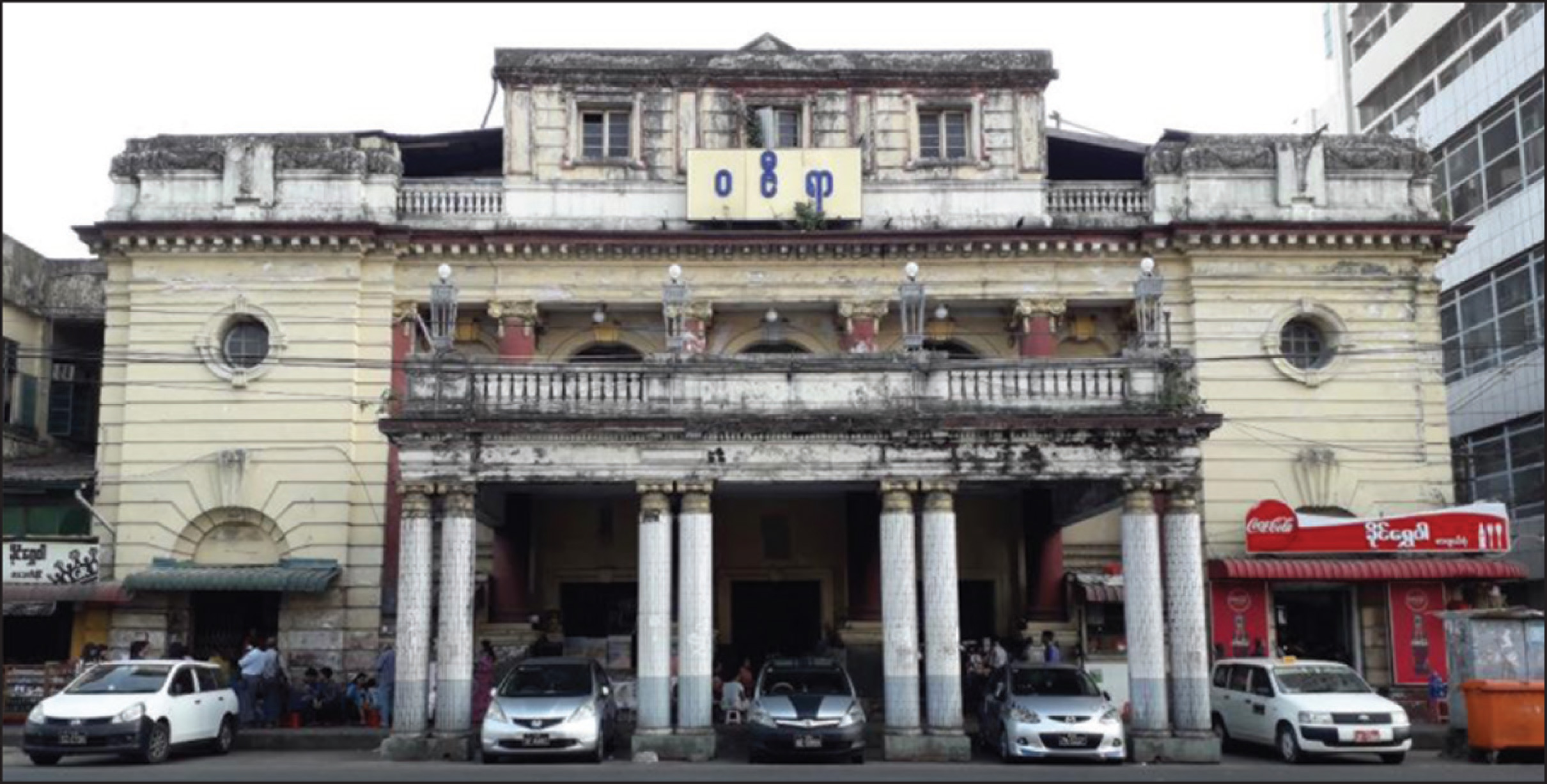
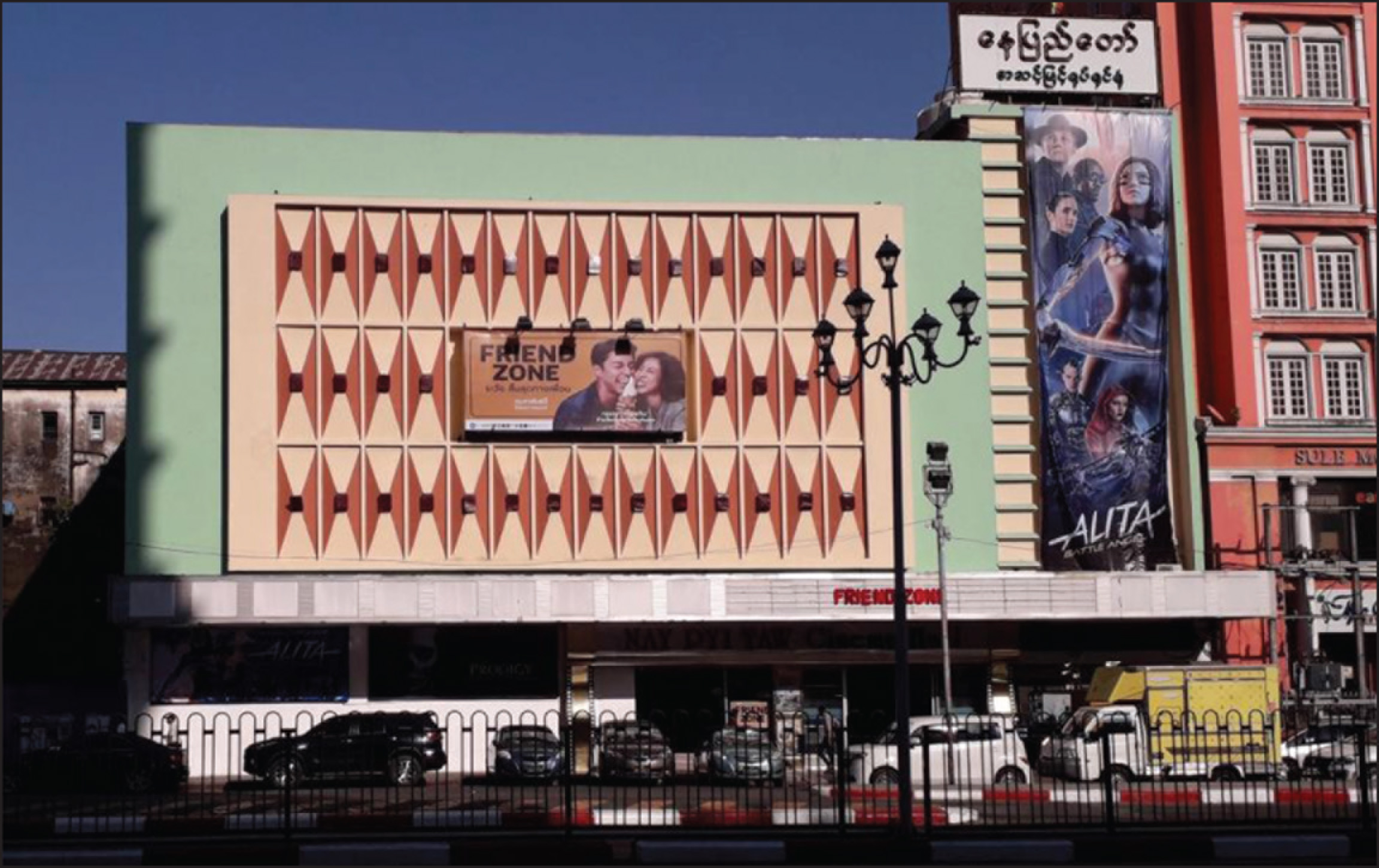
The MMPDD is also promoting the opening of new cinemas. According to MMPDD officer Nyein Ko Ko Tun there are today in Myanmar 120 cinemas, with a total of 136 screens (Figures 5–6). 6 Yet of the 80 or so films made a year, in August 2018 some 300 were awaiting exhibition (EMReF, 2018, p. 27).

Censorship does not help. Originally set up in 1920 and comprising, at the time, 10 British officials, including Rangoon’s Commissioner of Police, the Burmese censor board was expanded by the independent government in 1964. In its current formation it includes five film professionals and five government personnel from the culture, the police and the religious departments. The board sees as its remit the ‘preserving {of} culture and {the} protecting {of} the nation’s three main causes: non-disintegration of the union; non-disintegration of national solidarity, and consolidation of sovereignty’ (EMReF, 2018, p. 27). In 1997 the board’s priorities were amended and its 10 considerations reduced to six: representations of the supernatural are now allowed, but ‘politics, unity of ethics, culture, crime and drugs’ remain censorship’s central concerns (EMReF, 2018, p. 27). Films, including documentaries and shorts, continue to be subject to strict censorship before screening.
But film production, stagnant for years, has been restored and, from 2012, increasing. The National League for Democracy (NLD) came into power in March 2016. Within a year film production doubled (EMReF, 2018, p. 19). In the early 2010s film festivals were also launched, including the Wathann Film Festival (
Originally opened in 1993 as University of Culture, NUAC is a public university that offers B.A.s in Cinema and Drama, Music, Dramatic Arts, Painting and Sculpture. Among the staff and filmmakers teaching the cinema programme there are women, and in Yangon I have met several women filmmakers and screenwriters who were either studying or had studied at NUAC. Not unlike other public institutions in the Global South, however, NUAC’s Cinema and Drama department suffers from lack of equipment and other facilities, though steps are being taken to establish mutually beneficial, collaborative initiatives with the MMDPP and the Yangon Film School.
YFS is an independent, non-profit organisation that was started by Anglo-Burmese filmmaker Lindsey Merrison in 2005. It relies on donations, grants and other forms of support from various sources including, among others, the Ministry of Foreign Affairs of Finland via the Finnish Foundation for Media and Development VIKES, the European Union, various embassies and philanthropic donors such as George Soros’ Open Society Foundation. In spite of the precarious nature of its funding and the difficulties of sourcing (imported) equipment and other resources, YFS offers full-time and short courses in cinema. It brings together experienced filmmakers from around the world and young Burmese men and women, many from Myanmar’s ethnic minorities and from all walks of life – from film, journalism and the arts to health and development sectors. YFS’s aim is not simply to support and encourage the growing community of young media workers in Myanmar, but, in doing so, also to promote democracy and sustainability. Its objective is to create the conditions for the enthusiastic and politically savvy filmmakers it forms to become film and film-training professionals in their own right. Accordingly, since Lindsey Merrison’s first workshop in 2005, around 50 women have enrolled and made films at the YFS. Several have won awards at festivals in Europe and Asia. Women also represent a large percentage of the YFS’s teaching and management staff.
What follows is based on two weeks visit to Yangon, at the Myanmar Motion Picture Development Department and the Yangon Film School in February 2019, on conversations with staff, students and alumnae of both these institutions and NUAC’s Cinema and Drama department in Yangon, as well as with the Yangon-based women filmmakers who were kind enough to make time to meet me during my stay there. Some of the information below was also collected through questionnaires (circulated among the women filmmakers who attended a masterclass I was invited to give at the MMPDD) and interviews. The purpose of these activities was to find out who are the women making films in Myanmar today, where they trained, the conditions in which they work, the kind of films they make, how they fund them, how they circulate them, and, finally, how they see their future as filmmakers. I conclude my account with a brief discussion of three short films by three filmmakers, A Million Threads (2006), by Thu Thu Shein, Now I am 13 (2013), by Shin Daewe, and Seeds of Sadness (2018), by Thae Zar Chi Khaing.
The once robust Burmese film industry described by Fred Marshall and John Lent in the 1990s was all but destroyed by political repression and economic sanctions. From its ashes something new started to emerge in the early 2010s in which, perhaps unsurprisingly given the haphazard nature of the Myanmar film industry today, women seem to have found a space. The YFS has been a catalyst in this development, and many of the women making films today in Myanmar have, at some point or another, been connected to the school. It is impossible to do justice here to the 30 or so women filmmakers who passed through the YFS in these last 15 years, 8 nor was my short visit in Yangon enough to enable me to offer here an in-depth account of Myanmar women’s cinema. But the encounters I made there do allow me to state confidently that today women’s cinema in Myanmar is alive and kicking. Kyi Phyu Shin, Lay Thida, Shin Daewe, Thu Thu Shein and Thae Zar Chi Khaing are among its most active representatives.
Born in 1975, Kyi Phyu Shin has been making videos since 1995 and films from 1999. She has numerous feature-length dramas to her credit and some of them (e.g. Foggy Dream on Rainy Night, 2009) have won awards from the Myanmar Academy. She appears to be the only woman operating in the domestic mainstream sector as a director, and most of her films have a wide following among Burmese youth. Kyi Phyu Shin joined YFS in the year of its inception in 2005 where she made her first documentary, Peace of Mind; she made A Sketch of Wathone (2006), on the popular Myanmar comic book artist in her second year at the School. This film was the first documentary from Myanmar to win an award at an international film festival: the 2008 All Roads National Geographic Film Festival in Los Angeles; Kyi Pyhu Shin travelled to the festival and received her award in person. Today she is also involved in politics, as a member of the central committee for the NLD and on the board of the Myanmar Motion Picture Organisation.
Lay Thida is originally from Kayah State in eastern Myanmar. She joined the YFS in 2005 and her first film, Just a Boy (2006), earned her a Heinrich Böll Foundation Documentary Award. Her subsequent work includes portraits of an ex-poppy grower (A Farmer’s Tale, 2007) and of a young development worker (The Change Maker, 2008), and a short documentary about domestic violence in Shan State (Unreported Story, 2011). After the documentary Wrong Side Up
Myanmar Chinese Shin Daewe began her film career as an assistant producer at AV Media, a local documentary company. She worked as an underground video journalist under the dictatorship and started making documentaries in 1998. She joined one of YFS’s earliest workshops in 2006 and was with the school for more than 10 years. She serves as the Director of the school’s production arm, the Yangon Film Services, as one of the school’s trainers and a mentor to younger filmmakers. Apart from her NGO films The Uninvited Guest (2006), Beyond the Tsunami (2007) and A Bright Future (2009), Shin Daewe’s work includes An Untitled Life (2008), a portrait of the painter Rahula that screened at numerous international film festivals, the poetic documentary Robe (2010), and the documentaries On Holiday (2012), Take me Home (2013), Now I am 13 (2013, awarded at the Kota Kinabalu International Film Festival and discussed below), and Just a Woman (2017).
Born in 1983 in Yangon, Thu Thu Shein is a graduate of NUAC’s Cinema and Drama. She has worked as a video editor at Myanmar Forever June Co. and joined YFS’s first workshop in 2005. In 2007 her documentary A Million Threads (discussed below) won a Heinrich Böll Foundation Documentary Award. Two years later, with a scholarship, Thu Thu Shein studied filmmaking at the National Film Academy-FAMU in Prague. On her return to Myanmar in 2011 she co-founded the Wathann Film Festival, of which she is still a co-organiser. She has since worked as director of her own films or as cinematographer on other filmmakers’ productions. Together with her husband, in 2013 she established, and today still runs Third Floor Productions, which produces social issue documentaries by local independent filmmakers.
Finally, 26-year-old Thae Zar Chi Khaing comes from Sittwe, Rakhine State. After graduating in geology, in 2012 she began working as a video journalist. Thae Zar Chi Khaing enrolled in the YFS in 2016 and has since worked on several films as a director, editor or cinematographer. In 2017 she joined a YFS’s travelling cinema crew to Inle Lake to help a local community create two short films about environmental pollution. Her Seeds of Sadness, which I discuss below, was joint-winner of the 2017 Goethe Institute Ruby Documentary Award, while her new film, on street kids in Mandalay, is currently on hold because her protagonists have been arrested and imprisoned (Khaing, 2019).
These five women are not ‘representative’ in the sense that they are the only or the most important women filmmakers in the country today. Rather, they are representative because each, with their different backgrounds and trajectories, exemplifies the multiple expressions and diverse orientations of women’s cinema in Myanmar today. It is a cinema made mostly by young filmmakers producing a remarkable amount of good films under extremely precarious circumstances. By far the majority of filmmakers I met in Yangon were trained either at NUAC or YFS. Only two had studied cinema abroad (in Japan and Czech Republic) for a brief period. One defined herself as self-trained. With the exception of Kyi Phyu Shin, who has been active in cinema since the 1990s, most have been making films since the early to mid–2000s without any industrial infrastructure. They finance the films with their own funding and only occasionally receive support from international agencies. Rarely do international festivals help, and mostly only if the film, at some point in its production cycle, has been awarded. So far the MMPDD has not come forward with production support, though on occasion filmmakers are allowed to shoot at the MMPDD premises. This may come in the not too distance future, when the MMPDD completes the refurbishment of its studios.
Production and post-production equipment is thus often borrowed or rented from NUAC or the YFS (including YFS’s production arm, Yangon Film Services
Interestingly, most of the women I talked to claimed to be working alone or with a small group of friends. Only one of them, Thu Thu Shein, seems to have set up her own production company – unlike in Bangladesh, Bhutan, Afghanistan and Pakistan where a new generation of women filmmakers like Rubaiyat Hossain, Dechen Roder, Diana Saqeb and Roya Sadat, and Meenu Gaur have set up both independent production companies and support networks. Years of political repression can’t have helped the development of film and, more generally, cultural networks. In this respect, the NGOs with or for which many of the women I met in Yangon make films, also function as a cinema infrastructure of sorts. It is not a coincidence that Yangon Film Services should promote itself as ‘seek{ing} cooperation with local and international non-governmental organisations, capacity building organisations and aid agencies.’ For its part, in the last few years the MMPDD has taken to host regular film-related events – film analysis and screenwriting workshops, screenings, panel discussions and the occasional masterclass – that facilitate networking among independent filmmakers.
When asked what kind of support they want from government, the filmmakers I met in Yangon pointed to technical support, grants, help with international distribution, the relaxing (if not the removal) of red tape, more transparency about procedures, and access to MMPDD studios and facilities. From international agencies, they would like more support for short films, including development and production grants. For all see themselves as making films for local and international audiences, though always within the independent sector. They appear to have no desire to ‘break into the mainstream’, and all of them seemed resolute that they make films in order to make Myanmar a better place to live. At the same time, they are conscious that international (festival) audiences expect a particular kind of film, not so much in terms of quality (which, from what I have seen, is as high if not higher than that which can be seen at any international festival), but in terms of content. Like women filmmakers in India, Bangladesh, Bhutan and other countries in the Global South, women filmmakers in Myanmar are aware of international festival programmers’ particular brand of exoticism – that is, of festivals’ predilection for films displaying ‘local colour’, exotic landscapes and, more generally, confirming European and North American audiences’ imaginary of the Global South. 9 To what an extent this awareness jars with their priorities as locally active filmmakers is down to individual films.
A Million Threads (Thu Thu Shein, 2006), Now I am 13 (Shin Daewe, 2013) and Seeds of Sadness (Thae Zar Chi Khaing, 2018) are good examples of how three women filmmakers from Myanmar negotiate these difficulties, tensions and pressures. All three are short documentaries, the area in which most women making films in Myanmar today operate. As Lay Thida has observed, ‘the more freelance nature of most documentary and short films allows women more autonomy, whereas women trying to make it as feature film directors have to battle through a very male-dominated environment’ (Russell, 2012). Making documentaries and short films also obviates the lack of funding and production facilities, such as studios. All three films have received awards and in each women feature prominently. But A Million Threads, Now I am 13 and Seeds of Sadness are situated at very different moments in Myanmar’s recent history. Thu Thu Shein’s was made a year before the 2007 Saffron Revolution. Shin Daewe’s sits between the 2010 general elections, which was boycotted by the NLD, and the 2015 general elections, in which the NLD won the absolute majority. Seeds of Sadness was made two years after Aung San Suu Kyi, following the 2015 elections, was elected State Councillor (in April 2016). The directors’ professional background is also not quite the same: NUAC and FAMU for Thu Thu Shein, industry training for Shin Daewe before moving to YFS, and journalism and YFS in Thae Zar Chi Khaing’s case.
Women are at the centre of all three documentaries. However, the relation between the camera-narrator and the women in the diegesis differs significantly across the three films. A Million Threads documents Matho Thingan, a day-long competition entered every year by Burmese women, who gather at Shwe Phone Pwint pagoda in the Pazundaung district of Yangon to weave robes for the temple’s large Buddha statues. All robes must be finished and woven to perfection by dawn. Cheered on by large crowds and an (all-male) orchestra of drums and high-pitched shawms, the teams of seasoned female weavers work the handlooms frenziedly back and forth, non-stop for six hours. At the end of the competition a (all-male) jury awards the best robes with cash prizes. Thu Thu Shein’s camera follows the women’s tremendous feat from a certain proximity and with a great deal of mobility, often closing in on the faces of the women working the looms. The editing echoes the frenzied rhythm of their labour, as does the sound track (recorded and edited by Lay Thida). The close-ups convey effectively the women’s strenuous effort, the emotions and expectations at stake in their weaving race, but the camera never takes up the women’s point of view. They remain the object of a look that while eliciting sympathy for the weavers also exerts fascination towards what it proposes as ‘Burmese tradition’. There is a tension in A Million Threads between, on the one hand, this fetish, ‘tradition’, and, on the other, empathy with the women, their exhaustion and hopes of financial reward. That tension is never quite resolved: perhaps because of the film’s limited length, little room is given to critical perspectives on ideas of tradition, its patriarchal or contemporary monetary dimensions, even if the film’s attention to the women’s labour and unexpressed feelings begs just such questions.
In Now I am 13 the relation between the camera-narrator and its object is another. Shin Daewe’s is a sensitive profile of, or, better, a conversation with Ma Aye Kaung, a 13-year-old girl born during Myanmar’s military government. Ma Aye Kaung lives in Bagan, Myanmar’s best known tourist site, and earns a meagre living for herself, her family and her alcoholic father herding goats. As we learn early into the film, Ma Aye Kaung started working as a child labourer aged nine. She is bright, inquisitive and wants to learn to read and write, but while primary education in Myanmar is free, she was never given the opportunity of an education. She has hopes and dreams, but, as a title card at the end of the documentary tells us: ‘During 23 years of military government, there were hundreds of thousands of girls like Ma Aye Kaung. Now, in this transition period, too, girls like her have no chance to go to school.’ Throughout the film Shin Daewe’s camera follows Ma Aye Kaung as she goes about her daily chores, plays with the goats and tells about her friends, her family, the difficulties of finding a boyfriend who would have her in spite of her illiteracy, what she would do if she had money, and what she would like Aung San Suu Kyi to do for her. The intimate subjects touched on and Ma Aye Kaung’s open demeanour indicate that Shin Daewe spent a considerable amount of time building a rapport of mutual trust with the young girl. But the director keeps at a respectful distance, careful never to break that trust by using her to hammer ideological points home or instrumentalising Ma Aye Kaung’s life experience for other ends. Shin Daewe’s factual approach is a carefully balanced act that pays off in the end, rendering the closing title card’s statement that, for women like Ma Aye Kaung, nothing has actually changed with the new regime all the more disturbing.
In Now I am 13, like in A Million Threads, the camera never takes up Ma Aye Kaung’s point of view. She is in front of the camera, we are behind it, and that divide is never crossed, but, unlike in A Million Threads, in Shin Daewe’s documentary Ma Aye Kaung addresses us directly, and this makes it impossible for the spectator to objectify her. We are not allowed to occupy the comfortable position of voyeurs. On the contrary, we are interpellated, exposed in our looking, even implicated, however indirectly, in Ma Aye Kaung’s condition. In Seeds of Sadness Thae Zar Chi Khaing pushes this mode of address a step further. In spite of a nationwide ceasefire, armed conflict persists in Myanmar and landmines contaminate many parts of the country. Seeds of Sadness documents the life of a small family in East Bago, in eastern central Myanmar, where both father and mother have lost limbs to landmines. Unlike Thu Thu Shein and Shin Daewe’s films, Seeds of Sadness opens with subjective narration. On the sound track we hear the mother’s voice telling about the circumstances that lead her, like many others, to go into the forest even if she knows all too well that there are landmines everywhere. On the image track the camera, at ground level, also carries a subjective point of view, though not the mother’s. It foregrounds what Roman Jakobson (1987) called the expressive or emotive function, 10 something that is instead totally held back in Shin Daewe’s film. Thae Zar Chi Khaing (2019) explains: ‘In that scene the mother talks about coming across landmines. I felt something from her voice. She is very composed, though her face is very emotional. But I didn’t want the audience to pity her. The reality is sad enough. That’s why I chose to use only her voice to start with. I was also worried for my legs when I was filming. I wanted to show that feeling of fear.’
This double subjective address – the character’s and the narrator’s – results from a particular relation between the (woman) filmmaker and her (woman) subject. Thae Zar Chi Khaing spent a long time in the area and with the family, first to win over their reluctance to speak about the traumatic events, and then to gain their trust, to convince them that the film would not make their situation worse, for both landmines and disability remain taboo subjects in and outside the community. She managed to win them over, first the children and the mother, who ‘reminded me of my mother’ (Khaing, 2019) and eventually also the father, whose reluctance to speak lingered on and comes across still in the film. Thae Zar (2019) explains: ‘It took him a long time to talk to anyone. But above all, I could not imagine the footage for him.’ So, throughout Seeds of Sadness, whether in actual subjective point of view or not, narration is effectively handed over, delegated to the mother, who functions as our main point of entry into the ‘story’. It is her thoughts, her rendition of the facts, her legs that we follow and watch. The mother’s account is sparse: as the camera occasionally lingers on her face, sometime also after she has stopped talking, we can almost hear her thinking and are left trying to imagine the pain and anger that make up her heavy silences. On and off the camera rubs our noses into a ground that we gradually come to look upon as simultaneously treacherous and familiar, occasionally on the mother’s amputated leg. The film makes as little concessions to festival programmers’ taste for the exotic as it does to facile pietism. No luscious landscapes, bright green paddy fields or pagodas. It could have been shot anywhere: just mud and grass, a few cows, a bullock and cart, a stream of water, a thatch hut. The frame is always very tight, steadily closing in on details: small, ordinary things, like washing and cooking, but so difficult to carry out when your legs have been blown off. The proximity of the camera to these actions is unnerving. The force of Seeds of Sadness lies in this pinpointing, inquisitive and disturbed narratorial voice, which for most of the film takes the diegetic form of a woman generous enough to give us a glimpse of her existence. It is only at the end that the tables are turned on us: in the last shot the camera catches the young daughter sitting on her father’s wheelchair, playing with her baby brother on her lap. They look straight at the camera and, from the wheelchair, smile at us. This chilling prospect, which their direct address makes impossible to dismiss, adds a lasting critical note to Thae Zar Chi Khaing’s short film.
Women are at the centre of these three documentaries, but the relation between the narrator-director and the women filmed differs in each film in important ways. I suspect that, beyond the relative freedom afforded to women making short films and documentaries in Myanmar and the diversity of these three directors’ background, one crucial factor shaping the orchestration of filmmaker-subject relation in each documentary is the time in which the films were made. The slowly transformed nature of the political limits within which Thu Thu Shein, Shin Daewe and Thae Zar Chi Khaing found themselves working as women and as filmmakers inevitably left its mark also on the films’ mise-en-scene. It is a testament to the directors’ tenacity that films like A Million Threads, Now I am 13 and Seeds of Sadness are being made under conditions of political repression. What will women’s cinema look like when Myanmar will have become a more democratic place, able to offer the political and economic support that the country’s burgeoning generation of filmmakers deserve?
Footnotes
Acknowledgements
I would like to thank here Lindsey Merrison, Aleksandra Minkiewicz and Lucy Aye Ahr Marn at the Yangon Film School for facilitating my visit to Yangon, to the Yangon Film School and the Myanmar Motion Picture Development Department (MMPDD), my meetings with local filmmakers, and more generally for their generous hospitality. This article would have never been written had it not been for their invaluable help. Lindsey Merrison and Aleksandra Minkiewicz also provided valuable information, about individual filmmakers mentioned in this article and the Yangon Film School, for which I am very grateful.
Declaration of Conflicting Interests
The author declared no potential conflicts of interest with respect to the research, authorship and/or publication of this article.
Funding
The author received no financial support for the research, authorship and/or publication of this article.