



Abstract
This essay explores the ways in which notions of ‘expert’-driven authenticity are being interrogated in the post-COVID-19 media sphere. I argue that the intensification of pathogenic virality has instantiated a generative ‘contamination’ of scientific disciplines such as immunology and virology with the networked openness of digital image cultures. It is through this contamination that we are able to see media forms as central to viral matter and not merely as repositories of its causes and effects. It is in the actions of a growing community of networked media user-producers and amateur scientists that a new lexicon of authenticity and truth can be imagined for our post-pandemic world.
The link between medical discourse, documentary and visual culture is being rearticulated with a pressing urgency in the context of the global COVID-19 pandemic. A dizzying range of new kinds of reality claims, images and information networks have attached themselves to the fast-moving and the ever-mutating SARS-CoV-2 virus. As a result, the contagion is being countered, extended and sensed not only within medical institutions but also across different media forms. Visualisation of medical data and immunological research, post-photographic images of the virus, hard-hitting journalistic coverage of the human tragedy precipitated by the pandemic, citizen videos aimed at countering censorship, archival images from previous pandemics such as the Spanish flu, 3D animated renderings of droplet transmission, video consultations with biomedical experts, display screens of medical devices such as pulse oximeters, ventilators and thermometer guns, dubious and unverified materials circulating on social media – all texture the current moment and produce it as a cross-shared, thickly annotated field of documentary acts. How life is produced and transformed via these renewed truth claims is perhaps a question more potent than ever today.
It is edifying how several kinds of documentary claims – like the indexical insistence of citizen videos, histories of the colonial documentary, traditions of the activist use of documentary images in democratic struggles, journalistic veracity of news channel cameras, the forensic charge of surveillance material, the networked production of authenticity through the cross-sharing of images on social and digital media and finally, the production of global tactical publics – are actively participating in the shaping of an ethico-political discourse, beyond their immediate locations and histories. This is a tightly coiled moment imbued with the recall of decades of discourse around the documentary and is now wafting in our shared intellectual and sensory habitat. It is in this transmission that I see a relay between the COVID-19 pandemic and many dynamically enmeshed strains of authenticity.
Lensed Virology
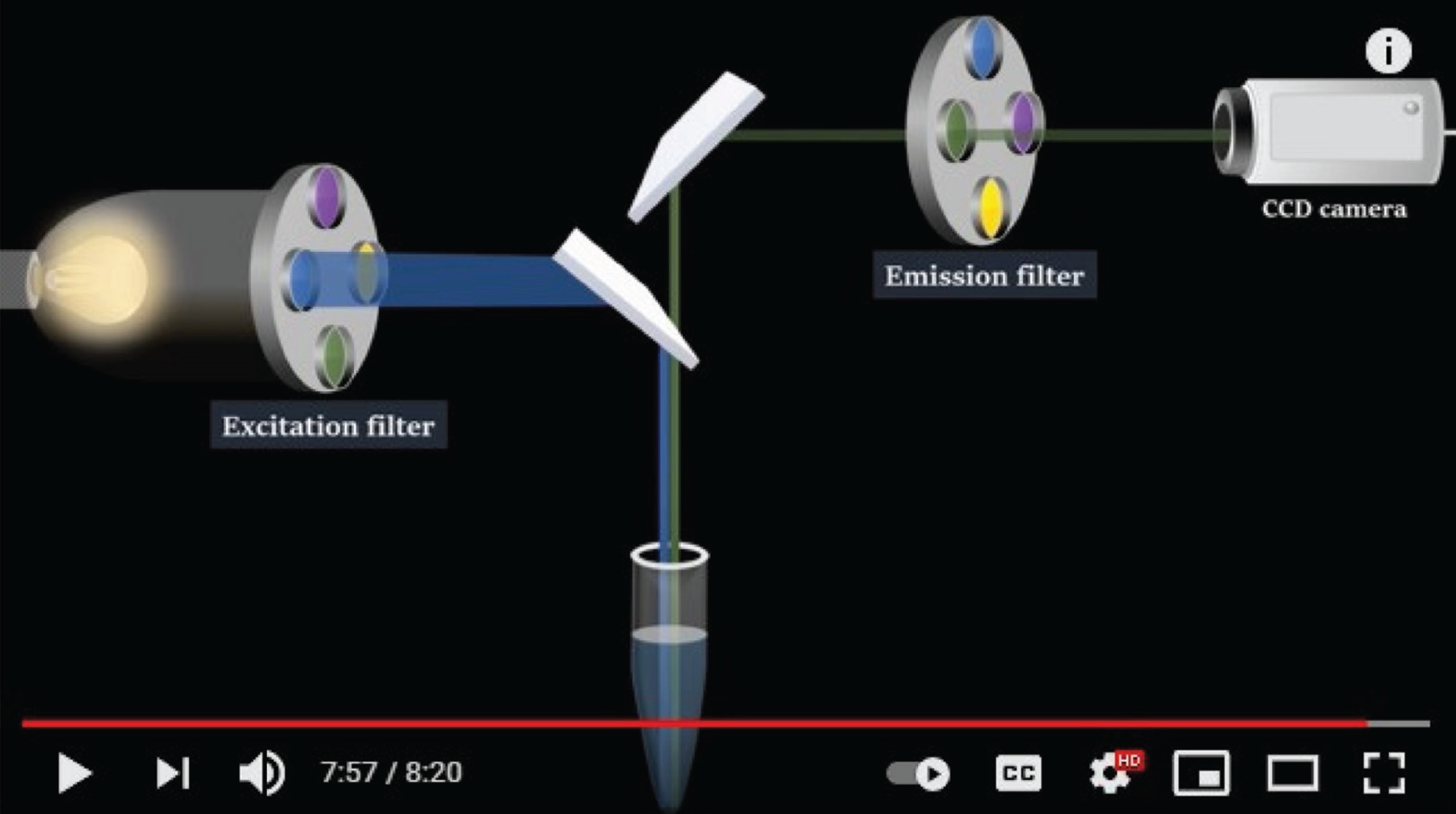
In annotating the mediatised nature of the pandemic, it is important to emphasise that media infrastructures ought not to be understood as merely representing the effects and consequences of COVID-19 rather as fundamental to its molecular expression. For instance, the reverse transcription polymerase chain reaction (RT-PCR), which is now the standard test for detecting the SARS-CoV-2 virus alongside using bio-chemical reagents, primers and buffers, also deploys optical lenses, mirrors, light sources and CCD cameras. After the completion of the chemical process by which viral DNA present in a given swab sample is amplified, a tungsten halogen lamp and an excitation filter are used to channel light signals from the sample through mirrors and lenses to a charged couple device camera which in turn converts these light signals into digital data. This process, known as ‘real-time PCR’ allows laboratory technicians to monitor the results of the PCR test as the reaction occurs and to derive an image of the final result (Jawerth, 2020; Centers for Disease Control and Prevention, 2020).
What is important to note here is that the image is not a post-facto witness of the ‘real’ chemical reaction but rather composes and propels it. In the ‘real time’ of the RT-PCR, the ‘real’ is fused in the interstices of viral, electronic and image time. It is only via polyvalent chemical, electronic and optical media that this hybrid real time can be rhythmised and interpreted. In other words, mediatising the virus is the only way to detect it. The process through which SARS-CoV-2 becomes visible strongly restates the virus as a ‘true’ coalesce of optical and electronic media. Each viral replication then is also a visual and electronic replication. Further, every replication authenticates its ‘real’ source.
This challenge to the separation between the digital image and material objects, which the RT-PCR test produces in a specific way, is not an entirely new phenomenon. With radical changes in technology and the enmeshment of data with networks, memory, software, circulation and production, this separation has become increasingly unsustainable.
In his discussion on digitality, authenticity, decay and memory, Sean Rupka asks, ‘Where does the authority of the digital object emanate from?’ He observes that the inherent fragility of the digital medium – for example, erasability, re-writability, generation loss and obsolescence of formats – makes ‘digital objects exist less as authoritative isolated objects and makes them more dependent on relationality and multiple, co-existent and even contradictory structures of memory’ (Rupka, 2014). This idea of a replicative and argumentative authenticity that restages questions of ‘memory’ becomes relevant to our current pandemic media moment if we attempt to draw some connections between digital and pathogenic virality.
The De-authored Fragment
Acts of authentication are undertaken most often in moments of crises. When to prove or disprove the ‘original’ becomes crucial as it finds itself challenged and even reconstituted. With ever-emerging new mutations of the virus itself, the question of the original source and its transmission has surfaced time and again. It was both significant and puzzling because of the scale and mode of the spread. With each passing minute, the virus found new hosts and vectors. Parallel to this invisible spread was also an explosion of media – videos, sounds, code that were being cross-shared across social media platforms. Much like the SARS-CoV-2, they were undergoing new mutations, shared simultaneously as clues, evidence and resources. Often difficult to track back to a single user or maker, these media materials like their viral counterparts are de-authored, volant and transmissible.
I have argued in the preceding section that the virus ought to be understood as an already mediatised phenomenon which is not just being captured or reported by images, rather being moulded by them. What has perhaps been most fascinating about the current pandemic is how the post-digital, web-enabled openness of image cultures has made its way into the hitherto ‘expert’-controlled discourses of science, especially those of immunology and virology. In last two years, as protests against police brutality, Citizenship Amendment Act and farm laws intensified, we were surrounded by an ever-proliferating frenzy of un-authored documentary fragments, images, sounds and text. The nearly instantaneous networked distribution of digital materials through social media saw the emergence of a new kind of ‘actant-witness’ public that was both collectively examining truth claims and simultaneously manufacturing media objects through their own devices and social media accounts. The COVID-19 pandemic which has been marked by state censorship of crucial data, criminal collusion of pharmaceutical companies with laboratory and policy experts and larger public anger at the human cost of contagion also saw the emergence of a non-expert community eager to investigate and question the veracity of scientific claims (Varshney & Pandey, 2020).
Described as a collective of ‘amateur sleuths’, DRASTIC or Decentralized Radical Autonomous Search Team Investigating COVID-19 comprises a global network of journalists, science enthusiasts, pathologists, students and even professional video gamers. Spread across different parts of the world, the members of this open source collectively call themselves ‘Twitter detectives’ whose aim is to solve the ‘riddle’ of the origin of SARS-CoV-2 (DRASTIC Research, 2021). This unorthodox assembly of non-experts is responsible for a fresh assessment of the possibility that the virus fuelling our global pandemic could have come from a lab in Wuhan and not from the Wuhan wet market.
A Kolkata-based architect-artist and an anonymous member of this collective who goes by the moniker ‘the seeker’ in a recent interview described the sinuous channels through which DRASTIC accessed virological research happening in China and its connections to other countries. Dismissed at first as a xenophobic conspiracy theory, The Lancet, a leading medical journal, carried a statement signed by 27 senior scientists who all condemned the lab theory and reiterated that COVID-19 has natural origins (Jacobsen, 2021). Endorsed by such influential expert voices, speaking through an important academic journal, the matter seemed to have been put to rest. It was, however, a flash encounter between a moving video fragment, an open-source networked investigation and an energetic social media public, which opened the doors for what could very well be the most significant scientific observation of our time.
Shot in 2017 by the Chinese news agency CCTV, a video featuring scientists working at the Wuhan Institute of Virology recently surfaced on social media. Uploaded almost simultaneously from several verified and unverified Twitter handles, on 28 May 2021, within a few minutes it went viral. The video showed scientists collecting bat excrement without any protective equipment and speaking about being bitten by cave bats during sample collection. Researchers were also seen touching the animals with their bare hands and examining them closely. The reason for this team from the Wuhan Institute of Virology to visit mines and caves where bats could be found was to isolate different coronavirus strains from these animals.
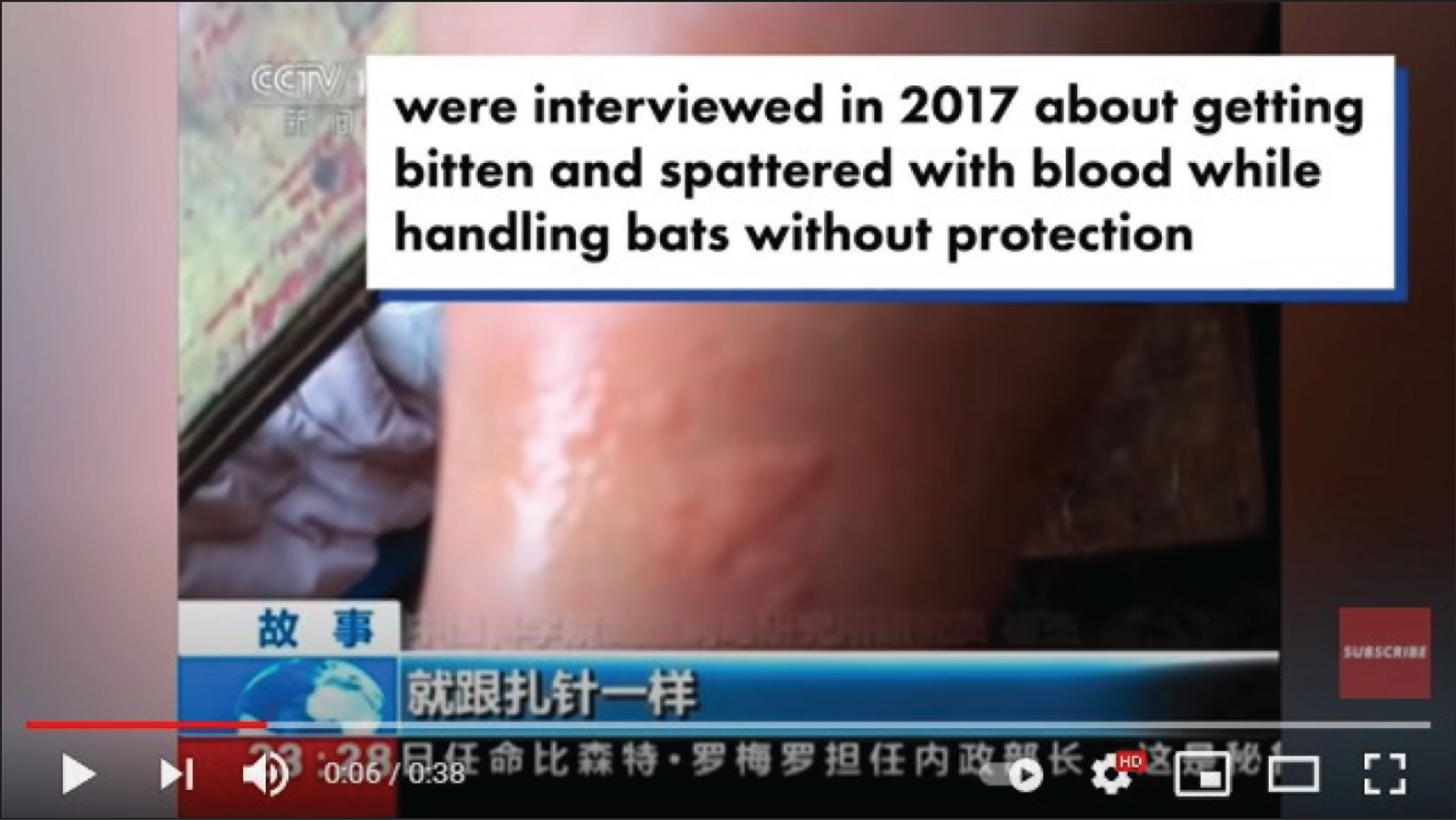
Published in a 2015 paper, in the science journal Nature Medicine, Chinese virologist Zhengli-Li Shi and her colleagues had made this (now explosive) information public (Menachery et al., 2015). This paper, which confirmed that various kinds of coronaviruses derived from bats and animals like Pangolins were, in fact, being researched and manipulated in Wuhan, had been buried under the weight of more influential experts who published their statement in The Lancet journal (Calisher et al., 2020). 1
However, the appearance and spread of this video fragment saw the undoing of the tight grip of scientific experts on the story of the pandemic and the emergence of an open, defiant and horizontal scientific forum. It is important to note that social media users who shared this 2017 video also collaboratively examined its veracity. Reddit and Twitter communities painstakingly subtitled the video again to make sure that there was no room for misinterpretations; screen shots from the video were run through amateur forensic programmes to confirm date and time stamps, and when accounts of some amateur researchers were suspended, other users collectively demanded their restoration (Kannan, 2021). This simple dated journalistic image, when pulled into the energetic world of a post-pandemic open-source scientific community, began to reverberate with a new political and conceptual charge. Alongside this video, the DRASTIC collective had been accumulating important circumstantial evidence since 2020 that directly linked the Wuhan Institute of Virology to Peter Daszak, a British virologist, the invisible author of The Lancet statement and president of EcoHealth Alliance, a non-profit research group that ran a large international programme to survey natural pathogens with the potential to cause a pandemic. ‘The seeker’ noted how word searches through ‘the back alleys of the internet’, downloading and re-uploading virology papers and dissertations from China, interpretive support from other DRASTIC members who offered to read and summarise heaps of academic material and post it to Twitter threads that were then amplified by other users – all went into creating a case for the lab theory (Kannan, 2021). This proposition, once considered fringe and unsubstantiated, has re-emerged so strongly in the last few weeks that nearly all scientific and journalistic establishments have had to take note of it (Wade, 2021). While it is difficult to foretell how the tug between the lab leak theory and the natural origin theory of COVID-19 will play out in the days ahead, it can be argued that the encounter between digital video images, viral replication and the non-expert networked media user has produced a new conceptual mode that has far-reaching implications for the relationship between the epistemic authority and authenticity.
Whether it is the RT-PCR test or the story of the origin of COVID-19, we can see that documentary authenticity is now distributed across digital forums, images and biochemical reactions. Together all these strands are engaged in a precise and coded dance. Just like bats who in the absence of touch or vision sense the world through the process of echolocation, we too could imagine pandemic media and our interpretive commitment to this moment as an echolocative act. At a time when our physical movements are restricted, it is through this critical echolocation that new conceptual paradigms which challenge reactive notions of expert-driven authenticity can be formulated and nourished.
Footnotes
Declaration of Conflicting Interests
The author declared no potential conflicts of interest with respect to the research, authorship and/or publication of this article.
Funding
The author received no financial support for the research, authorship and/or publication of this article.