



Abstract
The COVID-19 pandemic originated in Wuhan, China, in December 2019. The virus has spread across the globe over the last 20 months. In the interest of public health, the World Health Organization (WHO) has declared a public health emergency to harmonise international responses to the virus. In a strongly interconnected world, the effect of the pandemic goes beyond mortality and morbidity. The unprecedented outbreak of COVID-19 has also resulted in a global economic crisis. Almost every sector of the economy has been gravely affected by the pandemic to various degrees.
In an attempt to curb the spread of the virus many countries have initiated measures such as lockdowns, travel restrictions, ban on public and private transportation, closure of schools and colleges and restrictions on public and social gatherings. These initiatives have led to the decline in GDP, foreign trade and foreign exchange reserves, the rise of unemployment, the crash of stock markets and the depreciation of national currencies among other things.
This study assesses the impact of COVID-19 on selected macroeconomic parameters of various Asian countries to present insights on the economic and health crisis caused due to COVID-19. The study analyses the effect of the pandemic on the macroeconomic factors listed above as well as the human cost of the pandemic during the last 20 months. The research finds that the outbreak adversely affected the economy and lives of people in India when compared to selected Asian nations.
Introduction
In early 2019, there were many issues like the US–China trade war and the presidential elections in the United States which created anxiety in global markets leading the International Monetary Fund (IMF) to forecast moderate global growth in the world economy. At the end of 2019, the COVID-19, a disease caused by SARS-CoV-2, changed the outlook of the world economy (Ozili & Arun, 2020). The World Health Organisation declared COVID-19 as a pandemic listing about 3 million infectious cases and 207,973 deaths in 213 countries and territories during March 2020 (WHO, n.d.). The infection was just not a health crisis, but a blow to economic activity resulting in a global economic crisis. Due to fear and uncertainty, there was devastation in various sectors of the global economy. The major stock market index S&P 500 hit a slump and lost over $5t in value with its 10 largest companies suffering a loss of $1.4t based on market capitalisation (Randewich, 2020). Sectors such as transportation, tourism, manufacturing, banking, entertainment, real estate, IT, education, hospitality were affected by the pandemic leading to a significant slowdown in the world economy.
COVID-19 disruptions in a highly integrated world economy can be viewed from two perspectives, first, supply side, and second, demand-side disruptions. The supply-side disruptions encompass a reduced labour supply due to infections in turn leading to low productivity, social distancing and business closure. The demand side disruptions include a decrease in income due to layoffs, unemployment, low levels of consumption and investments during lockdowns (Chudik et al., 2020). The spread of the coronavirus also shook the socio-economic structure of many countries. The pandemic posed new public health challenges to Governments in respect of arranging testing kits, personal protection kits, and creation of health facilities, infrastructure, medical staff, and health support services in a time-bound manner.
The economic impact of the pandemic has not been the same for all countries, each country has been impacted differently. This article attempts to analyse the impact of COVID-19 on the economies of major Asian Countries and also tries to identify which country had a major setback and which were least affected.
In the circular flow of an economy, a change in one macroeconomic factor leads to a change in several other macroeconomic factors hampering the growth of the economy (Wren-Lewis, 2020). Therefore, understanding the possible economic outcome is essential during pandemic times when things are highly uncertain (McKibbin & Fernando, 2020). Currently, there are few studies that throw light on the repercussions of the pandemic on the global and national economies. Domestic policies present a contradictory picture. During the pandemic, there were lockdowns and restrictions on international travel and monetary policy which had a negative impact on the economy. On the other hand restrictions on internal movement and higher government spending had a positive impact on the economic activities (Ozili & Arun, 2020) as did the adoption of containment policy measures such as health and social protection, fiscal policy, industrial and trade policies to safeguard lives and shield the economy from bankruptcy and depression (Kanu, 2020; Zakaria & Fatine, 2020).
The timeline of a pandemic also presents difficulties in assessing its impact as does the varying impact on specific sectors. Thus, some studies projected that the impact of the pandemic would last only until the end of 2020 (Albu et al., 2020), but it has continued beyond 2020. As well, COVID-19 had an uneven impact on different economies given the nature of uneven outbreaks of the pandemic across countries, indicating a high degree of impact on non-Asian Countries and least impact on Asian countries (Chudik et al., 2020). When it comes to impact of COVID-19 on different sectors of the economy, the manufacturing sector is expected to experience a massive hit as manufactured goods are largely postpone-able purchases (Baldwin & Tomiura, 2020). In the same line of reference, the countries relying more on tourism and foreign trade are expected to experience a more severe impact (Fernandes, 2020) and service-oriented economies also experienced a similar impact on the economy (Baker et al., 2020). It is observed that the previous pandemics of 1918–1919, 1957–1958 and 1968 had a mild impact on the US stock market compared to the COVID-19 (Wren-Lewis, 2020) even though mortality rates in previous pandemics like the Spanish Flu were 25 times more than the present COVID-19 pandemic (Baker et al., 2020). Models to assess the severity and spread of the virus among people have been developed, especially in relation to the United States, such as the SIR model. The SIR model, it has been argued, can be used by policymakers to mitigate the economic impact of COVID-19 so that there would be a trade-off between public health and the economy (Atkeson, 2020).
So far studies have evaluated the economic impact on selected macroeconomic variables of the pandemic on the US, UK, Morocco and some developing countries. However, there is a paucity of research on the impact of COVID-19 on the economic parameters of Asian countries selected for this study. Therefore, six major Asian countries are included in the study, namely India, Vietnam, China, Russia, Singapore and Japan, the largest economies and emerging economies in Asia. China, Japan, India and Russia are the largest Asian economies which contribute around 76.44% of Asia’s GDP. Vietnam is included in the study as it emerges as the sole economic winner in Southeast Asia during the pandemic (Nikkei Asia, n.d.). Singapore is considered to be a dynamic economy in Asia (Forbes Custom, n.d.). The macroeconomic indicators used are: GDP, unemployment rate, foreign trade, foreign exchange reserves, stock market indices and the foreign exchange rate. Social indicators include COVID-19 mortalities and number of confirmed Corona cases. The selected indicators are studied from July 2019 to September 2021.
Conceptual Framework
The impact of COVID 19 on socio economic indicators of selected Asian countries is depicted in the Figure 1.

GDP (%) at Market Prices

Analysis
Impact on GDP
The lockdown imposed after the COVID-19 outbreak had an unprecedented impact on various countries’ GDP. Figure 2 depicts the GDP growth rate of various countries. The economy of India, Vietnam, Russia, Singapore and Japan shrank during the year 2020, China’s GDP was negative only in the first quarter of 2020 whereas Vietnam’s economy remained unaffected by the pandemic.

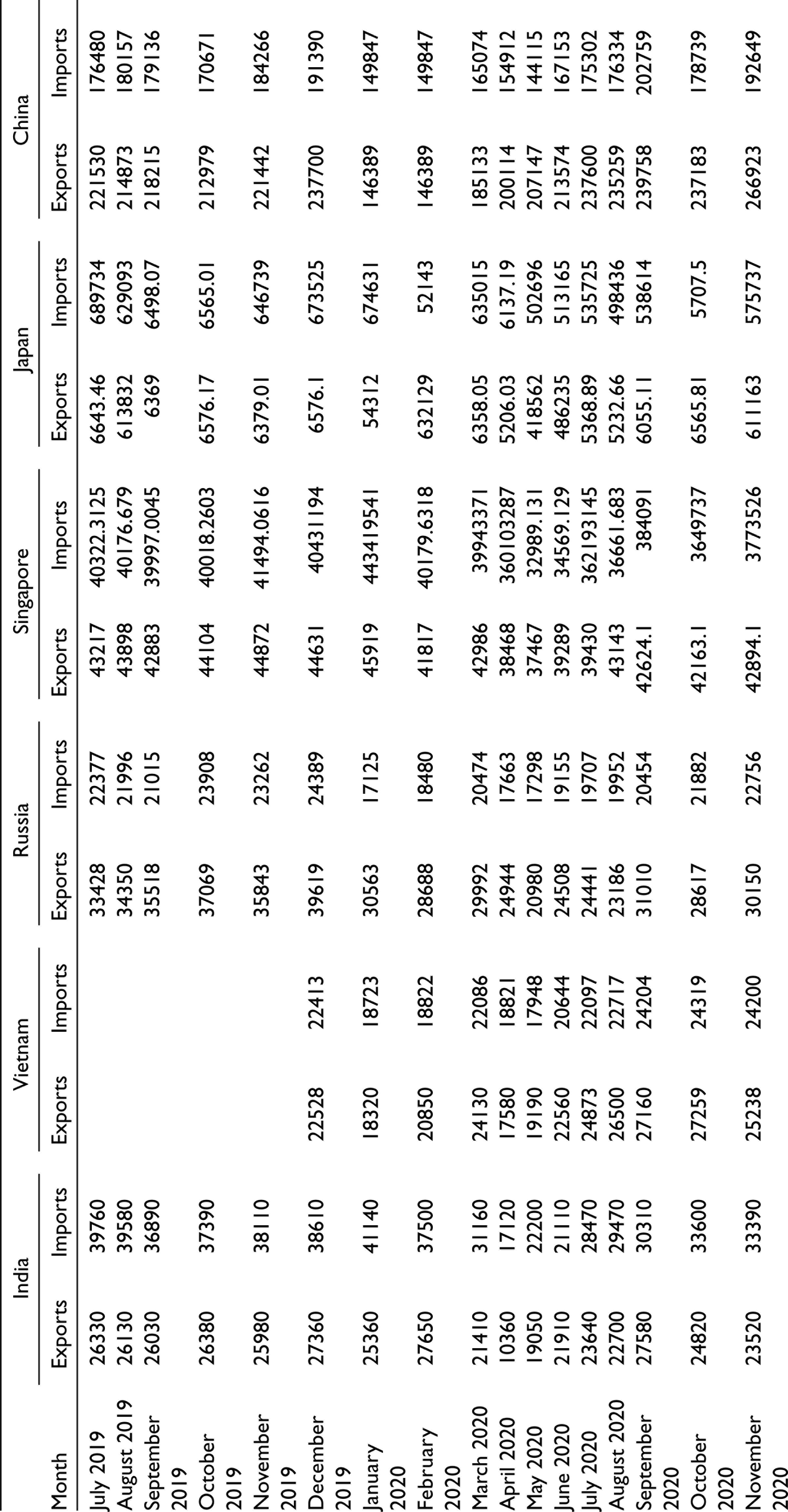
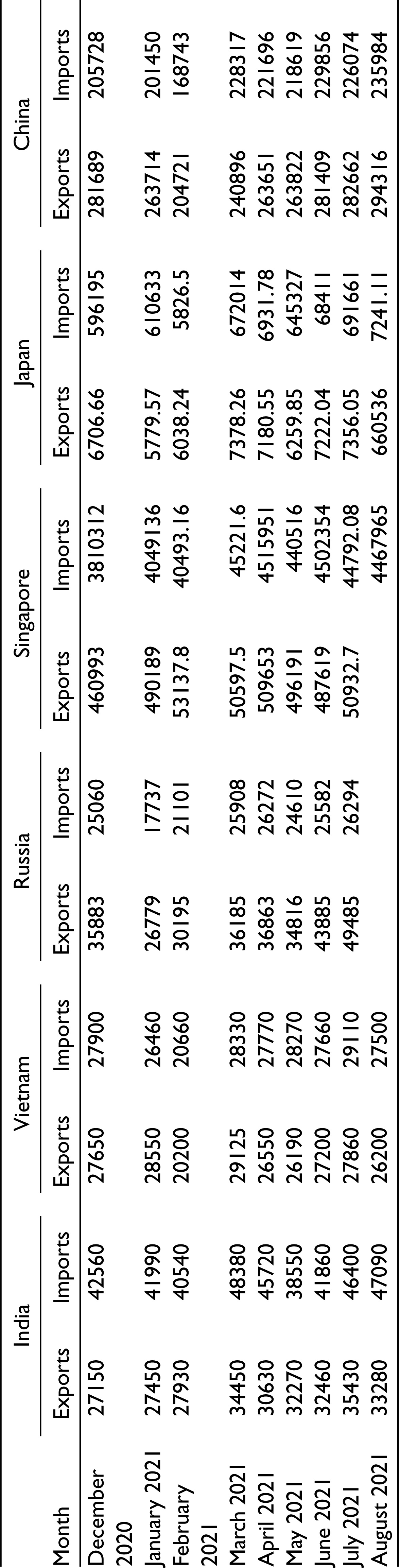
Exports & Imports During the Pandemic (USD Million)
In the second quarter of 2020, India had a major downturn in the economy accounting for the slump of 23.9% when compared to the other countries’ economies, which confirms that the Indian economy had a massive hit due to the pandemic. In Q2 and Q3 of 2020, all the selected Asian nations had a negative GDP except for Vietnam and China. Vietnam’s GDP growth has been hit hard with a massive fall of 89% in Q2 of 2020 however GDP remained positive during the pandemic. On the contrary, all other selected Asian nations had negative GDP in one or the other quarter of 2020. The Chinese economy recovered from the pandemic immediately in Q2 of 2020 and went on doing well in subsequent quarters except that the economic performance in Q2 was lower than the forecasted rate of 5.2% for Q2. The Russian economy had a negative GDP for successive four quarters starting from the second quarter of 2020 to the first quarter of 2021 before recovering tremendously by 10.5% in Q2 of 2021. Singapore’s economy shrivelled drastically by 13.3% in Q2 2020 against an expectation of a 5.4% fall. The negative trend continued in subsequent quarters with 5.8% in Q3 against the initial estimate of 7% and 2.4% in Q4 2020. The Japanese economy was impacted heavily with a 10.1% fall in the Q2 2020 GDP and remained negative side for consecutive six quarters from Q4 2019 to Q1 2021 the longest period compared to other Asian nations. Among the Asian nations, COVID-19 had the least impact on Vietnam GDP followed by China.

Impact on Foreign Trade
In the aftermath of the epidemic, India’s exports contracted by 54.34% in April 2020, compared to the preceding month, exports of Vietnam declined by 27.14% in April 2020 and China’s exports dipped by 38.41% in February 2020 Table 2. The exports from Russia, Singapore and Japan reduced by 15.89%, 2.6% and 6.59% respectively in May 2020 compared to their previous months. COVID-19 harmed the exports of India and China compared to other countries selected for the study.

Due to the outbreak, imports of India plunged by 45.05% in March and April 2020, compared to February month imports. On the other hand, Vietnam’s imports dropped by 18.73% in April and May 2020, China’s imports declined by 21.07% in January 2020. Imports of Russia dropped by 15.51% in April and May 2020, compared to the imports of March month. Singapore and Japan imports also experienced a similar trend recording a decline of 8.39% 18.09% respectively in May 2020.

Overall, in respect of trade balance among the selected countries Vietnam, China, Russia and Singapore had a foreign trade surplus during the study period. Among the Asian countries, India’s imports were badly hit due to the outbreak.
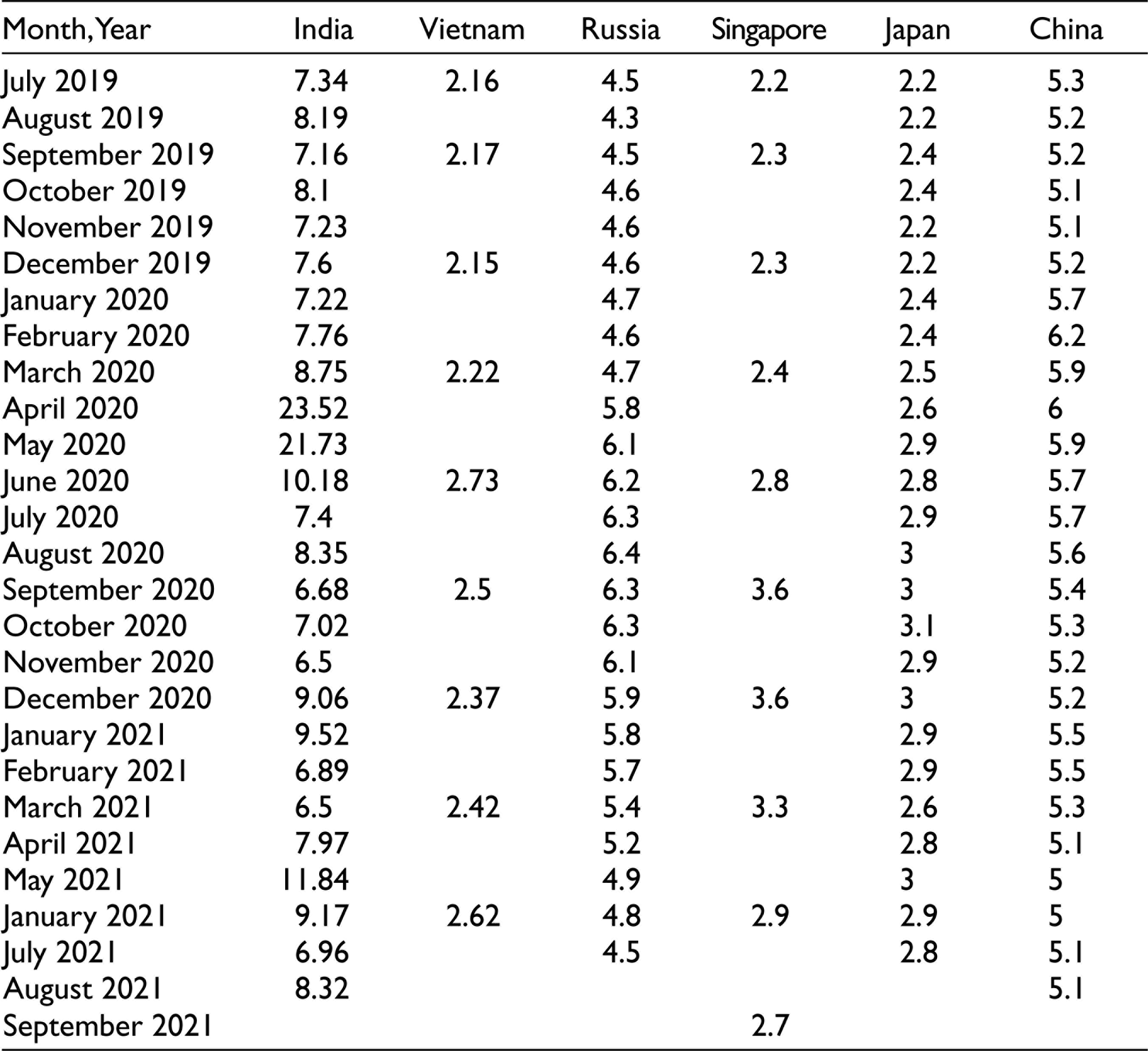
Unemployment Rate in Percentage
Impact on Employment
The coronavirus outburst harmed employment opportunities across the nations. Figure 6 shows that compared to other countries, the pandemic harmed employment opportunities more in India. The unemployment rate stood at a staggering 23.52% in April 2020, reduced to 6.50% by November 2020. Vietnam’s unemployment rate rose to 2.73% quarter ending June 2020 improved by 0.23% in the following quarter. For China, the unemployment rate was at its peak of 6.2% in February 2020. Similarly, Russia’s unemployment was maximum at 6.4% during August 2020. The virus had a negligible impact on the job opportunities in Singapore and Japan.

Impact on Stock Market
It is obvious from Figure 7 that the pandemic led to unprecedented turmoil among stockholders in capital markets. The 30 share BSE index crashed by 37.12% (15341.76 points) during the 32 days between 19 February 2020 (41323 points) and 23 March 2020 (25981.24 points). During the same period, the 50 share NSE Nifty plunged by 4515.65 points (37.23%). March 2020 turned out to be terrifying for equity investors as Indian benchmark equity indices shrunk by nearly 25% in March owing to the highest-ever selling by foreign institutional investors (FIIs). Except for two, all the residual shares in the BSE Sensex dived in March 2020. The benchmark BSE Sensex nosedived 9856 points before closing at 28440.32 on 30 March from 38297.29 on 28 February. Correspondingly, Nifty Index lost 2920 points to close at 8281.1 from 11201.75 during the same period.

Vietnam’s stock market index—Ho Chi Minh Index—was shredded by a massive 18.75% to close at 659.21 on 17 March 2020 from its previous high of 811.35 on 3 March 2020.
China’s Shanghai Composite Index tumbled by 14.61% (455.4 points) to close at 2660.17 points on 23 March 2020 from 3115.57 points on 13 January 2020. In respect of the leading index of Hong Kong, the Hang Seng Index recorded a huge drop of 25.33% to close at 21696.13 points on 23 March from 29056.41 points on 17 January 2020. Singapore’s benchmark Straits Times Index (STI) slumped 7.4% on 23 March recording a major single-day collapse since October 2008. Japanese’s benchmark index Nikkei 225 plummeted by 22.39% around 4776 points in 15 days from 5 March to 20 March 2020. Nikkei index reached its lowest level at 16552.83 in over three years after briefly posting the biggest point fall in nearly three decades as global markets were routed. Similarly, Moscow Exchange (MOEX) plunged by about 30.35 points to close at 80.98 on 18 March from the peak of 111.33 on 20 February 2020, thus recording a fall of 27.26%. Among the selected nations COVID-19 had a devastating impact on Indian capital markets in comparison with other nations.
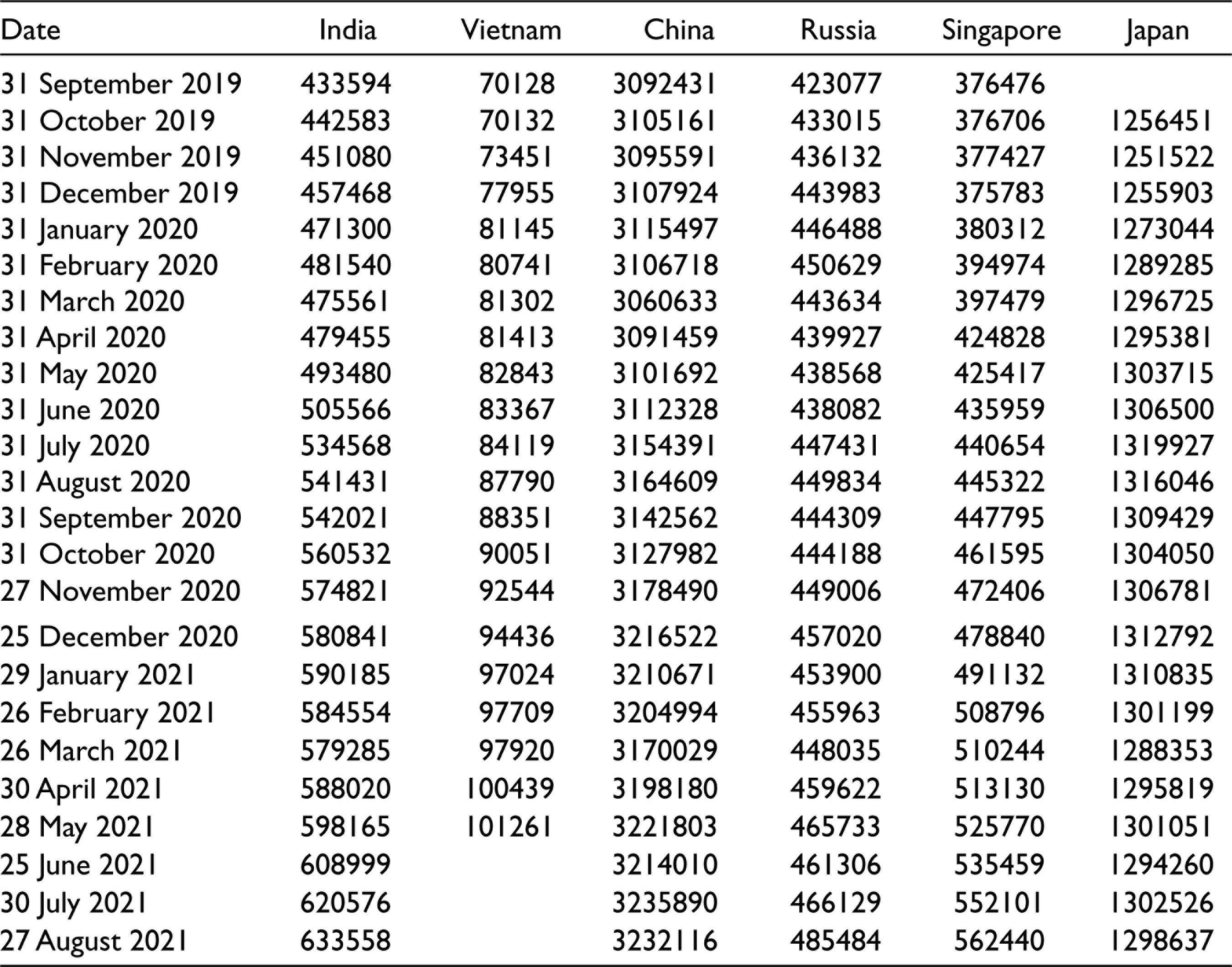
Foreign Exchange Reserves (USD Million)
After the devastating impact of the pandemic on the major Asian stock markets during March 2020, the stock markets started recovering. Among the major indices, the Nifty, Sensex, MOEX and Vietnam Ho Chi Minh Index recovered by 131.07 (2.31 times), 127.15 (2.27 times), 124 (2.24 times) and 104.89% (2.04 times) by 27 September 2021, respectively from their low value of March 2020. In the same way, Japan Nikkei 225, Singapore STI Index, Shangai Composite Index and Hang Seng Index has increased by 84.26 (1.84 times), 36.95 (1.37 times), 35.85 (1.35 times) and 14.86% (1.149 times) respectively from their lowest in March 2020. It is evident from the study that, among the selected Asian nations the capital markets of India, Russia Vietnam and Japan bounced back strongly compared to China, Singapore and Hong Kong.

Impact on Foreign Exchange Reserves
The coronavirus eruption had an insignificant influence on the FOREX reserves of India. India’s Foreign Exchange reserves declined by US$5979m (1.24%) during March 2020 compared to the previous month, Table 4 & Figure 9. Vietnam’s FOREX reserves remained stable during the corona outbreak. On the contrary, China’s Foreign Exchange reserves were reduced by US$46085m (1.48%) during March 2020 concerning the preceding month. The effect of disease on foreign exchange reserves seems to be modest compared to other parameters considered for the study. The pandemic had a moderate impact on the foreign exchange reserves of Russia, Singapore and Japan.

India’s Foreign exchange reserves have evidenced a huge increase of US$157997m (33.22%) by September 2021 from the lowest in March 2020. On the contrary, Singapore and Vietnam’s FOREX reserves increased by 41.5 and 25.41% respectively by September 2021. China’s FOREX reserves have stood at US$3232116m an increase of US$171483m (5.6%) from its low of US$3060633m in March 2020. Among the Asian nationals selected for the study Singapore, India and Vietnam have significantly enhanced their foreign exchange reserves.
Impact on Exchange Rate
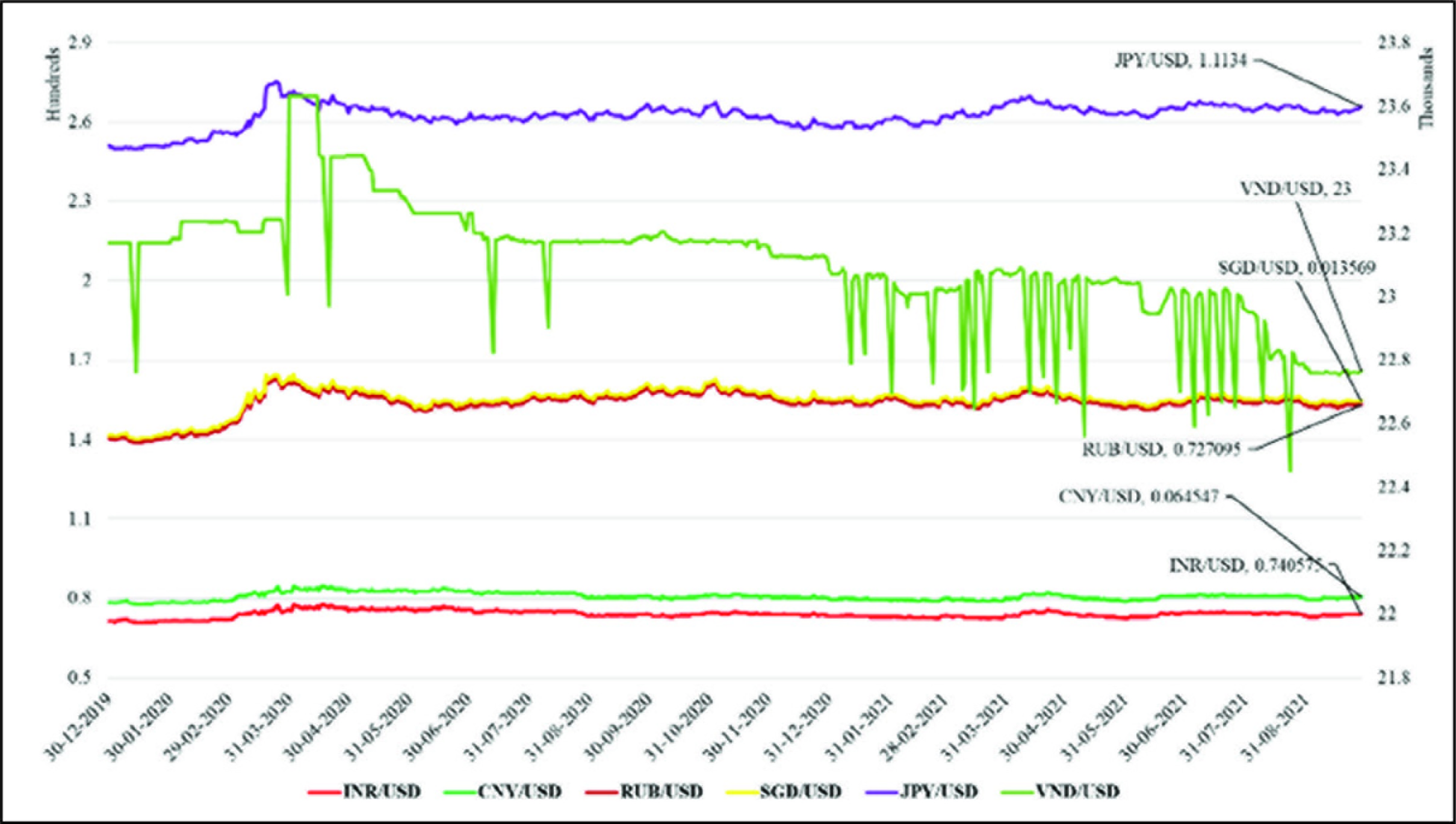
The rupee started devaluing against the USD after the 1st half of January and touched ₹6.9364/$ on 21 April 2020 thus recording a devaluation of 7.98% in 96 days, after which it gradually started appreciating Figure 11.

The Vietnam Dong had multiple devaluations between April to August 2020 but restored its value in a short span every time after depreciation. Overall the Vietnam Dong did well against the USD during the last eight months excluding two large devaluations.
On the other hand, China’s Yuan started falling against the USD after 18 January and reared back at 7.1693/$ on 27 May 2020 recording a drop of 4.51% in 129 days after which the Yuan slowly revalued at 6.8285/$ on 1 September 2020. Among the selected nations the value of the Singapore Dollar and Yuan remained stable against the Dollar. On the contrary, the Rouble, INR, Dong and Yen were more vulnerable to USD.
Impact on Health of People
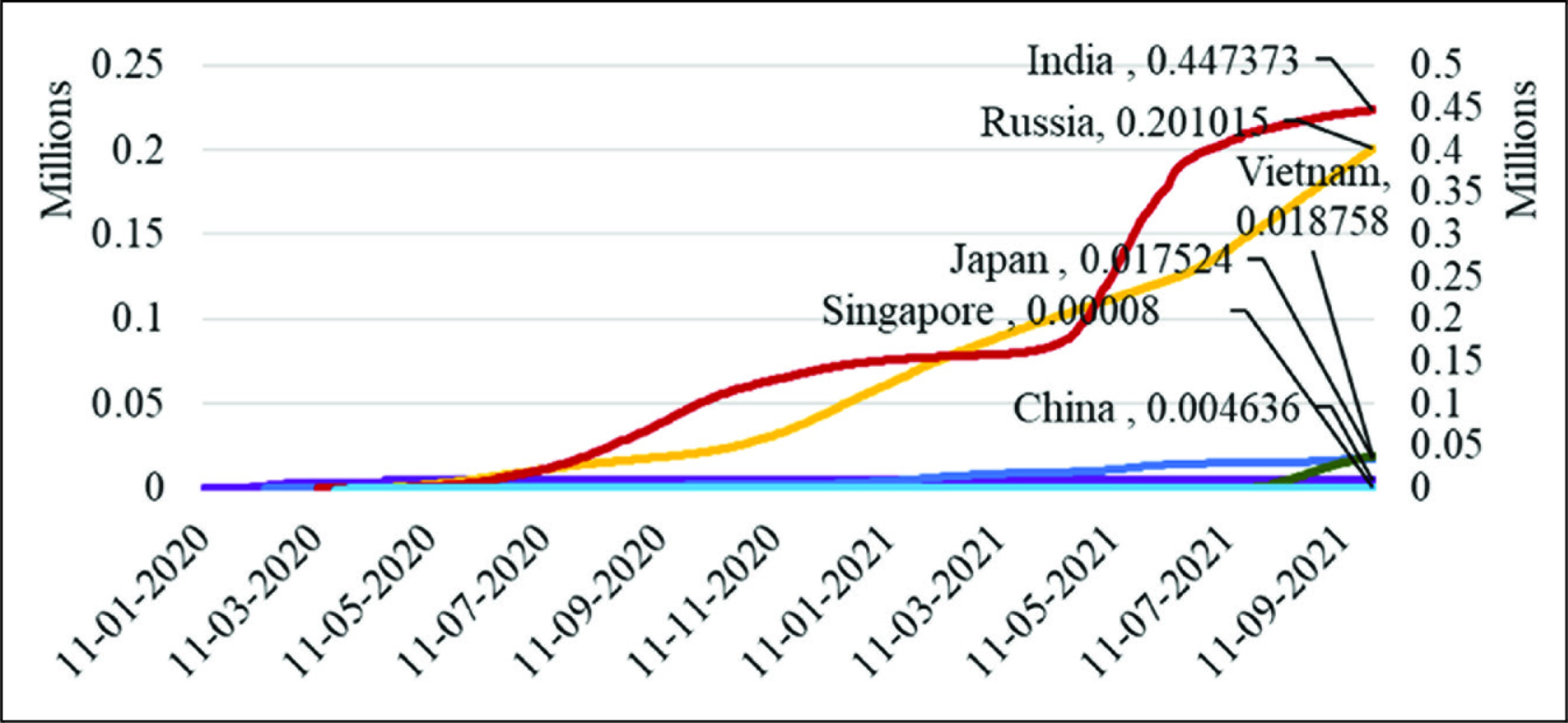
As depicted in Figure 12, in comparison with China, the COVID-19 mortalities were more in India.
China reported its 1st coronavirus connected death on 11 January and the total no of deaths reached 5690 by 27 September 2021. On the contrary, India reported its 1st COVID-19 death on 13 March and by 27 September 2021, the number touched to 446,368. Vietnam reported the first COVID-19 death on 31 July 2020 and the number of deaths reached 18, 017 by September 2021. The first Corona-related death occurred in Japan on 13 February, Singapore on 22 March and Russia on 27 March, by 27 September 2021, the COVID-19 deaths reached 17375, 70 and 202273 respectively. The virus impacted the lives of Indians severely compared to the other Asian countries.
Among the selected Asian nations China (4.57%) had the highest mortality among the infected, followed by Russia (2.74%), Vietnam (2.47%) India (1.33%) Japan (1.03%) and Singapore (0.084%).
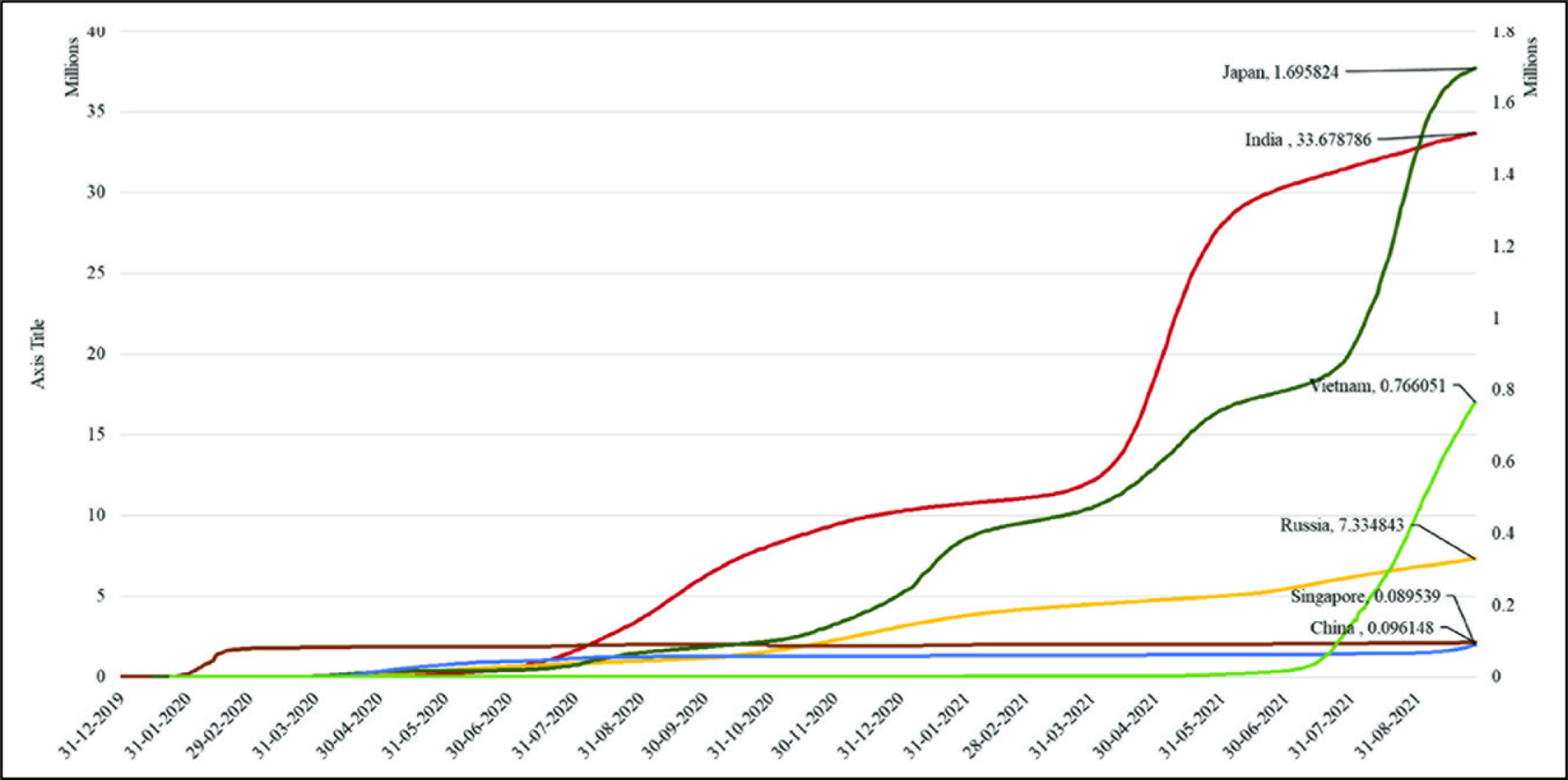
The spread of the Coronavirus has been very punitive in India compared to other Asian countries, this is despite India imposing a countrywide lockdown after 9 corona-related deaths as against China which imposed a lockdown after 30 deaths, Italy after 800 deaths, the UK after 335 deaths, Spain after 200 deaths and France after 175 deaths. India’s total number of corona cases reached 3, 35, 94,803 on 27 September 2021 from the first corona case reported on 30 January 2020. In China, the number of corona cases touched 1, 24,348 by 27 September 2021, since the first virus case was reported on 17 November 2020. Among the selected Asian countries, India (33,594,803) had the highest number of COVID-19 cases, followed by Russia (7,376,374), Japan (1,687,422), Vietnam (728,435), China (124,348) and Singapore (82,860) as on 17 September 2021.
Discussion and Conclusion
Undoubtedly, the pandemic upturned the economies of countries across the world. The extent of the impact on the economy of countries differed subject to the quantum of resources dedicated to face the challenge and the counter-economic measures initiated by the corresponding countries. The level of impact on the lives and well-being of the people was dependent on factors such as awareness and stricter implementation of safety procedures to contain the spread of the disease, availability of necessary health infrastructure, the demographic composition of the population, free, fair and transparent exchange of disease containment related information among the affected countries.
The level of impact on various macroeconomic and social indicators varies among the selected Asian Countries. It was apparent from the study that India’s GDP had a great fall followed by Singapore, Japan and Russia. India’s exports and imports had a major setback during the pandemic. The unemployment rate in India was much higher than in other selected nations. Indian capital markets became more volatile during the outbreak of COVID-19. In terms of foreign reserves, only Vietnam’s FOREX reserves remained stable when compared to those of other countries FOREX reserves. Therefore, the study concludes that compared to the other Asian nations the COVID-19 adversely affected the Indian economy as well as the well-being of the people on all fronts. The service sector, industries and agriculture are the major contributors to India’s GDP. The gradual relaxation of the restrictions imposed on the service sector and manufacturing sector would have a positive impact on the GDP, exports and imports, FOREX reserves, capital markets and employment opportunities. On the other hand, stringent measures to ensure compliance with COVID-related standard operating procedures along with augmentation of health infrastructure would reduce the spread of viruses and mortalities.
It is clear from the analysis that, China may be able to control the spread of disease and deaths more successfully compared to other countries. The question that remained unanswered is how it could effectively do it, in absence of any prior knowledge on the virus dynamics whereas other nations are struggling to restrain the virus. China, as a responsible nation in today’s highly integrated world and in the larger interest of humankind, could have been at the forefront in sharing information concerning the spread and suppression of the virus with other nations. A transparent act of China, which gave birth to the deadly virus, could have helped avoid today’s disarray.
Footnotes
Declaration of Conflicting Interests
The authors declared no potential conflicts of interest with respect to the research, authorship and/or publication of this article.
Funding
The authors received no financial support for the research, authorship and/or publication of this article.