




Abstract
This article assesses the impact of climate change on the fishing activities of businesses, households and fishermen in the Northern coastal villages of Vietnam. From the data published by the state agencies and case studies in some fishing villages in the Northern region, this article assumes that the coastal fishing villages has a long history, making important contributions to the economic and social development. In recent years, fishing activities have expanded but are also affected by the consequences of climate change. Aware of this problem, businesses, households and fishermen have many measures to respond, but the effectiveness is still not high. Therefore, the study suggests that the government should pay more attention to improving the ability to predict early, accurately the location and evolution of rain, storm, etc. Exploiters need to be more proactive in equipping rescue equipment on ships and boats when going out to sea.
Introduction
Climate change affects all fields of economy, society, life and community health. As a country with a long coastline, sea level rise causes serious impacts on Vietnam. According to the recommendation of the Intergovernmental Panel on Climate Change (IPCC), when the sea level rises by 100 cm, the lost land area of Vietnam will reach 40,000 km2 (accounting for 12.1% of the total existing land area), 10 per cent of the Red River Delta and Quang Ninh will be at risk of flooding, resulting in 17.1 million people losing house and land, accounting for 23.1 per cent of the population (OpenDevelopment Vietnam, n.d.).
The North region is used to refer to the geographical region in the North of Vietnam, including the provinces and cities located north of Thanh Hoa province. The North consists of 25 provinces and cities divided into 3 sub-regions (the Red River Delta, the Northwest and the Northeast region). Depending on each historical moment and usage habits, the usage of this concept sometimes has different meanings. It is diverse and complex topography region, including hills, plains, coastlines and continental shelves. In which, there are two big cities, Ha Noi and Hai Phong, where production and business activities take place very actively. This is also a large market for the country’s products. With a dense system of rivers and streams, a long coastline and continental shelf creates favourable conditions for people’s living, production, business and trade activities. The craft villages have been developed quite strongly. People’s living standard has been increasingly improved in recent years. However, this region is heavily affected by climate change, especially in coastal fishing villages.
This article will analyse and evaluate some characteristics of fishing villages, climate change situation and assess the impacts of climate change on fishing activities of fishermen, businesses, households in the fishing village in the Northern region, thereby giving some recommendations to promote actions to respond to climate change of these actors in the region.
This study is based on the government, social report and actual survey results on the activities of some fishing villages and the perception of business leaders, households and fishermen about the impacts of climate change for fishing activities in three northern provinces, including Quang Ninh, Thai Binh and Thanh Hoa. These are three provinces bordering the sea, focusing mainly on fishing and seafood processing villages.
The research method is based on the Contingent Valuation Method approach, thereby determining the willingness to participate, pay and perform for activities to respond to climate change, minimize the impacts caused by climate change on the fishing activities. With a total officially surveyed samples is 150.
Overview of Fishing Villages and Climate Change Situation in the Northern Region
Fishing Villages in the Northern Region
Up to now, the concept of craft village has many different interpretations in Vietnam. It can be a place with a large population, organized activities, with its own rules and customs in a broad sense. A craft village is not only a village that specializes in professions, but also people with the same occupation living in harmony to develop and create jobs in leisure time. It has a long history and is handed down in folklore. Craft villages are both economic development and preservation of national identity and they have different local characteristics compared to other localities (Pham Con Son, 2004, p. 6).
However, in this study, craft village is understood according to legal provisions. Decree No. 66/2006/ND-CP dated 07-07-2006 of the government. It is one or more residential clusters at village level or similar residential areas in a commune or town, there are rural industry activities, producing one or more different types of products.
Fishing village is a craft village where people’s main occupation is exploiting seafood and sea creatures. Fishery exploitation includes fishing activities and logistics activities to capture seafood resources at the sea, however, this study mainly focuses on fishing activities. Fishing and seafood processing activities are often associated with each other at the same craft village. Rarely does a separate fishing village or its own seafood processing appear.
Fishing villages are concentrated mainly in six coastal provinces, in which Thanh Hoa is a province with many fishing villages (Table 1).
Number of Fishing Villages at Some Coastal Provinces in the Northern Region

They were born and developed in association with the national history. They have some main characteristics as follows:
Firstly, the fishing village was born associated with the people’s life in rural areas, attracting a large number of labour forces. It attracts a large part of the workforce and is the main source of income for most households. In coastal areas, agricultural farming activities are not favourable, so seafood exploitation as well as processing is considered an important profession, ensuring people’s lives.
Secondly, the Northern region is an area with a large concentration of population, with an abundant labour force and a large market for seafood products. This is a favourable initial condition for the seafood fishing and processing industry to develop, making an important contribution to poverty reduction and improvement of local people’s incomes.
Thirdly, the seafood processing activities is closely linked with the fishing activities at sea. If fishing in the traditional way, the amount of investment capital is not much, the capital turnover is fast, but if fishing in the modern way, it requires a relatively large amount of investment capital. This is a difficult problem for households and small enterprises in the current period, when the product consumption market expands, it is difficult for traditional fishing methods to meet the increasing customer’s requirements.
Fourthly, the organization of production in these villages is still mainly at the household scale, some have developed into cooperative organizations and private enterprises. The number of fishing units with the scale of 1–3 people accounts for 86.8 per cent, the scale from 4 to 9 people accounts for 13.05 per cent, only about 0.15 per cent of the orders production units with a scale of 10 people or more (General Statistics Office, 2018, p. 487).
Fifthly, fishing villages are still basically small and scattered, with small production areas, production facilities mixed with residential areas, etc. Coherence in production and consumption among villages are almost non-existent. This causes some disadvantages when producing products in large quantities.
Sixthly, fishing technology are still backward, causing resource depletion and serious environmental pollution. Most fishermen, households and enterprises still use the destructive fishing net. Garbage from ships and fishing boats is discharged directly into the sea.
Climate Change Situation
Climate change is attributed directly or indirectly to human activities that alter the composition of the global climate and this change added to the natural variability of climate observed over comparable periods (United Nations, 1992, p. 3). Article 3, Clause 13 of Vietnam’s Law on Meteorology and Hydrology in 2015 defines climate change as a change in climate over a long period of time due to the impact of natural conditions and human activities, manifested by global warming, sea level rise and increasing extreme hydro-meteorological events.
The manifestations of climate change are quite clear in the Northern region of Vietnam, including the following:
First, extreme weather events are increasing in frequency and are more difficult to predict. Up to now, many new records of extreme weather have been set ‘record rain’, or ‘record hot weather’, ‘record flood’, ‘record of storms and floods’, etc.
Regarding the number of storms, in the last 4 consecutive years, Vietnam has recorded more than 13 storms hitting the mainland, although the number of years with more than 13 storms is not many and not consecutive (Table 2).
Statistics of Years with the Highest Number of Storms in Vietnam
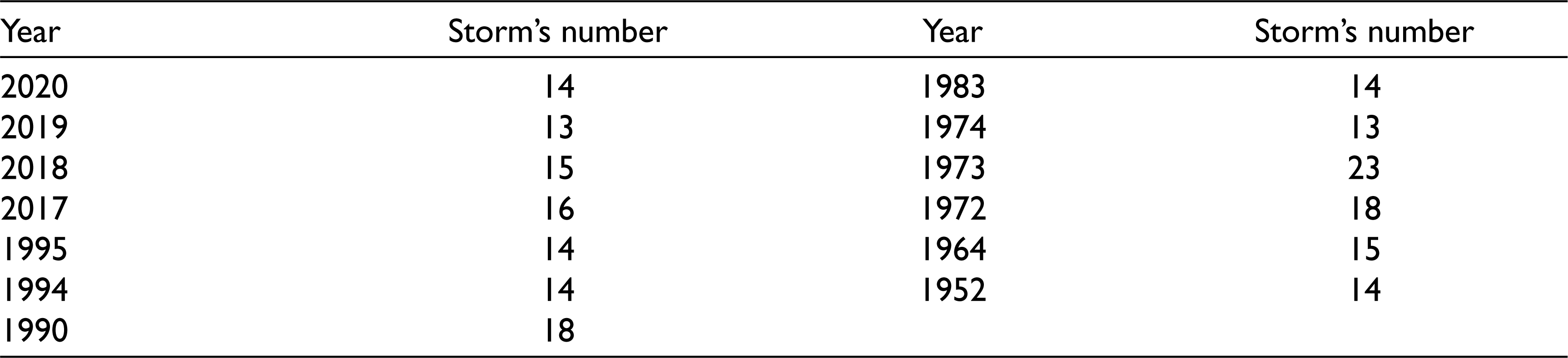
Quang Ninh and Thanh Hoa provinces suffer the most storm number in the period 1945–2018. Hai Phong and Thanh Hoa provinces are suffering from storms with very high warning levels. The northern coastal provinces suffer from 2–5 storms every year. The average gust speed of storms is from 30 m/s to 60 m/s and tends to increase (PowerGIS, n.d.).
The storm is often accompanied by heavy rain and floods. In 2017, there were heavy rains that lasted continuously from mid-June to early October with a total amount exceeding 10 per cent–30 per cent compared to the average of many years. Heavy, unseasonal rain in mid-October in the North caused a sudden increase in the flow of water to the lakes (Dieu Thuy, 2017).
Heavy rains have caused a flood of historic levels in some rivers in Ninh Binh and Thanh Hoa provinces, causing widespread flooding and seriously affecting the safety of the dyke system. Flash floods, landslides on a large scale in mountainous provinces from August 2 to 4, 2017 and from October 10 to 12, 2017 (Dieu Thuy, 2017).
Second, an increase in average rainfall. In fact, the month with the highest rainfall increased from 270 mm in the period 1901–1930 to 281 mm in the period 1991–2015 (OpenDevelopment Vietnam, n.d.). According to the average climate change scenario calculated by MONRE, the total rainfall in the rainy season in Vietnam will increase, in which the rainfall in the dry season tends to decrease trend, especially in the southern climates. For the whole country, the annual rainfall at the end of the twenty first century increased by about 5 per cent compared to the period 1980–1999. In the northern regions, the increase in rainfall will be more than in the southern regions.
Third, the increase of average temperature. The average temperature has increased by 0.7°C over the past 50 years (Nguyen Van Thang, 2010, p. 22). The highest monthly temperature increased from 27.1°C in the period 1901–1930 to 27.5°C in the period 1991–2015 (OpenDevelopment Vietnam, n.d.). According to MONRE by the end of the twenty first century, the annual average temperature could increase to 2.6°C in the Northwest, 2.5°C in the Northeast and 2.4°C in the Northern Delta and 2.8°C in the North Central Coast.
Fourth, sea level will rise. The sea level in the North has increased by about 20 cm at Cua Ong (Ha Long Bay) and Hon Dau (Doi Son) stations. On average, sea level in Vietnam has increased by 12 cm. The average scenario calculates that the sea level will rise by 30 cm by 2050 and by the end of the twenty first century, it will rise by about 75 cm (Nguyen Van Thang, 2010, p. 27).
Impact of Climate Change on Fishing Villages in the Northern Region
The operation of fishing villages in the Northern region is highly dependent on natural conditions. They have both positive and negative impact on fishing activities and human life. The negative effects are emphasized in the article. Climatic factors include temperature, humidity, rainfall, pressure, wind, storm, etc. They impact on fishing output and productivity; fishing equipment, fishing methods and fishing time.
When climate change occurs, the main climatic factors change irregularly and make directly and indirectly impacts on fishing and seafood processing activities (Brander, 2010, pp. 389–402). Water temperature increases, ocean currents change, rainfall increases, summer tends to lengthen, winter shortens affect the growth rate directly, reproductive productivity, behaviour and change the distribution of aquatic species. As temperatures warm up, fish schools are likely to migrate to colder waters. Increased rainfall leads to changes in seawater salinity, which can lead to loss or change in fish channel locations (Institute of Meteorology, Hydrology and Environment, 2011). The changing currents make the upwelling water no longer available, without food for seafood species, they will not gather in the sea area regularly exploited. Changes in the distribution of seafood species will lead to changes in fishing grounds as well as fishing activities. In addition, as temperature and precipitation increase, the affected ecosystems reduce food availability and increase disease outbreaks for marine species (Brander, 2010, p. 389), affecting the revenue and income of people.
This change is recognized by businesses, households and fishermen. By practical experience in fishing, they found that the reserves of most seafood species today are significantly reduced compared to the past.
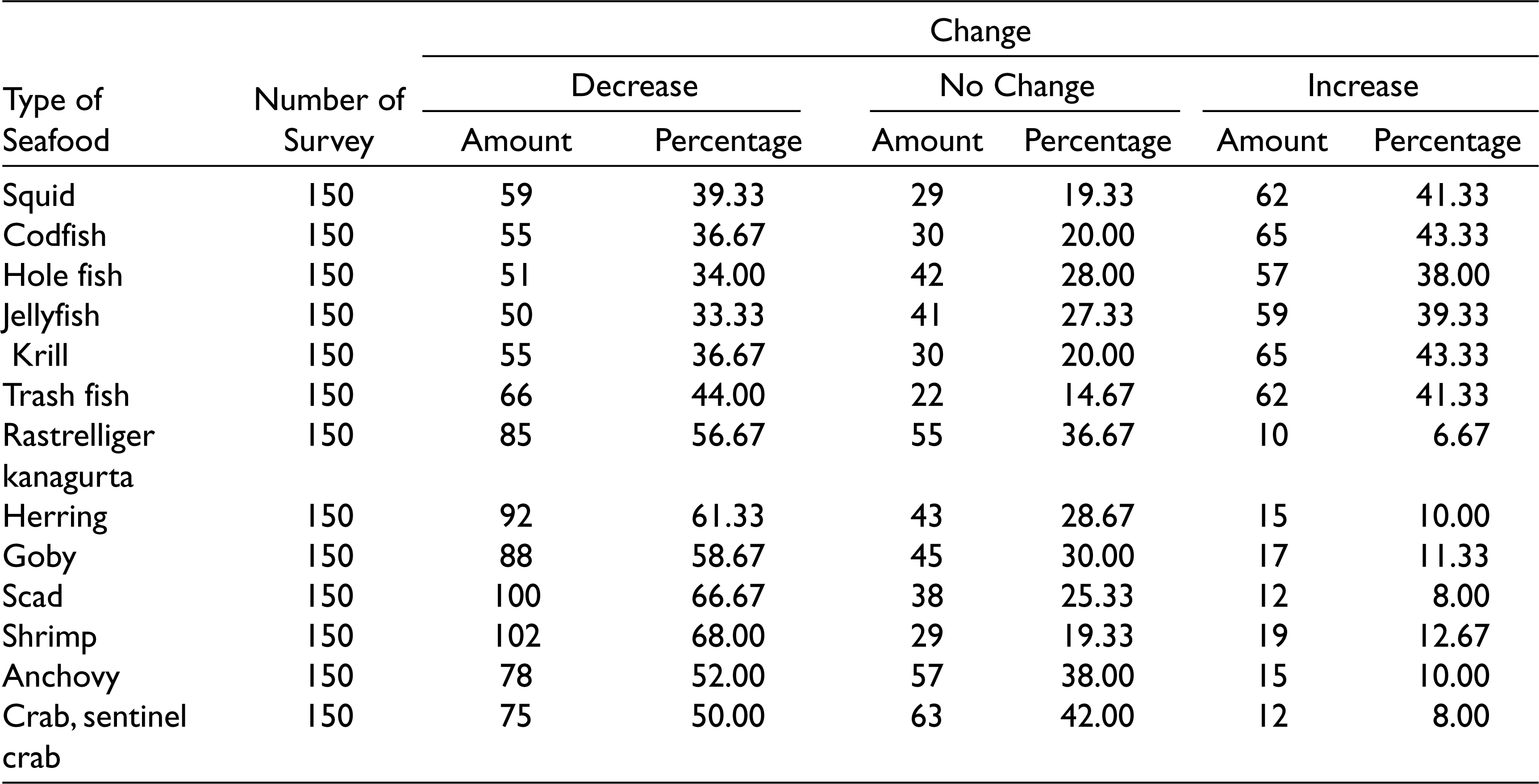
Coastal seafood species such as astrelliger kanagurta, herring, sea goby, scad, anchovy, marine shrimp, crab and sentinel crab have reduced reserves, with the voting rate is quite high, accounting for over 50 (Table 3). Particularly, krill and trash fish have increased, but the voted number for this species decreased was also very large, approximately the same number of votes increased. Offshore marine species are believed increasing, decreasing and remaining the same. This shows that in general, the reserves of seafood in the Northern region tend to decrease. People equip more modern ships and boats, so the catch is higher, so they think that the reserve will increase, but this does not reflect the reality, reserves may not increase. Increased temperature and rainfall, changes in ocean currents cause fish to migrate farther from the shore, so offshore fishing can also increase production.
Changes in Seafood Reserves by Species Compared to the Past
The unusual occurrence, strong intensity and dense frequency of storms, high tides cause great damage to people, properties and expediency of fishing (Institute of Fisheries Planning and Economics, 2012), at the same time can change the fishing schedule and time. In addition, due to the natural characteristics of fish, they often appear between two monsoons, or when there is a storm or tropical depression, or before and after rain (September to November) (Ngo Anh Tuan et al., 2013, p. 244), the number of fishing vessels also increased, increasing the risk of damage. Increased rainfall makes fishing ships and boats vulnerable to damage. The number of ships and boats damaged by storms, tropical depressions and heavy rain was 38 pieces in 2015, 1,459 pieces in 2016, 3,682 pieces in 2017, 107 pieces in 2018 and 243 pieces in 2019 (Standing Office of the National Steering Committee for Natural Disaster Prevention and Control, 2020).
The annual average number of days with suitable wind (grade 0–6) for fishing in the Northern region is 220–240 days (Ngo Anh Tuan et al., 2013, p. 244). In recent years, storms and tropical depressions have increased significantly, causing the average time to decrease. When the sea has a wind stronger than Level 6, boats cannot exploit.
Assessment of climate change impacts on fishing activities is shown in Table 4.
Impacts of Climate Change on Fishing Villages in the Northern Region
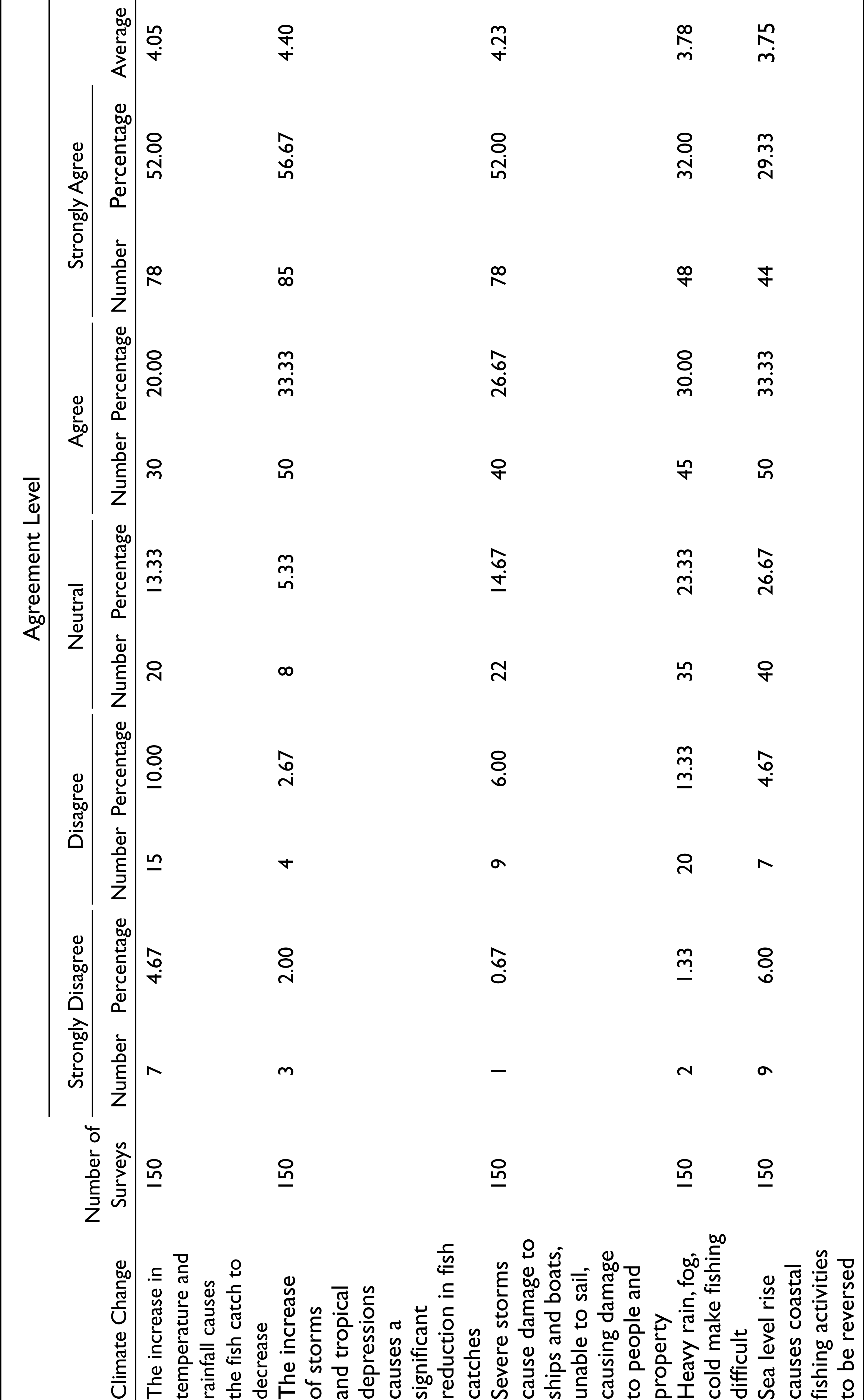
The answer on the level is the subjective and personal opinion of the respondent.
The statement ‘the increase of storms and tropical depressions causes a significant reduction in fish catches’ was agreed by the survey respondents at the highest level with an average score of 4.40; ranked second is ‘severe storms cause damage to ships and boats, unable to sail, causing damage to people and property’ with an average score of 4.23 and finally, ‘sea level rise causes inshore fishing activities to be reversed’ with an average score of 3.75 (Table 4).
In fact, the impact of storms and tropical depressions is very large, and at the same time causes accidents to people, damages boats and fishing gear. Heavy rain, fog and cold have a significant impact on the fishing activities. It is difficult for small fishing vessels to cope with heavy rain, but for large ships with a capacity of over 20 CV, when there is heavy rain, they can still go to sea without causing much impact. In addition, fog can reduce visibility, making it easy to have an accident at sea if the ship is not equipped with a fog light system and does not comply with the speed limit, etc.
To respond to climate change, they need to pay attention to implementing a number of solutions to better respond to climate change, specifically the following in Table 5.
Table 5 shows that ‘improving the ability to forecast early, accurately forecast the location and evolution of rain, storm, low pressure’ and ‘supporting for businesses, households, and fishermen with finance, mechanism to renew and supplement fishing equipment at sea in a modern direction’ is the average score from 4.00 to 4.40; and finally, ‘the government organizes activities to disseminate knowledge and experience of fishing to fishermen’ with an average score of 2.95. So, all people have the correct awareness of climate change and its impact on fishing activities.
Assessment of the Necessity to Implement Solutions to Respond to Climate Change in Fishing Villages in the Northern Region
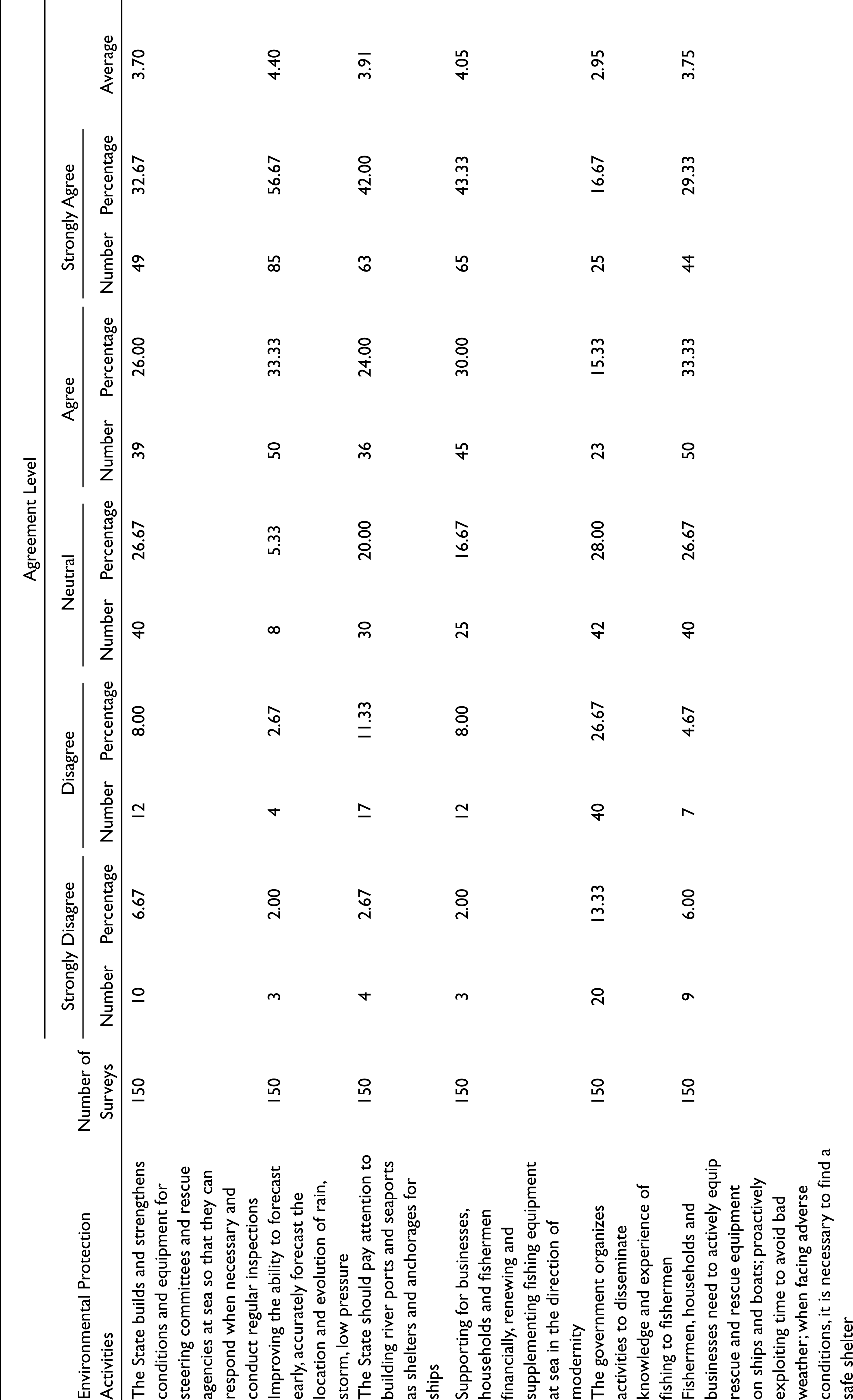

The answer on the level is the subjective and personal opinion of the respondent.
Some Solutions to Cope with Climate Change in Fishing Villages in the Northern Region
The above analysis shows that climate change has a great impact on the activities of fishing villages. People are aware of them. This is a signal ‘positive’ about the fishing villages. People can come up with appropriate response solutions to continue developing fishing activities. Of course, these solutions have close coordination between the State, businesses, households and fishermen.
Firstly, the state should pay more attention to improving the ability to forecast early, accurately forecast the location and evolution of rain, storm and low pressure. For example, it is possible to add more modern coastal meteorological observation stations, with high-precision forecasting technology, using a combination of measurement, natural observation and artificial intelligence to provide accurate and timely analysis. In addition, warning, information and communication systems to the community, fishermen, households and businesses also need to be built so that information about the forecast is transmitted continuously, without interruption. even in extreme climatic and weather conditions.
Secondly, to step up the financial support for businesses, households and fishermen, and to innovate and supplement fishing equipment at sea in the direction of modernity. In fact, the survey also shows that businesses, households and fishermen exploiting seafood in fishing villages also want to have sturdy ships and boats to ensure safety when sailing, but they are still limited by capital. Therefore, it is necessary to deploy programs and support packages from different sources.
Thirdly, the state should pay attention to building river ports and seaports as shelters and anchorages for ships. Currently, the resilience of the disaster prevention and control infrastructure is still limited. For example, there are some mooring areas that have been built, only small ships (with a capacity of less than 300 CV) are moored, while ships larger than 500 CV cannot dock. The reason is that fishermen build ships with large capacity and size, but the distance between the piers between the ships is too small, when there is a strong wind storm, one ship collides with another, causing damage; or the mooring area is too empty, strong waves whenever the boat enters the anchorage, it is often hit by waves, causing no safety. There are provinces where fishing boats and ships have to take shelter from storms in other provinces, which is both unsafe, prolongs travel time and is expensive in fuel. Therefore, in the rainy season, fishermen, households and businesses with fishing activities at sea are very worried.
Fourthly, businesses, households and fishermen need to share, learn and hone their fishing skills and experience in responding to climate change. The authorities and management agencies shall research, coordinate and organize activities to disseminate knowledge and experience of fishing to fishermen. Because of the fact, many fishermen and businesses still lack the skills to prevent natural disasters and storms when exploiting at sea. Businesses, fishermen and households need to be aware and ready to coordinate and cooperate closely in providing and maintaining information and rescue with other ships and with rescue and rescue local agencies.
Fifthly, fishermen, households and businesses need to be more proactive in equipping rescue and rescue equipment on ships and boats when going out to sea. During the fishing process, there have been many accidents of shipwreck, damage to machinery, etc., but people are subjective, lack of measures and equipment for prevention and rescue. For example, the shortage of lifebuoys is quite common in fishing boats, squid fishing boats. Therefore, when a fishing boat is sunk, the fishermen can only escape, clinging to oil barrels and drums, floating at sea until they are rescued. In some cases, the inspection units are easy to let fishermen go to sea when they lack these equipment. To mitigate the effects of climate change, fishing operators should also limit the use of old fuel-consuming machines; increase the use of static fishing gear; reduce the time it takes for ships to come in and out of shore by increasing the use of services from purchasing seafood, providing goods and necessities for offshore fishing vessels, etc.
Sixthly, the State builds and strengthens conditions and equipment for the steering committee and rescue agencies at sea so that they can respond when necessary and conduct regular inspections. Currently, the equipment of the force for natural disaster prevention and control is still limited from people to equipment and support tools, so it is not possible to monitor, supervise, support, rescue and rescue in time. Coastal provinces in the Northern region need to pay special attention to flood and storm prevention. When there is a storm, it is necessary to ask localities to ban ships and boats from going out to sea. The Steering Committee for Rescue and Rescue needs to assign people to be fully on duty, to concentrate all personnel on duty on bad weather days. Establish fishing associations and branches in each area so that they can help each other in bad situations when fishing at sea.
Footnotes
Declaration of Conflicting Interests
The authors declared no potential conflicts of interest with respect to the research, authorship and/or publication of this article.
Funding
The authors disclosed receipt of the following financial support for the research, authorship and/or publication of this article: This research is funded by Vietnam National Foundation for Science and Technology Development (NAFOSTED) under grant number 603.99 – 2018.301 and Vietnam Academy of Social Sciences