




Abstract
India is a developing nation with urban populations growing exponentially and rural villages being electrified. Thus, India is expected to have a high growth rate in energy demand over the coming years for which the nation is heavily dependent on fossil fuels. Solar energy presents an attractive solution to growing energy challenges as it is abundant, inexhaustible and environment friendly. Many programmes and policies have been initiated at both the national and state level for promoting solar energy across all sectors. This article comprehensively assesses various government initiatives for off-grid solar photovoltaic (SPV)/solar water heating (SWH) systems for commercial establishments and brings forth the government perspective in terms of implementation of these initiatives, need for improvements and the lacunas in availing the incentives. The article also presents suggestions given by government officials for better acceptance and implementation of such initiatives.
Keywords
Introduction
Global Energy Scenario
Energy is indispensable for growth of economies. At the same time, it is crucial for sustenance of human life and modern societies (Bureau of Energy Efficiency [BEE], 2012; Planning Commission, Government of India, 2014). However, the world today is facing enormous challenges when it comes to supplying adequate and clean energy to all. The growing world population and economic development put immense pressure on the existing resources. It is anticipated that there will be a further growth of about three- to five-fold in the world economy by the year 2050, which is going to put further pressure on energy sources (Venkatesan et al., 2016). In the coming years, the economies will require such energy sources which are sustainable, affordable as well as environment friendly (International Energy Agency [IEA], 2016). The U.S. Information Administration estimates that energy consumption worldwide will rise by 48% from 1990 to 2040 (U.S. Energy Information Administration, 2016).
Energy Scenario in India
India is globally the third largest nation in terms of energy consumption, owing to increase in incomes and better standards of living. It is estimated that energy use in the country has almost doubled since the year 2000. Over 80% of the energy demands are still met by fossil fuels, primarily coal and oil (IEA, 2021) although India has limited reserves of coal, and therefore, it has to import heavily to meet its energy requirements (Sargsyan et al., 2011).
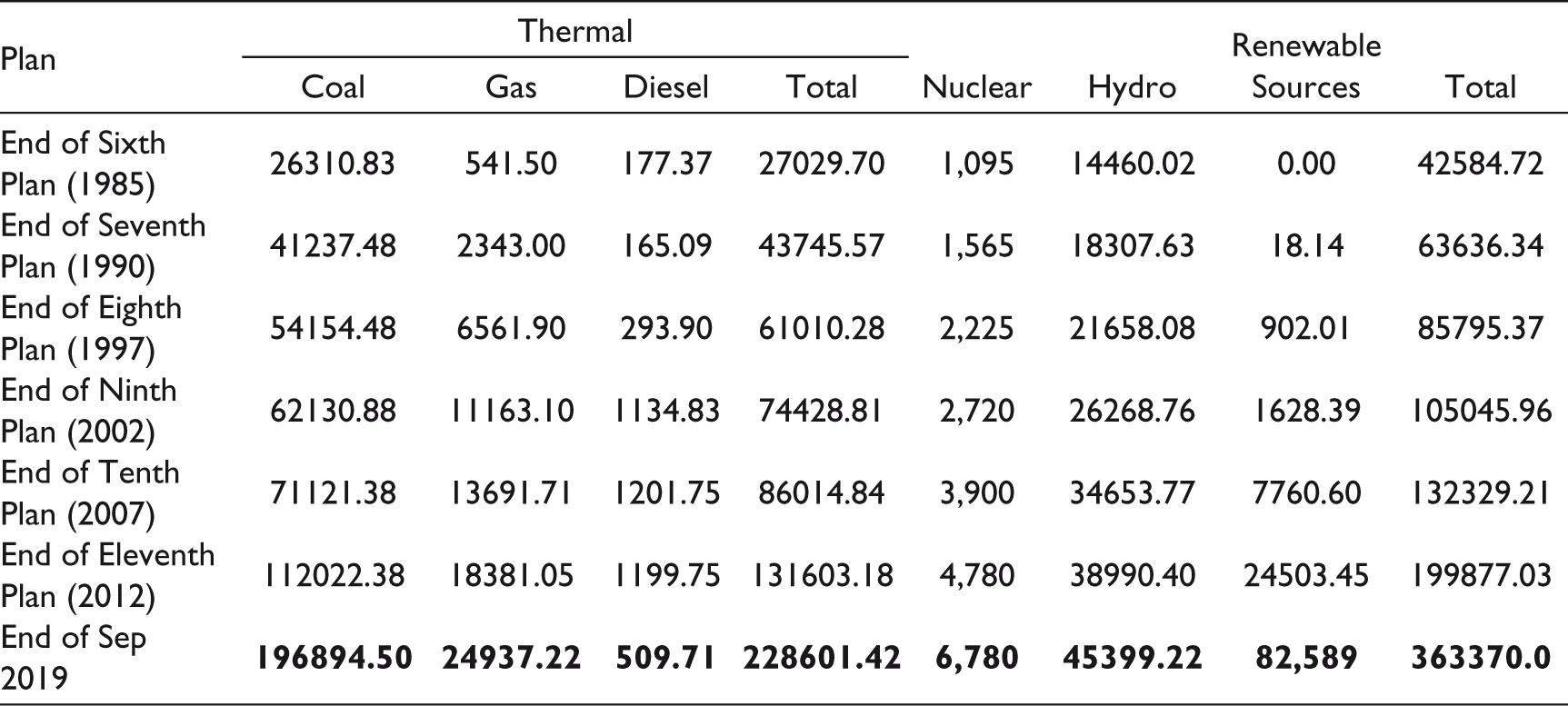
Over the years, as the demands for energy have increased so have the efforts to meet those demands. India’s total installed capacity of electricity generation has expanded from 42,585 MW at the end of the Sixth Five Year Plan in the year 1985 to 388,849 MW by the end of September 2021 (Central Electricity Authority [CEA], 2016; Ministry of Power, Government of India, 2021). Moreover, the tariffs paid by Indian consumers for electricity are among the highest among many neighbouring countries. Table 1 summarizes the growth of installed capacity of electricity in India from the Sixth Plan onwards.
Importance of Solar Energy for India
The total installed capacity of renewable power in India has increased from 28,067 MW in 2013 to 147,096 MW in 2021, indicating immense growth (Ministry of Power, Government of India, 2021; Ministry of Statistics and Programme Implementation, Government of India, 2015). The renewable energy sector has key drivers like the demand–supply gap, environmental concerns, energy security and increased pressure on fossil fuel reserves (Kaur, 2014).
India lies between the Tropic of Cancer and the Equator, with an average annual temperature ranging between 25°C and 27.5°C. Thus, the country has enormous solar energy potential. Currently, India’s total installed capacity from solar energy is more than 42 GW. Out of this, about 6,762 MW is from grid-connected and the rest from off-grid systems. India is expected to have a solar installed capacity of 100 GW by the year 2022 (Ministry of New and Renewable Energy [MNRE], 2021).
Solar energy has a wide range of uses. Off-grid solar applications can be efficiently used to meet individual buildings’ energy requirements in a decentralized manner (MNRE, n.d.). However, studies show that the off-grid solar sector is still largely untapped. At the same time, India’s unmet demand for electricity presents a huge opportunity for off-grid solar energy solutions (Deign, 2015). Further, the land is a scarce resource in India and per capita land availability is low. The architecture suitable for most of India would be a set of individual rooftop power generation systems and, thus, rooftop solar power needs to be promoted (Sethi, 2009). Hence, it is evident that concerted efforts need to be taken to provide impetus to the off-grid solar sector, owing to its numerous advantages.
Government Structure for Promotion of Renewable Energy
Since the early 1970s, renewable energy has been one of the primary elements of the energy planning process in India. The MNRE is the nodal ministry of the Government of India at the central level for all matters relating to new and renewable energy (MNRE, 2016b). The ministry undertakes various initiatives including the implementation of a wide range of renewable energy programmes, research and development, framing national-level policies and so on (MNRE, 2016a, 2016c). For the purpose of this article, the initiatives for off-grid solar energy (SPV and SWH) only for the commercial sector have been discussed.
MNRE has several other bodies under its administrative control, such as the Indian Renewable Energy Development Agency Limited (IREDA) and Solar Energy Corporation of India Ltd (SECI). Furthermore, each state/UT (Union Territory) has a State Nodal Agency (SNA) looking after the renewable energy-related affairs. Electricity is a subject matter of both state/UT and the central government and, thus, many states/UTs have also been taking initiatives to promote solar energy in their respective regions (Prakash, n.d.).
The Government of India is making conscious efforts to develop this infinite source of power and is developing appropriate strategies to promote the accelerated use of solar energy (Department of Industrial Policy and Promotion, Government of India, 2016). The targets for solar energy were increased from 416 MW in the Eleventh Plan to 29,800 MW in Twelfth Plan. These have now been revised to 100 GW to be achieved by 2022 (MNRE, 2021). To support the ambitious renewable energy targets, various state electricity regulatory commissions (SERCs) have also imposed obligations on certain entitles to purchase energy from renewable sources based on each state’s varying renewable energy potential, known as renewable purchase obligation (RPO).
Significance and Objectives
Commercial buildings including institutional and industrial establishments are often considered energy guzzlers. Given the fast-urbanizing trends in India, 70% of the commercial sector is yet to be built. The commercial buildings sector in India is consuming about 8.04% of the total electricity and is growing at a much faster pace as compared to the other sectors (National Statistical Office, Ministry of Statistics and Programme Implementation, Government of India, 2021).
It is thus significant to focus on commercial buildings as this sector has the needed resources to take the solar installation base forward. Furthermore, the continuation of the use of fossil fuels is set to face multiple challenges such as depletion of fossil fuel reserves, global warming and other environmental concerns and, of late, continued and significant fuel price rise. In such a scenario, renewable energy seems to be a good option as it is abundant and inexhaustible. The most important and significant renewable energy source in the Indian scenario is solar energy. India has a geographical location wherein the nation gets about 300‒330 sunny days in a year, which provides a huge opportunity for tapping this resource. The government being the main regulatory body is promoting the use of renewable energy in general and solar energy in particular in the country through their policies, programmes and incentives. Solar photovoltaic (SPV) and solar water heating systems (SWH) are the two most commonly used off-grid solar technologies in the commercial sector and hence were selected for the study.
The study was conducted in six states/UTs of India and aimed at compiling the central and selected state/UT government’s initiatives in terms of its framework and scope in promoting selected off-grid solar technologies in commercial establishments. Further, the study focused on investigating the accelerators, barriers and satisfaction level of selected stakeholders with respect to the government’s initiatives. For the present article, however, emphasis has been laid on the perspective of government officials in terms of the implementation of these initiatives.
Methodology
The study was conducted in six states/ UTs of India. These were selected based on their total solar installed capacity under various government programmes. Gujarat and Rajasthan were selected under the high-performing category, Punjab and Haryana under the medium-performing category and Delhi and Chandigarh under the low-performing category. Government officials and policymakers, both at the central and state/UT levels were included in the study. From the central level, officials were selected from MNRE, IREDA and SECI. From the state/UT level, officials were selected from the SNAs of the six selected states/UTs.
For the study, secondary sources and questionnaires were used as the study tools. Questionnaires were used to collect information on the policies, programmes and incentives offered by the governments (both MNRE and selected states/UTs) to promote SPV/SWH installations in the country. Further, they were used to study the accelerators, barriers and satisfaction level of the government officials regarding initiatives in the country/selected states/UTs for SPV/SWH systems. Confidentiality of information was assured by the researcher at every stage of data collection.
The data collected was analysed both quantitatively and qualitatively keeping in mind the objectives of the study. A coding pattern was made for the responses obtained for each question. Coding sheets were prepared in SPSS 20, in which the coded data were entered and frequencies of responses were tabulated against their codes. Coded data thus obtained were transferred to master sheets, tabulated and subjected to quantitative analysis. Frequency distribution and cross-tabulations were generated as part of the analysis. Statistical measures such as mean and standard deviation were computed. One-way Analysis of Variance or ANOVA and post hoc Tukey HSD tests were applied at appropriate places.
Results and Discussion
Framework of Government Initiatives for SPV and SWH Installations (Grid-Connected and Off-Grid)
The MNRE is the nodal ministry of the Government of India, involved in R&D and framing of national policies and strengthening the institutional mechanism for renewable energy in the country. Established in 1982, it was initially named the Department of Non-Conventional Energy Sources, later upgraded to Ministry of Non-Conventional Energy Sources (MNES) in 1992, subsequently renamed as Ministry of New and Renewable Energy (MNRE) in 2006. MNRE has nodal agencies in every state/UT of India to cater to the renewable energy needs of that particular state/UT and to implement the policies made by MNRE. Some state/UT governments have taken additional initiatives to further incentivize the renewable energy sector (Figure 1). A policy roadmap for solar energy, both grid-connected and off-grid, has been presented in Table 2.
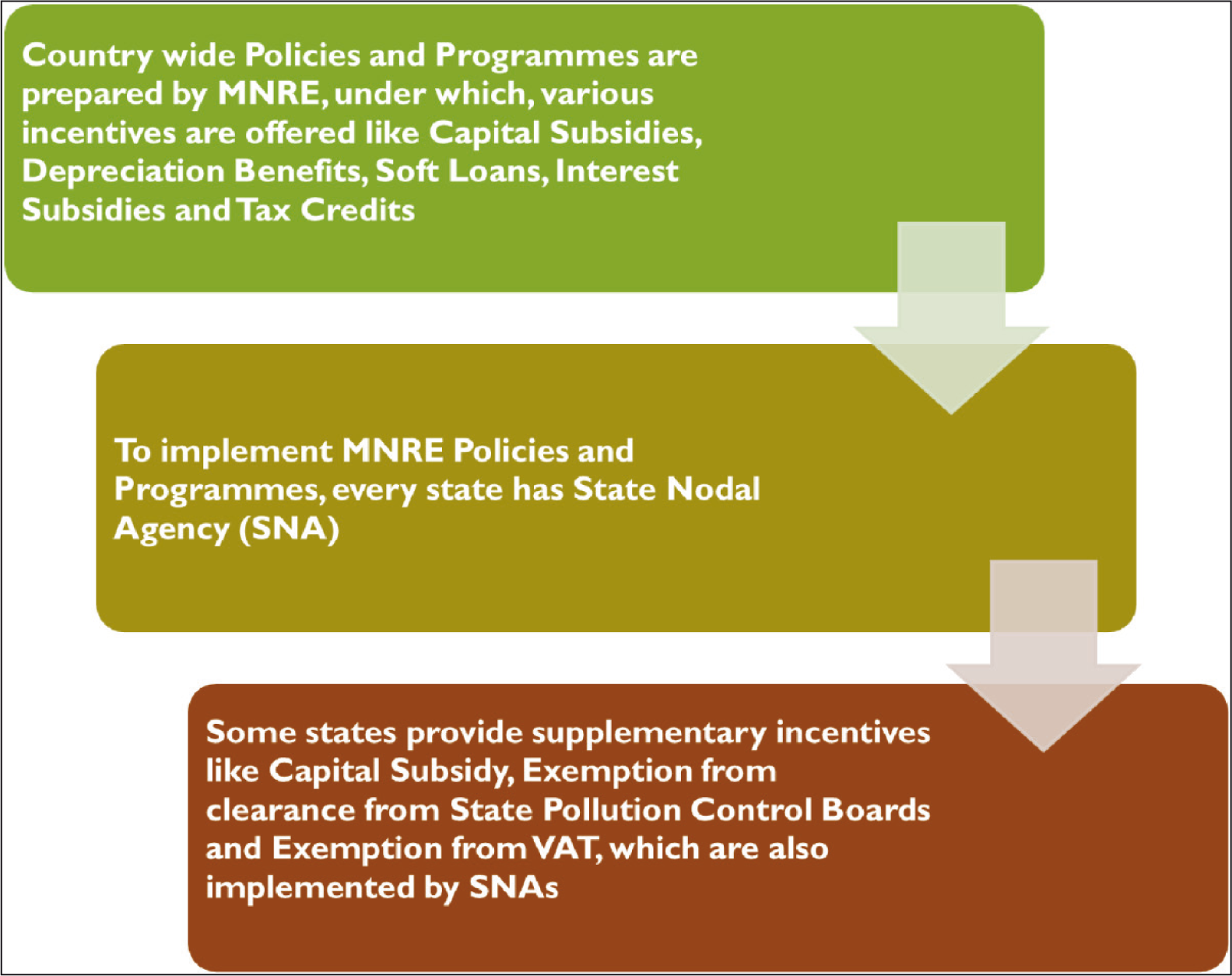
MNRE’s Policy Roadmap for Solar Energy.

An analysis of the policy roadmap showed that one of the major initiatives of MNRE was the Jawaharlal Nehru National Solar Mission (JNNSM), launched as one of the eight missions of the National Action Plan on Climate Change. JNNSM had set an ambitious target of deploying 20,000 MW of grid-connected solar power by 2022, which was increased to 100 GW in 2015. For this purpose, the Mission adopted a three-phase approach: the Eleventh Plan and the first year of the Twelfth Plan (up to 2012–13) were considered as Phase I, the remaining four years of the Twelfth Plan (2013–17) considered as Phase II and the Thirteenth Plan period (2017–22) is envisaged as Phase III. A number of targets have been set for all the phases by MNRE.
MNRE’s Initiatives for Off-Grid SPV and SWH Installations
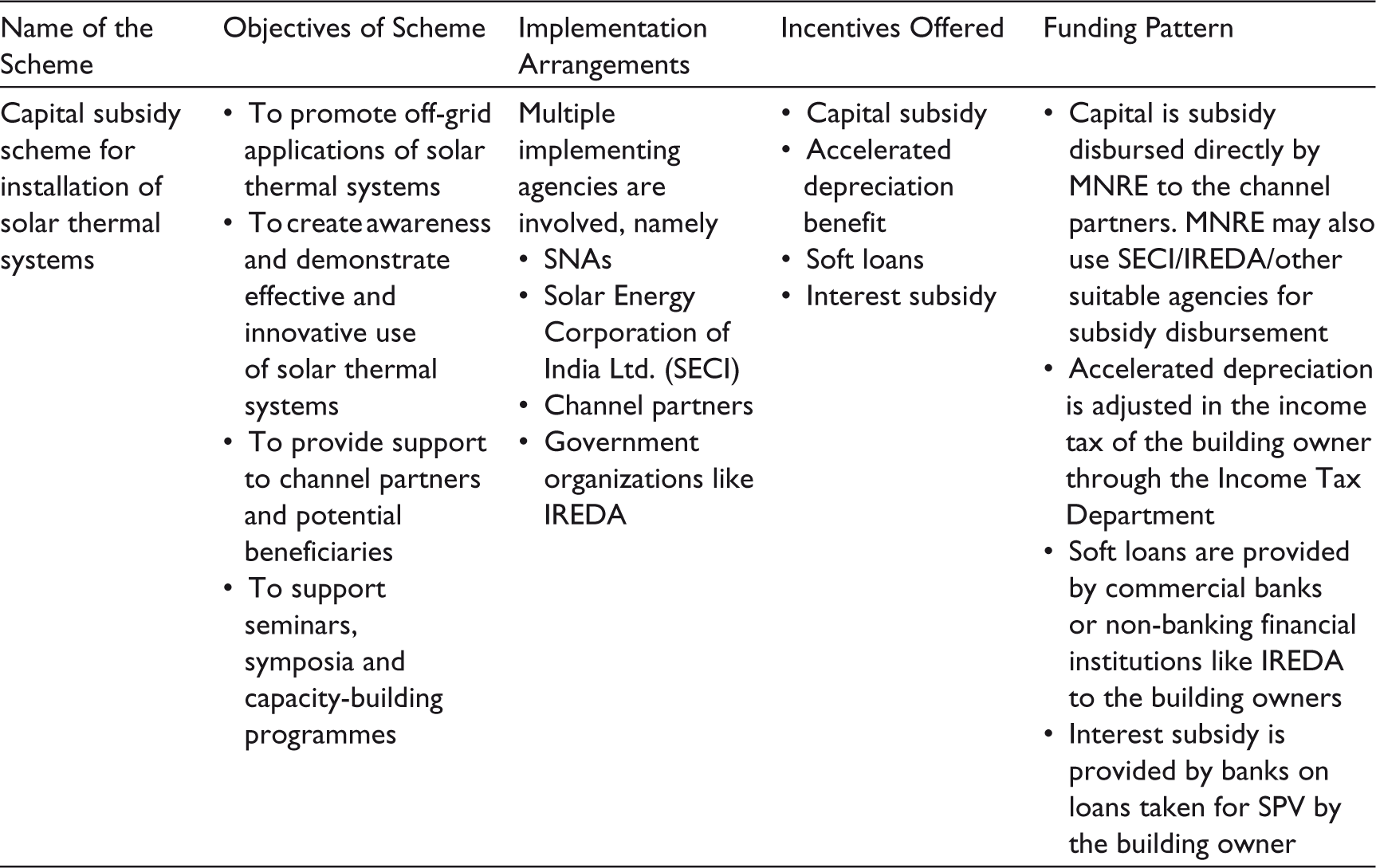
The focus of the study is on off-grid Solar PV and SWH systems for commercial establishments. Table 3 throws light on the off-grid/decentralized Solar PV scheme of MNRE and Table 4 presents the incentives offered by MNRE for the installation of SPV systems. MNRE’s off-grid SWH Scheme has been briefly summarized in Table 5 and the incentives available for this sector have been presented in Table 6.
Programme/Scheme of MNRE for Off-Grid/Decentralized Solar Photovoltaic Installations.

Incentives for Off-Grid SPV Installations Given by MNRE.

Incentives for Solar Water Heating Installations by MNRE.
*Special category states—North Eastern States, Sikkim, Jammu & Kashmir, Himachal Pradesh, Uttarakhand, Lakshadweep and Andaman and Nicobar Islands.
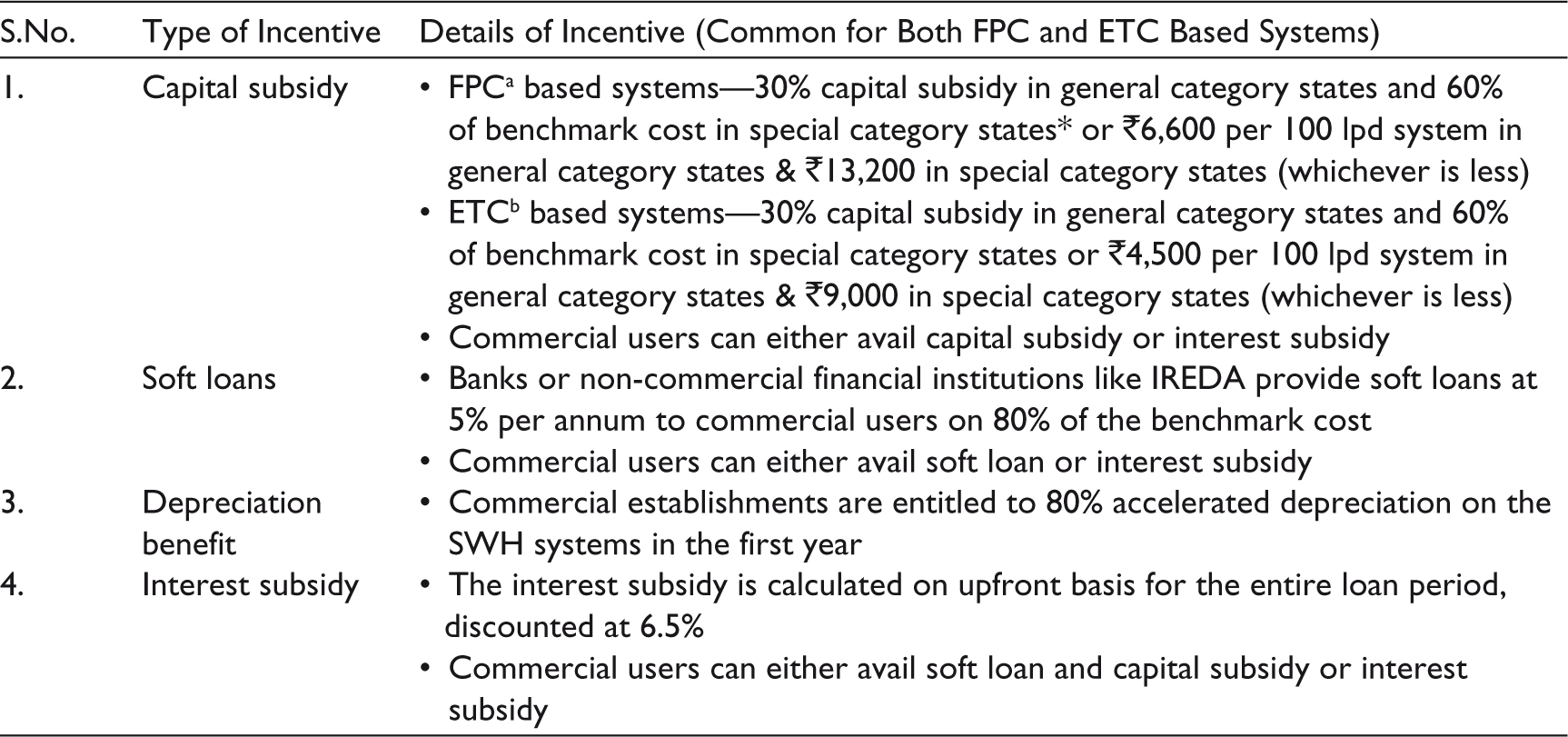
The MNRE programmes/schemes for off-grid SPV and SWH systems are being implemented through a number of agencies including the SNAs and channel partners. Four of the major incentives offered by MNRE are capital subsidy, accelerated depreciation benefit, soft loan and interest subsidy. The capital subsidy is generally calculated at 30% of the benchmark cost of the system, with the exception of special category states. In case of off-grid SPV systems, capital subsidy can go as high as 90% of the benchmark cost in special category states.
Accelerated depreciation benefit up to 80% is provided in the first year of the installation, leading to tax savings for the building owner in the first year itself. Soft loans have been provided by both the commercial banks and non-banking financial institutions like IREDA. These loans normally have lower rates of interest than the market, with flexible terms and conditions for repayment. Interest subsidy is another incentive offered by MNRE wherein loans are given by commercial banks for installation of SPV and SWH systems at a much lower rate of interest. The difference in interest is paid to the bank by MNRE.
The data revealed that there was not much difference in off-grid SPV and SWH systems in terms of the government incentives offered. Only in terms of capital subsidy, it went as high as 90% for SPV systems in special category states; however, for SWH systems, it was only 60% in the special category states. Within SWH, there were some differences in the capital subsidy given to the flat plate collector (FPC) and evacuated tube collector (ETC) systems, as seen in Table 6.
Incentives for Solar Water Heating Installations by MNRE.
*Special category states—North Eastern States, Sikkim, Jammu & Kashmir, Himachal Pradesh, Uttarakhand, Lakshadweep and Andaman and Nicobar Islands.
Responses of Government Officials Regarding Role and Objectives of Government in Promotion of Solar Energy
The data revealed that 15% of the government officials (from the central government and all the six SNAs) were senior directors, followed by about 13% who were project engineers. In total, 10% of the respondents were programme officers, directors, project directors and deputy managers. The least percentage of respondents were general managers and additional directors. It is evident that the government officials interviewed for the study belonged to different managerial levels, thus ensuring that the views of government officials from all the managerial positions could be included in the study.
When asked about the objectives of formulating policies and programmes for off-grid solar installations, varied responses were received, such as reduction in carbon emissions, meeting the peak demands of power through harnessing solar energy, and reducing dependence on grid by promoting off-grid solar systems. Further, government officials stated that the government initiatives were framed with the objective of making the states/UTs self-sufficient in terms of energy and to meet the RPO targets given by MNRE.
Regarding the role of government in promotion of solar energy, varied responses were received. Government officials reported that they were involved in making policies and programmes for renewable energy sources, awareness generation, live demonstration vans and seminars, and providing financial and fiscal incentives for various new and renewable energy sources. The incentives included capital subsidy, depreciation benefits, soft loans, interest subsidy, VAT exemption and other incentives for grid-connected systems. Further, they reported being involved in carrying out research and development for new and renewable technologies, along with other activities for mainstreaming SPV/SWH systems in their respective states/UTs.
Responses of Government Officials on Barriers Faced by Them in Implementing the Policies and Programmes for Off-Grid SPV/SWH Systems in the Commercial Sector
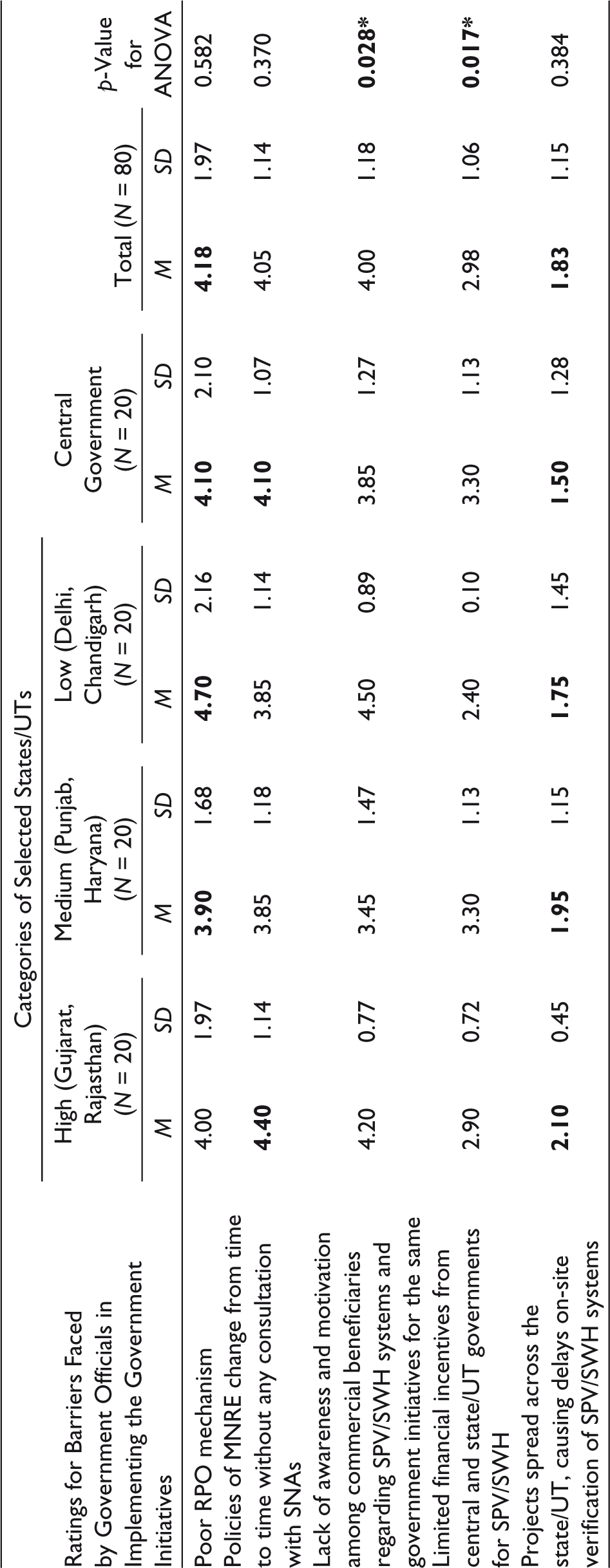
The government officials were asked to rate the barriers faced by them while implementing the policies, programmes and incentives for off-grid SPV/SWH systems. The highest mean rating of 4.18 (on a scale of 1‒5) was given to the poor RPO mechanism, with a standard deviation of 1.97 (Table 7). A mean rating of 4.05, with a standard deviation of 1.14 was given to change in policies of MNRE without consulting the SNAs. This was closely followed by lack of awareness among building owners/managers regarding the benefits of solar energy. This was given a mean rating of 4.00, with a standard deviation of 1.18. Limited financial incentives from the government and the projects being spread across the states/UTs leading to delay in site inspection by the SNAs were given mean ratings of 2.98 and 1.83, respectively. According to the government officials, they received applications for projects from across the state/UT, and site verifications had to be done for each and every project of all the channel partners, which was a huge task. This barrier received a higher mean rating in the high-performing states/UTs because these states/UTs were geographically more spread out as compared to other states/UTs selected for the study.
To understand the difference in the calculated mean scores for barriers faced by government officials among the three categories of states/UTs and central government, a one-way ANOVA was applied. The difference in the mean scores was found to be significant for two of the barriers, namely lack of awareness and motivation among commercial beneficiaries and limited incentives from government for SPV/SWH systems.
Mean Scores Given by Government Officials for Barriers Faced by Them in Implementing the Policies and Programmes for SPV/SWH Installations.
SPV = solar photovoltaic systems, SWH = solar water heating systems;
1 = not important, 5 = very important.
*Significant at p < .05 level. Bold values represent highest and lowest mean values.
The differences in the mean scores among the three categories of states/UTs and central government on their ratings, given to lack of awareness and motivation as a barrier, were statistically significant {F (3, 3.19), p = .028 at 0.05 level of significance}. Post hoc comparisons using the Tukey HSD test indicated that the mean score for lack of awareness and motivation as a barrier was significantly different between the government officials from high- and medium-performing states/UTs, p = .023. As per the government officials from high-performing states/UTs, even if the building owners/managers were aware of the SPV/SWH systems, it was difficult to motivate them because of the high initial costs of SPV/SWH systems. On the other hand, government officials from the medium-performing states/UTs opined that since they were taking concerted efforts, awareness was increasing among the building owners/managers and, thus, it was given a lower rating by them as compared to government officials from high-performing states/UTs.
Similarly, regarding the availability of limited government incentives as a barrier, a significant difference was found in the responses of government officials from the three categories of states/UTs and central government, with F (3, 3.60), p = .017 at 0.05 level of significance. Further, Post hoc comparisons using the Tukey HSD test revealed that the difference in mean scores between the government officials from high- and medium-performing states/UTs for limited government incentives as a barrier was significant at p = .030. This barrier was rated lower by the government officials from high-performing states/UTs, the reason being that government officials from high-performing states/UTs felt that they were taking significant efforts which led to a higher installation base in their states. On the other hand, government officials from medium-performing states/UTs rated it to be higher as they felt that more incentives were needed to increase the installation base in their states/UTs.
Thus, it was found that there was a significant difference in the responses of government officials from the three categories of states/UTs and central government regarding lack of awareness and motivation, and limited government incentives as barriers faced by them.
Suggestions Given by Government Officials for Barriers Faced by Them While Implementing Government Initiatives for SPV/SWH Systems
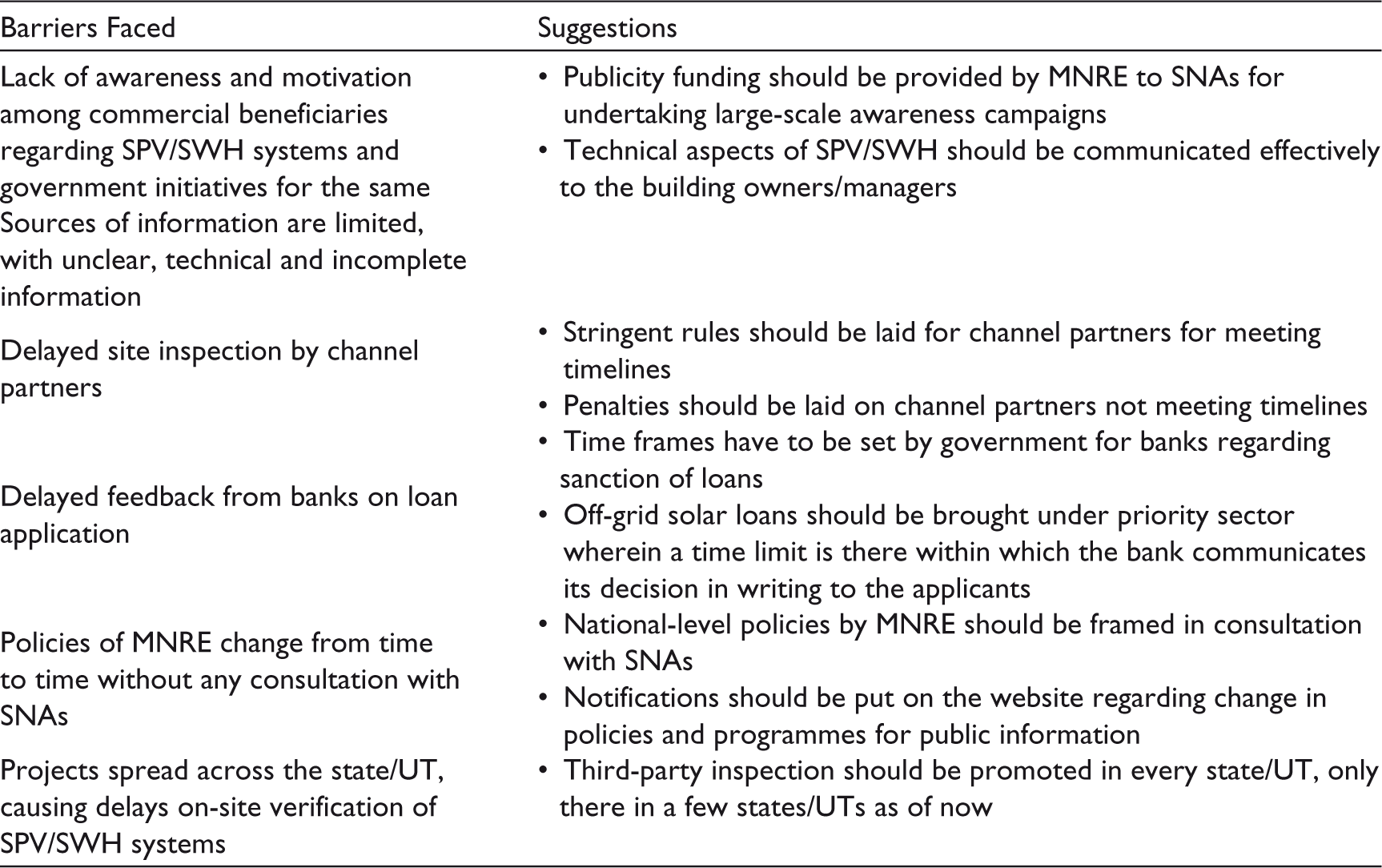
The suggestions to overcome the barriers reported by government officials have been discussed under two categories. The first set of suggestions is related to the barriers faced while implementing the policies and programmes, while the second includes the additional suggestions to increase the solar installation base. It was suggested that publicity funding should be given by MNRE to SNAs to catalyse large-scale awareness campaigns for different sections of society, focusing on government initiatives for SPV and SWH systems. Government officials also suggested having stringent rules for channel partners to meet the time frames for installation and commissioning of the SPV/SWH systems.
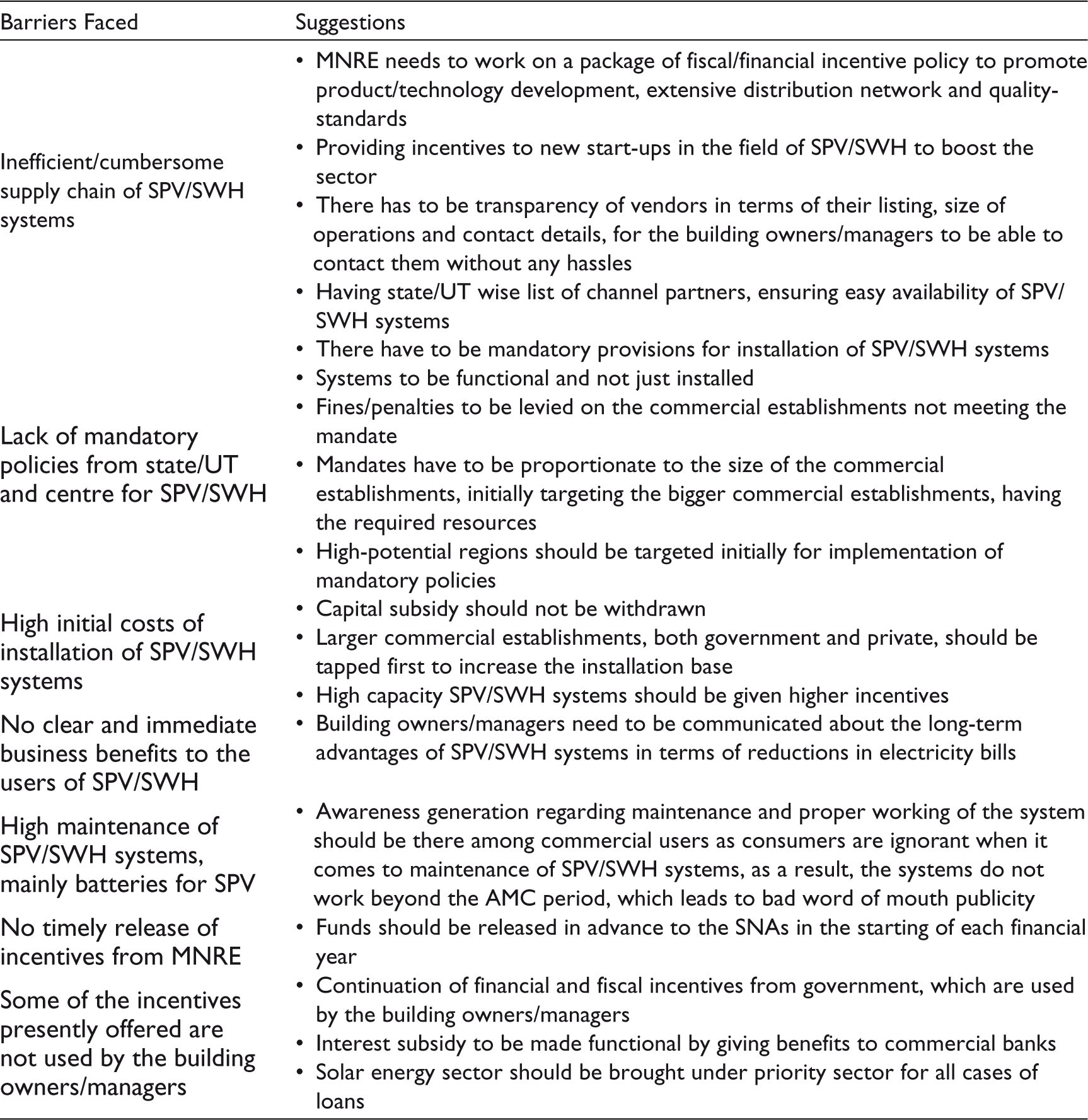
Regarding soft loans, it was suggested that time frames should be set for banks to speed up the process. Moreover, the off-grid solar sector should be brought under priority sector lending. Officials from the SNAs also felt that the national-level policies should be made in consultation with them and the changes should be notified on the MNRE website. Another suggestion given by the government officials was that since the process of site inspection was taking a long-time, third-party inspections should be undertaken, which is being done only in a few states/UTs at present. The details of the suggestions for the barriers reported by government officials have been presented in Table 8. Table 9 further presents the additional suggestions given by government officials to increase the solar installation base in the commercial sector.
Suggestions Given by Government Officials for Barriers Faced by Them and the Building Owners/Managers While Implementing/Availing Government Incentives for SPV/SWH Systems.
Additional Suggestions Given by Government Officials to Increase Solar Installation Base.
Responses of Government Officials Regarding Satisfaction Level with the Government Initiatives for SPV/SWH Systems in the Commercial Sector
Table 10 shows that out of the total sample of government officials, majority (62.50%) were either satisfied or highly satisfied with government initiatives for SPV/SWH systems. On the other hand, only about 21% of the officials were dissatisfied or highly dissatisfied with the government initiatives. It was observed that none of the government officials from high-performing states/UTs were dissatisfied with the government initiatives.
Satisfaction Level of Government Officials Regarding Initiatives for SPV/SWH Systems in Commercial Sector.
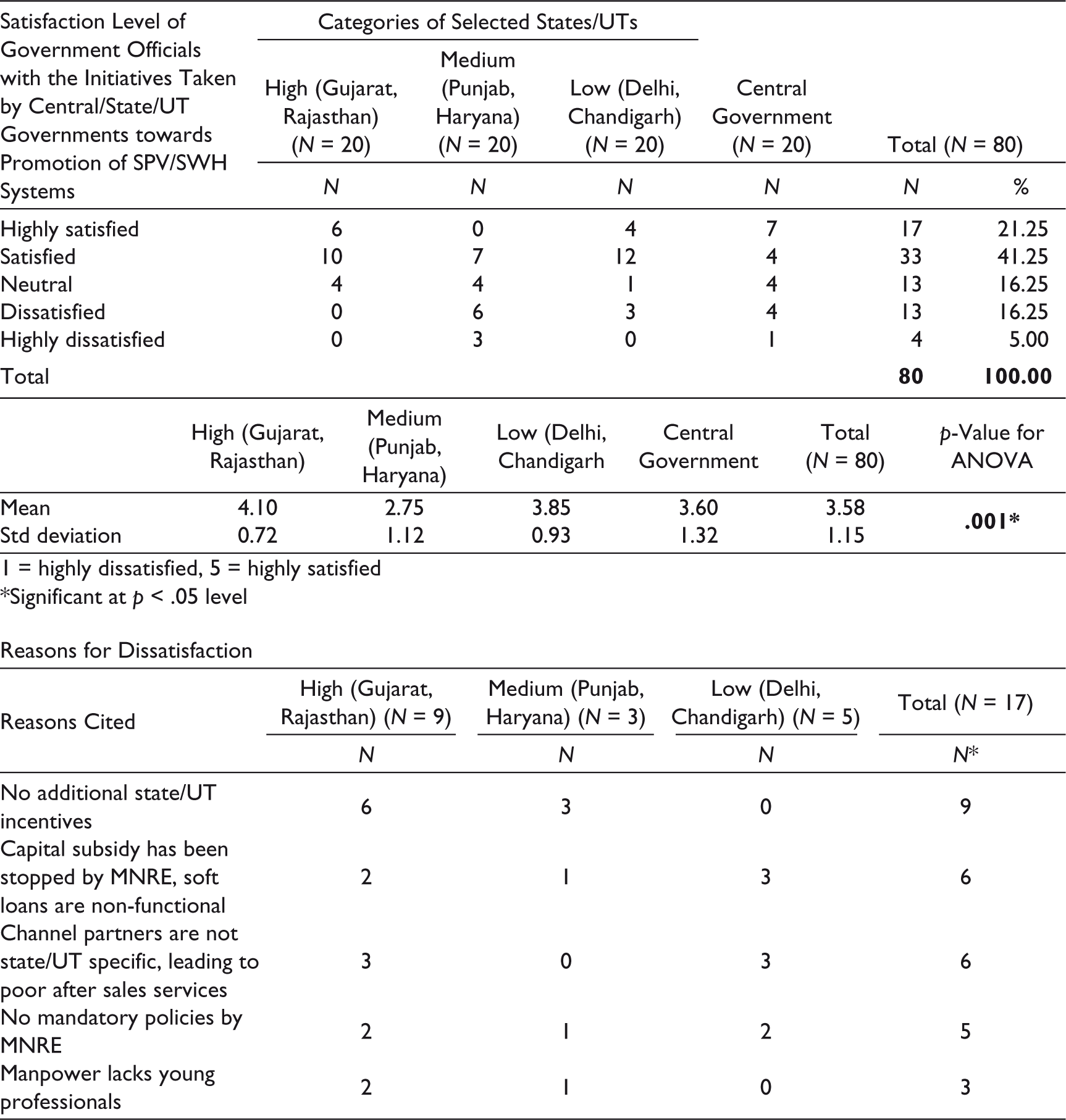
The overall mean satisfaction score was computed to be 3.58, with a standard deviation of 1.15. There were differences found among the different categories of states/UTs. The highest satisfaction score of 4.10 was found in the high-performing states/UTs, with a standard deviation of 0.72, whereas the medium- and low-performing states/UTs received mean satisfaction scores of 2.75 and 3.85, respectively. The central government officials received a mean satisfaction score of 3.60 with a standard deviation of 1.32. Thus, barring the medium-performing states/UTs, all the other categories of states/UTs and central government officials were satisfied with the government initiatives for SPV/SWH systems.
Most of the government officials who were dissatisfied reported that the reason for dissatisfaction was that there were no additional incentives from the state/UT governments, which had a negative impact on the building owners/managers. Six of the respondents said that the reason for dissatisfaction was that the capital subsidy from MNRE had been stopped for both SPV and SWH systems from 2014 onwards. Moreover, the soft loan scheme of the government was practically non-functional. Six of the government officials also said that channel partners were not state/UT specific, leading to poor after-sales services. Five of government officials opined that there was no mandatory provision for installation of SPV/SWH systems. According to them, some mandate, along with policy, had to be there for it to be effectively functional.
To understand the difference in the calculated mean scores for satisfaction of the government officials, a one-way ANOVA was applied. ANOVA showed that the difference in the mean scores for satisfaction was significant {F (6.31), p = .001 at 0.05 level of significance}. Post hoc comparisons using the Tukey HSD test indicated that the mean score for satisfaction levels was significantly different between the government officials from high- and medium-performing states/UTs (p = .007), and between high-performing states/UTs and the central government (p = .001).
Government officials from high-performing states/UTs were found to be satisfied as they opined that they were better than other states in terms of implementation of initiatives, which led to a higher installation base in these states/UTs. On the other hand, the government officials from medium-performing states/UTs were found to be dissatisfied and reported that better incentives needed to be offered to motivate building owners/managers towards installation of SPV/SWH systems. Further, government officials from the central government, who were found to be satisfied, felt that MNRE was taking significant efforts towards promotion of SPV/SWH systems. However, they opined that states/UTs needed to perform better in terms of meeting guidelines in implementing the central government policies and programmes.
Conclusion
India’s energy consumption has almost doubled since the year 2000 with a huge probability of further rapid growth (IEA, 2015). The growing dependence on imported fuels raises several concerns (India Energy Portal, n.d.; IEA, 2015). Accelerating the use of renewable energy is indispensable if India is to meet its commitments to reduce its carbon intensity (Kaur, 2014). Owing to its location between the Tropic of Cancer and the Equator, India has huge solar potential. India is densely populated and has high solar insolation, an ideal combination for using solar power in India.
The government, being the main regulatory body, is promoting the use of solar energy in the country through their policies, programmes and incentives to achieve energy security in a sustainable manner. However, data in terms of government officials’ perspectives regarding these initiatives was found missing. The study made an attempt to understand the impediments to implementing these initiatives from the perspective of the government. Government officials, both from the central and state/UTs, were selected to get an understanding of the government initiatives for off-grid SPV/SWH systems for commercial establishments.
The study is significant as it identifies the bottlenecks in the implementation of the existing policy structure at both the central and state/UT levels. These barriers need to be addressed to have a better policy regime and a favourable environment for SPV/SWH installations to flourish. MNRE should frame the central-level policy in consultation with the SNAs, with specific programmes and incentives for different target groups. Policies should also include a clear timeline to be followed. Further, instead of having separate state/UT-level policies and programmes, states/UTs should assist MNRE in implementing the policies of the central government in an effective and efficient manner without any delays.
With the ambitious target of deploying 100 GW of solar energy by 2022, solar energy is at the forefront of India’s energy policy. The recommendations made in the study will go a long way in improving the acceptability and implementation of government initiatives for increasing the installation base of off-grid SPV/SWH installations in the commercial sector as long-term solutions have been recommended.
Footnotes
Declaration of Conflicting Interests
The authors declared no potential conflicts of interest with respect to the research, authorship and/or publication of this article.
Funding
The authors received no financial support for the research, authorship and/or publication of this article.