




Abstract
Background and Aims:
Traditional, complementary and integrative medicine (TCIM) comprises diverse medical systems and health practices beyond mainstream medicine, emphasising holistic well-being. Globally, 170 World Health Organization (WHO) Member States use TCIM, integrating policies, regulations and research initiatives. India, endowed with rich indigenous systems such as Ayurveda, Yoga, Unani, Siddha, Sowa-Rigpa and Homoeopathy, has made substantial progress in education, infrastructure and research. We aim to provide a bibliometric assessment of TCIM research output from India between 2005 and 2024 using the Scopus database, identifying trends, collaborations, funding and key contributors.
Methods:
Publications were retrieved via a structured Scopus query using terms related to TCIM and India. Data (2005–2024) were analysed using Microsoft Excel, VOSviewer and MetaInfoSci. Indicators included total publications (TP), total citations (TC), citations per publication (CPP), funding patterns, collaborative networks, productive institutions and authors and thematic keyword clusters.
Results:
A total of 207 highly cited publications (HCPs) were identified (TP/year: 10.89), with 39,919 citations (CPP: 192.85). Annual growth averaged 16.42%, with publication peaks in 2011, 2014 and 2018. About 34.78% of articles received funding, mainly from the University Grants Commission (UGC), Department of Science & Technology (DST), Department of Biotechnology (DBT), Council of Scientific & Industrial Research (CSIR) and Indian Council of Medical Research (ICMR). Collaborations involved over 200 foreign institutions, with Iran, Canada, Portugal, Saudi Arabia and the USA as prominent partners. Major research themes linked phytotherapy, plant extracts, metabolic disorders and oxidative stress. Key productive institutions included Jamia Hamdard, Loyola College and Jadavpur University. The top impactful authors were Ayyanar M, Ignacimuthu S and Patwardhan B.
Conclusions:
TCIM research in India shows sustained growth, strong citation impact and increasing international collaboration. Strategic funding, standardisation and global integration efforts can further enhance research output and evidence-based application.
Keywords
TCIM research output from India showed a 16.42% annual growth rate with 207 HCPs garnering 39,919 citations, indicating significant global visibility and influence. Over 200 foreign institutions collaborated with Indian researchers, with major contributions from Iran, Canada, Portugal, Saudi Arabia and the USA. Thematic focus was on plant-based therapeutics, phytotherapy and metabolic/oxidative stress-related disorders.Key Highlights
Introduction
Traditional, complementary and integrative medicine (TCIM) encompasses healthcare interventions, products, disciplines and practices that are largely outside a nation’s dominant medical system. While terms such as traditional medicine, complementary medicine, alternative medicine, holistic medicine and natural medicine are often used interchangeably, their scope varies across countries. Integrative medicine represents an evidence-based blend of biomedical science with TCIM knowledge, aiming to address physical, mental and emotional health.[1–7]
The United States (US) National Centre for Complementary and Alternative Medicine (CAM) categorises it into five domains: Whole medical systems, mind-body medicine, biologically-based practices, manipulative and body-based practices and energy fields. Globally, World Health Organization (WHO)’s 2019 report shows 170 member states using TCIM, with varying levels of national policy adoption, regulation and institutional research capacity. These developments align with WHO strategies to ensure TCIM safety, efficacy and accessibility.[8–12]
India possesses an extensive heritage of TCIM systems, formally recognised under the Ministry of Ayush: Ayurveda, Yoga and Naturopathy, Unani, Siddha, Sowa-Rigpa and Homoeopathy. The Ayush sector features a robust educational infrastructure with more than 900 undergraduate and 250 postgraduate institutions and a nationwide network of hospitals, dispensaries and co-located facilities in conventional health centres.[13–15] This is supported by a large manufacturing industry. The 2022 establishment of the WHO Global Centre for Traditional Medicine (GCTM) in Jamnagar underscores India’s global leadership.[1,16]
Ayush research priorities focus on evidence-based studies, modern diagnostic integration, protocol standardisation and international collaborations.[17–19] Global interest in TCIM, rising patient demand and openness among conventional practitioners have fuelled research productivity and literature growth.[20–22] Bibliometric analysis, a tool to statistically assess and map publication patterns, aids in identifying trends, collaboration networks and research impact.[23–25] While some global and national studies exist,[26–37] no comprehensive bibliometric assessment has been undertaken specifically for Indian TCIM research.
This study analyses TCIM scholarly output from India (2005–2024) indexed in Scopus, assessing publication trends, citations, highly cited publications (HCPs), subject clusters, funding sources, collaborative patterns and key contributors. By mapping these dynamics, the study aims to guide evidence-based research policy, funding prioritisation and international integration.
Material and Methods
The core publications on ‘traditional and complementary medicine’ research originating from India were searched, identified and downloaded from the Scopus database using a well-defined search strategy, based on a set of relevant keywords along with their synonyms and with the use of Boolean operators. The selected keywords in combination were placed in the ‘keyword’ tag in the ‘advanced search’ functionality of the Scopus online database covering the period of 20 years from 2005 to 2024. In total, 4,595 documents were identified on the chosen research topic and sorted in decreasing order of citations, with only the top 207 documents, which had received 100–1,082 citations, selected for detailed analysis. These are assumed HCPs. These 207 HCPs were subsequently analysed for bibliographic features of downloaded publications related to authors, organisations, collaboration, funding and keywords using additional sorting features in the Scopus database.
Bibliometric aspects studied include the total publications (TP) and citations, publication years, types and source of publications, top 10 funding agencies, top foreign collaborating countries, organisations and authors, core institutions, authors and journals and other sources. The top 10 most cited articles were gathered using an Excel spreadsheet. The Microsoft Excel, VOSviewer and MetaInfoSci software were employed to study, map and visualise the collaboration network of countries, organisations and authors. Network maps were constructed to depict the co-occurrence of author keywords appearing in titles or abstracts, which helped us to segregate terms into distinct clusters, which were further enhanced by colour coding based on their temporal distribution. The analyses used a select number of bibliometric indicators to assess research performance, focusing on productivity, citation impact and collaboration. The following search strategy was used:
Key (‘traditional and complementary medicine’ OR ‘CAM’ OR ‘integrative medicine’ OR ‘integrative health’ OR ‘traditional medicine’) AND PUBYEAR > 2004 AND PUBYEAR < 2025 AND (LIMIT-TO (AFFILCOUNTRY, ‘India’)).
Results
Year-wise Performance of the Highly Cited Publications
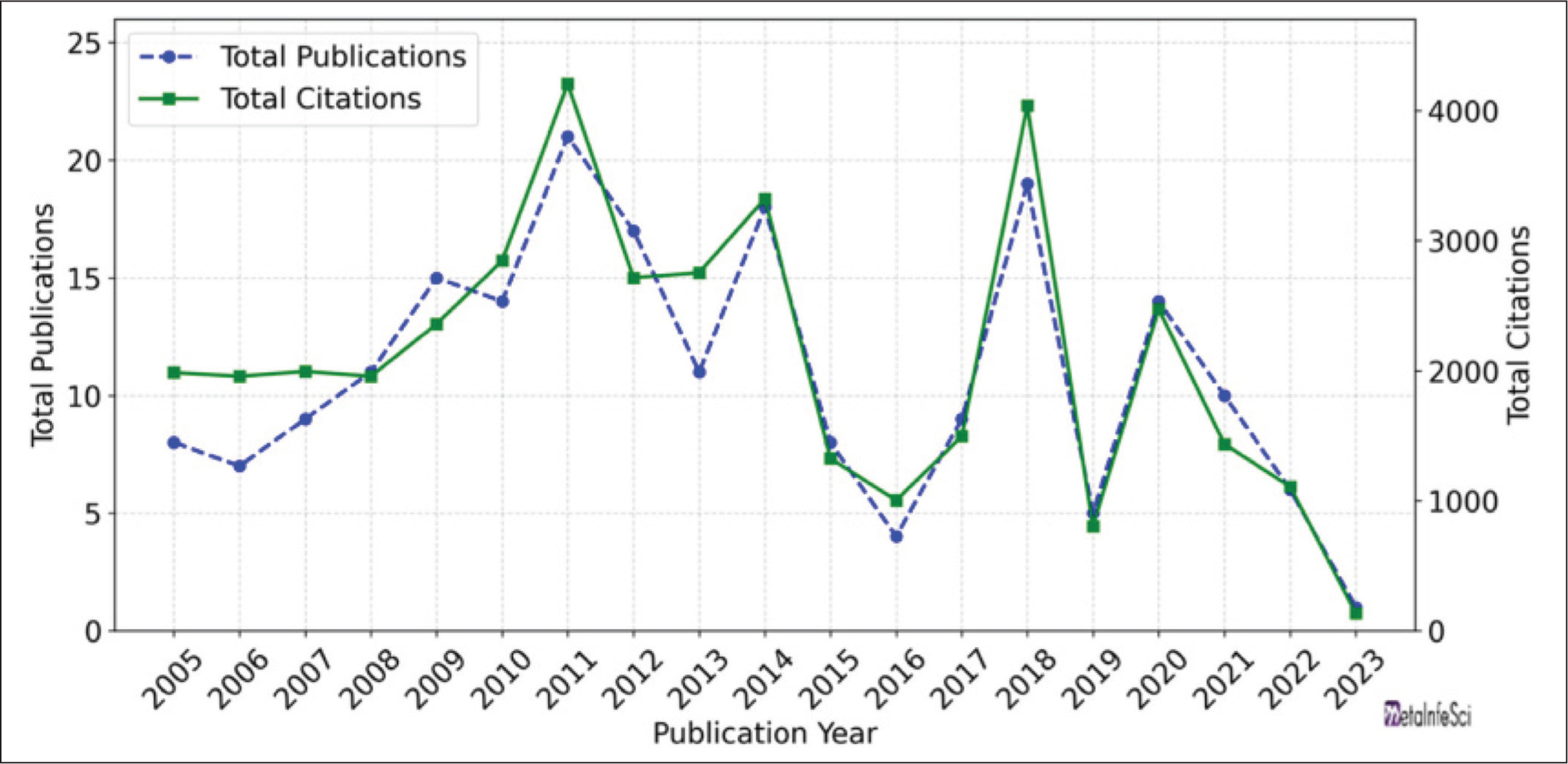
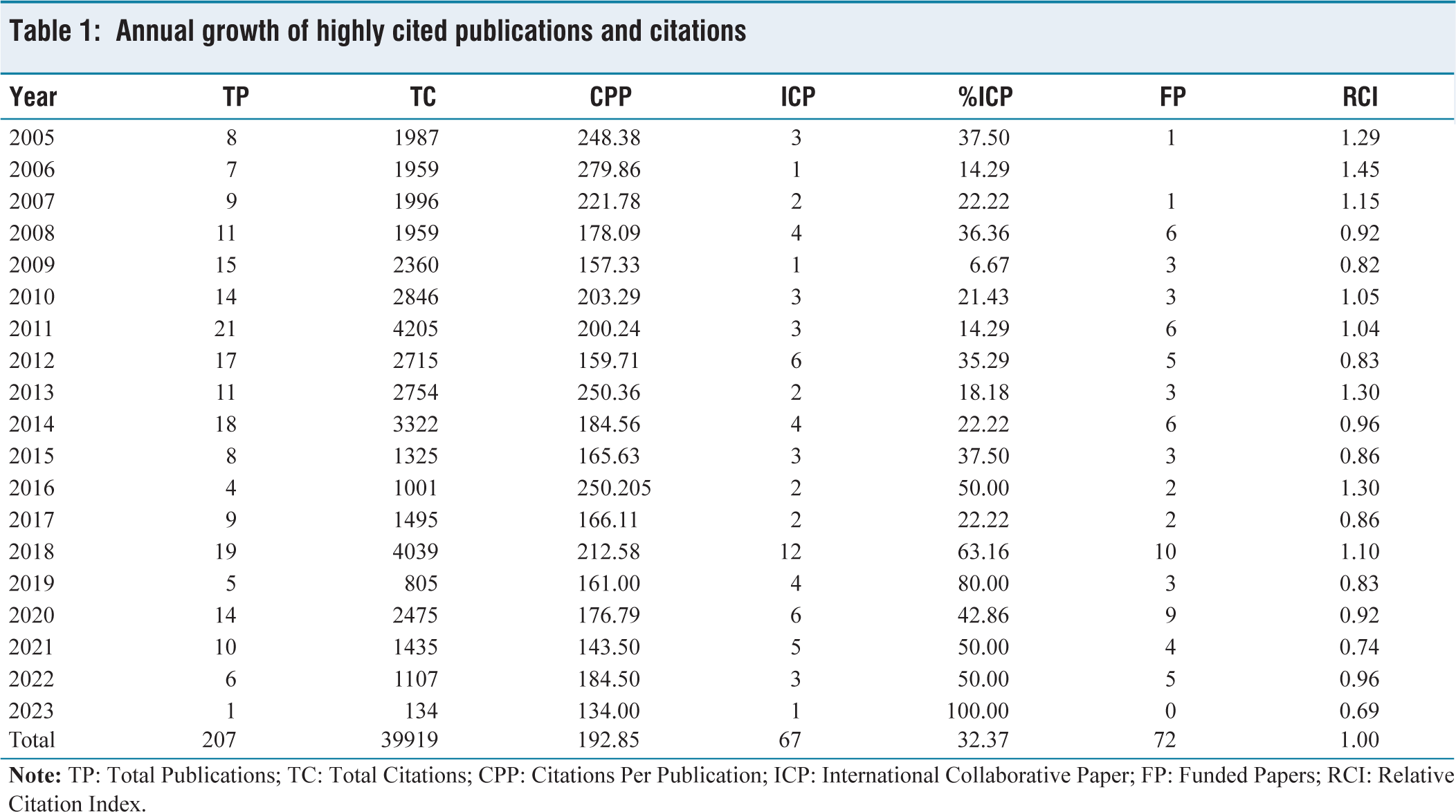
During the period of 2005–2023, there were 207 HCPs on TCIM research, which averaged 10.89 publications per year. The annual publication output had an average growth rate of 16.42%, with the highest number of publications occurring in 2011, 2014 and 2018 [Table 1 and Figure 1]. A notable trend was the decrease in cumulative publications over two distinct 9–10 year periods, falling from 131 articles between 2005 and 2014 to 76 articles between 2015 and 2023. These 207 HCPs collectively amassed 39,919 citations, averaging 192.55 citations per publication (CPP). The majority of these publications were either reviews (53.14%) or articles (44.44%).
Year-wise trend of highly cited publications and citations
A significant portion of the research was supported by external funding and international collaborations. Of the 207 HCPs, 72 (34.78%) received funding from more than 100 different agencies, with the University Grants Commission (UGC) being the top funder. Additionally, 67 of the articles (32.37%) involved international collaborations with 62 different countries. The US, Australia and Canada were the most frequent collaborators [Supplementary Table 1]. These collaborations involved more than 200 foreign organisations and over 150 foreign authors, with specific institutions and individuals being highlighted as top contributors based on their productivity and citation impact [Supplementary Table 2].
Annual growth of highly cited publications and citations
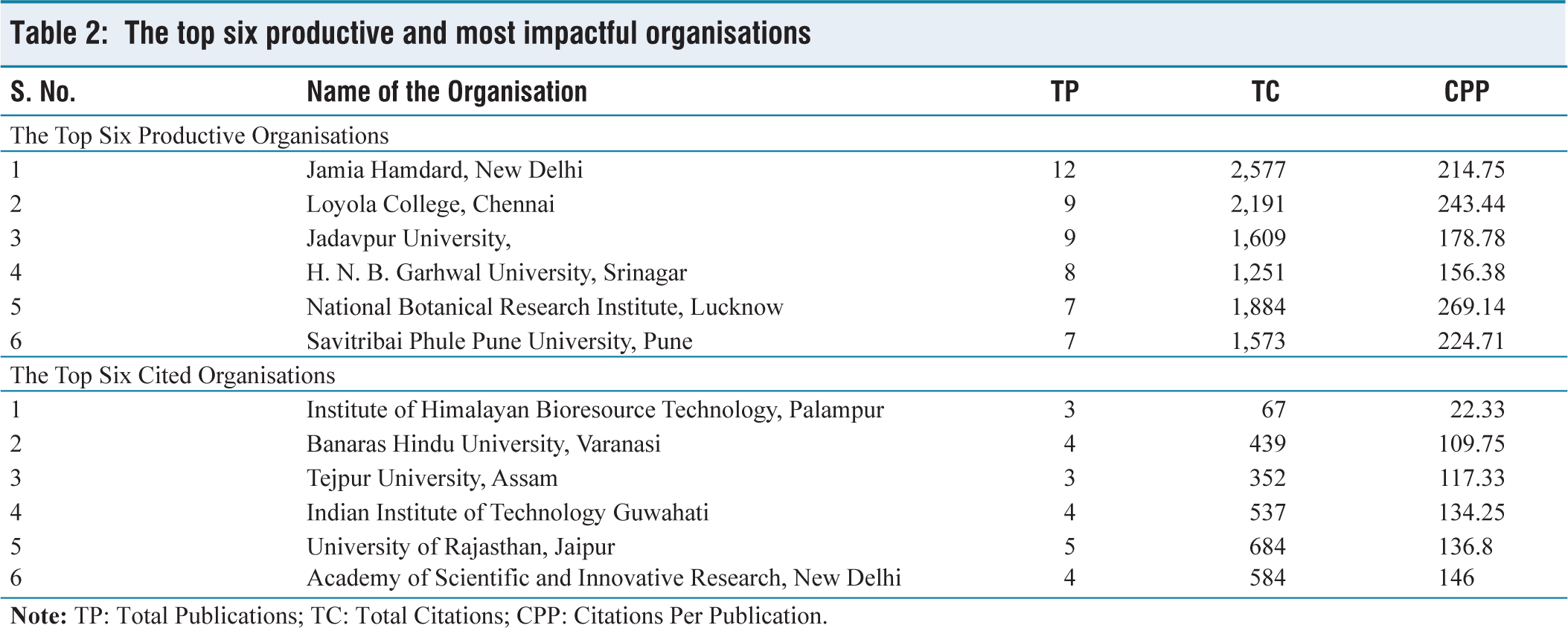
The top six productive and most impactful organisations
Broad Subject-wise Distribution
Based on data from the Scopus database, the primary subject area for these publications was pharmacology, toxicology and pharmaceutics, which accounted for 126 articles or 60.87% of the total. Medicine was the next most common subject, with 76 articles (36.71%), followed by biochemistry, genetics and molecular biology with 45 articles (21.74%). When looking at citation impact, not all subject areas performed equally. Environmental science had the highest CPP with 273.33, followed by immunology and microbiology (208.89 CPP) and biochemistry, genetics and molecular biology (203.22 CPP). In contrast, the lowest citation impacts were found in neuroscience and psychology, both with 138.0 CPP and chemistry with 136.88 CPP [Supplementary Table 3].
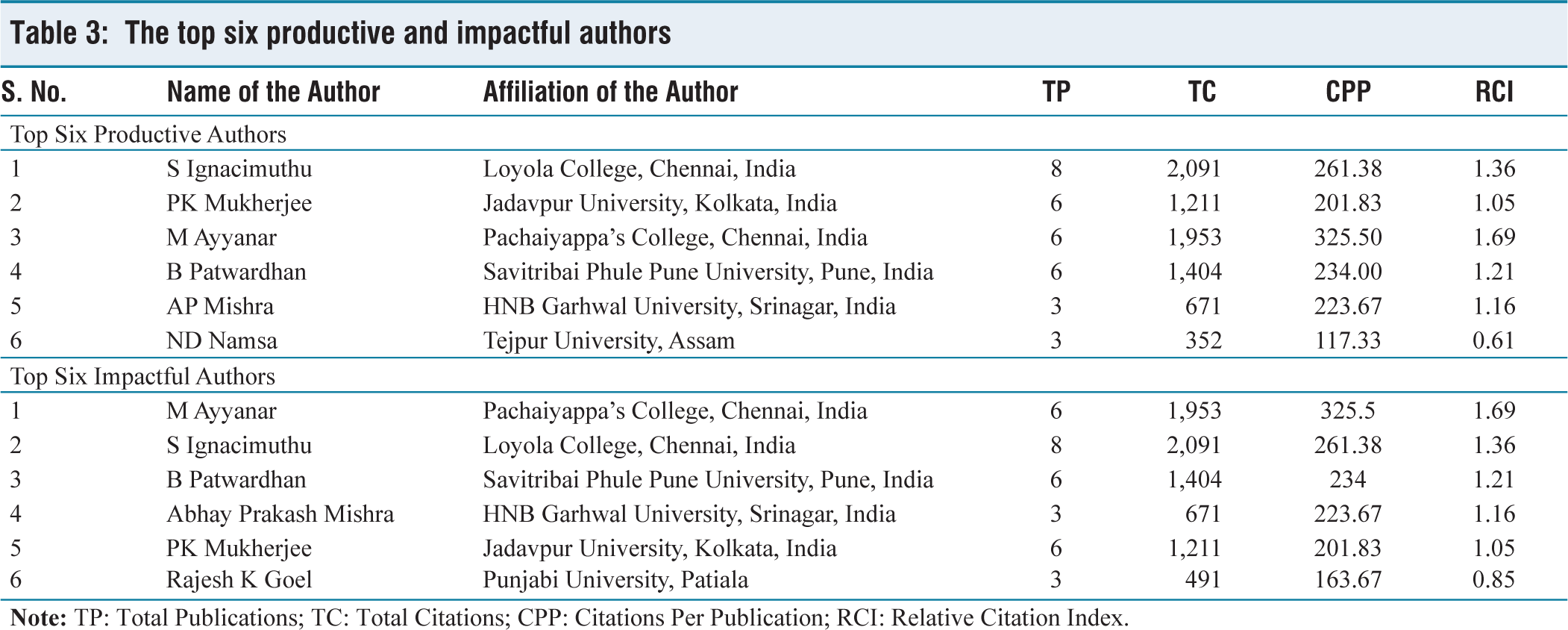
The top six productive and impactful authors
Significant Keywords
Wordcloud Mapping
A word cloud analysis of research on TCIM in India reveals a strong focus on Indian traditional medicine, which appeared 195 times. The prominence of terms such as ‘medicinal plants’ (112 occurrences), ‘plant extract’ (91) and ‘traditional medicine’ (76) highlights a significant emphasis on ethnopharmacology and botanical therapeutics [Figure 2].
Word cloud of the keywords

The research also shows a growing interest in the scientific validation of these practices, with frequent mentions of specific bioactivities such as ‘antioxidant activity’ (70) and ‘phytochemistry’ (60). Furthermore, the word cloud points to a targeted approach in disease research, with terms such as ‘antineoplastic activity’ (58), ‘antimicrobial activity,’ and ‘immunomodulation’ appearing frequently, demonstrating an interdisciplinary integration of botany, pharmacology and biochemistry.
Trends of Topics
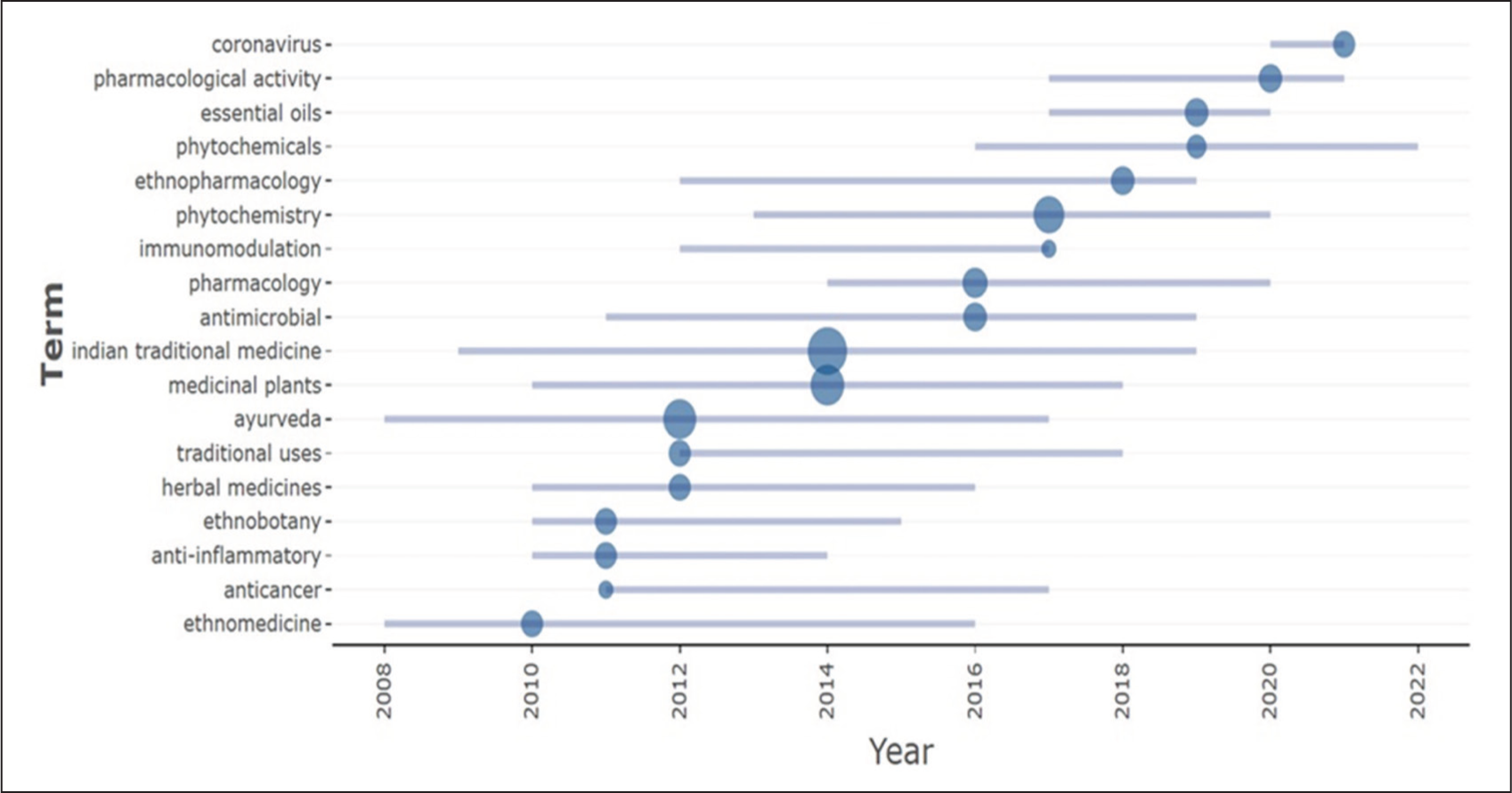
Over the period of 2008–2022, research on TCIM evolved from foundational studies to more scientifically rigorous investigations. Initially (2008–2012), the focus was on broad concepts such as ethnomedicine and Ayurveda. This transitioned into a phase (2013–2017) with greater emphasis on validating specific compounds and mechanisms, marked by the rise of terms such as pharmacology, phytochemistry and ethnopharmacology. The research was further narrowed from 2018 to 2022 to deep investigations into therapeutic properties, with keywords such as phytochemicals and essential oils becoming more prominent. A key development was the abrupt appearance of ‘coronavirus’ in 2020, which dominated research and demonstrated a rapid pivot toward leveraging natural products for antiviral and immunomodulatory purposes. Despite these shifts, core terms such as ‘medicinal plants’ remained a constant, highlighting the stable foundation of the field’s interdisciplinary nature [Figure 3].
Year-wise topic trends in traditional, complementary and integrative medicine
Keywords Analysis of the Top 100 Publications
An analysis of 5,557 keywords from 207 HCPs in TCIM identified four major research clusters [Figure 4]. The largest cluster, Cluster 1, focuses on the scientific validation of herbal medicines through pharmacological testing. Key terms such as ‘antioxidant activity’ and ‘anti-inflammatory activity’ highlight a strong emphasis on understanding the bioactivity of compounds. This cluster also features terms such as ‘phytochemistry’ and ‘flavonoid,’ indicating a focus on identifying and characterising the chemical makeup of these medicinal plants.
Keywords napping network
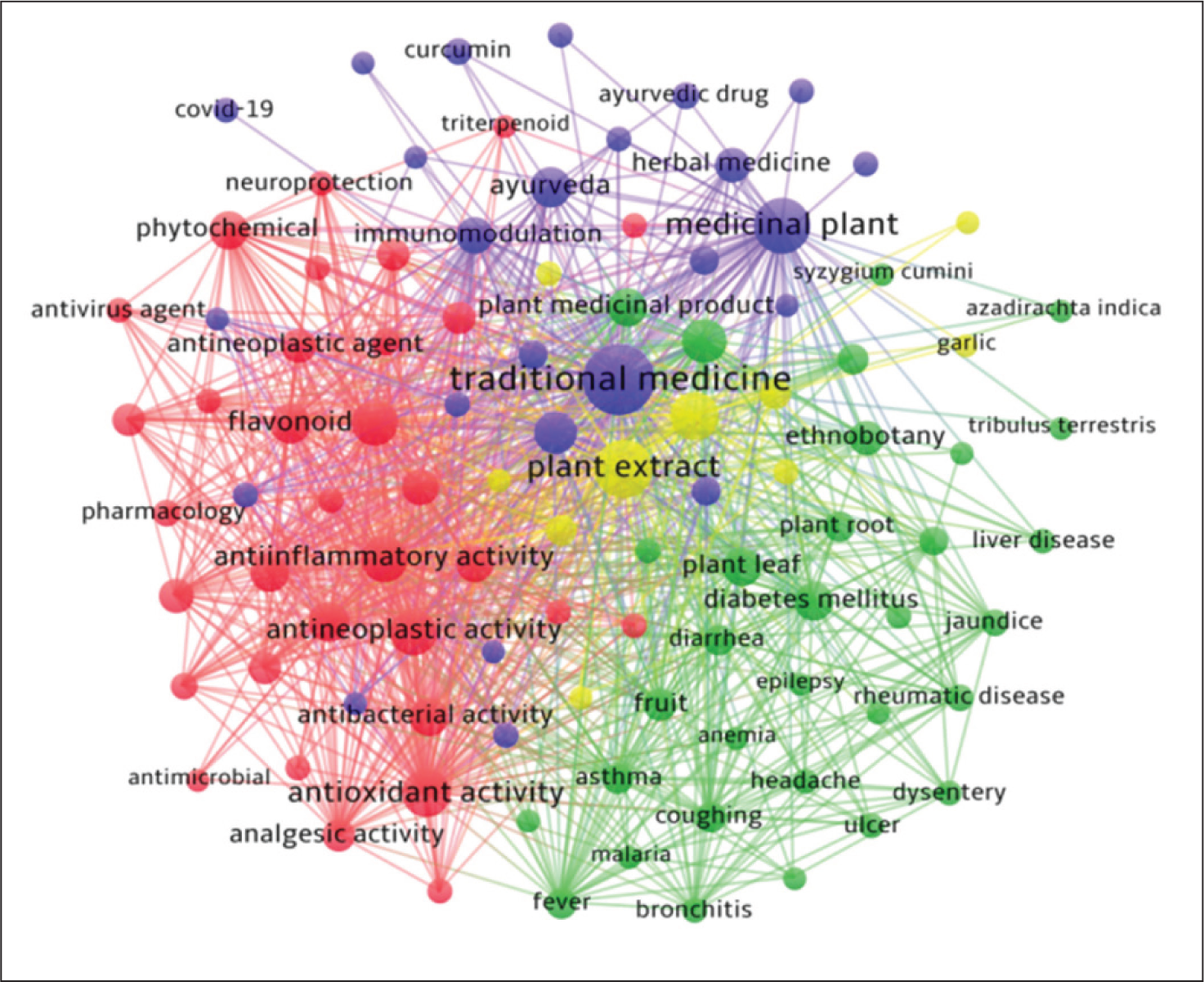
The other three clusters explore different aspects of the field. Cluster 2 concentrates on the clinical application of specific plants and plant-based products, with keywords such as ‘herbaceous agent’ and ‘diabetes mellitus,’ suggesting a focus on treating particular diseases. Cluster 3 delves into the historical and systemic dimensions of traditional medicine, anchored by the high-frequency term ‘traditional medicine’ and specific systems such as ‘Ayurveda.’ Final, Cluster 4 acts as a bridge, connecting plant extracts and bioactivity with specific metabolic disorders such as ‘hyperlipidemia’ and ‘non-insulin-dependent diabetes mellitus,’ demonstrating a targeted approach to understanding therapeutic mechanisms. A list of the top 100 keywords is presented in Supplementary Table 4.
Publications by Indian Organisation
Research in the field of TCIM in India was conducted by 599 organisations, with 19 of them identified as highly productive, each contributing three or more articles [Supplementary Table 5]. These 19 organisations collectively published 98 articles, accounting for 47.31% of the TP and 45.11% of all citations. The most prolific institutions included Jamia Hamdard, New Delhi (12 articles) and Loyola College, Chennai (nine articles). In terms of citation impact, several organisations demonstrated excellent performance, with Bharathiar University, Coimbatore and the National Botanical Research Institute, Lucknow, leading the way with high citation rates that significantly exceeded the average. Table 2 provides the bibliometric details of the top six productive and impactful organisations.
Publications by Indian Authors
A total of 1,141 authors contributed to TCIM research from 2005 to 2024. Of these, 13 authors were identified as the most productive, each contributing at least three articles. Together, these top authors published 36 articles and accumulated 6,765 citations, representing 5.75% of total articles and 16.95% of total citations (TC). The most prolific authors were S Ignacimuthu, PK Mukherjee, M Ayyanar and B Patwardhan, each publishing between six and eight articles.
In terms of research impact, several authors stood out for their high citation rates. Five authors, V Duraipandiyan, M Ayyanar, S Ignacimuthu, B Patwardhan and AP Mishra, demonstrated a significant citation impact, with their CPP and RCI scores exceeding the average for all authors. V Duraipandiyan, with a CPP of 410.5, had the highest citation impact among the leading researchers. Supplementary Table 6 lists the top 13 most productive authors contributing three or above articles and Table 3 provides bibliometric details of the top six productive and impactful authors.
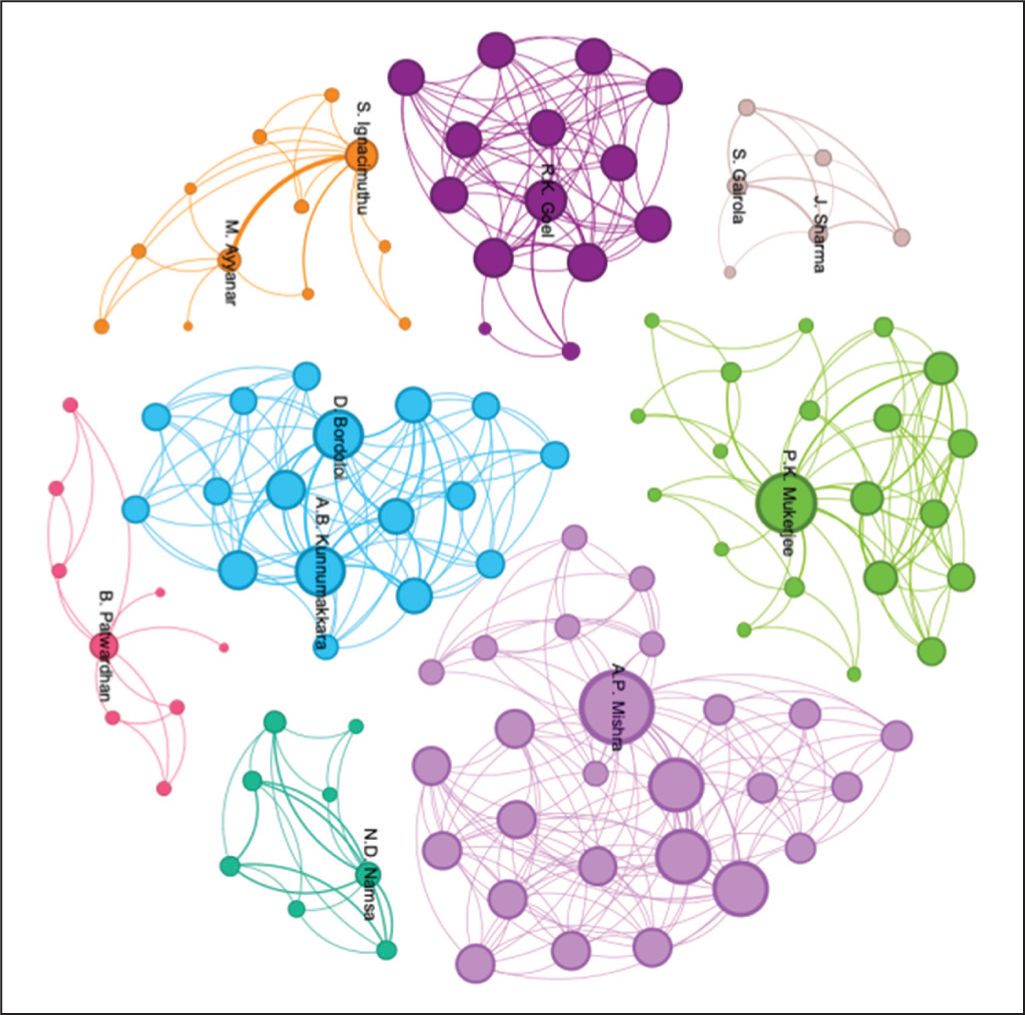
An analysis of the co-authorship patterns among the top 11 Indian authors in traditional medicine, who published a combined total of 36 articles, shows a complex collaboration network [Figure 5]. The network, consisting of 113 authors and 432 collaboration links, reveals two distinct approaches to research. Some highly productive authors, such as S Ignacimuthu and M Ayyanar, have published numerous articles but with smaller research teams, resulting in smaller collaboration clusters. In contrast, other authors, such as RK Goel and PK Mukerjee, who have fewer publications, show denser collaboration networks due to their work with larger author teams on individual articles. The visualisation highlights how some authors have extensive collaborative reach, while others prefer to work in smaller, more concentrated groups.
Collaboration network map of the top 11 Indian authors
Publication by the Source Title
Most of the 207 HCPs were published in journals, with the Journal of Ethnopharmacology being the most productive, publishing 54 articles [Supplementary Table 7]. This was followed by the Journal of Ethnobiology and Ethnomedicine (10 articles), Phytotherapy Research (nine articles) and Phytomedicine (seven articles). While some journals published a large volume of articles, others had a greater citation impact. The Asian Pacific Journal of Tropical Biomedicine had the highest CPP with 410.8, followed by Pharmaceutical Biology (286.33 CPP) and BioMed Research International (286.0 CPP). The impact factors for the top 20 journals ranged from 0.8 to 10.5, with Pharmacological Research having the highest impact factor at 10.5.
Top 10 Highly Cited Publications
An analysis of the top 10 HCPs from 2005 to 2020 [Supplementary Table 8] revealed they collectively received 6,337 citations, averaging 633.7 CPP. These articles were published in 10 different journals, with three articles appearing between 2006 and 2008. The research involved collaborations with 29 countries, 91 organisations (16 of which were Indian) and 153 authors (23 Indian). Of these top 10 HCPs, seven involved national or international collaboration.
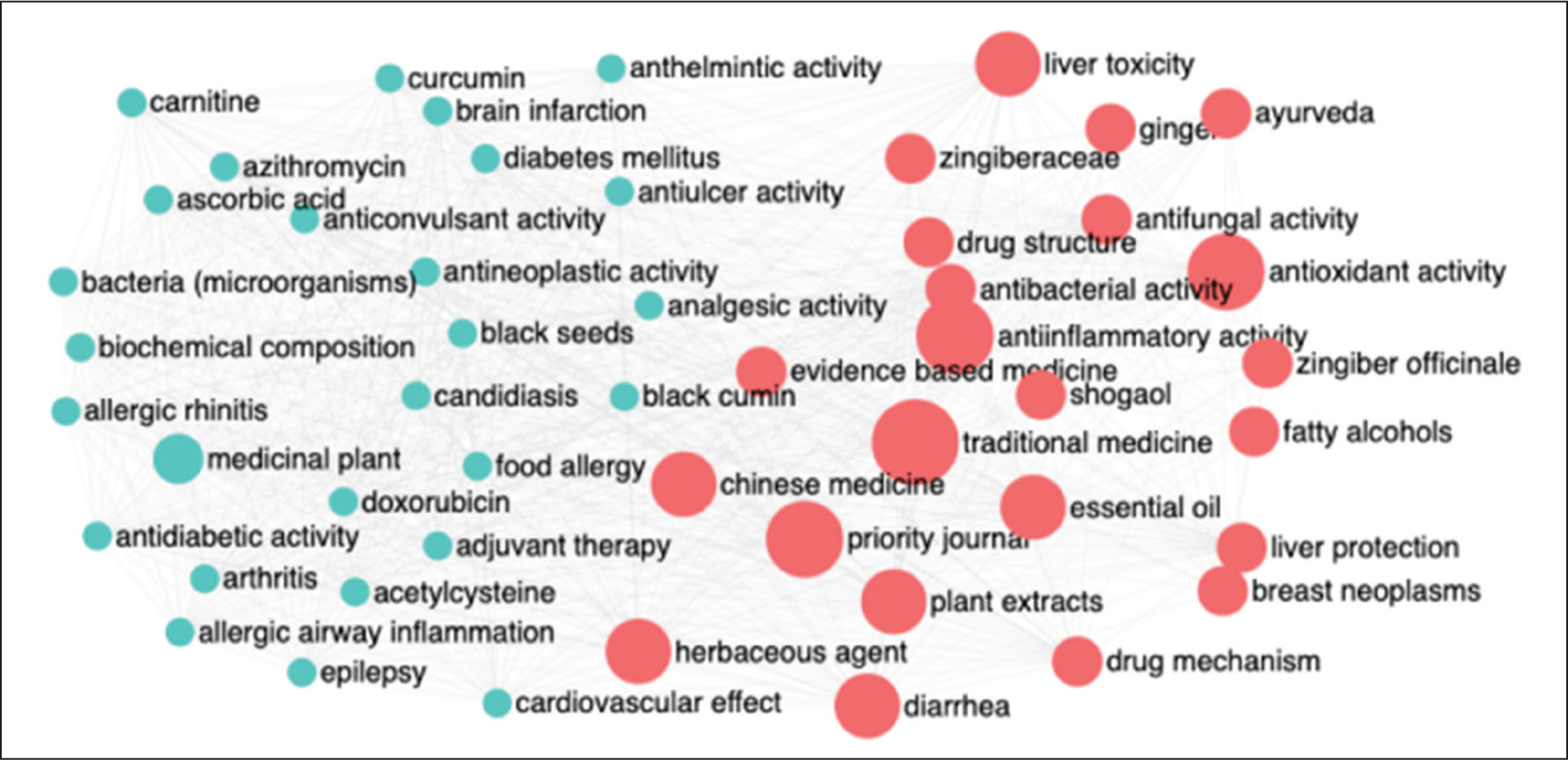
A keyword co-occurrence network of these top 10 articles identified two primary research clusters [Figure 6]. One cluster, highlighted in turquoise/green, centres on the clinical and biomedical applications of traditional medicine, with keywords such as ‘medicinal plant,’ ‘diabetes mellitus,’ and ‘cardiovascular effect.’ The second cluster, in red, focuses on the pharmacological and phytochemical aspects of plant-based compounds, featuring keywords such as ‘traditional medicine,’ ‘phytochemistry,’ and ‘essential oil.’ This dual focus indicates that the most influential research in the field combines disease-targeted studies with broader analyses of phytochemical properties and traditional knowledge.
Keywords: Co-occurrence mapping of the top 10 highly cited publications
Discussion
The quantitative growth trends in TCIM publications from India highlight a steady and globally engaged research environment. The annual average growth rate of 16.42% over nearly two decades suggests a sustained interest in integrating traditional medicine into a modern scientific framework. This growth aligns with global trends of increased TCIM research output[26–30] spurred by WHO encouragement and patient demand.[1] The dataset’s CPP of 192.85 indicates significant visibility and influence. Notably, publications in peak years (2011, 2014 and 2018) likely reflect funding cycles, institutional initiatives and thematic relevance to global health issues. However, the decline in cumulative publications from 131 between 2005 and 2014 to 76 between 2015 and 2023 suggests possible shifts in funding or research focus. High citation clusters in ethnobotany, phytotherapy and metabolism-targeted plant research demonstrate the value placed on evidence-supported applications.
Funding was concentrated in major Indian science agencies (UGC, Department of Science & Technology [DST], Department of Biotechnology [DBT], Council of Scientific & Industrial Research [CSIR] and Indian Council of Medical Research [ICMR]), reflecting recognition of TCIM research within national Research & Development (R&D) priorities. International collaboration and funding opportunities remain a promising avenue, particularly through the WHO-GCTM framework, where India can play a pivotal role in setting evaluation standards.[16–19] India’s TCIM research is decidedly international, with more than 200 foreign partners. Iran and Canada emerge as both prolific collaborators and strong citation contributors, perhaps due to shared traditional medicine heritage and complementary scientific facilities. High CPP from institutions in Portugal, Saudi Arabia and the USA reflects the synergetic combination of Indian bioresource richness and foreign laboratory validation capacity.
The co-occurrence thematic analysis reveals a strategic emphasis on linking raw medicinal plant research with bioactivity validation and disease-specific outcomes, especially in metabolic disorders such as diabetes, lipid disorders and oxidative stress-related diseases. This aligns with the WHO’s call for standardising herbal medicines and integrating them into essential medicine lists. Jamia Hamdard leads in institutional output, reflecting its established pharmacy and ethnobotany strengths. Loyola College and Jadavpur University exhibit strong phytochemical research traditions. Among authors, M Ayyanar’s exceptionally high CPP (325.5) positions him as a global reference in medicinal plant ethnobotany. Cross-disciplinary profiles (e.g., B Patwardhan’s work in Ayurveda pharmaceutics and policy) illustrate the breadth of TCIM scholarship.
While citation metrics are impressive, the absolute number of high-quality, high citation works remains modest relative to India’s TCIM potential. There is room for broader subject diversification beyond plant-based studies into clinical trials, pharmacovigilance, molecular mechanisms and public health integration studies. The Ministry of Ayush, alongside DST and ICMR, can spur growth through large-scale, multi-institution research consortia. Improved research training, international co-publications and open access dissemination could further boost impact.[17–19] The WHO-GCTM provides India an unparalleled platform to lead in global TCIM research coordination, quality assurance and policy harmonisation. Leveraging this institution for multi-country trials, meta-analyses and technology-enabled knowledge transfer will ensure Indian TCIM research not only expands but also sets internationally recognised standards.
The study’s strengths lie in its comprehensive bibliometric analysis of TCIM research in India over an extended period (2005–2024) using the Scopus database, which is known for its extensive coverage of peer-reviewed literature. It provides valuable insights into publication trends, citation impact, funding sources, international collaboration and thematic research areas, thus offering a multifaceted overview of the field’s scholarly landscape. However, limitations exist, including reliance on a single database (Scopus), which may exclude relevant publications indexed elsewhere or grey literature, potentially underrepresenting the full scope of TCIM research in India. The focus on HCPs might bias the analysis toward well-established topics or authors, overlooking emerging or less-cited but innovative research. The study does not deeply assess the quality or methodological rigour of the publications, limiting insight into the robustness of the evidence base. Last, while the study highlights collaboration patterns, it does not qualitatively explore the nature or outcomes of these partnerships, which could be crucial for understanding research impact beyond bibliometrics.
This study provides a comprehensive and data-driven overview of the research landscape in TCIM in India, a country with a rich heritage and growing global leadership in this field. The study reveals key trends in productivity, citation impact, funding and international collaboration, thereby highlighting strengths and gaps in India’s TCIM research ecosystem. This relevance is amplified by the increasing global demand for evidence-based integrative health solutions and the strategic importance of the WHO-GCTM established in India. The insights can guide policymakers, funding agencies and researchers in prioritising areas for development, enhancing research quality, fostering meaningful collaborations and aligning national efforts with global standards.[1,4,5,7,17] Ultimately, the study supports the advancement of TCIM as a credible, scientifically validated component of healthcare, helping India to consolidate its role as a global hub for integrative medicine research and policy.
Conclusion
Indian TCIM research from 2005 to 2024 exhibits strong growth, high citation impact and increasing international collaboration. Research is dominated by plant-based studies targeting metabolic and oxidative stress-related disorders, supported by major national agencies. International partnerships enhance both productivity and citation influence, especially when coupled with complementary expertise. However, diversification into clinical, mechanistic and public health domains is essential to fully realise TCIM’s healthcare potential. With strategic funding, training and WHO-GCTM leadership, India can position itself as the global hub for evidence-based TCIM research.
Supplemental material
Supplemental material for this article is available online.
Supplemental material
Supplemental material for this article is available online.
Footnotes
Declaration of conflicting interests
The author declared the following potential conflicts of interest with respect to the research, authorship, and/or publication of this article: Author Raju Vaishya is the Editor-in-chief of Apollo Medicine. The authors did not take part in the peer review or decision-making process for this submission and have no further conflicts to declare.
Funding
The authors received no financial support for the research, authorship and/or publication of this article.
Institutional ethical committee approval number
Not required for such a bibliometric study based on published data and not involving human data or intervention.
Informed Consent
Not required being for this study, as not patients were involved in it.
Credit author statement
Conceptualisation: RV, BMG
Literature Review: RV, BMG, MKK, GMNM, KS, AV
Data Collection and Analysis: RV, BMG, MMK
Manuscript writing, editing and final approval: RV, BMG, MKK, GMNM, KS, AV
Data availability
Raw data is available with the corresponding author, if required.
Use of artificial intelligence
The manuscript’s English and readability were enhanced with the assistance of Grammarly. Nonetheless, all content, encompassing figures and tables, is original and has not been derived from external sources. The authors have diligently reviewed the manuscript in its entirety and assume full responsibility for its contents.
References
Supplementary Material
Please find the following supplemental material available below.
For Open Access articles published under a Creative Commons License, all supplemental material carries the same license as the article it is associated with.
For non-Open Access articles published, all supplemental material carries a non-exclusive license, and permission requests for re-use of supplemental material or any part of supplemental material shall be sent directly to the copyright owner as specified in the copyright notice associated with the article.

