




Abstract
Background:
This article examines how classical Ayurveda surgical principles, notably those from the Sushruta Samhita, align with conventional surgical practices and how Ayurveda-inspired perioperative and postoperative care can complement conventional surgery.
Objectives:
To synthesize Ayurveda modalities and perioperative care within an integrative framework, evaluate their potential to enhance healing and reduce recurrence, and identify gaps requiring rigorous research, and cross-disciplinary collaboration.
Methods:
Narrative synthesis of traditional Ayurvedic surgical principles and modern adaptations within interventional and surgical contexts. Review of integrative care paradigms in oncology, neurology, and proctology, with emphasis on perioperative optimization, pain management, and rehabilitation. Consideration of current evidence, limitations, and methodological needs for future studies.
Results:
Ayurveda interventions for fistula-in-ano with Kṣhārasūtra-based approaches offer minimally invasive options that can complement surgical procedures. Integrative care models emphasize personalized prehabilitation, multimodal pain control, and tailored postoperative rehabilitation, contributing to accelerated healing, improved quality of life, and potentially reduced recurrence when combined with conventional practices. Across oncology and neurology, Ayurveda-informed strategies may support symptom management, postoperative recovery, and functional outcomes.
Conclusions:
There is growing evidence for meaningful synergy between Ayurveda and conventional surgery within integrative healthcare. Realizing full benefits requires standardized training, rigorous, methodologically sound research, and robust cross-disciplinary collaboration to establish safety, efficacy, and reproducibility. Future work should prioritize randomized controlled trials, standardized outcome measures, and clear guidelines for integration across surgical specialties.
Keywords
Introduction
Health is a dynamic state influenced by genetics, environment, lifestyle, and access to care. It extends beyond the absence of disease to overall well-being, comprising physical, mental, social, and spiritual health. Promoting health is a continuous process shaped by healthy choices, access to care, supportive relationships, and a positive environment.[1]
A successful healthcare system provides accessible, affordable, high-quality care, focusing on the well-being of individuals and the community. As no single system is complete, combining various healthcare models presents an all-encompassing solution to healthcare, which has led to the concept of Integrative Healthcare Models. Ayurveda, alongside other healthcare systems under the AYUSH umbrella such as Yoga & Naturopathy, Unani, Siddha, and Homoeopathy, when integrated with contemporary surgery, Unani’s regimental therapy, Siddha’s herbal analgesic applications, Yoga’s mind-body preparatory practices, and Homoeopathy’s supportive remedies, collectively contribute to a holistic, patient-centred perioperative regimen.
The discussion surrounding traditional healthcare has undergone significant evolution over the past two decades. The Eisenberg JAMA study, which validated the extensive use of such practices in the United States, shed light on the concept of Complementary and Alternative Medicine (CAM) during the 1990s and the early 2000s. By the mid-2000s, the term ‘integrative medicine’ gained prominence, emphasising a patient-focused, holistic approach that combined evidence-based complementary therapies with conventional medical treatments.[2]
In 2014, the National Centre for CAM changed its name to the National Centre for Complementary and Integrative Health (NCCIH) to emphasise a broader focus on integrative health. Since then, models of integrative healthcare have shifted from being disease-centric to prioritising patient-centred care, driven by the interaction of theoretical concepts, clinical practice, and societal needs.[3] Current healthcare challenges can be addressed by integrating Ayurveda with conventional medical practices.
Surgical and Interventional Approaches in Classical Ayurveda
Ayurveda, the traditional medical system originating from ancient India, has made significant contributions to the early development of surgical science. Shalya Tantra is considered one of the eight branches of Ayurveda and is defined as the removal of factors causing pain and suffering from both the body and mind. Sushruta, often revered as the ‘Father of Surgery,’ made monumental contributions that laid the foundation for surgical science globally. His pioneering work, compiled in the ancient text Sushruta Samhita, has a lasting influence on the development of both Indian and global surgical traditions,[4] encompassing:
Over 120 surgical instruments, many inspired by animal forms, reflecting advanced innovation and design. Detailed anatomical knowledge acquired through the practice of dissection, emphasising the importance of direct observation. More than 300 surgical procedures, including pioneering techniques in plastic surgery (notably rhinoplasty), cataract extraction, wound management, fracture repair, and procedures in ENT. Specialised surgical techniques such as Ksharakarma (alkaline cauterisation), Kṣhārasūtra (medicated seton therapy for fistula), and Agnikarma (therapeutic cautery), which are still applied in integrative surgical practices today. Known for one of the earliest descriptions of extracapsular cataract surgery, using a pointed instrument to dislodge and remove the cloudy lens centuries before similar methods were introduced elsewhere. His reconstructive innovations, particularly the forehead flap technique for nasal reconstruction, became the basis for modern plastic surgery. This method gained recognition internationally during the colonial period and was integrated into Western surgical practices, significantly influencing the development of rhinoplasty. A comprehensive systematised approach to surgery, including anaesthesia (using wine and herbs), asepsis, and postoperative care, prefigured many modern surgical principles. Classical procedures such as Kṣhārasūtra (Medicated seton) for anorectal fistula, Agnikarma (Cautery) for pain and excision, and Jalaukavacharana (leech therapy) for non-healing wounds have been standardised and remain important in clinical integrative practice. Institutions like Banaras Hindu University have institutionalised dual-system training, preparing practitioners adept in both Ayurveda and modern science, thus preserving and modernising Sushruta’s surgical legacy.
Relevance of Combining Traditional and Contemporary Medical Approaches
Integrative models combine the strengths of both systems: Ayurveda focuses on promotive, preventive, and personalised medicine, while contemporary medicine excels in diagnostic and therapeutic technologies and acute interventions. The synergy addresses complex, chronic, and lifestyle-driven diseases more effectively, reducing symptoms, improving quality of life, preventing complications, and improving long-term health.[5]
Patients who receive integrative care experience better symptom management, fewer side effects, and higher satisfaction with their outcomes. In combination, this care can enhance quality of life in chronic or terminal conditions through adjuvant and palliative care.[6]
These models can be cost-effective, reducing over-reliance on pharmaceuticals, minimising adverse drug reactions, and decreasing overall healthcare costs, especially for chronic, non-communicable diseases. They also support the sustainability and resilience of health systems by diversifying therapeutic options and strengthening interprofessional collaboration.[7]
Rationale for Ayurveda Interventions in Surgical and Interventional Care
The rationale for Ayurveda interventions in surgical and interventional care depends on its well-documented surgical knowledge. Ayurveda emphasises a whole-person care approach and is integrated with contemporary surgical techniques to facilitate patient recovery, minimise postoperative complications, and promote overall health. Ayurveda interventions help to reduce inflammation, alleviate pain, control infections, and accelerate wound healing while enhancing immune system function.[8]
Acute and Emergency Surgical Care in Ayurveda and Integration with Conventional Medicine
Ayurveda addresses emergency care through the concept of Atyayika Chikitsa, which applies to various conditions, including trauma, haemorrhage, poisoning, fractures, and wound care. Nevertheless, in contemporary practice, it is predominantly regarded as a complementary approach to conventional emergency interventions. These treatments employ routes of administration, including nasal, rectal, and sublingual, for the rapid absorption of medication. In current medical practice, Ayurveda’s direct involvement in acute surgical emergencies is constrained by the advancements and efficacy of conventional medicine in life-saving interventions.[9]
However, the concept of the integrative emergency model is emerging, wherein primary stabilisation is achieved using conventional protocols, while Ayurveda contributes to recovery, pain management, wound healing, and the prevention of post-surgical complications.
Pre and postoperative support: Ayurveda offers adjuvant therapies for wound healing, infection prevention, inflammation control, and pain management following surgery or trauma, particularly during the recovery phase.
Supportive medications and procedures: Certain Herbo-mineral preparations, along with procedures like Agnikarma (cautery), Viddha Karma, and Leech therapy, play supportive roles in select acute and surgical conditions, especially where infection and tissue necrosis risks persist.
Rehabilitation: External therapies, including therapeutic massage, sudation, detoxification, dietary modifications, and rejuvenation, support convalescence and functional recovery following emergency surgery.
Key Findings from Clinical Studies and Reviews
Faster recovery & reduced complications: Case studies and observational data suggest that patients who receive integrative Ayurveda treatment following surgery exhibit accelerated wound healing, reduced pain, fewer postoperative complications, and a more rapid return to normal activities compared to those receiving conventional care alone.
A case report on the post-surgical Ayurveda management of Holmium laser enucleation of the prostate, without antibiotics, presents a potential model for integration. Additionally, case reports and observational studies on Ayurveda intervention in the post-surgical care of breast abscesses demonstrate promising outcomes, including faster wound healing, reduced recurrence, decreased fistula formation, and enhanced patient satisfaction.[10,11]
Emerging data from integrative settings, such as studies combining robotic or minimally invasive surgery with Yoga and Ayurveda (including postoperative rehabilitation), point to enhanced functional recovery, improved pulmonary function, reduced pain scores, and higher patient satisfaction.[12]
Current Research Strategies for Ayurveda and Conventional Surgical Integration
Current research strategies for integrating traditional surgical practices involve a multi-faceted approach:
Case-based studies and observational research: This presents empirical evidence of integrative outcomes, emphasising the role of Ayurveda interventions as adjuvant care across various medical specialities. In oncology, these interventions address the side effects of chemotherapy and radiation, enhance quality of life, and contribute to palliative care.[13–15] In neurology, the focus is on early rehabilitation strategies,[16] musculoskeletal rehabilitation,[17] pain management, and Kṣhārasūtra therapy are integrated alongside contemporary anorectal surgeries.[18] Large-scale multicentre controlled trials: There is a shortage of randomised controlled trials (RCTs) and large-scale multicentre studies in Ayurveda integrative care. However, an increasing number of RCTs are being conducted to evaluate Ayurvedic perioperative care in conjunction with conventional surgical procedures. These studies seek to rigorously validate the safety and efficacy of such integrative approaches to facilitate broader clinical acceptance.[19] Preclinical studies: Preclinical models facilitate understanding of the mechanisms of action of Ayurveda formulations, herb-drug interactions, and pharmacological properties, thereby enhancing translational insights before human clinical trials.[20] Simulation and robotic surgery integration: Recent research investigates the integration of Ayurveda and Yoga with advanced minimally invasive robotic surgeries and video-assisted thoracic surgery (VATS). These studies evaluate enhancements in respiratory function, pain management, and postoperative mobilisation, emphasising increased patient acceptability and improved clinical outcomes when these approaches are integrated with Ayurveda. Digital technology for surgical method evaluation: The integration of digital technologies, including artificial intelligence, machine learning, and virtual reality, into surgical planning, intraoperative navigation, and outcome assessment is rapidly advancing. These tools facilitate precise, data-driven evaluations of integrative surgical methods, providing comprehensive insights into efficacy, safety, and patient outcomes across diverse populations. This advancement is propelling the evolution toward more personalised and high-performing surgical care.[21]
Relevance of a Dedicated Classified Database for Conventional Integrative Surgery
A dedicated integrative surgery database will function as a unified platform for AYUSH and conventional practitioners, facilitating access to validated surgical protocols, collaborative exchanges, and standardised training resources.[22]
By consolidating high-quality evidence, it will support evidence-based practice, facilitate research, and ensure regulatory alignment with ‘Good Integrative Surgical Practices.’
This initiative aims to promote safety, consistency, and innovation in surgical care, thereby enhancing practitioner competency and interdisciplinary collaboration. Furthermore, comprehensive data sharing shall improve patient-centred outcomes, effectively bridging Ayurveda with conventional surgical practices for the advancement of integrative healthcare.
Ayurveda Anaesthesia Approaches and Possible Areas of Integration
Ayurveda’s approach to anaesthesia, though conceptually and mechanistically different from modern synthetic anaesthetics, has limitations in practical application in conventional surgery but demonstrates a well-classified distinction between local, regional, and general anaesthesia, as described in classical texts (Sushruta Samhita) and evolving integrative practice.
Ayurveda sedatives, adaptogens, and anxiolytic herbs such as Ashwagandha, Brahmi, Tagara (Valeriana wallichii), and Mandukaparni (Centella asiatica) can be used as adjuncts to reduce preoperative anxiety, support emotional resilience, and stabilise sleep before surgery. These need to be carefully evaluated for herb-drug interactions, action on enhancing anaesthetics’ effect, etc., before administration. Meditation, pranayama, and counselling (Satvavajaya chikitsa) further enhance psychological readiness for anaesthesia and surgery.[23]
Local anaesthesia[24]:
Application of herbal pastes (Lepa) with analgesic, cooling, or numbing effects on the area to be operated. Agnikarma (therapeutic cautery) and Ksharakarma (alkaline cauterisation) offer site-specific, nerve-modifying effects for localised procedures such as wound excision, piles, or abscess management. Raktamokshana (bloodletting, leech therapy) to relieve localised congestion and pain.
Regional anaesthesia:
Medicated fomentation (Swedana), and Therapeutic massage (Abhyanga) over a larger region (e.g., limb, lower back) to alter regional nerve function. Sometimes, certain internal medications are given to target a specific region
These local and regional therapies reduce peripheral nociceptive input and postoperative inflammation, complementing nerve blocks and reducing reliance on high-dose local anaesthetics and opioids. These methods are well-suited for postoperative pain control, rehabilitation, and wound care.
General anaesthesia:
Administration of herbal or herbo-mineral sedatives by oral, nasal, sublingual, or rectal routes to induce drowsiness or unconsciousness; examples include Madya (intoxicating liquors), Ahiphena (opium derivatives), Dhatura, and other sedative or hypnotic botanicals. Dhumapana (herbal smoke inhalation) and strong sedative preparations in higher-risk or longer procedures.
Reducing postoperative complications: The Ayurveda approach, which emphasises the enhancement of digestion (Deepana, Pachana), gut motility, and tissue healing, offers significant benefits in preventing or managing perioperative ileus, nausea, or impaired wound healing commonly associated with general anaesthesia and major surgical procedures. Although these classical methods provide baseline sedation, they are not equivalent to the precise, titratable safety profile of synthetic general anaesthetics; today, these serve more for historical insight or as adjuncts for anxiolysis, not as primary agents in modern surgical anaesthesia.
Ayurveda in Prehabilitation, Intraoperative, and Postoperative Care
Integrative Care is advocated at different stages of intervention and surgical care. Prehabilitation, Intraoperative (specific strong areas of Ayurveda like Kṣhārasūtra), Postoperative care (Adjuvant care, Rehabilitation, Survivorship, and palliative care). This is used in various settings of Oncology, Neurology, General Surgery, Orthopaedics, Pain and Palliative Care, and Gynaecology.
Prehabilitation
Prehabilitation is recommended to enhance a patient’s general health and well-being before surgery, aiming to modify potential risk factors, increase physiological reserve, and mitigate the adverse stress response.[25] Ayurveda prehabilitation is applied in preparing the patient for surgery by reducing chronic inflammation and maintaining vital health and well-being. This is achieved through a combination of dietary modifications, lifestyle changes, medication, and targeted external therapies. This helps to achieve faster recovery and improved QOL post-surgery. Ayurveda focuses on host Immuno-modulation, Adaptogen, Nutrition, and state of mind. Systemic approach to normalising body functions and enhancing immunity.[26]
Intraoperative Care
Ayurveda specialises in unique surgical modalities, which can be part of minimal invasive surgical practices in an integrative setup. The therapies include Kṣhārasūtra (medicated seton for fistula and haemorrhoids), Agnikarma (thermal cauterisation), and Rakta Mokshana (therapeutic bloodletting). These interventions are designed to minimise tissue trauma, preserve vital structures, and enhance natural healing through precise, localised applications. Recent advancements, such as the minimal invasive Kṣhārasūtra Technique (MIKST), illustrate that Ayurveda modalities can effectively address complex surgical challenges, such as trans-sphincteric fistulas. These approaches yield favourable outcomes, including minimal postoperative pain, rapid recovery, and very low recurrence rates, while maintaining continence and reducing hospital stays.
Kṣhārasūtra and Ksharakarma in anorectal disorders:
Ayurveda offers an effective, minimally invasive approach to managing anorectal disorders by addressing their root causes through medical, surgical, lifestyle, and dietary interventions. Kṣhārasūtra and Ksharakarma therapy, in particular, stand out as a scientifically validated technique that offers a favourable alternative to conventional surgical methods. Multiple clinical case reports, trials and meta-analysis have been published on the effectiveness of kṣhārasūtra in fistula-in-ano without surgical intervention.[27,28]
Recurrence rates in Kṣhārasūtra
Meta-analyses and long-term follow-ups indicate recurrence rates as low as 3.33% over 4 years, compared to much higher recurrence seen with conventional surgery (up to 26.5%).[29] Several studies report Kṣārasūtra recurrence rates ranging between 0% to 5%, with many patients remaining symptom-free over extended follow-up periods.[28] Compared to standard surgical fistulotomy/fistulectomy, which can have recurrence rates up to 8–12%, Kṣārasūtra shows superior sustained efficacy.[30] The slow, controlled chemical cutting of Kṣārasūtra preserves the anal sphincter, markedly reducing the risk of faecal incontinence—one of the most feared complications in fistula surgery.
An integrative approach combining Kṣārasūtra with modern diagnostic imaging and supportive conventional care is often advocated for optimal outcomes.
Ayurveda-assisted wound management (Vrana Chikitsa):
Vrana Chikitsa, or Ayurveda-assisted wound management, represents a comprehensive and ancient methodology for wound treatment. This approach integrates strategies for cleansing, healing, protection, and rejuvenation, which are specifically tailored to the type of wound, dosha imbalances, and the stage of healing. It encompasses a rich pharmacopoeia of herbal formulations and procedural therapies, primarily documented in classical texts such as the Sushruta Samhita. Many of these traditional practices have been validated by contemporary research for their efficacy in promoting wound healing.
Core principles and practices of wound management and integration:
Classification of Wounds (Vrana): In Ayurveda, wounds are primarily categorised into Shuddha Vrana (clean, simple wounds) and Dushta Vrana (chronic, infected, or complicated wounds), with treatment tailored accordingly.
For minor trauma such as abrasions, small lacerations, and superficial wounds, Ayurveda emphasises prompt cleansing using Panchavalkala kashaya (herbal decoction) irrigation, followed by application of local herbal paste and oils. Stage-specific treatments include herbal pastes (lepa), therapeutic sprinkling (Parisheka), and mild fomentation (Swedana) to alleviate pain, prevent infection, and promote healing.[31]
In major trauma and complex wounds such as deep lacerations, crush injuries, ulcers, and diabetic foot wounds, Ayurveda employs Vrana Shodhana (wound purification) and Vrana Ropana (wound healing) protocols involving intensive wound irrigation, debridement with Kshara application, systemic support and adjunct therapies such as leech therapy (Jalaukavacharana).[32]
When integrated with antibiotics, analgesics, and surgical procedures like skin grafting, Ayurveda complements modern care, enhancing healing and often preventing amputations.[33]
Ayurveda management optimally supports acute surgical care, improving local wound healing, systemic recovery, and rehabilitation alongside emergency medical protocols for stabilisation, infection control, and surgical repair. This integrative approach has demonstrated successful outcomes in complex trauma cases, accelerating healing and improving functional recovery.[34,35]
Evidence and research in wound management:
Extensive research has been conducted on over 200 Ayurveda formulations to evaluate their efficacy in wound healing. Clinical studies indicate that Ayurveda medicines, such as Jatyadi Taila, demonstrate healing effects that are comparable to or exceed those of povidone-iodine in the management of chronic wounds. These studies demonstrate the potential of Ayurveda wound management to expedite healing, reduce infection rates, and enhance scarring outcomes.[36,37]
Rakta Mokshana (Bloodletting therapies):
Acharya Sushruta mentions Rakta Mokshana as one of the panchakarma (Purificatory procedure). Different types of Raktamokshana mentioned are Prachana (Scraping), Siravyadha (Venesection), Jalauka (leech therapy), Shrunga, and alabu (cupping), depending on the dosha involvement.
Raktamokshana is indicated in swelling, suppuration, Skin diseases, burning sensation in any part of the body, herpes, inflamed Piles, Varicose veins, Buerger’s disease, Infected wounds, Inflammatory swellings, Acne vulgaris, Venous ulcers, Plastic surgery, etc.[38]
Leech therapy is one of the commonly used Rakta Mokshana. The US Food and Drug Administration has approved Medicinal Leeches as a treatment for venous congestion in graft tissue to promote healing, and they can serve as a nonsurgical option for plastic surgery.[39,40]
Postoperative Care
Integrative oncology: Ayurveda interventions are used in the oncology setting as an adjuvant care with CT/RT/post-surgery related side effects. Adjuvant care before, during, and after chemotherapy and radiation to address side effects like anorexia, nausea, vomiting, cachexia, constipation/diarrhoea, peripheral neuropathies, pain, disturbed mental status, oral mucositis, xerostomia, dermatitis, enteritis, skin rashes, fatigue, etc.[41–43]
Cancer care encompasses reducing inflammation, enhancing metabolism, systemic detoxification, and tissue nourishment.
Survivorship, focusing on building resilience, preventing relapse, maximising longevity, and supporting patients’ return to daily living. Palliative care focuses on alleviating symptoms, residual side effects, and maximising QOL.
Evidence and clinical guidelines in integrative oncology:
Clinical guidelines endorsed: The Society for Integrative Oncology (SIO) and ASCO have endorsed integrative oncology guidelines, emphasising safety, evidence, and multidisciplinary collaboration.[44] Reduction of chemotherapy and radiation-induced side effects: A clinical study demonstrated that patients who received adjunctive Ayurveda medications during and following chemotherapy experienced a significant reduction in nausea, loss of appetite, constipation, and fatigue compared to the control group, which received chemotherapy alone.[45] Other studies on chemotherapy-induced Peripheral Neuropathy showed significant improvement in symptoms and QOL. Furthermore, these patients exhibited superior overall functional scores and quality of life, as evaluated by standardised cancer care metrics.[46,47] Case reports and observational studies document improvements in radiation-induced side effects like Oral mucositis.[14,48]
Integrative neurology:
Neurology represents a critical domain in post-surgical rehabilitation following conditions such as hemiplegia and injuries sustained from road traffic accidents, which often demand prolonged and multidisciplinary rehabilitation strategies. In such scenarios, Ayurveda contributes significantly by enhancing recovery rates, improving quality of life, augmenting muscle strength, reducing spasticity, and facilitating early mobility.[49]
Evidence from clinical practices and studies in integrative neurology:
Case reports and observational studies document improvements in neurological function (e.g., modified Barthel Index scores) using Ayurveda protocols incorporating Panchakarma, medicines, and external therapies in spinal cord injury, stroke, and other neurological conditions.[17] Emerging research, including RCTs underway, compares Ayurveda rehabilitative treatment with conventional physiotherapy for ischaemic stroke recovery, hypothesising superior sensorimotor improvements with Ayurveda.[50,51] Integrative centres combining Ayurveda therapies and physiotherapy report enhanced outcomes in managing spasticity, muscle stiffness, pain, and functional mobility compared to physiotherapy alone. Integrative gynaecology: Ayurveda offers preconception (Garbha samskara), fertility-enhancing regimens, and whole-person protocols for unexplained infertility, enhancing IVF success rates along with conventional treatments. Prenatal and postnatal (Garbhini samskara, Sutika Paricharya) regimens promote safe pregnancy and recovery. Postnatal regimen is a well-accepted practice in India post-delivery (Natural birth or Caesarean section), which helps to restore health positively.[52,53]
Pharmacotherapy in the Context of Ayurvedic Herbal Remedies and Conventional Analgesics
Chronic pain is often managed with opioids and NSAIDs due to their proven analgesic effects. However, prolonged use of these medications results in serious side effects, including gastrointestinal, cardiovascular, and renal complications, as well as the risk of addiction and tolerance. Inadequate management not only affects patient outcomes but also contributes to wider public health concerns.[54]
Pharmacotherapy for pain management in the context of integrative healthcare involves a nuanced combination of Ayurveda medicines and conventional analgesics, including opioids like morphine. Each approach offers distinctive benefits and limitations, and their integration aims to optimise efficacy, safety, and long-term outcomes for patients.
Mechanisms & clinical scope: Ayurveda analgesics utilise polyherbal formulations—such as Dashamoola, Shallaki (Boswellia serrata), Nirgundi (Vitex negundo), Guggulu (Commiphora mukul), Ashwagandha (Withania somnifera), and Turmeric (Curcuma longa), which provide anti-inflammatory, antioxidant, immunomodulatory, and neuroprotective effects.
Efficacy and safety: Clinical evidence supports their utility in chronic, moderate pain (e.g., arthritis, neuralgia, back pain), with far fewer side effects than NSAIDs or opioids, minimising risks of GI, renal, hepatic toxicity, and addiction.
Adjuvant role: Ayurveda medicines can be used as monotherapy for mild-to-moderate pain or as an adjuvant to reduce opioid requirements, mitigate opioid side effects, and improve quality of recovery.
Comparative and integrative opportunities:
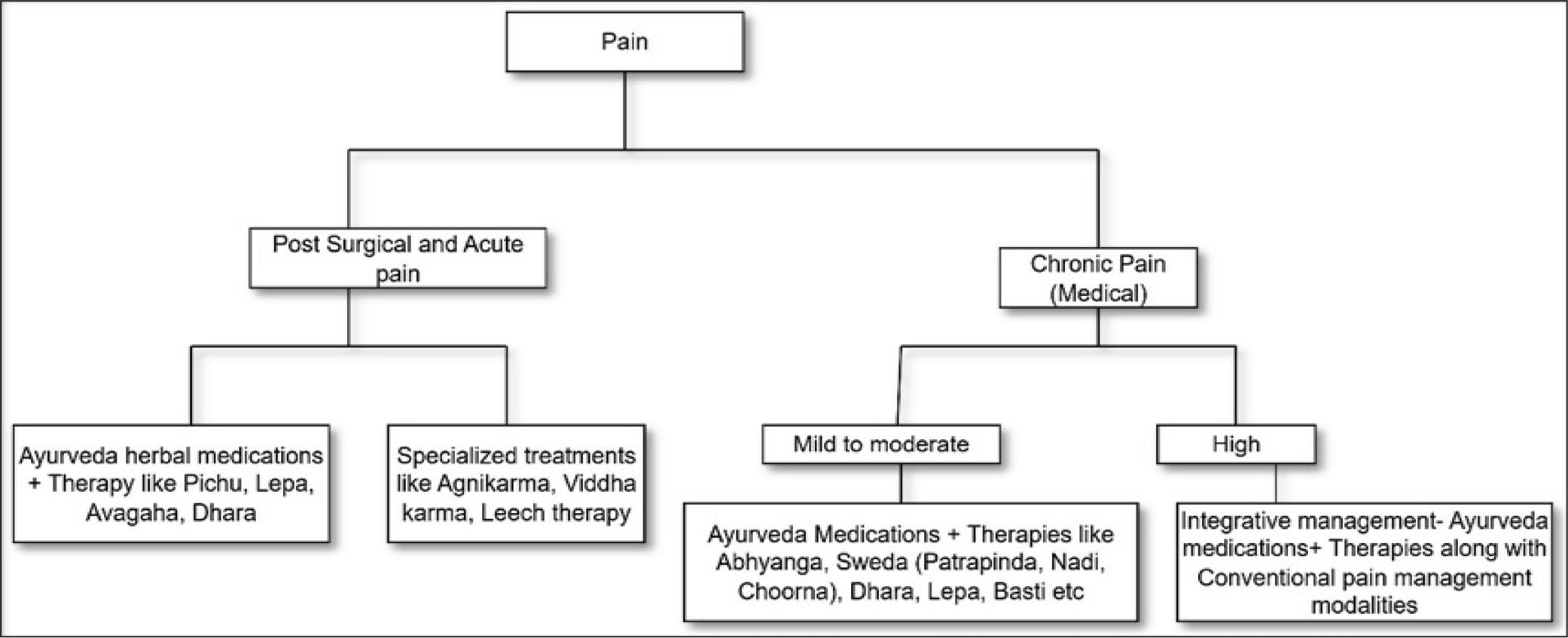
Complementary roles: Integrating with conventional analgesics allows for a stepwise, patient-tailored approach: for chronic or mild pain, escalating to opioids for severe or refractory cases and subsequently transitioning back to herbal or non-pharmacologic therapies when possible, to minimise long-term opioid exposure.[55] Central versus peripheral analgesia: While opioids target central (brain/spinal cord) pain pathways, Ayurveda medicines frequently address peripheral inflammation, neurogenic pain, and metabolic changes [Figure 1].[56,57]
Pain management in Ayurveda
Barriers, Challenges, and Ethical Considerations in Integrative Healthcare
One of the main barriers is the perceived lack of rigorous scientific evidence supporting Ayurveda, which limits acceptance by conventional healthcare providers and policymakers.[58]
Restricted coordination between different providers, incompatible information systems, and a lack of standardised care pathways hinder seamless integrative practices.[59]
Limited funding, infrastructural issues, and shortages of trained integrative medicine practitioners restrict scalability and sustained implementation.[60]
Differences in medical philosophies and professional conduct can lead to difficulty in collaboration.
Integrating diverse approaches involves complex administrative processes, leading to challenges and the need for multidisciplinary teams.
Ethical Considerations[61]
Patients must receive clear, personalised information about integrative treatments, including benefits, risks, and alternative options, ensuring autonomous, well-informed decisions.
Ensuring the safety, quality, and regulatory compliance of Ayurveda medicine and therapies is crucial to protect patients from harm.
Transparency is essential in providing integrative care services to avoid exploitation and bias in care.
Structured ethical and research guidelines to maintain scientific rigour and protect participant rights in integrative medicine research.
Conclusion
Ayurveda contributes significantly to contemporary surgical and interventional care by emphasising precision, preservation, and personalisation. Techniques such as Kṣhārasūtra therapy, Agnikarma, and tailored perioperative protocols illustrate how Ayurveda methods can mitigate complications, reduce surgical trauma, and decrease recurrence rates while expediting recovery. Rooted in classical surgical sciences and documented by modern evidence, these approaches exhibit enhanced wound healing, pain management, and patient satisfaction in complex cases where conventional methods have limitations.
The integration of Ayurveda into surgical systems promotes minimally invasive, cost-effective, and outcome-oriented care, thereby improving quality of life and decreasing reliance on resources. This synergy, bolstered by clinical research and institutional collaboration, advances a sustainable, patient-centred surgical model that harmonises Ayurveda’s precision and preventive philosophy with the technological advancements of conventional medicine.
Footnotes
Acknowledgements
I am grateful to Mr Rajiv Vasudevan, MD & CEO of Apollo AyurVAID Hospitals, for his valuable input and for reviewing this article.
Declaration of conflicting interests
The author declared no potential conflicts of interest with respect to the research, authorship and/or publication of this article.
Funding
The author received no financial support for the research, authorship and/or publication of this article.
Institutional ethical committee approval number
Not applicable.
Informed consent
Not applicable.
Credit author statement
Conceptualisation, Writing-Original Draft, review & editing: Dr Suprabha Hegde.
Data availability
Not applicable.
Use of artificial intelligence
AI used for grammar check.