



Abstract
Historical areas are one of the alternative tourism destinations in Semarang City. The most attractive and popular spot is the Semarang Old City, which is presently being prepared to become a World Heritage based on the beauty, authenticity and environmental attraction of the colonial buildings as well as the fascinating history of the area. However, most millennials prefer more recreational activities such as taking pictures, riding bicycles, sightseeing and enjoying the culinary surroundings without showing any interest in the history of the Old City. The potential importance of these millennials to the tourism market of this area requires the accommodation of their ever-changing needs. Therefore, researchers are encouraged to study young people’s perspectives and preferences towards historical tourist destinations such as the Old City. This involved the application of the qualitative method to examine the characteristics, preferences and motivations of millennials travelling in historic tourism areas through observation and interview millennials. The findings of this study were expected to be used in setting up some strategies to overcome the inherent problems of historic site tourism and also to satisfy the needs of the tourists, especially the millennials.
Introduction
Historic areas are considered one of the types of tourism destinations by the World Tourism Organization (Sari et al., 2019; WTO, 2004) due to their significant attractions. Meanwhile, Indonesia has several historic areas quite spread throughout the country such as the famous Old City in Semarang, which has become globally recognized since the end of 2019 due to the effort of the Semarang Government to revitalize the buildings, road networks and other supporting tourism facilities in the area. The place has also been planned by the government to be officially listed in UNESCO’s World Heritage Site by 2020 (Prabowo & Harsritanto, 2018).
Semarang was awarded the cleanest tourist city in Southeast Asia in the ASEAN Tourism Forum 2020 (Santoso, 2020) and this places the city on the global tourism map. This further led to an increase in the number of tourists, both foreign and domestic, visiting the city. There are, however, two segments of tourists, the seniors and millennials (Veiga et al., 2017) with the millennials reported to be presenting more significant challenges to the tourism sector because of their characteristics (Pendergast, 2010). They have also been discovered to be gradually moving up the population pyramids to replace the older generation (Cavagnaro et al., 2018).
The productive population of Indonesia, which is for people between the ages of 15 and 64 years, was reported to be 179.1 million while the millennials, which are those aged between 21 and 36 years, contributed approximately 63.5 million (IDN, 2020). This means the millennials or generation Y, which include those born between 1980 and 1996 as shown in Figure 1, are significant to the economic and tourism growth of the country (Dimock, 2019; KPMG, 2017). They travel more than any other generation including the Baby Boomers and are likely to travel even more as their incomes and finances increase (Nielsen, 2017) to unique, new, authentic and personal destinations in search of the meaning of tourism (Parhusip & Arida, 2018). This is associated with the difference in the behaviour of each generation in receiving information (Damasdino, 2017) with the millennials observed to be having more through social media which were not used by the older generations and this makes them participate more in tourism activities due to the information available to them. Meanwhile, the older generation also perceives themselves to be younger than their chronological age (Veiga et al., 2017), and this makes them adjust to the current millennial behaviour, especially in travelling.

The survey by Edge Research (2017) showed 71% of millennials enjoy historical travel such as visiting a museum as well as historical churches or neighbourhoods, 67% were interested in staying at a historic hotel, 58% like to attend a happy hour in a historic building and 53% promotes the events on their social media such as Instagram, Facebook, Twitter and others. Moreover, millennials are also usually seen taking pictures with ancient buildings in Semarang Old City to be posted on their social media, and this indicates their support for historic building’s preservation. Edge Research (2017) also showed a willingness to mix old structures with new ones by living in a modern home located in a neighbourhood with historic character.
Some efforts have been made by the Semarang City Government to revitalize the historic areas in the city in compliance with the policies related to cultural heritage buildings in order to protect the original form and materials of the building. The functions of some parts of the structures such as the restaurants, exhibition rooms, multipurpose rooms, selfies spots and several others are observed to be attractive, and programmes have been implemented to increase the interest of tourists in visiting and developing the quality of the areas. However, some of these tourist attractions record zero visitors, and several evaluations have been made to make these areas more attractive and the findings showed the preferences and the continuous change in the interest of millennials is a significant factor.
Thus, this section presents the phenomena related to how millennial tourists travel in the historic tourism area, and also the objective of the research. Section II shows the theoretical concept related to millennial tourist’s characteristics, preferences, and motivation. Section III contains the research methodology and how this research will be conducted. Section IV presents the research findings that contain how millennial tourists see and travel in the Semarang Old City, Semarang, Indonesia. From the findings, they will be discussed with other tourist destinations that have the same condition in Section V. We will see that how millennials choose and travel in the old or historic tourism area with their way. From the discussion, we will know the millennial tourists' demand in traveling to historic tourism areas and we can formulate the optimal strategy to develop and sustain the tourist destination. Finally, the research will be concluded in section VI which contains the conclusion of the findings and discussion, originality, and contribution for the future study.
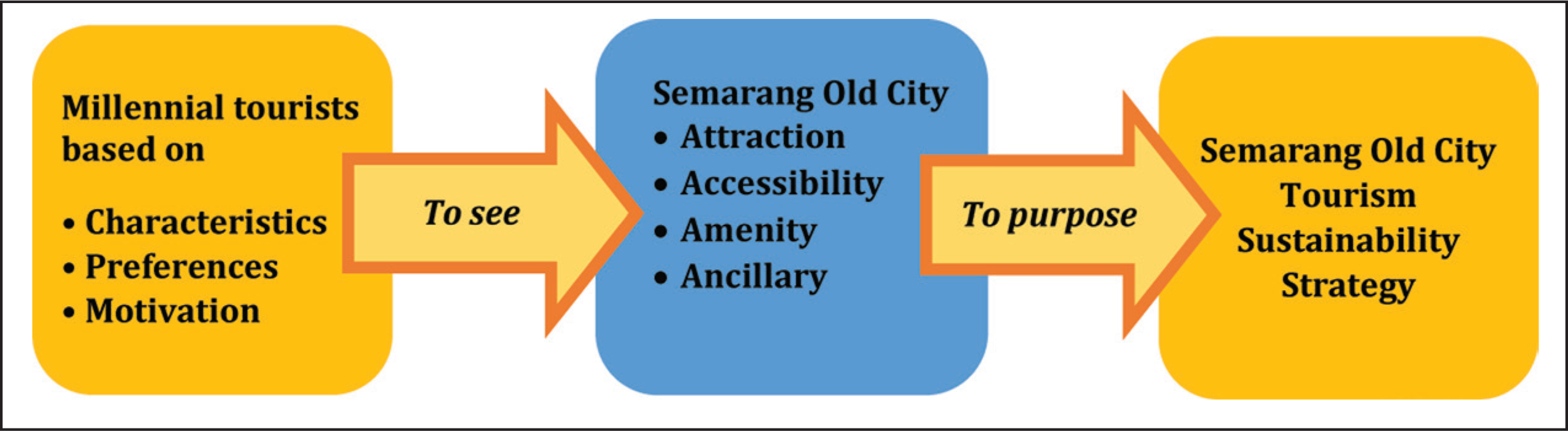
This research was, therefore, conducted to determine the preferences of millennial tourists in Semarang Old City and make efforts to fulfil the needs in order to sustain the tourism activities in the area. This led to the formulation of the following research questions: (i) What kind of perspective do millennial tourists have towards the historic area? (ii) What motivates millennials to visit the historic area? (iii) What is the need and attraction expectations of millennials in the historic area? (iv) What kind of strategy is needed to sustain tourism activities in the historic site? The Semarang Old City was selected for this research due to its popularity in Semarang City and its potential to become a World Heritage. A qualitative method was employed and the findings are expected to describe the preference of millennial tourists towards the historic area in Semarang Old City. The research was, however, structured as follows (Figure 2).
Source: Developed by authors, 2020.
Tourism is a social, cultural and economic phenomenon involving people’s movement to countries or places outside their usual environment for personal, business or professional purposes. These people are called tourists, visitors and excursionists and they may be residents or non-residents while tourism is defined as their activities during the visit including the expenditure (UNWTO, 2016). The choice of a place to travel is usually based on actual or perceived risks (Garg, 2015) and the preference of tourists is observed from their positive, negative, or neutral comments and perceptions after visitation (Sun et al., 2018). Meanwhile, the ability of a particular destination to attract and win market shares by utilizing tourism resources effectively influences the preferences of the tourists (Sun et al., 2018). This means tourists’ preferences are essential to the improvement of tourism product quality in terms of attractions, accessibility, amenities and ancillary (Cooper et al., 2006). Therefore, it is required to be considered in developing tourist attractions in order to focus service delivery on the demands and desires of the customers (Nieamah, 2017).
The measurement of tourists’ preferences is also essential to the planning, diversifying determining carrying capacity of attractions, trend analysis, market segmentation analysis, marketing promotion strategies and several others (Damasdino, 2015). It is also used as a reference to implement consumer loyalty development programmes towards maintaining on-going interactions between the consumers and companies in the tourism industry or government (Sudibyo, 2002). Some of the important factors to be considered in the measurement include the pattern of visits (trend and frequency), length of visit (to stay or not), the spatial distribution of visitors (domestic or foreign), the purpose of the visit (recreation, research, or education), age classification and means of transportation (Fandeli & Mukhlison, 2000). These factors are known as travel patterns and are related to where, why, when and how individuals conduct tourism trips (Liyushiana, 2019).
People participate in trips because of several influential factors such as motivation (Pitana & Gayatri, 2005) which is an encouragement received by individuals to satisfy their needs and desires (Siswanto, 2014). It has been reported to be an essential factor for tourists in deciding where to visit (Briliana, 2019) and this makes an essential point to be discussed due to its influence on people’s behaviour (Jayadi et al., 2017). There are four major groups of motivation to travel according to Yoeti (1983) and they are explained as follows:
Physical or physiological motivation is the desire for relaxation, health, comfort, participation in sporting activities and several others. Cultural motivation is the desire to know the culture, customs, traditions and arts of other regions including the interest in several cultural heritage objects. Social or interpersonal motivation is the desire to visit friends and family, meet partners, do things capable of bringing prestige, pilgrimages, escape from annoying situations and others. Fantasy motivation involves a situation where a person escapes from the tedious daily routine to enjoy ego-enchantment which gives physiological satisfaction.
There is, therefore, the need to also measure tourists’ motivation using the four groups previously stated to determine their interests and requests.
Millennial’s Tourists
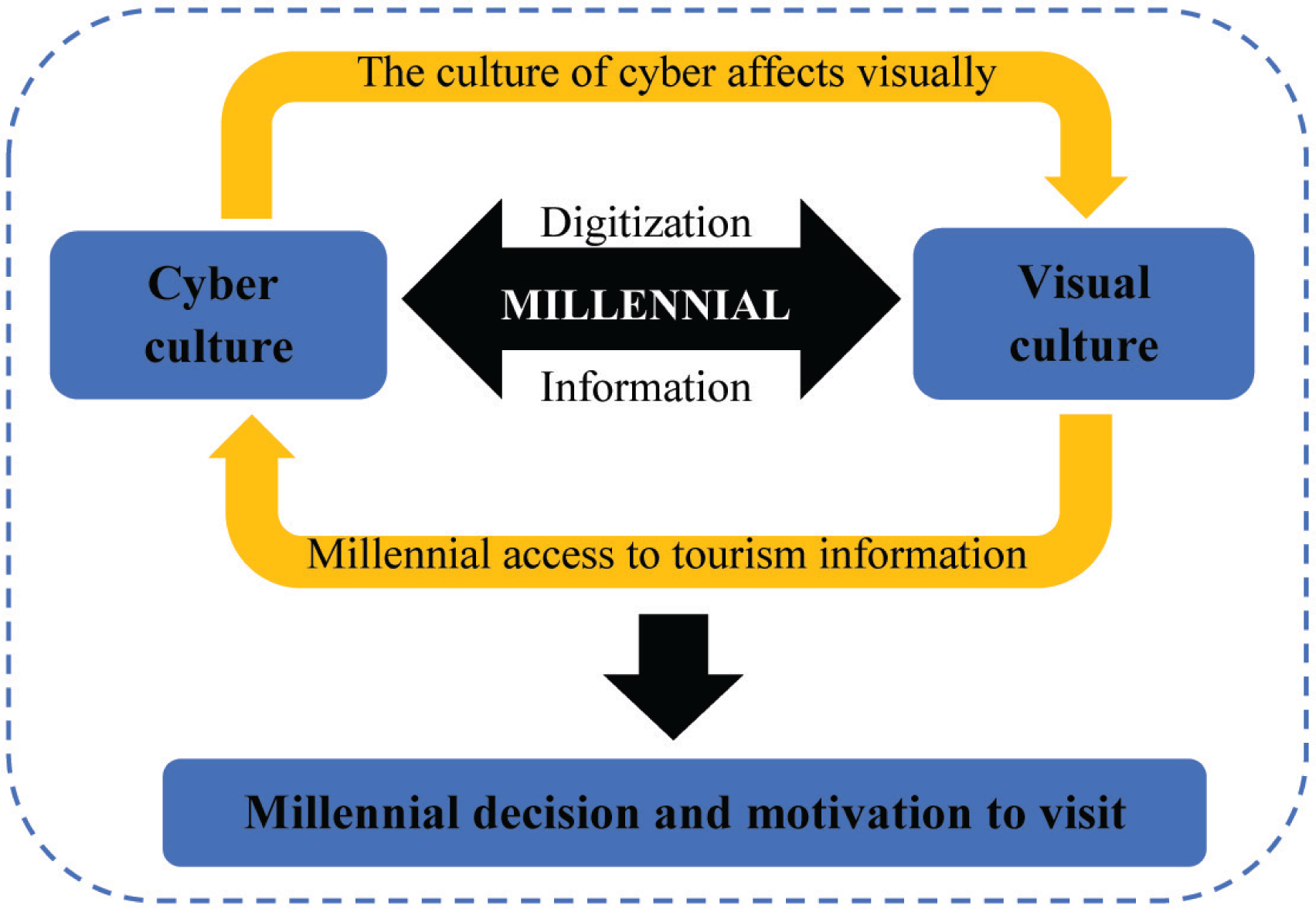
The present digital era has provided several significant changes in the tourism sector, especially the market (Ketter, 2019). This led to the provision of comfortable, accessible and affordable tourism activities for everyone including the middle and upper classes as well as the millennial tourists to enjoy mainstream destinations (Fitriani et al., 2019). It is also possible for millennials to access digital media to find their preferred tourist destinations, and this indicates the difference in the methods and strategies used by each generation to generate information (Damasdino, 2017). The journey of millennials is considered inseparable from the digitalization trend due to the availability of several recommendations on digital media (Fitriani et al., 2019) like the experiences shared by their counterparts on social networks such as Instagram during or after a trip. This generation also likes to comment and share moments with others to impress and inspire them to visit (Briliana, 2019). This cycle occurs continuously and undoubtedly affects millennial tourists’ preferences and motivations to choose and decide the destination to visit as indicated in Figure 3.
Millennial tourists have unique characteristics in comparison with tourists from other generations (UNWTO, 2016) and these include their (i) willingness to continue their travelling plans even though the state’s financial condition is unfavourable, (ii) tendency to allocate their expenditure directly to the local community and (iii) tendency to invite others to visit a particular destination. These characteristics have, however, made the Indonesian tourism sector to adapt and adjust to the changes in the tourism market in order to explore the market opportunities provided by the millennials as future tourists (Hakim, 2018). These changes include planning, design of the area, tourist attractions, accessibility, amenities and ancillary which have been adjusted to millennials’ preferences and motivation. The digitization cycle previously presented also has some influences and the ever-changing trends in their preferences and motivation also need to be understood to ensure continuous and comprehensive development of the tourism sector.
This research was conducted using a qualitative method to show the behaviour and perception of millennials regarding tourism by easily drawing inferences from the data obtained in the research area. The pandemic made it difficult to conduct direct interviews; therefore, an online questionnaire was used to collect data through a purely conversational method to obtain in-depth information from the informants on their thoughts and perception. One of the advantages of this approach is the provision of an excellent opportunity to gather precise data on people’s beliefs and motivations. Therefore, two forms of interviews were conducted in this study and these include the use of face-to-face before the beginning of the pandemic and online-based when the pandemic started. The observation was also conducted before and during the pandemic.
The informants were selected based on the criterion that they are millennial tourists between the ages of 20 and 40 years, and approximately 80% of Semarang Old City visitors were observed to be in this group. The questionnaires were distributed directly to the informants through social media with the focus on their socio-demographic characteristics (Dwiputra, 2013), travel motivations (Yoeti, 1983) and tourism preferences (Fandeli & Mukhlison, 2000) to understand their reasons for visiting Semarang Old City and impression towards the area as a historical tourist destination. The data were analysed using the descriptive method and the results obtained from the process were discussed based on some related theories or cases in order to recommend some strategies to increase the total number of tourists, mainly millennial groups, as the potential tourism market in Semarang Old City.
Findings
Tourists visiting Semarang Old City have different socio-demographic characteristics including sex, age, regional origin and occupation (Dwiputra, 2013). They also have a travel pattern which is related to where, why, when and how they design effective and efficient trips according to their needs (Ismedi, 2011). This was confirmed by the observation and interviews conducted which showed 80% of Semarang Old City tourists are millennials as indicated in Figure 4 and a majority of them represented by 40% are students. The data also showed 74% of the tourists are from Semarang and surrounding communities with the information on the tourist destination mostly obtained from friends, neighbours, social media and personal experience as indicated by 60% of the informants. Moreover, most of the tourists represented by 60% visit the Semarang Old City for leisure, to have fun and also to enjoy the meals and environment with friends or family. The information also showed 30% tend to travel to the place between afternoon and evening from 3.00 PM to 6.00 PM while 15% reported they usually leave from 6.00 PM to 9.00 PM.
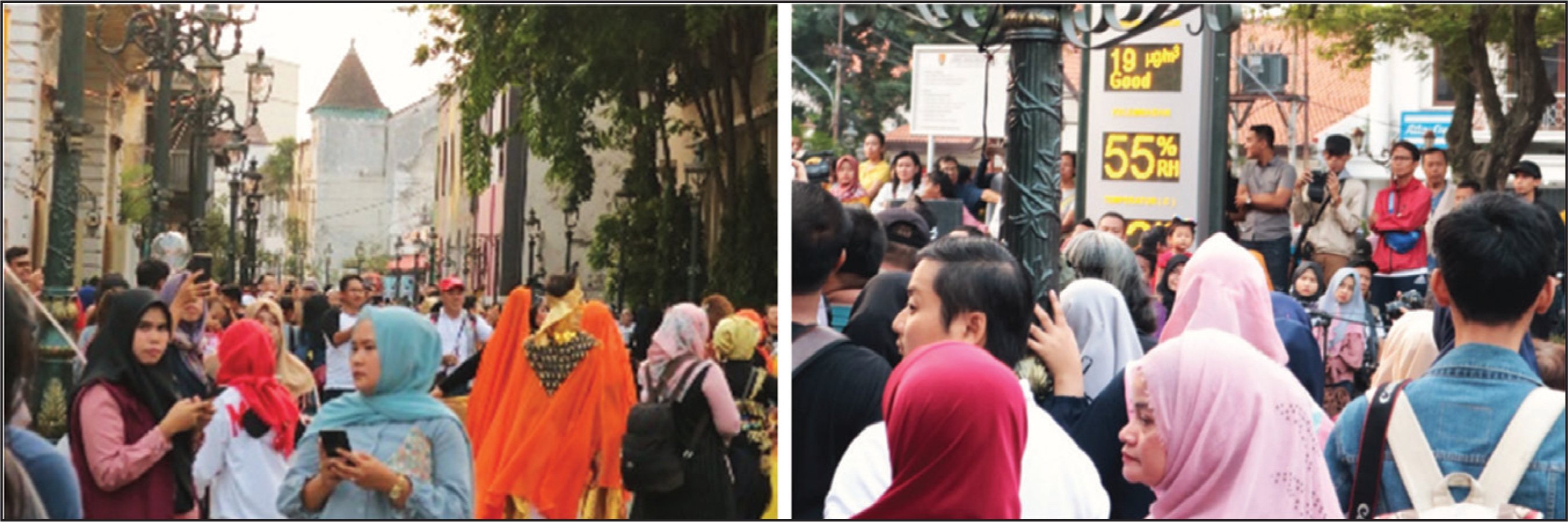
It was also discovered that most millennials prefer to travel with others as indicated by 51% that like to travel with friends and family, while 47% prefer to travel alone and the duration of the tour is usually long at approximately between 30 minutes and over 60 minutes. Some of the informants associate this situation with their desire to continue travelling despite their unhealthy financial condition (UNWTO, 2016) and this means they stay for a long time at their desired tourist destination without spending too much money. The findings also showed they tend to have a consumptive nature by buying and shopping for souvenirs during the trip while some are exploratory or curiosity to know and learn more about Semarang Old City history and all the buildings, thereby, increasing the time spent in the area. Another reason is the construction of all buildings along the main street which makes it quite busy, especially at night and on weekdays and the millennials sometimes prefer to linger in the area until night because they feel comfortable exploring all the attractions as shown in Figure 5. It is, however, important to note that the area is not just the corridor for the main street but also some other streets located close to the Old City.
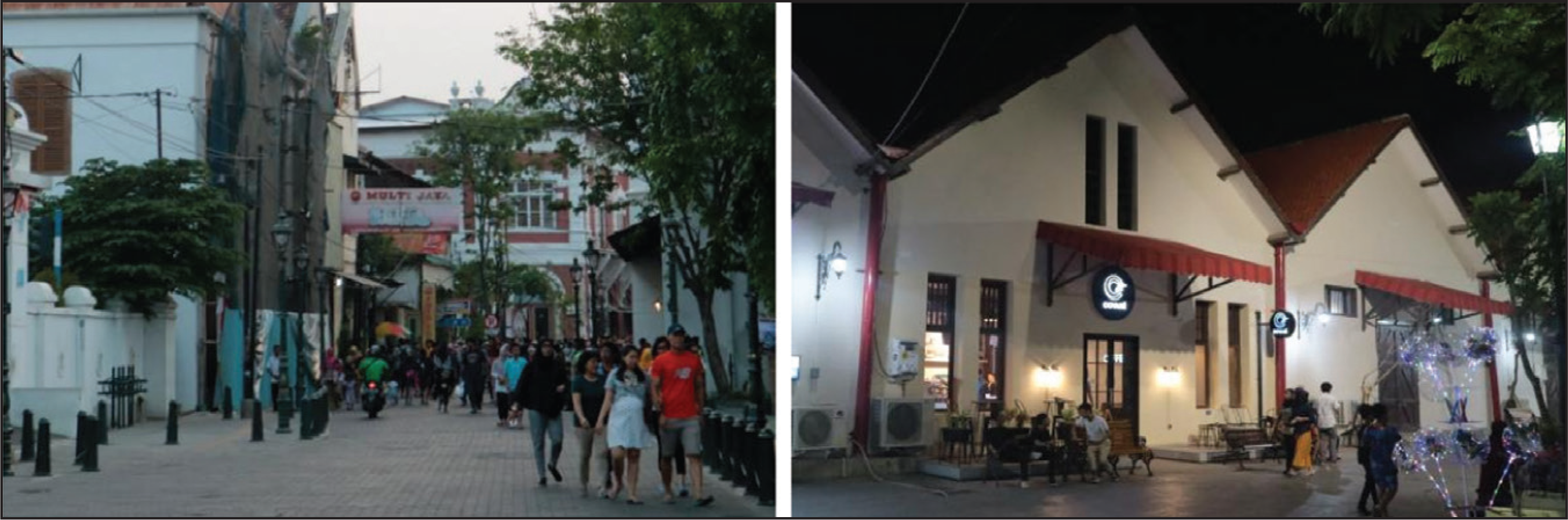
The millennials tend to crowd in front of iconic buildings and this is reflected in the 82% that preferred staying at the Blenduk church, 52% at the Spiegel building and 41% at the Marba building and this is due to the comfortability, comprehension and the best angle to take a picture provided by these spaces. Some other areas usually visited include the corridor in front of the Contemporary Art Gallery by 37%, the IBC building by 35% and the Soesman Kantoor by 30%. These places are preferred due to the willingness of the millennials to see revitalized old buildings as indicated by 44% and the desire to take pictures in front of them as reported by 42% as shown in Figure 6. Meanwhile, Yoeti (1983) reported that millennials do not have much cultural motivation properly due to their lack of interest in ‘ancient history’ or traditional ceremonial activities (Briliana, 2019). This was also confirmed by the findings of this study which showed 21% of the millennials travel to the Semarang Old City because of its several photo spots without focusing on its unique heritage and 20% visit to enjoy old buildings and capture them in selfies as reported by 42% as shown in Figure 6. It has also been reported that millennials love to buy ‘Instagramable’ items (Briliana, 2019) or photo-worthy materials which can be uploaded on their Instagram (Fitriani et al., 2019). This is expected to inspire their friends and those seeing the post to visit the place later, and this further proves the very close relationship between the ‘digital’ concept and ‘millennial’ groups. This generation has been discovered to be different from the others by being the majority in the urban population and their constant use of digital technology (Briliana, 2019).

Some of the informants represented by 39% indicated they visit the Old City because they are bored with modern places like the mall due to its ability to provide certain physiological satisfaction such as relaxation, health and comfort, which are unobtainable from their daily routine. One of the edifices attracting the tourists is the 3D tricks old town museum which is a building containing three-dimensional images for selfies purposes but only 25% of millennial tourists have visited this museum to take a selfie with the 3D pictures’ background as shown in Figure 7. The entrance ticket to this building is relatively cheap at approximately IDR 25,000 to 50,000 but the millennials still feel reluctant to visit the place and this shows the value provided by the building does not commensurate with the money; therefore, they prefer to spend on other locations. Moreover, 37% visited Semarang Contemporary Art Gallery which has contemporary artworks such as paintings and sculptures, and its interior design and works arrangement are excellent to the extent several millennials are interested in visiting to capture their moments as shown in Figure 7. The entrance fee to the gallery is estimated at IDR 10,000 but the millennials accept the price due to the balance between the attraction value obtained and the money they spent.

There are also cafes and restaurants in Semarang Old City for tourists willing to eat, drink coffee and enjoy the environment with their friends but the data showed only 15% of millennials visit these facilities. Most of their customers are those in the upper-middle class due to the relatively high prices of the foods and drinks and this limits the access of most dependent millennials to the place and also confirms the need to balance the value proposed with the money to be spent by the customers. Meanwhile, few informants, represented by 15%, enter these cafes and restaurants to take pictures mostly due to their need for aesthetic and creative objects with high selling value (Fitriani et al., 2019) and their love for photography. Some of them are willing to pay any amount to have to snap pictures in ‘Instagramable’ spots of the cafes and restaurants with the aesthetic interior as indicated in Figure 8. It is, however, important to note that despite the goal of millennials to take pictures in the cafe/restaurant, only 34% visited Spiegel Bar & Resto, 27% in Filosofi Kopi, 21% in Tekodeko, 13% in Hero Cafe and several others. Most of the visitors to these restaurants are people from other generations, especially the Boomers.

In addition to paid attractions, public facilities such as electric bicycles and scooters showed in Figure 9 do not attract much millennial interest as indicated with only 14% due to the need to pay approximately IDR 25,000. Moreover, the use of these facilities requires downloading an application and this is considered by most of the tourists to be too burdensome considering the fact that they need to use their Internet quota and smartphone memory space for a one-use application. Some other areas observed not be very attractive include polder areas which were reported to have 3% and Mberok bridge corridors with 12% as shown in Figure 9. The non-attractiveness of these areas is associated with the absence of public facilities or restaurants and non-revitalization of some of the buildings which make their appearance not to be attractive, thereby, causing the reluctance of tourists to visit or pass through them. They are also considered to be too far for walking tourists while there is no parking space provided for vehicles due to their location close to the main road. It is, therefore, important for stakeholders to develop the Semarang Old City by focusing on its attractions, amenities, accessibilities and ancillaries (Cooper et al., 2006).

The analysis showed the millennials are not interested in the history of the Semarang Old City but its physical form as well as their preference for natural visual forms such as ancient buildings over artificial objects such as the 3D museum tricks. It was also discovered that they prefer taking pictures at the Semarang Old City rather than learning its history and usually desire to have value for the money they spend. This is observed in the gallery with good quality and affordable price which makes the millennials patronize the facility while the unaffordable price of foods and drinks at the cafes and restaurants limits their patronage. The millennials also prefer to snap pictures in lower-priced places than the expensive ones. Moreover, they were also found not to be interested in electric bicycles and scooters but digital technology and this means it possible for them to enjoy the public facilities in Semarang Old City by downloading the applications on their smartphone. It is, however, recommended that these applications are developed for other facilities and public areas.
The findings were used to discuss other tourist destinations with the same situation even though it is impossible to generalize the condition for all of them. Indonesia is very rich in tourist destinations which are spread throughout the country and those in Bali have always been the favourite of tourists such as the Tanah Lot Temple. One of the success factors of this destination has been reported to be reviews made by millennials on social media (Pramono et al., 2020), and this shows their significant power in promoting tourist destinations. This, therefore, means they are drivers of the current tourism market (Ketter, 2019). It was also discovered that the experience in a destination and its ability to meet expectations determine its worth and this means tourists do not need to spend much money to travel since they can have the most valuable experience in these destinations. This research showed most of the tourists are impressed by snapping pictures in Instagramable places and enjoying public facilities rather than paying expensive entrance fees or eating at five-star restaurants.
Another example is the Labuan Bajo tourism and the research conduct on this area showed the push-and-pull factors influencing the satisfaction in a destination (Komalasari & Ganiarto, 2019). The push factors were reported to be consisting of new experiences, new knowledge, social status and visitation to the place while the pull factors include the historical value, local value, culture and heritage and travelling value. The findings, however, showed culture heritage does not influence destination satisfaction and this confirms the results of this research that millennials tend to visit tourist destinations based on their desire to have new experiences not because they have a different culture. This means despite their show of appreciation in the local culture, they have a bigger inner drive which is to have new experiences.
Historical area has also been reported to be a factor determining tourist satisfaction through the use of the Litchi Bay in China as the case study. The research showed the importance of a destination image, tourist involvement and authenticity perception to determine tourist satisfaction in historical tourism (Lu et al., 2015). This is observed to be entirely related to Semarang Old City due to the increase in the number of tourist visits since its revitalization. Its face has been changed to a destination image which is attracting tourists to visit and the participation of the tourists by inviting others to the place is also essential due to the fact that they indirectly help to increase the quality of the area. Meanwhile, the authenticity of a historical area needs to be emphasized due to its importance in preserving the cultural sites even though tourists are not interested in the historical values because they indirectly learn the history during the tour.
Value: Tourism Sustainability Strategy
Millennial tourists usually desire a pleasant tour without much financial obligation (UNWTO, 2016) and this means there is a need to review Semarang Old City to encourage tourist attractions. This does not mean making the services free but ensuring the value of attraction provided corresponds with the price tag in order to influence tourists to the site. The government has been able to revitalize only the main street to the Mberok River while several supporting facilities are ignored with few street furniture such as the bench, greenery, lighting and other attractions provided as shown in Figure 10. Moreover, the buildings have been reconditioned and used for other functions but they are not attractive as indicated in Figure 10. Meanwhile, most millennials are motivated to visit Semarang Old City for recreation and fun purposes not to know the history of the area; therefore, stakeholders need to use these preferences in developing the tourist destination.

The city government has created new sources of attractions in Semarang Old City such as cafes, restaurants, vintage traditional markets, playgrounds, parks, riverside and several others. The history of the area has been neglected based on the thought that they are easily accessible in schools and bookstores. Meanwhile, the findings from the preferences of the millennials in the Semarang Old City were used in formulating effective and optimal strategies to develop historic tourism areas and these include:
The creation of other creative, new and unique tourist attractions to reduce boredom for the millennials since there is always something new to be explored. Development of the interiors of the cafes and restaurants to become more aesthetic to make millennials return to Semarang Old City for new experience and photos in Instagramable spots. The addition of digital technology facilities in every corner of the area such as virtual reality or touch screen boards at several points to display Semarang Old City’s history and development.
This, therefore, means understanding the factors motivating tourists can be used by stakeholders in determining their needs and desires to be met in order to encourage them to visit more frequently (Santoso & Kartika, 2018).
The findings showed most of the millennial tourists visit Semarang Old City to snap a selfie with the buildings and not to learn the history of the area. The most attractive spot for the attraction was also found to be the physical appearance of the buildings rather than the underlying history. The pictures taken are usually posted on social media and this influences the preference of others in selecting a tourist destination. It was also discovered that they prefer to spend most of their happy hour in the main street, empty buildings and parks because they are free of charge while only a few visit cafes, restaurants and 3D Tricks Museum attractions due to the fact that they feel the value obtained do not correspond with the money to be spent while the few using these places enter only to snap pictures with the ‘Instagramable’ interior.
This research showed that the historical site is not ancient due to the revitalization which provides the area with a more aesthetic effect, both in the exterior and interior, and this attracts the millennials due to their preference for Instagramable places for pictures. It is, however, important to note that the aesthetic of these places may not be attractive to other generations even though millennials found them enjoyable. The spaces also form a new experience for them because they do not find the aesthetics in their daily lives and this makes them share the experience on social media to influence other tourists. This, therefore, means destination image is essential for a tourist destination and needs to be improved through appropriate attractive structures and aesthetic touch.
This research contributes to previous studies on millennials and tourism. It is, however, important to note that people’s preferences always change and this is also applicable to the millennials when they grow older. Therefore, there is a need for tourist destinations to consider different values and meanings required to satisfy the millennials, both in the present and the future (Cavagnaro et al., 2018). Future studies are also needed to determine the preferences of the next generation concerning the tourism sector. This is necessary due to the fact that the millennials are currently the largest tourism market and there is a possibility the same will apply to the next generation. It is, however, important to preserve the historical area for the next generation.
Footnotes
Acknowledgements
The authors show gratitude to all the staff that helped in completing this research as well as the respondents in Semarang Old City for making out time to fill the questionnaires and for providing useful information for this study. The authors are also grateful to Diponegoro University for providing grants to accomplish the objectives of this research on time.
Declaration of Conflicting Interests
The authors declared no potential conflicts of interest with respect to the research, authorship and/or publication of this article.
Funding
The authors received research grants of IDR 20 million from Diponegoro University to support this research.