



Abstract
Ceramics and ceramic matrix composites (CMCs) had emerged as promising materials for solar thermal receivers due to their unique properties, including excellent thermal stability, high thermal conductivity, high corrosion resistance, and superior mechanical properties, all of which enhanced the performance and durability of solar thermal receivers. Additionally, their lightweight nature, achieved through the use of ceramic matrix composites, optimized overall system performance. Various types of ceramics and ceramic matrix composites had been assessed for their applicability in solar thermal receivers, such as alumina, zirconia, mullite, silicon carbide, silicon nitride, and ultrahigh temperature ceramics (UHTCs). Consequently, advanced ceramic matrix composites, novel coating technologies, and innovative manufacturing techniques were explored to further optimize the efficiency and reliability of solar thermal receivers. Innovative ceramic matrix composites, such as alumina/silicon carbide and silicon carbide/silicon carbide (SiC/SiC), were examined for their superior mechanical strength and thermal conductivity. Moreover, the utilization of a novel class of fiber-reinforced ultra-high temperature ceramic matrix composites, which featured improved optical properties, high mechanical strength at elevated temperatures, thermal shock resistance, and lightweight characteristics, created opportunities for advancing solar thermal receiver design and optimizing performance as solar absorber materials.
Introduction
It is beyond argument that Solar thermal energy conversion has emerged as a prominent pathway towards sustainable and renewable power generation, offering a viable solution to the global energy challenge while reducing greenhouse gas emissions. Solar thermal technology, which utilizes solar energy to produce electricity or supply heat for industrial processes, has garnered substantial attention for its efficiency and versatility. 1
Concentrated solar power (CSP) systems, a leading solar technology, utilize solar thermal receivers to capture and convert concentrated sunlight into high-temperature heat. 2 This heat is then utilized for a variety of applications, including electricity production via steam turbines or supplying thermal energy for industrial processes such as desalination and chemical manufacturing. 3 The efficiency and durability of these receivers directly influence the overall performance of CSP systems. Currently, CSP accounts for approximately 0.5% of global electricity generation. However, projections suggest a significant increase, with its contribution expected to reach 11% by 2050, highlighting its importance in the renewable energy landscape.4,5
A significant body of research has focused on improving the materials used in solar thermal receivers to enhance their performance and durability. Traditional metallic components, while widely used, are prone to thermal fatigue and oxidation at elevated temperatures, which limits their operational lifespan. 3 Recent studies have turned to advanced ceramic materials and ceramic matrix composites (CMCs), which offer superior thermal stability, corrosion resistance, and mechanical properties under extreme conditions.4,5 For instance, ceramics like silicon carbide and alumina demonstrate exceptional resistance to high temperatures, thermal cycling, and high thermal conductivity, making them ideal for solar thermal applications. 6 Additionally, their corrosion resistance and compatibility with high-temperature environments make them widely used in solar radiation. Also, it possess good optical properties, enabling efficient absorption of solar radiation across a broad spectrum of wavelengths. 7
Furthermore, the development of ceramic matrix composites has unlocked new possibilities for improving the performance of solar thermal receivers. Ceramic matrix composites combine the desirable properties of ceramics with enhanced mechanical strength, toughness, and fracture resistance, thanks to the incorporation of reinforcing fibers or particles within a ceramic matrix. This enables the design of lightweight, high-performance components capable of withstanding the rigors of solar thermal energy conversion.8,9
Despite these advancements, challenges remain in optimizing ceramic and CMC materials to maximize heat absorption and minimize energy losses. This review aims to explore the latest innovations in ceramic and CMC technologies for solar thermal receivers, with a focus on their properties, performance metrics, and potential for scaling CSP systems. By analyzing recent developments, the review seeks to provide a comprehensive overview of the role of advanced materials in advancing solar thermal energy conversion and contributing to global renewable energy goals.
This alignment between material innovation and technological advancement underscores the role of ceramics in shaping CSP's evolution. The durability and performance of ceramic components have proven essential in ensuring the reliability and longevity of solar thermal receivers, thus contributing to the broader adoption of CSP technology in renewable energy applications.
Concentrated solar power technology (CSP)
Types of concentrated power technology
CSP is a renewable energy technology that utilizes mirrors or lenses to concentrate sunlight onto a small area, converting it into heat to generate electricity or provide thermal energy for various applications. There are four Technologies of CSP systems each with its own advantages. 10 The successful integration of materials like ceramics into these systems has further enhanced their performance, enabling CSP technology to meet the growing demand for sustainable energy solutions
Parabolic trough collector (PTC):
PTC systems are among the most well-established and extensively deployed CSP technologies. They consist of long, curved mirrors (troughs) that concentrate sunlight onto a receiver tube located at the focal line. 11 The concentrated sunlight heats a heat transfer fluid (usually oil or molten salt) flowing through the receiver, generating high-temperature steam to drive a turbine for electricity generation. 12
relatively high efficiency Scalability for large-scale power plants.
Solar power tower (SPT):
SPT systems, also known as central receiver systems (CRS), use a field of sun-tracking mirrors called heliostats to concentrate sunlight onto a receiver located atop at central tower. The concentrated sunlight heats a heat transfer fluid or directly generates steam for electricity generation. 13
High efficiency due to higher operating temperatures achievable at the receiver. High concentration ratio. Scalability for utility-scale power generation.
Linear fresnel reflector (LFR):
LFR systems use long, flat mirrors arranged in a line to concentrate sunlight onto a receiver tube. The receiver tube contains a heat transfer fluid that is heated by the concentrated sunlight for electricity generation. 14
lower cost compared to other CSP technologies, Simpler construction. Potential for integration with existing power plants or industrial processes.
Parabolic dish systems (PDS):
PDS systems consist of a parabolic dish-shaped reflector that concentrates sunlight onto a receiver located at the focal point. The receiver typically contains a Stirling engine or a Brayton cycle engine to convert the concentrated solar energy into electricity. 15
high efficiency Precise tracking of the sun. Potential for decentralized power generation or off-grid applications.
Mechanism of concentrated solar power (CSP) system
A CSP facility comprises three main components: a primary solar collector (often referred to as the solar field), a solar receiver, and a power block. The solar collector focuses solar energy onto the receiver, which is positioned at the focal point. Here, the concentrated solar radiation is absorbed, heating the working fluid. Meanwhile, the power block houses a heat engine that employs the heated working fluid to propel a power cycle, ultimately producing electricity. 16
Component of concentrated solar power (CSP) system
Several key components work together in CSP systems to achieve conversion process efficiently including:
Solar collectors/mirrors:
CSP systems focus sunlight onto receivers using parabolic troughs, solar power towers, and dish/engine systems. Parabolic troughs use curved mirrors to direct sunlight onto a receiver tube, solar power towers use heliostats to concentrate sunlight onto a central tower receiver, and dish/engine systems employ dish-shaped mirrors to focus sunlight onto a receiver at their focal point. 17
Receiver:
The receiver absorbs concentrated sunlight and converts it into heat. Positioned at the collectors’ focal point, it may contain as tubes filled with a heat transfer fluids like molten salt or synthetic oil in parabolic troughs or serve as a central receiver in tower systems. Receivers are made of high-efficiency materials like ceramics or molten salts. 16
Heat transfer fluid (HTF):
The receiver generates heat, which a heat transfer fluid delivers to a heat exchanger or storage system. Common fluids include molten salt, synthetic oil, and water/steam, chosen based on the system's operating temperature.16,18
Thermal energy storage (TES):
Thermal energy storage allows CSP plants to store excess heat generated during sunny periods for use when sunlight is unavailable, such as at night or during cloudy weather. This is crucial for providing continuous electricity generation.16,19
Steam generator/engine:
Heat from the receiver generates steam to drive turbines or powers engines like Stirling or Brayton cycles for electricity production. 20
Power block:
The power block converts thermal energy into electricity using turbines, generators, and auxiliary systems. Heat from the receiver produces steam to drive turbines, generating electricity.16,21
Control systems:
Control systems manage mirror positioning, fluid flow, and overall CSP plant operations, optimizing performance, safety, and reliability. They also support key components like solar thermal receivers for efficient energy conversion.22,23
Hence, these systems not only optimize plant operations but also support critical components like solar thermal receivers, which are essential for efficient energy conversion. 24
Solar thermal receiver technology
Solar thermal receivers in CSP systems concentrate sunlight into heat for steam generation, turbines, or industrial heating. These systems operate at 500–1000 °C, necessitating materials capable of withstanding extreme thermal loads and cyclic heating conditions. So, Understanding the fundamental principles and types of solar thermal receivers is vital for comprehending their role in renewable energy systems. 25
Function of solar thermal receivers:
The primary function of a solar thermal receiver is to capture sunlight and convert it into thermal energy.25,26 This process involves several key steps:
Solar thermal receivers are designed to absorb sunlight efficiently. They are typically equipped with selective coatings or materials that have high absorptivity for solar radiation across the spectrum.
25
Once the sunlight is absorbed, the solar thermal receiver converts the light energy into heat energy. This conversion process occurs through various mechanisms depending on the receiver's design and configuration.
26
The generated heat is then transferred to a working fluid, such as water, oil, or molten salts, circulating within or in close proximity to the receiver. This working fluid carries the thermal energy to a heat exchanger or storage system for further utilization. 25
Types of solar thermal receiver
CSP receivers are categorized into two primary types based on their design and operation. These two types cater to different concentrating solar power (CSP) technologies and have distinct characteristics suited to various applications and operating conditions. 27
Linearly concentrating collectors:
This type of receiver is characterized by its ability to concentrate sunlight along a linear focal line.
28
It includes technologies such as:
Parabolic reflectors concentrate sunlight onto a receiver tube, heating a heat transfer fluid. The tube, coated with a selective absorber to maximizes sunlight absorption and minimizes heat loss.
28
LFCs use flat, segmented mirrors to concentrate sunlight onto a linear receiver, heating a heat transfer fluid. 29
With a simpler design than other CSP technologies, LFCs are ideal for medium-temperature applications and are commonly used in utility-scale solar power plants for electricity generation.28,29
Point focus receivers:
Point focus receivers concentrate sunlight onto a single focal point, achieving higher temperatures and concentrations compared to linear collectors. This category includes technologies.16,30 such as:
Dish systems use a large, dish-shaped reflector to concentrate sunlight onto a receiver located at the focal point. The receiver may contain a Stirling engine, which converts the concentrated solar energy into mechanical power.
30
In solar power tower systems, heliostats reflect sunlight onto a central receiver at the top of a tower.. 16
Point-focus receivers achieve high temperatures (500–800°C) and concentrations (500–5000 kW/m2), making them ideal for electricity generation, industrial heat, and thermal storage.31,32
Each type of solar thermal receiver has its advantages and limitations, and the choice of receiver depends on factors like temperature, efficiency, cost, and application, with ongoing research into new designs and materials for improved performance and cost-effectiveness. 33
The requirements for efficient solar thermal receivers
To ensure the efficiency and longevity of these receivers, several key requirements must be met, including high-temperature resistance, thermal stability, and optimized optical properties.
34
Solar receivers are subjected to intense heat from concentrated sunlight. Therefore, they must be able to withstand high temperatures without degradation or structural failure. Materials used in solar receivers must have high melting points and excellent heat resistance. Common materials include ceramics, refractory metals, and specialized heat-resistant alloys such as Inconel or Hastelloy. These materials can withstand temperatures exceeding 1000 °C, ensuring the receiver's durability and longevity under extreme operating conditions.
16
Thermal stability is essential to maintain consistent performance and prevent thermal degradation over time. Solar receivers experience cyclic heating and cooling during operation, which can cause thermal stress and fatigue. To mitigate these effects, receiver designs should incorporate thermal insulation and efficient heat transfer mechanisms to minimize temperature gradients and thermal expansion. Additionally, materials with low thermal expansion coefficients and minimal thermal degradation properties are preferred to ensure long-term reliability and performance consistency.
35
The optical properties of solar receivers significantly impact their efficiency in capturing and absorbing sunlight. The optical properties of solar receivers, such as spectral selectivity, absorbance, and emissivity, impact their efficiency. Spectral selectivity allows absorption of desired wavelengths while minimizing others. High absorbance maximizes energy capture, and low emissivity reduces heat loss. Advanced coatings, like selective solar absorbers, optimize these properties to improve performance and energy conversion efficiency.
34
Efficient heat transfer is critical for maximizing energy conversion efficiency and minimizing thermal losses in solar receivers. Receiver designs should incorporate effective heat transfer mechanisms, such as fluid channels or heat pipes, to quickly and efficiently transfer absorbed solar energy to the working fluid or heat storage medium. Additionally, proper insulation and thermal management systems help reduce heat losses and maintain optimal operating temperatures, further improving overall system efficiency.
35
Solar receivers are exposed to various environmental factors, including sunlight, moisture, dust, and wind. Therefore, they must be designed to withstand these conditions and maintain performance over an extended period. Corrosion-resistant materials, weatherproof enclosures, and protective coatings help enhance the durability and longevity of solar receivers, ensuring reliable operation in diverse environmental conditions.
36
Efficient solar receivers should be scalable and cost-effective for widespread deployment. Scalable materials and manufacturing processes, along with advancements in material science, can reduce costs and improve performance. 37 By Meeting these requirements ensures high efficiency, reliability, and cost-effectiveness, supporting the adoption of solar energy. Ongoing research will further enhance solar receiver technologies and accelerate the transition to renewable energy. 37
Ceramics and ceramic matrix composites as solar thermal receiver
Ceramics have high temperature capability with nonstrategic nature and potentially low cost which make them promising candidates for solar applications. 38 In order to feed a gas turbine at operating temperatures (900–1300 °C); the temperature of the receiver wall should reach at least 1000 °C. 39 Ceramics can be applied in metallic solar receivers as a high temperature absorber coating and also can be applied directly in bulk ceramic solar receivers. Specific properties of ceramic materials are required to be used as solar receivers. They are required to have (1) high thermal conductivity to enhance the heat transfer to the fluid and to limit internal gradients; (2) appropriate optical behavior to maximize the absorption of solar flux; (3) low expansion coefficient that minimizes deformations, fracture toughness and creep resistance; and (4) higher corrosion and oxidation resistance. 40
Characteristics of ceramics as solar thermal receivers
The required characteristics for choosing a ceramic material as solar receiver applications are briefly as follows:
Tensile strength
Ceramic materials used in solar receivers need to be strong enough to handle high pressures. But because ceramics are brittle, they're more likely to break under tension than compression. This is because they can't bend or stretch much when there's a crack. Even small flaws like tiny holes or defects from manufacturing can make them break more easily. 41
Fracture toughness
Toughness, which defines a material's resistance to crack propagation and formation, is crucial for solar receivers as it denotes the material's capacity to absorb energy prior to failure. Ceramic materials inherently possess a brittle nature. However, the advent of ceramic matrix composites has mitigated this brittleness, offering significantly enhanced reliability and fracture toughness compared to monolithic ceramics. These composites hold promise as potential alternatives for various structural engineering components.42,43
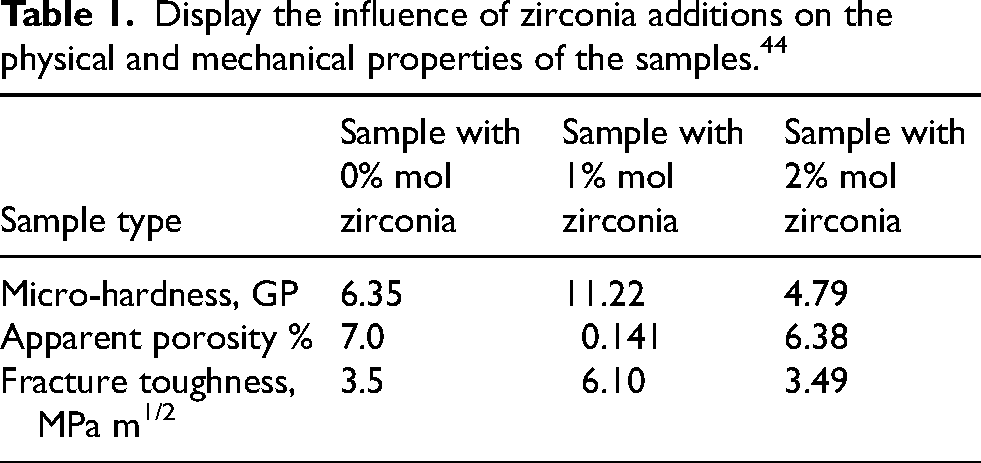
For instance, fracture toughness of Al2O3/SiC ceramic composites increased from 3.5 to 6.0 and 7.0 MPa m1/2 with 1.0 mol zirconia and 15 wt% iron additions, respectively. Also, With addition of either 1.0 mol zirconia or 5.0 wt% iron metal powder with remarkable enhancement in microhardness from 6.0 to 11.0 and 12.0 GPa with 1.0 mol zirconia 15 wt% iron, respectively. 44
Thermal shock resistance
Thermal shock resistance refers to a material's capacity to withstand damage when subjected to sudden temperature fluctuations. In the context of materials used as solar absorbers, it's imperative for them to exhibit high thermal shock resistance given the operational conditions. Various factors influence thermal shock resistance, including microstructure, phase composition, thermal expansion coefficient, fracture energy, thermal conductivity, and elastic modulus. Rapid temperature changes, especially during sunrise and sunset. Materials with high thermal shock resistance can withstand these fluctuations without damage, ensuring prolonged operational lifespan.43,45 For example. The Al2O3/CuO composites, comprising 10% CuO, showcased superior thermal expansion, conductivity, emissivity, thermal shock resistance, and mechanical durability. As a result, these ceramics hold promise as excellent high-temperature solar receiver materials, offering remarkable thermal efficiency and durability. 46
Fatigue failure
Fatigue failure is a significant characteristic to consider when using ceramics and ceramic matrix composites (CMCs) in solar thermal receivers. Fatigue failure occurs when materials experience repeated or cyclic loading below their ultimate strength, leading to the initiation and propagation of cracks over time, eventually resulting in failure. In usage as solar thermal receivers, where materials are subjected to fluctuating thermal and mechanical stresses during operation, fatigue failure can be a critical concern. The cyclic nature of these stresses, which may include thermal expansion and contraction, as well as mechanical loading from concentrated solar radiation or structural forces, can lead to the initiation and propagation of sub-critical cracks within the material. Ceramics, known for their inherent brittleness, are particularly susceptible to fatigue failure due to their limited ability to accommodate crack growth and deformation. However, the incorporation of ceramic matrix composites (CMCs) has offered potential solutions to mitigate this issue. CMCs typically consist of a ceramic matrix reinforced with fibers or particles, providing enhanced toughness and resistance to crack propagation compared to monolithic ceramics. 31
Creep strength
Even the toughest ceramic materials start to slowly change shape under high temperatures and some pressure. This process, called creep, happens even in materials that are really resistant to heat. Usually, it involves both the main part of the ceramic and the tiny spaces between its grains. 41 When creating ceramics, the goal is to minimize the presence of tiny spaces, as this contributes to enhancing their strength. For materials exposed to temperatures ranging from 1300 to 2200 °C, it is crucial to consider the interactions between secondary grain boundaries, phase composition, and the material's content. Additionally, the creep properties of the material must be evaluated, as these factors significantly influence the overall performance and durability under high-temperature conditions. Materials are distinguished based on extrinsic characteristics such as microstructural features including grain size, porosity, and the presence, amount, and type of amorphous grain boundary phase. These characteristics are generally unrelated to intrinsic properties such as compositional or crystal structure variations. Above 1000 °C, most tough materials like refractory oxides start to get weaker and less stiff. But surprisingly, they can become quite flexible, even more so than some metal alloys at these temperatures. For example, inconel exhibits a lower creep rate under a 100-psi stress at 1100 °C compared to magnesia under a 1200-psi stress. Additionally, zirconia, alumina, and silicon carbide show significantly greater resistance to creep behavior than magnesia. 41
Stability at elevated temperature
Stability at high temperatures is a critical requirement for ceramics utilized in solar receivers. Temperature influences various characteristics, including creep behavior, erosion, and wear phenomena, particularly when the component interacts with other solids, liquids, or high-pressure gases. 41 Combinations of creep, fatigue, wear, erosion, and corrosion phenomena may occur, potentially affecting the material's response under such conditions. 41 In general, ceramics intended for use in solar receivers must exhibit stable behavior at elevated temperatures, as their strength diminishes at such temperatures and stress corrosion may become more severe, potentially compromising their strength. 47 For instance, Degradation occurs in materials such as Si3N4 and SiC, whereby their ambient temperature strengths decline when subjected to oxidizing environments for extended periods at temperatures ranging from 1000 to 1400 °C. 47
Oxidation and corrosion resistance
Oxidation resistance is influenced by phase composition, chemical composition, and microstructure. It is typically gauged by the rate of weight gain, with materials exhibiting poor oxidation resistance showing an increase in weight gain rate, and conversely, those with better oxidation resistance displaying lower weight gain rates. 44 The corrosion resistance of ceramics is influenced by various factors, including surface texture, chemical nature of major and minor phases, porosity, and mechanical damage resulting from processes like erosion and wear. Consequently, corrosion-induced pitting and porosity may occur, leading to failure and strength degradation. Corrosion resistance may also diminish due to impurities and additives. For instance, the addition of less than 1 wt. % of MgO as a sintering aid in Al2O3 can result in intergranular attack in acidic environments, despite alumina's high resistance to most acids. Rough surfaces and porous regions increase surface area, facilitating penetration and reducing corrosion resistance. 44
Elevated temperatures typically accelerate corrosion; however, porous Si3N4 presents an exception as a continuous protective silica layer forms at temperatures exceeding 1200 °C, which mitigates oxidation rates. Nevertheless, if the atmosphere is reduced or low in oxygen partial pressure, the silica layer may dissociate, allowing oxidation to occur. Conversely, protective silica films react with alkali oxides like soda (Na2O) at high temperatures, resulting in contamination and altering oxygen diffusivity and viscosity. This may lead to surface recession in SiC or Si3N4. 44
Corrosion or oxidation can be mitigated or eliminated by the formation of protective layers. Aside from Si3N4, other examples include SiC and MoSi2, which serve as heating elements capable of withstanding temperatures up to 1700 °C due to the formation of a SiO2 protective layer on their surfaces in oxidizing atmospheres at elevated temperatures. 47
Solar absorbance
It is a critical factor for materials employed as solar heat absorbers, as they need to efficiently absorb heat from the heliostat field. The primary wavelength range for solar irradiation application on the ground is typically between 0.3–2.5 μm. This range is significant because wavelengths below 0.3 μm and above 2.5 μm tend to be absorbed by ozone, vapor, and other atmospheric molecules present in the atmosphere. 48
Commercial availability at reasonable cost
The materials and manufacturing processes used in solar receiver fabrication should be scalable and economically viable without compromising performance. Sometimes, the disadvantage associated with ceramic materials is their elevated cost, primarily stemming from the high levels of rejected components during production. These rejections typically arise due to structural imperfections, particularly surface and internal flaws. Enhancing fracture toughness levels can help mitigate the number of rejected parts during production, subsequently improving reliability during service. Consequently, there has been considerable research interest in usage of ceramic matrix composites, offering enhanced mechanical properties and thermal performance compared to monolithic ceramics. These materials combine ceramic fibers or particles with a ceramic matrix, resulting in improved strength, toughness, and resistance to thermal shock. alumina/ silicon carbide and silicon carbide/silicon carbide (SiC/SiC) ceramic composites, for instance, exhibit superior heat transfer capabilities and durability, making them promising candidates for next-generation solar receivers. 46
Fabrication techniques
Fabrication techniques for ceramics and ceramic matrix composites (CMCs) used in solar thermal receivers play a crucial role in determining their performance, durability, and cost-effectiveness. These techniques involve processes to shape raw materials into the desired form and structure suitable for solar thermal applications. 37 Below, we explore some of the key methods utilized in the preparation of ceramics and CMCs for solar thermal applications:
Powder processing:
Powder processing methods are commonly employed for shaping ceramics and CMCs into the initial green body form. Techniques such as powder mixing, ball milling, and spray drying are used to produce homogeneous ceramic powders with controlled particle size distributions. These powders are then pressed into molds using uniaxial or isostatic pressing to form green bodies with the desired shape and dimensions. 46
Sintering:
Sintering is a key process in ceramic manufacturing where green bodies are heated to high temperatures below their melting point to promote densification and bonding between particles. During sintering, ceramic particles undergo necking and rearrangement, resulting in a reduction in porosity and an increase in mechanical strength and density. Sintering parameters such as temperature, time, and atmosphere can be optimized to achieve the desired microstructure and properties for solar thermal receivers. 49
Hot pressing:
Hot pressing is a variation of sintering where pressure is applied simultaneously with heat to enhance densification and reduce processing time. In this process, ceramic powders are placed in a die and subjected to high pressures and temperatures, typically in the range of 1000 to 2000 °C. Hot pressing can produce ceramics and CMCs with higher densities, finer microstructures, and improved mechanical properties compared to conventional sintering methods. 50
Chemical vapor deposition (CVD):
CVD is a gas-phase deposition technique used to fabricate ceramic coatings and thin films on substrate materials. In the context of solar thermal receivers, CVD can be employed to deposit refractory ceramic coatings onto metallic substrates to improve thermal resistance, corrosion resistance, and solar absorptivity. CVD allows for precise control over coating thickness, composition, and microstructure, enabling the customization of surface properties for enhanced solar energy absorption and thermal performance. 51
Additive manufacturing (AM):
Additive manufacturing, also known as 3D printing, offers unique advantages for fabricating complex ceramic and CMC components with intricate geometries. AM techniques such as stereolithography, selective laser sintering, and binder jetting enable layer-by-layer deposition of ceramic materials based on computer-aided designs. Additive manufacturing allows for rapid prototyping, design iteration, and customization of solar thermal receiver components while minimizing material waste and production time. 52
Molding and casting:
Molding and casting techniques involve shaping ceramic slurries or powders into molds to produce components with specific geometries. Techniques such as slip casting, injection molding, and tape casting are commonly used for forming intricate shapes and structures with high precision. Molding and casting processes can be cost-effective for mass production of ceramic and CMC components used in solar thermal receivers, particularly for complex shapes or large-scale applications. 53
Fiber reinforcement technique:
For the fabrication of ceramic matrix composites, various fiber reinforcement techniques are employed to enhance mechanical properties and fracture toughness. Common methods include filament winding, tape casting, and weaving, where ceramic fibers such as silicon carbide (SiC) or alumina (Al2O3) are embedded within a ceramic matrix. Fiber reinforcement imparts improved tensile strength, flexural strength, and resistance to thermal shock, making CMCs suitable for demanding applications in solar thermal receivers. These techniques enable the production of complex-shaped components with tailored fiber architectures to optimize heat transfer and structural performance. 54
Joining technique:
Fabrication processes, including joining techniques, for ceramic materials used in solar receivers are limited. 41 The most promising joining methods include mechanical joining, brazing, and solid-state bonding.
Mechanical joining is employed to create components with repair and replaceability features. Brazing and bonding, on the other hand, are permanent bonding techniques utilized for component or module assembly. In metal-ceramic contacts, mechanical joints are predominantly utilized. To prevent diffusion of metal into ceramic and vice versa, the metal surface may be coated with an inert material such as Al2O3 applied through flame spraying. Mechanical joints are primarily employed for systems with moderate internal pressures and loads, typically suitable for the pressure range of modern gas turbines where the maximum pressure does not typically exceed 250 psi. 55
One of the main drawbacks of brazed joints is that the service temperature of the brazing material is significantly lower than that of the ceramic itself. Silicon metal is a commonly used brazing material for high-temperature applications, but its use can restrict the maximum steady-state operating temperature to around 1200 °C and short-term exposure to about 1350 °C. However, brazing with silicon is particularly effective for siliconized silicon carbide, which already contains approximately 10% free silicon. 55
Solid-state bonding is typically achieved using a cement with the same composition as the ceramic. The joints must be fired at the same temperature as the ceramic to ensure compatibility. This method can also be used to join unfired ceramic components, avoiding the need for firing the material twice. Solid-state bonded joints generally exhibit lower strength, approximately 10–20% less than the original ceramic strength, due to variations in the number of SiC bonds formed, percentage of Si content, and irregularities in joint surfaces.46,56
By utilizing these characteristic fabrication techniques, researchers and engineers can tailor the microstructure, composition, and geometry of ceramics and CMCs to meet the specific requirements of solar thermal receivers, ensuring optimal performance, durability, and cost-efficiency in CSP systems. The variation in preparation techniques of ceramics and ceramic matrix composites can yield distinct properties. For example, Wang. 57 employed a precipitation method to prepare Al2O3/SiC composite powder, revealing that the microstructure was altered by the addition of SiC, resulting in a 40% increase in the mechanical properties of the composites. Shi. 58 and Parchovianský. 59 fabricated Al2O3/SiC ceramics using a hot pressing method, enhancing the hardness and fracture toughness of the product, with bending strength exceeding 600 MPa. However, hot pressing is relatively costly and imposes limitations on product size. An alternative approach for fabricating Al2O3/SiC composites is pressureless sintering. Crucial factors affecting pressureless sintering include the preparation of the green body and the atmosphere during sintering. 59 In this scenario, sintering aids (typically a minor addition of MgO or other metal oxides) are often employed to enhance the density of the composites. 60
Types of ceramics and ceramic matrix composites as solar thermal receiver
Categories of ceramic receivers can be classified into five main groups: oxides; alumino-silicates; zirconia, silicon carbides and nitrides; and Ultra-High-Temperature-Ceramics (UHTCs).61,62
Oxides:
Oxides are not extensively utilized in solar receiver applications due to their low thermal conductivity, resulting in poor thermal shock resistance and consequently, inadequate heat transfer capabilities. However, they offer other advantages such as oxidation resistance, availability, and good characterization, making them suitable for solar absorber applications when combined with other materials. For instance, metal oxide nanoparticles like copper oxide and cobalt oxide nanoparticles (CONPs), either alone or in blends with other materials, are commonly used as solar absorbers.61,63
Composite thin films combining copper and cobalt oxide have been investigated for selective solar receiver applications, showing promising outcomes. 64 Many researchers prefer cobalt oxide over copper oxide due to its ease of synthesis and stability at high temperatures. 65 Both forms of cobalt oxides (CoO and Co3O4) remain stable above 5000 °C. CONPs find extensive use in electronic devices, electrochromic devices, high-temperature solar absorbers, gas sensors, magnetic materials, and energy storage batteries. 63
Beryllium oxide is a ceramic material known for its excellent thermal shock resistance and other desirable properties. Its thermal conductivity at 1200 °C is up to four times higher than that of Al2O3, providing BeO with significantly better thermal shock resistance. However, its tensile strength and thermal expansion coefficient at room temperature are comparable to those of Al2O3. Nonetheless, BeO experiences a rapid decline in tensile strength above 1100 °C, and significant restrictions are imposed on its use. The manufacturing operations of this material have been impacted by reports of toxicity associated with fine beryllia powder. Consequently, these drawbacks have restricted the consideration of BeO as a viable candidate material.41,66
Numerous oxide ceramics, such as alumina (Al2O3), mullite, zirconia, and cordierite, offer practical solutions for sensible heat storage due to their high heat capacity, refractoriness exceeding 1000 °C, good corrosion resistance against heat transfer fluid (typically air), and excellent thermochemical stability. Thermal storage processes involving ceramic materials typically occur within a broad temperature range of 200–1000 °C due to their high refractoriness. Additionally, high heat capacity is essential for reducing container volume in thermal storage materials and enhancing thermal storage efficiency. 67 The enhancement of oxide ceramics for solar applications relies on improving their thermal conductivity, which can be achieved by incorporating non-oxide ceramics with high thermal conductivity, such as SiC, BN, or Si3N4, into the oxide ceramic matrix for thermal storage applications. 38
Alumino-silicates:
Alumino-silicates materials are characterized by good strength, high temperature resistance, low thermal expansion, and excellent thermal shock resistance. Despite their advantageous properties, they typically operate at low temperatures and have low thermal conductivities. Also, There are three main types of alumino-silicates include lithium aluminum silicate LAS (β-Spodumene or β-eucryptite), magnesium aluminum silicate MAS (cordierite), and aluminum silicate (mullite). Mullite demonstrates robust strength and durability at elevated temperatures, So, Mullite-based solar thermal receivers offer superior durability and reliability under cyclic heating and cooling conditions, making them ideal for CSP applications. 61 LAS and MAS exhibit similar characteristics, notably exceptional good thermal shock resistance. Furthermore, they are being explored as potential candidates for solar receivers operating below 1200 °C as reported by Kudirka et al.. 38
Zirconia (ZrO2):
Zirconia-based ceramics are valued for their exceptional thermal stability, chemical inertness, and resistance to thermal shock. Zirconia-based solar thermal receivers can operate at elevated temperatures with minimal degradation, making them suitable for concentrating solar power systems requiring high thermal efficiency. 44
Silicon carbide (Sic) and nitrides:
Silicon carbide is a popular choice for solar thermal receivers due to its excellent thermal conductivity, high melting point, and superior mechanical strength and high absorption rate of concentrated sunlight and transferring heat to a working fluid. These properties rendering it a highly desirable material for use in solar absorbers. 51 Its resistance to oxidation and corrosion makes it ideal for harsh operating conditions. Additionally, the elevated sintering temperature of SiC-based materials contributes to increased fabrication costs. Thus, there is a pressing need to explore alternative candidates for solar heat absorption. 45 These properties make SiC ceramics well-suited for solar thermal receivers, where they can withstand intense heat and thermal cycling without compromising performance. 45 As, the incorporation of MoSi2 particle-infused Si matrix composite, efficiently bonds SiSiC-based for thermal receivers. As a result of its mechanical fasteners, the receiver is strengthened, enhancing its mechanical durability and lifespan and mitigating interfacial cracking. 68
Silicon nitride ceramics offer a unique combination of high temperature strength, thermal shock resistance, and chemical inertness, making them suitable for use in solar thermal receivers. Si3N4-based materials exhibit superior mechanical properties and thermal stability, ensuring reliable performance under extreme conditions. Additionally, their low density contributes to lightweight receiver designs, reducing installation and maintenance costs in CSP systems. 64
Ultra-high-temperature-ceramics (UHTCs):
The class of materials termed Ultra-High-Temperature Ceramics (UHTCs), comprising carbides, borides, and nitrides derived from early transition metals, exhibit exceedingly high melting points above 3200 K. UHTCs are recognized as optimal choices for thermal protection systems, particularly those demanding chemical and structural stability under extremely high operational temperatures. This preference stems from their robust solid-state stability, favorable thermochemical and thermomechanical characteristics, as well as their exceptional hardness, and notable electrical and thermal conductivities. 69
Recent research and development efforts focused on utilizing ceramics and ceramic matrix composites in solar thermal receiver
The development a novel solar absorber material with favorable characteristics, emphasizing high efficiency and cost-effectiveness.
First study by Besisa et al.. 70 consequently, they offered a comparative analysis of the densification behavior, microstructure features, thermal emissivity, and thermal conductivity of two new high-temperature solar absorbers Oxide ceramics: ZrO2/Fe2O3 and Al2O3/CuO ceramics. Ceramic composites of ZrO2/(10–30 wt%) Fe2O3 and Al2O3/(10–30 wt%) CuO were synthesized via pressureless sintering at 1700 °C for 2 h. Evaluation of the solar-to-thermal efficiency of the composites was based on measured thermal emissivity, while thermal efficiency and heat transfer homogeneity were assessed through thermal conductivity and diffusivity measurements. The composites displayed homogeneous microstructures with complete interdiffusion and bonding of different phases resulting from solid solution reactions. Both Al2O3/CuO and ZrO2/Fe2O3 composites exhibited similar densification trends with increasing CuO and Fe2O3 ceramic contents, although ZrO2/Fe2O3 ceramics achieved a higher level of densification. However, excessive additions of CuO and Fe2O3 ceramics were found to be detrimental, leading to grain growth in alumina, and creation of the FeMnO3 with low density which increased porosity in both systems, and degradation of their thermal and solar-to-thermal properties. 70
Thus, Alumina composites with varying CuO content demonstrated superior thermal conductivity of 15.4 W/m·K and exceptional thermal emissivity of 0.561, compared to zirconia composites with varying Fe2O3 content. Therefore, Al2O3/CuO composites offer exceptional properties at a significantly lower cost than their competitive counterparts. These findings strongly position Al2O3/CuO composites as promising high-temperature solar absorber materials, surpassing ZrO2 and other carbide and nitride ceramics. 70
Another study introduced a novel composite material using Al2O3/CuO ceramics with assured durability and thermal performance. Various Al2O3/CuO composites with CuO content ranging from 10% to 40% were synthesized through a straightforward and cost-effective pressureless sintering method at 1700 °C for 2 h. All resulting ceramics exhibited dense and homogeneous microstructures. It was observed that incorporating a lower amount of CuO into Al2O3 ceramics significantly enhanced their properties and efficiency in absorbing solar energy. 51 This enhancement can be attributed to the uniform diffusion of CuO within alumina and the complete solid-state reaction between the two materials. However, higher CuO content was found to be undesirable as it led to the growth of alumina grains and degradation of other properties. Notably, the composite containing 10% CuO demonstrated the best thermal expansion, thermal conductivity, thermal emissivity, thermal shock resistance, and mechanical durability. Consequently, these Al2O3/CuO ceramics exhibit potential as promising high-temperature solar receiver materials with exceptional thermal efficiency and durability. 46
In another research study, Ahmed et al.. 44 synthesized Al2O3/TiC composites from a blend of TiO2, Al, and graphite powders Utilizing self-propagating high-temperature synthesis in conjunction with direct consolidation, with the incorporation of either zirconia or iron metal powder. The findings indicate that addition of 1.0 mol of zirconia significantly improved both the physical and mechanical properties of the composites, as represented in Table 1. This was evidenced by a substantial reduction in sample porosity from 7.0 to less than 1.0 vol%, along with notable enhancements in microhardness (from 6.0 to 11 GPa) and fracture toughness (from 3.5 to 6.0 MPa m1/2), as well as to a microstructure that is more uniform and finely grained. 44 Also, the same trend occurred with 5.0 wt% iron additions led to a significant reduction in porosity to less than 1.0 vol% with increases in microhardness to 12 GPa and fracture toughness to 4.5 MPa m1/2, as shown in Table 2. This is due to the total liquid phase fraction (molten alumina and molten iron). While samples both with and without iron contain approximately the same total liquid amount, in the case of samples with iron, some of this liquid consists of molten iron, which possesses a lower viscosity compared to molten alumina. This lower viscosity liquid aids in decreasing the porosity in samples containing iron. However, increasing the zirconia addition to 2.0 mol resulted in higher porosity and reduced hardness and toughness. 49
Display the influence of zirconia additions on the physical and mechanical properties of the samples. 44
The micro-hardness and fracture toughness were evaluated for samples containing varying additions of iron metal. 44
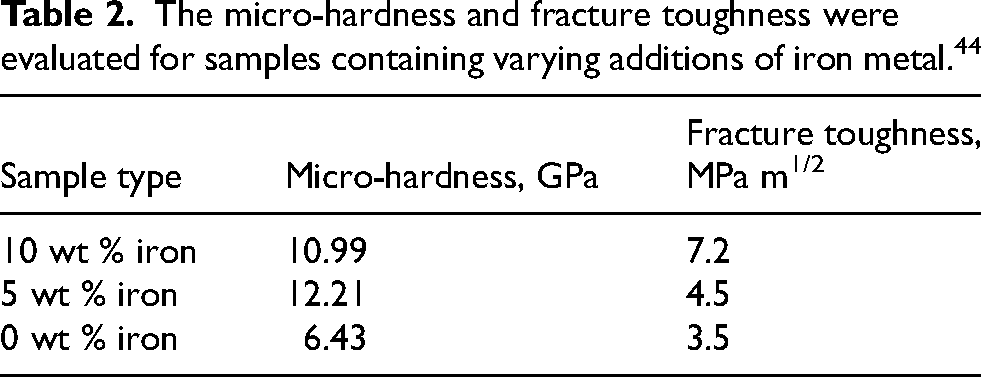
Despite the sample produced with 15.0 wt% iron having porosity similar to that of the 5.0 wt% iron sample, its micro-hardness is lower, as seen in Table 2. This discrepancy is attributed to a reduction in the amount of hard components (TiC and alumina) and an increase in the amount of the softer metallic component (Fe). Furthermore, the increasing of iron content increases the proportion of the softer alumina phase relative to the harder TiC phase. These alterations in the relative volumes of phases due to iron addition are responsible for the decrease in micro-hardness with increasing iron content. 71
The combined addition of diluents (1.0 mol zirconia and 5.0 wt% iron metal) resulted in a notable increase in porosity, incomplete reaction, and lower hardness and fracture toughness. The measured micro-hardness and fracture toughness of these samples stand at 3.18 GPa and 4.61 MN/m3/2, respectively, underscoring a notable decrease in mechanical properties upon the addition of both diluents. This reduction is attributed to a marked rise in apparent porosity within the composite, coupled with incomplete reaction processes. 44
On the other hand, composite ceramics serve as a primary method for enhancing the mechanical performance of ceramic materials. SiC is a widely utilized engineering ceramic, and it is believed that incorporating SiC into Al2O3 matrices will notably enhance the mechanical properties of monolithic Al2O3.72,73 Niihara. 74 documented that nanocomposite ceramics utilizing nano-silicon carbide particles as a secondary phase displayed superior mechanical properties. Incorporating 5 vol%-10 vol% submicron SiC particles into the Al2O3 matrix increased the bending strength of the composites from 350 MPa to over 1 GPa.
Xiaohong et al.. 73 fabricated a composite material by combining mullite and corundum with silicon carbide (SiC), was using SiC, calcined bauxite, and kaolin through pressureless carbon-buried sintering (SiC-mullite-Al2O3). Aiming to develop cost-effective SiC-based composite ceramics for potential use as thermal storage materials in solar thermal power generation, capitalizing on their high density and exceptional thermal shock resistance. They showed that incorporating calcined bauxite significantly lowered the minimum sintering temperature to 1400 °C. The SiC-mullite-Al2O3 composite with 40 wt% calcined bauxite, sintered at 1500 °C, demonstrated optimal performance, exhibiting a density of 2.27 g·cm−3 and a bending strength of 77.05 MPa. Contrasting with the typical reduction in thermal shock resistance observed when SiC is combined with conventional clay. These SiC-mullite-Al2O3 composites, showing satisfactory performance, hold potential for use as thermal storage materials in solar thermal power generation systems. 73
In a separate investigation by Jianfeng et al.. 75 , Al2O3/SiC composite ceramics were fabricated using α-Al2O3 and SiC via a pressureless sintering technique. This study explored into the influence of SiC content on mechanical properties, phase compositions, and microstructure. Notably, at a SiC content of 20 wt% and a sintering temperature of 1640 °C, the sample achieved a hardness of 16.22 GPa and a thermal conductivity of 25.41 W/(m·K) at room temperature whereas the hardness of the monolithic Al2O3 is only 13.61 GPa, which is consistent with the results reported by many researchers.58,76 The improvement of hardness is attributed to the incorporation of a hard secondary phase (SiC) and the refinement of the grains in the composites. 75 As the SiC content increases, there is a decrease in the average grain size of Al2O3, suggesting that SiC hinders the growth of Al2O3 grains. This grain refinement contributes to the enhanced strength of the material, as it is one of the factors behind the strengthening mechanism. The bending strength of samples containing higher SiC content increased due to the more pronounced alteration in fracture mode and grain refinement induced by SiC. A higher hardness implies greater resistance to abrasion, suggesting the potential utilization of Al2O3/SiC composite as a solar heat absorber for third-generation solar thermal generation. Following the Griffith theory, the enhancement in bending strength of ceramic materials is attributed to two factors: the diminution of inherent flaws or micro-cracks within the ceramic, which heightens the energy barrier to crack propagation. 77 Typically, the size of micro-cracks in ceramics correlates with the grain size of the material. In the context of the composite ceramics explored in this study, the incorporation of SiC results in the refinement of Al2O3 matrix grains and a reduction in micro-crack size, consequently bolstering the material's overall strength. 75
Additional investigation demonstrates that the incorporating aluminum nitride AIN into SiC can mitigate the reliability and toughness issues often associated with SiC ceramics. These issues stem from the reaction between SiC and AIN, which typically results in a comprehensive solid solution formation. The structural similarity and high-temperature properties shared by SiC and AIN can significantly improve their durability and mechanical performance. 78
Besisa et al.. 78 successfully fabricated high-density SiC/AIN composites with excellent thermal properties using a pressureless sintering technique. They utilized AlN, α-SiC, and β-SiC as raw materials, supplemented with Y2O3 and Al2O3 additives to enhance density levels. It was observed that sintering at 2080 °C for 2 h yielded a highly dense and enhanced SiC/AIN composite with the addition of 2.5 wt.% of Y2O3 and Al2O3. The densification process and AIN content were crucial in controlling the composite's characteristics. Furthermore, increasing the sintering temperature improved thermal expansion coefficient, diffusivity, and thermal conductivity values. The authors recommended these resulting composites for applications in solar energy utilization. 78
Furthermore, Ortona et al.. 50 prepared Tubular Si-infiltrated SiCf/SiC composites that consist of an inner cellular ceramic structure and an outer dense ceramic matrix composite (CMC) skin. These composites were produced via electrophoretic deposition of matrix phases followed by Si-infiltration, aimed at pre-feasibility testing for solar receiver applications. Intended for high-temperature receiver components in solar operations, such as gas turbines or combined cycles, these tubes can withstand temperatures up to 1300 °C and typical pressures exceeding 6 bar. The internal cellular structure enhances heat transfer from the irradiated outer surface to the working fluid within. 50 Through experimental determination of heat transfer and permeability characteristics, effective properties were established and used in numerical models to forecast component performance under gas turbine service conditions. Additionally, they found that the heat transfer rate in a tube with a porous in-lay increased to approximately four times compare to the rate of an empty tube of the same size (Figure 1). 50
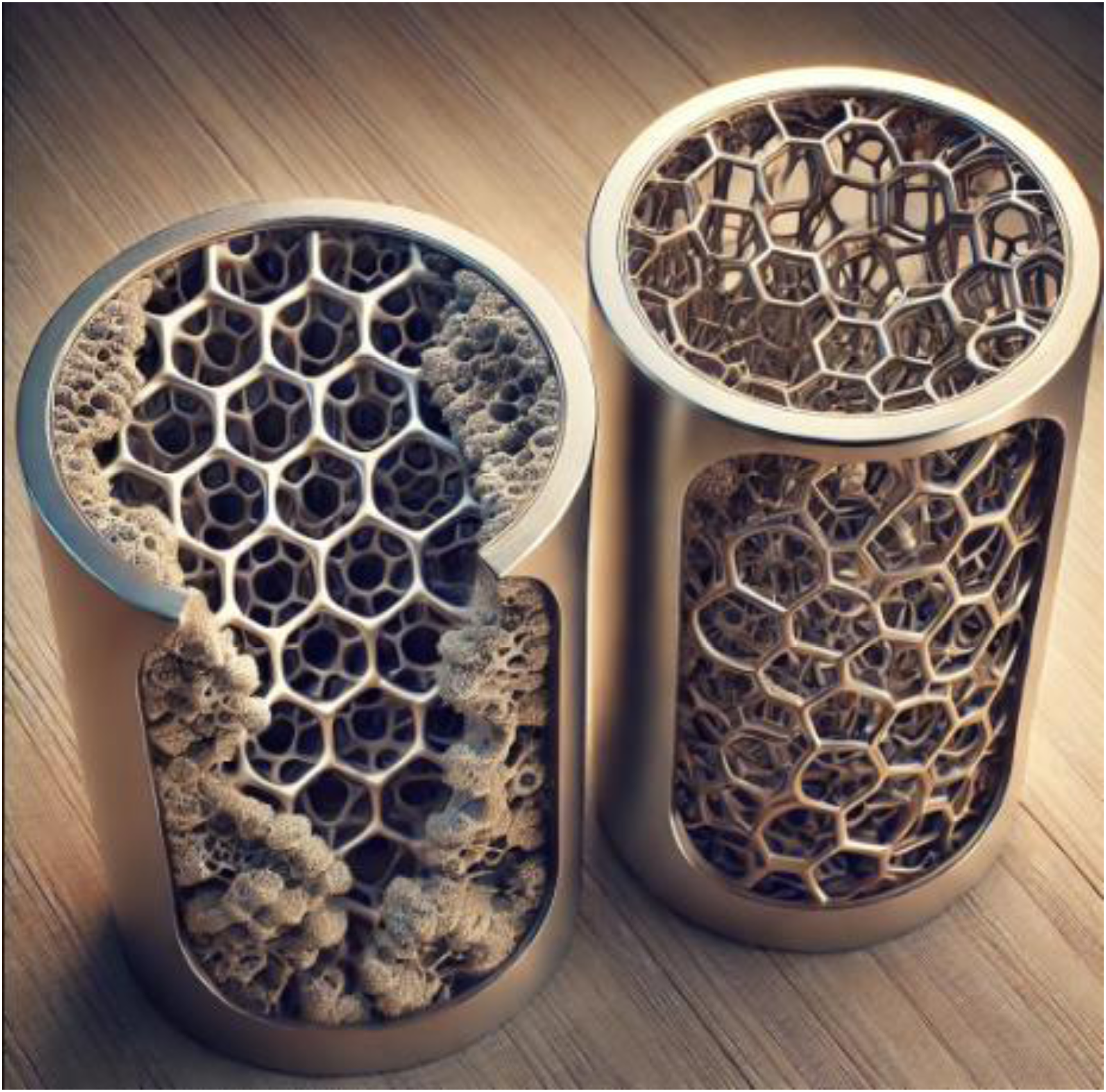
Sample (left) “foam in-lay” and (right) “3D-printed in-lay” used for testing. 50 .
Casalegno et al.. 68 developed novel SiC ceramic materials for high-temperature open volumetric receivers. They prepared the highly porous SiC sintered in honeycomb shape by the extrusion and slip casting slurry and adhering to appropriate casting times, it is feasible to manufacture all-SiC solar receivers with commendable green strength and wall thickness, facilitating their assembly in the green state. This all-SiC honeycomb design improved oxidation resistance and a multi-part SiSiC 3D printed design for increased toughness, thermal conductivity, with high mechanical strength (54 ± 1.3 MPa) within the range of 2000 °C to 2400 °C. Also, gradient of porosity aimed at enhancing heat exchange efficiency, ranging from 83% to 92% from its inner to outer regions. A thermal treatment was developed to minimize reflected radiation on the final component. An innovative pressurless joining process involving in situ formation of a MoSi2 particle-reinforced Si matrix composite effectively joins SiSiC-based cups and foams for thermal receivers (Figure 2). 68
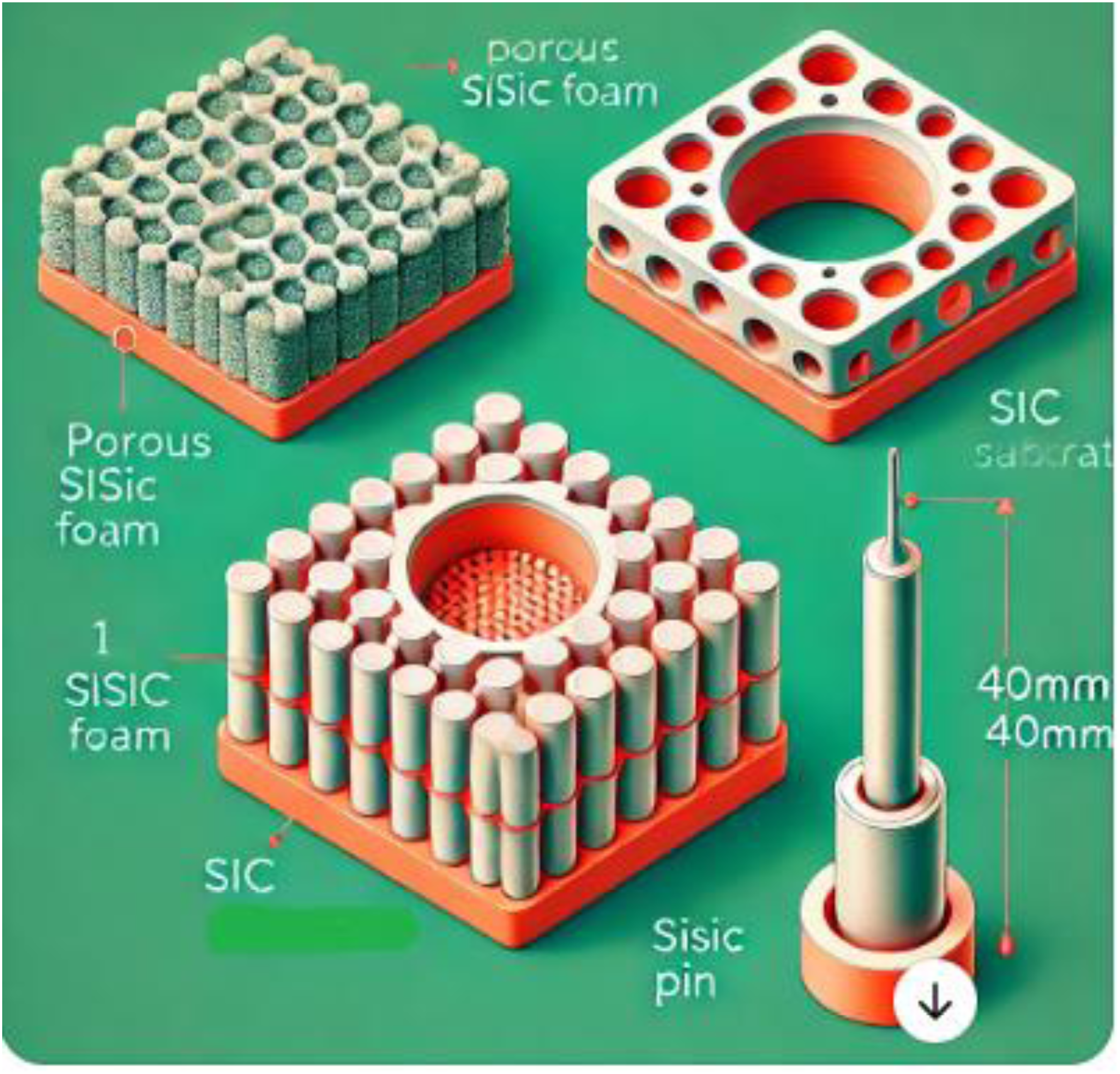
The solar receiver parts of the mock-up of: the SiSiC foam, the “L” shaped SiC substrate, the SiSiC pin. 68
This joining method, coupled with mechanical fasteners, reinforces the receiver, enhancing its mechanical strength and durability in order to avoid interfacial cracking of the solar receiver, as seen in Figure 2.
In addition to the aforementioned materials, SiC and Si3N4 exhibit impressive properties conducive to solar applications, including robust thermal shock resistance, high strength, excellent wear resistance, and thermal conductivity. Nonetheless, achieving dense Si3N4 ceramic poses challenges with conventional sintering methods due to its strong covalent bonding. Moreover, pure Si3N4 exhibits poor oxidation resistance. 64
The performance of Si3N4 can be significantly enhanced by employing a combination phase of MgAl2O4– Si3N4 composites, as fabricated by Wu et al.. 64 via pressureless sintering and in-situ synthesis technique using α-Si3N4, α-Al2O3, and MgO as starting materials. The resulting sintered composites, processed at 1620 °C, demonstrated superior oxidation resistance, thermal shock resistance, and solar absorptance compared to Si3N4 ceramics prepared using similar methods. These composites are thus recommended as promising candidates for solar heat absorption. 64
Furthermore, Zhang et al.. 79 demonstrated that adding 1 wt.% of Sm2O3 to MgAl2O4-Si3N4 pressureless sintered composites enhances microstructure and stability at high temperatures. Sintering the composite at 1620 °C with 1 wt.% of Sm2O3 additive resulted in a bending strength of 339.4 MPa, 92.0% solar absorptance, and no damage after thermal shock. 79
Reddy et al.. 80 produced porous sialon ceramics via pressureless sintering at 1700 °C for 4 h in a nitrogen atmosphere, incorporating starch in the range of 0–5 wt.% to commercial grade Syalon 101 powder, composed of 90% silicon nitride (α-Si3N4), 1% aluminum nitride (AlN), 3% aluminum oxide (α-Al2O3), and 6% yttrium oxide (Y2O3). The study revealed that increasing levels of porosity led to decreased strength and hardness of sialons, while an upward trend in fracture toughness was observed in the host material as starch-induced porosity increased. The resulting porous sialon demonstrated a promising combination of dielectric and mechanical properties, rendering it suitable for applications such as heat exchangers, which can, in turn, be utilized for solar receivers. Nevertheless, further investigations are warranted to validate the material's suitability as a solar absorber, including assessments of thermal conductivity, solar absorbance, and oxidation resistance. 80
In efforts to reduce the firing temperature and porosity of Si3N4 ceramics, rare-earth oxides (R2O3) such as La2O3, Gd2O3, and Y2O3 have been introduced to form a low-melting-point eutectic R–Si–O–N liquid with Si3N4 powder. Wu et al.. 62 utilized a pressureless sintering method to prepare O-Sialon/Si3N4 ceramic composites for solar absorbers using Si3N4 and low-purity Al2O3 with various rare-earth oxides (e.g., Yb2O3 and Gd2O3). Sintering at 1600 °C with the addition of 6 wt.% Gd2O3 yielded higher O-Sialon content, 23.29% porosity, 105.57 MPa bending strength, weight gain rate of 17.49 mg/cm2 (at 1300 °C for 100 h), 75.16% solar absorption, 10.10% water absorption, and high oxidation resistance. These results indicate Gd2O3 as a more effective additive compared to Yb2O3, with bending strength showing a strong correlation with sintering temperature and rare earth oxide content. The highest bending strength was achieved at 1600 °C for the composite containing 6 wt. %.The addition of Gd2O3 was also observed to correlate with the composite's oxidation resistance, with composites exhibiting lower weight gain values demonstrating higher resistance to oxidation. 62
Wu et al.. 62 conducted the synthesis of β-Sialon/Si3N4 composites through pressureless sintering at 1580 °C, utilizing α-Si3N4, calcined bauxite, and 1% aluminum nitride (AlN) as raw materials, along with Y2O3 and La2O3 as sintering additives. Their findings indicated that incorporating 3 wt.% of Y2O3 and 3 wt.% of La2O3 as additives yielded optimal mechanical properties, with a bending strength of 138.36 MPa. The resulting composite exhibited a thermal conductivity of 7.96 W/m.K and a solar absorptance of 91.10%. Moreover, the weight gain rate after oxidation, reported at 1100 °C for 100 h, was as low as 0.9331 mg/cm2. This composite proves suitable for use as a heat-absorbing material in SPT systems. 45
Sani et al.. 81 synthesized composite of ZrC, HfC, ZrB2 and HfB2 Ultra-High-Temperature-Ceramics (UHTCs) by hot pressing at 1930 oC. SiC-based material demonstrated a consistent microstructure composed of uniform grains less than 1 micrometer in size, with a porosity content of 5%. 81 They noted that enhancement in the performance of UHTCs compared to HfB2for solar receiver applications, attributed to their notably lower emittance across the entire temperature range of 1100–1450 K investigated in this study. 6
The research conducted by Sani et al.. 82 examined the high-temperature emittance, spectral reflectance at room temperature, and structural as well as compositional features of samples made from ZrB2, HfB2, and HfC with the aim of assessing their suitability for solar receiver applications. Dense and porous/rough samples of each material were studied, and their spectral attributes were analyzed and contrasted with those of reference solar absorber materials, Al2O3 and SiC. The emittance values obtained for the two boride materials were similar. Similarly, at comparable density and finishing levels, the carbide material exhibited a slightly elevated emittance and displayed a more significant reliance on temperature variations. Nevertheless, it's noteworthy that across all samples investigated, including the porous or roughened ones, the recorded emittance remained notably lower than that of the reference SiC. This favorable comparison highlights the potential of Ultra-High Temperature Ceramics (UHTCs) over conventional materials utilized in solar absorbers. Thus, the desirable attributes of good spectral selectivity, low thermal emittance, and robust high-temperature stability render UHTC ceramics promising candidates for innovative high-temperature solar receivers. 83
Another investigation focuses on the synthesis and characterization of ultra-high temperature ceramics (UHTCs) by Sani et al.. 83 The study particularly explored into the production and detailed analysis of highly dense, pure zirconium and tantalum diborides, with a specific emphasis on their potential use in thermal solar energy applications. Comparing the two processing methods for preparing bulk ZrB2 and TaB2 dense ceramics using the self-propagating high temperature synthesis/Spark Plasma Sintering (SHS/SPS) and active spark plasma sintering (RSPS). They observed that the optical properties of the final products are nearly identical. However, slight variations in reflectance values are noted when analyzing ZrB2 specimens. These differences are attributed mainly to variations in pore size between the two types of ZrB2 samples, impacting their roughness (Rt) values. Nonetheless, both borides exhibit step-like reflectance spectra, resulting in high solar absorbance and low thermal emittance at elevated temperatures. The spectral disparities between ZrB2 and TaB2 are confined to the wavelength range of 550 to 2600 nm, leading to a slightly higher absorbance-to-emittance ratio (a/ε) for TaB2 compared to ZrB2. Regarding the direct use of monophasic UHTCs at high temperatures in oxidative environments, it's noted that both tantalum and zirconium diborides begin to oxidize above approximately 600 °C, leading to rapid material degradation unless suitable additives are introduced. Therefore, for applications such as solar absorbers, where high temperatures are involved, additives like silicon-containing compounds (SiC, MoSi2, etc.) must be incorporated to enhance oxidation resistance and enable utilization under more severe thermal conditions. 84
Musa et al.. 84 synthesized four sets of products HfB2, HfC, HfB2-SiC, and HfB2-HfC-SiC products comprising monophasic, binary, and ternary Hf-based Ultra-High-Temperature Ceramics (UHTCs) using the SHS-SPS and R-SPS techniques. All sintered specimens exhibit relative densities exceeding 95%, with composite systems nearing theoretical density values, attributed to the advantageous role of SiC as a sintering aid, which also enhances the oxidation resistance of the resultant Ultra-High-Temperature Ceramics (UHTCs). The optical properties are significantly influenced by the material composition, with SiC addition typically leading to increased solar absorbance and reduced spectral selectivity compared to pure UHTC boride and carbide phases. So, the presence of spectrally selective, thermally stable, and highly efficient sunlight absorbers is a critical factor in advancing solar energy technologies capable of operating under high temperatures. 85
Ultra-high temperature ceramic matrix composites (UHTCMCs) represent a novel category of composites blending boride phases with carbon fibers to yield innovative structural and functional attributes, initially tailored for aerospace purposes. This study pioneers the investigation into the optical behavior of UHTCMCs, contemplating their potential role as solar absorbers in Concentrating Solar Power (CSP) systems operating at elevated temperatures. 57
Other research investigated ZrB2 ceramic samples reinforced with carbon fibers, with a focus on their microstructural and optical properties for potential application as solar absorbing materials in high-temperature thermodynamic solar plants. These composites exhibited substantial fractions of ZrB2 (∼40 vol%) and carbon fibers (up to 60 vol%). The chosen approach involves the method of slurry impregnation and sintering, enabling the production of both dense and porous samples. 53 Through this method, composites with significant fractions of ZrB2 phase and a high proportion of carbon fibers were successfully achieved. The incorporation of carbon fibers led to a notable alteration in the optical properties of the samples compared to pure boride. Specifically, they observed a consistent increase in solar absorptance, demonstrating the considerable potential of these carbon-fiber-reinforced borides for solar absorber applications. In summary, the enhanced optical properties, coupled with high mechanical strength even under elevated temperatures, damage tolerance, thermal shock resistance, and lightweight nature, make fiber-reinforced ultra-high temperature ceramic composites highly promising as a novel concept for ultra-high-temperature solar absorber materials. 53
Application of ceramics and ceramic matrix composites as solar thermal receiver
Solar thermal receivers play a central role in concentrating solar power (CSP) systems, where they absorb concentrated sunlight and convert it into heat for powering steam turbines or other heat engines. Ceramics and CMCs find numerous applications within solar thermal receivers, including:
Traditional ceramics, including materials like alumina (Al2O3), aluminasilicate, and zirconia (ZrO2), have long been utilized in solar thermal receivers due to their excellent thermal stability, corrosion resistance, and high melting points. These ceramics provide the structural integrity necessary to withstand the harsh operating conditions of CSP systems.
46
Alumina (Al2O3) offers good thermal stability, chemical resistance, and mechanical strength at high temperatures. Alumina-based ceramics are used in solar thermal receivers for their ability to withstand thermal cycling and harsh environments. They are often employed in coatings or refractory linings to enhance the durability and thermal performance of receiver components.67,85 Zirconia (ZrO2) is commonly employed as thermal barrier coatings or insulating materials to reduce heat loss and improve energy efficiency.
44
Aluminosilicates have found successful applications in heat regenerator designs, particularly in rotary regenerators used in advanced gas turbines developed for automotive applications. They are also considered viable candidates for use in solar receivers operating at temperatures below 1200 °C.
38
Mullite-based solar thermal receivers offer superior durability and reliability under cyclic heating and cooling conditions, making them ideal for CSP applications.
61
Novel composite using Al2O3/CuO ceramics with 10% CuO content synthesized through pressureless sintering method at 1700 °C for 2 h. Al2O3/CuO ceramics exhibit potential as promising high-temperature solar receiver materials with exceptional thermal efficiency and durability.
46
Al2O3/SiC composite ceramics were fabricated using α-Al2O3 and 20 wt% SiC sintered at 1640 °C, via a pressureless sintering technique. Notably, the sample achieved a hardness of 16.22 GPa and a thermal conductivity of 25.41 W/(m·K) at room temperature. A higher hardness implies greater resistance to abrasion, suggesting the potential utilization of Al2O3/SiC composite as a solar heat absorber for third-generation solar thermal generation.
44
Fabrication of SiC-mullite-Al2O3 composites by combining mullite and corundum with silicon carbide (SiC), was using SiC, calcined bauxite, and kaolin through pressureless carbon-buried sintering (SiC-mullite-Al2O3). Showing satisfactory performance, hold potential for use as thermal storage materials in solar thermal power generation systems.
73
Novel Ceramic-based Designs: Innovative designs incorporating ceramics and CMCs have been proposed to enhance the efficiency and reliability of solar thermal receivers. Researchers have investigated various approaches to enhance the performance of solar absorbers. For instance, they have explored the utilization of ceramic foams and porous ceramic materials in the design of SiC honeycombs, which exhibit improved oxidation resistance. Additionally, a multi-part SiSiC 3D printed design has been developed to enhance toughness, thermal conductivity, and high mechanical strength in temperatures ranging from 2000 °C to 2400 °C. Furthermore, an innovative joining process, involving the in situ formation of a MoSi2 particle-reinforced Si matrix composite, effectively bonds SiSiC-based cups and foams for thermal receivers. This joining technique, combined with mechanical fasteners, reinforces the receiver, thus enhancing its mechanical strength and durability.
68
The combination of MgAl2O4– Si3N4 composites via pressureless sintering in-situ synthesis technique. These composites are recommended as promising candidates for solar heat absorption.
64
The synthesis of β-Sialon/Si3N4 composites through pressureless sintering at 1580 °C, by incorporating 3 wt.% of Y2O3 and 3 wt.% of La2O3. This composite proves suitable for use as a heat-absorbing material in SPT systems.
62
UHTC ceramics compositional features made from ZrB2, HfB2, and HfC giving good spectral selectivity, low thermal emittance, and robust high-temperature stability render it as promising candidates for innovative high-temperature solar receivers.
82
ZrB2 ceramic samples reinforced with carbon fibers enhanced optical properties, coupled with high mechanical strength even under elevated temperatures, damage tolerance, thermal shock resistance, and lightweight nature. So, the fiber-reinforced Ultra-High Temperature Ceramic composites give highly promising as a novel concept for ultra-high-temperature solar absorber materials.
53
Ceramics and CMCs have been investigated for use in the absorber tubes in Parabolic Trough Systems due to their high thermal conductivity and resistance to corrosion. Research studies have explored the performance of ceramic-coated absorber tubes in parabolic trough systems, demonstrating improved durability and efficiency compared to traditional materials.
86
LFR systems utilize flat mirrors to concentrate sunlight onto a linear receiver, which contains a heat transfer fluid. Ceramics and CMCs have been studied for use in the receiver tubes of LFR systems, offering advantages such as high temperature resistance, thermal stability, and corrosion resistance. Research efforts have focused on developing ceramic-based coatings for receiver tubes to enhance solar absorbance and thermal performance.
87
Conclusion
Ceramics and Ceramic matrix composites represent a promising solution for advancing solar thermal technology and enabling the widespread adoption of solar energy. The choice of ceramics and CMCs in solar thermal receivers underscores their exceptional thermal properties, mechanical strength, and corrosion resistance to harsh environmental conditions. Among these materials, alumina, silicon carbide, zirconia, mullite, silicon carbide/ silicon carbide composites, and ultra-high temperature ceramic have emerged as prominent candidates, each offering distinct advantages suited to the rigors of CSP systems. As research and development efforts continue to progress, the integration of CMCs into solar thermal receivers holds the promise of unlocking new possibilities for sustainable energy generation and accelerating the transition towards a greener future. Advanced ceramic composites, novel coating technologies, and innovative manufacturing techniques are being explored to further optimize the efficiency and reliability of CSP systems. Alumina, with its high-temperature stability and chemical inertness, serves as a reliable matrix material, while silicon carbide boasts superior thermal conductivity and mechanical strength, making it ideal for absorbing and transferring solar energy efficiently. Zirconia contributes excellent thermal insulation properties, crucial for minimizing heat loss within the receiver, while mullite provides resilience against thermal shock and rapid temperature fluctuations. Moreover, the advent of alumina/ silicon carbide and silicon carbide/silicon carbide (SiC/SiC) composites introduces lightweight alternatives without compromising thermal performance, addressing the need for weight reduction in solar thermal receivers. Additionally, Fiber-reinforced UHTCMCs enhanced optical properties, coupled with high mechanical strength at elevated temperatures, thermal shock resistance, and lightweight nature, extends the spectrum of materials available for consideration, opening avenues for further innovation in receiver design and performance optimization.
The synergy between materials science, engineering ingenuity, and renewable energy initiatives is evident in the continual refinement of ceramic-based solutions for solar thermal applications. Ongoing research efforts in the field of ceramics for solar thermal receivers continue to focus on enhancing material properties, reducing manufacturing costs, and improving overall system performance. Looking ahead, as solar thermal technology continues to evolve, so too will the role of ceramics and CMCs in shaping its trajectory. Through interdisciplinary collaboration and a commitment to sustainability, we can harness the full potential of these advanced materials to propel us towards a future powered by clean, renewable energy sources, ultimately paving the way for a more sustainable and resilient energy landscape.
Future perspectives of ceramics and ceramic matrix composites as solar thermal receivers
Solar thermal energy has emerged as a promising renewable energy source, offering significant potential for sustainable electricity generation. Among the key components of solar thermal power plants, the solar receiver plays a crucial role in capturing and converting sunlight into thermal energy. In recent years, there has been growing interest in utilizing ceramics and ceramic matrix composites (CMCs) as materials for solar thermal receivers due to their exceptional thermal properties, mechanical strength, and resistance to high temperatures. The perspectives on the use of ceramics and CMCs in solar thermal receivers, highlighting their advantages, challenges, consideration and Opportunities for improving ceramic-based solar receivers.
Advantages of ceramics and ceramic matrix composites
Ceramics and CMCs are ideal for solar thermal receivers due to their excellent thermal stability, high melting points, and thermal conductivity, enabling efficient heat absorption. They also offer corrosion resistance, durability, and are lightweight, reducing structural load in solar tower systems.
Challenges and considerations
Despite their numerous advantages, the widespread adoption of ceramics and CMCs in solar thermal receivers faces several challenges and considerations including:
The cost-effectiveness of ceramics and CMCs can be relatively expensive to manufacture compared to conventional metals, though manufacturing advancements are lowering costs. The brittleness of ceramics poses challenges in terms of structural integrity and reliability, necessitating careful design to enhance reliability and performance under thermal cycling.
Opportunities for further improving the performance and scalability of ceramic-based solar receivers
Improving the performance and scalability of ceramic and ceramic matrix composites (CMCs) based solar receivers is crucial for advancing CSP technology and facilitating its widespread adoption. Several opportunities exist for further enhancing the efficiency, durability, and scalability of these receivers:
Advanced Coatings: Thin-film coatings (CVD/PVD) can improve solar absorptance, reduce emissivity, and enhance durability.
Durability and Reliability: Enhancing resistance to thermal cycling and mechanical stress can extend receiver lifespan.
By addressing these aspects, ceramics and CMCs could drive advancements in CSP systems, making them more efficient, cost-effective, and widely adopted.
Footnotes

Ethics approval
Not applicable: the research did not involve human participants and/or animals.
Consent to participate
Author has agreed to participate in this research.
Consent for publication
The article was written by the named author, who are all aware of its content and have given their permission for it to be published.
Author contribution
A.E. Reda contributed to the study conception and design. Data collection and analysis were performed by A.E. Reda. The first draft of the manuscript was written by A.E. Reda. The final draft of the manuscript was written by A.E. Reda. Author read and approved the final manuscript.
Funding
The author received no financial support for the research, authorship, and/or publication of this article.
Declaration of conflicting interests
The author declared no potential conflicts of interest with respect to the research, authorship, and/or publication of this article.
Data availability
Not applicable.