



Abstract
The structural, vibrational, and electronic properties of 2-methyl-5-nitro-1H-benzimidazole-6-amine (MNBA) were analyzed using experimental and theoretical approaches. Density Functional Theory (DFT) simulations utilizing the B3LYP functional and 6-311++G(d,p) basis set were performed to optimize the geometry, predict vibrational frequencies, and analyze the frontier molecular orbitals (HOMO-LUMO) of the MNBA molecule. FT-IR and UV-Vis spectroscopy were used to empirically validate the results, which were subsequently compared to theoretical predictions in both gaseous and aqueous phases. The study highlights the critical role of intramolecular hydrogen bonding between the nitro and amine groups, which forms an intramolecular O···H interaction, that may contribute to the stabilization of the molecular structure. Solvent effects substantially affected molecular shape and electronic distribution, with aqueous phase calculations showing improved concordance with experimental results. Mulliken charge analysis together with molecular electrostatic potential (MEP) mapping provides qualitative insight into the charge distribution and possible reactive regions of MNBA. A reduced HOMO–LUMO gap in aqueous solution suggests enhanced electronic reactivity of the molecule in polar environments, providing insight into the structural and electronic characteristics of MNBA. This study demonstrates the effective integration of DFT simulations and experimental methodologies to elucidate the physicochemical properties of benzimidazole derivatives under diverse environmental conditions.
Introduction
Benzimidazoles constitute an important class of heterocyclic compounds widely investigated because of their diverse chemical and biological properties. Numerous benzimidazole derivatives have attracted considerable attention due to their broad range of biological activities, including antimicrobial, antifungal, anticancer, and anti-inflammatory effects.1–3 The presence of nitrogen atoms within the benzimidazole ring system enables these molecules to participate in hydrogen bonding and electron-transfer processes, which play a key role in determining their chemical reactivity and interactions with biological targets. In addition, several benzimidazole derivatives have been widely used as agrochemical agents, particularly as fungicides and plant protection compounds. The biological activity of these compounds is often associated with the electronic characteristics of the benzimidazole scaffold and its ability to participate in intermolecular interactions. Therefore, investigating the structural and electronic properties of benzimidazole derivatives remains important for understanding their potential applications in agricultural chemistry.
In addition to their pharmaceutical relevance, benzimidazole derivatives have also been explored in agricultural and materials-related applications. Several compounds containing the benzimidazole scaffold have been reported as fungicides and plant protection agents, while others have been investigated as corrosion inhibitors and functional organic materials.4–7 These diverse applications are largely associated with the electronic structure of the benzimidazole framework and the presence of conjugated π-electron systems that facilitate charge transfer processes.
Theoretical and computational methods, particularly Density Functional Theory (DFT), have become powerful tools for understanding the structural, electronic, and spectroscopic properties of benzimidazole derivatives. DFT calculations allow reliable prediction of optimized molecular geometries, vibrational frequencies, electronic transitions, and frontier molecular orbital characteristics, which can be directly compared with experimental spectroscopic data.8–12 Such combined experimental–theoretical approaches provide deeper insight into the relationship between molecular structure and physicochemical properties.
Although the crystal structure of 2-methyl-5-nitro-1H-benzimidazole-6-amine (MNBA) has previously been reported in the literature,13,14 a detailed investigation of its spectroscopic behavior and solvent-dependent electronic properties has not yet been comprehensively explored. In particular, the influence of intramolecular N–H···O hydrogen bonding on the vibrational and electronic properties of this molecule remains insufficiently understood.
In this work, a combined experimental and theoretical study is presented to investigate the structural, vibrational, and electronic properties of MNBA. FT-IR and UV–Vis spectroscopy were used to obtain experimental data, while DFT and Time-Dependent Density Functional Theory (TD-DFT) calculations were employed to analyze optimized molecular geometry, vibrational frequencies, frontier molecular orbitals, molecular electrostatic potential, and solvent effects. Special attention is given to the role of intramolecular hydrogen bonding and the differences between gas-phase and solvated environments in determining the physicochemical behavior of the MNBA molecule.
Methods
Experimental
2-Methyl-5-nitro-1H-benzimidazole-6-amine was synthesized by preferential reduction of 5,6-dinitro-2-methyl-1H-benzimidazole using the sodium polysulfide Na2Sx solution15,16 following the procedure reported previously. 13 The detailed synthetic route and comprehensive spectroscopic characterization of MNBA have been described in that earlier publication and are therefore not repeated here to avoid redundancy. In the application, Silica gel 60 F254 coated aluminum plates (Merck) were used and 254 and 366 nm UV lamps (Camag UV Lamp) were used to determine the stains. During synthesis studies, Thin Layer Chromatography (TLC) was used to monitor the reaction and control the purity of the product. FT-IR spectrum was recorded on IRAffinity FTIR-Spectrophotometer and UV–Vis spectrum was recorded in ethanol using Shimadzu UV-1800 PC. These experimentally obtained spectra were used in the present study for comparison with the corresponding DFT-calculated vibrational and electronic spectra.
Computational methods
The MNBA molecule exhibits a weak intramolecular N–H···O hydrogen bond between the amino hydrogen and the nitro oxygen atoms. This interaction leads to the formation of a six-membered hydrogen-bonded pseudo-ring, enhancing conjugation and electronic delocalization. 17 The crystallographic structure shown in Figure 1 was used as the starting geometry for the Gaussian 09 W calculations. 18
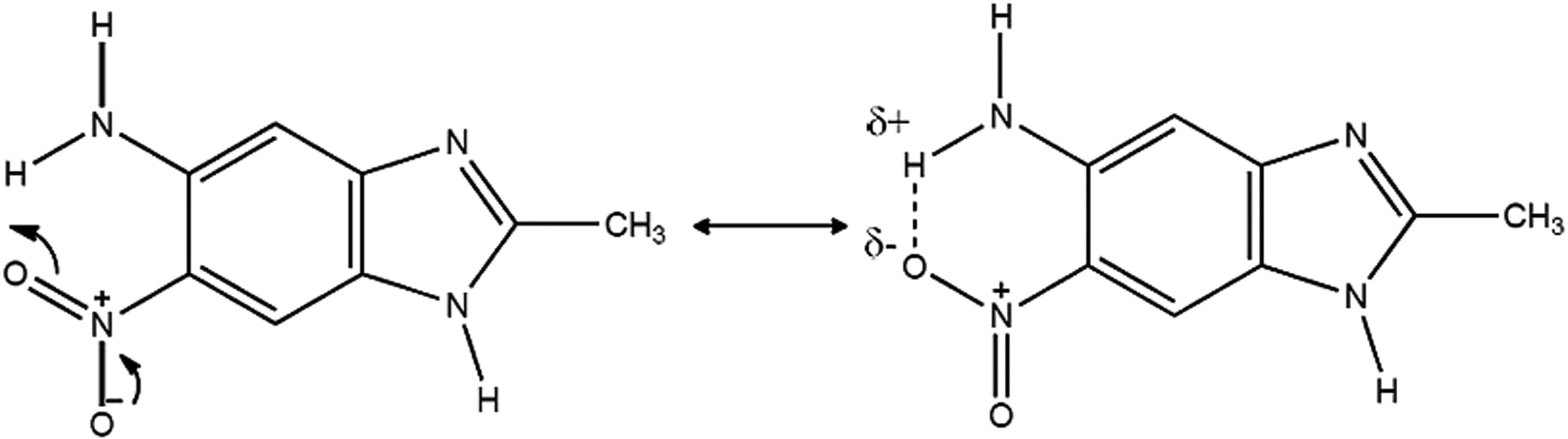
Intramolecular N–H···O Hydrogen Bonding in MNBA (six-membered pseudo-chelate ring).
The GaussView 5.0 software package 19 was used to first make a rough shape of the MNBA molecule. This program was used to show how the atoms in the molecule were arranged spatially and to make it easier to find the lowest energy configuration based on the best geometry.
In this study, the ground state gas phase and solvent (aqueous) phase geometries of MNBA were optimized using DFT with the B3LYP functional and the 6-311++G(d,p) basis set. This level of theory has been widely used to accurately predict molecular structures and properties while maintaining a good balance between computational cost and accuracy. The optimization process allows the molecule to reach the lowest possible energy conformation corresponding to the most stable geometric arrangement. The optimized bond lengths, bond angles, and dihedral angles of the molecule are presented in Table 2, which provide detailed quantitative information about the internal structure of the MNBA molecule. Solvent effects were modeled using the Polarizable Continuum Model (PCM) as implemented in Gaussian. In this model, the solvent is represented as a polarizable continuum surrounding the solute molecule, and the default Gaussian parameters were used. The solvation cavity was constructed using the standard UFF radii.
Analysis of these data revealed specific vibrational frequencies corresponding to various molecular motions such as stretching, bending and twisting of bonds. Theoretical forecasts can also be checked against experimental data from Fourier Transform Infrared (FT-IR) spectroscopy. Electronic spectra of MNBA were also obtained using the TD-DFT method on the optimized shapes and the vibrational analysis.
The optimized molecular structure and electronic properties were obtained using Gaussian. The reduced density gradient (RDG) and non-covalent interaction (NCI) analyses were carried out using Multiwfn. Hirshfeld surface analysis 20 was performed using CrystalExplorer, 21 while molecular structures and hydrogen-bond interactions were visualized using Mercury. 22
The calculated electronic spectra provide valuable information about excitation energies and the nature of electronic transitions between molecular orbitals. The study also examined key electronic properties including the energies of the highest occupied molecular orbital (HOMO) and the lowest unoccupied molecular orbital (LUMO). The HOMO–LUMO energy gap is commonly used as an indicator of molecular stability and chemical reactivity. A smaller gap means that the molecule can easily take part in electron transfer events. The dipole moment of MNBA was also calculated and provides insight into the polarity of the molecule and its interactions with external fields, such as those found in solvents or biological environments. A higher dipole moment indicates a more distinct separation of positive and negative charges, which can affect the molecule's solubility, reactivity, and interaction with other molecules.
Results and discussion
Optimized geometry
Molecular geometry is a key factor in determining the chemical and biological reactivity of molecules. Since molecular structures may vary depending on environmental conditions, such as the gas phase or aqueous solution, theoretical methods are widely used to complement experimental data. In this study, bond lengths, bond angles, and dihedral angles were calculated using the B3LYP/6-311++G(d,p) level of theory and compared with available experimental results. Calculations were carried out in both the gas phase and aqueous phase to evaluate solvent effects on molecular geometry. The results indicate that environmental conditions lead to observable differences in the structural parameters of the molecule.
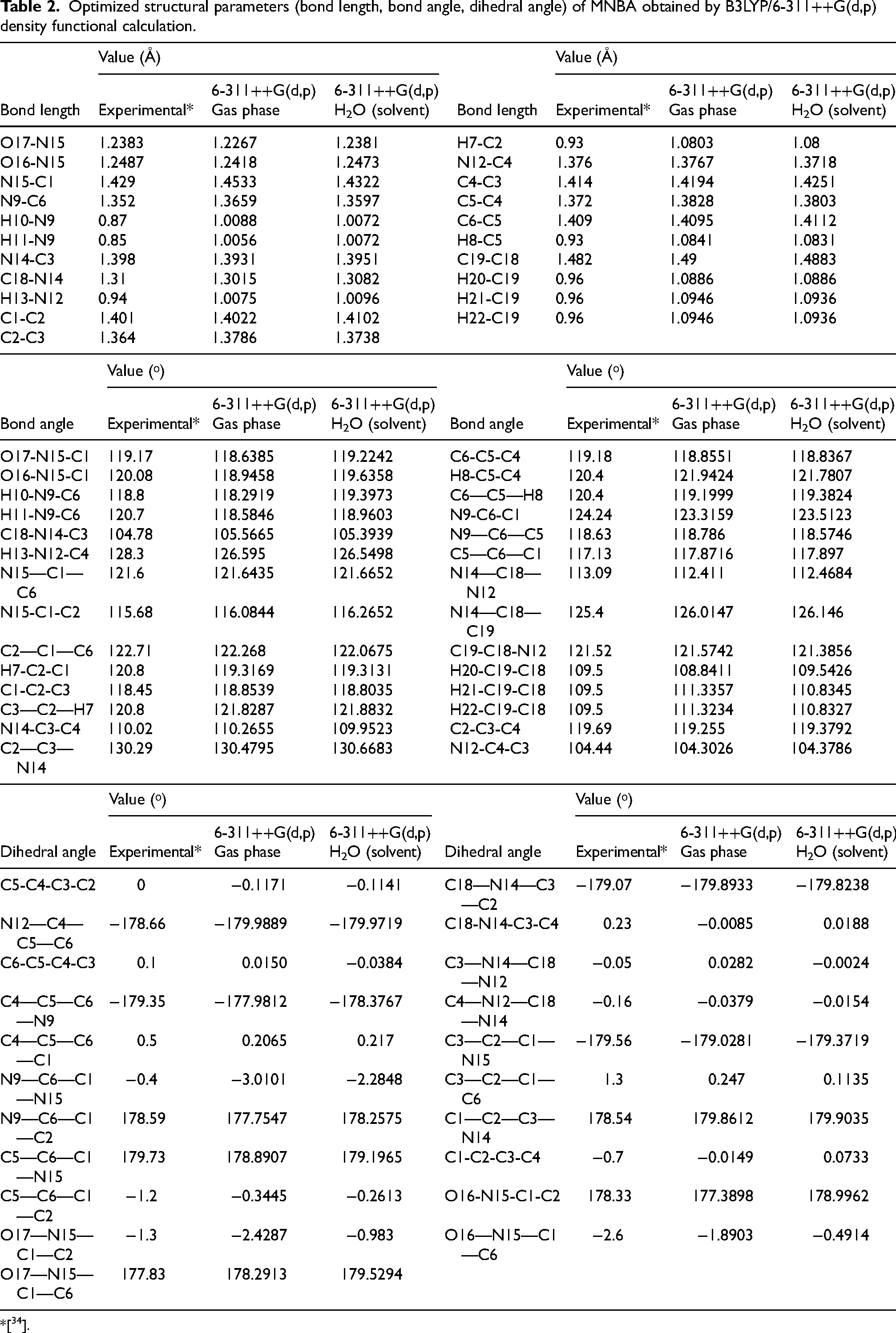
Experimental data are based on crystallographic measurements available in the literature and obtained for the same molecule. The obtained values indicate the presence of a moderate intramolecular N–H···O hydrogen bond. The H···O distance (∼1.9 Å) and N···O separation (∼2.6 Å) fall within the typical range reported for intramolecular hydrogen bonds, confirming the interaction between the amine hydrogen and the nitro oxygen atom (Table 1). The bond lengths calculated in the gas phase are slightly shorter than the experimental values. For example, the O17-N15 bond length was calculated as 1.2383 Å experimentally, while it was calculated as 1.2267 Å in the gas phase. In solution, this length was found to be 1.2381 Å. This situation shows that polarizability in solution environment brings bond lengths closer to experimental values. Table 2 presents experimental and theoretical data obtained for bond angles. O17-N15-C1 angle was measured as 119.17° experimentally and was calculated as 118.63° in gas phase and 119.22° in aqueous phase. These differences show that the molecule undergoes small structural changes in aqueous environment. These data also show that solution stabilizes the molecular structure compared to gas phase in terms of bond angles. Dihedral angles are shown in Table 2. When compared with experimental results, it was observed that there were small differences between the calculated dihedral angles in gas phase and aqueous environment. While C5-C4-C3-C2 dihedral angle was 0° experimentally, it was calculated as −0.1171° in gas phase and −0.1141° in aqueous phase (Table 2). The obtained results show that the theoretical calculations are quite close to the experimental data. Small differences are observed between the calculations made in the gas phase and in the aqueous phase. The effect of the solution is especially evident in terms of bond lengths and bond angles. This shows that the solution environment stabilizes the molecular structure and the calculated structural parameters become closer to the experimental data. The observed differences in the dihedral angles are smaller and indicate the overall structural flexibility of the molecule.
Intramolecular hydrogen bond geometrical parameters of MNBA.
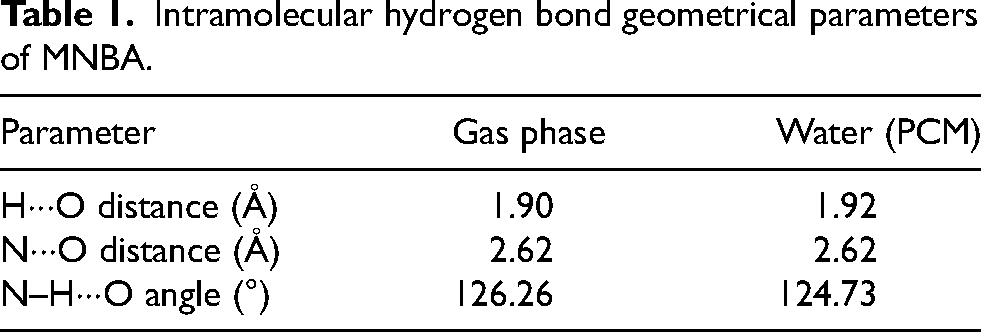
Optimized structural parameters (bond length, bond angle, dihedral angle) of MNBA obtained by B3LYP/6-311++G(d,p) density functional calculation.
*[ 34 ].
The reduced density gradient (RDG) scatter plot was generated to analyze the nature of the non-covalent interactions in the molecule. The spikes appearing in the negative sign(λ₂)ρ region indicate attractive interactions, which are consistent with the intramolecular O···H interaction observed in the NCI isosurface analysis (Figure 2). In addition, the dense region around sign(λ₂)ρ ≈ 0 corresponds to weak van der Waals interactions that contribute to the stabilization of the molecular structure. The green isosurfaces observed between the O and H atoms further confirm the presence of weak intramolecular interactions. The RDG method has been widely used to identify and visualize non-covalent interactions such as hydrogen bonding and van der Waals interactions in molecular systems.23,24
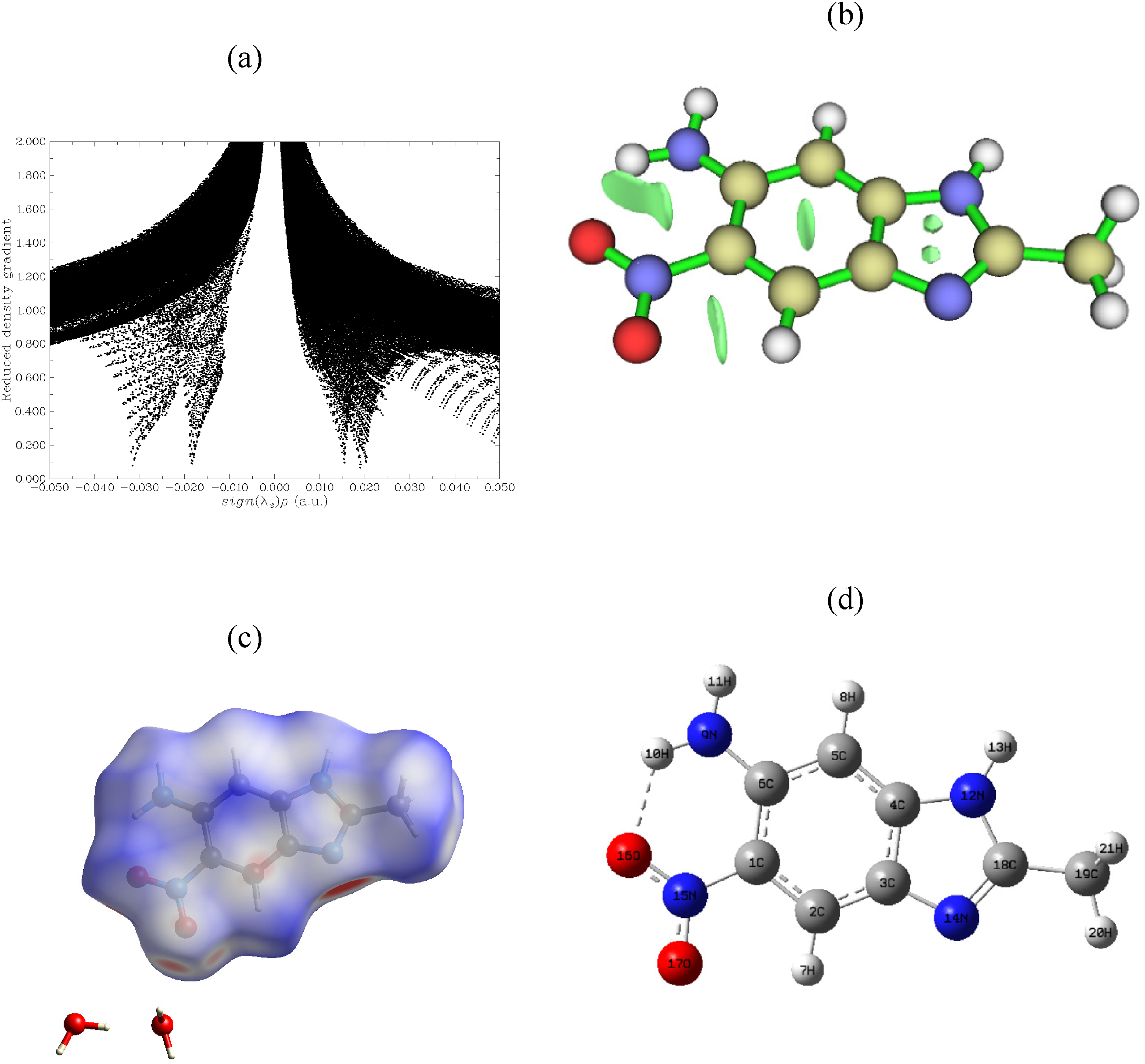
(a) RDG scatter plot as a function of sign(λ₂)ρ. (b) NCI isosurface showing weak intramolecular interactions. (c) Hirshfeld surface mapped over dnorm highlighting intermolecular contacts. (d) Optimized structure with atom labeling showing the intramolecular N9–H10···O16 hydrogen bond.
Molecular electrostatic potential (MEP) analysis
Molecular electrostatic potential (MEP) analysis is a powerful tool for visualizing charge distribution and identifying reactive regions within a molecule, particularly with respect to electrophilic–nucleophilic interactions and hydrogen bonding capability. The MEP reflects the combined effects of electron density distribution and nuclear charges, thereby providing a quantitative description of the electrostatic environment surrounding a molecule.17,25
In this study, the electrostatic potential and its contours of 2-methyl-5-nitro-1H-benzimidazole-6-amine (MNBA) in both the gas and aqueous phases are illustrated in Figure 3. In these maps, regions of negative electrostatic potential (electron-rich sites) are depicted in red, whereas positive electrostatic potential regions (electron-deficient sites) appear in blue, with intermediate colors indicating gradual variations in potential. For MNBA, the calculated MEP values range from approximately −0.0759 to +0.0759 a.u. in the gas phase, while a broader potential range of −0.101 to +0.101 a.u. is observed in the aqueous phase. This expansion of the MEP range upon solvation indicates enhanced polarization of the molecular surface due to solvent–solute electrostatic interactions, consistent with previous reports on polar solvent stabilization effects in hydrogen-bonded systems.26–28

Electrostatic potential and its contours in (a) gas phase and (b) aqueous phase for 2-methyl-5-nitro-1H-benzimidazole-6-amine.
The polar nature of the aqueous environment promotes stronger dipole–dipole interactions and hydrogen bonding, leading to a redistribution of surface charge and more pronounced electrostatic features compared to the gas phase.29,30 Inspection of the ESP maps reveals that the most negative potential regions are predominantly localized around the nitro oxygen atoms, confirming their strong electron-withdrawing character and their propensity to act as nucleophilic or hydrogen bond-accepting sites. 25 In contrast, regions of positive electrostatic potential are mainly associated with hydrogen atoms bonded to nitrogen, particularly within the intramolecular N–H···O hydrogen bonding framework, highlighting their potential role as electrophilic or hydrogen bond-donating sites.
The enhanced contrast between electron-rich and electron-poor regions in the aqueous phase further suggests that solvent stabilization amplifies charge-separated regions, which may facilitate intermolecular interactions such as hydrogen bonding and dipole–dipole interactions.31,32 Regions exhibiting the most negative MEP values are considered the most favorable sites for electrophilic attack, emphasizing the importance of MEP analysis in predicting molecular reactivity and intermolecular interaction pathways. 33 Overall, these results demonstrate that both intramolecular hydrogen bonding and solvation effects play a key role in shaping the electrostatic landscape of the MNBA molecule and governing its chemical reactivity.
Vibrational analysis
A comparative examination of the experimental and theoretical FT-IR spectra has been performed to obtain a more profound understanding of the vibrational properties of MNBA (Figure 4). The theoretical vibrational frequencies of the MNBA FT-IR spectrum were calculated in both the gas and aqueous phases. The calculated frequencies were scaled using factors of 0.981 for the gas phase and 0.987 for the aqueous phase in order to correct the systematic overestimation associated with the harmonic approximation of DFT calculations and to improve the agreement between calculated and experimental vibrational frequencies. There are two sets of vibrational frequencies for the MNBA complex in Table 3. This is the set of theoretical numbers and the set of observed numbers. The structure of the MNBA molecule was studied, and it was found that hydrogen bonds create an intramolecular O···H interaction between the nitro (-NO₂) and amine (-NH₂) groups. When the oxygen atoms of the nitro group interact with the hydrogen atoms of the amine group, intramolecular hydrogen bonds are formed. In the molecules, this interaction promotes the formation of a cyclic intramolecular arrangement. When the MNBA molecule's core is closed, it changes its spectral properties and makes it much more stable. When this hydrogen bond forms, it changes the molecule's FT-IR spectrum, which shows changes in its vibrating frequencies. The high-frequency vibrational band observed in the 3400–3600 cm⁻1 region is attributed to N–H stretching involved in a moderate intramolecular N–H···O hydrogen bonding interaction between the amino hydrogen and the nitro oxygen atoms. This interaction leads to the formation of a six-membered pseudo-chelate ring, which significantly influences the vibrational behavior of the molecule. Similar intramolecular N–H···O hydrogen bonding interactions forming stable chelate-like cyclic structures have been widely reported in substituted amino- and nitro-containing systems, where substituent effects play a key role in determining hydrogen bond strength and vibrational frequency shifts.35–38

Observed FT-IR and simulated spectrum of MNBA (a) Observed (b) B3LYP/6-311++G(d,p) (aqueous phase) (c) B3LYP/6-311++G(d,p) (gas phase).
The theoretical and experimental vibrational frequencies of MNBA.
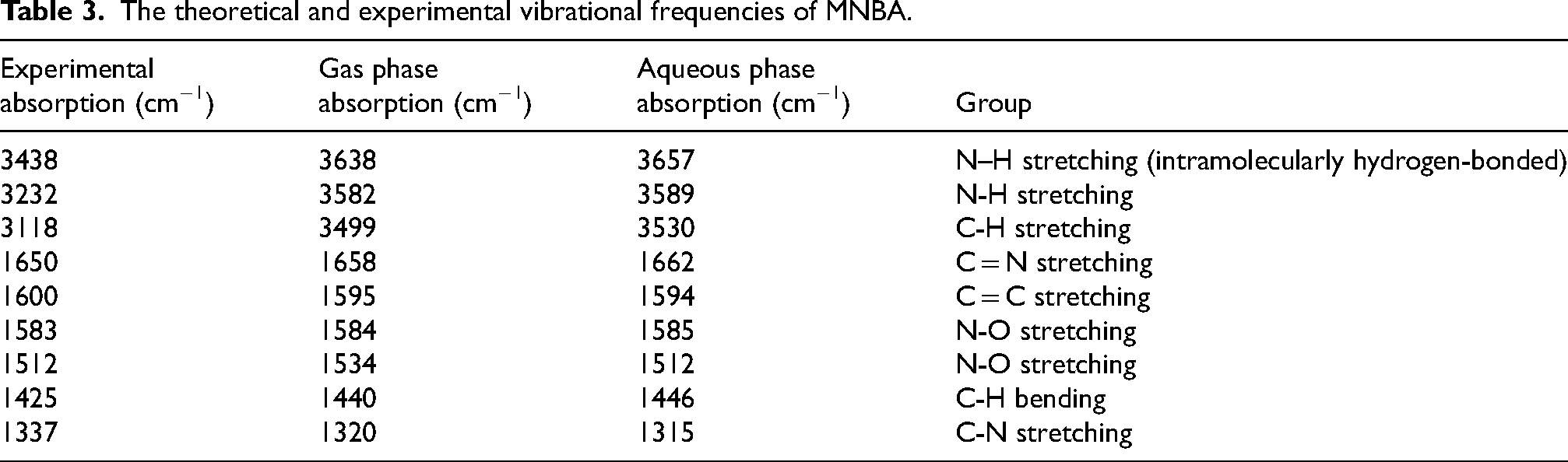
The experimentally observed N–H stretching vibration at 3232 cm⁻1 was calculated at higher frequencies of 3582 cm⁻1 in the gas phase and 3589 cm⁻1 in the aqueous phase. This discrepancy can mainly be attributed to the harmonic approximation employed in DFT vibrational calculations, which is known to overestimate X–H stretching frequencies, particularly for N–H bonds. In addition, the experimentally observed N–H stretching band is influenced by intramolecular N–H···O hydrogen bonding between the amino hydrogen and the nitro oxygen atoms, which typically causes a red shift in the vibrational frequency. Hydrogen bonding interactions weaken the N–H bond through partial electron density delocalization toward the acceptor atom, resulting in a reduction of the N–H bond force constant. Consequently, the vibrational frequency shifts to lower wavenumbers, giving rise to the observed red shift in the N–H stretching band. Studies have shown that the presence of additional substituents can enhance the strength of such hydrogen-bond interactions, thereby stabilizing the resulting intramolecular configurations.39,40
For instance, recent investigations using linear aminoalcohols revealed that increased chain length results in varying hydrogen bond strengths due to conformational flexibility, illustrating the delicate balance influencing hydrogen bonding dynamics. 41 This observation is also consistent with the findings of Sobolewski and Domcke, who reported that intramolecular hydrogen bonding can significantly influence vibrational behavior and stabilization in related systems. 35
The implications of these hydrogen bonding interactions are important for understanding the vibrational behavior and structural stability of benzimidazole derivatives..42,43
The structural and electronic characteristics of benzimidazoles associated with intramolecular hydrogen bonding contribute significantly to their chemical reactivity and biological applications, justifying the importance of further studies on these compounds. Furthermore, influencing the N-O stretching frequency in the nitro group is the hydrogen bond. While the computed values were 1584 cm⁻1 and 1534 cm⁻1 in the gas phase, and 1585 cm⁻1 and 1512 cm⁻1 in the aqueous phase, experimentally these frequencies were observed as 1583 cm⁻1 and 1512 cm⁻1. These results indicate that intramolecular hydrogen bonding significantly affects the vibrational frequencies of the MNBA molecule. This interaction helps explain the observed spectral features. Overall, the intramolecular hydrogen bond between the nitro and amine groups plays an important role in the physicochemical properties of MNBA. Apart from creating a cyclic structure that boosts the stability of the molecule, this link generates notable changes in the vibrational spectrum. Therefore, a basic knowledge of the chemical behavior of the molecule depends on the intramolecular hydrogen bonding inside MNBA since it significantly affects both its structural and spectral properties.
In addition to the N–H stretching vibrations, several other characteristic vibrational modes of the MNBA molecule were identified and assigned based on the calculated frequencies and literature data. Aromatic C–H stretching vibrations were observed in the region around 3100–3500 cm⁻1, while the C = N and C = C stretching vibrations of the benzimidazole ring appeared in the region of 1500–1650 cm⁻1. The symmetric and asymmetric stretching modes of the nitro group (NO₂) were also identified in the 1500–1600 cm⁻1 region. The assignments of these vibrational modes show good agreement between the calculated and experimental spectra, supporting the reliability of the theoretical calculations.
Other molecular properties
HOMO and LUMO analysis
Frontier molecular orbitals (FMOs) play a crucial role in determining the electronic structure, chemical reactivity, and optical properties of molecular systems. In particular, the HOMO and the LUMO provide valuable information about the electron-donating and electron-accepting abilities of a molecule. The HOMO mainly acts as an electron donor, whereas the LUMO behaves as an electron acceptor. Therefore, the HOMO energy is associated with the ionization potential, while the LUMO energy is related to the electron affinity of the molecular system.33,44 The energy difference between HOMO and LUMO (ΔE) is widely used as an indicator of chemical stability and reactivity; a smaller energy gap generally corresponds to enhanced charge transfer capability and increased chemical reactivity.45,46 The presence of electron-donating and electron-withdrawing groups at opposite ends of a molecule can increase the asymmetry of the charge distribution in the ground state. Such donor–acceptor arrangements promote intramolecular charge redistribution and can influence the electronic properties of the molecular system. In addition, the presence of conjugated π-bonds can significantly affect the electronic distribution within a molecule. The HOMO and LUMO orbitals were calculated using the DFT/B3LYP/6-311++G(d,p) level of theory. A smaller HOMO–LUMO energy gap generally indicates enhanced chemical reactivity and charge-transfer capability of the molecule.
The experimental UV–Vis spectrum of MNBA was recorded in ethanol, whereas the theoretical calculations were performed using an aqueous solvent model. The use of water instead of ethanol in the PCM model represents an approximation, since specific solvent–solute hydrogen-bonding interactions present in ethanol are not explicitly described within the continuum solvation framework. This approach was adopted because both ethanol and water are polar protic solvents capable of forming hydrogen bonds with solute molecules. Although their hydrogen-bonding networks differ, both solvents provide strongly polar environments that significantly influence electronic transitions and solvation stabilization. Such solvent approximations are commonly employed in theoretical UV–Vis and DFT studies, where the use of a highly polar solvent model provides reliable insight into spectroscopic behavior observed experimentally in polar media.47–50 Furthermore, similar strategies involving different but comparable polar solvents for experimental and theoretical investigations have been widely reported in the literature, demonstrating that this approach yields consistent and meaningful interpretations of electronic and structural properties. Therefore, although ethanol and water are different solvents, their comparable polarity and dielectric behavior allow the aqueous PCM model to reasonably approximate the solvent effects observed experimentally.51,52
The experimental and TD-DFT-predicted UV–Vis absorption spectra of MNBA in the gas and aqueous phases are presented in Figure 5. In the gas phase, absorption bands were calculated at 315 nm and 444 nm, while the major transitions in the aqueous phase appeared at 334 nm and 466 nm. The experimentally recorded spectrum in ethanol exhibits prominent absorption bands at 323 nm and 435 nm (Table 4), showing good agreement with the aqueous phase TD-DFT results. Consequently, the aqueous phase TD-DFT calculations provide a more realistic representation of the experimental spectrum, whereas the gas phase calculations mainly reflect the intrinsic electronic structure of the isolated molecule. The remaining discrepancies between theoretical and experimental wavelengths can be attributed to solvent–solute interactions and environmental effects not fully accounted for in the continuum solvent model.
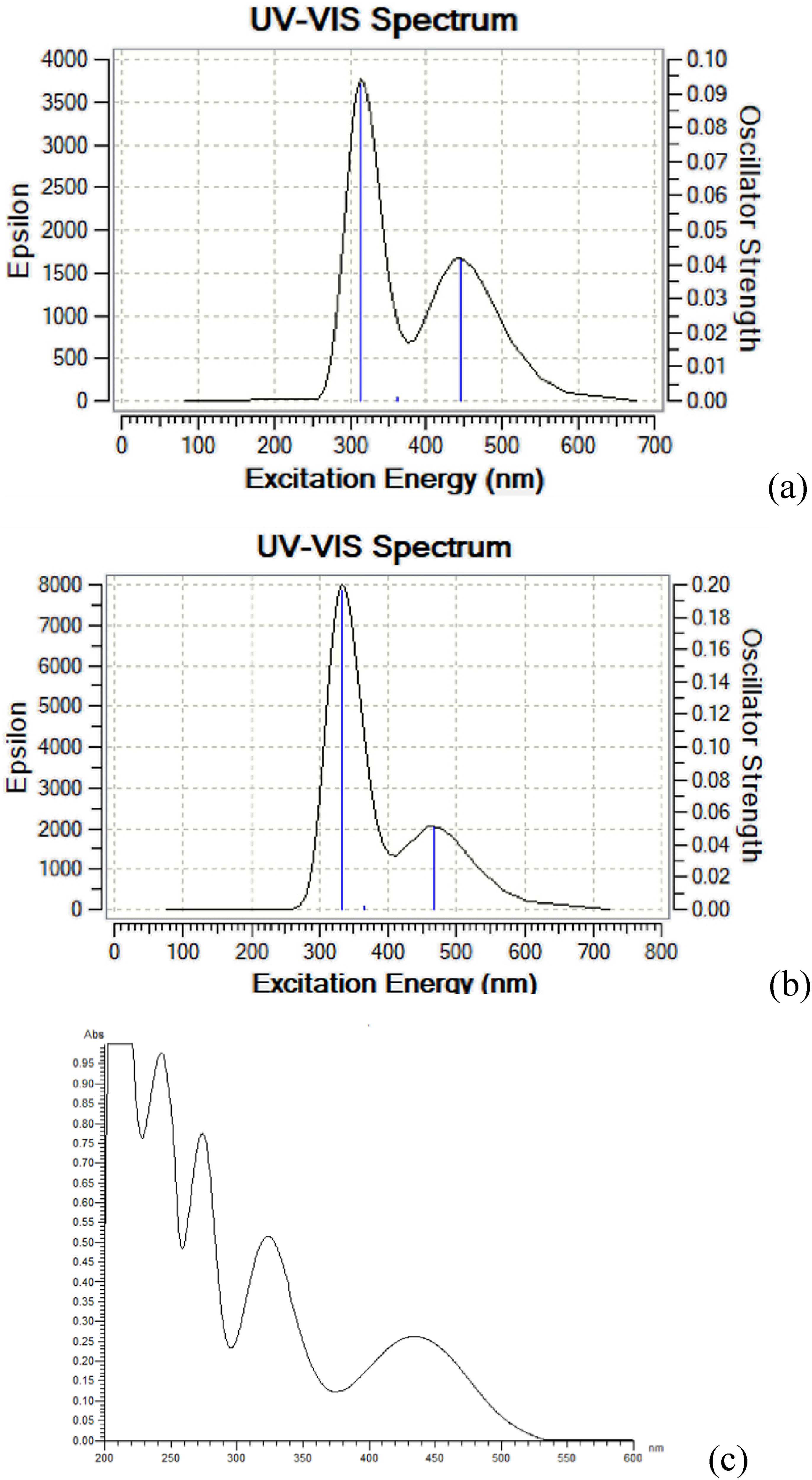
Uv–Vis spectra of MNBA: (a) B3LYP/6-311++G(d,p) gas phase, (b) B3LYP/6-311++G(d,p) aqueous phase, (c) experimental spectrum.
TD-DFT/B3LYP/6-311++G(d,p) UV–Vis spectral parameters of MNBA.
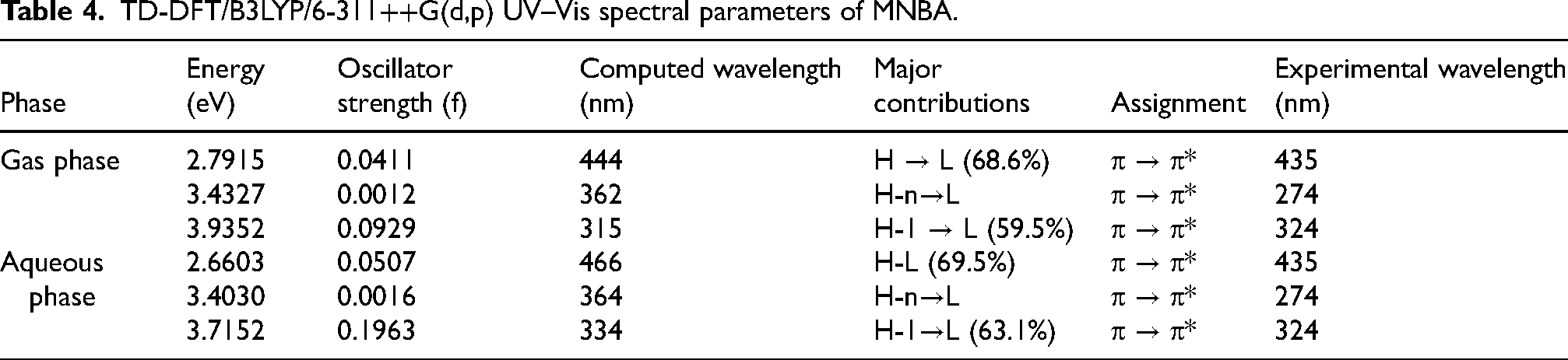
In the aqueous phase, hydrogen bonding interactions may modify the electronic structure of MNBA, leading to bathochromic shifts and broader absorption bands. These results indicate that solvent polarity and intermolecular interactions can influence the electronic and spectroscopic properties of the MNBA molecule. Furthermore, the band gap energy derived from the UV–Vis analysis is consistent with the HOMO–LUMO energy gap obtained from frontier molecular orbital (FMO) calculations, indicating the electronic responsiveness of the molecule 53 .
The HOMO–LUMO energy gap of MNBA was estimated to be 3.406 eV in the gas phase and 3.263 eV in the aqueous phase using the DFT/B3LYP/6-311++G(d,p) basis set (Figure 6). In the ground state, the presence of these substituents leads to an uneven charge distribution within the molecule. Such electronic asymmetry can influence the electronic behavior of the system.

HOMO and LUMO energies calculated by the B3LYP/6-311++G(d,p) method for the MNBA.
Molecules containing donor–acceptor arrangements often exhibit enhanced electronic interactions due to intramolecular charge redistribution. In such systems, the presence of a conjugated π-framework facilitates electron delocalization across the molecular structure. This electronic delocalization can influence the electronic properties of the molecule and has therefore attracted considerable interest in the design of functional organic materials.54,55 The calculated HOMO–LUMO energy gap of MNBA provides useful information about the electronic stability and reactivity of the molecule. The obtained value suggests a relatively stable molecular framework and indicates the presence of intramolecular charge redistribution within the conjugated system. Such electronic characteristics are important for understanding the spectroscopic and electronic behavior of the molecule. In this context, the distribution of electrons plays a key role in determining fundamental properties such as ionization potential and electron affinity.
Quantum chemical properties of the MNBA compound were investigated using the B3LYP/6-311++G(d,p) level of theory in both the gas phase and aqueous solution. In this study, key reactivity descriptors including the highest occupied molecular orbital (HOMO), lowest unoccupied molecular orbital (LUMO), HOMO–LUMO energy gap, ionization potential, electron affinity, electronegativity, global hardness and softness, chemical potential, global electrophilicity index, and back-donation energy were calculated (Table 5).
Ground-state quantum chemical parameters and HOMO–LUMO energy gap of MNBA calculated at the B3LYP/6-311++G(d,p) level in the gas and aqueous phases.
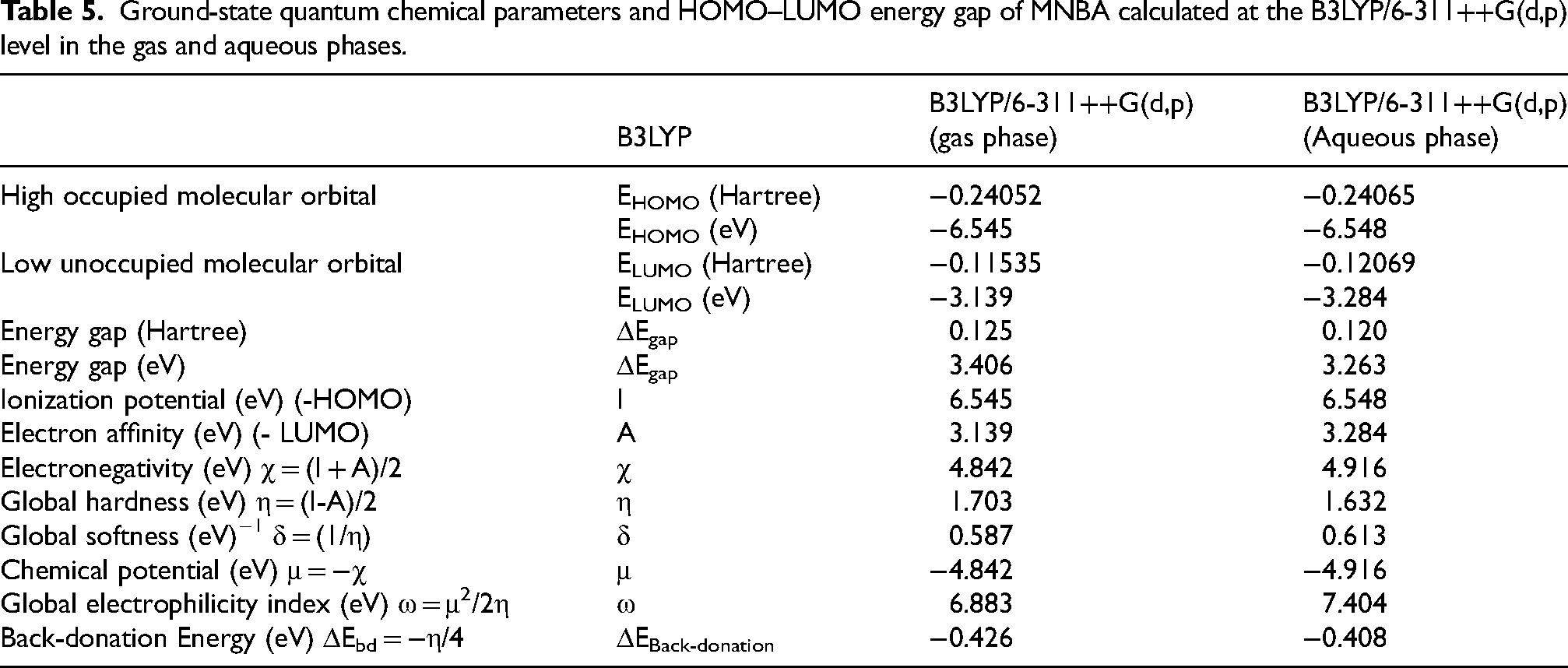
The HOMO energies were calculated as −0.24052 Hartree in the gas phase and −0.24065 Hartree in the aqueous phase, while the corresponding LUMO energies were −0.11535 and −0.12069 Hartree, respectively. These slight variations indicate that the solvent environment induces a modest modification in the electronic structure of the MNBA molecule. 56 The HOMO–LUMO energy gap, which is a key indicator of chemical reactivity, was found to be 0.125 Hartree (3.406 eV) in the gas phase and 0.120 Hartree (3.263 eV) in the aqueous phase (Table 5). The reduction of the energy gap in aqueous solution suggests enhanced molecular reactivity in the solvent environment.
The ionization potential, defined as the energy required to remove an electron from the molecule, was calculated as 6.545 eV in the gas phase and 6.548 eV in the aqueous phase. The electron affinity values were determined to be 3.139 eV and 3.284 eV for the gas and aqueous phases, respectively, indicating an increased tendency of MNBA to accept electrons in solution. The electronegativity values were calculated as 4.842 eV in the gas phase and 4.916 eV in the aqueous phase, reflecting a stronger electron-attracting ability of the molecule in the polar solvent. Global hardness decreased from 1.703 eV in the gas phase to 1.632 eV in the aqueous phase, while the corresponding global softness increased from 0.587 to 0.613 eV⁻1. This inverse relationship between hardness and softness further supports the enhanced reactivity of MNBA in aqueous solution.
The chemical potential values were calculated as −4.842 eV in the gas phase and −4.916 eV in the aqueous phase. The more negative chemical potential in solution indicates greater thermodynamic stability and an increased tendency toward electron acceptance. In addition, the global electrophilicity index increased from 6.883 eV in the gas phase to 7.404 eV in the aqueous phase, demonstrating that MNBA exhibits stronger electrophilic character in the solvent environment. Overall, these results highlight the significant role of solvation effects in modulating the electronic structure and chemical reactivity of the MNBA compound.
Mulliken charge
Mulliken population analysis provides qualitative insight into the electronic charge distribution within molecular systems and helps to describe possible electronic interactions that influence molecular reactivity. In the case of the compound MNBA, which features a benzimidazole structure, the charge distribution suggests differences in electronic behavior between its imidazole and benzene constituents. It should be noted that Mulliken population analysis can be basis-set dependent and may not always provide quantitatively accurate atomic charges, particularly for polar systems. Therefore, the obtained Mulliken charges are interpreted qualitatively to describe the general charge distribution within the molecule. The presence of nitrogen in the imidazole ring contributes to its basicity due to the lone pair of electrons capable of accepting protons. However, when imidazole and benzene combine to form benzimidazole, this basicity is diminished. The delocalization of charge across the conjugated system reduces the availability of the lone pair on nitrogen for protonation, as indicated by analyses of similar compounds.57–59
The Mulliken atomic charge analysis suggests differences in charge distribution between the gas phase and the aqueous phase. In the gas phase, certain carbon atoms, such as C1 and C2, exhibit charges of −0.205 and −0.374, respectively, while these values shift to −0.264 and −0.399 in the aqueous phase. 60 This shift may reflect the influence of the solvent environment on the molecular charge distribution. Interestingly, carbon atom C4 transitions from a positive charge of +0.281 in the gas phase to +0.291 in aqueous conditions, indicating the influence of the surrounding medium on charge variance. 61
Moreover, this dynamic is pronounced across hydrogen atoms. For instance, the H8 atom displays a positive charge of +0.146 in the gas phase, which increases to +0.213 in aqueous phase (Figure 7). These observations suggest that solvent polarity may influence the overall charge distribution within the molecule. Conversely, nitrogen atoms exhibit contrasting behavior; for example, the N9 atom exhibits a calculated Mulliken charge of −0.341 in the gas phase and +0.377 in the aqueous phase. Such variations should be interpreted with caution because Mulliken population analysis is known to be sensitive to the basis set and charge partitioning scheme. Therefore, these values are discussed only in terms of general trends in charge redistribution rather than absolute atomic charges.. 62 Such variations may reflect changes in charge distribution induced by the solvent environment. 63

Mulliken atomic charge values of the compound calculated at the level of B3LYP/6-311++G(d,p).
The stark difference between the gas and aqueous phases can be explained by the polar nature of water, which introduces electrostatic interactions that alter electronic distributions. The dipole moment of the MNBA compound becomes more pronounced in the presence of water, enhancing its polar characteristics. This is critical when considering sites of negative charge density near nitrogen and oxygen atoms, which may play a role in intermolecular interactions and chemical reactivity. 64
These results indicate that solvent polarity influences the electronic charge distribution of the molecule. In particular, the increased positive character of hydrogen atoms in the aqueous phase suggests that the polar solvent environment modifies the electrostatic properties of MNBA. 65
In summary, Mulliken charge analysis provides qualitative insight into the electronic properties and charge distributions of the MNBA compound across different environments. The interaction between the imidazole and benzene rings is influenced by solvent effects, resulting in possible changes in the electronic distribution and charge distribution. A fundamental understanding of these interactions is important for interpreting the electronic structure and reactivity patterns of the molecule.
Natural Bond Orbital (NBO) analysis
The natural atomic charges indicate that the heteroatoms in the molecule carry relatively large negative charges due to their higher electronegativity, whereas hydrogen atoms exhibit positive charge character. This charge distribution is consistent with the molecular electrostatic potential (MEP) map, which shows electron-rich regions mainly localized around the nitrogen and oxygen atoms of the MNBA molecule.
Further insight into the intramolecular electron delocalization was investigated using Natural Bond Orbital (NBO) analysis based on the second-order perturbation theory of the Fock matrix.66,67 The stabilization energy E(2) provides a quantitative measure of the donor–acceptor interactions responsible for intramolecular charge transfer.68,69 The most significant interactions obtained for both gas and aqueous phases are summarized in Table 6.
Selected donor–acceptor interactions obtained from second-order perturbation theory analysis of the Fock matrix in the NBO basis for MNBA calculated at the B3LYP/6-311++G(d,p) level in gas and aqueous phases.
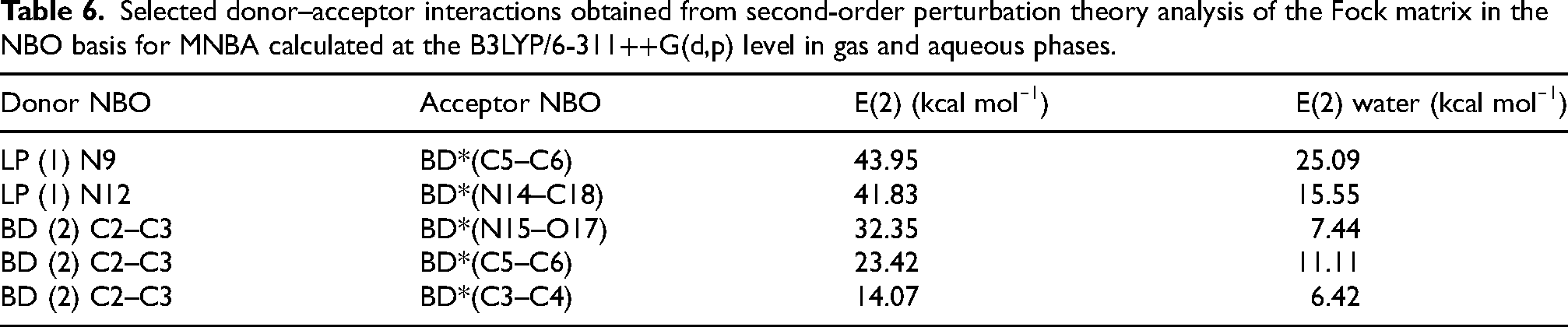
In the gas phase, the interaction LP(N9) → BD*(C5–C6) exhibits the highest stabilization energy (43.95 kcal mol⁻1), indicating strong electron delocalization from the nitrogen lone pair into the antibonding orbital of the aromatic ring. Similarly, the interaction LP(N12) → BD*(N14–C18) shows a large stabilization energy of 41.83 kcal mol⁻1, reflecting substantial charge transfer within the conjugated benzimidazole framework (Table 6).
A similar donor–acceptor interaction pattern is observed in the aqueous phase. However, the stabilization energies are slightly modified due to solvent effects, indicating that the polar environment influences the extent of electron delocalization within the molecular framework. 70 The persistence of these interactions in both phases confirms the presence of significant intramolecular charge transfer within the MNBA molecule.
The stabilization energy E (2) represents the energetic contribution arising from electron delocalization between filled donor orbitals and antibonding acceptor orbitals. Larger E(2) values correspond to stronger donor–acceptor interactions and greater intramolecular charge delocalization.68,71 Overall, the NBO analysis demonstrates that the conjugated benzimidazole system of MNBA supports significant electron delocalization, which contributes to the stabilization of the molecular electronic structure in both gas and aqueous environments. These NBO results provide additional support for the intramolecular charge transfer behavior suggested by the MEP and frontier molecular orbital analyses.
Conclusion
This study presents a comprehensive investigation of the structural, vibrational, and electronic properties of 2-methyl-5-nitro-1H-benzimidazole-6-amine (MNBA) using a combined experimental and theoretical approach based onDFT. The results clearly demonstrate the crucial role of intramolecular N–H···O hydrogen bonding between the amino and nitro groups, leading to the formation of a six-membered hydrogen-bonded pseudo-ring that may contribute to the stabilization of the molecular structure.
The vibrational analysis reveals that this intramolecular hydrogen bonding strongly influences the FT-IR spectrum of MNBA, particularly through hydrogen-bonded N–H stretching modes, which exhibit noticeable shifts in comparison with non-hydrogen-bonded vibrations. The good agreement between experimental and calculated vibrational frequencies confirms the reliability of the chosen theoretical model.
Comparative analyses performed in the gas phase and aqueous phase indicate that solvent effects play a significant role in modulating the molecular geometry and electronic structure of MNBA. Calculations in the aqueous phase yield structural parameters that are closer to experimental values, highlighting the stabilizing influence of the polar solvent environment. Furthermore, solvent interactions may contribute to enhanced charge redistribution, as suggested by qualitative Mulliken charge analysis together with molecular electrostatic potential (MEP) mapping. NBO analysis further confirmed significant intramolecular charge delocalization within the conjugated benzimidazole framework, highlighting the role of donor–acceptor interactions in stabilizing the molecular structure.
Frontier molecular orbital (HOMO–LUMO) analysis indicates a reduced energy gap in the aqueous phase, suggesting increased chemical reactivity and electrophilic character of MNBA in polar environments. These findings demonstrate that solvation effects, together with intramolecular hydrogen bonding, are key factors governing the physicochemical behavior of the molecule.
Overall, the integration of experimental spectroscopy with DFT calculations provides a reliable framework for understanding the structural and electronic characteristics of MNBA. The results highlight the combined influence of intramolecular hydrogen bonding and solvent effects on the molecular properties and may contribute to future theoretical and spectroscopic studies of related benzimidazole derivatives.
Footnotes
Acknowledgments
I want to express my deepest gratitude to Prof. Dr. Sebla Dincer for her invaluable guidance, insightful feedback, and continuous support throughout the research.

Funding
The author received no financial support for the research, authorship, and/or publication of this article.
Declaration of conflicting interests
The author declared no potential conflicts of interest with respect to the research, authorship, and/or publication of this article.