




Abstract
Ultra-visible Spectroscopy is one of the most widely used analytical techniques in pharmaceutical research, university's, industries and quality control laboratories. This technique offers high sensitivity, accuracy, precision, and reproducibility, providing huge platform for drug discovery, development, and routine quality assurance. This short communication presents a comprehensive overview of Ultra-visible Spectroscopy, method development strategies, validation parameters as per International Council for Harmonisation (ICH) guidelinesQ2(R2) for the determination of Ciclopirox olamine in API as well as Ethosomal gel. Ultra Violet-Spectroscopy process developed for Ciclopirox Olamine shows the maximum absorbance at wavelength 302 nm. Ciclopirox Olamine showed the linearity, range 2.5–25 µg per ml for this procedure with Correlation Coeff. (R2) found to be 0.9996. The technique was found definite as no intervention was detected with excipients. The precision studies include Repeatability, Inter-day Precision, Intra-day Precision, Specificity and Accuracy studies and their R.S.D value found to be 0.98,1.55,1.448,0.032 and 0.27.
Keywords
Introduction
The development of new antifungal medicines has not kept pace with the increasing number of invasive fungal infections. Simultaneously, serious skin-related disorders are becoming more common, creating a strong need for effective treatments which can work against serious fungal conditions. Ciclopirox olamine (CPO) belong to the hydroxypyridone class of compounds class II and show strong anti-fungal activity. These drugs act through a complex mechanism, affecting several metabolic processes in fungal cells, which makes them effective antifungal agents. 1 These synthetic, broad-spectrum antifungal drugs have been used since 1998 for the topical treatment of superficial fungal infections of the skin. 2 Diseases treated with ciclopirox have not shown the development of drug resistance, even after many years of continuous use. This suggests that the drug acts on molecular targets that are essential for the survival of fungal cells. 3 Ciclopirox olamine is widely used for the treatment of various superficial fungal infections. 4
From a pharmaceutical perspective, the presence of main group elements such as carbon, oxygen, and nitrogen in Ciclopirox Olamine plays a critical role in determining its physicochemical properties, including solubility, stability, and interaction with biological systems. These elements also contribute to the chromophoric behaviour essential for UV absorption, enabling accurate quantitative analysis.
The proposed analytical method is therefore suitable for the determination of Ciclopirox Olamine in both API and ethosomal dosage forms. This work highlights not only the analytical efficiency of UV–Visible spectroscopy but also the fundamental importance of main group chemistry in governing drug behaviour and analytical response. The method is rapid, cost-effective, requires minimal solvent consumption, and is non-destructive, making it highly valuable for routine pharmaceutical analysis.
This article aims to serve as a useful reference for researchers, academicians, and quality control analysts, while also emphasizing the critical role of main group elements in modern pharmaceutical analytical science.
Chemical structures
Ciclopirox, chemically known as 6-cyclohexyl-1-hydroxy-4-methylpyridin-2(1H)-one (Figure 1(a)), is a cyclic hydroxamic acid. Its olamine (ethanolamine) salt form is known as ciclopirox olamine (6-cyclohexyl-1-hydroxy-4-methylpyridin-2-one and 2-aminoethanol) (Figure 1(b)).
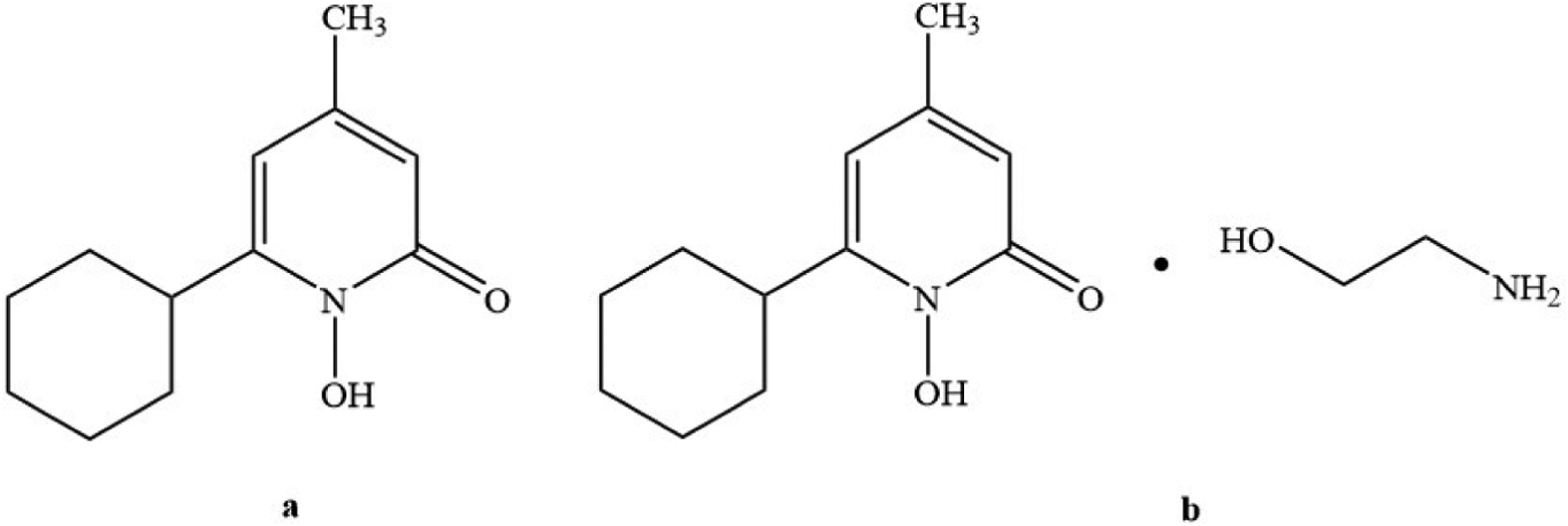
Chemical structure of ciclopirox(a) and ciclopirox olamine (b).
Chemical formula
The formula of ciclopirox olamine is C14H24N2O3, and it has a molecular mass of 268.4 g/mol.
Physical and chemical properties
Ciclopirox olamine is a white to off-white crystalline powder that is freely soluble in water. It is stable under normal temperature and pressure conditions and does not readily react with other chemical groups or undergo decomposition. Additionally, it is non-volatile, meaning it does not easily evaporate into the air. The pyridin-2(1H)-one core of ciclopirox, which is a six-membered aromatic ring, is important for its chemical stability. The hydroxamic acid group at position 1 is able to form hydrogen bonds because of the lone pair of electrons on the nitrogen atom, and it also shows resonance delocalization within the ring structure.1,5
Therapeutic activity
Ciclopirox Olamine shows a broad range of antifungal activity. It is effective against dermatophytes such as Trichophyton species, Microsporum species, and Epidermophyton floccosum; yeasts including Candida species, Malassezia furfur, Cryptococcus neoformans, and Saccharomyces cerevisiae; and molds such as Aspergillus species and Fusarium solani.
Depending on the concentration and duration of treatment, ciclopirox olamine can act as either a fungicidal or fungistatic agent. Overall, ciclopirox olaminehas been found to be more effective against many tested fungal species than itraconazole and ketoconazole, with particularly strong activity against yeasts compared to dermatophytes.6–8
Influence of structure and physicochemical properties on therapeutic activity
The pyridinone ring of ciclopirox shows a unique combination of physicochemical properties, such as good metabolic stability, high water solubility, and balanced lipophilicity. These properties allow it to behave like a non-peptide structure and interact effectively with biological targets. Both the free hydroxyl group and the nitrogen atom in the pyridinone ring can act as hydrogen bond donors or acceptors. This enables ciclopirox to form multiple hydrogen bonds with biological targets, including enzymes and receptors. Such interactions are essential for its antifungal and antibacterial activity, as they improve binding strength and specificity.2,9
Mechanism of action
Ciclopirox Olamineis a hydroxypyridone antifungal agent that forms stable complexes with trivalent metal ions, particularly iron (Fe3⁺). This chelation inhibits metal-dependent enzymes responsible for mitochondrial energy production, electron transport, and detoxification of reactive oxygen species. Furthermore, ciclopirox alters fungal cell membrane permeability and inhibits DNA repair processes, contributing to its fungistatic and fungicidal effects depending on concentration and exposure duration. 10 It inhibit squalene epoxidase and thus interferes with ergosterol biosynthesis. 11
Materials and methods
Materials
Reference Standard of Ciclopirox Olamine Active Pharmaceutical Ingredient was provided by Kumar Organics Products Limited, Bangalore, and Ethanol from Central Drug House Pvt. Ltd
Instruments
The Ultra Violet-Spectroscopy double Beam manufacturer by Agilent Tech, Digital Weighing Balance TX323L by Shimadzu was used.
Preparation of standard stock solution of ciclopirox olamine [solvent: distilled water and ethanol (50:50)]
Weigh Accurately about 100 mg of the drug and transferred to 100 ml volumetric flask. Add a few ml of solvent to dissolve the drug completely and volume make up was done up to the mark.
Transferred 2.5 ml of stock solution to 50 ml volumetric flask and dilute up to the mark with solvent. This solution contained 50μg of drug per ml of the solution.
Selection of wavelength maxima (λ max)
0.5,1, 2, 3, 4 and 5 ml of the standard stock solution were pipette out and transferred into a series of 10 ml volumetric flask. The volumes were made up to the mark with solvent and mixed to obtain solutions in the concentration rang 2.5, 5, 10, 15,20, 25μg/ml.
The absorbance of this solution was scanned in the UV range of 180–400 nm against solvent as blank and was found to be 302 nm. The result was shown
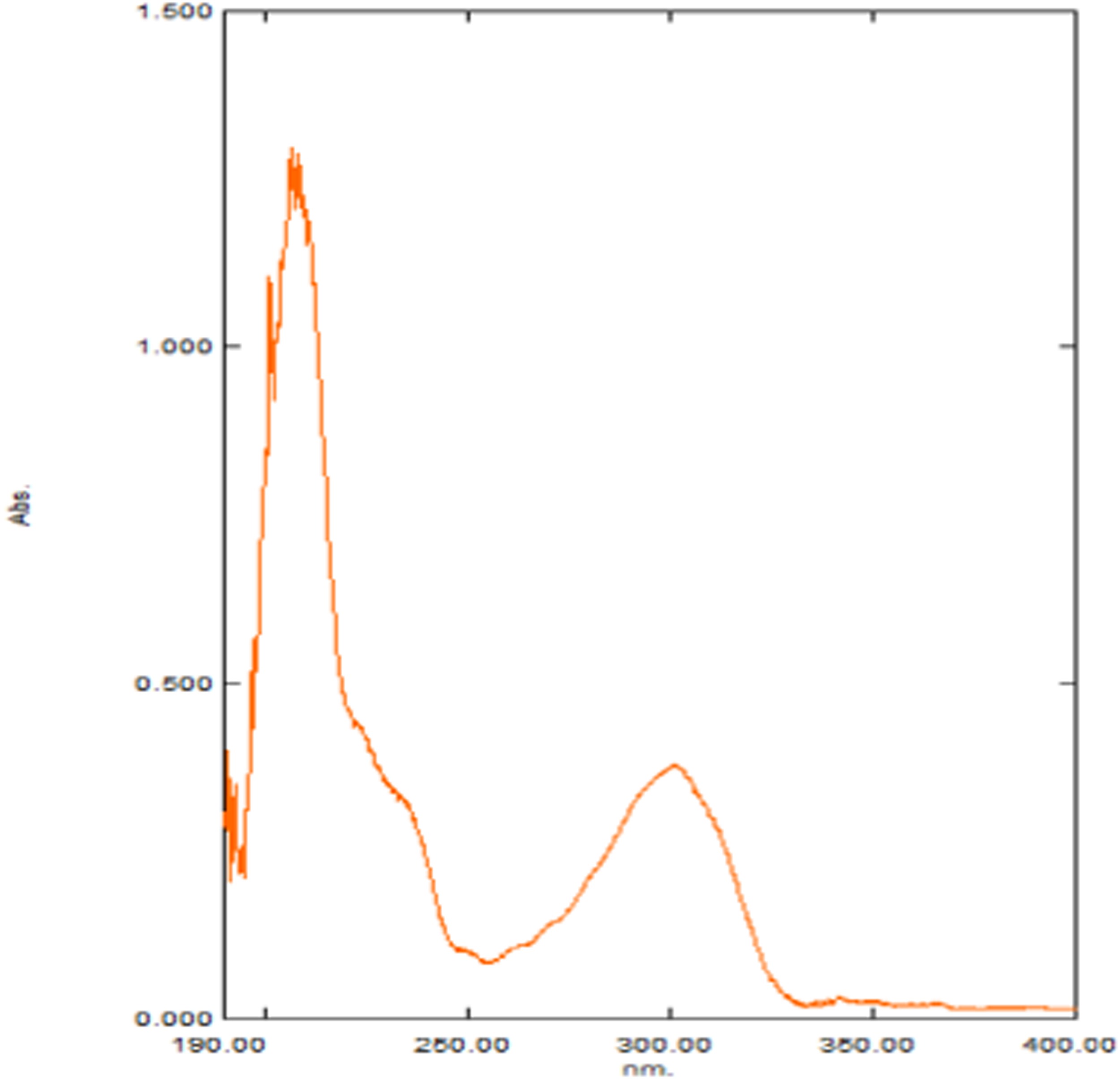
U.V scan of ciclopirox olamine in the range of 180–400 nm and found to be at 302 nm.
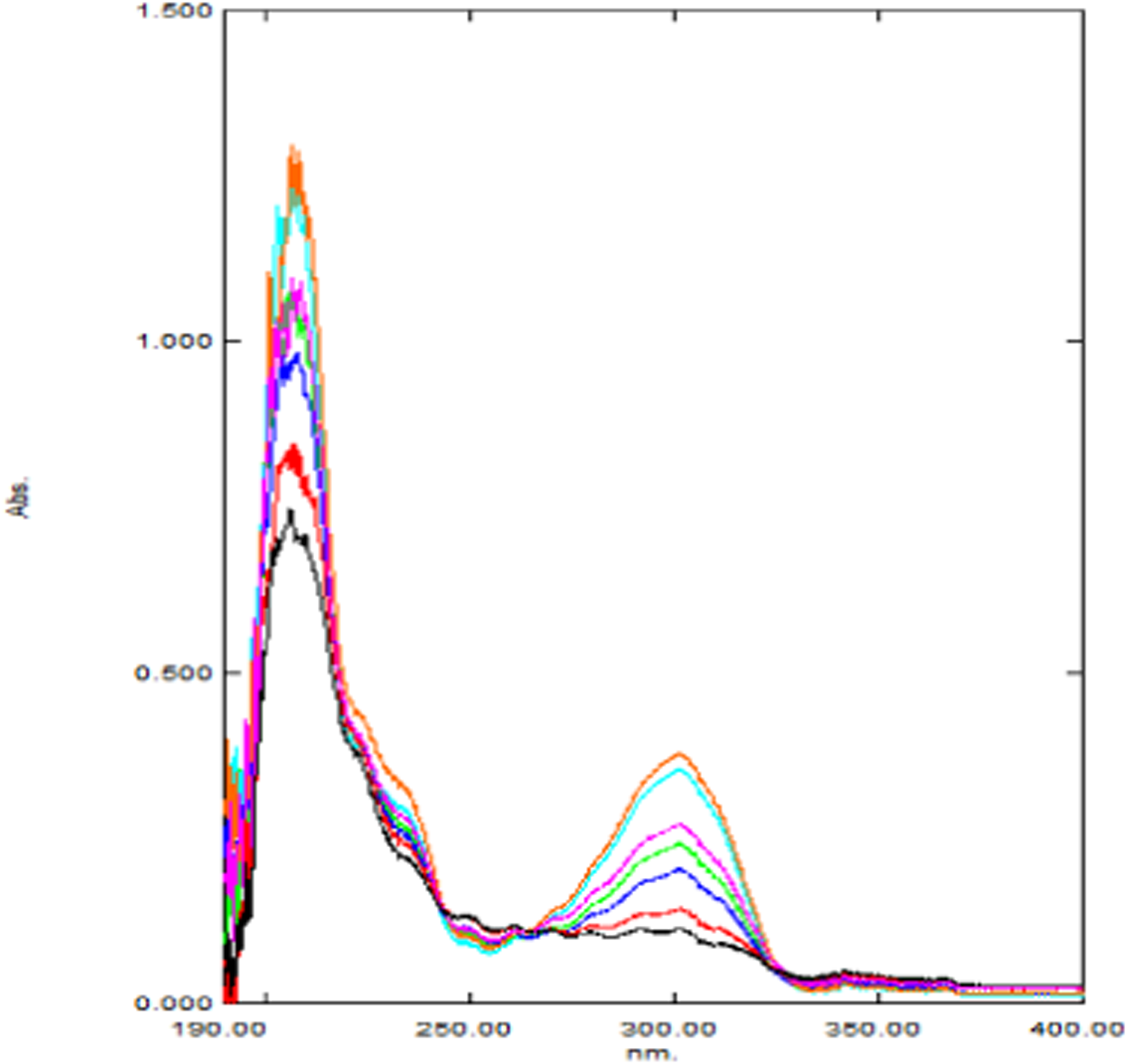
Overlay Spectra of ciclopirox olamine.
Preparation of calibration curve for ciclopirox olamine at 302 nm
0.5,1, 2, 3, 4 and 5 ml of the standard stock solution were pipette out and transferred into a series of 10 ml volumetric flask. The volumes were made up to the mark with solvent and mixed to obtain solutions in the concentration rang 2.5, 5, 10, 15,20, 25μg/ml.
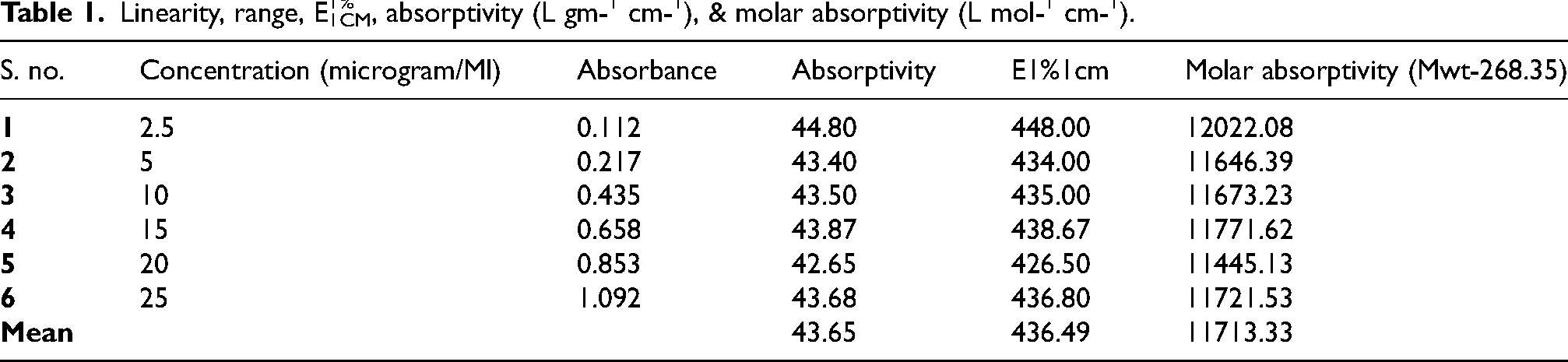
The absorbance of these resultant solutions was measured at 302 nm against solvent as blank and graph were plotted between absorbance obtained versus concentrations. The linearity of drug was found 2.5 to 25 ug/ml at 302 nm with co-relation coefficient 0. 9996.The results were shown in (Figure 4) & (Table 1).
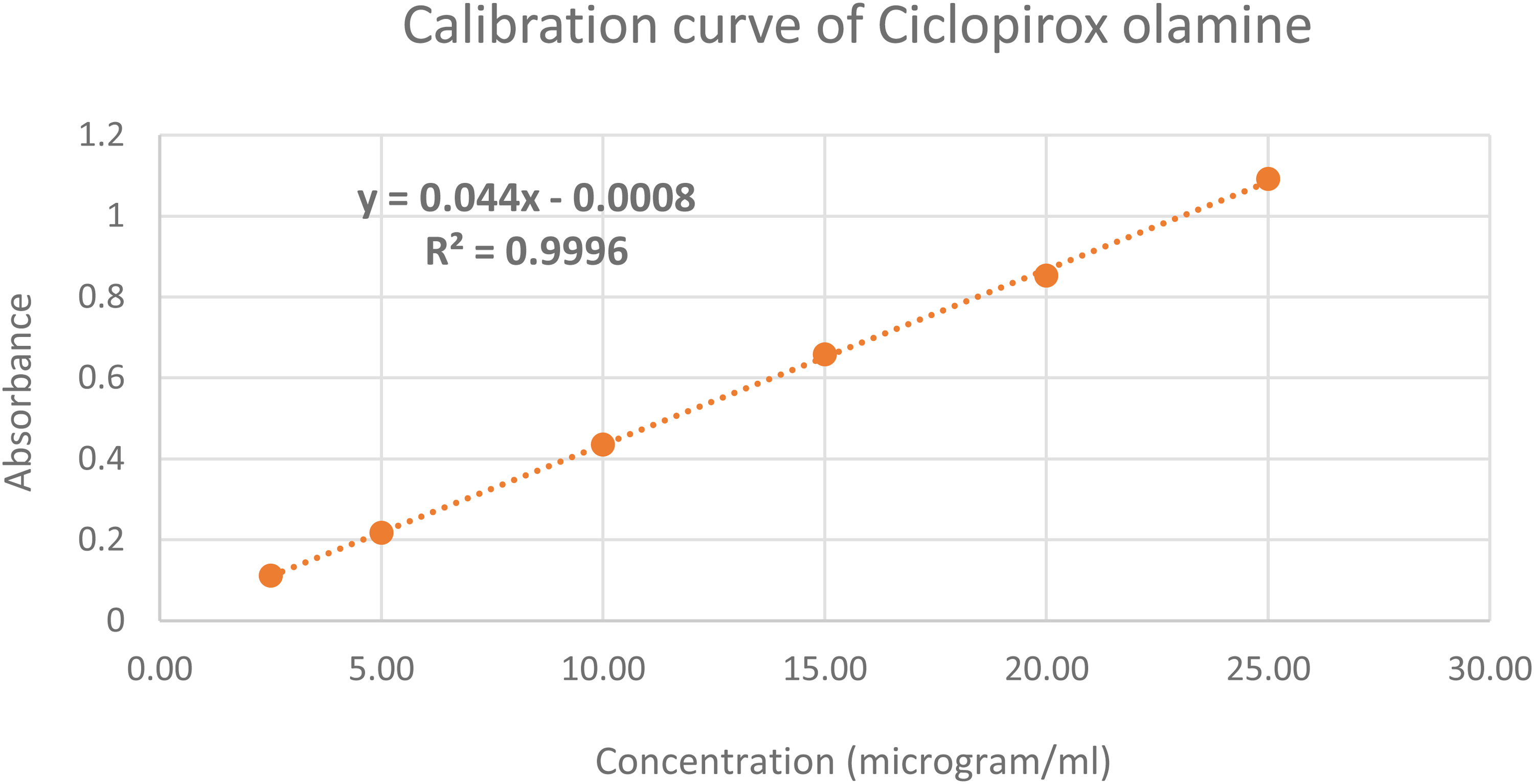
Calibration curve of ciclopirox olamine.
Linearity, range, E1%1CM, absorptivity (L gm-1 cm-1), & molar absorptivity (L mol-1 cm-1).
Λ max determination
Maximum absorbance observed at 302 nm (Table 2)
Validation parameters (ICH Q2(R2)).

Spectrum recorded in the range of 200–400 nm
Sample preparation details
Stock solution: Prepared by dissolving accurately weighed Ciclopirox Olamine in suitable solvent (Ethanol: water)
Working solutions: Prepared by serial dilution to obtain required concentrations
Analysis of ethosomal gel
Sample extracted using suitable solvent
Filtered and diluted appropriately
Analysed at λmax = 302 nm
Statistical analysis
Mean, standard deviation (SD), and %RSD calculated for all validation parameters
All results were within acceptable ICH limits.
Ultraviolet–Visible (UV–Visible) spectroscopy is one of the most widely used analytical techniques in pharmaceutical research, universities, industries, and quality control laboratories. This technique offers high sensitivity, accuracy, precision, and reproducibility, providing a robust platform for drug discovery, development, and routine quality assurance.
This short communication presents a comprehensive overview of UV–Visible spectroscopy, method development strategies, and validation parameters in accordance with International Council for Harmonisation (ICH) guidelines Q2(R2) for the determination of Ciclopirox Olamine in both active pharmaceutical ingredient (API) and ethosomal gel formulations.
The UV spectroscopic method developed for Ciclopirox Olamine showed maximum absorbance (λ max) at a wavelength of 302 nm. The drug exhibited good linearity in the concentration range of 2.5–25 µg/mL, with a correlation coefficient (R2) of 0.9996. The method was found to be specific, as no interference from excipients was observed.
Precision studies, including repeatability, inter-day precision, intra-day precision, specificity, and accuracy, showed %RSD values of 0.98, 1.55, 1.448, 0.032, and 0.27, respectively. All values were within the acceptable limit (%RSD < 2%).
The proposed analytical method is suitable for the analysis of Ciclopirox Olamine in both API and ethosomal dosage forms. This article aims to serve as a useful reference for researchers, academicians, and quality control analysts involved in pharmaceutical analysis.
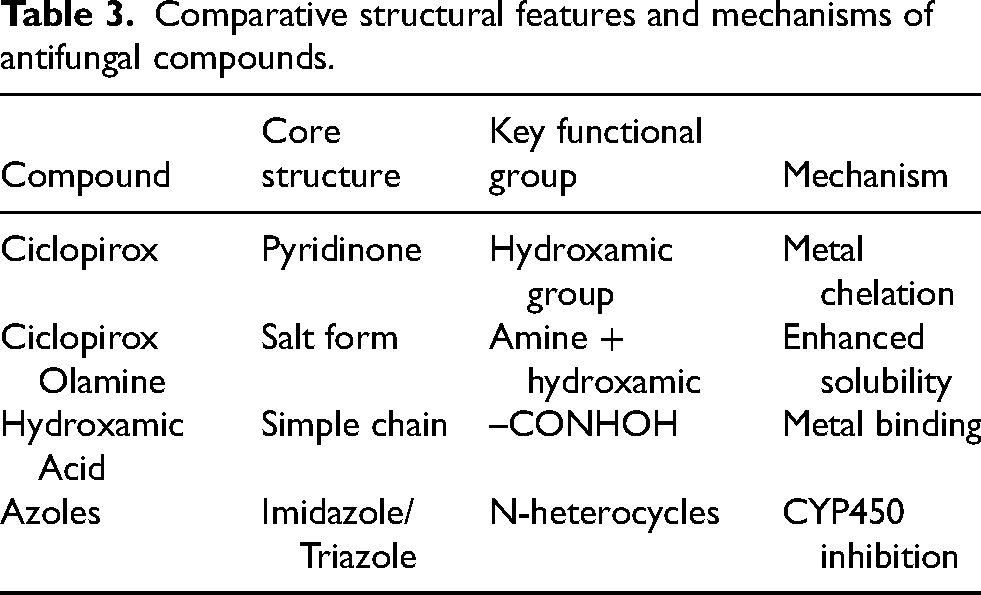
UV–Visible spectroscopy is widely used in pharmaceutical analysis due to its rapid analysis, cost-effectiveness, minimal solvent consumption, and non-destructive nature (Table 3).
Comparative structural features and mechanisms of antifungal compounds.
All experimental data were expressed as mean ± standard deviation (SD). The % relative standard deviation (%RSD) was calculated to assess precision. The acceptance criterion for validation parameters was set as %RSD < 2%, in accordance with ICH guidelines.
Validation of the method for estimation of ciclopirox olamine according to I.C.H. guideline (Q2R2)
Repeatability
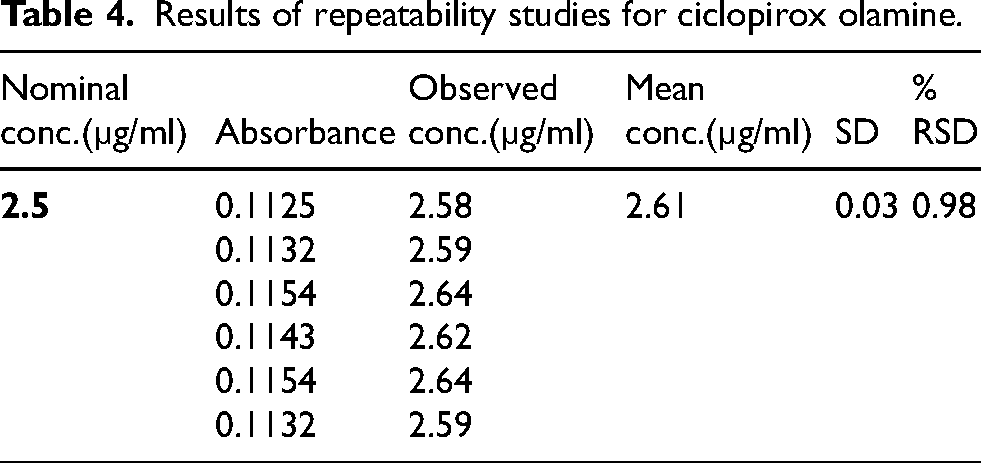
0.5 ml of the standard stock solution were pipette out and transferred into a series of six 10 ml volumetric flask. The volumes were made up to the mark with solvent (ethanol and water) and mixed to obtain solutions concentration 2.5 μg/ml. The absorbance of this solution was measured six times and recorded at 302 nm. The results are shows in table
NOTE: Keeping the concentration of the drug same, procedure was repeated for 6times. The calculated %RSD for repeatability study is 0.98 which is acceptable; this shows good repeatability of method in below table 4.
Results of repeatability studies for ciclopirox olamine.
Inter-Day precision
3 ml of the standard stock solution was taken in 10 ml volumetric flasks and volume was made up to the mark with solvent system to obtain solution of concentration 15 µg/ml. The absorbance of nine solutions individually was measured thrice different days and recorded. The result are shows in the table 5.
Results of inter-day precision.

The reading was taken in triplicate for each concentration at 0hr, 24hr,48 h in three different days. The calculated mean RSD was 1.55.
Intra-Day precision
3 ml of the standard stock solution was taken in 10 ml volumetric flasks and volume was made up to the mark with solvent system to obtain solution of concentration 15 µg/ml. The absorbance of these nine solutions was measured thrice within a day and recorded. The result are shows in the table 6.
Results of intra-day precision.

The reading was taken in triplicate for each concentration at 0hr, 3hr,6hr. within a day. The calculated mean RSD was 1.448.
Specificity
A volume of 3 mL of the standard stock solution was transferred into 10 mL volumetric flasks, and the volume was made up to the mark with the ethanol–water solvent system to obtain solutions of 15 μg/mL concentration, prepared both with and without excipients. In total, twelve solutions were prepared under these conditions. The absorbance of each solution was measured at 302 nm using a UV–Visible spectrophotometer, and the results are presented in Table 7.
Results of specificity study.
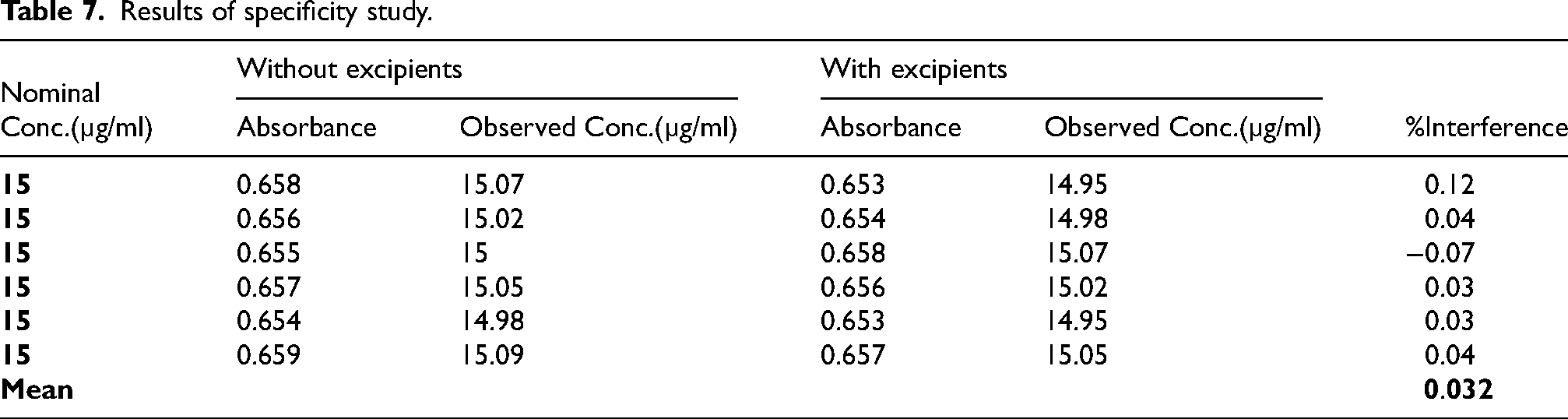
It can be concluded from the result that developed method is specific and there is no interference of excipients, since the %interference was negligible (0.032).
Accuracy studies
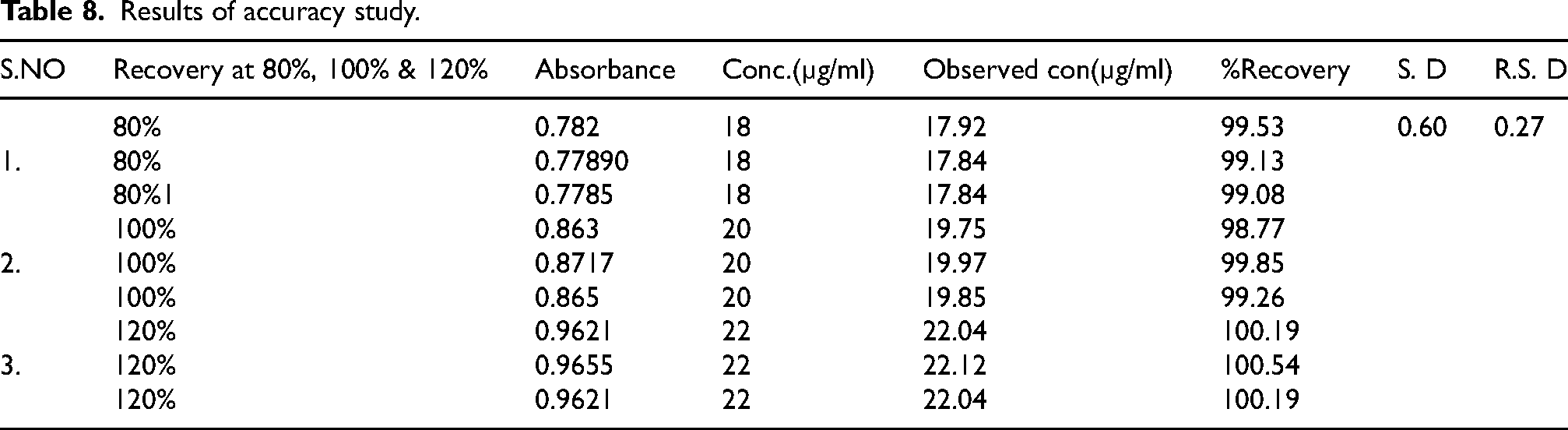
Pipette out 2 ml standard solution of API and 1.6 ml of standard solution of formulation and transfer into three 10 ml volumetric flasks respectively. Again 2 ml of standard solution of API and 2 ml of standard solution of formulation and transfer into three 10 ml volumetric flasks respectively. Again 2 ml of standard solution of API and 2.2 ml of standard solution of formulation and transfer into three 10 ml volumetric flasks respectively.
Absorbance of the resultant solutions was measured at 302 nm using ethanol and water as blank. The result obtained is summarized in the table 8 below.
Results of accuracy study.
Percentage assay of ciclopirox olamine ethosomal gel (0.77/100gm)
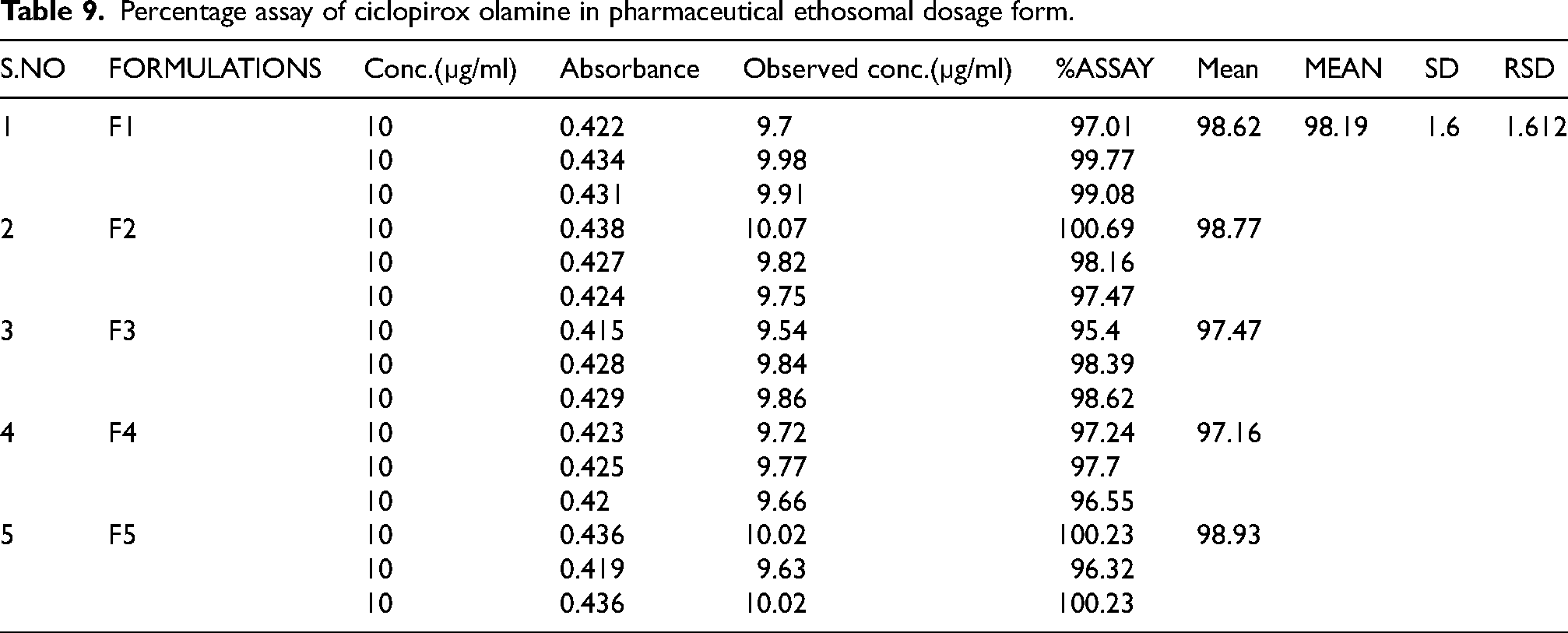
An accurately weighed quantity of ethosomal gel equivalent to 7.7 mg of Ciclopirox Olamine was transferred into a 100 mL volumetric flask, and the volume was made up to the mark with the ethanol–water solvent system. The solution was shaken thoroughly and sonicated for 5 min to ensure complete dispersion, followed by filtration. From the filtrate, 2 mL was transferred into each of three separate 10 mL volumetric flasks, and the volume in each flask was made up to the mark with the same solvent system. This procedure was repeated for five formulations, and the absorbance of the resulting solutions was measured at 302 nm using a UV–Visible spectrophotometer. The result was shown in table 9 and Overlay Spectra Graph of Validation Methods Figure 5)
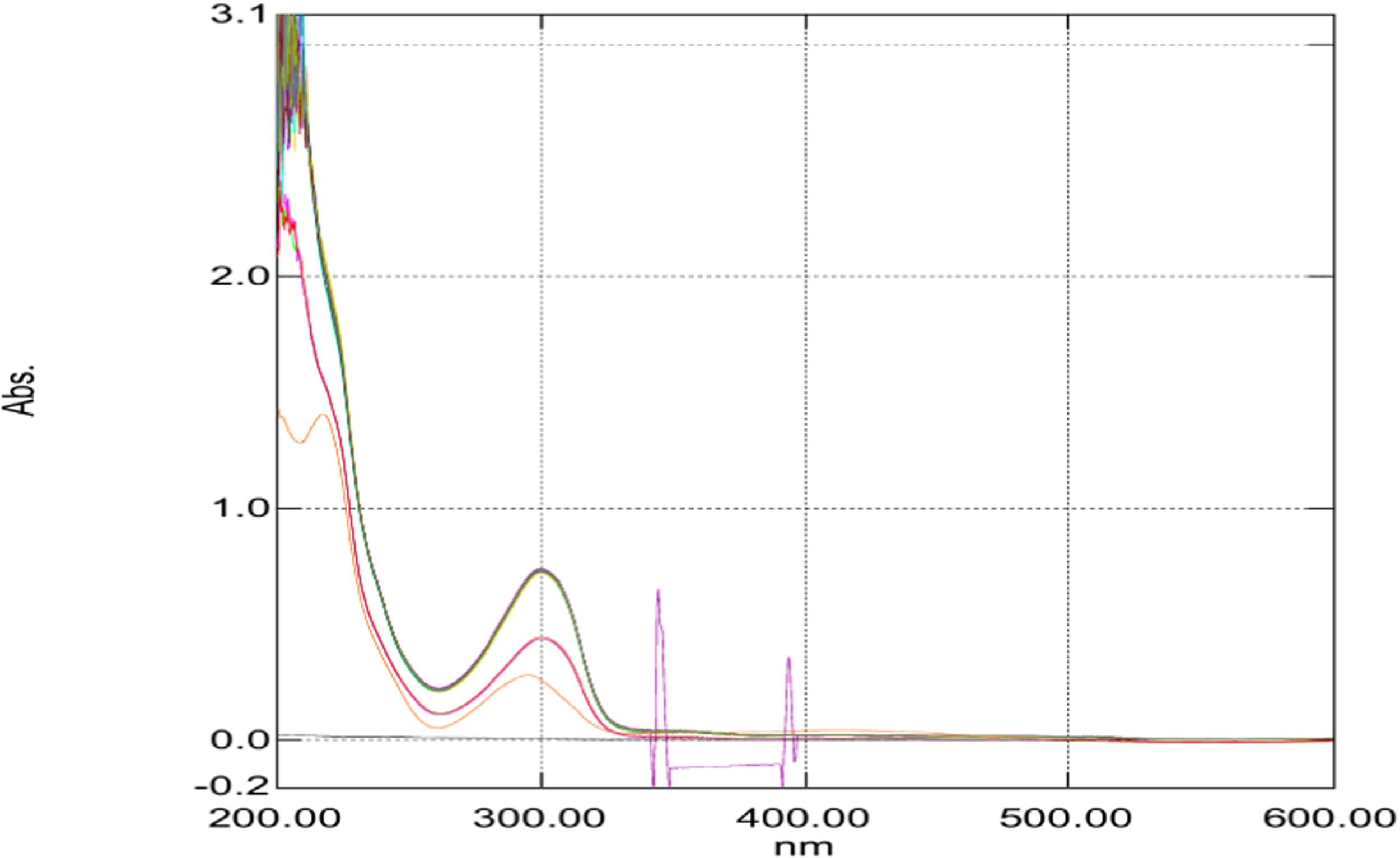
Overlay Spectra graph of validation methods.
Percentage assay of ciclopirox olamine in pharmaceutical ethosomal dosage form.
Result
The wavelength maximum of Ciclopirox Olamine was determined to be 302 nm in the ethanol–water solvent system. The drug exhibited excellent linearity across the investigational concentration range of 2.5–25 μg/mL, with a correlation coefficient of 0.9996. The calibration equation was obtained as y = 0.044x – 0.0008. Compliance with Beer–Lambert's law was confirmed in the range of 5–25 μg/mL.
The absorptivity and molar absorptivity of Ciclopirox Olamine were calculated as 43.65 L·mol⁻1·cm⁻1 and 11,713.33 μg/cm2/0.001, respectively. The relative standard deviation (RSD) for the repeatability study was 0.98, which is within acceptable limits, indicating good repeatability of the method. The mean RSD values for inter-day precision and intra-day precision were 1.55 and 1.448, respectively, both meeting the acceptable criterion of RSD < 2%.
The method demonstrated high specificity, with negligible interference from excipients (% interference = 0.032). The accuracy was confirmed with an RSD of 0.27%, well below the 2% threshold. The assay of Ciclopirox Olamine in pharmaceutical dosage form yielded a mean value of 98.19%, with an RSD of 1.612, confirming the reliability and robustness of the developed spectroscopic method.
Statistical analysis
All experimental data were expressed as mean ± standard deviation (SD). The % relative standard deviation (%RSD) was calculated to assess precision. The acceptance criterion for validation parameters was set as %RSD < 2%, in accordance with ICH guidelines.
Discussion
A novel, modest, and delicate spectroscopic method was developed for the quantitative estimation of Ciclopirox Olamine in both pure form and ethosomal gel dosage, using for the first time a solvent system composed of ethanol and water. Ciclopirox Olamine exhibited a wavelength maximum at 302 nm in this solvent system. The developed method demonstrated excellent linearity across the concentration range of 2.5–25 μg/mL, with a correlation coefficient of 0.9996. The regression equation was determined as Y = 0.044x + 0.0008.
This technique, established for the first time in the ethanol–water solvent system, provided precise results. The relative standard deviation (RSD) was consistently below 2% for repeatability, inter-day precision, intra-day precision, specificity, and accuracy. No significant interference was observed in the absorbance of Ciclopirox Olamine in the presence of common excipients. The method was statistically validated in accordance with ICH Guidelines (Q2R2).
Furthermore, the technique was successfully applied for the quantitative determination of Ciclopirox Olamine in ethosomal gel dosage forms. In conclusion, the developed spectroscopic method is simple, specific, reproducible, and reliable, making it suitable for routine analysis of Ciclopirox Olamine in bulk drug and novel ethosomal gel formulations using the newly established ethanol–water solvent system.12–15
Footnotes

Funding
The authors received no financial support for the research, authorship, and/or publication of this article.
Declaration of conflicting interests
The authors declared no potential conflicts of interest with respect to the research, authorship, and/or publication of this article.