




Abstract
The photodynamic antimicrobial chemotherapy activity (PACT) properties of 3-pyridyl substituted tetraarylchlorin (
Introduction
Photodynamic antimicrobial chemotherapy (PACT) has emerged as an alternative approach for treating bacteria that have developed resistance to antibiotics.1–3 A photosensitizer (PS) dye is photoexcited with incident light of an appropriate wavelength to produce cytotoxic reactive oxygen species (ROS), which induce cell death. After photoexcitation and intersystem crossing to the triplet manifold, the T1 state of a photosensitizer dye reacts with oxygen molecules to form 1O2, via the Type II energy transfer reaction, or to form other ROS via the Type I electron transfer mechanism.4,5 In this study, tetra-3-pyridylchlorin (

Structures of
A key advantage of introducing pyridyl rings is that the nitrogen atom can be quaternized to form a water-soluble tetracationic species (
Experimental section
Materials
All chemicals used in this study were purchased from commercial sources and were used as received unless otherwise stated. Pyridine, p-toluenesulfonyl hydrazide (p-TsNHNH2), 3-pyridinecarboxaldehyde, 2,3-dichloro-5,6-dicyano-1,4-benzoquinone (DDQ), tin(II) chloride dihydrate, pyrrole, propanoic acid, 9,10-dimethylanthracene (DMA), and 5,10,15,20-tetraphenylporphyrinato zinc(II) (ZnTPP) were purchased from Sigma Aldrich. Reagent grade chloroform, dichloromethane (DCM), dimethylformamide (DMF), methanol (MeOH), spectroscopic grade dimethyl sulfoxide (DMSO), diethyl ether, iodomethane, deuterated dimethyl sulfoxide (DMSO-d6), hexane, and deuterated chloroform (CDCl3) were obtained from Merck. Aluminum oxide neutral was purchased for column chromatography from Merck.
Phosphate-buffered saline (PBS) solution pH 7.4 was prepared using appropriate amounts of NaCl, KCl, Na2HPO4, and KH2PO4 in ultra-pure water obtained from an Elga Purelab Chorus 2 (RO/DI) system. Agar bacteriological BBL Mueller Hinton broth (HG000C24.500) and nutrient agar (HG0000C1.500) were purchased from Merck. S. aureus and E. coli were purchased from Davies Diagnostics and Microbiologics, respectively. Ultra-pure water was always obtained from an Elga Purelab Chorus 2 (RO/DI) system in all contexts.
Synthesis
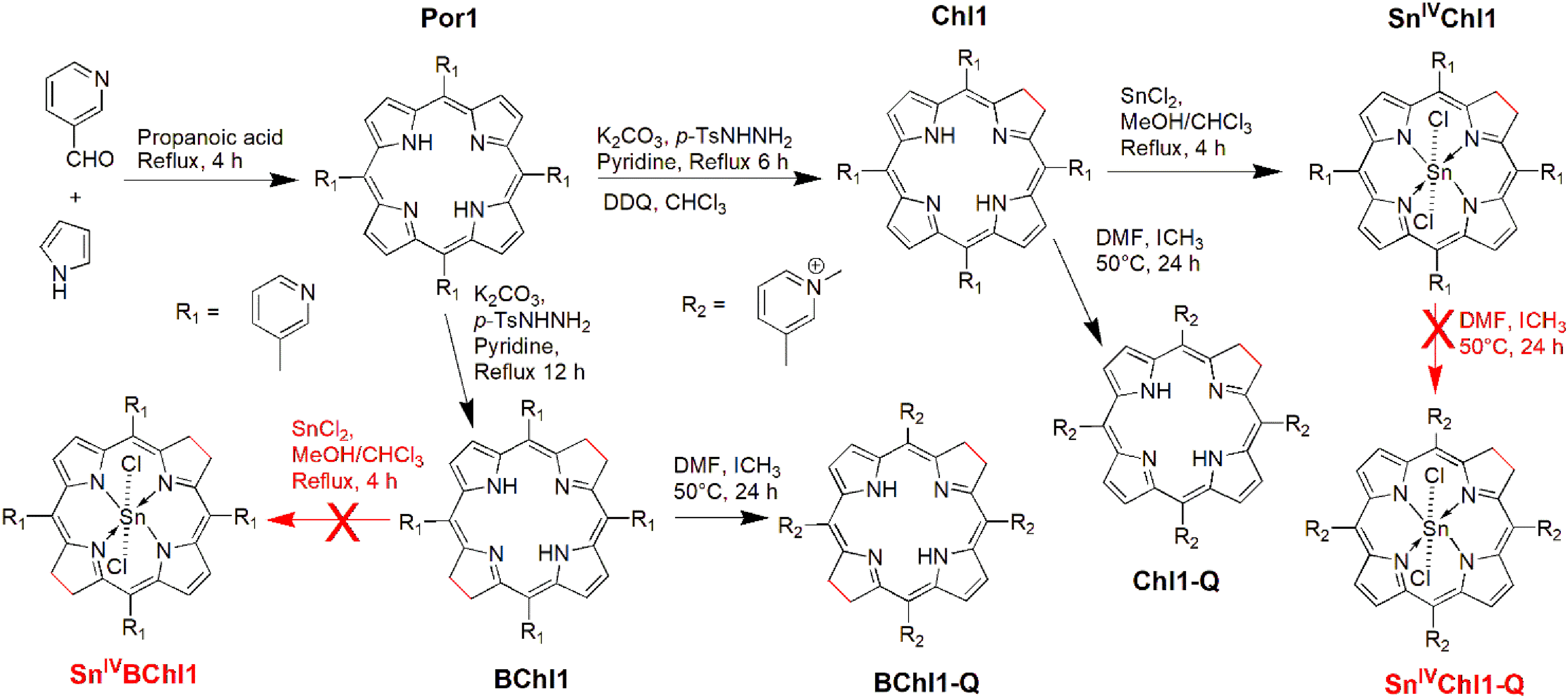
Synthesis of
Quaternized chlorin
Attempts were made to quaternize this complex to form a quaternized species of
The crude
Instrumentation
Ground state UV-visible absorption spectra were collected on a Shimadzu UV-2550 spectrophotometer or an EvolutionTM 350-UV-vis spectrophotometer from Thermo Fischer ScientificTM. Mass spectra were obtained using a Bruker Auto-FLEX III Smartbeam MALDI-TOF mass spectrometer using α-cyano-4-hydroxycinnamic acid as a matrix in either negative or positive ion mode with an m/z range of 400−1500 amu. A Varian Eclipse spectrofluorimeter was used for fluorescence quantum yield studies. Excitation was carried out in the B-band region for both chlorins and bacteriochlorins. Bruker AMX 400 MHz and 80 MHz benchtop NMR spectrometers were used to obtain 1H NMR data. The spectra were obtained at ambient temperature using deuterated solvents.
Singlet oxygen quantum yield studies were carried out using an Ekspla NT 342B-20-AW laser with an Nd:YAG that pumps a 420−2300 nm optical parametric oscillator (OPO) (355 nm, 2.0 mJ/7 ns, 20 Hz) to provide monochromatic light at a crossover wavelength for the standard and sample solutions to ensure that the optical density is the same for both solutions. A Thermo Scientific Evolution 350 spectrometer was used to monitor the degradation of the singlet oxygen quencher (DMA) at regular time intervals, enabling slope values for −ln(A/A0) versus time to be determined. The triplet-state lifetimes spectra were recorded in DMSO at 470 nm using an Edinburgh Instruments LP980 spectrometer and an Ekspla NT-342B laser equipped with an OPO to provide an excitation wavelength of 430 nm (2.0 mJ excitation energy, 7 ns pulse duration, and a 20 Hz repetition rate). The solutions were degassed with nitrogen for 20 min prior to the measurements, and absorbance was maintained at ca. 1.5 for the B band. Exponential curve fitting of the decay curve using OriginPro 8 software provided the triplet lifetimes.
PACT activity studies
Gram-(+) S. aureus (ATCC® 25923TM) and Gram-(–) E. coli (ATCC® 25922TM) strains were used for the PACT studies. Both bacteria were grown on agar plates according to the manufacturer's guidelines to obtain the respective bacterial colonies. Single colonies were inoculated into freshly prepared Luria nutrient broth; the resulting cultures were swirled and placed in a shaking incubator (37°C, 200 rpm) for 18 h and 6 days for S. aureus and E. coli, respectively. An aliquot of the culture was transferred into freshly prepared broth (4 mL) and further incubated at 37°C. The optical density of the bacterial culture was taken regularly to ensure mid-logarithmic growth (OD 600 nm ∼ 0.6−0.7), and the broth culture was removed by centrifugation at 3000 rpm for 15 min. The independent bacterial pellets of S. aureus and E. coli were washed three times with PBS to remove residual nutrient broth. After resuspension in 4 mL PBS, they were diluted to 1:1000 (v/v) with PBS to afford the working stock solutions. A Ledetect 96 microplate reader was used to measure the optical density of bacteria in the 96-well plate used during the PACT activity studies.
The PACT studies were carried out using the previously reported viable count method.
22
The compounds studied are
Photostability experiments
Photostability studies were performed in quartz cuvettes (1 × 1 cm). The solutions were irradiated for 30 min at regular time intervals (6−30 min) using a Thorlabs M730L3 (1.0 mW.cm−2) LED for
Results and discussion
Synthesis
UV-visible absorption spectra
The reduction of a peripheral pyrrole bond of the porphyrin ligand to form a chlorin results in significant changes in the UV-visible absorption spectra, since the lower symmetry lifts the degeneracy of the eg* LUMO, resulting in a mixing of the allowed and forbidden properties of the B and Q bands.
9
For this reason, free base Chls can be readily identified spectroscopically by their intense Q band between 650−670 nm in the red region of the visible.6–11 They also have an intense B band in the blue region of the spectrum (ca. 420 nm). This holds for
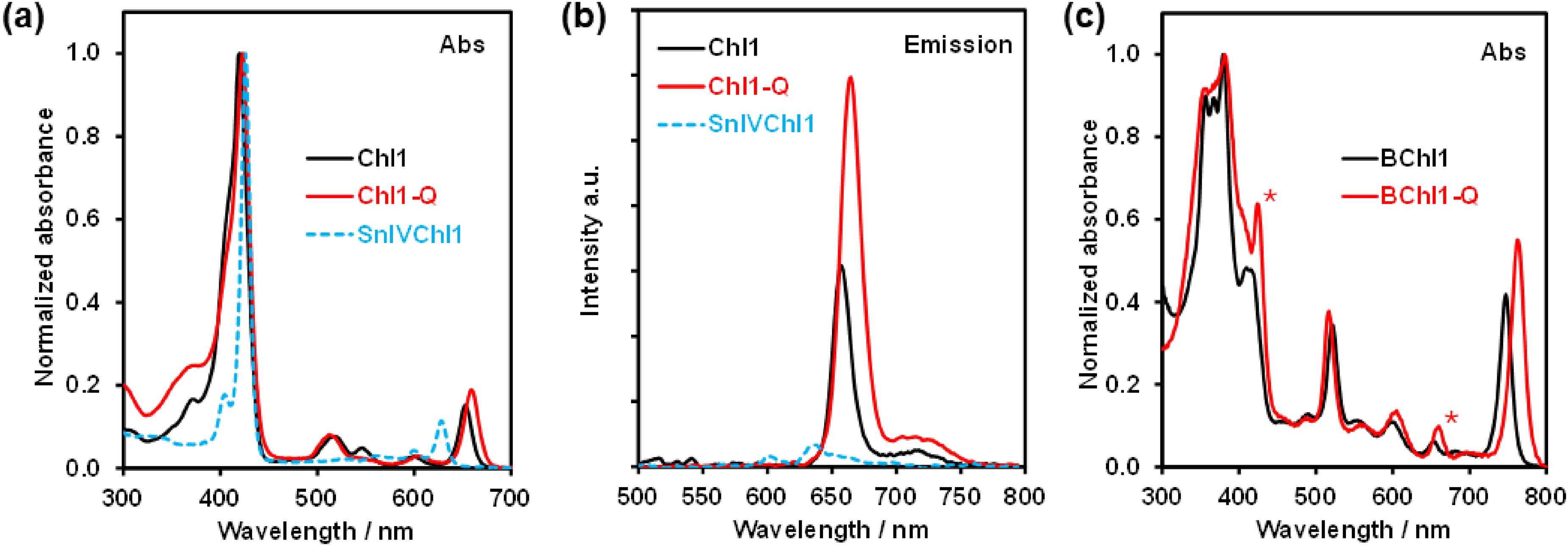
(a) normalized UV-visible absorption spectra of
Absorption and emission data for
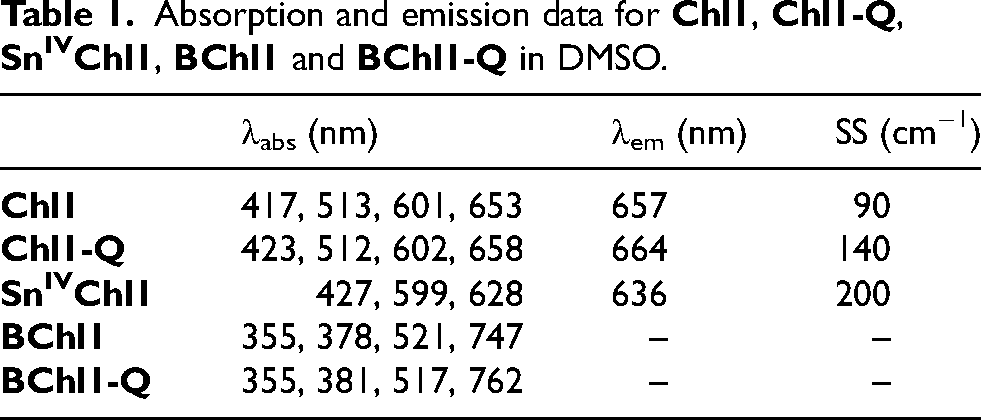
Bacteriochlorins,12,23–25 which have two oppositely arranged reduced peripheral pyrrole bonds, have an even more intense Q band maximum in the red region of the spectrum in the 730−770 nm region. The Q band for
Fluorescence spectroscopy
The fluorescence excitation and emission spectra of the chlorins are shown in Figure 3 and Table 1. No emission was observed for the BChls. The emission spectra of the Chls exhibit a single band maximum when excited at the Soret band. The fluorescence emission maximum for
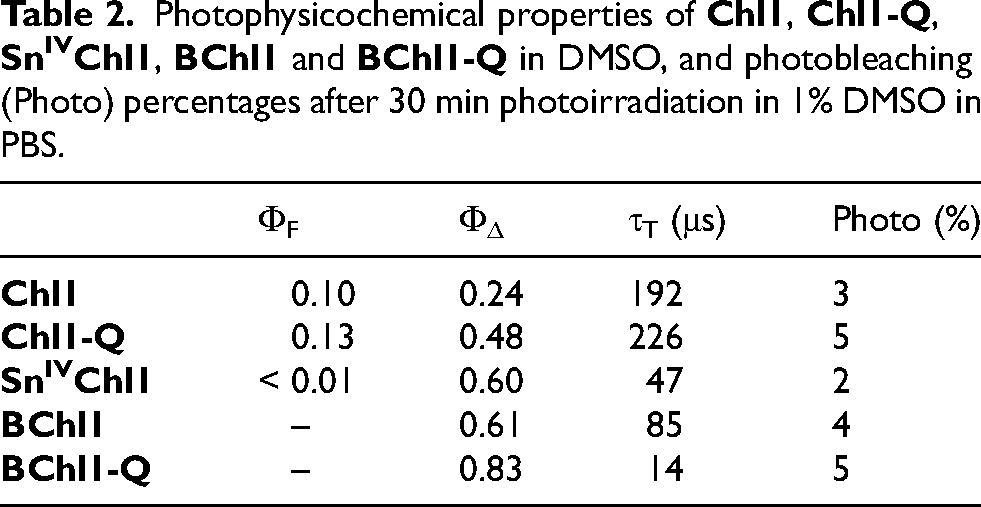
Photophysicochemical properties of
Singlet oxygen quantum yields
The effectiveness of a PS drug for use in PACT depends on its ability to generate sufficient singlet oxygen. Hence, oxygen photosensitization studies were conducted, since this cytotoxic agent triggers biological pathways that inactivate bacteria.31–33 Singlet oxygen quantum yield studies were conducted in DMSO using DMA as a singlet oxygen scavenger for both Chls and BChls. A comparative method against a known standard was used. ZnTPP (ΦΔ = 0.53
34
) was used as the standard. The degradation of the singlet oxygen scavenger band was observed at 10 s intervals for 60 s, as shown in Figure 4, using
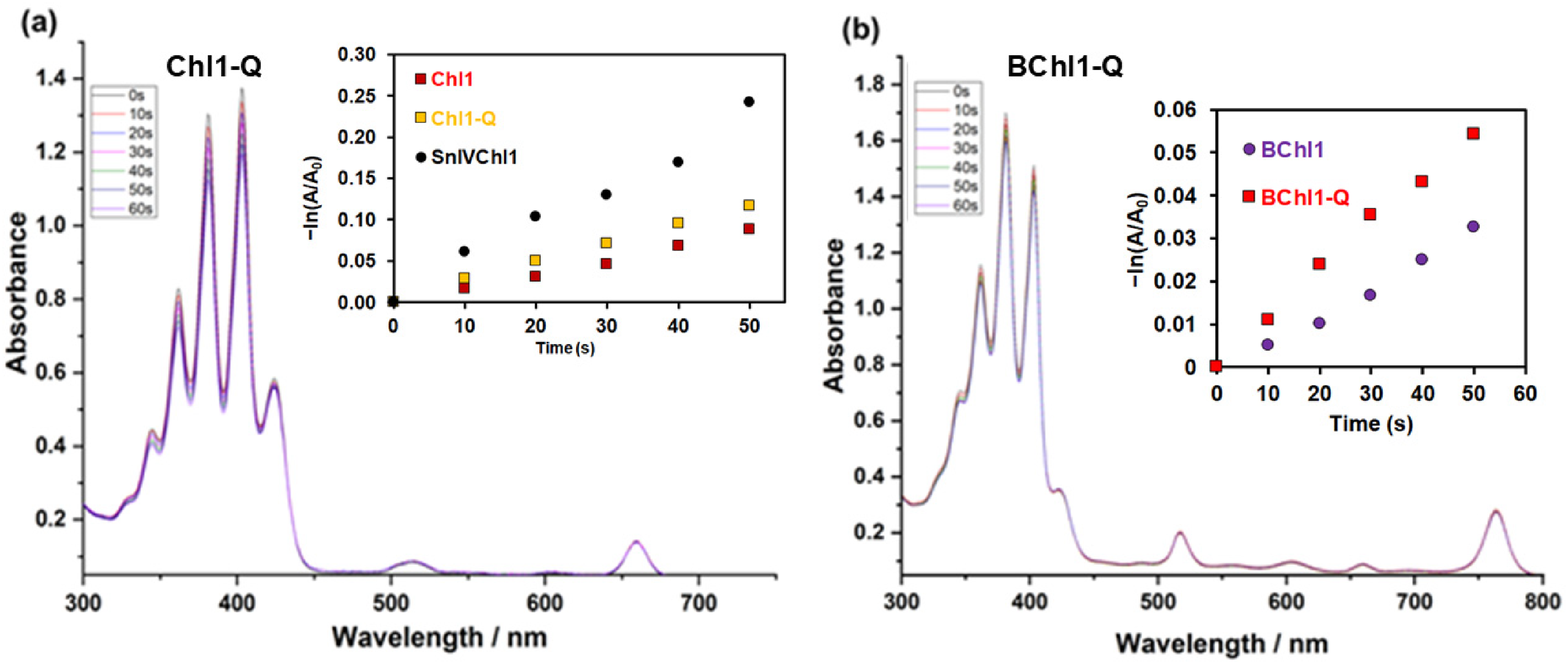
Degradation of DMA in the presence of (a)
As expected, Sn(IV) complex
Photostability
A photosensitizer dye with favorable properties should also exhibit high photostability, with little or no photobleaching, since this reduces photosensitizer concentration and can generate problematic photodegradation products. When singlet oxygen is formed, photosensitizer dyes are known to degrade upon photoexcitation, so it is crucial to assess the degree of photodegradation that occurs under the conditions used for the PACT activity experiments. The photostability properties were studied using a Thorlabs M730L3 (1.0 mW.cm−2) LED for
Photoirradiation was conducted for 30 min in PBS under the same conditions used for the PACT activity studies. The dyes were solubilized with 1% DMSO, since
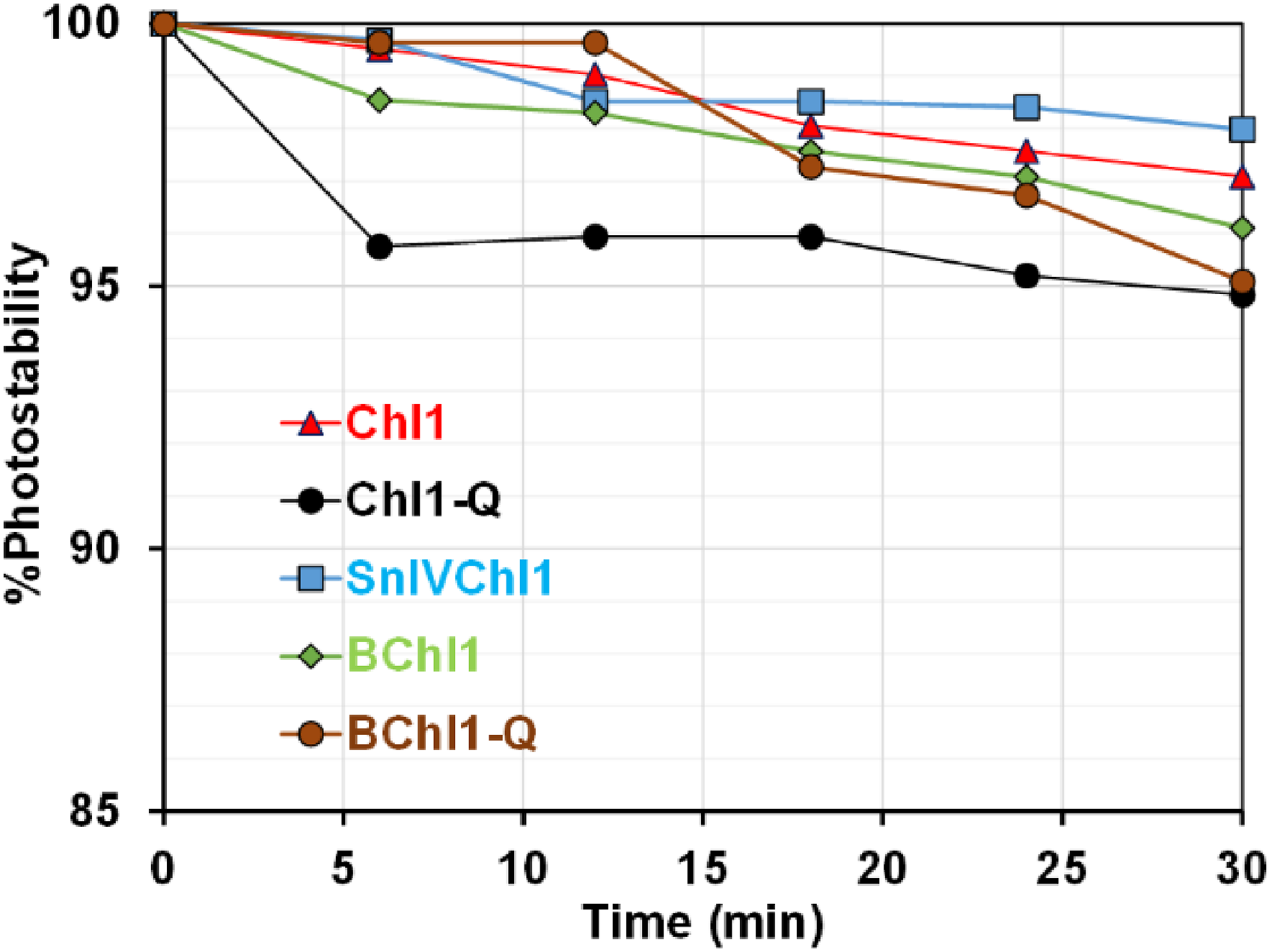
Percentage photostability of
Triplet lifetimes
Flash photolysis experiments were carried out for

Triplet state absorption decay curve of
PACT activity studies
Optimization studies of the photosensitizer concentration were conducted against S. aureus and E. coli over 60 min irradiation times (Figures 7 and 8). A control experiment was also performed to demonstrate that the presence of 1% DMSO does not affect the bacterial cells. The concentration studies were performed for
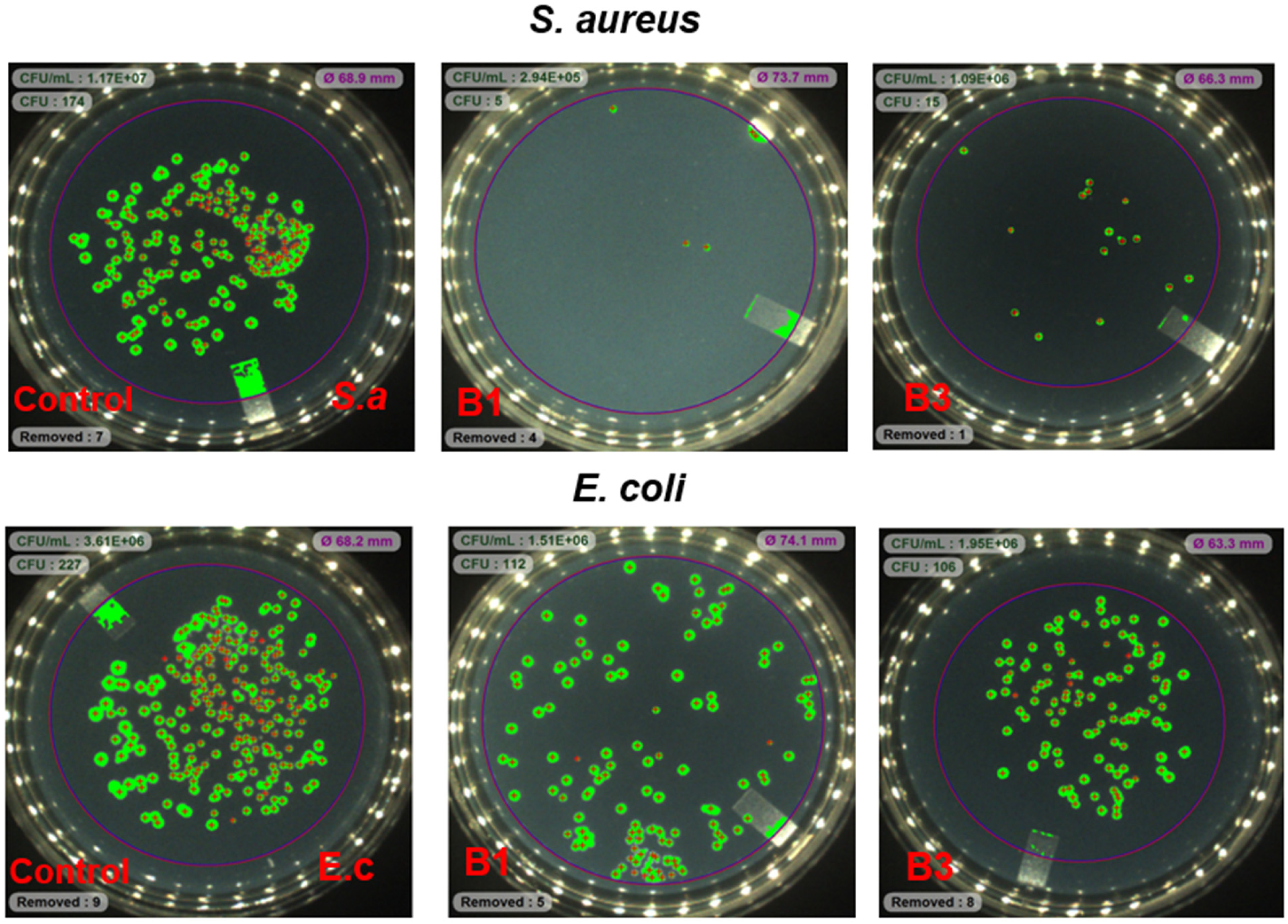
Images of the S. aureus and E. coli colonies for

PACT activity studies for the Chl and BChl PS dyes against S. aureus and E. coli in both the absence (dark) and presence (light) of photoirradiation with Thorlabs M625L3 (1.4 mW.cm−2), M660L3 (1.7 mW.cm−2) and M730L3 (1.0 mW.cm−2) LEDs for 60 min in 15 min intervals.
Log10 reduction values in the dark and during the PACT activity studies with
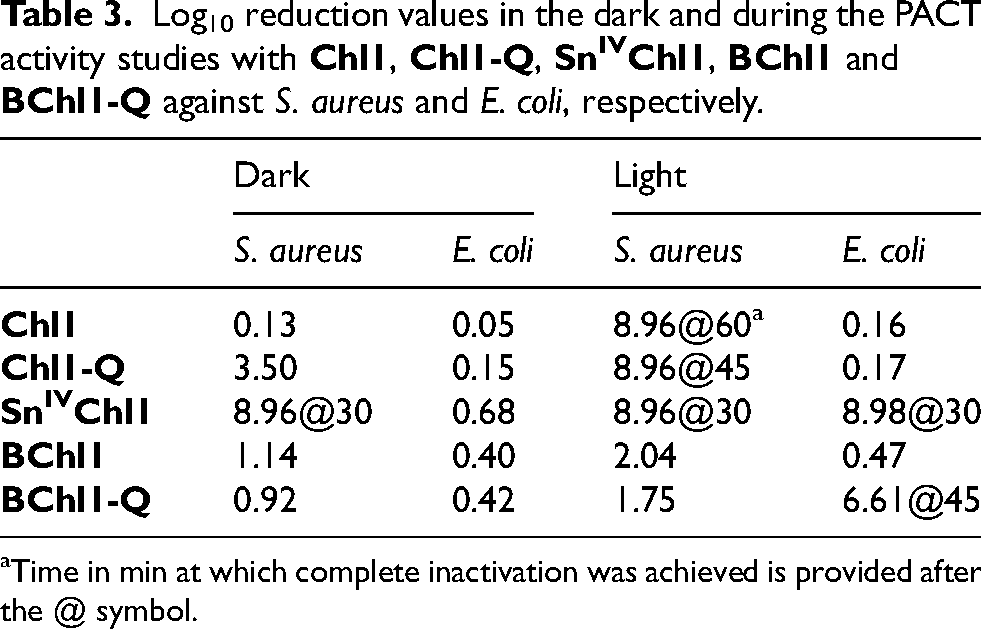
Time in min at which complete inactivation was achieved is provided after the @ symbol.
The Log10 reduction values can be used to quantify the results (Figure 8 and Table 3). According to Food and Drug Administration (FDA) standards, a PS dye should have a Log10 reduction > 3 to be considered an antibacterial agent.36–38
Conclusion
Tetra-3-pyridyl-substituted chlorin dyes
Footnotes
Acknowledgements
Laser-related equipment and maintenance were provided by the Laser Rental Pool Programme of the Council for Scientific and Industrial Research (CSIR) of South Africa. The CSIR's Centre for High-Performance Computing (CHPC) in Cape Town was used as a platform to perform theoretical calculations with the Gaussian software package.

Funding
The authors disclosed receipt of the following financial support for the research, authorship, and/or publication of this article: This work was supported by the South African National Research Foundation (NRF), with grants to TN (uid: 62620) and JM (uid: 119259, and FLA23042898769) and by the Technology Innovation Agency (TIA) of South Africa through DSTI-TIA Nano. Research reported in this publication was supported by the South African Medical Research Council with funds received from the South African National Department of Health and the UKRI Medical Research Council, with funds received from the UK Government's International Science Partnerships Fund.
Declaration of conflicting interests
The authors declared no potential conflicts of interest with respect to the research, authorship, and/or publication of this article.
Data availability
Data sets are available on request.