



Abstract
A new pyridopyrimidine-substituted zinc(II) phthalocyanine (ZnPc) was synthesized using a vinamidinium-based strategy through the preparation of a substituted phthalonitrile precursor followed by cyclotetramerization. This method provides access to phthalocyanine systems bearing heterocyclic peripheral substituents and allows further modification of ZnPc structures. The synthesized ZnPc was characterized by UV–Vis, FT–IR, and NMR spectroscopy, and its aggregation behavior was studied in different organic solvents. The compound showed solvent-dependent aggregation, suggesting that the peripheral pyridopyrimidine groups affect intermolecular interactions within the phthalocyanine system. Antimicrobial studies showed enhanced antibacterial activity under red-light irradiation compared with the unsubstituted analogue ZnPcH, together with concentration-dependent antifungal activity against Candida albicans, Candida glabrata, and Candida krusei. The results indicate that vinamidinium-derived heterocyclic substituents may be useful for the design of ZnPc derivatives with tunable aggregation behavior and antimicrobial photodynamic activity.
This is a visual representation of the abstract.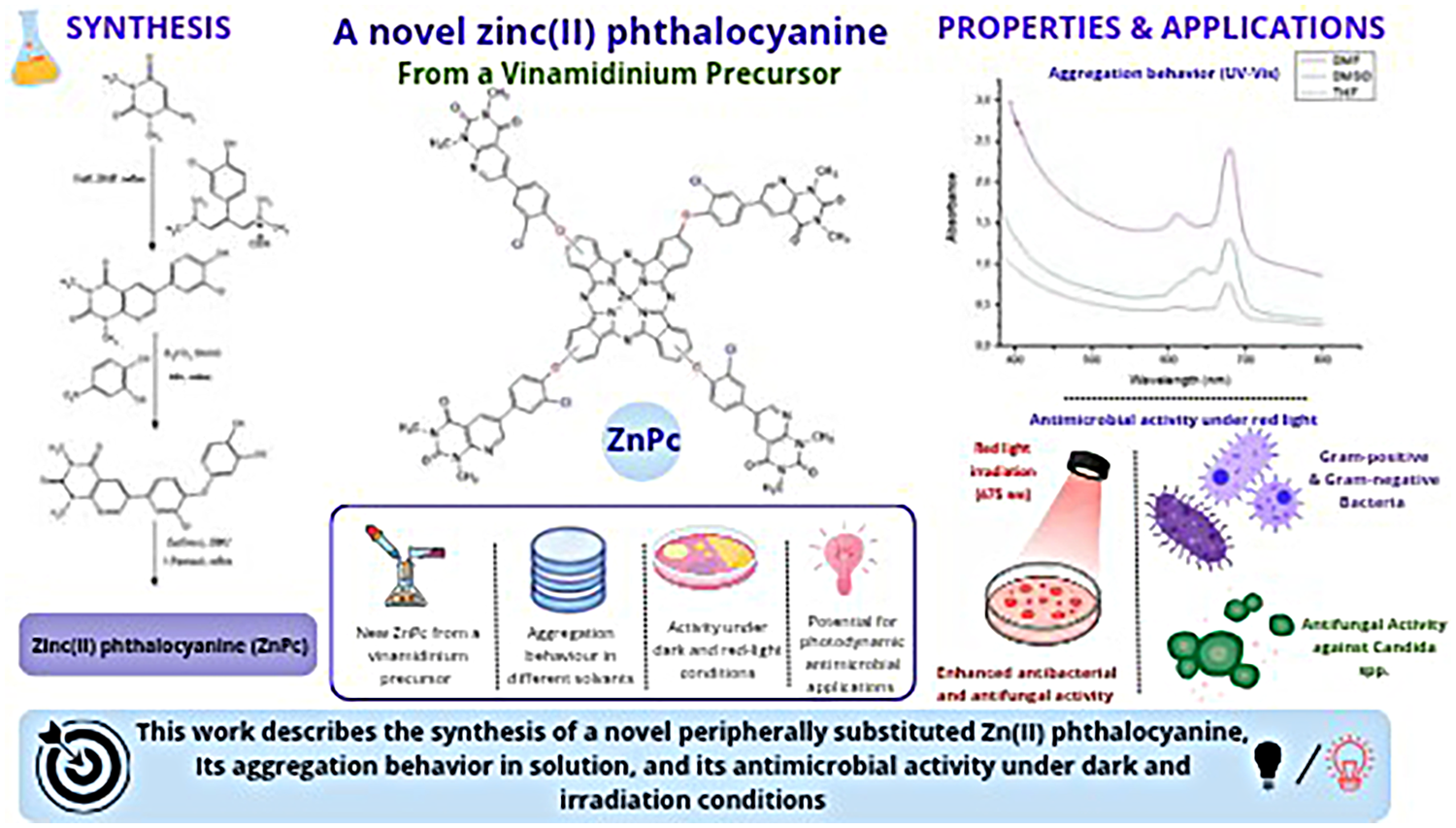
Introduction
Phthalocyanines, known as tetrabenzo [5,10,15,20] tetraazaporphyrins, are aromatic macrocycles possessing an 18 π-electron conjugated system and structural similarities to naturally occurring porphyrins. Due to their remarkable physical and chemical properties, these compounds have attracted considerable interest over the years.1,2 Initially used as green-blue dyes in inks, plastics, metal coatings, and textiles, 3 phthalocyanines have progressively found applications in semiconductors, 4 liquid crystals, 5 photovoltaic devices, 6 chemical sensors, 7 photodynamic therapy (PDT),8,9 and various pharmacological fields.10,11
In the present work, we describe the synthesis of a new peripherally tetrasubstituted symmetric zinc(II) phthalocyanine using a vinamidinium salt derived from an uracil scaffold. 12 Vinamidinium derivatives are well known in both organic 13 and biological chemistry 14 because of their high synthetic versatility and their wide range of reported biological activities, including antibacterial, 15 antitumoral, 16 vasodilator, 17 cardiotonic, 18 and hepatoprotective properties. 19 The use of such intermediates for phthalocyanine functionalization provides an efficient route to heterocyclic ZnPc systems bearing controlled peripheral substituents that may influence both aggregation behavior and biological properties.
The synthesized ZnPc was characterized by UV–Vis, FT–IR, and NMR spectroscopy. Its aggregation behavior was investigated in different organic solvents, and its antimicrobial activity was evaluated against Gram-positive and Gram-negative bacteria as well as Candida species. The present study highlights the potential of vinamidinium-derived heterocyclic substituents for the preparation of functionalized ZnPc systems combining tunable intermolecular organization with promising antimicrobial photodynamic properties.
Materials and methods
Dimethyl sulfoxide (DMSO), N,N-dimethylformamide (DMF), tetrahydrofuran (THF), dichloromethane (DCM), chloroform (CHCl3), methanol (MeOH), ethanol (EtOH), acetone, phosphoryl chloride (POCl3), n-hexane, 1-pentanol, 1,8-diazabicyclo[5.4.0]undec-7-ene (DBU), sodium hydride (NaH), 6-amino-1,3-dimethyluracil, ammonium chloride (NH4Cl), potassium carbonate (K2CO3), and zinc acetate (Zn(OAc)2) were purchased from Aldrich Chemicals and Fisher Scientific and used as received unless otherwise stated. Most solvents were dried over 4 Å molecular sieves prior to use.
4-Nitrophthalonitrile was synthesized in our laboratory from phthalimide according to a previously reported procedure. 20 All reactions were carried out under a dry nitrogen atmosphere.
NMR spectra were recorded on a Bruker 300 MHz spectrometer. FT–IR spectra were obtained using a Perkin–Elmer BX FT–IR spectrometer with samples dispersed in KBr pellets. UV–Vis absorption spectra were recorded on a Cary 2300 spectrophotometer. Melting points were measured using an Electrothermal Digital Melting Point Apparatus.
2-(3-Chloro-4-hydroxyphenyl)-1-(dimethylamino)-3-(dimethyliminium)prop-2-ene perchlorate (1)
The vinamidinium salt (1) was prepared through a Vilsmeier–Haack reaction according to previously reported procedures21,22 starting from 3-chloro-4-hydroxyphenylacetic acid. The compound was obtained as a yellowish solid in 68% yield; mp 190 °C.
1H NMR (300 MHz, DMSO-d6): δ 2.51 (s, 6H), 3.23 (s, 6H), 6.98–7.08 (m, 2H), 7.29 (d, J = 3 Hz, 1H), 7.66 (s, 2H), 10.57 (s, 1H).
13C NMR (75 MHz, DMSO-d6): δ 43.9, 48.5, 103.8, 116.3, 119.6, 123.6, 131.8, 133.0, 153.4, 163.2.
6-(3-Chloro-4-hydroxyphenyl)-1,3-dimethylpyrido[2,3-d]pyrimidine-2,4(1H,3H)-dione (3)
A mixture of 6-amino-1,3-dimethyluracil (1 mmol), vinamidinium salt (1 mmol), and sodium hydride (2.2 mmol), previously washed twice with hexane, was stirred in DMF at 95 °C under a nitrogen atmosphere for 16 h. After cooling to room temperature, the reaction mixture was poured into a saturated NH4Cl solution, leading to the formation of a precipitate. The resulting solid was purified by column chromatography on silica gel using hexane/EtOAc (8:2) as eluent to afford compound (3) as a white solid in 73% yield; mp 200 °C.
1H NMR (300 MHz, DMSO-d6): δ 2.50 (s, 3H), 3.63 (s, 3H), 7.44–7.53 (m, 1H), 7.94 (d, J = 12 Hz, 1H), 8.16–8.22 (m, 2H), 8.66 (s, 1H), 9.15 (s, 1H).
13C NMR (75 MHz, DMSO-d6): δ 28.0, 29.4, 109.6, 111.0, 117.5, 125.4, 126.8, 128.3, 129.7, 133.4, 150.3, 151.3, 151.5, 153.5, 153.6.
4-(2-Chloro-4-(1,3-dimethyl-2,4-dioxopyrido[2,3-d]pyrimidin-6-yl)phenoxy)phthalonitrile (4)
4-Nitrophthalonitrile (11 mmol) and compound (3) (12 mmol) were dissolved in dry DMSO (10 mL) under a nitrogen atmosphere and stirred at 95 °C for 24 h. Dry potassium carbonate (K2CO3, 36 mmol) was gradually added during the first 2 h of the reaction. A slight excess of compound (3) was used to ensure complete conversion of 4-nitrophthalonitrile. After cooling to room temperature, the reaction mixture was poured into ice-cold water, leading to the formation of a white precipitate. The solid was collected by filtration, washed twice with acetone, and dried under vacuum. Purification by column chromatography on silica gel using hexane/ethyl acetate (1:4) as eluent afforded compound (4) as a white solid in 87% yield.
1H NMR (300 MHz, DMSO-d6): δ 3.52 (s, 3H), 3.85 (s, 3H), 6.92 (d, J = 3 Hz, 1H), 7.03–7.07 (dd, J1 = 9 Hz, J2 = 3 Hz, 1H), 7.23–7.26 (dd, J1 = 9 Hz, J2 = 3 Hz, 1H), 7.46 (d, J = 6 Hz, 1H), 7.56–7.64 (m, 3H), 7.98 (d, J = 9 Hz, 1H).
13C NMR (75 MHz, DMSO-d6): δ 55.6, 56.0, 107.6, 108.0, 115.2, 115.8, 116.3, 121.7, 122.0, 123.2, 128.5, 129.1, 130.4, 132.8, 133.1, 136.0, 137.4, 140.6, 151.4, 153.1, 154.1, 160.8, 163.3.
FT–IR (KBr, νmax/cm⁻1): 3041 (Ar–CH), 2231–2233 (C≡N), 1659 (C = O).
Zinc(II) tetra[2-chloro-4-(1,3-dimethyl-2,4-dioxopyrido[2,3-d]pyrimidin-6-yl)phenoxy]phthalocyanine
A mixture of 4-(2-chloro-4-(1,3-dimethyl-2,4-dioxopyrido[2,3-d]pyrimidin-6-yl)phenoxy)phthalonitrile (4) (0.50 g, 1.12 mmol), anhydrous zinc acetate (0.102 g, 0.56 mmol), and DBU (0.4 mL, 2.68 mmol) in dry 1-pentanol (2 mL) was refluxed under a nitrogen atmosphere for 16 h. After cooling the reaction mixture in an ice bath, methanol and water were added dropwise, leading to the formation of a green precipitate. The solid was collected by filtration and washed thoroughly with acetonitrile and acetone to remove residual starting materials and soluble impurities. After drying under vacuum, the ZnPc complex was obtained as a green solid in 58% yield.
1H NMR (300 MHz, DMSO-d6): δ 3.53 (s, 12H, N–CH3), 3.91 (s, 12H, N–CH3), 6.73–8.01 (m, 32H, Ar–H).
UV–Vis (DMF): λmax, nm (log ε) 678 (2.39), 609 (1.30), 393 (2.79).
FT–IR (KBr, νmax/cm⁻1): 2927 (Ar–CH), 1656 (C = O).
Results and discussion
Synthesis
The new ZnPc, zinc(II) tetra[2-chloro-4-(1,3-dimethyl-2,4-dioxopyrido[2,3-d]pyrimidin-6-yl)phenoxy]phthalocyanine, was synthesized according to a procedure adapted from the method originally reported by Tomoda.23,24
The synthetic route started from the vinamidinium salt2-(3-chloro-4-hydroxyphenyl)-1-(dimethylamino)-3-(dimethyliminium)prop-2-ene perchlorate (1), prepared through a Vilsmeier–Haack reaction according to reported procedures.21,22 Compound (1) was obtained as a yellowish solid in 68% yield. Condensation of compound (1) with 6-amino-1,3-dimethyluracil (2) afforded the intermediate pyridopyrimidine derivative (3), 6-(3-chloro-4-hydroxyphenyl)-1,3-dimethylpyrido[2,3-d]pyrimidine-2,4(1H,3H)-dione, in 73% yield.
Nucleophilic substitution of 4-nitrophthalonitrile by the phenolic function of compound (3), carried out in dry DMSO in the presence of potassium carbonate, afforded the corresponding phthalonitrile derivative (4) in 87% yield.
The zinc(II) phthalocyanine complex (ZnPc) was then obtained through cyclotetramerization of compound (4) under reflux in pentanol in the presence of DBU and anhydrous Zn(OAc)2 under a nitrogen atmosphere. The resulting ZnPc remained insoluble in acetonitrile and acetone, allowing the removal of residual precursors and low-molecular-weight impurities by successive washing steps. The purified ZnPc was finally isolated as a green solid in 58% yield.
The overall synthetic pathway leading to compound (4) and the corresponding zinc(II) phthalocyanine complex is presented in Scheme 1.
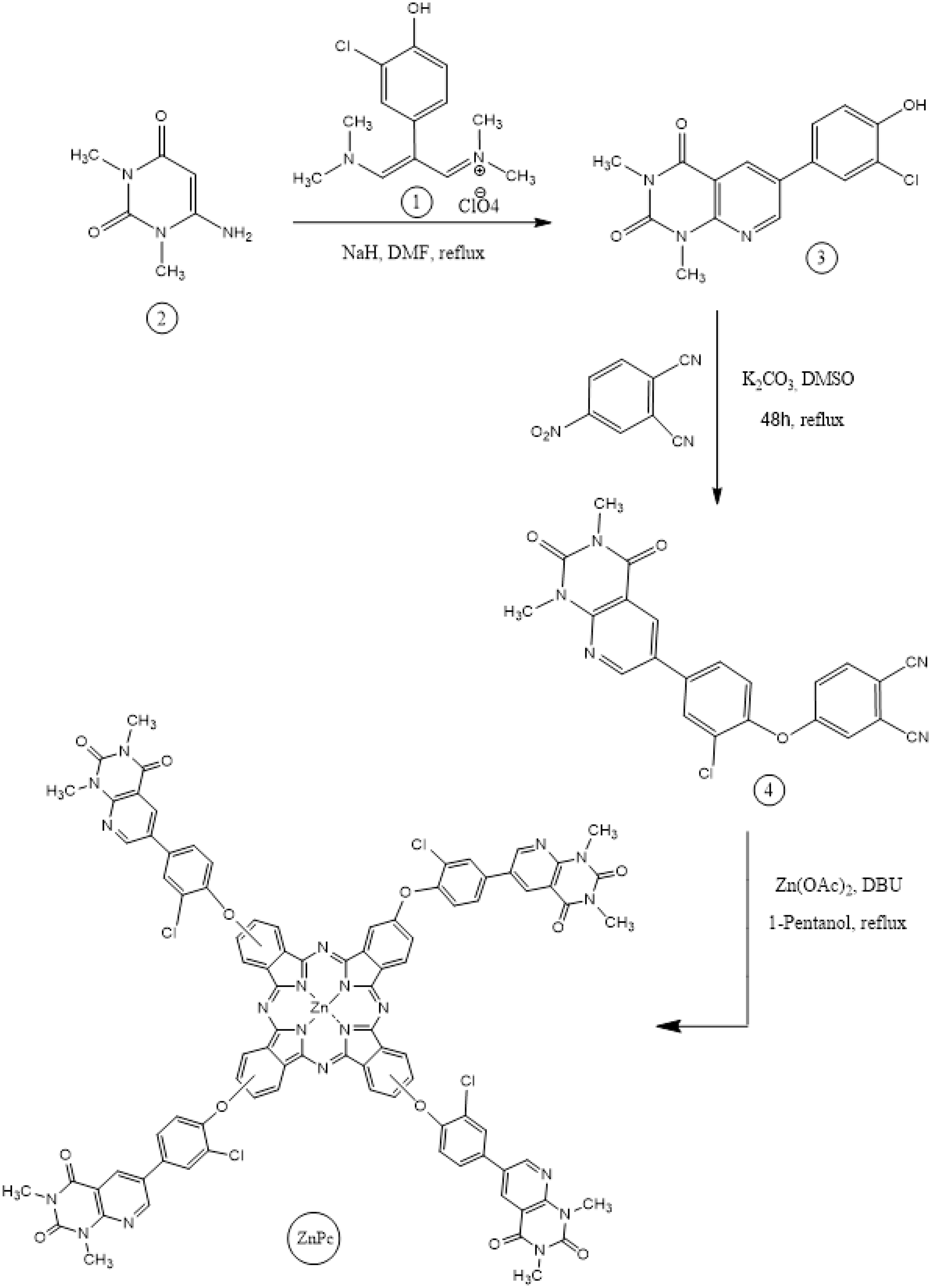
Synthesis of the novel ZnPc.
Investigation of Aggregation Behavior of ZnPc
UV–Vis spectroscopy was used to study the aggregation behavior of the synthesized zinc(II) phthalocyanine. The absorption spectrum showed the two characteristic bands generally observed for phthalocyanine systems. The absorption band located in the 360–380 nm region, known as the B-band or Soret band,
25
is attributed to higher-energy π–π* transitions, whereas the absorption in the 600–700 nm region corresponds to the Q-band associated with π–π* transitions between the HOMO and LUMO levels of the phthalocyanine macrocycle.26,27 ZnPc displayed a sharp and intense Q-band (λmax ≈ 623–730 nm) in DMF, indicating the predominance of the monomeric form under the investigated conditions (Figure 1).
28
The B-band around 360 nm remained almost unchanged with increasing concentration, suggesting limited aggregation in this solvent. This behavior may be related to weak axial coordination between DMF and the zinc center, which can reduce intermolecular interactions within the phthalocyanine system. In addition, the intensity of the Q-band increased proportionally with concentration without the appearance of additional absorption bands associated with aggregated species. Beer–Lambert's law was obeyed within the concentration range of 4 × 10⁻4 to 8 × 10⁻4 M, while the molar absorptivity remained nearly constant over this interval. The synthesized ZnPc showed limited solubility in most common organic solvents. Good solubility was observed in DMSO and DMF, whereas only partial solubility was obtained in THF, acetonitrile, and dichloromethane. DMSO, DMF, and THF were selected for spectroscopic investigations because they provided sufficient solubility for UV–Vis measurements and allowed comparison of the aggregation behavior of ZnPc in solvents with different physicochemical properties. The corresponding UV–Vis spectra are presented in Figure 2. The spectral profile of ZnPc was strongly influenced by the nature of the solvent. In DMF, the compound displayed a sharp and intense Q-band characteristic of a predominantly monomeric form. In contrast, broader and less intense absorption bands were observed in THF, suggesting stronger intermolecular interactions and partial aggregation of the phthalocyanine molecules. An intermediate behavior was observed in DMSO.
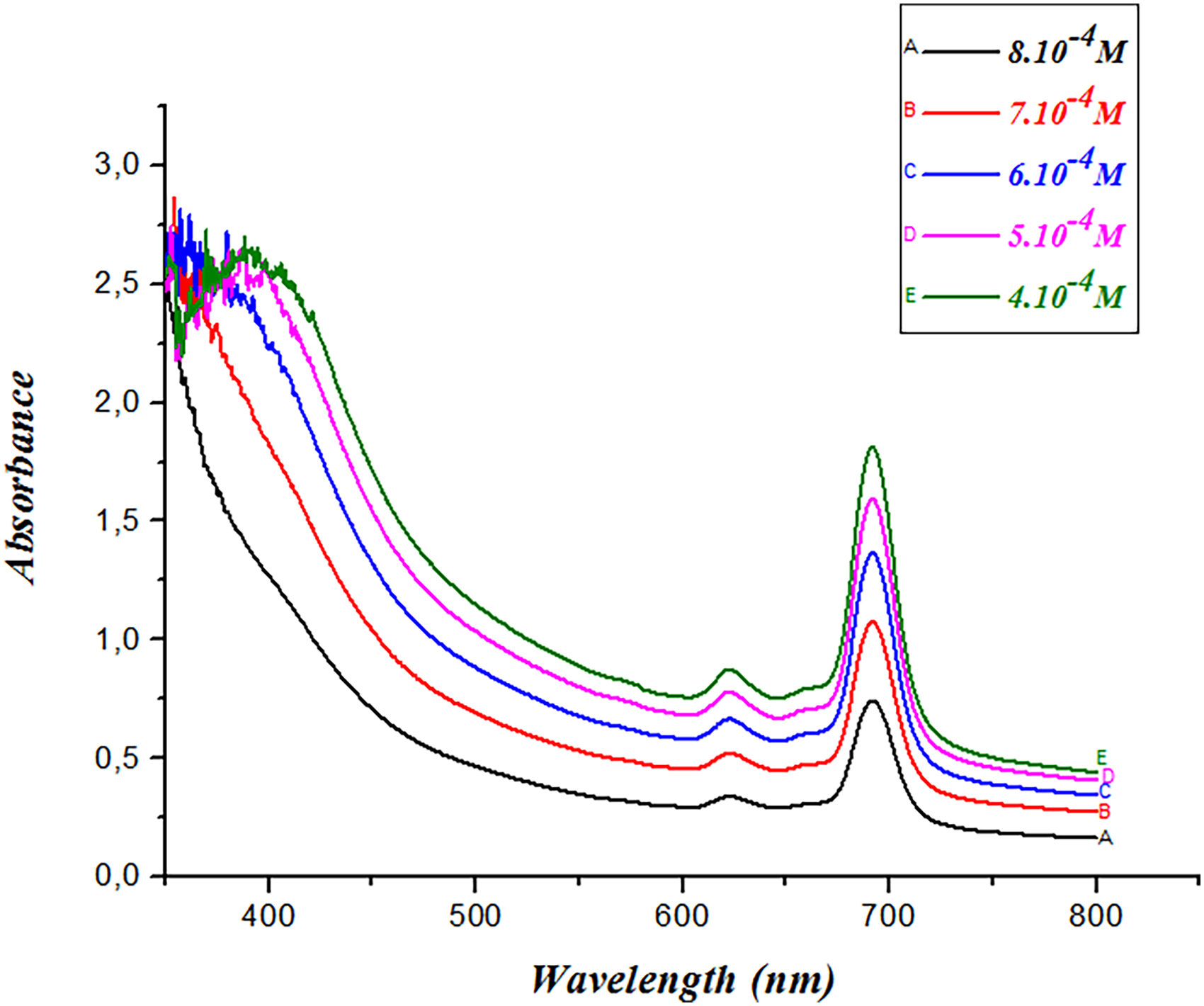
Uv–vis absorption spectra of ZnPc in DMF at different concentrations.
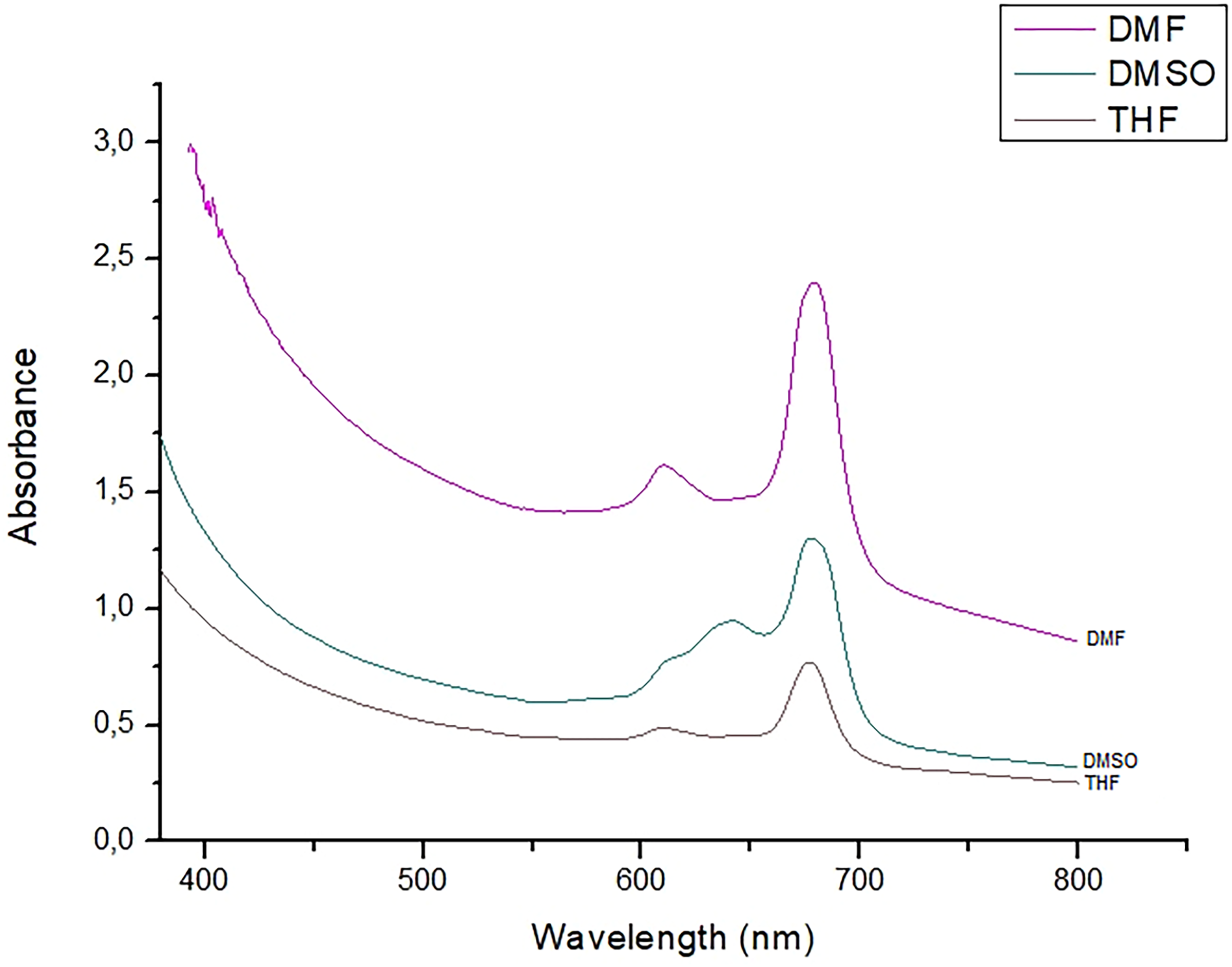
Uv–vis absorption spectra of ZnPc in different solvents (DMF, DMSO, and THF).
Aggregation in phthalocyanine systems generally results from intermolecular interactions between the extended 18-π electron systems and is commonly described as a coplanar association of macrocyclic rings leading to dimers and higher-order aggregates. 31 Several factors may influence this behavior, including concentration, solvent nature, peripheral substituents, the central metal ion, and temperature. 32 Such aggregation phenomena can be monitored by electronic spectroscopy. 33
Different aggregation modes may occur in phthalocyanine systems, mainly H-aggregates and J-aggregates, either in solution or on solid surfaces. These two types are generally distinguished by their characteristic absorption bands. H-aggregates are usually associated with broadened blue-shifted bands, whereas J-aggregates display narrower red-shifted bands relative to the monomeric species.
In the present case, the decrease in Q-band intensity observed in DMSO (Figure 3), together with the appearance of a broader blue-shifted band around 635 nm, suggests the formation of H-type aggregates. The regular spectral variation observed with increasing concentration further suggests the predominance of a single aggregated species, possibly corresponding to a dimeric form. Beer–Lambert's law was obeyed for ZnPc within the concentration range of 2 × 10⁻5 to 6.5 × 10⁻4 M.
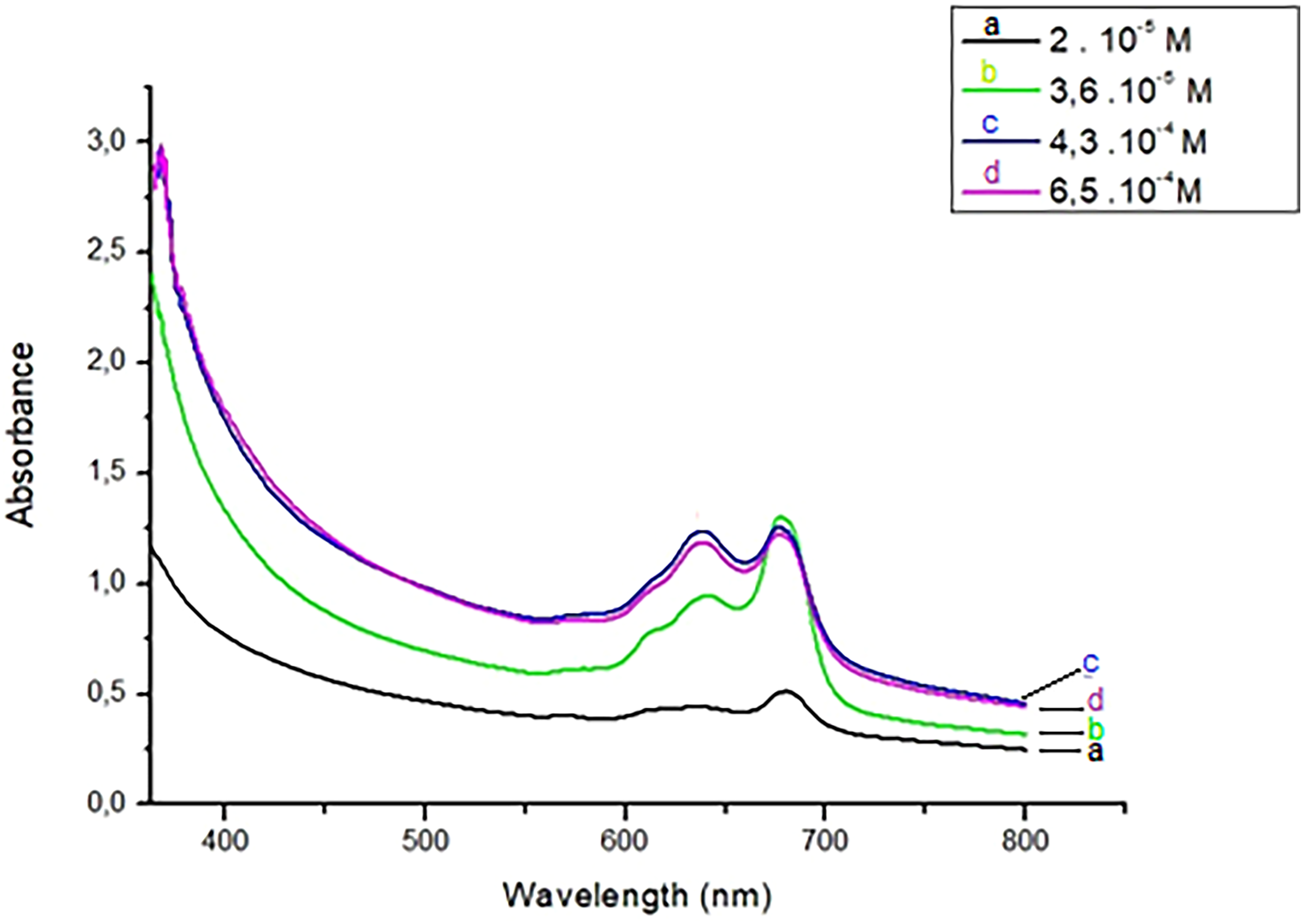
Uv–vis absorption spectra of ZnPc in DMSO at different concentrations.
Antibacterial activity
To evaluate the antimicrobial potential of the synthesized phthalocyanine, its activity was investigated against both Gram-positive and Gram-negative bacterial strains using the disk diffusion method according to standard procedures reported in the literature. 34 The Gram-positive strains included Staphylococcus aureus (ATCC 6538) and Bacillus subtilis (ATCC 6633), whereas Escherichia coli (ATCC 8739) and Pseudomonas aeruginosa (ATCC 9027) were selected as representative Gram-negative bacteria.
The antibacterial activity was evaluated both in the presence and absence of irradiation using a 675 nm red LED light 35 in order to compare the behavior of ZnPc under dark and light conditions.
For these experiments, a bacterial suspension with a cell density of 106 CFU mL⁻1 was prepared in Brain Heart Infusion (BHI) broth. Antimicrobial activity was evaluated on Mueller–Hinton (MH) agar medium 36 using sterile paper discs impregnated with 10 µL of the phthalocyanine solution dissolved in DMSO. After incubation for 24 h at 37 °C, either under dark conditions or under irradiation with a 675 nm red LED light, the inhibition zones were measured in millimeters.
Gentamicin (30 μg/disc) was used as a positive control, whereas DMSO (15 µL) was used as a negative control to verify that the solvent itself did not induce antibacterial activity. A non-peripherally substituted zinc(II) phthalocyanine (ZnPcH) was also evaluated as a reference compound in order to compare the antibacterial activity of the substituted ZnPc with that of the unsubstituted analogue. All experiments were performed in duplicate.
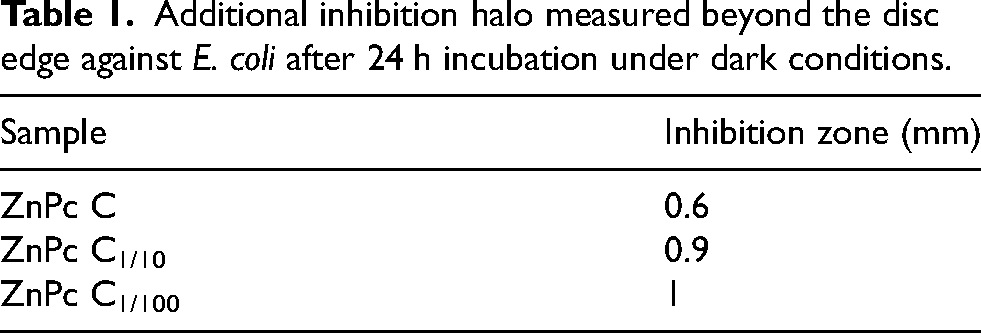
Under dark conditions, ZnPc showed limited antibacterial activity against most of the investigated strains. Only very small inhibition halos (0.6–1.0 mm beyond the disc edge) were observed for Escherichia coli. A slight increase in the inhibition halo was nevertheless observed upon dilution of the initial phthalocyanine solution (C = 1 mg mL⁻1). This behavior may be related to aggregation phenomena or diffusion effects occurring at higher concentrations. The corresponding results are summarized in Table 1.
Additional inhibition halo measured beyond the disc edge against E. coli after 24 h incubation under dark conditions.
Under irradiation with a 675 nm red light, ZnPc showed antibacterial activity against all tested bacterial strains, highlighting the photodynamic antimicrobial potential of the phthalocyanine system. The corresponding results are summarized in Table 2 and Figure 4.
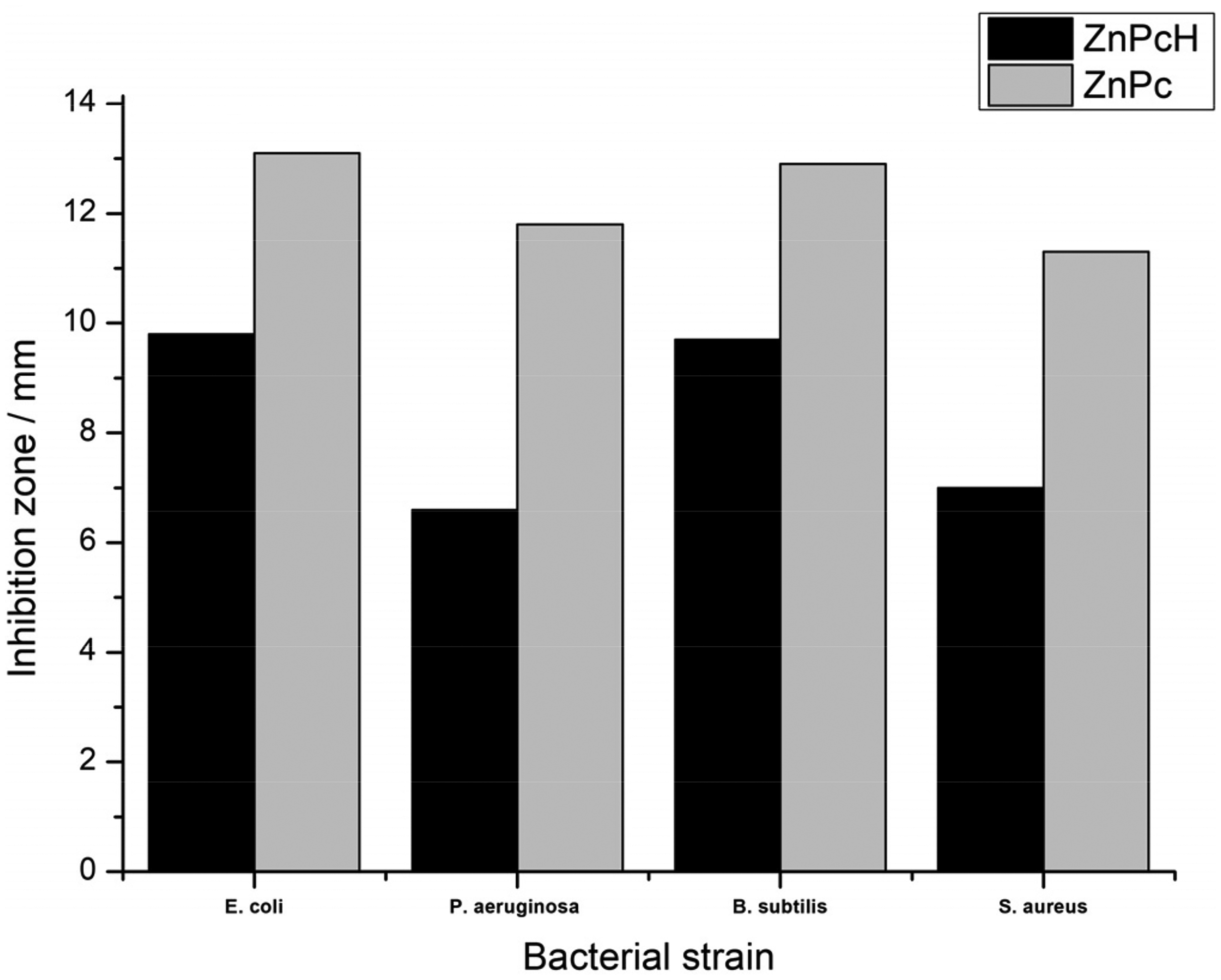
Antibacterial activity of ZnPcH and ZnPc under red light irradiation.
Antibacterial activity of znPcH and ZnPc under red-light irradiation. Inhibition zones are expressed in mm.
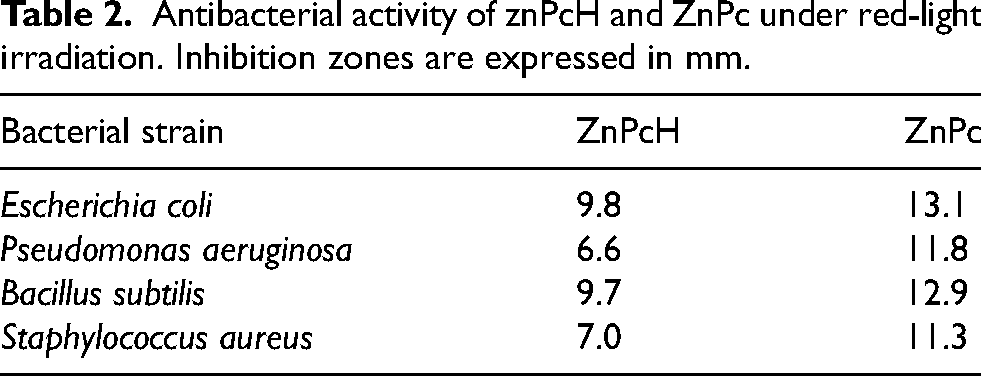
Examination of the obtained results shows that the new zinc(II) phthalocyanine displays limited antibacterial activity under dark conditions and enhanced activity under irradiation. These findings suggest that, besides its photosensitizing properties, the synthesized ZnPc may also possess a slight intrinsic antibacterial effect, although additional investigations are required to clarify its mechanism of action.
The higher antibacterial activity observed for the substituted zinc(II) phthalocyanine compared with the unsubstituted analogue ZnPcH appears to be related to the presence of the peripheral pyridopyrimidine substituents. Such substituents may influence both the intermolecular organization and the interaction of the phthalocyanine system with bacterial membranes. 37 The increase in activity observed under irradiation conditions further confirms the ability of the synthesized ZnPc to act as a photosensitizer under suitable experimental conditions. 38
The observed antimicrobial behavior may also be influenced by the aggregation state of the phthalocyanine, since aggregation is known to affect the photophysical and biological properties of phthalocyanine systems.37,39 The lower activity observed under dark conditions may therefore be associated with partial aggregation of the ZnPc macrocycles, which can reduce the availability of photoactive monomeric species. In addition, the hydrophobic character of the synthesized ZnPc may limit its diffusion through the agar medium, thereby influencing the measured inhibition zones. 37
Antifungal activity
Fungal infections are becoming an important global health concern. Among them, Candida species, particularly Candida albicans, remain responsible for the majority of systemic fungal infections. 40 In addition, the increasing resistance of fungal pathogens to commonly used antifungal agents represents a major limitation for current therapeutic strategies. 41 In this context, alternative approaches such as photodynamic therapy (PDT) 42 are attracting increasing interest for the control of drug-resistant fungal strains.
In the present study, the antifungal activity of the synthesized zinc(II) phthalocyanine was evaluated against Candida albicans and non-albicans Candida species, including Candida glabrata and Candida krusei. All fungal strains were obtained from the collections of the Pasteur Institute of Tunis. Antifungal susceptibility testing was performed using the flat-bottom microdilution plate method described by Santos and Hamdan. 43 Yeast cultures were prepared in YPD medium to ensure optimal growth prior to testing. Single colonies were grown for 24 h at 30 °C, then resuspended in fresh YPD medium and adjusted to the required optical density. An aliquot of 100 µL of the standardized suspension was transferred into 10 mL of fresh YPD medium.
The minimum inhibitory concentration (MIC) values were determined using a broth microdilution method adapted from the European Committee on Antimicrobial Susceptibility Testing (EUCAST) guidelines. 44 Serial two-fold dilutions of ZnPc were prepared in microplates to obtain concentrations ranging from 10 to 100 µg mL⁻1. The plates were incubated overnight at 37 °C, and fungal growth was monitored by measuring the optical density at 600 nm using a microplate reader.
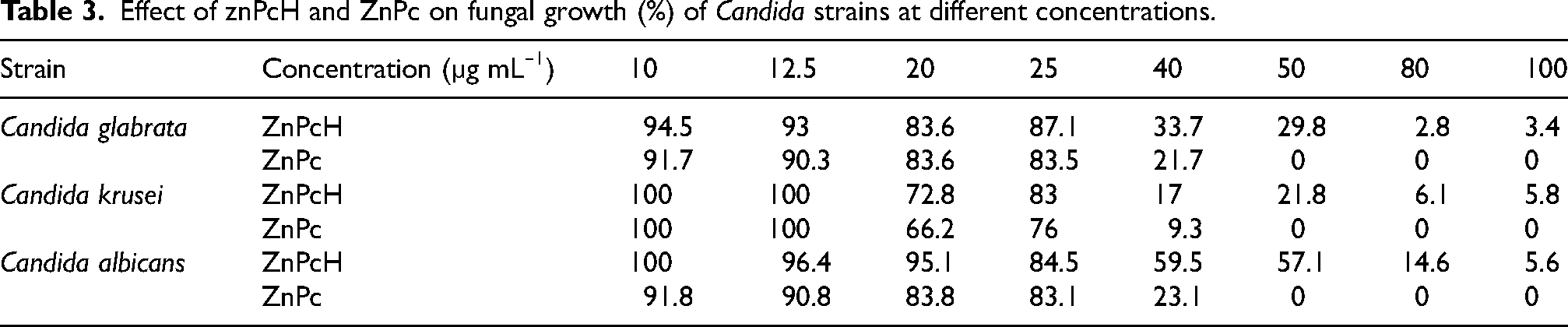
MIC values were defined as the lowest concentration required to inhibit fungal growth.44,45 The results (Table 3 and Figure 5) show a clear concentration-dependent inhibition of fungal growth.
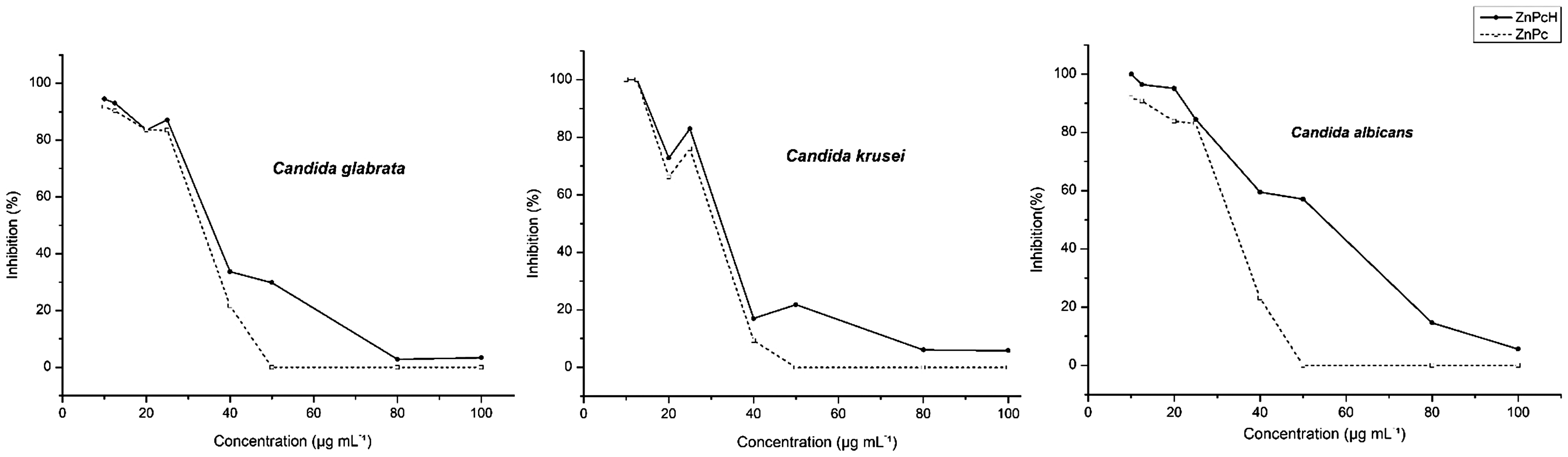
Comparison of the effect of ZnPcH and ZnPc on three Candida strains (Candida albicans, Candida glabrata, and Candida krusei).
Effect of znPcH and ZnPc on fungal growth (%) of Candida strains at different concentrations.
The same experimental protocol was applied to the non-substituted zinc(II) phthalocyanine (ZnPcH) in order to evaluate the effect of peripheral substitution on antifungal activity. All assays were performed in duplicate, and the reported values correspond to the mean of two independent measurements.
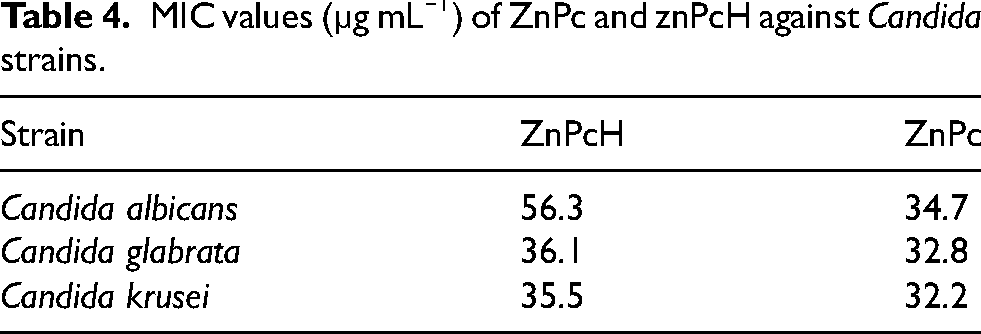
The substituted zinc(II) phthalocyanine (ZnPc) exhibited higher antifungal activity than ZnPcH against all tested Candida strains. At 50 µg mL⁻1, ZnPc almost completely inhibited fungal growth, whereas lower concentrations (10–40 µg mL⁻1) produced a weaker inhibitory effect. Overall, the antifungal activity increased progressively with increasing concentration of the compound. Minor fluctuations observed at intermediate concentrations may be related to aggregation phenomena and experimental variability commonly encountered in microdilution assays involving phthalocyanine systems.37,39,45,46 The MIC values of ZnPc and ZnPcH against Candida albicans, Candida glabrata, and Candida krusei are summarized in Table 4.
MIC values (µg mL⁻1) of ZnPc and znPcH against Candida strains.
Studies dealing with the antifungal activity of zinc(II) phthalocyanines remain relatively limited and are mainly associated with photodynamic therapy (PDT) applications because of the well-established photosensitizing properties of these compounds. 41 The higher activity observed for the substituted ZnPc compared with ZnPcH suggests that the peripheral pyridopyrimidine substituents may contribute to improving the interaction of the phthalocyanine system with fungal cells. In addition, the concentration-dependent antifungal effect observed for ZnPc may be related to changes in aggregation state and solubility, which are known to influence the biological behavior of phthalocyanine derivatives.39,37
Antifungal susceptibility testing and MIC determination in fungal systems remain experimentally sensitive procedures. Variations in parameters such as inoculum preparation, incubation time, and temperature may significantly influence the obtained results because of the limited methodological standardization among susceptibility testing protocols.45,46
Conclusion
In summary, a new zinc(II) phthalocyanine bearing peripheral pyridopyrimidine substituents was successfully synthesized through a vinamidinium-based route. This strategy provides a convenient approach for the controlled functionalization of phthalocyanine systems using heterocyclic precursors.
The synthesized ZnPc was characterized by UV–Vis, FT–IR, and NMR spectroscopy, and its aggregation behavior was investigated in different organic solvents. The obtained results revealed a marked solvent dependence, indicating that the peripheral substituents influence intermolecular interactions within the phthalocyanine system.
The synthesized ZnPc also exhibited antibacterial and antifungal activity against Gram-positive and Gram-negative bacteria as well as Candida species. The higher activity observed for the substituted ZnPc compared with the unsubstituted analogue ZnPcH suggests that peripheral functionalization may influence the biological properties of phthalocyanine systems. In addition, the enhanced activity observed under irradiation conditions highlights the potential photodynamic behavior of the synthesized compound.
Further work will focus on the preparation of new zinc(II) phthalocyanine derivatives with improved solubility in water and other biocompatible media through appropriate structural modifications, with the aim of extending their potential biological applications.
Supplemental Material
sj-docx-1-mgc-10.1177_10241221261465091 - Supplemental material for Vinamidinium-based synthesis of a pyridopyrimidine-substituted zinc(II) phthalocyanine: Aggregation and antimicrobial properties
Supplemental material, sj-docx-1-mgc-10.1177_10241221261465091 for Vinamidinium-based synthesis of a pyridopyrimidine-substituted zinc(II) phthalocyanine: Aggregation and antimicrobial properties by Safa Belaiba, Asma Ibrahmi, Manel Ben Mansour and Jameleddine Khiari in Main Group Chemistry
Footnotes
Abbreviations
Acknowledgments
The authors gratefully thank Dr Sadri Znaidi from the Pasteur Institute of Tunis for providing access to the equipment required for the antifungal assays, as well as for his valuable advice and supervision throughout this work.

Author contributions
Conceptualization, J.K. and S.B.; methodology and investigation, S.B.; formal analysis, S.B. and A.I.; writing—original draft preparation, S.B.; writing—review and editing, J.K. and M.B.M.; supervision, J.K. All authors have read and approved the final manuscript.
Funding
The authors received no financial support for the research, authorship, and/or publication of this article.
Declaration of conflicting interests
The authors declared no potential conflicts of interest with respect to the research, authorship, and/or publication of this article.
Data availability
The data supporting the findings of this study are available within the article and its supplementary material.
AI assistance statement
The authors used ChatGPT 3.5 and Microsoft Copilot only to improve the language and readability of the manuscript. All scientific analyses, interpretations, and conclusions are entirely the responsibility of the authors.
Health and safety
All experimental procedures were carried out in accordance with standard laboratory safety protocols. Appropriate precautions were taken for the handling of hazardous chemicals and organic solvents.
Supplemental material
Supplemental material for this article is available online.
References
Supplementary Material
Please find the following supplemental material available below.
For Open Access articles published under a Creative Commons License, all supplemental material carries the same license as the article it is associated with.
For non-Open Access articles published, all supplemental material carries a non-exclusive license, and permission requests for re-use of supplemental material or any part of supplemental material shall be sent directly to the copyright owner as specified in the copyright notice associated with the article.
