




Abstract
In the context of the recent resurgence of the state in response to a series of global crises, the paper aims to contribute to the debate on state capitalism and political capitalism by integrating perspectives from institutional economics and public finance. How do constraints on the state influence the structure of public expenditure? The paper adapts the Red Queen Effect theory and the Leviathan typology to analyze the parallel political and budgetary transformation in East Central Europe (ECE) between 2004 and 2023. It shows that the developmental goals of increased state intervention are achieved only in countries where limits on government discretion grow in tandem with its power. The Hungarian case illustrates the various mechanisms through which the lack of constraints facilitates predatory objectives and the dominance of private over public interests. The analysis of regional convergence performance highlights the limitations of unconstrained state intervention for economic prosperity.
Keywords
Introduction
As the world stumbles from crisis to crisis, state power is on the rise globally. Following the United States’ victory in the Cold War by 1990, and the recognition of the superiority of the liberal democratic and market economy systems for human progress (Fukuyama, 1992), the early decades of the third millennium witnessed a global erosion of liberal norms. The 2024 Freedom in the World report records the 18th consecutive year of retreat of democracy (Freedom House 2024), and direct state interventions in the economy are gaining legitimacy worldwide (Alami and Taggard, 2024). While the global spread of illiberalism and hybrid regimes have been widely studied in the literature (Sajó et al., 2021), this article focuses on the interactions with the economic sphere during an era of global loss of confidence in the market economy.
Whereas the Cold War-era comparative economics asserted the greater efficiency of private ownership and market coordination over state ownership and bureaucratic coordination (Kornai, 1992), these long-held axioms are being questioned in the emerging literature on state capitalism (Alami and Dixon, 2020). Mazzucato (2011) is one of the earliest theorists of this trend arguing that government investment has been instrumental in developing fundamental innovations such the internet or GPS thus “the lazy state versus the innovative private sector” contrast is a myth. Citing examples from China to Singapore, the possibility of successful authoritarian state capitalism is underlined even by skeptics (Kurlantzick, 2016). In the comparative capitalism literature, statist market economies are identified as a distinct model of capitalism (Feldmann, 2025) with a significant share of state ownership and the state as the key coordinator in the economy. However, the return of the state is a much broader phenomenon than a single model, and its impacts can be felt in all major models of capitalism (Csaba, 2023).
The resurgence of statism is not without critics. The Weberian concept of political capitalism has resurfaced, challenging the developmental objectives of government intervention and highlighting the private interests underlying this process. In his work on economic history, Weber (1923/2023) stated that political capitalism dates to ancient times, but rational capitalism is only a recent development. While the latter relies on formal law and the pursuit of economic interests, non-rational forms of capitalism “relate to spoils, taxes, the pickings of office or official usury, and finally to tribute and actual need” (Weber, 1923/2023: 264). Holcombe (2018: 1) describes political capitalism as “an economic and political system in which the economic and political elite cooperate for their mutual benefit.” As this is often described as cronyism, the term political capitalism is justified to distinguish such systems from market capitalism and orient attention to increased political control over the economy rather than merely identifying corruption (Holcombe, 2018: 3–4). This theme is globally applicable as it has been explored in the US (Holcombe, 2018), China (Milanović, 2019), and Iran (Vahabi, 2023). Despite considerable skepticism toward state involvement, this literature does not rule out developmental success either, as the case of China demonstrates (Milanovic, 2019: 91–96).
Under what conditions does the resurgence of the state serve developmental interests, and when does it become predatory? A notably missing element from both state capitalism and political capitalism literature is the perspective of public finance: how state objectives shape government budgetary decisions. This paper aims to contribute to filling this gap by examining the evolution of public expenditure structures in the post-communist member states of the European Union (EU11) 1 , which can serve as a natural laboratory (Diamond and Robinson, 2006). These countries joined the EU after fulfilling the conditions for accession, having been officially recognized as liberal democracies and market economies. Two decades after the first post-Communist accession, significant heterogeneity emerged in the region regarding the political and economic regimes. Unlike earlier analyses focusing on the emerging new variety of capitalisms (Csontos, 2025), this paper addresses the growing role of the state and its translation into budgetary decisions from the perspective of institutional economics. Adopting the theory of the Red Queen Effect and the Leviathan typology by Acemoglu and Robinson (2019), it is demonstrated that increased government involvement in the economy must be accompanied by greater constraints on the state to serve developmental purposes.
The paper proceeds as follows. The next section discusses the challenges to the post-Cold War consensus on the proper role of the state in the economy, then develops a theoretical framework linking institutional conditions and public finance decisions. The third section explores the evolving role of the state in the ECE region, considering the limitations of the FDI-driven growth model. In the fourth section, descriptive statistics are used to assess the evolving constraints on the state and the associated transformation of budgetary structure. Afterward, the largest expenditure changes are analyzed qualitatively in the Hungarian case to explore the mechanisms through which private interests prevail over public ones in the absence of robust constraints on the state. The sixth section examines the consequences for economic development, followed by the conclusion.
The changing role of the state in the 21st century
The proper economic role of the state, especially the balance between government intervention and economic freedom, remains a longstanding topic in political economy. During the 20th century, the size of the state continued to expand due to industrialization, wars, and the establishment of the welfare state (Tanzi, 2011). By the 1970s, extensive state interference in the economy had reached its limits globally: stagflation in the developed countries, stagnation and underdevelopment in the Communist world, weak growth and crises in the postcolonial world (Kurlantzik, 2016: 56–63). These developments led to the rise of neoliberalism, advocating for privatization, liberalization, and deregulation—a program, summarized in the Washington Consensus (Williamson, 2000). However, its inadequacy to produce development became clear during the 1990s in several cases, such as in Russia, Argentina, and Turkey, which led to the inclusion of institutional and governance reforms in an augmented Washington Consensus (Rodrik, 2006). This consensus crumbled as the subprime crisis hit the world in 2008.
Challenges to the idea of limited government
The global financial crisis (2008–2013) undermined confidence in the market system and renewed interest in Keynesianism (Tanzi, 2018). The state’s essential role in managing the crisis opened the door for increased government involvement in the economy.
In the 2010s, a series of crises further fueled the resurgence of industrial policy in the developed world. In the EU, the competitiveness gap behind the US and China, along with the threat of climate change, paved the way for bureaucratic interventions into the economy (Aiginger and Rodrik, 2020). This was reinforced by the vulnerabilities exposed in global value chains during COVID, as well as by extensive industrial support programs in competing countries—the Made in China initiative in China and the Inflation Reduction Act in the US. Russian aggression in Ukraine and China’s threats against Taiwan heightened concerns over economic security and industrial policy (Fabry et al., 2024). By the 2020s, targeted sectoral interventions, along with trade and investment restrictions, have become widely accepted practices worldwide, even among global governance institutions such as the IMF, the World Bank, and the WTO (Alami and Taggart, 2024).
The institutional constraints on the state have also been challenged through the rise of populist movements. The eruption of the global financial crisis in 2008 marked the start of a new era of uncertainty and backlash against globalization. Rodrik (2021) identifies four causal channels through which globalization led to the worldwide rise of populism: economic dislocation due to the Chinese import shock, cultural and economic fears in face of low-skilled immigration, increased financial instability with the free flow of capital as well as economic insecurity in general due to automation, flexibilization of the labor markets and rising inequalities. Populist parties juxtapose the pure people against the corrupt elites (Mudde, 2004) and offer remedies for the problems through non-ideological implementation of the general will instead of the special interests of the elites (Benczes, 2022). Governance in the interest of a homogenous people is inherently anti-pluralist (Müller, 2016) and represents a severe challenge for institutional constraints on the state. Once populists assume power, they almost inevitably lean toward authoritarian measures. The earliest targets are independent institutions connected to the elite. Within populist discourse liberalism and democracy become separated, and the fight against liberalism means rejecting the constitutional limits on the state (Scheppele, 2018).
The Red Queen effect
The increasing expectations from the state and the challenges to its constraints raise questions about the potential for abuse of power by the government. Even those scholars who are open to greater state involvement in the economy recognize the limits the state can achieve, the need for gaining legitimacy from various social groups, as well as the potential of subverting capitalism based on private property with too much state intervention (Alami and Dixon, 2020: 85). Integrating institutionalist thinking into the literature on state capitalism can help to address these challenges.
Fukuyama (2004: 7) distinguishes between the scope and the strength of the state: the functions a state performs should be separated from its ability to create laws and enforce policies in that area. Failing to make this distinction is a flaw of the neoliberal agenda, which often reduced both state capacity and scope, such as during austerity programs (Fukuyama, 2004: 15). A general principle for development is to improve state capacity as the state takes on more functions. A high-quality administration can pursue activist roles like industrial policy and wealth redistribution. Meanwhile, weaker states should focus on minimal functions like defense and protecting property rights.
Tilly (2007: 16–17) considers democracy as a condition for increasing state capacity, defined as the state’s ability to redistribute resources. He argues that the two processes ideally reinforce one another: expanding state capacity provokes resistance and bargaining that broaden participation, equalize access to resources, and constrain arbitrary coercion, while democratization increases demand for state services (76-77).
Acemoglu and Robinson (2019) share the ideal of parallel improvement in state capacity and social control, but they do not consider this as a teleological process. Instead, they emphasize the persistent need to constrain the state and address the developmental consequences. They introduce the Red Queen Effect (RQE), which “refers to a situation where you have to keep on running just to maintain your position, like the state and society running fast to maintain the balance between them” (Acemoglu and Robinson, 2019: 41). This implies a dynamic competition between the state and society in which both must continually adapt to preserve liberty within a narrow corridor of balance. Freedom and economic development emerge in states where state capacity and the organization of society develop in tandem (Shackled Leviathan). By contrast, the tyrannical repression of society (Despotic Leviathan) undermines social cooperation and development, while the absence of the state (Absent Leviathan) traps society within a cage of norms, which also hampers performance.
The need for societal constraints on the state highlights the central role of the rule of law (RoL) in separating state capitalism from political capitalism. Aristotle’s distinction between the RoL and rule of man remains relevant—while it once referred to a natural order based on God or reason, current interpretations emphasize the contrast between legal rules and personal discretion (Sempill, 2020). The lack of a transcendent anchor for positive law intrinsically links the RoL to democracy—as Habermas (1995: 16–18) argues, the public autonomy of citizens is expressed by self-organization and establishing laws, but only if their private autonomy is equally protected by basic rights. Tilly (2007: 104) similarly shows that weaker democracy correlates with weaker support for RoL. Weakening RoL can contribute to all three major factors that he considers responsible for de-democratization—the withdrawal of major trust networks from public politics, the rise of categorical inequalities and the formation of autonomous coercive powers (Tilly, 2007: 162–163). Acemoglu and Robinson (2019: 144–145) consider the RoL as the formal shackles of Leviathan, which are “rooted in the ropes that society holds.” Kryger (2021: 535–537) stresses that by preventing the arbitrary use of power for all, the RoL can also contribute to increasing state capacity by limiting corruption as well as preventing hasty and ignorant decision-making.
Institutions and public finance
Increased state involvement in the economy can take several forms, including state-owned enterprises and financial institutions, sovereign wealth funds, and regulatory measures, which have received the most attention in the literature on state capitalism (Alami and Dixon 2020). However, this perspective needs to be complemented by the most evident way for intervention, which is the power to tax and redistribute. In the following, the analysis is narrowed to the expenditure side of the budget, which provides the most readily available resources for implementing developmental policy or predation.
The classic objectives of the government budget are allocation, to provide public goods, redistribution, to reduce the inequalities produced by the market, and stabilization, to smooth the business cycle (Musgrave, 1959). Institutions play a crucial role in whether the budget serves these benevolent purposes or becomes a source of spoils for the political elites. Weak RoL and missing constraints on government discretion imply the lack of budgetary transparency and accountability for mismanagement, allowing the dominance of private interests over public ones. Ultimately, the budget can become a cash cow for elites (Magyar and Madlovics, 2020: 443–444).
Figure 1 summarizes the theoretical framework, which guides the empirical analysis of the transformation of the state in ECE countries. In the context of an increased role for the state in the economy, it is hypothesized that developmental purposes are served only if the RQE is present, which means that the discretionary decision-making of the government remains limited. This can be traced via the changing composition of budgetary expenditures, which indicates the policy priorities of the government. Developmental performance is expected to reflect the consequences of these policies. Theoretical framework for empirical analysis.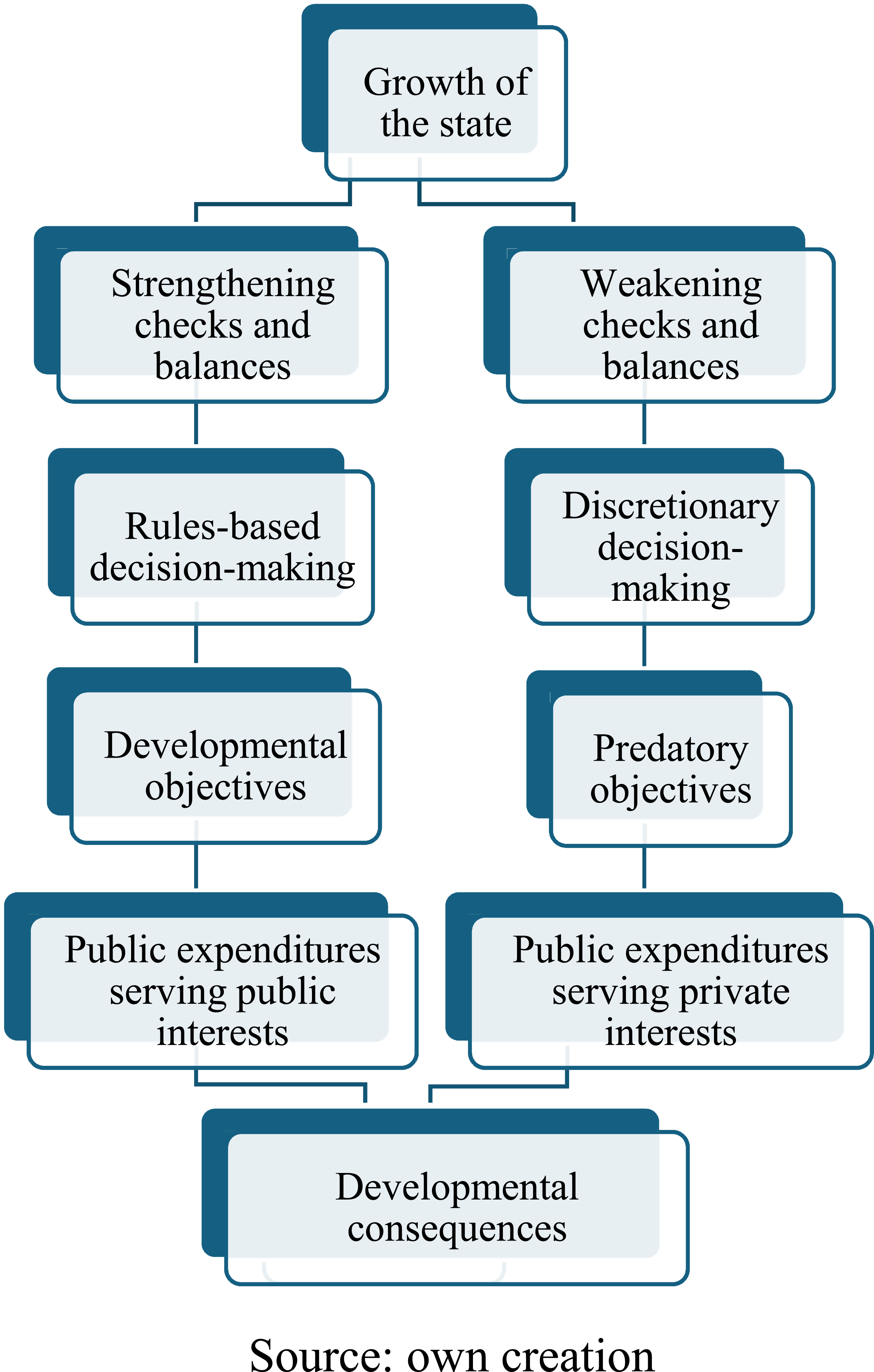
The changing role of the state in the ECE region
The post-communist transition anchored by EU accession
Following the collapse of the Soviet Union, countries in ECE immediately aimed to join the EU. The accession criteria announced in 1993, the Copenhagen criteria, represented the ideas of liberal democracy and market economy: the political criteria comprised democracy, the RoL, respect for human rights, and the protection of minorities, while the economic criteria required a competitive market economy. The institutional criteria required the ability to apply the EU acquis communautaire, including accession to the monetary union 2 . These conditions reflected the contemporary neoliberal consensus about limiting government power, ultimately the idea of the Shackled Leviathan as theorized by Acemoglu and Robinson (2019). After the collapse of Communism in the region, the need to rein in the power of the state was hardly controversial. The entry of 11 ECE countries into the EU signified their status as liberal democracies and market economies.
The ECE model of capitalism was somewhat different from the models in the old EU member states. The economic conditionality during the accession negotiations presumed an export-led growth model and the promotion of foreign direct investment (FDI) inflows (Medve-Bálint, 2014). In the comparative capitalism literature, the model is described as a dependent market economy (DME) based on Nölke and Vliegenthart (2009). Due to a lack of capital and knowledge, there was no alternative to this model in the region (Farkas, 2016: 175). A common feature of the region’s economies is that technology is provided by multinationals, which are attracted by skilled, cheap labor, while the productivity of domestic firms is much lower; thus, dual economies have emerged.
While the DME model was common to the ECE countries, there was some initial heterogeneity among them related to the extent of the welfare state and social partnership. Bohle and Greskovits (2012) outline four models for the region. The Baltic countries, to move away from the Soviet past, have pursued identity-based neoliberal policies characterized by low taxation and a weak welfare state. FDI mainly flowed into the financial and real estate sectors. The Visegrad countries are classified as “embedded neoliberal,” with extensive welfare states and significant macroeconomic imbalances, where FDI mainly flowed into manufacturing. Slovenia is interpreted as a success story in the region, with a gradual transition, an extensive welfare state, and broad social partnership. FDI inflows were more moderate in this case than in other transition countries. In South-Eastern Europe (Bulgaria, Romania, Croatia), after a lengthy transition, weak state and low welfare benefits were the main characteristics.
Although EU accession was widely expected to cement the combination of liberal democracy and market economy, the global challenges to limited government did not leave the ECE region unaffected, while the limits of DME posed specific challenges to the region.
The challenge to the FDI-led growth model in the ECE countries
In ECE, the global challenges to the idea of limited government coincided with the questioning of the FDI-led growth model (Galgoczy and Drahokoupil, 2017). Following the 2008-2013 financial crisis, global FDI flows did not return to their previous peak in 2007 until 2015, while after 2019, we can observe another significant decline, especially in the EU (Figure 2). During the 2010s, technological developments related to Industry 4.0—such as robotization, digitalization, and artificial intelligence—have been used to explain these processes, in the 2020s, the rise of geopolitical tensions, the emergence of industrial policy activism, and the need to diversify value chains are the main reasons (UNCTAD, 2024: 5). The volatility of FDI flows alone can be a serious source of vulnerability (Tőkés, 2024). Furthermore, the specialization in labor-intensive, lower value-added activities in global value chains is also considered as a serious drawback of FDI-based growth (Gál and Lux, 2022). FDI flows globally and in the European Union. (million dollars). Data source: UNCTAD (2024) FDI Data Explorer by region and economy.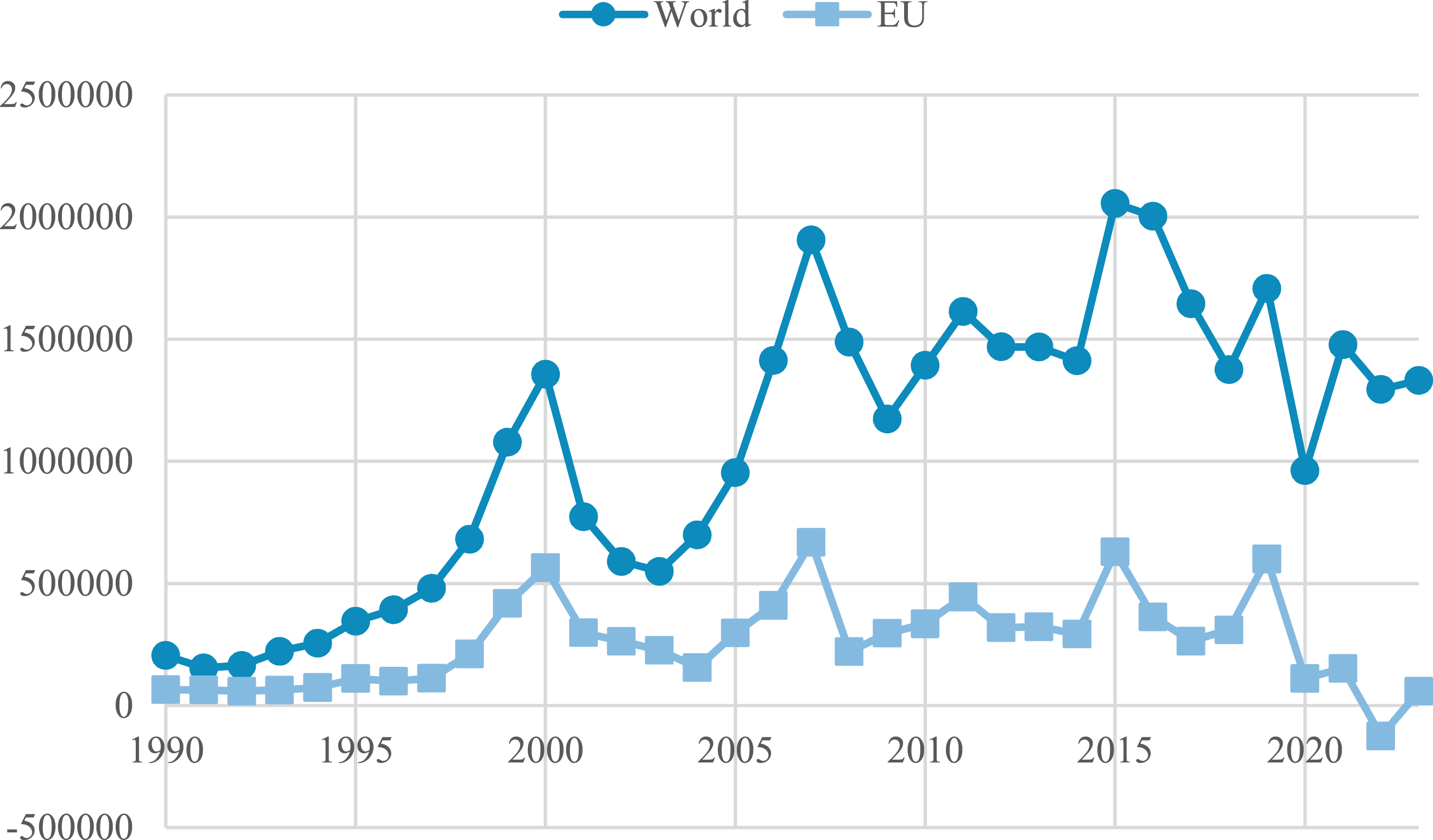
Over three decades after the transition, none of the countries of the ECE region have reached the average development of the EU (see Section Productivity, wages, and convergence in the ECE region), which have contributed to the rise of populism in the region. As elaborated by Krastev and Holmes (2018) the promise that by imitating the West, the region will enjoy freedom and prosperity, has led to severe disappointments and a counter-revolution against liberalism. However, even in places where populists assumed power such as in Hungary or Poland, the DME model proved to be more difficult to change than the liberal political system (Scheiring, 2021) suggesting a developmental trap.
Given their dual economies, weak domestic innovation, and demographic challenges, the ECE region is vulnerable to the problems of the middle-income trap (MIT)—their wages are not so low anymore to compete based on costs, while their weak innovative capacities make it very difficult to compete with developed countries (Győrffy, 2022). The state’s optimal response to this challenge is to facilitate high-road competitiveness as defined by Aiginger (2018): through focusing on education, innovation, improving the business environment, and forming networks of cooperation, entrepreneurs can compete based on quality and productivity. This would transcend the previous low-road strategy, associated with DME, where low wages, low taxes, lax (or unenforced) labor and environmental regulations as well as high investment subsidies ensure cost competitiveness.
The transformation of ECE states between 2004 and 2023
The presence of the RQE in ECE
While the global challenges to the idea of limited government and the questioning of the FDI-led growth model are common to all ECE countries, the national-level responses differ significantly. To provide an initial typology, Figure 3 adapts the idea of RQE to measure the changing role of power of state and society. State power is approximated by the total government expenditure as % GDP, while the constraints on the state are approximated by the World Governance Indicators (WGI) RoL index and membership in the euro-zone. All measures play a critical role in assessing the role of the state in the economy. The rate of redistribution determines the resources available to the state for intervening into the economy, as well as the availability of funds for corrupt purposes. The RoL index approximates the constraints on government discretion and thus the scope for arbitrary decision-making.
3
The third dimension is accession to the euro, which deprives the state to exercise independent monetary policy, including issuing money, setting interest rates, and influencing the exchange rate. Lacking these powers implies significant limits on government discretion and predatory behavior (Győrffy, 2024). Changes in total general government expenditures, the RoL and accession to the euro-zone in 11 ECE countries between 2004 and 2023.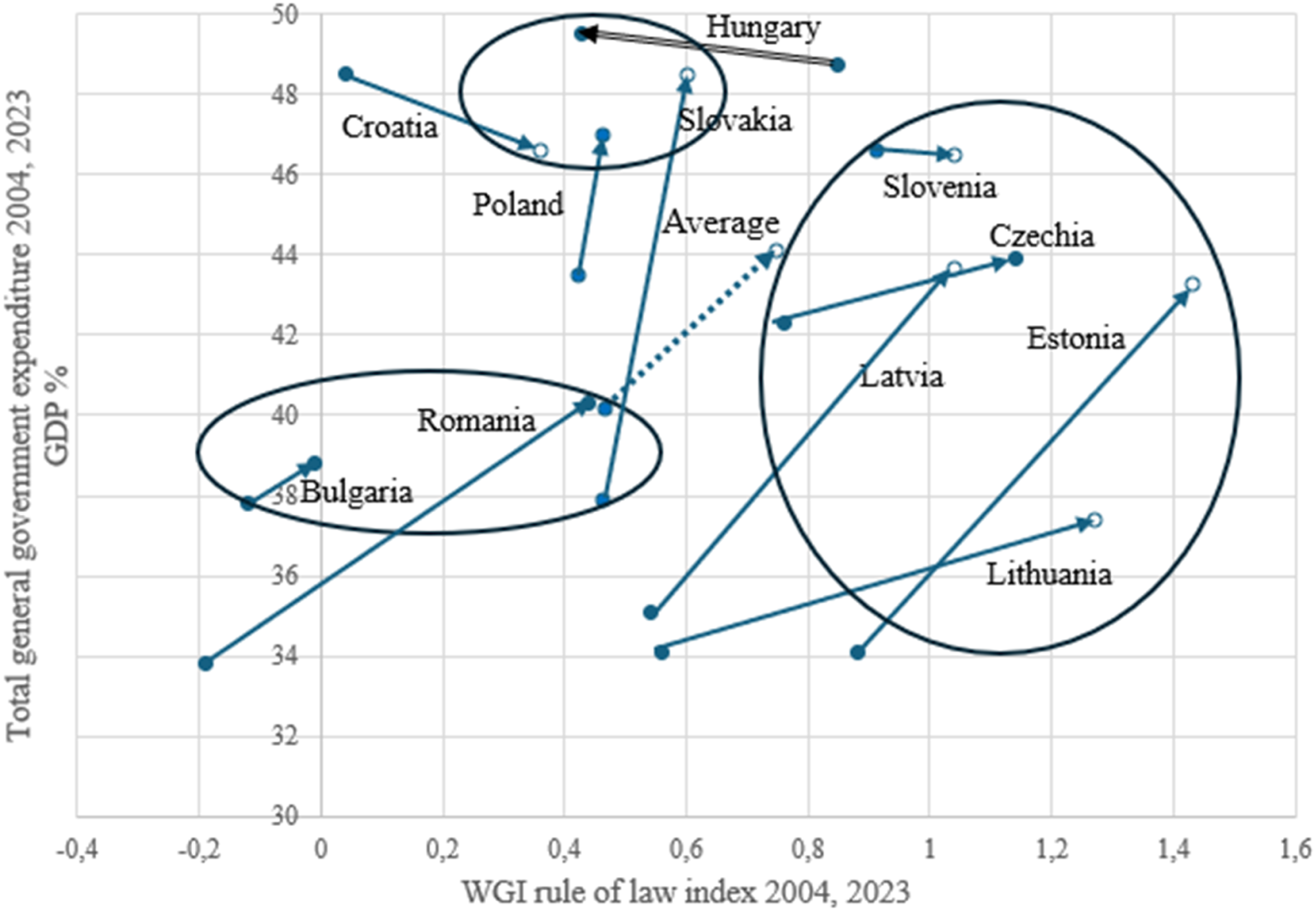
Figure 3 shows that despite global challenges, limits on the state persist in the region. Although the increased expectations from the state are reflected in the 4 percentage points average increase in total general government expenditures, this trend was accompanied by the strengthening of the RoL in most cases, showing the presence of the RQE. The introduction of the euro in six out of the 11 countries also signals the persistence of limits on government discretion even during challenging times.
Compared to the average change among the EU-11, three groups can be distinguished. Focusing primarily on the evolution of the RoL, Group 1 contains those countries, which have a RoL index above the average of the region. Those countries, which have lower-than-average RoL index can be split into two groups: those with higher-than-average redistribution rate (Group 2) and those with lower-than-average redistribution rate (Group 3). (1) In Czechia, Estonia, Latvia, Lithuania, and Slovenia, the state has remained limited (Shackled Leviathan). As the average redistribution rate increased, the RoL has strengthened in all five countries, and only Czechia remains outside the euro-zone. All these countries can be considered as free and stable democracies (Freedom House, 2024). (2) Croatia, Poland, Hungary, and Slovakia have a lower-than-average RoL index and a higher-than-average redistribution rate (46–49%), implying lax constraints on the state (Unchained Leviathan). These countries have seen the most severe populist challenges to democracy and the RoL, although except for Hungary they remain free and democratic (Freedom House, 2024). Hungary has the highest redistribution rate, the RoL has deteriorated and it remains outside the euro-zone. Since it is also the first partly free country in the EU (Freedom House, 2022), Despotic Leviathan is used to describe this case, and it will be examined separately. (3) Bulgaria and Romania have a below-average RoL index, while the state redistribution rate (∼40%) is also low (Weak Leviathan). These countries are also considered free and democratic by Freedom House (2024). A possible explanation lies in the prolonged process of Schengen accession, which ensured that accession conditionality did not end at the time of joining the EU (Spendzharova and Vachudova, 2012). Although both countries remain outside the euro-zone, the Bulgarian state has been constrained by its currency board arrangement preventing independent monetary policy.
Based on the theoretical framework (Figure 1), significant heterogeneity can be expected among the various groups in public spending priorities.
The transformation of public expenditure structures in ECE
Changes in the composition of government expenditure in the EU-11 between 2004/2005 and 2022/2023 (% of GDP, average of 2 years).
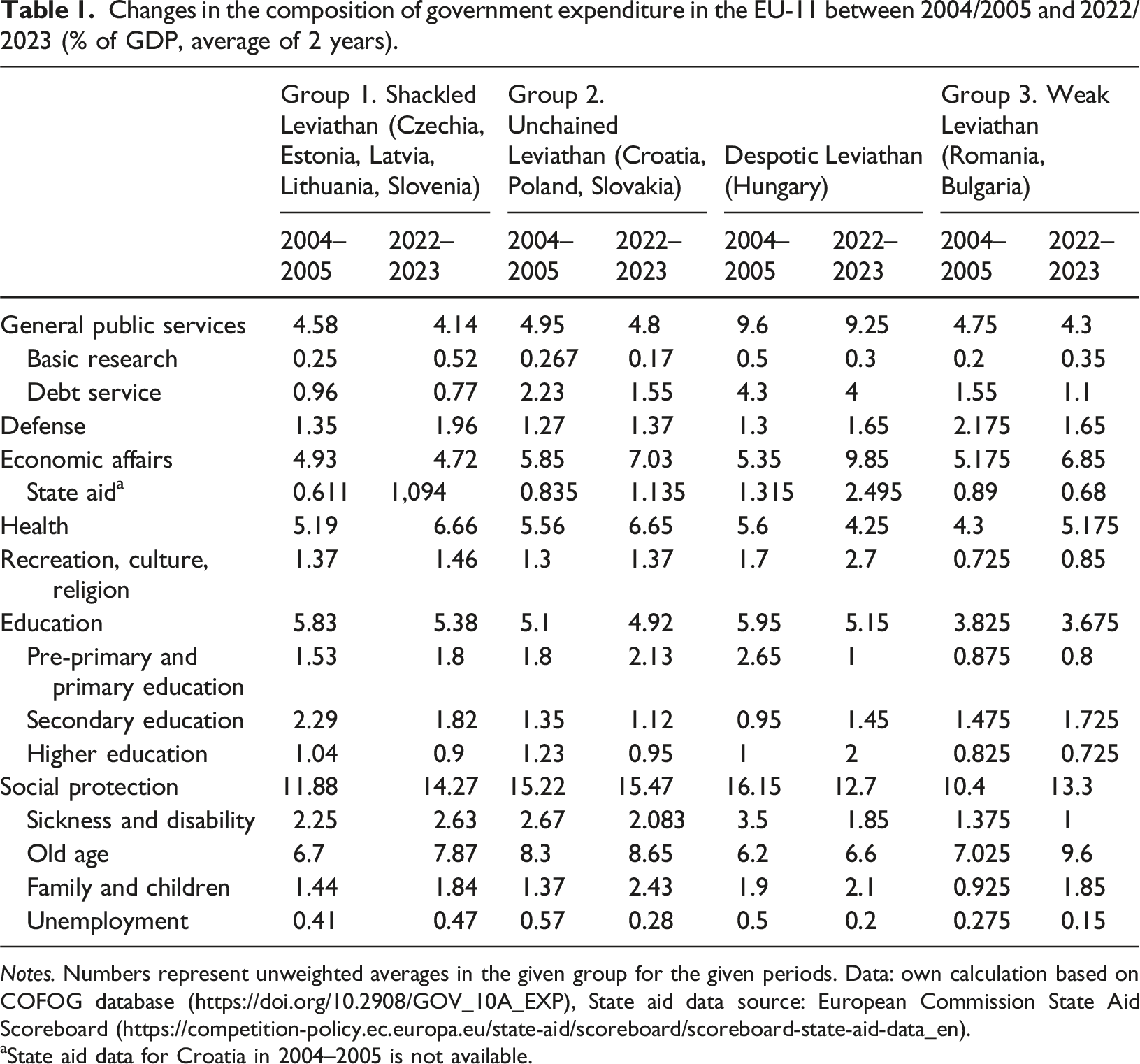
Notes. Numbers represent unweighted averages in the given group for the given periods. Data: own calculation based on COFOG database (https://doi.org/10.2908/GOV_10A_EXP), State aid data source: European Commission State Aid Scoreboard (https://competition-policy.ec.europa.eu/state-aid/scoreboard/scoreboard-state-aid-data_en).
aState aid data for Croatia in 2004–2005 is not available.
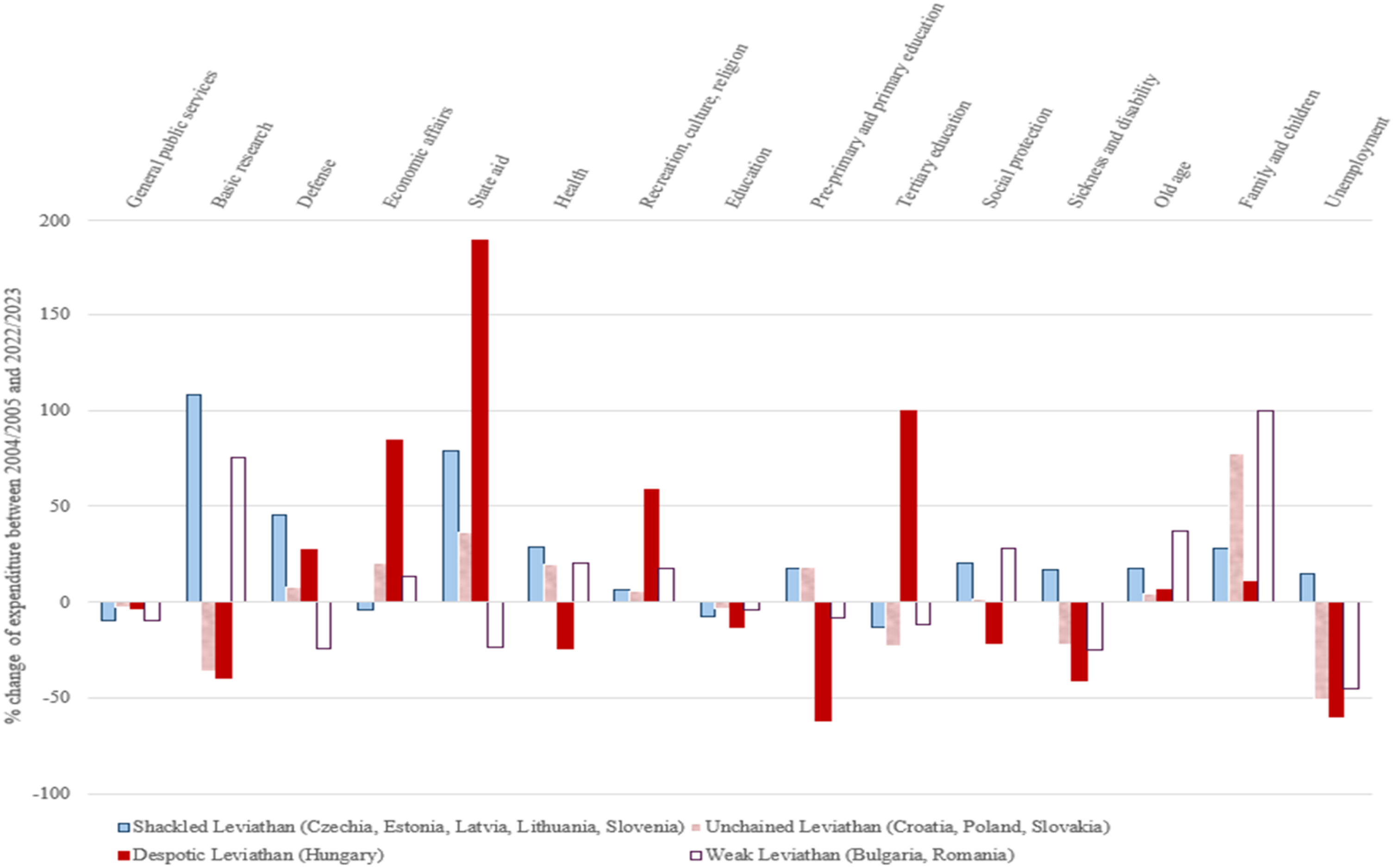
Change (%) in government spending on selected areas between 2004/2005 and 2022/2023. Source: own calculations based on data from Table 2.
In Group 1 countries spending increased in most areas. The highest increase can be observed in basic research and state aid. Spending on defense also grew sharply, reflecting the acute Russian threat. Spending on health and social protection also increased visibly, which indicates the rethinking of neoliberalism in the Baltic states with growing investment in human capital and social cohesion (Avlijaŝ, 2020). Some mild decrease in spending can be observed in tertiary education, but this is balanced by increased spending on primary education. Overall, the spending structure of Group 1 reflects the growing state involvement in the economy and is consistent with the aim of avoiding the MIT. The RQE is at work, and the Shackled Leviathan works in the public interest.
In Group 2 countries the greatest changes took place in Hungary. A sharp increase can be seen in spending on economic affairs, state aid, recreation, culture, and religion, as well as tertiary education. In contrast, funding for basic research, health, and social protection decreased significantly. In other Group 2 countries, the trends are similar, but health care spending increased, and the education spending structure resembles the trends in Group 1 countries—primary education spending increased, while the tertiary education budget contracted. The transformation of expenditure structure in Group 2 countries has less obvious priorities than in Group 1, especially given the decline in spending on basic research, which signals less interest in implementing a high-road developmental strategy.
The transformation of Group 3 expenditure structure shows similarities with both groups. As in Group 1, there is an increase in spending on basic research, health, and social protection, especially on old age and families, suggesting developments resembling the Baltic states. However, the level of spending, especially on education, is still very low and places the group closer to Group 2 than Group 1. As in Group 2, spending on sickness and disability as well as unemployment decreased considerably indicating that labor shortage, rather than unemployment, are now the region’s main problem. This spending structure reflects the continuation of a low-road strategy.
Overall, the clearest illustration of the theoretical framework is provided by the contrast between Group 1 countries and Hungary reflecting rules-based and discretionary decisions. The following section examines the mechanisms behind these decisions.
Objectives for discretionary state interventions: The case of Hungary
The transformation of budgetary structure in Hungary occurred as constraints on government discretion were dismantled by the constitutional majority of Viktor Orbán’s government. While the process of transformation of the political and institutional system are well documented in the comparative political economy literature indicating the stability of the DME model and the turn towards authoritarianism (Bohle and Greskovits 2019; Fabry, 2019; Schiering 2020), the analysis of fiscal policy has mainly focused on the revenue side (flat tax) and the aim for budgetary balance. Analyzing the expenditure side and comparing it to Group 1 countries where the RQE is present and the budget reflects developmental needs, deepens our understanding about the mechanisms of authoritarian governance.
Three areas are analyzed, where state spending increased the most: economic affairs/state aid, tertiary education, and recreation, culture, religion. Figure 5 summarizes the differences between the average of Group 1 and Hungary over time. The time series shows that in countries of Group 1, spending on these areas was mostly stable with some fluctuations, such as increased spending during the COVID pandemic. In contrast, there is a sharp rise in spending on economic affairs, recreation, culture, and religion immediately after the Orbán government came to power in 2010. Interestingly, spending on tertiary education only began to rise in 2020. These three areas are useful for understanding how a government with unlimited power manages the state budget. In the following four intertwining objectives are analyzed based on selected budgetary items: (i) winning elections; (ii) statist economic policies; (iii) building a clientele and private wealth; (iv) forming international alliances. Comparison of the average of Group 1 (Czechia, Estonia, Latvia, Lithuania and Slovenia - EU-5) and Hungary in spending on economic affairs, recreation, culture, religion and tertiary education (2004-2023). Source: own calculations based on COFOG database (https://doi.org/10.2908/GOV_10A_EXP).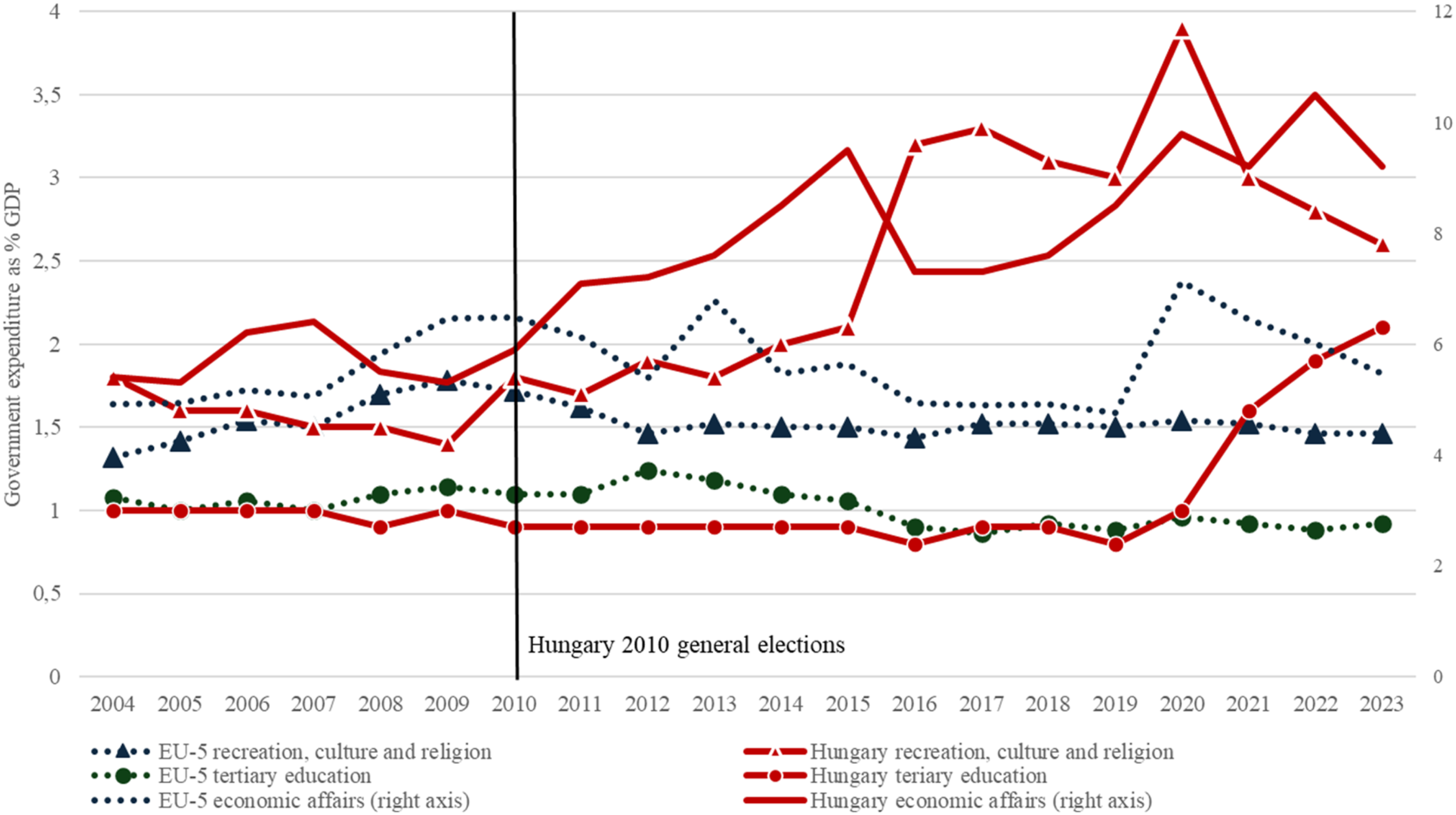
Winning elections
While staying in power is a natural goal for all governments, in a regime without constraints, the opportunities to win elections through budgetary spending are significantly greater. Providing material benefits to potential voters and supporting government ideology are the core avenues for gaining votes.
The sharply increasing spending on economic affairs after 2010 reflected the growing expenditure on labor issues: while in 2009 this item accounted for just 0.9% of GDP, it peaked at 3.4% in 2015. 4 This financed a large-scale public works program, in line with the philosophy of workfare society, where welfare spending is replaced by public work at a wage below the minimum wage creating dependency and a reliable voting block (Szikra and Öktem, 2023: 207).
Subsidized utility prices also became an important means to gain votes. The central campaign message of the 2014 elections was the reduction of utility prices, which could be observed by the doubling of energy spending from the budget from 0.2 to 0.4% in a year. Preferential gas trade deals with Russia also contributed to the success of keeping gas prices low and winning elections (Deák et al., 2017: 85).
Supporting the legitimizing ideology of the regime is also financed from the state budget. This purpose is reflected in the sharply rising expenditures on recreation, culture, and religion after 2010. Spending on sports grew from 0.4% to 1.1% of the GDP between 2010 and 2016. Just as during the former Communist period, success in sports, especially in football and at the Olympics, is used for building national pride and ethnic identity (Molnár, 2023). Spending on religion also grew sharply from 0.3% in 2010 to 0.6% by 2016. Despite a steadily falling share of the population who identify themselves as religious, the idea of Hungary as a Christian nation is a recurrent theme in Orbán’s speeches, usually signaling opposition to Islam or the secular West (Máté-Tóth and Rakovics, 2023).
Statist economic policies
Lack of constraints on government discretion facilitates large-scale economic interventions at a rapid pace, even without adequate planning or feedback from the relevant parties. While attracting manufacturing FDI has been a steady objective for the Orbán regime, it has become even more critical after the suspension of significant EU funding in 2022 from the Cohesion Funds and the Recovery and Resilience Facility, amounting to € 32 billion or ∼16% of the GDP under the RoL conditionality mechanism (Csáky, 2025). A prime example of large-scale intervention to force growth based on FDI is the idea to make Hungary an electric vehicle (EV) battery manufacturing superpower.
Being strongly integrated into the production chain of German car manufacturing since the regime change in the 1990s, attracting investments into the EV battery sector seemed like an excellent, even necessary idea, considering the looming electric transition. The statement to make Hungary a global power in the EV battery industry came in June 2022 from Viktor Orbán, just before the largest ever FDI investment in Hungary, a 7.5 billion € factory plan was announced by the leading Chinese EV battery manufacturer company, CATL. The extremely favorable conditions provided by the government for these investments proved to be highly attractive to other companies in the sector as well. According to the compilation of Ricz and Éltető (2025: 6), by November 2024, 41 companies announced investments, and received 2004 million € direct state subsidies, which is around 10–12% of the investment value and 0.7% of Hungarian GDP. They also received a similar amount of indirect support in the form of full infrastructure support—building energy and water networks, roads, and railways.
While the project makes sense from a DME perspective and fits with a low-road competitive strategy, it also exposes the developmental limits of this model especially with non-Western FDI. Hungary does not have the technology, energy, raw materials, or workers for these investments, while Hungarian companies are unable to participate in these largely closed value chains (Győrffy, 2024). Threats to the environment were also ignored, as well as the protests from local residents (Ricz and Éltető, 2025). It was only an over 2-year decline in production in 2023–2025, which led the government to reconsider the singular focus on the sector. 5
The program is a representative case of all the ways statist policies can go wrong and hamper development. Given the lack of constraints on decision-making, the government could move forward with the policy without adequate strategic planning, impact studies, risk assessment, or consultation with all relevant parties. Criticisms and protests were treated in an authoritarian manner, rather than feedback on the program. The beneficiaries of the program are at most private interests, which leads to the next section.
Financing the clientele and building private wealth
In political capitalist systems corruption, broadly defined as the use of public office for private gain, is not a bug, but a feature of the system, where the main objective is to transform public wealth into private wealth. Hungary is a prime example for such regime. Magyar and Madlovics (2020) use the term patrimonial autocracy to emphasize the discretionary redistribution of property based on loyalty in the name of creating a national bourgeoisie. The accumulative state concept by Scheiring (2020) focuses on managing the capitalist system to ensure both wealth accumulation in loyal domestic hands and economic growth via cooperating with foreign manufacturing capital. Access to EU funds plays a critical role in the system, and analysis based on contract level data shows that EU-funded project are particularly prone to corruption (Tóth and Hajdú, 2025). However, the growth of funding for the three areas shown on Figure 5 also provides ample opportunities for private gains in line with the objectives of political capitalism.
While the focus on EV battery manufacturing does not benefit Hungarian economic development, the need to develop the infrastructure for these companies offers lucrative public procurement opportunities for crony construction companies. Building networks for the gas, electricity, water, and transportation needs of battery companies has become an important source of funding for the clientele especially after losing EU financed projects (Ricz and Éltető 2025: 10).
The doubling of spending on tertiary education after 2020 (in 2023 EU average was 0.8% while Hungary spent 2.1%) is a strange development given that these types of regimes are suspicious towards universities and Fidesz’ voting base is primarily among the lower educated strata of society (Ignatieff, 2024). The quasi-privatization of Hungarian public universities is part of the explanation for this development. While there were 22 state-run universities in 2018, by 2022, this number had fell to 5—since then, 70% of Hungarian students attend these newly privatized universities, which are managed by five-member boards of trustees appointed directly by the government for life without any input from the universities (Oktatói Hálózat, 2022: 82–83).
Building international alliances
Although Hungary is member in the EU and NATO, the dismantling of checks and balances, undermined its position in the Western alliance as signaled by the loss of EU funding. This made the building of alternative alliances a key objective for Orbán’s foreign policy (Éltető and Szemlér, 2023). The rise in state funding for economic affairs and tertiary education is used for this purpose.
The substantial direct and infrastructural support for Chinese FDI reflects not only economic objectives but also a political alliance-building, which positioned Hungary as a bridgehead for China in the EU (Éltető et al., 2024). Building good relations with Russia is also an important aim of Hungarian foreign policy, which did not cease even following the Russian aggression in Ukraine. The share of fuel and energy spending in the budget rose to over 2% of GDP, and contributed to the financing of Russian gas imports, which increased from 4.5 billion cubic meters/year (cm/y) in 2022 to 6.7 billion cm/y by 2024 effectively making the country a hub for Russian energy in the EU (Inotai, 2024). This provides excellent business opportunities for gas traders close to the government as well as strengthens the ties with Putin’s Russia.
The tertiary education budget also includes substantial resources for projecting international soft power and building alliances. The key institution in this endeavor is Mathias Corvinus Collegium (MCC), which “provides supplemental education, without charge, to young Hungarians throughout the Carpathian Basin.” 6 It was founded in 1996 and used to be a small college, until 2020, when it received a total of 374,4 billion Forint (∼908 million EUR) support (Hajba, 2023) from the government, which is higher than the annual amount the state spent on higher education that year. The institution also received a significant real estate portfolio: beyond the Budapest center, there are 17 regional centers around Hungary, 11 centers in neighboring Romania, Slovakia and Serbia and an office in Brussels. Through its visiting fellowship program, MCC has become an international center for building the ideology of illiberal conservatism against the liberal consensus. Notable US guests include Rod Dreher, Tucker Carlson, Christopher Rufo, while institutional links have been established with the Heritage Foundation, Project 2025 and CPAC (Enyedi and Stanley, 2025).
Overall, the examples from the three spending areas indicate how the lack of constraints on the government leads to the restructuring of public spending to serve the private interests of the ruling network. The sharp contrast in spending priorities with Shackled Leviathan countries indicates the lack of developmental considerations and underlines the critical importance of the RQE at a time of increasing power for the state. A brief summary of the economic development performance in the region provides further support for this claim.
Productivity, wages, and convergence in the ECE region
For post-communist countries, the accession to join the EU was fueled by the hope for economic convergence driven by the benefits of the single market and net transfers from the EU budget. As Gulácsi and Kerényi (2025) show, all countries in the region are net beneficiaries of EU transfers, but these are not predictive of their heterogeneous convergence performance. As famously stated by Paul Krugman, “productivity isn’t everything, but, in the long run, it is almost everything. A country’s ability to improve its standard of living over time depends almost entirely on its ability to raise its output per worker” (Krugman, 1994: 11). While extensive growth is also possible by drawing more resources into the economy such as capital from the outside or labor from the inactive population or migration, ultimately it is convergence in productivity, which ensures sustainable rise of wages and living standards.
Figure 6 shows hourly labor productivity and purchasing power parity (PPP) wage developments in the EU-11 countries relative to the EU average between 2008 and 2023.
7
Based on the figure, there is a strong correlation (R2 = 0.765) between productivity and wage growth—essentially a 1% improvement in productivity yields a 1% increase in wages (PPP). Although none of the countries in the region have reached the EU average in terms of productivity and wage levels between 2008 and 2023, there has been significant convergence, especially in those countries noted by long arrows, such as the Baltic states, Romania, Bulgaria, and Poland. In contrast, Hungary has a very short arrow, which means that in 16 years, there was barely any convergence to the EU average in either dimension indicating the developmental limits of political capitalism. Changes in labor productivity and wages 2008-2023.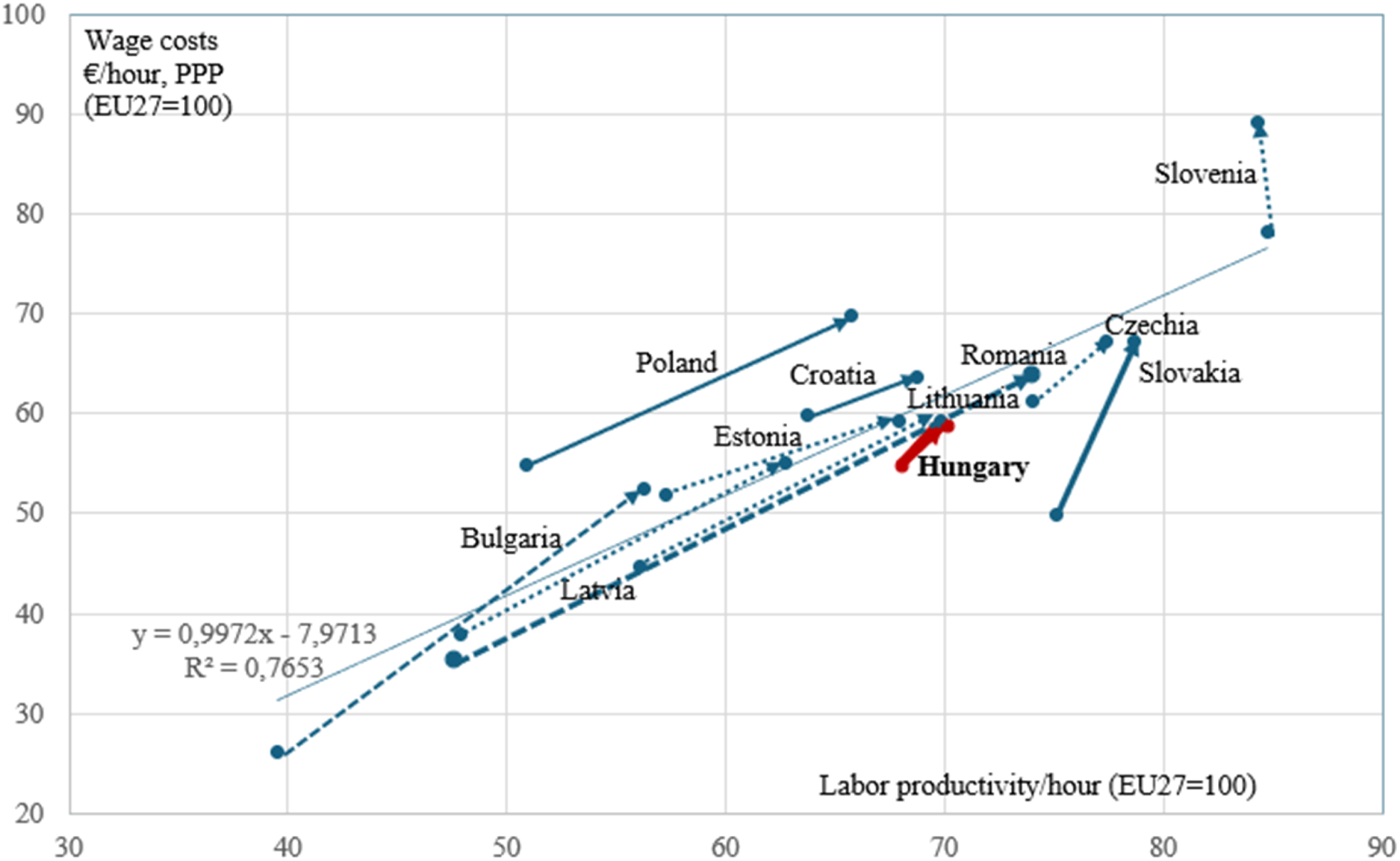
Based the relationship between productivity and wages, three countries require further examination given their above average performance in one or more dimensions: Romania, which has shown the most improvement in both dimensions, Slovakia, which was able to improve its wage levels significantly without corresponding improvement in productivity, and Poland, which has consistently higher wage levels than its productivity would predict.
Summary of convergence performance 2004–2024.
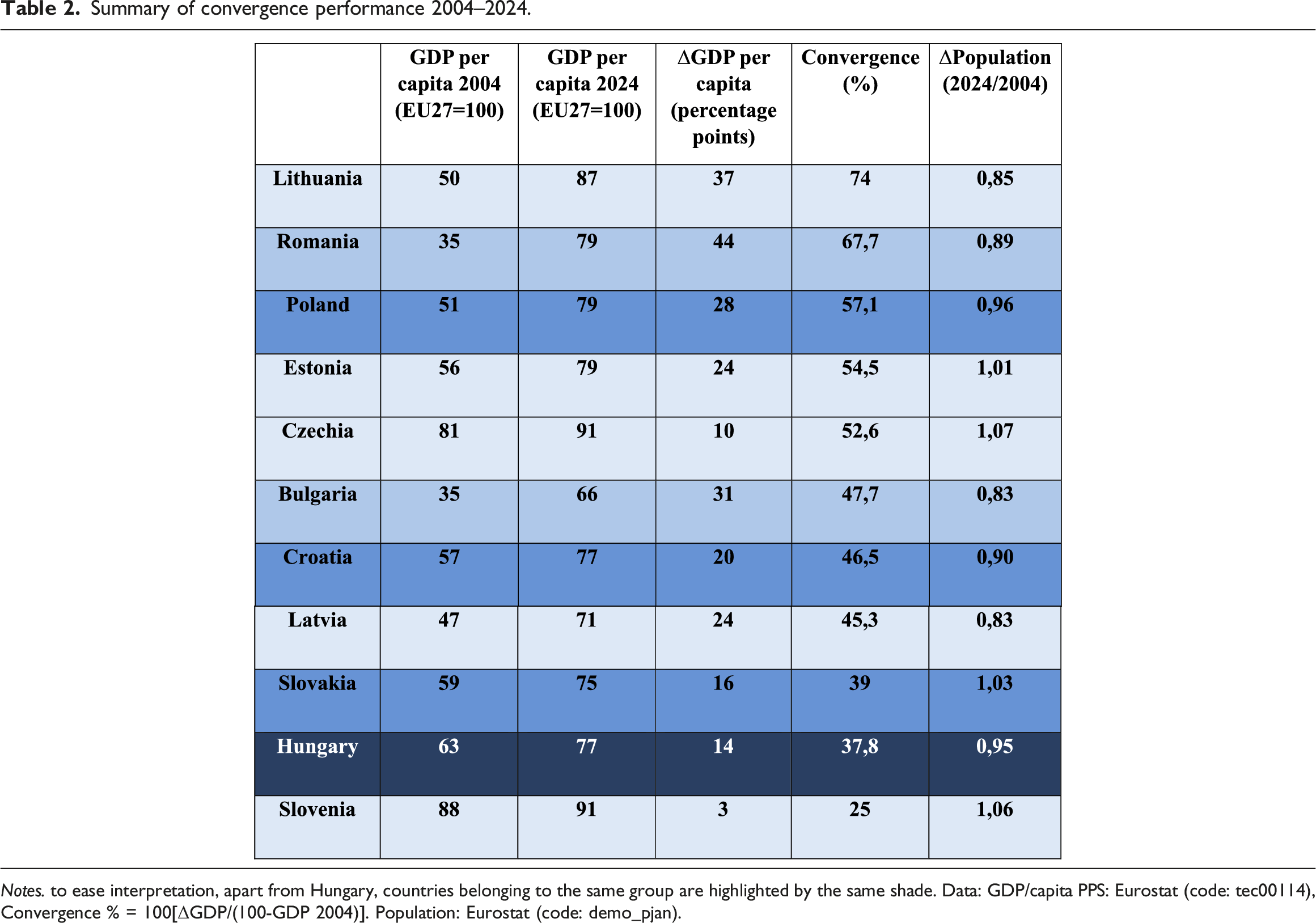
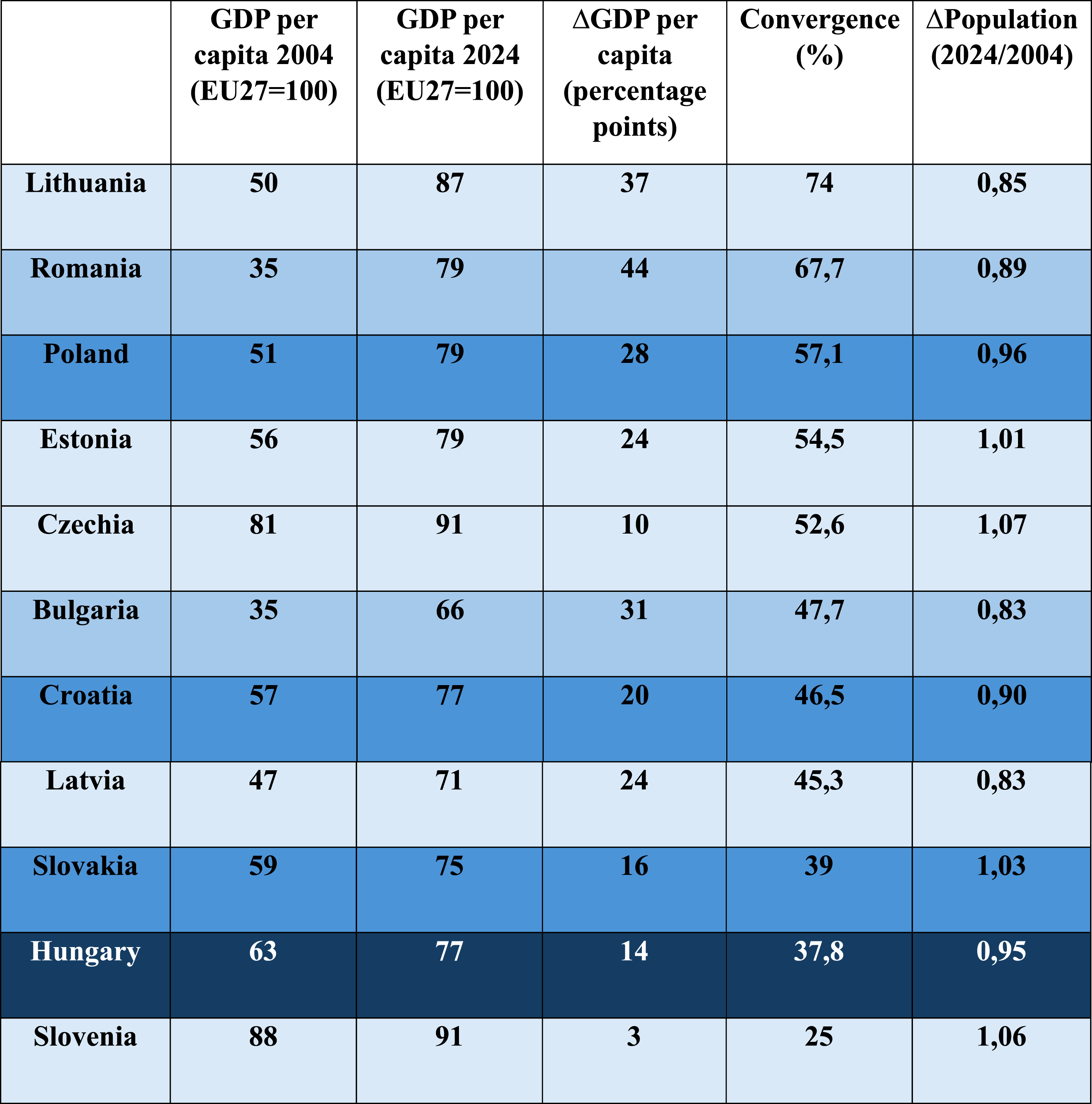
Notes. to ease interpretation, apart from Hungary, countries belonging to the same group are highlighted by the same shade. Data: GDP/capita PPS: Eurostat (code: tec00114), Convergence % = 100[ΔGDP/(100-GDP 2004)]. Population: Eurostat (code: demo_pjan).
The case of Romania represents the clearest illustration for the success of the limited government model—it has experienced one of the largest improvements in its RoL index and moved closer to the Shackled Leviathan model, while its redistribution rate is still low, which allows market forces to work. The FDI-led neoliberal model has proven highly resilient, especially following the long involvement of the Troika during the management of the 2008–2013 financial crisis (Ban et al., 2023). At the same time, Romania still relies on a low-road competitiveness strategy and for further development it needs to invest into basic research, human capital and infrastructure building. Its recent macroeconomic imbalances with rising inflation, over 9% fiscal deficits indicate the limits of its growth model (OECD, 2025: 242–244).
Compared to its productivity level, wages are relatively high in a regional comparison allowing for consumption-driven growth, which makes Poland an outlier in the region (Ban and Adascalitei, 2022). Magyar and Madlovics (2020: 649–651) argue that Poland avoided a political capitalist system because, from 1990 to 2015, successive governments built a strong market economy with domestic actors, which the PiS government did not challenge, and its illiberalism remained ideology-driven, prioritizing social conservatism. Benczes and Orzechowska-Wacławska (2024) highlight that Polish economic populism involve generous welfare payments and support for national champions, reflecting a more developmental approach than in Hungary. Long-term benefits also stem from the 1999 education reforms, despite partial rollbacks in 2017 (Wiśniewski and Zahorska, 2020).
The region’s aggregate economic performance is summarized by Table 2, which uses a gap measure for assessing convergence: it shows the percentage of the gap with the EU average that the country has closed since 2004. The countries are ranked according to convergence performance. As we can see, the leading countries are Lithuania and Romania, while Hungary is second to last, overcoming only Slovenia. From this performance, it is evident that investing so much in economic affairs or even tertiary education does not necessarily produce public economic benefits. Furthermore, Slovenia is not only the most developed in the region (together with Czechia) but has been also successful in increasing its population by 6% compared to 2004. Its weak convergence performance might be explained by the loss of competitiveness, as Figure 5 shows that wage growth surpassed productivity growth considerably.
Of the top five positions in the list, three belong to the Shackled Leviathan group. Romania is moving in this direction as well. Among those countries, which belong to the Unshackled Leviathan group, only Poland shows real success, converging to Estonia’s level of development. Overall, the developmental performance in the region broadly supports the RQE—governments limited by the RoL are most likely to implement policies in line with general public interests, and this is reflected in their development.
Conclusions
During the global resurgence of the state, this paper has contributed to the debates on state capitalism and political capitalism through integrating the perspectives of institutional economics and public finance. Using the ECE countries as natural laboratory and applying Acemoglu and Robinson’s (2019) RQE framework, it has been shown that in most countries state capacity and constraints on power increased in parallel. The progress towards a Shackled Leviathan model is associated with increased spending on the areas considered necessary for stepping on a high-road development path such as basic research, health care, primary education, and welfare. In contrast, the state with the least constraint, Hungary, recorded a completely different budgetary transformation with a focus on economic affairs, recreation, culture, and religion, as well as tertiary education. A deeper analysis of these budgetary items have revealed how the budget reflects the priorities of political capitalism: winning elections, statist economic policies, building private wealth and international alliances. Hungary’s weak convergence performance compared to the region indicates the developmental limits of the Despotic Leviathan. While the case of Poland indicates that political capitalism is not an unavoidable consequence of illiberalism, weakening constraints on state power increases the risk.
As the rules-based global order is crumbling and a series of crises have given rise to increasing demands from the state, the institutional context deserves deep scrutiny. The developmental objectives of state capitalism can easily degenerate into the predation of political capitalism in the absence of robust checks and balances on state power.
Supplemental material
Supplemental Material - The resurgence of the state in East Central Europe: Institutions and public expenditure composition
Supplemental Material for The resurgence of the state in East Central Europe: Institutions and public expenditure composition by Dóra Győrffy in Competition & Change
Footnotes
Acknowledgments
I am grateful for Gábor Oblath for his help with the statistical data in Section 6. I also thank the two anonymous referees for their constructive feedback, which greatly improved the manuscript. All remaining errors are mine.

Funding
The author received no financial support for the research, authorship, and/or publication of this article.
Declaration of conflicting interests
The author declared no potential conflicts of interest with respect to the research, authorship, and/or publication of this article.
Supplemental material
Supplemental material for this article is available online.
Notes
References
Supplementary Material
Please find the following supplemental material available below.
For Open Access articles published under a Creative Commons License, all supplemental material carries the same license as the article it is associated with.
For non-Open Access articles published, all supplemental material carries a non-exclusive license, and permission requests for re-use of supplemental material or any part of supplemental material shall be sent directly to the copyright owner as specified in the copyright notice associated with the article.
