



Abstract
This study was conducted to identify key issues for students in an undergraduate medical course with cross border delivery and the impact of these issues on the students’ ability to learn. Data relating to the student experience and perceived student needs were collected from transnational students and teaching staff from Australia and Malaysia. The results highlight the complexities of migration from one learning environment to another and suggest the need for a cohesive institutional approach to support medical student movement between culturally diverse settings as well as the translation of medical curriculum from one cultural context to another. We describe how the particular needs of transnational students moving across borders align with Maslow’s hierarchy of unmet needs and can be met through low cost, long reach institutional initiatives. These must be supplemented by interpersonal approaches in which institutions can also foster. The outcomes will benefit local as well as transnational students and staff.
Keywords
Enrolment of students into tertiary institutions across international borders is a global phenomenon making the export of tertiary education a significant economic activity. During the past decade, there has been a considerable increase in the delivery of transnational or offshore education degree courses by universities worldwide (Organisation for Economic Co-operation and Development, 2010). These courses are delivered through local partner organizations or through the institutions’ own offshore campuses, especially in Asia (Organisation for Economic Co-operation and Development, 2010). Transnational programs foster intercultural engagement of students and staff, an aspect of modern university courses which is considered essential to prepare graduates for the global workplace (Leask, 2003). Furthermore, they help sustain international education as a large export industry in developed countries and as a potential source of skilled migrants, particularly in the health care professions (Kai, Bridgewater, & Spencer, 2001; Kumas-Tan, Beagan, Loppie, MacLeod, & Frank, 2007; Leask, 2009; Skelton, Kai, & Loudon, 2001).
Given the significance of these trends, there is a pressing need to understand the influence that transnational education may have on the learning and teaching experiences of students and staff and the overall quality of the education. Existing literature shows that foreign students studying in Western countries and then returning to work or to continue studying in their country of origin are known to experience difficulties adapting to socially and culturally different learning environments (Fritz, Chin, & DeMarinis, 2008; Kwon, 2009; O’Reilly, Ryan, & Hickey, 2010; Sawir, Marginson, Nyland, Ramia, & Rawlings-Sanaei, 2009; Smith & Khawaja, 2011; Yen & Stevens, 2004) and implementing knowledge acquired overseas into practice at home (Johnson, 2008; Summers & Volet, 2008). Similarly, students from developed countries undertaking part of their degree at offshore university campuses are faced with challenges about which little is known (Gribble & Ziguras, 2003; Reid, & Loxton, 2004; Seeleman, Suurmond, & Stronks, 2009).
Without the strategic development of supportive learning environments that facilitate intercultural engagement, problems can emerge that can affect learning, teaching, and subsequent practice. The curriculum may be incompatible with the educational, cultural, and linguistic experiences of students, affecting their learning (Leask, 2009). This may also have implications for the capacity of graduates to address local needs when they return to their own country and begin professional practice (Summers & Volet, 2008). Teachers may experience difficulties adapting their teaching strategies to suit different cultural needs necessary to meet the learning needs of their students (Johnson, 2008; Leask, 2009). Therefore, universities educating health professionals through transnational programs face the challenge of meeting the cultural needs of students to ensure graduates are capable of working in a culturally responsive manner in an ethnically diverse society (Gribble & Ziguras, 2003; Reid, & Loxton, 2004; Seeleman et al., 2009).
In Australia, there has been little work examining teaching and learning in transnational higher education, particularly cultural differences across student populations (Johnson, 2008). In medical education, there is a considerable body of literature that explores cultural competence but it is focused primarily upon developing the capacity of students to engage appropriately with patients from diverse cultural backgrounds (Dogra, 2007; Hobgood, Sawning, Bowen, & Savage, 2006; Koehn & Swick, 2006; Kripalani, Bussey-Jones, Katz, & Genao, 2006; Summers & Volet, 2008). There has been scant consideration of the impact of differing cultures upon the learning experiences of medical students.
In this study, we explored the experiences of students and academics moving across international borders in a medical program of an Australian university delivered in both Malaysia and Australia. The binational setting provided a unique opportunity to explore issues for a single medicine course delivered in two culturally and geographically distinct locations, extending the relevance of this study to other (non-Australian) providers of transnational medical education. We aimed to determine the needs of transnational medical students across areas including campus-based study, participation in clinical placements, pastoral care, and other supports and to explore how these needs might be met. We expect the results of the study to inform the facilitation of movement across cultural settings for students and highlight elements, which may be important in the translation of the medical curriculum across cultural contexts. This article reports upon the self-identified needs of the students and those identified by staff and their perceptions of strategies to meet these needs.
Method
Participants in this study included undergraduate students and staff involved in a 5-year Medicine Bachelor/Bachelor of Surgery (MBBS) program delivered in Australia and Malaysia by an Australian university. Prior to commencing the study, we obtained ethics approval from the university’s human ethics committee. We then used electronic mail and announcements in lectures and tutorials to recruit undergraduate students and academic staff from the course. Only students and staff with experience of learning or teaching across international boundaries in the program were eligible to participate. Participants were either Malaysian or Australian. The Malaysian students were undertaking their course almost entirely in Australia while the Australian students had undertaken, or were undertaking, a six-week clinical attachment in Malaysia. None of the authors was involved in teaching or assessing the students.
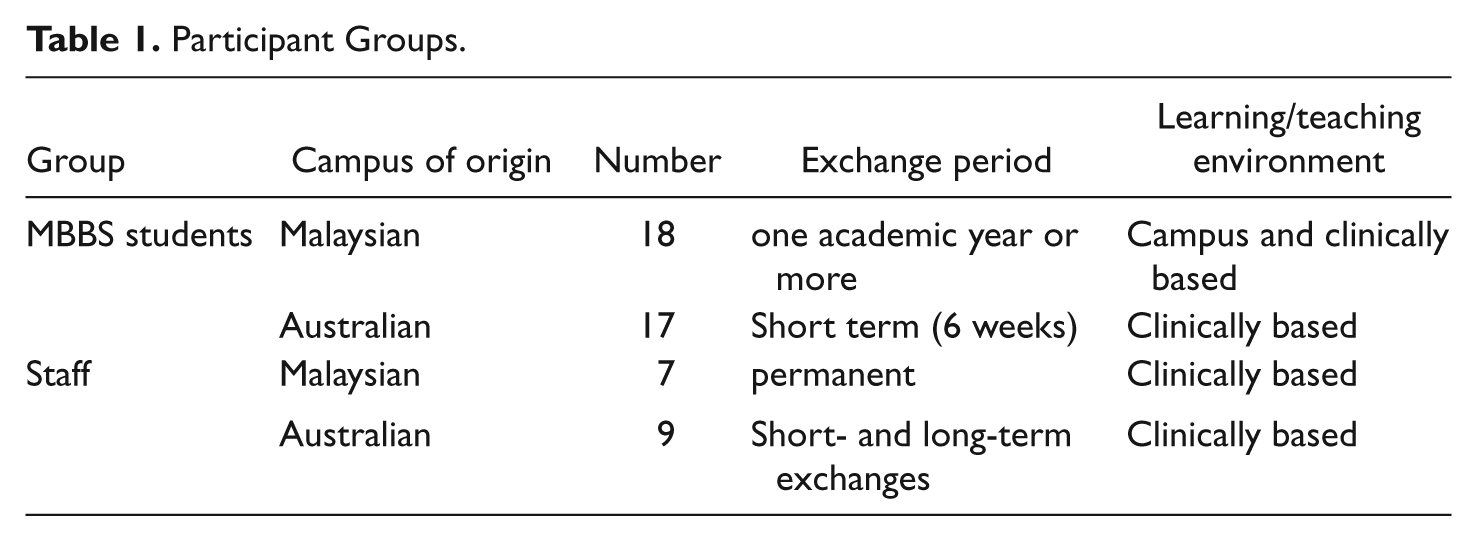
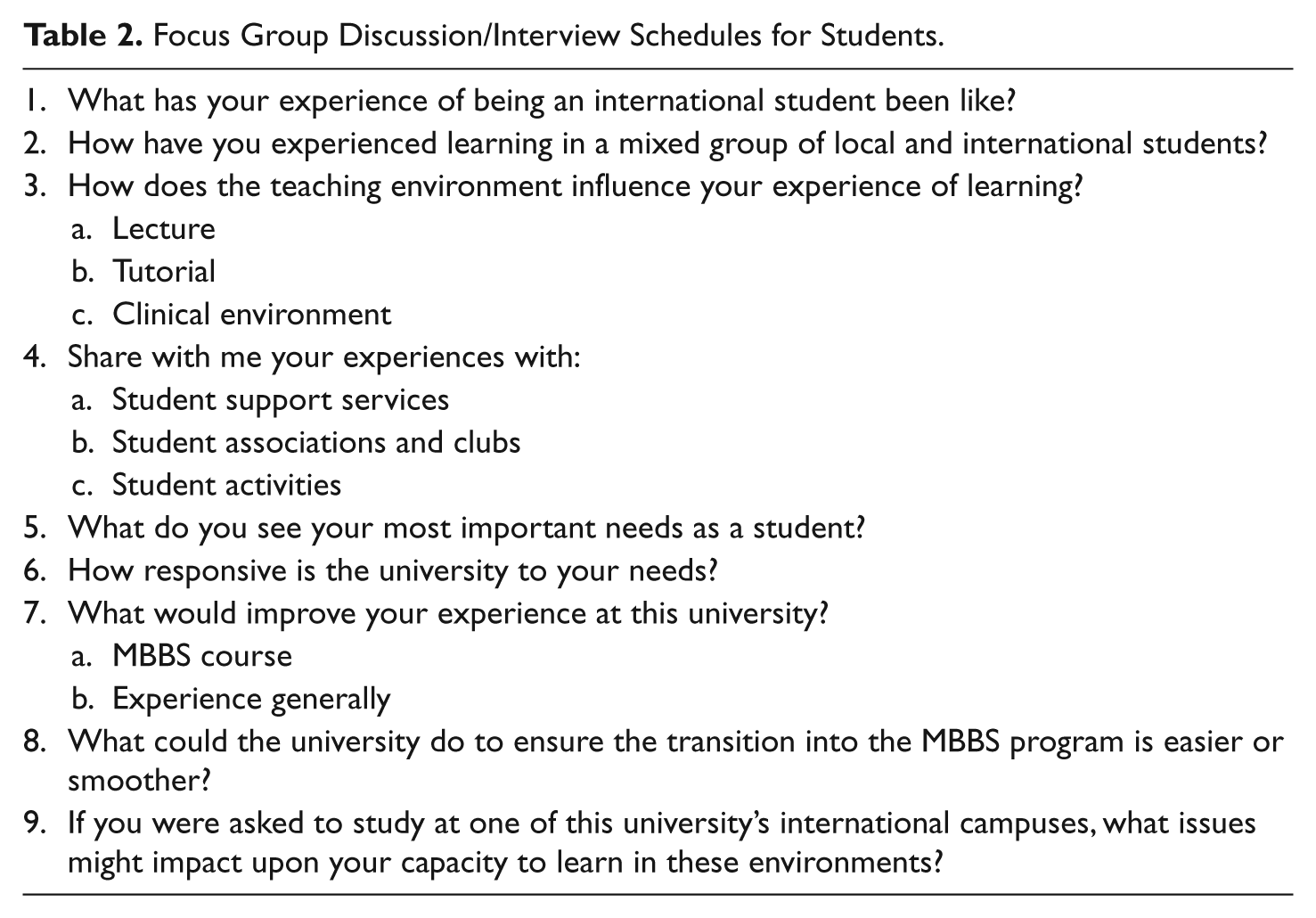
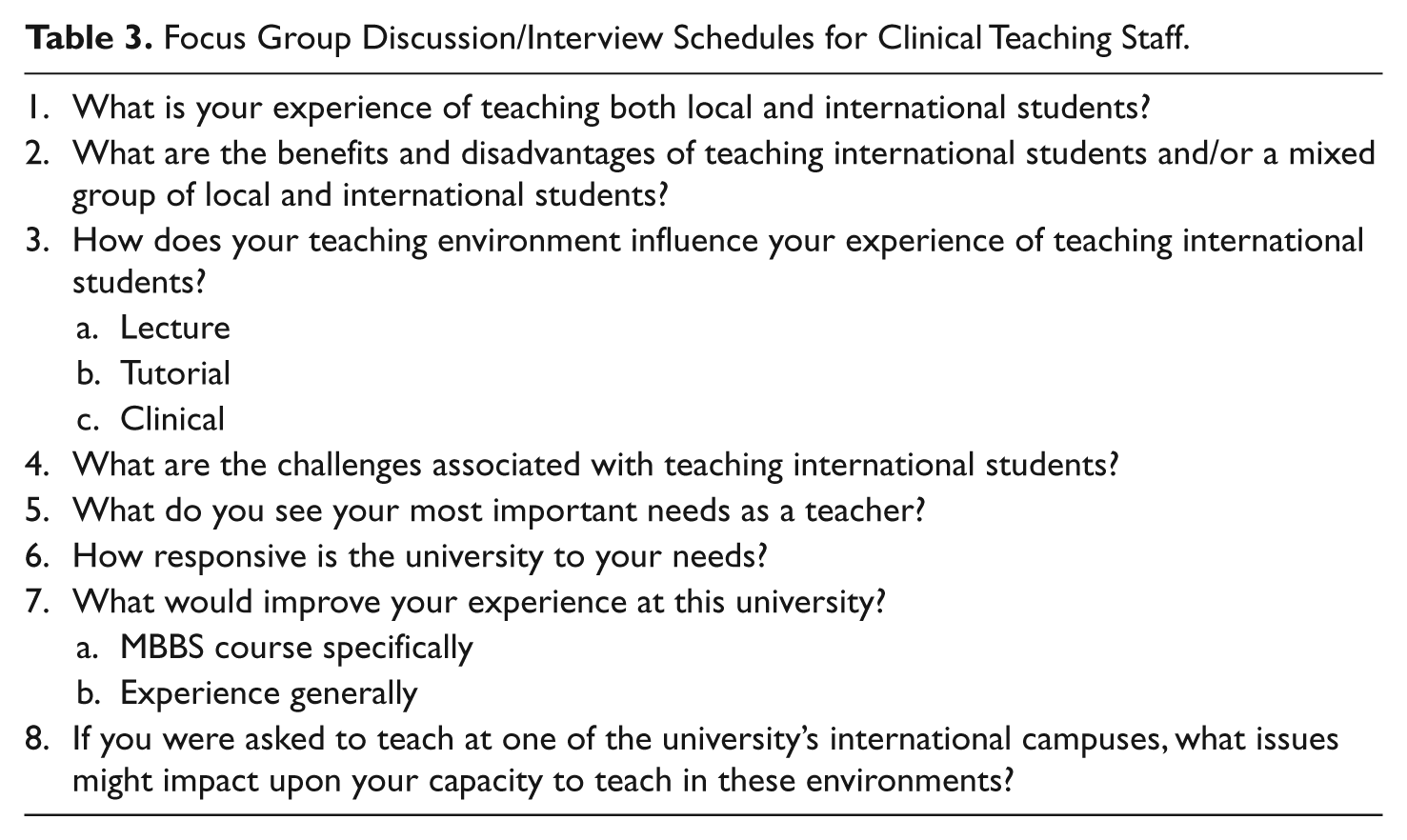
Thirty-five MBBS students (see Table 1) and 16 clinical teaching staff consented to take part in the study. A comparable number of Malaysian- and Australian-based student participants were involved, including students from campus and clinically based years of the degree. Slightly more of the student participants were female (53%); the average age was 23; all were unmarried. English was spoken by all, either as a native or a second language. The staff participants comprised seven Malaysian-based staff teaching at the Malaysian clinical location and nine Australian-based staff with roles that included teaching international students. Data were collected using semi-structured focus group discussions and individual interviews. All sessions took place in English. Participants shared their experiences regarding learning and living in Australia or Malaysia as well as identifying student needs and ways to improve the student experience (see Tables 2 and 3).
Participant Groups.
Focus Group Discussion/Interview Schedules for Students.
Focus Group Discussion/Interview Schedules for Clinical Teaching Staff.
Students and staff were interviewed separately. Five focus groups were conducted with students comprising groups of only Australian or only Malaysian participants. Three students opted for individual interviews. Two focus groups and nine interviews were undertaken with staff. Data collection continued until saturation of themes was apparent. We digitally recorded all group and individual interviews and had them professionally transcribed.
For data analysis, we coded and organized the transcribed data into themes that emerged during the analysis (Liamputtong & Ezzy, 2005). First, one of the authors (Louise McCall) coded and categorized the data; then, Jennifer Lindley independently checked and reviewed the data and identified relevant themes for categories. After summarizing all data, we reached consensus on the key themes identified by the data analysis. We analyzed data from the two cohorts, Australian and Malaysian, independently and then compared them to establish any similarities and distinctions and to determine any difference between focus groups and individual interviews. Having a second author identify themes and subthemes assured the validity and reliability of our methods and core findings (Liamputtong & Ezzy, 2005).
Results
The results of data analysis are presented under two key headings: students needs and strategies to address these needs.
Students Needs
Both individual interviews and focus groups revealed similar themes across cohorts, which we categorized as context and culture, language and communication, relationships, and coping.
Context and Culture
This theme, identified by all participants, relates to the impact of the host culture on the learning and social contexts and includes local customs and culture as well as approaches to learning. International students coming to Australia and Australian students studying internationally needed to be oriented to the local customs, particularly the knowledge of customs and etiquette of learning in the host culture.
. . . even though I have been here around five to six years I still don’t really understand deep Australian culture. (5th-year Malaysian student) . . . it’s just a cultural thing, I suppose, the language. Like sometimes you just don’t get what they’re talking about because you come from a different background. (3rd-year Malaysian student)
According to the participants, student behavior requirements in some educational institutions are more conservative than in others. For example, manner of addressing staff, modes of dress and asking questions during teaching sessions. However, Australian students studying in Malaysia appeared unaware of the need to modify their behaviors in this respect. Similarly, some Malaysian students viewed asking questions in the Australian classroom setting as impertinent and interpreted this as challenging the teacher’s authority. Voicing one’s thoughts, either positive or negative, is also unacceptable.
. . . maybe for local students most of them tended to speak more, but other international students tend to keep more quiet actually. That’s the biggest difference. (5th-year Malaysian student)
Participants believed that their capabilities or interest in a subject may be misinterpreted due to such culturally determined attitudes and behaviors.
In the clinical learning environment, lack of knowledge of Australian popular culture, particularly around entertainment and sport, created a barrier for Malaysian students for establishing a rapport with patients, resulting in a lack of confidence and anxiety when immersed in clinical settings.
Language and communication
Although English is the formal language for both university and clinical settings in Australia and Malaysia, participants identified the impact of language on learning as a problematic multifaceted issue. Malaysian students in Australia indicated experiencing difficulty with general English. These students disclosed that mental translation between English and their native language was continuous during the course and particularly intensive in the early years. Such translation was necessary for thinking, organizing concepts mentally, and then attempting to respond. This dynamic strongly affected their ability to understand lectures and to formulate pertinent questions.
Malaysian participants referred to pace of speech as a significant issue. They felt that the academics spoke rapidly in both lectures and tutorials, further compounding their comprehension problem. Pace was also a factor when interacting with peers in learning and social contexts and with patients in the Australian clinical setting. This was exacerbated by students’ reluctance to request people to speak slowly as they perceived that this would be seen as an admission of weakness and an imposition.
. . . sometimes I felt like it was all happening very fast and I could follow it but I didn’t have time to think . . . . (3rd-year Malaysian student)
The use of colloquial language compromised Malaysian students’ ability to communicate fluently even for those proficient in English. Casual conversations with patients were particularly difficult, as these require colloquial language and some basic knowledge of Australian popular culture.
Especially when interacting with patients sometimes, like local jokes, can’t really get it . . . They use colloquial terms; that’s a bit hard. (4th-year Malaysian student)
Professional medical language, which is based on Greek and Latin, was also a challenge. Participants with native languages such as Bahasa Malaysia, Hokkien, Cantonese, Tamil, and Hindi, which have no connection with Greek or Latin, found medical terminology particularly challenging. The absence of native words to describe certain medical conditions intensified the problem.
You know the medical textbooks, they are not really English, but most of the words (are) from Greek or Latin, so I struggle a bit with those kind of words. (3rd-year Malaysian student)
Language was also a source of concern for Malaysian students returning home to practice. They believed that time spent away from their native environment would impact upon the fluency of their native language and contribute to mistakes in conversation. Students viewed this as having a negative impact on their capacity as professional practitioners in the future and felt anxious regarding career potential.
. . . when we try to explain the disease that we learn here to . . . people who ask, which is quite hard to translate English back to our own language. (4th-year Malaysian student)
By contrast, these issues did not appear to be as significant for Australian students undertaking study in Malaysia. These students were engaged in learning in clinical settings that accommodate a diverse language base for three predominant ethnic groups in the patient population (Bumiputeras, Chinese, and Indians) as well as English. The professional language of medicine in Malaysia is English and assistance with translations for patients is often provided by the medical and health professional staff in the clinical setting as the issue of a common language presents difficulties. For native English-speaking Australians, using medical language based upon Greek and Latin did not represent a significant challenge.
One specific challenge was grappling with the language barrier, . . . even the doctors in JB [Johor Bahru] have trouble occasionally communicating with patients if they’re from a remote community with their own dialect. (5th-year Australian student)
Relationships
Relationship issues were identified in both learning environments and social contexts. International students on Australian campuses felt that local students did not readily accept them into learning environments. Malaysian students did not regard events, aimed at supporting student social networks, as adequate for their needs. Underlying reasons included a perceived lack of consideration for their religious requirements and financial constraints.
One thing the sense of acceptance by local student is also important . . . There is not much interaction unless we need to—like because we are put in a group and have a discussion . . . . (4th-year Malaysian student) Sometimes they don’t provide halal food, which we can’t eat, and they provide alcohol which we don’t drink . . . so there is no point in going. (4th-year Malaysian student)
Malaysian participants in Australia reported a tendency to develop their social relationships with other international students based upon a shared understanding of the experiences and challenges of living a foreign country (dealing with loneliness, financial constraints and study workload). However, they reflected that learning to manage these issues was not necessarily detrimental.
I mean for international students we also tend to go to other international students and local students do the same thing (go to local students). (4th-year Malaysian student)
Australian students in Malaysia did not view relationship issues as such a significant factor. The duration of the stay in Malaysia was significantly shorter for these students than the time spent in Australia by their Malaysian counterparts. In addition, the size of cohort in Malaysia was much smaller than in Australia.
Coping
Malaysian students explained that the absence of a network of family, friends and other supports in Australia was problematic for them. While local students utilized their existing networks, for international students, the lack of existing support networks combined with the need to develop new relationships was daunting. Limited financial resources and time for socializing impacted negatively on nurturing of potential friendships leading to unsatisfactory social supports in times of particular need, such as illness or study overload. For some, this resulted in withdrawal, loneliness and depression, compounded by an associated cultural stigma and concerns about worrying family at home.
. . . sometimes I feel very lonely and I can’t tell all these things to my parents, because I don’t want to make them worry. (3rd-year Malaysian student) I think if I have the option to study here or back in Malaysia, I think it would be good for me to study in Malaysia because I have my parents. I have my friends and it’s easy for me to focus on my study. . . . (4th-year Malaysian student)
The shorter length of time spent by Australian students in Malaysia reduced the impact of factors related to coping. Financial constraints were not as significant since the effective cost of living away from home in Malaysia was less than that in Australia. The presence of some Australians as full-time academics at the Malaysian clinical school provided some specific assistance and support for these students. Malaysian students in Australia did not have the same level of access to staff from a similar cultural background as their own.
Clinicians were very supportive of having students around and made every attempt to accommodate any language/cultural barriers. (5th-year Australian student)
Strategies to Address Students’ Needs
Both groups of participants suggested practical measures that the university and individuals can put in place to address students’ needs. The implementation of strategies can be focused upon the phase of the student’s movement between locations. Broadly, the strategies can be divided into those conveying information students may require before travelling; those addressing concerns that develop on arrival and beyond; and those targeting issues specifically relevant to returning home. In all cases, the strategies centered on easing students’ transition from one culture and learning environment to another.
Before Travelling
Participants highly valued having information about the host country and learning environment available when they were considering or planning the exchange. However, they pointed that it is crucial that institutions maintain the information particularly for contacts in the foreign country.
On Arrival and Beyond
The strategies in this category provided the largest range of suggested interventions at the practical everyday level as well as the more specific level of student learning. These are described below.
Intensive tailored learning support
Both students and staff appreciated the opportunities to work intensively in small groups or individually to address assertiveness, language and clinical workplace culture issues. Therefore, support services that provide tailored programs for learning in these areas were highly valued by both groups of participants.
Students’ requests focused, in particular, on the organization of workshops for case and patient presentations. These workshops, they explained, are instances where students have a chance to practice responses in a sheltered environment and obtain constructive feedback from language support staff and clinical educators. Workshops assist students in practicing vocabulary, structuring the presentation, delivering the information, interacting with peers and tutors, and answering questions. Students also have a chance to correct mistakes and clarify issues, such as “touching” of patients, which can be challenging. Participants indicated that workshops also contribute to building students’ confidence in dealing with health professionals, peers and patients in the clinical setting and provide a vehicle to develop and practice assertiveness in interactions.
Peer support
Students and staff proposed the implementation of a “buddy” system whereby senior international students could help newcomers settle in by providing tips and acting as mentors, at least during the initial stages of study in the host country. Identified topics included coping with a new learning culture, navigating learning in clinical settings, obtaining internships, returning to work in their own country, and exploring job opportunities.
Staff suggested this peer support approach would be strengthened by a complementary system with local students also acting as “buddies” for international students, providing the opportunity to establish social networks not confined to specific cultural groups. This proposed program could be integrated as part of the formal curriculum. Such a strategy would also target enhancing cultural safety skills of local/host students.
. . . Part of that (proposed) program (would be) buddying up Australian students with international students and saying: this is part of your professional development and you have to work as a team to access patients so that they’d actually almost have a facilitator with them and it would also have—I suppose for me—the hidden learning curve of making the Australians cross some of those trans cultural boundaries. (Australian staff member)
Teaching and assessment
Approaches to teaching, learning, and assessment also emerged as important factors affecting students.
Accessible and multidisciplinary staff
Students suggested learning would be better facilitated through small group tutorials where they could gain increased interaction with staff and would encourage students to ask questions and obtain answers without putting themselves in a vulnerable situation by disclosing their insecurity or lack of knowledge publicly. Interactive teaching approaches would also assist students in obtaining support from one another and may help navigate the cultural norms of the educational and clinical settings. Although staff acknowledged the value of small group teaching, they noted that there were challenges associated with resourcing.
Role of assessors
Academic staff highlighted the need for cultural safety training across range of academic responsibilities including assessment to ensure international students are not disadvantaged.
(the local students) come up to the exam station and they’d come straight in and they were ready to go and these are timed stations, they only had six minutes or whatever it was, whereas the international students . . . they’d come up and they’d stop by the door and they’d hesitate and that wasn’t really an issue about whether or not they knew anything . . . (for them) it was very rude to just walk into the room . . . they’d been waiting for the examiner to say yes come in, it’s okay. (Australian staff member)
This suggests that a number of strategies need to be considered. Examiners require appropriate training for the assessment instruments being used. Students need to have the assessment protocols explicitly articulated and the opportunities to practice appropriate behavior. Assessment tasks and practices need to be designed to ensure that they address the learning outcomes explicit in the curriculum rather than cultural variations.
Returning Home
Malaysian students identified their concerns about returning to their home country after a period of study overseas. Staff suggested that reflection on the transnational experience would assist students in maintaining confidence in their own abilities. Similarly, providing students with an overview of the curriculum, facilities and resources in both countries would help allay fears. Facilitating access to professional networks and opportunities to interact with peers would also help students deal with issues of transition into the clinical workplace including ethics and language.
Discussion
The themes we have identified in this research have congruence with Maslow’s hierarchy of needs (see Figure 1). Maslow’s framework (Maslow, 1943) suggests that individuals have a set of needs that must be met if self-actualization and personal growth, which include learning, are to occur (Gribble & Ziguras, 2003). These needs include physiological and survival needs; needs for safety and protection; social needs of love and belonging; and the need for respecting oneself and others and to be respected (esteem). This study revealed that students and staff spontaneously identified these needs.

Themes analysis of transnational students’ needs in relation to Maslow’s hierarchy of needs.
Under the theme of context and culture, the incongruence between cultural and learning expectations and the experienced reality generated feelings of insecurity and exclusion, particularly for Malaysian students in Australia. This affected their sense of safety and belonging in the community hosting them. It also impacted on their self-esteem, creating lack of confidence in their ability to fulfill their roles as current learners and as future professionals in their own country.
Participants regarded language and communication as crucial factors for meeting basic survival needs and for satisfying safety needs by providing the ability to search, receive, and transmit information. This theme encompasses not only voicing and writing words but also the ability to understand and negotiate underlying values, beliefs, and implicit understandings, which drive the use of language and communication strategies in different ways in different situations (Fairclough, 2001). Language has the power to include or exclude individuals from a particular community or environment, such as host society or the medical professional community (Gee, 2008). Therefore, language is critical to the students’ ability to fulfill their need for love, social relations, and belongingness.
The theme of relationships gathers students’ experiences regarding their needs for social connectedness, love and belonging to a group, which mainly occurred with individuals from the same or other minority cultural backgrounds for both cohorts. It also includes needs in the survival and safety categories because the students’ relationships were found to be shaped—constrained or facilitated—by their financial circumstances and spending capabilities.
Finally, the theme of coping is characterized by students’ self-esteem and esteem gained from others. Malaysian students felt they had to cope; not being able to manage their lives and studies in Australia would be interpreted as a weakness and would affect the image of themselves before self and others.
Hence, Maslow’s framework suggests that transnational students must successfully relocate and learn to negotiate the basic norms of both the host country and the new learning environment before they can focus on learning. In other words, students need to adjust to cultural differences, and this requires time.
However, time per se is no guarantee that self-actualization will take place. Maslow did not suggest that his model would apply universally to all situations or individuals but presented it as a pattern that seemed to reflect the experiences of certain people he considered successful and self-actualized (Dogra, 2007). Furthermore, it has been argued that individuals’ needs cannot be categorized hierarchically at all because they are not static but evolving as both, society and individual, change with time (Hobgood et al., 2006). Therefore, it would be too simplistic to assume that time will take the students to a stage where they can achieve learning as a matter of course, in a predictable fashion. In order to reach the point where transnational students can focus on their learning, the nature of the support strategies needs to vary with the timing of the exchange.
The suggestions in Table 4 represent various forms of support aimed at satisfying, or contributing to satisfy, Maslow’s identified needs at the deficiency and self-actualization levels at different times. Strategies to address survival and safety needs, and are simple and affordable for institutions to implement. Information published in booklets and online can effectively reach large numbers of students.
Suggested Strategies to Address Students’ Identified Needs.
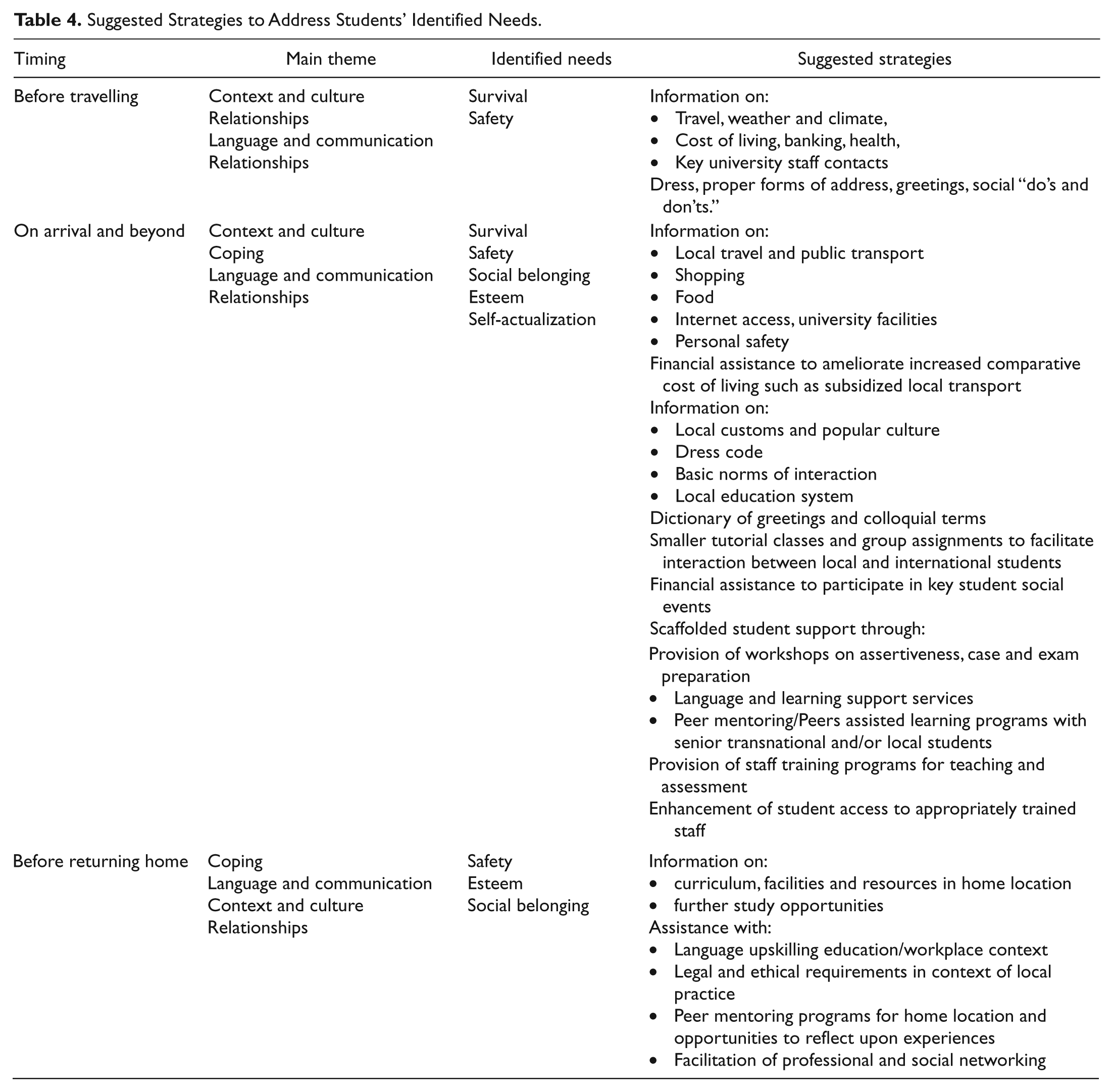
Safety needs are also the focus of strategies suggested prior to transnational students’ returning home (Table 4). These related to the graduate’s professional life (e.g., legal and ethical practice) or to the concerns of students continuing their studies at home. Some of these strategies are also simple and affordable to put in place, such as providing students with an overview of the curriculum, resources and facilities at both locations. Strategies to address professional networks and support programs require more substantial efforts.
Peer support programs provide opportunities for international students to develop a closer relationships with a local student. This can potentially address survival needs as well as safety and social belonging, which in turn supports esteem. As suggested by a staff participant, the local-transnational buddy system represents a means to assist Australian and Malaysian students alike to engage interculturally, develop cross-cultural communication skills and better prepare for practice in the increasingly multicultural global society. Participant identification of the importance of peer support strategies is also a strong reminder for institutions and staff that print and online information solely cannot meet all student needs.
Another important strategy during the students’ stay in the host country is the provision of opportunities for assertive skills development appropriate for the culture and context in which the skills are to be applied (Kripalani et al., 2006). In other words, the type of assertive skills required for an educational setting may differ to that required for the clinical workplace and similarly, the skills for the Australian setting may differ to those in the Malaysian environment. For example, in the Australian clinical environment, it is often necessary for medical students to seek out their own learning opportunities and lack of confidence to approach hospital staff significantly reduces the student’s ability to consolidate knowledge and skills. The teaching of targeted assertive communication strategies assists students to develop the necessary language and communication to engage with learning opportunities in clinical environments and enable self-actualization through acquisition and consolidation of knowledge and skills.
Assertiveness training could be integrated into the existing curriculum rather than “added-on”. For example, the use of simulated patients, which is well established in medical education, could be further extended to provide assertiveness training that is culturally appropriate for the clinical setting.
Conclusion
The practice of students moving across international boundaries for exchanges of varying lengths is well established in tertiary education. This study shows that students crossing transnational boundaries have needs that, if not met, impact upon learning.
The identified themes of relationships and language and communication correlate to Maslow’s domains of social/love/belongingness, safety and physiological needs. The themes of context and culture and coping relate to Maslow’s domains of esteem, social/love/belongingness and safety. The themes of context and culture and coping relate to Maslow’s domains of esteem, social/love/belongingness and safety. However, factors relating to the point time within the exchange period, length of stay in offshore locations and access to staff from similar cultural backgrounds may also impact upon specific needs.
This research suggests that to meet the challenges of transnational education, institutions require a customized approach. Strategies to support students moving across transnational boundaries need to address each of Maslow’s domains and be implemented to align with the students movements across locations. Programs must be designed for “visitors” and “inhabitants” and focus on strategies to develop culturally and contextually appropriate support attuned to the changing needs of students within and outside their specific learning environments. Continual engagement and reassessment of students’ needs together with staff development is required.
Footnotes
Authors’ Note
All procedures were reviewed and approved by the Standing Committee on Research Involving Humans of Monash University.
Declaration of Conflicting Interests
The authors declared no potential conflicts of interest with respect to the research, authorship, and/or publication of this article.
Funding
The authors disclosed receipt of the following financial support for the research, authorship, and/or publication of this article: Funding was obtained from the Faculty of Medicine, Nursing and Health Sciences, Monash University, Learning and Teaching Performance Fund.