



Abstract
In recent years, China has grown from an insignificant player to a major destination in the global market for international students. Based on a questionnaire survey and in-depth interviews conducted in 2013, this study uses Shanghai as an example to examine international students’ experiences in China. It is found that China has become a niche market for international students due to the distinctiveness of the Chinese language and the country’s continuous economic growth. However, the considerably and consistently low levels of international students’ satisfaction with their study and living experiences show that China has not paid sufficient attention to improving its supply of higher education and other support services, which may threaten its sustainable growth in the international student market.
Keywords
Introduction
The international mobility of students has a long history. However, it was not until the 21st century that the number of international students worldwide began to rapidly increase. According to the Organisation for Economic Co-Operation and Development (OECD), the total number of students enrolled outside their country of citizenship soared from 2.1 million in 2000 to 4.3 million in 2011 (OECD, 2013a).
With the rising number of students who cross national borders for educational purposes, the so-called “international student market” has received growing attention. In addition to countries such as the United States and the United Kingdom, which have traditionally attracted a large share of international students, new competitors such as Singapore, Malaysia, and Japan have adopted aggressive national strategies to transform themselves from sending countries to receiving countries in terms of international enrollment. 1
China began to receive international students in 1950, when it enrolled 33 students from East European socialist countries. From 1950 to 1978, when China adopted reform and opening policies, the country provided higher education to 128,000 international students, most of whom came from socialist and developing countries (Lei, 2014). Since then, international enrollment in China has consistently risen. In 2014, international enrollment reached a high of nearly 380,000 (Figure 1), nearly tripling the total number of international students enrolled between 1950 and 1978. 2 As Zhao (2011) argues, in the global market for international students, China has quickly “grown from an insignificant player to a major destination.” International students in China come from more than 200 countries across the world. In contrast to the period from 1950 to 1978, when holders of the Chinese Government Scholarship constituted the majority of the international student population, holders of this scholarship currently account for only 9.8% of the population (Ministry of Education [MOE], 2015).
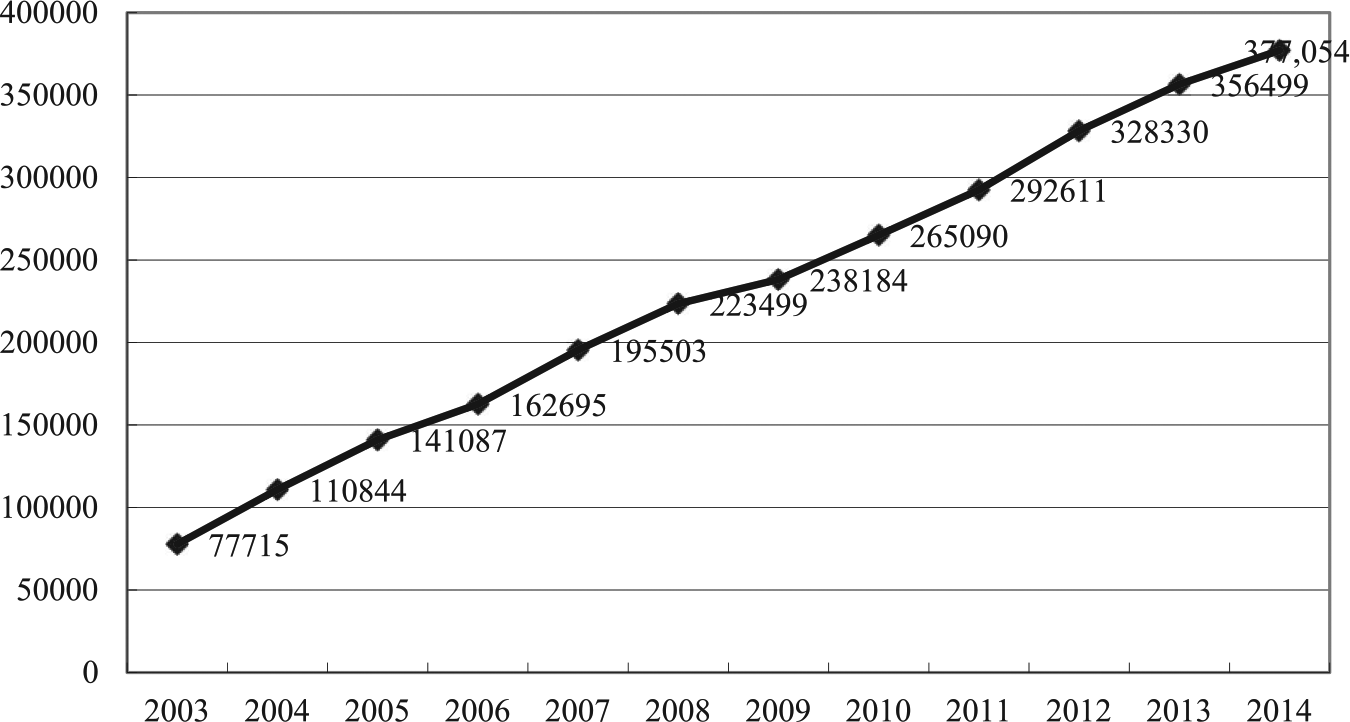
Number of international students enrolled in universities in China.
Recently, China has clearly and loudly announced its ambition to boost international enrollment. The National Medium and Long-Term Educational Reform and Development Plan (2010-2020) published in 2010 by the State Council of China noted that the number of international students in China should be further increased. Later in 2010, the MOE (2010) issued the Program for Study in China, which set the target of attracting 500,000 international students and becoming the largest study destination in Asia by 2020.
Will China reach the above aspiration while being surrounded by so many traditional and new competitors in the market for international students? One argument is that international students who are satisfied with their study and living experience abroad are more likely than other international students to recommend their destination country to their friends in their home countries (see Bourke, 2000). Therefore, the key to establishing China as an important study destination is to ensure that current international students in China have a high, or at least reasonable, degree of satisfaction with the academic and living services that they receive from their higher educational institutions (HEIs).
This research aims to answer the following questions. How do international students feel about studying and living in China? Are they satisfied with their experiences in China? Are they willing to recommend China as a study destination to others? The article begins with a review of national and global surveys of international students. It then explains the data collection methods and the research findings. Finally, it ends with some concluding remarks.
An Overview of Surveys of International Students
National and Global Surveys of International Students in Other Countries
National surveys of international students did not emerge until the number of these students proliferated and the international competition for such students intensified. The main purpose of these surveys is to understand international students’ experiences of studying and living in their destination countries so that policy recommendations may be proposed to improve the countries’ attractiveness as a study destination. In some countries, such surveys have been conducted regularly to allow longitudinal analysis.
Germany may have been the first country to survey international students. In 1951, Germany began to poll German students on a triennial basis. The 15th survey, which was conducted in 1997, was the first to include international students as respondents. Since the 17th survey, conducted in 2003, separate questionnaires have been developed for German and international students. The questionnaire distributed among international students mainly addresses topics such as their demographic characteristics, courses of study, living situations, monthly incomes, and opinions on Germany as a place of study (Federal Ministry of Education and Research, 2008). The most recent report on the 19th survey, which was published in 2011, presents information collected from 1,553 international students (Federal Ministry of Education and Research, 2011).
International student surveys in the United Kingdom were performed by various nongovernmental organizations, including the U.K. Council for International Student Affairs (UKCISA), the British Council, and other representative bodies of higher education. In the case of the UKCISA survey, with data collected from more than 6,000 international students, a series of reports titled Broadening Our Horizons have been published to describe international students’ experiences in the United Kingdom (UKCISA, 2008).
Similar national surveys were initiated in New Zealand in 2002, when a sample of international students was asked about their personal backgrounds, their degrees of satisfaction with New Zealand’s education provision, and their relationships with local students. Then, in 2003 and 2007, the MOE in New Zealand commissioned Deloitte, an independent company, to investigate the education and pastoral support provided to international students. In addition to asking students about their demographic characteristics, the surveys asked the students to report their academic performance; their degrees of satisfaction with educational, pastoral, and support services; their experiences of working while studying; and their plans after graduation (Deloitte, 2008).
In Australia, national surveys on international students began in 2005, when the Australian government commissioned the independent Ipsos Australia Pty Ltd. to assess the satisfaction of international students studying in the country. The survey attracted 14,946 respondents. Two years later, in 2007, a follow-up survey targeting international graduates who had completed their studies in Australia was performed. The follow-up survey attempted to determine whether the respondents had changed their opinions of studying and living in Australia since graduation. A total of 2,150 students completed the questionnaire (Australian Education International, 2008).
In recent years, although some countries have continued their regular national surveys of international students, countries such as the United Kingdom, New Zealand, and Australia have chosen to commission surveys to an independent research company, the International Graduate Insight Group (i-graduate). Established in 2005 and headquartered in the United Kingdom, i-graduate has built offices and operations worldwide. The web-based surveys that it has developed for international students are used by more than 885 educational institutions in 30 countries and cover a range of areas involving the experiences of international students (detailed information about i-graduate can be found at http://www.i-graduate.org). These regularly implemented global surveys not only permit time-series studies on changes in international students’ experiences but also provide international benchmarks of the education and support services offered to international students.
Of note, the respondents of the aforementioned surveys, whether national or global, are not randomly selected. International students are invited to participate in the surveys on a voluntary basis, and not all students complete and submit their responses. Reports on the surveys generally do not show the response rate or the representativeness of the respondents. Therefore, the results of the surveys should be read and interpreted with caution.
Main Findings of the Surveys in Other Countries
In general, the results of the aforementioned national and global surveys are positive and show that international students report high levels of satisfaction with all types of services. Consequently, a high percentage of students are willing to recommend their destination country and current HEI as places to study. For example, in the United Kingdom, 87% of international students are satisfied or very satisfied with their programs in general, and more than 80% of the students are satisfied or very satisfied with support services such as the introduction to the campus and the city, student registration, and orientation (U.K. Higher Education International Unit, 2010). In Australia, 88% of international students report being satisfied with their living experience, and 86% report being satisfied with their study experience (Australian Education International, 2013). In New Zealand, 88% of international students rate their HEI highly, and 78% would encourage others to apply to their current HEI (Generosa, Molano, Stokes, & Schulze, 2013). Globally, the i-graduate survey conducted in 2009 identified that 86% of international students were satisfied with their studies (Australian Education International, 2010) and that international students reported high degrees of satisfaction with all kinds of support services (IGI Services, 2011).
Despite the positive findings mentioned above, all of the surveys identify areas in need of improvement. This is particularly true in comparison with international benchmarks. For example, the Australian survey conducted in 2012 discovered that international students’ levels of satisfaction with health insurance and Internet access were well below the bars set by the i-graduate surveys (Australian Education International, 2013). In New Zealand, more than 40% of international students are particularly dissatisfied with the cost of living and the availability of financial support (Generosa et al., 2013).
Most surveys of international students also investigate the factors that influence students’ choices of study destinations. These surveys have consistently found that the most important factor is the quality of education. For example, in the 2012 survey of international students in Australia, four of the top five factors that informed international students’ decisions to study there were directly related to the quality of education. The top five factors were the quality of teaching (96%), the reputation of the qualifications obtained from the institution (94%), the reputation of the institution (93%), personal safety (92%), and the reputation of the Australian education system (92%; Australian Education International, 2013). Similarly, a survey conducted by i-graduate showed that the factors mentioned above, with the exception of personal safety, were the most important factors in students’ international study destination decisions (Australian Education International, 2010).
Few surveys analyze the factors that influence international students’ overall levels of satisfaction. However, the 2011 survey conducted in New Zealand used ordered logistic regression to identify these factors. The authors argue that although the quality of education is of great importance in determining international students’ overall satisfaction, “living and support service experiences should not be ignored. These areas also influenced the overall student experience. They are thus potential improvement areas that could be leveraged in order to raise student satisfaction levels” (Generosa et al., 2013, p. 11). The above argument reminds us that to maintain sustainable growth in international enrollments, students’ overall experiences should be improved.
International Student Surveys in China
China has not implemented a national survey to study the experiences of international students enrolled in its HEIs. Two studies by individual researchers applied international student surveys utilized in other countries to examine the experiences and satisfaction of international students in China. Questionnaires were distributed in Shanghai and Beijing, the two cities with the highest numbers of international enrollments in China. Both studies found international students’ levels of satisfaction in terms of study, administration, and living services to be consistently and markedly lower than those of students in other countries and international benchmarks (Ding, 2010; Wen, Chen, Bai, & Cao, 2013). For example, Ding’s survey in Shanghai shows that in terms of quality of teaching, only 32.3% of international students feel satisfied or very satisfied, and 25.0% are unsatisfied or very unsatisfied. In Beijing, Wen and her colleagues find that although a relatively high percentage of international students (77%) report being satisfied or very satisfied with their accommodations, the figure is considerably lower than the international benchmark (86%; Wen et al., 2013). Because the two surveys were conducted by individual researchers due to their personal interest, data were collected from only a few universities. In Shanghai, only four universities participated in the survey, and in Beijing, the data were collected from five universities.
This study reflects the first effort by a local educational authority in China to investigate international students’ experiences and satisfaction. With the support of the Shanghai Municipal Education Commission, the government agency in charge of education in Shanghai, the study generated information from 28 of the 34 universities that are permitted to receive international students. Of the five universities that did not participate in the study, one university expressed its unwillingness to be part of the study, and the other four had such a small number of international enrollments (i.e., from one to a few dozen) that they were purposefully excluded from the sample due to limited research funding.
Research Methods
This study was conducted in Shanghai in 2013. It used a mixture of quantitative and qualitative research methods. Although a questionnaire-based survey was the study’s primary tool, in-depth interviews were also conducted.
The international students who were interviewed were selected and grouped purposefully into four categories: newly arrived students, final-year students, students with limited Chinese and English language skills, and international student representatives. Altogether, 40 international students from 22 countries enrolled in 13 HEIs participated in the interviews. Although the number of interviewees was not large compared with the heterogeneity of the international student population in Shanghai, the depth of the interviews compensated for the limited coverage of the interviewees to some extent. The interviewed students studied various programs at different levels. Some were enrolled in nondegree courses, and others pursued a bachelor’s or postgraduate degree. Their fields of study included law, medicine, philosophy, engineering, sociology, finance, kinetics, international relations, and the Chinese language. The interviews lasted from 120 to 150 min and were recorded with the permission of the interviewees. The interviews were later transcribed word for word. During the interviews, the students provided information about their reasons for selecting Shanghai as a place of study, their experiences of studying and living in Shanghai, difficulties encountered during their stays in Shanghai, and suggestions for how to improve international students’ experiences. This information not only aided in the design of the questionnaire but also uncovered detailed stories and views underlying the data collected from the survey.
Based on the interviews and international student surveys implemented in other countries, a questionnaire draft was developed. The draft was sent to international student administrators in 28 HEIs in Shanghai to get their opinions about the questionnaire, and the questionnaire was revised accordingly. After a pilot test of the revised questionnaire was completed by 11 international students from four HEIs, the final version of the questionnaire was established.
The final version of the questionnaire is composed of six parts. Part 1 collects information about students’ backgrounds, such as nationality, age, main field of study, and qualification pursued. Part 2 asks about the students’ experiences prior to coming to Shanghai, such as their reasons for selecting Shanghai as a place of study. Part 3 concentrates on students’ feelings about their initial arrivals in Shanghai. Parts 4 and 5 examine the students’ study and living experiences, respectively. The last part contains open-ended questions about the aspects of studying and living in Shanghai that the students do and do not like and their policy recommendations.
The questionnaires were distributed in four languages—Chinese, English, Korean, and Japanese—because Korea and Japan are the countries that send the most international students to Shanghai. The samples were selected according to the distribution of different types of international students in each HEI, including degree of study (e.g., nondegree Chinese language students, undergraduate students, and postgraduate students), main field of study, nationality, and source of funding (e.g., holders of scholarships offered by the Chinese or Shanghai government and self-financing students). A total of 2,552 potential respondents were selected, and 1,993 questionnaires were ultimately completed by international students from 26 HEIs; 1,892 of the questionnaires were considered valid.
International students from 121 countries submitted valid questionnaires. Of the respondents, 54.1% were female. The majority of the respondents (74.4%) were between 18 and 25 years old, 13.3% were between 31 and 39 years old, and 1.3% and 11.1% were under 18 and over 39, respectively. More than 65% of the respondents came from Asia, reflecting the fact that more than half of Shanghai’s international students are of Asian origin (Figure 2). Literature (including Chinese language studies) was the single most popular field of study (51.8%) among the survey respondents, which is consistent with the fact that more than 60% of the international students in Shanghai are literature majors (Figure 3). An imbalance between the survey sample and the wider population was found in regard to program levels. Whereas students pursuing bachelor’s, master’s, and doctoral degrees awarded by universities in Shanghai accounted for 38.4%, 9.4%, and 3.0% of the sample (Figure 4), respectively, the corresponding percentages for the wider population were 20.0%, 7.7%, and 1.8%.
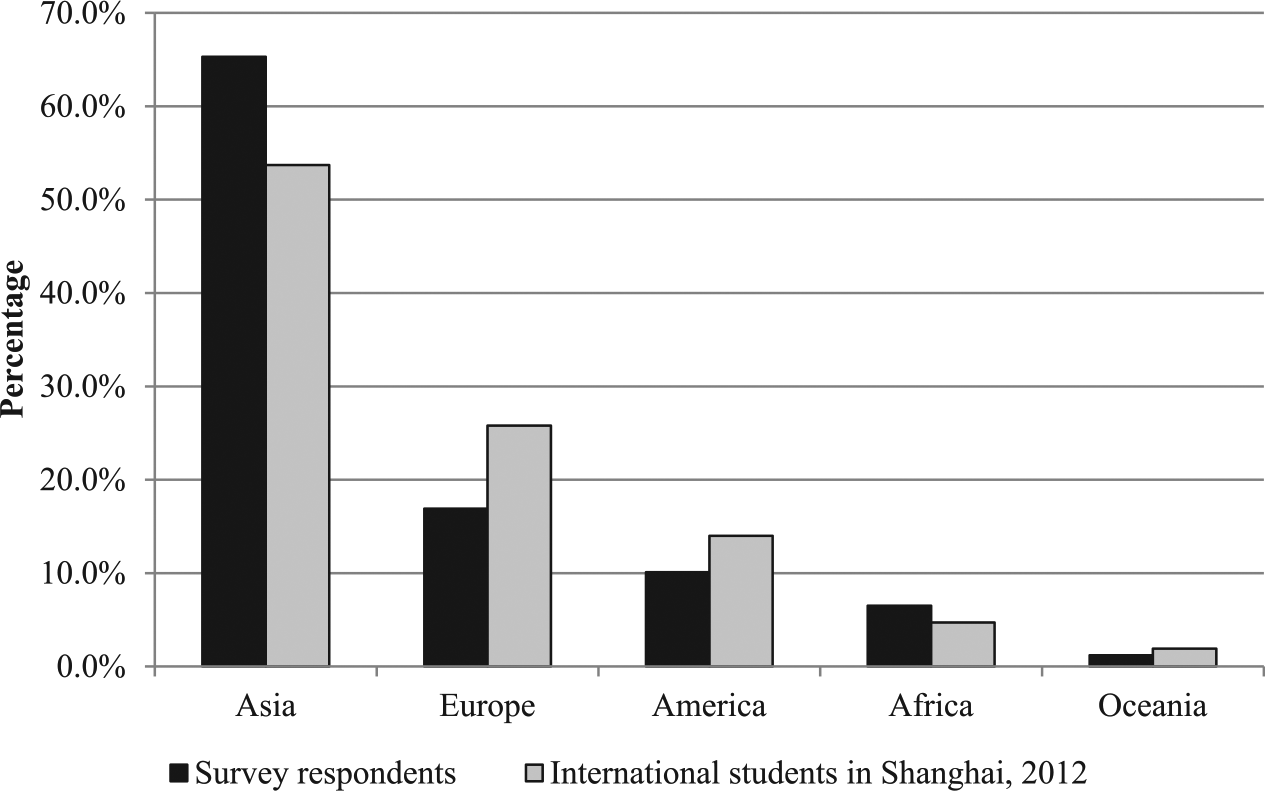
Distribution of international students in Shanghai by region of origin.
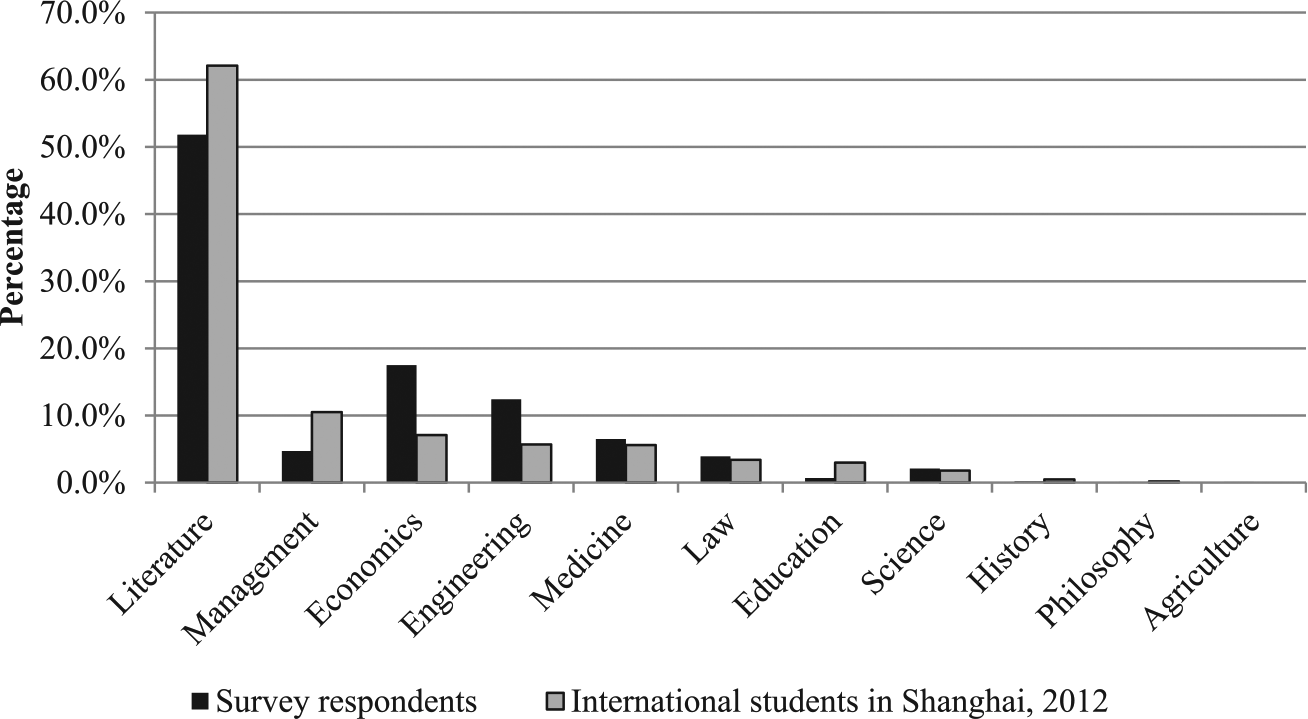
Distribution of international students in Shanghai by field of study.
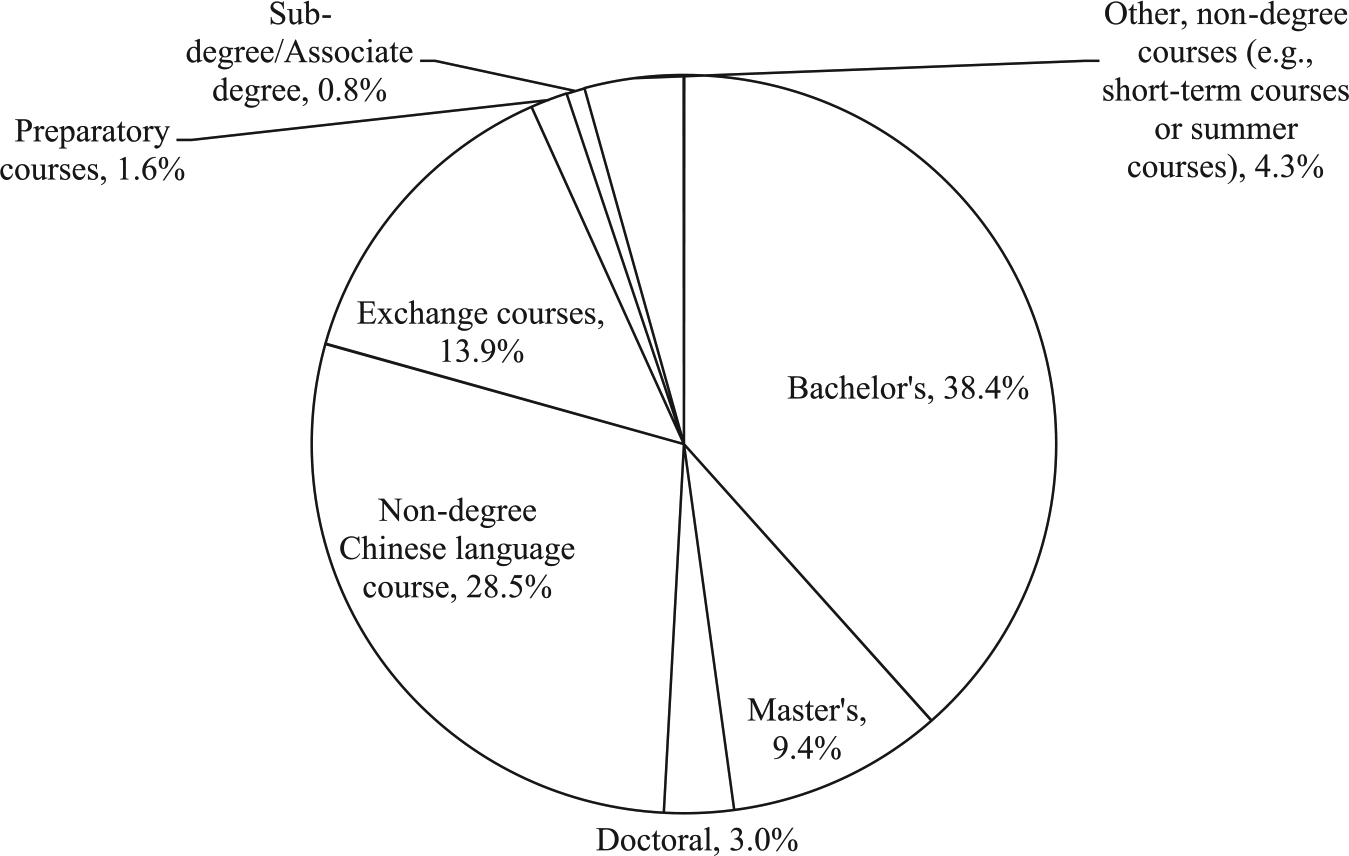
Distribution of international respondents in Shanghai by program level.
Some of the characteristics of the sample did not perfectly match the population of international students in Shanghai. However, this study, with its relatively large number of respondents from various HEIs, provides a vivid picture of international students in Shanghai and, to a certain degree, a snapshot of international students in China.
Main Findings
Why Did International Students Select Shanghai as a Place of Study?
When asked whether China or Shanghai was their first choice of study destination, 76.7% said “yes” with respect to China. Among those who said “yes” with respect to China, 82.2% further confirmed Shanghai as their first choice of study destination. Therefore, among the international students enrolled in Shanghai’s HEIs, 63.0% selected Shanghai as their first choice of study destination.
Figure 5 illustrates the importance of different factors for international students’ choice of Shanghai as a place of study. The figure shows that the most important factor influencing students’ decisions to study in Shanghai was learning the Chinese language. In addition, Shanghai’s status as an international city and the rapid economic development in China were the second and fourth most important factors, respectively. Along with the growth of China’s economic power, other countries have demonstrated an increasingly urgent demand to know more about China. As one of the most economically developed financial centers in China, Shanghai is well suited to international students who wish to observe contemporary changes in China’s economy and culture and to build business relationships that are beneficial to their future careers. Below are two excerpts from interviews with international students:
Recently, China has been developing quickly in economic terms, so I think that by coming to China to study, I could gain more opportunities in the future. Many Colombians don’t speak Chinese; many of them don’t speak English, either. If I learn to speak Chinese and am very good at English, I would most likely gain more opportunities. I chose Shanghai because it is an open city and because it is similar to Western cities, so I could easily settle down. I plan to pursue a career in international business between North America and China in the future. (Chinese language undergraduate from Colombia) Studying in China is my dream because the relationship between Russia and China has been developing very quickly, particularly in terms of business. I think that such development definitely requires high-level experts in languages, particularly experts who also have a good command of finance and economics. (Student from Russia taking a nondegree, short-term Chinese language course)
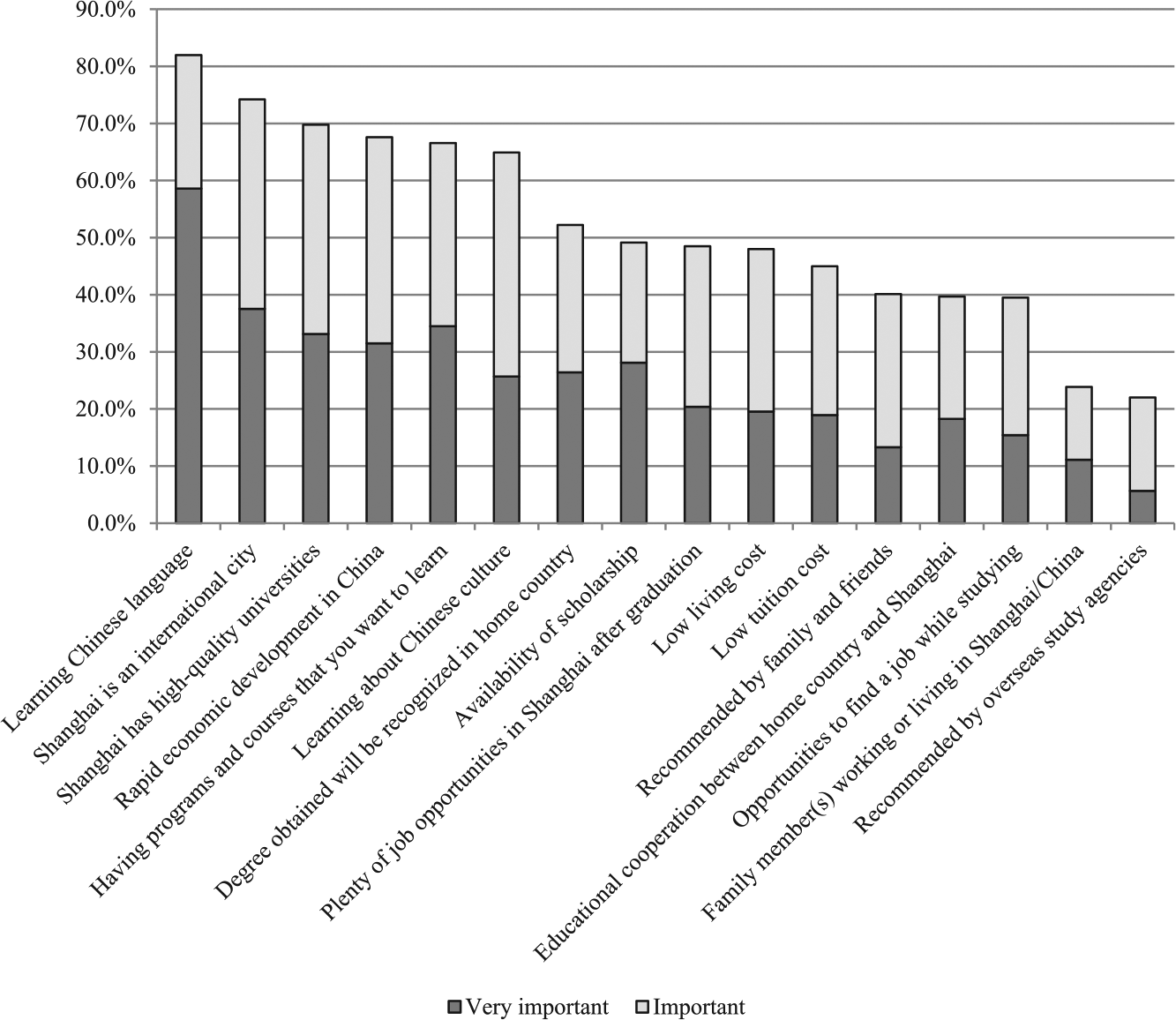
Importance of the factors considered when selecting Shanghai as a study destination.
Factors related to the quality of education, such as “high-quality universities” and “programs and courses that you want to learn,” were identified as important by less than 70% of the international students. Given that international students enrolled in other countries choose their study destinations primarily on the basis of education quality, this finding indicates that higher education in Shanghai has not earned a reputation that is sufficiently attractive to international students. Furthermore, it indicates that the distinctiveness of the Chinese language has contributed to building China into a niche market for international students. It can be expected that as long as China maintains its attraction as a business player, the language factor will help the country further increase its international enrollment.
Were International Students Satisfied With Their Study Experiences in Shanghai?
Among the survey respondents, 75.0% were taught in Chinese, 17.4% were taught in English, and 7.5% were taught either in both languages or in other languages. All of the HEIs in Shanghai offer Chinese language courses for international students, although such courses may not be compulsory for students studying in English or in other languages.
Approximately 60% of the international students expressed satisfaction with the overall quality of Chinese language learning. The degree of satisfaction with the overall quality of learning concerning the main field of study was much lower than that for Chinese language learning, and only half of the students felt satisfied or very satisfied. This result is quite different from those in other major receiving countries, where 80% of international students were satisfied with their studies (Australian Education International, 2013; Generosa et al., 2013).
When the general quality of teaching was divided into different aspects, the data showed that international students were most satisfied with their teachers’ proficiency in the Chinese language, expertise, and commitment in the case of teaching in the Chinese language and were least satisfied with class size, teaching methods, teaching materials, and opportunities for one-on-one interactions with teachers (Figure 6). In the case of teaching in the main field of study, for all aspects, the percentage of students who were satisfied was below 70% and sometimes even below 40% (Figure 7).
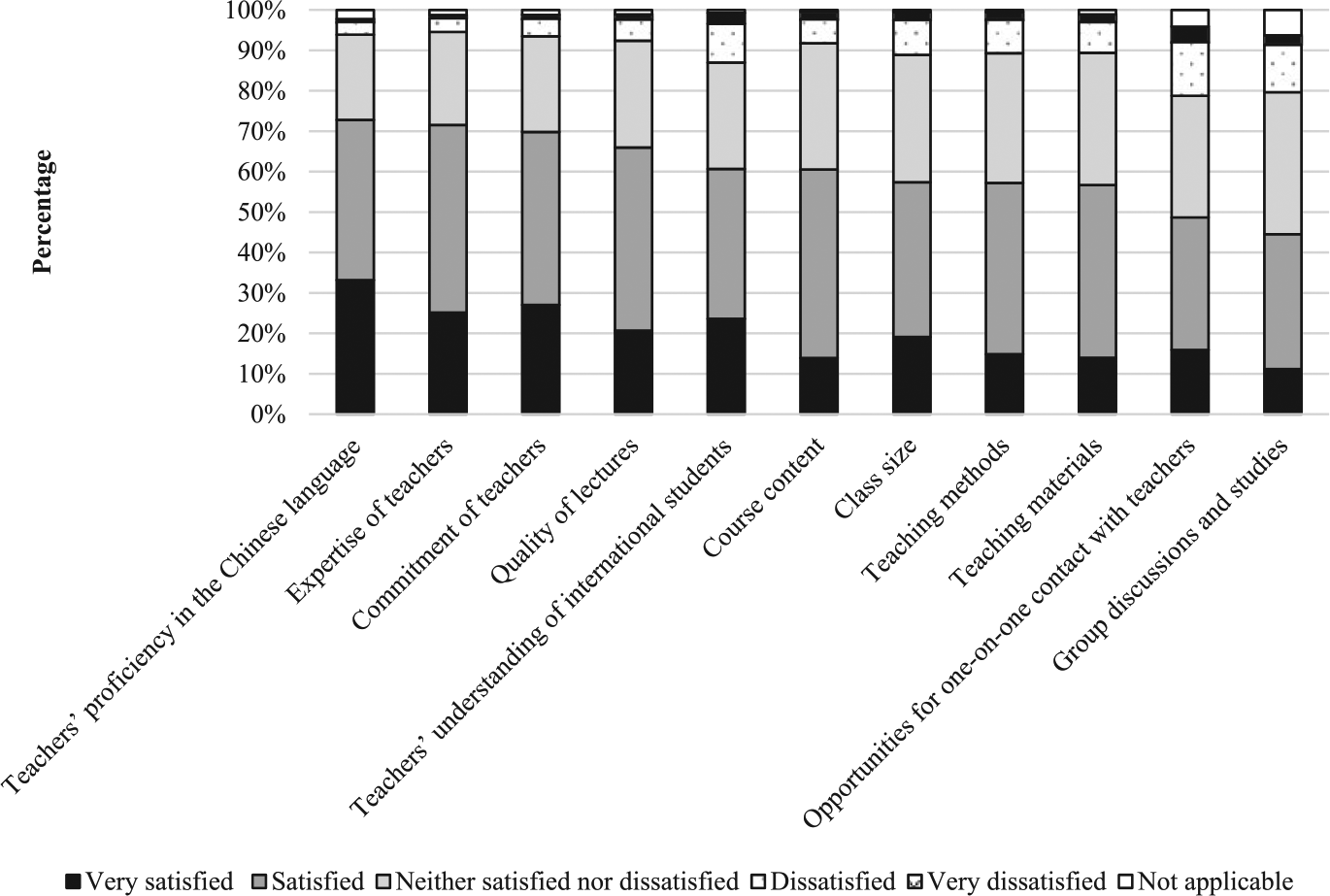
Satisfaction with different aspects of teaching in the Chinese language.
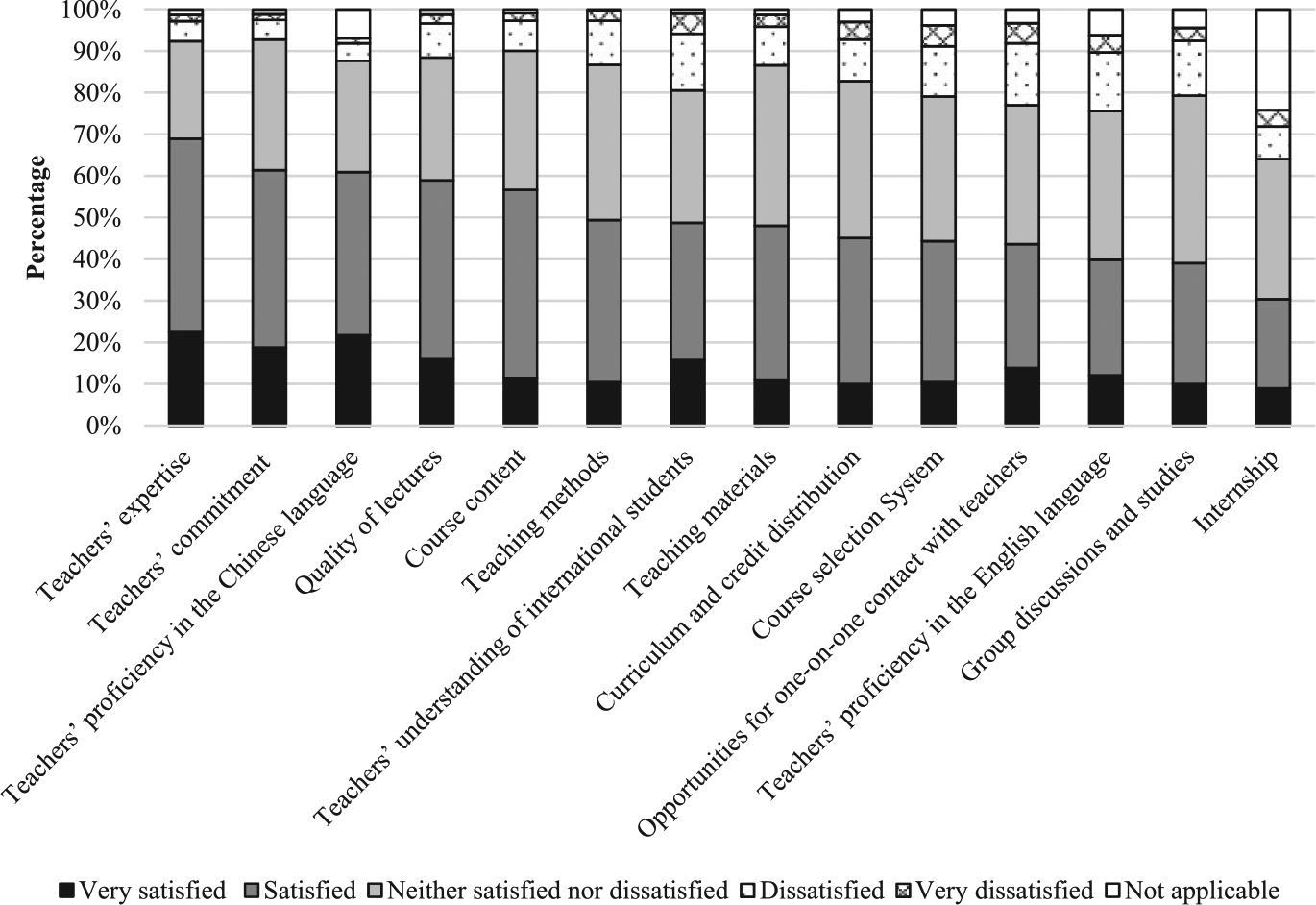
Satisfaction with different aspects of teaching in the main field of study.
For example, regarding teaching methods, international students criticized the teachers in Shanghai for spending excessive time on lecturing and memorizing and giving little attention to stimulating students’ motivation for learning.
I’ve become used to the teaching methods employed by Chinese teachers. However, I don’t like these methods; I think they are too traditional. Chinese teachers don’t allow the students to talk. If I talk, they would look at me unhappily. The teachers keep on talking, and the students keep silent. This may work for students from Japan and Korea, but not for me, a Dutch. The Netherlands is a very open country; we would feel that courses taught in this way were very boring and very dull. (Student from the Netherlands taking a nondegree Chinese language course)
The students preferred more opportunities for group discussion and studies and more participation in classroom activities so that they could apply the knowledge learned to practical problems.
In the Moscow University of Finance and Economics, we have a business Chinese course. We simulate situations in which business Chinese is used. For example, in simulated business negotiations, we invite managers of Russian companies or Russian companies residing in China to be our referees. . . . I hope that HEIs in China provide similar courses to allow us to practice Chinese . . . We are learning Chinese. However, the Chinese language used in practice is different from that written in the textbook . . . How can we achieve a high level of Chinese proficiency if we only learn Chinese by reading books? (Student from Russia taking a nondegree, short-term Chinese language course)
The students also gave the course content low ratings. They often felt that the courses were “meaningless” or “kind of boring” because the content of the courses was out-of-date and disconnected from daily life. One student criticized his or her computer course in the questionnaire, as follows:
We are in 2013 A.D. However, in the computer course, we are still taught to use software that has already become obsolete, such as Microsoft Office 2003. This is sometimes hard for us to accept, and we feel such courses give us little help. I understand that it’s not easy to revise the curriculum, and I have no intention to offend, but it is rather wide off the mark to use the same software as 10 years ago.
The obsolescence of course content was particularly true for Chinese language learning when the students complained that the Chinese words that they learned were so outmoded (e.g., “sentry post”) that they were unable to use these words to communicate with local people. They wrote the following kinds of comments in the questionnaire: “I don’t understand why international students are learning Chinese words that Chinese people don’t actually use” and “The Chinese language that international students are learning is totally different from the Chinese language that Chinese people actually use, so I can’t successfully communicate with Chinese people.”
As shown in Figure 5, learning the Chinese language was the top factor that attracted international students to Shanghai. However, when asked whether they agreed with the statement “I am satisfied with my progress in the Chinese language,” only 54.0% of the students provided positive responses. For the statement “I am satisfied with my progress in the main field of my studies,” the percentage of the students who indicated agreement decreased to 41.6%.
Further evidence indicates international students’ dissatisfaction with the education that they received in Shanghai. Less than half of the students (48.3%) agreed that “Studying at this university is worth the price that I have paid.” Only 30.4% indicated that studying in Shanghai would help them find a job in the future. The statement “In comparison, universities in my home country offer a more enhanced teaching quality” obtained agreement from 36.6% of the students.
How Did International Students Feel About the Support Services When They First Arrived in Shanghai?
Providing support services to newly arrived international students has been a priority on the agendas of governments and HEIs in other countries. Because newly arrived students are typically far from their homes and, therefore, are unable to seek family support, they rely more on HEIs to adapt to their new environments (UKCISA, 2010). HEIs in other countries have therefore organized a variety of support services that are quite popular among international students, such as airport pick-up, orientation, meetings with instructors, and advice on finding a place to rent (Australian Education International, 2010; IGI Services, 2011; U.K. Higher Education International Unit, 2010).
The situation in Shanghai has proven to be considerably different. None of the support services for newly arrived international students received satisfaction ratings that were comparable with those reported for other countries (Figure 8). More than 30% of the students did not receive services such as airport pick-up, opening a bank account, and finding a place to rent, which means that new international students in Shanghai received limited support from HEIs compared with international benchmarks.
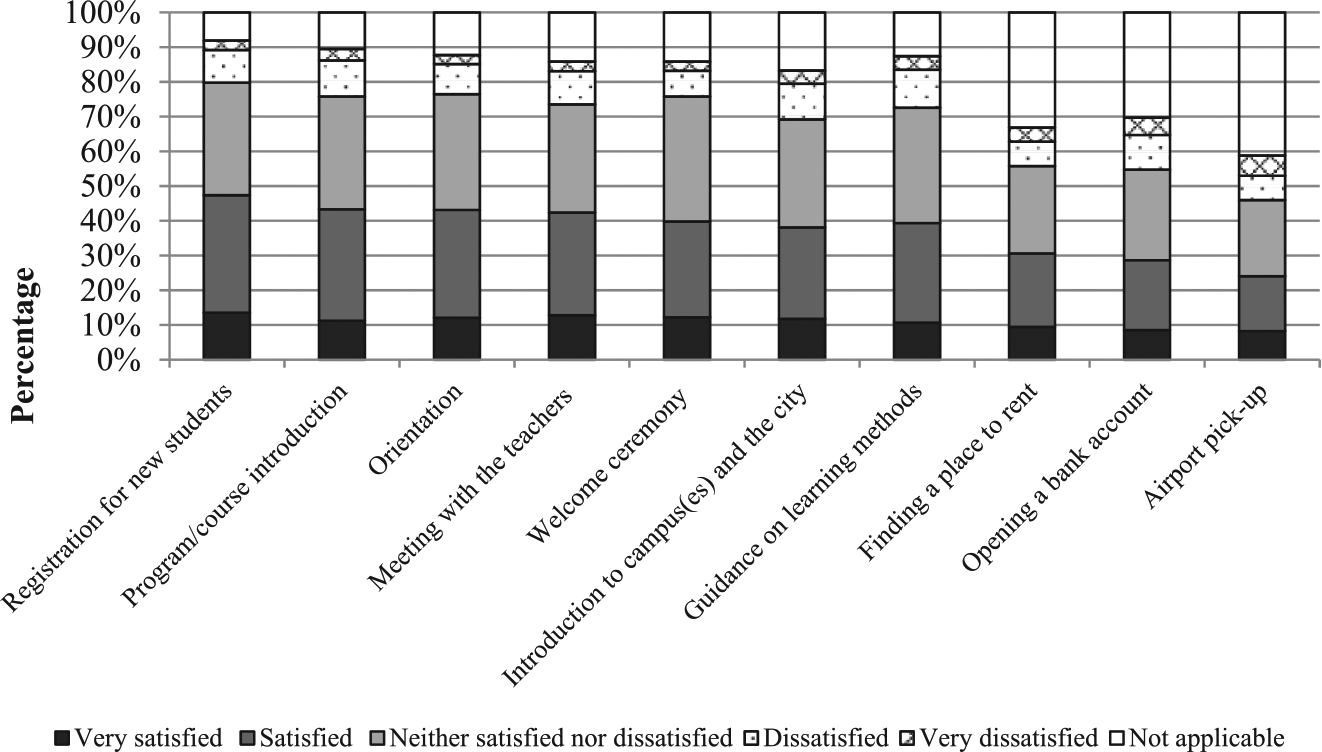
Satisfaction with services for newly arrived international students.
Airport pick-up received the lowest degree of satisfaction and was least used by international students. Quite a few students recalled that when they first arrived in Shanghai, they had to locate their HEI independently. Sometimes, the confirmation of enrollment, which included the address of the HEI, was provided in English and was, thus, difficult for taxi drivers to understand. Sometimes, the students, who were unfamiliar with transportation in Shanghai, took unlicensed taxis and were forced to pay excessive fares.
When I first arrived in Shanghai, I didn’t know that registered taxis were lined on the first floor, and the second floor was filled with unregistered taxis. The driver of the unregistered taxi took me to Jin Jiang Park, told me this was the place that I was supposed to be, and charged me RMB220. . . . This was my first time to Shanghai. It was really dangerous. (Doctoral candidate from Thailand studying the Chinese language) If an international student doesn’t speak Chinese at all and he or she only speaks English, how could he or she communicate with a taxi driver? Moreover, each university has several campuses. What if the driver sends the student to the wrong campus? This would be very dangerous. (Doctoral candidate from Vietnam studying food)
Although a few HEIs meet their international students at the airport, such meetings are not always well organized. As some students indicated in the questionnaire, the HEIs occasionally forget to meet their newly arrived students at the airport, even when the student has registered for the pick-up service.
To What Extent Did International Students Integrate With Local Students?
Research in other countries has consistently found that international students anticipate integration with local students, and most international students perceive local students as friendly (Australian Education International, 2008; UKCISA, 2010). However, a large proportion of international students report encountering difficulties when interacting with local students (see for example,Generosa et al., 2013), which is also the case in Shanghai. Although 62.4% of the international respondents in Shanghai agreed that communicating and connecting with local students was an important part of university life, 37.8% admitted that they had problems making friends with locals.
In Shanghai, international and local students are basically two separate groups that do not interact well. Two factors contribute to this separation. First, although China has been heavily investing in developing courses and programs taught in English, Chinese is currently the primary language of instruction. As mentioned, 75.0% of the respondents studied in the Chinese language. Because 75.1% of the students had poor mastery of the Chinese language before they came to China, 55.1% were taught in classes organized exclusively for international students, in which teachers use easy words, speak at a slow pace, and sometimes explain content in English to facilitate students’ understanding of course content. Although such an arrangement may be pedagogically beneficial to the students, the students complained about not having opportunities to get to know their Chinese counterparts.
Second, in addition to separate coursework, international and Chinese students are assigned separate accommodations. Sixty-eight percent of the respondents lived in dorms built specifically for them, 3 and Chinese students were concentrated in their own dorm buildings. This separation mainly resulted from the differences in living standards between international and Chinese students. Dorms for international students were equipped with air conditioners, private bathrooms, and sometimes private showers and refrigerators, and only one or two students occupied each room. In contrast, in the dorms for Chinese students, four or more students resided in each room, which had only basic furniture, such as beds and tables.
International students appreciated the better living conditions that the university offered but questioned whether this arrangement further limited their chances of making friends with Chinese students. The dorm buildings for international students were quite often far from central areas of university activity, which increased international students’ difficulty in contacting their Chinese counterparts, as described in the following interview excerpts:
I don’t know if this is true for other universities. In my opinion, the biggest problem is that at our university, international students live in the international student apartments, which cater exclusively to international students. This makes us live far away from Chinese students. We can’t communicate with them . . . Our university is huge. We have the north expansion, the south expansion, and the central area. All of the Chinese undergraduates are concentrated in the south expansion, and we are in the north expansion. The south and north expansions happen to be located at the two extremes of the campus. They are far away from each other. So I can’t study, communicate or hang out with Chinese students every day . . . They are too far away from us. (Undergraduate from Hungary studying tourism management) When we come here, we feel like we are in other countries because in our dorms, we are surrounded by international students from all over the world. We speak English more often than we speak Chinese. Sometimes, we only speak Chinese when we are taking Chinese language courses. We usually use English or our mother tongue to communicate with each other. (Master’s degree candidate from Chad studying management science and engineering)
Occasionally, international and Chinese students were situated on two different campuses and seldom had a chance to meet each other.
Moreover, the survey result indicated that Chinese students were not friendly to international students; only 48.4% of the respondents in Shanghai felt that Chinese students were friendly toward them. As one respondent wrote in the questionnaire, “In my class, there are 15 Chinese students. Only two of them communicate with us. The others never talk to us; they don’t even bother to say ‘hello.’” Chinese students were thought to be reluctant to spend time with international students because they were accustomed to being surrounded by foreigners from all over the world and were under great pressure to study and find jobs.
I had studied in An Hui Province before I came to Shanghai. An Hui was not a developed province, and our university was far away from downtown. So, Chinese students there were very happy to know that a foreigner was studying at their university; they were willing to be friends with us . . . However, Shanghai, as a big city, receives foreigners of various kinds . . . Chinese students are not willing to take the initiative to communicate with us because they have other things that are more important to do. (Doctoral candidate in sociology from Thailand) I haven’t gotten to know many Chinese friends during my study at the university. This may be because we and Chinese students have different routines. They are always studying and they are diligent; we like to have fun. We and the Chinese students have different cultures. Our life is easier, and they are under greater pressure. (Student from the Netherlands taking a nondegree Chinese language course)
Would International Students Recommend Shanghai and China as Study Destinations?
The above sections show that international students in Shanghai have relatively low levels of satisfaction with their study programs, support services, and integration with local students. As a result, fewer international students in Shanghai (67.1%) rated their overall experience of studying and living in Shanghai positively compared with their counterparts in the United Kingdom (81%), Australia (85%), New Zealand (88%), and the international benchmark (86%; Australian Education International, 2013; Generosa et al., 2013; UKCISA, 2011), and relatively few international students in Shanghai were willing to recommend studying in China. Although China was the first study destination choice for nearly 80% of international students, only 59.2% indicated that they would recommend China as a place of study to their co-nationals. This finding suggests that a considerable number of international students change their opinions, not necessarily in a positive way, about China as a study destination after their arrival in the country.
A slightly higher percentage of international students (61.8%) stated that they would recommend Shanghai as a study destination. This figure is roughly equivalent to the percentage of international students who selected Shanghai as their first choice of study destination. As shown in Figure 5, the second most important reason for international students to study in Shanghai was the city’s international nature. Shanghai’s high-quality infrastructure and facilities, the availability of all types of commodities from all over the world, and rich and colorful activities,such as international expositions and forums, impress international students. Among the 1,343 respondents who wrote about the best aspects of studying and living in Shanghai in the questionnaire, 27.7% mentioned that Shanghai is an international city.
Conclusion
Since receiving 33 international students from East European socialist countries in 1950, China has quickly grown into a major destination for students from other countries. Recently, China has clearly and loudly expressed its ambition to compete with other traditional and new receiving countries in terms of international enrollment by setting a goal of attracting 500,000 foreign students to study in China by 2020. Although increasing the number of international students has been prioritized on the Chinese government’s agenda, little attention has been paid to the students’ experiences in China. Whereas governments in other countries have formulated aggressive policies to improve the overall quality of services provided to international students, China has largely remained silent in this regard and has chosen to focus on strategies that can quickly increase international enrollment in the short term, such as increasing the supply of government scholarships. 4
This research shows that China, with its rapidly growing economic strength, has received an increasing number of international students. To a large extent, the recent continuous and rapid rise in international enrollment can be explained by the language and economic factors that help China build a niche market for student mobility. Most of the international students want to learn the Chinese language and to observe the country’s economic development process. It can be predicted that the number of international students in China will continue to rise over the next few years if the country maintains its momentum of economic growth.
However, growth in the international student population does not indicate that students are satisfied with the academic and support services that they receive nor that they are willing to recommend China as a place of study. The current research findings show that the degrees of satisfaction of international students in China in regard to the quality of education and other services are consistently and significantly below international benchmarks. A slightly higher percentage of international students were willing to recommend Shanghai as a study destination, despite the problems that they encountered during their stays in the city. This was mainly due to the international nature of the city, which considerably enhanced the students’ living experiences. However, not all provinces in China enjoy the same level of internationalization as Shanghai, and the sustainable growth of international enrollment in China could become questionable.
To compete with other major study destinations and to provide international students with a positive experience, China needs to learn from other major study destinations and formulate comprehensive policies to improve the services provided to international students.
Footnotes
Declaration of Conflicting Interests
The author(s) declared no potential conflicts of interest with respect to the research, authorship, and/or publication of this article.
Funding
The author(s) received no financial support for the research, authorship, and/or publication of this article.