



Abstract
While some institutions require their students to spend a semester abroad as a prerequisite to earning a business degree, academics challenge the view that travel abroad helps students become culturally competent. Many students admit that they failed to immerse themselves in a cross-cultural environment. Therefore, the purpose of this study is to identify the components of exchange study abroad programs (ESP) that facilitate student cross-cultural learning (CCL). Building on transformative learning theory (TLT), we propose and test a conceptual model of relationships between different components of exchange programs and student CCL. The data collected from more than 700 students participating in a semester and two-semester-long programs are analyzed through logistic regression. This research contributes to the literature on the effectiveness of ESP by identifying the key components that maximize positive outcomes for students. By building on TLT, it reveals the importance of getting out of one’s comfort zone and providing students with support during the ESP. This study bears practical implications as it provides academic institutions and students with important insights that help maximize student CCL.
Keywords
Introduction
Some challenge the view that travel abroad is necessary to become culturally competent (Hunter et al., 2006) as most U.S. students do not improve their cross-cultural competence through participation in an exchange study program (ESP). Moreover, there is a gap between what students learn and what they are expected to learn (Van de Berg, 2007). Students themselves admit that the ESP involved taking “a break from learning” (Forsey et al., 2011). As students left to their own devices fail to embrace the cross-cultural experience and do not get out of their comfort zone (Forsey et al., 2011), many academics call for better management of ESPs, more interventions regarding structure, components, and actively supporting student learning during the program (Chinnappan et al., 2013; Penington & Wildermuth, 2005; Van de Berg, 2007). They also call for the identification of components that maximize learning outcomes (Bellestas & Roller, 2013; Fox et al., 2014; Van de Berg, 2007). Despite its importance, to date, there has been little research evaluating the effectiveness of different methods for teaching cross-cultural skills (see, e.g., European Commission, 2014; Van de Berg et al., 2012).
Previous research suggests that participation in ESPs helps students develop cross-cultural skills (Bellestas & Roller, 2013; Campbell & Walta, 2015; Carpenter & Garcia, 2012; St. Clair & McKenry, 1999; Willard-Holt, 2001). However, existing studies measure the change in student learning with little consideration of the program components (Braskamp et al., 2009; Caffrey et al., 2005) and provide a limited description of the programs under study (e.g., Carpenter & Garcia, 2012; DeDee & Stewart, 2003; St. Clair & McKenry, 1999). For instance, no information is detailed on the extent of students’ cultural immersion, academic context, housing situation, and support offered. This lack of detailed reporting makes it impossible to identify the components of effective ESPs (Bellestas & Roller, 2013).
Moreover, when the effectiveness of the program is evaluated, it is oftentimes self-reported rather than objectively measured. Many studies discuss the effects of the program based solely on qualitative data (e.g., Pence & Macgillivray, 2008; Santoro & Major, 2012). Therefore, researchers point to the scarcity of quantitative research that evaluates the effectiveness of exchange programs (Ingraham & Peterson, 2004; Jiusto & DiBiasio, 2006).
Another ongoing debate relates to the program length. Conflicting results pertain to the impact of the length of the program on its effectiveness. Some emphasize that stronger results are experienced by participants of 1-year long ESPs (e.g., Dwyer, 2004), others suggest that the length of the program is unrelated to learning outcomes (e.g., St. Clair & McKenry, 1999). These conflicting results indicate that the importance of other factors including program components should be explored.
Therefore, despite its theoretical and practical relevance, little academic understanding has been developed regarding the effectiveness of different components of ESPs in developing cross-cultural competence. This study addresses this void. It builds on transformative learning theory (TLT; Barnett, 2004; Mezirow, 2000; Taylor, 1998), which positions “pedagogies of discomfort” (Santoro & Major, 2012) and stepping out of one’s comfort zone at the core of learning (Pence & Macgillivray, 2008). The theory also emphasizes that to transform experiences into learning, students require support and guidance when dealing with culture shock and cognitive dissonance (Chinnappan et al., 2013; Van de Berg et al., 2009). Based on the quantitative content analysis of the experiences of more than 700 students participating in ESPs, we propose and test a conceptual model of relationships between different components of ESPs and cross-cultural learning (CCL). From the practical and policy perspective, this article looks at what strategies should be embraced to foster CCL.
The contribution of this article is twofold. First, this study analyzes a finer classification of the ESP components employed by host universities, as called for by Bellestas and Roller (2013) and Fox et al. (2014). As previous research suggests that students fail to immerse themselves in their environment (Forsey et al., 2011; Santoro & Major, 2012; Van de Berg, 2007), we identify program components that maximize the cross-cultural immersion. To answer the calls for better management of student experience (Chinnappan et al., 2013; Penington & Wildermuth, 2005; Santoro & Major, 2012), we identify components that support the process of transformative learning. Second, we study the CCL process from the perspective of TLT (Barnett, 2004; Mezirow, 2000; Taylor, 1998). We link study components to two different outcomes, student learning and student comfort, and show that while strategies focusing on maximizing student cross-cultural immersion generate initial discomfort, they are critical for student learning. Although the research design focuses on the students’ perspective, the ultimate goal of the study is to support universities in creating experiences that maximize student learning during their ESPs. This study offers practical implications as it suggests strategies for supporting students during this transformative process and recommends that students are proactive in taking advantage of opportunities for cross-cultural immersion.
Model Development and Hypotheses
Accommodation
Relationships have an important impact on student immersion and are the key determinants of CCL (Campbell & Walta, 2015). As culture is taught to us by our families, host families can serve as a socialization agent (Watson & Wolfel, 2015). As they share information and explain the cultural values and beliefs behind explicit manifestations of culture, they help students understand the respective culture (Stachowski & Mahan, 1995). The time spent with the host family is positively associated with CCL (Engle & Engle, 2003; Van de Berg et al., 2009). Therefore, learning from ESPs can be enhanced when students get out of their comfort zone by being placed in housing with host families (Pence & Macgillivray, 2008).
Therefore, we hypothesize the following:
Academic Context
Students often need an extra stimulus to get out of their comfort zone and interact with others (Campbell & Walta, 2015; Chinnappan et al., 2013). They might be taking classes with students from their country of origin or with international students. Project groups can be formed to maximize the number of cross-cultural interactions, rather than letting students choose the comfort of working with those they know. Empirical research suggests the positive relationship between cross-cultural academic context (the class composition that maximizes the intercultural interactions) and CCL (Engle & Engle, 2003; Van de Berg et al., 2009).
Therefore, we hypothesize the following:
Community Engagement
Reflecting upon the experience and applying what one learns to future interactions is an important part of experiential learning (Campbell & Walta, 2015; Penington & Wildermuth, 2005). Therefore, researchers encourage taking advantage of opportunities to get to know the host country nationals. Community involvement can provide students with opportunities to interact with local community members and gain a deeper understanding of the respective culture (Stachowski & Mahan, 1995). This can involve fieldwork, professional visits (Penington & Wildermuth, 2005; Willard-Holt, 2001), volunteering, service learning (Zoucha et al., 2011), and structured experiential activities that help students build a contextualized understanding of the cross-cultural situation and support CCL (Engle & Engle, 2003; Pence & Macgillivray, 2008; Stachowski & Mahan, 1995; Villegas & Lucas, 2002). These experiences provide positive effects in terms of attitudes, perceptions, recognizing one’s ethnocentrism, and learning how to cope with cross-cultural situations (Watson & Wolfel, 2015).
Therefore, we hypothesize the following:
Cross-Cultural Orientation Before Exchange Abroad Program
Before students can become culture savvy, they have to have theoretical understanding of basic cultural concepts (Hunter et al., 2006). Cross-cultural competence requires acknowledging one’s cultural norms, motivations, and characteristics (Hunter et al., 2006). Therefore, coursework with cross-cultural components can help students see the impact of their cultural orientation, assumptions, and biases on their behaviors and responses to the new environment (Campbell & Walta, 2015; Santoro & Major, 2012). Building this awareness is critical when preparing students for transformative learning experiences (Mezirow, 2000). Thus, pre-departure cultural orientation courses support CCL (Chinnappan et al., 2013). They have also been linked to increased student satisfaction with the program (Van de Berg et al., 2009).
Self-Reflection During the Exchange Abroad Program
Student reports suggest that many participants of ESPs focus “on having fun” instead of processing their educational experience (Forsey et al., 2011). Therefore, Woolf (2007) recommends that to enhance CCL, students need to be “guided toward examining the experience through analysis and retrospection.” Constructivist learning movement has long promoted active reflection (Engle & Engle, 2003; Van de Berg, 2007) and experiential learning emphasizes linking experience and reflection as a prerequisite to learning (Campbell & Walta, 2015). Solely experiencing a different culture without processing this experience does not translate into CCL. Therefore, researchers emphasize the importance of self-reflection in developing cultural sensitivity (Pence & Macgillivray, 2008; Willard-Holt, 2001), as critical reflection supports building a contextualized understanding of the cross-cultural situation (Pence & Macgillivray, 2008). Empirical evidence shows that guided reflections, keeping reflective journals, and recording interactions with people from the local community foster the educational experience and facilitate stepping out of one’s comfort zone (Pence & Macgillivray, 2008; Penington & Wildermuth, 2005). Moreover, as transformative learning challenges our frames of reference and feels uncomfortable (Mälkki, 2010; Mezirow, 2000), self-reflection supports CCL process (Mezirow, 2000).
Therefore, we hypothesize that
Mentoring Provided During the Exchange Abroad Program
Without proper guidance, some of the cross-cultural experiences might reinforce existing stereotypes. It was observed that students left to their own devices fail to embrace the cross-cultural experience, which inhibits their CCL (Van de Berg, 2007). Therefore, Penington and Wildermuth (2005) and Van de Berg (2007) draw our attention to the lack of academic structure and rigor of the ESPs and called for direct interventions and mentoring during the program. “A student studying abroad needs to be guided toward examining the experience through analysis and retrospection” (Woolf, 2007). Transformative learning can feel uncomfortable because it challenges our frames of reference. Thus, students need emotional support during this process (Mälkki, 2010; Mezirow, 2000).
The importance of mentoring is emphasized by Villegas and Lucas (2002) as mentors can facilitate critical reflection and encourage students “to go beyond their own perspectives” (p. 137). Students can also set goals and review their progress during the program through activities involving follow-ups and evaluations (Stachowski & Mahan, 1995). Mentoring can take different forms. Group mentoring, where students reflect on their experience together with their peers, was shown to have significant effects on CCL (Van de Berg et al., 2009). Also relationships with buddies (student mentors who returned from ESPs and support international students) are critical determinants of student immersion and learning (Campbell & Walta, 2015). Therefore, we hypothesize the following:
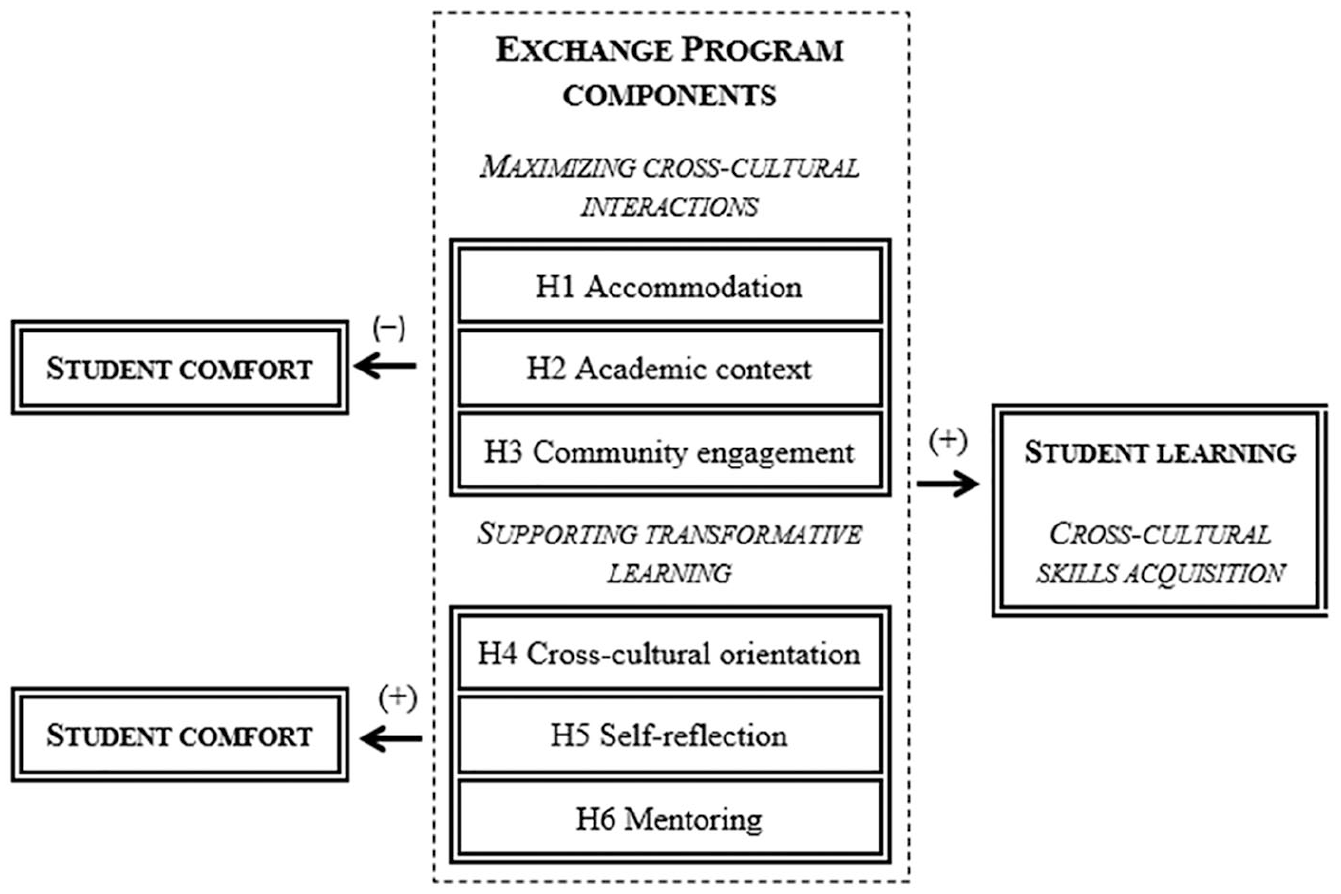
Hypothesized relationships between ESP components and cross-cultural learning.
Method
Survey data were collected to assess student cultural competence before and after the program. A survey was also administered to assess the changes in student comfort before and at the beginning of the program. Quantitative content analysis (Krippendorff, 1980) of ESP components was conducted based on student reflections provided at the end of the program. Once the ESP components listed in the Hypotheses 1–6 for each student were coded, we conducted logistic regression analysis to identify the relationship between them and (Model A) student increase in cross-cultural competence and (Model B) change in student comfort.
Measuring Student Learning
To measure the dependent variable in Model A, the increase in cross-cultural competence, a survey was administered. Cross-cultural competence is “the ability to interact effectively and appropriately in intercultural situations based on specific attitudes, intercultural knowledge, skills and reflection” (Deardorff, 2006, p. 5). It involves “actively seeking to understand cultural norms and expectations of others, leveraging this gained knowledge to interact, communicate and work effectively outside one’s environment” (Hunter, 2004, pp. 130–131). Cross-cultural competence requires (a) cultural awareness (affective dimension), (b) cultural sensitivity (attitudinal dimension, that is, attitudes toward other cultural beliefs, value systems), (c) cultural knowledge (cognitive dimension, that is, understanding and knowledge of other cultures), and (d) cultural skill (behavioral dimension involving communication skills, for example, listening and observing (Deardorff, 2006; Rew et al., 2003). The survey questions were adapted from the Cultural Awareness Scale (Rew et al., 2003) as it covers all components of the CCL. Rew et al.’s factor analysis accounted for 51% of the variance, with good estimates of internal consistency (alpha = .82; alphas for the subscales from .91 to .94), which were confirmed by other studies measuring cross-cultural competence (Carpenter & Garcia, 2012; Krainovich-Miller et al., 2008).
The scale was adapted to the context of business and social sciences and involved statements measuring Cognitive Awareness (seven statements measured on 7-point Likert-type scale), Comfort with Cross-Cultural Interactions (six statements), and Appreciation for Diversity (five statements), as outlined in Table 1.
Cross-Cultural Competence Scale.
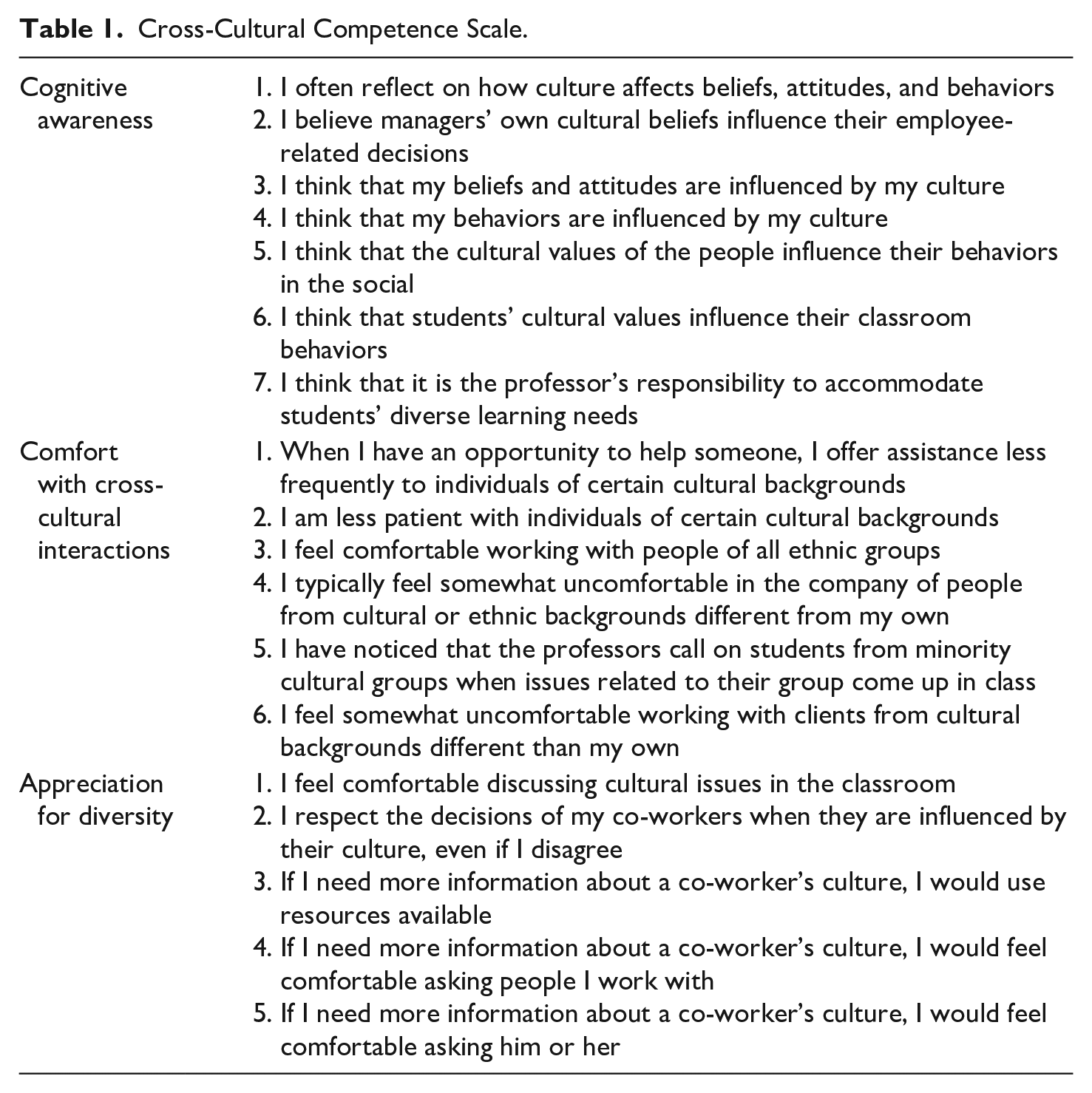
To ensure the scale validity, a focus group with six faculty members with expertise in CCL (in terms of research and working with international students) was conducted, and the final rewording of the scale items was agreed by all experts. To test the scale, a pilot study was conducted among 103 students. The internal consistency estimate of reliability for the total scale was alpha = .869. Cronbach alpha coefficients for the three factors were .746, .900, and .869, respectively. Considering favorable results, the appropriateness of the scale for business and social studies students was confirmed, and we proceeded with data collection.
The 18 items of the Cross-Cultural Competence scale were subjected to principal components analysis (PCA). Inspection of the correlation matrix revealed the presence of many coefficients of .3 and above. The Kaiser–Meyer–Olkin (1970, 1974) value was .853 1 [.854 2 ], exceeding the recommended value of .6 and Barlett’s (1954) Test of Sphericity reached statistical significance, supporting the factorability of the data. PCA revealed the presence of three components with eigenvalues exceeding 1, which accounted for 55.2% (55.7%) of the variance, consistent with the “bend” in the scree plot. All items loaded above .5 on their respective factors. Each factor explained 32%, 13%, and 10% (33%, 13%, and 10%) of the variance. Cronbach alpha coefficients were computed to assess internal consistency reliability for the total scale with alpha = .867 (alpha = .873) and each subscale: alpha 1 = .840 (.896), alpha 2 = .894 (.846), alpha 3 = .695 (.682). To support construct validity, demographic differences on the total scale and subscales were computed. No significant differences between genders or countries of origin/destination were identified.
To gauge the change in students’ cross-cultural competence scores, the survey was administered for the first time after students were recruited for the program (time 1) and for the second time within 1 week before their return to the home institution (time 2). The survey administered at time 1 was given to students while they were finalizing the formalities and paperwork concerning their trip (e.g., verifying that they have the insurance, know which courses they have to take, etc.) with the international office at their home institutions (around 10 days to 2 weeks before their departure).
For the logistic regression model, the occurrence of statistically positive change in student scores at these two points in time was coded as “1,” and no positive change in cross-cultural score was coded as “0.”
Measuring Student Comfort
To measure the dependent variable in Model B, change in student comfort in the early stages of ESP, a survey was administered. The questions were adapted from Fearfulness and Distress scales (7 items) used by Maheswaran and Meyers-Levy (1990): When you think about this study abroad experience, to what extent do you experience the following feelings (1 Not at all, 7 To a great extent): fearful, tense, nervous, anxious, reassured, relaxed, comforted, and Affect scale (4 items) by Yi (1990): How does this study abroad experience make you feel? (1) Extremely unhappy 1; Extremely happy 7; (2) Displeased 1, Pleased 7; and (3) Uncomfortable 1, Comfortable 7; Bad 1, Good 7. To provide evidence of scale validity, the above-mentioned focus group discussed the relevance of each item to the overall construct of student discomfort. Moreover, 25 international students present at the author’s institution volunteered to complete a short survey and indicate how relevant the items are to their experiences of being out of their comfort zone during their ESP experience. The calculated content validity index equaled .86 (Lynn, 1986). In the pilot study (n = 103), the internal consistency estimate of reliability for the total scale was alpha = .825. Cronbach alpha coefficients for the two factors were .814 and .801. This gave us confidence in the scale’s reliability and validity.
The 11 items from the Comfort Scale were subjected to PCA. Inspection of the correlation matrix revealed the presence of many coefficients of .3 and above. The Kaiser–Meyer–Olkin value was .847 (.831), exceeding the recommended value of .6 and Barlett’s Test of Sphericity reached statistical significance, supporting the factorability of the data. PCA revealed the presence of three components with eigenvalues exceeding 1, which accounted for 57.9% (58.8%) of the variance in scale scores, consistent with the “bend” in the scree plot. All items loaded above .6 on their respective factors. Factor explained 41% and 17% (40% and 18%) of the variance, respectively. Cronbach alpha coefficients were computed to assess internal consistency reliability for the total scale with alpha = .845 (.846), and for each subscale, alpha 1 = .860 (.796) and alpha 2 = .784 (.858). To support construct validity, demographic differences on the total scale and subscales were computed and none were found.
To gauge the change in student comfort levels, the survey was administered for the first time during an orientation session on the day of student arrival at the host institution (time 1) and for the second time after 10 days (time 2). The timing was decided based on the input of staff working in the international office and 25 international students at researcher’s home institution (pilot study). The students who tested the validity of the comfort scale also gave input about their comfort/discomfort levels during the study abroad experience (through short interviews). They reported that the levels of the discomfort were the highest just prior to and at the time of departure from their home country, whereas the arrival time and the orientation time are times of “feeling relief.” Moreover, the orientation event (time 1) aims at making the students feel comfortable and settled in, which was confirmed by the students in the pilot study. Based on their feedback, supported by the international office staff, we chose the orientation event as time 1 to administer the survey.
For the logistic regression model, the occurrence of statistically positive change (or no change) in student comfort scores at these two points in time was coded as “1” and negative change in comfort score was coded as “0.”
Quantitative Content Analysis
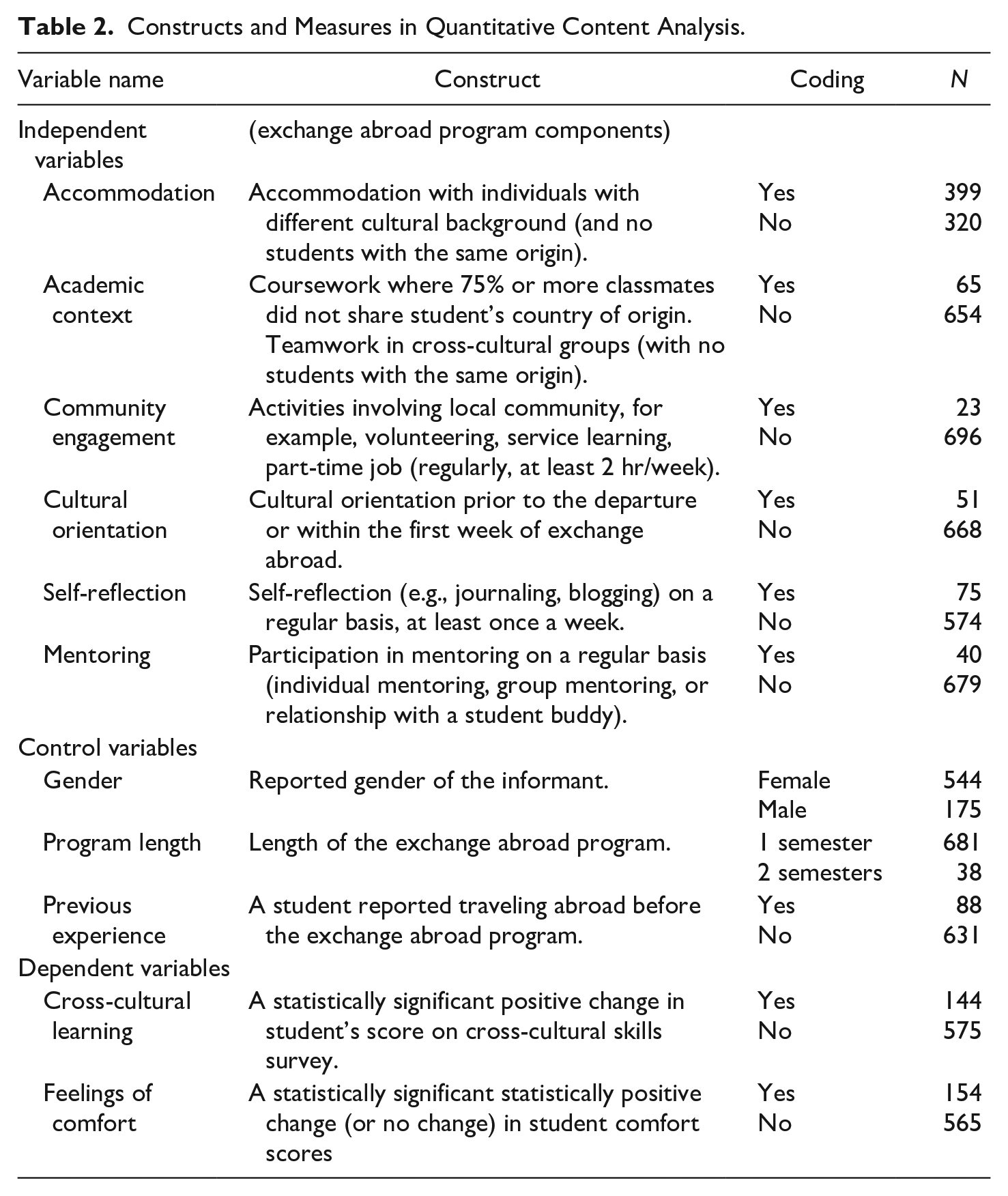
In this study, 719 students wrote reflections about their experiences during the ESP. They were asked to provide information on their accommodation, type and format of the courses they took, community engagement, orientations, and cross-cultural orientation courses attended prior to and at the beginning of the exchange program, self-reflection activities during their stay abroad, and mentoring and guidance provided during the program, and they described their experiences during the ESP. These 5- to 10-page-long reflections were used to code program components as defined in the coding scheme (see in the following).
Operationalization of independent variables
Data coding followed the process outlined by Neuendorf (2002). The operationalization of variables in content analysis relates to the construction of the coding scheme, that is, a set of measures (Neuendorf, 2002). The inter-coder agreement can be significantly raised with the dichotomous coding (Schutz, 1958). Dichotomous coding of content strategies was used in previous research using logistic regression (Xu et al., 2013). Thus, in this investigation, variables were coded as dummy variables: “1” if the component of the exchange program was reported and “0” when it was not. Table 2 summarizes the constructs.
Constructs and Measures in Quantitative Content Analysis.
Coding procedure
The coding schemes were fully explained to two independent coders to prevent the differences in coding. Through pilot coding, we verified that both coders understand the variables (Budd et al., 1967). Coders were given a sample of student reflections to familiarize themselves with the codebook. They conducted the initial coding. Next, the author answered their questions. Afterward, they were provided with student reflections and started the coding process (Neuendorf, 2002). The coding was blind, as the two coders were not informed of the purpose of the study. This aimed at reducing the bias and assuring the validity of the study (Banerjee et al., 1999).
Cohen’s Kappas for the comparison of the two raters have values between 87% and 96%. Thus, the overall inter-rater reliability is substantial (Landis & Koch, 1997).
Sampling
This study focused on business and social sciences students as ESPs are the most popular among these students (Institute of International Education, 2013). The students were selected through purposeful and convenient sampling. They were recruited to participate in the study from 13 academic institutions from 8 countries that regularly host incoming exchange students (Austria, Finland, France, Italy, the Netherlands, Poland, Spain, and Sweden). We received responses from 1,008 students, 289 were removed as we missed one or more of the surveys (e.g., second cross-cultural competence survey, comfort questionnaire, or reflections). The final sample of 719 students consisted of 76% women and 24% men. The average age of the respondent was 23 years (median = 22 years, minimum = 19 years, maximum = 27 years).
Results
Regression Models
To test our hypothesis, we run the main effects binary logistic regression. We look at the relationship between different components of the ESP and increase in cross-cultural competence (CCL) (Model A) and change in student comfort (Model B). The independent variables were (a) sharing accommodation with individuals with different cultural background, (b) academic context that involves participation in coursework with international students, (c) participation in activities that involve engaging with local community, (d) participation in orientation with cross-cultural component, (e) engaging in self-reflection during the ESP, and (f) being provided with mentor guidance during the exchange abroad program. Control variables (student gender, program length, and previous international experience) were included as independent variables.
Descriptive Statistics
Nearly half of the participating students shared accommodation with colleagues with the same cultural background; 20% of study participants shared a double room with a student from their home institution. Only 10% of the students when given a choice worked on group projects with other international students taking the class; 9 in 10 opted for an easier option and worked with students from their home country or speaking their native language.
In Table 3, we report descriptive statistics of study abroad components which resulted (or did not result) increase in cross-cultural competence and/or decrease in student comfort. Experiences of 719 students were analyzed. The data featured 20% (144) cases where students increased their cross-cultural competence and 80% (575) cases where students’ CCL did not occur as a result of the ESP, 79% of the students experienced a decline in comfort at the beginning of the program.
Characteristics of the Study Abroad Components That Resulted in Increase in Cross-cultural Competence.
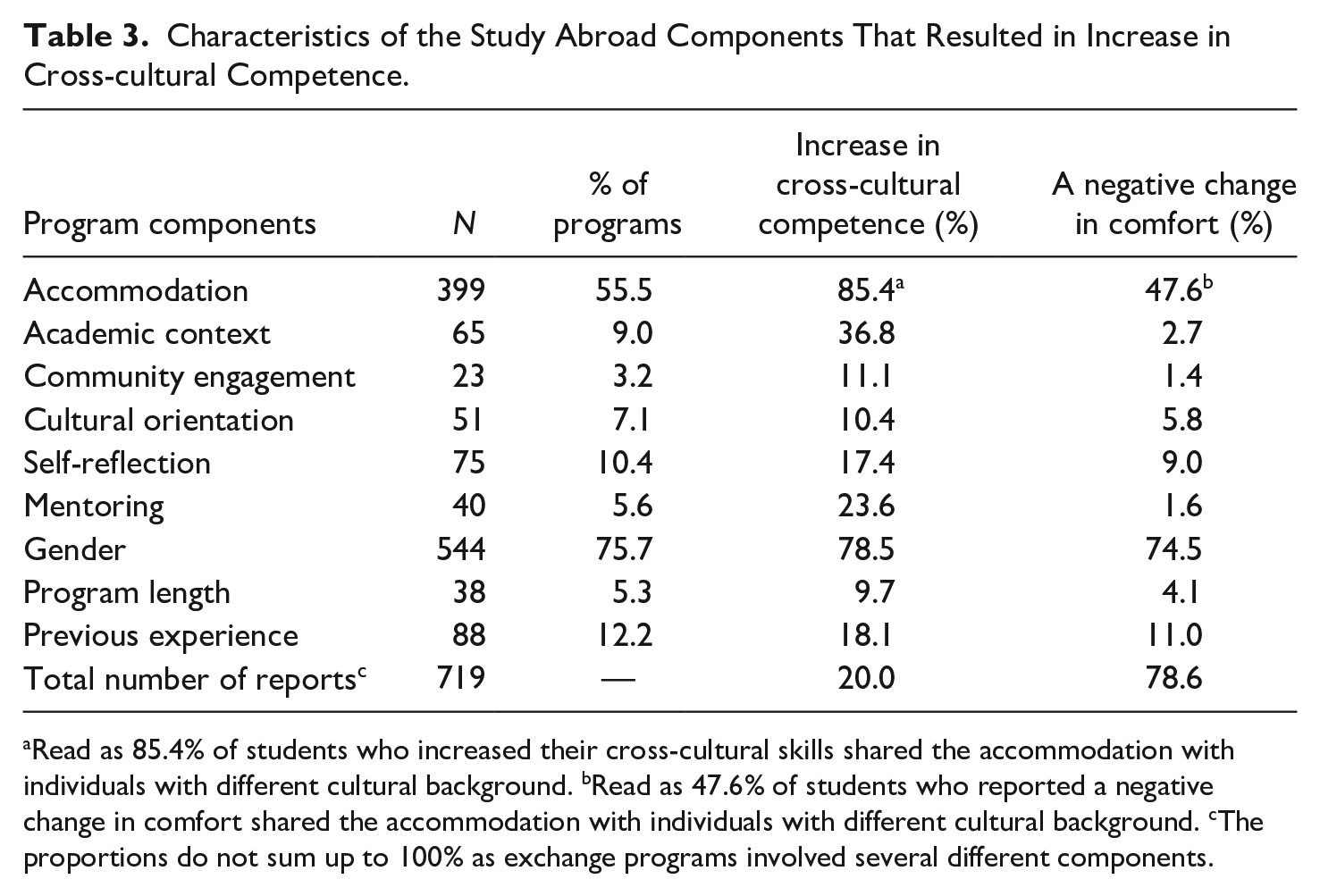
Read as 85.4% of students who increased their cross-cultural skills shared the accommodation with individuals with different cultural background. bRead as 47.6% of students who reported a negative change in comfort shared the accommodation with individuals with different cultural background. cThe proportions do not sum up to 100% as exchange programs involved several different components.
None of the correlations between the exogenous variables exceeded the recommended 0.7 level (the strongest 0.457) reducing the potential for multicollinearity issues in the regression analysis (Type-II error). Collinearity diagnostics were also performed and there were no tolerance values smaller than 0.20 (the smallest being 0.855). All variance inflation factor (VIF) values were well below the 10 cut off point (the greatest value 1.170) supporting the noncollinearity claim (Hair et al., 2009). While the majority of the students in this study (95%) report that they participated in pre-departure orientation, most of them report that this orientation was limited to discussing coursework and paperwork. Only 7% of the students in this study attended an orientation which involved studying cross-cultural issues and discovering their own cultural orientation.
Model A: Increase in Cross-Cultural Competence (CCL)
First, we focus on the ESP components related to the increase in cross-cultural competence. The overall main effects model was statistically significant (Chi2 = 326.403, df = 9, p < .001), indicating that the model was able to distinguish between cases when students acquired cross-cultural skills and when they did not. Hosmer-Lemeshow’s (2000) Goodness-of-Fit Test is 3.109 (p = .795), with a significance level larger than 0.05, indicating support for the model (Hair et al., 2009; Tabachnick & Fidell, 2007). The pseudo R2 indicates that the model explained 0.365 (Cox and Snell R2) or 0.577 (Nagelkerke R2) of the variance. Logistic regression models are evaluated based on how well the model predicts the dependent variable compared to the accuracy of predicting it by chance alone (Hosmer-Lemeshow, 2000; Tabachnick & Fidell, 2007). The model correctly classified content in 90% of the cases and outperforms predicting the dependent variable by chance manifesting the statistical usefulness and significance of the model. The results are reported in Table 4.
Logistic Regression Results—Increase in Cross-Cultural Competence.
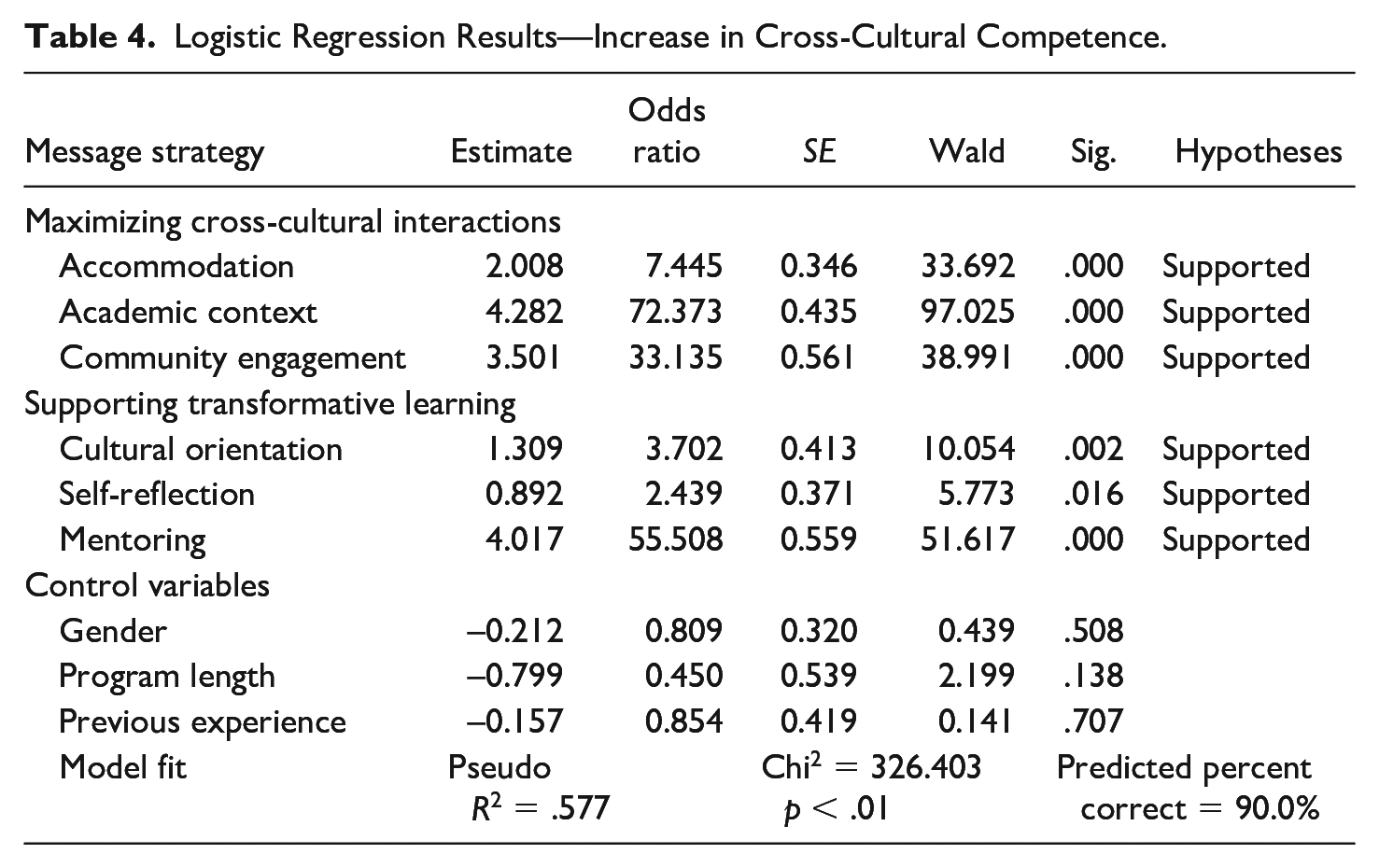
It was hypothesized that sharing accommodation with individuals with a different cultural background is positively related to students’ acquisition of cross-cultural skills. Because the variable representing accommodation was significant (ß = 2.008, p < .01), H1a is affirmed. In support of H2a, academic context is also related to CCL, with a positive, significant variable (ß = 4.282, p < .01). In H3a, it was predicted that community engagement will be positively related to CCL, which is reflected in the model (ß = 3.501, p < .01), thus H3a is supported. We affirm H4a, as the effect of cultural orientation was significant (ß = 1.309; p < .01). Consistent with H5a, the inclusion of self-reflection is significant (ß = 0.892; p < .05), thus the hypothesis was supported. Mentoring is also positively related to content sharing (ß = 4.017, p < .01), thus supporting Hypothesis H6a.
Model B: Changes in Student Comfort
Second, we consider factors related to student comfort at the beginning of the program. The overall main effects model was statistically significant (Chi2 = 249.515, df = 9, p < .01), indicating that the model was able to distinguish between cases when respondents reported feeling comfortable and feeling out of their comfort zone. Hosmer–Lemeshow Goodness-of-Fit Test is 3.026, with a significance level of 0.806, larger than 0.05 indicating support for the model (Hair et al., 2009). The pseudo R2 for the model is 0.293 (Cox and Snell R2) or 0.454 (Nagelkerke R2). The model correctly classified 86.5%, which is sufficiently higher than the 0.50 threshold (Hair et al., 2009). The results are reported in Table 5.
Logistic Regression Results—Student Comfort.
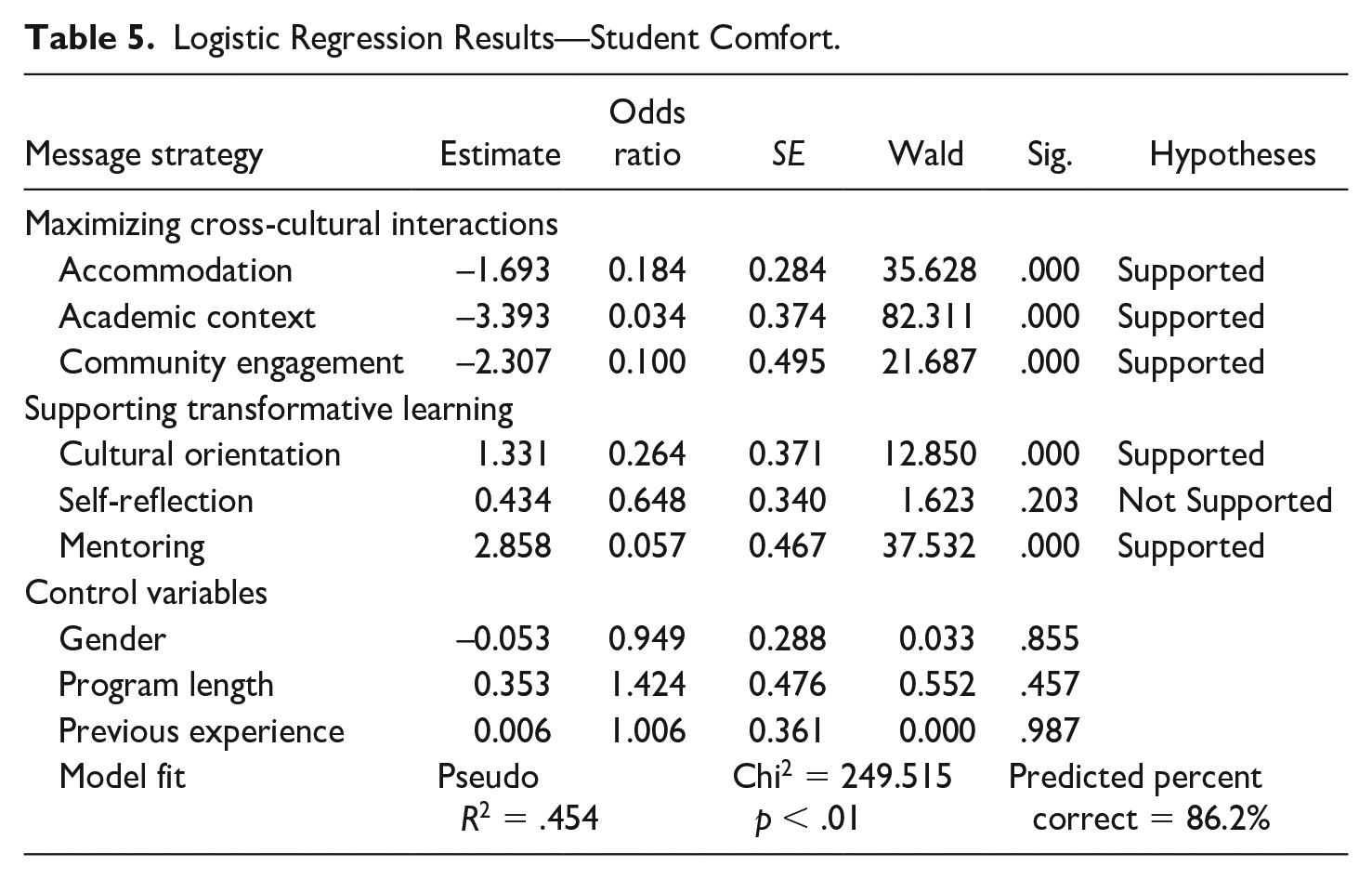
It was hypothesized that sharing accommodation in a cross-cultural environment is negatively related to student comfort, and because the variable representing accommodation was negative and significant (ß = −1.693, p < .01), H1b is affirmed. Considering H2b, intercultural academic context is negatively related to student comfort, with a negative, significant variable (ß = −3.393, p < .01). In H3b, it was predicted that community engagement will have a negative influence on student comfort, (ß = −2.307, p < .01), thus H3 is supported. We can affirm H4b, as the effect of cultural orientation was positive and significant (ß = 1.331; p < .01). In contrast with H5b, self-reflection is not significantly related to student comfort (ß = .434; p > .05). Thus, H5b is not supported. Mentoring was also positively related to student comfort (ß = 2.858, p < .01) supporting H6b. Exchange programs with cross-cultural academic context were more than 82 times more likely to result in student discomfort (at Time 1), controlling for all other factors in the model.
Discussion
While some challenge the view that travel abroad is necessary to become culturally competent and suggest that ESPs do not increase students’ cross-cultural skills (Forsey et al., 2011; Hunter et al., 2006; Van de Berg, 2007), this study proves that ESPs can be effective and identifies the ESP components that support student CCL.
Chinnappan et al. (2013) draw our attention to students failing to immerse themselves in the cross-cultural environment as they resort to staying close to what is familiar and comfortable (Forsey et al., 2011). We confirm their concerns as almost half of the participants interacted with colleagues with familiar cultural background on a daily basis, and given a choice, the majority sign up for the same courses as students from their home institution/country and sit together during class time. As we show, this behavior is detrimental to students’ CCL, which is consistent with Penington and Wildermuth (2005), who recommended better planning of ESPs. To answer their call, this study identifies specific strategies that facilitate student cross-cultural immersion and CCL.
All strategies aimed at maximizing cross-cultural immersion, namely accommodation with individuals with different cultural background, academic context emphasizing coursework based on cross-cultural collaboration, and student engagement in the local community were positively related to student acquisition of cross-cultural skills. The same components are negatively related to students’ feelings of comfort at the early stages of the program. Thus, while cross-cultural immersion results in an initial discomfort, it is necessary for CCL, which is consistent with TLT (Barnett, 2004; Mezirow, 2000; Taylor, 1998). Students can be supported through the transformative learning process. Specifically this study identifies cross-cultural orientation programs and mentoring as positively related to CCL and comfort, which can aid students transformative learning during an ESP.
Previous research suggests that orientation sessions prior to the departure do not prepare students for their experience abroad (Campbell & Walta, 2015). In this study, a majority of the students did not participate in sessions that involved discovering one’s own cultural orientation and becoming aware of one’s assumptions (similar results were reported by Van de Berg, 2007). Yet as we show these orientation sessions can support students during a difficult transition period and are essential for the CCL. Other activities positively related to CCL should facilitate understanding and challenging our frames of reference through, for example, self-reflection and mentoring. Even though 30% of students reported being given various mentoring opportunities, for example, working with an individual mentor, buddy guidance, or group mentorship through participation in support groups or workshops, only one in five students given this opportunity decided to take advantage of it on a regular basis. As those who did participate in mentorship benefited in terms of CCL, students should be advised to take responsibility for their learning experience and take advantage of the opportunities offered by their host institutions. Students also did not take advantage of self-reflection, only 10% of the participants in this study engaged in journaling, blogging, or other self-reflection activities.
In this study, ESP components supporting transformative learning were positively related to students’ feelings of comfort in the early stages of the program. This finding is especially important as Santoro and Major (2012) warn that students who feel out of their comfort zone might have trouble embracing the experience and fail to learn from it. This study also shows that cultural orientation and mentoring programs support students transformational learning in accordance with TLT (Barnett, 2004; Mezirow, 2000; Pence & Macgillivray, 2008; Taylor, 1998; Willard-Holt, 2001).
Some suggest a link between the program length and CCL (Dwyer, 2004; Van de Berg et al., 2009). In this study, consistent with Zimmerman and Neyer (2013) and St. Clair and McKenry (1999), there were no significant differences between students who participated in one-semester versus two-semester-long ESPs. We add to this debate by showing that the relationship between CCL and the inclusion of study components maximizing cross-cultural immersion and supporting the transformative learning process were significant, suggesting that the quality and thoughtful planning of ESPs are critical for cross-cultural skill acquisition. In support of previous research (e.g., Van de Berg et al., 2009), the control variable regarding students’ previous international experiences had no impact on student CCL. Therefore we can conclude that cultural exposure alone is insufficient for CCL, and should be reinforced by cultural immersion and student support.
In terms of practical implications, we show that students and academic institutions share responsibility for student learning. Institutions need to educate their students on how they can maximize their own learning during the ESP and emphasize the importance of students proactively immersing themselves in the cross-cultural environment instead of staying in their comfort zone. Hosting institutions should offer students accommodation with other international students and enforce creating cross-cultural teams for various assignments. The emphasis should also be placed on helping students discover their own cultural orientation. Students need to be proactive in this process and engage in self-reflection, take advantage of mentoring opportunities, participate in courses and teamwork that involve cross-cultural immersion, and look for opportunities to engage with a local community. They can also study culture and their own cultural orientation even when this type of orientation is not provided by the institutions.
This study is not without its limitations. We acknowledge that choosing the timing for administering the comfort survey is problematic considering the complexity of the cultural immersion process and culture shock. Considering that CCL occurs after the discomfort that was measured at Time 2, it would also be beneficial to administer the discomfort scale mid-program. Moreover, it is difficult to judge at what time and following what activities students develop cross-cultural competence. Therefore, we encourage future longitudinal studies of CCL and student discomfort that follow the students throughout the duration of their experience abroad and measure these two concepts several times during the ESP. This would help in identifying critical learning moments or most beneficial combinations (or sequences) of the ESP components. Moreover, coding of the ESP components could have been conducted by the international office staff of the hosting institutions to provide potentially more accurate data, or students themselves could provide this information through surveys. While this study showed no statistical differences between programs that lasted 1 year and those of only 2 semesters, we cannot conclude whether program length has or does not have an impact on CCL. Future studies should consider a wider variety of program lengths to discover optimal duration of the ESPs.
Footnotes
Declaration of Conflicting Interests
The author(s) declared no potential conflicts of interest with respect to the research, authorship, and/or publication of this article.
Funding
The author(s) received no financial support for the research, authorship, and/or publication of this article.
