



Abstract
In this paper, a case is made that campus internationalization and the social integration of both domestic and international students may be fostered through volunteerism. This argument is supported by data from a survey (n = 122) of a performing arts volunteer organization at a large Midwestern public university. The survey examines the national diversity of the organization, its inclusion practices, and student perceptions of their own cross-national interactions. The results are augmented by participant-observation data from an international graduate student volunteer. Discussion includes a consideration of respondent satisfaction with the organization's diversity and inclusion practices, as well as their experience socializing and making friends while volunteering. It is worth identifying successful organizations such as the one described in this paper because the defining factor for success may depend on specific attitudes and practices.
Keywords
Almost 1.1 million international students were enrolled in U.S. institutions of higher education in the academic year 2016 − 2017, a culmination of 85% growth from the previous decade (Saul, 2017). Strategies to integrate this growing international student population usually focus on formal learning and work environments (Farnsworth, 2018), though less formal environments have also shown potential (Young & Schartner, 2014). In this paper, performing arts volunteerism is investigated as an additional, empirically supported strategy for meaningful social integration and campus internationalization. Our study examines a performing arts volunteer organization at a large public university in the Midwestern U.S., guided by the following research questions:
Can a university volunteer organization provide a context for meaningful social interaction and intercultural learning? How do the student volunteers perceive their cross-national experiences?
In short, we investigated whether the volunteer organization provided an effective context for social interaction among college students of different national origins. This study should inform university policy that aims to promote campus internationalization, an oft-stated but sometimes elusive goal at U.S. institutions of higher education. In this way, the present study provides insight into a novel intervention that may increase student retention rates (Borglum & Kubala, 2000).
Literature Review
One misconception of campus internationalization (among many) is that the presence of international students automatically results in internationalization, whereas in reality authentic internationalization entails much more than counting students (De Wit, 2011). According to Hudzik (2014), internationalization requires that members of a university community develop intercultural and international understanding as well as connections among students, faculty, projects, and programs. Similarly, Killick (2014) argues that an internationalized campus should act as a global community. In this view, internationalization is predicated on a supportive, appropriate, and equitable campus community (Bush et al., 2022). The volunteer organization described in this study provides a context for internationalization in these latter senses—that is, not defined simply by the number of international students, but by opportunities for safe communication and exchange among students with diverse national backgrounds.
There are prominent obstacles to authentic internationalization, including problems international students face when adjusting to new environments (Kim, 2000). In contrast to domestic students, international students are more likely to experience challenges with social integration than academic integration (Park, 2019). According to Noyens et al. (2019), social integration can be measured in different ways depending on context. In the case of higher education, the term refers to social involvement and contact with peers, which at the most basic level includes feelings of relatedness and comfort. Social integration should not be confused with assimilationist ideology, which has rationalized the denial of cultural sustainability, self-determination, and equality among marginalized groups (Banks et al., 2016). The cultural heterogeneity of people from outside a host community clearly indicates that change is much more complex than assimilationist ideology would suggest, and that ethnic identification is not unidimensional (Sayegh & Lasry, 1993). The application of bi-dimensional models suggests that acculturation, rather than assimilation, is the appropriate term. Berry (1990) defines acculturation as “the process that results in population-level changes that are due to contact with other cultures,” while psychological acculturation is “the process by which individuals change, both by being influenced by contact with another culture and by being participants in the general acculturative changes under way in their own culture” (p. 235).
Generally, international students experience acculturation in academic contexts such as attending courses, visiting office hours, or interacting with other classmates and instructors in a classroom environment. Though just as vital, opportunities for social integration and acculturation outside of the classroom are limited, which means that international students may not develop intercultural communication skills even if they are exposed to English on a regular basis (Dudley, 2007). International students can achieve social integration while they experience diverse intercultural learning. According to King et al. (2013), there are three key requirements for intercultural learning: 1) students must encounter the experience of others, 2) they must feel safe enough to explore cultural difference, and 3) they must engage in various approaches (e.g., listening and observing comparing, and reflecting). The opportunity to experience stress-free intercultural learning may be an important basis for more challenging future experiences.
Deardorff (2009) has called for the establishment of “peer-pairing programs” that promote collaboration and the development of partnerships, which are both key factors in social integration. In addition to benefits for international students, domestic students may also experience what Deardorff calls “internationalization at home” (p. 211). In this paper, we argue that volunteering may function as just such a program, providing benefits for both domestic and international students. There has been research on the benefits of volunteering for L1 English speakers, but L2 speakers have not received the same attention (Dudley, 2007).
If universities are to develop global citizens, they must act as international communities that provide opportunities for purposeful, yet authentic interactions. To this end, classroom learning may be augmented by volunteer work, which offers an informal, yet structured setting, where interactions may be somewhat open-ended but also present less pressure than more variable social settings. In sum, although volunteerism may present an ethos new to some international students, the context is an ideal avenue for communication, language practice, and non-academic integration.
Methods
The Organization
Established in 1985, the Convocations Volunteer Network (CVN) is a student organization that provides ushers for performing arts events at a large public Midwestern university. During the 2016 − 2017 academic year, nearly 400 undergraduate and graduate student members volunteered at over 40 events. Motivations for participation were both external and internal, including a free meal and show, resume-building opportunities, altruism, and a desire to make new friends and learn about new cultures.
CVN was chosen as a subject for this study for three reasons. First, the authors observed a large number of international students participating in the organization. Second, two co-authors were participants in the organization: The first author was the organization's graduate advisor from 2016 − 2017, and the third author participated as club photographer from 2016 − 2018. Finally, the organization's work appeared ideal for what might be described as sheltered interaction, a concept considered in the Discussion section to explain how organization events promoted social interaction.
Survey Data
We distributed an anonymous survey (incentivized by anonymous entry into a free extra ticket drawing) to all CVN members near the end of the Spring 2017 semester. The number of experienced respondents, defined by participation in two or more events, was 122. Of these, 67 (55%) volunteered at 2–4 events, 32 (26%) volunteered at 5–7 events, 14 (11%) volunteered at 8–10 events, and 9 (7%) volunteered at more than 10 events. Our survey included questionnaires on the respondents’ country of origin, language background, and status as international students. Students generally identify the latter based on legal status; accordingly, in this paper “international” and “domestic” are defined based on legal visa status, not on language background.
Respondents were also asked several questions about their perceptions of the national diversity of the organization, about the organization's inclusivity, and about their interactions with peers with different national backgrounds from themselves.
Participant-Observation Data
This study includes qualitative participant observation (PO) data from a participant researcher: the third author, a Colombian graduate student who served as a club photographer from 2016 − 2018. PO has been one of the most prolific approaches to qualitative research for anthropologists and social scientists, providing the basis for fieldwork as we know it today (e.g., Agar, 1996). PO is closely tied to ethnographic research: “a method distinguished by its object of interest, which is ‘the field’ of human interaction collectively differentiated and understood from an insider's points of view” (Evans, 2012, p. 98). The method allows the researcher, or observer, to take part as a novice in the rituals, events, interactions, and activities of the group being observed (Musante & DeWalt, 2010). In this study, PO offered the unique advantage of providing first-hand information on the meaning of interactions in the community and, more importantly, of understanding what a representative of the population deemed valuable. Awareness of tacit aspects of explicit routines is a crucial part of the observer's task, as these include aspects of the culture that are usually not spoken about due to familiarity or simple unconsciousness of the phenomenon (Spradley, 1980).
Results
Survey Data
National and Linguistic Diversity
Our survey results indicated that CVN was a nationally diverse organization. Of the 122 respondents, 42 (34.4%) identified themselves as international students from the 16 countries (or special administrative regions) listed in Table 1.
National distribution of international students (n = 42).
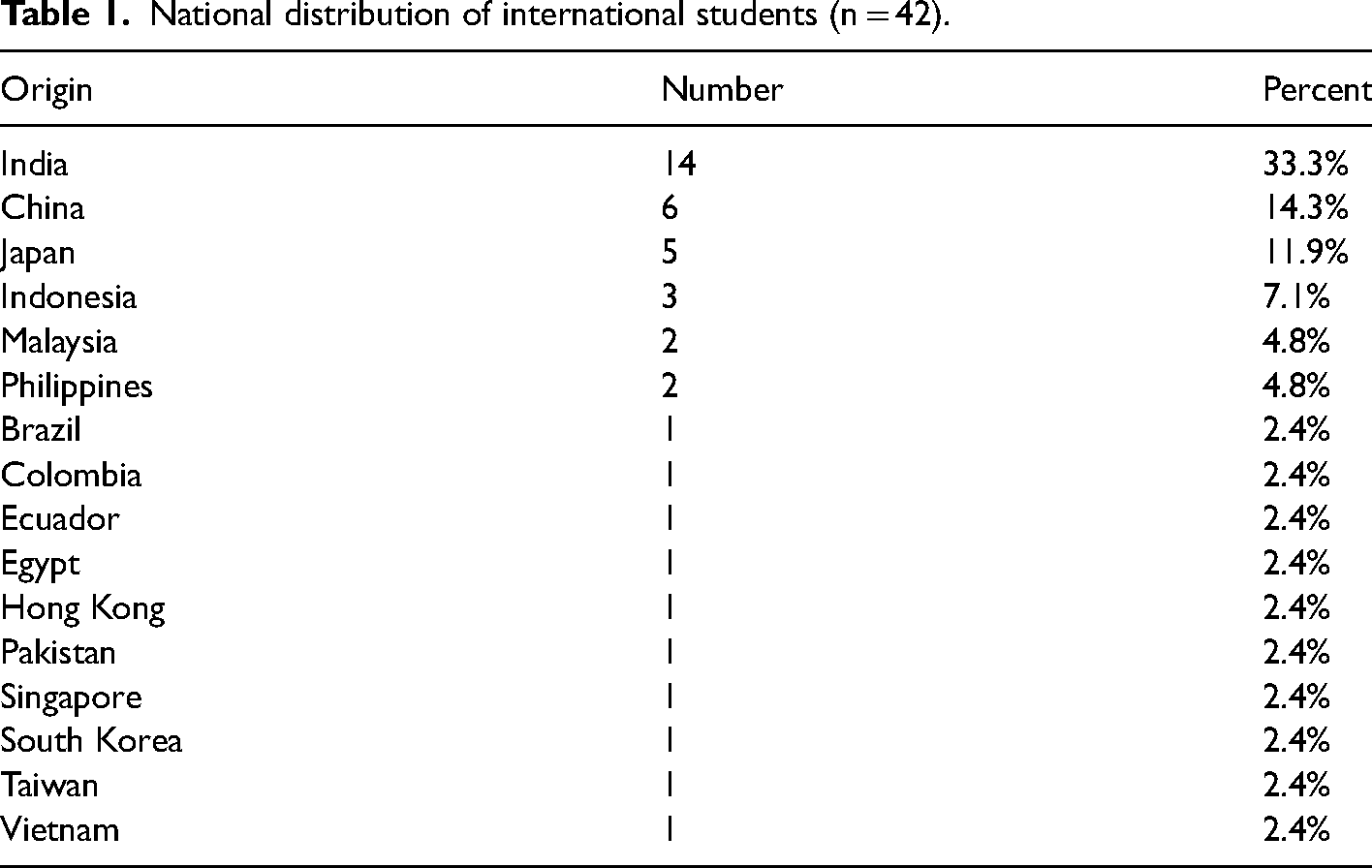
In these data, East and South Asia are best represented. There are no students from Europe, only one student from Africa, and three from South America. This is largely a reflection of the distribution of international students at the university. According to the university's International Students and Scholars Enrollment and Statistical Report (2016), there were 9,303 international students from 127 countries enrolled for the 2016 − 2017 academic year, and this comprised 23.0% of total students. This means there was a 49.6% higher proportion of international students in CVN than in the total student population (34.4% vs. 23.0%).
The appearance of diversity in the data was corroborated by optional comments. One respondent observed that CVN “[h]as a wide range of volunteers from different backgrounds” (domestic, female, 2 events). Another wrote, “I like that when I am ushering for an event that requires a lot of ushers, everyone doesnt [sic] look the same” (domestic, female, 9 events). A third respondent remarked on the diversity of student leaders: “Ever since I’ve joined the club I’ve felt like the membership of the organization is one of the most diverse I’ve seen on campus. My first semester ushering there were always a wide range of other ushers that I worked with, and the Executive Board has always been a diverse group of individuals” (domestic, male, 15 + events). These comments suggest that CVN's diversity is readily apparent to members.
One of our objectives in this study was to evaluate CVN as a setting for English language learners to practice English in a social setting. For this reason, we asked survey respondents whether they were L1 or L2 speakers of English and, if L2, when they first started learning English. Results show that there were more L2 speakers of English among the respondents than international students by a relatively small margin (48 vs. 42) and that most L2 speakers started learning English at a young age, as shown in Table 2.
L1 and L2 speakers of English (n = 122).

Of the 42 international students, only 2 (4.8%) were L1 speakers of English; these students were from India and Singapore. Of the 80 domestic students, only 8 (10.0%) were L2 speakers. Five of these domestic L2 speakers reported they were immigrants, and all of them had at least one parent born outside the U.S. The survey did not measure English proficiency levels, but the university has a minimum threshold score in standardized proficiency tests for admissions. While threshold scores vary by program, they are never below 80 total points on the TOEFL (Educational Testing Service, n.d.) or what the Common European Framework of Reference (Council of Europe, 2018) defines as B2, a higher intermediate language user.
Perceptions of inclusivity
Authentic campus internationalization is not just about the number of international students, but requires the establishment of a community that promotes respect, understanding, and meaningful opportunities for exchange. For this reason, our survey asked respondents about their perception of CVN's inclusivity practices.
The results presented in Figures 1 and 2 strongly support the claim that CVN is perceived as an inclusive organization by both domestic and international members, though the international students present a more complex picture. Around 90% of domestic students (Figure 1) either “agreed” or “strongly agreed” to survey items that presented inclusion and diversity as qualities of the organization (e.g., “Diversity is important to CVN” and “CVN is a welcoming organization”). Around 90% of international students also agreed at some level with these survey items, though with more responses of “somewhat agree” than were observed among the domestic students. This positive, yet less enthusiastic, response may be interpreted as a sign that international students are less confident about their role in the organization and the organization's general inclusivity. Figure 2 shows that the percentage of international students who strongly disagree with the inclusion statements, although very small, is nevertheless higher than the percentage of domestic students who expressed strong disagreement (Figure 1). In fact, only one domestic student chose “strongly disagree”—on only one of seven statements—while two international students chose “strongly disagree” for all statements.
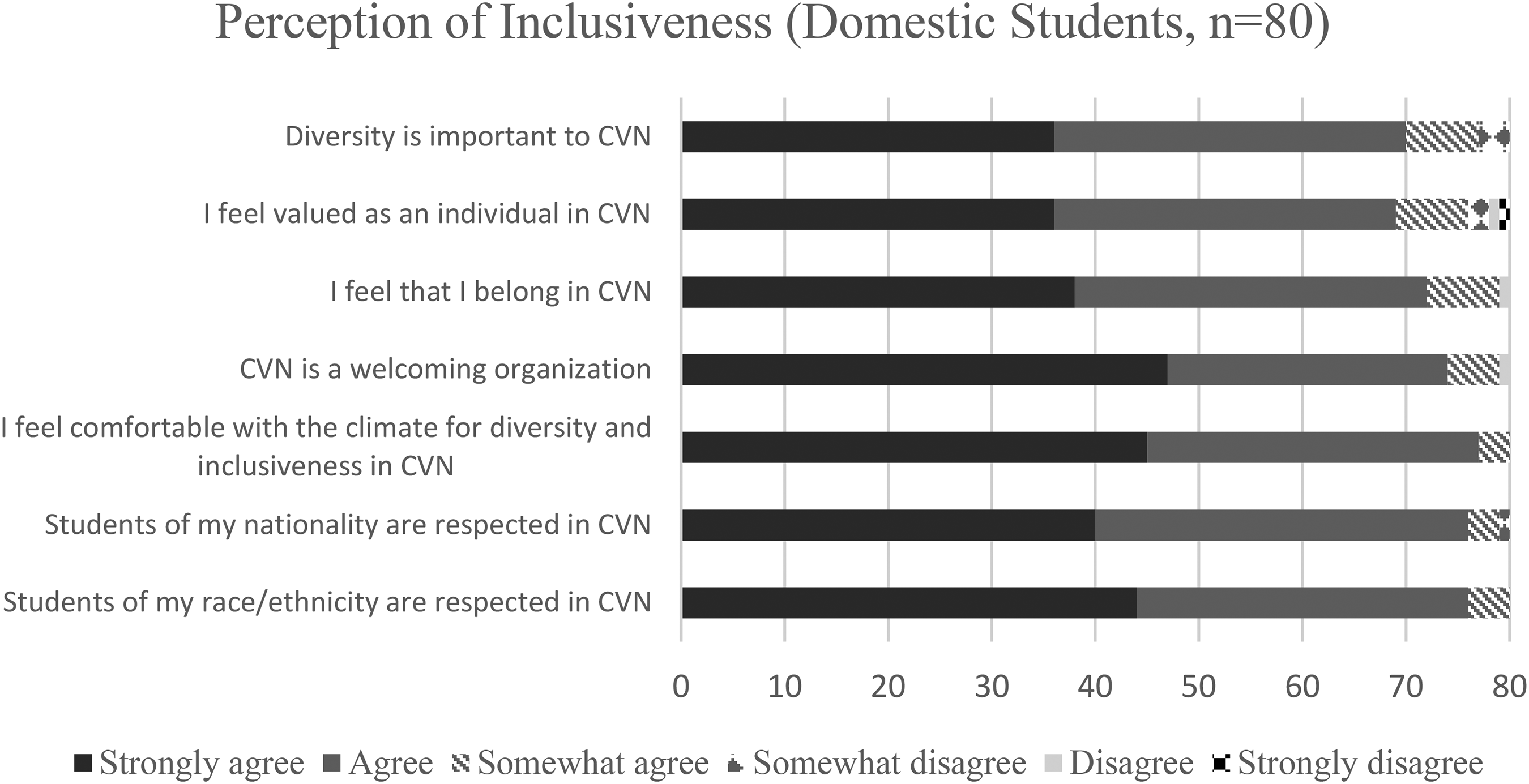
Domestic students’ perception of inclusiveness (n = 80).
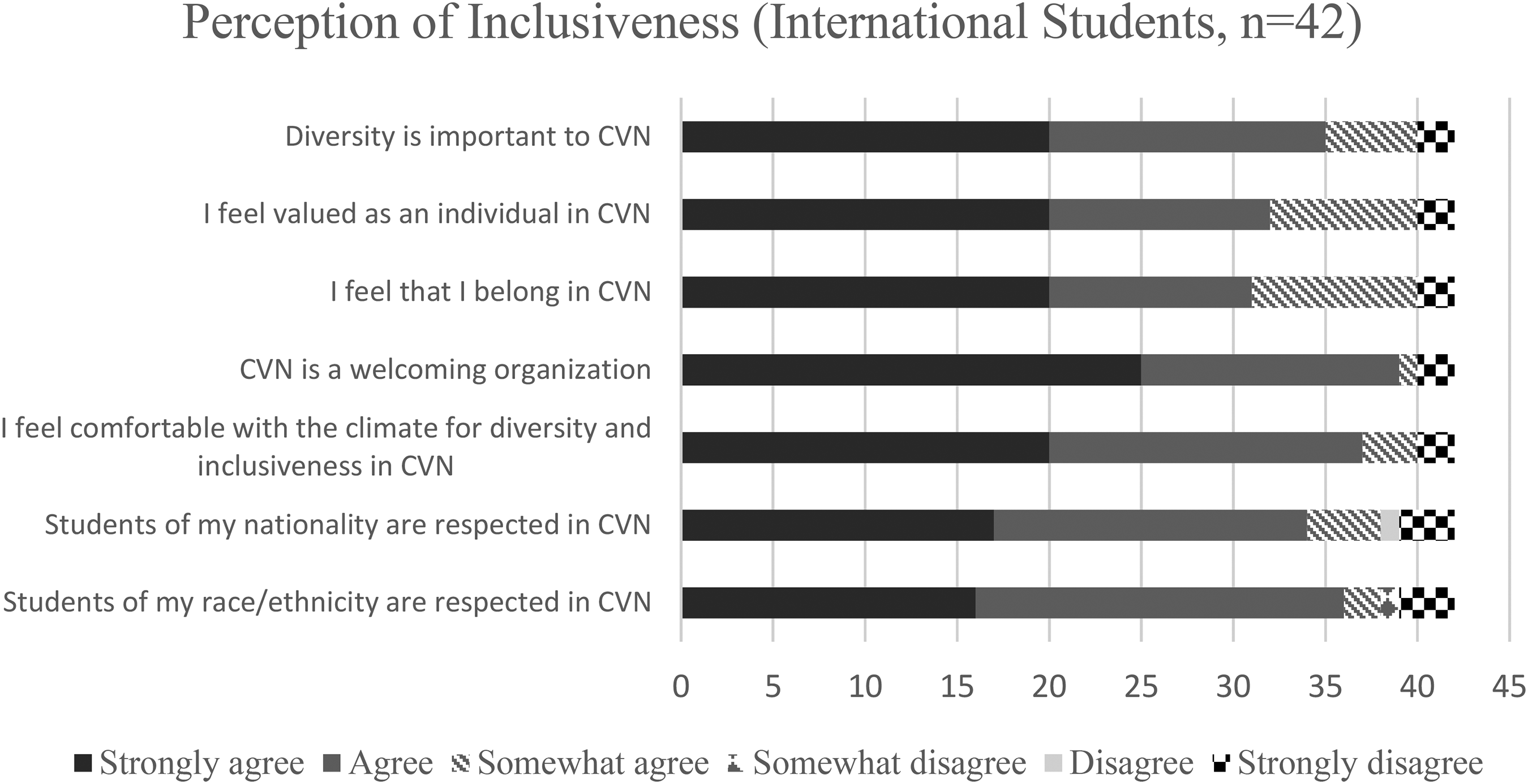
International students’ perception of inclusiveness (n = 42).
CVN's climate of diversity and inclusivity is also reflected in respondents’ comments. One student wrote, “I have been given an opportunity to work with people of different sexual orientations and races. No matter what the differences have been between us, it has always been a fun and positive experience working with CVN” (domestic, female, 2 events). Another student remarked on the events: “A lot of shows are diverse and that brings a lot of different people together to love the shows” (domestic, female, 7 events). Some comments reflected on CVN's inclusivity practices: “[B]efore every event, we gather as a group to review the rules, best practices and logistics for the particular venue we are in. I feel included by the way we gather (a circle)” (domestic, female, 10 events).
Opportunities for social interaction
In addition to eliciting perceptions of the organization's diversity and inclusion practices, we also asked about opportunities for social interaction. International students were asked four questions. To the first (“With whom do you interact primarily at CVN events?”), 25 out of 42 international students (59.5%) stated that they interacted equally with domestic and international students, as shown in Figure 3. Of the remaining international students, all but one stated that they interacted either with “mostly international” students or “mostly American” students.
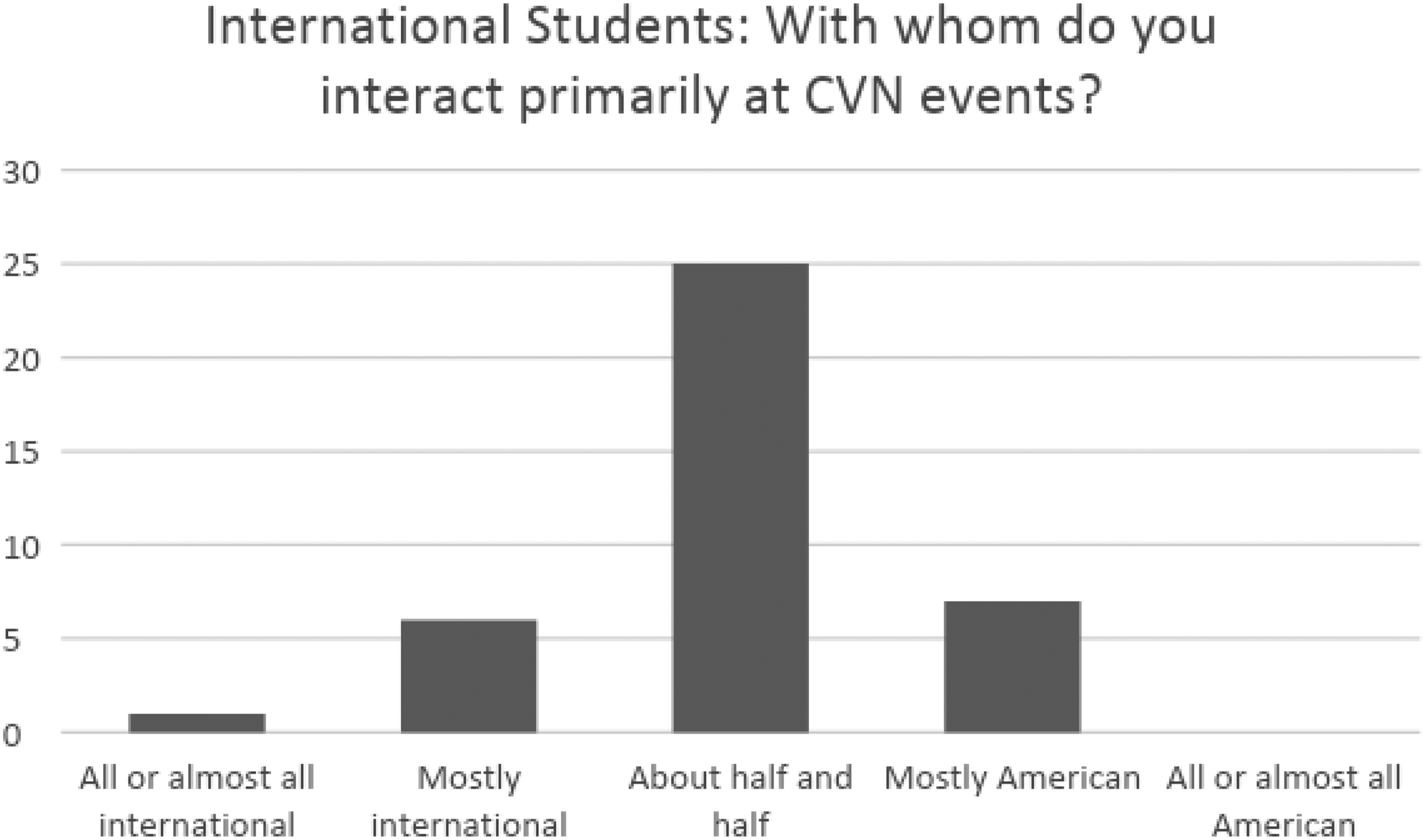
Interactions of international students (n = 42).
To the second question (“How easy or difficult is it to fit into the social scene at CVN events?”), most respondents indicated that it was “easy” (n = 20; 50%) or “neither difficult nor easy” (n = 15; 38%) to fit into CVN's social scene (see Figure 4). Only 3 of the 40 respondents (8%) expressed that it was “difficult” or “very difficult.”
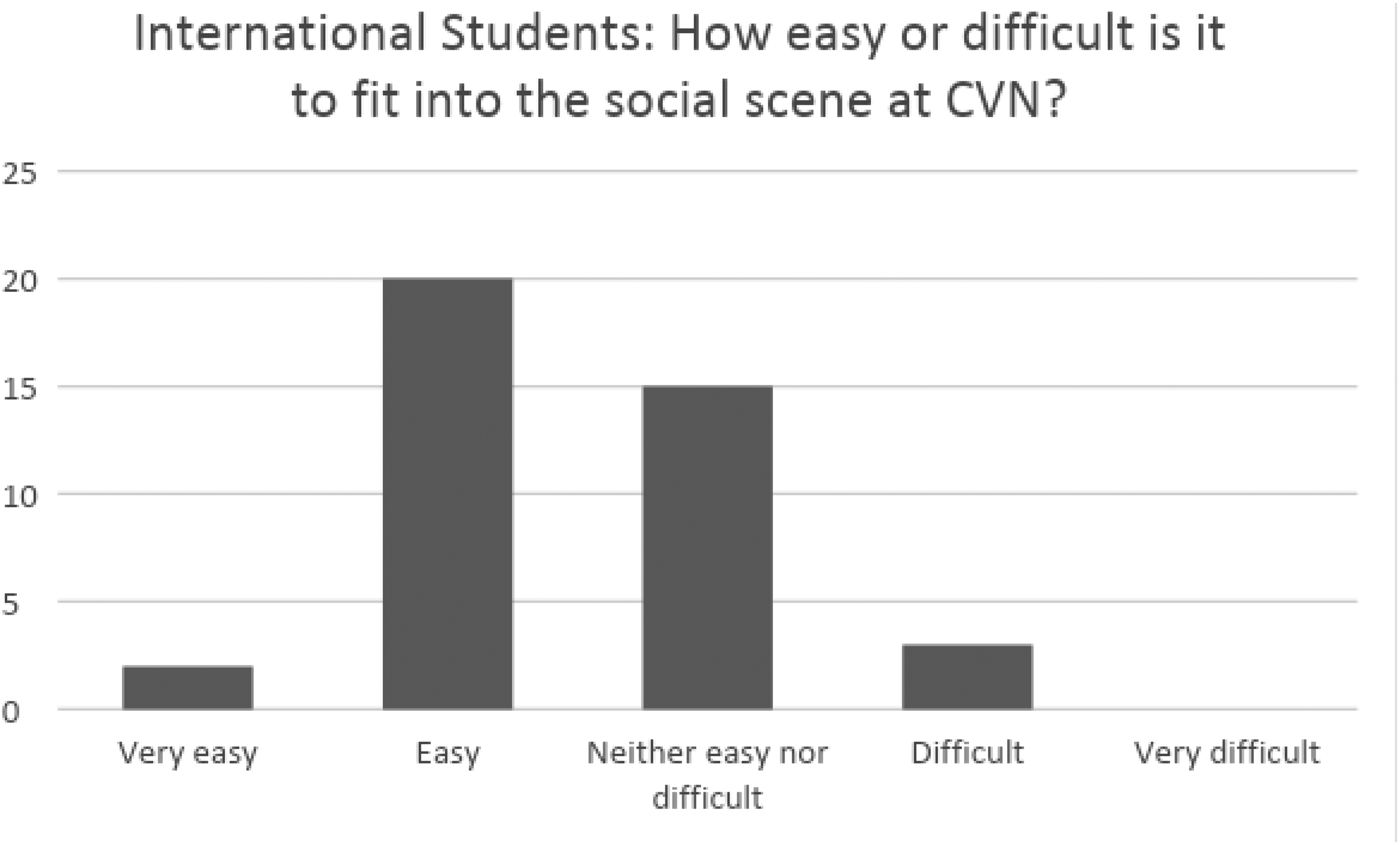
International students’ ease fitting In (n = 42).
The response to the next question (“How easy or difficult is it to make friends at CVN events?”) was similar. Most respondents indicated that it was “easy” (n = 20; 50%) or “neither difficult nor easy” (n = 17; 43%) to fit into CVN's social scene, and only 2 of the 40 respondents (5%) expressed that it was “difficult” or “very difficult” (see Figure 5). The similar results for the second and third question indicate that, for international students, socializing and making friends at CVN events were perceived as about equally difficult.
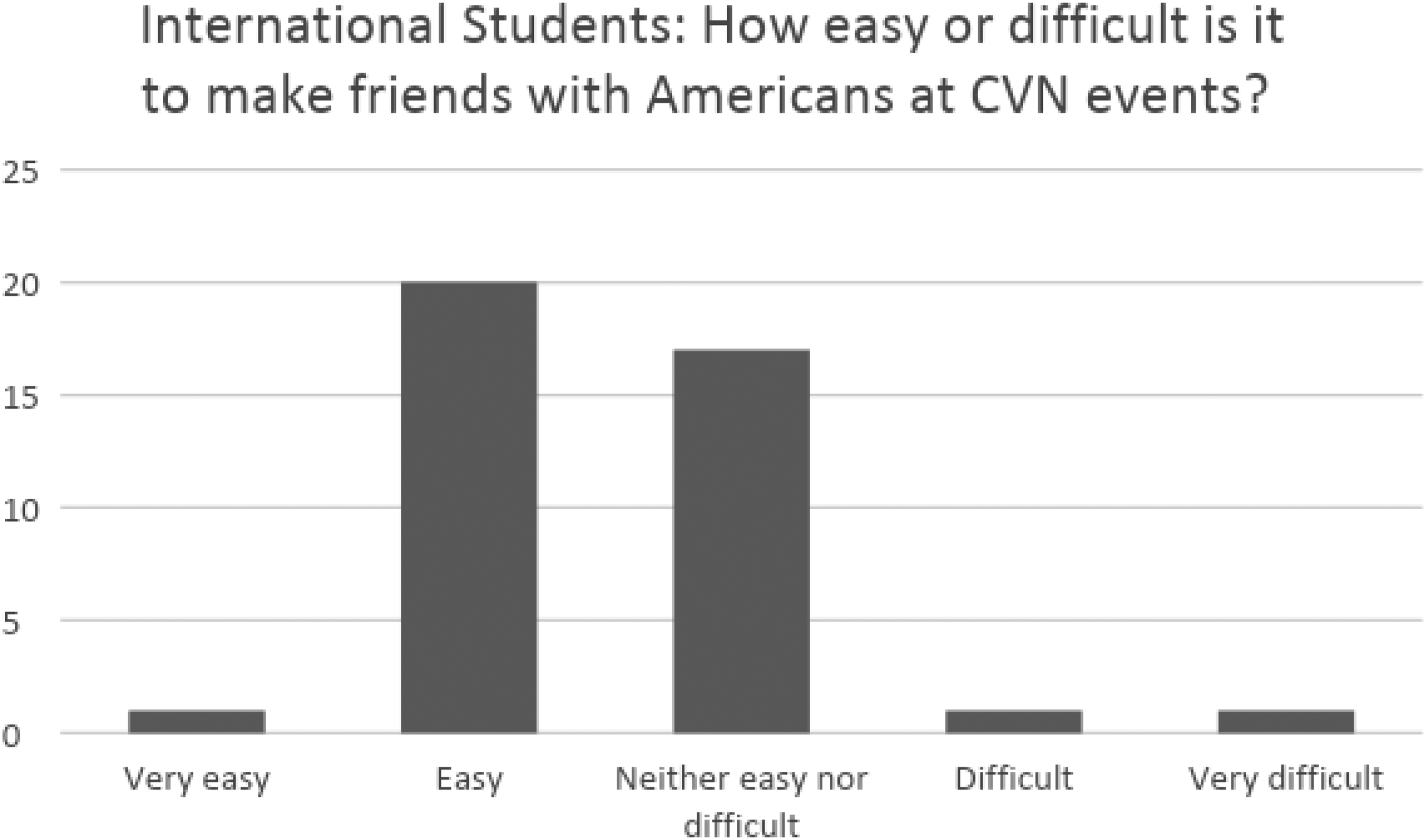
International students’ ease making friends with American students (n = 42).
To the fourth question (“How satisfied are you with the interest in and attention to international students shown by American students in CVN?”, Figure 6), the most common response was “satisfied” (n = 21; 53%), and all but 1 respondent were “very satisfied,” “satisfied,” or “somewhat satisfied.”
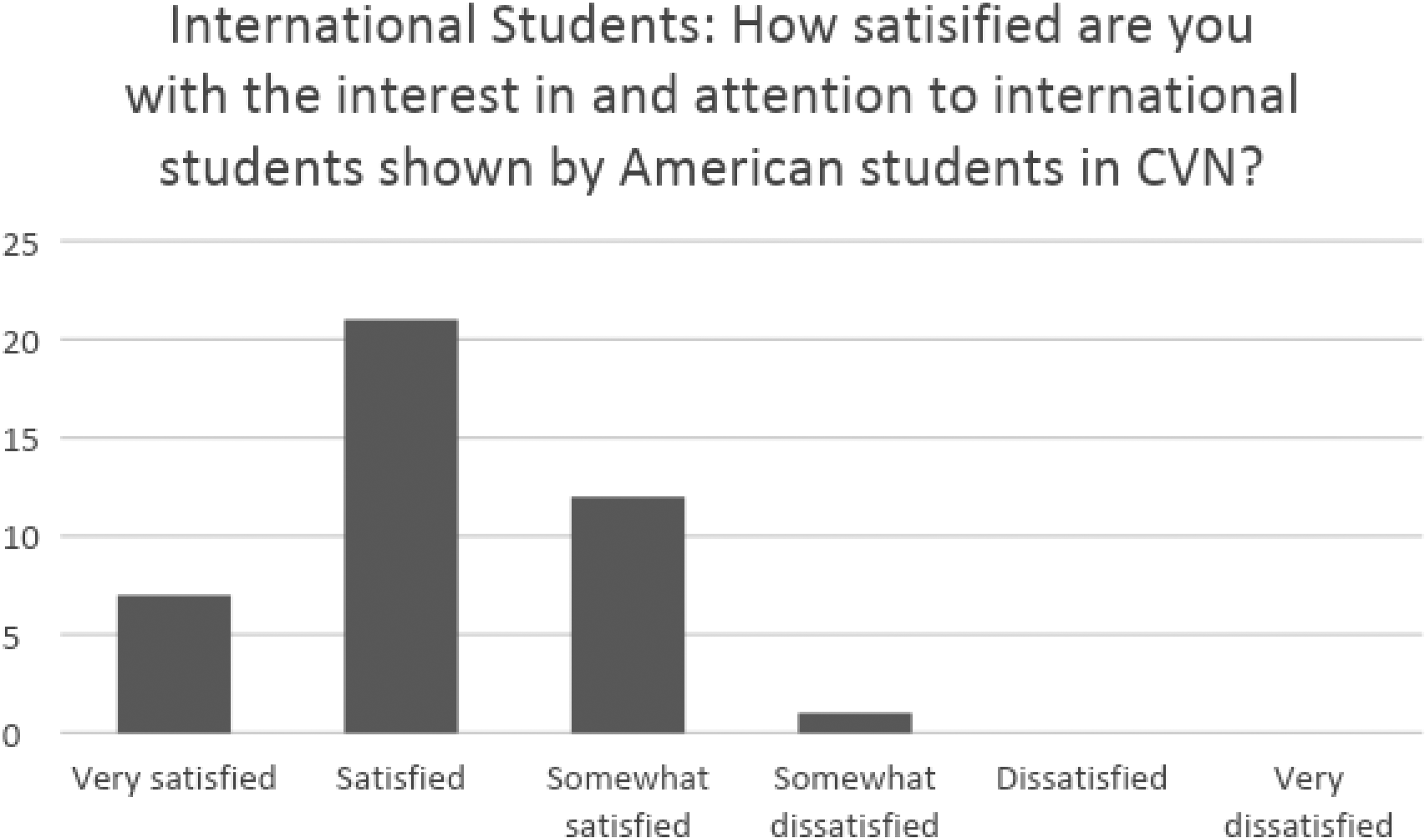
International students’ satisfaction with domestic students (n = 42).
The results from these four questions support the claim that international students experienced positive social interactions with domestic students. Nevertheless, while international students were satisfied with the organization's diversity and inclusion practices, a small group did not find it easy to socialize or make friends, and were dissatisfied with the lack of attention that was paid them by their domestic student peers. This finding, while representing a small segment of the surveyed volunteers, was not unexpected. Gareis (2012) found that 40% of international students lacked a close American friend or acquaintance and desired more meaningful interaction with domestic peers. Moreover, the satisfaction and dissatisfaction ratio presented in Figure 6 might account for the internal and external factors described by the Canadian Bureau for International Education: (1) international students’ shyness and lack of strong language proficiency and (2) domestic students’ lack of interest in other cultures (CBIE, 2015).
The minor ambivalence reflected in these results is clear in some of the respondents’ comments. One domestic student was impressed by CVN's general practices, but found that social patterns tended to mirror patterns from the university at large: “Impression is that cvn [sic] cares about diversity and inclusion in the sense that want to make feel people feel welcome and accepted. Actual social interactions can mirror general caring a university [sic] population - either unknowingly perpetuating a stereotype or ending up in social cliques within which individuals they are most comfortable with” (domestic, female, 10 events). International students also expressed mixed views in their comments. Some indicated that they had good experiences and enjoyed opportunities to interact with domestic students—opportunities that were not readily available outside of classrooms—while others observed that interactions were inhibited either by their own shyness and limited English skill or because domestic students often interacted among themselves: “I had good experiences in CVN, but personally I have problems to communicate English, so I am always shy about talking to new people” (Brazil, female, 5 events).
“I like that CVN brings together people from all over the world and in most cases made them work as a team. American students tend to be quiet, and this is a good opportunity for them to know people from other places, break stereotypes and for us, international students, to interact with Americans as we have few opportunities to do so” (Colombia, male, 12 events).
“International students regardless of their origins tend to be more comfortable to socialize during CVN events and most of the American students tend to socialize within their own groups” (China, female, 9 events).
From these overall results, it is safe to assume that CVN provides a mostly effective setting for international students to engage socially with domestic students. This could partly be explained by an atmosphere of informal sheltered interaction (mentioned in the Methods section and explored in more detail in the Discussion section). One respondent described the basic conversations that occurred in this atmosphere: “[S]ometimes when we volunteer to usher specific doors, we are in groups of 2–4. We always chat on between [sic] walking patrons to their seats and most of the conversation revolves around what we are studying, do we think the performance will be good and why” (domestic, female, 10 events). This comment suggests conversations tend to revolve around topics, such as personal identity and the evening's event. This atmosphere appears to be conducive to socializing for most international student volunteers.
We also asked domestic students about their cross-national interactions. The first question was how often they had interactions with international students at CVN events, on a scale from “very often” to “never,” as shown in Figure 7.
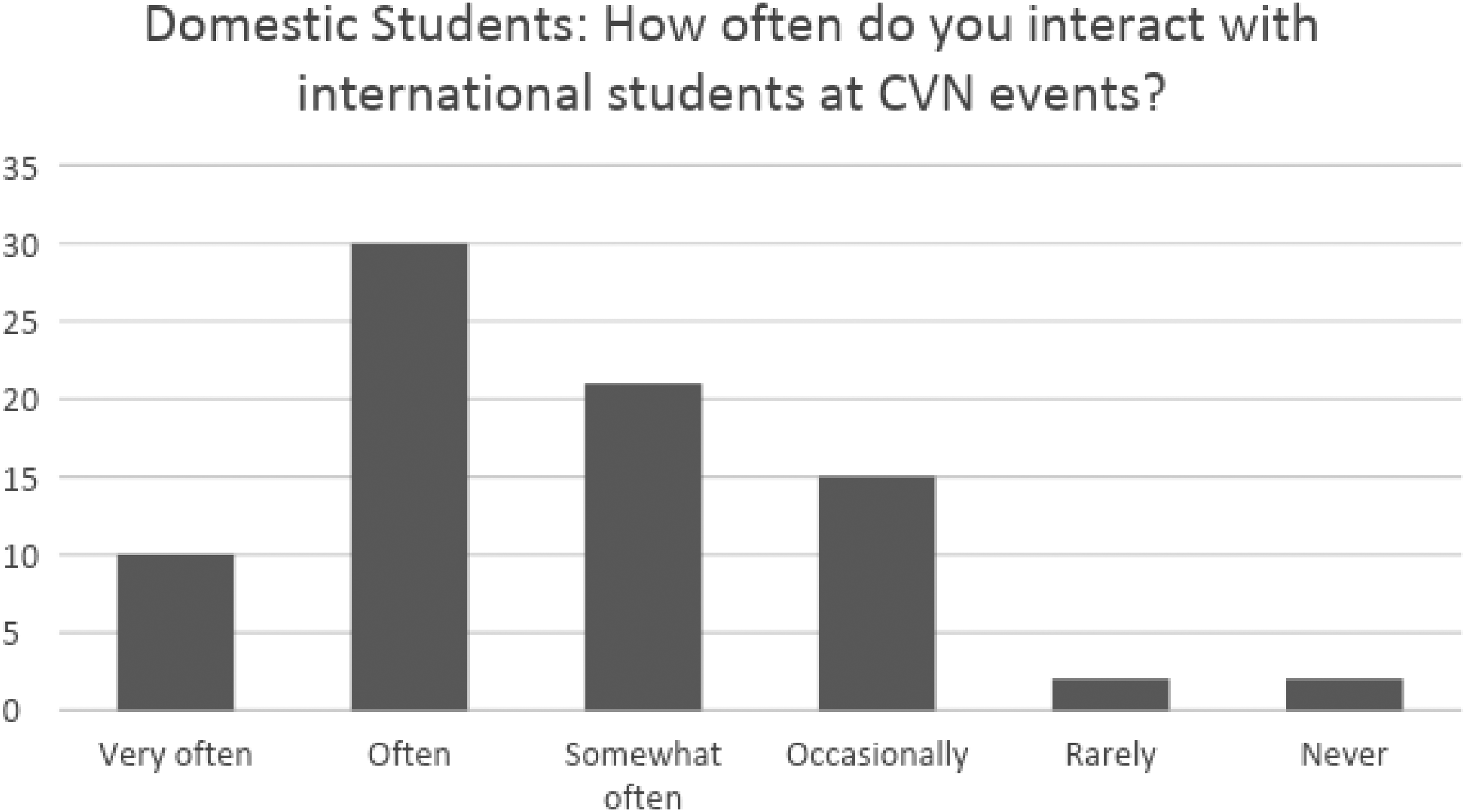
Interactions of domestic students (n = 80).
These results show that very few domestic students avoided interactions with international students. Only four respondents (5.0%) indicated they “never” or “rarely” had these interactions, and 61 out of 80 (76.3%) reported that they interacted with international students “very often,” “often,” or “somewhat often.”
We also asked how often these students made friends (a higher level of engagement) with interactional students from CVN events, as shown in Figure 8.
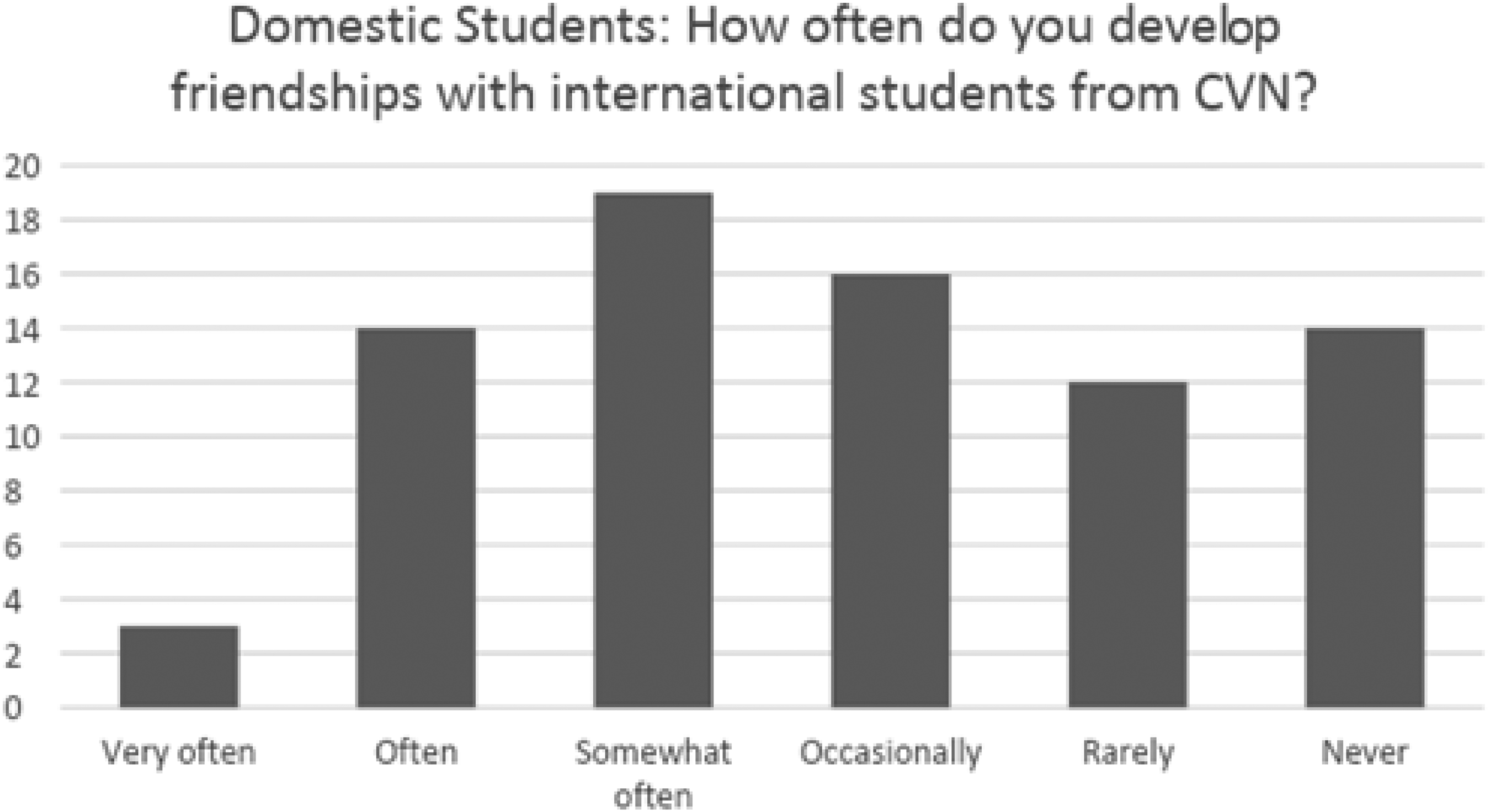
Domestic students’ friendship with international peers (n = 80).
The results for the question about friendship (Figure 8) were notably different from the questions about socializing (Figure 7). Twenty-six students (32.5%) reported “rarely” or “never” developing a friendship with an international student from CVN, and 36 (45.0%) reported they developed a friendship “very often,” “often,” or “somewhat often.” The contrast between the results in Figures 7 and 8 is interesting because there was less contrast when international students were asked similar questions (see Figures 4 and 5). Based on our results, it appears both domestic and international students are interacting easily and frequently, though the formation of new friendships might be less common.
Despite the occasional malapropism or use of outdated terminology to describe international students, comments from domestic students suggest that they interacted regularly with students from other countries and valued these interactions. Notably, the ambivalence found among the international students is lacking in these comments. The domestic students apparently enjoyed interactions without worrying about their personality or English language: “There is a huge international membership within the organization, so I interact with foreign students at every single show” (domestic, male, 15 + events).
“I have met someone from an international country [sic] at almost every show that I work. CVN is one of the most welcoming clubs out there” (domestic, male, 8 events).
“It was a positive experience. I worked on the intermission clubs with three people of different ethicist [sic] and cultures then [sic] me and it was interesting to hear about they life's [sic]” (domestic, female, 7 events).
“I spend time with a Japanese student from one of my classes when volunteering with CVN if we’re both working the same event. I usually end up sitting with international students working the same events as me and enjoy talking with them” (domestic, female, 5 events).
An additional comment reflects a more nuanced and experienced point of view, showing awareness, interest, and identification with international students: “I tend to interact with more of the international background members as interested in learning about different experiences and they may be a little more isolated if they don't come with a friend. Also, as an older student than the majority of cvn [sic] members I tend to have more of connection to those who have grown up outside the US like I did (undergrad or grad). However, with the shared interest of the arts I’ve interacted with both US and non-US students.” (domestic, female, 10 events)
For domestic students, CVN clearly presents a welcoming setting for interaction with international students—at least for socializing, if less often for developing friendships. International students express a less clear-cut point of view, indicating overall effectiveness in the club's practices, but room for improvement. For example, the results reveal greater challenges and perhaps even expectations that domestic students be more approachable or socially proactive. Overall, however, CVN presents a useful example for institution of higher education that desire improved cross-national student interaction.
Participant-Observation Data (Third Author)
My role as a participant researcher in CVN extended from 2016 − 2018. Initially, I joined the organization to get free tickets to a show I could not afford. My plan was to usher (like most volunteers), but a friend told me about an opportunity to take pictures of club activities. As an amateur photographer, I thought this would be a good way to practice my craft and volunteer at the same time. What I originally thought would be a one-time experience ended up becoming the first of more than 30 shows over two years. During that time, I interacted with hundreds of people from around the world, and I got to know many volunteers on a personal level. I made new friends from Indonesia, Egypt, the United States, India, Angola, China, Korea, and Ecuador; and I had the opportunity to interact with many students from many additional countries.
My primary volunteering responsibility was to take photos of pre-show preparations and interactions among club members. This task gave me the opportunity to interact exclusively with other club members, whereas most volunteers also interacted with the theater-going public. At the beginning of each event, I would take a large group photo, and this became an opportunity to tell volunteers that I would be walking around. I wanted them to know that if they saw me and my camera while they were interacting with a patron, it would be a good opportunity to pose for a shot. I also started walking around the venue and talking to volunteers for a few minutes before each show. This helped me get to know them better and put them at ease. During these brief conversations, I learned many things about the volunteers and realized how diverse the membership really was. My perception of the national and linguistic diversity of CVN is consistent with the survey data presented above in Tables 1 and 2.
I also saw lots of social interaction among club members, many of whom became friends. This interaction was facilitated by the fact that volunteers were usually assigned to groups of two or three who would provide support for each other, making the work more of a social experience. I also noticed behavioral patterns among club members as I was editing and uploading photos. Over the course of each semester, they would become more confident interacting with door partners. I could perceive this change by how close they would stand to each other in photos: from posing on opposite sides of a door at the beginning of the semester, to hugs and goofing around by the end. Although volunteers were rarely assigned the same partner, they became more willing to talk and share roles. These interactions may explain why members tended to rate CVN's atmosphere of inclusivity so highly, as shown above in Figures 1 and 2.
I was a member of four student organizations while in graduate school, and CVN was the most diverse by far. The only membership requirement was to be a student, and it appeared to me that CVN was successful at reflecting and even exceeding the diversity of the university at large—in nationality, range of academic fields and degrees, and other areas. I attribute this diversity to the broad nature of the organization's mission—providing support for university performing arts events—as opposed to other student organizations that base their profile on certain activities or preferences that (unintentionally) limit the possibility for diversity among their members. For instance, there tends to be less diversity in student organizations that are based on nationality or appreciation for certain types of cultural traits. Most campus organizations have brought people with similar affinities together, but less frequently individuals who are “different” from one another. By contrast, music, art, and entertainment include a wide range of options that bring people together regardless of their status or identity. This included students from many different backgrounds and different areas in the university, as well as faculty, staff, and members of the local community.
It is difficult to draw a line between difference in personalities and actual intercultural misunderstandings at CVN events. Even students of the same nationality were extremely diverse in their behavior, and pre-show training made room for “off-track” behavior unlikely. I can assert more confidently that some of the most frequent contexts for potential misunderstanding were those derived from the use of English as a lingua franca in a multilinguistic environment (House, 2012). Many volunteer-to-volunteer interactions involved either international students wanting to know how to use an English idiomatic expression properly or domestic students providing feedback and modeling instances of colloquial English to international students. While these instances of intercultural learning were mostly unidirectional, domestic students also learned from international students. For example, domestic students confessed that they did not reflect much on the grammatical rules of English (their L1) until asked by international peers who were L2 English speakers. Thus, volunteering provided opportunities for both L1 and L2 speakers to increase their understanding of English.
Discussion
Diversity and Inclusion
While a high number of international students in an organization is not sufficient for internationalization, it is a necessary condition. The demographic data from our survey show that a significant minority of CVN's student membership (40%) came from linguistically, culturally, and nationally diverse backgrounds. Our results also indicate that international students had positive experiences of diversity, inclusion, and belongingness while volunteering. International students reported that they regularly interacted with domestic students, and that they found CVN a welcoming and comfortable organization where their race and nationality were respected—an important factor for international students in lowering the affective filter (Krashen, 1982), or anxiety (Ni, 2012). In related work, Grassi et al. (2004) showed benefits for international students in a community service program, but the participation rate of English as a second language students was less than 10%. Our study supports Grassi et al.'s findings, but with a much higher representation of international students, including English as a second language students.
Social Interaction
Our data show that international students interacted roughly in equal proportions with domestic and other international students, and that it was easy for them to interact and acclimate to the social scene. Most respondents reported satisfaction with their experiences. Similarly, almost all domestic volunteer students (95%) interacted with international students at club events, and almost half (45%) developed friendships. Balanced social interactions are rare among domestic and international students in college environments, and Benzie (2010) showed that international students face a social barrier when attempting to interact with domestic students outside of the classroom before, during, and after their university experience. Volunteering appears to provide a promising venue to achieve social integration as an institution-wide goal.
Our explanation for this result is that organizations such as CVN provide an opportunity to break the social barrier. Club events provide ample opportunities for both international and domestic students to interact with each other in a controlled yet non-academic setting, a context we describe as sheltered interaction (for “sheltered instruction” in a classroom environment, see Short and Echevarria, 2015). When volunteering, ushers interact with each other and also with patrons for 1–2 h. This interaction follows basic scripts that provide structure while allowing volunteers to enjoy an authentic non-academic informality. For example, volunteer-patron interaction was often initiated by standard questions (e.g., “May I help you find your seat?”) and included simple exchanges along predefined parameters. Volunteer-volunteer interaction was less scripted but was contextualized with linguistic support by the performing arts setting, which provided a readily available subject (the upcoming show or performer). Our perception was that these interactions allowed for linguistic creativity but did not require extensive open-ended conversation.
As our study shows, the possibilities for social interaction among performing arts volunteers is unique in many ways. The fact that conversations are flexible yet grounded in easily anticipated topics, along with the low-stakes and low-anxiety nature of the tasks, may lower international students’ affective filter. Volunteers find the context less stressful compared to the traditional college environment, which is loaded with formal engagements, lectures, presentations, or long conversations and discussions that are often assessed. Although their work was specifically applied to language learning, Nietsch and Vollrath (2007) found that focusing on interaction, mediation, and student-led activities created the greatest chances for deep learning. The present study contributes to Nietsch and Vollrath's observations—as far as interaction and intercultural integration are concerned—by showing that student-led and naturally occurring interaction during volunteering activities does not necessarily require organized teamwork as a catalyzer of integration. This fact, by definition, converges with the endeavor of ethical internationalization emphasized by Canadian Bureau for International Education’s Code of Ethical Practice (2013), in which integration benefits all stakeholders, including the university and host country.
In the same regard, this study's findings support and operationalize two of the key factors that affect retention decisions in college campuses: organizational and social factors (Willcoxson et al., 2011). Although both factors could be analyzed independently, in the context of volunteerism they directly affect international students in tandem. In this sense, campus organizations must go beyond peer culture to foster meaningful social interactions between domestic and international students. Authentic social involvement and integration (Neuville et al., 2007; Robbins et al., 2004) should be encouraged, acknowledging the individual traits of international students, and giving them the opportunity to share these traits while embracing the traits of others.
Participant Observation
Our participant observation (PO) data showed that international volunteers became accustomed to working and interacting with other college students, including domestic students. Observation data revealed how linguistic and non-linguistic communication skills can be built during volunteer work on the basis of clarification seeking or informal idiomatic coaching with peer volunteers, as well as hospitality queues provided by the ushering training (e.g., proactive greeting, appropriate facial expressions, eye contact, hand gestures, and showing the way to seats). This is consistent with Dudley (2007) and Beck and Simpson (1993)'s finding that international students obtain clear benefits—in areas such as language learning, social interaction, and friendship—in a well-organized volunteering program. Contrary to their likely training before being admitted to an American university, volunteering required the use of social language or Basic Interpersonal Communicative Skills, rather than academic language or Cognitive Academic Language Proficiency (Cummins, 2008). As Cubillos and Ilvento (2012) pointed out, organized service-learning tasks enhance meaningful interaction socially and linguistically.
Limitations
The descriptive nature of our study admits certain limitations. Our arguments are dependent on a stratified sample of students who are likely to find volunteering either convenient or fulfilling at a personal level, and our instruments cannot provide information on aspects that arose during the survey analysis, such as organization retention rates and explanations for short-term or long-term involvement (of the participants in this study, 45% of domestic students, and 45% of international students, could be considered long-term members, having participated in at least five events during the performance season). The motivation of students to participate may be a confounding variable in this research. Moreover, our sample was divided into two clusters (domestic and international students) from which most of our conclusions were drawn, though there may be overlap between these clusters in certain characteristics, including a small number of domestic students (n = 8) who reported speaking English as an L2. Further work is needed to address these unknowns. Nevertheless, though the intervention described in this paper is unlikely to be effective for an entire student population, our results show that participation in CVN provided a valuable experience for the international and domestic students who elected to participate.
Conclusion
International students do not take for granted their host institution's inclusion initiatives. They constantly evaluate the level of inclusivity in academic and non-academic campus organizations, and their personal engagement in the university community is heavily influenced by whether they feel listened to and included. As our findings demonstrate, the international students who participated in performing arts volunteerism actively interacted with domestic students and had opportunities to use English more comfortably and confidently while exposed to diverse cultures. This observation is important for institutions of higher education in many ways. For instance, inclusion and integration initiatives can have a positive influence on international student retention rates because the students who have a sense of belonging and friendship are less likely to drop out or transfer (CBIE, 2015). Many such benefits may be accrued by institutions that are proactive in building diverse and inclusive organizations. In our view, institutions with significant international student populations could benefit by fostering volunteer groups, by increasing awareness of the importance of diversity in campus organizations, and by adapting new social integration strategies. There is a perception that the U.S. has a special historical connection with volunteerism (Ogilvie, 2004), but our study depends on the view that the ethos of volunteerism is essentially international (e.g., Boru, 2017; Sarfson and Albini, 2017). We see volunteerism not as an essentially American activity, but as a cross-cultural activity that lends itself particularly well to campus internationalization.
Footnotes
Declaration of Conflicting Interests
The author(s) declared no potential conflicts of interest with respect to the research, authorship, and/or publication of this article.
Funding
The author(s) received no financial support for the research, authorship, and/or publication of this article.
