



Abstract
The successful adjustment of international students to the new environment depends on their ability to interact effectively with the external environment. However, the literature has not yet provided a clear understanding of how the support provided by host universities affects the academic achievement and cultural adaptation of international students, particularly in longitudinal studies involving students from different countries and regions in China. Based on Student-centered Learning Engagement framework, this study developed and tested a model composed of three variables—university support, academic achievement and cultural adaptation, and collected data from South Asian students at Chinese universities from 2017 to 2019 through questionnaires. The findings revealed that university support significantly affected cultural adaptation through academic achievement. The study suggests that Chinese universities should provide appropriate levels of support for international students to achieve positive academic outcomes, and to better understand and adapt to the universities, societies, and cultures.
Keywords
Introduction
The current surge of nationalist-populist movements, anti-elitism, and restrictive immigration policies since the twenty-first century have resulted in counter-globalization trends, which are bound to affect the transnational mobility of students and international student education (De Wit & Altbach, 2021). Coupled with the deteriorating academic relations among China and Western countries, the number of Chinese students studying abroad is gradually declining (Altbach & de Wit, 2023). Even so, engaging with China is of great importance for higher education for its impressive academic results and the largest academic system in terms of student numbers (Altbach, 2022; Altbach & de Wit, 2021). Understanding the learning and living experience of international students in China provide another lens for exploring internationalization of Chinese higher education. In addition, the perceptions and satisfaction of international students studying in Chinese universities play a crucial role in promoting Chinese culture and facilitating communication between China and the rest of the world (Wang, 2016).
Given the importance of cultural adaptation, one of the most important theories at measuring the satisfaction level of international students, a majority of studies have investigated and analyzed the current situation, main challenges, influencing factors, and improvement strategies of international students’ cultural adaptation in China from specific temporal perspectives (Liu & Jia, 2014; Liu et al., 2020), targeting at addressing the problems of international students’ adaptation to customs, lifestyles, and thinking patterns. To a greater or lesser extent, the irreplaceability of universities in the cultural adaptation of international students is reported in the findings. Within the context of China, where the significance of academic performance is prominently emphasized, international students majoring in Teaching Chinese to Speakers of Other Languages (TCSOL) commonly experience heightened levels of apprehension and distress throughout their academic pursuits, specifically concerning the attainment of course grades and the ensuing implications (Cao & Tian, 2017). In the unfortunate circumstance of academic failure, international students may potentially develop a diminished sense of self-worth, perceiving themselves as inadequate, not only academically but also in other domains of their lives (Luzio-Lockett, 1998; Tinto, 2012). Conversely, those who exhibit a strong sense of academic confidence are likely to experience successful integration into the society of the host country (Lee & Ciftci, 2014; Tinto, 2012). Undoubtedly, university support is undeniably emerging as the savior in these circumstances, actively addressing the pressing needs of international students.
Enrolled students in South Asian teacher education programs are anticipated to demonstrate a substantial proficiency in the Chinese language, complemented by a strong foundation in Chinese language and culture, as well as pedagogical competencies. The outcomes of their academic performance hold direct implications for their scholarship eligibility and program continuation. However, few studies have concentrated on the role of universities, or explicitly detailed and illustrated how the support provided by host universities influences international students’ academic performance and cultural adaptation (Ma, 2017; Wen et al., 2014). In most cases, previous research has primarily emphasized the crucial role of organizational support in assisting international students (Cho & Yu, 2015). Acknowledging and fully considering the organizational support, especially the support provided by universities, is essential.
Consequently, this study has designated academic achievement as a mediating variable, encompassing both professional knowledge and skills, as well as transferable skills, to investigate whether and through what mechanisms Chinese university support has contributed to the academic achievement of international students, and whether academic achievement also plays a role in cultural adaptation. The three-year tracking survey throws light on the diversity and long-term nature of resources provided by Chinese universities, as perceived by South Asian students, which is the integration of internationalization resources throughout the entire institutional operation process. Moreover, the non-Western cultural setting of this study provides a valuable opportunity to test the universality of cultural adaptation and university support and offers insights into the characteristics and values of internationalization of higher education within the Chinese context.
This study is organized as follows. Section 2 presents previous research findings concerning university support, academic achievement and cultural adaptation. Section 3 introduces the hypothesis, participants, and instruments in details. Section 4 gives the general findings of correlation analysis and structural equation modeling, interpreting the relations of university support, academic achievement, and cultural adaptation. Section 5 discusses the possible reasons of the relations, theoretical contribution and practical implications. Section 6 imposes the limitations.
Literature Review
Cultural Adaptation
Cultural adaptation is a concept developed by American anthropologists Redfield, Linton and Herskovits (1936) in the early twentieth century, who defined it as “a phenomena that result when groups of individuals having different cultures come into continuous first-hand contact, with subsequent changes in the original cultural patterns of either or both groups.” Various scholars have conceptualized the process of cultural adaptation, including Lysgaand's U-shaped curve (1955) and Oberg's culture shock model (1960). Later Berry (1980, 1990) emphasized the individual differences of sojourners and expanded cross-cultural interaction from a unidimensional to a bidimensional activity. Ward and Kennedy (1992) concurred that personal and social factors are the main contributors to cultural adaptation. Danckwortt's (1959) adaptation theory of unfamiliar cultures focused on international students and identified five categories for adaptation: biogeographic, technological and economic, social, political, and ethical and religious.
Subsequent studies have supported the validity of this model, demonstrating that international students face various challenges such as language barriers, lack of deep interaction with locals, insufficient knowledge of the host culture and values, and difficulty adapting to the climate and diet when entering a foreign culture (Aydin, 2020; Rathakrishnan et al., 2021). For international students in higher education institutions, the transition is not only between universities but also between different education systems (Bethel et al., 2020). The psychological and sociocultural adaptation of international students directly affects the universities’ reputation, which is reflected in whether they recommended the institution to others (Shafaei & Razak, 2016; Yılmaz & Temizkan, 2022).
From the perspective of international students, cultural adaptation issues influence not only their studies and daily lives but also their perceptions and satisfaction with Chinese universities. As the most critical educational institution in cultivating international students, universities have a responsibility to attend to the cultural adaptation of international students in host countries (Bui et al., 2021; Volet & Ang, 2012).
University Support: A Solid Backbone for Academic Achievement
As international students enter an unfamiliar cultural environment to pursue their studies, universities become the most vital source of support and an integral part of shaping the university climate to “meet young people's needs for a sense of belonging, autonomy, and competence” (Bottiani et al., 2016; Hanson & Kim, 2007). Tinto (2012) clearly set university support, including academic, social and in some cases, financial support, as one of the conditions for students’ future success in his Framework for Institution Action.
In the conceptual framework of Student-centered Learning Engagement proposed by Kahu (2013), antecedents affecting student engagement are university and the students themselves. And proximal consequences resulting from student engagement consist of academic and social consequences. Academic consequences are divided into learning and achievement, social consequences are divided into well-being and satisfaction. Kahu also indicated that this framework doesn’t mean to provide a generalized model, it should consider the sociocultural influence and in-depth study of particular student populations.
Following the framework of Kahu and considering the identity of international students, we put university support as the antecedent, academic achievement, including professional knowledge and skills and transferable skills as the academic consequence, cultural adaptation as the social consequence. The term “university support” employed in this study differs slightly from previous research. In this study, university support refers not only to soft support (e.g., cultural environments and activities; scholarship systems; and assistance from teachers, staff, and peers) but also to hard support (e.g., learning facilities and accommodation).
Although empirical studies have been conducted to explore the current status of international students’ cultural adaptation in China, most of these studies were conducted at a single point in time. Studies examining how universities support international students are scarce (Cho & Yu, 2015; Kang et al., 2017; Wang, 2016). Therefore, this study selected students from South Asian teacher education programs who majored in TCSOL at three major universities in Beijing and conducted a survey over three years. South Asian teacher education programs mandate a high degree of proficiency in the Chinese language, as well as specialized knowledge and skills about teaching. Students who do not attain the expected academic achievement may face ineligibility to continue their educational pursuits. Beginning with South Asian students’ perceptions, academic achievement, a subject of concern and stress among TCSOL majors, was designated as a mediating variable. This was done to explore whether the diverse forms of support provided by Chinese universities to South Asian teacher education program participants aid in their acquisition of subject-specific knowledge and practical skills, and whether academic achievement further facilitates their adaptation to Chinese universities and society.
Methodology
Hypotheses
Following the antecedents and consequences in Kahu's (2013) Student-centered Learning Engagement framework and considering the identity of international students, this study hypothesized a potential positive relationship between university support and cultural adaptation.
In the Chinese context, the role of university support in the academic achievement of international students cannot be ignored. The reason is due to the fact that the teaching style, teacher–student relationship, and evaluation methods in Chinese universities are not entirely consistent with international students’ previous educational experiences, particularly those from Western education systems. Many international students do not have any proficiency in Chinese language until they arrive in China, leaving them with no option but to communicate in English. However, not all of them have perfect English proficiency, which compounds their adjustment struggles (Su, 2019; Xu & Hu, 2017). The care, expectations, and opportunities provided by universities can fulfill students’ multifaceted psychological needs, providing motivation and security for academic achievement (Hanson & Kim, 2007). The resources and opportunities provided and organized by universities, along with the time and effort students dedicate to educational activities, shape study engagement (Kuh, 2009). Study engagement directly affects academic gains during enrollment (Kuh, 2009; Kahu, 2013). Accordingly, this current study established the following hypothesis:
Llorens et al. (2007) believed that after learners build up a sense of self-efficacy, this self-efficacy allows learners to recognize themselves as capable individuals and thus develop stronger beliefs in overcoming difficulties in future lives. Kahu (2013) argued that the impact of academic engagement is far-reaching and even affects their ability to live in the world. Therefore, it is quite comprehensible that South Asian students who excel academically might have cultivated positive mental attitudes and habits, conceiving themselves as compatible individuals. He or she is more likely to adapt to the host country. Therefore, this study tested the following hypothesis:
In addition to the two hypotheses, this study examined the direct effects of university support on cultural adaptation. As the most critical educational institution in cultivating international students, universities have a responsibility to attend to the cultural adaptation of international students in host countries (Bui et al., 2021; Volet & Ang, 2012). Cho and Yu (2015) demonstrated a strong positive effect of university support on students’ school-life satisfaction through structural equation modeling. Considering that South Asian students have a dual identity as expatriates and students (Wen et al., 2014), this study established the following hypothesis:
A basic model of mediating effects was developed and is presented in Figure 1.
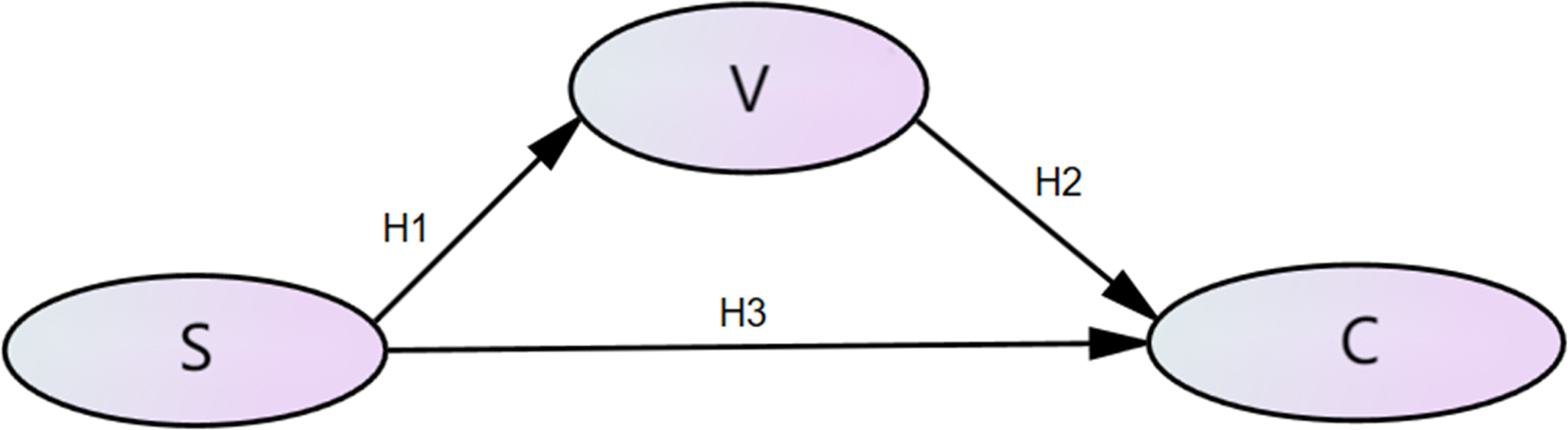
Basic model of the mediating effects. Note. S-University support, V-Academic achievement, C-Cultural Adaptation.
Participants
This study conducted a three-year tracking survey on South Asian undergraduate students majoring in TCSOL at three Chinese universities from 2017 to 2019. Before the study started, we received official permission and support from the international student management departments of each university. To gather data, surveys were distributed to the target population offline and online via the questionnaire app, Wenjuanxing, in WeChat groups during the aforementioned time period. Participation in the survey was voluntary, and steps were taken to ensure data quality by eliminating invalid samples, such as those with response times that were extremely short or remarkably long, invalid IP addresses, excessive number of missing answers, or repeated responses. A total of 692 valid samples were ultimately collected, including 205 in 2017, 210 in 2018, and 277 in 2019, 485 of which were from male respondents, 203 were from female respondents, and 4 did not disclose their gender. Because of illness, family reasons, personal reasons, etc., some participants dropped out of the South Asian teacher education program, but the majority of respondents were stable and completed the three-year survey. The participants were intermediate to advanced Chinese language learners, possessing a Chinese language proficiency ranging from HSK level 3 to 6. Furthermore, they had been residing in China for one to three years, thereby exhibiting relative familiarity with the rules and regulations, learning and living environment, and teaching and evaluation modes of Chinese universities. Therefore, we chose them as participants and conducted the survey in every December for lasting three years.
Instruments
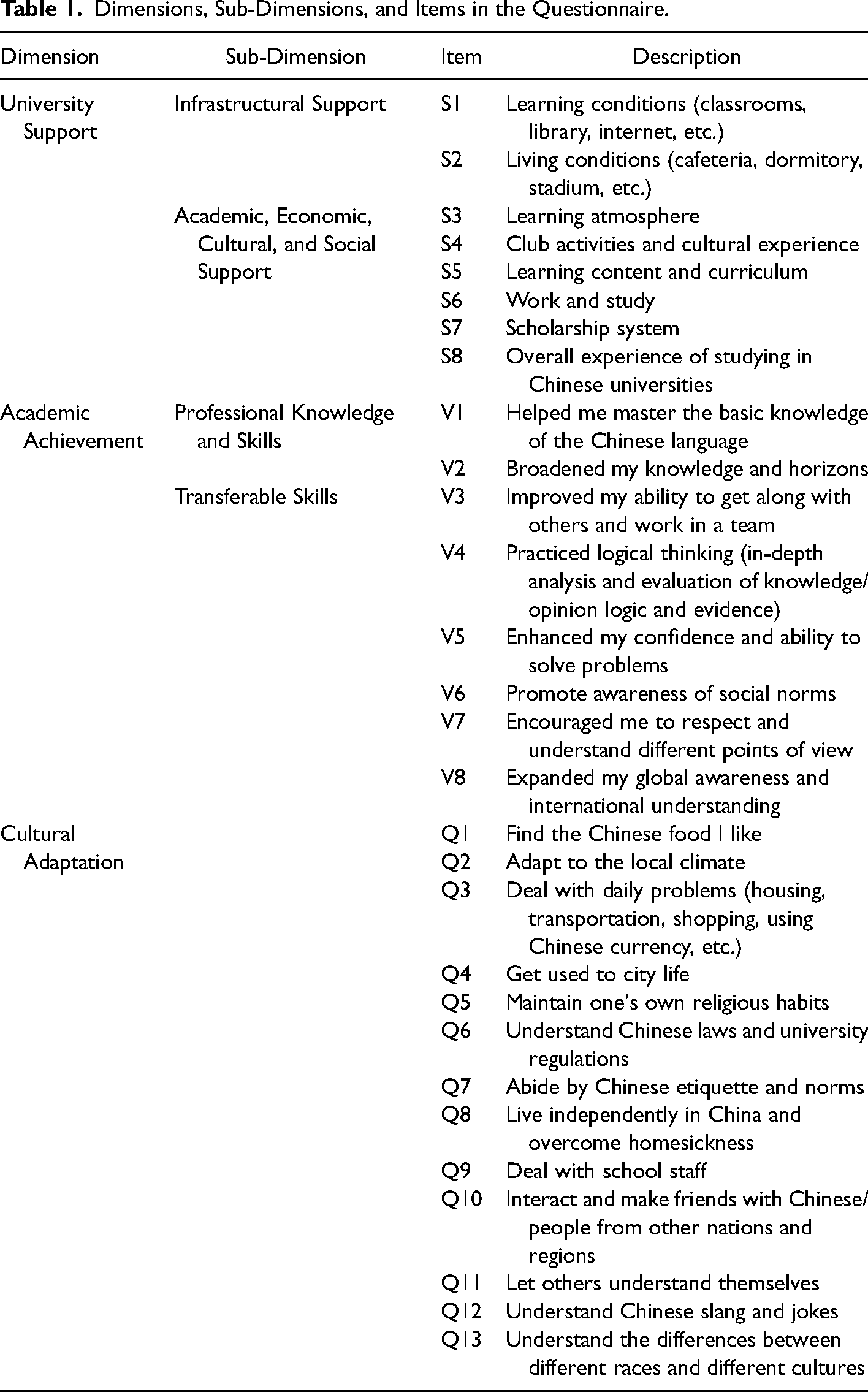
The study utilized a questionnaire with 29 items to investigate the cultural adaptation and academic achievement of South Asian students studying in China. The questionnaire consisted of three dimensions: university support, academic achievement, and cultural adaptation. University support was further divided into two subdimensions: infrastructural support, and academic, economic, cultural and social support, consisting of eight items (S1–S8). Academic achievement was assessed in two subdimensions: professional knowledge and skills, and transferable skills, with eight items (V1–V8). The third dimension, cultural adaptation, was assessed through 13 items (Q1–Q13) related to the living environment, culture and customs, social interaction, and emotions (see Table 1).
Dimensions, Sub-Dimensions, and Items in the Questionnaire.
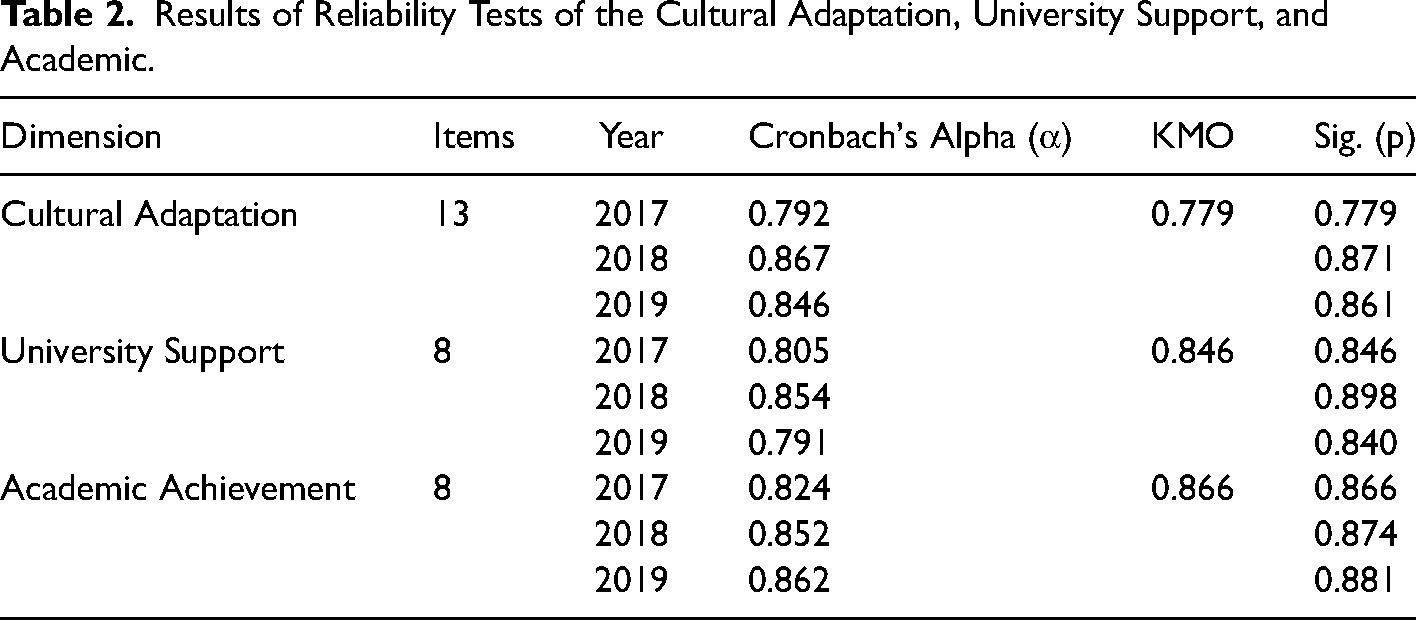
Results of Reliability Tests of the Cultural Adaptation, University Support, and Academic.
All items were scored on a four-point scale, with option 1 indicating complete agreement or very dissatisfied, and option 4 indicating complete disagreement or very satisfied, depending on the dimension being assessed. Higher scores in university support reflect greater satisfaction with the support provided by Chinese universities. Higher scores in academic achievement indicate higher confidence and satisfaction in learning achievements. Higher scores in cultural adaptation suggest better adjustment to the host country's culture and environment.
In addition to the main dimensions, the questionnaire also collected information on students’ gender, age, institution of study, duration of their stay in China, Chinese language proficiency level, and parents’ education. However, the statistical analysis showed no significant correlations between these variables and cultural adaptation or academic achievement.
Data were analyzed using SPSS 23.0 and AMOS 23.0, employing Pearson coefficient correlation analysis and structural equation model fit analysis to determine the relationships between the dimensions and subdimensions of the questionnaire.
Reliability and Validity
SPSS 23.0 was used to perform a reliability analysis on data from years 2017, 2018, and 2019. The Cronbach's alpha coefficients for each dimension were greater than 0.7, indicating good internal consistency and passing the reliability test. Factor analysis was employed for the validity test, with results showing that the KMO values were all greater than 0.7 and p < 0.001, passing the test for structural validity. See Table 2.
Findings
Experience and Cultural Adaptation in Chinese Universities
Generally speaking, the overall satisfaction of South Asian students with their study experience in Chinese universities still needed to be improved. The most unsatisfactory aspects in terms of university support for South Asian students were “learning conditions” and “learning atmosphere”, both of which scored no more than 1.35 in three years. It is noteworthy that the satisfaction of South Asian students in club activities and cultural experience, work-study and scholarship system showed an increasing trend year by year, with scores increasing by 0.13, 0.16 and 0.16 respectively.
In terms of academic achievement, the highest score among the eight items for the three years in a row was “promote awareness of social norms”, with scores of 1.76, 1.84, 1.75. The scores put forward the fact that Chinese universities encouraged South Asian students to respect the behavioral standards of Chinese society as well as the rules and regulations of the university.
In terms of cultural adaptation, the scores of “get used to living in the city”, “live independently in China and overcome homesickness”, “understand Chinese laws and university regulations” and “interact with Chinese/other non-native speakers” exhibited a increasing trend year by year, with scores increasing by 0.13, 0.23, 0.27and 0.33 respectively. These results indicated that during the three years in Beijing, South Asian students had found their own lifestyles and built transnational friendships while respecting the behavioral standards of Chinese society as well as rules and regulations of universities. The discomfort and anxiety of entering a foreign culture had been reduced, which was in line with the U-shaped curve's description of the regained adjustment stage. However, although the score of “dealing with university staff” had been increasing year by year—from1.21 to 1.4, it was the lowest among all 13 questions for the whole three years. On the one hand, it was probably because that Chinese university teachers mainly taught in the classroom and did not have much interaction with South Asian students. On the other hand, it might be that the information of workers in relevant functional departments was not effectively conveyed to students, and students had few channels to seek help and communicate.
Correlation Analysis
University Support Satisfaction and Academic Achievement
The correlation analysis revealed a significant association between individual satisfaction with university support and academic achievement among South Asian students. As depicted in Table 3, satisfaction with university support demonstrated a significant positive correlation with the academic achievement of this cohort. This finding suggests that if universities offer multifaceted support to South Asian students and such support is effectively perceived by them, they are more likely to capitalize on the resources and opportunities facilitated by the institutions. Consequently, this access to resources can alleviate financial and life stressors, allowing students to dedicate their time and energy to their studies. Increased investment in learning may bolster South Asian students’ confidence in their academic achievement and enhance their self-efficacy. Self-efficacy, in turn, influences their attitudes and persistence when confronted with academic challenges, thereby fostering a virtuous cycle. This finding corresponded with Kahu's (2013) Student-centered Learning Engagement framework that the proximal consequences of study engagement are reflected in academic achievement, satisfaction, and well-being. Llorens et al. (2007) also supported the idea that engagement enhances self-efficacy, leading to high achievement, and that high achievement motivates students to engage in studying.
Correlation Between Academic Achievement and Satisfaction with University Support among South Asian Students.
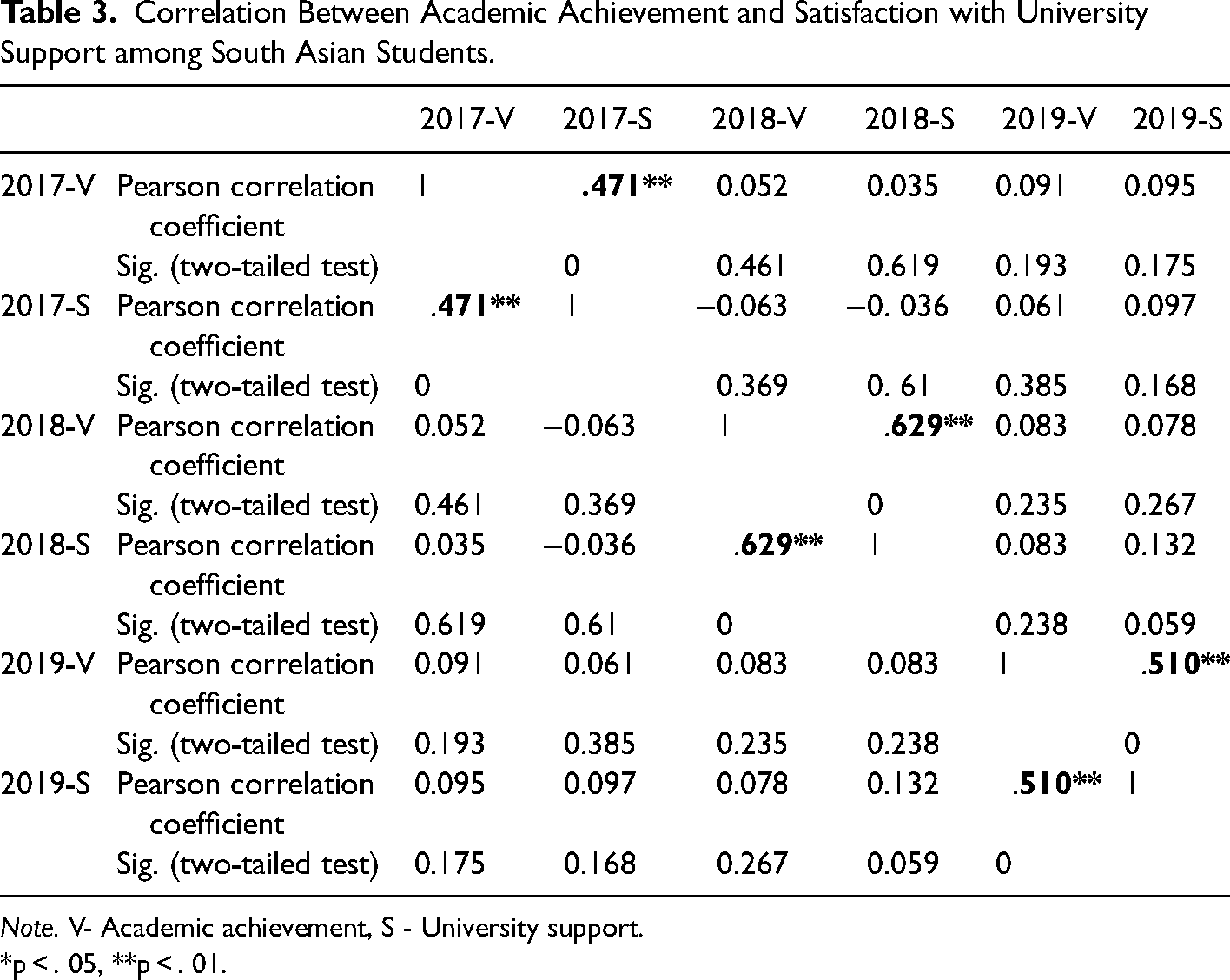
Note. V- Academic achievement, S - University support.
*p < . 05, **p < . 01.
Academic Achievement and Cultural Adaptation
As illustrated in Table 4, a significant positive correlation exists between academic achievement and cultural adaptation among South Asian students. Positively, enhanced academic performance can bolster self-efficacy among these students. Academic self-efficacy enables South Asian students to recognize their abilities and resilience, augment their overall self-confidence, and mitigate the initial cognitive and emotional anxiety stemming from unfamiliar environments. These findings are in contrast with those of Fu et al. (2016), who found that South Asian students with depressive prior studying experience keep a negative attitude and motivation toward their studies in Chinese universities. Such attitude and motivation are possibly shaped from two ways. One is the extension of weak learning habits and lack of willingness and persistence for deep and comprehensive exploration. The other is the self-protection mechanism against discrimination and neglect from parents and teachers, as well as confusion about the future. All these jeopardize South Asian students’ academic achievement.
Correlation Between Academic Achievement and Cultural Adaptation of South Asian Students.

Note. V- Academic achievement, C - Cultural Adaptation.
*p < . 05, **p < . 01.
Moreover, students who excel academically might have cultivated positive mental attitudes and habits during their prior study experiences, rendering them more inclined to venture beyond their comfort zones and confront challenges. South Asian students possessing superior overall quality and high achievement motivation demonstrate a great aptitude for managing various challenges in cross-border study and life. These individuals display courage when facing challenges and failures and are willing to embrace new beginnings.
Structural Equation Modeling fit Analysis
The fit analysis of the hypothetical model reveals that, in the absolute fit index, Chi/DF = 2.712, falling within the better range of 1–3. GFI = 0.902, and AGFI = 0.886, surpassing the threshold of 0.8. RMSEA = 0.05, which is lower than the threshold of 0.08. As shown in Figure 2, the model fit indices are relatively good.
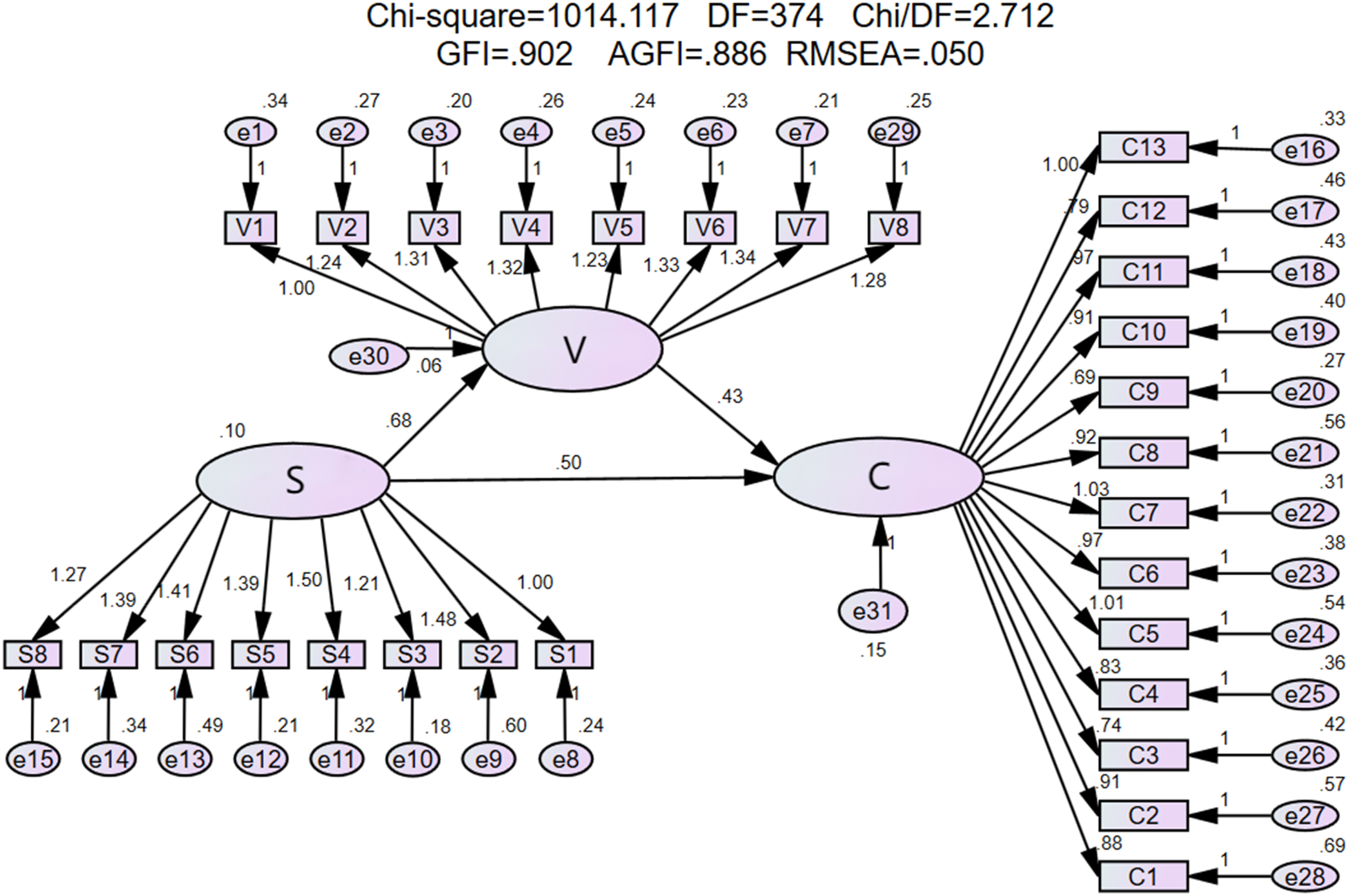
Structural equation modeling. Note. S-University support, V-Academic achievement, C-Cultural Adaptation.
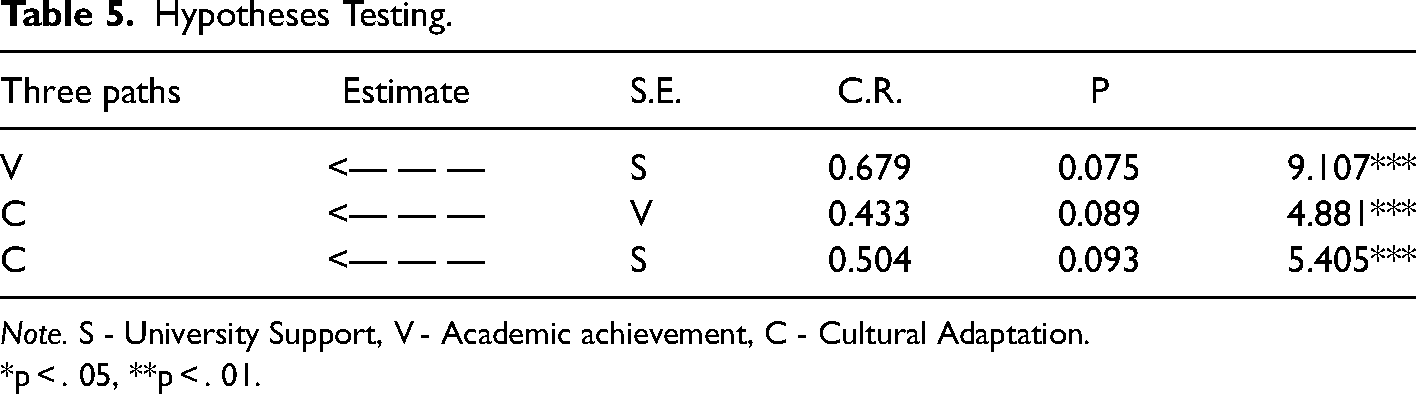
H1: University support has a significantly positive effect on academic achievement, with a factor loading of 0.679. The hypothesis is supported.
H2: Academic achievement has a significantly positive effect on cultural adaptation, with a factor loading of 0.433. The hypothesis is supported.
H3: University support has a significantly positive effect on cultural adaptation, with a factor loading of 0.504. The hypothesis is supported.
According to Bootstrap test, the confidence level is 90%. The upper and lower limits of the bias-corrected confidence interval indicate that the lower limit of the mediating effect of “university support” on “cultural adaptation” is 0.188, and the upper limit is 0.451. The confidence interval does not include 0; thus, the mediating effect transmitted through “academic achievement” is significant.
Detailed data are shown in Table 5.
Hypotheses Testing.
Note. S - University Support, V - Academic achievement, C - Cultural Adaptation.
*p < . 05, **p < . 01.
Discussion and Conclusion
The main goal of this study was to investigate whether and through what mechanisms Chinese university support has contributed to the academic achievement of international students, and whether academic achievement also plays a role in cultural adaptation. Mainly based on Student-centered Learning Engagement framework (Kahu, 2013), this study developed a model composed of university support, academic achievement, and cultural adaptation. As Table 5 shows, all of the hypotheses were supported.
Academic Achievement as an Influential Factor
Although Kahu (2013) suggests in her framework that university support produces both academic and social consequences, it is unclear whether two kinds of consequences are related or not. Therefore, this study separated academic and social consequences to test the whether academic achievement positively influences cultural adaptation. The results demonstrate that academic achievement has a significantly positive effect on cultural adaptation. In other word, successful academic outcomes correspond to a decrease in psychological and sociocultural discomfort. In the case of academic failure, international students have the potential to experience a reduced sense of self-esteem, viewing themselves as insufficient not only in academic aspects but also in other facets of their lives. While individuals demonstrating robust academic self-assurance are more likely to achieve successful integration within the host country's society (Lee & Ciftci, 2014; Luzio-Lockett, 1998; Tinto, 2012). Cognitively, South Asian students who excelled academically displayed flexible coping strategies and strong comprehension skills, enabling them to quickly understand and adapt to Chinese social norms, rules of interpersonal interactions, and customs. Psychologically, those who achieved high academic performance exhibited strong psychological qualities and established self-efficacy, fostering increased optimism and a relaxed attitude when confronting cultural differences, barriers to interaction, and homesickness. Emotionally, academic achievement yielded positive emotional experiences, encouraging them to step out of their comfort zones and embrace new challenges. Academic achievement enhances the students’ self-perception as competent individuals, which in turn, alleviates anxiety and frustration during the cultural adaptation process. More importantly, academic achievement also reflects, to a certain extent, the attitude and effort of South Asian students toward their studies. Students who excel academically are more likely to maintain similar emotions and behaviors in their sociocultural adaptation, leading to better performance in their cultural adaptation.
University Support for International Students
Unlike previous studies, this study investigates whether and through what mechanisms Chinese university support has contributed to the academic achievement of international students, and whether academic achievement also plays a role in cultural adaptation, mainly depending on the framework of Student-centered Learning Engagement (Kahu, 2013). As SEM results showed, university support positively affected South Asian students’ academic achievement and eventually cultural adaptation. Although the crucial and positive role of organizational support has been reported in previous research, university support targeting at international students has rarely been examined.
Considering this lack of research, the current study examined the positive effects of university support, including infrastructural support, academic, economic, cultural and social support on academic achievement. It is very comprehensible that when international students enter an unfamiliar cultural environment to pursue their studies, universities become the most vital source of support. Previous research has identified international students’ multifaceted dependence on universities, including financial dependence, social dependence, and residency dependence (Cho & Yu, 2015). And some scholars have argued that since most support programs offered by universities are only available to first-year international students, the gradual reduction of support programs thereafter has led to a gradual rebound in academic stress, frustration, and depression (Erichsen & Bolliger, 2011; Tinto, 2012). Their findings in turn, prove the significance of stable university support.
Within the context of China, the the significance of academic performance is prominently emphasized. And South Asian students in teacher education program might aspire to master multiple types of teaching methods, teaching contents, assessment, learning organizations and resources. All these emphasize the necessity of proving university support. As Kahu (2013) suggests, particular student populations should be taken into consideration when utilizing the framework of Student-centered Learning Engagement. Consequently, we took her model and tested it with South Asian students majoring in TCSOL. The results prove the role of university support on academic achievement and further on cultural adaptation. Bui et al., (2021) argued that alignment of international student goals and host university goals, and the alignment of intonational students’ needs and host university support enable them to attain their goals. This also implies that Chinese universities should tailor various forms of support to align with international students’ expectations and the requirements of their respective majors.
Theoretical Contribution and Practical Implications
The present study extends the body of literature in university support, together with the broader field of cultural adaptation. While Kahu (2013) presents in her framework that university support has both academic and social consequences, the connection between these two remains unclear. Taking into account the unique identity of international students, this study refines the academic consequence to academic achievement and the social consequence to cultural adaptation. SEM results reveal a positive correlation between university support and academic achievement, and further demonstrate that enhanced academic performance fosters cultural adaptation. This discovery enriches Kahu's framework by proposing a linkage where academic achievement facilitates adaptation.
This research has validated the dependability of a custom-developed questionnaire by means of statistical evaluation. the questionnaire serves as a tool for forthcoming research endeavors, facilitating an in-depth comprehension of international students’ experiences within the university milieu. Additionally, universities can employ the questionnaire for data gathering purposes, enhancing the educational atmosphere and support mechanisms based on the findings. This approach contributes to the amelioration of both academic achievements and cultural integration among international students.
In addition, it is important to recognize that universities should ensure the provision of sufficient and suitable support to international students as they embark on journeys within unfamiliar educational systems and countries. For example, one of the challenges for international students in China is the teacher-student interaction. It is reported that international students are eager to interact with Chinese teachers, but teachers are used to teacher-centered lectures and lack awareness of positive teacher-student interaction (Wen et al., 2014). Hence, universities should orchestrate efforts aimed at enhancing the intercultural awareness and competence of teachers, given their significant impact on the academic achievement of international students. Concurrently, university staffs should undergo intercultural awareness and communication training. These endeavors can not only proficiently diminish obstacles to classroom interactions and bolster academic achievements but also cultivate self-assurance and communication acumen, consequently expediting assimilation into the local community. It is essential to consider the unique resources, advantages, orientations, and development targets of each university when providing support to international students. By addressing these factors, Chinese universities can create a more inclusive, supportive environment that promotes the cultural adaptation and academic achievement of South Asian students.
Limitations
This study employed a structural equation model to examine the relationship among university support, academic achievement, and cultural adaptation. Although the self-designed questionnaire passed the reliability and validity tests, it could be tested for further applicability to students of different nationalities, grades, and majors in future studies. The study participants were from South Asian teacher education programs, and the universities are located in Beijing. All these factors have a certain degree of influence on the geographic, economic, and social dimensions of cultural adaptation. Therefore, future studies could be conducted in different cities to test and improve the generalizability of the structural equation model. In addition, the study was conducted in a quantitative manner. Considering the differences and specificities of cities, university support, and individuals, qualitative research could provide different perspectives for future studies.
Footnotes
Acknowledgments
The authors would like to express their deepest appreciation to Dr. Jiubao Wei for his technical support in statistical analysis on this research project and to the South Asian students of the TCSOL program for their voluntary participation.
Author Note
Funding
The authors disclosed receipt of the following financial support for the research, authorship, and/or publication of this article: This study was supported by the following two projects: 2017 Beijing Planning Office of Philosophy and Social Science, Study on the cultivation mode of South-Asian native Chinese teachers in Beijing universities (17JYC015), and Beijing Language and Culture University The Comparative Study of Standards and Evaluation of International Chinese Teacher Education (YJT09).
