



Abstract
China has become an increasingly popular destination for international students pursuing graduate education. This research examines the factors influencing international graduate students’ willingness to work in China, focusing on motivational aspects, employment considerations, and the challenges faced in the Chinese job market. The study employs a combination of push-pull and acculturation theories to interpret the data collected through surveys and interviews. The key findings reveal that students are drawn to China for their studies due to the high-quality education, available scholarships, opportunities for professional development, and cultural exchange. Many expressed interest in remaining in China for employment due to attractive salaries and favorable job prospects. However, they face significant challenges, such as language barriers, cultural differences, unfamiliarity with the local job market, strict visa policies, and a highly competitive employment environment. The study emphasizes the need to enhance the visibility of job opportunities, bridge language and cultural gaps, enhance workplace diversity and inclusivity, strengthen international networks and alumni associations, and encourage entrepreneurship among these graduates. These measures aim to help students navigate the job market and enrich China's workforce with diverse skills and perspectives, further establishing China as a leading global education and professional development hub.
Keywords
Introduction
In the twenty-first-century globalized world, the mobility of international students is a key aspect of higher education. China has become an increasingly popular destination for these students, not only for academic pursuits but also for post-graduation employment opportunities. China's dynamic status drives this trend as a global economic leader, which presents a wealth of job prospects and career development paths for international graduates (Wei et al., 2020; Xu, 2022). Many international students now desire to remain in China for work post-graduation, which indicates China's growing influence and appeal in the global job market (Ministry of Education, 2021).
Several factors influence this shift in career preferences among international students. China's robust economy, with its strong technology, finance, and manufacturing sectors, offers diverse career opportunities (Linster & Yang, 2018). The Belt and Road Initiative further enhances these prospects, particularly for students from participating countries (Shih & Cao, 2022; Wu & Chan, 2019). Additionally, the Chinese government's supportive policies, including flexible visa regulations and career development initiatives like internships and job fairs, are crucial in attracting and retaining international talent (Billman, 2022; Wei, 2022). Moreover, studying in China's cultural and linguistic immersion equips students with unique skills that are attractive to local and international employers, enhancing their global employability (Gopalkrishnan, 2019; Yang, 2018). Furthermore, China's rapid progress in artificial intelligence, e-commerce, and green technology presents exciting career avenues for students interested in these cutting-edge fields (Mitter et al., 2021; Wu et al., 2020).
Despite considerable research, there remains a significant gap in understanding the factors affecting international graduate students’ willingness to remain in China for employment factors that impact their decision to pursue careers in China. While the reasons for choosing China as a study destination have been identified in the literature, there's still a need for an integrated framework that encompasses the multifaceted influences on career issues. What are the key factors influencing the willingness of international graduate students to pursue careers in China, what are the challenges they face, and how does integrating professional development programs into their academic curriculum impact career decisions and readiness? The research aims to bridge this gap and provide insights into facilitating International Students’ successful career transition into the Chinese job market, thereby informing policy and practice for better alignment with international graduates’ career aspirations and the needs of the Chinese economy.
Theoretical Framework
Push Pull Theory
The theory was initially introduced by Ravenstein in the nineteenth century and later expanded by Lee (1966), categorizing factors influencing migration into push factors related to the country of origin and pull factors associated with the destination country. These factors encompass economic, educational, political, and social dimensions. Massey et al. (1993) have adapted the push-pull framework to the context of international student mobility, emphasizing the role of educational quality, career opportunities, and cultural factors in influencing migration decisions. Gribble (2008) found that employment opportunities in the host country are a significant pull factor, while economic and social constraints at home serve as push factors. Udah (2023) discusses the push-pull theoretical framework in the context of the current global flows of international students. It addresses the students’ aspirations for prestige, career mobility, and social status enhancement, crucial factors in understanding their employment scenarios. China's investment in higher education and research has significantly enhanced its global standing, attracting international students seeking quality education and state-of-the-art research facilities (Wang, 2013). The rapid economic growth of China and the expansion of multinational corporations offer ample employment opportunities for international graduates, making China an attractive destination for both study and work (Huang, 2016). The increasing global significance of China's language and culture has made the opportunity to learn Mandarin and immerse in Chinese culture a significant pull factor (Zweig et al., 2006). Chinese government initiatives, such as the “Study in China” program and the provision of scholarships, have made it financially feasible and bureaucratically smoother for international students to study in China (Wang & Curdt-Christiansen, 2016). Spencer-Rodgers & McGovern (2002) and others have explored how cultural and social factors in the host country, such as inclusivity, discrimination, and support networks, impact international students’ ability to secure employment and integrate into the workforce. Zaman et al. (2023) examine how the push-pull theory explains the migration decisions of Bangladeshi students. It delves into the motivations driving students towards international education destinations, which is pertinent to their employment prospects post-graduation.
Acculturation Theory
Acculturation Theory suggests that when individuals are exposed to a new cultural environment, they undergo a complex process of cultural and psychological adjustments. Berry's (1997) model of acculturation identifies four strategies that individuals employ during this process: integration, assimilation, separation, and marginalization, which significantly impact their adaptation outcomes. This framework provides a fundamental perspective through which the employment experiences of international students can be analyzed. Ying (2005) and Sam & Berry (2006) emphasize the pivotal role of acculturation in the career adaptability of international students. Students who demonstrate a higher level of cultural adaptability are more likely to navigate the job market of the host country effectively. Sonnenschein's (2023) study on Chinese international students in Australia underscores the interconnectedness of career adaptability and acculturation strategies, suggesting that proactive engagement with the host culture facilitates improved career opportunities and outcomes for international students. A noteworthy aspect of Acculturation Theory is the development of a bicultural identity, which has been linked to employment success among international students. LaFromboise et al. (1993) concept of bicultural efficacy highlights individuals’ ability to proficiently navigate the cultural norms and expectations of their home and host cultures, a skill particularly advantageous in the global job market. Tadmor et al. (2009) further support this idea by indicating that individuals with a strong bicultural identity exhibit enhanced creative problem-solving skills and professional adaptability, highly valued by employers.
Literature Review
International Students’ Willingness to Study and Work in China
Wen & Hu's (2018) research emphasizes China's high educational quality and esteemed global reputation as key attractors for international students. Their study also sheds light on the significant roles of economic potential and geopolitical dynamics in encouraging these students to migrate. Wang & Curdt-Christiansen (2016) looked into the China Program, which offers international students the transition from English-based education to majors taught in Chinese through intensive language training and immersion in academic courses. Wang & Lee (2020) indicated an increasing tendency among Taiwanese students for career opportunities or entrepreneurship in mainland China, attributed to the perceived benefits and competitive edges. However, concerns over potential risks in China might lessen their enthusiasm. Wang & Shu (2021) focused on what motivates students in navigational disciplines to pursue maritime careers in China, examining factors such as their reasons for enrollment, attitudes toward their major, career goals, and perceptions of the maritime profession. Fan et al.'s (2022) study examined the Belt and Road Initiative's (BRI) impact on the influx of international students to China, highlighting a significant rise in students from BRI countries, particularly those from Africa and lower-income nations. Du's (2019) research delved into the elements influencing ASEAN students’ desire to study in China, including local economic conditions, educational fairness, cultural and geopolitical contexts, policy support, and bilateral relationships. This study discovered that students with a positive social outlook are more likely to be swayed by these factors and hold a favorable view of studying in China. Finally, Lyu & Sazali (2023) explored the acculturation experiences of students from Sao Tome and Principe in China, identifying four distinct themes: surprising explorers, temporary mutes, confused newcomers, and elite pioneers. This offered valuable insights into the acculturation processes for these students and other minority groups in China.
Complexities and Strategies in International Graduate Employment in China
International graduates in China face an increasingly challenging job market, influenced by various factors such as pandemics, an oversupply of job seekers, and mismatches between educational qualifications and job requirements. Li & Li (2023) note a rising unemployment rate among university graduates since 2019, with issues like employment discrimination and inadequate job readiness. The impact of a graduate's institution prestige, major, and gender on employability adds another layer of complexity, particularly in major cities like Beijing. Moreover, the economic and educational dynamics driving rural labor migration further complicate the employment landscape in less developed regions (Jun & Fan (2011); Zhang & Song (2002).
There's a crucial need for career and professional development programs that address the unique challenges of international students. Initiatives such as the “Global Marketing Professional” curriculum have been designed to enhance students’ employability by integrating practical learning experiences and cultural adaptation. The professional socialization framework for higher education emphasizes the significance of work-integrated learning, language acquisition, teamwork, and mentorship in building career competencies, especially in the tourism and hospitality industries (Padgett & Donald (2022), Sonnenschein et al. (2018). In conjunction with efforts to align educational curricula with the ever-changing socio-economic environment, these strategies are crucial in preparing international graduates for the uncertainties of the future job market in China and the wider East Asian region Mok et al. (2021).
Chinese National Policy Framework on International Students’ Post-pre Graduation Employment
On 6 January 2017, the Ministry of Human Resources and Social Security (MOHRSS), the Ministry of Foreign Affairs, and the Ministry of Education (MOE) issued a new policy regarding the employment of outstanding foreign college graduates in China. International students who have obtained a master's degree or above from a university in China or a reputable overseas university within one year of graduation can apply for a work permit in China without needing two years of overseas work experience, have no less than 80 points or a B+/B grade and misconduct record. This initiative involves yearly quota management by provincial and national governments to regulate hiring foreign graduates. (MOHRSS, 2017).
On March 20, 2017, Decree No. 42 of the “Measures for the University's Enrollment and Training of International Students” Article 30: “International students can participate in work-study during their studies at colleges and universities, but they are not allowed to be employed, do business, or engage in business activities” (MOE et al. 2017). Following this policy, a more detailed and structured framework for a work-study program was released in 2021, issued the “Administrative Measures for Work-Study Programs for International Students in Colleges and Universities” [2021] No. 2, Article 5;7;8;11: “In principle, international students shall not exceed 8 h per week and 40 h per month. During the winter and summer vacations, in principle, no more than 16 h per week and no more than 80 h per month. The positions of international students should mainly be teaching assistants, scientific research assistants, administrative assistants, and public services of the university. The salary expenses shall be arranged by the university as a whole according to the following standards. International students who engage off-campus shall apply to the exit-entry administration department of the public security organ for a residence permit with the relevant work-study information” (MOE, 2022). Despite these advancements, there are concerns regarding employment limitations and the effectiveness of the quota system, suggesting a need for policy adjustments to better align with market and industry needs. Proposals include creating a feedback mechanism for employers and international graduates, encouraging entrepreneurship, increasing work-study flexibility and allowing part-time employment, and enhancing support for professional and cultural integration.
Methodology
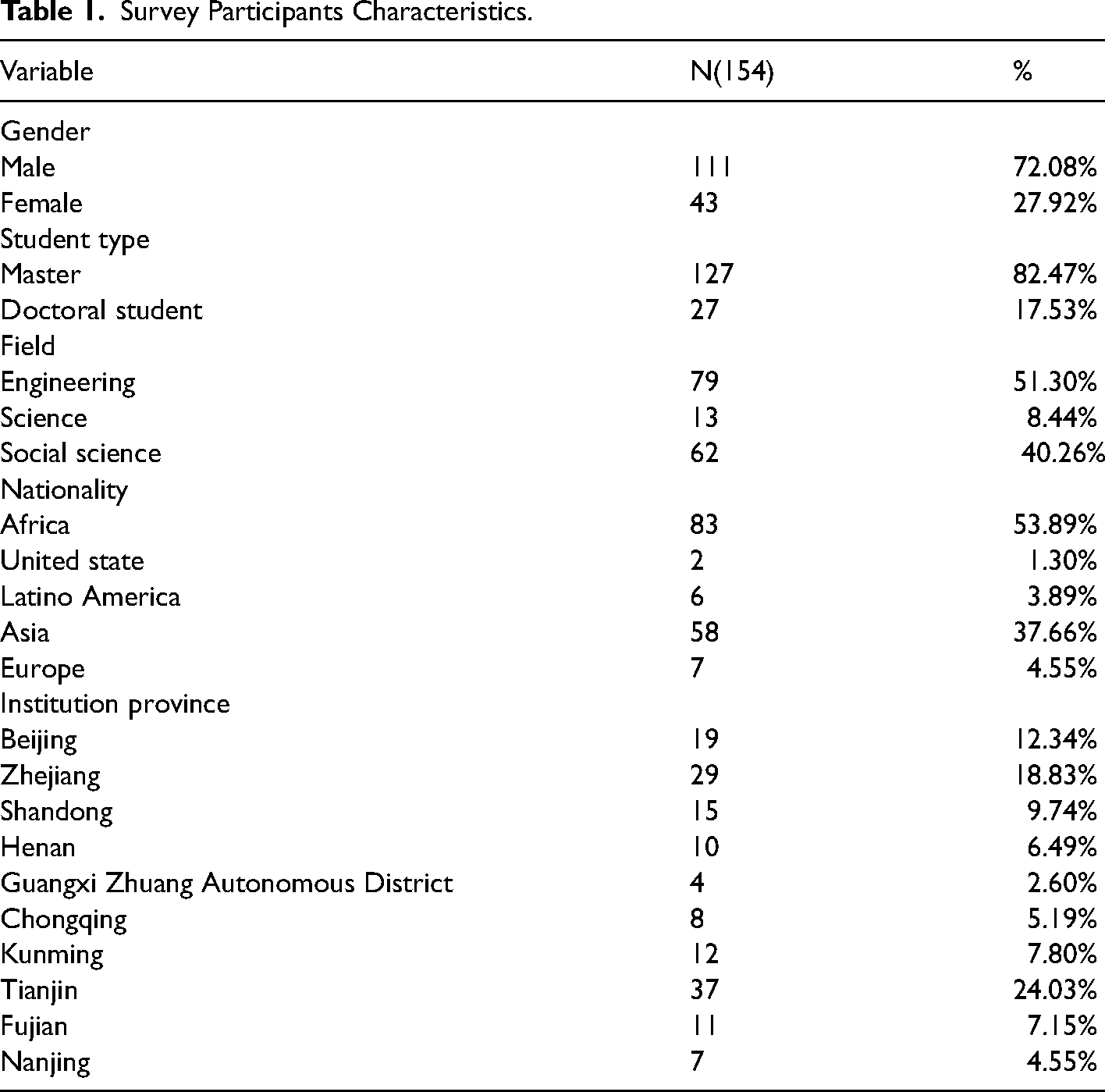
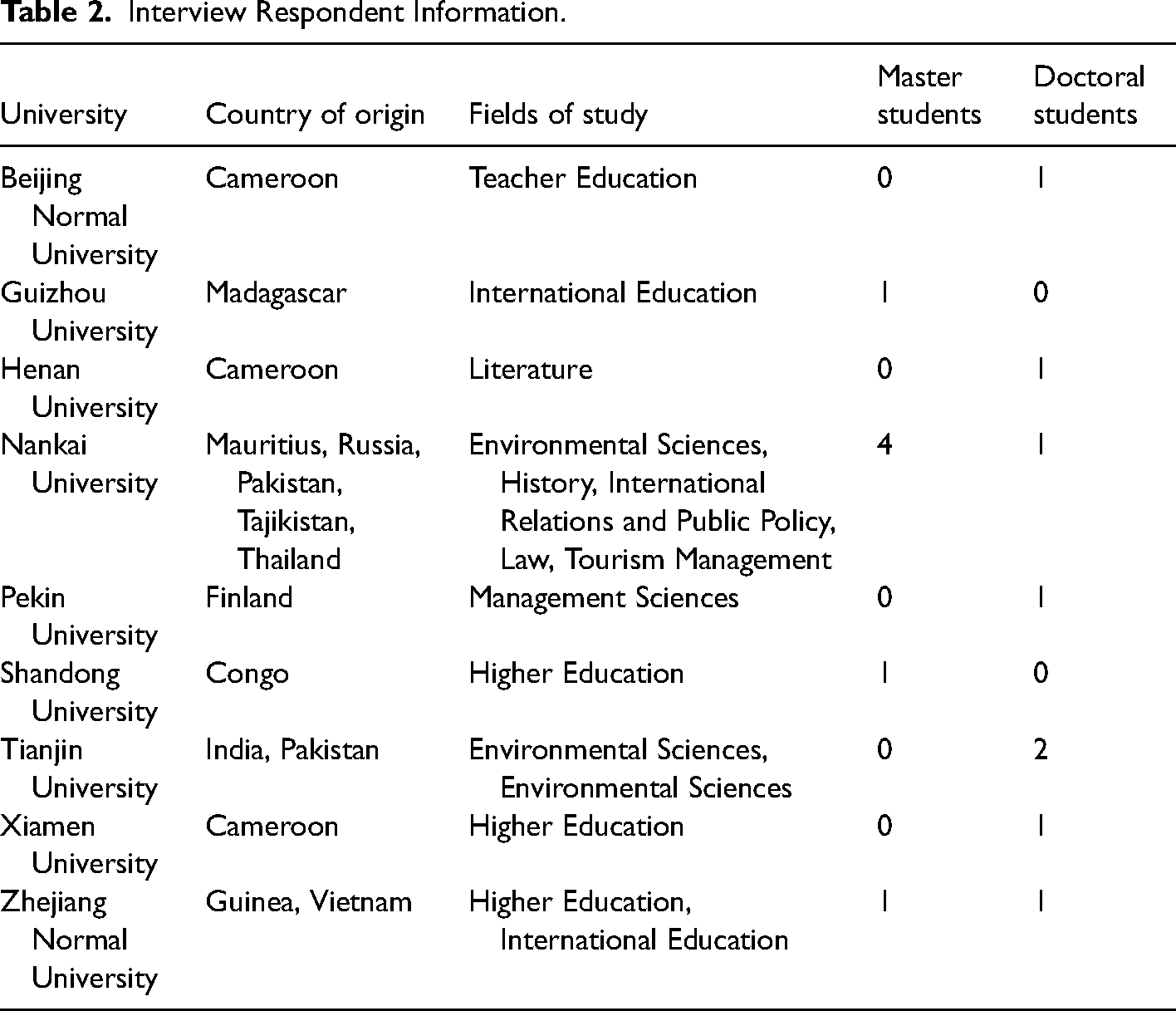
Our study applied a mixed-methods approach, combining surveys and interviews to investigate the impact of China on employment opportunities for international graduate students. We gathered data from 154 survey participants and 15 interviewees across various countries in Chinese institutions. The survey, conducted from June 1 to July 4, 2023, explored graduate students’ employment willingness in China, focusing on motivation, influential factors, and market knowledge, using 5-point and 7-point Likert scales for familiarity and importance, respectively. Interviews were held in August 2023 through various online channels (WeChat, WhatsApp) and in person. Our analysis, which included thematic examination via Questionnaire Star and Excel, incorporated push-pull and acculturation theories. This research aligns with established methodologies, integrating qualitative and quantitative data as recommended by Creswell & Creswell (2017), with the use of Likert scales as suggested by Boone & Boone (2012) (Tables 1 & 2).
Survey Participants Characteristics.
Interview Respondent Information.
Findings and Discussion
Analysis of the Current State of International Graduate Students’ Willingness to Work in China
Analysis of Motivational Factors for International Graduate Students Choosing China as a Study Destination
The collected data reveals that international students opt to pursue their studies in China primarily because of the high standards of education and the numerous scholarships available. The presented graph depicts this reality in response to the question, “What factors influenced your decision to study in China?” (Figure 1).

Factors influencing international students’ choice.
When we use the push-pull theory to examine why international students choose to study in China, it's clear that high-quality education (55.77%) and scholarship opportunities (53.85%) are major attractions. These positive aspects in China draw students in more strongly than any negative factors pushing them from their home countries. At the same time, the acculturation theory helps us understand why only a small number (15.38%) of students are interested in working in China after their studies. Students seem more focused on getting a good education and integrating into the Chinese culture and educational system rather than finding a job immediately. This approach shows that students value the chance to excel academically and receive financial support while also wanting to fully engage with and learn from Chinese culture, which enhances their educational experience and gives them important skills for interacting with different cultures.
Analysis of the Reason for an International Graduate Student to Work in China
According to “Q8: Is salary the primary reason for you to work in China?” about 40.74% said salary was “Extremely Important” to them. This suggests that good pay is a major reason why international students, who might not find many opportunities in their own countries, choose to work in China. However, this choice isn't just about making more money or trying to fit into Chinese society. According to acculturation theory, a good salary represents more than just income; it's about financial security, which can help people achieve a certain lifestyle, gain social status, and access community resources, all of which can make adjusting to a new culture easier. On the other hand, the smaller group (7.41%) who didn't place much importance on salary might be more interested in cultural exchange, personal growth, career development, or furthering their education (Figure 2).
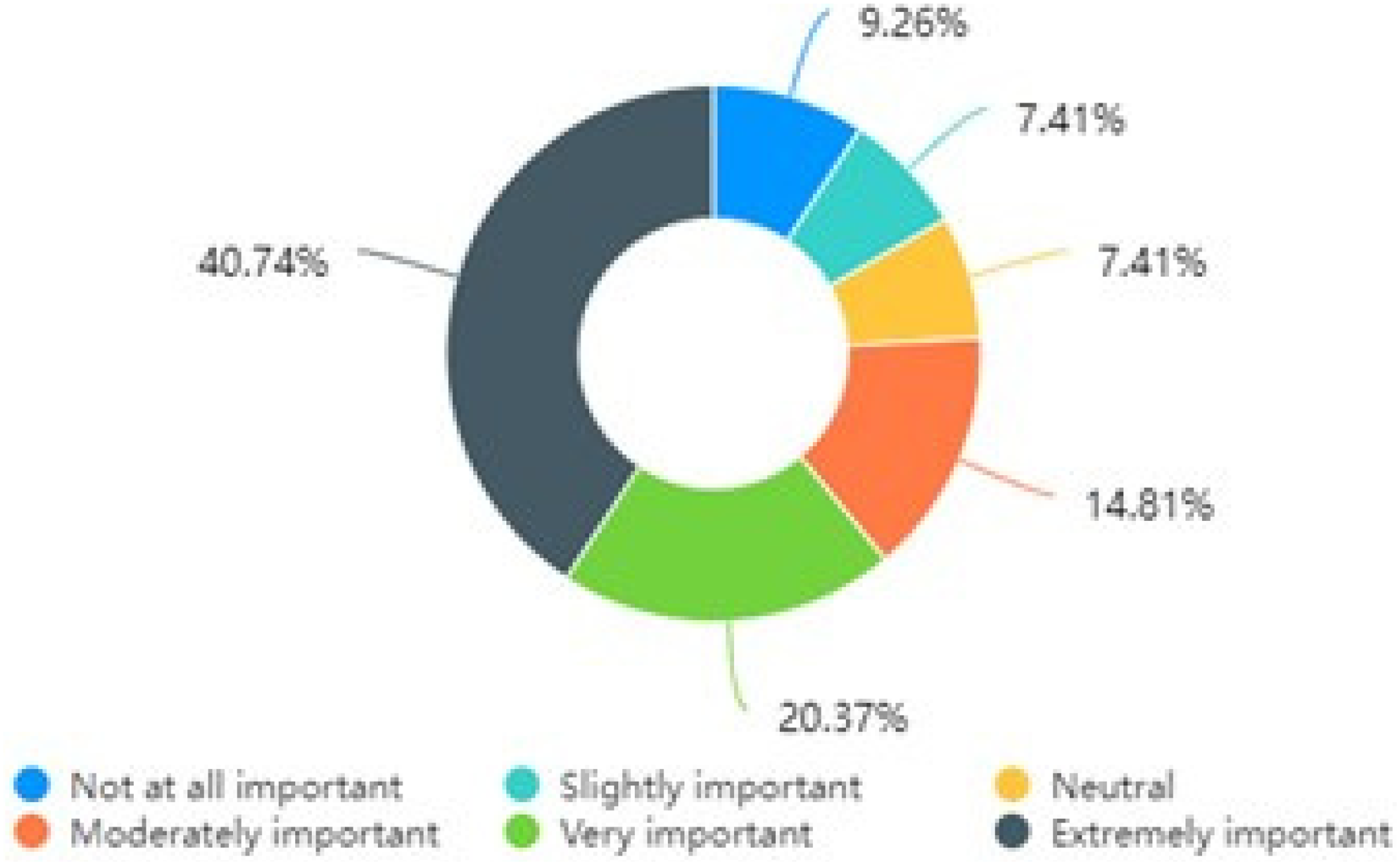
Importance of salary in job decision-making.
Based on the survey, about 52% of students are interested in working in China, possibly drawn by the allure of better job opportunities, the rich culture, or the positive economic conditions there. On the other hand, around 20% of students are not keen on the idea. This could be due to negative factors in China or attractive aspects of other countries or their own, like superior career prospects, lifestyle goals, and family connections. Looking at this through the lens of acculturation theory, those eager to work in China might more easily adapt to or embrace Chinese culture and norms. This openness could make them more willing to pursue their careers in China. Meanwhile, those reluctant to work in China might struggle with cultural differences or wish to preserve their cultural identity and traditions, leading them to prefer working elsewhere.
Factors Influencing International Graduate Student Employment
Through the push-pull theory, the survey Q5, “If yes, what factors have influenced your decision to consider working in China?” revealed that 61.54% of students considering working in China are primarily motivated by job prospects. This highlights the significant pull factors of China's strategic development in various sectors, innovative ecosystems, and technological advancements. These offer immediate job opportunities and promise long-term career growth in a dynamic and innovative environment. In addition, the acculturation theory suggests that 11.54% of respondents cited “Other” factors, which may encompass adapting to China's unique work culture, business practices, and social norms. China's innovative and competitive environment could encourage creativity, strategic thinking, and continuous learning, influencing the willingness to adapt (Figures 3 & 4).

Factors influencing work decision.

International students’ careers’choices.
Nevertheless, many graduate students are willing to work in China. However, acknowledging that some individuals may be affected by diverse alternative factors or circumstances.
Based on Q 6, which asked, “If no, what factors have deterred you from considering working in China?” revealed that over half of the participants, 53.85%, identified language barriers as the main push factor preventing them from working in China. Additionally, 9.62% are apprehensive about cultural differences, while 25% have concerns related to food and religion. From the perspective of acculturation theory, language barriers can impede effective communication and cultural assimilation, cultural differences may lead to stress, and concerns about diet and religion indicate anxiety about conforming to new societal norms. These factors contribute to many people's reluctance to pursue job opportunities in China, as they fear the challenges of adjusting to a different culture and language. Such difficulties can adversely affect one's mental health and impede smooth integration into a new work environment (Figure 5).

Factors deterrents considering working in China.
Knowledge and Familiarity with China's Labor Market
To clarify this, we can say that the Q7 survey shows that most students don't know much about job and professional growth opportunities in China. According to the push-pull theory, this lack of awareness (with only 27.78% slightly familiar and 5.56% moderately familiar) suggests that the attractive aspects of China's job market aren't being communicated well enough. This means that China needs to better showcase what it offers regarding work and career development. At the same time, the concept of acculturation indicates that students might also be hesitant to explore China's job market due to difficulties in adjusting to the culture, which could affect their willingness to work there. To tackle these issues, it's important to highlight the career opportunities available in China more effectively and help students become more acquainted and comfortable with working. This approach could help attract international talent interested in China's labor market.
Exploring Key Factors and Obstacles in Deciding to Seek Employment in China
Essential Factors in the Decision-Making Process
The survey shows that over 40% of students rank high salaries as their main reason for working in China. This is because China's growing economy and international companies offer lucrative salaries and chances for career progression, attracting students to the Chinese job market. Furthermore, 42% of students believe that fluency in the language is “extremely important.” This highlights the importance of understanding and adapting to Chinese culture and language to be successful in their jobs. Adjusting to a new culture positively influences people's decisions to relocate and settle in a different country. Despite this, networking and government support are also crucial factors. About 35.19% of students consider networking “extremely important,” while 50% view government support as “extremely important.” These elements are key strategies for blending into China's professional and social spheres. Integrating into the Chinese environment can improve social contact and personal development, making work more appealing. The importance placed on support from the Chinese government or institutions suggests that policies designed to help cultural integration and professional growth for international workers can greatly influence their decision to work abroad.
Research data shows that 35.19% of students think working with people from other countries, like China, is very important. They like the idea because it helps them learn new things, be part of an exciting work culture, and develop new ideas by mixing different ways of thinking. This interest in working globally and sharing cultures shows that both sides are willing to learn from each other, which helps everyone grow professionally. This mutual learning leads to personal improvement, sparks new ideas, and creates a work environment that values different backgrounds. However, only a small number (1.85%) of students think working internationally is not very important, which suggests that most people see the value in adapting to and learning from other cultures. This adaptation can lead to better understanding between cultures, more connections in the professional world, and a wider range of strategies for solving problems and innovating.
Furthermore, the data found that 53.7% of students believe having work experience from another country is crucial for their career growth. Working in a different country can help individuals improve their job skills, see things from new perspectives, and feel proud of their contributions on a global scale. However, it's important for these individuals, especially those from China, to balance fitting into the new work culture and keeping their cultural identity and values. This balance ensures they can contribute to China's progress while enhancing their skills and experiences abroad.
Challenges Involved in the Choice to Pursue Employment in China
Navigating the job market in China presents a unique set of challenges for international students, including language barriers, intense competition, cultural differences, and navigating complex visa procedures. First, the prominent challenge, as mentioned in Interview B, is the language barrier, where even those who have studied Mandarin might struggle with the local dialects, complicating interactions with potential employers, colleagues, and clients. This is particularly problematic given that most international students are more proficient in English than Chinese, limiting their integration into the local job scene. Secondly, the competitiveness of the Chinese job market further exacerbates these difficulties. Interview A sheds light on the intense competition, noting that the influx of skilled graduates from Chinese universities makes it even more challenging for international students to secure employment. Local companies’ preference for hiring Chinese nationals over international candidates adds another layer of complexity to this already competitive landscape. Thirdly, understanding the local legal and business environment is also crucial, as indicated by Interviews E and D. International students must familiarize themselves with visa regulations, labor laws, and other pertinent legalities, which can be daunting for those unacquainted with the Chinese legal system. Additionally, cultural nuances and communication barriers, especially in unique settings like Chinese factories, can pose significant obstacles, necessitating a deep understanding of local business practices and quality control standards. Fourthly, securing employment opportunities is a significant challenge, as per Interview C's insights, with Chinese companies often hesitant to hire international candidates lacking local experience. The requirement for Mandarin proficiency compounds this issue, making it a prerequisite for many positions. Additionally, Interview F highlights the complex and potentially costly visa processes that international students must navigate to legally work in China.
Despite these challenges, success is attainable for international students who thoroughly prepare and maintain a positive outlook. Achieving fluency in Mandarin and a comprehensive understanding of Chinese culture, legal frameworks, and business etiquette are critical steps toward integrating into the Chinese job market. With diligent preparation and adaptability, international students can overcome these hurdles and build successful careers in China's vibrant economy.
Discussion
The study reveals that international graduate students are attracted to studying in China primarily for its quality education and scholarship opportunities. Many are also interested in working in China due to attractive salaries and job prospects. However, while China offers professional growth and cultural exchange opportunities, international students face language barriers, cultural differences, complex visa policies, and a lack of familiarity with China's job market. There's a need for better support and information for those looking to work in China.
Despite the attractive prospects of studying and working in China, international students face significant barriers, including visa restriction policies and employment discrimination, potentially discouraging them from staying after graduation (Ding, 2016). Many graduates face difficulties due to the complicated visa process when extending their stay while waiting for employment contracts. Chinese companies are also hesitant to hire international candidates due to concerns regarding visa permit durations. While China is reforming its employment migration laws to attract global talent by valuing academic and professional merits, its ‘flexible employment’ strategy hasn't solved graduate joblessness, indicating a need for significant reforms in higher education (Chan, 2015; Liu & Ahl, 2018). Recent policy changes have shortened visa periods for Chinese graduate students specializing in aviation, robotics, and advanced manufacturing. This adjustment could limit their opportunities for international collaboration and participation in global conferences, which are crucial for their professional development (Mervis, 2018). Simplifying the work visa process, extending post-graduation stay periods, and eliminating unnecessary restrictions would improve work policies. This would give graduates more time to secure employment, increase opportunities, and benefit China retain top talent.
International students from Belt and Road countries face language barriers, social connections, and culture shock in China, with potential implications for improving their acculturation process (Li et al., 2019), while the support of friends and family can help them overcome language barriers and culture shock, and homesickness (Huang, 2014). Local companies in China prioritize candidates with fluent language, which disadvantages foreigners. International students can overcome language barriers and improve social adjustment by engaging in practices that provide structural guidance, active mobilization, shared intersubjectivity, and support within their zone of proximal development (Ma, 2020). Familiarity with the Chinese job market environment allows them to navigate their career pursuits more efficiently. However, employers also place international talents at a lower priority despite their unique skills and global perspectives. International qualifications alone are no longer enough for employment success in China's competitive labor market; instead, different forms of intellectual capital must be consolidated and utilized for success (Hao et al., 2016). To address this issue, employers should evaluate candidates based on merit rather than nationality or native language abilities. Recognizing the long-term benefits of workplace diversity and an inclusive environment that embraces individuals from diverse backgrounds would attract talented foreign professionals to China's workplace and gain access to a broader range of excellent, globally-minded candidates.
Chinese Higher education institutions should play a crucial role in guiding international graduate students towards successful careers post-graduation. The International Student Office is key in providing comprehensive support, encompassing academic, social, and cultural aspects, and specifically addressing the job-seeking needs of these students Briggs & Ammigan (2017). This support involves not only preparing students with knowledge of Chinese labor laws and industries favorable to foreign talent but also helping them navigate the intricacies of language requirements and application processes. Regular communication with employers who hire internationally and facilitating student engagement with these organizations is key. Students must understand the Chinese job market, adapt to cultural differences in the workplace, and utilize their cross-cultural strengths. Universities should assist in interview preparation, and job offer analysis, and encourage the development of multilingual abilities and a global perspective. This comprehensive approach to career education, focusing on hard and soft skills, empowers international students to overcome challenges and achieve their post-graduation potential, contributing to China's retention of global talent.
Despite institutional efforts, policy reform can enhance China's appeal as a workplace for global talent. These changes may include eliminating restrictions on hiring international graduates and offering government incentives to companies hiring foreign experts. These policy changes will promote diversity and multicultural work environments, creating a welcoming atmosphere for students from diverse backgrounds.
Recommendation
Enhancing Visibility of Job Opportunities in China
To help international graduate students interested in working in China, we suggest key strategies to improve communication and visibility of job opportunities in the country. The first strategy is to tag Chinese educational institutions, government entities, and companies to increase awareness of career possibilities in China. We also propose creating comprehensive guides that describe job prospects, career paths, and growth opportunities in different industries across China. These guides should be available in multiple languages and distributed through educational channels to ensure wide access. Another strategy is to organize seminars and workshops in collaboration with Chinese universities that provide insights into the Chinese labor market, including cultural integration, legal requirements for employment, and personal development opportunities. These sessions should be offered both on-campus and online to reach more people. Lastly, we suggest using social media and digital platforms to share information, success stories, and testimonials from international graduates who have succeeded in the Chinese job market. This can inspire and inform prospective candidates about the opportunities in China.
Bridging Language and Cultural Challenges
To assist international graduate students in overcoming the linguistic and cultural barriers they encounter in China, educational institutions need to adopt specific strategies. These strategies should focus on enhancing language skills through regular practice and engagement in cultural events. Motivating students to participate actively in cultural activities and creating opportunities to interact with residents is important. Organizing events that promote cultural exchange can also play a crucial role. These initiatives will aid international graduates in improving their language abilities and cultural comprehension and facilitate their smoother integration into Chinese society. Promoting regular exchanges between international students and the local community is pivotal in enriching China's cultural diversity and strengthening its position on the global stage.
Encouraging Workplace Diversity and Inclusivity
Several strategic actions are recommended to promote workplace diversity and inclusivity, especially targeting international graduate talent employers in China. Firstly, it is crucial to implement policies that promote diversity and inclusivity in hiring practices, ensuring that the recruitment process is open and equitable for international graduates. This approach helps in creating a workforce that is reflective of a diverse set of backgrounds and experiences. Secondly, it's important to recognize and value the unique perspectives and skills that international graduates bring to the workplace table. Their distinct experiences and viewpoints can foster innovative problem-solving and contribute to a dynamic work environment. Lastly, conducting diversity and sensitivity training for all employees is paramount. Such training should focus on educating the workforce about different cultures, enhancing mutual understanding, and promoting respect for everyone, regardless of their background. This will cultivate an inclusive corporate culture where each individual feels valued and supported, ultimately benefiting the organization by tapping into a broader range of talents and ideas essential in today's interconnected global business landscape.
Strengthening Global Networks and Alumni Associations
Educational institutions and alumni should establish strong networks and associations to support international graduates seeking employment opportunities in China. The main objective of these initiatives is to create a supportive environment where current students can connect with former international students who have successfully built their careers in the country. By building these alumni networks, institutions can provide valuable mentorship, such as career advice, industry insights, and job referrals to new graduates. Additionally, organizing regular meet-ups and online forums can serve as dynamic platforms for knowledge exchange and networking, fostering a sense of community among international alums and current students. These efforts not only aid in the professional development of international graduates but also contribute to building a strong, interconnected global network that enhances China's cultural and professional landscape.
Promoting International Graduates Entrepreneurship for Economic and Innovative Growth
Supporting entrepreneurship among international graduate students in China is essential to building a nurturing ecosystem that connects academic knowledge with real-world business practices to drive economic growth and foster innovation. This requires a joint effort from universities and government authorities to enhance entrepreneurial skills, provide necessary resources, and create a supportive regulatory framework. By establishing incubators, accelerators, mentorship programs, and networking platforms and combining these with government incentives and simplified procedures, entrepreneurship becomes an appealing career choice for these students. Furthermore, forming alliances with industry leaders can provide access to advanced technologies and investment opportunities, enriching the entrepreneurial environment. Such strategic investments in entrepreneurship ecosystems will boost China's global standing and play a pivotal role in economic development and cultivating a new generation of innovative leaders, essential for a thriving, globally connected economy.
Conclusion
This study highlights that international graduate students are attracted to China due to its quality education and scholarship opportunities. However, language barriers, cultural differences, and limited job market knowledge can impact their willingness to work in China after graduation. To address these challenges, educational institutions, the government, and employers must collaborate to improve job visibility, cultural support, and language practice. This will also promote workplace diversity and enrich China's workforce with talented individuals from different backgrounds. Such efforts can enhance China's global educational and professional hub reputation.
Footnotes
Data Availability
The datasets generated and analyzed during the current study are available from the corresponding author upon reasonable request.
Funding
The authors disclosed receipt of the following financial support for the research, authorship, and/or publication of this article: This work was supported by the National Social Science Fund of China, (grant number BIA230205).
Open Access
This article is licensed under a Creative Commons Attribution 4.0 International License, which permits use, sharing, adaptation, distribution, and reproduction in any medium or format, as long as you give appropriate credit to the original author(s) and the source, provide a link to the Creative Commons license, and indicate if changes were made. The images or other third-party material in this article are included in the article's Creative Commons license unless indicated otherwise in a credit line to the material. If material is not included in the article's Creative Commons license and your intended use is not permitted by statutory regulation or exceeds the permitted use, you will need to obtain permission directly from the copyright holder. To view a copy of this license, visit  .
.