



Abstract
The present study analyses the different types of skills and abilities that piano students use to memorise pieces. During students’ education process, it is important to implement different study strategies for the proper learning and improvement of memorisation. Mastering this task is essential to the professional future of students, who must play musical scores by memory in exams, public concerts, recitals, public examinations, and other performances (Bernal, 2009a; Hallam, 1997; Lim & Lippman, 1991). In the Mexican context, a defined methodology for memorisation strategies for piano students has not been identified. Thus, to gather the necessary information for the development of this research, piano students (N = 88; 44 men and 44 women) answered a questionnaire formulated by Mishra (2007) and adapted to our context. This measurement instrument provided information about the type of memorisation strategies used most often by the participants of this research. Most results point towards the use of analytic memory study strategies, followed by aural, kinaesthetic, and visual memorisation. Furthermore, the personal strategy the students used most frequently while memorising was practising their instrument daily. This activity generates greater fluency and confidence when playing a piece from memory.
Memory is the mental capacity that allows an individual to understand and retain different units of information through sensory perception. These units are catalogued and stored in an organised way in the brain through neuronal networks. Later, when they are needed, these information units can be recovered for use in an individual’s daily tasks. Thus, in the memory process, the necessary connections to assimilate information are generated and registered, and the perceived information is retained by the active brain (Ballesteros, 1999; Crespo, 2002).
Regarding musical learning, it is important to investigate the way memory works to understand how the brain decodes different tasks implicit in practice (Glenn, 2006; Snyder, 2000). From a musician’s first contact with a sheet of music, memory through sensorial perception is set in motion. By direct observation, the musician decodes the information on paper through the sense of sight, giving meaning to the piece of music (Gordon, 1995; Wurtz, Mueri, & Wiesendanger, 2009). Next, the sense of movement (kinaesthesia) comes into play, beginning a process in which the read notation is associated with the corresponding fingers on the instrument’s keys (Haslinger et al., 2005; Wristen, Evans, & Stergiou, 2006). Then, the sense of hearing verifies that the musical notation perceived through sight was played properly on the instrument. Hence, the hearing memory helps to distinguish a correct interpretation from an incorrect one or correct tuning from incorrect tuning, among other features (Gordon, 1997; Pecenka & Keller, 2009). The analytic memory comes into play next, making it possible to understand how the elements that bring music together are structured to give the musical work a sense of completeness. From this analysis emerges a global understanding of the score, facilitating its memorisation and interpretation (Aiello, 2003).
Mishra (2002) suggests work phases that must be followed by musicians in memorisation. The process begins with sight-reading, followed by the learning of the read notation, the analysis, and, finally, memorisation. After repeated sessions of conscious instrumental practice, the music student will be able to retain the musical character that makes it possible to understand the piece of music to give shape and expression to its performance (Chin & Richard, 2010; Dos Santos & Hentschke, 2009; Palmer, 2005).
During musical training, neurophysiological conditions also influence individuals in relation to their gender, so musical perception and memorisation may differ between men and women (Gaab, Keenan, & Schlaug, 2003). These differences are explained by the fact that men perceive musical information through a unilateral and syntactic process that takes place in the left hemisphere of the brain, whereas it is more common for women to use both hemispheres in the process of musical memorisation. All of these factors determine a pianist’s form and style of perception and musical memorisation (Koelsch et al., 2003).
Memorisation of the score is a skill that every musician must learn during his or her training and development as a performer (Ginsborg, 2004). Through exams, recitals, and public concerts, musicians demonstrate the degree to which they possess this ability. Historically, playing a score by memory was introduced among piano players in the 19th century during the period in music history known as Romanticism. Clara Schumann and Franz Liszt, two of the foremost figures of this period, were the first pianists who performed in piano recitals and public concerts without sheet music (Pedroza, 2010; Siepmann, 2003). The presentation of a musician without sheet music was associated with the great virtuosos of the time (such as Paganini, Liszt, and Chopin) because playing without music was understood by the audience and professional peers to be evidence of the pianist’s musical talent (Peral, 2006). Composers did not share this approach because many believed that it was impossible to accurately perform what was written in a score without looking at it.
Despite the importance of this issue, it is difficult to find references on the development of memorisation skills in the syllabi of conservatories and music schools in which, to this day, the main objective of the teaching is to train performers to achieve excellence at the technical-interpretative level (Duke, Simmons, & Cash, 2009; Kemp et al., 1993). In our context, the piano-learning programmes in Chihuahua are structured based on the American standards and syllabi, which consist of the assignation of a specific repertoire on which each student works for the duration of his or her studies (Faculty of Arts, 2010). Thus, the content of the piano classroom is centred in the commitment to the technical and interpretative aspects of each of the studied pieces of music to be presented at the end of the school semester. Students must acquire basic technique that allows them to obtain a certain sonority that demonstrates the particular style required by the piece of music. Furthermore, students must develop a fluid and constant musical reading so that they can fully develop the skill of sight-reading. They must learn to apply different touches (legato, staccato), dynamics, agogics, proper use of the pedal, phrasing, and expression. The student is instructed to listen to different performances of a musical piece and to study various works of different styles from different periods and composers. However, the academic syllabi consulted in this research lack a structured, progressive, and in-depth development of the study of memorisation. Only references to musical analysis content were found.
Ultimately, as stated by Bernal (2009a, 2009b), it is difficult for the student to adopt a memory-aware conscience in daily practice. Therefore, it is necessary to present students with different memorisation strategies from the beginning of their formal piano studies. According to Hallam (1997), in learning the correct memorisation of scores, combining strategies appears more didactic because students can gain in-depth knowledge of different types of memory (visual, aural, kinaesthetic, and analytic).
The present study analyses the daily, practical memorisation strategies used by piano students in the state of Chihuahua, Mexico, particularly noting the memory resources that are used most frequently.
Objectives of the study
The intended objectives of the empirical work developed in the present investigation are as follows:
- To determine the extent to which memorisation strategies (visual, aural, kinaesthetic, or analytic) are used by piano students in the state of Chihuahua.
- To examine which personal strategies students use in their daily practice and the connection between these strategies and the different types of memory studied.
- To study the presence or absence of differences in the memorisation process in relation to the following variables: range of age, gender, and previous musical knowledge of the participants.
Method
This research is framed within a descriptive, empiric-analytic method based on the positivist paradigm (Albert, 2007; Rodríguez & Valldeoriola, 2009).
Participants
The state of Chihuahua has a population of 3,241,444 inhabitants. It is located in northern Mexico and is the state with the largest territorial extension in the country. The participants of this research were piano students enrolled in different semesters of the major in Music, specialising in piano. The characteristics of this major include two individual one-hour sessions per week, and the degree has a duration of 6 years. The teachings in the piano classroom are focused on the resolution of technical and interpretative aspects of each of the works contained in the repertoire to be prepared by each student. At the end of the semester, the student must present this repertoire from memory.
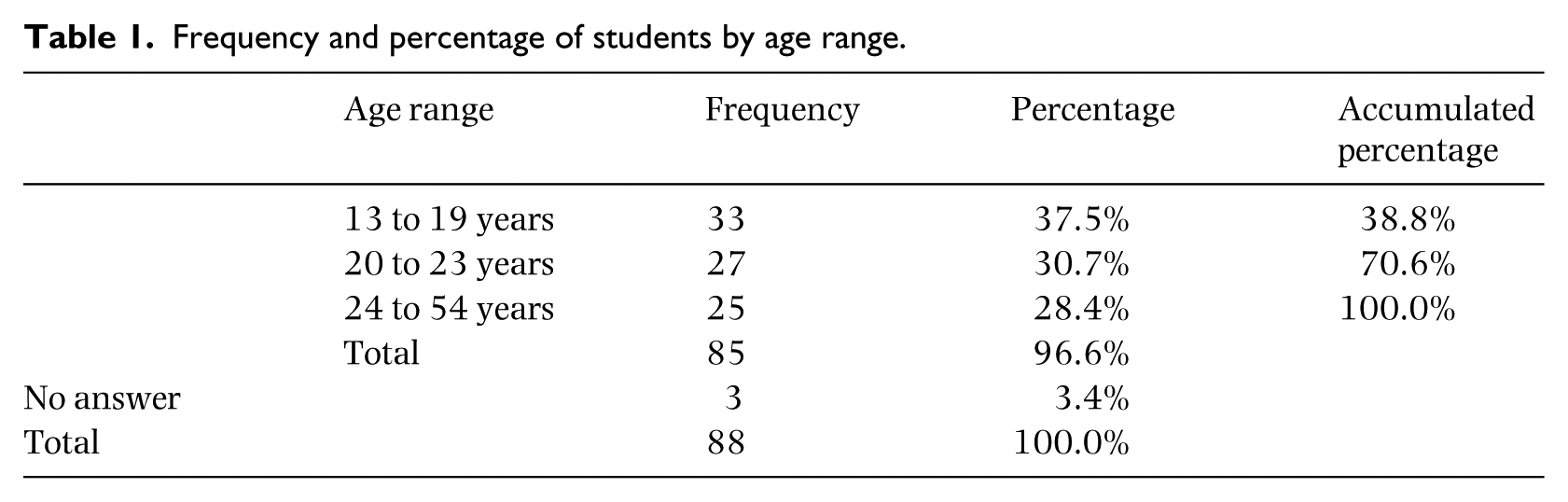
The participants for this research were 88 students: 44 women (50%) and 44 men (50%). The age of the participants ranged between 13 and 54 years (Mage = 23.13; SDage = 8.17). Due to the wide range of ages and using the accumulated percentage as a reference, three age ranges were established (see Table 1).
Frequency and percentage of students by age range.
The participants studied piano at the Music Conservatory of Chihuahua (n = 27; 30.7%), the Faculty of Arts at the UACH (n = 40; 45.5%), and the Municipal Academy of Arts from the city of Cuauhtémoc (n = 21; 23, 9%). The majority of the students had previous musical knowledge obtained from private lessons (n = 33; 37.5%). The second largest group contained students who claimed they had no previous knowledge before starting their piano studies (n = 16; 18.2%). Furthermore, some students had previous contact with musical knowledge that occurred during their high school years (n = 11; 12.5%). The participants indicated their previous knowledge. The sample was representative in the context of our study because all piano students in the three institutions were surveyed as part of this research.
Instrument
The measurement instrument used for this research was the questionnaire Musical Memorisation Styles by Mishra (2007), which was extended following Bernal’s (2009b) indications and adapted to the context of our study. The first part of the questionnaire asks for personal data: age, gender, place and course at which the students are studying piano, previous musical knowledge, and the community in which the students live. A second part contains 28 items to be answered on a 4-point Likert scale (1 = never; 2 = rarely; 3 = sometimes; 4 = always), grouped into 5 categories including visual, aural, muscular or kinaesthetic, and analytic memorising study strategies. The last category includes a series of personal strategies.
The instrument complied with the requirements of content validity; 16 specialists, both Mexican and foreign, who worked as piano teachers in conservatories, faculties of arts, and music academies participated in this process. The opinions of specialists on musical education and psychology were also required to obtain a wider criterion while working on possible modifications to the final questionnaire. Once the judges’ observations were gathered, the items that were scored the lowest were accepted, modified, or eliminated following the criteria of Barbero, Vila, and Suarez (2003). The construct validity was analysed through a factorial analysis with Varimax rotation, from which 11 factors were extracted. These factors explained 69.74% of the total variance. The questionnaire had an internal consistency or reliability of .73, calculated through the Cronbach’s alpha statistical test, which indicates an acceptable reliability index derived from the answers given by the participants.
Procedure
Before polling the students, the project was presented to academic authorities from the various participating institutions, which were required to give consent for their students’ participation in this study. The questionnaires were handed to the students at the time they took their piano classes. They were informed about how to complete the questionnaire, and they were told that the data collected for the study would be treated anonymously. The students completed the questionnaire during the academic year 2011/2012.
Results
Analyses of the results were performed with SPSS software. It was decided to measure the normal distribution using the Kolmogorov-Smirnov statistical test on the following independent variables: age range, gender, and previous musical knowledge. The Z statistic was significant in all the analysed items, with a probability level under or equal to .001, indicating that it is not possible to perform parametric tests.
To focus the reader’s attention on the most important data obtained in this investigation, we now present the analyses that produced statistically significant results.
Category: Use of visual memory study strategies
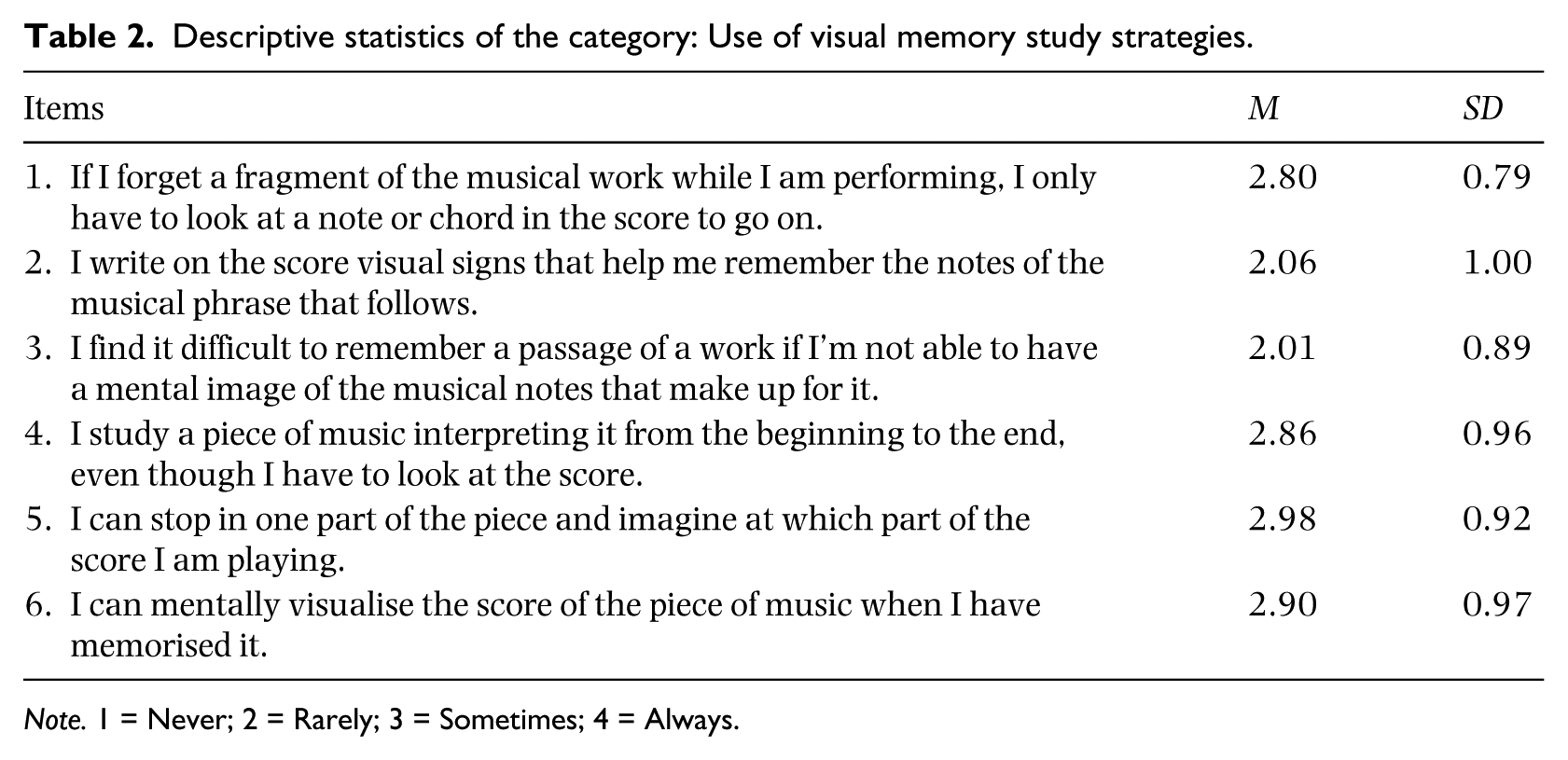
Table 2 shows the descriptive statistics of this category. Higher scores indicate that the students often stop at some point in the musical piece and imagine where they left off, mentally visualising the score, and they return to the performance of a piece by looking at only one note or chord.
Descriptive statistics of the category: Use of visual memory study strategies.
Note. 1 = Never; 2 = Rarely; 3 = Sometimes; 4 = Always.
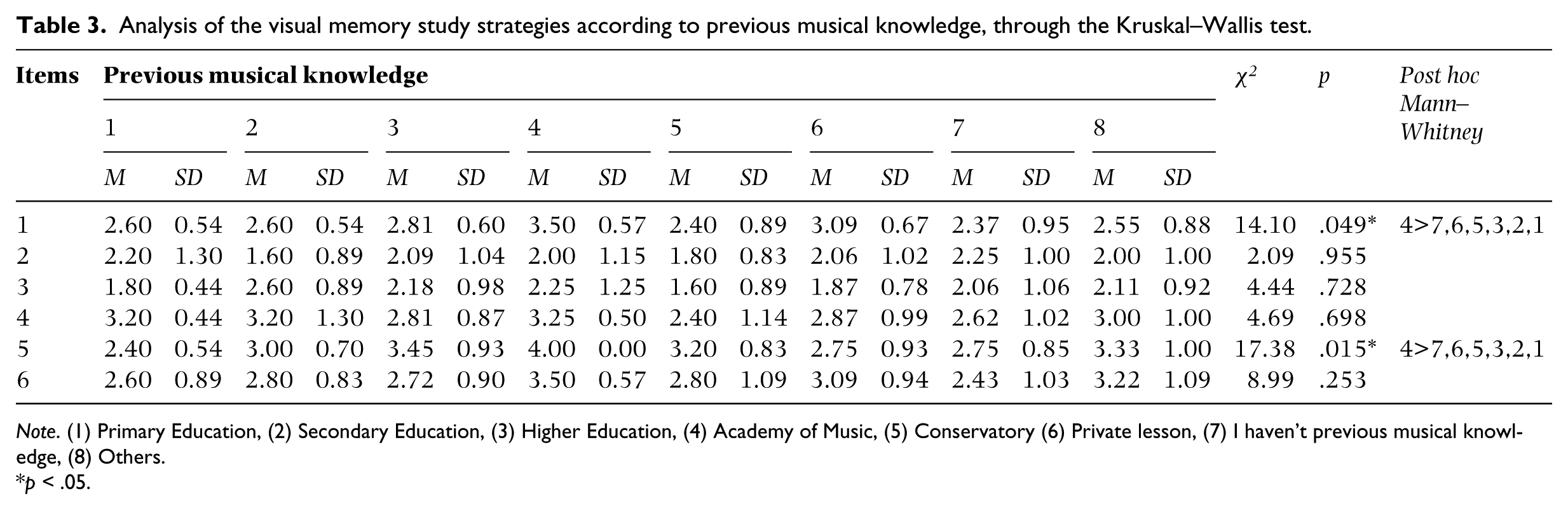
The mean and standard deviation in this category were M = 2.60 and SD = 0.92. These results suggest that students rarely use visual strategies to memorise a score. Table 3 presents the analysis conducted through the Kruskal–Wallis test to determine whether there were any differences between the use of visual memory strategies and the independent variable “previous musical knowledge”.
Analysis of the visual memory study strategies according to previous musical knowledge, through the Kruskal–Wallis test.
Note. (1) Primary Education, (2) Secondary Education, (3) Higher Education, (4) Academy of Music, (5) Conservatory (6) Private lesson, (7) I haven’t previous musical knowledge, (8) Others.
p < .05.
The results were significant for items 1 and 5, indicating that participants who obtained previous musical knowledge in music academies had higher scores on these items than the rest of the subjects.
Category: Use of aural memory study strategies
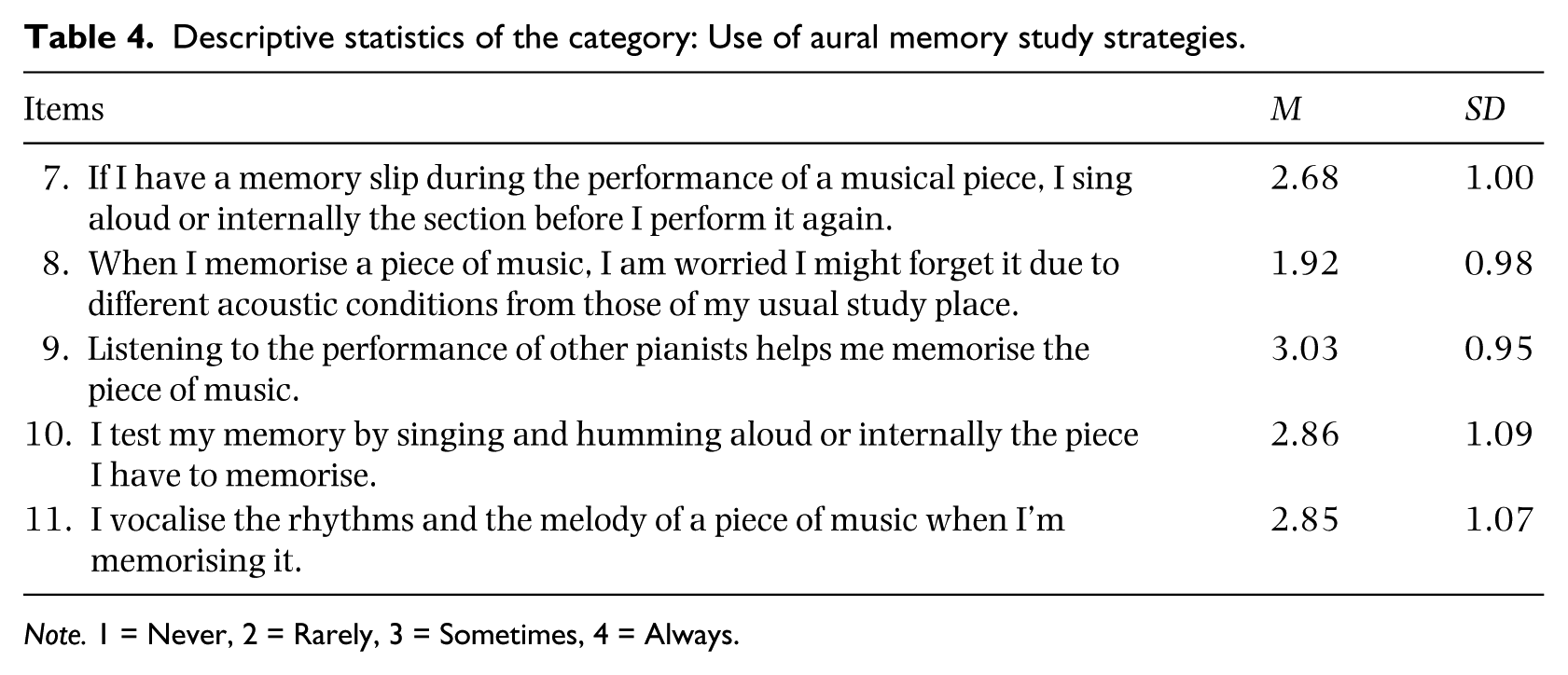
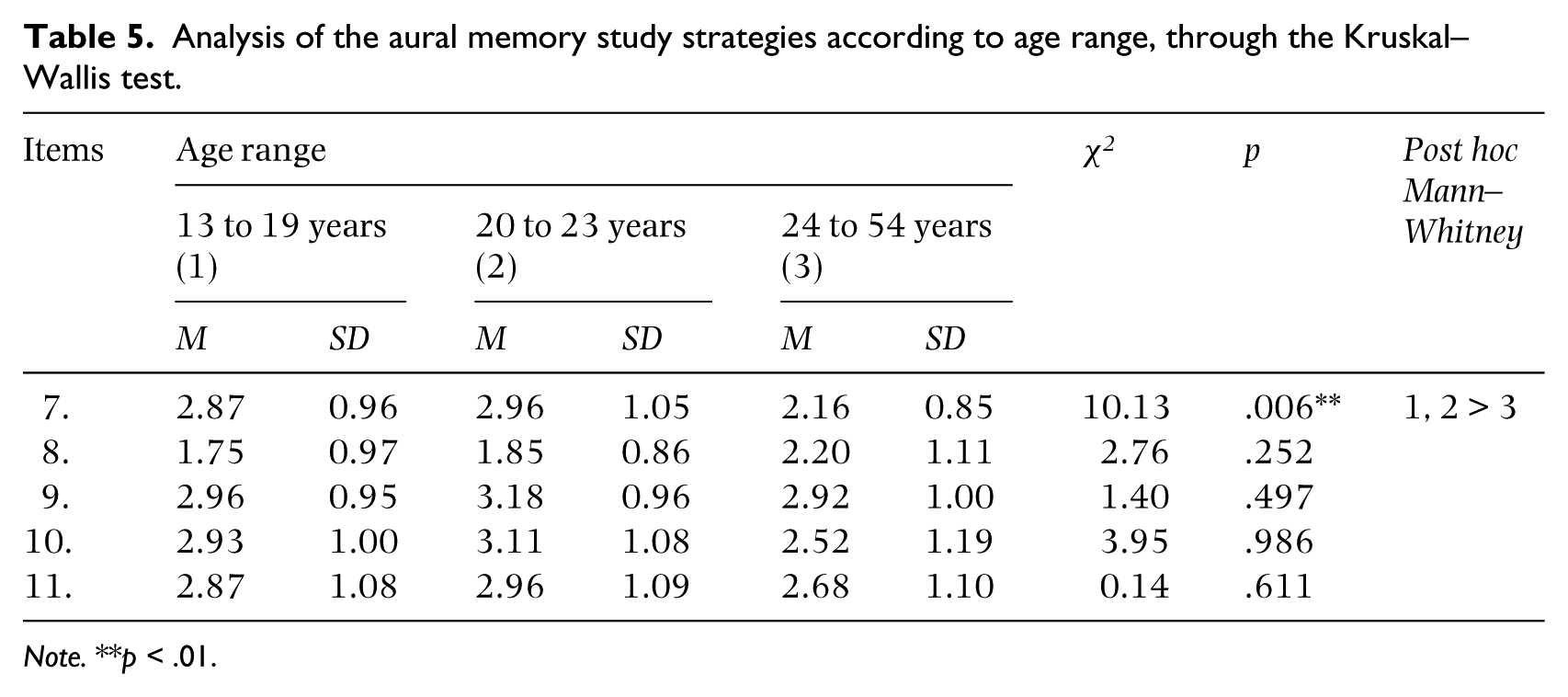
In Table 4, the descriptive statistics regarding the use of aural memory strategies are shown. Higher scores were obtained for items 9, 10, 11, and 7, indicating that students often listen to other pianists’ recordings, internally or externally sing the work that they have to memorise, and vocalise the work’s rhythms and melody to memorise it. The mean and standard deviation in this category were M = 2.67 and SD = 1.02, revealing that participants rarely use aural strategies when memorising music. The analysis conducted with the Kruskal–Wallis test in relation to age range showed statistically significant differences (see Table 5).
Descriptive statistics of the category: Use of aural memory study strategies.
Note. 1 = Never, 2 = Rarely, 3 = Sometimes, 4 = Always.
Analysis of the aural memory study strategies according to age range, through the Kruskal–Wallis test.
Note. **p < .01.
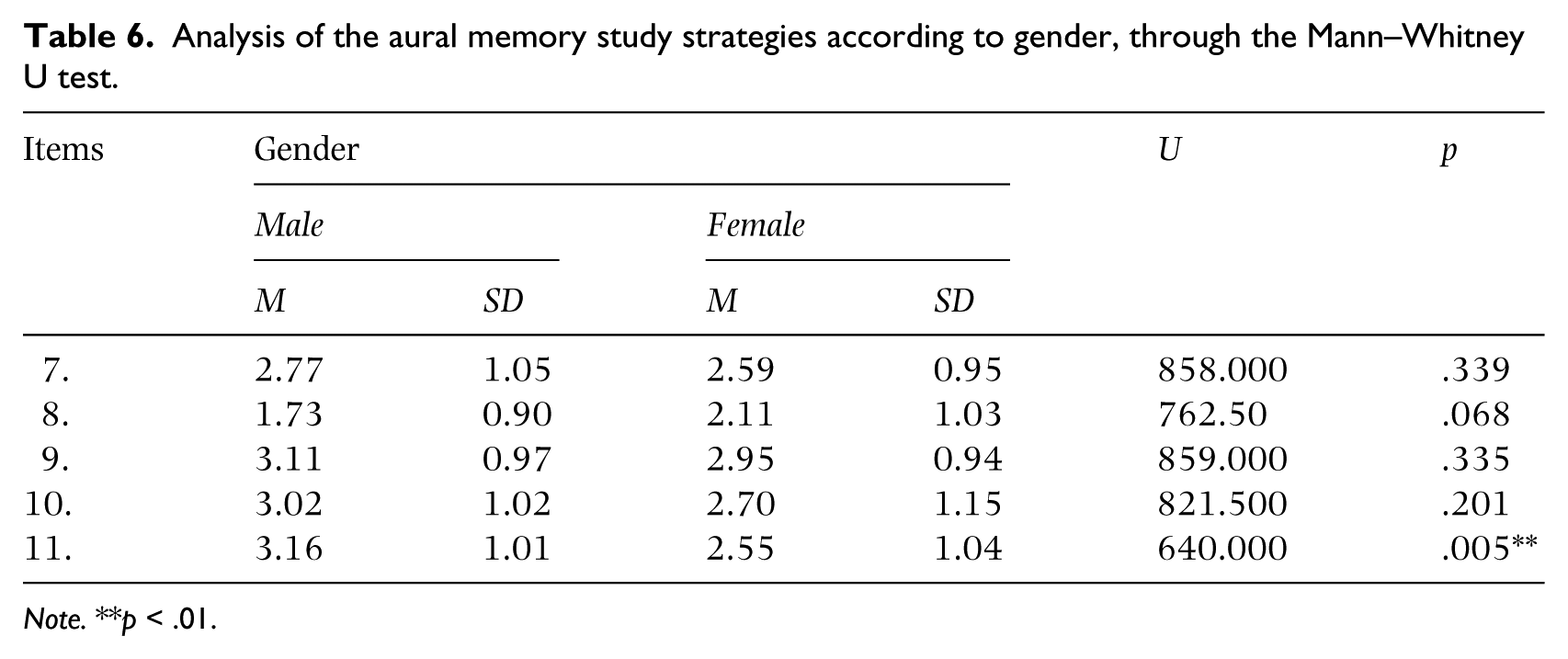
The younger students (ages 13 to 19 and 20 to 23 years old) had higher scores on item 7 compared to those who were 24 to 54 years old. In Table 6, the analysis using the Mann–Whitney U test shows statistically significant differences among males and females who used the strategy of vocalising the rhythms and melody of a work of music when memorising. Men scored higher than women in the use of this strategy.
Analysis of the aural memory study strategies according to gender, through the Mann–Whitney U test.
Note. **p < .01.
Category: Use of kinaesthetic memory study strategies
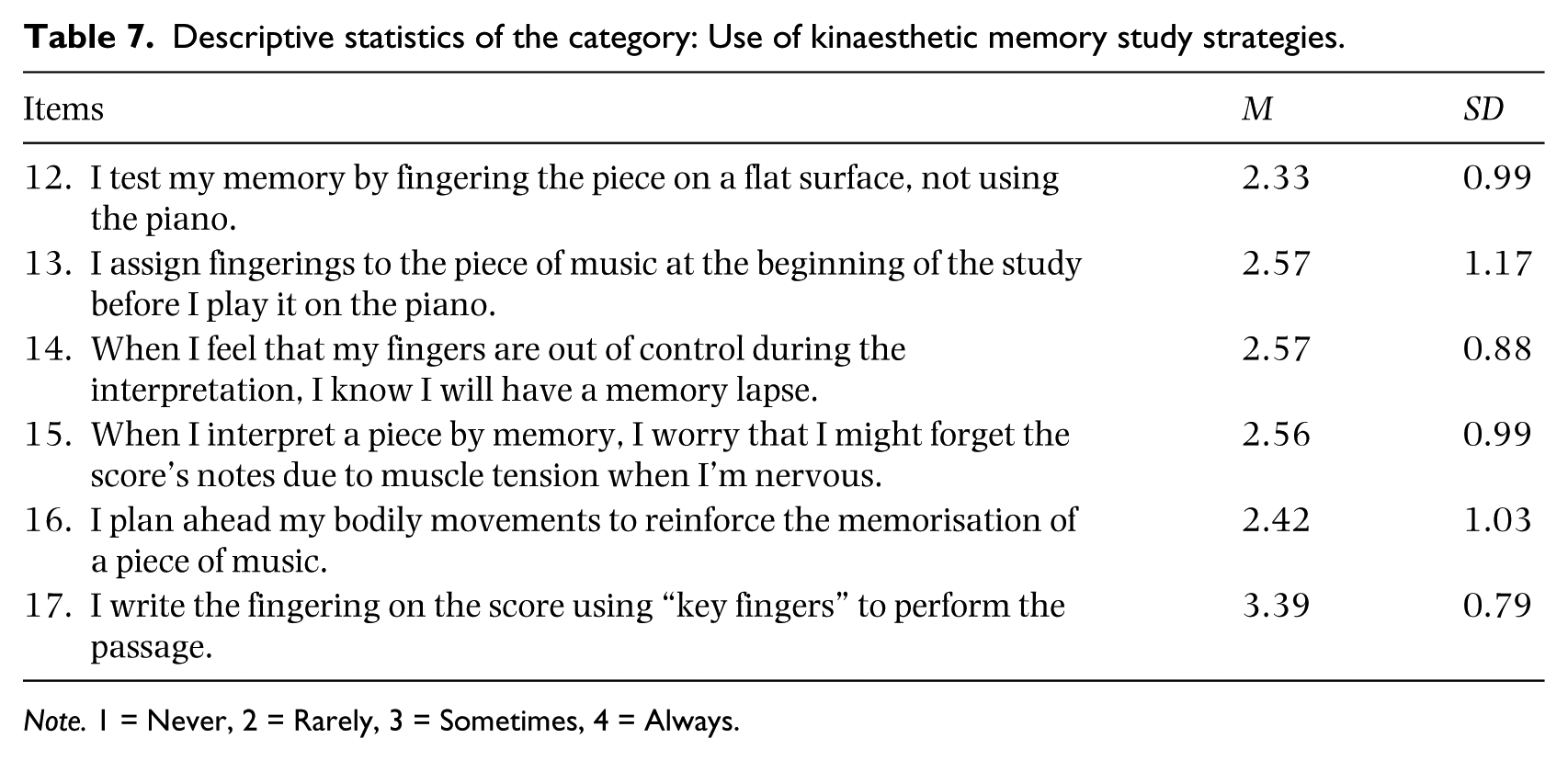
Table 7 presents the descriptive statistics of the items belonging to the use of muscular or kinaesthetic memory strategies. The highest score was obtained for item 17, indicating that participants rarely used the strategy of signalling “key fingers” in a musical score to interpret a given passage. However, the average values obtained for the items concerning the musical score’s fingerings indicate that losing muscular control of the fingers and forgetting the notes due to muscular tension derived from nervousness were very common among pianists.
Descriptive statistics of the category: Use of kinaesthetic memory study strategies.
Note. 1 = Never, 2 = Rarely, 3 = Sometimes, 4 = Always.
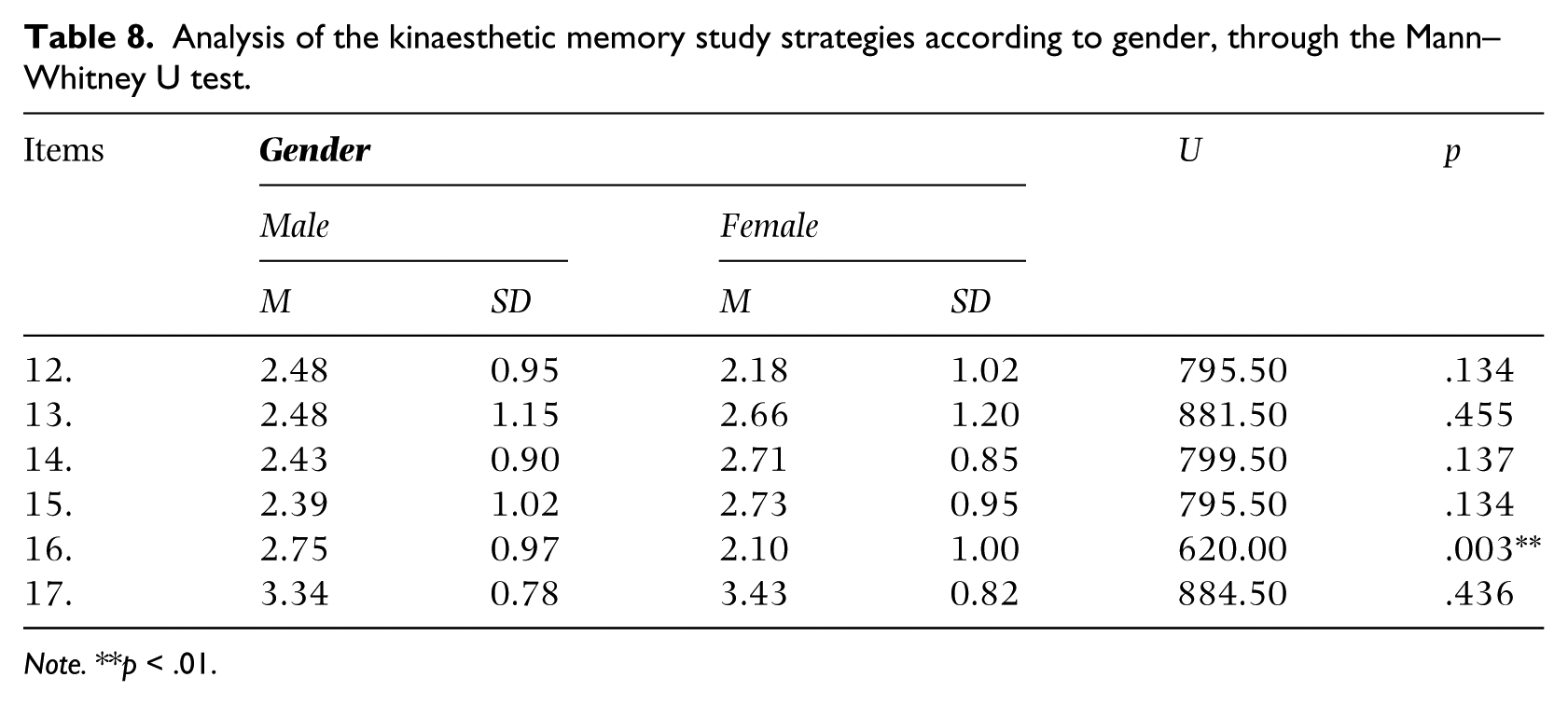
The mean and standard deviation in this category were M = 2.64 and SD = 0.98, indicating that students rarely used kinaesthetic memory strategies. The analysis concerning the independent variable of gender through the Mann–Whitney U test produced significant differences. For example, men indicated more often than women did that they planned their bodily movements ahead of time to reinforce the memorisation of a piece during their performance (see Table 8).
Analysis of the kinaesthetic memory study strategies according to gender, through the Mann–Whitney U test.
Note. **p < .01.
Category: Use of analytic memory study strategies
The following statistics describe the items belonging to the category of the use of analytic memory study strategies (see Table 9). In general, all items in this category showed scores above the central average value, indicating that students sometimes used analytic strategies to memorise musical scores. The most common resource used by piano students was to fully and deeply analyse the musical work to understand it and facilitate its memorisation (see Table 9).
Descriptive statistics of the category: Use of analytic memory study strategies.

Note. 1 = Never, 2 = Rarely, 3 = Sometimes, 4 = Always.
The results of the mean value and standard deviations in this category (M = 3.28; SD = 0.81) indicate the same direction as that obtained in the separately analysed items. As in previous sections, analyses were performed to study the behaviour of the independent variables (age range, gender, and previous musical knowledge), which did not offer any statistically significant results.
Category: Use of personal strategies in memorisation study
Table 10 presents the mean and standard deviation values related to personal strategies for memorisation studies. The highest score was obtained for item 26, indicating that students sometimes memorised the scores they studied. In contrast, the lowest score was obtained for the item stating that if they had a memory slip while practising a musical piece, the students would opt to start again from the beginning. The mean and standard deviation in this category were M = 3.10 and SD = 0.83, indicating that students sometimes used personal memorisation strategies.
Descriptive statistics of the category: Use of personal strategies in memorisation study.

Note. 1 = Never, 2 = Rarely, 3 = Sometimes, 4 = Always.
The results obtained through the Mann–Whitney U test in relation to gender (see Table 11) revealed statistically significant differences for items 23 and 28, indicating that men stated more often than women did that if they had a memory slip, they concealed the mistake and continued playing to the end using a combination of visual, aural, kinaesthetic, and analytic memories to remember the scores.
Analysis of personal strategies used in memorisation study according to gender, through the Mann–Whitney U test.
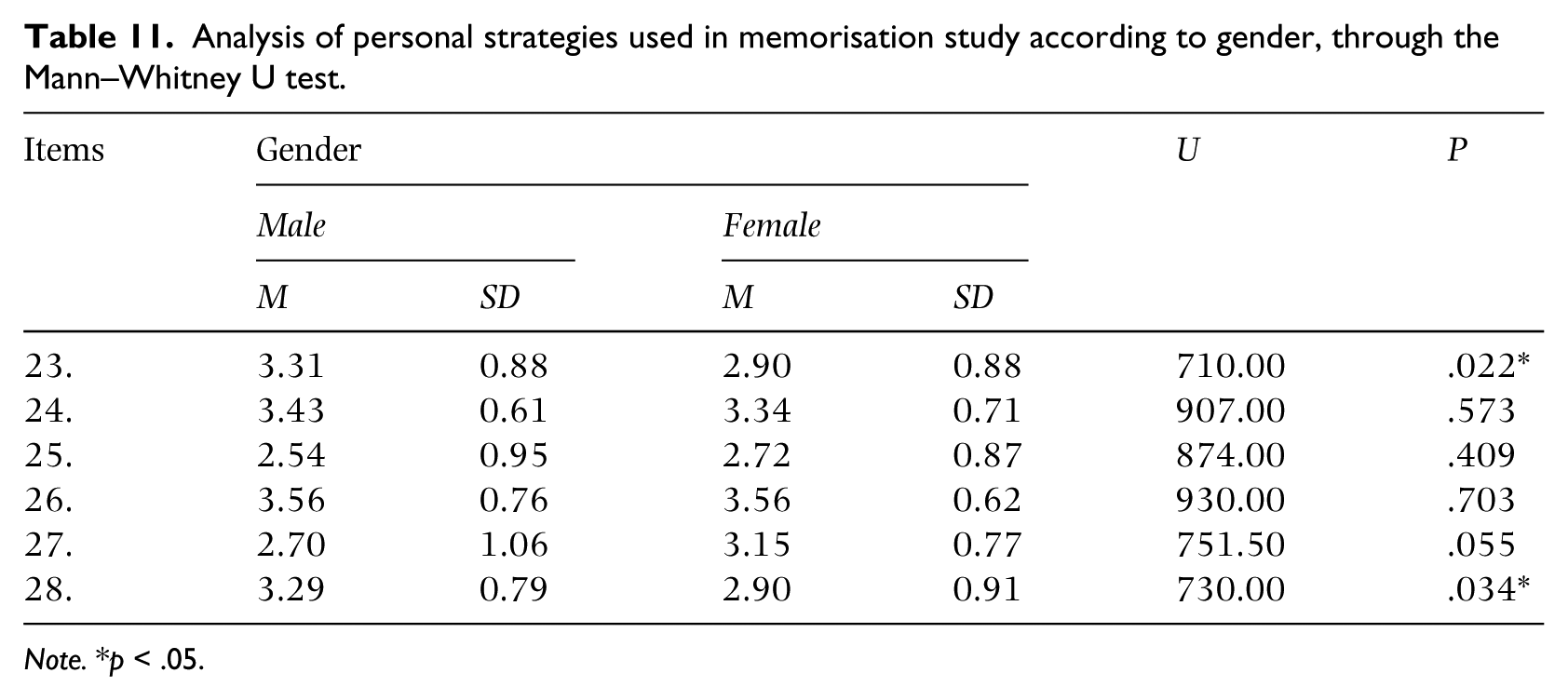
Note. *p < .05.
Table 12 shows a Kruskal–Wallis test performed to determine whether personal memorisation strategies vary in relation to the previous musical knowledge of the participants. The results were significant for item 26, indicating that students who had previously studied in music academies were better at memorisation.
Analysis of personal strategies used in memorisation study according to previous musical knowledge, through the Kruskal–Wallis test.
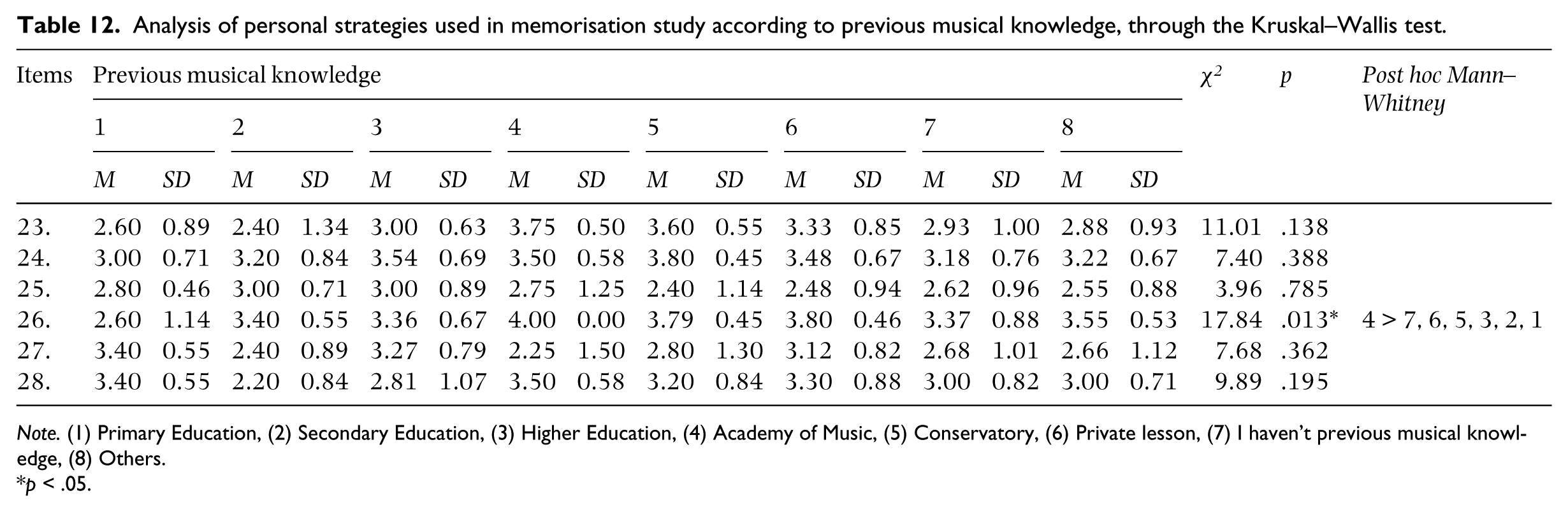
Note. (1) Primary Education, (2) Secondary Education, (3) Higher Education, (4) Academy of Music, (5) Conservatory, (6) Private lesson, (7) I haven’t previous musical knowledge, (8) Others.
p < .05.
Results of the correlation of examined memory study strategies
To conclude this section, a correlative analysis was performed using the non-parametric Spearman’s rank correlation (see Table 13) to determine whether there was a relation between the different memory study strategies.
Spearman rank correlation of the categories’ average scores for the examined memory study strategies.

Note. *p < .05, two-tailed; **p < .01, two-tailed; ***p < .001, two-tailed.
As shown in Table 13, there was a low correlation between the use of kinaesthetic and aural memory study strategies; between analytic and kinaesthetic memory study strategies; and between personal memorisation study strategies with aural memory and kinaesthetic memory. At the same time, the results indicate a moderate correlation between personal memorisation study strategies and analytic memory study strategies.
Discussion
Memorisation strategies used by students
The results reveal that in the memorisation process, piano students from Chihuahua mainly default to strategies that involve analytic memory, followed by aural memory, muscular or kinaesthetic memory, and, finally, visual memory. This evidence shows the need for schematising and analysing scores from the beginning of a person’s studies as well as the need to develop interval identification, rhythmic cells, and tonal and harmonic sequences, which make memorisation easier (Oura & Hatano, 2004). We agree with Ginsborg (2004) that previous analysis of the score has great importance in the process of memorisation given that a global and structured perspective of the musical piece can be grasped through analysis.
However, it is worth mentioning that the participants in this sample study placed the use of visual memory behind the other categories, although visual contact with the score is the first step towards retaining the image and beginning memorisation work (Poggi, 2006). As stated by Lehmann and Kopiez (2009), there is a greater dependency on the visualisation of the score at the beginning of its study. Following their arguments, one might conclude that once students are at an advanced stage of piano study, they become more centred in an analytic study, causing them to use analytic memory more frequently.
Personal memorisation strategies
The results indicate that the personal strategy that the students used most frequently was memorising the scores they were preparing, which is explained by the inherent requirements of syllabi (Faculty of Arts, 2010).
As such, the students indicate that daily and regular practice with the instrument is an important aspect in learning how to memorise a musical score. This process may be related to the sense of confidence generated in students when they know that they have mastered the score completely. These arguments are similar to those of Ericsson (2006), who believes that constant practice with the instrument generates greater fluency in interpretation by memory. Additionally, students confirm that they use a combination of visual, aural, kinaesthetic, and analytic memorisation types, corroborating other authors who verify the importance of memorisation as well as the development of activities that use different types of memory (Cuartero & Payri, 2010; Mishra, 2004; Palmer, 2006; Pecenka & Keller, 2009).
The results obtained in the Spearman’s rank correlation regarding the connection between different memorisation study strategies reiterate the conclusions stated in the previous paragraph. The highest correlation index reveals the importance of a combination of personal and analytic memory study strategies. These data confirm the previously stated arguments for the greater use of analytic strategies among the participants in this study.
On the comparative variables “age range”, “gender”, and “previous musical knowledge”
Significant differences were found regarding the comparative variables in the third objective of this research.
Age range
Regarding the age range variable, the only differences were the use of aural memory study strategies, indicating that it is far more common for younger students to sing a section of the score aloud or internally to prevent a memory lapse during their interpretation. This is easily understood considering that this procedure makes memorisation easier; while singing the music, students’ correct learning can be tested (Ohsawa, 2009).
Gender
In general, the differences found regarding piano students’ gender can be explained by the fact that the neurophysiological conditions of men and women are very different during musical perception and memorisation, as Gaab et al. (2003) argue. The results reveal that men use the strategy of vocalising the rhythms and melody more than women do, which may be related to men’s need to internalise the musical lines to retain the basic elements of the piece of music (Lo, 2010; Ohsawa, 2009).
Regarding the use of kinaesthetic memory, the results indicated that men have a tendency to plan bodily movements ahead of time to reinforce the memorisation of a musical work. This phenomenon can be explained by men’s need to have more control over their bodily movements to appear more natural during their performances from memory (Repp & Knoblich, 2004). Considering personal strategies of memorisation, men are more likely to conceal memory flaws and continue performing a piece to its conclusion during rehearsals prior to the concert, indicating that the men in this study attribute greater importance to continuity and musical fluidity than to mistakes that might arise during the performance (Hallam, 1997). Similarly, men were more likely than women to use a combination of visual, aural, kinaesthetic, and analytic memory during the memorisation of music. Thus, men give more importance to the combination of memorisation to acquire a global memory model that favours comprehensive development as future performers (Macmillan, 2004).
Previous musical knowledge
The results obtained in the analysis of the use of visual memory study strategies related to the independent variable of previous musical knowledge reveal that students who had previous studies in music academies show a greater tendency to use visual memory; they are able to visually retain the notes in the score and to begin from any given point in a piece of music. These conclusions reflect a position that suggests dependency on visual contact in the early stages of learning a score and indicate that this is a basic procedure in the development of memorisation (Dubost, 1991).
With regard to personal strategies of memorisation, the results show that students who had previous studies in music academies memorise scores better than the rest of the participants. Through previous training, students learn to value the importance of memorisation in their piano training (Bernardi, Schories, Jabusch, Colombo, & Altenmüller, 2013; Segalowitz, Cohen, Chan, & Prieur, 2001). In addition, these results might indicate that even when music academies offer training for amateurs, they work on other important aspects as well, including the memorisation of the score.
In summary, this research attempted to determine which study strategies define the skill development of piano students that is needed to memorise musical scores. The results obtained in this research highlight the importance of developing specific strategies for piano memorisation studies and introducing a starting point for improving the teaching–learning process of memorisation for piano students in Chihuahua. This information allows piano teachers to consider their students’ knowledge of memorisation and simultaneously serves to identify which memorisation mechanisms students adopt during practice, supporting their preferences while contributing to improving memorisation strategies in their instrumental learning process. It would be helpful to apply the same questionnaire to other geographical contexts to determine whether the context influences the use of memorisation strategies.
Footnotes
Acknowledgements
We would like to thank the anonymous reviewers for their very helpful suggestions for revising the manuscript.
Funding
This research received no specific grant from any funding agency in the public, commercial, or not-for-profit sectors.