




Abstract
This article explains how collective environmental entrepreneurship can ensure the sustainable exploitation of opportunities based on natural resources. We discuss the major threats entrepreneurial ventures face in pursuing potential nature-based opportunities and the collective action they take to preserve the associated natural resources while also providing access to them. This analysis adds to our understanding of environmental entrepreneurship by detailing the possible problems associated with exploiting potential nature-based opportunities, the ways ventures can come together to collectively address these exploitation challenges, and the benefits of such collective action (for both ventures and nature).
“We [a collective of Arctic cruise operators] have undertaken actions, for example, to develop guidelines . . . so that the industry is not challenging for nature” (Siv Adams, director).
The quote above illustrates endeavors to “resolve environmental challenges by overcoming barriers to the efficient functioning of markets for environmental resources,” which Dean and McMullen (2007) call environmental entrepreneurship. Specifically, environmental entrepreneurship refers to actions to enhance environmental sustainability by changing institutions to reduce the overexploitation of natural resources (Cohen & Winn, 2007; Dean & McMullen, 2007; York & Venkataraman, 2010), create sustainable opportunities (Pacheco, Dean, & Payne, 2010; Patzelt & Shepherd, 2011), and promote stricter environmental regulations and policies (Alvarez, Young, & Woolley, 2015; Child, Lu, & Tsai, 2007; Pinkse & Groot, 2015; Wijen & Ansari, 2007). However, prior studies have highlighted that environmental entrepreneurship can be challenging because the nonexcludability of nature can stimulate unsustainable behavior (Allen & Malin, 2008; George, Schillebeeckx, & Liak, 2015), especially when individual short-term economic gains diverge from collective environmental benefits (Pacheco et al., 2010; Shepherd, Patzelt, & Baron, 2013; Wijen & Ansari, 2007).
The nonexcludability of nature can promote misuse and free-riding (Ansari, Wijen, & Gray, 2013), which is often referred to as the “tragedy of the commons” (Hardin, 1968) and has been identified as a key barrier to efficient resource allocation (Leach, Mearns, & Scoones, 1999; Ostrom, 1990). Because neither the state nor the market uniformly enables long-term productive use of nonexclusive resources (Sarasvathy & Ramesh, 2019), scholars have begun to argue that entrepreneurship—in the form of collective action—needs to govern nonexcludable resources (Doh, Tashman, & Benischke, 2019; Ostrom, 1990; Pinkse & Groot, 2015; Wijen & Ansari, 2007). However, it remains unclear how a collective can address the paradox of the tragedy of the commons to ensure long-term productive use of nonexclusive resources.
We address this gap in the literature by studying environmental entrepreneurship as collective action to ensure the sustainable exploitation of opportunities that arise from a common pool of natural resources, such as crabs (Alvarez et al., 2015), whales (Lawrence & Phillips, 2004), and fish (McCarthy, 2012). While the prior environmental entrepreneurship literature has largely focused on opportunities occurring from environmental market failures (Cohen & Winn, 2007; Pacheco et al., 2010), we explore environmental entrepreneurship conducted by a collective that uses natural resources absent of, or to avoid, a market failure.
In the context of nature-based opportunities, on the one hand, ventures that exploit these opportunities may act in an unsustainable manner, for example, by overexploiting the resources and thus causing environmental degradation (Boyce, 1994; De Clercq & Voronov, 2011). On the other hand, ventures that exploit nature-based opportunities depend on these natural resources, which incentivizes them to ensure the continued attractiveness of these opportunities. Indeed, ventures that exploit potential nature-based opportunities are likely particularly sensitive to changing conditions in the natural environment (e.g., those caused by environmental degradation or climate change) because of their direct dependence on nature (Tashman & Rivera, 2016): a decrease in the quality and/or accessibility of natural resources directly diminishes venture performance. Given the context of nature-based opportunities, we ask the following research question: How can collective environmental entrepreneurship ensure the sustainable exploitation of nature-based opportunities?
To address this research question, we conduct an inductive study of Arctic expeditionary cruise operators organized as a collective. We use an inductive approach because it can provide new insights into the richness and dynamism of collective environmental entrepreneurship. Expeditionary cruise operators operate relatively small vessels that can carry up to 320 passengers and sell experiences based on Arctic nature, such as observing a polar bear or walrus, spotting calving glaciers, and hiking the Arctic wilderness. These operators depend on the same pool of common natural resources. However, the use of natural resources can lead to their degradation, such as loss of biodiversity (Benayas, Newton, Diaz, & Bullock, 2009; Pescott & Stewart, 2014), ecosystem service degradation (Boyd & Banzhaf, 2007; Thomas-Hope & Jardine-Comrie, 2007), and decreases in wildlife populations (Johnson, 2002; Knight & Cole, 1995). Although the expedition cruise industry is emerging in the Arctic (Hart & Dowell, 2011), existing institutions (e.g., regulations) are insufficient to meet the industry’s needs (Dawson, Johnston, & Stewart, 2014; Pashkevich, Dawson, & Stewart, 2015). In this article, we explore the actions of expeditionary cruise operators to collectively preserve and access the natural resources underpinning their Arctic opportunities.
This study makes the following primary contributions. First, theories of environmental entrepreneurship focus on how entrepreneurial action is motivated by environmental market failures (e.g., Ball & Kittler, 2017; Cohen & Winn, 2007; Dean & McMullen, 2007). We extend these theories by exploring the exploitation of potential nature-based opportunities motivating environmental entrepreneurship absent of (or to avoid) a market failure. In doing so, we offer new insights into the types of opportunities and practices (including collective action) that lead to environmental entrepreneurship. Second, while some research has acknowledged the tradeoff between economic performance and environmental sustainability (Bansal & Roth, 2000; George et al., 2015; Hart, 1995) and has discussed how to manage these competing logics (Meek, Pacheco, & York, 2010; Pacheco et al., 2010; York, O'Neil, & Sarasvathy, 2016), the current study explores a context in which collective action is targeted toward preserving the quality of natural resources as a means of maintaining the long-term economic viability of potential opportunities (i.e., a win-win rather than a tradeoff). Finally, collective action to preserve natural resources is often challenged by enforcement issues and utility maximizers (Kuhnert, 2001; Ostrom, 1990). In this study, we offer a grounded model of collective environmental entrepreneurship that explains how the combination of collective mitigation to preserve natural resources and collective coping to increase access to these resources incentivizes compliance and thereby reduces misuse and free-riding in the preservation of natural resources.
Collective Environmental Entrepreneurship
To frame and enhance our understanding of how collective environmental entrepreneurship can ensure the sustainable exploitation of nature-based opportunities, we review the literature on collective action for governing natural resources.
Common pool natural resources are typically nonexclusive and nonenforceable (George et al., 2015; Tietenberg & Lewis, 1984/2009) and belong to a certain location where they are embedded in the natural environment (Russo, 2003). The nonexcludability of resources means that actors who do not pay for the resources can still benefit from using them (Dean & McMullen, 2007; Tietenberg & Lewis, 1984/2009), and nonenforceability means that the resources are unsecured from involuntary use and damage (Tietenberg & Lewis, 1984/2009). Further, natural resources are part of an integrated ecosystem such that the use of natural resources can diminish their availability (Johnsen, Olaison, & Sørensen, 2018).
Issues related to the use of natural resources can be a collective action problem because the nonexcludability and nonenforceability of these resources can result in the tragedy of the commons (Adams, Brockington, Dyson, & Vira, 2003; Hardin, 1968). At the same time, collective action appears to be of critical importance in the sustainable use of natural resources (Berge & Van Laerhoven, 2011; Ostrom, 1990; Steins & Edwards, 1999). For example, Cohen and Winn (2007) argue that collective efforts can generate positive externalities, which may expand the pool of potential opportunities, but when actors do not collaborate, the result is likely a zero-sum game (i.e., one actor wins and another loses).
Olson (1965) argues that a group of individuals with a common interest often engages in collective action to further this common interest and to create win-win situations. In particular, collective action can be used to shift institutions—namely, “the prescriptions that humans use to organize all forms of repetitive and structured interactions” (Ostrom, 2005, p. 3)—and alter interactions to facilitate sustainable behavior (Hall & Wagner, 2012; Lounsbury, 1998; Ostrom, 2005). As institutions structure human interactions and market activities, they create incentives that influence firms’ decisions on how to allocate resources (Meek et al., 2010; Williamson, 2000). In the context of common pool natural resources, because no one owns these resources, institutions are created to manage their use (Cleaver, 2000 , 2002). While institutions come in different forms, in this article, we focus on informal constraints, such as norms, social conventions, codes of conduct, and practices (Bruton, Ahlstrom, & Li, 2010; Garud, Hardy, & Maguire, 2007), and formal rules, such as regulations that guide economic, social, and political interactions and define the behavior of individuals and firms during transactions (Meek et al., 2010; North, 1990).
Relatedly, the environmental entrepreneurship literature has highlighted how informal constraints and formal rules can address environmental market failures (Dean & McMullen, 2007; Thompson, Kiefer, & York, 2011; Thompson, Herrmann, & Hekkert, 2015). Indeed, Pinkse and Groot (2015) argue not only that the nonexcludability of natural resources provides conditions that environmental entrepreneurs may perceive as opportunities but also that there are situations in which institutions first need to be developed or changed before opportunity exploitation can occur. In this article, we define environmental entrepreneurship as the exploitation of potential nature-based opportunities in a way that both preserves and accesses the natural resources that underpin these potential opportunities.
In the context of sustainable natural resource use, environmental entrepreneurship often emerges to address the sustainability challenges that natural resource stakeholders jointly face (Hoffman, 1999). This emphasis on entrepreneurship aligns with the argument that entrepreneurship is an endogenous source of institutional change and highlights the importance of entrepreneurship in an ecological context (Shepherd & Patzelt, 2011). Although we know that environmental entrepreneurship can address sustainability issues associated with exploiting potential nature-based opportunities, we still do not have a good understanding of how collective action can both preserve and provide access to the natural resources that underpin potential nature-based opportunities.
Methods
Strategic Research Site
The empirical setting of this inductive study is the expedition cruise industry, which is a niche segment within the cruise market. An expedition cruise involves the use of a small vessel that carries up to 320 passengers (Hall, James, & Wilson, 2010). The destinations of expedition cruises are typically remote locations, which are often difficult to reach. The core of the expedition cruise products are natural resources, such as polar bears, walruses, and glaciers (Dawson et al., 2014), which they depend on in a nonconsumptive way—that is, the resources are not extracted like they are in the mining or petroleum industries (Russo, 2003). Indeed, the coastal locations visited by the cruise ships are important breeding grounds and feeding areas for Arctic species.
Eight cruise operators established a collective for Arctic expeditionary cruise operators (known as ArcNet) in 2003 as an industry initiative to oversee the use of natural resources to ensure quality, access, and safety (Swan, product developer at Arctic Explorer; Normann, network secretary at ArcNet). By 2015, the collective had grown to 48 members. Members are primarily expeditionary cruise operators but also include other international and local organizations, such as an ice management service provider, travel agents, tour operators, and shipping companies. ArcNet members’ activities account for the majority of cruise activities in the Arctic. To illustrate, Longyearbyen, the main turn-around port in the Arctic, had 277 arrivals from cruise ships in 2014 (232 expedition and 45 oversea cruises), of which 157 were arrivals from ArcNet vessels. Despite ArcNet’s efforts and the positive outcomes, which, for example, led to increased wildlife populations on Svalbard (Nordmann, network secretary at ArcNet), the incident in 2018, which caused the death of a polar bear, indicates that some key natural resources are still being degraded.
In this study, we investigate this collective of 48 firms that depend on a common pool of natural resources in the Arctic region to exploit their nature-based opportunities and explore the collective’s actions to ensure the sustainable use of natural resources.
Data
The data for this study come from interviews, documents (for internal and external audiences), and field notes from observations and participation at an annual meeting and a thematic workshop. The secretary of ArcNet facilitated the data collection and supported us with access to the documents and information about the meeting and workshop.
Interviews
We used semistructured interviews as our primary source of data collection. We conducted 20 interviews with the administration of the collective organization (four interviews), key personnel from member firms of the collective (11 interviews), and other key actors with insider or expert knowledge (five interviews). Appendix 1 (online) provides an overview of the interviews, including key information about our informants. We gave fictitious names to the vessels and firms the interviewees work for.
To obtain a sample, we contacted individuals through the websites of the collective organization and of the expeditionary cruise operators and used a snowball approach to identify interviewees. For example, we started data collection with an interview with the administration secretary of the collective and asked him to suggest firms and key personnel to interview next. We conducted the interviews at the collective’s headquarters, at informants’ workplaces, in various locations before and after workshops, in café/restaurants with crew members, at the airport, and via Skype. Indeed, the mobility of the expedition vessels and the international nature of this industry presented a number of data-collection challenges. The interviews lasted between 35 and 131 min, with an average of 75 min. We collected a total of 1,503 hr of recorded interviews and 256 pages of single-spaced text. We transcribed the interviews, and all participants approved their transcripts.
Although we adjusted the semistructured interview guide for each interviewee’s role, we made sure to address the same topics during each of the interviews. The guide included the following key themes: expedition cruises in the Arctic and perceived opportunities, the development of expedition products, and collaboration in general and within the collective (i.e., ArcNet). For example, we asked, “What kind of routines has [name] established to preserve resources and to protect local inhabitants from any kind of distress?”; “How would you describe a possible dependence between your company and others”; “Landing sites can have unique characteristics, for example, in regards to the local population and nature. How does [name] deal with differences between the landing sites?”; and “What is [name]’s role in this process [development of an Arctic cruise product]?” Our interview questions enabled us to capture prior strategies and approaches to preserve natural resources and secure existing/create new expedition products and provided a snapshot of the collective’s situation between 2014 and 2016 when we collected these data.
Annual reports and other documentation
We used six annual reports from the collective (from 2009/2010 to 2014/2015), which amounted to 169 pages of text. The annual reports provided real-time information about the collective’s activities and thereby addressed some of the weaknesses of a case study solely reliant on interviewees’ retrospection. Additionally, the reports provided a comprehensive overview of what had occurred with the collective in the past and allowed us to develop follow-up questions regarding how the collective ensures the sustainable exploitation of natural resources in our interviews. We also collected and analyzed other documents, including project reports, thematic reports on various initiatives, and conference proceedings. For example, the project reports included a feasibility study for site guidelines in Greenland and a feasibility study for the Clean-up Svalbard project. The reports provided insights into the projects’ motivation and background, challenges the collective faced, and the ways the collective was organized and performed. Thematic reports included documents on Arctic species and an impact assessment of Arctic cruise tourism. The conference proceedings included PowerPoint slides from presentations by the secretary of the collective, authorities, and associated researchers.
Observations and field notes
The first author attended the 2014 annual meeting of the collective, including a day program and a social gathering in the evening, and a 2-day thematic workshop on current issues in 2016. These events provided a platform for informal discussions; insights into current projects; issues that arose from discussions among collective members; and discussions between the collective and “outsiders,” such as authorities and tourism offices. The author took notes during the presentations and discussions among participants during these events. For example, presentations included updates on current projects, information from meetings with regulatory bodies, and various discussion topics (e.g., polar bear safety). After each event, the author prepared reflective notes from the event in general and from the informal discussions between the author and other participants. These field notes resulted in 23 single-spaced pages of text.
Data Analysis
We followed an established stepwise coding approach to systematically analyze these data (Monin, Noorderhaven, Vaara, & Kroon, 2013). We used iterative coding based on a recursive approach, meaning that we moved from inductive to adaptive coding throughout the data-analysis process. In this recursive approach, we considered the phenomenon, the literature, and further data additions (Gioia, Corley, & Hamilton, 2013). More specifically, this approach leads to increased abstraction to derive meaningful theoretical categories from raw data as inspiration while insights from the literature are added throughout the coding process (Saldaña, 2015). Following this approach, we allowed theory about how collective environmental entrepreneurship can ensure the sustainable exploitation of nature-based opportunities to emerge from the data. In particular, the novel context of nature-based opportunities and the collective action perspective motivated this research approach.
We organized our data material and our coding using the NVivo software package and used a three-stage coding approach to analyze our data, as described below.
Identification of first-order codes
Initially, the first author analyzed the data in the context of our interest—namely, collective action and common pool natural resources as potential opportunities. This preparatory analysis occurred at the same time as data collection and helped us gain more concrete ideas about the dynamics in our data. In particular, we discovered the dynamics between the natural resources the operators used, the uncertainties and challenges the operators faced when exploiting their nature-based opportunities, and the actions undertaken by ArcNet as a collective. This led to our research focus on collective environmental entrepreneurship in the context of nature-based opportunity exploitation.
Having identified the broader focus of collective environmental entrepreneurship and the exploitation of nature-based opportunities, the first author started to structure and label the data guided by the focal research question, which led to more focused and detailed coding than the preparatory approach. The analysis followed an open-coding approach, with new codes being added as new elements and concepts appeared (Saldaña, 2015). Then, the first author compared the codes and grouped similar codes. For example, the code labeled “establishing standards” emerged by grouping codes like the development of tourism guidelines and maritime guidelines, coping and adjusting guidelines for new areas, and feasibility projects. The first author prepared tables with codes and illustrative quotations, which we (both authors) then discussed. This process allowed the second author to ensure the trustworthiness of the analysis based on the evidence presented (York et al., 2016). This process resulted in 33 first-order concepts.
Aggregation of first-order codes into second-order codes (theoretical themes)
For the second round of coding, we used a structural coding approach whereby we deductively developed the second-order themes by reviewing the literature on environmental entrepreneurship and collective action while drawing on the first-order concepts (York et al., 2016). The tables with representative quotes for each of the first-order concepts provided the foundation for a common understanding to jointly develop the theoretical themes and discuss the relationships between the identified themes. For example, we discussed the order of the different identified themes, such as whether the collective’s incentive to preserve and access natural resources is the outcome or the source of the collective’s action to change institutions, as well as ways to categorize potential solutions and actual outcomes. This second step of the data analysis resulted in 12 second-order themes.
Identification of theoretical dimensions
In the third and final step, we distilled the second-order themes into higher-level aggregate dimensions. For example, we grouped the different ecological threats described by the actors under the dimension of ecological uncertainties. The final theoretical dimensions that emerged include the exploitation of a potential opportunity based on natural resources, collective problem, collective ecological mitigation, collective ecological coping, and collective outcome. In Appendix 2 (online), we illustrate the data structure arising from our coding process described above.
Findings
In the following sections, we elaborate on the key patterns of the collective actions taken by the Arctic expeditionary cruise operators (i.e., entrepreneurial ventures) to maintain the natural resources underpinning the collective members’ various types of cruises (i.e., potential nature-based opportunities). First, we explain how the collective perceive nature-based opportunities and how the exploitation of these opportunities threatens their continued viability. Second, we present an explanation for how the collective’s actions can both preserve and provide access to the natural resources underpinning these potential opportunities.
The Exploitation of Potential Nature-Based Opportunities
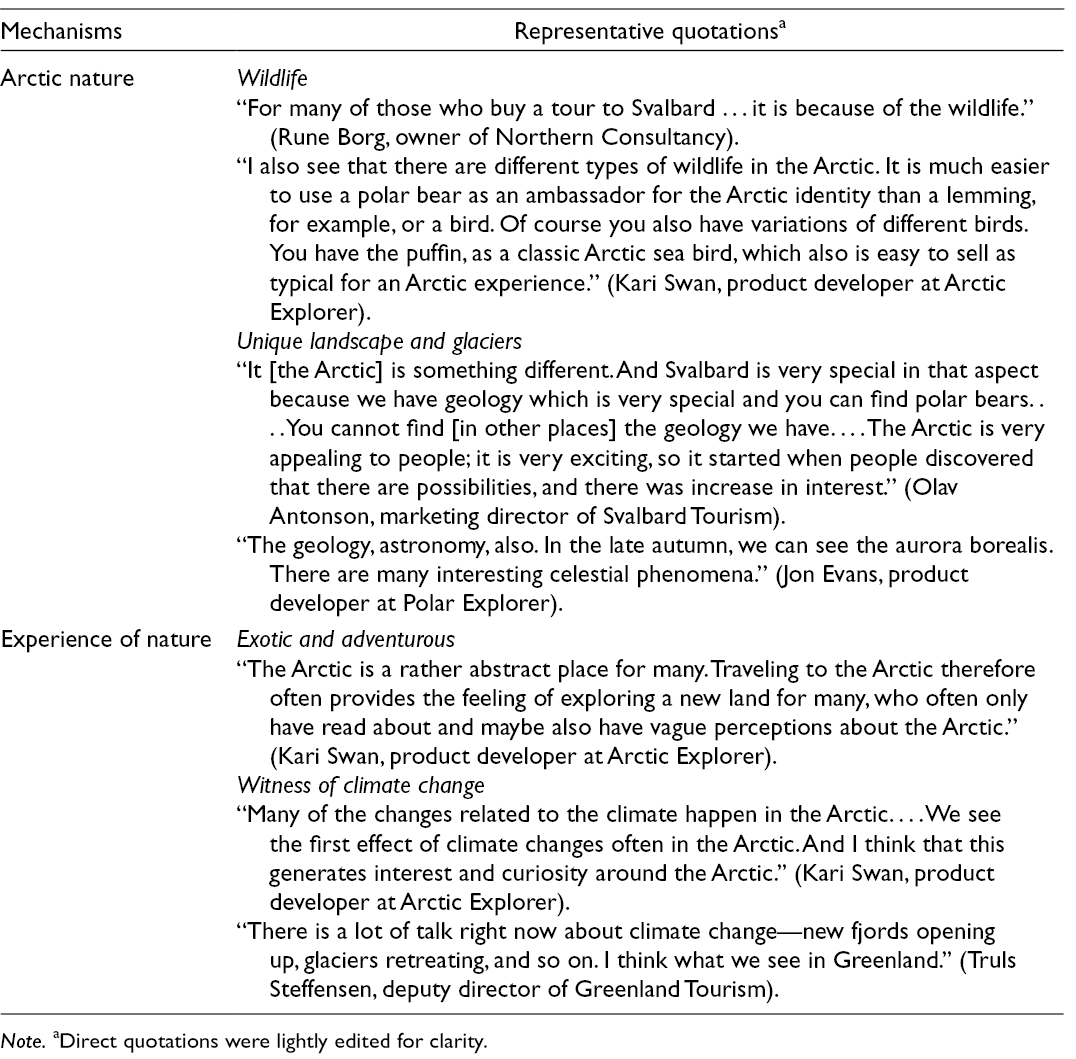
The Arctic expeditionary cruise operators depend on a common pool of natural resources, such as wildlife, flora, and landscapes, which underpin the potential nature-based opportunities they exploit. These natural resources are the primary reason for sales, so the ventures depend directly on the quality of and access to the natural resources. For example, Sven Larson, captain on Roald Amundsen, explained, “We sell wildlife, we sell nature . . . an experience. It is nature we build on. Specialties of certain places, . . . and it can be as simple as a waterfall or a bird colony.” Similarly, Rune Borg, owner of Northern Consultancy, indicated, “It is clear that polar bears, walruses, sea ice, and the High Arctic are the true reason for the sales.” Our data analysis indicates that these natural resources underpin potential opportunities for Arctic expeditionary cruise operators. These ventures do not sell the physical natural resources to others but instead create customer experiences based on the resources. For example, Tom Carlsson, CEO at Arctic Explorer, explained, “For many people, when they see the first polar bear, then they can relax because they have seen the polar bear.” As indicated in Table 1, these unique natural resources (underlying the potential opportunities) often exist in extreme environmental conditions. As such, the associated customer experiences are considered to be exotic and adventurous and also allow people to witness climate change, experience solitude, and feel like explorers.
Exploitation of Potential Nature-Based Opportunities.
Note. aDirect quotations were lightly edited for clarity.
The Collective Problem From Exploiting Potential Nature-Based Opportunities
Because these ventures sell nature as an experience, the accessibility of quality natural resources is vital for maintaining both the attractiveness of their opportunities and their overall performance. Our analysis provides evidence that the ventures appraise threats to the sustainability of these natural resources, to which we now turn.
Potential Degradation of Natural Resources
The ventures are concerned about preserving the quality of the natural resources underlying their potential opportunities. As Siv Adams, director of ArcNet, told us, “The quality of nature attracts people, such as the polar bears, the walruses, and other wildlife.” Beside their efforts to preserve the focal natural resources, the ventures also stress the importance of preserving other natural resources to maintain the Arctic ecosystem. Indeed, a diminished ecosystem will likely adversely impact the natural resources on which the ventures depend. Olav Antonson, marketing director of Svalbard Tourism, explained the importance of sustaining the ecosystem: “Maybe then you will destroy the biology. There would be less fish, and if you have less fish, then there are fewer seals, and if you have fewer seals, the polar bears will die.”
Our analysis indicates that the ventures are aware that the quality of natural resources can be compromised through their actions and the actions of others. For example, Jon Evans, product developer at Polar Explorer, described one problem of having too many cruises operating in the area: “Now, there are many ships. That feeling of being on your own is gone. . . . Creating infrastructure incurs the same problem. Before, it was not there, and there was only wild wilderness.” It is not just the feeling of wilderness at stake from the “overcrowding” of expeditionary cruises; the quality of the natural resources in these destinations can also be jeopardized by degradation—that is, any “change and disturbance to the environment perceived to be deleterious or undesirable” (Johnson et al., 1997, p. 584). This form of degradation is often localized and caused by humans. Therefore, we found that in the act of exploiting nature-based opportunities, ventures can degrade the natural resources.
As we illustrate in Table 2, the ventures highlight four mechanisms by which the exploitation of opportunities can diminish the natural resources that underpin their opportunities: (a) overexploitation, (b) decreasing biodiversity, (c) introduction of non-native species, and (d) risk of oil spills and other accidents. These four mechanisms can then be aggregated into two main sources of degradation: overexploitation of the natural resources and the impact of environmental externalities.
Collective Problems From Exploiting Potential Nature-Based Opportunities.

First, the data indicate that the ventures are aware that their actions can lead to the overexploitation of their opportunities. By overexploitation, we refer to “the removal of plants or animals by collecting, hunting or fishing on such a scale that the number removed plus mortality from other causes is larger than the number of new individuals [plants or animals] resulting from reproduction” (Wolff, 2005). In the current context, overexploitation includes flower picking and trampled ground (ArcNet visitor guidelines), invasion of non-native species (ArcNet biosecurity guidelines), and stressed animals (ArcNet wildlife guidelines).
Second, the data reveal that irregularities in venture operations, such as those caused by accidents, can lead to the degradation of nature. For example, Olav Antonson, marketing director of Svalbard Tourism, stated, “If we have an oil spill—that would be catastrophic for Svalbard.” The participants concluded that the greater the overcrowding in the area, the greater the likelihood of accidents that cause environmental degradation. Not only can the ventures’ activities degrade nature but so too can others’ activities, such as fishing, hunting, mining, and marine transportation. These degradation activities arise from environmental externalities, which “exist when costs or benefits are not accurately reflected in the prices of products and services due to downstream [and, as we argue below, upstream] effects of a firm’s behavior” (Cohen & Winn, 2007). Jon Evans, product developer at Polar Explorer, highlighted how externalities could impact the quality of the natural resources in the Arctic region: “There is competition for the same resources. The hunters want to shoot those resources. The nature protectionists want to protect them. The tour operators want to see them and show them to tourists.”
Unpredictable conditions surrounding natural resources
Not only does the quality of the natural resources drive the viability of the ventures’ nature-based opportunities, but access to the natural resources is also critical. Given the distinct characteristics of the Arctic natural environment, accessing these natural resources can be challenging and highly unpredictable. For example, in explaining the popularity of Svalbard as a destination, Siv Adams, director of ArcNet, noted, “In addition to being ice free and uncomplicated, Svalbard is also a favorable area in which to operate cruises because of [low requirements for] permissions [and] reporting and [low] costs.” In contrast to Svalbard, the data indicate that the natural resources of some destinations are not desirable for expeditionary cruises because of difficulties in accessing them. Kari Swan, product developer at Arctic Explorer, provided insight into the mental calculations that go into determining the attractiveness of expeditionary destinations: “[East] Greenland is simply too far away from the wildlife. . . . They do not have an airport. West Greenland has an airport but lacks the vast variety of animals.” Enabling access to natural resources is considered challenging when these natural resources are distant, when they are in a location with considerable natural obstacles (e.g., ice), and when traveling to the destination is risky. Thus, for ventures to consider natural resources an attractive opportunity, the natural resources need to be of sufficient quality and be adequately accessible.
The accessibility of natural resources can be jeopardized by the unpredictability of the conditions in which they are embedded—namely, “the rates at which environmental harshness varies over time and space” (Ellis, Figueredo, Brumbach, & Schlomer, 2009, p. 207). Our analysis of the data indicates two mechanisms of unpredictability (Table 2). First, the mobility of wildlife can lead to unpredictability for the expeditionary cruise operators. For example, Tom Carlsson, CEO at Arctic Explorer, discussed the unpredictability of a business based on seeing wildlife: “In Svalbard, for instance, people expect to see polar bears, and you cannot guarantee that. If you do not see polar bears, people are disappointed.” Second, uncertain ice conditions can cause ecological unpredictability for the expeditionary cruise operators. For example, Rune Borg, consultant and owner of Northern Consultancy, explained, “What is interesting . . . is how the sea ice is changing. . . . [There] has been little ice. . . . But this year, there was a lot of ice.” Moreover, unstable weather conditions can lead to ecological unpredictability for the expeditionary cruise operators. For example, Sven Larson, captain on Roald Amundsen, told us
Time schedules and weather can be a major challenge. We set a rather detailed time schedule of when to be where, but there are changes because of the weather, ice, fog, and low visibility, and we simply cannot go there.
Based on the findings above, we note that ventures exploiting resource-based potential opportunities face two distinct types of ecological uncertainties—namely, potential degradation of the natural environment and unpredictable conditions surrounding natural resources—that jeopardize the quality and availability of the natural resources, respectively. Thus, ecological uncertainties are perceived as a threat to those dependent upon exploiting the associated nature-based opportunities.
Potential Nature-Based Opportunities and Collective Action
Ecological uncertainties provide an incentive for ventures to undertake collective action to ensure the attractiveness of their potential nature-based opportunities. Our data show that the operators regard the expeditionary cruise operators’ current practices as being inconsistent with the long-term viability of the industry. Kari Swan, product developer at Arctic Explorer, explained, “It is a challenge regarding the regulations that one does not have . . . for example, [regulations that] shall be for us [the expedition cruise industry]. On the other hand, there are regulations to protect the environment.”
Our data highlight how the ventures use two distinct mechanisms—collective mitigation and collective coping—to change current practices to address different sustainability challenges arising from exploiting their potential nature-based opportunities, to which we now turn.
Collective Mitigation to Preserve the Natural Resources of Potential Opportunities
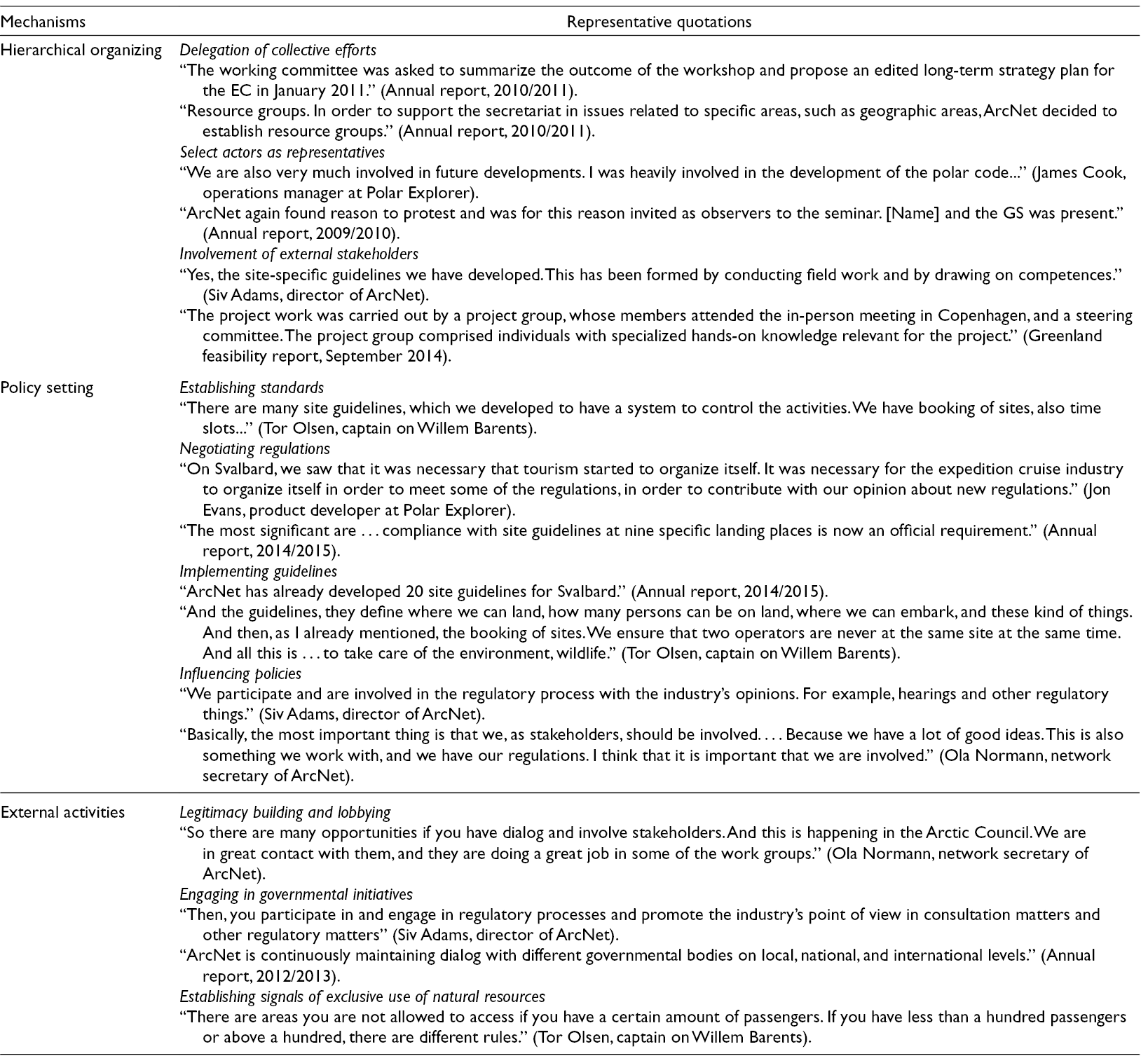
Potential degradation of the natural resources threatens the business of dependent ventures, which has in turn triggered collective action to preserve the quality of these natural resources. As Sven Larson, captain on Roald Amundsen, explained, “It is important for us to develop input and objections. We will set our own laws and regulations regarding nature and the environment. Therefore, it is important to be involved.” We refer to this approach as collective mitigation. Mitigation is defined as lessening natural resource losses “to a project through prevention measures, and/or offsetting losses through use of other structural and nonstructural measures” (Race & Christie, 1982). The aim of this collective mitigation is to reduce the overexploitation of natural resources and environmental externalities by considering the scope and location of the natural resources, the carrying capacity of the ecosystem and wildlife, and the usability of the resources. Mitigation includes action to plan for damage prevention, measure adverse negative externalities, and compensate for unavoidable damage to the environment (Race & Christie, 1982). We found that this collective action is (a) organized hierarchically and involves (b) policy setting and (c) external activities, to which we now turn (Table 3).
Collective Mitigation of the Degradation of Natural Resources.
Hierarchical organizing
The independent ventures are organized hierarchically to implement collective action to preserve the quality of the natural resources underpinning their potential opportunities. By hierarchical, we refer to an internal form of organizing that has a number of structural levels and top-down decision making (Hedlund, 1994) in which actors are assigned clear roles and responsibilities (Floyd & Wooldridge, 1999). Indeed, the focal collective has assigned actors to different roles and has established an internal structure of committees, resource groups, and representatives. Thus, a delegation of actors representing the collective directs collective action to mitigate the degradation of nature.
This formation of a collective’s hierarchy is likely neither smooth nor instantaneous. For example, although the European Union tried to bring groups together with the Arctic Footprint Project Meeting, it achieved little because “the report for this project was very low quality in regards to tourism in the Arctic” (Annual report, 2009/2010). These initial attempts led to the formation of resource groups within the collective. These resource groups focused on cruises in the Arctic and generated guidelines for acceptable actions. For example, the 2011/2012 annual report noted, “at ArcNet’s cruise conference in 2011, the site-specific guidelines were released as drafts, while ArcNet’s annual meeting approved the site guidelines as guidelines ArcNet’s members have to comply with.” The guidelines were an attempt to form a collective to “safeguard our interests, but also the interests of the wildlife, nature, and [the] environment” (Larson, captain on Roald Amundsen). In addition to ventures exploiting potential nature-based opportunities, the collective engaged other stakeholders to gather information from multiple perspectives. For example, a report by Evenset and Christensen (2011) noted an important collaboration:
The present project was initiated by [ArcNet] in collaboration with [name of research institute], and has been funded by Svalbard Environmental Protection Fund. The aim of the project has been to assess the impact of ongoing expedition cruises in Svalbard water to the Arctic environment.
Ultimately, the collective was organized hierarchically through an expert project group, a steering committee, and an advisory group, which function as representatives of the collective. Additionally, the collective can be opened up to external actors to facilitate guideline development and help assess the ecosystem’s carrying capacity for specific potential nature-based opportunities.
Policy setting
The collective also institutes policy setting to undertake action to preserve the natural resources underpinning members’ potential opportunities. These policies regulate the use of the common pool of natural resources by establishing guidelines, regulations, and acceptable practices for using these natural resources to mitigate degradation. Sven Larson, captain on Roald Amundsen, summarized these guidelines:
The guidelines tell us where we can land, how many people we can have on land, how long we can be there and such things. In addition, I mentioned the booking of sites. There are never two operators in the same location at the same time.
Taking standards one step further, the collective negotiates regulations. For example, the collective made it official that landing for visits to the West Spitsbergen National Parks must take place at one of nine specified sites (Annual report, 2014/2015). However, making the collective’s guidelines applicable to outside actors is also essential to mitigating potential degradation of nature because of externalities and the increased risk of overexploitation by nonmembers of the collective. Making the guidelines applicable to outsiders required politicians to introduce and pass resource-mitigation regulations, which was itself a challenging task. For example, Siv Adams, Director of ArcNet, explained that both the governor of Svalbard and the Greenlandic Ministry of Nature and Environment request that cruise operators report the places they have visited. Transparency regarding where the cruise operators have been acts as an enforcement mechanism because damages can be traced back to the operators.
External activities
To preserve the natural resources underpinning the ventures’ potential opportunities, the collective engages in external activities. By external activities, we refer to changing the institutions, particularly regulations and other formal rules, in which the entire industry and other businesses (associated with the set of natural resources) are embedded. Specifically, the collective works to build legitimacy through lobbying government bodies. For example, Jon Evans, product developer at Polar Explorer, explained the benefits of certain laws developed through his lobbying efforts: “They had not invited us. I wrote and I said, ‘Yeah, can we also come and share? Yes, okay.’ . . . On that occasion, I advocated [that] we must have rules and regulations here in Spitsbergen for our industry.” The collective also works with and, when necessary, adapts existing government initiatives. These external activities include expanding the regulations to other locations, as illustrated in ArcNet’s 2013/2014 annual report: “We have engaged in additional work to make our standards applicable to a wider geographical area, and we observe that this effort does not pass unnoticed.”
In sum, triggered by the threat of the degradation of the natural resources underlying their potential opportunities, independent ventures formed a collective that took actions to preserve the quality of these natural resources. Although we explain how the ventures implement collective action using three mechanisms—hierarchical organizing, policy setting, and external activities—we do not mean to imply that collective action involves a unidirectional three-step sequential approach. Rather, our findings indicate that collective action entails an iterative recursive approach. That is, while the collective’s hierarchical organizing has facilitated the development of some policy setting, policy setting has also helped the collective refine its hierarchical organizing. For example, the collective decided to expand the geographic areas covered by its guidelines, as indicated in its 2012/2013 annual report: “In order to support the secretariat in issues related to specific areas, such as geographic areas, AECO decided to establish resource groups. The following three groups have been established: Greenland resource group, Canada resource group and Russia resource group.” Similarly, while some policy setting has led to external activities, external activities have also triggered new policy setting. For example, Siv Adams, director of ArcNet explained, “And then I have not mentioned the governing authority, but we would love to work closely with the governing authority, both in the regulatory processes and in projects.” Therefore, the data indicate the dynamism of the ventures’ collective action to preserve the quality of the natural resources underlying their potential opportunities.
Collective Coping to Access the Natural Resources of Potential Opportunities
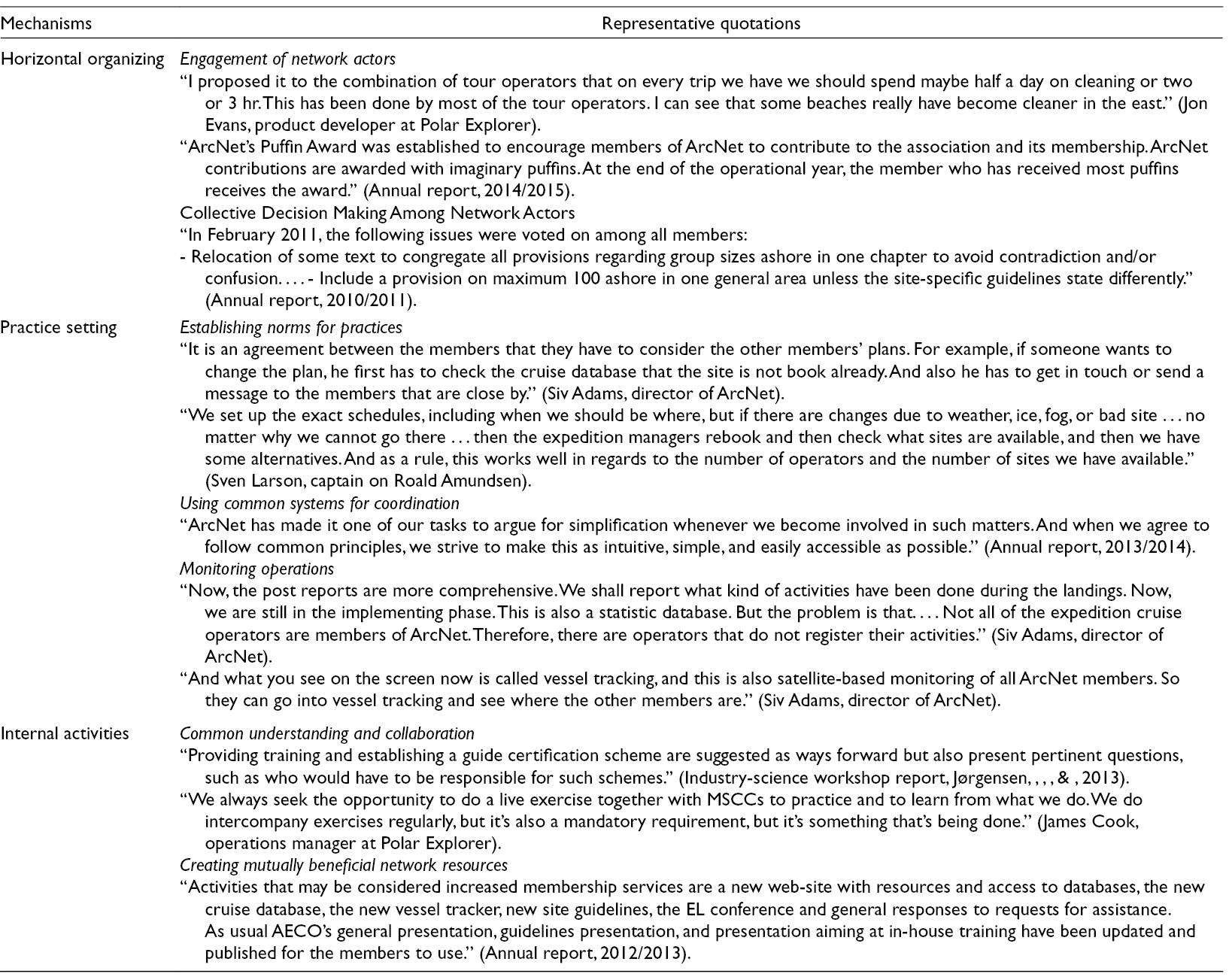
The unpredictability surrounding the potential nature-based opportunities ultimately threatens associated business, which has in turn triggered collective action to provide more certainty about access to the natural resources underpinning these opportunities. In contrast to the collective action for preserving the quality of the natural resources, the collective action for accessing the natural resources is organized horizontally (rather than hierarchically) through the implementation of practice setting (rather than policy setting) and the use of internal (rather than external) activities, which we call collective coping. By collective coping, we refer to strategies that enhance actors’ adaptation to unpredictability—that is, strategies that enable the operators to adjust quickly to changing conditions, such as changes in wildlife mobility, current weather conditions, and other longer-term climate-related conditions. We now detail each mechanism of this coping form of collective action: (a) horizontal organizing, (b) practice setting, and (c) internal activities. In Table 4, we provide a list of select quotations illustrating these coping mechanisms.
Collective Coping With Environmental Unpredictability.
Horizontal organizing
For collective action to reduce uncertainty over accessing the natural resources underlying the potential opportunities, the collective organizes horizontally. Horizontal organizing refers to a flat, decentralized power structure with a low number of organizational levels (Reagans & McEvily, 2003). For example, all members of the collective voted on proposed solutions to address issues regarding access to the natural resources. Further, this form of collective action generates real-time information, information that is immediately updated across the collective. For example, Sven Larson, captain on Roald Amundsen, described the collective’s “horizontal” communication: “We have contact through a vessel-tracking system when we rebook because of this or that reason. We send out updates to all for the other members so the other vessels that are in the area know.”
Practice setting
The collective also implements and abides by practice setting to reduce uncertainty over accessing the natural resources underlying the potential opportunities. This practice setting is social in that it consists of common norms and standards based largely on agreements between the actors (i.e., rather than through formal regulations). Tom Carlsson, CEO at Arctic Explorer, provided an example:
When we operate, we do not compete; we help each other. You basically exchange information with the captains and the expedition teams on the vessels. Through the [network]’s vessel tracker, we can see where all the other expedition vessels are, [and] we have to notify them when we are to be at the different landing sites.
This practice setting involves consideration of other members’ plans (Adams, director of ArcNet); agreements not to compete over specific natural resources (e.g., landing sites of certain destinations); and continuous communication to update plans (Larson, captain on Roald Amundsen), including changes arising from unfavorable weather conditions (Olsen, captain on Willem Barents). For example, during operations, the expeditionary cruise operators share their location information with all the other members. When the conditions surrounding a particular destination’s natural resources change, an operator in the area contacts close-by vessels so they can agree on changes in their sailing plans. Therefore, using shared information, members know where all other members are booked to go, which helps coordinate access to particular destinations’ natural resources (given the limited landing sites based on collective action to preserve the quality of the natural resources).
Therefore, the collective creates new informal institutions that define the practices and norms for operating in conjunction with the focal natural resources. On the one hand, the industry depends on safe operations to avoid damaging the sensitive natural environment. On the other hand, social contracting establishes trust and friendship to counteract the collective action dilemma and tragedy of the commons. Given that common beliefs, values, and norms linked to operational flexibility have become standard for the collective, member ventures are more capable of coping with the unpredictability of their environmental conditions.
Internal activities
To reduce uncertainty over accessing the natural resources underlying the ventures’ potential opportunities, the collective engages in internal activities—namely, activities that take place within the collective. These internal activities facilitate a common understanding to enhance coordination among members of the collective (i.e., activities critical for the group to act as a collective). For instance, Tor Olsen, captain of Willem Barents, highlighted how expedition crews engage in activities to help cope with ecological unpredictability: “And there are workshops . . . and many of the expeditions’ leaders are involved in developing the site guidelines and all other things to take care of the environment, nature, and wildlife.” Internal activities also include efforts to create resources that are mutually beneficial to the members of the collective. For example, the members implemented joint management tools, which facilitate access to the natural resources (e.g., by making it easier to approach different places), enable communication within the collective, and provide timely information about each member’s operations.
In sum and consistent with the mechanisms of collective action for preserving the quality of the natural resources, the above explanation for how collective action facilitates coping with the unpredictability of environmental conditions is neither sequential nor linear; rather, this coping process is iterative and recursive. Indeed, social arrangements can influence horizontal organizing. For example, required changes in sailing plans due to unpredictable changes in conditions depend on the collective having a flexible structure that distributes decision-making authority to the actors to change plans and notify members in the locale. Further, the collective’s internal activities can influence social arrangements. Together (iteratively and recursively), these collective actions help members of the collective cope with the unpredictability of exploiting their potential nature-based opportunities.
Collective Outcome: Sustainable Nature-Based Opportunity Exploitation
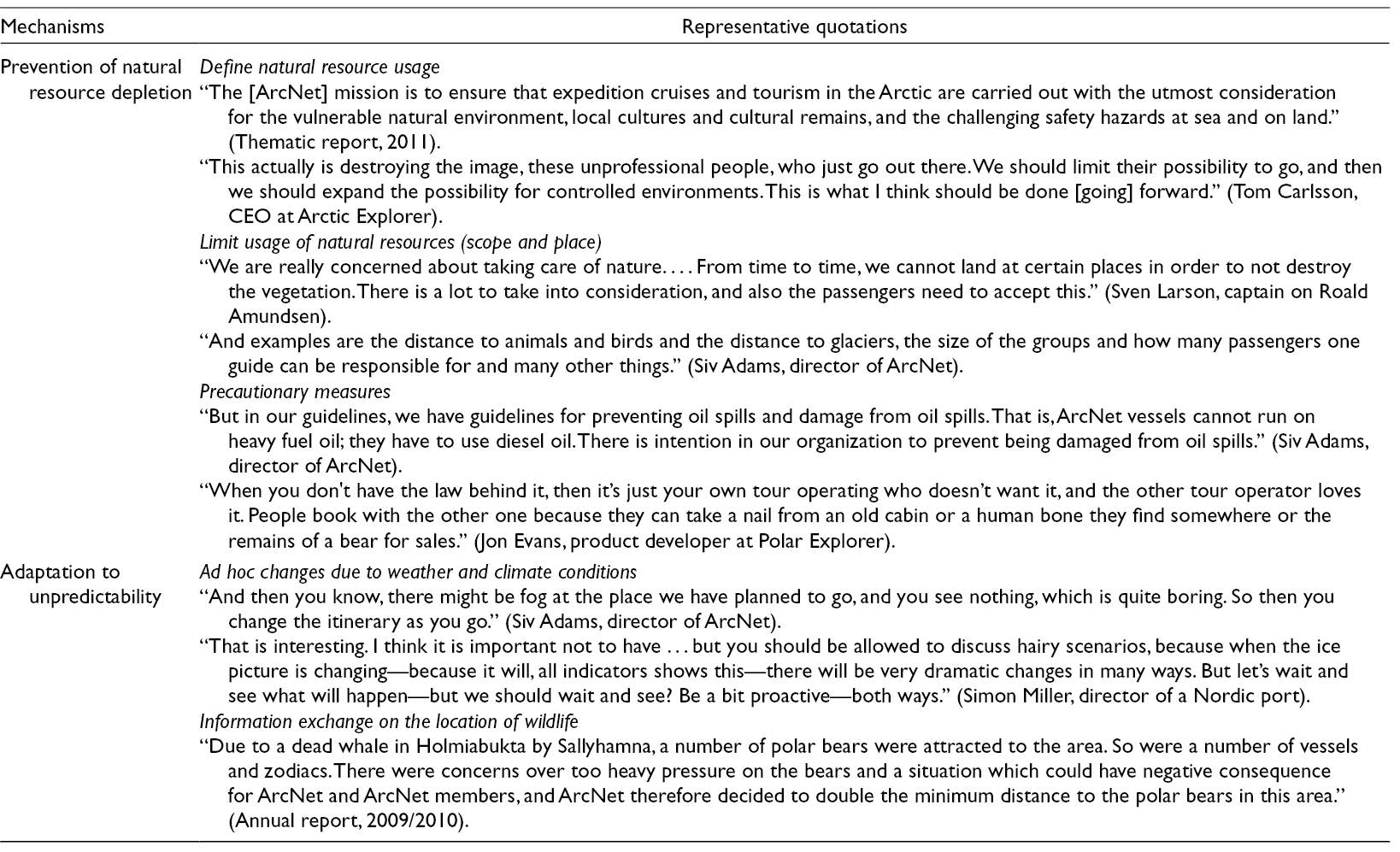
Collective mitigation and coping approaches aim to achieve the collective outcome, namely to preserve the quality of and improve access to natural resources, respectively. The increased quality and improved accessibility of natural resources in turn improves the attractiveness of associated nature-based opportunities (for representative quotes, see Table 5).
Sustainable Nature-Based Opportunity Exploitation.
Quality of potential nature-based opportunities
Our analysis provides evidence that the collective defines and limits the use of natural resources and implements precautionary measures with the aim of preserving the quality of the natural resources. For example, Tom Carlsson, CEO of Arctic Explorer, stressed the importance of defining how natural resources can be used even though tourists may not always agree with those regulations: “And then again, when we see the polar bear, it is very important that we don’t feel any obligations to go too close. Right? Because this is highly regulated. But the guests might not necessarily understand that.” Through collective mitigation, the collective’s inventory of natural resources has increased, as noted by Ola Normann (secretary of the collective): “It is getting better and better. And now, there are lots of animals in Svalbard.”
Additionally, the collective has made precautionary measures obligatory for its members, which reduces their likelihood of degrading the natural resources. An example is the ban on heavy oil fuel: “All expedition cruise ships use MDO/MGO [Marine Diesel Oil/Marine Gasoil] as fuel (heavy fuel oils are completely phased out), and this has reduced the risk of occurrence of severe long-term negative consequences [from a spill]” (Report, Evenset & Christensen, 2011). Moreover, the same report concluded that “environmental awareness in the expedition cruise industry seems to be high, and this is manifested in good practices for environmentally friendly operation.”
Access to potential nature-based opportunities
The collective action to address the unpredictable surroundings of the natural resources facilitates access to them. Examples of such action include information sharing about the location of wildlife and operational practices that allow ad hoc operational changes to accommodate certain weather or ice conditions. Indeed, several initiatives have improved the accessibility of these natural resources. For instance, Per Andersson, captain on Robert Falcon Scott, took the lead in setting up a system to collect and make hydrographic data (e.g., mud maps) available for most of the destinations (Annual report, 2014/2015). This is an example of a concrete project within the collective’s aim to create and share information to improve access to the natural resources. Similarly, the effort to map and register fauna on Svalbard has provided the operators with unique information about locations to spot wildlife or find bird colonies (Annual report, 2014/2015).
Overall, our data provide evidence that the ventures’ collective action both preserves and provides better access to the natural resources underpinning their potential opportunities, thus leading to the collective outcome of sustainable nature-based opportunity exploitation.
A Collective Model of Preserving and Accessing Nature-Based Opportunities
Our analysis reveals patterns of how ventures exploit natural resources as entrepreneurial opportunities in a way that ensures the sustainability of these nature-based opportunities. Drawing on our findings, we inductively develop a collective action model of sustaining nature-based opportunities through preserving and accessing the natural resources underpinning these potential opportunities (Figure 1).
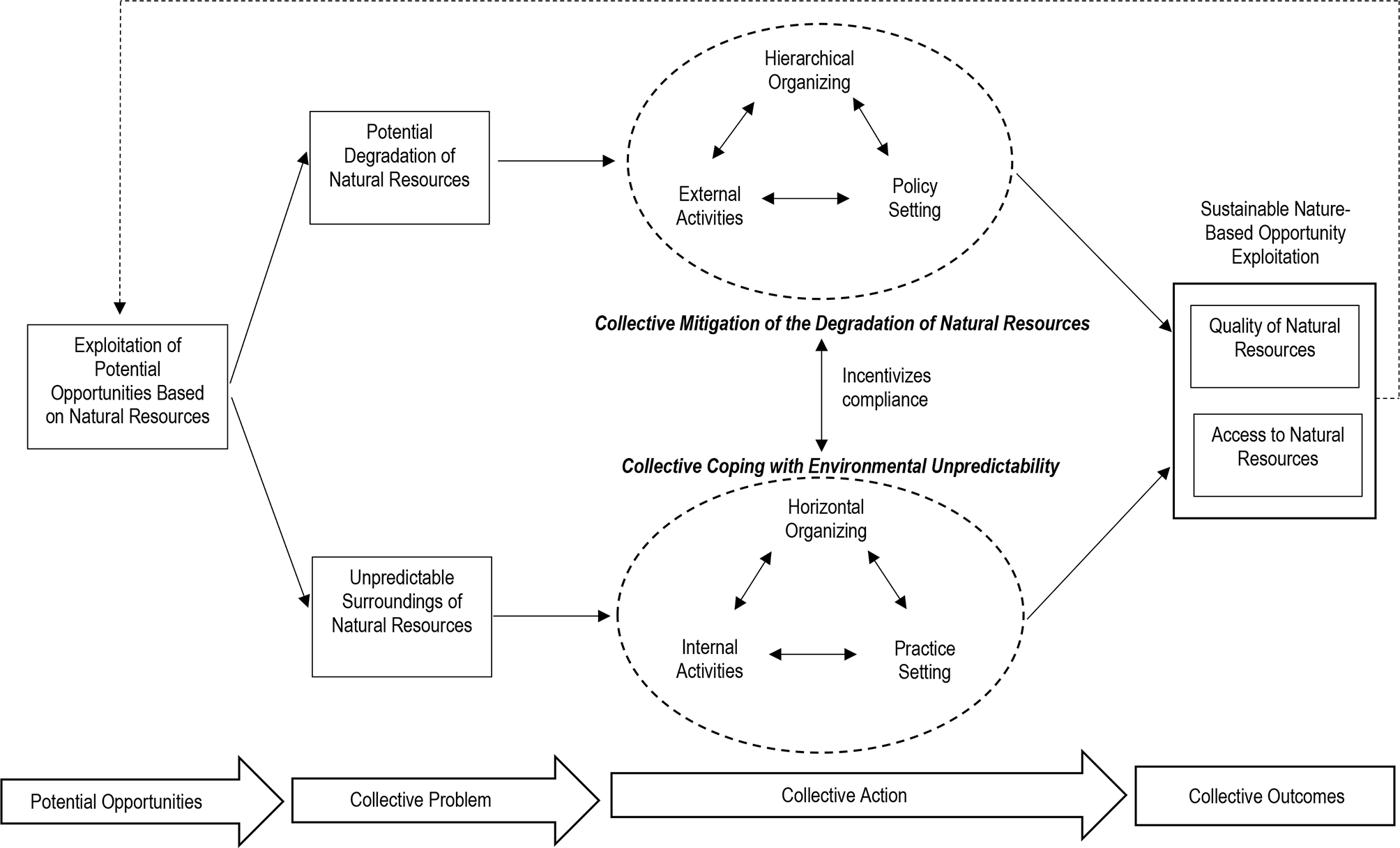
A collective model of preserving and accessing nature-based opportunities.
We start the model with potential opportunities based on natural resources. The problems for ventures exploiting potential nature-based opportunities are the risk of degrading the natural resources they depend on and the unpredictability of accessing these natural resources. Although these problems require collective action, different types of collective action address different threats to exploiting nature-based opportunities.
On the one hand, collective action to address the degradation of natural resources (i.e., collective mitigation) requires a dynamic approach of hierarchical organizing, policy setting, and external activities to preserve the quality of the natural resources. On the other hand, collective action to address the unpredictability of accessing natural resources (i.e., collective coping) involves a dynamic approach of horizontal organizing, practice setting, and internal activities. Mitigation addresses the anthropogenic ecological uncertainties underpinning the collective action problem of potential degradation of natural resources and adjusts to environmental changes in the long term. Coping, in turn, is a short-term approach used to immediately respond to unpredictability, such as unstable weather conditions and is designed to increase access to focal natural resources. Because ecological uncertainties linked to the unpredictable surroundings of natural resources (e.g., fog and storms) cannot be alleviated by changing the rules of the game, a mitigation approach will most likely be ineffective in addressing these types of uncertainties.
While distinct, these two approaches are interlinked and influence each other. In particular, undertaking actions to both increase the accessibility of natural resources and decrease the degradation of those resources results in situations that provide incentives for members of a collective to comply with both formal regulations and rules and informal practices, norms, and standards. Specifically, practices that increase the accessibility of natural resources for individual members of a collective are also designed to gather information about others’ activities. The collective can then use this information to monitor the use of the natural resources. To the extent that collective action both preserves the quality of natural resources and helps ventures to cope with the unpredictability of accessing those resources, potential nature-based opportunities remain attractive to members of the focal collective. For such a positive outcome, the collective must simultaneously engage in different forms of collective action—collective mitigation and collective coping.
Discussion
Our collective model, which explains how nature-based opportunities can be exploited in a way that sustains and accesses the underlying natural resources, extends prior knowledge on environmental entrepreneurship and reveals mechanisms underlying a win-win situation of economic and environmental gain.
First, prior research on environmental entrepreneurship has focused on the conditions of environmental market failures (Dean & McMullen, 2007; Pacheco et al., 2010). Our study provides evidence that the continued exploitation of nature-based opportunities can be threatened by ecological uncertainties, which can challenge the long-term viability of these opportunities. In this context, a collective can engage in collective environmental entrepreneurship to address externalities to maintain a pool of nature-based opportunities—that is, it can simultaneously reduce negative externalities and create positive externalities. Thus, both negative (i.e., caused by environmental market failures) and positive environmental externalities (i.e., due to the increased attractiveness of nature-based opportunities) can be sources of environmental entrepreneurship, especially in situations of direct dependence on natural resources.
Second, prior studies have shown that the exploitation of environmental opportunities, in particular those underlying an environmental market failure, can lead to a mismatch between environmental values and profit maximization (Costanza & Daly, 1992; Shepherd et al., 2013). Such a mismatch can result in inefficient resource allocation, such as the overexploitation of a natural resource (Dean & McMullen, 2007; Pacheco et al., 2010). In this study’s context of nature-based opportunities, environmental values are closely aligned with economic gains in the pursuit of potential opportunities. That is, the economic attractiveness of potential nature-based opportunities depends on the quality and accessibility of the natural resources underpinning these opportunities. Indeed, the ventures reflect pro-environmental values that are manifest in preserving natural resources through the continuous exploitation of nature-based opportunities and thus form a collective that undertakes environmental action to maintain (or increase) the attractiveness of these nature-based opportunities. Therefore, for nature-based opportunities, there is alignment between environmental values and profit maximization—consistent with a market incentive to pursue sustainable opportunities (Pacheco et al., 2010). This alignment fosters collective environmental entrepreneurship despite the inherent challenges associated with the nonexcludability and nonenforceability of natural resources, which often lead to collective inaction (Ansari et al., 2013) or the tragedy of the commons (Ostrom, 1990). Thus, the effectiveness of collective environmental entrepreneurship in the context of nature-based opportunities is a win-win situation rather than a tradeoff, that is, different from environmental entrepreneurship that involves the exploitation of opportunities underlying environmental market failures.
Third, our findings suggest that engaging in both the mitigation and coping approaches can lead to enforcement dynamics, which provide incentives for actors to comply with formal and informal institutions designed to ensure the sustainable exploitation of nature-based opportunities. Incentives to ensure compliance with policy and practices are a key means to address issues linked to the tragedy of the commons and free-riding (Delmas & Keller, 2005). Collectives can establish arrangements to eliminate the free-riding incentives arising from the nonexcludability of natural resources by implementing standards, regulations, and laws but, at the same time, are likely to face challenges linked to enforcement and monitoring to ensure compliance (Frooman, 1999; Ostrom, 1990). Our findings suggest that the combination of increased access to natural resources and the preservation of those resources provides incentives for ventures to comply with rules, regulations, standards, and guidelines. Indeed, this study’s findings indicate that collective mitigation increases the excludability of natural resources and that a collective can achieve more favorable outcomes for those exploiting potential nature-based opportunities, such as reducing the likelihood of environmental market failures and reducing the ecological uncertainties linked to unpredictable surroundings. The practices that enable increased access to the natural resources underpinning potential nature-based opportunities come with monitoring features. Therefore, misuse of the natural resources can be tracked to specific ventures, which facilitate the excludability and enforceability of these natural resources. Moreover, practices established to increase access to natural resources provide direct disadvantages for actors that are not part of the focal collective. Thus, the combination of collective mitigation and coping provides enforcement mechanisms for both members and nonmembers of the focal collective.
In natural resource economics, ecological mitigation is believed to be an important process for addressing potential environmental degradation to facilitate sustainability (Dang, Michaelowa, & Tuan, 2003; Shrivastava, 1995). However, Tashman and Rivera (2016) investigated ecological mitigation approaches used by individual firms to address ecological uncertainties but reported nonsignificant findings. The present study helps reconcile these mixed findings by providing evidence that a collective ecological mitigation approach can address the anthropogenic ecological uncertainties underpinning the collective action problem of degrading natural resources. Indeed, we find that collective action can avoid zero-sum games in situations in which firms have a collective interest, such as the continued exploitation of potential nature-based opportunities. Collective action constrains a single firm’s decisions and actions in ways that alleviate the free-riding problem and other issues related to the tragedy of the commons (Frooman, 1999). Indeed, this study’s findings indicate that through collective mitigation, the excludability of natural resources can be increased, and the collective can achieve more favorable outcomes for those exploiting potential nature-based opportunities, such as reducing the likelihood of environmental market failures and reducing the ecological uncertainties linked to the potential degradation of natural resources.
Our discussion of collective coping with environmental unpredictability extends prior research on entrepreneurship and climate change issues highlighting the importance of adaptation (Tashman & Rivera, 2016; Wejs, Harvold, Larsen, & Saglie, 2014). Ecological adaptation relates to coping in the sense that both approaches involve responding to ecological unpredictability. However, while adaptation aims to adjust to environmental changes in the long term and is achieved by, for example, increasing the inventory of complementary resources (Tashman & Rivera, 2016), coping is a short-term approach for dealing with unpredictable surroundings by increasing access to focal natural resources without necessarily increasing the inventory of complementary resources. Through a collective coping approach, collectives can address the real-time uncertainties of nature-based opportunities. Given the short-term perspective of this coping approach, collectives need to be flexible and allow for ad hoc responses to changed ecological conditions.
Although this study provides evidence that ventures engage in collective action to preserve and access natural resources to ensure the long-term viability of the nature-based opportunities, we call for more research on environmental entrepreneurship absent of or to avoid environmental market failures, such as in the context of nature-based opportunities. For the exemplar case studied in this article, the two identified collective action approaches are complementary and interdependent; therefore, future studies focusing on the relationship between the different mechanisms for preserving and accessing natural resources will likely enhance our understanding of environmental entrepreneurship. Given that natural resources are localized, the findings of this study are perhaps regionally contextualized. Thus, we need future research focusing on empirical settings outside the Arctic and on industries other than the expeditionary cruise industry to further theorize on environmental entrepreneurship in the context of the exploitation of potential nature-based opportunities.
Conclusion
In this study of expeditionary cruise operators exploiting nature-based opportunities, we identify a number of challenges to the long-term viability of these opportunities and find that a collective can overcome these challenges by preserving the quality of and increasing access to the natural resources underpinning the potential opportunities. Specifically, the current study provides new insights into how a collective can guide the sustainable exploitation of nature-based opportunities by establishing norms, practices, and regulations while simultaneously incentivizing compliance to minimize the misuse of natural resources and free-riding on others’ environmental entrepreneurship efforts.
Supplemental Material
Online Appendix - Supplemental material for We’re All in the Same Boat: A Collective Model of Preserving and Accessing Nature-Based Opportunities
Supplemental material, Online Appendix, for We’re All in the Same Boat: A Collective Model of Preserving and Accessing Nature-Based Opportunities by Karin Andrea Wigger and Dean A. Shepherd in Entrepreneurship Theory and Practice
Footnotes
Acknowledgments
We thank the three anonymous reviewers and the editorial team for their comments and expert guidance to help improve this article.
Declaration of Conflicting Interests
The author(s) declared no potential conflicts of interest with respect to the research, authorship, and/or publication of this article.
Funding
The author(s) received no financial support for the research, authorship, and/or publication of this article.

Author Biographies
References
Supplementary Material
Please find the following supplemental material available below.
For Open Access articles published under a Creative Commons License, all supplemental material carries the same license as the article it is associated with.
For non-Open Access articles published, all supplemental material carries a non-exclusive license, and permission requests for re-use of supplemental material or any part of supplemental material shall be sent directly to the copyright owner as specified in the copyright notice associated with the article.
