




Abstract
Research on entrepreneurial organizations has grown rapidly over recent decades. However, prior research has developed different ways to conceptualize entrepreneurial organizations, resulting in an ongoing discussion and a highly complex body of research, thus hindering the evolution of the literature. To improve our understanding of the structure and content of the field, we provide a synthesis of these conceptualizations and how they are reflected in the literature through a bibliometric analysis. Our findings uncover research topics and theoretical foundations of the field and how certain conversations pursue them through different conceptualizations. Building on our results, we identify future research opportunities.
Keywords
Introduction
Prior research has shown that entrepreneurship is not only critical for the growth and performance of new ventures but also for existing organizations (Covin & Miles, 1999; Rauch, Wiklund, Lumpkin, & Frese, 2009; Zahra, 1995). In particular, in times of intensified competition in globalized markets, the ability of firms to constantly renew themselves, to be innovative, and to create new business is critical to the survival and long-term success of firms (Bierwerth, Schwens, Isidor, & Kabst, 2015; Ireland, Covin, & Kuratko, 2009; Kuratko, Hornsby, & Hayton, 2015). As a result, scholars have paid increasing attention to research on entrepreneurial organizations over the past two decades (Zahra, Randerson, & Fayolle, 2013a; Corbett, Covin, O'Connor, & Tucci, 2013; Covin & Wales, 2019; Wales, 2016).
However, prior research has developed several ways to describe entrepreneurial organizations through different conceptualizations, resulting in a highly complex body of research (Zahra et al., 2013a; Covin & Lumpkin, 2011; Covin & Wales, 2019; Phan, Wright, Ucbasaran, & Tan, 2009; Sharma & Chrisman, 1999). For instance, prior research has used several different conceptualizations to capture the overall phenomenon of entrepreneurial organizations (Covin & Wales, 2019; Sharma & Chrisman, 1999; Wales, 2016), such as corporate entrepreneurship (CE; e.g., Guth & Ginsberg, 1990; Sharma & Chrisman, 1999), entrepreneurial orientation (EO; e.g., Covin & Slevin, 1989; Lumpkin & Dess, 1996), and strategic entrepreneurship (SE; e.g., Hitt, Ireland, Camp, & Sexton, 2001). Moreover, specific research streams have emerged that focus on certain elements of entrepreneurial organizations, such as corporate venturing (CV) and strategic renewal (SR; Covin & Wales, 2019; Sharma & Chrisman, 1999). As a result, the characterization of entrepreneurial organizations and how these conceptualizations relate to each other is subject to an ongoing discussion in the literature (Zahra et al., 2013a; Covin & Wales, 2019). This complexity makes it difficult for scholars to understand the structure and content of the literature and thus to assess the field’s state of theoretical and empirical knowledge on entrepreneurial organizations (Covin & Lumpkin, 2011; Phan et al., 2009). Moreover, it impedes scholars to compare findings across studies and to build on each other’s work (Kuratko et al., 2015; Sharma & Chrisman, 1999), thus hindering knowledge accumulation and scholarly development in the field (Zahra, Randerson, & Fayolle, 2013b). Prior scholars have thus emphasized that “a need exists to explore different conceptualizations of firm-level entrepreneurship” (Ireland et al., 2009, p. 20).
Our aim is thus to improve our understanding of this complex field by (a) providing an overview and a synthesis of the different ways through which prior research has conceptualized entrepreneurial organizations, (b) identifying which research topics and theoretical lenses exist in the literature, (c) analyzing how scientific communities pursue them through certain conceptualizations, and (d) drawing on these findings to develop potential future research opportunities to advance the literature on entrepreneurial organizations.
To achieve our aims, we use bibliometric analysis, which is an objective, empirical method that allows researchers to uncover the structure and the development of the theoretical foundations of a scientific field (Garfield & Welljams-Dorof, 1992; Gartner, Davidsson, & Zahra, 2006; Zupic & Čater, 2015). Specifically, we use co-citation analysis, which uses co-citation counts (the frequency with which two articles are cited together by another article) to identify connections between research articles (Small, 1973; White & Griffith, 1981; Zupic & Čater, 2015). Drawing on the assumption that the more research articles are cited together, the more they are related to each other (Zupic & Čater, 2015), co-citation analysis allows us to identify research themes, groups of authors, and communities in a scientific field. Scholars from various disciplines have widely applied this systematic, quantitative method to investigate the scientific structure of a scholarly field (e.g., Gartner et al., 2006; Nerur, Rasheed, & Natarajan, 2008; Schildt, Zahra, & Sillanpää, 2006; Tsai & Wu, 2010). We thus use co-citation analysis based on 2,895 research articles published between 1937 and 2016, including 162,061 references to previous scientific articles, to identify core research topics and communities in the field.
Our study contributes to the literature on entrepreneurial organizations in the following ways: First, our study helps to improve our understanding of this complex topic and thus to add to the ongoing discussion (e.g., Zahra et al., 2013a) by providing a synthesis of the different ways through which entrepreneurial organizations have been conceptualized and how this is reflected in the literature from a bibliometric perspective. In particular, our analysis provides novel insights into the nature and content of core topics in the field and how they are addressed by certain conceptualizations. Moreover, our analysis of the scientific disciplines allows us to identify the communities that discuss these research topics. These findings extend prior research as they help (future) scholars to identify certain conversations in the field of entrepreneurial organizations, to more easily assess the current state of the literature, and thus to more specifically contribute to the literature. While prior reviews have been qualitative in nature (e.g., Corbett et al., 2013) or focused on specific conceptualizations, such as EO (e.g., Rauch et al., 2009), our study provides a novel systematic, quantitative, and holistic view of the field by including several conceptualizations of entrepreneurial organizations, thus offering a more comprehensive understanding of the literature.
Second, the results of our bibliometric analysis serve as a foundation to raise potential questions and to develop future research directions to advance the literature of entrepreneurial organizations. In particular, we critically analyze the identified research themes and conversations as well as their connections to develop a future research agenda to move the field forward. In addition, prior scholars have criticized that research on the topic “lacks strong grounding in an academically sanctioned theory or theoretical perspective” (Covin & Lumpkin, 2011, p. 860). The results of our study provide novel insights into the theoretical foundations of research in the field, which enables us to identify the progress made by scholars and to develop avenues for future research.
How Are Entrepreneurial Organizations Conceptualized?
Prior research has developed several different ways to conceptualize the overall phenomenon of entrepreneurial organizations, such as EO, CE, and SE, as well as several specific conversations to address certain elements of entrepreneurial organizations, such as SR and CV (Table 1 provides an overview of the major conceptualizations). To increase our understanding of this complex field, we discuss the similarities and differences of these conceptualizations next.
Overview of Conceptualizations in the Field of Entrepreneurial Organizations.
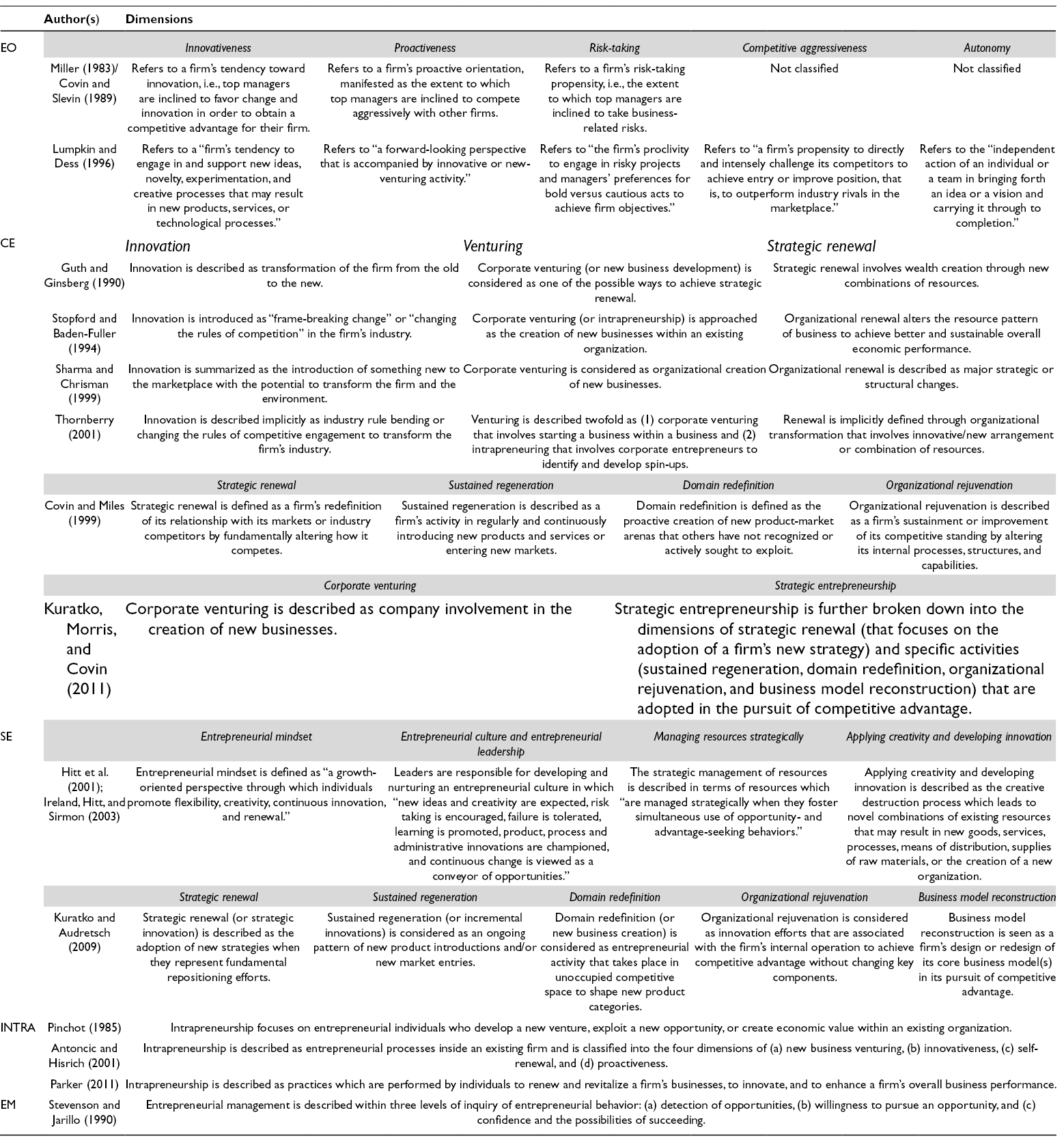
EO refers to “the attribute of an organization that exists to the degree to which that organization supports and exhibits a sustained pattern of entrepreneurial behavior reflecting incidents of proactive new entry” (Covin & Wales, 2019, p. 5). In particular, EO represents an overarching strategic posture that is reflected in recurring entrepreneurial behaviors in firms (Covin & Wales, 2019; Wales, 2016). While prior research has developed several different dimensions of EO (for a review, see e.g., Covin & Lumpkin, 2011; Covin & Wales, 2019, or Wales, 2016), the literature has established the following two dominant conceptualizations (Table 1): the unidimensional view, which comprises the three dimensions of innovativeness, risk-taking, and proactiveness, as suggested by Miller (1983) and Covin and Slevin (1989), and the multidimensional view of EO proposed by Lumpkin and Dess (1996), which adds competitive aggressiveness and autonomy to the EO dimensions, resulting in five independent dimensions. According to Miller (1983) and Covin and Slevin (1989), EO is reflected in the shared variance of the behavioral manifestations of innovativeness, risk-taking, and pro-activeness, whereas Lumpkin and Dess (1996) view EO as a profile formed by the five dimensions (Covin & Lumpkin, 2011). The two conceptualizations thus provide unique insights into entrepreneurial firms (Covin & Lumpkin, 2011; Wales, 2016). A related but rather unpopular conceptualization refers to entrepreneurial management (EM) that has been used to describe the opportunity-seeking of entrepreneurial firms (Stevenson & Jarillo, 1990).
The literature is characterized by an ongoing discussion of how EO and CE, which describes entrepreneurial behaviors in established firms (Miller, 1983), relate to each other (e.g., Covin & Lumpkin, 2011; Covin & Wales, 2019). In particular, a widely adopted definition of CE refers to “the process whereby an individual or a group of individuals, in association with an existing organization, create a new organization or instigate renewal or innovation within that organization” (Sharma & Chrisman, 1999, p. 18). While several different conceptualizations of CE exist (Table 1), most of them conceptualize CE through corporate venturing, strategic renewal, and innovation (e.g., Guth & Ginsberg, 1990; Sharma & Chrisman, 1999). Although some conceptualizations use different labels, such as sustained regeneration and domain redefinition (Covin & Miles, 1999), they refer to innovation in entrepreneurial organizations and thus look at a similar phenomenon but in greater detail.
Recent research has emphasized that EO and CE are distinct but tightly related conceptualizations (Covin & Wales, 2019). In particular, we follow the view suggested by Covin and Wales (2019) that EO refers to an attribute of entrepreneurial organizations, whereas CE reflects activities within the organization. In particular, when “entrepreneurial activities within organizations are sustained to the extent that entrepreneurship is defensibly conceived of as an attribute of organizations, EO can be said to exist” (Covin & Wales, 2019, p. 7). In this case, Covin and Wales (2019) further point out that the distinction between CE and EO diminishes when entrepreneurial activities occur with great regularity. Conceptually, innovation and corporate venturing are separated in CE, whereas the view of Covin and Slevin (1989) on EO considers venturing as an indicator of innovation (Wales, Wiklund, & McKelvie, 2015; Covin & Wales, 2019). Alternatively, the conceptualization by Lumpkin and Dess (1996) separates venturing from EO and views venturing as an outcome of EO (Wales et al., 2015). In contrast to CE, neither of the dominant EO conceptualizations specifically capture the dimension of strategic renewal.
Another holistic way to conceptualize entrepreneurial organizations refers to SE, which reflects “entrepreneurial action with a strategic perspective” (Hitt et al., 2001, p. 481). Specifically, SE refers to firms that simultaneously engage in both advantage- and opportunity-seeking behaviors (Hitt et al., 2001; Ireland et al., 2003). While advantage-seeking behaviors refer to the strategic perspective that aims at exploiting the firm’s current competitive position, opportunity-seeking behaviors refer to the entrepreneurial perspective focus on identifying new opportunities to ensure the future business of a firm (Hitt et al., 2001; Withers, Ireland, Miller, Harrison, & Boss, 2018). Although prior research has developed several conceptualizations of SE (see e.g., Covin & Wales, 2019), a well-adopted view by Hitt et al. (2001) considers SE through four different dimensions that focus on certain attributes of SE firms (e.g., entrepreneurial culture; Table 1), whereas another conceptualization by Kuratko and Audretsch (2009) focuses on certain activities that comprise SE firms, such as sustained regeneration. In comparison, the opportunity-seeking perspective is also reflected by CE and EO, whereas the advantage-seeking behaviors are not directly captured by the other broad conceptualizations. In summary, innovation seems to be strongly related to the core of all holistic approaches to describe entrepreneurial organizations as it is reflected in all of the three major conceptualizations. Consequently, innovation seems to reflect an essential attribute of a firm to be considered as entrepreneurial (Covin & Wales, 2019).
Besides these holistic approaches, prior research has analyzed specific elements of entrepreneurial organizations, such as CV, which particularly focuses on the creation of new organizations within existing firms (Sharma & Chrisman, 1999) to exploit business opportunities and to build new capabilities (Narayanan, Yang, & Zahra, 2009). Moreover, several researchers focus on SR to analyze entrepreneurial efforts that lead to changes in a firm’s strategy and resources (Sharma & Chrisman, 1999). In addition, scholars have used intrapreneurship (INTRA), which focuses on individuals in established organizations (intrapreneurs) who take a certain position as an innovation champion to create new businesses within their firms (Covin & Miles, 1999; Pinchot, 1985).
Methodology
Database
To identify research articles in the field of entrepreneurial organizations that have been published in peer-reviewed scientific journals, we conducted a comprehensive keyword search in electronic databases, such as Business Source Premier, Thomson Reuters Web of Science (WOS), and Google Scholar. We searched for articles using the key conceptualizations of entrepreneurial organizations (e.g., CE, EO) or that refer to the dimensions of the described conceptualizations in Table 1 (e.g., SR, CV). To provide a comprehensive database, we included all articles written in English and that use a conceptualization or dimension conforming to our Table 1.
To achieve accurate results, we build our final database after a validation of the records. Therefore, we cleaned the data in four steps. First, we manually reviewed the title, abstract, and keywords of each article to verify the accuracy of the keyword search. In this step, we deleted articles that did not conform to the previously defined criteria as well as duplicate articles, editorials without thematic content, and book reviews since these works do not contain explanatory power relevant for this study. Second, author names were aggregated to one spelling if they were used inconsistently (Zupic & Čater, 2015). Third, journal names were merged to clean inconsistencies in the reference information due to diversely used abbreviations. Fourth, we followed a standard procedure in cleaning the reference data by merging references to different editions of the same work (Grégoire, Noël, Déry, & Béchard, 2006). This procedure yielded 2,895 articles from 673 different journals, published between 1937 and 2016, containing 162,061 references to 67,071 publications.
Analyses
To analyze the structure and the theoretical foundations of the field, we conducted a co-citation analysis, which has been widely applied by prior research in various scientific fields, such as entrepreneurship (e.g., Grégoire et al., 2006; Schildt et al., 2006), innovation (e.g., Randhawa, Wilden, & Hohberger, 2016), and strategic management (e.g., Nerur et al., 2008). This method builds on the assumption that citations within research articles reflect connections among these articles, authors, and communities (Zupic & Čater, 2015). In particular, each time a pair of articles is cited together, a knowledge exchange is assumed to occur, and a tie in a network emerges between these articles (Lee, Su, & Chan, 2010). Each tie represents the frequency with which the specific documents are cited together (Small, 1973). This widely used method (e.g., Gartner et al., 2006; Schildt & Mattsson, 2006) thus allows researchers to map out the relationships between key concepts, methods, or ideas in the field through an examination of the co-citation pattern (Small, 1973; Gartner et al., 2006; Zupic & Čater, 2015).
The co-citation analysis is based on the relationships between the 67,071 referenced publications in our database. To provide a comprehensive overview of the relationships between the key citations in the literature, it is necessary to focus the co-citation analysis on those publications that have been cited to a minimum number of times (in the following referred to as threshold; Small, 1973; Grégoire et al., 2006). In line with prior studies, we primarily focus on the most cited publications and exclude less cited documents, which carry less information relevant for the co-citation analysis (Schildt et al., 2006; Zupic & Čater, 2015). The definition of an appropriate threshold for the required number of citations that a publication must receive (to be considered in the co-citation analysis) is a part of bibliometric analysis that is described to be “definitely more art than science” (Zupic & Čater, 2015, p. 441). While the network gains clarity through a high threshold as the number of references included is reduced, a high threshold also limits the results by excluding more recent or less central works in the network that might be nevertheless important (Schildt & Mattsson, 2006). We thus tested different threshold levels until we arrived at a level where the number of citing documents remained constant (Schildt et al., 2006) and the map of the co-citation network was at a sufficient level of granularity to be visualized (Raghuram, Tuertscher, & Garud, 2010). We followed comparable studies (e.g., Schildt et al., 2006; Raghuram et al., 2010; Zupic & Čater, 2015) and started with a common threshold of 2% of the database. This means that references had to be cited at least 60 times by the overall database of 2,895 articles to be included in the co-citation network. After some testing, we were able to reduce the minimum requirement for inclusion. 1
To identify research clusters within the co-citation network, which represent a specific research topic or theoretical approach (Schildt & Mattsson, 2006), we used the bibliometric software tool Sitkis (Schildt, 2002). Therefore, a dense network sub-grouping algorithm is used, which is an iterative approach that rearranges the documents from the co-citation network, placing the most similar documents closest to each other until the algorithm’s iteration yields a number of internally homogenous groups and a number of disconnected documents (Schildt et al., 2006). The similarity between two documents can be defined in multiple ways. Simple measures, such as co-citation counts, disregard proximity relations between more rarely cited references (Gmür, 2003). To overcome this shortcoming, we applied the Jaccard index as a normalized similarity measure that focuses on strong links in segments of the database and generates a more accurate structure than those measures based on raw co-citation counts (Boyack & Klavans, 2010; Leydesdorff, 2008). Previous studies have used a variety of cutoff values ranging from 0.1 (Raghuram et al., 2010) to 0.5 (Lee et al., 2010). We, thus, tested different cutoff values for generating a set of clusters. We finally found a Jaccard index of 0.225 to be a reasonable value for our purpose of visualizing a clear structure of the co-citation networks. All clustered documents thus have on average at least 22.5% shared sources of citations with the other documents in their group (e.g., Schildt & Mattsson, 2006). To illustrate the co-citation network, we used the network analysis software UCINET (Borgatti, Everett, & Freeman, 2002). To draw the underlying structure of the maps, we used the network visualization software NetDraw (Borgatti, 2002). To make the network structures clearly visible, only ties of a co-citation strength of 10% or greater are displayed.
Results
Citation and Publication Analysis
Table 2 shows the most cited journals in the field of entrepreneurial organizations. In particular, the most cited journal is the Strategic Management Journal (SMJ), followed by two entrepreneurship journals: Journal of Business Venturing (JBV) and Entrepreneurship Theory & Practice (ET&P). Overall, the top 10 of the list is dominated by management and entrepreneurship journals, indicating that this research is in the focus of both strategy and entrepreneurship scholars. This finding is in line with the development of research on entrepreneurial organizations at the intersection of strategic management and entrepreneurship (Zahra et al., 2013a). Our results further show that other highly referenced journals in this area cover topics such as marketing, finance, international business, innovation, and psychology, which emphasizes the disciplinary breadth of the field (Zupic & Čater, 2015). Moreover, a look at the journal outlets that publish research on this topic reveals a similar pattern, as Table 3 shows that articles have mainly been published in entrepreneurship (e.g., ET& P) and management (e.g., SMJ) journals (top 10 outlets). Although marketing or psychology journals are absent among the top 20 outlets, several journals from other fields publish research on entrepreneurial organizations, such as innovation (JPIM) or international business (IEMJ), which indicates that this is an interdisciplinary research area.
Most Cited Journals in the Field of Entrepreneurial Organizations.
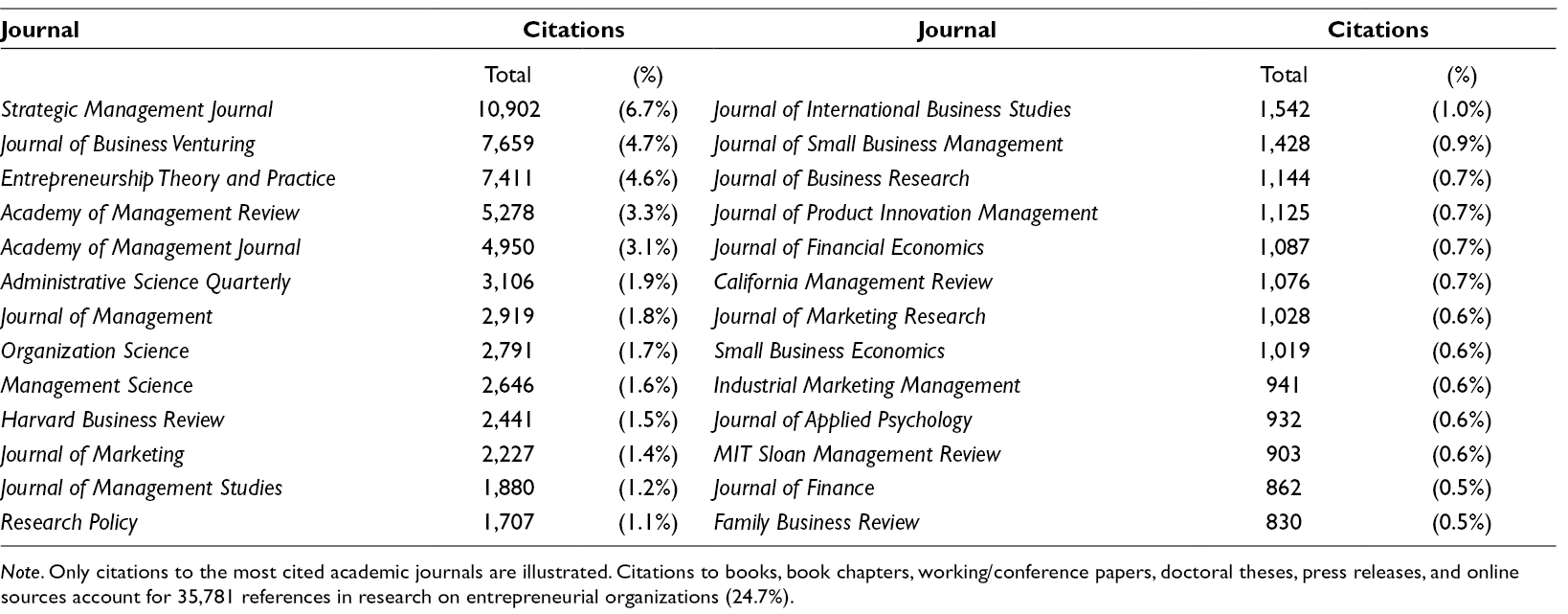
Note. Only citations to the most cited academic journals are illustrated. Citations to books, book chapters, working/conference papers, doctoral theses, press releases, and online sources account for 35,781 references in research on entrepreneurial organizations (24.7%).
Overview of the Most Publishing Journals and Conceptualizations.
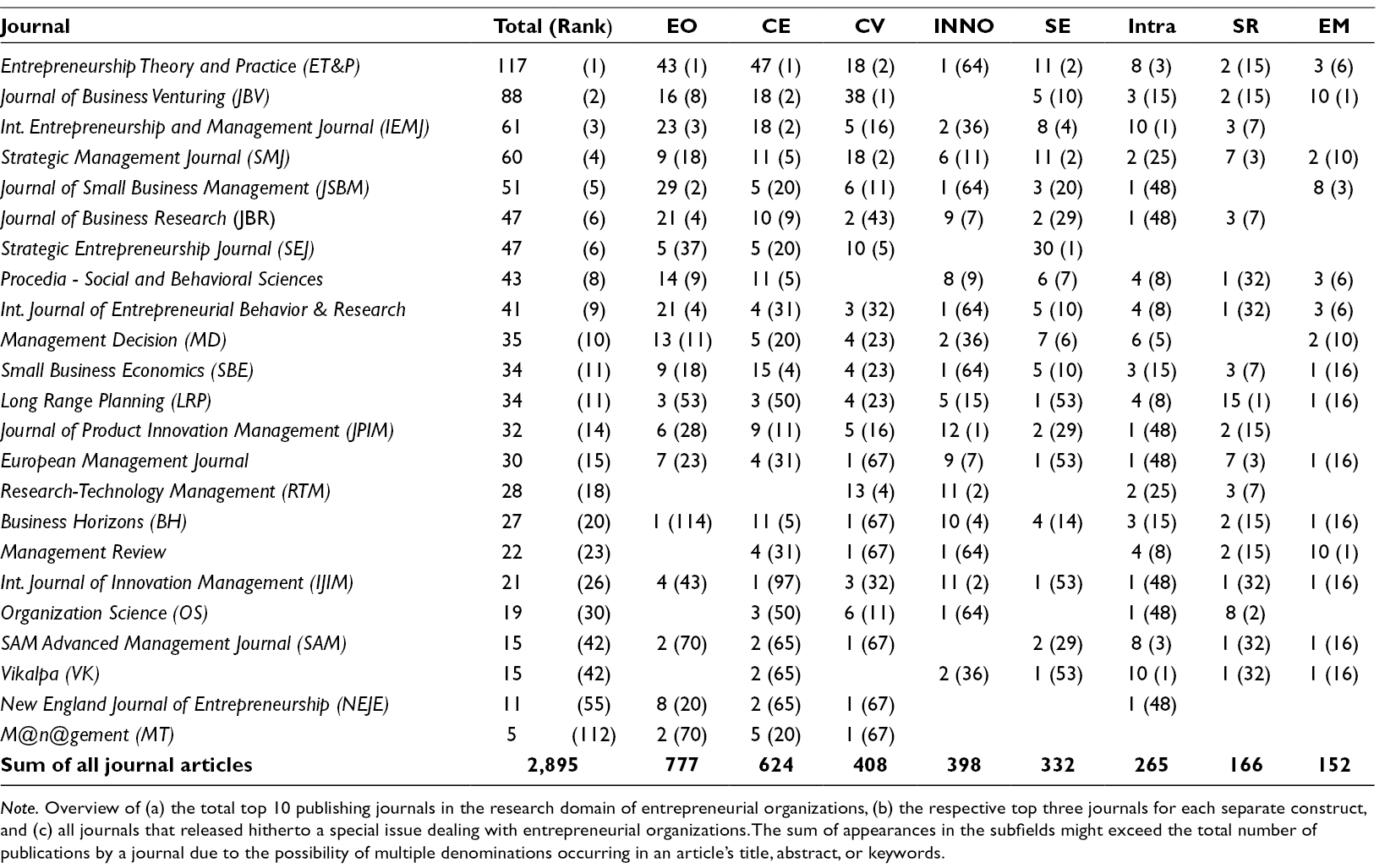
Note. Overview of (a) the total top 10 publishing journals in the research domain of entrepreneurial organizations, (b) the respective top three journals for each separate construct, and (c) all journals that released hitherto a special issue dealing with entrepreneurial organizations. The sum of appearances in the subfields might exceed the total number of publications by a journal due to the possibility of multiple denominations occurring in an article’s title, abstract, or keywords.
Furthermore, Table 4 shows the most cited articles in the field, which represent the most used and influential research in the field. The seminal study by Lumpkin and Dess (1996) on EO is the most cited article, followed by other foundational work in the field, such as that by Miller (1983) or Covin and Slevin (1989), Covin and Slevin (1991). Other influential articles focus on the performance impact of entrepreneurial organizations (e.g., Lumpkin & Dess, 2001; Zahra, 1991), contextual influences (Zahra & Covin, 1995), and the organizational requirements for entrepreneurship (e.g., Ireland et al., 2009). Most of these articles are grounded in the field of entrepreneurial organizations—with a few exceptions, such as Barney's (1991) work on firm resources, which is traditionally grounded in strategic management. Most of the authors are specifically associated with the field of entrepreneurial organizations and the articles particularly cover topics in that area, indicating that scholars build their work on prior entrepreneurship research. However, based on the journal outlets of these articles, the influence of strategic management becomes apparent as most of the articles are published in either entrepreneurship or strategic management journals. In addition, most of the articles are published in leading management or entrepreneurship journals, which is an important indicator of the quality and legitimacy of a disciplinary field (Busenitz, Plummer, Klotz, Shahzad, & Rhoads, 2014). To better understand the scientific structure of the field, we analyze the co-citations of these articles next.
Most Cited Articles in the Field of Entrepreneurial Organizations.

Note. The 15 most cited articles in total and per year (based on the average number of citations per year) are selected.
Co-Citation Analysis
To visualize the structure and the theoretical foundations of the field, we mapped a co-citation network that presents an overview of the research clusters and their interrelationships in the literature (Figure 1). In addition, in the Appendix, we present the co-citation networks of the authors represented in the six most cited clusters. Moreover, we examined the development of the scientific structure over time through the following three chronologically separated stages (also presented in the Appendix): 1937–1992, 1937–2000, and 1937–2008. The distinct research clusters are presented through circles, and the size of each cluster represents the number of citations within the database. The shades of the circles indicate the point in time when these citations occurred. The co-citation strength between the clusters is represented by ties and the thickness of a line serves as an indicator for the co-citation strength among research clusters. Table 5 provides a short description of the 28 identified research clusters identified in Figure 1. To provide a more comprehensive and helpful description of the research streams within the field, we grouped the 28 identified clusters into four larger research areas based on their theoretical perspectives and research foci, 2

Co-citation network 1937–2016.
Cluster Description of the Co-Citation Network 1937–2016.

I. Organizational knowledge and learning capabilities
This area includes clusters that take an internal view on entrepreneurial organizations and focus on resources and capabilities for knowledge building and opportunity identification and exploitation. In particular, they build on knowledge theories, including the knowledge-based view (KBV) of the firm (14) and absorptive capacity (11) as well as on core strategic management theoretical perspectives, such as the resource-based view (RBV) of the firm (5) and the concept of dynamic capabilities (8). Figure 1 shows that the clusters of the KBV, absorptive capacity, dynamic capabilities, and the RBV are strongly connected which each other, indicating that they are often cited together by articles in the field. In particular, the RBV is central and has linkages to the overall intellectual base, especially to research on the performance effects of EO (cluster 1 in research area II), which indicates that scholars have heavily drawn on this theoretical perspective in their studies. Moreover, the theoretical domain of social capital (23), which views relationships and networks as a core source of knowledge and information, is often cited together with knowledge-based theories but appears to be distant and less connected to other clusters within the field, indicating that this perspective is not well-integrated. Similarly, research on the role of technological change (22) on organizational knowledge and competencies is distant and weakly connected to other clusters within this group and the overall literature. This suggests that authors have drawn on this perspective only to a minor extent. Furthermore, research on the behavioral theory of the firm (28), which focuses on a firm’s decision-making and problem-solving abilities as well as work on learning organizations (26), is unconnected within this group and the overall literature. This finding indicates that only a small number of authors have used this perspective in a detached conversation.
II. Internal/external determinants and firm performance
This research area covers clusters that focus on the determinants and performance effects of entrepreneurial organizations (1, 2, 3, 17, 19, 20) as well as on the conceptualization itself (4, 13). Predominantly drawing on the RBV, the major cluster (1) in this group analyzes the influence of EO on performance. These studies further draw on contingency theory to examine the role of several environmental conditions, such as environmental dynamism or industry growth, on the effect EO has on firm performance. Cluster 1 is closely connected to the other major cluster (2), which includes studies that examine how particularly external environmental determinants influence corporate entrepreneurship and performance. As Figure 1 shows, both of these clusters represent the largest clusters and thus the areas with the highest number of citations, reflecting their importance in the literature. This finding suggests that the relationship between entrepreneurial organizations, environmental factors, and firm performance has received the greatest attention from scholars in the field as these variables are often used together. These two major research clusters are also strongly connected with the conceptualization of CE (4), whereas more recent approaches to refine EO (13) are in an emerging stage and thus far weakly connected to this major stream of research.
Moreover, research on the internal determinants of entrepreneurial organizations (3), such as top management support and an entrepreneurial culture, is closely connected to and often used together with work on the performance and environmental effects (1, 2). Cluster 3 is also central and closely connected with the more recent work on entrepreneurial strategy (17) that provides a framework integrating not only internal (e.g., individual entrepreneurial cognitions) but also external (e.g., competitive intensity) determinants as well as outcomes of entrepreneurial firms. Specifically, our results in Figure 1 show that this research has recently evolved and is still relatively distant, indicating that scholars have (just) started to examine this topic.
In addition, our results identify another cluster (19) that focuses on the influence of environments on entrepreneurial organizations but with a particular emphasis on the internal structure of firms. However, this cluster (19) is disconnected from the other clusters in this group (and particularly from 3), which indicates that research on this topic has evolved in a separate discussion. Furthermore, our results show that research on entrepreneurship in family firms (20) is also in an emerging stage (it appears first in the map of 2016) and is thus far completely disconnected from this group as well as the entire body of literature. This finding indicates that research on this topic is developing separately and thus far not well integrated into the literature.
III. Corporate venturing
Clusters in this area particularly focus on the role of corporate venturing as a form of established firms to promote and implement entrepreneurial behaviors (15, 21, 25). Although research on corporate venturing has a long history in the literature, this group of clusters is distant from the core research area II as well as from the entire body of literature, as shown in Figure 1. This finding indicates that the field has developed a rather isolated, specific conversation on corporate venturing. Moreover, Figure 1 shows that the research on corporate venturing is characterized by fewer citations compared to the other clusters in the field, indicating that researchers have thus far paid less attention to this topic. In particular, Cluster 21, which focuses on the management of corporate ventures to increase entrepreneurial behaviors in firms, is often used together with research on the structure of venturing programs (25), which examines the success factors of these programs. By contrast, the research on corporate venture capital (CVC) investments (15), which focuses on equity investments of external corporate ventures, is only weakly connected with work on the structure of corporate venturing programs (25) and even unconnected with the cluster on the management of new ventures (21). This finding indicates that the work on CVC is not well integrated into the broader corporate venturing literature and that scholars rarely discuss and build on each other. Moreover, the research on CVC is weakly connected to the work on absorptive capacity, indicating that articles on that topic have taken an absorptive capacity perspective to examine the exploitation of knowledge through venture investments.
IV. Market-based perspective
This group of clusters (9, 16, 18, 24, 27) takes a market-based perspective on entrepreneurial firms. The major clusters in this group (9, 24, 27) focus on the role of several strategic orientations, such as market orientation, learning orientation, and EO, and how they relate to each other in order to stimulate innovation or performance. These studies emphasize that a market-based perspective is important to learn about a firm’s customers and competitors in order to identify new opportunities and to ensure long-term performance. Moreover, these studies also clearly point out the strengths and differences of these strategic orientations and particularly their complementary effects. As shown in Figure 1, these clusters are strongly connected to each other, indicating that they are often cited together by articles in the field. Furthermore, Cluster 18 in this group examines the role of international markets and how entrepreneurial firms can enter foreign markets. As shown in Figure 1, research on international entrepreneurship is in an emerging stage and only weakly connected to this group as well as to the entire body of literature. This finding indicates that articles have just started to examine this topic in a rather isolated discussion.
Scientific Disciplines in the Field of Entrepreneurial Organizations
Historically, research on entrepreneurial organizations has particularly evolved at the intersection of strategic management and entrepreneurship (Zahra et al., 2013a; Hitt et al., 2001). To better understand the boundaries of this research field, an important question that arises is thus which scientific disciplines investigate and discuss topics on entrepreneurial organizations. To provide an overview of the disciplines, we used the journal citations within our database and classified them to a certain discipline based on the classification of the Chartered Association of Business Schools (2018). Our results show the following distribution of disciplines based on citations made within our database: entrepreneurship (37.4%), strategic management (24.3%), innovation and technology management (12.9%), psychology and human resources (5.4%), marketing (4.8%), international business (4.2%), organizational studies (3.3%), and finance and accounting (2.1%). Although our results show that these topics are primarily discussed by entrepreneurship and strategic management scholars, several other disciplines examine these topics as well, which supports the idea that this is a field-bridging research area.
Given this heterogeneous interest of scholarly disciplines in field, the question arises whether their attention differs among the identified research areas. In the next step, we thus analyzed the proportion of citations made by the different disciplines within each cluster, which is shown in Figure 2. While entrepreneurship is the most dominant discipline in nearly all of the identified clusters, several topics are characterized by an equal interest of strategy and entrepreneurship scholars, such as research on dynamic capabilities (8) and organizational structuring in uncertain environments (19), or even slightly dominated by strategy scholars, such as work on the behavioral theory of the firm (28). Overall, our results show that entrepreneurship followed by strategic management are the most dominant disciplines, indicating that the main conversation of topics on entrepreneurial organizations takes place in entrepreneurship followed by strategic management.
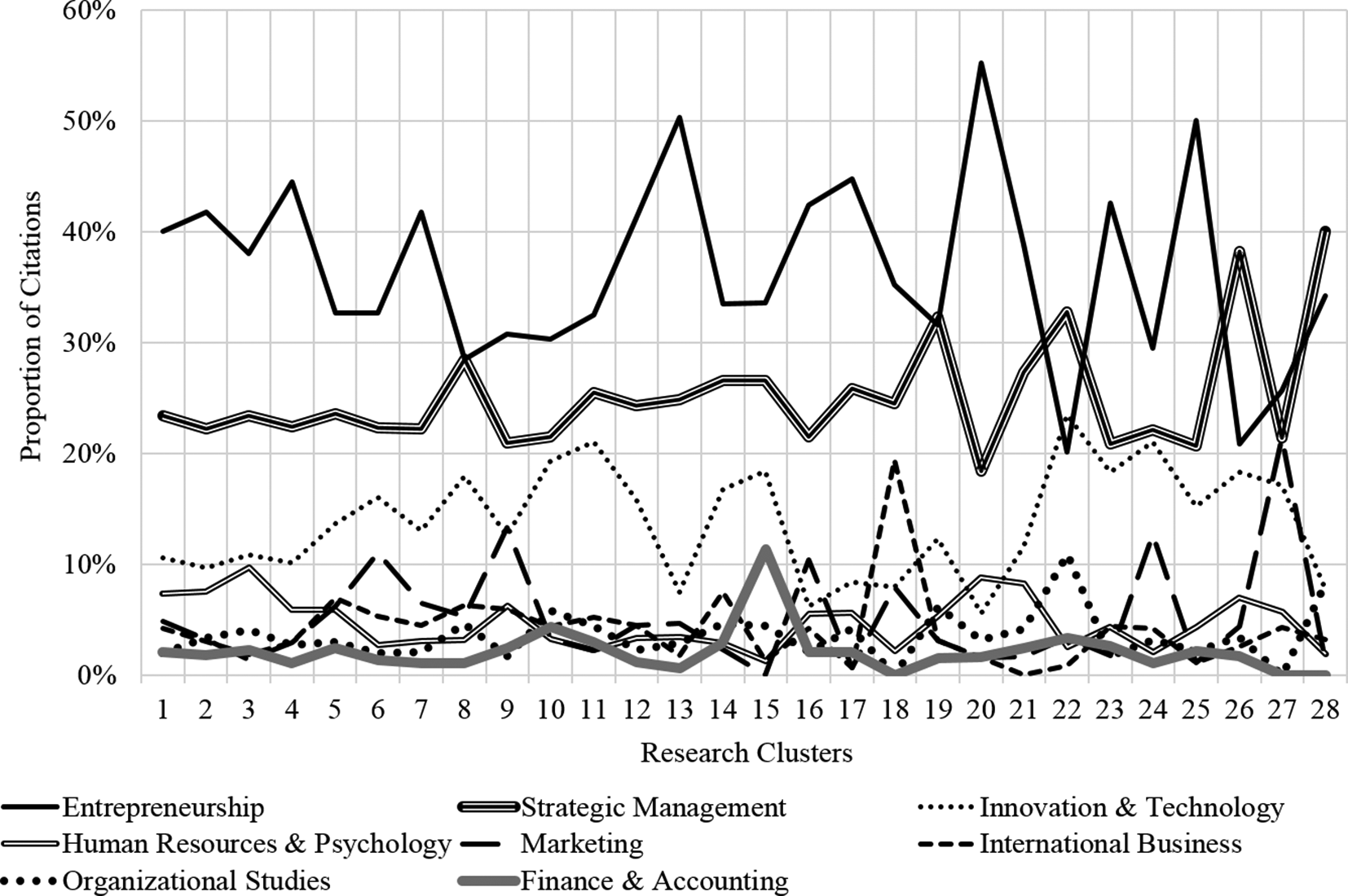
Scientific disciplines in the field of entrepreneurial organizations.
Furthermore, as presented in Figure 2, several research clusters are characterized by peaks of other disciplines, indicating that some topics receive increasing attention from other disciplines as well and thus are more boundary-spanning than others. For instance, research on international entrepreneurship (18), which is predominantly discussed by entrepreneurship and strategy scholars, is also characterized by a significant amount of attention by international business scholars. Moreover, research on CVC (15) is discussed by innovation and finance scholars (besides the two major disciplines), indicating the interdisciplinary nature of the conversation on this topic. In addition, our results show that research on market-based organizational learning (27) is discussed by entrepreneurship, marketing, strategy, and innovation scholars to a similar extent, indicating a boundary-spanning topic. In contrast, our results show that research on family firms (20) is discussed to a major extent only by entrepreneurship scholars and thus the topic with the least interdisciplinary focus.
Conceptualizations in the Field of Entrepreneurial Organizations
To improve our understanding of the different conceptualizations employed by articles on entrepreneurial organizations, we analyzed their application in our database. Figure 3 shows the use of the different conceptualizations over time based on the number of articles within our database. As presented in Figure 3, publication activity has increased enormously within recent decades. In particular, a significant growth in the use of EO emerged after the late 1990s, and, by now, EO has established itself as the most applied conceptualization in this field of research. In particular, among the 2,895 articles in our database, 24.9% of the citing articles applied EO, 20.0% CE, 13.1% CV, 12.7% INNO, 10.6% SE, 8.5% INTRA, 5.3% SR, and 4.9% EM.
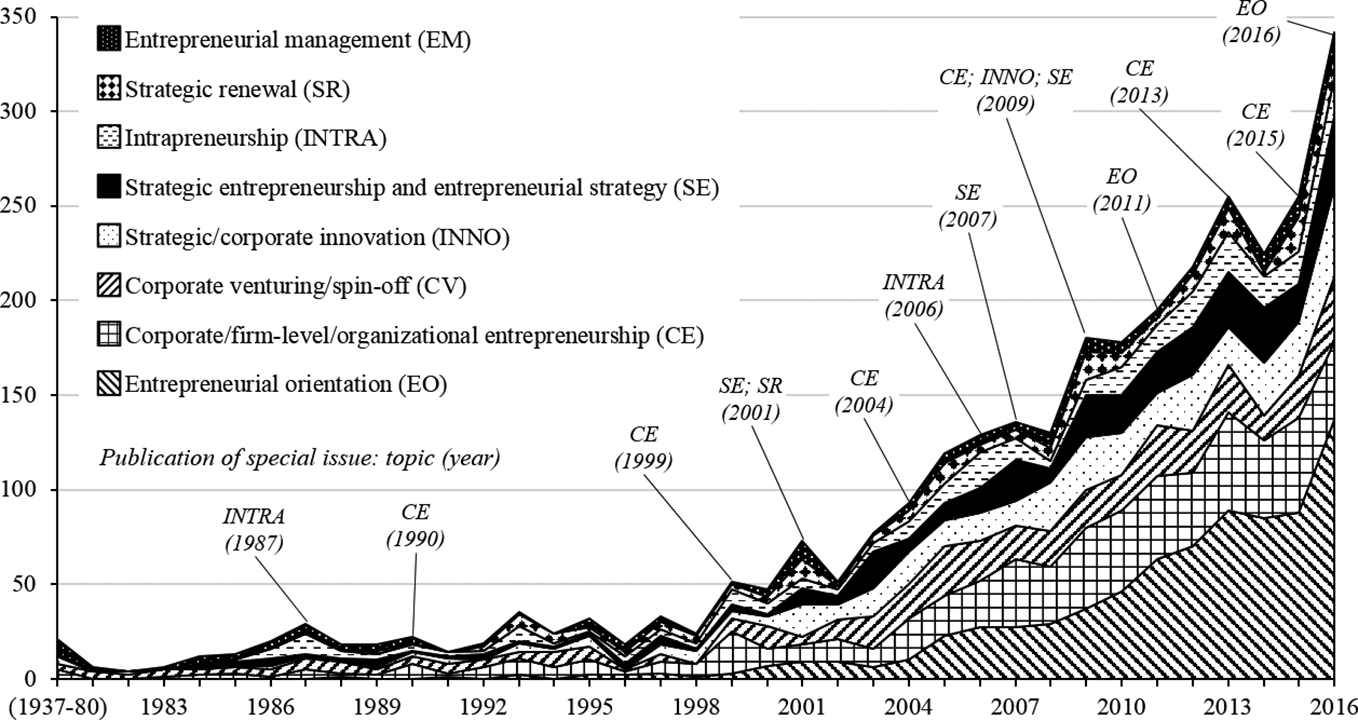
Conceptualizations in publications from 1937 to 2016.
To identify whether the application of these conceptualizations differs among research topics in the literature, we further analyzed the proportion of citations made by the different conceptualizations within each cluster. As shown in Figure 4, EO followed by CE are the most dominant conceptualizations employed by articles. Moreover, our results show that some research clusters (15 and 25) focusing on corporate venture topics are characterized by a dominant focus on the CV conceptualization. In addition, several research clusters are characterized by peaks of other conceptualizations that were employed. For instance, SE is used especially in topics that draw on theoretical perspectives, such as the RBV (5), the KBV (14), or dynamic capabilities (8). Given the existing discussion in the literature about the variety of conceptualizations, we further analyzed the proportion of citations made by conceptualizations to the different clusters. We then compared these proportions per research cluster and defined a research focus of a given conceptualization if it was used in this cluster above average compared to others. Based on this information, we created a map (Figure 5) that shows the research foci of the different conceptualizations. In addition, we compared these results with our analysis of the scientific disciplines (Figure 2) to analyze whether these conceptualizations connect various disciplines. Overall, our results show that the use of certain conceptualizations seems to result in specific research streams to analyze entrepreneurial organizations, which are presented in detail next.
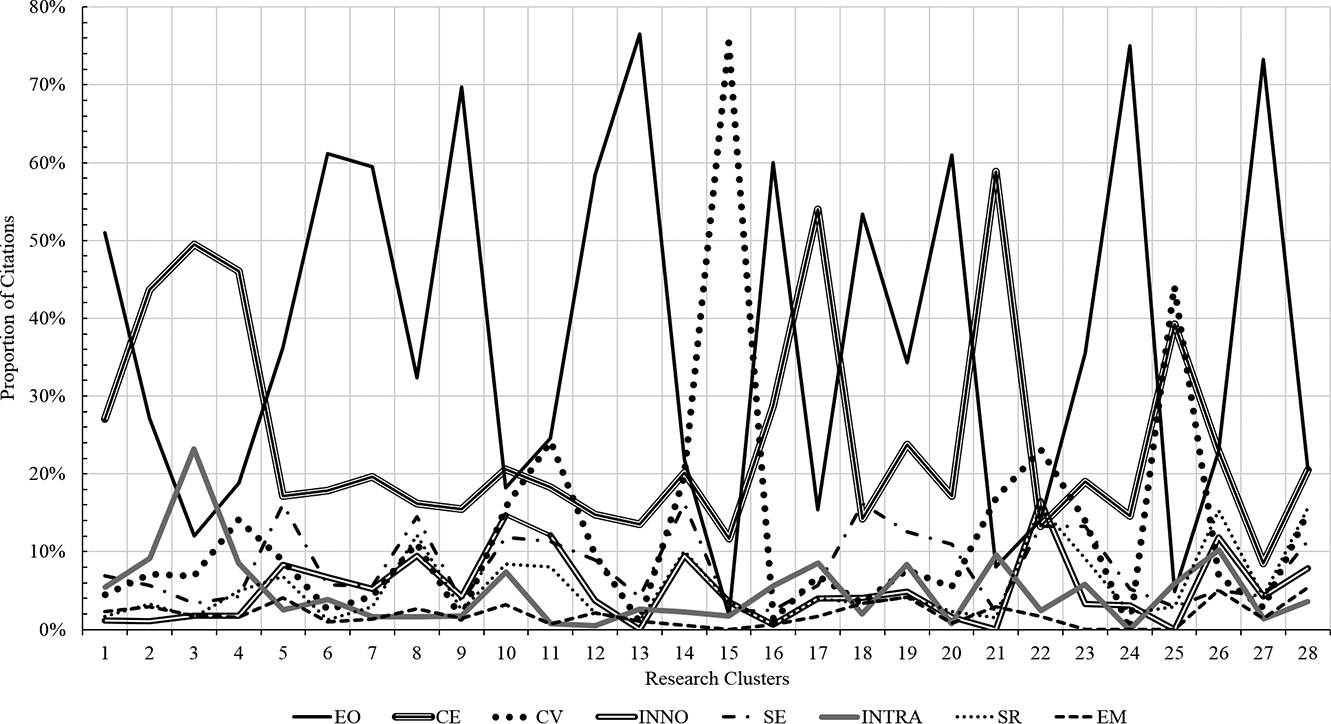
Conceptualizations in the field of entrepreneurial organizations by research clusters.

The focus of conceptualizations in the identified research clusters.
EO
Our results in Figure 5 show that EO focuses on a wide variety of research topics, which demonstrates that EO is widely accepted and adopted in the literature. In particular, articles apply an EO focus on topics around strategic orientations and draw on the RBV and dynamic capabilities literature to theoretically ground their articles. In addition, topics on the performance outcomes and contingencies of entrepreneurial firms (Clusters 1 and 2) are characterized by some overlapping in the use of CE and EO, which indicates that research in this area has investigated related topics through different conceptualizations. This might be explained by the fact that the conceptualization of EO reflects an attribute of entrepreneurial organizations, whereas CE reflects activities within the organization (e.g., Covin & Wales, 2019) and thus allows researchers to examine different aspects of entrepreneurial organizations. In combination with the results of the disciplines (Figure 3), our results show that EO bridges several topics and disciplines (entrepreneurship, strategic management, innovation, international business, and marketing). Given that EO has been described as a strategic posture toward entrepreneurship (Covin & Wales, 2019), both strategy and entrepreneurship scholars apply this perspective. The use of EO in the marketing discipline results from the comparison of several strategic orientations, such as market orientation and EO.
CE
Similar to EO, CE articles capture a wide variety of research topics. Specifically, articles which apply CE to holistically analyze entrepreneurial organizations focus on activities that comprise entrepreneurial firms, such as managing CE strategy, internal structures, or new ventures as well as their performance outcomes. Moreover, the conceptualization of CE is primarily used by entrepreneurship and strategy scholars, followed by some attention from innovation scholars. Our results further show that several specific conversations have emerged about certain elements of CE which are presented next.
SR
Our results in Figure 5 show that articles focusing on SR do not overlap with research that concentrates on the broader CE conceptualization although SR is defined as a conceptual element of CE (Guth & Ginsberg, 1990). This indicates that SR articles have developed a rather independent and specific conversation, which takes a specific focus on the renewal of entrepreneurial organizations (instead of the broader view of CE). In particular, this stream of research draws heavily on knowledge from research area I on organizational knowledge and learning capabilities, which focuses on the ability of firms to constantly adapt and renew themselves. This might explain the specific use of SR as it captures the renewal of firms and thus fits well with these research themes. Furthermore, SR articles have only limited overlap with EO articles, which can be explained by the fact that neither of the dominant EO conceptualizations specifically consider SR and thus limit the ability to specifically analyze renewal topics. These research topics are primarily drawn from strategic management and discussed to a major extent by entrepreneurship and strategy scholars followed by innovation and organizational studies scholars. This finding indicates that SR is boundary-spanning as it connects various topics and disciplines.
CV
Although corporate venturing (CV) is conceptually linked to EO (as an indicator of innovation; Wales et al., 2015) and particularly to CE, our results show that research focusing on CV has also developed a rather independent and specific conversation on the structuring and financing of corporate ventures. In particular, the research on CVC is exclusively addressed by articles that focus on CV. Moreover, our results indicate that scholars focusing on CV draw from the theoretical lenses of absorptive capacity and the KBV to ground their articles. In addition, our results show that the management of new ventures (21) is not pursued through the use of CV but rather through CE, which indicates that scholars tend to examine this topic through a more holistic view of entrepreneurial organizations. In combination with the disciplines, we can see that CV is a boundary-spanning construct as it connects various disciplines (finance/accounting, strategic management, entrepreneurship, innovation). Specifically, the significant attention from the finance/accounting literature (e.g., Journal of Corporate Finance) results from interest in CVC topics.
SE
Finally, the rather young conceptualization of SE seems to integrate topics that are more strategic in nature, such as organizational learning and the dynamic capabilities of entrepreneurial firms as well as topics that are more in the focus of CE and EO. Hence, SE articles seem to connect strategy and entrepreneurship knowledge clusters instead of focusing on an exclusive research topic (e.g., knowledge groups I and II). This can be explained by the fact that SE integrates strategic and entrepreneurial perspectives (Hitt et al., 2001), which is the major difference from the other holistic approaches of EO and CE. SE is discussed by strategic management, innovation, and entrepreneurship scholars which also indicates that SE is a field-bridging construct.
INTRA
Moreover, our map shows that research focusing on INTRA is completely in the same research area as articles focusing on CE, indicating that these articles focus on similar topics, such as the internal environment of CE (Cluster 3). A closer investigation of the disciplines as well as of the journal outlets that publish research on INTRA (e.g., Education and Training) indicates that research on INTRA is increasingly used by articles that take a behavioral perspective on individuals applied by scholars from the human resources and psychology disciplines.
Discussion
Research on entrepreneurial organizations has grown rapidly over recent decades. However, due to various conceptualizations that describe the phenomenon of entrepreneurial organizations, research on that topic is highly complex, thus hindering knowledge exchange and accumulation. To improve our understanding of the scientific structure and content of the field, we synthesized the different ways through which prior research has conceptualized entrepreneurial organizations and analyzed how this is reflected in the literature through a bibliometric analysis. In particular, our findings indicate that the use of certain conceptualizations in the field depends on their different ways of characterizing entrepreneurial organizations and thus seems to result in specific research streams in the literature. For instance, research on organizational learning and the renewal of entrepreneurial organizations is particularly addressed by conceptualizations that are more strategic in nature, such as SR, whereas topics on corporate venturing are primarily examined through the CV-specific literature. These specific research streams provide important insights for the understanding of entrepreneurial organizations. However, our results also show that these specific conversations are thus far rather isolated from the more holistic perspective, indicating that these insights could be better integrated to complement the literature on entrepreneurial organizations. To further improve knowledge accumulation and thus the evolution of the literature, we encourage future studies to pay attention to the distinctiveness (and similarities) of these conceptualizations and to explicitly acknowledge and justify their application.
Furthermore, our study provides novel insights into the theoretical perspectives of the field which is important as prior scholars have criticized the lack of theoretical grounding (Covin & Lumpkin, 2011). Our results show that calls from researchers (Covin & Lumpkin, 2011; Zahra,, 2005) have resulted in the application of several theoretical lenses (e.g., RBV, KBV) in the literature. However, scholars have primarily drawn from theories of strategic management (e.g., RBV). Although the integration of existing theories is useful as scholars can build on accumulated knowledge from other discipline(s), relying only on the extension of theories already in use might prevent creative theory building (Zahra,, 2005). Following Zahra (2005), we thus encourage future studies not only to improve their theoretical grounding through existing theories but also to conduct exploratory research to develop new insights that advance the literature.
Moreover, our study identifies which scientific disciplines investigate entrepreneurial organizations and thus provide novel insights into the boundaries of the research field. In particular, while our results show that topics are primarily discussed by entrepreneurship and strategic management scholars, we identify several themes that receive significant attention from other disciplines as well (e.g., international entrepreneurship), thus resulting in several highly interdisciplinary conversations. These insights help to understand which scientific communities discuss certain topics in the literature and thus enable researchers to connect with other scholars who work on related themes from different perspectives.
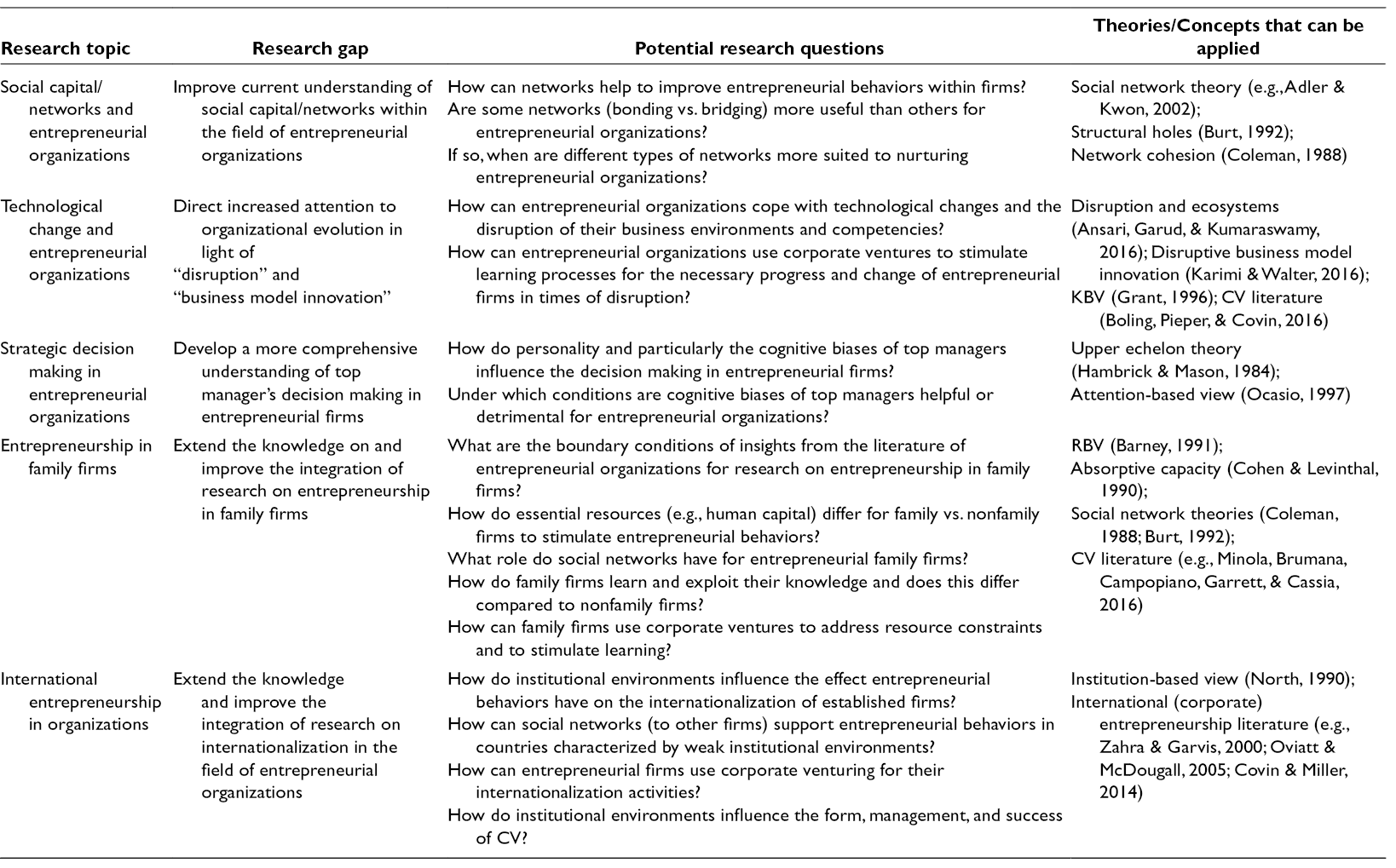
In summary, our findings thus extend prior research as they reveal the research themes and theoretical foundations in the field of entrepreneurial organizations and how certain conversations pursue them through different conceptualizations. These findings provide a guide for scholars to better identify conversations in the field of entrepreneurial organizations and to assess the state of knowledge within certain topics, which enables them to more effectively contribute to the literature. Building on our results, we develop opportunities for future research in the field of entrepreneurial organizations which are discussed next (Table 6 provides a summary).
Future Research Agenda.
Future Research Directions
Social capital/networks and entrepreneurial organizations
Our results suggest that researchers have paid only limited attention to the role of social capital or networks theories (e.g., Adler & Kwon, 2002; Nahapiet & Ghoshal, 1998) to investigate entrepreneurial organizations. An exception is the study by De Clercq, Dimov, and Thongpapanl (2013), which analyzes how social capital can facilitate a firm’s EO. By contrast, other disciplines, such as strategic management or innovation, have paid significant attention to the role of social capital or networks and demonstrated their crucial role for several firm outcomes, such as innovation (for a review see Phelps, Heidl, & Wadhwa, 2012). Building on these findings and integrating social networks theories (Burt, 1992; Coleman, 1988) can help researchers to understand how networks and collaboration may facilitate entrepreneurial organizations as they provide privileged access to resources, information, and knowledge (Adler & Kwon, 2002). Additionally, prior research (predominantly from strategy and innovation scholars) has shown that different types of networks are associated with certain benefits and challenges, resulting in an ongoing discussion of their different effects on firm outcomes (Carnabuci & Diószegi, 2015). It would thus be interesting to understand whether different types of networks play distinct roles for (different) entrepreneurial behaviors and whether these findings differ compared to the results of other disciplines, such as strategic management and innovation.
Technological change and entrepreneurial organizations
Moreover, our results indicate that little attention has been paid to the role of technological change as a driver of organizational evolution and change in the literature on entrepreneurial organizations. Given that the disruption of business environments due to technological changes represents a severe challenge for established firms, understanding how they can cope with these changing environments through entrepreneurial behaviors is of high interest for both scholars and practitioners. For instance, the research on disruption and ecosystems (e.g., Ansari et al., 2016) as well as on business model innovation (e.g., Karimi & Walter, 2016) can be drawn on to further analyze this topic. In addition, “companies are increasingly using corporate venturing to learn from knowledge sources beyond the boundaries of the firm” (Schildt, Maula, & Keil, 2005,p. 493) as learning benefits are central to corporate ventures (Covin, Garrett, Gupta, Kuratko, & Shepherd, 2018; Narayanan et al., 2009). Given that the disruption of traditional competencies forces firms to continuously learn about new technologies, processes, and market opportunities, future studies could integrate insights from the CV-specific literature (e.g., Covin et al., 2018) and knowledge-based theories (e.g., KBV) to increase our understanding of how corporate ventures can be used by entrepreneurial organizations to build and explore new knowledge and competencies to cope with disrupting environments.
Strategic decision making in entrepreneurial organizations
While our results show that interest in identifying the antecedents of entrepreneurial organizations is increasing, prior research has paid scarce attention to the role of strategic leaders and their decision-making processes for entrepreneurial organizations. Given that strategic leaders are in a unique position to shape organizational strategy, processes, and resource allocation decisions (Hambrick & Mason, 1984), they significantly influence a firm’s entrepreneurial behaviors. While initial findings have shown that CEO demographics, such as tenure, influence entrepreneurial organizations (e.g., Boling et al., 2016), recent research has started to focus on the role of CEOs’ cognitive biases, such as overconfidence, for EO (Engelen, Neumann, & Schwens, 2015). However, research from the finance and strategy literature also points to the dark side of this bias as it may also result in negative outcomes for firms, such as performances losses (Chen, Crossland, & Luo, 2015; Malmendier & Tate, 2005), leading to the question of when this bias might be useful or detrimental for entrepreneurial firms. Given that it is highly relevant to understand how top managers’ biases influence decisions and outcomes in entrepreneurial organizations, we encourage future studies to extend this stream of research. To analyze this, scholars might draw on insights from the decision-making literature of individual entrepreneurs (e.g., Busenitz & Barney, 1997; Shepherd, Williams, & Patzelt, 2015) as well as on knowledge from the upper echelon theory (Hambrick & Mason, 1984) or the attention-based view (Ocasio, 1997).
Entrepreneurship in family firms
Furthermore, our results show that the recently growing research on entrepreneurship in family firms is distant and unconnected within the co-citation network, indicating that this work is thus far not well integrated into the literature. Rather, our findings suggest that this young field of research is evolving in a separate stream of research. Given that entrepreneurial behaviors are crucial for the long-term survival of family firms across generations (Kellermanns & Eddleston, 2006), extending our understanding of entrepreneurship in family firms provides several future research opportunities. Although family firms are characterized by unique family-influenced behaviors, strategies, and (lack of) resources (Nordqvist & Melin, 2010), it might be useful to build on and integrate existing knowledge from the literature on entrepreneurial organizations and to examine the boundary conditions of these findings to identify which types of knowledge are applicable to family firms. For instance, Zahra et al. (2004) used a resource-based perspective to compare organizational cultures in family versus nonfamily firms. In a similar vein, future studies could draw on the RBV to further investigate the role of other essential resources, such as human, social, or financial capital (Sirmon & Hitt, 2003), to investigate the drivers of entrepreneurial family firms and whether they differ among family versus nonfamily firms. For instance, by integrating insights from social capital theories (e.g., Nahapiet & Ghoshal, 1998) and research on social networks (Mani & Durand, 2019), future studies could help researchers to understand the role of social networks for family firms in promoting entrepreneurial behaviors as they provide access to new knowledge and information and thus support the opportunity-seeking of family firms. Furthermore, scholars could build on the findings from the CV-specific literature to extend current knowledge on the role of corporate venturing to address resource constraints within family firms. In particular, recent research has emphasized that family firms can use ventures to “answer the financial and employment needs of a growing family and help ensure intergenerational survival of the family business” (Minola et al., 2016, p. 396). For instance, articles could build on the conceptual work by Minola et al. (2016) to empirically examine the motivation for venturing in family firms and thus extend current research.
International entrepreneurship in organizations
Our results show that research on international entrepreneurship is in an emerging state and still relatively distant, indicating that this work is evolving in a rather separate conversation. This is surprising as the internationalization of firms plays an important role in times of globalized markets and understanding how firms can increase their success in global markets through entrepreneurial behaviors is thus of high interest for both researchers and practitioners (Zahra et al., 2013b; Covin & Miller, 2014). For instance, prior research has shown that firms with entrepreneurial behaviors achieve higher performance through internationalization activities (Zahra & Garvis, 2000). As research on the topic has been mainly conducted by EO scholars, future research on the internationalization of firms could investigate whether and how EO differs among various cultures/institutional environments. Therefore, future studies could draw on the institution-based view (North, 1990) to extend the current knowledge on the influence of formal (e.g., political stability) or informal institutions (national cultures) on the entrepreneurial behaviors of firms and their internationalization activities in different (emerging) economies. Given that national cultures reflect shared norms that define socially acceptable behavior (Hofstede, 1980), different national cultures might influence the success of entrepreneurial behaviors on the internationalization of established firms. As our results show that research on international entrepreneurship is also significantly discussed by IB scholars, future studies should connect with these scholars to integrate and build on each other’s findings to extend the literature. Furthermore, countries characterized by weak institutional environments typically lack access to important resources (e.g., financial capital) and information that are necessary for entrepreneurial behaviors. Prior research indicates that social networks to other firms, customers, or politicians are important for firms in such countries to compensate for these institutional voids (Batjargal, 2010). Integrating social network theories (and research on networks) into the field thus provides another fruitful area for future research. Finally, corporate venturing enables firms to identify and exploit international market opportunities (Zahra & Garvis, 2000). However, our results show that research on corporate venturing and international entrepreneurship is thus far unconnected, indicating that scholars have neglected to examine this together. Given the growing globalization and the increased efforts of firms to internationalize, we encourage future studies to improve our understanding of how firms can use corporate venturing—or particularly different forms of corporate venturing—for their internationalization activities.
Footnotes
Acknowledgments
We would like to thank the editor, William Wales, and the anonymous reviewers for their helpful and valuable comments and recommendations.
Declaration of Conflicting Interests
The author(s) declared no potential conflicts of interest with respect to the research, authorship, and/or publication of this article.
Funding
The author(s) received no financial support for the research, authorship, and/or publication of this article.

Notes
Author Biographies