




Abstract
Building on the emerging research that has demonstrated the adverse effects of abusive supervision on employee performance, this research draws on the theories of prosocial motivation and action identification. We develop and empirically test a mediation model to examine the indirect impact of abusive supervision on employee performance. Data were obtained from 430 Chinese healthcare employees to validate and test our proposed hypotheses and generalize the findings from Western settings in the Eastern context. The findings indicate that abusive supervision is negatively related to employee performance. Job satisfaction and extrinsic motivation mediated this relationship. The study has some important theoretical and practical implications, and we have also discussed some future directions.
Keywords
Introduction
Leaders (supervisors) play a crucial role in directing, evaluating, and training employees, which greatly influences their performance and affects the organizations’ costs, effectiveness, and ability to sustain competitive advantage through human resources. Recent studies in the leadership literature have argued that some supervisors support and foster employees’ abilities and empower them to accomplish their goals and objectives (House, 1996), while others behave abusively, disgrace, belittle, and treat their subordinates cynically (i.e. abusive supervision (Tepper, 2000)). Abusive supervision proves to be detrimental for the performance of subordinates (Aryee et al., 2008; Priesemuth et al., 2014). The abused employees are more prone to perform poorly in their routine tasks and other assigned responsibilities, as well as to condense the discretionary behaviors conceded in the best interests of organizations (Aquino and Bommer, 2003; Ferris et al., 2007). The research on abusive supervision reveals its evident adverse effect on numerous organizational outcomes including satisfaction and commitment at lower levels (Duffy et al., 2002; Tepper, 2007); work–family as well as family–work conflicts (Tepper, 2000); increasing level of problems related to stress in job (Ashforth, 1997); low self-efficacy (Duffy et al., 2002); well-being (Lian et al., 2012); counterproductive behavior (Mitchell and Ambrose, 2012); and psychological distress (Tepper, 2000). However, one fundamental outcome that has received less attention with respect to abusive supervision is the performance of employees in general and in terms of healthcare organizations in particular.
Scholars have called for examination of the impact of abusive supervision on performance due to its crucial importance within organizations (Hadikin and O’Driscoll, 2000). Employee performance plays a key role in the decisions related to promotions, raises, and bonuses (Rynes et al., 2005), which increases its importance within the organizations. In addition to the direct influence of abusive supervision on employee performance, this study also investigates the mediating role of job satisfaction and extrinsic motivation in the healthcare organizations of China. Abusive supervision has been shown to have destructive effects on the employees and organizations (Jian et al., 2012). Research estimates suggest that approximately 14% of employees are experiencing abusive behaviors from their immediate supervisors (Schat et al., 2006). Abusive behaviors may occur in the form of discouragement, public denigration, and explosive outbursts (Tepper, 2007) and may result in multiple adverse outcomes such as psychological distress (Tepper, 2000) and hostility against the abusive supervisor (Dupré et al., 2006), which in turn affect employee performance.
In addition to the applicable findings, current literature reports a few prominent oversights, which are addressed in our research. First, Harris et al. (2007) studied abusive supervision and performance in a sample of the single automotive industry, which raises the issue of generalizability. Thus, our research increases the generalizability by conducting a study in healthcare organizations with a multi-source sample. Second, mediating mechanisms have been quite ignored in past studies linking abusive supervision and employee performance. Tepper (2007) argued that studies on abusive supervision and its impact on employee work behaviors need to investigate the phenomenon in its entirety, along with the mediating influences, so as to unravel the convolutions in the outcome effects. Hence, we look at the underlying mediating mechanisms of job satisfaction and extrinsic motivation in advancing the theories linking abusive supervision and employee performance. Third, the destructive effects of abusive supervision have been witnessed for organizations in developed as well as developing economies, but the findings for Western economies may not be applicable to others. Most past studies have been conducted in the US context, so we investigate the same in the Chinese context to generalize the Western findings to the Eastern context.
Our study highlights the role and significance of leadership in the management of human resources. First, acknowledging the limitations of past studies on mediating mechanisms, we developed and tested a mediation model to examine the indirect influence of abusive supervision on the performance of employees through job satisfaction and extrinsic motivation. Second, the literature has shown that abusive supervision is a workplace stressor, but acknowledgment of this has not yet been explicitly adopted (Fox et al., 2001), so we conceptualize abusive supervision as an instrument that creates stress in the workplace leading adverse effects on employee performance. Third, this research presents a motivational interactive model of abusive supervision–employee performance that incorporates and validates the mediating mechanisms that were identified in the literature and theories but were not previously tested. The concepts from multiple theories are thus validated to predict and empirically test the indirect influence of abusive supervision on employee performance. Finally, we provide a methodological advancement compared to the previous studies of abusive supervision–employee performance in general and in Eastern settings in particular. We present the overall proposed motivational research model in Figure 1.

A proposed model.
Abusive supervision and employee performance
In recent years, research on employee reactions in the form of work behaviors has gained increasing attention from researchers; this has mainly focused on abusive supervision, which is perceived as one of the fundamental reasons for such employee reactions. Tepper (2000) defined abusive supervision as a persistent display of aggressive behaviors both verbal and nonverbal. These behaviors do not involve any physical contact between leaders and subordinates or employees. Abusive supervision adversely affects employee outcomes in multiple ways when it appears in organizations and leads to negative implications for employee attitudes (Bowling and Michel, 2011; Breaux et al., 2008) and performance (Aryee et al., 2008). This refers to employee perceptions and the extent to which they perceive their supervisors as engaging in a continued expression of intimidating verbal and nonverbal behaviors (apart from the physical contact). Abusive supervision behaviors may occur in the form of public criticism, impoliteness, breaking promises, discourteous actions, or the silent treatment (Bies, 2001). This definition illustrates four main aspects of specific interest. First, it is only a subjective assessment, which means it may be abusive for one subordinate and not for another. Second, it is not a one-time act but refers to a “persistent display” of the undesirable or adverse actions and behaviors, which is not easy to face and often causes stress in employees; this in turn affects their performance. Third, abusive supervision encompasses both verbal and nonverbal hostile actions, but does not involve any physical contact, which falls within the spectrum of violent behaviors. Fourth, abusive supervision behavior only refers to behaviors: it does not mention the intent of those actions or behaviors.
Abusive supervision refers to the continued display of hostile verbal and nonverbal actions and behavior (apart from physical contact) between leader and subordinate (Tepper, 2000). Since first being considered in organizational research nearly two decades ago, abusive supervision has been shown to affect employee outcomes in a number of ways, with adverse implications for employee attitudes, performance, job satisfaction, and motivation (Bowling and Michel, 2011; Lian et al., 2012). According to Tepper (2007) and Tepper et al. (2017), supervisors may abuse with the intention of boosting employee performance and then seeing high performance. Some scholars theorize abusive supervision as an unintentional behavior from depleted and emerging leaders (Yam et al., 2016). Few studies have concluded that leaders used abusive language with certain employees who were undeserving from the leader’s perspective (Tepper et al., 2011). Others have declared it to be the most common form of destructive leadership, which demonstrates the aggressive behavior of supervisors toward their subordinates (Mackey et al., 2019; Schyns and Schilling, 2013). Pradhan and Jena (2018) investigated abusive supervision and its impact on the quit intentions of Indian healthcare employees. They found a positive relationship between both constructs, and the abused healthcare employees were more likely to quit in the near future. In addition, they explored the moderating role of employees’ emotional intelligence, which neutralized the effect of abusive supervision to some extent. Similarly, Estes (2013) found that abusive supervision led to multiple adverse outcomes in the nurses in south Florida (both personal and professional). Chen and Xu (2020) investigated abusive supervision in healthcare institutions and public health emergencies in China and recommended the long-term care insurance (LTCI) systems facilitate service and benefits, as well as improving their performance. The consequences included frustration, anxiety, stress, psychological distress, problem drinking, family problems, lower organizational commitment, fewer organizational citizenship behaviors (OCBs), and greater intention to resign. The current research therefore focuses on the phenomenon of abusive supervision with the aim of contributing to this field by conceptualizing and evaluating how and when abusive supervision can boost the performance of healthcare employees.
Several studies have revealed the strong influence of abusive supervision on employee behaviors (Mackey et al., 2017; Martinko et al., 2013; Zhang and Liao, 2015). The literature shows increasing attention from scholars to the study of bad behaviors from leaders in organizations (Griffin and Lopez, 2005; Griffin and O’Leary-Kelly, 2004a, 2004b). This increasing attention is due to the rise in such destructive behaviors among leaders within organizations, as well as the substantial effect on the valued outcomes of organizations and employees. Previous studies have revealed adverse impacts of abusive supervision on OCB and counterproductive work behavior (Aryee et al., 2008; Tepper et al., 2008); satisfaction and commitment (Duffy et al., 2002); work–family and family–work conflict (Tepper, 2000); and problems arising from high stress levels (Duffy et al., 2002). Although leadership and performance are fundamental for organizations, there seems to be a shortage of studies related to abusive supervision and its impact on employee performance. The critical need for such studies has been highlighted by Hadikin and O’Driscoll (2000) and Tepper (2000), which let us choose this direction to fill this important gap. We therefore raise the question: how does abusive supervision affect the employee performance? It is important to answer this to increase our understanding of the supervisor–employee relationship. To do so, we draw on the current literature, as well as support from potential explanations based on conservation of resources theory (COR) and social exchange theory (SET), which provide such useful frameworks for predicting and explaining the relationship between abusive supervision and the performance of healthcare employees. Hence, we hypothesize the following.
H1. Abusive supervision is negatively related to employee performance.
Mediating effects of job satisfaction and extrinsic motivation
Job satisfaction refers to a positive emotional state that results from the favorable rational assessment of one’s job and experiences (Locke, 1976). Hackman and Oldham (1974) defined it in their research as the extent of employees’ happiness with their job. It influences employee behavior and involves both the perceptive thoughts and the affective feelings related to one’s job (Ilies et al., 2009). Based on the concept of social exchange theory (SET; Emerson, 1976), interdependent actions can create obligations for both the parties, which often lead to the development of high-quality relationships between them. Employees perceiving their organizations and leaders as supportive and caring as well as having the satisfaction with their work environment are more likely to have high performance in their job roles (Eisenberger et al., 1986). Several studies have determined the positive relationship between employee performance and job satisfaction (Al-Ali et al., 2019; Guest, 2004; Malik and Ravinder, 2017; Spector, 2006). All of these studies recommended that organizations and leaders keep employees satisfied and happy with their jobs to increase employee performance and productivity. They also concluded that employees satisfied with their jobs show improved performance and a greater contribution to the overall achievement and success of the organization, while the unsatisfied employees performed poorly and may hinder organizational development and success. To cope with this, leaders need to focus on employee job satisfaction and explore ways to increase it among unsatisfied or less-satisfied employees to enhance organizational performance and achieve the goals.
Following COR, previous studies have suggested a negative influence of abusive supervision on employee job satisfaction (Bowling and Michel, 2011; Lin et al., 2013; Mathieu and Babiak, 2016; Tepper, 2000). Meta-analyses have also shown similar results for abusive supervision and job satisfaction (Mackey et al., 2017; Schyns and Schilling, 2013). According to the recommendations of Wright and Bonett (2007), job satisfaction is a valuable resource related to work, which leads to resource gains when sustained or increased. They also mentioned the possibility of a reciprocal effect that leads to restrictions in resource gains. Depletion in valuable resources and the failure to gain more leads to a fall in employee performance; this is consistent with SET (Blau, 1964; Cropanzano and Mitchell, 2005; Siyal and Peng, 2018), which delivers convincing conceptual archetypes to analyze the link between abusive supervision and employee performance. Gouldner (1960) has argued that one of the fundamental tenets of SET is reciprocity—that is the repayment in kind; this is often perceived in positive form, but can also be in a negative form, where a negative behavior or action is results in negative treatment (Cropanzano and Mitchell, 2005). Accordingly, employees may repay their abusive supervisors by reducing the level of their performance. In other words, when the abused employees are forced to perform—specifically when they are not in a situation to redeem their self-interest due to imbalance of power and position differences—they show reduced performance. On the basis of this discussion, we develop a following hypothesis to test the mediating relationship of job satisfaction.
H2. Job satisfaction mediates the relationship between abusive supervision and employee performance.
In arguing about the relationship between abusive supervision and performance via motivation, we found that both the type of motivation (i.e. intrinsic and extrinsic) have an impact on employee performance, but extrinsic motivation (EM) is less discussed and fit for this motivational model. Self-determination theory (SDT) posits that EM affects employee performance, and these effects may differ in magnitude and type (Deci and Ryan, 2000). EM pertains to activities and actions engaged in as means to an end, which includes getting rewards and avoiding criticism, instead of the satisfaction of doing the activities and actions. In their framework, Ryan and Deci (2000) concluded that it was not a unitary concept. SDT suggests that employees differ in their reasons for performing well. Extrinsically motivated employees perform because of being driven by the external subjective reasons for estimated outcomes such as promotions, praise, and outperforming other employees. Research has shown that motivation is the heart of organizational behavior (Gagné, 2014), because employee motivation has a significant influence on performance (Amabile and Pratt, 2016; Chen and Zhao, 2012). Motivation fosters the direction, intensity, and tenacity of performance (Deci et al., 2017), and EM results in engagement when the employees expect material and social considerations (Terry, 1994), and this often leads to improved performance.
EM is connected with the approaches of controlling and regulating (or being controlled and regulated) whose impact on the behavior is entrenched in the zeal of achieving contingent rewards or escaping punishments (Meyer et al., 2004). In the workplace setting, employees with EM are sensitive to implicit as well as explicit awards (such as salary and promotion) and punishments (i.e. demotion or termination) from their employer (Podsakoff and MacKenzie, 1994). They vary their performance in line with the goals and objectives of the organization. Dunnette and Hough (1990) witnessed that incentives, merit salary, and rewards are most likely to boost the performance of employees. It can therefore be concluded that if leaders and organization want to perform well, they need to regulate their behavior that affects the performance of employees. With these arguments, we posit that the following hypothesis:
H3. Extrinsic motivation mediates the relationship between abusive supervision and employee performance.
Method
Sample and procedure
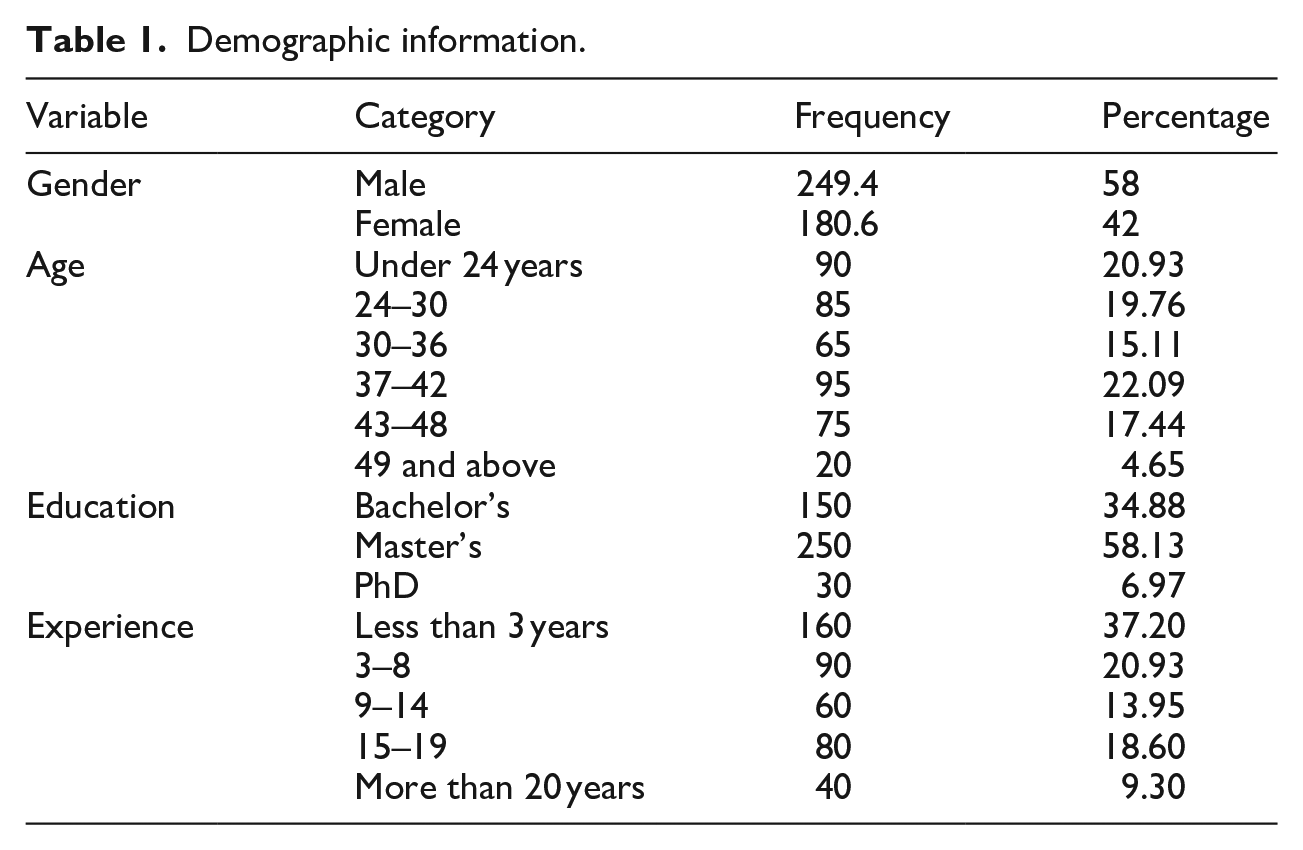
Employees from seven health care organizations—including hospitals, long-term care facilities, and outpatient facilities—located in China were recruited to complete the questionnaire for this research. The authors contacted key officials, which included the CEOs, unit directors, heads, and directors of human resources departments, and requested them to identify and recruit supervisor–subordinate dyads in their respective organizations. The voluntary participation was requested from potential participants by email and in face-to-face meetings. The purpose of this data collection—which is only for the academic research—was explained to them, and they were assured of the confidentiality of their information. In the first phase of data collection, the subordinates were asked to respond to items related to abusive supervision, job satisfaction, and EM. In the second phase, the supervisors were asked to give their responses related to items about the performance of subordinate employees. A total of 500 questionnaires were distributed, out of which, we received 430 complete responses at a response rate of 86%. The participants were 58% male and 42% female. As the presented study used the survey method for data collection, the approach recommended by Podsakoff et al. (2003) was also adopted to minimize the possibility of bias. Detailed demographic information about the respondents for the present research is given in Table 1.
Demographic information.
Measures
We used the conventional “translate-back translate” method to convert the English language survey questionnaire into Chinese to avoid any inconvenience and enable the Chinese respondents to understand properly before choosing their answers. We used a five-point Likert-scale (1 = “strongly disagree,” to 5 = “strongly agree”) for all items.
Abusive supervision
We used a 10-item scale version of the 15-item scale (Aryee et al., 2007) developed by Tepper (2000) to measure abusive supervision. Based on our understanding of the Chinese context, we deemed five items from the scale as culturally inappropriate, so we decided to use the remaining 10 items, which were culturally neutral (Farh et al., 2006) and reflected possible forms of abusive supervision in this context. Sample items include: “My immediate supervisor makes negative comments about me to others” and “My immediate supervisor expresses anger at me when he/she is annoyed for another reason.” The alpha reliability of the abusive supervision scale was 0.96 (α = 0.96).
Extrinsic motivation
We assessed participants’ EM using the 4-item scale (α = 0.91) validated by Amabile et al. (1994). The sample items used include “I am strongly motivated by the promotions and other benefits I can earn” and “I am keenly aware of the goals I set for myself.” These items measure the extent to which participants relied on external incentives as the impetus for their work.
Job satisfaction
Satisfaction was measured using the general satisfaction 5-item measure by Hackman and Oldham (1974), which indicates the extent to which employees are satisfied with their jobs. The used items were (1) Generally speaking, I am very satisfied with this job; (2) I am generally satisfied with the kind of work I do in this job; (3) I frequently think of quitting this job; (4) Most people in this job are very satisfied with the job; and (5) People on this job often think of quitting. The alpha reliability of the job satisfaction scale was 0.92 (α = 0.92).
Performance
We used a 4-item scale to measure employee performance developed by Liden et al. (1993). The items and response scales were as follows: “My subordinate is superior to other subordinates that I’ve supervised before”; “Rate the overall level of performance that you observe for this subordinate”; “What is your personal view of your subordinate in terms of his or her overall effectiveness?”; and “Overall, to what extent do you feel your subordinate has been effectively fulfilling his or her roles and responsibilities?” The alpha reliability of the performance scale was 0.93 (α = 0.93).
Analytical procedures
PLS-SEM path modeling was used to test the proposed theoretical model for the current study. The literature has highlighted rationales that let us choose path modeling for our research. First, it is frequently used and has gained extensive application in the field of management and relevant disciplines (Aghmiuni et al., 2020; Sarstedt et al., 2014; Siyal et al., 2021). Second, as the objective of this study was to analyze the outcome variable, we found PLS-SEM path modeling to be an appropriate approach to do so (Hair et al., 2011). Third, this approach is considered the most advanced and common variance-based SEM technique (McDonald, 1996; Siyal et al., 2020). Consequently, we used Smart PLS 3 for the current study (Richter et al., 2016). Before proceeding to test the consistency, rationality, path structures, and numerous assumptions related to the normality as well as multicollinearity, we assessed the common method bias (Hair et al., 2017; Podsakoff and Organ, 1986; Xian et al., 2020).
A two-step process was used in this study—that is (1) assessing the measurement model, and (2) assessing the structural model to evaluate and report the results drawn from PLS-SEM (Henseler et al., 2009; Sarstedt et al., 2014).
Measurement model assessment
Following Henseler et al. (2009) and Sarstedt et al. (2014) for the assessment of the measurement model, it is important for researchers to determine the reliability of all items individually, as well as the internal consistency, validity of the content, and convergent and discriminant validity. Following the suggestions of Duarte and Raposo (2010), Hair et al. (2012), and Henseler et al. (2014), the reliability of individual items can easily be evaluated by having a look at the outer loadings of every single measure for all constructs. Items having a reliability ranging from 0.40 to 0.70 can be retained. In line with this, the outer loadings for all items and variables in this study were found to have loadings up to 0.5 and above (Table 2), which means that our study fulfills the criterion for acceptable reliability of the items individually. For the internal consistency and reliability, there is a predefined criterion to interpret the coefficient of composite reliability (CR), which is recommended to be 0.7 and above (Bagozzi and Yi, 1988; Hair et al., 2011). The coefficients for CR and Cronbach’s alpha are given in Table 2. The CR coefficients range from 0.891 to 0.922, which confirms the model to have acceptable consistency.
Measurement model.
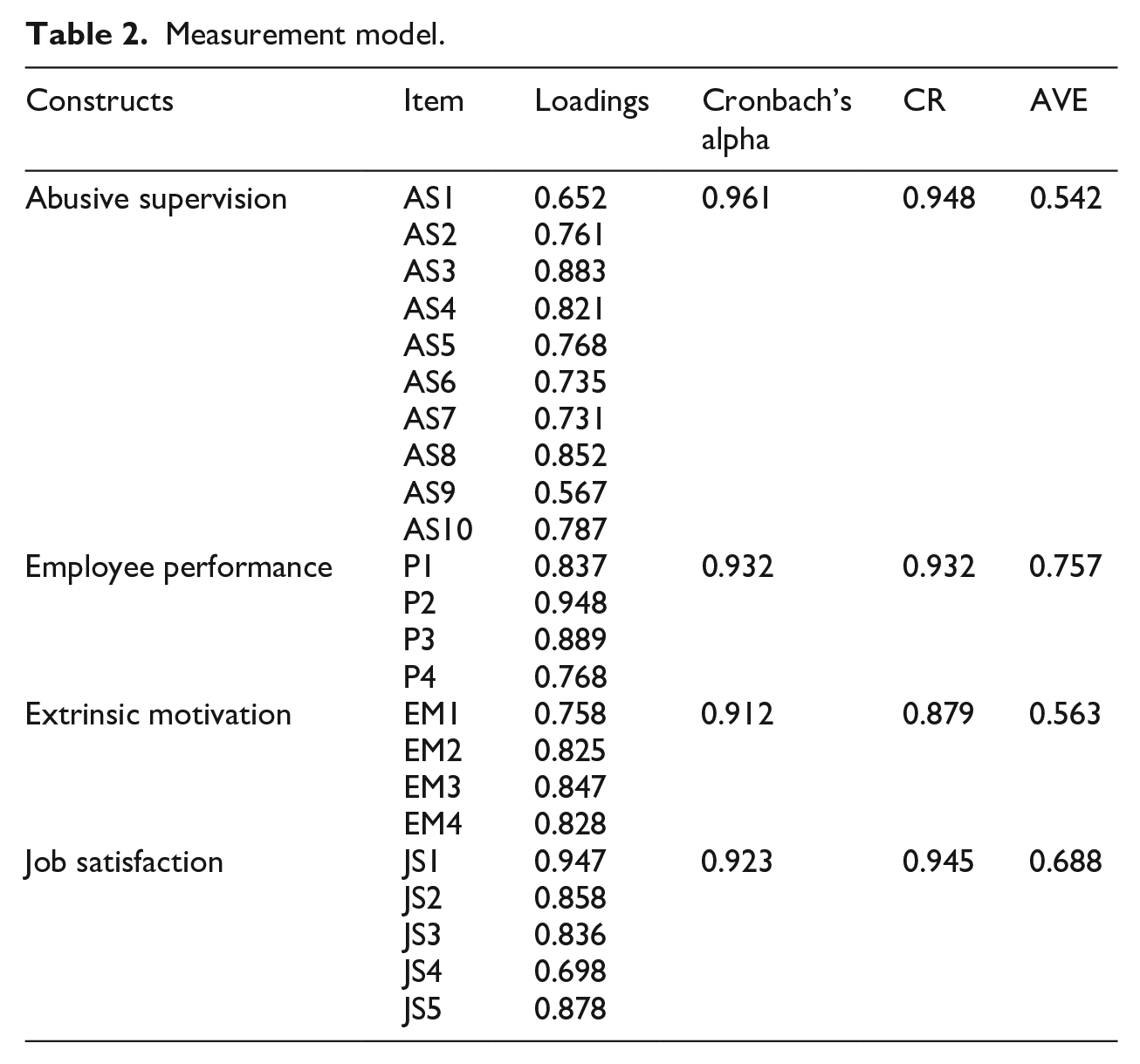
Fornell and Larcker (1981) have recommended evaluating the convergent validity by means of the average variance extracted (AVE). Chin (1998) has suggested that the AVE be not lower than 0.50. Following this criterion, the AVE scores for all the studied variables in the present research are 0.542 and above (Table 2), which confirms their acceptable convergent validity. The rule of thumb recommended by Fornell and Larcker (1981) was followed to assess the discriminant validity of all of the constructs. As a criterion, they suggested the AVE to be 0.5 and above. In addition, the square root of the AVE is suggested to be greater than the correlation between the variables. The results given in Table 2 show the AVE of all of the variables to be greater than the minimum cutoff. Table 3 illustrates the square roots of the AVE to be greater than the correlations between latent variables. Consequently, all of the constructs of this study were found to have discriminant validity at an acceptable level.
Discriminant validity.
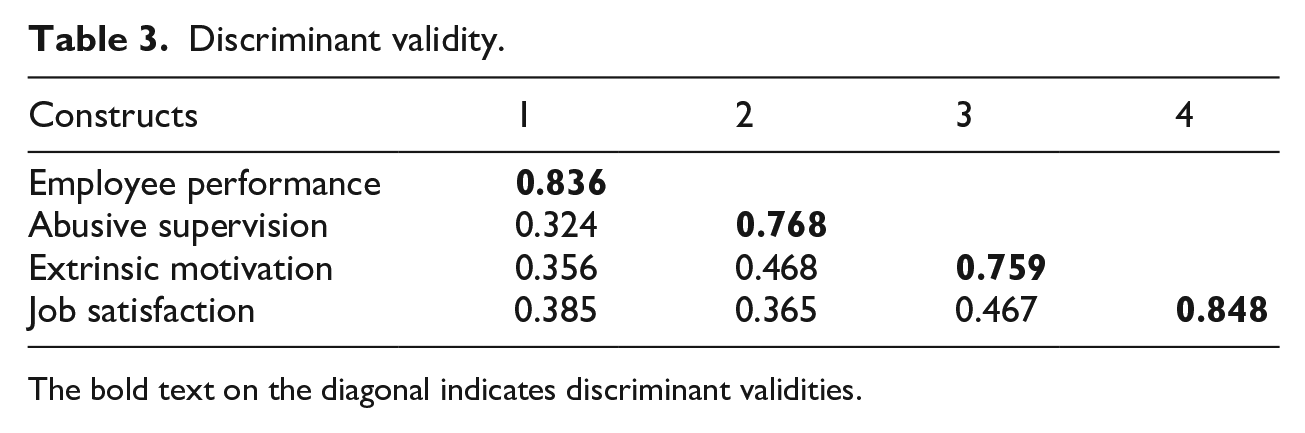
The bold text on the diagonal indicates discriminant validities.
Structural model
Having examined the validity and reliability of the research model as significant, we turned to the next step, which is to assess the structural model. Bootstrapping along with the sample of 500 was applied to get the t-values. Table 4 and Figure 1 illustrate the results of testing the hypotheses. Both clearly indicate a negative relationship between abusive supervision and employee performance (β = −0.225, p < 0.01). In line with hypotheses 2 and 3, the Preacher and Hayes (2004, 2008) bootstrapping criterion was applied to assess the mediation effects of EM and job satisfaction in the relationship between abusive supervision and employee performance. In the execution of this bootstrapping to determine the indirect effects of mediation, we found positive results for the mediation effects of EM (β = 0.268, p < 0.01, t = 3.564) and job satisfaction (β = 0.253, p < 0.01, t = 3.657). In addition, it is also recommended that the indirect effects with 0.147, 95% Boot CI: [for EM LL = 0.064, UL = 0.259] and for job satisfaction [LL = 0.068, UL = 0.268] should not have any zero in between, thus confirming the mediation effects of both EM and job satisfaction in the relationship between abusive supervision and employee performance.
Path coefficients.

p < 0.05. **p < 0.01.
Predictive relevance of the model
Owing to reflective nature of the endogenous variable, the cross-validated measure of redundancy (Q2) was used to evaluate the predictive relevance of the model by following the suggestion of previous research (Chin, 2010; Hair et al., 2013; Ringle et al., 2012). This additional evaluation is recommended because of the unsuitability of the goodness-of-fit index for the validation of the model, as it shows the possibility of mixing up the valid and invalid models (Hair et al., 2014; Henseler and Sarstedt, 2013). According to Henseler et al. (2009), research models having a Q2 value above zero are considered to have predictive relevance. The cross validated results of the redundancy test for the present study are given in Table 5, which shows the values greater than zero, as recommended by Chin (1998) and Henseler et al. (2009), thus suggesting the model has predictive relevance.
Construct cross-validated redundancy.

Discussion
Our study contributes to an emerging body of the research investigating abusive supervision in organizations and its impact on the work behaviors of employees. The studies to date have shed light on the detrimental outcomes of the behaviors of abusive supervisors, which ultimately affect the performance of employees, as well as effectiveness of the organizations. Some studies have examined the precursors of abusive supervision and the reactions of abused employees. Only a few have discussed the mechanism by which abusive supervision influences employee performance indirectly. Our study shifts the emphasis from abusive supervision and its outcomes to the underlying mechanisms to explore the indirect influence of abusive supervision on employee work behaviors. We introduce underlying mechanisms to investigate the impact of abusive supervision on the work behaviors of healthcare employees indirectly: when employees experience abusive behaviors from their supervisors, employees’ interest in their work decreases, which affects their performance, and they take less interest in treating patients. In this situation, EM and job satisfaction are the two effective mediators that lessen the effect of abusive supervision to some extent and boost the performance of employees in the workplace. To our knowledge, no study has investigated EM and job satisfaction as mediators to analyze the indirect effect of abusive supervision on the performance of healthcare employees.
The findings revealed complete support for the proposed hypotheses related to the direct and indirect relationship of abusive supervision and employee performance. First, we found a negative relationship between abusive supervision and performance among healthcare employees in China. Employees who experienced abusive supervision were found to have less interest in their work, which adversely affected their performance. While some employees reciprocated the abusive behavior of their supervisors by reducing the quality of their performance. In both situations, abusive supervision reduced the effectiveness of the organization, which in turn decreased its worth, which meant that fewer people would be likely to choose the organization for treatment. Organizations may lack energetic employees who focus on their jobs and show increased performance. Second, EM and job satisfaction mediated this relationship. The employees having EM and job satisfaction were observed to show higher-quality performance compared to the ones who were not extrinsically motivated and satisfied with their jobs. This includes employees who have a passion for treating patients and serving their community. This indirect mechanism lessens the influence of abusive supervision on the performance of healthcare employees, and they were more focused on their patients.
The present research findings are consistent with the insights from multiple theories (COR, SET, and SDT) whose tenets are in line with the assumptions of our research. We drew on these theories to develop and test the motivational model of this study, which explores how abusive supervision influences the performance of healthcare employees. This research also provides an advance on the previous studies in terms of the methods used. There have been some methodological weaknesses in past studies examining the relationship between abusive supervision and employee performance. Most of these studies have used a cross-sectional design in a single organization, which is observed as the limitation and has led to calls for a longitudinal approach or multiple-source data in different organizations and cultures (Lv et al., 2021; Tepper, 2007). The present research provides numerous crucial advances in terms of method: first, the data were collected in two phases to provide more firm evidence for the studied causal relationships. Second, evaluation of employee performance by their immediate supervisor alleviated the issue of common method variance as recommended by Podsakoff et al. (2003). Third, we tested our hypotheses using data from seven large health care organizations in China to avoid concerns related to the organizational context. Fourth, we conducted this research in a sample of Chinese healthcare organizations in response to calls to increase the generalizability of the influence of abusive supervision on work behaviors among employees in different cultures (Tepper, 2007). Hence, all of these methodological advancements provide strong support to all of the assumptions of this study, which indicate the robustness of this motivational model.
Implications
These results have several implications for both theory and practice. First, as employee performance is very important for both the supervisors and organizations (Chen, 2009), supervisors need to make an effort to diminish abusive behaviors and use some other ways to release their stress rather than being abusive toward subordinates. Organizations are also advised to train and monitor the supervisors’ performance effectively to make sure that they are engaged in appropriate and healthy supervision behaviors with their subordinates (Liu et al., 2010). Organizations should take serious actions and emphasize the creation of an abuse-free culture in the workplace, which will increase the work interest among subordinates and lead to improved performance. This is especially important for healthcare organizations, as their work nature is sensitive. Second, supervisors should seek self-monitoring and get feedback from their subordinates to know how employees perceive their supervision style. Such feedback should be anonymous to avoid supervisor–subordinate conflict and ensure subordinates are free to express their perceptions. Third, supervisors vulnerable to abusive practice and those involved in such behavior in the past should take trainings related to emotional intelligence, anger and stress management, and other such behavioral tools to develop interpersonal relationship skills (Aryee et al., 2007). Fourth, although previous research has demonstrated a few causal mechanisms to examine the indirect influence of abusive supervision on the work behaviors of employees (Zellars et al., 2002), empirical investigation on this issue remains in the early stages. This is probably the first study to investigate the mediating roles of extrinsic motivation and job satisfaction and highlights the effective underlying mechanisms to examine their indirect relationship in the context of healthcare organizations. The research findings thus illustrate that EM and job satisfaction play an important role in minimizing the influence of abusive supervision on the performance of employees, resulting in higher quality performance.
Limitations and future directions
Although our research offers several key contributions to theory and practice, it is not without limitations. First, the present study used data from the supervisors and subordinates at a single time point. Future studies could use a longitudinal design to investigate whether abusive supervision is a cause or consequence of the subordinates’ performance and whether or not it remains the same at different time points. Second, we focused on abusive supervision as the basis of performance of employees, while leaders may use abusive behavior for other reasons. For instance, the leaders may consider abusive behavior as an instrument that will cause employees they dislike to leave their jobs. Subsequent studies could examine this issue and other work behaviors. Third, the study sample was from health care organizations in China, because abusive supervision is more common in health care organizations due to the high costs of failure, and employees face substantial workloads and time pressures (Richman et al., 1992, 1996). Future researchers could consider other organizations and cultures or cross-organization comparative studies to increase the generalizability of the research findings.
Conclusion
Regardless of its low base ratio, abusive supervision is a costly phenomenon within organizations—specifically, in healthcare organizations. The study findings draw attention to the underlying mechanisms to investigate the influence of abusive supervision on healthcare employees’ performance and to provide a basis for practical interventions that could have the potential to curb the frequency of abusive behavior by supervisors in healthcare organizations.
