



Abstract
This study aims to elucidate the structure of support for social policies (redistribution and free competition), focusing on the role of community interests (especially demographic decline). To this end, Japan was selected as a case study because it has the highest proportion of the elderly population in the world. The author analyzed data from the National Survey of Social Stratification and Social Mobility in 2015 and the Population Census for the same year, employing ordered logit models. The results revealed that people living in demographically declining communities were more likely to support redistribution and less likely to endorse free competition, compared to individuals from other communities. Furthermore, compared to the underprivileged, wealthy individuals were more likely to consider community interests irrespective of individual benefits. This finding demonstrates that community interests may have a significant influence on individuals’ policy preferences.
BACKGROUND
This study aimed to determine the structure of policy preferences based on data from a social survey conducted in Japan, focusing on two variables: support for free competition and redistribution. Accordingly, this study closely monitors the role of group interests in the structure of policy preferences. Previous studies on policy preferences have primarily examined support for social policies based on self-interest or ideology. As highlighted in previous studies (Alt and Iversen, 2017; Arikan and Ben-Nun Bloom, 2015; Arikan and Sekercioglu, 2019; Feldman et al., 2020), however, support for social policies can be elucidated not only by individual interests, but also by altruism, social values, and homophily regulated by social distance. Therefore, the role of communal interests in supporting social policies beyond individual interests and ideologies merits further attention.
Previous studies have already demonstrated that an individual’s support for social policies depends on various social contexts. However, their findings were not consistent across studies. For example, while some studies have indicated that strong welfare policies might reduce support for redistribution (Brady and Bostic, 2015; Evans and Kelley, 2018; Fernández and Jaime-Castillo, 2018), others have proposed that they might strengthen it (Van Heuvelen, 2017; Van Heuvelen and Copas, 2018) or, at least, not necessarily weaken it (Edlund, 2006; Jæger, 2006). Furthermore, some studies have emphasized that widening social inequality tends to galvanize support for redistribution (Finseraas, 2009; Kevins et al., 2018; Schmidt-Catran, 2016). However, other studies have indicated that social inequality has no relation to support for redistribution (Breznau and Hommerich, 2019; Dallinger, 2010; Lübker, 2007), and may even weaken it in certain cases (Breznau and Hommerich, 2019; García-Sánchez et al., 2018; Magni-Berton, 2019; Wietzke, 2016). Rather than social inequality, therefore, the idea of fairness might be more appropriate for explaining the structure of support for redistribution (Becker, 2019; Dimick et al., 2016; Kulin and Meuleman, 2015; Starmans et al., 2017). If individuals believe that they have fewer or no chance for upward mobility, they are more likely to support redistribution (Alesina et al., 2018; Kulin and Meuleman, 2015; Smyth et al., 2010). This might also suggest that the equality of chance, and not the equality of outcome, is profoundly related to the support for social policies.
Since policy preferences are complex and multidimensional (Wulfgramm and Starke, 2017), specifying their formation process may prove to be a difficult task for social researchers. Nevertheless, research has shown that material self-interest is a stable and strong predictor of support for social policies (Doherty et al., 2006; Petersen et al., 2014; Weeden and Kurzban, 2017). For example, low income, lost income, or dissatisfaction with income has a positive effect on support for redistribution (Owens and Pedulla, 2014; Shin, 2018; Sumino, 2018). Similarly, the threat of unemployment has a positive effect on support for redistribution (Gingrich and Ansell, 2012; Levanon, 2018; Margalit, 2013; Naumann et al., 2016; Owens and Pedulla, 2014).
However, the self-interest theory has certain limitations. If selfish individuals are given diverse information related to social policies (e.g., budget constraints and chances of upward mobility), their preferences may change (Hong-En Wang, 2018; Linos and West, 2003). Additionally, it is not clear as to what is material self-interest. It might be individual interest, but it might also be group interest. Furthermore, even if it is assumed that material self-interest includes group interest, the problem remains: Group interest is not clearly defined. When assessing social policies, individuals can be a part of various groups: social class/labor unions (Arndt, 2018; Rueda, 2018; Wilson, 2001), ethnic/racial (Breznau and Eger, 2016; Eger, 2010; Finseraas, 2012; Kymlicka, 2016; Reeskens and Van Oorschot, 2012), religious (Stegmueller et al., 2012), a regional community (Borisova et al., 2018; Reeskens and Van Oorschot, 2015), and family (Jaime-Castillo and Marqués-Perales, 2019). However, individuals seem to define their respective groups based on social contexts. Even though the growing number of immigrants has a negative effect on native support for redistribution, research indicates that such an effect might not be found in different social contexts (Brady and Finnigan, 2014; Burgoon et al., 2012; Kwon and Curran, 2016; Steele, 2016). This implies that, for individuals, group boundaries are changeable and depend on the information provided.
Therefore, this study assumes that theoretically group-interests are a type of material self-interest and attempts to define the characteristics of such a group.
THEORY AND HYPOTHESES
This study focused on the regional community as a unit of group interest. Regional communities are defined by individuals’ residence, and it is believed that public goods provided by the community shape communal interests for residences; furthermore, such interests are often influenced by the community’s demographic. For example, if the population of the community is aging significantly and residents’ lives are threatened by weak social welfare services, it will be of negative interest to the residents. It is predicted that individuals living in a highly aging community are more likely to support redistribution. Furthermore, if people believe that free competition tends to widen social inequality among communities, and such inequality might impair residents’ well-being in the population aging community, it will have a negative interest on the residents. It is predicted that individuals living in a highly aging community are less likely to support free competition. However, not all residents are evenly threatened by weak social welfare services. Some residents (especially the wealthy) are better protected from such threats. Therefore, we might posit that relatively protected people living in a demographically declining community are less likely to support redistribution and more likely to support free competition based on individual interests (Naumann, 2017).
It is noteworthy that the aging of the community does not have the same meaning as aging of the whole society, because members of the community include residents’ families, relatives, friends, and neighbors. In other words, for individuals living in demographically declining communities, high aging is not a problem of general others living in a society but a problem of people close to themselves. Consequently, demographic decline of the community may indirectly affect residents’ support for social policies. Specifically, it is expected that individuals living in demographically declining communities tend to regard the community as a group constituting part of their material self-interest, and will be more likely to support redistribution and less likely to support free competition.
Based on these inferences, some hypotheses related to support for social policies are proposed. First, one hypothesis related to support for free competition is formulated as follows:
Hypothesis 1. An individual living in a demographically declining community is less likely to support free competition.
The other hypothesis related to the support for redistribution is formulated as follows.
Hypothesis 2. An individual living in a demographically declining community is more likely to support redistribution.
Therefore, if individuals look at community as a significant group, Hypotheses 1 and 2 will be satisfied.
Moreover, to confirm the influences of group interests, which are distinguished from individual interests, the effects of group interests on support for social policies should be found in the social survey data, even after controlling for the effects of individual interests. Generally, as individuals living in a demographically declining community tend to be socially disadvantaged, they are predicted to be less likely to support free competition and more likely to support redistribution based on individual interests in the absence of a sense of belonging to the community. Therefore, social researchers should not confound the effects of individual and group interests. To confirm the effects of group interest independent of individual interest, this study also examined the following hypothesis:
Hypothesis 3. Even if an individual residing in a demographically declining community is rich, he or she is more likely to support redistribution and less likely to support free competition.
DATA AND METHODS
Data
To examine the hypotheses presented in Section 3, I analyzed data from the National Survey of Social Stratification and Social Mobility from 2015 (SSM, 2015), which was conducted in Japan. According to the World Population Prospects 2019 (United Nations, 2020), Japan registered the highest proportion of the elderly (over 65 years of age) in the world in 2015. Additionally, Japan has experienced a significant population aging since 2000. The proportion of elderly people in Japan increased from 17.0% in 2000 to 26.0% in 2015. Meanwhile, Japan is one of the most industrialized countries in the world. Taken together, Japan can be considered the most appropriate case for examining the effects of group interests driven by demographic decline on support for social policies. The SSM 2015 primarily collected data related to social stratification structure and trends in social mobility of the Japanese society; furthermore, it also includes respondents’ information related to social attitudes and behaviors. The SSM 2015 is popular among Japanese sociologists as one of the most reliable data based on nationwide social surveys.
The SSM 2015 was conducted from January to August 2015. The population comprised Japanese citizens in the aged 20–80. The sample was selected from the residence registers administered by each municipality (Jyumin-kihon-daicho) based on the multi-stratified, random sampling method. The survey method was a combination of personal interviews and replacement methods. Information regarding the respondents’ demographic characteristics and socio-economic status was collected through personal interviews, and information related to respondents’ social attitudes was obtained using a questionnaire. The total number of respondents in the SSM 2015 was 7,817, and the response rate was 50.1%. As cases with missing values for target variables were excluded from the analyses, the final sample included 7,293 cases.
In addition to the SSM 2015, data from the Population Census of 2015, which was conducted by the Japanese Government (Statistics Bureau, 2017a), were used. The residence data from the SSM 2015 respondents were merged with that from the demographics of each municipality provided by the Population Census (Statistics Bureau, 2017b). Municipalities were taken as analytical units at the regional level, given that they play the role of a basic administrative unit (kiso-jichitai) for social welfare services in the country. In Japan, most social welfare services are provided to residents through local governments at the municipality level.
Variables
Dependent variables. Key dependent variables in the analysis were “support for redistribution” and “support for free competition.” The query item regarding redistribution was as follows: “Rather than protecting free competition, it is important to eliminate differences.” Contrarily, the query item pertaining to market principles was as follows: “To the extent that opportunities are equally available, we must accept the disparity in wealth that results from competition.” In the SSM 2015, the respondents were asked to answer query items on a scale from 1 to 5 (5 = agree, 4 = somewhat agree, 3 = no opinion either way, 2 = somewhat disagree, 1 = disagree). In the analysis, key dependent variables were considered as ordinal variables. It should be noted that the variable of support for redistribution of wealth used in this study does not refer to specific redistribution policies. Therefore, it can also be interpreted as a variable for free competition. Similarly, the variable of support for free competition used in this study does not directly refer to free competition because it includes the phrase “To the extent that opportunities are equally available” in the query sentence. In other words, the two dependent variables have some ambiguity in measuring the support for free competition or redistribution. As there were no other adequate items related to support for social policies in SSM 2015, these dependent variables had to be used in this study to analyze respondents’ support for social policies. Considering these limitations, both dependent variables were used in the analyses, and differences in the analytical results between them were also examined. As mentioned later, the analytical results for the two dependent variables were perfectly mirrored. This suggests that the two dependent variables commonly reflect general support for free competition/redistribution.
Independent variables. In the analysis, the key independent variable at the municipality level was a section of the elderly people (over 65 years of age), which was regarded as an index of population decline at the municipality level.
Control variables. To control for the effects of respondents’ demographic characteristics and socioeconomic status on support for redistribution and free competition, the following variables at the individual level were included in the analysis: age, gender, marital status, education, occupation, employment status, and household income. Age was regarded as a continuous variable ranging from 20 to 80. A dummy variable was created for gender, coding males as 0 and females as 1. Respondents’ marital status was categorized into three groups—married, unmarried, and divorced/bereaved—with a dummy variable for each category. Similarly, respondents’ level of education was categorized into three classes: higher, secondary, and primary education. Higher education included university graduates, secondary education comprised high school and vocational school graduates, and primary education covered junior high school graduates. Thus, when the variables of marital status and education were included in the statistical models, married and secondary education were regarded as a reference category. Furthermore, respondents’ occupations were classified into three categories—upper white collar, lower white collar, and blue collar—with a dummy variable for each. Similarly, respondents’ employment status was classified into five categories: self-employed, regular employment, non-regular employment, no job, and job seeker, with a dummy variable for each. When the variables of occupation and employment status were introduced in the statistical models of this article, lower white collar and regular employment were considered the reference categories. Finally, household income was considered as a continuous variable. As the distribution of household income was highly skewed, however, household income was logarithmically transformed.
Descriptive Statistics of Household Income


Distribution of household income. Dashed line: Household income without imputed cases (N = 5,280). Solid line: Household income with imputed cases (N = 7,293)
Analytic strategy
To estimate group effects on policy preferences, the data from the SSM 2015 and Population Census in Japan were analyzed using ordered logit models, which were specified as
RESULTS
Descriptive Statistics
Descriptive Statistics

Table 2 reveals that the mean of support for redistribution is above 3.0. Specifically, it may be noted that the majority of Japanese support redistribution policies. However, the mean of support for free competition is also above 3.0. Therefore, the Japanese population seems to support redistribution policies and free-market policies simultaneously. Even though the policy preferences of Japanese people are seemingly inconsistent, it does not imply that they are irrational. As elucidated in previous studies (Koos and Sachweh, 2017; Sudo, 2020), support for redistribution and free competition are not necessarily irreconcilable. Contrarily, it should be noted that the mean of support for redistribution is lower than the support for free competition. Therefore, it can be concluded that Japanese people are more likely to support free-market policies than redistribution policies, even though they also tend to support redistribution policies.
Furthermore, Table 2 elucidates that extensive differences exist in the section of the elderly population among municipalities. The minimum value of the share of the elderly population is 14.9%, whereas the maximum value is 55.9%. While considering the mean proportion of the elderly population (27.2%), their differences can be estimated to be large. Thus, the municipality where an individual resides has an important bearing on population aging, which might threaten the sustainability of the social welfare services provided by the local government.
Results of Ordered Logit Models Predicting Support for Social Policies
Ordered Logit Models Predicting Support for Free Competition
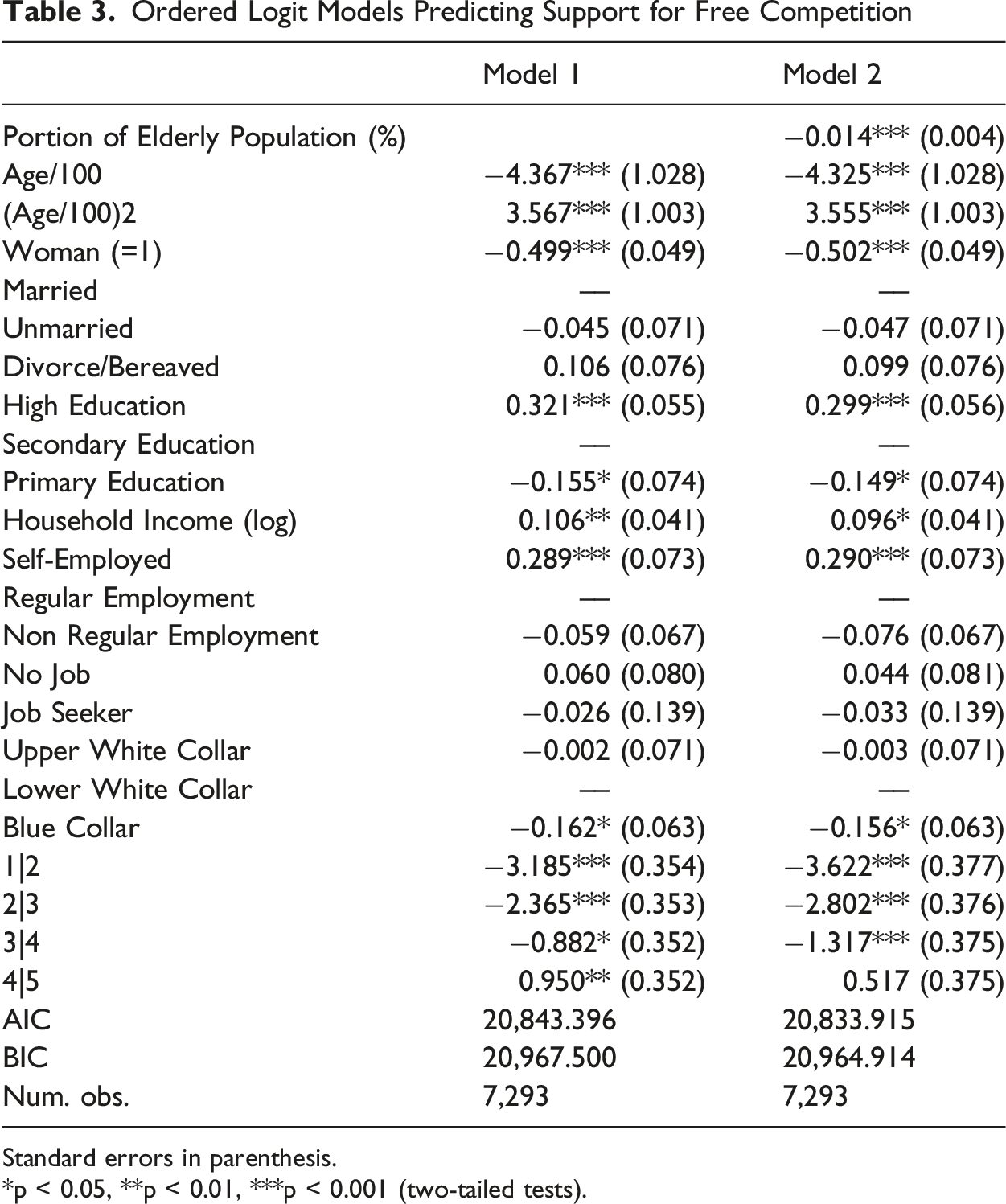
Standard errors in parenthesis.
*p < 0.05, **p < 0.01, ***p < 0.001 (two-tailed tests).
Meanwhile, Model 2 in Table 3 estimates the effects of demographically declining support for free competition. Compared to Model 1, Model 2 has one more variable at the municipality level (a portion of the elderly population). Model 2 demonstrates that a section of the elderly population has a statistically significant and negative effect on support for free competition. This implies that residents in demographically declining municipalities are less likely to support free competition. Therefore, it can be stated that socioeconomic status and municipality have independent effects on support for free competition.
Ordered Logit Models Predicting Support for Redistribution
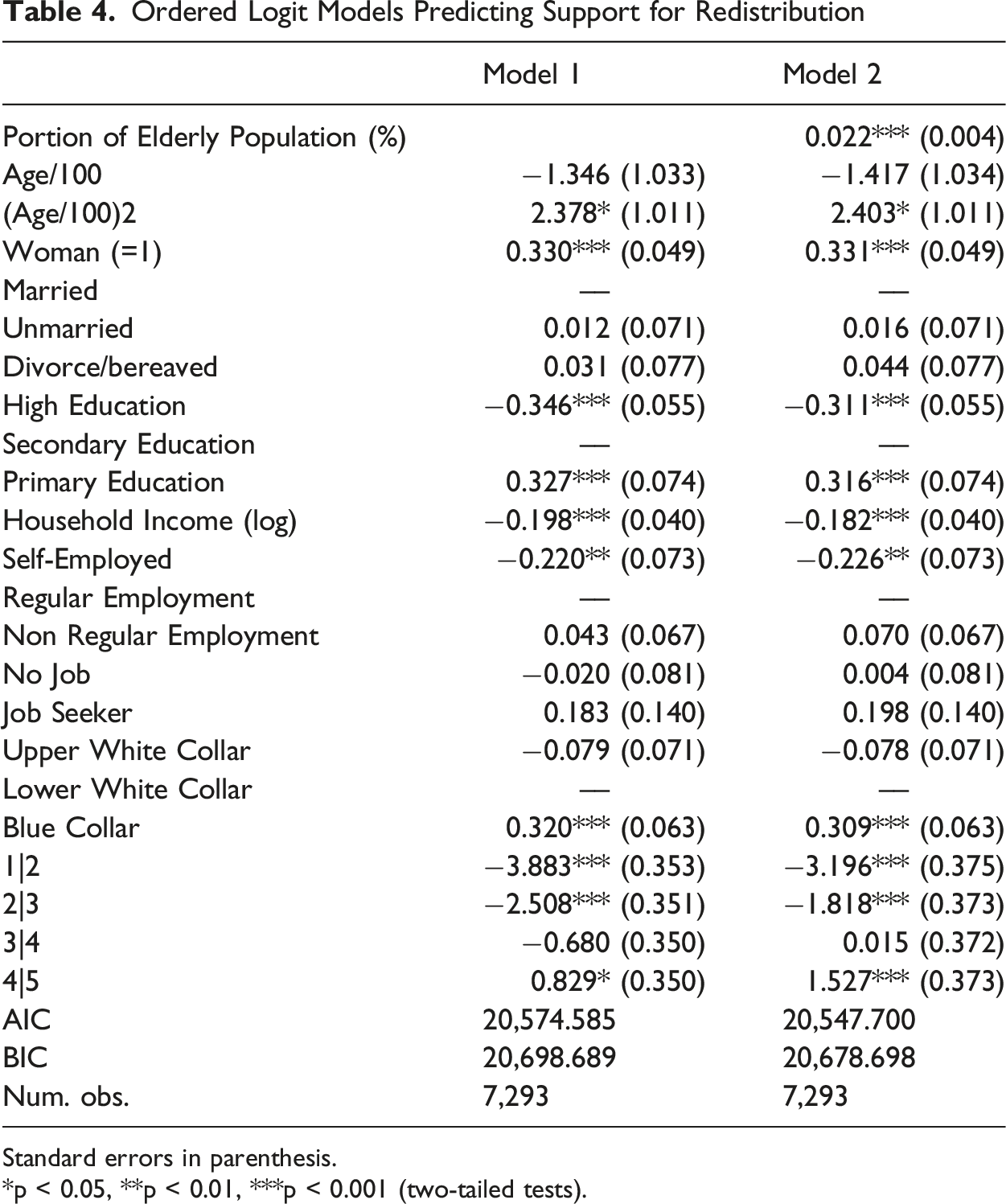
Standard errors in parenthesis.
*p < 0.05, **p < 0.01, ***p < 0.001 (two-tailed tests).
Meanwhile, Model 2 in Table 4 includes a variable at the municipality level (a portion of the elderly population) besides the variables of demographic characteristics and socioeconomic status. In this case, the share of the elderly population has a statistically significant and positive effect on support for redistribution, suggesting that residents in a demographically declining population are more likely to support redistribution.
The models in Tables 3 and 4 include a variable at the municipal level (a portion of the elderly population). To verify the robustness of the results of the ordered logit models shown by Model 2 in Table 3 and Model 2 in Table 4, multilevel ordered logit models predicting support for social policies considering the variances between municipalities were also examined, yielding similar results to those of Model 2 in Table 3 and Model 2 in Table 4 (see Table A1 of “Appendix” in detail). This fact supports hypotheses related to the effects of group interests (community interests).
In addition, ordered logit models predicting support for social policies corresponding to respondents’ household income levels were also examined to confirm Hypotheses 3.
Ordered Logit Models Predicting Support for Free Competition with Interaction Term
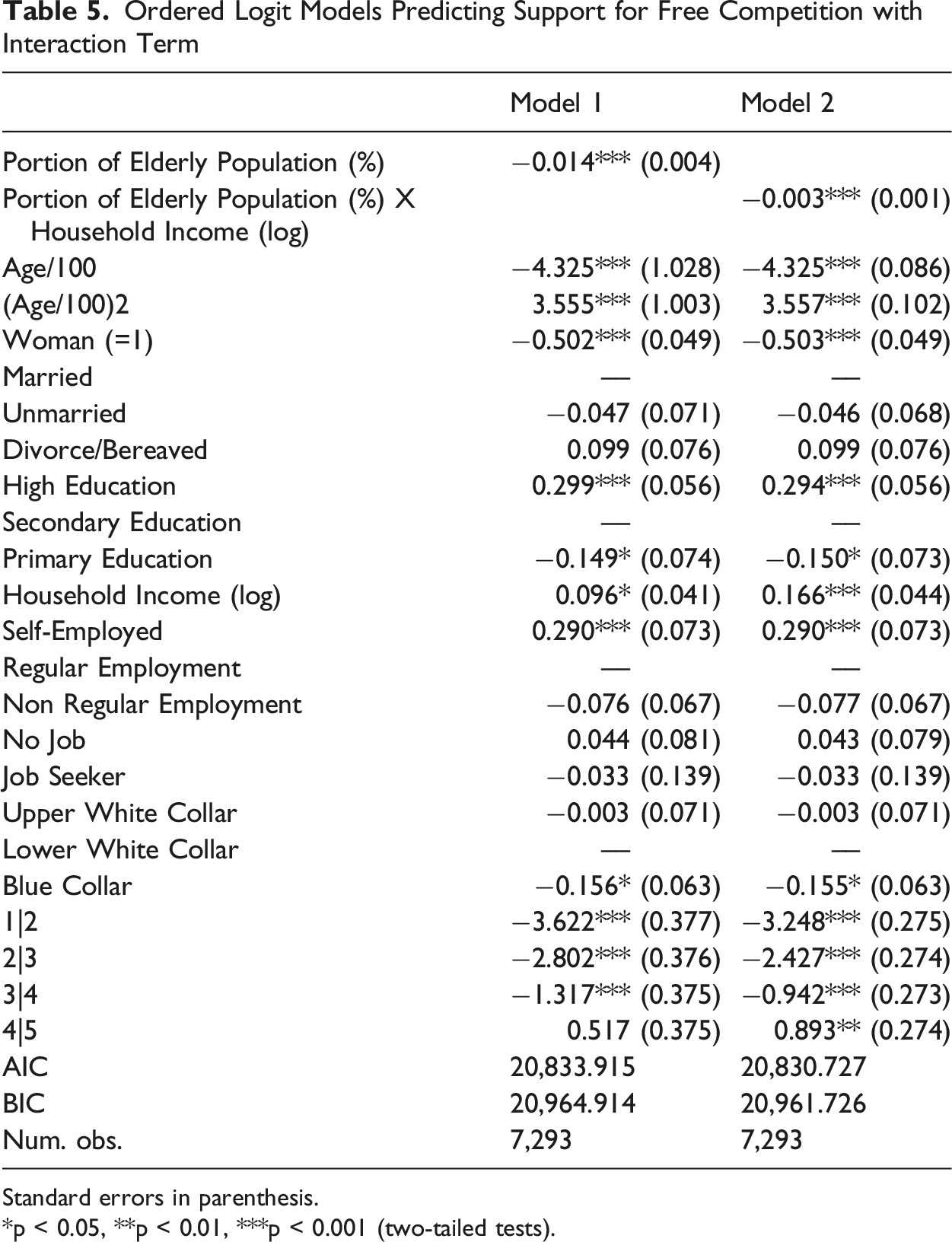
Standard errors in parenthesis.
*p < 0.05, **p < 0.01, ***p < 0.001 (two-tailed tests).
Ordered Logit Models Predicting Support for Redistribution with Interaction Term
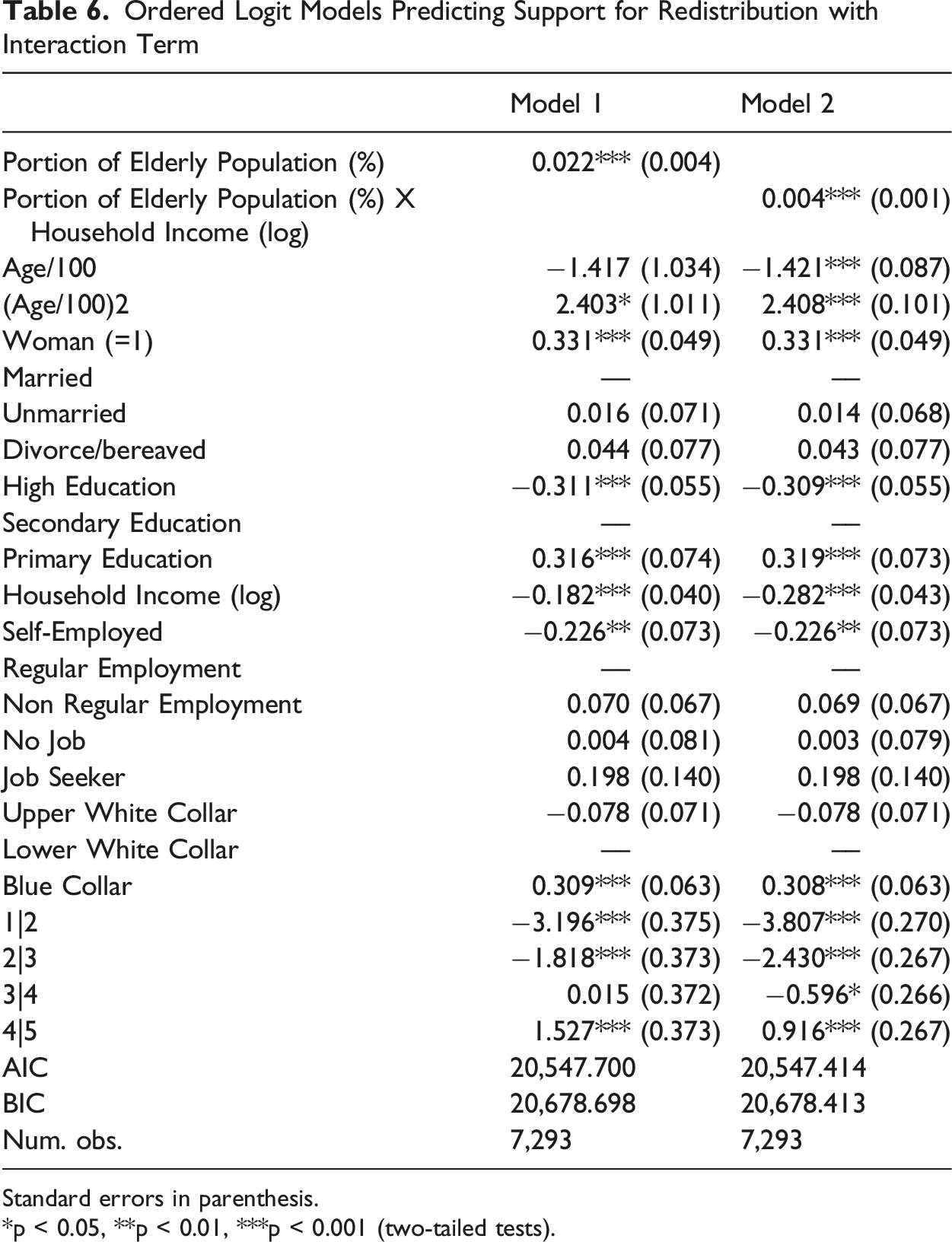
Standard errors in parenthesis.
*p < 0.05, **p < 0.01, ***p < 0.001 (two-tailed tests).
Furthermore, I estimated the marginal effects of the proportion of the elderly population on support for social policies using the effects package in R (Fox and Weisberg, 2018). These effects are estimated based on two household income groups: the high household income group and low household income group. Figure 2 shows the effects on support for free competition and Figure 3 shows the effects on support for redistribution. They clearly reveal that a rising proportion of the elderly population will lead to weakening support for free competition and strengthening support for redistribution. Additionally, the tendency observed for support for social policies (especially support for free competition) is more prominent in respondents belonging to the high household income group. In other words, individuals belonging to the high household income group are more likely to consider community interests when deciding their support for social policies. Effects of Portion of Elderly Population on Support for Free Competition with 95% CI. Circle: High Household Income Group. Triangle: Low Household Income Group Effects of Portion of Elderly Population on Support for Redistribution with 95% CI. Circle: High Household Income Group. Triangle: Low Household Income Group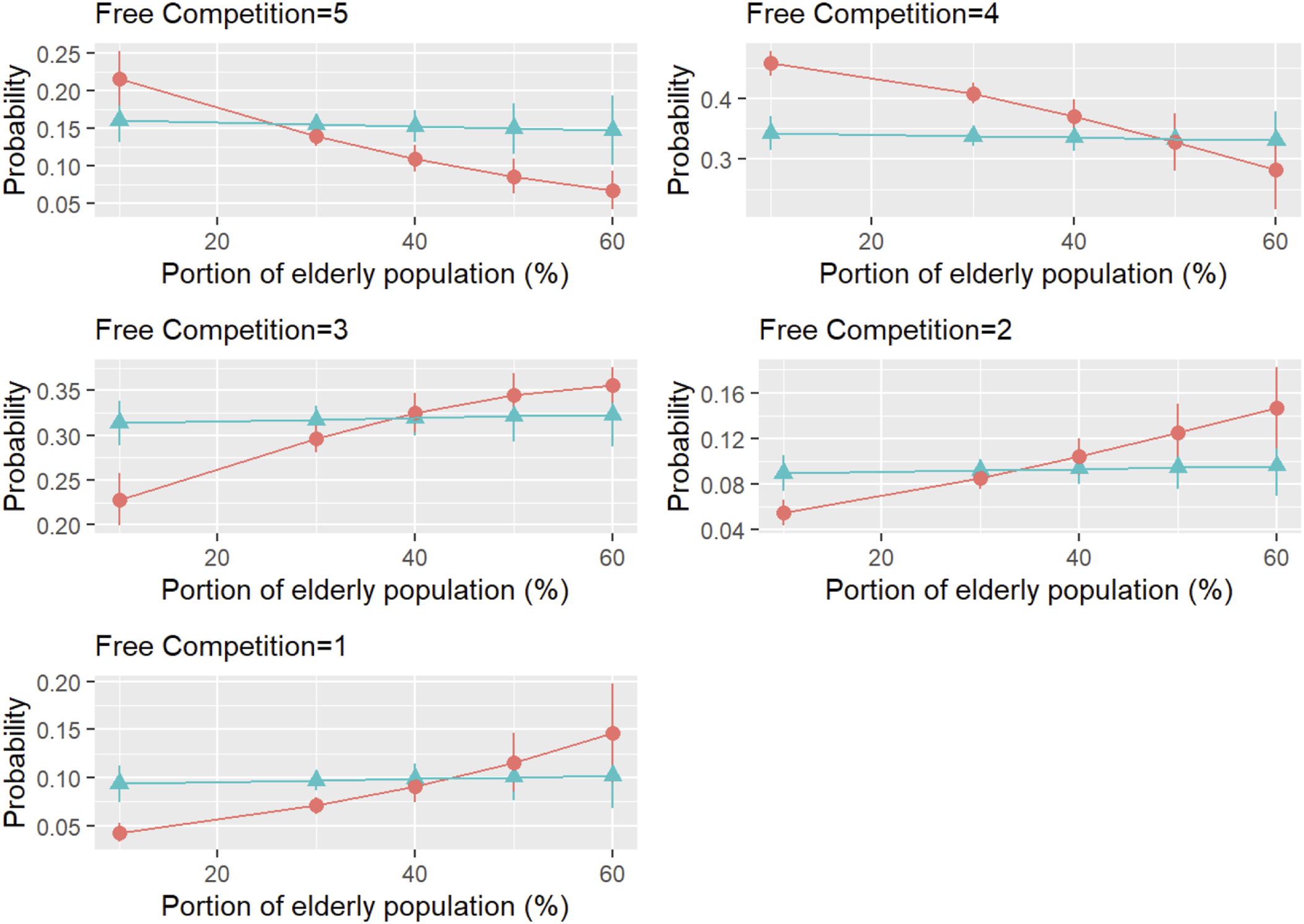
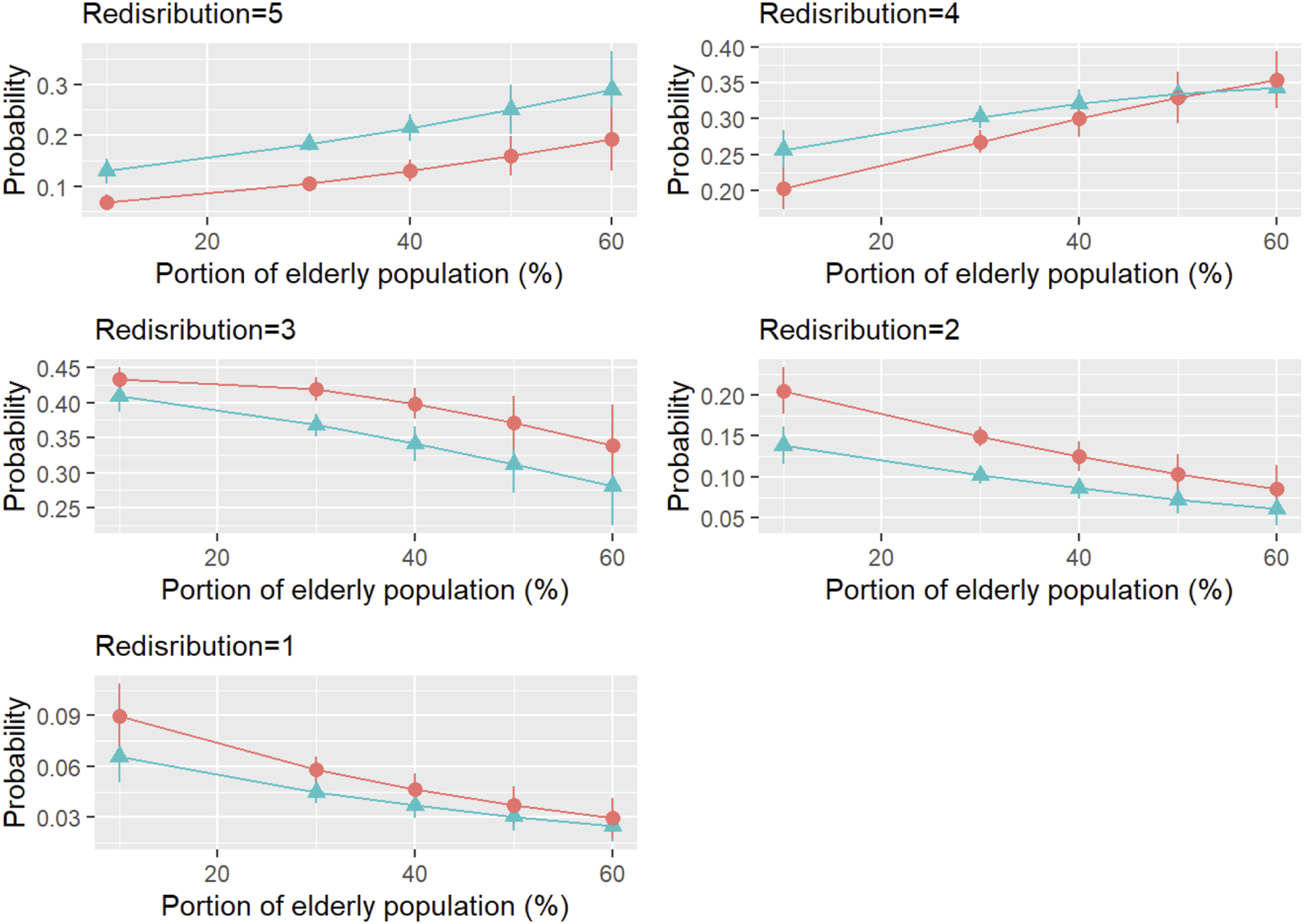
For wealthy individuals, community interests have a significant effect on support for social policies. Specifically, individuals dwelling in a demographically declining community are less likely to support free competition and more likely to support redistribution. This finding supports Hypotheses 3. It should be noted that this tendency is inconsistent with not only individual interests, but also in-group altruism. Among rich people, the support for redistribution is inconsistent with their group interest as an income class. Specifically, community interests have independent effects that differ from those of individual interests. However, for disadvantaged people, this tendency was not vividly observed. It is assumed that as the interest of poor people is positively correlated with the interests of the community, the effects of community interests are absorbed into the effect of income class interest as a group interest.
Summary of Analytical Results
To summarize the results of the analyses, the effects of group interests (community interests) on support for social policies were examined in the previous subsection. The analysis clarified that individuals living in a demographically declining municipality were less likely to support free competition and more likely to support redistribution. Even after controlling for the effects of demographic characteristics and socioeconomic status, including household income, community interests influenced support for social policies. This implies that community interest plays a significant role in building policy preferences.
The tendency to consider group interests (community interests) is evident in wealthy individuals. Against their individual interests, affluent people dwelling in demographically declining municipalities are less likely to support free competition and more likely to support redistribution. They tend to consider community interests when strongly deciding on policy preferences. For underprivileged individuals, the tendency to consider community interests is not contrary to their individual interests. Hence, this tendency was not obvious.
DISCUSSION AND CONCLUSIONS
In this study, data from SSM 2015 were analyzed to examine hypotheses related to support for social policies (free-market-oriented and redistribution policies). After controlling for the effects of respondents’ demographic traits and socioeconomic status, the following effects of population aging (the proportion of the elderly population) on support for social policies were confirmed: the negative effects of population aging on support for free competition and the positive effects of this factor on support for redistribution. These effects support Hypotheses 1 and 2, which are related to community interest. Therefore, it can be concluded that community interests influence an individual’s policy preference.
Furthermore, it is also clarified that wealthy individuals tend to consider material group interests while deciding their policy preferences even when material group interests do not concur with their material self-interests. This finding supports Hypotheses 3 and implies that, in the case where material self-interest and material group interests contradict each other, the effects of material group interest can be observed conveniently.
Previous studies have clarified that self-interest is a strong predictor of support for social policies (Doherty et al., 2006; Weeden and Kurzban, 2017). However, they have not sufficiently examined what a self includes in these cases. Undoubtedly, the individual will be included in this self. In addition, family, community, race/ethnicity, or social class might also be included in it. If individuals consider community interests when they decide their policy preferences, this implies that the community is simultaneously included in the self of the individual. Therefore, social researchers need to consider material group interests (i.e., community interests) as part of self-interest as well as material self-interests.
Particularly, the policy preferences of individuals are formed in a complicated and multi-dimensional manner and, therefore, have many aspects. As mentioned in the “Background” section, the findings of previous studies have often been inconsistent. For example, social inequality might have a positive effect on support for redistribution (Finseraas, 2009; Kevins et al., 2018; Schmidt-Catran, 2016), but also a negative (or, at least, no) influence (Breznau and Hommerich, 2019; Dallinger, 2010; Lübker, 2007). Similarly, an increasing number of immigrants might have a negative effect on support for redistribution, but may sometimes have a positive effect (Brady and Finnigan, 2014; Burgoon et al., 2012; Kwon and Curran, 2016; Steele, 2016). Probably, all these imply that individuals will decide their policy preferences by considering various factors (specifically, various interests at the multi-levels) simultaneously.
The role of community interests in support for social policies has not been thoroughly examined. However, community have a significant meaning for supporting social policies. In Japan, a progressive decline in the population has been observed across all regions significantly and unevenly. For Japanese people, it is predicted that community interests will be increasingly critical (Chiavacci and Hommerich, 2017). Accordingly, community interests among them will contradict each other, making the policy decision-making process more difficult. Therefore, it is imperative for researchers to understand precisely the relationship between individuals’ policy preferences and community interests to cope with such difficult tasks adequately.
Limitations
It should be noted that the analyses in this study have certain limitations. First, an individual’s support for social policies was measured by only two items. Considering the complexity of the formation process of an individual’s policy preferences, it can be stated that the measurement of policy preferences used in this article was not sufficient. Similarly, this article took up only one item (a portion of the elderly population at the municipality level) as an index of community traits. Obviously, they are not a sufficient representation of the community’s traits. Therefore, other analyses of support for social policies should be implemented using different and more adequate items for policy preferences and community indexes.
Similarly, it needs to be noted that two dependent variables used in this study (support for free competition and redistribution) do not refer to specific social policies. Therefore, even if it is shown that the degree of demographical aging in a community has significant effects on support for redistribution (or free competition), the substantive meaning of redistribution (or free competition) questioned by the dependent variables will be open to discussion. We do not have information about what a respondent living in demographically declining areas thinks of when the respondent chooses a positive response for redistribution. As a task for future research, the effects of demographic decline in a community on support for redistribution should be examined using other variables referring to more specific redistribution policies.
Next, the analyses of this article focused on the municipality as a unit of community. However, it is not clear whether a municipality is an adequate unit. In some cases, the neighborhood might be more adequate than the municipality, while in other cases, prefectures might be more adequate. Additionally, if the effects of community on support for social policies are changeable depending on an analytic unit, identifying the best unit of community when considering the community’s effects will be a significant problem. In future research, examining why the unit is chosen as a unit of analysis will need to be discussed extensively.
Third, ideology is thought to be one of the main predictors of support for social policy. In this study, however, the effects of ideology on support for social policies were not controlled because the data from SSM 2015 had no adequate items to measure respondents’ ideologies. Therefore, future research should carefully consider the effects of ideology.
Finally, this article analyzed data from the SSM 2015, which was conducted only in Japan. Therefore, there is a possibility that the findings of this article are applicable only to the Japanese society of the 2010’s. While the hypotheses in this article were formalized, this was not ensured by the consumed data. To overcome this problem, the hypotheses presented in this article should be confirmed by analyzing other social survey datasets different from the SSM 2015. If similar results are acquired from different analyses based on different social survey data, they will confirm the robustness of the findings in this article.
CONCLUSIONS
Jaime-Castillo and Sáez-Lozano (2016) indicated that regarding preferences for tax schemes, individuals’ policy preferences are influenced by self-interest and ideology. Specifically, social researchers cannot easily determine what self-interest or ideology is. Thus, this article aims to answer the following question: What is self-interest in policy preferences? Accordingly, this article elucidated that when individuals decide their policy preferences, they tend to consider community interests, as well as individual interests. Essentially, not only material self-interest, but also material group interest needs to be included in the concept of self-interest.
It should be noted that group interests considered by individuals when forming their policy preferences were composed multidimensionally. Community interests have independent effects on support for social policies. However, as community interests have significant effects on support for social policies, the effects of other group interests (e.g., race/ethnicity, family interests) on support for social policies need to be extensively considered by social researchers (Breznau and Eger, 2016). If researchers focus only on community interests, they will tend to overlook complicated aspects of an individual’s policy preferences.
In this article, however, I focused only on the effects of living in an aging community on support for social policies because demographic decline is the most serious problem in the field of social policies in Japan. On the other hand, population aging is an important problem not only in Japan but also in other countries. For example, other East Asian societies besides Japan will also face serious problems entailed by demographic decline in the near future. Therefore, the findings of this study can be easily applied to other countries. Additionally, the logic employed in this study may be applied to other social problems related to support for social policies. For example, social researchers can apply this logic to the relationship between increasing migration and support for social policies. These possibilities should be carefully examined in future studies. The following will then be important.
As mentioned in the “Background” section, individuals’ policy preferences might have complicated aspects and inconsistent characteristics. Depending on which aspect of self-interest is emphasized by a social researcher, different characteristics will appear in individuals’ policy preferences. Some of the earlier studies related to policy preferences have shown that social inequality (or increasing immigrants) has various and inconsistent effects on support for social policies, depending on social contexts. This also implies that individual policy preferences are composed multidimensionally. Therefore, investigating the structure of individuals’ policy preferences is a complicated task for social researchers. Thus, this article contributes to the literature by revealing one of the reasons why it is not easy to determine the structure of individuals’ policy preferences.
Finally, for policymakers, this finding suggests that group interests as community interests might have priority in individual interests. As material group interests are part of self-interest, the priority of group interests to individual interests does not necessarily mean disregarding self-interest. On the other hand, previous studies (Hardin, 1968; Olson, 1971) have emphasized the contradiction between group and individual interests. Certainly, group interests are not the same as individual interests, and they may not always be harmonized. However, this does not immediately mean that respect for group interests is equivalent to disregard for self-interest. Factually, as wealthy people living in demographically declining communities tend to support redistribution policies, individuals themselves might have policy preferences against their individual interests at first glance. We should note that the relationship between collective interest and self-interest is highly complex, and therefore, they are not regarded as a dichotomy.
Footnotes
Acknowledgements

Funding
The author(s) disclosed receipt of the following financial support for the research, authorship, and/or publication of this article: This work was supported by the Grants-in-Aid for Scientific Research of Japan Society for the Promotion of Science (JP25000001, 18H03647, 19H00609, 21H00776).