




Abstract
The continuum of educational environments exists to ensure the most appropriate and least restrictive educational setting for students with disabilities. One setting schools use to provide services to students with an emotional disturbance (ED) is an alternative school. How schools make decisions regarding student placement into and out of this setting lacks examination. This study identifies factors considered when making placements into and out of three alternative schools for students with ED. A mixed-methods approach was used to collect data from key stakeholders from each school involved with decision-making authority regarding student placement. Findings include (a) limited transitioning of students back to less restrictive settings, (b) greater number of factors considered during exit decisions from alternative schools than entry, and (c) student’s return to a less restrictive setting not contingent on those factors considered when placing the student into the school.
The placement of a student into the appropriate educational environment is one of the most complicated and contentious issues in special education (Crockett, 1999; Simpson, 2004). Following the passage of the Education of All Handicapped Children Act (EAHCA) of 1975, later reauthorized as the Individuals With Disabilities Education Act (IDEA) in 1990, guidelines were established to direct how to determine the most appropriate, least restrictive educational environment for a student (Yell & Katsiyannis, 2004). Student placement is a component of the Individualized Education Program (IEP) and is to be determined annually. The decision should be based on consideration of the student’s educational needs as well as the impact of his or her behavior on the learning environment of peers (Yell, 1995).
School districts rely on an array of settings to provide instruction and services to address the various challenges associated with educating students with emotional disturbance (ED). As noted by Gliona, Gonzales, and Jacobson (2005), schools depend on a continuum of placements inside and outside of the general education classroom. This continuum may include special education consultation within regular education classrooms, a mix of resource and regular education classrooms, resource classes, special classes within a school, special day schools, home-based schooling, residential schools, or hospital schooling.
When students with ED exhibit chronic behaviors that prevent learning for themselves or others, or are so dangerous that they pose a threat to self, peers, or staff, schools often choose to place these students in alternative educational settings to address their specific educational needs (Atkins & Bartuska, 2010; Kleiner, Porch, & Farris, 2002). Students with ED, when compared with all other disability categories combined, are more likely to be educated in a setting that does not include nondisabled peers (Coutinho & Oswald, 1996).
Nationally, districts increasingly rely on alternative settings as a means to meet the challenge of educating students at risk of school failure. From 1997 to 2002, the number of public alternative schools in the United States more than tripled to nearly 11,000 (NCES, 2002). Students with ED are one of the populations most affected by this shift. According to the U.S. Department of Education, nearly 13% of students classified as ED were served in public or private separate facilities (Data Accountability Center, 2005). The percentage of students with ED in nontraditional school settings increases when one includes those placed in residential facilities, juvenile correctional programs, or hospital-based schools. Finally, though students with ED comprised only 8% of the total special education population, they constituted 44% of all students with disabilities placed in private settings (Greene & Winters, 2007).
Although a common definition for alternative schools does not exist, generally they involve the provision of specialized educational services for an at-risk population (Atkins & Bartuska, 2010). As school districts continue to rely on alternative schools to educate students with ED, it is critical that researchers explore all aspects of these programs, as is being done regarding other nontraditional educational settings. For example, researchers examining education in residential placements and juvenile correctional facilities have reported on students’ academic characteristics (Foley, 2001; Krezmien, Mulcahy, & Leone, 2008), placement factors (Baker, Archer, & Curtis, 2007; Cook & Hill, 1990), outcomes (Hornby & Witte, 2008; Risler & O’Rourke, 2009), program practices and services (Gagnon & Barber, 2010; Miller, Hunt, & Georges, 2006), participant attitudes (Harriss, Barlow, & Moli, 2008; Houchins, Shippen, & Jolivette, 2006), and transition from setting (Clark & Unruh, 2010; Trout et al., 2010).
Examinations of alternative schools specifically for students with ED, although recently receiving more attention from the research community, have been less comprehensive. To date, researchers have primarily investigated differences in students placed in self-contained schools versus self-contained classrooms (Lane, Wehby, Little, & Cooley, 2005a, 2005b; Mattison, 2011), but have also evaluated program effectiveness (Mattison & Schneider, 2009), and the use of targeted behavioral (Turton, Umbreit, & Mathur, 2011) and academic interventions (Bowman-Perrott, Greenwood, & Tapia, 2007).
Despite the use of alternative schools to educate students with ED, there is little research examining how students enter and exit these programs (Atkins & Bartuska, 2010; Frey, 2002). Although alternative schools typically serve students whose needs are not being met in the general educational environment, they suffer from a lack of “institutional legitimacy” (Raywid, 1994), often operating in isolation and independence (Atkins & Bartuska, 2010). As school districts continue to rely on these placements, there is a need for more targeted investigations into the variables considered when determining educational setting. The goal of this study was to examine decision making at the points of entry and exit by identifying factors considered by staff in three alternative schools when determining placement of students with ED.
Method
Research Design
The present pilot study used a sequential exploratory mixed-methods approach (Creswell, 2003). The quantitative method was guided by the results of the qualitative stage. In turn, the quantitative results were used to extend the qualitative findings (Fraenkel & Wallen, 2008). A five-stage process, modified from the paradigm for an integrative mixed-methods research approach (Castro, Kellison, Boyd, & Kopak, 2010), was used to collect and interpret findings. The stages (see Figure 1) consisted of (a) participant selection, (b) qualitative data collection, (c) interpretation of findings, (d) quantitative data collection, and (e) data analysis. Using this process, the lead researcher (first author) conducted interviews with staff at three alternative schools exclusively serving students with ED to identify factors used in determining student placement into and out of the programs. This mixed-methods approach allowed the researcher to collect qualitative and quantitative data in unique yet similar settings to examine the programs, their differing abilities to return students to less restrictive settings, and the features that contributed to differences.

Research process.
Participant Selection
School characteristics
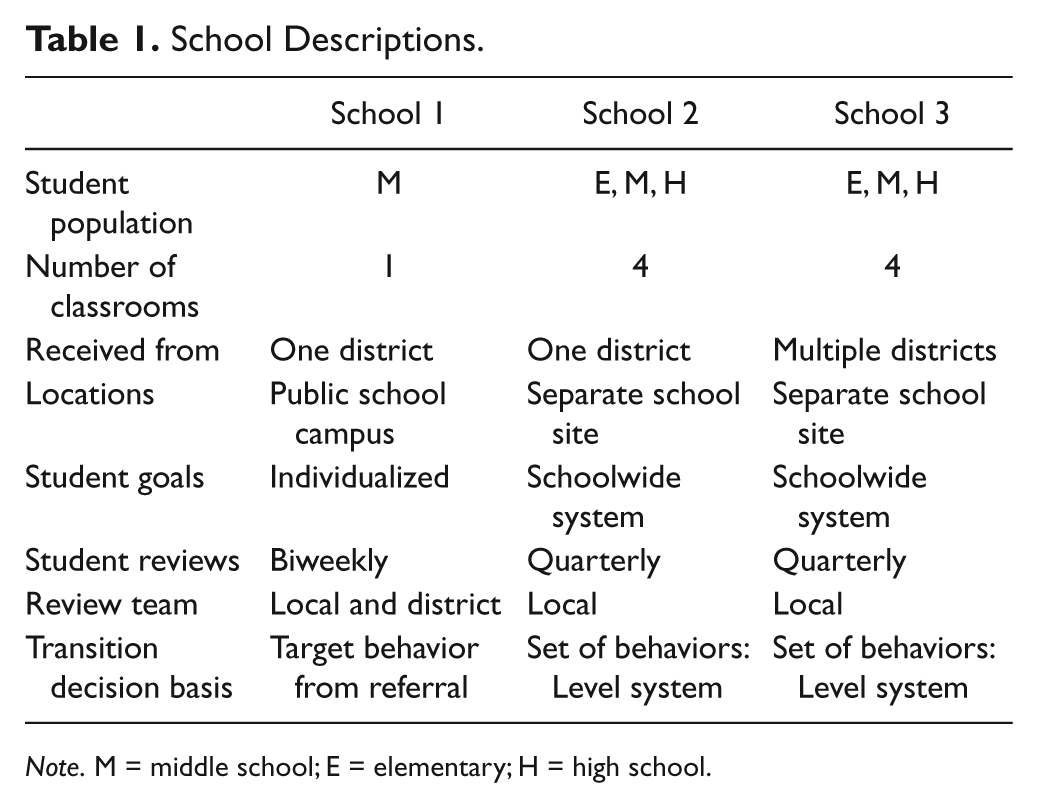
Three school sites located in the Southwestern United States were selected to participate in the study. The state licensing the three alternative schools provides a broad definition of the components required to operate a school for students with ED. To qualify for the study, a site had to (a) be approved by the state as an alternative school for students in the special education category of ED, (b) be included in the continuum of service delivery options within the local educational agency (LEA), (c) be housed in a classroom or building on a general education campus or a separate site within the LEA, (d) provide a curriculum aligned with state standards, (e) be populated by no more than 12 students per classroom, (f) be staffed by at least one teacher and one full-time paraprofessional, (g) be able to regularly provide a mental health component, and (h) be able to provide local case management for students. Each school is described below. Table 1 provides a summary of school information.
School Descriptions.
Note. M = middle school; E = elementary; H = high school.
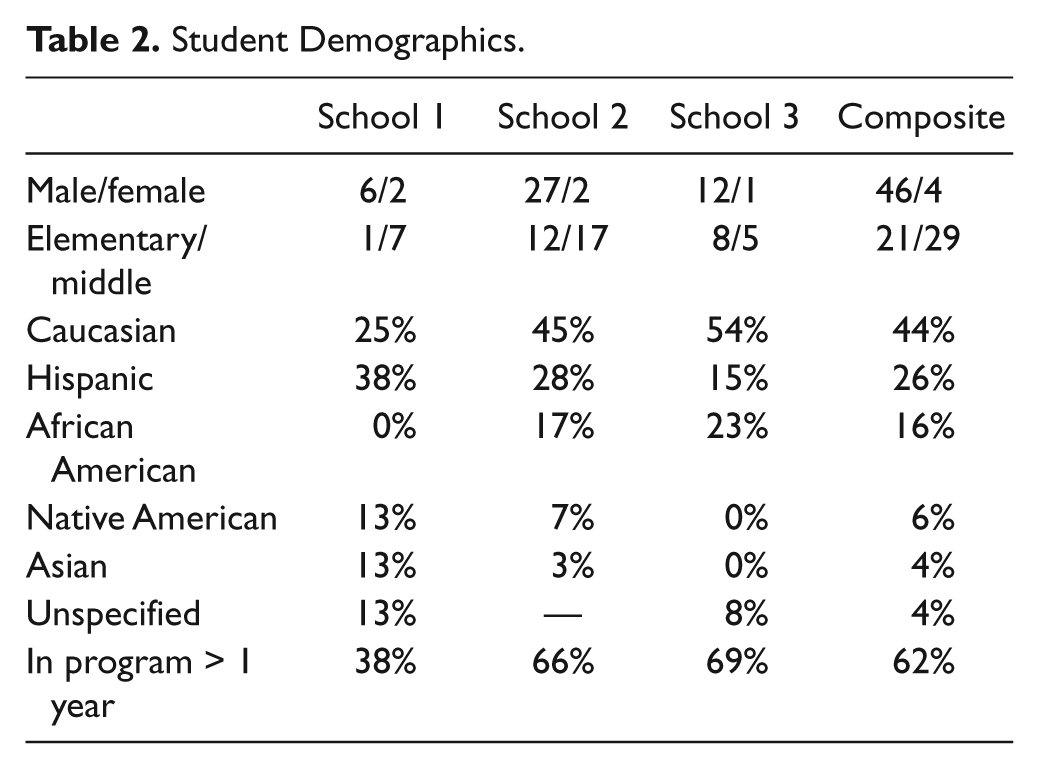
The first participating school, located on the campus of a public middle school, operated as a separate, alternative educational school for students with ED. It consisted of a single classroom populated by seven middle school and one fifth-grade student with ED. The students were referred from a single school district of nearly 20,000 students, primarily Caucasian (70%) and Hispanic (25%). The eight students in the class were primarily male (n = 6, 75%) and Hispanic (n = 3, 38%); 38% (n = 3) had been in the program for at least 1 year. Although students spent the majority of their academic day in the classroom, they were provided the opportunity to interact with peers from general education in shared settings like hallways and cafeteria. One lead teacher and two paraprofessionals worked in the classroom.
Transition was based on the individual need and objectives for each student. School 1 met twice monthly to evaluate the progress of all students in the school. Student review teams at School 1 consisted of program personnel, a representative of the possible receiving school, and a district representative.
The second participating school, housed on a separate campus, consisted of six classrooms. The school received students from a single district of nearly 130,000 students, with a population largely Caucasian (48%) and Hispanic (46%). The 29 students included in the study were primarily male (n = 27, 93%), Caucasian (n = 13, 45%), and in Grades 6 to 8 (n = 17, 59%); 66% (n = 19) had attended the school for at least 1 year. Each classroom was assigned one lead teacher and at least one paraprofessional to provide support. Students spent their entire academic day on campus and did not have access to nondisabled peers during their school day.
The third participating school, with four classrooms, was a private self-contained school for students with ED that contracted with multiple school districts. No data were provided as to the population size or demographics of the referring school districts. The student population included in this study, 13 in total, was primarily male (n = 12, 92%), Caucasian (n = 7, 54%), and in Grades K-5 (n = 8, 62%); 69% (n = 9) had been in the program for at least 1 year. Each classroom had one lead teacher and at least one paraprofessional. Students’ school day included social skills, technology, and vocational education. Students did not have opportunities to interact with nondisabled peers during the course of their school day.
To determine student advancement toward transition, Schools 2 and 3 used a level system based on daily point sheets and common schoolwide goals. Occasionally, an individualized goal was provided in addition to set schoolwide goals. Student progress reviews were conducted on a quarterly basis, with transition being considered for students who had met level system criteria for schoolwide behavior goals. Criteria consisted of obtaining 90% on four-to-five behavior goals for 9 consecutive weeks. Consideration for transition began only after criteria were met. Review teams for Schools 2 and 3 consisted of program-based personnel. When a student was determined to be ready for transition, a separate meeting was scheduled with a representative from the receiving school.
Student populations
Students were not direct participants in this study. However, the focus of interviews with staff participants centered on factors leading to transition of elementary and middle school–aged students enrolled in their alternative schools. The study was conducted at the beginning of the school year. Statistics for student populations came from the previous school year. The lead researcher limited the discussions to elementary and middle school students to exclude additional considerations related to transition at the secondary level, such as a student dropping out of school or choosing an alternative diploma option.
Staff participants reported demographic data for elementary and middle school-age student populations served at their individual site (see Table 2). The following data reflect the collective totals for all three self-contained schools (N = 50). The majority of students were male (n = 46, 92%) with a larger proportion (n = 29, 58%) in middle school than in Grades K-5 (n = 21, 42%). Student populations represented a variety of ethnicities with Caucasian being the most commonly enrolled (n = 22, 44%), followed by Hispanic (n = 13, 26%), African American (n = 8, 16%), Native American (n = 3, 6%), Asian (n = 2, 4%), and unspecified (n = 2, 4%). Overall, 62% (n = 31) had maintained their current placement in the self-contained school for at least 1 year.
Student Demographics.
Staff participants
Staff participants were selected from among the program staff working in the three alternative schools for students with ED. The criteria for participation were designed to recruit individuals with experience and specific program knowledge. Participants were required to have (a) worked at the specific site during the 2009-2010 school year and (b) participated in the decision-making process for all students from their program who were included in the study. Participants from the three schools included the lead classroom teacher (School 1), the school psychologist and principal (School 2), and the school principal (School 3).
Qualitative Data Collection
The lead researcher conducted interviews using the narrative inquiry process (Marshall & Rossman, 2010). In narrative inquiry, the participant retells a personal experience. In this case, the participant shared why each individual student was placed into the program (entry) and how the staff member or transition team came to determine whether the student was prepared to transition to a less restrictive educational environment (exit). Although the participants were encouraged to use notes and school records when needed, they often recounted factors from memory, relying on past and current assumptions about the student. The researcher implemented this method to produce responses of a more reflective and personal nature.
Following agreement to participate in the study, the researcher conducted a 1- to 2-hr interview with the participants at each individual school site. Interviews were conducted in a setting of the participants’ choice. Prior to the interview, a document with the questions to be asked was provided to allow participants the opportunity to address any concerns preceding the session, as well as to allow preparation of necessary reference materials. All interviews were recorded, transcribed, and interpreted by the lead researcher.
Participants answered questions related to their alternative school and specific to each individual student attending from the previous school year. The researcher asked closed-ended and open-ended questions. Closed-ended questions, used to collect specific responses, produced data pertaining to demographics and educational experiences for each individual student. The responses included (a) each student’s age, grade level, ethnicity, and gender; (b) the number of months educated in the current self-contained placement; (c) whether the student was ever considered for transition during the school year; and (d) whether the student transitioned to a less restrictive setting. The final question produced three possible responses with respect to student transition. Generally, students were or were not transitioned to a less restrictive setting. However, one school offered the option of partial transition, defined as a student attending at least one class with nondisabled peers while still being enrolled in the alternative school. An example would be a student participating in a general education gym or science class for one period of the academic day, while receiving the remainder of their educational services in the alternative school.
Open-ended questions asked the participants to state (a) their school’s mission and approach to working with students with ED, (b) the rationale(s) for each student’s referral to the program, (c) the specific exit criteria related to that individual student, and (d) if the student did not exit the program, why that decision was made. In many cases, the respondents provided brief answers, often citing a student’s failure to meet a schoolwide benchmark criterion. In these situations, participants were encouraged to elaborate and identify specific factors that contributed to the team’s decision to maintain the student’s placement in the alternative school.
Interpretation of Findings
The researcher transcribed the interviews and a member-check was conducted with participants reviewing the initial transcripts for accuracy. One participant made revisions to the transcript to modify responses. All participants approved final transcripts prior to coding.
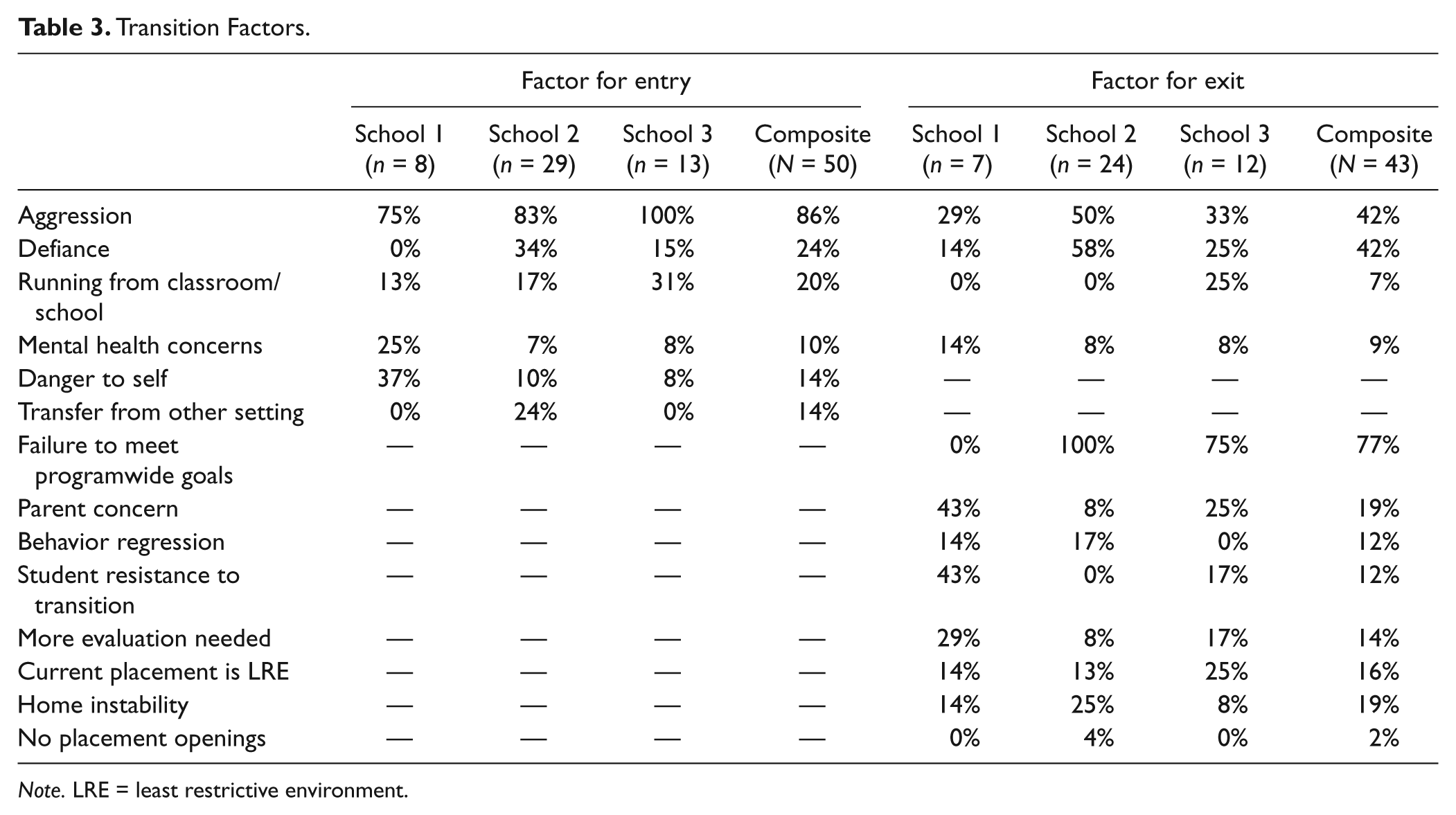
Following participant approval of the transcribed materials, the researcher reviewed and coded the interviews for factors associated with a student’s entrance to, maintained placement, and/or exit from the self-contained ED program. Among the three participating schools, five factors were identified as reasons students were placed in the self-contained schools. These included (a) aggression, (b) defiance, (c) running (either from class or school grounds), (d) concerns about the student’s mental health, and (e) student performance of behaviors resulting in harm to self.
Twelve factors were identified as reasons students were not ready to be transitioned to a less restrictive educational environment. Those factors, in no specific order, were (a) failure to meet program goals as determined by a schoolwide level system, (b) parent resistance to transition, (c) behavior regression, (d) aggression, (e) more evaluation time needed, (f) program determined to be the least restrictive environment (LRE), (g) student resistance to transition, (h) concerns as to the mental health of the student, (i) instability in student’s living situation, (j) no available placement options for transition, (k) defiance, and (l) running from class or school grounds.
Quantitative Data Collection
Following coding, the researcher created a single-question checklist consisting of the 12 items participants identified as factors resulting in decisions to maintain student placements in the alternative schools. The purpose was to allow participants to add, substitute, or subtract factors previously identified as the rationale for maintaining a student’s placement in the self-contained school.
A second interview, lasting 30 to 45 min, was conducted with the participants from each self-contained school within a 4-week period of the initial interview. Participants used the factor list to review their reporting on students who did not transition. Participants were asked to reanswer the question, “Why did the student not transition during the previous school year?” for each individual student. Using the factor list, participants identified all factors used in the rationale for maintaining the student’s placement.
Data Analysis
The data from the closed-ended questions (first interview) and the responses generated by participants using the factor list (second interview) were analyzed and communicated using descriptive statistics. The categories reported include (a) student demographics, (b) degree of placement change, and (c) factors considered in a student’s change of placement. Data are reported as a percentage in relation to the total student population.
Results
Entry Into Alternative School
Participants were asked questions to identify factors leading to the placement of students into their alternative school. Findings reflect a composite of all three programs (N = 50). Individual program results are provided in Table 3. Six unique factors for entry were identified. In many cases, schools identified multiple factors for each student, thus the identified factors add up to more than the total number of participants. “Aggression” was the primary reason identified by participants (n = 43, 86%) for placement of students in the alternative school setting. “Defiance” was the second most commonly identified factor (n = 12, 24%), followed by “running from classroom or school grounds” (n = 10, 20%), “performing behaviors resulting in danger to self” (n = 7, 14%), “placement by transfer from residential treatment program or changing of school district” (n = 7, 14%), and “mental health concerns” (n = 6, 12%).
Transition Factors.
Note. LRE = least restrictive environment.
Exit From Alternative School
Participants reported whether a change in placement was considered for each individual student (N = 50). To be considered, a meeting needed to be held specifically to discuss a change of placement for the student. Individual program results are found in Table 4. Across all three programs, 34% of students (n = 17) were considered at some point during the school year for transition to a less restrictive setting. Based on all students in the study, 22% (n = 11) attempted transition at some point during the school year. An attempt at transition was defined as the student participating in at least one class with nondisabled peers. Some students (n = 4, 8%) were provided the option of a partial transition. Among all students, 14% (n = 7) fully transitioned by the end of the school year.
Transition Outcomes.

Continuation in Alternative School
Participants were asked to identify factors resulting in a decision to maintain the student’s placement in the alternative school. Twelve factors were identified. Findings reflect the percentage of occurrence across all students determined not ready to transition (N = 43). Individual school results are found in Table 3. Across all schools, the primary factor contributing to maintaining placement in the alternative program was the student’s “failure to meet programwide goals based on a level system” (n = 33, 77%). Other factors cited were “aggression” (n = 18, 42%), “defiance” (n = 18, 42%), “home instability associated with frequent changes in living placement” (n = 8, 19%), “parent concern with placement change” (n = 8, 19%), “alternative placement determined as LRE for student” (n = 7, 16%), “more time needed to evaluate student progress” (n = 6, 14%), “behavior regression” (n = 5, 12%), “student resistance to transition” (n = 5, 12%), “mental health concerns” (n = 4, 9%), “running from class or school grounds” (n = 3, 7%), and “no openings in less restrictive settings” (n = 1, 2%).
Full Transition From Alternative School
Across all settings, seven students were fully transitioned to a less restrictive setting. The primary reason identified as the deciding rationale for transitioning a student was he or she having met a programwide standard in accordance with the school’s level system (n = 5, 71%). The other two cases represented unique approaches. One school was able to integrate a student back into mainstream classes following a progressive partial transition approach that ultimately resulted in full transition. In another case, a student was transitioned to a less restrictive setting after the alternative school reviewed factors contributing to the disability and determined the more restrictive, alternative placement was not appropriate.
In the schools studied here, transition decisions were influenced by program- and non-program-related features. Among program-related features, transition was more likely to be considered or attempted if the school (a) implemented partial transition, (b) was located with or near the returning school, and (c) frequently involved personnel at the receiving school both prior to and during the transition process.
Discussion
This study examined program decision making at the points of entry and exit by identifying factors staff considered when determining placement of students with ED into or out of three alternative schools. Findings generally showed similar patterns across the three schools. First, limited transitioning occurred for students from alternative schools back to less restrictive settings. Only seven students (14%) transitioned. Second, although six specific factors led students to be placed into the alternative schools, a broader list of 12 factors was considered when deciding to maintain or change student placement. Third, a student’s return to a less restrictive setting was not necessarily contingent upon those factors considered when placing the student into the program and often included factors unrelated to student academic or behavioral performance.
IDEA mandates the provision of a free and appropriate public education in a student’s LRE. For students with ED, the phrases “appropriate” and “least restrictive” can leave room for varied interpretations about learning environments, especially when those terms are applied to nontraditional educational settings. Alternative schools may provide an important resource by offering unique educational services specifically tailored for students with ED during those times when these students cannot be educated with nondisabled peers. However, the need for intensely restrictive settings as part of a continuum of placements also warrants scrutiny through investigations of program practices.
Aggression was the most frequently cited reason students were referred for placement into the alternative schools (86% across all programs). However, it was not identified as the most common reason for maintaining a student in the alternative placement. In fact, aggression was named a factor for only 42% of students when transition was determined not to be appropriate. The primary purpose of alternative schools for students with ED is to address the problem behaviors leading to the placement so that students can return to a less restrictive setting. Therefore, a need exists for more information about why factors unrelated to the initial placement seem to prevent students from transitioning back to less restrictive environments.
Failure to meet the requirements of a schoolwide level system was the most common reason students were denied transition (77% across all programs). In Schools 2 and 3, the level system required students to “qualify” out of the more restrictive placement by performing program-specific behaviors at a prearranged level (often 90% of the time) for a set period (up to 9 weeks). If a student was unable to meet the goals of the level system, he or she was deemed to be in the LRE. Teachers working with students with ED rely heavily on level systems (Bauer, 1986). Unfortunately, most of these systems are developed through staff collaboration or teacher creativity rather than research, fail due to lack of implementer knowledge, and may not even include necessary components that would enable successful transition back to less restrictive settings (Cancio & Johnson, 2007; Farrell, Smith, & Brownell, 1998). The use of a level system as the primary method to determine student educational placement is of some concern.
Perhaps the most significant concern with the use of level systems is their legality. Scheuermann (1994) identified two ways level systems may restrict student access to mainstreaming and impact placement decisions. First, restricting transition to only students who have achieved the highest tier of a level system frames placement as an earned privilege, a violation of a student’s rights under IDEA. Placement decisions are to be based on the student’s educational needs, not student status. Second, level systems may violate a student’s IEP if they use a universal entry point, starting all students at Level 1, and fail to provide individualized conditions for movement through the system. Programs that construct level systems not based on goals identified in a student’s IEP risk violating special education law.
In the schools studied here, factors unrelated to the program, student’s behavior, or academic deficits influenced transition decisions. These included the receiving school’s perception of safety, student or parent preferences, and home environment. These factors not identified during the original placement into the alternative school frequently inhibited the student’s return to a less restrictive setting.
Students with ED are often placed in restrictive settings because they present a danger to self or others. Once removed, school districts may be resistant to reintegrate students because of parents’ concerns, insufficient staffing to serve students with ED, or lack of a less restrictive option in the school system. As a result of growing concern over school safety, the burden of proof often lies on the displaced student to demonstrate he or she will not present the same problem behaviors that led to placement in the alternative setting.
Participants reported that some parents and students preferred the alternative school setting due to the services it provided, the staff’s willingness to work with more challenging behaviors, and the decreased frequency with which the parent had to be called in. Even though the school felt some students were prepared to transition out of the program, they adhered to the requests of the child or parent. Participants also described several instances of maneuvering by either student or parent to ensure a change of placement did not occur.
Although an exact percentage was not collected for this study, many students were part of the state’s foster care system. Participants considered stability in home life to be a desirable asset to successful reintegration. Frequent changes in home placement, termed instability, were a factor in deciding against transition for 19% of students. In these cases, the school’s decision to provide stability by maintaining the current educational placement took precedence over predetermined conditions for transition to a less restrictive setting.
Two particular limitations should be noted. First, we recognize that districts may benefit financially from placing students into alternative settings. This topic has received previous attention in regard to placement of students into special education with researchers finding financial incentives boost special education enrollment and may lead to manipulation of student disability classification (Greene & Forster, 2002; Wishart & Jahnukainen, 2010). As part of a state’s special education funding formula, school districts often receive dramatic increases in their funding when serving students in alternative schools versus self-contained classrooms. Coutinho and Oswald (1996) found higher per pupil revenues related to placement in more restrictive settings. We are not suggesting self-serving behavior by school districts but acknowledge that factors outside the scope of this investigation may also contribute to a school district’s decision to return students to less restrictive settings. Although this study focused solely on the perspective of the alternative school attempting to exit a student, future research focusing on the receiving school might shed light on this issue.
Second, as with most studies examining students with ED, the size of the population included is relatively small (schools N = 3; students N = 50). Findings add to the literature regarding students with ED but should not be used to make generalizations. One challenge in generalizing research on alternative schools serving students with ED is that the characteristics and requirements in programming have great variability. Although the schools included here shared a common definition for alternative schools for students with ED outlined by the state in which they operated, programs in other states may differ based on the populations they serve, the staffing they provide, and the format by which they deliver services.
Recommendations
Determining where students fit best along the continuum of placements presents considerable challenges to special educators. Although it accounts for the variety of environments needed to educate students with ED, no clear rationale exists as to how these students should move from setting to setting. The findings here show this to be especially true for students placed into alternative schools. Placement decisions were influenced by a multitude of factors, only some of which related to student academic and behavioral performance. As the operation of these programs undoubtedly will continue, sustained research into their practices, compositions, and policies is needed to ensure appropriate and effective educational services for students with ED.
Policies at the state and local levels should be revised to better address placement issues. Effective policies might focus on district accountability and require increased documentation of their efforts to educate students with ED in the LRE. Determining why students are not transitioning from restrictive settings and how districts will address these factors must be a priority. In doing so, the onus of moving a student to less restrictive placements falls on the school, not the student with a disability.
Finally, the use of level systems must be under increased scrutiny. As noted, questions exist as to the legality of this practice for determining student educational setting. In addition, programs are not held to a standard of reliability and validity for the practice. It should be expected that measurement tools will be based on evidence, used frequently, and implemented by practitioners who have received training and demonstrated mastery in their use.
These policy recommendations address the gray area of determining educational placement for students with ED. By providing more oversight and accountability to those working with our most challenging students, we hope the quality of intervention delivered in restrictive settings results in improved outcomes for students with ED.
Footnotes
Authors’ Note
The manuscript has been reviewed and edited to ensure no acknowledgments, financial disclosure information, author notes, and/or other text could identify the authors to reviewers.
Declaration of Conflicting Interests
The author(s) declared no potential conflicts of interest with respect to the research, authorship, and/or publication of this article.
Funding
The author(s) received no financial support for the research, authorship, and/or publication of this article.