



Abstract
Facilitated individualized education planning (FIEP) presents an alternative to formalized dispute resolution procedures, which can have damaging financial and relational consequences for families and schools. Although recommended as an alternative dispute resolution practice, minimal research has examined its implementation and evaluation. In this study, we described where and how FIEP was being implemented and what types of data state educational agencies (SEAs) implementing FIEP were collecting. In two phases, we contacted representatives of each SEA in the United States, asking them to complete a survey on their state’s use of FIEP, and then to share outcome and participant feedback data and data collection forms. From 43 responses in the first phase, we found that almost half of SEAs are using FIEPs (n = 24), and of those not currently using FIEP, 12 were considering implementing the practice in the future. In the second phase of the study, we found that six states that responded to the request for data captured similar content on meeting outcomes and participant feedback. Outcome data provided preliminary, initial evidence for the potential effectiveness of FIEP in achieving positive outcomes in the form of agreement or consensus regarding IEPs. Implications for practice, research, and policy are discussed.
First enacted in 1975 as Public Law 94-142, the Individuals With Disabilities Education Improvement Act of 2004 (IDEA) provides federal funds to help state educational agencies (SEAs) and local educational agencies (LEAs) offer special education and related services to students with disabilities. This provision of federal funds comes with certain requirements, including proscribed formal dispute resolution mechanisms. Many SEAs have found these mechanisms exact a high cost, both financially and to the parent–school partnership (Mueller, 2009). According to the IDEA regulations, the public agency providing special education services must take affirmative steps to ensure parental participation in the development of the individualized education plan (IEP; 34 CFR §300.300). The IEP is central to Part B of the IDEA, the portion of the law that pertains to school-aged youth. The IEP guides the provision of special education and related services to each IDEA eligible student, age 3 to Grade 12. In mandating parental involvement in the IDEA, Congress recognized that parents offer an important perspective to the development of the IEP. Working cooperatively on an IEP team, schools and families can create satisfying and effective IEPs that increase the likelihood of student success (Fish, 2008).
Unfortunately, IEP teams do not always work in full cooperation. In creating the IDEA, Congress also recognized that the parties to the IEP team could experience conflict. When parents and the school disagree, the IDEA provides for formalized procedures to resolve disputes and protect the child’s right to appropriate educational programs (34 CFR §300). In general, these processes are initiated by a parent or guardian as a result of unresolved conflict that occurs over a period of time (Center for Appropriate Dispute Resolution in Special Education [CADRE], 2004). Specifically, the IDEA affords parents the right to appeal an IEP team decision and to settle other special education disputes through three mechanisms: state administrative complaint (34 CFR §300.151-300.153), due process hearing (34 CFR §300.507-300.516 and 300.532-300.533), or mediation, which must be offered, at a minimum, whenever due process hearing is requested (34 CFR §300.506). Throughout this article, we refer to these three processes as formal dispute resolution, because they are mandated under the IDEA.
Among these formalized mechanisms of dispute resolution, due process in particular has been criticized for its inability to repair the family–school relationship following dispute (Getty & Summy, 2004), and for being too expensive for schools and families (Mueller, 2009; Pudelski, 2013). Mediation, although less costly (Mueller & Carranza, 2011), may be initiated too late in a dispute to undo damage to the family–school relationship (Mueller, 2009), and the post-mediation family–school relationship may not be improved by this process (Nowell & Salem, 2007). State administrative complaint, although cost-effective for families, can involve a heavy allocation of resources at the SEA level (U.S. Department of Education, 2013). In addition, because the state administrative complaint may be investigated and resolved by SEA officials outside of the IEP meeting, this mechanism may provide limited opportunity to improve the family–school relationship or IEP team communication (Michigan Department of Education, 2013).
In the past 15 years, the financial and relational costs associated with formalized dispute resolution mechanisms have prompted some SEAs to seek out more efficient and cost-effective means of dispute resolution. One popular alternative model is the facilitated individualized education planning (FIEP) process. An objective of the FIEP process is to reduce costs and “avoid more adversarial procedures such as due process hearings” (CADRE, 2004, p. 7). Unlike the IDEA mandated, formal dispute resolution mechanisms discussed above, FIEP occurs in the IEP meeting, generally in the midst of some level of conflict, but before impasse. FIEP is usually requested when the parents and the school personnel agree that a facilitator would assist with communication and problem solving among the team members, who may have a pre-existing history of contentious interaction, or who may need to address IEP team topics that are sensitive or complex (CADRE, 2004; Pudelski, 2013).
Beginning in the 1960s as a formal process, meeting facilitation was initially designed to help business groups work together productively and effectively, while minimizing dysfunctional group dynamics (Doyle, 1996). In the late 1990s, JDL Associates, Interaction Associates, and the Interaction Institute for Social Change adapted a meeting facilitation curriculum called Essential Facilitation (Interaction Associates, 1998) to the IEP team process (Little & Bellinger, 2000). The resulting curriculum, Essential Facilitation for IEP Meetings (JDL Associates, 1999), was the first formalized program that implemented the principles of facilitation in the IEP meeting. This curriculum included four days of instruction on creating ground rules, meeting agendas, communication, and negotiating skills, as well as training on maintaining meeting focus and creating consensus (Little & Bellinger, 2000).
Since its inception, the principles of IEP meeting facilitation have been adapted formally and informally to meet the needs of implementing school districts. Although several models of IEP meeting facilitation currently exist throughout the country, Mueller (2009) opined that seven essential components were necessary for successful IEP meeting facilitation: (a) a neutral facilitator, (b) an agenda, (c) meeting goals created by each member of the team, (d) ground rules, (e) an environment that fosters collaboration, (f) communication strategies that eliminate any power imbalance, and (g) the use of a parking lot, which is a written record where the facilitator can respectfully place any off-topic ideas that come up in the meeting, so that they may be addressed more efficiently at the meeting’s end. Although pared down, these components reflect the core components of the earliest facilitated IEP training (Diliberto & Brewer, 2012; JDL Associates, 1999).
Although Mueller and JDL Associates have provided information that could be useful to SEAs implementing FIEP, to date, there have been no published studies documenting the state of FIEP implementation throughout the country. Instead, available studies have examined its implementation or its evaluation on a smaller scale (Barrett, 2013; Mueller, Singer, & Draper, 2008). Despite this lack of state-level data regarding implementation, the School Superintendents Association has recommended that Congress mandate FIEP in the next re-authorization to IDEA, and indicated that the majority of special education disputes can be resolved with this process (Pudelski, 2013). Beyond reducing the use of formal dispute resolution mechanisms, it has also been hypothesized that FIEPs may be more effective in decreasing parent dissatisfaction (Mueller et al., 2008) and supporting the family–school relationship through collaboration (Mueller, 2009).
Research Questions
In light of policy recommendations related to FIEP, a study regarding FIEP implementation would be helpful to determine how widely FIEP is used, what data SEAs are collecting related to FIEP, and whether these data could be used to inform SEA FIEP practices. Thus, our main research questions were as follows:
These questions were addressed in two research phases, as described below.
Method
We refer to the two phases of this study as Phase I and Phase II. To answer our initial research questions, Phase I of this study relied on an online survey disseminated to contacts in each state and Washington, D.C. (identified collectively as SEAs). To answer our second research question, in Phase II of this study, we requested meeting outcome data and participant feedback forms from the SEAs that indicated in Phase I that they were currently implementing FIEP and collecting both these types of data.
Participants
Phase I participants included an SEA representative from 43 of the 50 states and the District of Columbia. These SEA representatives reported job titles including Director of Dispute Resolution (n = 2), other type of director (n = 7), Dispute Resolution Program Manager (n = 3), Dispute Resolution Coordinator (n = 8), other type of coordinator (n = 4), Dispute Resolution Consultant (n = 5), other type of consultant or specialist (n = 4 and n = 5, respectively). Non-responding SEAs (D.C., Delaware, Indiana, Montana, New Mexico, Oklahoma, South Carolina, Utah) were not isolated to any particular region of the United States. Phase II participants included six SEAs (Idaho, Ohio, Minnesota, North Carolina, Pennsylvania, and Washington) of a possible 11 that provided Phase I survey responses indicating the collection of outcome data and participant feedback data on FIEP.
Procedures
To collect Phase I data, we designed an online survey to assess FIEP implementation in the United States. First, to develop the survey, we examined the literature identifying possible goals of an FIEP program (CADRE, 2004; Pudelski, 2013) and studies examining its practice (Barrett, 2013; Diliberto & Brewer, 2012; JDL Associates, 1999; Mueller, 2009; Mueller et al., 2008). We created an initial version of the survey and entered it into Research Electronic Data Capture (REDCap; Harris et al., 2009). This version of the online survey was then beta tested by three individuals familiar with special education dispute resolution. After we made suggested changes that focused on clarity (rather than survey substance), the University Institutional Review Board approved the final online survey. A copy of the survey is available from the authors.
To disseminate the survey in Phase I, 51 SEA professionals identified through individual SEA websites and CADRE’s State/Territory Dispute Resolution Database (CADRE, 2014b) were contacted via email and telephone over a period of 6 weeks, beginning in mid-August 2014 and ending in early October 2014. These SEAs were provided with an online link and asked to complete the survey; if they had not completed the survey within 2 weeks, up to two follow-up emails were sent. A total of 43 SEAs completed the survey, with a response rate of 84%.
Between November and December 2014, we implemented Phase II of the study. We called the 10 SEA contacts identified during Phase I as collectors of both (a) outcome data and (b) participant feedback data. We also contacted the SEA in Minnesota that did not complete the full Phase I survey, but indicated during a recruitment conversation that they collected the requisite data. We required the collection of both types of data for inclusion in Phase II because this was likely to be a richer data source to answer our research questions. Specifically, we asked the SEA to send their (a) participant feedback survey, (b) de-identified participant feedback data, and (c) meeting agreement outcome data. Following telephone contact, the SEAs were emailed a formal letter, generally in the form of an open-records request, restating our request. Out of concern for administrative convenience, our request indicated that we were not requesting archived data or data stored off-site.
Overall, six SEAs of 11 eligible SEAs responded to the Phase II records request. The format of reported outcome data and participant feedback response from the six SEAs ranged from data summaries to complete data sets. Five of these six SEAs also provided the form or survey through which participant feedback was collected. We obtained Pennsylvania’s FIEP participant feedback form from CADRE’s Exemplar Items (CADRE, 2014a), which matched Pennsylvania’s reported participant feedback response data item for item.
Measures
The Phase I survey consisted of 55 items that were organized into three sections. These included questions about whether SEAs used FIEP, how FIEP was being implemented, and the collection of follow-up data.
FIEP use
SEAs were asked about past, current, and future use of FIEP using yes/no questions. If FIEP had been used in the past, but discontinued, respondents were asked to provide the reason for this. If SEAs had never used FIEP, we did not ask respondents to answer questions in the next two sections.
FIEP implementation
If SEAs currently used FIEP, or had used it in the past, they were asked about the time period during which their SEA started using FIEP (2-year periods with options from before 2004 to after 2012). Respondents were then asked a series of yes/no questions about facilitator training and monitoring. Respondents were also asked about satisfaction with the FIEP process on a scale from 1 (not satisfied) to 3 (very satisfied).
Data collection
Respondents were then asked a series of questions regarding types of data collected on (a) requested meetings, (b) declined meetings, (c) completed meetings and outcomes, (d) facilitator feedback, (e) other participant feedback, and (f) post-meeting follow-up. Respondents indicated the types of data collected for each category by selecting all those that applied from a drop down menu (e.g., see Table 1 for all participant feedback data types).
Participant Feedback Question Types Reported by State Educational Agency in Phase I (N = 13).

Note. X denotes data type collected by SEA. FIEP = facilitated individualized education planning; SEA = state educational agencies.
Analyses
For Phase I survey results, we calculated basic descriptive statistics, such as percentages, to describe where and how FIEP is being implemented, and what types of participant feedback and outcome data are being collected by SEAs. For Phase II participant feedback and outcome data provided by SEAs, we also calculated descriptive statistics to confirm findings from Phase I.
To analyze the types of questions asked on participant feedback surveys shared during Phase II, we descriptively coded all questions into broad, main categories that we identified by reading all surveys thoroughly. These included pre-meeting, during meeting, and post-meeting. We then discussed the characteristics of each category and independently coded all survey items. The final three categories were broken into a total of seven descriptive codes. The category of pre-meeting included three groupings: (a) FIEP Identifiers, such as case number and date; (b) Participant Pre-meeting Characteristics, such as participant role and meeting issue(s); and (c) Pre-Facilitation Experience, defined as prior experience with or feelings prior to the meeting. Participant experience during the FIEP was coded as relating to (a) Facilitator, defined as questions specifically referring to the actions of that individual; (b) Process, defined as questions pertaining to the participant experience during the meeting, or suggestions for improving the FIEP process; or (c) Outcome, defined as questions relating to the meeting outcome (e.g., agreement, consensus, written IEP). Finally, all questions relating to anticipated future activity were coded as post-meeting, including questions asking whether a participant would use FIEP in the future, would recommend FIEP, whether the FIEP reduced the need for future formal dispute resolution, or improved the parent–school relationship or communication going forward. At a second meeting, during which we reviewed agreement on all codes for individual survey items, we were at 90% agreement. We calculated total agreement by dividing the number of agreements by the number of agreements plus disagreements and multiplying by 100. Following discussion, we were able to reach 100% consensus on any disagreements.
Phase I: Results
FIEP Use
In all, 56% (n = 24) of participating Phase I SEAs indicated that they were using FIEP (see Figure 1). Of the SEAs not currently using FIEP, 12 of 19 respondents, or 63%, said that they were considering implementing FIEP in the future, and one (5%) reported having used it in the past, and discontinuing its use.

U.S. map of FIEP use.
FIEP Implementation
Among SEAs currently using FIEP that provided additional information (n = 23; not including Minnesota), only 13% (n = 3) started using FIEP before 2004, 35% (n = 8) began FIEP between 2005 and 2007, 22% (n = 5) between 2007 and 2011, and 30% of states (n = 7) reported implementing FIEP in 2012 or later. All but one state (96%) indicated that they used an FIEP model that relied on a trained, neutral facilitator. The specific facilitator training program used varied by state. One state (4%) used a national training model (Key 2ED; J. Little & Little, 2000), whereas five (22%) used training programs created by the state agency, and the majority (n = 17; 74%) selected an “other” type of training program not specified in the survey. In only five states (22%), trained facilitators were monitored or observed during meetings to assess fidelity of implementation of facilitation procedures. All SEAs using FIEP reported being satisfied or highly satisfied with the FIEP process.
Data Collection
Meetings
As shown in Figure 2, almost all (87%) the SEAs that were using FIEP collected data regarding the number of FIEP requests received, whereas less than half (43%) reported collecting data on the number of meetings declined. A large majority of states (87%) reported collecting data regarding completed meetings, but a smaller proportion (57%) collected more specific data on meeting outcomes (i.e., those ending in agreement between participants).
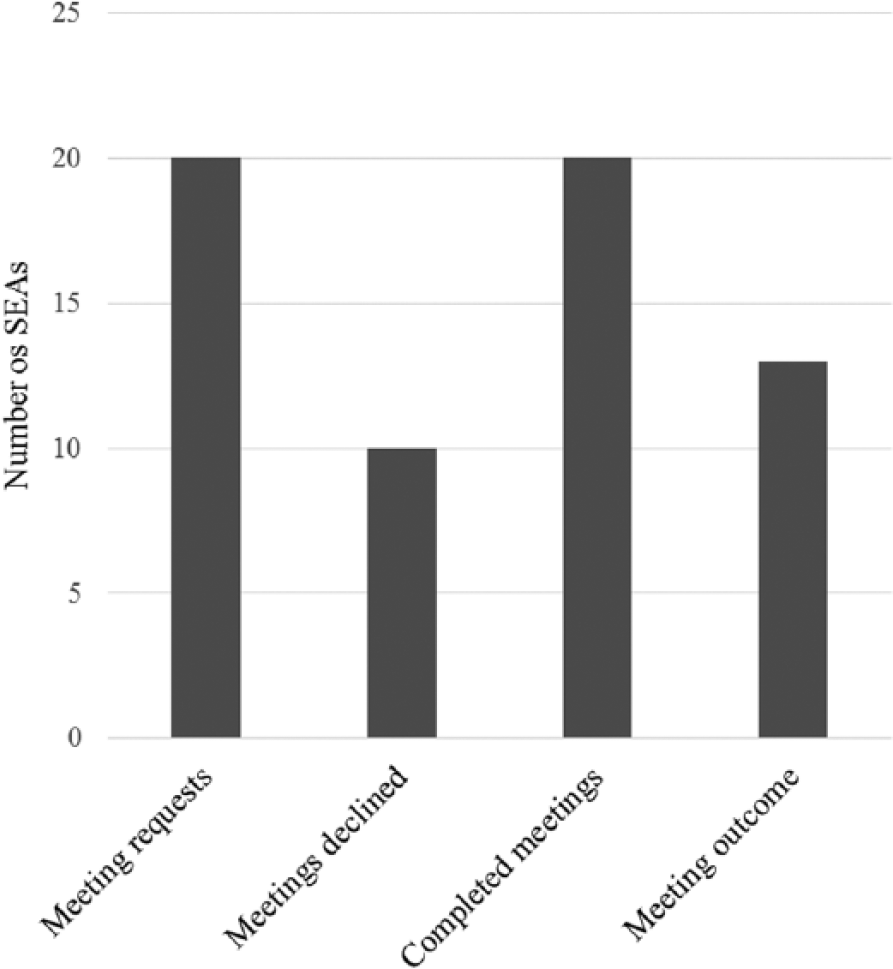
Types of data collected in FIEP meetings.
Feedback
Thirteen Phase I SEAs (57% of those that used FIEP) reported collecting data on the facilitator’s perspective regarding the FIEP process. Such data included facilitator training needs (n = 10, 77%), perceived level of conflict prior to FIEP (n = 4, 31%), perceived relationship of parties’ post-FIEP (n = 4, 31%), perceived relationship status of parties prior to FIEP (n = 3, 23%), or some “other” type of facilitator feedback (n = 8, 62%). On average, SEAs that collected facilitator feedback data collected two of these types of information (of five).
As Table 1 shows, 57% (n = 13) of SEAs using FIEP reported collecting some sort of participant feedback data from participants other than facilitators (e.g., families/guardians and school system employees); 69% (n = 9) of these states collected both facilitator and participant feedback. The types of participant feedback data collected most frequently addressed facilitator skill level (92%), future use of FIEP (85%), overall satisfaction with FIEP (85%), outcome data (77%), participant perspective after meeting (69%), and changes in communication between the family and school (62%). All other types of participant feedback data were collected by seven or fewer SEAs (54% or less). For respective sample ns, see Table 1.
In addition, five SEAs reported collecting follow-up data after the close of the FIEP meeting on features such as continued satisfaction (n = 5), educational programming (n = 4), communication (n = 3), or relationships between the family and school (n = 3). Four of these five states collected such data along with either facilitator and/or participant feedback.
Phase II: Results
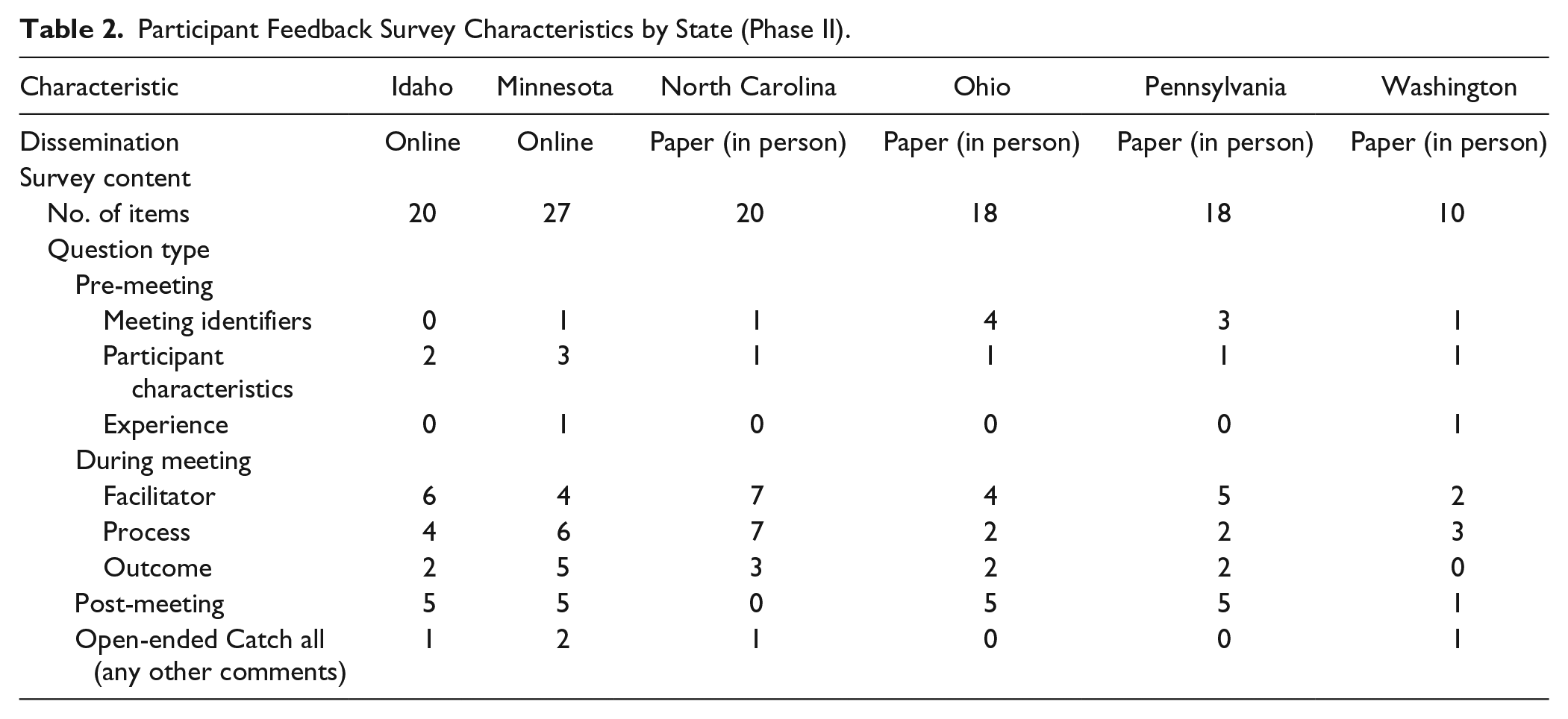
We acquired the participant feedback forms used in the six SEAs that participated in Phase II of the study. In addition, Phase II participants provided data regarding meeting outcome, participant feedback, or both. As shown in Table 2, most of the SEAs disseminated the participant feedback survey in person, following FIEP meetings, rather than online. The two states collecting data online used a web survey database known as Survey Monkey.
Participant Feedback Survey Characteristics by State (Phase II).
Participant Feedback Survey Content
Surveys used by SEAs varied in length and content. Each of the surveys consisted of closed-ended questions with responses provided on a Likert-type scale and at least one open-ended question. Including demographic and case identifying information, the feedback surveys requested a response to as few as 10 items to as many as 27 items, with a mean of 19 items across all surveys (see Table 2). Descriptive results regarding survey content, coded into the three main categories relating to pre-, during, and post-FIEP, are described below.
Pre-meeting
Each SEA asked at least one type of pre-meeting question, with one SEA addressing all three types (i.e., Identifiers, Participant Pre-Meeting Characteristics, and Pre-Facilitation Experience; see Table 2). All but one SEA asked at least one question about FIEP Identifiers to establish a means to differentiate meetings (e.g., meeting date). Each of the six SEAs also requested some information related to Participant Pre-Meeting Characteristics, including the participant’s role, the meeting issue(s)/the issue(s) that led to the meeting, how the participant was referred to the process, or how the participant felt prior to FIEP. In terms of Pre-Facilitation Experience, only two SEAs asked whether the participant had pre-meeting experience with the FIEP process.
During meeting
Five of six SEAs asked questions that addressed all three types of during meeting groupings: facilitator, process, and outcome (see Table 2). All six SEAs asked questions about facilitator behavior, with a range from two to seven questions relating to this topic. Questions relating to the facilitator addressed his or her neutrality, focus on the development of an appropriate IEP, ability to keep the team on task, and focus on the student’s needs. In addition, facilitators were judged on whether they listened to participants, gathered input from all team members, generated ideas for conflict resolution, as well as participants’ overall satisfaction with the facilitator. Although all SEA surveys solicited feedback on the FIEP process during the meeting, the number of questions posed again varied from two questions to seven. The question included most frequently across SEAs asked whether a participant was allotted adequate time and/or opportunity to participate, present concerns, and offer opinions (n = 5). Fewer SEAs included questions regarding whether the participant had an appropriate level of input into the meeting, participant satisfaction regarding the process, participant suggestions to improve the FIEP process, the nature of the relationship, and the nature of communication during the FIEP. A final feature of FIEP participant feedback surveys relating to the meeting itself concerned outcomes. Although five states did request feedback related to meeting outcome, there was little overlap in terms of the terminology used in these questions. Although two states addressed approved IEPs, all others used varying terminology to address the meeting outcome, including the following terms: consensus, agreement, agreements reached that did not relate to the IEP, assigned responsibility for follow-up, and reason for non-agreement.
Post-meeting
In all, five of the six SEAs posed questions in their surveys related to post-meeting characteristics (see Table 2). One SEA each asked a question regarding post-meeting emotions, future effectiveness in working out conflict, future effectiveness in addressing student’s needs, and future use of FIEP. Four SEAs posed questions regarding the parent–school relationship, including asking participants to indicate how the FIEP process had affected the relationship, and whether the strategies used during the FIEP could be useful in future meetings. Three states also asked whether the participant believed that the FIEP process reduced the probability that other dispute resolution mechanisms (i.e., due process, mediation) would be used in the future and whether the participant would recommend FIEP.
Meeting Data
Outcome data
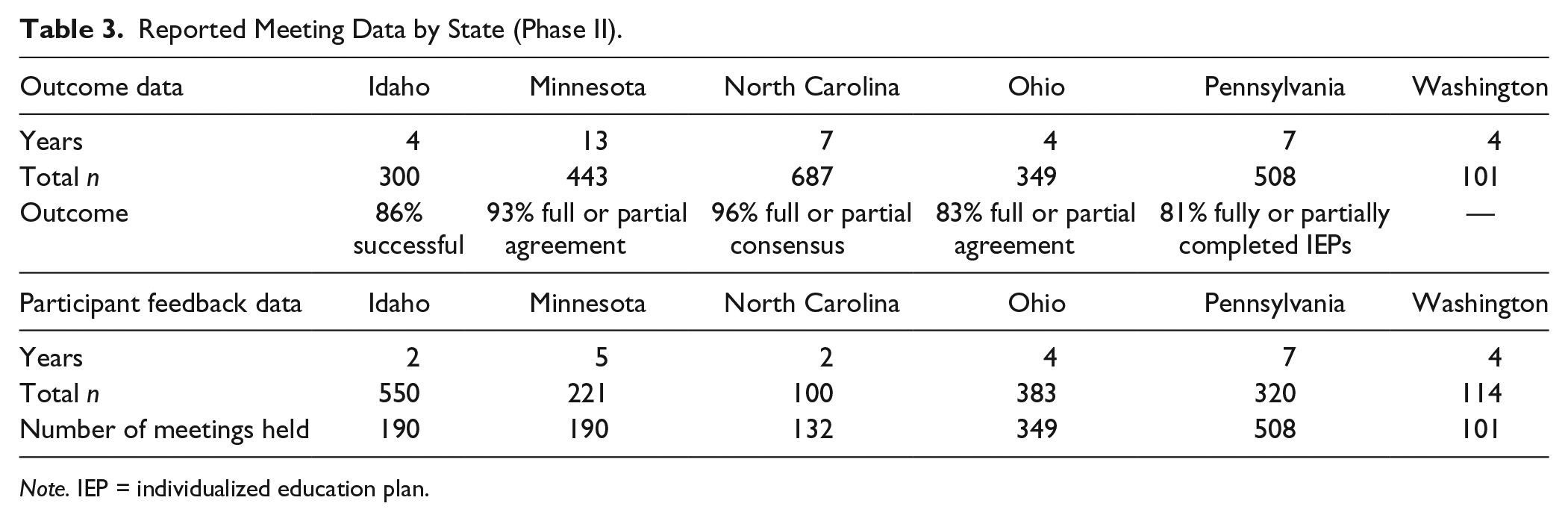
Five states shared their state-collected data on FIEP meeting results. Only two of the SEAs used consistent terminology to describe a desirable FIEP outcome: full or partial agreement. Other states referred to successful meetings, full or partial consensus, or fully or partially completed IEPs (see Table 3). Despite this variability in outcome language, SEAs reported between 81% and 96% of FIEP meetings as “successful.” Overall, SEAs shared outcome data from 4- to 13-year periods, including a range from 101 to 687 FIEP meetings.
Reported Meeting Data by State (Phase II).
Note. IEP = individualized education plan.
Participant feedback data
All six SEAs also shared separate data on the collection of participant feedback. This descriptive information was provided for time periods from 2 to 7 years, with a mean of 61 meetings per year during these time periods. SEAs reported response rates ranging from, on average, three participant evaluations per meeting, to less than one feedback form for every FIEP meeting held over the reported period (see Table 3).
Discussion
In this study, we asked about state-level FIEP implementation, as well as data on outcomes and participant feedback collected by states. These issues are important to understand, as FIEP may present a means of reducing the use of formal dispute resolution processes and improving parent–school relationship, yet little is currently known about state-level implementation and evaluation. Given the widespread popularity of FIEP and policy recommendations related to FIEP, the time has come to examine its implementation and evaluation. Related to this need, this study has three main findings.
First, among 43 SEA respondents, 24 SEAs, or more than half of respondents, indicated that they were currently using FIEP. Among these SEAs, almost a third reported that they had adopted FIEP recently, since 2012. Furthermore, all SEAs currently using FIEP reported being satisfied with this process. These data indicate that FIEP is a process that is gaining in popularity. Indeed, among the 19 SEAs that were not using FIEP currently, 12 SEAs, or almost two thirds of SEAs not using FIEP, indicated that they were considering implementing FIEP. The growing popularity of an alternative method of early dispute resolution such as FIEP is not surprising given the financial and relational costs of formal dispute resolution (Getty & Summy, 2004; Mueller, 2009; Pudelski, 2013).
Our second main finding relates to a lack of data collection within SEAs. Although the use of FIEP is growing nationally, many SEAs are not collecting data that might be used to evaluate FIEP programs within individual SEAs. Only five SEAs that were implementing FIEP reported that facilitators were monitored to ensure they were facilitating meetings as they were trained (i.e., with fidelity). In addition, although most SEAs using FIEP reported collecting some data on meetings requested or completed, only slightly more than half of these SEAs reported collecting any state-reported data regarding meeting outcomes. This lack of data gathering on the part of SEAs presents a missed opportunity to evaluate outcomes of FIEP meetings within an SEA. Such outcome or agreement data provide an SEA data with which to judge the effectiveness of FIEP to resolve disputes in special education.
Likewise, information on whether participants felt that FIEP improved relationships and reduced conflict also reflects on the effectiveness of FIEP to improve the parent–school partnership. In this study, only 57% of SEAs in Phase I reported collecting any type of participant feedback data to understand the perspectives of individuals who attend the FIEP meeting. Because parent participants are often the individuals who would avail themselves of formal dispute resolution, this perspective is particularly relevant. Likewise, participants themselves are the best reporter on whether they feel their post-FIEP relationships are improved. It is important for more SEAs using FIEP to collect this valuable participant feedback information so they may evaluate participant perceptions of the process, quality of facilitation, aspects related to the fidelity of FIEP implementation, and the family–school relationship.
Our third finding, though preliminary in nature, relates to the consistency of data collected across Phase II participants gathering feedback and outcome data. Overall, SEAs participating in Phase II collected similar content, but used different descriptors and types of questions. First, in terms of outcome data, SEAs participating in Phase II reported that between 81% and 96% of meetings were successful, but defined success differently (i.e., agreement, consensus, approved IEP), making it difficult to compare outcomes across states. Next, the six SEAs that shared their participant feedback survey instruments also captured similar content relating to the FIEP process before, during, and after the meeting.
In addition, all but one SEA collected participant feedback information on some feature of the parent–school relationship. Although the content captured by participating SEAs was similar, the questions posed by the SEAs about the parent–school relationship varied in terms of breadth and depth. To make statements about the effectiveness of FIEP in improving or stabilizing parent–school relationships, standardized questions should be used on participant feedback surveys across SEAs. Although FIEP program evaluation within individual SEAs is desirable, and could be facilitated with thoughtful data collection, analysis, and reporting that does not include measures standardized across SEA, national data collection would also be useful in identifying overall predictors of FIEP outcomes and national trends related to effective FIEP practices.
Implication for Practice, Research, and Policy
The research addressed here gives rise to several implications relevant to practice, future research, and policy. First, SEAs should consider linking FIEP results to formal dispute filings, including state complaint, mediation, and due process complaints. Researchers and policy advocates have indicated that FIEP should ideally be a means to reduce formal dispute resolution procedures, but without linked data, the impact of FIEP on formalized mechanisms is difficult to establish. Research questions could explore whether families and school systems engaging in FIEP avoid formalized disputes for identified periods of time post-FIEP (6 months, 1 year, 2 years). If future research indicated that FIEP was effective at resolving disputes informally and/or improving the parent–school partnership, then SEAs and hearing officers might consider recommending FIEP in their decisions before future formal dispute resolution was attempted. Mediated agreements could likewise recommend FIEP as an early resolution mechanism for future conflict, provided the parties were willing, before more impactful processes were attempted.
Next, lack of data collection and inconsistent data collection are barriers for research and evaluation across and within SEAs. Given the growing implementation of FIEP across the country, SEAs would be well served to first, consistently collect meeting outcome and participant feedback data, and second, collect similar data across SEAs. By collecting and analyzing such data, SEAs could better understand how FIEP is improving relationships and outcomes within and across states. Increasing the consistency of data across SEAs could help researchers determine variables that correlate with positive participant-reported outcomes, and could help improve programs across the country.
To achieve more effective and consistent data collection for the purposes of fidelity of implementation, monitoring, analyzing, and outcome reporting, an SEA could use a number of strategies. To collect FIEP outcome or agreement data, an SEA could require facilitator report of clearly defined outcomes. SEAs could also inquire about agreement from participants, but should be aware that meeting participants do not always share similar perspectives on agreement and disagreement. Fidelity data could be collected formally by a trained observer, or through participant feedback questions related to the critical components of FIEP implementation. Participant feedback questions could also be developed with the assistance of the CADRE, a project of the U.S. Department of Education. CADRE provides free support to SEAs related to the development of dispute resolution programs. Aside from providing exemplar items including sample feedback forms (CADRE, 2014a), CADRE supports the participation of SEAs in FIEP workgroups.
In addition, SEAs must work to recruit high response rates for participant feedback surveys, and ensure that respondents characterize a representative sample of FIEP participants within an SEA. In considering the representativeness of participant feedback data, overall FIEP team member participation rate is relevant. For example, if only parents, as opposed to school personnel, respond to participant feedback surveys, findings on the effectiveness of FIEP in improving the family–school relationship will only reflect the perceptions of one particular type of participant. Moreover, if respondents only submit participant feedback surveys following completion of a successful FIEP that results in consensus, findings based on these data will also not be accurate. Idaho, which was one of two states that reported collecting participant feedback data via online surveys, reported the highest response rate of all Phase II respondents. SEAs that are interested in boosting their response rates to reflect the perceptions of a more representative sample might investigate alternative dissemination models, such as using online surveys.
Broader data collection and improved data analysis would also support FIEP evaluation. While we have discussed data collection and analysis aimed at the effectiveness of FIEP, evaluation may also be used to address program improvement. Evaluation focused on program improvement could be used to monitor FIEP implementation and measure its association with FIEP outcomes, identify areas of program weakness as identified by participants, and specify overall issues identified by participants in special education programs. SEAs could also collect data on facilitator training needs and examine trends to target in training across SEAs.
Taken together, the forgoing implications for practice, research, and policy underscore a final implication relevant to evaluation and improved practice. Given the potential for SEA FIEP evaluation with regard to meeting success and participant relations during and following FIEP, researchers and practitioners should conduct and disseminate analyses with FIEP outcome and feedback data that have been collected. SEAs spend time and money collecting data from large samples, some with 500 or more respondents, and such data should be used. Overall, this article demonstrates the need for increased research on the effectiveness of FIEP within SEAs to guide SEA and national policy. Data collected by SEAs are certainly promising, and analyses may reveal that FIEP is a beneficial alternative to formal dispute resolution mechanisms, but without an examination of the data, that is impossible to know. Future research, whether conducted within SEA or by researchers with additional expertise in high-level statistical analysis, should address these questions using SEA data on FIEP effectiveness that have already been collected within states. Such research is needed so that before a national policy is adopted incorporating FIEP into IDEA, policy makers can consider the evidence base for this practice.
This study has some limitations that should be discussed. First, SEA representatives from all 50 states and the District of Columbia did not respond to the initial FIEP survey. Although we had an acceptable response rate, having information from all 51 SEAs may have impacted our findings. In addition, all responses were self-reported and were not confirmed through other means. Thus, it is possible that some of the information reported by respondents is inaccurate or incomplete. However, the data we collected in Phase II confirmed the reliability of the survey responses for those six states that provided data. Next, our Phase II results are limited by the small number of respondents (n = 6) and should be interpreted as preliminary in nature. Although conclusions regarding the overall effectiveness of FIEPs to reduce formal dispute resolution cannot be reached in this analysis, it does provide valuable information regarding the potential for within-SEA evaluation.
Conclusion
SEAs are often burdened by formal methods of dispute resolution, making alternative methods of early dispute resolution attractive. FIEP is a special education practice that is increasing in popularity, but critical evaluation of its implementation is scarce. This review of implementation across the country revealed that at least some SEAs are collecting data that could allow for evaluations of FIEP’s effectiveness to resolve disputes in special education and improve the parent–school relationship, according to FIEP participants.
Footnotes
Declaration of Conflicting Interests
The author(s) declared no potential conflicts of interest with respect to the research, authorship, and/or publication of this article.
Funding
The author(s) disclosed receipt of the following financial support for the research, authorship, and/or publication of this article: Support for this research was provided by the Office of Special Education Programs Next Generation Training Grant (H325D100027) and the Office of Special Education Programs Grant for Leadership Training in High-Need Students with Severe Disabilities/Autism (H325D100010).