



Abstract
Synchronous collaborative virtual environments (CVEs) allow distributed teams to interact and work. CVEs afford a sense of presence, or “being there” in the workspace, as well as the opportunity to “do there” via interactions within the environment. However, there has been limited empirical evidence to support the link of presence and team performance, especially for CVE work. We identified multiple dimensions of presence that reflect relationships known to be essential to collaborative work and conducted a CVE experiment with 80 teams. Our results suggest certain aspects of presence are more important than others in driving virtual team performance.
Keywords
Collaborative virtual environments (CVEs) are “communication systems in which interactants share the same three-dimensional digital space and can navigate, manipulate objects, and interact with one another via avatars” (Sivunen & Hakonen, 2011, p. 406). Business use of CVEs received much attention in the early and mid-2000s (Boughzala et al., 2012; Nevo et al., 2011; J. Shen & Eder, 2009), but interest waned as CVEs fell short of providing the capabilities to support distributed teamwork and foster high performance (Karl et al., 2022). Recently, CVEs have come back into the spotlight due to a combination of improvements in the technology (e.g., VR headsets are cheaper, lighter, and wireless) and greater interest in remote work in the wake of the COVID-19 pandemic. Businesses are using CVEs to replace or supplement conferences, trade shows, and workshops (Cook & Kuczer, 2020), give virtual office and plant tours (Vozza, 2021), host recruitment and career fairs (Novik, 2021), provide immersive product experiences and workspaces (Costello, 2019), and provide leadership and interpersonal skills training (Fink, 2021). By providing both an accessible and persistent shared visual workspace, synchronous CVEs present a way for distributed collaborators to interact and work. While there are also asynchronous CVEs, the focus of this paper is on synchronous CVEs.
A metric of the quality of a CVE is the degree to which it creates a sense of presence in the environment (Nash et al., 2000). The concept of presence has evolved over the last two decades (K. M. Lee, 2006); it is generally considered to be the essence of any experience in a CVE (Coelho et al., 2006). Presence is often described as the feeling of “being there” in the place depicted by the CVE rather than in the physical space where one’s body is located (Draper et al., 1998; Held & Durlach, 1992). “Being there” is enhanced by the possibility of acting in the environment or “doing there” (Schubert et al., 2001; Zahorik & Jenison, 1998). In a CVE for work, a sense of presence is partially developed through environmental affordances—that is, what the user can do and actually does in the CVE.
CVE designers have long considered presence to be a desirable attribute and self-evident goal (Ferrell & Sheridan, 1967). Grounded in the ability to act or “do” in a CVE, presence is presumed to be tantamount to successfully supporting action. Despite this presumption, there is limited empirical evidence for the link between presence and team performance in a CVE, particularly in the context of collaborative distributed work in an organizational setting (Nash et al., 2000; Schultze & Orlikowski, 2010; Stanney et al., 1998). Presence has been shown to have positive effects on learning in an educational context (Franceschi et al., 2009) and consumer behavior in shopping contexts (Animesh et al., 2011; Nah et al., 2011), but the recent surge in uptake for distributed teamwork has yet to be justified with empirical evidence. Understanding the relationship between presence and performance in CVEs is important to organizational decision makers, team leaders, and CVE designers. Thus, our research objective is to examine the effects of presence on team performance in a CVE.
A secondary objective of our research is to examine whether different communication modalities of a CVE (text-chat and voice) moderate the relationship between presence and team performance. CVEs are set apart from other collaboration systems (e.g., videoconferencing) because they allow people to perceive the environment through their senses (mainly vision and hearing) and act in that environment using various affordances (e.g., movement, nonverbal gestures, object manipulation, etc.). During the past decade, vendors of internet-based CVEs introduced support for voice communication with adequate audio quality and bandwidth (Goh & Paradice, 2008; B. Mennecke et al., 2008; Wadley et al., 2015). The shared environmental affordances of CVEs are important because many team tasks do not rely solely on spoken language. Rather, communicative information can be provided via a variety of other sources (e.g., visual information, nonverbal gestures, object manipulation, etc.). The risk when voice communication is available is that the valuable roles played by other modes of communication may be underexploited. This is particularly salient for CVEs because visual information is relied upon to a greater extent than in traditional collaboration systems (Boughzala et al., 2012). Thus, we explore how different capabilities of a shared visual workspace in a CVE influence the relationship between presence and performance.
In the following sections, we report the results of an experiment with 182 participants organized into 80 teams. To leverage the shared visual workspace capabilities of CVEs, our experimental task is designed as an execution task that requires collaborators to maintain awareness of both the state of task objects and one another’s activities (R. E. Kraut et al., 2003). We draw on prior literature on teams, presence, and information systems to develop our hypotheses and address our research objectives.
Our work makes two important contributions. First, our work is among the first to establish the importance of shared understanding that can be facilitated in shared visual workspaces to allow teams to collaborate and coordinate together. This enhances our understanding of media capabilities in shared visual workspaces by extending media theories into the realm of 3D environments. Our study suggests that CVEs can facilitate or ground team communications that surround joint activity. Second, our work measures multiple dimensions of presence that capture relationships essential to collaborative work (i.e., relationship of self-to-environment, task, and others). To our knowledge, these dimensions are not used together in other research on presence nor have they been applied in an integrative fashion to CVE research; thus, we make a methodological contribution to perceptual and cognition theory by extending it into the realm of 3D environments. Our results provide preliminary evidence that some aspects of presence—specifically, absorption and immersion control—may be more important than other aspects in terms of performance benefits for psychomotor tasks. Our findings suggest that there could be important tradeoffs in the presence dimensions, as well as the effective design and use of CVEs.
The Challenges of Teamwork at a Distance
A great deal of conceptual, theoretical, and empirical research on virtual teams emerged over the last two decades (Foster et al., 2015; Gilson et al., 2015; Handke et al., 2020; Pinsonneault & Caya, 2005; Powell et al., 2004). Much of this research is an evolution of work on group support systems (GSS) and computer-mediated communication (CMC) that started in the 1980s. Virtual teamwork became a dominant cluster of research by the early 1990s and this interest intensified in the last decade in the cross-disciplinary literature on teams (Emich et al., 2020). Prior research has examined important research questions via controlled experiments, systematically examining inputs, processes, and outputs regarding the use of technology to mediate team collaboration (DeSanctis & Gallupe, 1987; Handke et al., 2020). Research on virtual teams consistently acknowledges several fundamental socio-technical difficulties faced by members as they work via technology across boundaries (e.g., geography, time, functional, cultural, etc.; Foster et al., 2015; Montoya-Weiss et al., 2001). A specific challenge is the loss of nonverbal cues that are important for social communication (S. K. Johnson et al., 2009). As humans, we process an extensive amount of information beyond the spoken and written word (Bhagwatwar et al., 2018). Nonverbal communication can be related to the characteristics of other communicators, their behaviors, as well as the surrounding environment. One might argue that much of the research on virtual teams has been addressing complications with and solutions to the loss of the nonverbal channel.
Not surprisingly, much of the prior research on virtual teams has focused on communication and technology capabilities. Fundamentally, communication is the development of shared understanding through the processes of conveyance of information and convergence on meaning (Dennis et al., 2008; Miranda & Saunders, 2003). Clark and Brennan (1991) describe this as “communication grounding” or the interactive process by which people exchange evidence about things they understand. During communication, collaborators are mutually assessing what each other knows at any moment and then using this knowledge to form subsequent communicative events (verbal and nonverbal). A virtual team’s ability to ground its communication is partially driven by its ability to monitor activities (Fletcher & Major, 2006; Montoya-Weiss et al., 2001). Mutual monitoring may be needed to compensate for and/or address individual deficiencies in task performance. Members must not only be individually competent, but also proficient in recognizing other members’ current state of comprehension as reflected in task performance (Militello et al., 1999). Thus, monitoring assumes that members can somehow assess the performance of others—either visually or through other sensory inputs. Prior empirical research shows that monitoring has a positive effect on team performance (Fletcher & Major, 2006). In addition, prior research shows that monitoring to achieve shared understanding can be challenging especially when collaborators are dispersed. One avenue to help deal with the monitoring challenges is the use of shared visual workspaces in collaborative virtual environments (CVEs).
Shared visual workspaces are a frequently overlooked medium for communication. Collocated teams often use shared physical workspaces, particularly for collaborative psychomotor tasks and decision-making. In such tasks, shared visual information is important as collaborators maintain knowledge of the state of the task in relation to an end goal, as well as one another’s activities (R. Kraut et al., 2002). Clark and Wilkes-Gibbs (1986) suggest that collaborative work occurs at multiple levels simultaneously. At one level, people collaborate to perform the task. At another level, they use language and other communicative behaviors to coordinate actions to perform the task. Visual information can be helpful at both levels. Beyond spoken communication, a shared workspace facilitates a common ground of understanding by allowing collaborators to use environmental and nonverbal cues to see who is doing what and when, monitor the state of artifacts, and notice other people’s actions and gestures (Clark, 1996; Gergle et al., 2004).
Technologies that can provide visual information to virtual teams have been available for some time (e.g., whiteboards, videoconferencing) and there is evidence that use of these technologies improves communication (Fletcher & Major, 2006). These technologies have been well described and empirically established as beneficial for team collaboration in the group support systems (GSS) literature (e.g., Nunamaker et al., 1991). Yet, it is not entirely clear what features of visual workspaces influence the value of various technologies. The lack of clarity may be because current technologies are limited in the degree to which they can mimic a physical workspace. The current approach to sharing work objects such as a file or an application (e.g., a spreadsheet, figure, or presentation) is limited because it excludes simultaneous views of collaborators and surrounding work environment. Conversely, while systems such as video allow collaborators to see each other, they often cannot provide the full array of cues found in a physical workspace and may only provide partial views of task-related artifacts (Davis et al., 2009; R. E. Kraut et al., 2003). 3D CVEs have the potential to address some of these communication gaps.
One capability CVEs provide that is novel, relative to traditional collaboration technologies, is shared visual workspaces. Since CVEs model the physical world, they provide a locus for interaction. In a CVE, participants act within a space generated by the computer, typically through an avatar, a digital representation of oneself in the shared virtual workspace (Bartle, 2004). Traditionally, collaboration systems are of interest to the extent that they facilitate or impede communication and task performance. In other words, media (e.g., email, phone, and videoconferencing) is viewed as a communication conduit (Steuer, 1992). Conversely, in a CVE, information is not sent directly from sender to receiver; rather, attention is on the virtual environment that is created and then experienced (Sheridan, 1992; see Figure 1). CVEs offer many sources of visual information—other collaborators in the form of avatars, movement and action by self and others, focal task objects, and the environment itself. As in a physical workspace, these pieces of information are important to communication grounding and ultimately team performance in a shared virtual workspace. It is from this perspective of CVEs as shared visual workspaces that we examine how CVEs invoke presence and the effect on team performance.
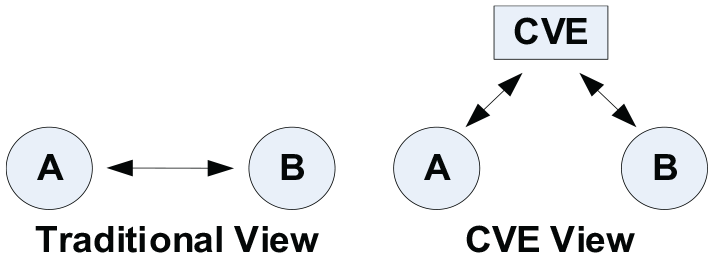
Traditional versus CVE collaboration.
Presence in CVEs
In principle, a user experiences presence in a CVE because the virtual workspace surrounds the participant with ever-changing sensations, while simultaneously responding to the participants’ actions. Both qualitative and empirical research suggests presence uniquely distinguishes CVEs from other forms of media, and these perceptions of presence may influence the efficacy of a CVE itself (Meehan et al., 2002; Steuer, 1992; Witmer & Singer, 1998). Since conception, the notion of presence has been central to endeavors related to virtual environments. In unmediated interaction and communication, presence is taken for granted as one experiences the immediate physical surroundings (Lount et al., 2008). In a CVE, the user must perceive two separate environments simultaneously: the real, physical environment and the environment presented via the medium (Steuer, 1992). Thus, presence reflects the extent to which the CVE becomes the dominant environment where participants respond to events in the virtual space rather than the real world, and the extent to which they remember the CVE as a “place” they visited and acted in as opposed to an image generated by a computer (Schubert et al., 2001; Slater, 1999). A CVE that engages multiple sensory dimensions (e.g., through self-directed movement and actions, interactions with others, ambient or background sound such as office noise) is theorized to produce more presence. The individual becomes more isolated from the physical world as they become further engaged in the virtual world (Sheridan, 1992).
Integrating past theoretical and empirical research on both virtual presence and mediated collaboration, we identify three underlying perceptual dimensions that define presence in a CVE. Each dimension is a function of a relationship essential to goal-oriented collaborative teamwork. The perceptual dimensions and relationships are: (1) immersion—relationship of self-to-environment; (2) absorption—relationship of self-to-task; and (3) awareness—relationship of self-to-others. These dimensions are consistent with aspects of presence examined in prior research on virtual worlds (Animesh et al., 2011; Boughzala et al., 2012; Franceschi et al., 2009; Goel et al., 2011; Y. Lee & Chen, 2011; Nah et al., 2011; Saunders et al., 2011; Schmeil et al., 2012; Schultze, 2010).
First, immersion is the perception of being enveloped by, included in, and interacting with an environment of continuous stimuli and experiences (Nash et al., 2000; Witmer & Singer, 1998). Because much of the information needed for immersion is visually-based, the visual aspects of the CVE are very important. Immersion reflects the relationship between a collaborator and the CVE (e.g., how much control a collaborator feels, how natural interactions seem, and how responsive the environment is to participant-initiated actions). Drawing from past research (Nash et al., 2000; Witmer & Singer, 1998), we distinguish two forms of immersion—(a) immersion control, the holistic assessment of the extent to which interaction with or control of the CVE seems natural and predictable; and (b) immersion sensory, an atomistic assessment of the degree to which visual objects can be manipulated. As a collaborator experiences greater immersion control and immersion sensory, they should become more isolated from the physical world, thus producing a greater sense of presence in the shared virtual workspace.
Second, absorption is the complete occupation of the mind that is a consequence of focusing attention on a coherent set of stimuli (Agarwal & Karahanna, 2000; Held & Durlach, 1992). In a CVE, absorption essentially reflects collaborators’ engagement with a task. Drawing from the concept of flow in psychology (Csikszentmihalyi, 1975), absorption results from a balance between task-related skills and challenge, as well as one’s subjective experience that time is altered. Thus, as collaborators become more focused on the task stimuli provided in a CVE, they should experience greater presence (Held & Durlach, 1992; Sheridan, 1992).
Lastly, awareness is the recognition of the virtual existence of oneself and others in a CVE via avatars (Churchill et al., 2001; Dourish & Bellotti, 1992; Heeter, 1992; B. E. Mennecke et al., 2010). Reflecting a feeling of co-presence, awareness has been found to be a key factor in many real-world and computer-supported collaborative contexts (Gutwin & Greenberg, 2004; Heath et al., 2002; Schmidt, 2011). Awareness can be enhanced through visually-oriented communication such as avatar gestures and appearance (Nowak & Biocca, 2003; Yee et al., 2007). Greater awareness of self and others should contribute to a greater sense of presence.
CVEs and Communication Modalities
CVEs provide a shared visual workspace complemented by other communication modalities such as text-chat and voice communication, nonverbal gestures, and realistic ambient sound (Boughzala et al., 2012). Communicating via voice is typically perceived to have advantages over text-chat when communicating with a distributed team member due to its natural feel and ability to facilitate the development of shared understanding (Bailenson et al., 2006; Rico & Cohen, 2005). Specifically, voice communication is often described as richer (able to convey cues such as inflection or emphasis; Daft & Lengel, 1986) and more interactive (allowing rapid feedback; Dennis et al., 2008; Zack, 1993) relative to written communication. Thus, voice communication contributes to the development of social presence, or the degree to which individuals feel close (Short et al., 1976), which has positive impacts on members’ perceptions of discussion quality, appropriateness, richness, and accuracy (Lowry et al., 2006). Overall, established media theories suggest that voice communication is the preferred modality for supporting human communication. It is often the presumed “gold standard” in terms of technology development. However, research is beginning to challenge this notion for some types of collaborative work (Zhu et al., 2010). The relative benefit of voice communication in a CVE is unknown. Therefore, we contend that the use of CVEs for collaborative work warrants exploration of the effect of communication modalities on perceived presence and team performance.
In a CVE, collaborators can coordinate their work using visually-oriented actuators (e.g., movement, gestures, object manipulation) as well as speech (voice) or written (text-chat) communication modalities. In other words, a CVE more closely simulates the full complement of human communication modes (verbal and nonverbal). Past research suggests that different modes of communication (e.g., text-chat, voice, non-verbal gestures) may place different attentional demands on users (Gergle et al., 2013; D. Williams et al., 2007; Zhu et al., 2010). As a result, we expect that the mode of communication will affect the way team members experience a CVE in terms of their perception of presence. In the following section, we hypothesize the effects of the different dimensions of presence on team performance and the moderating role communication modality plays on these relationships.
Effects of Presence on Virtual Team Performance
The relationship between presence and collaborative performance in a CVE has not been empirically examined holistically using all the perceptual dimensions that have been used to construe presence. Prior research has largely focused on individuals, using performance metrics such as discrimination of colors and letters or activities like walking/flying (Sadowski & Stanney, 2002; Welch, 1999). For collaborative work, the relationship between presence and performance may depend on the demands of the task and/or the communication environment. In this study, we focus on psychomotor tasks that require use of the distinctive capabilities of CVEs as visual workspaces. Given the ability to both “do” and “be” in a CVE, we postulate that presence enables successfully supported action in a CVE. Thus, we hypothesize that presence is positively related to team performance (subjectively and objectively defined), and we expect that communication modality changes the way team members experience presence. Specifically, we expect that the dimensions of presence (immersion control, immersion sensory, absorption, and awareness) will be positively related to task performance and we expect communication modality (voice vs. text-chat) to strengthen these effects. In a CVE, the sense of presence will depend upon the degree to which a collaborator is able to shift attention away from the real world to a focus on the CVE. Perceptual and cognitive theories suggest that the more one can shift attention to the CVE—and the related task, collaborators, and environment in the CVE—positive performance should ensue.
Absorption is full engagement with or attention to the collaborative task at hand. The link between absorption and performance not only has considerable face validity, but is supported by extensive prior research (Guzzo & Dickson, 1996; Kerr & Tindale, 2004). Thus, we expect absorption to be positively related to performance in a CVE. Similarly, it has also been long recognized that meaningfulness and coherence of a stimulus promote performance (Underwood & Schulz, 1960). Specifically, prior research shows that performance is aided when the required responses are “natural” in a given situation (Seligman, 1970). Thus, we expect immersion control to have a positive effect on performance. Performance should be enhanced when collaborators perceive themselves to be integrally involved in the stimulus flow with natural interactions and control over events as opposed to acting as environmental voyeurs. In a sense, absorption and immersion control are indicators of “doing there” in a CVE. Stated formally: Hypothesis 1: Absorption has a positive effect on collaborative task performance. Hypothesis 2: Immersion control has a positive effect on collaborative task performance.
The ability to manipulate environmental objects/artifacts is a tenet of visual workspaces and has been shown to positively influence performance (Gergle et al., 2013; Gutwin & Greenberg, 1998; R. E. Kraut et al., 2003; May & Carter, 2001). The ability to manipulate objects is consequential to communication and it facilitates feedback. As collaborators work toward a goal, object manipulation and observations of progress can help collaborators monitor task-related work. As such, we expect immersion sensory will be positively related to performance. Similarly, in many face-to-face and mediated contexts, feelings of co-presence or togetherness—conveyed via nonverbal cues—have been shown to influence performance (Biocca et al., 2003; B. E. Mennecke et al., 2010; K. N. Shen & Khalifa, 2009). The value of physical workspaces is the ability to be together and work side-by-side. Performance may be enhanced as collaborators have a sense of each other and an up-to-date understanding of others’ activities, thus providing a context for one’s own actions. Collaborator-to-collaborator interaction is based on how one collaborator perceives the actions of another. Thus, we expect that awareness will also enhance task-related performance. In a sense, awareness and immersion sensory are indicators of “being there” in a CVE. Stated formally: Hypothesis 3: Immersion sensory has a positive effect on collaborative task performance. Hypothesis 4: Awareness has a positive effect on collaborative task performance.
For all four dimensions of presence (absorption, immersion control, immersion sensory and awareness) we expect that voice communication will strengthen the effects of presence on team performance. First, compared to text-chat, voice communication increases the speed at which communications are delivered, and faster transmission velocity also allows for faster responses (Dennis et al., 2008). By improving task coordination and creating a shared focus between collaborators, we expect that the higher transmission velocity enabled by voice will increase the positive effects of presence on performance. Second, a text-chat message takes longer to encode than a verbal message because it takes more time to write than speak (E. Williams, 1977). Past research indicates that some symbol sets (or the ways in which a message can be translated into signal for transmission) are faster to encode and decode due to their naturalness (Dennis et al., 2008; Kock, 2004). Thus, while a CVE may present a naturalistic environment (structurally and visually), we expect voice to increase the positive effects of presence by also allowing for more natural communications (relative to text-chat). Stated formally: Hypothesis 5: Voice communication mode is a moderator that strengthens the effects of presence (absorption, immersion control, immersion sensory, awareness) on team performance.
Methods
Experimental Context and Subject Recruitment
To test the hypotheses, we conducted an experiment with 182 subjects, organized into 80 two or three-person teams in Linden Lab’s Second Life. Broader in scope than a gaming platform (Wax et al., 2017), Second Life is a 3D virtual world platform where participants’ avatars move around and interact with others and/or objects. To create a heterogeneous subject pool, we implemented a multi-pronged approach to subject recruitment. Subjects were recruited from undergraduate and graduate-level courses at the authors’ institutions in which students were using Second Life. In addition, non-student subjects were also recruited via Second Life listserv announcements and classified ads posted within Second Life itself. Subjects had to meet two preconditions for participation. Specifically, they were required to (1) have a Second Life account and avatar, and (2) have an internet-accessible computer capable of running the client software. Participants were informed that they would receive US$20 (or, if preferred, its currency equivalency in Linden Dollars—L$), and each member of the best performing team in each experimental condition received an additional US$100 (or equivalent L$).
The experimental manipulation in the CVE was the communication modality (Eisenberg et al., 2021): voice versus text-chat. To assess the effects of communication modality on presence, 38 teams were randomly assigned to the voice condition and 42 to the text-chat condition. 57.1 percent of participants were female, 74.7% were 26 years or older, and all had at least 1 month of Second Life experience with 51% reporting use exceeding 6 months (see Appendix A2). Prior research suggests 4 hr in-world is required to become competent at maneuvering one’s avatar and be a proficient user (Boughzala et al., 2012; Davis et al., 2009). Overall, our participants were fairly experienced users, thus minimizing novelty effects of collaboration in the CVE. Pearson chi-square tests indicated no significant differences among the individuals in the two groups based on the participant characteristics.
Experimental Task and Procedures
For data collection, we designed a collaborative exercise to leverage the CVE as a shared visual workspace that requires participant interaction. The task—involving a visually-based 3D puzzle—may be characterized as an execution task with a correct solution (McGrath, 1984) and a psychomotor task requiring cognitive engagement and manipulation of virtual objects. As shown on left in Figure 2, the puzzle consisted of nine 3D cubes with fragments of six different images on the faces of each cube (i.e., a total of 54 images that can be organized into six correct solutions). Participants collaborated to rotate and rearrange the cubes to create a complete picture (e.g., shown on right in Figure 2) within an allotted time. To complete a picture, shared visual information of the puzzle progress was important for maintaining knowledge of the current state of the task in relation to the end goal. During the process, collaborators needed to focus attention on visual objects and communications (via text-chat or voice) with each other to coordinate their actions.
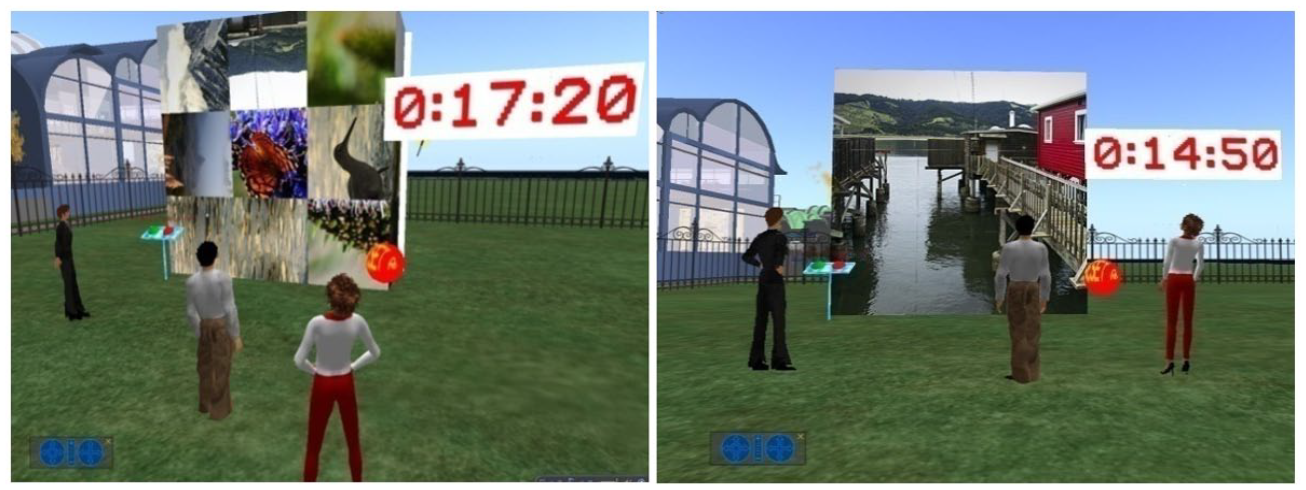
Scrambled Puzzle (on left) and Solved Puzzle (on right).
Procedurally, subjects registered for an experimental session based on their availability. Prior to the session, subjects completed an online survey that captured various individual characteristics including prior experience with Second Life and demographic data. Communications for both the experimental conditions (text-chat, voice) were supported via Second Life’s built-in capabilities. Each scheduled session had two or three participants. At their scheduled time, participants met at a predefined location in Second Life indicated by a SLURL, which is a link like a web-page Uniform Resource Locator (URL). At this location, participants were greeted by a session moderator who led team introductions and encouraged participants to interact with each other for a few minutes. The interaction time was not counted toward the experiment task time. Next, the moderator led participants to a non-public, secured area in the CVE to work on the collaborative task. Once there, the moderator provided instructions and gave a brief demonstration of how to control the puzzle’s cubes as well as start/done buttons. The moderator informed the participants that the team goal was to solve all six puzzles as many times as they could in 20 min. In addition to the guaranteed individual incentive, the moderator reminded participants that members of the best performing team would each receive an extra award. Participants were then given the opportunity to practice and ask any clarifying questions.
The collaborative task started when participants clicked a green button to scramble the 3D puzzle, at which point the official 20 min of the experiment began. Participants could control any cube and rotate it around three axes using keyboard controls to the desired position. When all nine cubes were in the correct position and a puzzle image was complete, participants clicked a red button signifying that the puzzle was done. If the puzzle was correctly solved, participants could continue to solve another puzzle. If not, participants continued working on the current puzzle. In order to solve puzzles as many times as possible in the allotted time, collaboration during the task required participants to focus attention on both visual objects (e.g., individual cubes, the overall puzzle image, one’s self, the other avatars, and the clock) as well as any communication messages exchanged (e.g., which image or cube to work on next, overall progress, etc.). Following the experimental session, participants completed an online survey where they answered questions about their perceptions of presence and team performance.
Measures
Independent and Control Variables
Perceptions of presence were measured at the individual level because they represent the subjective viewpoint of each participant’s felt experience in the CVE (Dennis & Kinney, 1998). Based on a review of the literature and a variety of sources, we adapted 10 measurement items for the four presence dimensions described previously (Biocca et al., 2003; Dinh et al., 1999; Gerhard et al., 2001; Ghani & Deshpande, 1994; Held & Durlach, 1992; Sheridan, 1992; Witmer & Singer, 1998). There were three items each for absorption and immersion control, and two items each for immersion sensory and awareness (see Appendix A1).
We also included one control variable for team size to assess differences between dyads (teams of two) and triads. Prior research has shown that dyads function differently from groups of three or more. For example, the more individuals on a team can lead to higher coordination overhead (Scholtes et al., 2016).
Dependent Variables
The dependent variable of interest in this study is team performance, measured subjectively and objectively. Objective performance was measured in terms of effectiveness (the total number of puzzles solved) and efficiency (mean time to solve each puzzle). More solved puzzles indicates higher task effectiveness, and lower mean time to solve indicates higher task efficiency. Subjective performance was measured by individual self-reports of satisfaction using eight items (see Appendix A1). These items reflect a team member’s satisfaction with their team’s work process (Andres, 2012; Huang et al., 2010) as well as outcomes (Chiravuri et al., 2011; De Guinea et al., 2012).
Analysis and Results
Analysis was conducted in two steps. We first evaluated the psychometric properties of our measures. Next, we assessed the effects of the measures on performance at the team level.
Confirmation of Psychometric Properties
An exploratory factor analysis was conducted on the 18 measurement items included in this study to examine the preliminary theoretical expectations of the loadings of the measures on their intended construct. Based on an extraction technique of eigenvalues greater than one, both a principal axis factoring method with oblique rotation and a maximum likelihood method with varimax rotation revealed a factor pattern of five constructs in line with theoretical expectations. To assess construct validity, we conducted confirmatory factor analysis (CFA). The CFA model fit resulted in a comparative fit index (CFI) of .93, Tucker-Lewis Index (TLI) of .91, a root mean square error of approximation (RMSEA) of .079, and a SRMR of .06. Overall, the model fit was deemed acceptable. All measurement items loaded significantly (p ≤ .05) on their intended construct, and convergent and discriminant validities were established using Fornell and Larcker (1981) average variance extracted (AVE). Specifically, the AVEs were above .5 (i.e., convergent validity) and the AVEs of the correlated latent variables was greater than the square of the correlation between the latent variables (i.e., discriminant validity). In the Appendix (A3), we provide a correlation matrix with the average variance extracted from the observed variables by the latent variables (diagonals), the correlations between the latent variables (off-diagonals), and the construct reliabilities. We conclude that the measures are valid and acceptable for our study.
Team Performance
Our theory dictates that presence is emergent (it originates in the cognition, affect, behaviors, or other characteristics of individuals), it is amplified by team member interactions, and it manifests as a higher-level, collective phenomenon. Hence, presence is experienced at the individual level; however, since individuals are nested within teams to accomplish work, we expected that individual level perceptions of presence will have an effect on a team’s performance. Consistent with our theory, we collected data at two different levels of analysis—the individual and team level. Given our interest in team performance and to analyze our data at the same level of analysis, we combined the individual-level data to depict measures of the team as a whole. We aggregated the individual level measures into compositional mean constructs for each team (Chan, 1998), following the recommendations of Kozlowski and Klein (2000), Bliese (2000), and LeBreton and Senter (2008). This is consistent with prior research on teams (Carson et al., 2007; Eisenberg et al., 2021; Lowry et al., 2006; Windeler et al., 2017). We provide the details of creating the team-level variables prior to analyzing team performance below.
Creating Team-Level Variables
Two of our dependent variables of team performance (number of puzzles solved and mean time per solve) are global team level measures as they originate and manifest at the team level (Kozlowski & Klein, 2000). These objective measures were observed and collected during the experiment based on the performance of each team. On the other hand, the dependent variable Satisfaction is a shared team level measure as it originates in the individual team member’s attitudes and perceptions, and we expected within-group agreement on the measure to reflect the team’s overall perception of how well they worked together. The items of Satisfaction focused on the individual’s perception of how well their team collaborated and worked together to complete the experimental task. Shared team level measures are bottom-up combinations (from individual to team) and can indicate an emerging phenomena via composition. Composition assumes isomorphism and indicates similarity at both the individual level and team level; that is, both measures reference the same content, have the same meaning, and share the same nomological network (Bliese, 2000; Kozlowski & Klein, 2000).
Given that all of our dependent measures were indicators of team performance, we also had to move our independent level measures to the team level (which also avoided issues of our data not being independent). Before we aggregated the individual level measures, we assessed if they were valid as team level measures. This entailed three steps. First, after confirming the psychometric properties of our individual level measures (as discussed above), we generated latent variable scores of the multi-item constructs (Satisfaction, Absorption, Immersion Control, Immersion Sensory, Awareness) for each participant using both regression imputation and stochastic regression imputation. Both imputation techniques yielded the same analytical results, so we continued with regression imputation.
Second, we assessed the within-team agreement (rwg) of all variables that needed to be aggregated from the individual level to the team level. Higher scores indicate greater reduction in error variance when examining the data by teams, indicating higher levels of agreement within the groups. While composition models do not require any level of agreement (Bliese, 2000), we provide these values for diagnostic purposes. According to LeBreton and Senter (2008), r wg above 0.50 indicates moderate agreement and above 0.70 indicates strong agreement. As shown in Appendix Table A4, our values ranged from 0.65 for Awareness to 0.86 for Satisfaction.
Third, we assessed the intraclass correlations ICC(1) of the measures (how much variance of the measures can be explained by group membership) to justify aggregation (for results, see Appendix A4). LeBreton and Senter (2008) suggest researchers follow the traditional conventions outlined in Murphy and Myors (1998) when interpreting ICC(1). Thus, an ICC(1) value of 0.01 might be considered a “small” group effect, 0.10 a “medium” effect, and 0.25 a “large” effect; values as small as 0.05 provide prima facie evidence of a group effect. Our values ranged from 0.05 for Immersion Sensory to 0.33 for Satisfaction.
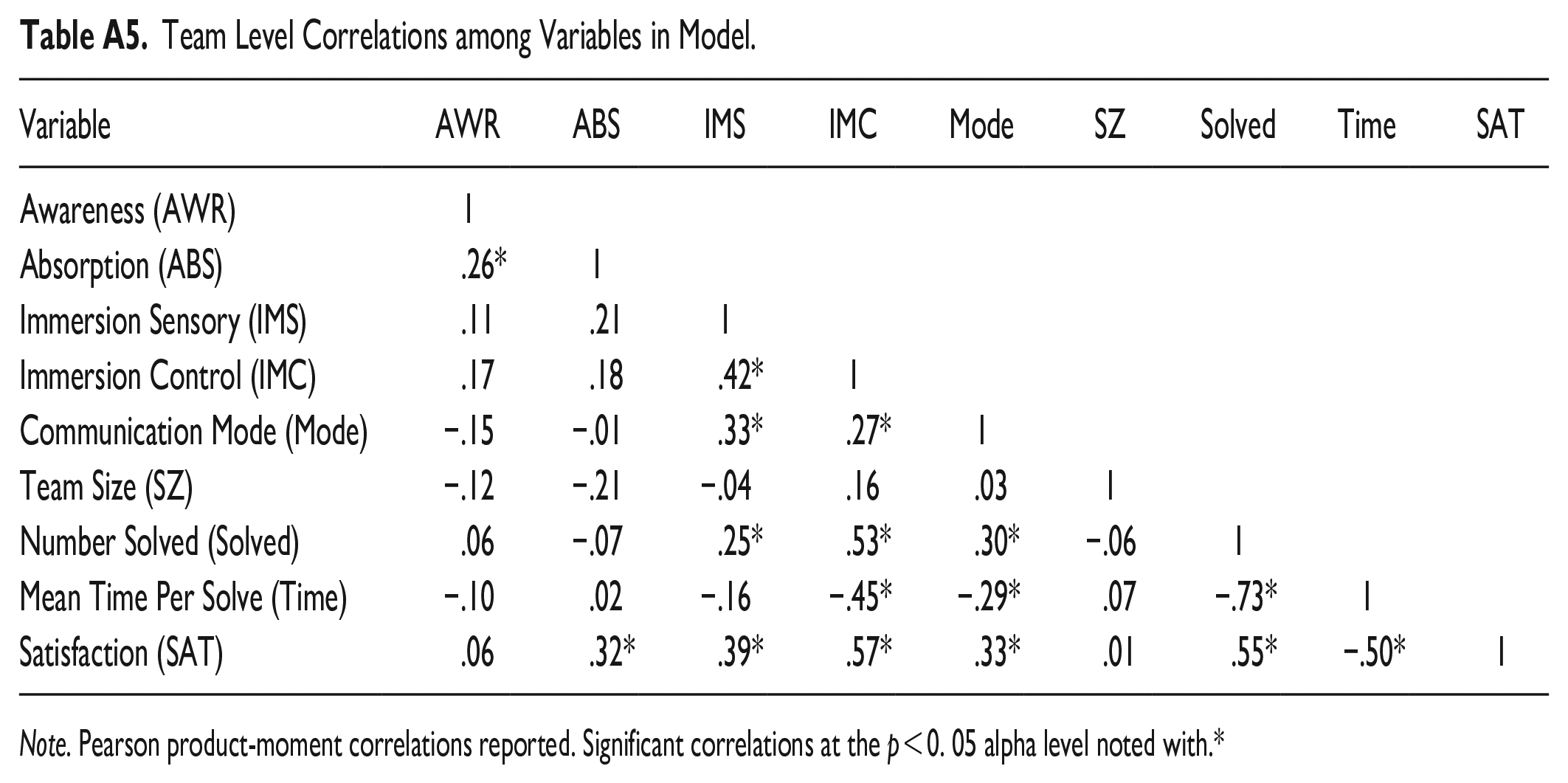
These three steps, taken together, provide support for aggregating the constructs from the individual to the team level. Thus, we created team level averages for individuals on the same team. The team level measures were used in our analysis moving forward. The objective team performance variables (number of puzzles solved, mean time per solve) were already at the team level and did not need to be further aggregated for team level analysis. A correlation table of the variables used in the analysis is presented in the Appendix (A5).
Analysis of Team Performance
We assessed the nature of the dependent variables of team performance. Conceptually, total number of puzzles solved was a count measure and we confirmed this as it fit a beta binomial distribution or negative binomial (χ2 = 74. 54, p > .05). Mean time to solve each puzzle and satisfaction did not fit a normal distribution based on Shapiro-Wilk W Tests; W = 0.67, p < 0 0.001 and W = 0.93, p < .001, respectively. A log transformation is often applied to time data; however, the LogNormal distribution did not fit the time-per-solve measure based on Kolmogorov’s D test (D = 0.13, p < .05). Instead, mean time-per-solve and satisfaction fit a Johnson Sl distribution 1 (N. L. Johnson, 1949) based on Shapiro–Wilk W Tests; W = 0.97, p > .05 and W = 0.99, p > .05, respectively. Using the parameters from this distribution assessment, we transformed our mean time-per-solve and satisfaction measures into normal distributions. These transformations helped us avoid violations to the normality assumption (Knief & Forstmeier, 2021).
Consistent with Dennis et al. (2014), we used a Generalized Linear Model (McCullagh & Nelder, 1989) to assess the non-normal measure, number solved, as these types of models extend the General Linear Model to the analysis of data that have a non-normally distributed dependent variable. We used a Generalized Linear Model with a negative binomial distribution and a log link function as this fit the distribution of the measure. Total number of puzzles solved (our objective team performance measure) was regressed on the four perceived presence dimensions, communication mode, and the control variable, team size, in each team. Results are shown in the “Number Solved” column in Table 1. Mean time-per-solve and satisfaction were assessed with a Standardized Least Squares Regression and results can be found in the remaining two Performance columns of Table 1.
Analysis Results.
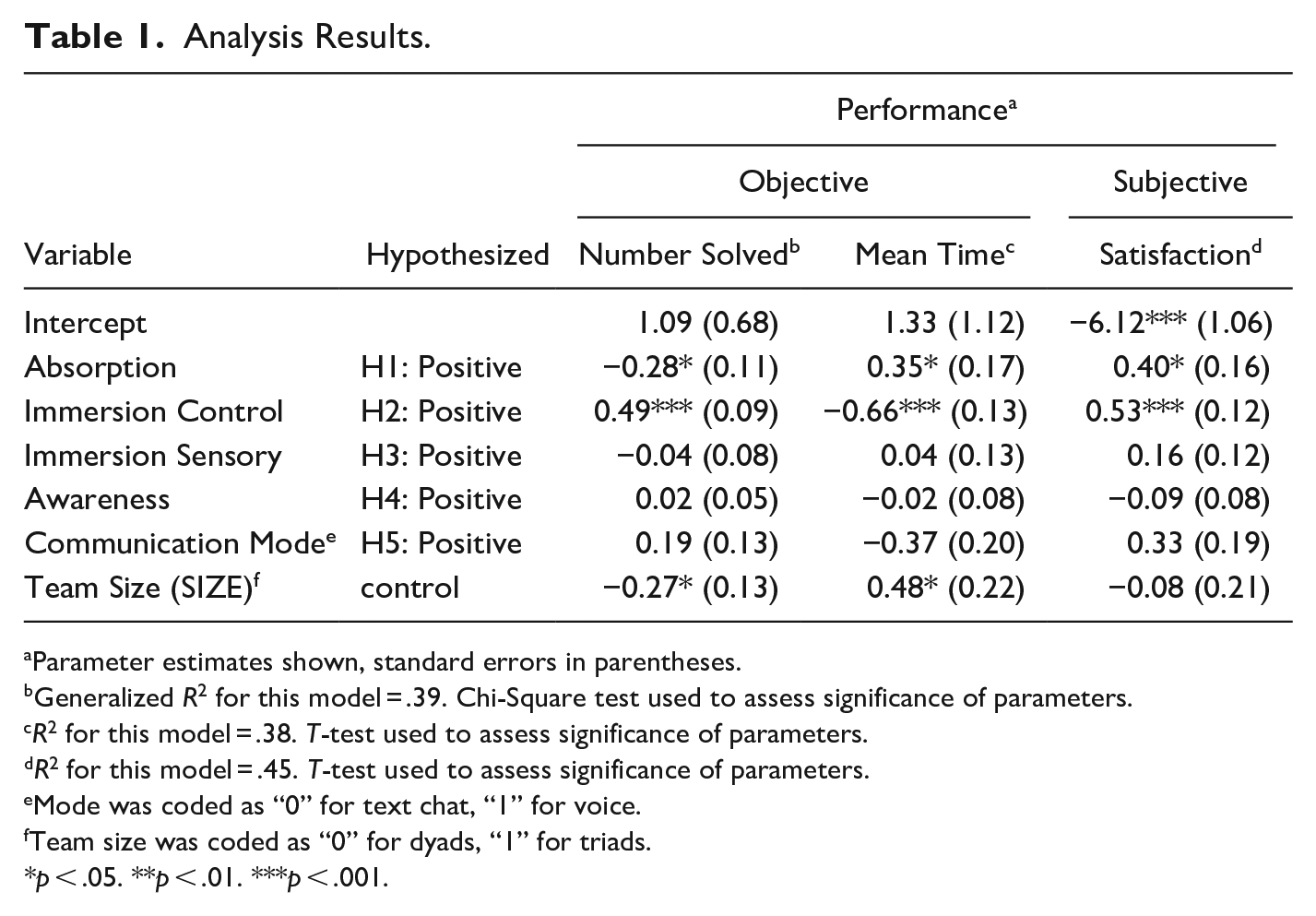
Parameter estimates shown, standard errors in parentheses.
Generalized R2 for this model = .39. Chi-Square test used to assess significance of parameters.
R2 for this model = .38. T-test used to assess significance of parameters.
R2 for this model = .45. T-test used to assess significance of parameters.
Mode was coded as “0” for text chat, “1” for voice.
Team size was coded as “0” for dyads, “1” for triads.
p < .05. **p < .01. ***p < .001.
We used hierarchical regression analysis to assess the impact of the moderator variable, communication mode, for the three performance measures. We ran the regression models as shown in Table 1 without any of the communication mode interaction effects. Since communication mode was not significant in any of the tests, we did not continue to assess its potential moderating effect on the perceived presence dimensions.
The results in Table 1 show an interesting pattern across the performance measures, providing mixed support for our hypotheses. Absorption had significant effects on all team performance dependent variables, but some effects were in opposite directions than expected, thus partially supporting H1. Recall that higher number solved indicates more effective performance and lower mean time per solve indicates more efficient performance. Teams that perceived higher levels of absorption solved fewer puzzles and took more time per puzzle solved. However, these teams experienced higher levels of perceived satisfaction. In contrast, immersion control has significant effects on all team performance dependent variables in the expected directions, thus supporting H2. Teams that perceived higher levels of immersion control solved more puzzles, took less time per puzzle solve, and experienced higher levels of perceived satisfaction. Immersion sensory and awareness did not have significant effects on team performance. Thus, H3 and H4 are not supported. Triads also took significantly longer time per puzzle solved, consistent with prior research showing a negative association between team size and productivity due to higher coordination overhead (Scholtes et al., 2016). The moderating role of voice (H5) was not supported.
Discussion
The results reported in Table 1 indicate that dimensions of presence have varied effects on team performance, some of which are consistent with expectations and others deviate from expectations. In addition, contrary to expectations, communication modality had no effect on the relationship between presence and team outcomes. Results also indicate that effects are not consistent across subjective and objective measures of performance. Overall, the pattern of results suggests important insights regarding teamwork on collaborative psychomotor tasks in CVEs.
The overall pattern of results suggests that the “doing there” presence factors (absorption and immersion control) had significant effects on teamwork performance, and the “being there” presence factors (awareness and immersion sensory) did not. This is an important theoretical and practical insight for teamwork related applications of CVEs. For collaborative psychomotor tasks, our results suggest that a CVE must allow the necessary interaction with teammates, but beyond meeting that requirement, there is no benefit to teams having a strong sense of “being there.” The performance driver, in relation to presence, is the ability to do the necessary work together. This suggest that there may be limited returns to “over designing” virtual workspaces for the purpose of achieving realism.
The different direction of effects for the two “doing there” presence factors—immersion control and absorption—provides a deeper look at the nature of collaborative work in a CVE and factors that may support or hinder that work, thus refining how perceptual and cognitive theories work in a CVE. The effects of immersion control on all three performance outcomes were in the expected direction. This result reflects an alignment between elements of the CVE design that afforded an appropriate shared sense of immersion and control for the psychomotor task requirements. This result indicates that a team’s perceived ability to act in the shared virtual workspace (move as needed, manipulate objects as needed, coordinate as needed) leads to more effective and efficient work, as well as better satisfaction of their team’s work process. In our study context, the findings suggest that immersion control may be playing the key role in allowing collaborators to maintain knowledge of the current state of the task in relation to the end goal. Knowledge of the state of the task informs participants what actions to carry out next. When the environment responds to initiated actions in a manner consistent with what one would naturally anticipate, objective performance is positively affected.
On the other hand, a shared sense of absorption in the work has the opposite effect, reducing objective team performance. This finding is an important refinement of our understanding of teamwork in CVEs and how media theories work differently in this environment. There may be multiple explanations for the unanticipated inverse relationship between absorption and objective team performance. It may be that teams who are overly engrossed in the activity, losing track of time and enjoying the process, forget to focus on the objective outcomes. From a flow theory perspective, this explanation is consistent with some prior research in gaming that has explored the relationship between psychological flow and performance. For example, educational research on game-based learning has examined the relationship between various flow factors (e.g., stimulation, excitement, engagement, entertainment) in collaborative educational games and their effects on game performance and learning outcomes (Admiraal et al., 2011; Gee, 2003; Schwabe & Göth, 2005). Admiraal et al. (2011) found that the increased individual flow in a game environment improved team game performance, but flow had no effect on learning outcomes. The ultimate purpose of educational games is learning, not just game playing. Thus, while educational game designers have successfully created engaging CVEs, work remains to translate game experiences into learning outcomes. In this study, our results suggest that highly absorbed teams may have enjoyed the experience (i.e., Satisfaction), but failed to execute the task effectively or efficiently (number solved and mean time to solve).
The negative effect of absorption on objective team performance also suggests that team design is important in collaborative work in CVEs. In this study, we controlled for team size. However, team design can include a wide range of team member characteristics including technical skills, personality traits, cognitive aspects, attitudinal factors, and demographic elements (e.g., location, gender, nationality). Extensive research has considered the effects of team diversity on performance with a range of different results (Leslie, 2017; Mannix & Neale, 2005; van Knippenberg & Schippers, 2007). For example, one argument suggests that team diversity enhances performance due to the addition of diverse perspectives that improve the quality of debate and decision making. Another argument suggests that team diversity negatively affects team cohesion and therefore negatively affects team performance. Our results suggest that team diversity on the absorption dimension of presence is important to understand further because of the dimension had an unanticipated and undesirable effect on objective team performance in a CVE. There may well be additional attributes of team diversity that are important to understand in virtual work. For example, polychronicity is a preference for doing several tasks simultaneously rather than sequentially (Mohammed & Nadkarni, 2014). In a psychomotor task in a CVE, cognitive diversity on polychronicity may help or hinder team outcomes. The influence of team diversity on teamwork in CVEs is a compelling area for future research given the growing business interest in virtual workspaces, including potential collaboration via the metaverse.
Overall, we found that voice communication did not enhance team performance. It may be that the nature of the psychomotor task in this study was sufficiently visual and thus its non-verbal nature may have rendered additional channels of communication ineffective in enhancing team performance. In addition, contrary to our expectations, neither immersion sensory or awareness were significantly related to performance (subjective or objective). This may be because both factors deal directly with the visual affordances offered by a CVE. Recall that immersion sensory is the degree to which visual objects in the environment can be manipulated and awareness is the recognition of the existence of oneself and others in the virtual workspace. Since the ability to manipulate 3D objects (immersion sensory) and convey/observe nonverbal cues (awareness) via avatar gestures is the distinguishing characteristic of CVEs relative to other media, perhaps these two dimensions of presence are non-sequiturs, particularly for more experienced users. A visual workspace like a CVE offers an array of environmental cues (in addition to the ability to see others), including prima facie evidence of the task state. It may be that the actual value of a visual workspace to collaborative teamwork is more about the higher-order cognitive processing enabled by the environment—the “doing there” as reflected in immersion control—rather than the lower-order observations of “being there” with others and virtual objects in the CVE. The unexpected differences we found in the CVE as the shared visual workspace provide important extensions to media theories, which we detail below.
Implications for Research
Virtual work has always been missing some important aspects of human interaction, and technology has often fallen short of providing needed capabilities. As visual workspaces, CVEs may address some of these shortcomings. Our study extends prior research on shared visual workspaces (Clark & Krych, 2004; Gergle et al., 2004, 2013) by focusing on the ways that CVEs improve collaborative work via the key underlying mechanism of presence. Our findings extend media theories and perceptual theories into a novel shared visual workspace for virtual teamwork. Presence reflects rich contextual and spatio-temporal information about collaborators and virtual objects, as well as their interrelationships. However, prior research on the relationship between presence and performance has been equivocal and it has not examined the relationship in the context of collaborative work. By empirically addressing this relationship in a CVE collaborative teamwork context, we contribute to over 20 years of research on presence. Our findings contribute to our understanding of the effects of perceived presence on teamwork, which in turn can inform future research on design affordances to drive presence.
Drawing from prior research, we identified multiple dimensions of presence that capture relationships essential to collaborative work (i.e., relationship of self-to-environment, task, and others). Our results provide preliminary evidence that certain aspects of presence—specifically, absorption and immersion control—may be more important than other aspects of presence in terms of performance benefits. We found that both absorption and immersion control have significant, yet different effects on team outcomes. Objective performance of virtual collaborators is obviously important, but prior research indicates that perceived satisfaction is also important as it yields motivation and can enhance work efficacy (Fletcher & Major, 2006).
A methodological issue of interest that emerged in this study relates to the relationship between individual perceptions of presence and how they become shared within a virtual work team. Perceived presence is an individual-level phenomenon. We are not aware of any research that articulates how individual perceptions of presence translate to shared perceptions of presence in a virtual work team. For guidance, we turned to the literature on flow and we found a similar phenomenon. Studies across a wide-variety of contexts have conceptualized flow as an individual cognitive state. Some researchers conceptualize flow as a strictly individual phenomenon, without considering the possible effects of shared flow or the effects of team flow on team process and outcomes. Aubé et al. (2014), however, argue that within teams, flow can become a collective phenomenon given that members share the same experience and that there may be a “contagion effect” within the team (see also Bakker et al., 2011). This contagion effect may have negative or positive effects on team process and outcomes, depending on context. Although not the focus of this study, there is a need for future research that explores the mechanisms by which individual perceptions of presence translate to team processes, connecting media and flow theories.
Our study also contributes to research on the role of visually-oriented media in supporting collaboration (Bolstad & Endsley, 1999; Clark & Wilkes-Gibbs, 1986; Gergle et al., 2013), thus extending media theories into CVEs. Prior research has focused on how visual information improves coordination by giving collaborators a view of the task state and one another’s activities, and by supporting the verbal communication surrounding the collaborative activity (Clark & Marshall, 1981; Clark & Wilkes-Gibbs, 1986; Endsley, 1995). While a CVE is itself a communication modality (visual), we found that combining it with another modality (text-chat or voice) did not influence the effects of perceived presence on team performance. This suggests that the CVE incorporated sufficient communication capability to enable task-related coordination regardless of communication modality. Overall, our work contributes to media capacity theories by extending it into the realm of 3D environments as shared visual work spaces. Our study suggests that CVEs can facilitate or ground communications that surround joint activity.
This current research also opens avenues to consider the notion of non-task related workspaces among collaborating individuals. Media theories largely focus on the capabilities of media relative to directly driving task completion (e.g., conveyance of information, coordination of work, etc.). One key outcome is the ability of the media to support the development of meaning among individuals (Dennis et al., 2008; Miranda & Saunders, 2003). However, people are also affected by the environment within which work is conducted (Vischer, 2008)—here, the shared workspace of a CVE. Drawing on flow theory, we suggest that the creation of meaning is not only shaped by the media-related capabilities related to the task, but also by the non-task related workspace, which together contribute to the full complement of human communication. For example, high visual complexity (i.e., the presence of many different objects) can stimulate emotional arousal, leading to greater engagement and absorption in the task and increased creativity (Ceylan et al., 2008). As highlighted earlier, in CVEs individuals are also exposed to the ever-changing sensations (visual and audible) that replicate the physical world. The design of the workspace itself and the appropriation of these sensations could create an environment that either contributes to or hinders performance. If we have knowledge about the design objects, as well as the visual and audible non-task workspace sensations in the physical world that contribute to successful performance, we can replicate them in a CVE.
Implications for Practice
Organizations are increasingly investing in new CVE platforms, as well as implementing new immersive features of existing telework platforms (e.g., Zoom and Microsoft Teams’ immersive/together features). These investments spur innovation not only in CVEs tools, but innovative uses as well. For example, Accenture is using CVEs to help enculturate and onboard remote workers (Zahn & Serwer, 2021). Dow is using CVEs to help managers practice dealing with high stress scenarios and develop their conflict management and interpersonal skills (Bersin & Nangia, 2022), while H&R Block is using a CVE for empathy training for customer service jobs (Mursion, 2022). These initiatives are improving customer wait times and leader commitments to inclusion, but the evidence for supporting team performance is still limited. The findings of this current research suggest that CVEs have potential as platforms to facilitate distributed work teams and may be a good alternative for teams that experience fatigue related to traditional platforms with less control over the environment (Karl et al., 2022).
From a practical perspective, by identifying the ways in which presence (or aspects therein) and communication modalities do (or do not) impact performance, we can begin to make informed design and development decisions. For example, one can envision trading off some presence dimensions under some constraint (e.g., cost, time) or electing not to invest in supporting certain physical media capabilities. Simultaneously, the results also demonstrate the importance of understanding the task at hand when determining the value of providing visual support. While engagement in the physical world might afford greater task engagement, this may not always be possible, due to safety or cost, or preferable, due to convenience. It may also, as in the case of absorption in this research, lead to undesirable outcomes (Joosse, 2022). Thus, with respect to immersion control, we note that tasks that call for a shared workspace in the physical world are prime candidates that could benefit from the realistic capabilities provided by CVEs for collaboration. With respect to immersion control in our study, we encourage designers of virtual environments to continue to look for easy to use and learn interfaces that allow individuals to control their avatars to act as they would if they were physically present. This is particularly relevant as there has been a growth in the use of virtual worlds for mobile devices (Mann, 2013). With mobile devices, interfaces shift from using a traditional mouse and physical keyboard to a touch interface, and the size of monitors are reduced compared to desktop monitors (Castellanos et al., 2020). As more natural haptic devices are further developed, this will add yet another element that needs to be explored. All these factors will introduce new challenges to the application of CVEs and compel careful attention from decision-makers when selecting platforms.
Strengths, Limitations, and Future Directions
Our research design provided both strengths and weaknesses. Given our research questions, we carefully designed a controlled experiment. We intentionally engaged participants who were not novice users. Nearly 75% of our subjects were non-students and 26 years or older. A majority reported 6 months or more of experience with Second Life and over 65% reported daily or weekly use. The characteristics of our subjects are a key strength of this study. The majority of previously published experimental studies on virtual worlds used relatively inexperienced student subjects who came to a physical lab to participate. Our subjects all had pre-existing accounts and their own avatars. Moreover, during our experiment, they were truly dispersed as no physical lab was used for experimental sessions.
While our experimental efforts provide foundational insights and extends media theories into a novel shared visual workspace (CVEs), there is also a need for future research involving real teams doing collaborative work. As virtual team members become more experienced with a collaborative technology, each other, and task activities, they are better able to leverage technological capabilities (Carlson & Zmud, 1999; Dennis et al., 2008). Future research is needed to explore the learning curve associated with a CVE (Venkatesh & Windeler, 2012) and should also examine the effects of different communication processes (e.g., conveyance, convergence).
Similarly, while our time-limited task design allowed for important experimental controls, it was not intended to reflect the complexities and often longitudinal nature of most organizational tasks and processes. As in many experimental studies, task type was held constant—an execution task characterized by psychomotor elements. Future research should examine the robustness of our findings for other task types and in organizational field studies as CVEs become more commonly used. Our task was purposely designed to take advantage of a CVE as a visual workspace. Presumably, the value of a CVE depends on the task. In some cases, having a shared visual workspace may improve performance, while in others it may inhibit performance due to process losses. Further, presence may facilitate some tasks, impede others, and have no effect on the remainder. More research is needed to identify the conditions under which presence matters and CVEs lend value to collaborative work. Future research may also explore differences between synchronous and asynchronous CVEs.
Lastly, we implemented our study with a specific CVE as the data collection environment—Second Life. Future research is needed to examine transferability of findings across platforms, including virtual and augmented reality, and particularly those explicitly targeted at enterprise use with a wide range of affordances.
Conclusion
Given the rise of virtual organizations and the pervasiveness of ICTs, initial interest in CVEs was not surprising. CVEs have been being explored by Fortune 500 firms for a variety of purposes (Kapp & O’Driscoll, 2010). For example, BP moved a major global training program for new employees into a CVE (Proton Media’s ProtoSphere) to save costs and creatively continue the program despite travel budget cuts (Massey et al., 2013). Clearly, early publicity produced some enterprise success stories, but several explorations failed to deliver business value, leading to a decline in interest. While the initial hype subsided, 3D virtual environments are moving out of the turn of the decade’s “trough of disillusionment” and into the “slope of enlightenment,” particularly because of interest in the metaverse and in contexts such as training and education. We anticipate renewed critical evaluation of CVEs and how they can benefit enterprises. Empirical investigations into the earliest forms of GSS and CMC—in both collocated and dispersed contexts—began to be reported by the early 1980s. Nearly four decades of work has produced a cumulative body of knowledge that sets the stage for CVEs.
Building from this extensive foundation, we conclude our paper with a call for systematic research on the efficacy of CVEs for business enterprises and virtual work. Although research has increased in recent years, it still lags developments in practice. Enterprises continue to invest in new collaboration technologies to help advance their workforce and find new ways of leveraging knowledge. Technical developments in the metaverse, augmented reality, virtual reality, simulation, and gaming, CPUs with built-in graphics acceleration, modern browser technology, the integration of 3D environments with business tools (e.g., Microsoft Office), cloud computing, and haptic interfaces are spawning next-generation 3D applications that may be better suited to supporting enterprise collaboration. Volkswagen, the German automaker, is using a virtual reality platform and application designed to allow employees/team members from all branches to collaborate with each other in a 3D space. 2
While there are certainly skeptics, the ongoing exploration by business as well as successful applications of CVEs in medical and military training suggest the need for more research in organizational contexts. As with earlier GSS and CMC research, CVE research requires an explicit consideration of relationships among various factors such as technology capabilities, tasks, psychological processes, and contextual factors. Research is needed to explore how CVEs affect work design and what structures enterprises can employ to facilitate collaboration. In conclusion, this study is one step toward a need for greater depth of research into the question of how and when CVEs enhance collaborative work.
Footnotes
Appendix
Team Level Correlations among Variables in Model.
| Variable | AWR | ABS | IMS | IMC | Mode | SZ | Solved | Time | SAT |
|---|---|---|---|---|---|---|---|---|---|
| Awareness (AWR) | 1 | ||||||||
| Absorption (ABS) | .26* | 1 | |||||||
| Immersion Sensory (IMS) | .11 | .21 | 1 | ||||||
| Immersion Control (IMC) | .17 | .18 | .42* | 1 | |||||
| Communication Mode (Mode) | −.15 | −.01 | .33* | .27* | 1 | ||||
| Team Size (SZ) | −.12 | −.21 | −.04 | .16 | .03 | 1 | |||
| Number Solved (Solved) | .06 | −.07 | .25* | .53* | .30* | −.06 | 1 | ||
| Mean Time Per Solve (Time) | −.10 | .02 | −.16 | −.45* | −.29* | .07 | −.73* | 1 | |
| Satisfaction (SAT) | .06 | .32* | .39* | .57* | .33* | .01 | .55* | −.50* | 1 |
Note. Pearson product-moment correlations reported. Significant correlations at the p < 0. 05 alpha level noted with.*
Acknowledgements
We would like to thank the review team including former Editor Aaron M. Brower, current Editors Dennis Kivlighan and Lyn Van Swol, Associate Editor Bret Bradley, and the anonymous reviewers for their support and providing very helpful comments that improved the quality of the paper.
Declaration of Conflicting Interests
The author(s) declared no potential conflicts of interest with respect to the research, authorship, and/or publication of this article.
Funding
The author(s) disclosed receipt of the following financial support for the research, authorship, and/or publication of this article: This work was made possible through the support of the National Science Foundation under NSF Grant No. (0943056).
